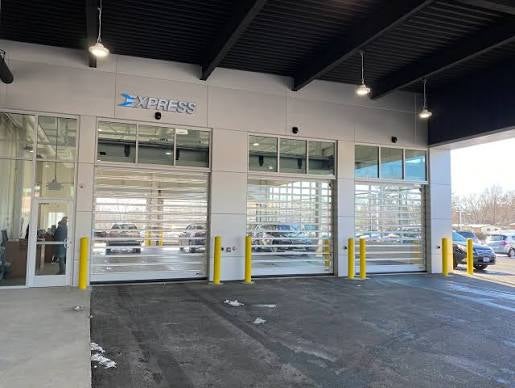
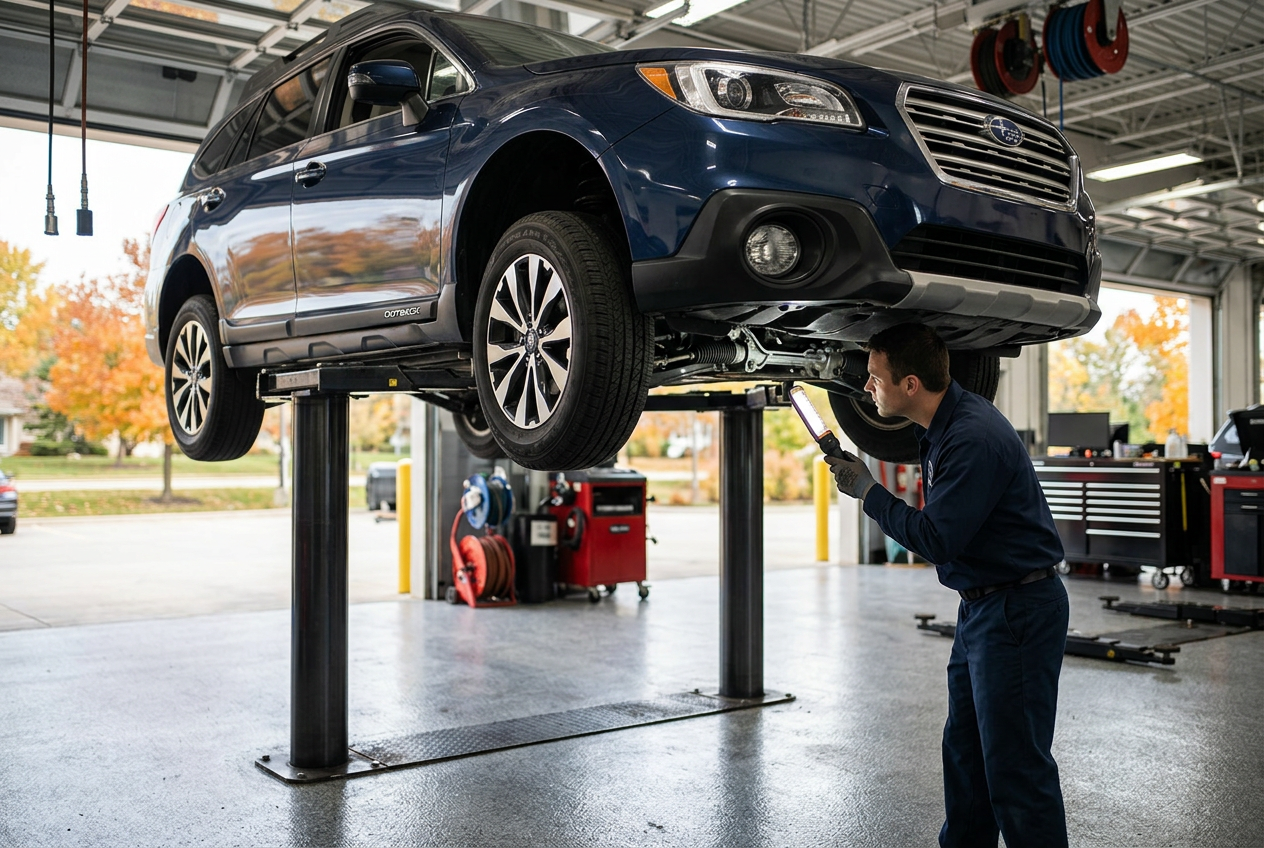
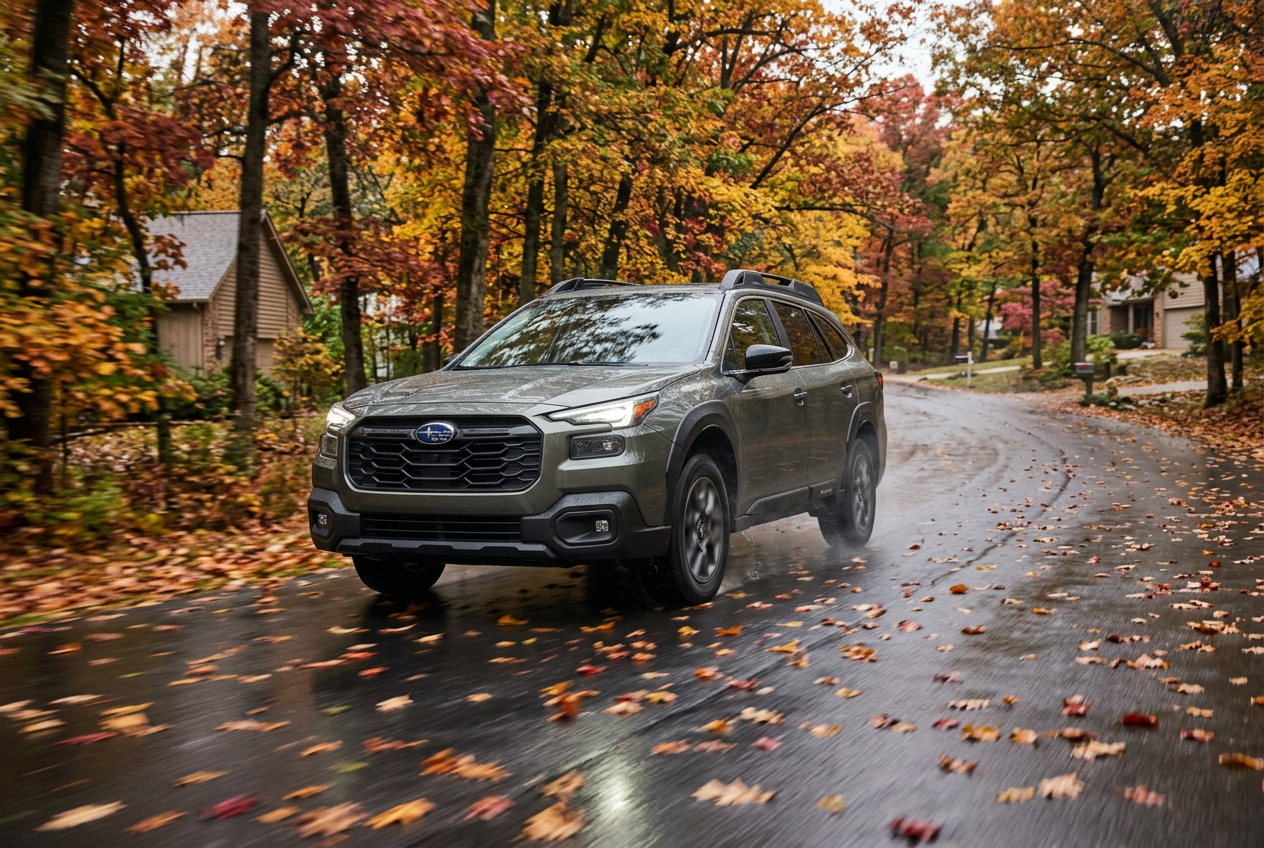
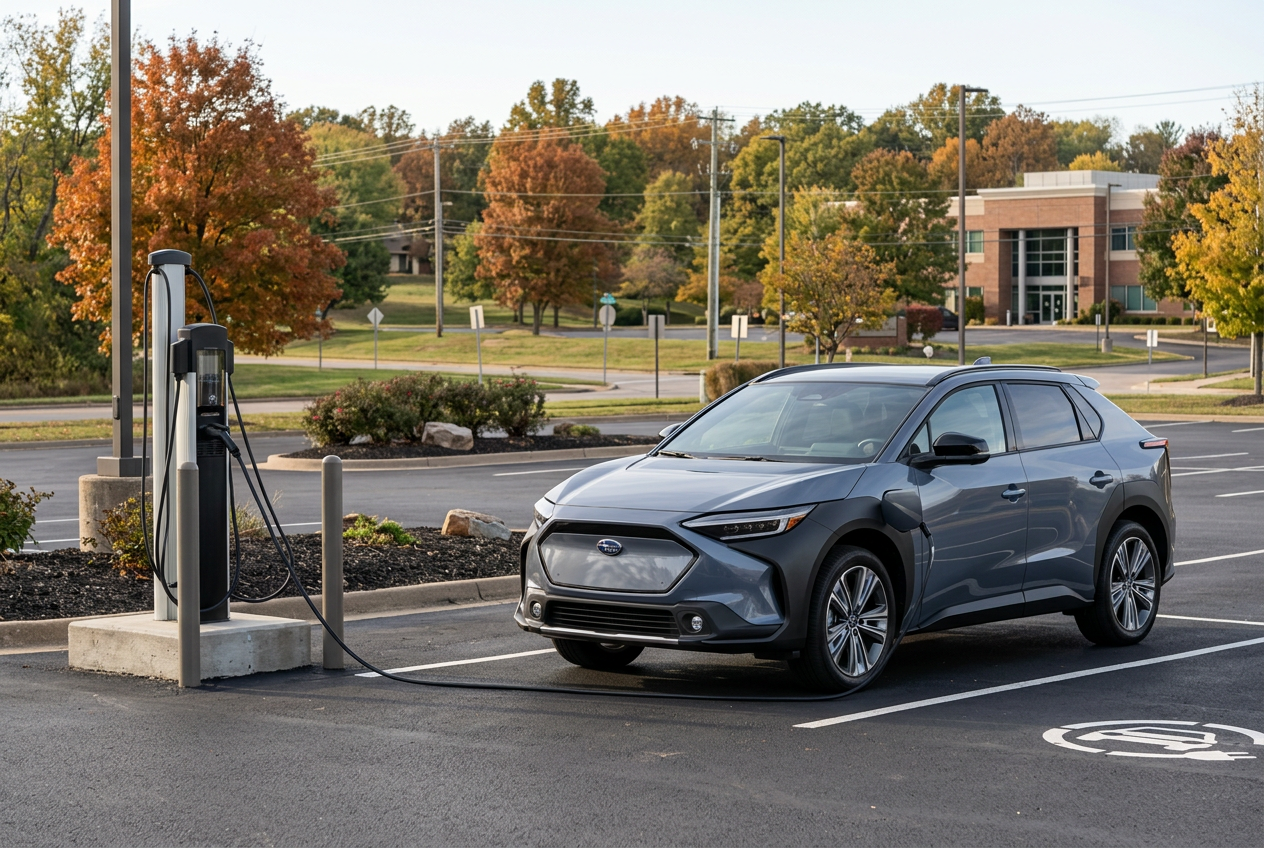
As autumn unfolds across St. Louis County, the picturesque turn of leaves brings an unmistakable Midwestern charm to Sunset Hills, Kirkwood, and Webster Groves. However, for drivers navigating the rolling hills along Watson Road or taking scenic detours near Laumeier Sculpture Park, fallen foliage introduces a severe driving hazard. When crisp autumn rain mixes with decomposing oak and maple leaves, it transforms ordinary asphalt into a treacherous friction-free slip zone. Protecting your safety and preserving the engineering brilliance of your 2027 Subaru Symmetrical All-Wheel Drive (AWD) system requires proactive vigilance before the first heavy autumn downpour arrives. Key Takeaway for Subaru Owners: Protecting your 2027 Subaru AWD powertrain on wet, leaf-covered roads comes down to three non-negotiable tire checks: maintaining strictly matched tire tread depths across all four wheels within 2/32 of an inch, keeping cold inflation pressure adjusted between 32 and 35 PSI to offset sharp autumn temperature drops, and ensuring your remaining usable tread depth never drops below 4/32 inch for wet weather. Deviating from these checks not only causes hazardous hydroplaning on slick leaf mats but can also create continuous thermal friction within the center differential, potentially binding the transfer clutches over time. Below, our master technicians at Sunset Hills Subaru walk you through the essential tire science, driving physics, and local service tips to keep your Subaru performing flawlessly all season long. Whether you are commuting daily along I-44, dropping off kids at Lindbergh High School, or exploring weekend trails through Castlewood State Park, your tires serve as the solitary interface between Subaru's advanced drivetrain and the pavement. If you ever suspect uneven wear or want a complimentary inspection from factory-certified specialists, feel free to visit our service hub or Get Directions to Sunset Hills Subaru at 10100 Watson Rd. Our team is dedicated to keeping your vehicle safe, reliable, and ready for every Missouri season. Why Wet Leaves and Autumn Rain Create Severe Traction Hazards on St. Louis Roads Many Missouri drivers underestimate the sheer danger of wet autumn leaves, viewing them as little more than a colorful visual backdrop. In reality, leaf decay is a complex biochemical reaction that severely alters road physics. When wet leaves blanket asphalt, organic compounds such as tannic acids, natural oils, and cellulose fibers leach onto the road surface under the weight of passing vehicle tires. Combined with rainfall, this organic mixture forms a slick, micro-thin slime layer with a coefficient of friction comparable to black ice. When a tire rolls over wet foliage, it faces a compound hazard: hydroplaning on water trapped between leaf layers and mechanical slippage on the leaf pulp itself. The leaves physically compress beneath the tread, creating a barrier that prevents tire siping from grabbing the asphalt underneath. If your tires lack deep evacuation channels, your vehicle literally floats across the top of the leaf mat. This loss of direct tire-to-road contact disrupts directional stability during cornering and drastically extends stopping distances. Subaru Symmetrical All-Wheel Drive is engineered to react dynamically to changing road friction, constantly shifting torque away from wheels that slip to wheels that grip. However, no mechanical or electronic AWD system can generate grip out of thin air. For your 2027 Subaru Crosstrek, Outback, or Forester to distribute drive torque efficiently, each tire must maintain an even contact patch and adequate tread geometry. Without proper tire maintenance, even the world's finest all-wheel-drive system cannot fully overcome basic laws of physics on wet leaf mats. Shaded corridors throughout Sunset Hills, such as Sappington Road and Rott Road, stay damp long after morning rains cease because overhead tree canopies block sunlight. Leaves rotting in these cool shadows create persistent, hidden slick spots that surprise unprepared drivers. Keeping your tires properly inspected ensures your Subaru retains peak traction through every surprise bend. Essential Tire Tread Checks: Measuring Depth and Matching Tire Circumference for Subaru AWD Regular tread inspections are the single most critical step in preserving both driver safety and drivetrain health on a 2027 Subaru. Unlike front-wheel-drive or rear-wheel-drive vehicles that tolerate subtle differences in tire wear, Subaru's continuous Symmetrical AWD system relies on uniform wheel rotation speed across both axles. The Penny & Depth Gauge Test Checking tread depth takes less than two minutes. Insert an upside-down penny into your tread grooves with Lincoln's head facing down. If the top of Lincoln's head remains visible, your tread is at or below 2/32 inch, which is legally worn out and dangerously inadequate for wet autumn weather. For wet roads covered in leaves, Subaru recommends a minimum tread depth of 4/32 inch. Using an inexpensive digital tire depth gauge gives you precise measurements across the inner, center, and outer tread ribs. The 2/32-Inch Variance Rule On a 2027 Subaru AWD model, all four tires must match in tread depth within 2/32 of an inch (or 1/4 inch of total rolling circumference). If one tire is brand new at 10/32 inch while the remaining three are worn down to 5/32 inch, the brand-new tire travels a slightly greater distance per revolution. This constant rotational mismatch tricks the AWD system into sensing slippage, triggering continuous engagement of the transfer clutch pack. Preventing Drivetrain Stress When mismatched tires force the center differential to slip continuously, internal fluid heat builds up rapidly. Over thousands of miles, this thermal stress causes differential fluid degradation, premature clutch wear, and eventual binding in tight parking lot maneuvers. Maintaining identical tread wear across all four corners protects your transmission warranty and ensures buttery-smooth torque distribution when slipping on slick wet leaf trails. If you notice uneven tread wear between your front and rear axles during your fall check, a professional tire rotation can re-balance circumference differences before mechanical stress occurs. You can easily order replacement tires or Find Subaru Parts directly through Sunset Hills Subaru. Managing Fall Tire Pressure Drops and Cooler Missouri Temperature Shifts As autumn progresses in Eastern Missouri, daily temperatures fluctuate wildly—frosted morning commutes along Highway 141 often give way to mild afternoon sun. A fundamental law of physics dictates that air contracts as ambient air temperature drops. For every 10 degrees Fahrenheit drop in temperature, your Subaru's tires lose approximately 1 PSI (pound per square inch) of pressure. A sudden October cold front dropping temperatures by 30 degrees overnight can easily reduce your tire pressure by 3 to 4 PSI without a single puncture in the rubber. Underinflated tires pose a double threat on wet, leaf-covered roads. First, underinflation causes the center of the tire tread to sag inward slightly, concentrating vehicle weight on the outer shoulders. This distorted contact patch severely diminishes the tire's ability to channel away standing water and leaf slush, dramatically accelerating hydroplaning risk. Second, underinflation increases sidewall flexing and rolling resistance, generating excessive internal heat during highway speeds on I-270 and compromising fuel efficiency. To maintain optimal traction, check your tire pressures cold—first thing in the morning before driving more than a mile. Always match the PSI values posted on the driver's side B-pillar door placard (typically 32 to 35 PSI cold depending on your 2027 Subaru trim level), rather than the maximum pressure molded on the tire sidewall. If your Tire Pressure Monitoring System (TPMS) warning light illuminates on a chilly morning, don't ignore it. You can conveniently Schedule Service and Diagnostics at Sunset Hills Subaru for a fast pressure adjustment and nitrogen fill check. Schedule Fall Tire Service Are All-Season Tires Enough for Missouri Fall Weather or Are Winter Tires Needed? A frequent question among Sunset Hills Subaru drivers is whether standard factory all-season tires provide enough protection during autumn or if dedicated winter tires are required. The answer lies in understanding compound chemistry and ambient temperature thresholds. Standard all-season tires are engineered to perform across a wide temperature spectrum, but their synthetic rubber compound begins to stiffen when temperatures drop consistently below 45°F (7°C). When rubber hardens due to cold weather, it loses its micro-flexibility—the ability to conform to tiny surface irregularities in the road. On wet, leaf-covered asphalt, a hardened tread compound acts almost like hard plastic sliding across wet glass. This is where modern 3-Peak Mountain Snowflake (3PMSF) rated All-Weather tires (such as Michelin CrossClimate2 or Yokohama Geolandar A/T G015) offer a tremendous advantage over conventional all-seasons. All-weather tires use high-silica rubber compounds that remain flexible in sub-freezing cold while retaining high-mileage tread life during warm autumn afternoons. For standard Missouri fall driving—combining damp days in the 50s with chilly nights in the 30s—a quality all-weather tire or healthy standard all-season tire with at least 5/32 inch tread is generally sufficient. However, if your daily commute involves steep unpaved driveways in Wildwood or early morning routes over river bridges, switching to winter tires by late autumn provides ultimate stopping confidence. You can explore tire options across our New Subaru Inventory lineup to see what comes standard on fresh 2027 models. Tire Type Temp Threshold Wet Leaf Grip Snow/Ice Capability Standard All-Season Above 45°F Moderate Basic Light Snow 3PMSF All-Weather Below & Above 45°F High Severe Snow Rated Dedicated Winter Below 45°F Maximum Extreme Ice & Snow What Type of Tire Channels Water and Wet Leaves Best on a Subaru? Not all tire tread patterns perform equally when faced with organic autumn debris. Engineering a tire for wet leaf shedding requires a balance between hydroplaning resistance, directional stability, and noise dampening. Circumferential Channels Deep continuous circumferential grooves running around the perimeter of the tire act as high-volume water highways. These channels funnel gallons of standing water per second away from the tire footprint. Wide circumferential channels also prevent wet leaf pulp from becoming trapped inside the tread, throwing debris outward via centrifugal force as the wheel rotates. Sweeping Lateral Sipes High-density 3D zigzag sipes slice through the surface tension of water films layer by layer. On leaf-covered surfaces, these micro-edges bite directly into soft leaf tissue, creating mechanical interlocking grip where smooth tread blocks would simply slide. Sweeping shoulder grooves push water outward past the tire flanks, maintaining clean contact. Asymmetric Tread Design Asymmetric patterns feature distinct inner and outer tread zones. The inner zone uses open, interconnected grooves optimized for rapid water evacuation on wet highways. The outer shoulder blocks feature stiff, continuous ribs that resist deformation during hard cornering on leaf-slicked suburban turns, keeping your Subaru planted and predictable. Whether you drive a New Subaru Outback Inventory model or a versatile New Subaru Forester Inventory SUV, equipping your vehicle with factory-approved asymmetric or directional all-weather tires guarantees maximum wet-weather clearing capability. How Subaru Symmetrical AWD Compares to Standard FWD, Part-Time 4WD, and Reactive AWD Systems To appreciate why proper tire checks are so vital for a 2027 Subaru, it helps to understand how Subaru Symmetrical AWD differs from competing drivetrain architectures on wet, slippery roads. Many competitive crossover SUVs use 'slip-first' reactive electronic AWD systems. These vehicles drive 100% of power to the front wheels during normal cruising and only transfer torque to the rear wheels after computer sensors detect wheel slip. On a wet leaf mat, by the time a reactive system detects slippage and engages the rear axle, the vehicle has already lost directional inertia. Standard Front-Wheel Drive (FWD) vehicles face an even tougher challenge: the front tires must handle 100% of steering input, 100% of initial braking load, and 100% of engine power. Under wet leaf conditions, over-tasking the front tires causes severe front-end wash-out (understeer). Conversely, traditional part-time four-wheel drive (4WD) trucks locking front and rear axles together cause driveline binding ('crow-hopping') during sharp turns on wet pavement, breaking tire traction entirely. Subaru Symmetrical AWD operates full-time, continuously routing power to all four wheels simultaneously with a baseline torque split (typically 60:40 front-to-rear on Lineartronic CVT models). Because all four tires share drive forces constantly, individual wheel workload is minimized, keeping tire traction well inside its friction circle. Paired with properly maintained tires, Subaru Symmetrical AWD delivers unmatched stability when accelerating through wet, leafy intersections across St. Louis County. Curious how Subaru AWD feels compared to traditional FWD? Browse our Used Vehicle Inventory or test drive a new model at Sunset Hills Subaru today to experience full-time traction firsthand. Does AWD Reduce Braking Distance on Wet Leaves Compared to FWD? One of the most dangerous driving myths in the automotive world is the belief that All-Wheel Drive helps your vehicle stop faster on slick surfaces. AWD helps you accelerate and maintain cornering stability, but it does NOT reduce your braking distance. When you step on the brake pedal, every modern car—whether FWD, RWD, or AWD—uses four-wheel braking. On wet, leaf-covered asphalt, your stopping distance is strictly dictated by tire tread grip, vehicle momentum, Anti-lock Braking System (ABS) pulse speed, and rubber compound elasticity. If your tires are worn below 4/32 inch, slamming on the brakes over a mat of wet leaves will trigger ABS pulsation instantly, but the vehicle will continue sliding until the tires clear water or catch dry pavement. Every 2027 Subaru comes standard with advanced EyeSight® Driver Assist Technology, featuring Pre-Collision Braking and Automatic Emergency Steering. While EyeSight camera algorithms can detect slowing traffic or obstacles ahead in low visibility, the physical stopping force relies 100% on tire traction. Maintaining high-quality tires ensures your EyeSight system can bring your vehicle to a safe, controlled stop when emergency situations arise. Explore New Subaru Models Navigating Wet Leaf Canopies from Wooded Ladue Corridors to Rolling Chesterfield Hills Wooded Ladue Corridors Shaded roadways through Ladue and Frontenac feature dense mature tree canopies. During fall rains, heavy leaf drops coat narrow, winding asphalt roads. Drivers negotiating tight bends along Ladue Road should ease off the accelerator before entering turns rather than braking mid-corner, avoiding side-load traction loss on leaf slime. Rolling Chesterfield Hills In Chesterfield and Clarkson Valley, rolling topography adds elevation changes to wet driving conditions. Descending steep wet hills covered in oak leaves requires smooth, progressive braking. Subaru owners can utilize Hill Descent Control or drop their CVT shift lever into low mode to harness engine braking safely without locking wheels. Maryland Heights Parkways High-traffic parkways around Maryland Heights and Creve Coeur feature frequent stop-and-go commuter traffic. Wet leaf accumulation around stop lines and turn lanes demands extra following distance. Drivers in New Subaru Crosstrek Inventory models benefit from agile turning responses when keeping smooth control inputs. How Much Does a Full Set of New All-Season Tires Cost for a Subaru SUV? When it comes time to replace worn tires on your 2027 Subaru, understanding pricing expectations helps you plan effectively. Replacement tire costs vary primarily based on wheel diameter (17-inch, 18-inch, or 19-inch), speed rating, and performance category. Standard 17-inch all-season tires for entry Crosstrek or Forester models typically range from $650 to $850 for a set of four, while premium 18-inch or 19-inch all-weather sets for Outback Touring or Ascent trims range between $900 and $1,300. When purchasing tires through Sunset Hills Subaru, your total price includes professional mounting, electronic high-speed balancing, new valve stems, eco-friendly scrap tire recycling, and factory OEM fitment verification. Furthermore, original equipment tires purchased through our authorized dealership include 24-Month Road Hazard Coverage at no extra cost, protecting your investment against unexpected nail punctures or pothole damage on Missouri roads. Subaru Model / Wheel Size Est. 4-Tire Cost Range Recommended Category Crosstrek / Impreza (17") $650 – $850 All-Season / All-Weather Forester / Outback (18") $800 – $1,100 High-Silica All-Weather Ascent / Outback Touring (19"-20") $950 – $1,350 Premium Touring All-Season Before ordering online elsewhere, check our Current Service and Parts Specials for seasonal manufacturer rebates from top tire brands like Yokohama, Michelin, Goodyear, and Continental. What Fall Service Checks and Local Offers Should Subaru Owners Verify Before a Wet-Weather Drive? A successful wet-weather autumn routine involves comprehensive vehicle care beyond tire tread depth checks. Before setting off on extended holiday road trips or daily commutes during rainy autumn weeks, schedule a complete fall multi-point maintenance check at Sunset Hills Subaru. Essential Fall Maintenance Checklist: • Four-Wheel Computerized Alignment: Missouri potholes can misalign your suspension unnoticed. Misalignment drags tires sideways, wearing out tread edges rapidly and compromising AWD track stability on slick leaves. • 6,000-Mile Tire Rotation: Moving front tires to rear in an inverted cross pattern balances natural wear differences created by steering forces. • Brake Pad & Rotor Thickness Check: Wet roads demand optimal braking responsiveness. Ensure your brake pads have at least 5mm of remaining material. • Genuine OEM Wiper Blade Replacement: Crisp visibility is vital during heavy downpours. Fresh rubber inserts prevent streak-filled windshields when clearing autumn spray. • Battery Cold-Cranking Amp Test: Chilly autumn mornings put extra electrical load on starter motors. Be sure to review our Current Service and Parts Specials for bundle savings on fall inspections, synthetic oil changes, and tire rotation packages before your visit. Evaluating Your Subaru AWD Performance and Considering a Model Upgrade Before Winter If your current vehicle is several years old and facing upcoming maintenance costs—such as replacement tires, brake overhauls, and differential fluid flushes—autumn is an ideal time to evaluate whether upgrading to a 2027 Subaru model makes smart financial sense. Modern 2027 Subaru models feature advanced dual-function X-MODE® technology, offering tailored settings for 'Snow/Dirt' and 'Deep Snow/Mud'. X-MODE optimizes engine throttle response, transmission gear ratios, front/rear AWD coupling force, and VDC braking control to pull you smoothly through thick leaf sludge or deep winter snow. Stepping up to a new vehicle also means driving home with brand-new factory tires, complete warranty peace of mind, and the latest EyeSight driver safety enhancements. At Sunset Hills Subaru, we make upgrading effortless. You can quickly Get your value trade online to see how much equity your current vehicle holds toward a 2027 Outback, Forester, Crosstrek, or 3-row New Subaru Ascent Inventory model. You can also Get approved for financing in minutes before stepping into our showroom. Value Your Trade-In Online Schedule Your Subaru Fall Tire Inspection at Sunset Hills Subaru Don't let slick, leaf-covered roads take you by surprise this autumn. By performing quick regular tread checks, maintaining strictly matched tire circumference within 2/32 inch, keeping proper cold PSI levels, and inspecting your alignment, you protect your 2027 Subaru AWD powertrain and keep your family safe across every St. Louis journey. Ready to get your vehicle fall-ready? Schedule Service and Diagnostics online today, or give our friendly service department a ring. Call us at (314) 476-9638 to speak directly with an expert advisor. You can also visit our state-of-the-art facility located at 10100 Watson Rd, Sunset Hills, MO 63127. Check our Current New Car Specials if you're considering a brand-new AWD upgrade this season. We look forward to serving you! Book Service Appointment Now 2027 Subaru AWD Tire Maintenance in Sunset Hills MO | Sunset Hills Subaru