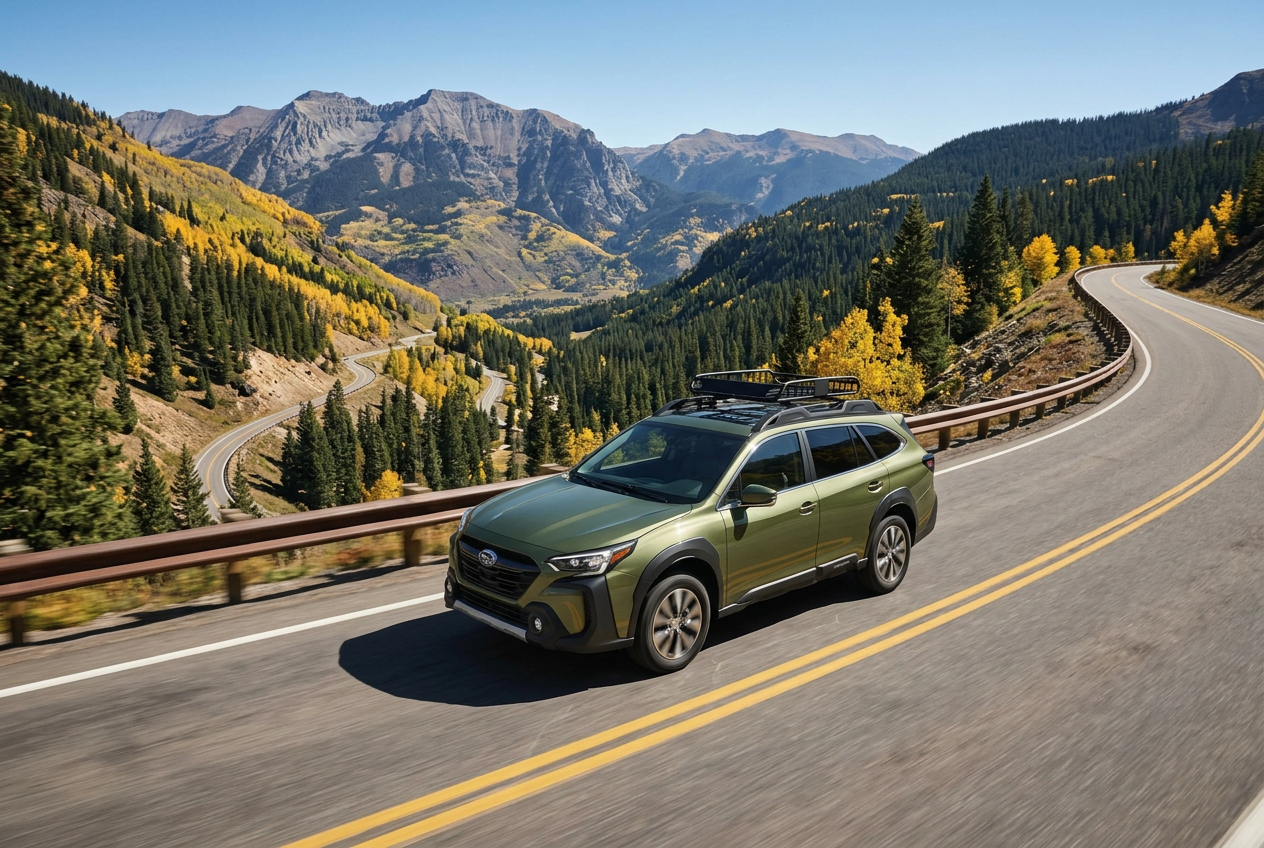
When you begin researching the Subaru lineup—especially staples like the Impreza hatchback and Crosstrek compact crossover—one fundamental question surfaces immediately: is Subaru's entry-level 2.0-liter naturally aspirated four-cylinder Boxer engine truly potent enough to handle demanding mountain ascents, steep grades, and high-speed interstate highway travel? Or will you feel underpowered, strained, and frustrated every time you merge into heavy rush-hour traffic on I-44 or venture west into the Rockies with outdoor gear strapped to the roof rack? The bottom-line verdict: The 152-horsepower 2.0-liter Boxer engine paired with standard continuous Symmetrical All-Wheel Drive is an exceptionally engineered, ultra-dependable, and fuel-thrifty workhorse that comfortably fulfills the driving requirements of daily commuters, solo travelers, and light-passenger cruising across typical rolling terrain. However, if your regular driving routine involves hauling a full complement of adults, mounting heavy rooftop cargo carriers, ascending sustained mountain passes above 5,000 feet, or demanding snappy 50-to-70 mph passing acceleration on congested freeways, the 2.0L powertrain will inevitably reach its physical ceiling. Drivers in those demanding scenarios will be vastly better served by stepping up to Subaru's 182-horsepower 2.5-liter engine or the commanding 260-horsepower 2.4-liter turbocharged Boxer engine. Engine Spec / Dimension 2.0-Liter Boxer (Base) 2.5-Liter Boxer (Mid-Tier) 2.4-Liter Turbo Boxer (XT/Ascent) Horsepower 152 hp @ 6,000 RPM 182 hp @ 5,800 RPM 260 hp @ 5,600 RPM Torque 145 lb-ft @ 4,000 RPM 178 lb-ft @ 4,400 RPM 277 lb-ft @ 2,000-4,800 RPM 0-60 MPH Acceleration ~9.2 - 9.7 seconds ~7.8 - 8.2 seconds ~5.9 - 6.3 seconds Drivetrain Configuration Symmetrical AWD (Standard) Symmetrical AWD (Standard) Symmetrical AWD (Standard) Highway Passing Character Steady, deliberate momentum Responsive, confident surge Effortless, immediate thrust High Altitude Performance (8,000 ft) ~115 hp available (~24% loss) ~138 hp available (~24% loss) Full ~260 hp (turbo-compensated) How the 2.0L Boxer Engine Performs on Highway Merges and High-Speed Passing To understand how the base powertrain feels behind the wheel, we must look closely at its technical architecture. Subaru's naturally aspirated 2.0-liter Boxer produces 152 horsepower at 6,000 RPM and 145 lb-ft of peak torque at 4,000 RPM. This engine operates in tandem with Subaru's Lineartronic continuously variable transmission (CVT), which continuously optimizes pulley ratios rather than stepping through fixed mechanical gearsets. Under modest throttle loads, this combination delivers exceptional smoothness, virtually eliminating shift shock while maximizing fuel economy. In real-world zero-to-sixty testing, the 2.0L engine records times around 9.2 to 9.7 seconds depending on vehicle curb weight and wheel sizing. For everyday city driving and steady-state highway cruising at 65 to 70 mph, the power is more than adequate. Where drivers experience limitations is during aggressive overtaking or short-ramp highway merges. Consider entering a fast-moving, 70-mph corridor like I-270 or I-44 around Sunset Hills during busy hours. If you floor the accelerator from 30 mph on an uphill on-ramp, the Lineartronic CVT instantly raises engine revolutions to 5,500+ RPM. The Boxer engine emits a noticeable, audible hum as it works within its powerband, steadily gaining speed. When executing a 50-to-70 mph passing maneuver on a two-lane highway with three passengers and luggage on board, you must plan ahead with deliberation. Unlike turbocharged vehicles that deliver an instantaneous surge of low-end torque, the 2.0L requires progressive build-up and patience. Tackling Mountain Passes and High Elevation: 2.0L vs. 2.5L vs. 2.4L Turbocharged Engines The physics of combustion at altitude plays a critical role in your powertrain satisfaction. Naturally aspirated engines rely strictly on ambient atmospheric air pressure to fill their cylinders. As you gain elevation, air density drops by approximately 3% for every 1,000 feet of altitude climbed. When driving a naturally aspirated 2.0-liter Boxer up an 8,000-foot mountain pass in the Rockies or traversing high-elevation highways, the engine loses roughly 24% of its sea-level output. That 152-hp rating effectively diminishes to about 115 usable horsepower. Climbing a sustained 6% interstate grade at altitude forces the engine to run at high RPMs for miles at a time to maintain 60 mph. Stepping up to the naturally aspirated 2.5-liter Boxer cushions this impact by starting with 182 horsepower and 178 lb-ft of torque, leaving you with roughly 138 horsepower at 8,000 feet. But for true mountain dominance, turbocharged engineering is a strong advantage. Because Subaru's 2.4-liter turbocharged Boxer compresses ambient air before forcing it into the cylinders, it overcomes thin air entirely, maintaining its full 260 horsepower and 277 lb-ft of low-end torque even across high-altitude Continental Divide passes. A frequent question among outdoor enthusiasts is: Can you get a turbocharged engine on a Subaru Outback for under $42,000? The answer is yes. The Subaru Outback Onyx Edition XT and Wilderness trim levels feature the robust 2.4-liter turbo Boxer with a base MSRP comfortably under $42,000 before taxes and destination fees, giving adventure-seekers an accessible route to zero-compromise high-altitude passing power. What All-Wheel-Drive Capabilities and Drive Modes Change Across Subaru Trim Levels? Subaru has built its global reputation on its legendary continuous Symmetrical All-Wheel Drive system, which comes standard on virtually every vehicle regardless of price. However, understanding what all-wheel-drive capabilities change as you move up the Subaru trim hierarchy allows you to match your vehicle precisely to the challenging weather and terrain you encounter. Standard Symmetrical AWD Equipped on base-tier 2.0L models, standard Symmetrical AWD provides a full-time 60:40 front-to-rear torque split managed by an electronically controlled hydraulic multi-plate transfer clutch. It continually senses wheel slip, steering angle, and yaw rate to route power instantly to wheels with optimal traction. Single-Mode X-MODE Featured on mid-tier trims like Crosstrek Premium, single-mode X-MODE recalibrates the throttle map, Lineartronic CVT gear ratios, and Vehicle Dynamics Control to clamp down on slipping wheels faster in snow, mud, and slick loose gravel. It also integrates Hill Descent Control for steady downhills. Dual-Function X-MODE Found on Sport, Limited, and Wilderness models, dual-function X-MODE adds dedicated 'Snow/Dirt' and 'Deep Snow/Mud' settings. The deep mud setting alters traction control parameters to allow calculated wheel spin, propelling the vehicle through thick ruts and heavy unplowed Midwest snow drifts. Explore New Subaru Crosstrek Inventory What Active Safety Systems Come Standard Across Base-Tier Subaru Vehicles? A significant point of pride for Subaru is that active crash-avoidance technology is never restricted to high-end luxury packages. Every base-tier Subaru equipped with the Lineartronic CVT—including the most accessible Impreza and Crosstrek models—comes standard with the acclaimed EyeSight Driver Assist Technology suite.
Standard baseline active safety systems include:
• Pre-Collision Braking: Automatically applies emergency braking force when detecting impending frontal obstacles or stopped traffic. • Advanced Adaptive Cruise Control with Lane Centering: Maintains preset spacing from the vehicle ahead while assisting with steering inputs to stay centered on highway lanes. • Lane Departure and Sway Warning: Alerts drivers when drifting outside identified road markers. • Pre-Collision Throttle Management: Reduces engine output if you attempt to accelerate toward an object directly in front of the bumper. So, at what trim level does blind-spot monitoring become available on a Subaru? While forward collision prevention is universal, Blind-Spot Detection with Lane Change Assist and Rear Cross-Traffic Alert becomes optional on the Premium trim level (via Option Package) and comes completely standard once you reach Sport, Limited, and Touring trims. Furthermore, does Subaru reverse automatic braking require an upper-tier package? Yes—Reverse Automatic Braking (RAB) is an intelligent ultrasonic radar safety layer that generally requires stepping into the Limited or Touring trim level, providing peace of mind during tight reverse maneuvers in crowded parking lots. What Does Your Subaru Budget Actually Get You: Under $30,000 vs. $35,000 to $45,000? When planning your next vehicle investment, establishing clear boundaries between pricing tiers helps eliminate surprises at the dealership. Let us conduct a thorough reality check to evaluate what new Subaru models and trims you can purchase with a budget under $30,000 versus the capabilities unlocked in the $35,000 to $45,000 price spectrum. Budget Under $30,000 A sub-$30,000 budget comfortably covers the entry-level Impreza Base and Sport, along with the Crosstrek Base and Crosstrek Premium. Does an entry-level Subaru under $30,000 include Apple CarPlay and Android Auto? Absolutely. Base models feature dual 7.0-inch touchscreens with wired integration, while Premium trims upgrade to the 11.6-inch STARLINK display with wireless Apple CarPlay and Android Auto. You get standard continuous Symmetrical AWD, automatic climate control, and full EyeSight safety. $35,000 to $40,000 Range Stepping into the upper thirties opens up the potent 182-hp 2.5-liter Boxer engine on Crosstrek Limited, Forester Premium and Sport, and Outback Premium and Onyx Edition. This tier introduces heated StarTex water-repellent or leather upholstery, keyless access with push-button start, dual-function X-MODE with Hill Descent Control, and hands-free power liftgates. You also gain available blind-spot monitoring and rear cross-traffic alert. $40,000 to $45,000 Tier This premium budget realm unlocks 260-hp turbocharged performance across the Outback Onyx XT, Wilderness, and Limited XT, as well as family-ready three-row Ascent trims. What luxury amenities are included on Subaru Touring trim levels? Touring models equip you with genuine Nappa leather, ventilated front seating, heated steering wheels, 12-speaker Harman Kardon sound, and the DriverFocus Distraction Mitigation system. Upgrading Beyond the Base Engine: Outback, Ascent, and Crosstrek Price Breakdowns For many car buyers visiting Sunset Hills Subaru, weighing the financial gap between engine choices is the determining factor in selecting a final trim. If you love the size and ride comfort of the Outback, what 2027 Outback trims fit budgets around $35,000, $40,000, or $44,000 before destination and fees? Around $35,000, the Outback Premium with the 182-hp 2.5L engine hits the absolute sweet spot of comfort and efficiency. Approaching $40,000, you can choose between the rugged Outback Wilderness or the luxurious Outback Limited. Crossing into the $43,000 to $44,000 tier unlocks the Outback Touring or the exhilarating Outback Touring XT with turbocharged muscle. Similarly, families often ask: does a $40,000 budget cover an Ascent three-row crossover? Yes! The Subaru Ascent comes standard with the 260-hp 2.4-liter turbo Boxer engine across every single trim. Both the Ascent 8-Passenger Base and the highly popular Ascent Premium fit comfortably under the $40,000 threshold, offering three full rows of seating, 5,000 lbs of maximum towing capability, and effortless highway power. Curious about the base end of the lineup? What is the listed local price for an in-stock 2027 Crosstrek Premium in Sunset Hills? A well-appointed Crosstrek Premium is available with current MSRP details through the dealership. When calculating your complete investment, what is the out-the-door price of a $28,000 Subaru after destination and taxes? In Missouri, after factoring in roughly $1,345 for destination/delivery, Missouri state and local sales tax (~8.5%), and title/registration fees, an estimated out-the-door total settles between $31,500 and $32,200 depending on exact municipal tax rates. Subaru Model & Trim Engine Displacement Horsepower & Torque Approx. Base MSRP Ideal Driving Profile Crosstrek Base 2.0-Liter Boxer 152 hp / 145 lb-ft ~$25,500 Urban commuting, efficient daily road trips Crosstrek Sport / Limited 2.5-Liter Boxer 182 hp / 178 lb-ft ~$29,500 - $31,500 Spirited passing, frequent highway travel Outback Premium 2.5-Liter Boxer 182 hp / 178 lb-ft ~$33,000 - $35,000 Family road trips, light camping & gear hauling Outback Onyx XT / Wilderness 2.4-Liter Turbo Boxer 260 hp / 277 lb-ft ~$39,500 - $41,500 Steep mountain passes, high elevation, trail towing Ascent Premium 2.4-Liter Turbo Boxer 260 hp / 277 lb-ft ~$38,500 - $40,500 Three-row passenger hauling, cross-country travel No matter which powertrain fits your driving lifestyle, our team at Sunset Hills Subaru is here to help you experience these engines back-to-back on open highway stretches and local grades. You can easily browse our complete New Subaru Inventory, evaluate your current vehicle using our trade-in appraisal tool, or pre-qualify online when you get approved for financing. Have questions about specific engine options or trim features? Get directions to Sunset Hills Subaru at 10100 Watson Rd or call our product specialists today. Browse New Subaru Inventory 2.0L Boxer Engine Sunset Hills, MO | Sunset Hills Subaru