
01 / BALANCE
Designed as a system
The BOXER engine and symmetrical drivetrain packaging are engineered together to support balanced vehicle dynamics.
From rainy St. Louis commutes to snow-covered neighborhood streets, discover how Subaru Symmetrical All-Wheel Drive helps put traction and control to work.
The Subaru BOXER engine and a longitudinally arranged drivetrain form the foundation of Subaru's balanced all-wheel-drive design.
On many Subaru gasoline-powered models, power is delivered to the front and rear axles continuously, with distribution adjusted according to driving conditions. The layout is designed to support stability, predictable handling, and confident acceleration on changing surfaces.
Specific AWD hardware and torque distribution vary by model, transmission, and model year.
Find your AWD SubaruSubaru Symmetrical All-Wheel Drive works together with your vehicle's transmission to help deliver power to the wheels. If you notice unusual noises, vibration, or changes in acceleration, a professional inspection can help identify the cause.
Learn About Subaru Transmission ServiceAll-wheel drive is about more than getting moving after a snowfall. It can help manage power delivery in everyday driving, too.
The BOXER engine and symmetrical drivetrain packaging are engineered together to support balanced vehicle dynamics.
AWD controls use vehicle and wheel information to adjust front-to-rear torque distribution as conditions change.
Subaru Symmetrical AWD is designed for use on dry pavement as well as wet and snowy roads—no manual 4WD engagement required.
Not every all-wheel-drive system uses the same strategy. Some distribute torque between axles continuously; others prioritize one axle and engage or increase drive to the other as needed. Modern systems in both categories can respond proactively.
Comparison is architectural, not a controlled performance test. Honda and Toyota offer multiple AWD designs; specifications vary by model and year.
Available Subaru X-MODE coordinates engine output, transmission behavior, AWD, braking, and traction control to help manage challenging low-speed surfaces.
Available settings tailor the vehicle's response for slippery or loose surfaces.
On select models, an additional mode permits more wheelspin when appropriate for maintaining momentum.
On equipped models, the system helps regulate speed on steep descents so the driver can concentrate on steering.
X-MODE features and operating speed limits vary by model and trim. Always consult the owner's manual.
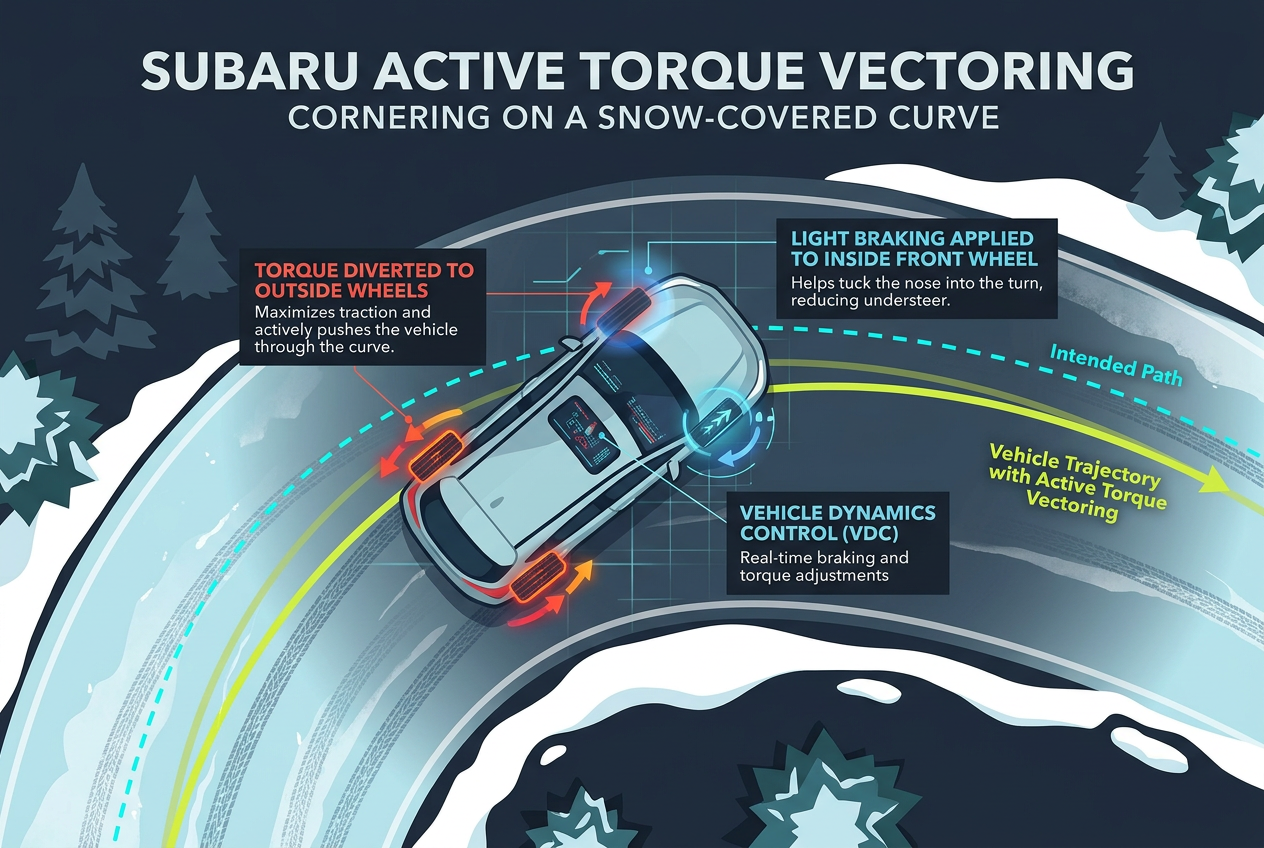
Subaru's available Active Torque Vectoring and Vehicle Dynamics Control systems can selectively apply braking and manage engine output to help a vehicle follow the driver's intended path.
These systems complement AWD, but they cannot create grip where tires have little traction. On ice, slowing down, allowing more stopping distance, and using appropriate tires remain essential.
Explore CrosstrekSymmetrical All-Wheel Drive helps manage traction when accelerating, while Subaru's available driver-assist and active safety technologies support awareness and vehicle control in other ways. Explore how these systems work together on the road.
Feature availability and operation vary by model, trim and year. Driver-assist systems do not replace attentive driving.
The Subaru Solterra uses an electric AWD architecture rather than the conventional gasoline-engine drivetrain.
Electric motors can control drive torque quickly, and available X-MODE supports traction management on challenging surfaces. This is a different mechanical system from Subaru's traditional Symmetrical AWD layout, but it serves a familiar goal: confident control.
Motor configurations, specifications, and available features depend on the model year and trim.
Explore Solterra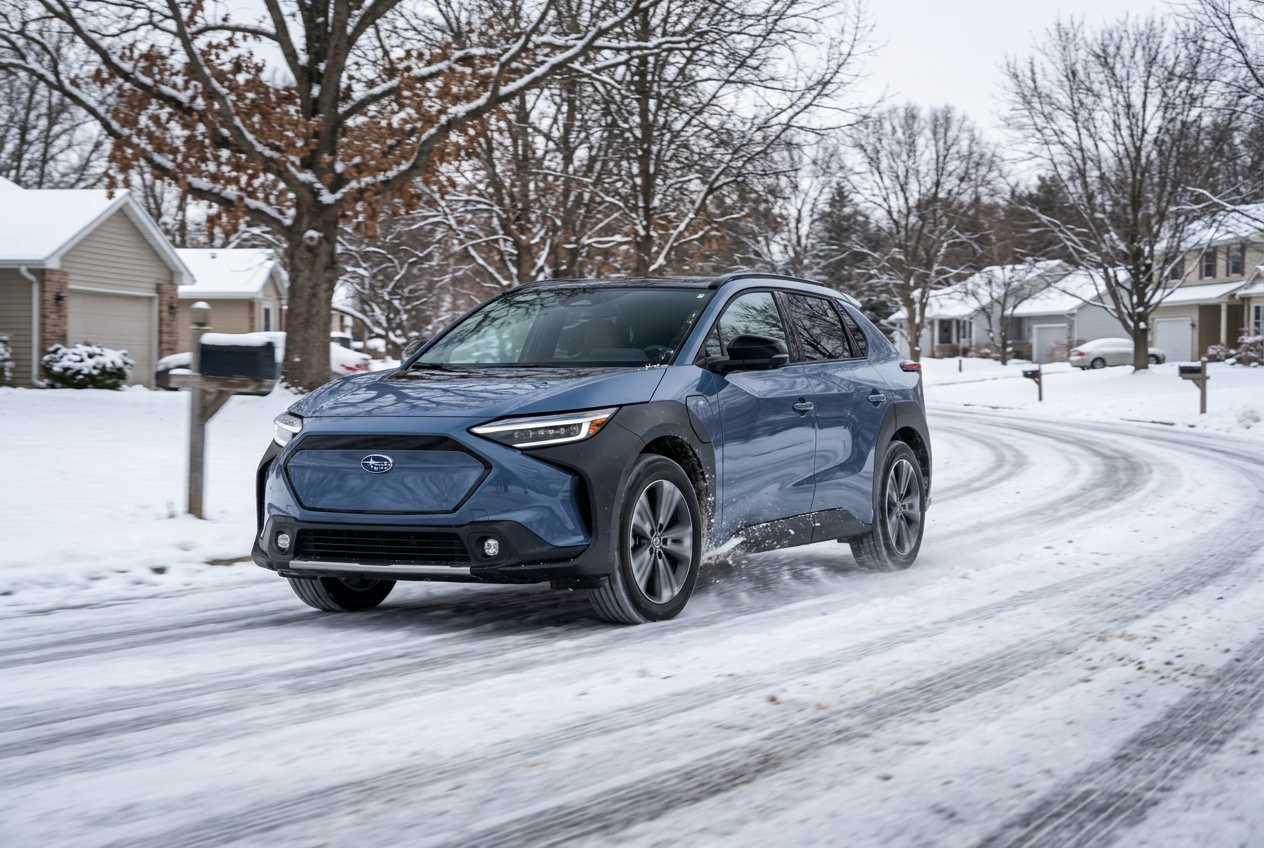
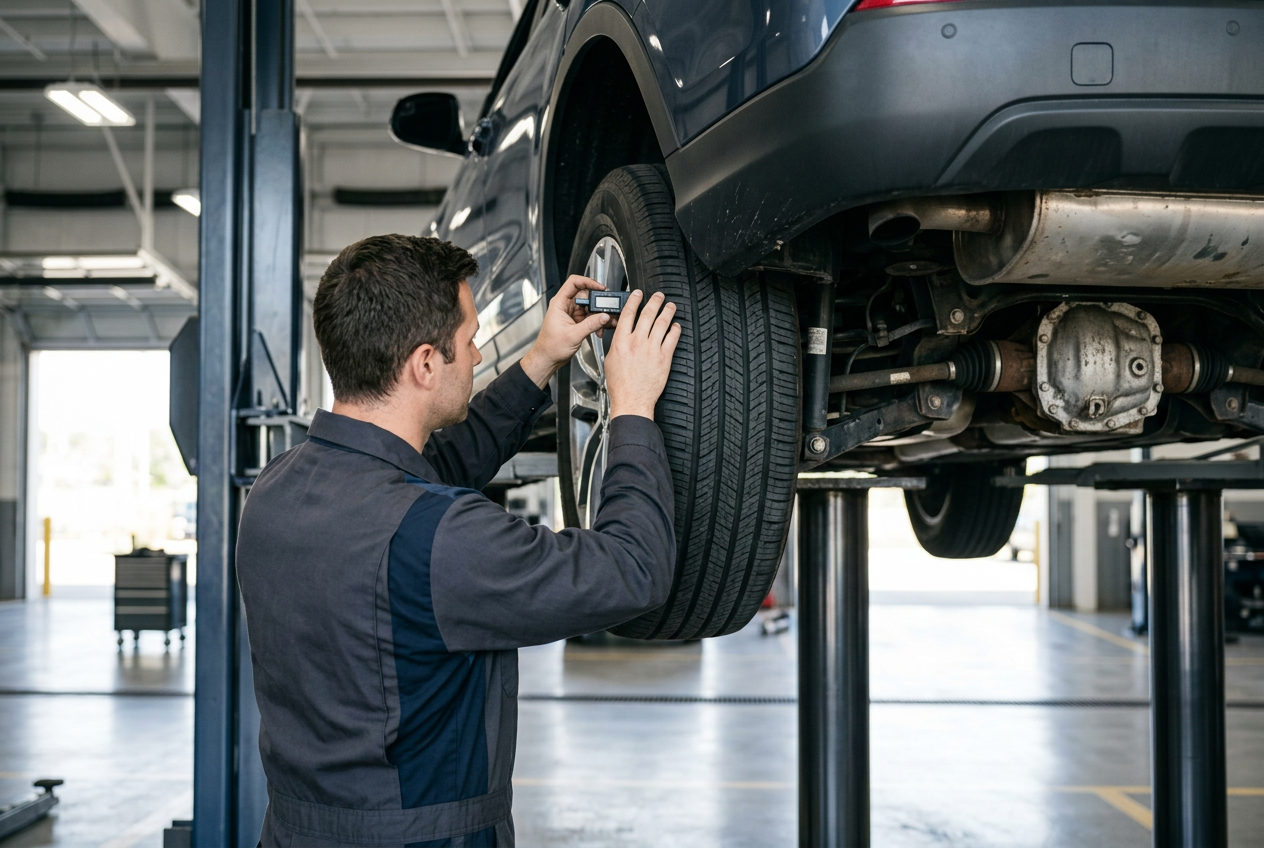
Even the most sophisticated drivetrain depends on tire grip. Regular maintenance matters for traction, efficiency, and drivetrain longevity.
St. Louis weather can change quickly. Rain, slush, freezing temperatures, and untreated neighborhood roads make traction an important part of choosing a vehicle.
AWD can help distribute power during acceleration on wet pavement, while good tires and safe speed remain vital.
Available X-MODE and AWD can help manage low-speed traction on slippery or uneven surfaces.
Subaru AWD is designed to operate seamlessly across changing road surfaces throughout the year.
On many gasoline-powered Subaru models, the system continuously delivers drive to both axles, adjusting torque as needed. The precise configuration varies by vehicle and transmission.
AWD can improve the ability to accelerate or get moving on slippery surfaces. Stopping and turning depend heavily on tires, road conditions, and driver behavior. Winter tires may provide a substantial benefit in snow and ice.
No. AWD cannot eliminate loss of traction on ice, and it does not shorten braking distances by itself. Reduce speed and leave extra space in freezing conditions.
AWD distributes drive torque between axles. Available X-MODE coordinates multiple vehicle systems to help manage difficult low-speed surfaces, such as snow, mud, or steep grades.
Yes. Subaru Symmetrical AWD is designed for normal driving on dry roads as well as wet and slippery surfaces, unlike some part-time four-wheel-drive systems that require specific surfaces or modes.
No. The rear-wheel-drive Subaru BRZ is a notable exception, and electric models use different AWD hardware. Always check the exact model's specifications.
Subaru AWD vehicles require closely matched tires to avoid unnecessary drivetrain stress. Consult the owner's manual or a Subaru service advisor for your model's specific allowable tread-depth difference.
Explore an AWD-equipped Subaru, ask our team about available X-MODE features, or prepare your current Subaru for changing Missouri weather.
Sunset Hills Subaru
10100 Watson Road, Sunset Hills, MO 63127