Blog / Subaru Road Safety

Blog

All Subaru Road Safety Sunset Hills Subaru Dealer Sunset Hills New Subaru New Vehicle Reviews Maintenance & Service Model Comparisons Buying Guides Sunset Hills Subaru Service Technology & Innovation Safety Subaru Repair Sunset Hills Subaru EV Dealership Auto Financing Hybrid 2025 Subaru Crosstrek 2025 Subaru Outback Dealership Financing Community Engagement Fuel Efficiency Performance and Engineering Sunset Hills Used Cars Leasing guides Certified Pre-Owned History Of Subaru Subaru Financing Sunset Hills Subaru Loves Pets 2025 Forester Hybrid Fun Things to Do Near Sunset Hills MO Infotainment Ownership Experience Subaru Motorsports Subaru Share The Love 2024 Outback Automotive History & Evolution Automotive News Automotive Repair Tips Automotive Rumors & Insights Buying & Trade-In Process Guidance Charging Solutions & Infrastructure Family Road Trips Outdoor Adventure & Camping Reliability and Quality Insights Sales Event Subaru Loyalty Program Things to do in Sunset Hills, MO Tire Care & Replacement Trade Up Advantage Vehicle Design & Innovation
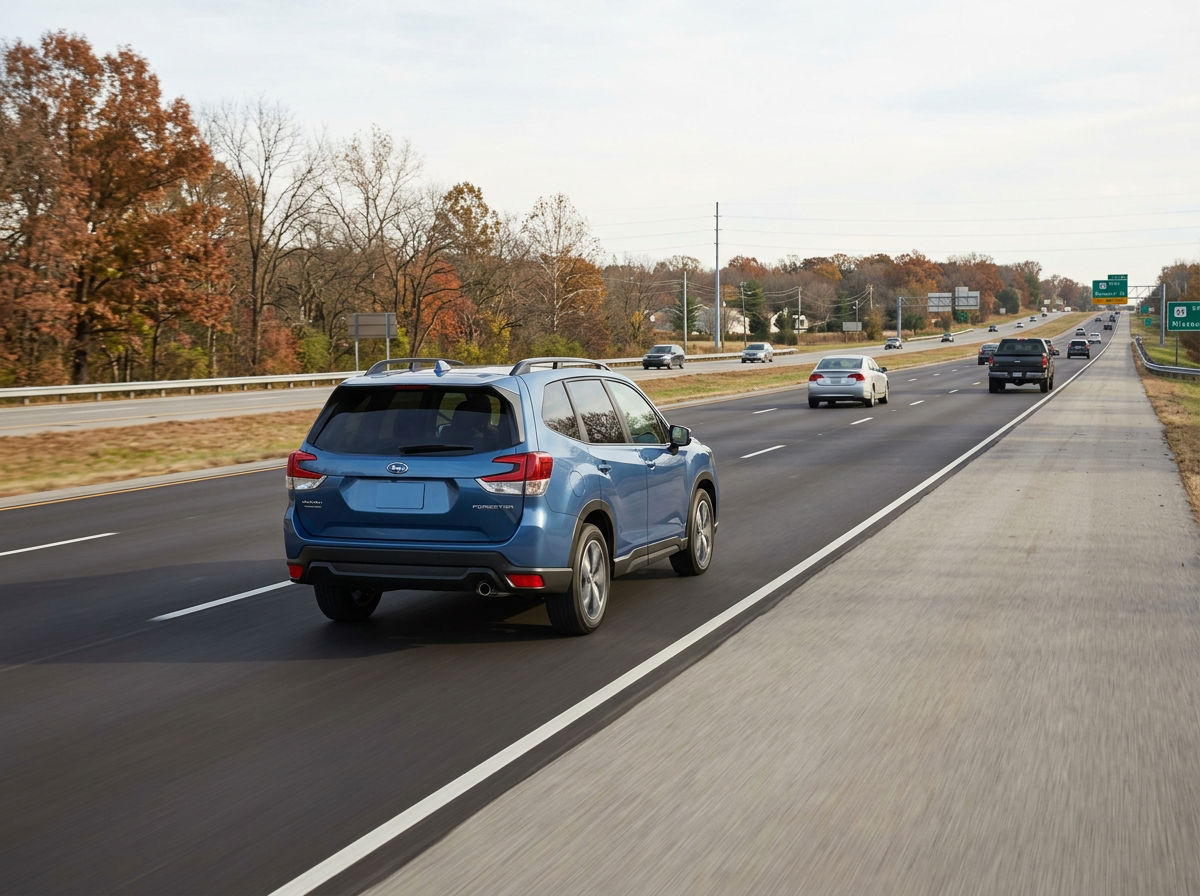
Subaru Ascent on St. Louis Highway

How Drivers Can Maintain Safe Road Positioning to Avoid Tailgaters

Navigating the dense highway corridors around St. Louis—from the fast-moving lanes of I-64 through Chesterfield to the congested stretches of I-270 and Watson Road in Sunset Hills—requires more than just reactive steering. Tailgating is one of the leading triggers for high-speed rear-end collisions across Missouri. When a vehicle aggressively rides your rear bumper, your immediate reaction might be frustration or defensive braking. However, true defensive driving relies on proactive space management: controlling the open space around your vehicle long before an aggressive driver behind you creates a dangerous scenario. To eliminate tailgating hazards, safety experts emphasize expanding your forward following distance to 3 to 4 seconds under fair weather conditions, and even further when visibility drops. By giving yourself extra room in front of your vehicle, you create a buffer zone that prevents sudden, harsh braking. When you tap your brakes abruptly, a tailgater behind you lacks the reaction time necessary to avoid a impact. Maintaining a generous forward buffer gives you the flexibility to slow down gradually, giving the driver behind ample time to notice your deceleration. Another essential component of defensive positioning is preserving an active 'escape lane.' Avoid cruising directly adjacent to semi-trucks or parallel traffic in neighboring lanes whenever possible. Position your vehicle so that at least one lateral side—left or right—remains open. If a tailgating driver behind you fails to slow down during sudden traffic stops, having an open shoulder or adjacent lane gives you a quick exit route. Furthermore, early turn signaling (flashing your turn signal 3 to 5 seconds prior to changing lanes or turning off major arterials like Watson Road) gives trailing vehicles unambiguous notice of your intentions, neutralizing high-stress tailgating conflicts before they start. What Is the Difference Between the 3-Second Rule and the 4-Second Rule? The 3-second rule represents the absolute baseline following distance recommended for clear, dry pavement operating at normal daytime speeds. To measure this interval while commuting down I-64 in Chesterfield, select a fixed overhead marker, such as a highway sign, bridge overpass, or light pole. When the rear bumper of the lead car passes that marker, count: 'One-thousand-one, one-thousand-two, one-thousand-three.' If your front bumper reaches that stationary landmark before you finish counting, you are following too closely and should ease back. While 3 seconds is adequate under ideal conditions, the 4-second rule (and beyond) becomes imperative during inclement weather, low-visibility conditions, nighttime driving, or heavy suburban traffic. Missouri rainstorms, autumnal leaf fall, or winter slush dramatically reduce tire traction, stretching your physical braking distance far beyond standard reaction times. When driving behind heavy vehicles like commercial tractor-trailers or tow trucks on rolling Missouri terrain, expanding your cushion to 4 or 5 seconds is vital. Large vehicles obscure your view of forward traffic flow, preventing you from anticipating hazards upstream. Expanding your gap grants you a clear line of sight around the lead vehicle, giving you time to respond calmly rather than reacting to sudden brake lights. How Defensive Driving Differs from Offensive Driving Techniques Defensive Mindset Defensive driving is rooted in foresight, patience, and active risk mitigation. Defensive drivers scan 12 to 15 seconds down the road, looking beyond the car immediately ahead. They adjust speed early, yield right-of-way willingly to keep traffic fluid, and prioritize leaving space cushions around all sides of their vehicle. On suburban corridors like Ladue Road, defensive drivers focus on predictable movements and de-escalating tense traffic conditions. Offensive Driving Hazards In contrast, offensive driving tactics prioritize asserting dominance in traffic flow through aggressive acceleration, tailgating slow drivers, weaving across lanes without signaling, and blocking others from merging. Offensive driving relies on the dangerous assumption that other road users will react perfectly to avoid collisions. This posture significantly escalates stress, diminishes reaction margins, and drastically increases accident frequency. Space-Cushion Results By adopting a dedicated defensive space-cushion strategy, you isolate your car from aggressive commuters. Defensive drivers do not view yielding as 'losing' position; instead, they treat it as an essential maneuver to clear danger from their rear bumper. Yielding to aggressive drivers preserves peace of mind, minimizes wear on your braking system, and ensures a safe commute through high-density St. Louis corridors. What Is the Total Stopping Distance Required at 60 MPH Under Normal Conditions? Understanding the physics of total stopping distance reveals why maintaining safe space cushions is critical. Total stopping distance consists of three separate components: Perception Distance, Reaction Distance, and Mechanical Braking Distance. At 60 MPH (88 feet per second), a driver with average alertness takes roughly 1.5 seconds just to perceive a hazard and decide to brake. During perception time alone, your vehicle travels approximately 132 feet before your foot even touches the brake pedal. Once your brain signals your foot to act, reaction time adds another split second. Finally, the physical braking system engages, taking roughly 120 to 140 feet of mechanical stopping distance on clean, dry pavement. Adding these phases together brings the total stopping distance at 60 MPH to approximately 240 to 300 feet —nearly the length of an entire football field! If a tailgater is following 15 feet behind your bumper, any emergency braking will result in an immediate rear-end crash because the trailing driver simply cannot defy physical laws. Modern safety technologies like Subaru EyeSight® Driver Assist provide an invaluable extra layer of defense by constantly scanning the road ahead with dual color cameras. EyeSight can apply Automatic Pre-Collision Braking if a sudden slowdown occurs ahead. However, advanced technology works best when paired with healthy mechanical brakes. To ensure your vehicle performs at peak braking efficiency during unexpected highway slowdowns, schedule regular inspections with certified experts. Schedule Service and Diagnostics Practical Steps to De-Escalate Tailgating on St. Louis Arterials and Freeways Step 1 & 2: Maintain Speed & Build Space Ahead When you notice a vehicle tailgating you on high-density arterials near Maryland Heights or Sunset Hills, never tap your brakes abruptly ('brake checking'). Tap-braking out of frustration is extremely dangerous and can provoke road rage or cause a high-speed collision. Instead, remain calm and maintain a steady, predictable speed. Gradually ease your foot off the accelerator to slightly increase the forward space cushion between your vehicle and the car ahead of you. This extra forward space allows you to brake very gently if traffic halts, giving the tailgater behind you plenty of time to stop safely. Step 3 & 4: Signal Early & Change Lanes Safely If you are traveling in the left or middle lane of a multi-lane highway, turn on your right indicator early to communicate your intention to yield. Wait for a clear gap in the right-hand lane and merge smoothly. If you are on a single-lane road, stay predictable, keep your eyes on the road, and pull into a designated turn lane or safe pull-off area when practical. Allowing an aggressive driver to pass removes the hazard from your rear mirror and restores control of your driving environment. What Are the Primary Types of Driving Distractions Identified by Safety Experts? 1. Visual Distractions Visual distractions occur whenever a driver takes their eyes off the roadway. Common visual distractions include looking at GPS navigation maps on a phone screen, reading text notifications, looking at passengers, or rubbernecking at roadside incidents. Taking your eyes off the road for just 5 seconds at 55 MPH means traveling the entire length of a football field blindfolded. 2. Manual Distractions Manual distractions involve taking one or both hands off the steering wheel. Examples include reaching for food or beverages, adjusting climate control knobs, handling a mobile phone, or reaching into the backseat. When your hands leave the wheel, your response time during sudden swerves or emergency braking maneuvers increases dramatically. 3. Cognitive Distractions Cognitive distractions involve taking your mental focus away from driving. Engaging in intense phone conversations, worrying about work, or daydreaming fall into this category. Texting is recognized by safety experts as the most dangerous distraction because it simultaneously combines visual, manual, and cognitive distractions in a single act. Are Hands-Free Mobile Phone Calls Safer Than Handheld Calls While Driving? Many drivers assume that using hands-free Bluetooth technology or steering-wheel controls makes phone calls completely safe while operating a vehicle. However, extensive cognitive traffic safety studies show that hands-free phone calls carry a cognitive distraction load similar to handheld calls. While hands-free devices keep your physical hands on the wheel, your brain is still mentally engaged in a conversation rather than processing dynamic road hazards. Modern vehicles equipped with Apple CarPlay® and Android Auto™ integrate smartphone navigation and voice commands into high-resolution touchscreen displays. To maximize safety, complete your pre-drive setup routine before shifting out of park: set your GPS destination, select your playlist, and activate 'Driving Focus' or 'Do Not Disturb While Driving' mode on your phone to silence non-essential calls and notifications during your journey. By establishing strict mobile phone protocols before starting your engine, you preserve your cognitive bandwidth. This heightened awareness enables you to recognize tailgaters early, maintain steady spacing, and keep your family safe on busy St. Louis roadways. How to Prevent Drowsy Driving on Everyday Trips and Long Journeys Driver fatigue is a silent hazard that drastically impairs reaction times, spatial awareness, and lane maintenance. Whether you are embarking on a cross-state road trip across Missouri or commuting home after a long workday, driving while drowsy poses risks similar to driving under the influence of alcohol. Key warning signs of driver fatigue include frequent blinking, heavy eyelids, drifting out of your lane, missing exit ramps, or having no memory of the last few miles driven. To prevent drowsy driving, adopt actionable habits: schedule regular 15-to-20-minute rest breaks every two hours, keep fresh air circulating in the cabin, stay hydrated with water rather than sugary energy drinks, and avoid driving during your body's natural sleep windows (such as late night or mid-afternoon). Advanced Subaru models feature the innovative DriverFocus® Distraction Mitigation System, which utilizes a facial-recognition camera to detect signs of driver fatigue or distraction, delivering visual and audible alerts to prompt you to take a rest. New Subaru Inventory How Much Can a Defensive Driving Course Lower Car Insurance Premiums? Potential Insurance Savings Completing a state-approved defensive driving course often earns drivers a mandatory or voluntary auto insurance discount ranging from varies by provider and policy. For many Missouri households, these savings accumulate to hundreds of dollars over a typical three-year policy discount window. Affordable Course Fees Most approved online defensive driving refresher courses cost between a reasonable range that varies by provider and take approximately 4 to 6 hours to complete at your own pace. The initial course fee usually pays for itself within the first few months of reduced insurance premiums. Core Skill Refreshers Courses cover modern hazard perception, space-cushion maintenance, adverse weather driving strategies, traffic law updates, and anti-tailgating protocols. Beyond financial savings, the skills reinforced help prevent costly traffic citations and vehicle repairs. Which Risky Driving Behaviors Should an Everyday Safe-Driving Quiz Cover? Self-assessment is a powerful tool for maintaining sharp driving habits across Chesterfield, Maryland Heights, and Ladue. An everyday safe-driving quiz evaluates your routine behind the wheel to identify subtle, high-risk behaviors before they turn into accidents. Key areas to audit in your daily routine include: • Following Distance Discipline: Do you consistently maintain a 3-to-4-second cushion, or do you creep closer during rush hour traffic? • Device Placement & Phone Routine: Is your smartphone docked securely and set to Focus Mode before starting your vehicle? • Lane Discipline & Signaling: Do you signal 3 to 5 seconds before changing lanes on busy highways? • Weather Adaptation: Do you slow down and increase your cushion to 4+ seconds during rainy or icy Missouri weather? Habit Evaluated High Risk Safe Defensive Practice Following Distance Under 2 seconds 3 to 4+ seconds gap Mobile Phone Use Handheld texting/calling Pre-drive CarPlay setup Handling Tailgaters Brake checking Ease off gas & yield lane Maintaining Vehicle Assist Systems and Brakes for Maximum Safety Brake System Health Worn brake pads or warped rotors significantly increase your vehicle's physical stopping distance. Regular inspections ensure your brake pads have adequate friction material and hydraulic lines maintain full pressure for crisp, linear stopping power when emergencies strike. Tire Tread & Alignment Tires are your vehicle's sole contact point with the pavement. Proper tire tread depth, correct air pressure, and precise wheel alignment prevent hydroplaning and ensure your Subaru Symmetrical All-Wheel Drive system grips the road securely in wet or icy conditions. EyeSight® Camera Calibration Advanced driver assist systems rely on clear camera views and precise sensor alignment. After windshield replacements or suspension service, having factory-trained technicians recalibrate your Subaru EyeSight® cameras keeps adaptive cruise control and pre-collision braking operating flawlessly. Protect Your Driving Space Cushion with Sunset Hills Subaru Maintaining safe positioning and building space cushions around your vehicle are the most effective daily habits for avoiding tailgaters and preventing highway collisions. Paired with Subaru's standard Symmetrical All-Wheel Drive and award-winning EyeSight® Driver Assist Technology, you can navigate St. Louis roads with unmatched confidence and peace of mind. At Sunset Hills Subaru, located at 10100 Watson Rd in Sunset Hills, MO 63127, our team is dedicated to keeping your family safe on every journey. Whether you want to explore the latest safety-focused Subaru inventory, get an accurate trade-in valuation on your current vehicle, or schedule a comprehensive brake and tire inspection, we are here to support you. Get Directions to Sunset Hills Subaru or Call (314) 476-9638 to speak with our friendly team today! Get your value trade Safe Driving Tips to Prevent Tailgating in Sunset Hills, MO | Sunset Hills Subaru
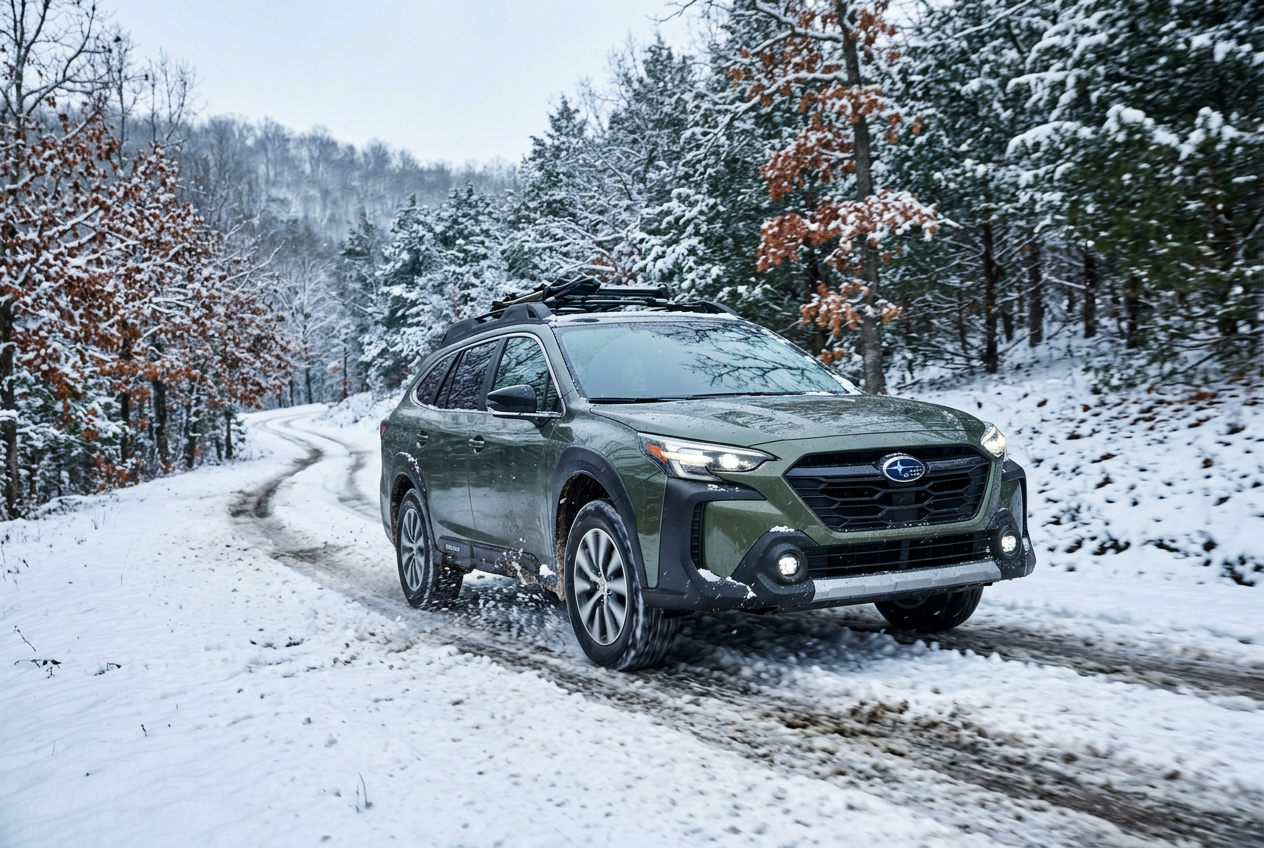
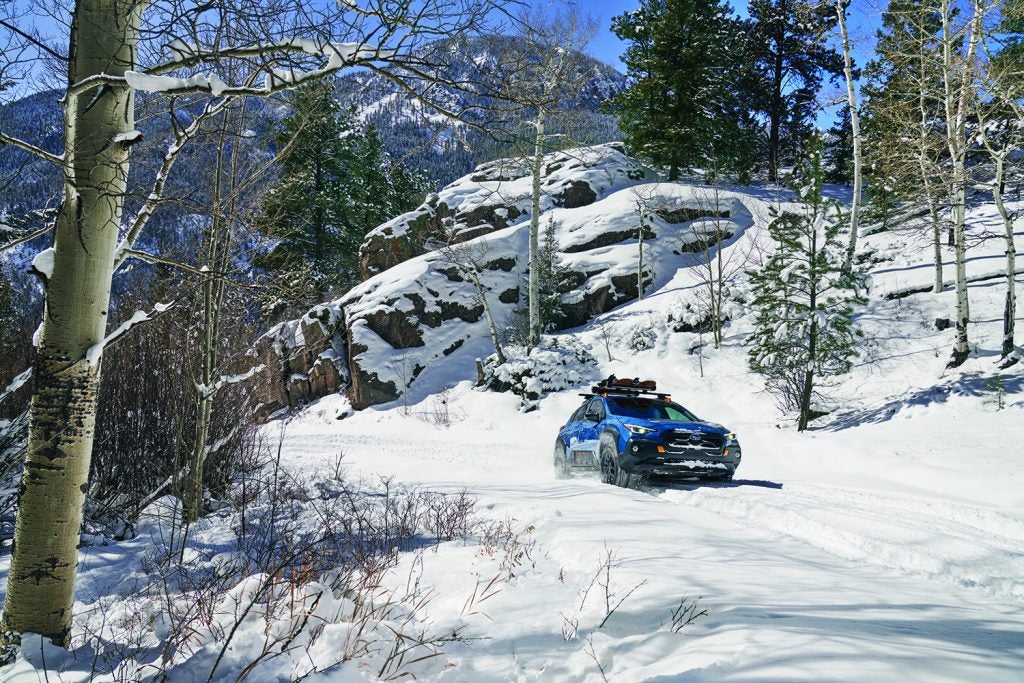
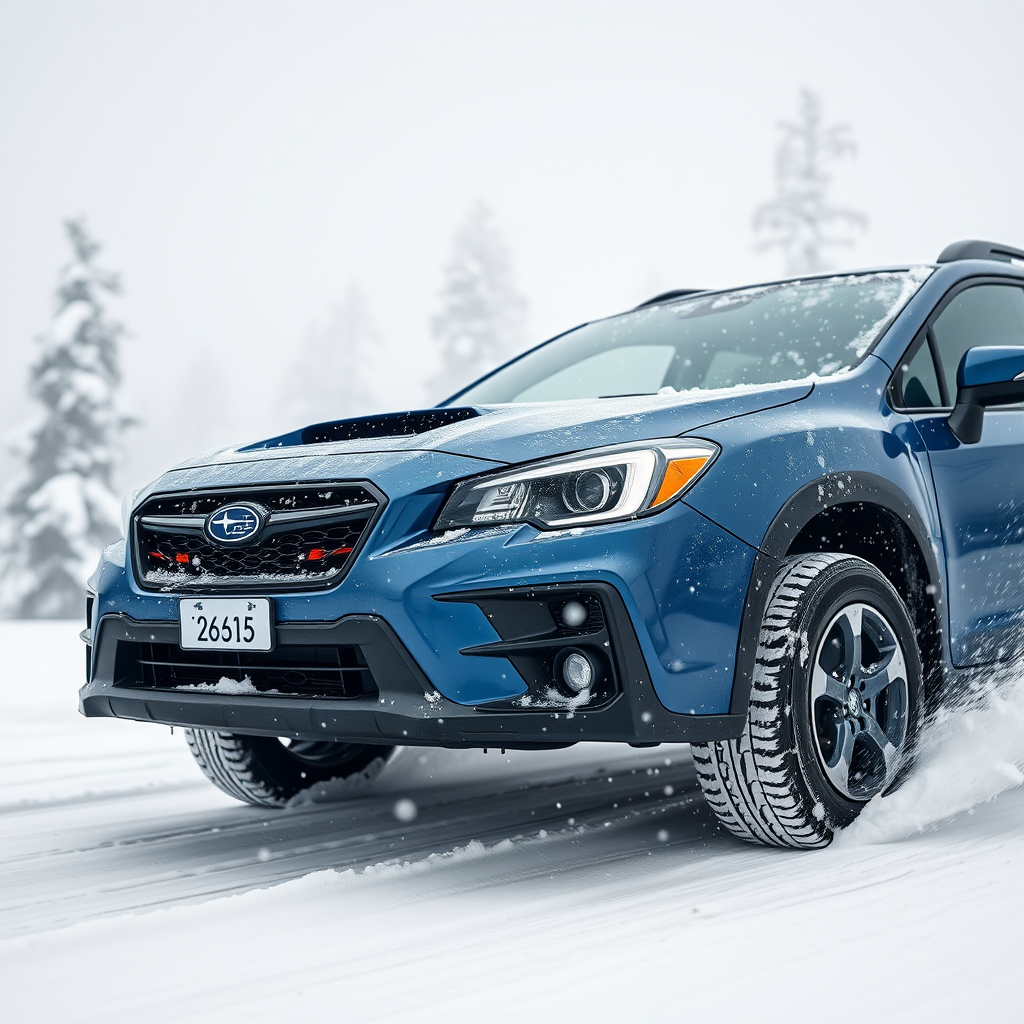
Outback on winter road

What Does Subaru X-MODE Actually Do on Snow, Ice, and Slippery Roads?

When winter storms hit the greater St. Louis metropolitan area and transform local highways into icy sheets, drivers frequently ask: What does Subaru X-MODE actually do on snow, ice, and slippery roads? At its core, Subaru X-MODE is an integrated electronic control system that alters five fundamental mechanical and software subsystems within your vehicle: engine throttle response, transmission ratio logic, front-to-rear center coupling torque force, Vehicle Dynamics Control (VDC) individual wheel braking, and Hill Descent Control. While Subaru’s Symmetrical All-Wheel Drive (AWD) is continuously active under normal driving conditions, X-MODE acts as an expert co-pilot that optimizes traction when vehicle tires encounter near-zero friction environments. Under standard highway driving conditions, your Subaru balances fuel efficiency with permanent AWD grip. However, when a vehicle encounters thick slush, packed snow, or black ice, standard traction control parameters can sometimes prove overly conservative or react too slowly to sudden individual wheel slippage. When you press the X-MODE button or turn the dual-mode selector dial, the vehicle’s central control unit instantly recalibrates the electronic throttle map so that sudden driver accelerator inputs do not break tire traction. Simultaneously, the Lineartronic Continuously Variable Transmission (CVT) is instructed to stay in a lower gear ratio to deliver maximum low-end engine torque, while the multi-plate transfer clutch locks up tightly to ensure equal power distribution between the front and rear axles. For drivers seeking to understand how these systems compare during severe winter weather, the table below provides a side-by-side comparison of standard operating parameters versus X-MODE active intervention on low-friction road surfaces. Subsystem Component Standard AWD Driving Mode X-MODE Activated (Snow/Ice) Throttle Response Linear input for normal acceleration and fuel economy Smoothed electronic mapping to prevent sudden wheel spin CVT Gear Ratio Continuously adjusts for optimal fuel efficiency Holds lower ratio to deliver consistent engine torque AWD Transfer Clutch Variable 60/40 front-to-rear torque distribution Locks up up to 50/50 split for maximum combined traction VDC Braking Intervention Gradual braking applied after prolonged wheel spin is detected Rapid, micro-burst braking to immediate spinning wheels Hill Descent Control Driver manually manages pedal braking on steep declines Automatic vehicle speed maintenance under 12 mph without foot braking How Does Subaru X-MODE Work on Snow, Ice, and Slippery Roads? Understanding the mechanical precision behind X-MODE requires looking closely at how its integrated algorithms manage wheel slippage in real time. When standard vehicles encounter a patch of glare ice under one tire, an open differential will naturally direct engine power toward the wheel with the least resistance—causing that tire to spin uncontrollably while the grounded tires remain static. Subaru’s X-MODE solves this fundamental physics challenge by using the Vehicle Dynamics Control (VDC) hydraulic unit to simulate locking differential performance across both front and rear axle assemblies. When X-MODE is engaged, wheel-speed sensors continuously monitor all four corners of the chassis thousands of times per minute. The instant a single wheel begins spinning even a fraction faster than the others, X-MODE commands the brake caliper on that specific wheel to pinch tightly. By applying targeted hydraulic pressure to the slipping wheel, torque is immediately redirected through the differential across to the opposing tire on the same axle that still has firm contact with frozen asphalt or deep snow. Another crucial aspect of X-MODE on steep winter inclines is its integrated Hill Descent Control (HDC) feature. Navigating downhill on slick ice or frozen slush is often far more dangerous than climbing uphill, as locked-up brakes eliminate steering control. Hill Descent Control acts as a low-speed off-road cruise control for downhill travel, automatically applying individual hydraulic brake pressures to maintain a constant creep speed without requiring the driver to touch the brake or gas pedals. Furthermore, throttle sensitivity is dramatically softened when X-MODE is operating under 12 mph. In a standard vehicle, tapping the gas pedal on slick snow can send a sharp surge of horsepower to the drive wheels, breaking whatever micro-adhesion exists between rubber and ice. X-MODE creates a dampening effect between your foot and the engine, ensuring smooth, linear torque delivery that gently nudges the vehicle forward without spinning out. What Is the Difference Between Single-Mode and Dual-Function X-MODE? Subaru offers two distinct variations of its software architecture across different models and trim packages: standard single-mode X-MODE and advanced Dual-Function X-MODE. Knowing the operational differences between these systems helps drivers select the optimal vehicle configuration for severe winter driving conditions. Single-Mode X-MODE Found on core trims such as Premium and Limited models, single-mode X-MODE is activated via a single push button or touchscreen toggle. It provides one all-encompassing calibration optimized for slippery surfaces like hard-packed snow, slick rain-soaked pavement, and moderate gravel. It strictly suppresses wheel spin by clamping down immediately on slipping tires to maintain traction and steering control. Dual-Function: Snow/Dirt Mode The first setting of Dual-Function X-MODE (featured on Sport, Onyx Edition, and Wilderness models) operates similarly to single-mode X-MODE. It is engineered specifically for firm, slippery surfaces like hard-packed snow, ice, and wet gravel. Traction control remains fully engaged to prevent tire spinning, while engine throttle response is dampened to maximize contact patch grip on icy roads. Dual-Function: Deep Snow/Mud Mode The second setting of Dual-Function X-MODE completely changes the vehicle's computer logic for soft, high-resistance terrain. In unplowed deep snow or thick winter mud, preventing wheel spin can actually cause a car to become stuck. This mode automatically turns off standard VDC traction control restriction, allowing controlled wheel spin so tire tread blocks can clear out packed snow and momentum can be preserved. At What Speed Does Subaru X-MODE Automatically Turn Off and Can It Be Used at High Speeds? A frequent question among winter drivers in Missouri is whether X-MODE can be left engaged while traveling at highway speeds down Interstate 40 or I-270 during a snowstorm. The short answer is no: Subaru X-MODE is specifically designed as a low-speed tactical system for negotiating difficult, low-traction situations such as unplowed driveways, steep neighborhood inclines, and stuck situations. X-MODE can be manually switched on at speeds below 12 mph to 18 mph (depending on vehicle model year). Once engaged, if you accelerate past approximately 18 mph, the system enters a standby status (indicated by a flashing status icon on the cluster). Once vehicle speed exceeds 25 mph, X-MODE automatically disengages entirely, returning the vehicle to standard Symmetrical All-Wheel Drive operation. This automatic shutoff parameter is built in by Subaru engineers for safety and component longevity. At speeds above 25 mph, the high mechanical grip locking forces and aggressive brake-vectoring algorithms of X-MODE are no longer appropriate for vehicle stability. Rest assured, when X-MODE turns off at higher speeds, Subaru's permanent Symmetrical AWD system remains fully active to keep you balanced on winter highways. Explore our inventory of winter-ready Subaru models equipped with advanced all-wheel-drive technology today. Explore New Subaru AWD Inventory Is Subaru X-MODE Better Than Toyota's Multi-Terrain Select on Snow and Ice? When comparing winter capability between midsize crossover SUVs and crossovers, buyers frequently compare Subaru's X-MODE against Toyota's Multi-Terrain Select (MTS) system found on vehicles like the RAV4 or RAV4 Woodland Edition. While both systems utilize electronic braking and engine torque intervention to combat wheel slippage, key architectural differences give Subaru a distinct edge on ice and snow. Toyota’s standard AWD system (and electronic e-AWD systems on hybrid variants) typically operates in front-wheel-drive bias under normal conditions, engaging power to the rear axle only after slip is detected at the front wheels. When Toyota's Multi-Terrain Select is activated, it must continuously command the rear electromagnetic coupling to lock up. In contrast, Subaru’s Symmetrical AWD is permanently engaged to all four wheels 100% of the time. When X-MODE is activated, it builds upon a mechanical baseline of equalized longitudinal driveshafts and balanced weight distribution. On icy inclines, Subaru's instant brake-differential response clamps down faster on slipping wheels because the mechanical power pathways to all four wheels are already pressurized. Toyota's system can experience a slight delay while sending signals to engage rear power couplings before applying individual wheel braking. What Does X-MODE with Grip Control Add to the 2027 Subaru Solterra on Low-Traction Surfaces? As electric mobility advances, the all-electric Subaru Solterra elevates X-MODE capability to new levels. Because the Solterra utilizes dual independent electric motors—one dedicated to the front axle and one to the rear axle—there is no physical mechanical driveshaft connecting the axles. This architecture allows X-MODE software to modulate torque distribution at millisecond speeds that internal combustion engines and hydraulic clutches simply cannot match. On the Solterra, Dual-Function X-MODE is paired with an exclusive feature called Grip Control. Operating as a low-speed off-road speed control system, Grip Control allows the driver to select one of five incremental speed settings when navigating extreme snow, deep mud, or steep icy paths. The system automatically regulates motor output and precise regenerative/friction braking at each wheel, allowing the driver to focus entirely on steering through treacherous obstacles without touching pedal controls. Discover the electric capability of the vehicle by browsing our New Subaru Solterra Inventory. Which Subaru Trim Levels Include Dual-Function X-MODE as Standard Equipment and What Does It Cost? While single-mode X-MODE is standard equipment across most AWD crossover models in the Subaru lineup, upgrading to Dual-Function X-MODE adds valuable low-traction capability for driver enthusiast demands. Below is a breakdown of trim availability across popular Subaru model lines. Subaru Outback Trims Single-mode X-MODE comes standard on Base, Premium, and Limited trims. Dual-Function X-MODE with Deep Snow/Mud mode comes standard on Onyx Edition, Limited XT, Touring XT, and the ultra-rugged Wilderness trim. Check out our New Subaru Outback Inventory to compare trims. Subaru Forester Trims Forester Premium features standard single-mode X-MODE. Upgrading to the Forester Sport, Limited, Touring, or Wilderness trim adds Dual-Function X-MODE as standard equipment. View current availability in our New Subaru Forester Inventory. Subaru Crosstrek & Ascent Crosstrek Sport, Limited, and Wilderness feature standard Dual-Function X-MODE. For three-row family SUV buyers, Ascent Onyx Edition and Touring trims also include Dual-Function logic. Explore options in our New Subaru Crosstrek Inventory and New Subaru Ascent Inventory. In terms of overall cost, moving from a base or mid-tier trim (with standard X-MODE) to a Sport or Onyx Edition (with Dual-Function X-MODE) typically represents a nominal step in trim pricing while adding premium interior appointments, larger wheels, and enhanced safety tech. Our team at Sunset Hills Subaru can help you review vehicle financing or leasing packages by submitting a secure application through our Get approved for financing portal. When Should You Turn On Subaru X-MODE While Driving and How Do You Know It Is Engaged? Knowing when to activate X-MODE ensures you get maximum traction right when you need it most. You should turn on X-MODE proactively in the following driving scenarios: • Navigating unplowed subdivision streets after a heavy winter snowstorm • Descending or ascending steep, icy neighborhood driveways and side roads • Driving through wet, slush-covered parking lots or rural gravel roads • Pulling a boat trailer up a slick, mossy or frozen boat ramp • Freeing your vehicle when tires become embedded in deep snow banks or slush drifts To engage X-MODE, simply press the X-MODE push button (on physical console layouts) or turn the rotary dial controller to select 'Snow/Dirt' or 'Deep Snow/Mud'. On newer Subaru touchscreen interfaces, X-MODE is toggled via a dedicated quick-access button at the top of the center display screen. You will know X-MODE is successfully active by visual cluster feedback: an green or amber 'X-MODE' indicator icon illuminates on the driver instrument panel, and the upper Multi-Function Display shows vehicle pitch angle, wheel steering angles, and individual AWD torque transfer activity. Schedule Service and Diagnostics Should You Turn Off Traction Control When Stuck in Deep Snow or Drive on Dry Pavement with X-MODE? A widespread misconception among drivers is that you must manually push the vehicle's VDC OFF (Traction Control) button whenever you get stuck in deep winter snow drifts. On traditional vehicles without specialized terrain modes, turning off traction control prevents the computer from choking engine power when tires spin. However, on Subaru vehicles equipped with standard X-MODE or Dual-Function X-MODE, manually disabling traction control is usually unnecessary. If your Subaru has Dual-Function X-MODE, simply selecting Deep Snow/Mud automatically turns off engine-power limiting while retaining active brake-vectoring torque transfer. This allows your tires to spin fast enough to fling packed snow out of the tread grooves while still transferring power to wheels with grip. Another common concern is whether accidentally leaving X-MODE turned on while driving onto dry asphalt will damage the transmission or AWD transfer unit (a phenomenon known as 'drivetrain binding' in standard part-time 4WD trucks). With Subaru X-MODE, there is no risk of drivetrain damage. Because the system automatically disengages once speed exceeds 25 mph, your vehicle seamlessly reverts to standard electronic AWD parameters without mechanical stress. What Should You Do If an X-MODE System Warning Light Appears on the Dashboard? Under rare circumstances during severe winter driving, an X-MODE warning light or message may appear on your instrument cluster display. Understanding what these warnings signify helps keep your vehicle operating smoothly. 1. System Temperature Timeout: Hill Descent Control uses continuous micro-burst braking to manage vehicle speed on steep declines. If used continuously over long periods, brake fluid temperatures can rise. To protect brake components, the X-MODE light will flash and Hill Descent Control will temporarily disengage. Simply park safely and let the brakes cool down for 10-15 minutes. 2. Wheel Speed Sensor Obstruction: Snow, slush, or road ice packed densely inside the wheel wells can block the ABS wheel-speed sensors. If sensor signals are interrupted, X-MODE will disable itself until ice is cleared. 3. Persistent Flashing Light: If the warning light remains illuminated solid yellow after restarting the vehicle, schedule an inspection with factory-certified technicians using our online Schedule Service and Diagnostics platform. Navigating Rolling Hills and Winter Conditions in Chesterfield, Maryland Heights, and Ladue Winter weather in the greater St. Louis region presents unique challenges for local commuters. Freezing rain off the Missouri River frequently turns steep subdivision hills into ice rinks, while heavy wet snowfall creates thick slush drifts across suburban arterials. For residents navigating the steep, rolling residential terrain of Chesterfield, engaging X-MODE provides peace of mind when descending icy neighborhood hills where standard pedal braking might cause skidding. Drivers commuting around Maryland Heights and traversing frozen overpasses on Interstate 270 benefit from X-MODE's rapid torque transfer when pulling out of slushy ramps onto highway traffic lanes. Meanwhile, navigating unplowed estate lanes and shaded tree-lined driveways in Ladue becomes stress-free when utilizing Dual-Function X-MODE in Deep Snow mode to push through heavy snowpack. Test Drive an X-MODE Equipped Subaru at Sunset Hills Subaru Today Nothing compares to experiencing the winter engineering of Subaru Symmetrical All-Wheel Drive and X-MODE firsthand. At Sunset Hills Subaru, located conveniently at 10100 Watson Rd, Sunset Hills, MO 63127, our product specialists are ready to show you how X-MODE functions in real-world driving situations. Whether you are looking for a fuel-efficient Crosstrek, a versatile Forester, a rugged Outback Wilderness, or a spacious three-row Ascent, we have the ideal AWD vehicle to keep your family safe all winter long. Evaluate your trade-in vehicle using our Get your value trade tool, or reach out to us by phone at Call (314) 476-9638. Conveniently located off Watson Road, you can easily Get Directions to Sunset Hills Subaru and visit our showroom today! Get Your Value Trade Subaru X-MODE Snow Performance in Sunset Hills MO | Sunset Hills Subaru
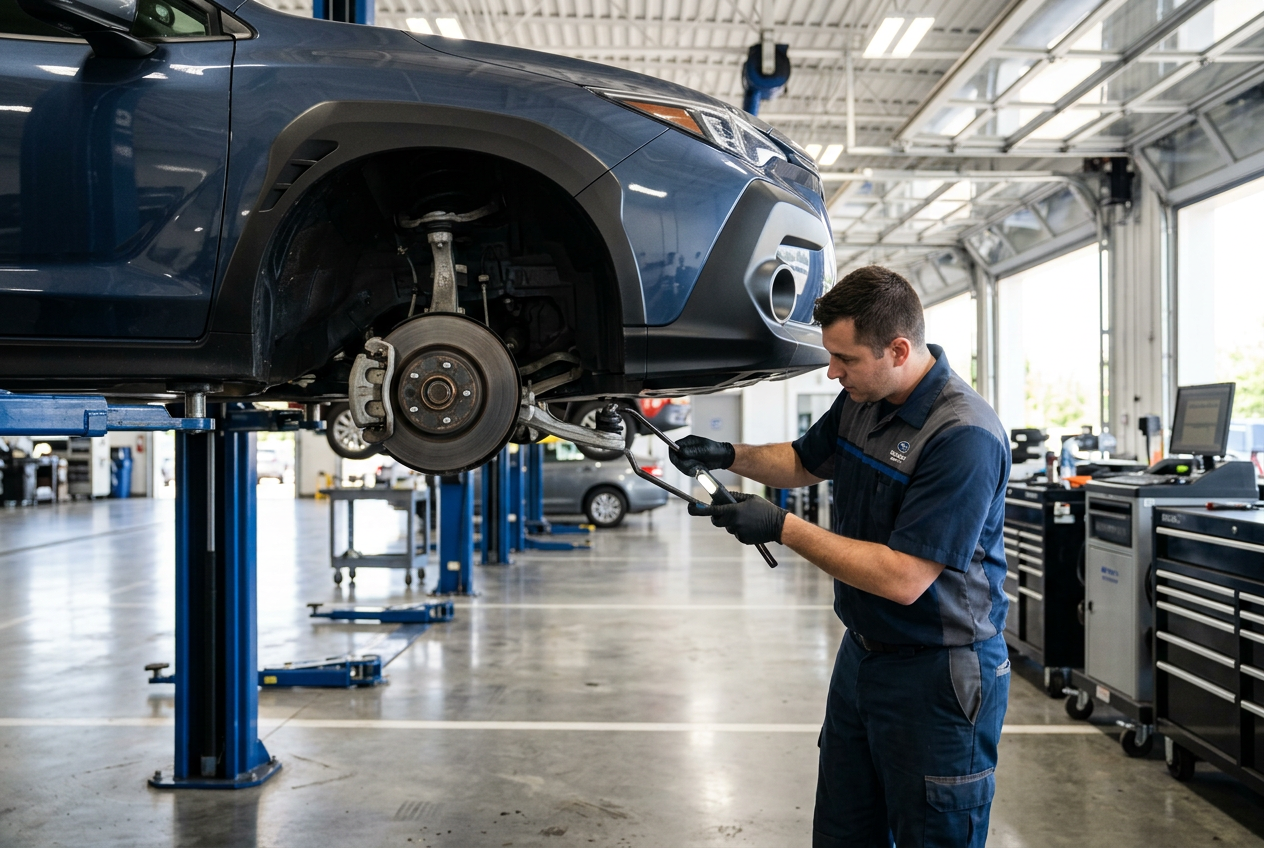
tech working on suspension

2026 Subaru Crosstrek Suspension Recall: Key Takeaways and Free Dealer Service Guide

2026 Subaru Crosstrek Suspension Recall: Key Takeaways and Free Dealer Service Guide If you drive a 2026 Subaru Crosstrek around Greater St. Louis, keeping your vehicle in peak operating condition is a top priority for highway commuting along I-44, navigating winter slush, and enjoying weekend adventures through Castlewood State Park. Recently, Subaru issued a safety recall focused on the front lower ball joint assembly in select 2026 Crosstrek models. The lower ball joint serves as the crucial pivot point linking your vehicle's front suspension control arm to the steering knuckle. When this component operates correctly, it allows smooth steering rotation and vertical suspension articulation simultaneously. However, under specific manufacturing variations or hardware installation tolerances, affected ball joint assemblies may experience premature wear, loosening, or potential dislodgement under stress. The bottom line for St. Louis area drivers is straightforward and reassuring: all official safety recall inspections, updated replacement components, hardware fastenings, and mandatory post-repair wheel alignments are 100% free of charge at authorized dealerships like Sunset Hills Subaru. Under federal regulations enforced by the National Highway Traffic Safety Administration (NHTSA), vehicle owners face zero out-of-pocket costs for recall remedies regardless of whether their Crosstrek is under original limited warranty or high mileage. Taking immediate action ensures your Crosstrek maintains its renowned Symmetrical All-Wheel Drive stability, precise steering geometry, and factory safety system calibration. Recall Topic Key Information & Summary Owner Action Required Component Affected Front Lower Ball Joint Assembly & Retaining Hardware Verify VIN with Sunset Hills Subaru Out-of-Pocket Repair Cost $0.00 (100% Covered under Federal Recall Law) Schedule recall appointment online Repair Time Frame Approximately 1.5 to 3.0 Hours (Includes Alignment) Reserve service slot or loaner vehicle Safety System Calibration Subaru EyeSight Alignment Verification Included Ensure factory technician performs alignment If you suspect your vehicle is affected, or if you have noticed unusual front-end metallic clicking, wandering steering on Highway 141, or uneven front tire edge wear, do not wait. Our factory-certified technicians at Sunset Hills Subaru stand ready to perform immediate VIN verifications, execute precise repair procedures using high-strength genuine OEM service kits, and return your Crosstrek to full safety standards with total peace of mind. Schedule Free Recall Inspection Has There Been a Recall on the Front Lower Ball Joint for the 2026 Subaru Crosstrek? Yes, Subaru of America has identified a technical variance affecting the front lower ball joint retaining structure on targeted production batches of the 2026 Subaru Crosstrek. In modern automotive engineering, the ball joint functions as a ball-and-socket bearing that connects the lower control arm to the steering knuckle. It handles dual physical duties: supporting the vertical load of the vehicle springs and damper while pivoting smoothly left and right when you turn the steering wheel. On affected 2026 Crosstrek models, specific manufacturing tolerances during sub-assembly may allow the ball joint stud to seat with inadequate torque retention or experience abnormal wear at the seat neck. Determining whether your specific vehicle requires service comes down to checking its 17-digit Vehicle Identification Number (VIN). Not every 2026 Crosstrek manufactured is subject to this recall—only those built within specific calendar date ranges at designated assembly plants. St. Louis drivers can locate their VIN on their vehicle registration card, insurance documentation, or at the base of the driver-side windshield where it meets the dashboard. You can cross-reference your VIN directly on the NHTSA official recall portal or enter it on our website to review open campaign details instantly. If you are browsing New Subaru Crosstrek Inventory, rest assured that all inventory on dealer lots must complete recall updates before delivery. Why is the lower ball joint so vital on a Subaru? Subaru's Symmetrical All-Wheel Drive system distributes engine torque continuously to all four wheels. The front lower ball joint maintains the precise kingpin angle and camber angle under aggressive cornering, heavy braking, and off-road articulation. If a ball joint wears severely or separates, the front wheel can tilt outward uncontrollably, leading to immediate loss of directional steering control and potential drive axle binding. What Type of Front Suspension Design Does the 2026 Subaru Crosstrek Use? The 2026 Subaru Crosstrek relies on a highly refined MacPherson strut front suspension architecture paired with lower L-shaped control arms and an integrated stabilizer bar. This engineering choice is central to the Crosstrek's signature balance between nimble hatchback handling and rugged 8.7-inch ground clearance (or 9.3 inches on Wilderness models). In a MacPherson setup, the top of the suspension strut bolts into the vehicle body unibody tower, while the lower control arm manages horizontal cornering forces and fore-aft braking loads. The front lower ball joint acts as the critical lower pivot anchor. It attaches to the outer tip of the lower control arm and presses into the bottom housing of the wheel hub assembly. Because the Crosstrek is built on the high-rigidity Subaru Global Platform, chassis energy is effectively dissipated through suspension bushings and joints rather than transferring into the cabin. Drivers exploring New Subaru Inventory value this platform for its ultra-quiet ride and responsive feedback. However, daily driving conditions throughout St. Louis County—such as potholes along Watson Road, frost heaves during Missouri winters, expansion joints on I-270, and gravel fire roads around West County—place tremendous dynamic stress on front suspension geometry. Every hit from a pothole creates a vertical shock force that travels through the tire, wheel hub, ball joint stud, and lower control arm. When a ball joint assembly experiences manufacturing deviations, these repetitive road impact forces can accelerate wear inside the polished steel ball socket or loosen the pinch bolt locking mechanism. Understanding this mechanical architecture highlights why proper inspection and hardware torquing during recall service are essential for preserving chassis integrity. Recognizing Early Symptoms of Front Lower Ball Joint Wear or Dislodgement 1. Audible Metallic Clunking One of the most noticeable early indicators of lower ball joint wear is a metallic popping, knocking, or clunking noise coming from the front wheel wells. This sound usually manifests when driving at low speeds over speed bumps, entering steep driveways in Kirkwood, or turning into parking spaces. As internal play develops within the ball-and-socket casing, road impacts cause the ball stud to strike against its metal housing. 2. Steering Wander & Vibrations A compromised front ball joint introduces excess mechanical play into your steering linkage. Drivers may experience 'steering wander,' where the vehicle subtly drifts to the left or right on straight stretches of highway like I-64 without steering wheel input. You may also feel slight nibble or high-frequency vibration through the steering wheel rim during normal cruising speed, caused by minute wheel alignment fluctuations. 3. Uneven Front Tire Wear When a lower ball joint loses rigidity, the front wheel alignment angles—specifically camber and toe—shift out of factory specification. Over several hundred miles, this causes abnormal tire tread scrub. Inspect your front tires for accelerated wear on the inner or outer tread shoulder (feathering or cupping). Left unaddressed, ball joint play can destroy expensive all-weather or all-terrain tires prematurely. Explore Service & Repair Services What Is the Safe Repair Procedure for the 2026 Crosstrek Front Lower Ball-Joint Recall? When you bring your 2026 Crosstrek to Sunset Hills Subaru for recall execution, factory-trained master technicians follow a meticulous repair protocol mandated by Subaru engineering standard operating procedures. The process begins with securing the vehicle on a hydraulic lift and removing the front wheel assemblies to gain direct, unimpeded access to the front brake, hub, and suspension mounting hardware. First, technicians inspect the pinch bolt area at the base of the steering knuckle and the mounting seat on the lower control arm for any signs of surface distortion or thread damage. Next, using specialized ball joint pullers and torque tools, the factory technician detaches the existing lower ball joint without damaging surrounding components such as drive axle boots, brake dust shields, or wheel speed sensors. Once removed, an updated, genuine Subaru OEM ball joint assembly featuring enhanced metallurgy and reinforced retaining hardware is installed. Technicians apply exact factory torque specifications using calibrated torque wrenches to ensure the pinch bolt and crown nut lock perfectly into position, eliminating any risk of future backing-off or vibrational movement. Does Replacing the Front Lower Ball Joint Require a Wheel Alignment Afterwards? Absolutely. A full computer-calibrated four-wheel alignment is a mandatory step in completing the 2026 Subaru Crosstrek ball joint recall repair. Disconnecting the lower control arm from the steering knuckle alters the resting geometry of the front wheels. Even fractional millimeter changes in ball joint seating position will shift camber (vertical wheel tilt) and toe (directional alignment of tires relative to vehicle centerline). Driving without a post-repair alignment leads to rapid inner-edge tire wear and degraded handling stability. Furthermore, modern Subaru vehicles rely heavily on advanced driver-assistance technology like Subaru EyeSight®. Systems such as Adaptive Cruise Control, Lane Keep Assist, Pre-Collision Braking, and Lane Centering depend on exact steering wheel angle sensor calibration and predictable chassis tracking. If suspension geometry is off after mechanical repairs, the EyeSight optical cameras and steering feedback sensors may read vehicle direction incorrectly, triggering warning indicators or reducing system effectiveness. Alignment Parameter Function in Suspension System Impact of Ball Joint Service Front Camber Controls tire contact patch during cornering Directly affected by lower ball joint seat depth Front Toe Angle Prevents tire scrub and maintains straight tracking Shifted when lower control arm pivots on lift Caster Angle Provides self-centering steering wheel feel Stabilized by proper ball joint position EyeSight Steering Sensor Syncs optical lane tracking with wheel angle Recalibrated electronically during alignment At Sunset Hills Subaru, our service facility utilizes state-of-the-art high-definition optical wheel alignment equipment specifically programmed with factory 2026 Crosstrek specifications. Best of all, because this alignment is a required step of the official recall protocol, the alignment service is entirely free to you as part of the recall coverage. Are Recall Repairs Free at Subaru Dealerships and Covered Under Warranty? Federal Mandate & Zero Cost Under federal law, all safety recall repairs are 100% free of charge to vehicle owners. Subaru of America covers all parts, technician labor, shop supplies, and computerized wheel alignment. You will never pay a deductible or hidden fees for recall work. Factory Warranty Coverage Beyond recall campaigns, suspension components on new Crosstreks are protected by Subaru's 3-Year / 36,000-Mile New Car Limited Warranty. Any non-recall mechanical defect during this period is repaired free under standard manufacturer warranty policies. Genuine OEM Components All recall repairs at Sunset Hills Subaru utilize exclusively engineered Subaru Genuine Parts. These components are factory-backed and designed specifically for your Crosstrek model year. Need extra maintenance parts? Visit Find Subaru Parts online. Order OEM Subaru Parts & Accessories Are Front Lower Ball Joints on the Crosstrek Serviceable Separately from the Control Arm? A major modular design advantage of the Subaru Crosstrek front suspension is that the lower ball joint is individually serviceable and detachable from the lower control arm. On many competing crossovers, the lower ball joint is permanently pressed or riveted into the control arm assembly during factory stamping. On those vehicles, replacing a worn ball joint requires replacing the entire lower control arm—increasing repair costs significantly. On the 2026 Subaru Crosstrek, the lower ball joint features a bolt-on housing design that secures directly into the arm pocket using high-strength fasteners. This design gives Subaru service technicians optimal flexibility during recall service or future long-term maintenance. During the recall service, if technician inspection reveals that the lower control arm bushing or arm pocket sustained any wear due to a loose ball joint, the affected control arm will also be replaced under recall warranty at zero cost to the customer. This modular engineering philosophy highlights Subaru's commitment to sensible long-term ownership costs, ensuring individual components can be swapped efficiently without unnecessarily discarding healthy structural parts. How Much Does Out-of-Warranty Front Ball Joint Replacement Cost and What Are Annual Expenses? While the 2026 Crosstrek recall service is 100% free under federal mandates, understanding out-of-warranty repair benchmarks and routine maintenance budgets provides helpful perspective for long-term ownership. On non-recalled older vehicles or out-of-warranty models, replacement costs can vary based on labor rates and parts selection. Contact the dealership for current pricing details. Overall, the Subaru Crosstrek remains one of the most affordable compact AWD crossovers to maintain over time. Regular factory-recommended service costs can vary based on vehicle condition and mileage. Contact the service department for current maintenance estimates. Service Item Estimated Retail Cost Recall Cost to Owner Front Ball Joint Assembly (Per Side) $110 - $180 (Parts) $0.00 Labor (Inspection & Installation) $150 - $270 (Labor) $0.00 Four-Wheel Computer Alignment $120 - $160 $0.00 Total Recall Cost $380 - $610 $0.00 Total Do Open Recall Repairs Negatively Affect a Vehicle's Resale Value? Open Recalls Flag Reports An unresolved safety recall leaves a red warning flag on vehicle history platforms like CARFAX® and AutoCheck®. Prospective buyers and trade-in appraisers notice open safety recalls, which can delay transactions, reduce offers, or prevent private sales until cleared. Completed Service Restores Value Once the recall repair is executed at Sunset Hills Subaru, our service department updates Subaru's central factory database. The open campaign is marked as 'Completed,' clearing your CARFAX report and fully preserving your Crosstrek's market-leading resale value. Max Trade-In Protection Subaru vehicles enjoy some of the highest residual values in the industry. Keeping all recall services up-to-date protects your equity when upgrading in the future. Interested in your current equity? Try Get your value trade online today. Check Your Trade-In Value Online How Long Does a Front Lower Ball Joint Replacement Service Take at a Dealership? At Sunset Hills Subaru, we value your time and aim to make recall service as seamless and swift as possible. The physical removal and replacement of the front lower ball joint assembly takes approximately 1.0 to 1.5 hours of dedicated shop time. Adding the mandatory computerized four-wheel alignment and multi-point vehicle health check brings total turnaround time to roughly 1.5 to 3.0 hours. While your Crosstrek is in our service bay, you can relax in our customer lounge featuring high-speed Wi-Fi, complimentary Starbucks® coffee and refreshments, quiet work cubicles, and comfortable seating. Alternatively, for repairs requiring longer scheduling windows, speak with our service team regarding complimentary Subaru loaner vehicles or shuttle service across Sunset Hills, Crestwood, and Fenton. Scheduling your visit online in advance ensures our service department pre-allocates the exact OEM recall parts kit for your VIN, minimizing waiting time and ensuring instant service desk check-in when you arrive at Watson Road. How Can a St. Louis Area Owner Arrange Local Recall Service at Sunset Hills Subaru? Arranging your free 2026 Subaru Crosstrek suspension recall service at Sunset Hills Subaru is simple and hassle-free. As St. Louis's trusted Subaru service destination, we are dedicated to keeping your vehicle safe, reliable, and prepared for every journey ahead. Follow these simple steps to complete your recall service: 1. Locate Your VIN: Find your 17-digit VIN on your insurance card, registration, or lower driver-side windshield. 2. Schedule Online or By Phone: Click below to reserve a service appointment online or Call (314) 476-9638 to speak directly with our service advisors. 3. Visit Our State-of-the-Art Facility: Bring your Crosstrek to 10100 Watson Rd, Sunset Hills, MO 63127. Need navigation directions? Click Get Directions to Sunset Hills Subaru. 4. Drive Away with Complete Confidence: Enjoy complimentary multi-point inspections, factory recall completion documentation, and a freshly washed vehicle upon completion. 2026 Subaru Crosstrek Recall Service in Sunset Hills MO | Sunset Hills Subaru

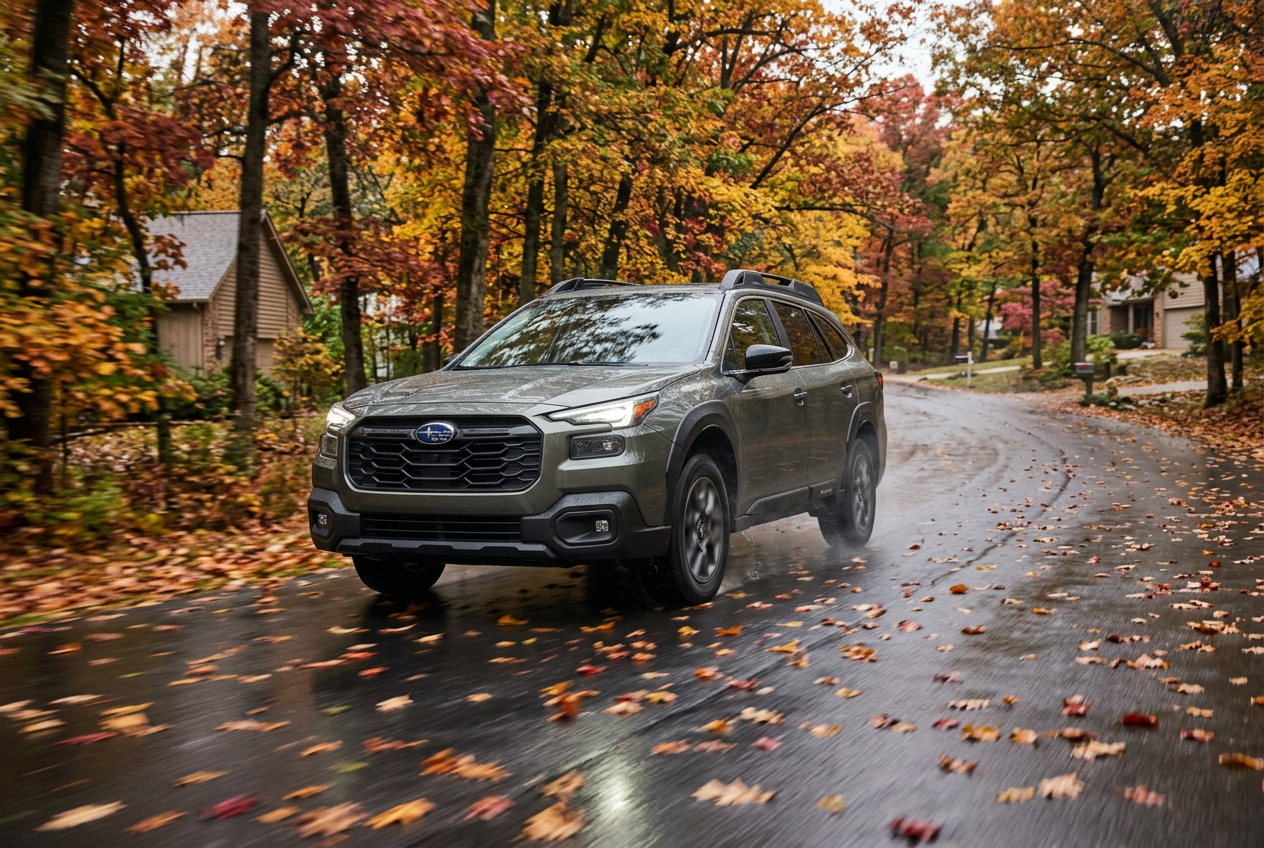
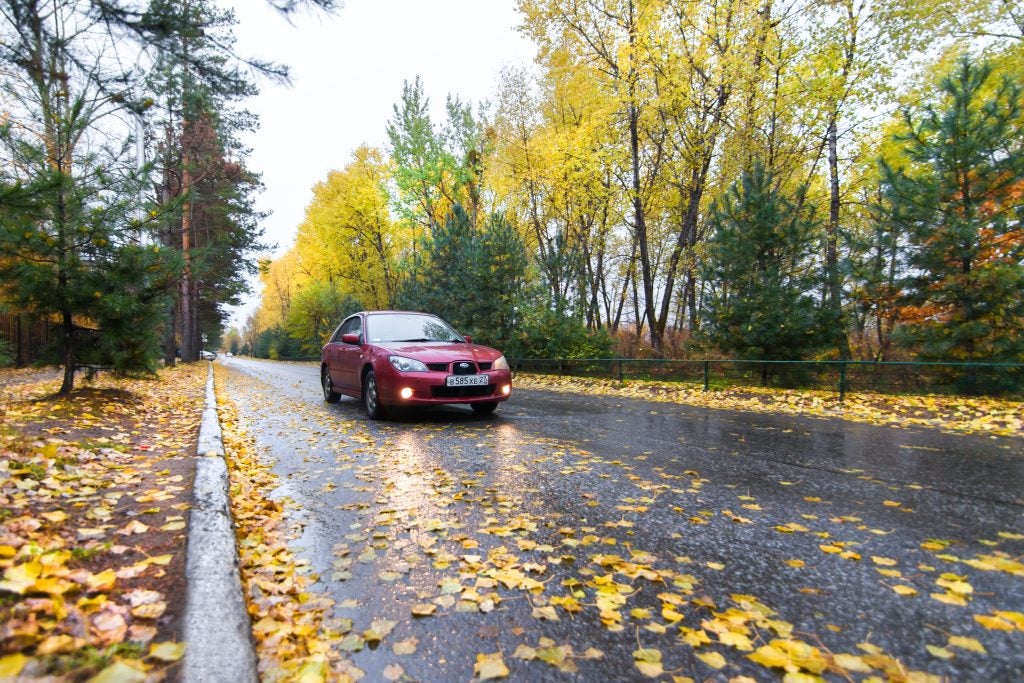
Subaru Outback on a fall road

What Tire Checks Help Protect a 2027 Subaru AWD System on Wet, Leaf-Covered Roads Near Sunset Hills?

As autumn unfolds across St. Louis County, the picturesque turn of leaves brings an unmistakable Midwestern charm to Sunset Hills, Kirkwood, and Webster Groves. However, for drivers navigating the rolling hills along Watson Road or taking scenic detours near Laumeier Sculpture Park, fallen foliage introduces a severe driving hazard. When crisp autumn rain mixes with decomposing oak and maple leaves, it transforms ordinary asphalt into a treacherous friction-free slip zone. Protecting your safety and preserving the engineering brilliance of your 2027 Subaru Symmetrical All-Wheel Drive (AWD) system requires proactive vigilance before the first heavy autumn downpour arrives. Key Takeaway for Subaru Owners: Protecting your 2027 Subaru AWD powertrain on wet, leaf-covered roads comes down to three non-negotiable tire checks: maintaining strictly matched tire tread depths across all four wheels within 2/32 of an inch, keeping cold inflation pressure adjusted between 32 and 35 PSI to offset sharp autumn temperature drops, and ensuring your remaining usable tread depth never drops below 4/32 inch for wet weather. Deviating from these checks not only causes hazardous hydroplaning on slick leaf mats but can also create continuous thermal friction within the center differential, potentially binding the transfer clutches over time. Below, our master technicians at Sunset Hills Subaru walk you through the essential tire science, driving physics, and local service tips to keep your Subaru performing flawlessly all season long. Whether you are commuting daily along I-44, dropping off kids at Lindbergh High School, or exploring weekend trails through Castlewood State Park, your tires serve as the solitary interface between Subaru's advanced drivetrain and the pavement. If you ever suspect uneven wear or want a complimentary inspection from factory-certified specialists, feel free to visit our service hub or Get Directions to Sunset Hills Subaru at 10100 Watson Rd. Our team is dedicated to keeping your vehicle safe, reliable, and ready for every Missouri season. Why Wet Leaves and Autumn Rain Create Severe Traction Hazards on St. Louis Roads Many Missouri drivers underestimate the sheer danger of wet autumn leaves, viewing them as little more than a colorful visual backdrop. In reality, leaf decay is a complex biochemical reaction that severely alters road physics. When wet leaves blanket asphalt, organic compounds such as tannic acids, natural oils, and cellulose fibers leach onto the road surface under the weight of passing vehicle tires. Combined with rainfall, this organic mixture forms a slick, micro-thin slime layer with a coefficient of friction comparable to black ice. When a tire rolls over wet foliage, it faces a compound hazard: hydroplaning on water trapped between leaf layers and mechanical slippage on the leaf pulp itself. The leaves physically compress beneath the tread, creating a barrier that prevents tire siping from grabbing the asphalt underneath. If your tires lack deep evacuation channels, your vehicle literally floats across the top of the leaf mat. This loss of direct tire-to-road contact disrupts directional stability during cornering and drastically extends stopping distances. Subaru Symmetrical All-Wheel Drive is engineered to react dynamically to changing road friction, constantly shifting torque away from wheels that slip to wheels that grip. However, no mechanical or electronic AWD system can generate grip out of thin air. For your 2027 Subaru Crosstrek, Outback, or Forester to distribute drive torque efficiently, each tire must maintain an even contact patch and adequate tread geometry. Without proper tire maintenance, even the world's finest all-wheel-drive system cannot fully overcome basic laws of physics on wet leaf mats. Shaded corridors throughout Sunset Hills, such as Sappington Road and Rott Road, stay damp long after morning rains cease because overhead tree canopies block sunlight. Leaves rotting in these cool shadows create persistent, hidden slick spots that surprise unprepared drivers. Keeping your tires properly inspected ensures your Subaru retains peak traction through every surprise bend. Essential Tire Tread Checks: Measuring Depth and Matching Tire Circumference for Subaru AWD Regular tread inspections are the single most critical step in preserving both driver safety and drivetrain health on a 2027 Subaru. Unlike front-wheel-drive or rear-wheel-drive vehicles that tolerate subtle differences in tire wear, Subaru's continuous Symmetrical AWD system relies on uniform wheel rotation speed across both axles. The Penny & Depth Gauge Test Checking tread depth takes less than two minutes. Insert an upside-down penny into your tread grooves with Lincoln's head facing down. If the top of Lincoln's head remains visible, your tread is at or below 2/32 inch, which is legally worn out and dangerously inadequate for wet autumn weather. For wet roads covered in leaves, Subaru recommends a minimum tread depth of 4/32 inch. Using an inexpensive digital tire depth gauge gives you precise measurements across the inner, center, and outer tread ribs. The 2/32-Inch Variance Rule On a 2027 Subaru AWD model, all four tires must match in tread depth within 2/32 of an inch (or 1/4 inch of total rolling circumference). If one tire is brand new at 10/32 inch while the remaining three are worn down to 5/32 inch, the brand-new tire travels a slightly greater distance per revolution. This constant rotational mismatch tricks the AWD system into sensing slippage, triggering continuous engagement of the transfer clutch pack. Preventing Drivetrain Stress When mismatched tires force the center differential to slip continuously, internal fluid heat builds up rapidly. Over thousands of miles, this thermal stress causes differential fluid degradation, premature clutch wear, and eventual binding in tight parking lot maneuvers. Maintaining identical tread wear across all four corners protects your transmission warranty and ensures buttery-smooth torque distribution when slipping on slick wet leaf trails. If you notice uneven tread wear between your front and rear axles during your fall check, a professional tire rotation can re-balance circumference differences before mechanical stress occurs. You can easily order replacement tires or Find Subaru Parts directly through Sunset Hills Subaru. Managing Fall Tire Pressure Drops and Cooler Missouri Temperature Shifts As autumn progresses in Eastern Missouri, daily temperatures fluctuate wildly—frosted morning commutes along Highway 141 often give way to mild afternoon sun. A fundamental law of physics dictates that air contracts as ambient air temperature drops. For every 10 degrees Fahrenheit drop in temperature, your Subaru's tires lose approximately 1 PSI (pound per square inch) of pressure. A sudden October cold front dropping temperatures by 30 degrees overnight can easily reduce your tire pressure by 3 to 4 PSI without a single puncture in the rubber. Underinflated tires pose a double threat on wet, leaf-covered roads. First, underinflation causes the center of the tire tread to sag inward slightly, concentrating vehicle weight on the outer shoulders. This distorted contact patch severely diminishes the tire's ability to channel away standing water and leaf slush, dramatically accelerating hydroplaning risk. Second, underinflation increases sidewall flexing and rolling resistance, generating excessive internal heat during highway speeds on I-270 and compromising fuel efficiency. To maintain optimal traction, check your tire pressures cold—first thing in the morning before driving more than a mile. Always match the PSI values posted on the driver's side B-pillar door placard (typically 32 to 35 PSI cold depending on your 2027 Subaru trim level), rather than the maximum pressure molded on the tire sidewall. If your Tire Pressure Monitoring System (TPMS) warning light illuminates on a chilly morning, don't ignore it. You can conveniently Schedule Service and Diagnostics at Sunset Hills Subaru for a fast pressure adjustment and nitrogen fill check. Schedule Fall Tire Service Are All-Season Tires Enough for Missouri Fall Weather or Are Winter Tires Needed? A frequent question among Sunset Hills Subaru drivers is whether standard factory all-season tires provide enough protection during autumn or if dedicated winter tires are required. The answer lies in understanding compound chemistry and ambient temperature thresholds. Standard all-season tires are engineered to perform across a wide temperature spectrum, but their synthetic rubber compound begins to stiffen when temperatures drop consistently below 45°F (7°C). When rubber hardens due to cold weather, it loses its micro-flexibility—the ability to conform to tiny surface irregularities in the road. On wet, leaf-covered asphalt, a hardened tread compound acts almost like hard plastic sliding across wet glass. This is where modern 3-Peak Mountain Snowflake (3PMSF) rated All-Weather tires (such as Michelin CrossClimate2 or Yokohama Geolandar A/T G015) offer a tremendous advantage over conventional all-seasons. All-weather tires use high-silica rubber compounds that remain flexible in sub-freezing cold while retaining high-mileage tread life during warm autumn afternoons. For standard Missouri fall driving—combining damp days in the 50s with chilly nights in the 30s—a quality all-weather tire or healthy standard all-season tire with at least 5/32 inch tread is generally sufficient. However, if your daily commute involves steep unpaved driveways in Wildwood or early morning routes over river bridges, switching to winter tires by late autumn provides ultimate stopping confidence. You can explore tire options across our New Subaru Inventory lineup to see what comes standard on fresh 2027 models. Tire Type Temp Threshold Wet Leaf Grip Snow/Ice Capability Standard All-Season Above 45°F Moderate Basic Light Snow 3PMSF All-Weather Below & Above 45°F High Severe Snow Rated Dedicated Winter Below 45°F Maximum Extreme Ice & Snow What Type of Tire Channels Water and Wet Leaves Best on a Subaru? Not all tire tread patterns perform equally when faced with organic autumn debris. Engineering a tire for wet leaf shedding requires a balance between hydroplaning resistance, directional stability, and noise dampening. Circumferential Channels Deep continuous circumferential grooves running around the perimeter of the tire act as high-volume water highways. These channels funnel gallons of standing water per second away from the tire footprint. Wide circumferential channels also prevent wet leaf pulp from becoming trapped inside the tread, throwing debris outward via centrifugal force as the wheel rotates. Sweeping Lateral Sipes High-density 3D zigzag sipes slice through the surface tension of water films layer by layer. On leaf-covered surfaces, these micro-edges bite directly into soft leaf tissue, creating mechanical interlocking grip where smooth tread blocks would simply slide. Sweeping shoulder grooves push water outward past the tire flanks, maintaining clean contact. Asymmetric Tread Design Asymmetric patterns feature distinct inner and outer tread zones. The inner zone uses open, interconnected grooves optimized for rapid water evacuation on wet highways. The outer shoulder blocks feature stiff, continuous ribs that resist deformation during hard cornering on leaf-slicked suburban turns, keeping your Subaru planted and predictable. Whether you drive a New Subaru Outback Inventory model or a versatile New Subaru Forester Inventory SUV, equipping your vehicle with factory-approved asymmetric or directional all-weather tires guarantees maximum wet-weather clearing capability. How Subaru Symmetrical AWD Compares to Standard FWD, Part-Time 4WD, and Reactive AWD Systems To appreciate why proper tire checks are so vital for a 2027 Subaru, it helps to understand how Subaru Symmetrical AWD differs from competing drivetrain architectures on wet, slippery roads. Many competitive crossover SUVs use 'slip-first' reactive electronic AWD systems. These vehicles drive 100% of power to the front wheels during normal cruising and only transfer torque to the rear wheels after computer sensors detect wheel slip. On a wet leaf mat, by the time a reactive system detects slippage and engages the rear axle, the vehicle has already lost directional inertia. Standard Front-Wheel Drive (FWD) vehicles face an even tougher challenge: the front tires must handle 100% of steering input, 100% of initial braking load, and 100% of engine power. Under wet leaf conditions, over-tasking the front tires causes severe front-end wash-out (understeer). Conversely, traditional part-time four-wheel drive (4WD) trucks locking front and rear axles together cause driveline binding ('crow-hopping') during sharp turns on wet pavement, breaking tire traction entirely. Subaru Symmetrical AWD operates full-time, continuously routing power to all four wheels simultaneously with a baseline torque split (typically 60:40 front-to-rear on Lineartronic CVT models). Because all four tires share drive forces constantly, individual wheel workload is minimized, keeping tire traction well inside its friction circle. Paired with properly maintained tires, Subaru Symmetrical AWD delivers unmatched stability when accelerating through wet, leafy intersections across St. Louis County. Curious how Subaru AWD feels compared to traditional FWD? Browse our Used Vehicle Inventory or test drive a new model at Sunset Hills Subaru today to experience full-time traction firsthand. Does AWD Reduce Braking Distance on Wet Leaves Compared to FWD? One of the most dangerous driving myths in the automotive world is the belief that All-Wheel Drive helps your vehicle stop faster on slick surfaces. AWD helps you accelerate and maintain cornering stability, but it does NOT reduce your braking distance. When you step on the brake pedal, every modern car—whether FWD, RWD, or AWD—uses four-wheel braking. On wet, leaf-covered asphalt, your stopping distance is strictly dictated by tire tread grip, vehicle momentum, Anti-lock Braking System (ABS) pulse speed, and rubber compound elasticity. If your tires are worn below 4/32 inch, slamming on the brakes over a mat of wet leaves will trigger ABS pulsation instantly, but the vehicle will continue sliding until the tires clear water or catch dry pavement. Every 2027 Subaru comes standard with advanced EyeSight® Driver Assist Technology, featuring Pre-Collision Braking and Automatic Emergency Steering. While EyeSight camera algorithms can detect slowing traffic or obstacles ahead in low visibility, the physical stopping force relies 100% on tire traction. Maintaining high-quality tires ensures your EyeSight system can bring your vehicle to a safe, controlled stop when emergency situations arise. Explore New Subaru Models Navigating Wet Leaf Canopies from Wooded Ladue Corridors to Rolling Chesterfield Hills Wooded Ladue Corridors Shaded roadways through Ladue and Frontenac feature dense mature tree canopies. During fall rains, heavy leaf drops coat narrow, winding asphalt roads. Drivers negotiating tight bends along Ladue Road should ease off the accelerator before entering turns rather than braking mid-corner, avoiding side-load traction loss on leaf slime. Rolling Chesterfield Hills In Chesterfield and Clarkson Valley, rolling topography adds elevation changes to wet driving conditions. Descending steep wet hills covered in oak leaves requires smooth, progressive braking. Subaru owners can utilize Hill Descent Control or drop their CVT shift lever into low mode to harness engine braking safely without locking wheels. Maryland Heights Parkways High-traffic parkways around Maryland Heights and Creve Coeur feature frequent stop-and-go commuter traffic. Wet leaf accumulation around stop lines and turn lanes demands extra following distance. Drivers in New Subaru Crosstrek Inventory models benefit from agile turning responses when keeping smooth control inputs. How Much Does a Full Set of New All-Season Tires Cost for a Subaru SUV? When it comes time to replace worn tires on your 2027 Subaru, understanding pricing expectations helps you plan effectively. Replacement tire costs vary primarily based on wheel diameter (17-inch, 18-inch, or 19-inch), speed rating, and performance category. Standard 17-inch all-season tires for entry Crosstrek or Forester models typically range from $650 to $850 for a set of four, while premium 18-inch or 19-inch all-weather sets for Outback Touring or Ascent trims range between $900 and $1,300. When purchasing tires through Sunset Hills Subaru, your total price includes professional mounting, electronic high-speed balancing, new valve stems, eco-friendly scrap tire recycling, and factory OEM fitment verification. Furthermore, original equipment tires purchased through our authorized dealership include 24-Month Road Hazard Coverage at no extra cost, protecting your investment against unexpected nail punctures or pothole damage on Missouri roads. Subaru Model / Wheel Size Est. 4-Tire Cost Range Recommended Category Crosstrek / Impreza (17") $650 – $850 All-Season / All-Weather Forester / Outback (18") $800 – $1,100 High-Silica All-Weather Ascent / Outback Touring (19"-20") $950 – $1,350 Premium Touring All-Season Before ordering online elsewhere, check our Current Service and Parts Specials for seasonal manufacturer rebates from top tire brands like Yokohama, Michelin, Goodyear, and Continental. What Fall Service Checks and Local Offers Should Subaru Owners Verify Before a Wet-Weather Drive? A successful wet-weather autumn routine involves comprehensive vehicle care beyond tire tread depth checks. Before setting off on extended holiday road trips or daily commutes during rainy autumn weeks, schedule a complete fall multi-point maintenance check at Sunset Hills Subaru. Essential Fall Maintenance Checklist: • Four-Wheel Computerized Alignment: Missouri potholes can misalign your suspension unnoticed. Misalignment drags tires sideways, wearing out tread edges rapidly and compromising AWD track stability on slick leaves. • 6,000-Mile Tire Rotation: Moving front tires to rear in an inverted cross pattern balances natural wear differences created by steering forces. • Brake Pad & Rotor Thickness Check: Wet roads demand optimal braking responsiveness. Ensure your brake pads have at least 5mm of remaining material. • Genuine OEM Wiper Blade Replacement: Crisp visibility is vital during heavy downpours. Fresh rubber inserts prevent streak-filled windshields when clearing autumn spray. • Battery Cold-Cranking Amp Test: Chilly autumn mornings put extra electrical load on starter motors. Be sure to review our Current Service and Parts Specials for bundle savings on fall inspections, synthetic oil changes, and tire rotation packages before your visit. Evaluating Your Subaru AWD Performance and Considering a Model Upgrade Before Winter If your current vehicle is several years old and facing upcoming maintenance costs—such as replacement tires, brake overhauls, and differential fluid flushes—autumn is an ideal time to evaluate whether upgrading to a 2027 Subaru model makes smart financial sense. Modern 2027 Subaru models feature advanced dual-function X-MODE® technology, offering tailored settings for 'Snow/Dirt' and 'Deep Snow/Mud'. X-MODE optimizes engine throttle response, transmission gear ratios, front/rear AWD coupling force, and VDC braking control to pull you smoothly through thick leaf sludge or deep winter snow. Stepping up to a new vehicle also means driving home with brand-new factory tires, complete warranty peace of mind, and the latest EyeSight driver safety enhancements. At Sunset Hills Subaru, we make upgrading effortless. You can quickly Get your value trade online to see how much equity your current vehicle holds toward a 2027 Outback, Forester, Crosstrek, or 3-row New Subaru Ascent Inventory model. You can also Get approved for financing in minutes before stepping into our showroom. Value Your Trade-In Online Schedule Your Subaru Fall Tire Inspection at Sunset Hills Subaru Don't let slick, leaf-covered roads take you by surprise this autumn. By performing quick regular tread checks, maintaining strictly matched tire circumference within 2/32 inch, keeping proper cold PSI levels, and inspecting your alignment, you protect your 2027 Subaru AWD powertrain and keep your family safe across every St. Louis journey. Ready to get your vehicle fall-ready? Schedule Service and Diagnostics online today, or give our friendly service department a ring. Call us at (314) 476-9638 to speak directly with an expert advisor. You can also visit our state-of-the-art facility located at 10100 Watson Rd, Sunset Hills, MO 63127. Check our Current New Car Specials if you're considering a brand-new AWD upgrade this season. We look forward to serving you! Book Service Appointment Now 2027 Subaru AWD Tire Maintenance in Sunset Hills MO | Sunset Hills Subaru

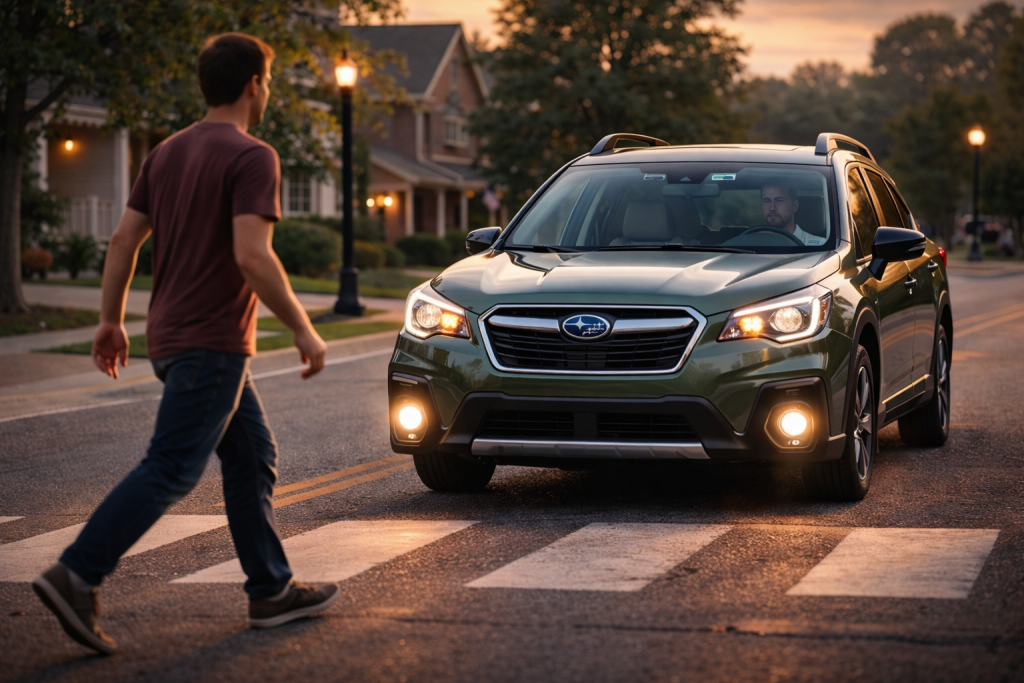
How Subaru Safety Technology Actually Prevents Accidents: Real-World Scenarios Explained

How Subaru Safety Technology Actually Prevents Accidents: Real-World Scenarios Explained When it comes to protecting your family on the road in Sunset Hills, MO, and the surrounding areas like Maplewood and Chesterfield, safety is paramount. Subaru’s innovative safety technology, especially the renowned EyeSight® driver assist system, is engineered to help prevent accidents before they occur. By combining advanced cameras, sensors, and intelligent software, Subaru vehicles offer drivers confidence and peace of mind in everyday driving and challenging conditions alike. If you're curious about how this technology works, how it compares to others, and what it means for your driving experience, this comprehensive guide will cover everything you need to know. For personalized assistance or questions about Subaru safety features, feel free to call us at or visit us at 10100 Watson Rd, Sunset Hills, MO 63127. Table of Contents Understanding Subaru EyeSight Technology: How It Works to Prevent Accidents Learn about the core components and mechanisms behind EyeSight and how it monitors the road to avoid collisions. Real-World Scenarios Where EyeSight Makes a Difference Explore practical examples demonstrating EyeSight’s effectiveness in everyday driving situations. Subaru EyeSight’s Detection Capabilities: Spotting Potential Hazards Early Dive into the technical details of how EyeSight identifies vehicles, pedestrians, bicyclists, and more in diverse road environments. Cost Considerations: What Does EyeSight Technology Add to Your Vehicle? Understand how the inclusion of EyeSight affects Subaru model pricing and the value it adds. Comparing EyeSight to Other Safety Systems: Why Subaru Stands Out A detailed comparison between EyeSight and competitor systems, highlighting advantages relevant to Missouri drivers. Activating, Customizing, and Maintaining Your Subaru Safety Features Guidance on personalizing EyeSight settings and the importance of professional calibration to ensure optimal performance. Keep Your Subaru’s Safety Features Performing at Their Best Tips for ongoing maintenance, access to genuine Subaru parts, and scheduling expert service in Sunset Hills. Understanding Subaru EyeSight Technology: How It Works to Prevent Accidents Subaru EyeSight is a sophisticated driver assist system that employs twin stereo cameras mounted just behind the windshield to continuously scan the road ahead. These cameras provide a comprehensive, three-dimensional view of traffic, pedestrians, bicyclists, and other obstacles. EyeSight’s core functions include adaptive cruise control, pre-collision braking, lane departure warning, and lane sway alert, all working together to enhance driver awareness and intervene when necessary to avoid accidents. Adaptive Cruise Control (ACC): Unlike traditional cruise control, ACC adjusts your vehicle’s speed based on traffic flow, maintaining a safe following distance. This is invaluable for drivers commuting from areas like Chesterfield to St. Louis, where highway traffic can fluctuate rapidly. Pre-Collision Braking: When EyeSight detects an imminent collision risk, it first alerts the driver with visual and audible warnings. If the driver does not react promptly, the system can automatically apply the brakes to reduce impact severity or prevent the crash entirely. Lane Departure and Sway Warning: EyeSight monitors lane markings and vehicle positioning. If the system senses unintentional drifting without signaling, it gently alerts the driver, helping maintain lane discipline on the winding roads near Maplewood or during early morning commutes in Webster Groves. Wide Field of View and Advanced Sensors: The latest EyeSight generation, available in models like the Subaru Outback and Legacy, includes a third mono camera expanding peripheral vision. This enhancement improves detection of crossing bicyclists and pedestrians, crucial for urban and suburban driving around Sunset Hills. EyeSight’s ability to combine multiple safety features into a seamless system makes it particularly effective at accident prevention. It is designed not only to warn but also to intervene, offering a safety net when driver reaction time might lag. Real-World Scenarios Where EyeSight Makes a Difference To truly appreciate EyeSight’s role in accident prevention, consider some real-life examples relevant to drivers in the St. Louis metropolitan area: Sudden Stops on Missouri Highways: Imagine driving on I-44 near Valley Park during rush hour when traffic suddenly halts. EyeSight’s pre-collision braking system detects the slowing vehicle ahead, alerts you instantly, and applies brakes if necessary, preventing a rear-end collision even if you are momentarily distracted. Bicyclist Detection in Residential Areas: Early versions of EyeSight effectively reduced crashes with parallel-moving bicyclists by nearly 30%. The latest generation now expands detection to crossing bicyclists, a vital enhancement for neighborhoods like Richmond Heights where bike paths intersect with roads. This proactive detection helps avoid crashes during school runs or weekend family biking excursions. Lane Departure on Curvy Roads: In areas like Ladue, where roads are often winding and shaded by mature trees, EyeSight’s lane departure warning is essential. On foggy or rainy days, when lane lines might be less visible, the system’s alerts help prevent drifting into adjacent lanes or off-road excursions, reducing accident risk. Blind Spot and Rear Cross-Traffic Alerts: When backing out of tight parking lots in busy Maplewood shopping districts, Subaru’s integrated blind spot detection and rear cross-traffic alert work with EyeSight to alert drivers of approaching vehicles or pedestrians, preventing collisions in crowded spaces. These scenarios show how EyeSight actively supports drivers, adapting to diverse road conditions and hazards common to communities around Sunset Hills Subaru. Subaru EyeSight’s Detection Capabilities: Spotting Potential Hazards Early EyeSight’s detection technology is built on a dual-camera system that provides a stereoscopic, three-dimensional view comparable to human eyesight but with faster processing and greater consistency. This allows the system to identify: Vehicles Ahead: EyeSight tracks the speed and distance of cars in front, calculating safe following distances and responding to sudden changes such as abrupt stops or cut-ins. Pedestrians and Bicyclists: The system detects pedestrians crossing or walking alongside roads and bicyclists moving parallel or crossing the vehicle’s path. The addition of a third mono camera in newer models further enhances this capability, crucial for safe driving in urban neighborhoods like Crestwood or near community parks. Traffic Signs and Lane Markings: EyeSight reads lane markings to assist lane keeping and alerts, and recognizes stop signs and traffic signals to anticipate driver actions. Low-Light and Challenging Conditions: While early versions had limitations detecting pedestrians at night, ongoing software improvements and hardware upgrades have increased EyeSight’s reliability in low-light or adverse weather, a necessity for Missouri’s seasonal climate changes. EyeSight’s ability to continuously monitor multiple hazard types with rapid processing reduces driver workload and increases reaction time, effectively preventing many common accident types. Cost Considerations: What Does EyeSight Technology Add to Your Vehicle? Understanding the investment in safety technology is important for families and professionals in Sunset Hills and nearby communities. Subaru includes the latest EyeSight system as a standard or available feature across many models, including the Subaru Outback and Legacy. The 2023 Subaru Outback and Legacy come equipped with EyeSight as standard on most trims, incorporating advanced features like adaptive cruise control, pre-collision braking, and lane keep assist. Pricing for these models reflects the inclusion of EyeSight’s comprehensive safety suite, which adds value far beyond the initial cost. For example, the base Outback starts in a competitive price range while offering this advanced technology. Insurance companies often recognize EyeSight’s proven accident reduction benefits with discounts, potentially lowering overall ownership costs. At Sunset Hills Subaru, we invite you to explore current pricing and specials by browsing our Current New Car Specials. For value-minded shoppers, our Used Vehicle Inventory also offers models equipped with EyeSight technology. Comparing EyeSight to Other Safety Systems: Why Subaru Stands Out When evaluating safety technology, many Missouri drivers compare Subaru EyeSight with systems from competitors like Toyota or Honda. Here’s why EyeSight remains a leader: Standard All-Wheel Drive (AWD) Integration: Subaru’s symmetrical AWD complements EyeSight by enhancing vehicle control on slippery or uneven terrain common in Fenton or St. Charles, improving accident avoidance beyond electronic systems alone. Stereo Camera Technology: Unlike some systems relying on radar or single cameras, EyeSight’s dual cameras provide depth perception, enabling more accurate hazard detection and distance calculation. Expanded Field of View: The latest EyeSight generation includes a third mono camera that detects pedestrians and bicyclists sooner, surpassing many competitors who lack this feature. Automatic Emergency Steering: EyeSight integrates emergency steering assistance at speeds under 50 mph to help avoid obstacles—a capability not universally available in comparable systems. Proven Effectiveness: Insurance Institute for Highway Safety (IIHS) data shows EyeSight-equipped vehicles reduce rear-end crashes with injuries by up to 85%, a remarkable figure in automotive safety. For Sunset Hills drivers seeking a reliable, proven, and comprehensive safety system, Subaru EyeSight offers unmatched peace of mind. Activating, Customizing, and Maintaining Your Subaru Safety Features Subaru designs EyeSight to be user-friendly, allowing drivers to adjust settings to their preferences while maintaining safety integrity. Activation and Settings: EyeSight features activate automatically when the vehicle is started, but drivers can customize alerts, sensitivity levels, and adaptive cruise control settings via the touchscreen interface in many Subaru models. Driver Education: We encourage new Subaru owners to familiarize themselves with EyeSight features at our dealership in Sunset Hills, where our staff can provide demonstrations and answer questions. Calibration and Professional Assistance: If your Subaru’s windshield or cameras have been replaced, or after certain repairs, professional calibration is essential to ensure EyeSight functions correctly. This service requires specialized equipment and expertise available at authorized centers like ours. To maintain peak performance of your EyeSight system and other safety features, schedule regular check-ups with our Service Department at Sunset Hills Subaru. You can conveniently Schedule Service and Diagnostics online. Keep Your Subaru’s Safety Features Performing at Their Best Proper maintenance is critical to the longevity and accuracy of your Subaru’s safety systems. Here are expert tips tailored for drivers in the Sunset Hills area: Routine Inspections: Regular service appointments help detect and address issues with cameras, sensors, and vehicle alignment that affect EyeSight’s performance. Genuine Subaru Parts: For repairs or replacements related to your safety system, always use authentic components. Our Find Subaru Parts department stocks genuine parts designed for your vehicle’s specifications. Seasonal Preparation: Missouri’s weather can challenge safety systems with snow, rain, and dirt. Keeping sensor areas clean and ensuring windshield clarity supports EyeSight’s effectiveness. Service Specials: Take advantage of our Current Service and Parts Specials to maintain your Subaru affordably. If you’re considering upgrading or replacing your vehicle, browse our extensive New Subaru Inventory or Used Vehicle Inventory to find models equipped with the latest EyeSight technology. Also, if you’re curious about your current vehicle’s worth, use our handy tool to Get your value trade and discover your options. Empowering Missouri Drivers with Trusted Subaru Safety Technology Subaru EyeSight is more than just a collection of safety features; it’s a trusted companion designed to help families, commuters, and adventurers throughout Sunset Hills and nearby communities like Chesterfield and Maplewood. By blending cutting-edge technology with Subaru’s commitment to reliability and practicality, EyeSight actively prevents accidents and enhances confidence on every journey. Whether navigating busy city streets or exploring Missouri’s scenic byways, Subaru’s innovative safety suite supports drivers with timely alerts and interventions. For a firsthand experience, visit Sunset Hills Subaru at 10100 Watson Rd, Sunset Hills, MO 63127, or call us at to schedule a no-pressure test drive and see how EyeSight can make a difference for your family. Discover our full lineup, including the latest models like the New Subaru Outback Inventory, New Subaru Legacy Inventory, and New Subaru Forester Inventory, each equipped with advanced safety technology to keep you protected. For ongoing care and to keep your Subaru performing at its best, remember to Schedule Service and Diagnostics with our expert technicians. We look forward to helping you enjoy safer, more confident driving in the St. Louis area. © 2026 Sunset Hills Subaru


Your Complete Guide: How to Prepare for a Safe and Confident Winter Road Trip with Sunset Hills Subaru

Your Complete Guide: How to Prepare for a Safe and Confident Winter Road Trip with Sunset Hills Subaru Embarking on a winter road trip through Missouri’s scenic areas—from the neighborhoods of Maplewood to the outskirts of Chesterfield—requires thoughtful preparation to ensure safety and comfort for you and your family. Whether you're planning a weekend getaway or a longer journey, understanding how to equip your Subaru and yourself for winter conditions is essential. At Sunset Hills Subaru, located at 10100 Watson Rd, Sunset Hills, MO 63127, we’re committed to helping our community drive confidently through Missouri’s winter months. Call us at (314) 476-9638 for expert advice or to schedule a service appointment. Understanding Winter Road Trip Essentials Explore the critical items and vehicle checks required for a safe winter journey, including winter emergency kits and vehicle maintenance. Mastering the 5 P's of Winter Weather for Your Trip Learn how to protect your family, pets, plants, pipes, and practice fire safety during winter travels. Applying the 30-60-90 Rule to Your Subaru Before Departure Discover milestone maintenance steps tailored to Subaru vehicles to ensure peak performance throughout your winter trip. Driving Safely in Snow: Speed and Control Tips Understand the best speeds for winter driving and how to handle challenging conditions like black ice and understeer. Techniques for Getting Unstuck: Rocking Your Vehicle Safely Learn the proper method to free your Subaru from snow or mud without damaging your vehicle. Packing Smart With the 54321 Rule for Winter Travel Simplify your packing with an efficient system that balances essentials and space for your cold-weather adventure. AWD vs. 4WD: Which Subaru System is Best for Missouri Winters? Explore the differences between AWD and 4WD, and why Subaru’s standard AWD provides reliable winter traction. Budgeting Your Winter Road Trip: Is $1000 Enough? Gain insights on typical expenses to pl54321 packing methodancially. Winter Driving Emergency Kit: What to Pack in Your Subaru Ensure you have the right supplies, from jumper cables to first aid kits, to stay safe on winter roads. Navigating Flooded Roads and Safe Water Depths Understand the dangers of flood waters and how to avoid hazardous driving situations during winter thaw or rain. Table of Contents Understanding Winter Road Trip Essentials Preparing for a winter road trip goes beyond just packing warm clothes. It demands a combination of vehicle readiness and carrying essential gear that can make the difference between a smooth ride and an emergency. Vehicle Maintenance and Preparation Before setting out from places like Richmond Heights or Glendale, it’s crucial to ensure your Subaru is winter-ready. This includes checking tire tread depth for optimal grip on icy roads, verifying the function of your EyeSight® driver assist system for added safety, and inspecting fluids such as antifreeze and windshield washer fluid rated for freezing temperatures. Scheduling a thorough winter check-up at Sunset Hills Subaru’s service center is easy—just Schedule Service and Diagnostics online or call us for expert care. Essential Emergency Kit Components Every winter road trip should include: Jumper cables: For restarting a battery drained by cold. Flashlight and spare batteries: For visibility during nighttime or roadside emergencies. Warning devices: Flares or reflective emergency markers to alert other drivers. First aid kit: Stocked with essentials including a tourniquet. Warm blankets and extra clothing: To protect against cold weather if stranded. Charged cell phone and portable charger: To maintain communication. Water and non-perishable food: For hydration and sustenance during delays. Shovel and ice scraper: To clear snow and ice from around your wheels and windows. For convenience, you can find parts and accessories tailored to your Subaru at Find Subaru Parts, ensuring your vehicle is equipped with reliable, genuine components. Mastering the 5 P's of Winter Weather for Your Trip Winter safety extends beyond your vehicle; it encompasses protecting all aspects of your environment and family. Protect People: Ensure all passengers have warm clothing and that your Subaru’s heating system is functioning optimally. Use safety features like EyeSight® driver assist to monitor road conditions and provide collision warnings. Protect Pets: If traveling with pets from neighborhoods like Valley Park or Crestwood, bring adequate pet blankets, food, and water. Never leave pets unattended in a cold car. Protect Plants: Cover or bring indoor any delicate plants before the cold snap, especially if parking outdoors in areas such as Ladue or Maplewood. Protect Pipes: Insulate water pipes at home to avoid freezing while you’re away on your trip. Practice Fire Safety: Carry a small fire extinguisher and avoid using open flames inside your vehicle or tenting areas during outdoor stops. Applying these 5 P’s ensures both a safe and responsible winter trip, reducing risks associated with cold weather exposure. Applying the 30-60-90 Rule to Your Subaru Before Departure The 30-60-90 maintenance rule is a trusted guideline for keeping your vehicle in top condition, especially before demanding winter travel. At 30,000 miles: Essential services include oil and filter changes, tire rotation, air and fuel filter replacement, and fluid level checks. These help maintain engine efficiency and tire performance on slick Missouri roads near Sappington or Twin Oaks. At 60,000 miles: Your Subaru should undergo more comprehensive brake inspections, transmission fluid changes, coolant flushes, spark plug replacements, and a detailed check of belts and hoses. These services are vital for enduring colder temperatures and increased engine strain. At 90,000 miles: This milestone often requires timing belt replacements, thorough engine and exhaust system checks, fuel system inspections, power steering fluid service, and battery testing. Staying ahead of these ensures your Subaru’s reliability for long winter journeys. To keep your vehicle aligned with these milestones, visit our service center at 10100 Watson Rd, Sunset Hills, MO 63127 or Schedule Service and Diagnostics conveniently online. Driving Safely in Snow: Speed and Control Tips Winter driving demands deliberate speed management and control techniques to navigate snow-covered roads safely. Ideal Speed for Snowy Conditions Missouri drivers, whether commuting through Maryland Heights or heading to the Ozarks for a weekend trip, should never exceed 45 mph on icy roads. Often, driving slower than this is essential, especially on untreated or shaded roads in Webster Groves or Fenton, where snow and black ice can form. Handling Black Ice Black ice is a transparent ice layer that blends seamlessly with the road surface, especially common on bridges and shaded areas like those found in Crestwood or Ladue. It forms when moisture freezes on roads at or just below freezing temperatures. Be alert in early mornings and shaded areas. Avoid sudden acceleration or braking. If your Subaru encounters black ice, gently steer in the direction of the slide to regain control without abrupt movements. Understanding Understeer and Oversteer Winter conditions can increase the risk of understeer—where the front tires lose grip causing the car to take a wider turn—and oversteer, where the rear tires lose traction. Subaru’s standard AWD system helps mitigate these risks by distributing power to all wheels. If understeer occurs, ease off the accelerator and reduce steering input. For oversteer, keep your steering steady and avoid sudden throttle changes. Mastering these techniques enhances your safety on roads across Richmond Heights and Oakland during winter. Techniques for Getting Unstuck: Rocking Your Vehicle Safely If your Subaru becomes stuck in snow or mud near St Charles or Glendale, rocking the vehicle is a safe and effective method to regain traction. Start by turning the steering wheel left and right to clear snow from around your front tires. Shift gently between reverse and a forward gear, applying light, steady pressure to the accelerator to create a rocking motion. Avoid spinning wheels excessively; this can cause tire and engine overheating. Disable the Electronic Stability Control (ESC) system before attempting this. If unsuccessful after several attempts, it’s safer to seek professional towing. For expert advice or assistance, contact us or visit Sunset Hills Subaru’s service department for help with repairs or upgrades at Find Subaru Parts. Packing Smart With the 54321 Rule for Winter Travel Packing efficiently means bringing what you need without overloading your Subaru. 5 tops: Layered shirts or sweaters suitable for varying temperatures. 4 bottoms: Mix of insulated pants and regular wear. 3 pairs of shoes: Including waterproof boots and comfortable indoor footwear. 2 dresses or handbags: Adaptable accessories for different occasions. 1 set of small accessories: Gloves, hats, scarves. This approach helps maximize space while ensuring you’re prepared for Missouri’s winter variability, whether you’re heading out from Ladue or Valley Park. AWD vs. 4WD: Which Subaru System is Best for Missouri Winters? Subaru’s standard AWD system offers seamless power distribution to all wheels, ideal for everyday driving on snow-covered streets in Sunset Hills, Richmond Heights, or Concord. It automatically adjusts to road conditions, providing confidence without driver intervention. 4WD systems, more common in trucks and SUVs, excel in deep snow and off-road conditions but often require manual activation and are less fuel-efficient. Key Points: AWD is best for most Missouri winter driving, including urban and highway conditions. 4WD is suited for rugged terrain and heavy snow, less common in Subaru models. Regardless of drivetrain, winter tires dramatically enhance safety. Explore Subaru’s lineup with AWD at New Subaru Inventory, including models like the Subaru Outback and Forester, perfect for Missouri winters. Budgeting Your Winter Road Trip: Is $1000 Enough? Planning financially for your winter trip from places like Maplewood or Webster Groves is vital. Drivers expect to spend roughly $2 per mile covering gas, food, lodging, and insurance. The average budget is just above $1,000 for trips averaging 500 miles. Gasoline prices may be favorable, but food and accommodation costs vary. Consider additional costs like emergency supplies or equipment rentals. Use these insights to plan realistically so your trip remains enjoyable and stress-free. Winter Driving Emergency Kit: What to Pack in Your Subaru Ensuring your Subaru is stocked with a comprehensive emergency kit can be lifesaving. Must-haves include: Jumper cables and a portable battery charger Ice scraper, snow shovel, and traction mats First aid supplies with bandages, antiseptics, and pain relievers Flashlight with extra batteries Non-perishable food and bottled water Warm blankets and extra gloves, hats Cell phone charger and backup power banks Keep your emergency kit accessible and check contents seasonally. For additional gear, explore our parts department at Find Subaru Parts. Navigating Flooded Roads and Safe Water Depths Winter thaw and rain can create hazardous flood conditions on Missouri roads. Understanding water depths is critical: 6 inches of moving water can cause loss of vehicle control. 1 foot is sufficient to float many vehicles. 2 feet can sweep away SUVs and trucks. Never attempt to drive through flooded roads—especially in low-lying areas around Fenton or Sappington. Subaru’s manufacturer-backed roadside assistance at Sunset Hills Subaru can provide expert help if you encounter emergencies. For assistance, call Subaru Roadside Assistance: 800-261-2155. Explore Subaru’s Inventory and Services at Sunset Hills Subaru Ready to upgrade your vehicle for winter adventures? Browse our extensive selection of new and used Subarus, including the sporty BRZ, comfortable Legacy, and rugged Crosstrek models, all equipped with Subaru’s signature AWD. Check out the latest offers at Current New Car Specials. Explore high-quality pre-owned options at Used Vehicle Inventory. Keep your Subaru in peak condition with our Current Service and Parts Specials. If you're wondering about your current vehicle’s worth before making a change, use our Get your value trade tool for a quick, transparent appraisal. Confident Winter Travel Starts with Preparation at Sunset Hills Subaru Winter road trips across Missouri should be enjoyed with peace of mind. By preparing your Subaru with proper maintenance, packing smartly, understanding winter driving techniques, and equipping yourself with essential safety gear, your journey will be safer and more enjoyable. For expert guidance or to schedule your vehicle’s winter readiness check, visit us at 10100 Watson Rd, Sunset Hills, MO 63127 or call (314) 476-9638. At Sunset Hills Subaru, we’re here to support your family’s safety and adventure on every mile of Missouri’s winter roads. © 2025 Sunset Hills Subaru

Essential Fall Driving Safety Tips from Sunset Hills Subaru

KHABAROVSK, RUSSIA - OCTOBER 14, 2017: Subaru Impreza on autumn road in rainy day Essential Fall and Winter Driving Safety Tips from Sunset Hills Subaru As the seasons shift from warm summer days to crisp fall air and eventually the chill of winter, driving conditions change dramatically across the St Louis, Chesterfield, and Richmond Heights areas. Whether commuting through Webster Groves or heading out from Valley Park, understanding how to adapt your driving habits is critical for safety. At Sunset Hills Subaru, located at 10100 Watson Rd, Sunset Hills, MO 63127, we want to ensure that every driver is prepared to face the unique challenges that fall and winter bring to Missouri roads. If you have any vehicle maintenance concerns, please don’t hesitate to contact us at (314) 476-9638. Before we dive into the comprehensive safety strategies, here’s a quick overview of what we’ll cover: Table of Contents Preparing Your Vehicle for Fall and Winter: Maintenance Essentials Learn how to ready your Subaru for the colder months by ensuring brakes, tires, and fluids are in top condition. Critical Driving Adjustments for Fall: Navigating Leaves, Rain, and Wildlife Understand how wet leaves and rain impact traction and why slowing down near peak deer activity is vital. Mastering Winter Driving: Techniques and Safety Measures Discover expert tips on driving safely in snow and ice, including braking, acceleration, and the use of Subaru's all-wheel drive. Avoiding Common Winter Driving Mistakes: What to Watch For Identify behaviors and conditions that can lead to accidents, and learn how to prevent them. Handling Emergencies and Vehicle Preparedness in Winter Equip yourself with strategies and tools to manage roadside emergencies safely. Optimizing Vehicle Warm-Up and Battery Care for Fall and Winter Get insights on modern car warm-up practices, especially for Subaru’s hybrid and electric models. Expert Advice on Driving Down Slopes Safely in Winter Conditions Learn the best techniques to maintain control on inclines and declines during slippery conditions. Preparing Your Vehicle for Fall and Winter: Maintenance Essentials Keeping your Subaru in excellent condition is the foundation for safe driving during the colder months, particularly in the St Charles and Maryland Heights regions where seasonal weather shifts can be abrupt. Preparing your vehicle starts with a meticulous maintenance check, ideally before the first frost or snow arrives. First, inspect your brakes thoroughly. Braking systems endure significant stress in wet and icy conditions, so worn pads or malfunctioning components can drastically reduce stopping power. At Sunset Hills Subaru, we offer comprehensive brake servicing and can advise on the best brake pads suited for Missouri’s fall and winter climates. Next, evaluate your tires. Proper inflation and sufficient tread depth are critical for maintaining traction on slick surfaces like wet leaves or snow. Use the “penny test” — if you insert a penny into the tread groove with Lincoln’s head fully visible, it’s time for replacement. For those in areas like Ladue or Fenton where snowfall is common, investing in Subaru’s winter tires or all-season tires designed for colder temperatures can significantly improve safety. Ensure your fluids are winter-ready: Antifreeze levels should be checked and topped up to prevent freezing. Windshield washer fluid should be replaced with a winter formulation containing solvents that prevent ice buildup on your windshield. Confirm your heater, defroster, and exhaust system are operating efficiently to maintain visibility and cabin comfort. Don’t forget to carry essential tools such as chains, chain repair links, and a flashlight, especially if you plan to travel through areas like Concord or Crestwood where road conditions can be unpredictable. Before winter fully sets in, schedule maintenance at our service center by clicking to Schedule Service and Diagnostics to keep your Subaru performing safely. Critical Driving Adjustments for Fall: Navigating Leaves, Rain, and Wildlife Fall in the Sunset Hills, Twin Oaks, and Glendale areas brings a picturesque landscape of colorful leaves but also brings unique driving hazards that require attention and adaptation. One major challenge is wet leaves on the road, which can create a slick surface comparable to ice. Tires lose traction when driving over leaves soaked by rain, increasing the risk of hydroplaning. It’s essential to drive cautiously by: Reducing speed well below the posted limits. Avoiding sudden braking or sharp turns. Increasing following distance behind other vehicles. Rainfall in fall further complicates traction and visibility. Ensure your windshield wipers are in excellent condition and use your headlights even during daytime to improve visibility to others. This is especially important during the shorter daylight hours in Webster Groves and Richmond Heights, where early sunsets can catch drivers off guard. Another critical factor is deer activity, which peaks between October and January. Deer are most active during dawn and dusk, which coincides with many drivers’ commute times. To reduce the risk of collision: Slow down in areas marked with deer crossing signs. Increase vigilance around wooded and rural roads in areas like Sappington and Lakeshire. Use high beams when appropriate to spot animals sooner but switch to low beams when other vehicles approach. For drivers looking for new vehicles better equipped to handle fall and winter hazards, explore our New Subaru Inventory, including models like the Subaru Outback and Forester, which feature advanced all-wheel drive systems and elevated ground clearance ideal for these conditions. Mastering Winter Driving: Techniques and Safety Measures Winter driving in St Louis, Oakland, and Maplewood demands a refined approach focusing on vehicle control, visibility, and preparedness. Acceleration and deceleration should be smooth and gradual to maintain tire grip. Sudden inputs can cause skidding or loss of control, especially on icy or snowy surfaces. The key is to: Leave extra space between your vehicle and the one ahead—up to six seconds of following distance is recommended. Avoid cruise control in winter; automatic speed adjustments are necessary on slippery roads. Braking requires special attention. If your Subaru is equipped with Anti-lock Braking System (ABS), apply firm, continuous pressure to the brake pedal; avoid pumping the brakes. If your brakes are not ABS-equipped, gently pump the brakes to avoid wheel lockup. When starting from a stop on snow or ice, use a higher gear (such as second gear) to reduce wheel spin. This technique is particularly useful for Subaru WRX or Crosstrek owners navigating hills in local neighborhoods like Crescent Hills or Crestwood. Visibility is often compromised by snow, fog, or early darkness. Use your vehicle’s defroster and fog lights to maintain clear windows and improve your field of vision. Regularly clean snow and ice off your Subaru’s roof, headlights, and exhaust pipe to prevent hazards to yourself and other drivers. For those who need extra traction, especially in deep snow or ice-covered roads in Valley Park or Fenton, carrying and learning to install tire chains is a wise precaution. Remember, chains must be installed on the drive wheels, and improper installation can reduce control. New Subaru models, such as the Subaru Solterra electric SUV, come equipped with cutting-edge traction technology and driver assistance systems that can help navigate winter roads more confidently. Browse the New Subaru Solterra Inventory to learn more. Avoiding Common Winter Driving Mistakes: What to Watch For Many accidents in winter are caused by avoidable mistakes. Drivers in areas like Ladue, St Charles, and Glendale should be mindful of these common pitfalls: Tailgating: Close following distances leave little room for error. Maintain a safe buffer to allow ample stopping distance. Using Cruise Control on Ice: Cruise control can cause the wheels to spin or lock up, leading to loss of control. Sudden Steering or Braking: Abrupt maneuvers can cause skids. Instead, steer smoothly and brake gently. Ignoring Weather Warnings: Always check the forecast and road conditions before traveling. If snow squalls or icy conditions are predicted, delay travel if possible. Driving with Worn Tires: Tires lacking tread or improperly inflated reduce traction dramatically. Winter tires or Subaru’s all-season tires are recommended. For those needing replacement parts such as brake pads, tires, or wiper blades, visit our Find Subaru Parts page to ensure you use genuine Subaru components designed for your vehicle’s optimal performance. Handling Emergencies and Vehicle Preparedness in Winter Emergencies can happen in any season but are more common in winter due to hazardous road conditions. Drivers in Maryland Heights, Twin Oaks, or Maplewood should be prepared with an emergency kit including: Warm blankets and extra clothing Non-perishable food and water Flashlight with extra batteries Ice scraper and shovel Sand or cat litter for traction If you become stranded, stay with your vehicle to avoid exposure and conserve fuel. Ensure your exhaust pipe remains clear of snow to prevent carbon monoxide buildup inside the car. Subaru owners enjoy peace of mind with Subaru Roadside Assistance, providing manufacturer-backed support, genuine parts, and authorized service centers. For coordination or emergencies, you can contact them directly or get help through Sunset Hills Subaru. If your Subaru requires winter-specific maintenance or repairs, schedule an appointment today to Schedule Service and Diagnostics. Need to upgrade your vehicle before winter? Check our Used Vehicle Inventory for great pre-owned options ready for seasonal driving. Optimizing Vehicle Warm-Up and Battery Care for Fall and Winter Contrary to old habits, modern Subaru engines do not require long warm-up periods before driving, even in cold Missouri mornings around Sappington or Richmond Heights. Experts recommend starting the engine and driving gently to warm components efficiently. However, for Subaru’s hybrid and electric vehicles like the Solterra, preconditioning the battery and interior via the vehicle’s app is advisable. Battery efficiency drops by 10% to 20% below freezing temperatures, so warming the car while plugged in helps maintain driving range and performance. Drivers should avoid idling for long periods, as it wastes fuel and increases emissions. Instead, focus on gradual acceleration and avoid hard accelerations until the engine reaches optimal temperature. Expert Advice on Driving Down Slopes Safely in Winter Conditions Steep hills and slopes around areas like Chesterfield or Crestwood can be especially hazardous when covered in ice or snow. To safely navigate downhill slopes: Select the lowest gear to limit speed and maximize engine braking. If your Subaru is equipped with Hill Descent Control (HDC), activate it to maintain a steady pace without using the brakes excessively. Avoid riding the brakes to prevent overheating or loss of braking power. Keep your wheels pointed straight downhill to maintain control. If you start to slide, gently increase throttle to regain control without abrupt steering movements. Using these techniques preserves vehicle stability and reduces the risk of sliding on slick inclines. Empowering Safe Seasonal Driving with Sunset Hills Subaru Driving safely through the fall and winter seasons in Missouri requires preparation, awareness, and respect for changing conditions. From tire maintenance and vehicle readiness to adopting cautious driving habits and emergency preparedness, every step counts toward your safety. At Sunset Hills Subaru, our team is committed to supporting drivers across St Louis, Fenton, and the surrounding communities with expert advice, quality vehicle maintenance, and a wide selection of Subaru vehicles equipped for all seasons. Whether you’re interested in exploring the New Subaru WRX Inventory for sporty performance or the rugged Subaru Forester Inventory for versatile all-weather capability, we have options tailored to your lifestyle. Don’t wait for the first snow to prepare—visit us at 10100 Watson Rd, Sunset Hills, MO 63127 or call (314) 476-9638 to discuss your driving needs. Also, find out how much your current vehicle is worth with our Get your value trade tool and explore our latest offers in Current New Car Specials and Service and Parts Specials. Drive smart, stay safe, and enjoy the journey year-round with Sunset Hills Subaru. © 2025 Sunset Hills Subaru

The Comprehensive Guide to All-Wheel Drive (AWD) and Its Benefits

The Comprehensive Guide to All-Wheel Drive (AWD) and Its Benefits All-wheel drive (AWD) is a feature that many drivers consider essential, especially in regions with challenging weather conditions. At Sunset Hills Subaru, located at 10100 Watson Rd, Sunset Hills, MO 63127, USA, we understand the importance of AWD in enhancing vehicle performance and safety. Whether you're navigating the snowy streets of St Charles, MO, or the rainy roads of Chesterfield, MO, AWD offers significant advantages. This article will delve into the intricacies of AWD, its benefits, and why it might be the right choice for you. Table of Contents Understanding All-Wheel Drive (AWD) Benefits of AWD: Enhanced Traction and Stability AWD vs. FWD: Which is Better for You? Is AWD Worth the Investment? AWD in Different Weather Conditions Maintenance and Fuel Efficiency Considerations Explore AWD Options at Sunset Hills Subaru Understanding All-Wheel Drive (AWD) AWD systems are designed to enhance a vehicle's traction by sending power to all four wheels simultaneously. This capability is particularly beneficial in maintaining stability and control on slippery surfaces. Unlike two-wheel drive systems, which only power either the front or rear wheels, AWD ensures that power is distributed across all tires, providing a more balanced and secure driving experience. There are two main types of AWD systems: full-time AWD and part-time AWD. Full-time AWD constantly powers all four wheels, making it ideal for drivers who frequently encounter variable weather conditions. Part-time AWD, on the other hand, activates only when necessary, conserving energy and improving fuel efficiency when conditions are favorable. At Sunset Hills Subaru, we offer a range of vehicles equipped with AWD, such as the Subaru Crosstrek and Subaru Outback, which are perfect for navigating the diverse terrains of areas like Maryland Heights, MO and Ladue, MO. Benefits of AWD: Enhanced Traction and Stability The primary advantage of AWD is its ability to provide superior traction and stability. This feature is crucial in regions with unpredictable weather patterns, such as Creve Coeur, MO and Maplewood, MO. By distributing power to all four wheels, AWD systems significantly reduce the risk of skidding and improve vehicle handling on wet or icy roads. Key Benefits of AWD: Improved Traction: AWD systems ensure that power is delivered to the wheels with the most grip, enhancing control on slippery surfaces. Enhanced Stability: By maintaining balanced power distribution, AWD reduces the likelihood of rollovers and skids. Performance Boost: AWD enhances acceleration and handling, making it ideal for high-performance driving in challenging conditions. For those interested in exploring the performance capabilities of AWD, vehicles like the Subaru WRX offer a thrilling driving experience with enhanced control and agility. AWD vs. FWD: Which is Better for You? When comparing AWD to front-wheel drive (FWD), several factors come into play. FWD vehicles are typically more affordable and fuel-efficient, making them a popular choice for everyday driving in areas like Glendale, MO and Webster Groves, MO. However, AWD offers distinct advantages in terms of traction and handling, particularly in adverse weather conditions. Pros of AWD: Enhanced Traction and Control: Ideal for snowy or wet conditions. Improved Handling: Provides better stability in corners and at high speeds. Versatility: Suitable for a variety of terrains and weather conditions. Pros of FWD: Cost-Effective: Generally less expensive to purchase and maintain. Fuel Efficiency: Lighter weight leads to better fuel economy. Simplicity: Fewer components mean less maintenance. Ultimately, the choice between AWD and FWD depends on your driving needs and the typical conditions in your area. For those frequently driving in challenging conditions, AWD may be the more suitable option. Is AWD Worth the Investment? Investing in an AWD vehicle can be a significant decision, especially if you're considering its benefits for your lifestyle in Concord, MO or Twin Oaks, MO. While AWD systems generally come with a higher price tag, the added safety and performance benefits can justify the cost for many drivers. Considerations for AWD Investment: Safety: AWD enhances vehicle stability, reducing the risk of accidents in adverse conditions. Resale Value: Vehicles equipped with AWD often retain their value better over time. Driving Confidence: AWD provides peace of mind, allowing drivers to tackle various terrains with confidence. For those interested in financing options, Sunset Hills Subaru offers a convenient Credit Application process to help you get approved for your next vehicle purchase. AWD in Different Weather Conditions AWD systems excel in a variety of weather conditions, making them a versatile choice for drivers in Valley Park, MO and Fenton, MO. In snowy conditions, AWD provides the necessary traction to navigate icy roads safely. In rainy weather, it helps prevent hydroplaning by distributing power to the wheels with the most grip. AWD Performance in Various Conditions: Snow and Ice: AWD offers superior traction, reducing the risk of getting stuck or losing control. Rain: By enhancing stability and grip, AWD helps maintain control on wet surfaces. Off-Road: While not as robust as 4WD for extreme off-roading, AWD provides sufficient capability for light-duty off-pavement excursions. For those who frequently encounter inclement weather, AWD can be a valuable feature to ensure safe and reliable transportation. Maintenance and Fuel Efficiency Considerations While AWD offers numerous benefits, it's important to consider the maintenance and fuel efficiency implications. AWD systems are more complex, requiring regular maintenance to ensure optimal performance. This includes routine checks on components like differentials and transfer cases. Maintenance Tips for AWD Vehicles: Regular Inspections: Schedule routine inspections to identify potential issues early. Tire Management: Ensure even tire wear by rotating tires regularly. Fluid Changes: Keep differential and transfer case fluids fresh to maintain system efficiency. AWD vehicles may also have slightly lower fuel efficiency due to added weight and complexity. However, the trade-off in safety and performance often outweighs this drawback for many drivers. For maintenance and service needs, schedule an appointment with our Service Department at Sunset Hills Subaru to keep your vehicle in top condition. Explore AWD Options at Sunset Hills Subaru At Sunset Hills Subaru, we offer a wide range of AWD vehicles to suit your needs, whether you're exploring the scenic routes of Lakeshire, MO or navigating urban streets in Richmond Heights, MO. Our inventory includes popular models like the Subaru Forester and Subaru Ascent, each equipped with Subaru's renowned AWD technology. Why Choose Sunset Hills Subaru: Extensive Inventory: Browse our New Subaru Inventory and Used Vehicle Inventory to find the perfect AWD vehicle for you. Special Offers: Take advantage of our Current New Car Specials to get the best deal on your next purchase. Expert Service: Our knowledgeable team is here to help you find the right vehicle and keep it running smoothly. Visit us at 10100 Watson Rd, Sunset Hills, MO 63127, USA or call us at (314) 476-9638 to learn more about our AWD offerings and schedule a test drive today. © 2025 Sunset Hills Subaru

How to Properly Test Drive Your Next Subaru: A Comprehensive Guide

How to Properly Test Drive Your Next Subaru: A Comprehensive Guide How to Properly Test Drive Your Next Subaru: A Comprehensive Guide When it comes to purchasing a new vehicle, the test drive is a critical step in the decision-making process. At Sunset Hills Subaru, conveniently located at 10100 Watson Rd, Sunset Hills, MO 63127, USA, we understand the importance of experiencing a vehicle firsthand. Whether you're from St Charles, MO, Chesterfield, MO, Maryland Heights, MO, or any of the surrounding areas, our team is here to ensure you have a seamless and informative test drive experience. This guide will walk you through everything you need to know about test driving, from preparation to execution, ensuring you make the most informed decision possible. Table of Contents Preparing for Your Test Drive: Key steps to take before visiting the dealership, including research and scheduling. What to Expect During the Test Drive: A detailed look at what to focus on during the drive and how to evaluate the vehicle. Test Drive Alone or with a Salesperson?: Understanding dealership policies and your options. How to Plan Your Test Drive Route: Tips for choosing the best route to evaluate your potential new car. The Importance of Scheduling Your Test Drive: Why scheduling ahead can enhance your experience. Common Questions About Test Drives: Addressing frequently asked questions and concerns. Making the Most of Your Test Drive Experience: Final tips and considerations to ensure a successful test drive. Preparing for Your Test Drive Before you head to Sunset Hills Subaru, it's essential to do some groundwork. Start by researching the specific Subaru models you're interested in, such as the Subaru Outback or the Subaru Forester. Consider visiting our New Subaru Inventory to explore the latest models available. Understanding the features, specifications, and reviews can help you narrow down your choices and focus on what truly matters to you. Next, consider scheduling your test drive in advance. This can be done by contacting our dealership at Sunset Hills Subaru or calling us directly at 314-476-9638. Scheduling ensures that the vehicle you're interested in is ready and waiting for you, minimizing wait times and allowing for a more relaxed experience. What to Expect During the Test Drive During the test drive, focus on several key aspects of the vehicle. Pay attention to the handling, comfort, and noise levels. Drive the car on various road types—highways, city streets, and even gravel roads—to get a full sense of its capabilities. Test the acceleration, braking, and steering. Ensure that the vehicle meets your expectations for performance and comfort. Don't hesitate to ask questions or request demonstrations of specific features, such as the infotainment system or safety technologies like blind-spot monitoring. At Sunset Hills Subaru, we encourage you to explore our New Subaru Outback Inventory and New Subaru Forester Inventory to see these features in action. Test Drive Alone or with a Salesperson? One common question is whether you can test drive a vehicle alone or if a salesperson must accompany you. At Sunset Hills Subaru, we understand that preferences vary. Some customers prefer the guidance of a salesperson to answer questions and provide insights, while others enjoy the privacy of a solo drive. Our policy is flexible, and we aim to accommodate your preference. It's always best to discuss your preference with our team when scheduling your test drive. How to Plan Your Test Drive Route Choosing the right route is crucial for a comprehensive test drive. Consider a path that includes a mix of driving conditions similar to your daily routine. For example, if you commute from Creve Coeur, MO to St Louis, MO, include highway segments and urban streets. This approach allows you to evaluate the vehicle's performance in scenarios you'll encounter regularly. Remember, you can always discuss your preferred route with our team to ensure it meets your needs. The Importance of Scheduling Your Test Drive Scheduling your test drive in advance offers several benefits. It ensures the vehicle you want is available and prepared for your visit. It also allows you to plan multiple test drives on the same day, making it easier to compare different models like the Subaru Crosstrek or Subaru Impreza. To schedule, simply visit our New Subaru Inventory page or call us at 314-476-9638. Common Questions About Test Drives Do I need insurance to test drive a car? No, you don't need your own insurance; the dealership's insurance covers the vehicle during the test drive. However, bringing your own insurance information can be helpful. Can I bring a mechanic along? While it's not standard practice to take a car to a mechanic during a test drive, you can request a professional inspection before finalizing your purchase. This step ensures there are no hidden issues. What if I want to test drive multiple cars? It's a great idea to test drive several vehicles to compare their features and performance. Our team can help you schedule multiple test drives in one visit. Making the Most of Your Test Drive Experience To maximize your test drive experience, take your time and don't rush the process. Consider bringing a friend or family member for a second opinion. Make sure to test all features and assess how the vehicle fits your lifestyle. If you're trading in a vehicle, use our Get your value trade tool to understand your current car's worth. Remember, a test drive is not just about the car's performance. It's about finding a vehicle that suits your needs and enhances your driving experience. At Sunset Hills Subaru, we're committed to helping you find the perfect Subaru. Visit us at 10100 Watson Rd, Sunset Hills, MO 63127, USA or call us at 314-476-9638 to start your journey today. For any maintenance needs, don't hesitate to Schedule Service and Diagnostics. © 2025 Sunset Hills Subaru

Are Subarus Good for Teens? A Comprehensive Guide for Parents

Are Subarus Good for Teens? A Comprehensive Guide for Parents Are Subarus Good for Teens? A Comprehensive Guide for Parents When it comes to selecting a vehicle for your teenager, safety, reliability, and affordability are paramount. Subaru vehicles, with their renowned safety features and all-wheel drive capabilities, are often considered an excellent choice for young drivers. This article delves into why Subarus are a great fit for teens, exploring safety ratings, reliability, and other key factors that make them a top choice for families. We will also compare Subarus with alternative options and provide insights into the best models for teenage drivers. Table of Contents Subaru's Safety Features: Protecting Young Drivers Reliability and Longevity of Subarus Comparing Subarus with Other Brands for Teens Top Subaru Models for Teenage Drivers The Cost of Ownership: Are Subarus Affordable? Why Subarus Are a Smart Choice for Families Subaru's Safety Features: Protecting Young Drivers Subaru vehicles are renowned for their advanced safety features, making them an ideal choice for teenage drivers. The brand's commitment to safety is evident in their consistent high ratings from the Insurance Institute for Highway Safety (IIHS). Key safety features include: Symmetrical All-Wheel Drive: This feature provides superior stability and control, crucial for new drivers navigating various road conditions. EyeSight® Driver Assist Technology: This system acts as a second pair of eyes, offering features like adaptive cruise control, lane-keeping assist, and pre-collision braking. Ring-Shaped Reinforcement Frame: This design enhances crash protection by absorbing and dispersing impact energy. These features collectively contribute to Subaru's reputation as a safe vehicle choice, particularly for young drivers in areas like St Charles, MO and Chesterfield, MO, where road conditions can vary. Reliability and Longevity of Subarus Subarus are known for their durability and longevity, often exceeding 200,000 miles with proper maintenance. This makes them a reliable choice for families looking for a vehicle that can last through a teenager's high school and college years. Key factors contributing to their longevity include: High-Caliber Materials: Subaru's use of durable materials ensures that their vehicles withstand the test of time. Regular Maintenance: With routine maintenance, such as oil changes and tire rotations, Subarus can last upwards of 20 years, making them a wise investment for families. For parents in Maryland Heights, MO and Ladue, MO, a Subaru's reliability means peace of mind knowing their teen is driving a dependable vehicle. Comparing Subarus with Other Brands for Teens While Subarus are a top choice for safety and reliability, it's important to compare them with other popular brands for teenage drivers. Brands like Honda and Toyota also offer vehicles with strong safety records and reliability. However, Subarus stand out due to their: All-Wheel Drive Standard: Unlike many competitors, Subaru offers AWD as a standard feature, providing better handling in adverse conditions. Community and Culture: Subaru has a strong community culture, appealing to families who value a sense of belonging and shared values. For families in Creve Coeur, MO and Maplewood, MO, these unique attributes make Subaru a compelling choice over other brands. Top Subaru Models for Teenage Drivers Among Subaru's lineup, certain models are particularly well-suited for teenage drivers due to their size, safety features, and ease of handling: Subaru Impreza: Known for its compact size and excellent fuel efficiency, the Impreza is a practical choice for teens. Subaru Outback: With its spacious interior and high safety ratings, the Outback is perfect for families who enjoy outdoor adventures. Subaru Crosstrek: Combining the benefits of a crossover with the compact size of a sedan, the Crosstrek offers versatility and safety. These models are available at Sunset Hills Subaru, located at 10100 Watson Rd, Sunset Hills, MO 63127, USA. For more information, contact us at (314) 476-9638. The Cost of Ownership: Are Subarus Affordable? One of the advantages of choosing a Subaru is the relatively low cost of ownership. While they may have unique maintenance needs due to their boxer engine and AWD system, they are generally affordable compared to other brands. Key points include: Reasonable Maintenance Costs: Subarus are known for their reliability, which translates to fewer major repairs and lower maintenance costs over time. Fuel Efficiency: Models like the Subaru Impreza offer excellent fuel economy, helping families save on fuel costs. For families in Webster Groves, MO and Concord, MO, these factors make Subaru a cost-effective choice for their teen drivers. Why Subarus Are a Smart Choice for Families Subarus offer a combination of safety, reliability, and affordability, making them a smart choice for families with teenage drivers. Their vehicles are designed to handle a variety of road conditions, ensuring your teen's safety whether they're driving in Twin Oaks, MO or Valley Park, MO. Additionally, Subaru's commitment to community and sustainability aligns with the values of many families today. To explore the latest Subaru models and find the perfect fit for your family, visit Sunset Hills Subaru. For those interested in trading in their current vehicle, you can Get your value trade to see how much it's worth. © 2025 Sunset Hills Subaru

The Best Subaru Models for Families: A Comprehensive Guide

The Best Subaru Models for Families: A Comprehensive Guide Finding the perfect family car can be challenging, but Subaru offers a range of models that cater to different family needs. Whether you're looking for space, safety, or versatility, Subaru has a vehicle that can meet your requirements. At Sunset Hills Subaru, located at 10100 Watson Rd, Sunset Hills, MO 63127, USA, we are committed to helping families from St Charles, MO, Chesterfield, MO, and Maryland Heights, MO find the perfect Subaru. Call us at (314) 476-9638 to learn more about our offerings. Table of Contents Why Choose Subaru for Families? Subaru Ascent: The Spacious Choice Subaru Outback: Versatility Meets Comfort Subaru Forester: Safety and Practicality Subaru Crosstrek: Compact and Capable Subaru Legacy: A Reliable Family Sedan Subaru vs. Toyota: Safety Comparison Subaru's Demographic Appeal Subaru and Toyota: A Strategic Partnership Explore Subaru at Sunset Hills Subaru Why Choose Subaru for Families? Subaru vehicles are renowned for their safety, reliability, and versatility. With features like the EyeSight® Driver Assist Technology and Symmetrical All-Wheel Drive, Subaru models provide peace of mind on the road. Families in Ladue, MO and Creve Coeur, MO appreciate Subaru's commitment to safety, making it a top choice for those with young children. Safety First: Subaru's dedication to safety is evident in its consistent high ratings from the Insurance Institute for Highway Safety (IIHS). Many Subaru models, like the Forester, are recognized as TOP SAFETY PICK+ vehicles. Versatile Models: Subaru offers a variety of models to fit different family sizes and needs, from the spacious Ascent to the compact Crosstrek. Reliable Performance: With a reputation for longevity and durability, Subaru vehicles are built to last, providing families with a reliable mode of transportation. Subaru Ascent: The Spacious Choice The Subaru Ascent is the largest Subaru model, perfect for larger families in Maplewood, MO and Glendale, MO. With seating for up to eight passengers, it offers ample space without compromising on comfort or features. Seating and Space: The Ascent provides flexible seating arrangements and a spacious interior, making it ideal for family road trips. Its 74.4 cubic feet of cargo space ensures you can carry all the essentials. Advanced Safety Features: Equipped with EyeSight® Driver Assist Technology, the Ascent includes features like Adaptive Cruise Control and Pre-Collision Braking. Performance: The Ascent's 2.4-liter turbocharged engine delivers a balance of power and efficiency, ensuring a smooth ride even when fully loaded. For those interested in experiencing the Ascent, visit our New Subaru Ascent Inventory for more details. Subaru Outback: Versatility Meets Comfort The Subaru Outback is a versatile midsize crossover that combines the comfort of a car with the capability of an SUV. It's a favorite among families in Webster Groves, MO and Concord, MO for its adaptability and robust features. All-Terrain Capability: With Symmetrical All-Wheel Drive and X-MODE, the Outback is equipped to handle various terrains, making it perfect for adventurous families. Interior Comfort: The Outback offers a quiet and comfortable ride with features like heated seats and a spacious cabin. Technology and Safety: Standard features include Apple CarPlay, Android Auto, and advanced safety systems, ensuring a connected and secure driving experience. Explore our New Subaru Outback Inventory to find the perfect Outback for your family. Subaru Forester: Safety and Practicality The Subaru Forester is celebrated for its safety and practicality, making it an excellent choice for families in Twin Oaks, MO and Valley Park, MO. Its reputation as a TOP SAFETY PICK+ reflects its commitment to protecting passengers. Safety Features: The Forester includes EyeSight® Driver Assist Technology and Steering Responsive LED Headlights for enhanced visibility. Interior Space: With 74.4 cubic feet of cargo space and a spacious interior, the Forester is ideal for families who need room for both passengers and gear. Fuel Efficiency: The Forester's efficient engine ensures you can go further on a single tank, making it a cost-effective choice for daily commutes and long trips. Check out our New Subaru Forester Inventory to discover more about this family-friendly SUV. Subaru Crosstrek: Compact and Capable For families in Fenton, MO and Lakeshire, MO seeking a compact yet capable vehicle, the Subaru Crosstrek is an excellent option. Its size makes it easy to maneuver, while still offering the features families need. Compact Design: The Crosstrek's compact size makes it perfect for city driving and tight parking spaces, without sacrificing interior comfort. Safety and Connectivity: Equipped with EyeSight® Driver Assist Technology, the Crosstrek also features a user-friendly infotainment system with Apple CarPlay and Android Auto. Versatility: With standard all-wheel drive and a rugged design, the Crosstrek is ready for both urban and outdoor adventures. Visit our New Subaru Crosstrek Inventory to learn more about this versatile model. Subaru Legacy: A Reliable Family Sedan The Subaru Legacy offers a blend of comfort, safety, and performance, making it a reliable choice for families in Richmond Heights, MO and Oakland, MO. Comfort and Convenience: The Legacy's spacious interior and comfortable seating make it ideal for long drives and daily commutes. Advanced Safety: With features like EyeSight® Driver Assist Technology and Blind-Spot Detection, the Legacy prioritizes safety. Efficient Performance: The Legacy's fuel-efficient engine ensures a smooth and economical drive. Explore our New Subaru Legacy Inventory to find out more about this family-friendly sedan. Subaru vs. Toyota: Safety Comparison When comparing Subaru and Toyota, safety is a key consideration for families. Subaru consistently receives high safety ratings, making it a preferred choice for those prioritizing safety. Safety Ratings: Subaru models often outperform Toyota in safety tests, with features like EyeSight® Driver Assist Technology enhancing driver awareness and reducing accidents. All-Wheel Drive: Subaru's Symmetrical All-Wheel Drive provides superior stability and control, especially in adverse weather conditions, which is a significant advantage over many Toyota models. Crash Test Performance: Subaru's commitment to safety is evident in its performance in crash tests, often achieving top marks from the IIHS. For more details on Subaru's safety features, visit our Current New Car Specials. Subaru's Demographic Appeal Subaru's appeal extends to a diverse demographic, including families, outdoor enthusiasts, and the LGBT+ community. This broad appeal is reflected in Subaru's marketing strategies and customer base. Family-Friendly: Subaru's focus on safety and practicality makes it a popular choice among families, particularly in regions like Crestwood, MO and Sunset Hills, MO. Outdoor Enthusiasts: With models like the Outback and Forester, Subaru attracts those who enjoy outdoor activities and need a vehicle that can handle various terrains. LGBT+ Community: Subaru has historically resonated with the LGBT+ community, aligning with values of inclusivity and diversity. To understand more about Subaru's customer base, consider our Used Vehicle Inventory. Subaru and Toyota: A Strategic Partnership While Subaru operates independently, it maintains a strategic partnership with Toyota, enhancing both brands' capabilities and offerings. Shared Technologies: The partnership allows Subaru to access Toyota's hybrid technology, while Toyota benefits from Subaru's all-wheel-drive expertise. Collaborative Models: Vehicles like the Subaru BRZ and Toyota 86 are products of this collaboration, combining the strengths of both manufacturers. Independent Identity: Despite the partnership, Subaru retains its unique identity and continues to focus on producing vehicles that align with its brand values. For those interested in exploring Subaru's innovative models, visit our New Subaru Inventory. Explore Subaru at Sunset Hills Subaru At Sunset Hills Subaru, we are dedicated to helping families find the perfect vehicle. Whether you're interested in the spacious Ascent, the versatile Outback, or the compact Crosstrek, our team is here to assist you. Visit us at 10100 Watson Rd, Sunset Hills, MO 63127, USA or call us at (314) 476-9638 to schedule a test drive or learn more about our offerings. For those looking to trade in their current vehicle, use our Get your value trade tool to find out its worth. Additionally, we offer a range of Current Service and Parts Specials to keep your Subaru in top condition. Copyright © 2025 Sunset Hills Subaru

Unveiling the Unique Subaru Engine: What Makes It Stand Out?

Unveiling the Unique Subaru Engine: What Makes It Stand Out? Unveiling the Unique Subaru Engine: What Makes It Stand Out? Subaru engines, particularly the SUBARU BOXER® engine, have long been celebrated for their distinctive design and impressive performance. This horizontally opposed engine layout not only defines Subaru's engineering prowess but also contributes to the brand's reputation for durability and reliability. In this comprehensive exploration, we will delve into what makes the Subaru engine so special, how it differs from conventional engines, and why it remains a favorite among car enthusiasts. We will also address common questions about Subaru engines and highlight the unique benefits they offer to drivers in and around Sunset Hills, MO, and neighboring areas like St Charles, MO, Chesterfield, MO, and Maryland Heights, MO. Understanding the Subaru Engine's Unique Design Comparing Subaru Engines to Conventional Engines The Longevity of Subaru Engines Subaru Engine Manufacturing and Innovation Evaluating the Performance of Subaru Boxer Engines Reliability of the Subaru 2.5 Engine Subaru and Toyota Collaboration: Engine Insights Choosing the Best Subaru Engine for Your Needs Why Subaru Continues to Use Boxer Engines What Sets Subaru Apart in the Automotive World Challenges and Considerations of Boxer Engines Understanding the Subaru Engine's Unique Design The **SUBARU BOXER® engine** is renowned for its flat, horizontally opposed design, where pistons move side to side in a 180-degree layout. This configuration is inspired by aircraft engines and offers several advantages over traditional engine designs. The flat layout contributes to a lower center of gravity, enhancing vehicle stability and handling, which is particularly beneficial for drivers navigating the diverse terrains around **Sunset Hills, MO**. This engine's design also allows for a more balanced and smooth operation, reducing vibrations and providing a more comfortable ride. The symmetrical layout complements Subaru's Symmetrical All-Wheel Drive system, ensuring efficient power distribution to all four wheels for superior traction and control. This is especially advantageous for residents of St Charles, MO, and Chesterfield, MO, who often encounter challenging weather conditions. Moreover, the unique punch-counterpunch motion of the pistons in the SUBARU BOXER® engine minimizes engine vibrations, enhancing the driving experience. This innovative design is a testament to Subaru's commitment to engineering excellence and is a key factor in why Subaru vehicles are highly regarded for their performance and reliability. Comparing Subaru Engines to Conventional Engines The **SUBARU BOXER® engine** differs significantly from conventional inline and V-type engines. Inline engines, with their upright pistons, tend to have a higher center of gravity and can vibrate more during operation. In contrast, the flat layout of Subaru's engine lowers the vehicle's center of gravity, improving stability and handling—a crucial benefit for drivers in **Maryland Heights, MO**. V-type engines, on the other hand, have pistons that move at an angle, which can lead to increased side-to-side vibrations. This design often requires additional components to stabilize the engine, adding weight and complexity. The SUBARU BOXER® engine eliminates these issues with its inherently balanced design, providing a smoother and more responsive driving experience. This is especially appreciated by performance enthusiasts in Ladue, MO and Creve Coeur, MO. Furthermore, the boxer engine's alignment allows for direct power transfer to the Symmetrical All-Wheel Drive system, enhancing efficiency and reducing the need for extra components. This simplicity and efficiency are part of what makes Subaru engines stand out in the automotive industry. The Longevity of Subaru Engines Subaru engines are renowned for their durability and longevity. With proper maintenance, many Subaru vehicles can easily exceed 200,000 miles, and some even reach 300,000 miles or more. This longevity is attributed to the robust design of the **SUBARU BOXER® engine**, which promotes smoother operation and reduces wear and tear over time. Regular maintenance, such as oil changes and timing belt replacements, is crucial for maximizing engine life. Subaru owners in Maplewood, MO and Glendale, MO can rely on Sunset Hills Subaru for expert service and maintenance to keep their vehicles running smoothly. Our Schedule Service and Diagnostics page is a great resource for booking your next service appointment. Additionally, the boxer engine's low center of gravity and balanced design contribute to its longevity by minimizing stress on engine components. This is a significant advantage for Subaru owners in Webster Groves, MO and Concord, MO, who rely on their vehicles for daily commutes and long road trips. Subaru Engine Manufacturing and Innovation Subaru engines are manufactured at the Oizumi factory in Japan, where the automaker focuses on building durable and efficient engines. The **SUBARU BOXER® engine** is a testament to Subaru's commitment to innovation and quality. This dedication to excellence is evident in the meticulous engineering and rigorous testing each engine undergoes before reaching the market. Subaru's collaboration with Toyota has also led to advancements in engine technology. The FA engine series, used in models like the Subaru BRZ, showcases the successful integration of Toyota's engineering expertise with Subaru's boxer engine design. This partnership has resulted in engines that are not only powerful and efficient but also environmentally friendly. For residents of Twin Oaks, MO and Valley Park, MO, who value both performance and sustainability, Subaru's innovative engine technology provides a compelling reason to choose a Subaru vehicle. The New Subaru Inventory at Sunset Hills Subaru offers a range of models equipped with these advanced engines, ensuring that every driver can find the perfect vehicle to suit their needs. Evaluating the Performance of Subaru Boxer Engines The performance of Subaru's boxer engines is a key factor in their popularity among drivers. The low center of gravity and symmetrical layout enhance the vehicle's handling and stability, making it ideal for navigating the winding roads of **Fenton, MO** and **Lakeshire, MO**. This design also contributes to a smoother ride, reducing driver fatigue on long journeys. Subaru's commitment to performance is further demonstrated by the engine's ability to deliver power efficiently. The boxer engine's unique design allows for direct power transfer to the wheels, maximizing traction and control. This is particularly beneficial for drivers in Richmond Heights, MO and Oakland, MO, who often face unpredictable weather conditions. Moreover, the SUBARU BOXER® engine is known for its fuel efficiency, thanks to its compact design and balanced internals. This efficiency is complemented by Subaru's focus on building engines that burn cleanly, reducing the environmental impact of their vehicles. For eco-conscious drivers in St Louis, MO and Sappington, MO, Subaru offers a compelling combination of performance and sustainability. Reliability of the Subaru 2.5 Engine The Subaru 2.5L engine has earned a reputation for reliability, with many owners reporting high mileage and minimal major issues. However, like any engine, it requires regular maintenance to ensure optimal performance. The older EJ25 engine, known for head gasket issues, has been largely replaced by the more reliable FB25 engine, which features a timing chain and addresses many of the previous generation's concerns. Subaru owners in Crestwood, MO and Sunset Hills, MO can trust Sunset Hills Subaru for expert maintenance and repairs. Our Find Subaru Parts page offers a wide selection of genuine Subaru parts to keep your vehicle running smoothly. Additionally, our Current Service and Parts Specials provide valuable savings on routine maintenance and repairs. For turbocharged models, such as those found in the Subaru WRX, it's important to monitor engine performance closely, as increased cylinder pressures can lead to potential issues. Regular inspections and timely maintenance are key to ensuring the longevity of these engines. Subaru and Toyota Collaboration: Engine Insights The collaboration between Subaru and Toyota has resulted in the development of the FA engine series, which combines the strengths of both automakers. The FA20 engine, used in the Subaru BRZ and Toyota 86, is a prime example of this successful partnership. This engine features a square bore and stroke design, direct fuel injection, and a high compression ratio, delivering impressive performance and efficiency. For drivers in Sunset Hills, MO and surrounding areas, the FA engine series offers a compelling blend of power and reliability. The New Subaru BRZ Inventory at Sunset Hills Subaru showcases these advanced engines, providing a thrilling driving experience for sports car enthusiasts. Additionally, the FA24 engine, introduced in models like the Subaru Ascent, demonstrates the versatility of this engine series. With its turbocharged design and impressive torque output, the FA24 engine is well-suited for larger vehicles that require additional power and towing capacity. This makes it an excellent choice for families in Valley Park, MO and Fenton, MO who need a reliable and capable SUV. Choosing the Best Subaru Engine for Your Needs Selecting the right Subaru engine depends on your driving needs and preferences. The EJ22 engine, often referred to as "bulletproof," is known for its reliability and longevity, making it an excellent choice for drivers seeking a dependable vehicle for daily commutes and road trips. This engine's durability is well-suited for the diverse driving conditions in **Crestwood, MO** and **Sunset Hills, MO**. For those seeking performance, the EJ257 engine, used in the Subaru WRX STI, offers impressive power and responsiveness. This engine is ideal for enthusiasts who enjoy spirited driving and want a vehicle that can handle the demands of the track. The New Subaru WRX Inventory at Sunset Hills Subaru provides a range of options for performance-minded drivers. The newer FA and FB engine series also offer excellent reliability and efficiency. The FB25 engine, with its variable valve timing and timing chain, provides a balance of power and fuel economy, making it a versatile choice for a wide range of vehicles. For those interested in the latest Subaru models, the New Subaru Inventory at Sunset Hills Subaru offers a comprehensive selection of vehicles equipped with these advanced engines. Why Subaru Continues to Use Boxer Engines Subaru's continued use of boxer engines is driven by the unique benefits they offer. The low center of gravity enhances vehicle stability and handling, providing a more engaging driving experience. This is particularly important for drivers in **Richmond Heights, MO** and **Oakland, MO**, who value precise control and responsiveness. The symmetrical design of the boxer engine also complements Subaru's Symmetrical All-Wheel Drive system, ensuring efficient power distribution and improved traction. This synergy between engine and drivetrain is a hallmark of Subaru's engineering philosophy and contributes to the brand's reputation for performance and reliability. Moreover, the boxer engine's compact design allows for more efficient packaging within the vehicle, optimizing space and weight distribution. This is a significant advantage for Subaru vehicles, which are known for their practicality and versatility. For drivers in Twin Oaks, MO and Valley Park, MO, the boxer engine provides a compelling combination of performance, efficiency, and reliability. What Sets Subaru Apart in the Automotive World Subaru's commitment to innovation, quality, and customer satisfaction sets it apart in the automotive industry. The brand's focus on building reliable and durable vehicles has earned it a loyal following among drivers in **St Louis, MO** and **Sappington, MO**. Subaru's **Share the Love** program, which donates to charities with every vehicle purchase, reflects the company's dedication to making a positive impact in the community. The advanced Symmetrical All-Wheel Drive system, standard on most Subaru models, provides superior traction and control, making it a popular choice for drivers in areas with challenging weather conditions. This system, combined with the robust design of the SUBARU BOXER® engine, ensures that Subaru vehicles deliver exceptional performance and reliability. Subaru's emphasis on safety is also a key factor in its appeal. Features like Subaru EyeSight driver assistance technology enhance vehicle safety and provide peace of mind for drivers and passengers alike. For families in Webster Groves, MO and Concord, MO, Subaru's commitment to safety and reliability makes it a top choice for their automotive needs. Challenges and Considerations of Boxer Engines While the **SUBARU BOXER® engine** offers numerous advantages, it also presents some challenges. The engine's wide configuration can make it more difficult to work on, especially in tight spaces. This can lead to higher maintenance costs, as certain tasks, like changing spark plugs, may require more time and effort. Additionally, the boxer engine's unique design can result in potential issues with airflow and cooling, particularly at high speeds. However, these challenges are often outweighed by the engine's benefits, such as its low center of gravity and balanced operation. For Subaru owners in Glendale, MO and Maplewood, MO, regular maintenance and proper care are essential for ensuring the longevity and performance of their vehicles. Despite these considerations, the SUBARU BOXER® engine remains a popular choice for drivers who value performance, efficiency, and reliability. Its distinctive design and engineering excellence continue to set Subaru apart in the competitive automotive landscape. For more information on Subaru engines and to explore our extensive inventory of new and used vehicles, visit Sunset Hills Subaru at 10100 Watson Rd, Sunset Hills, MO 63127, USA or call us at (314) 476-9638. Our team is ready to assist you in finding the perfect Subaru to meet your needs. Whether you're interested in learning more about our New Subaru Inventory or want to explore our Used Vehicle Inventory, we have a wide range of options to suit every driver. Don't forget to check out our Current New Car Specials and Get your value trade to find the best deals on your next Subaru purchase. © 2025 Sunset Hills Subaru

Contact Us

Fill out this form below and we'll contact you shortly
*Required Fields