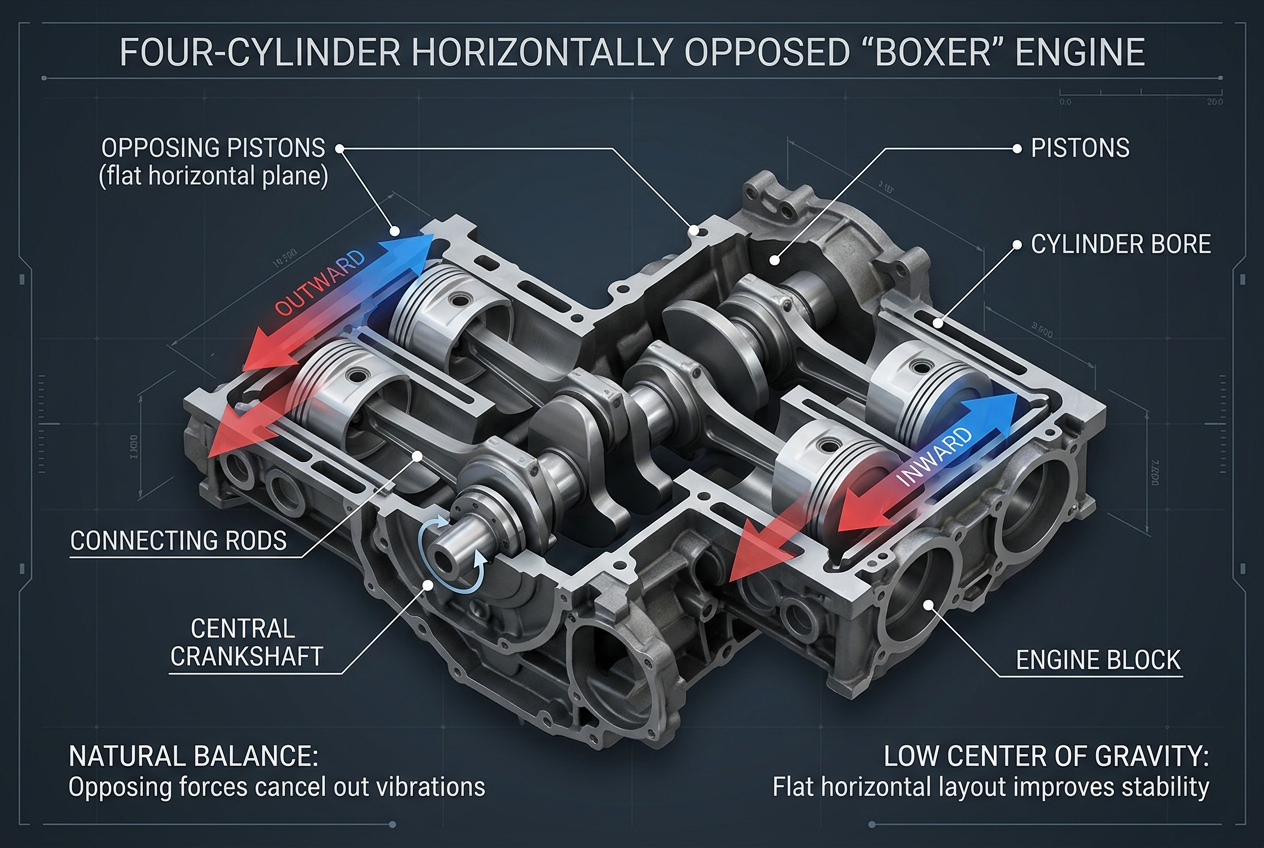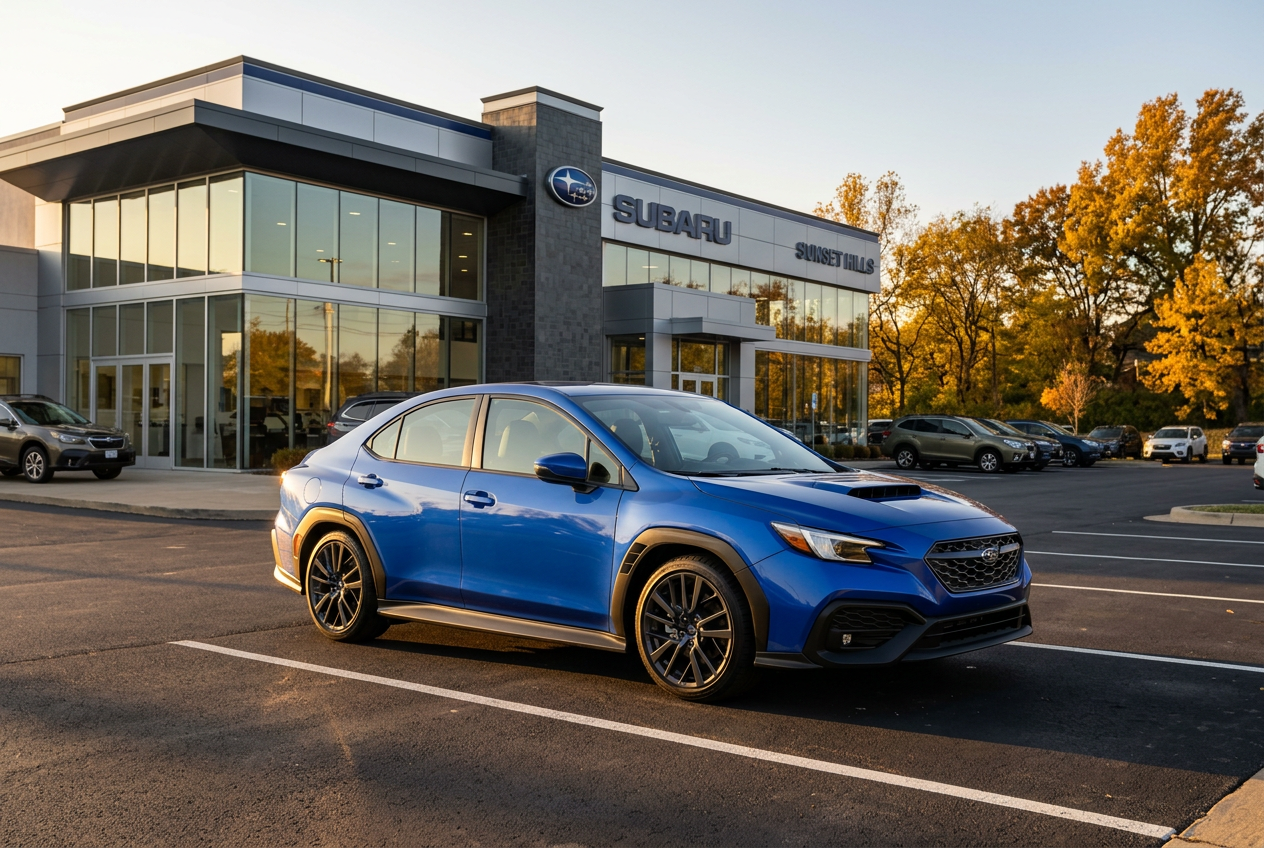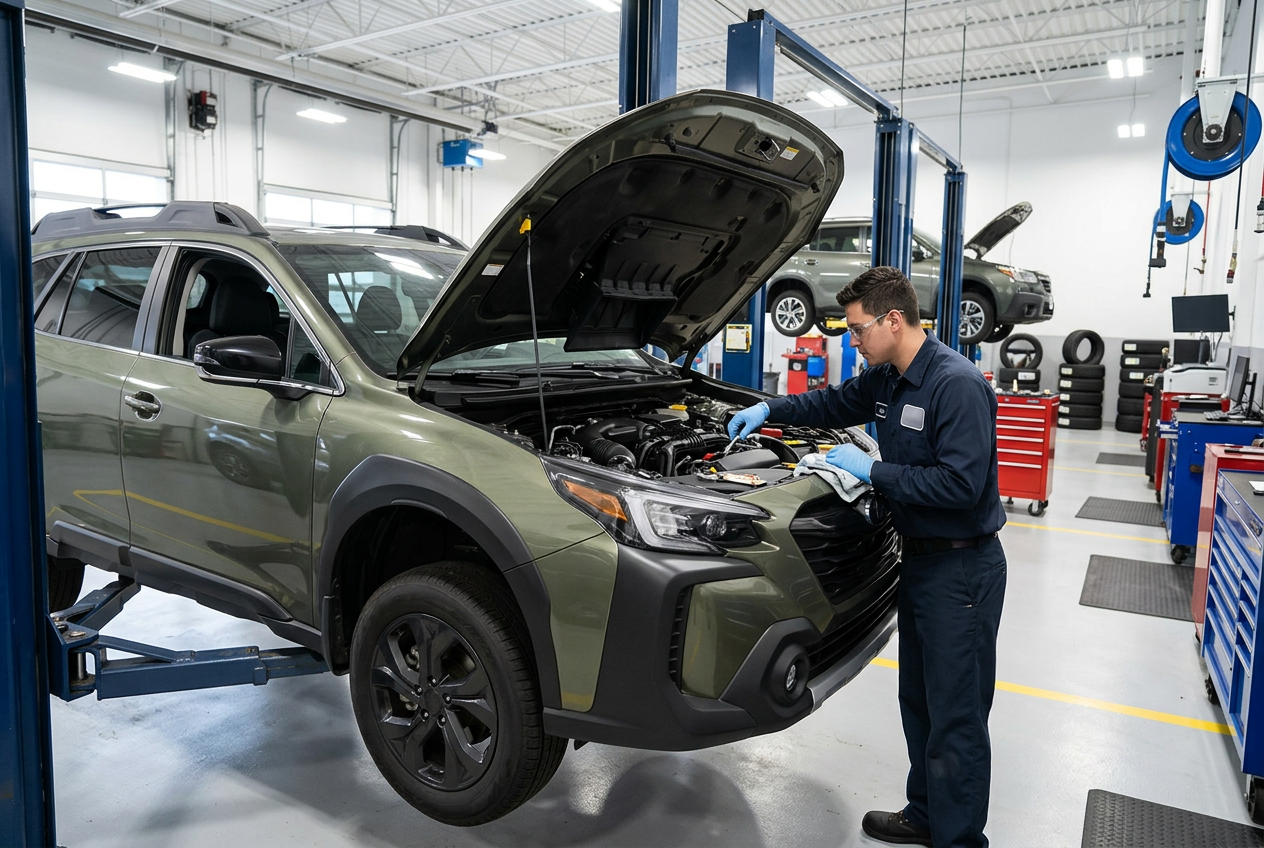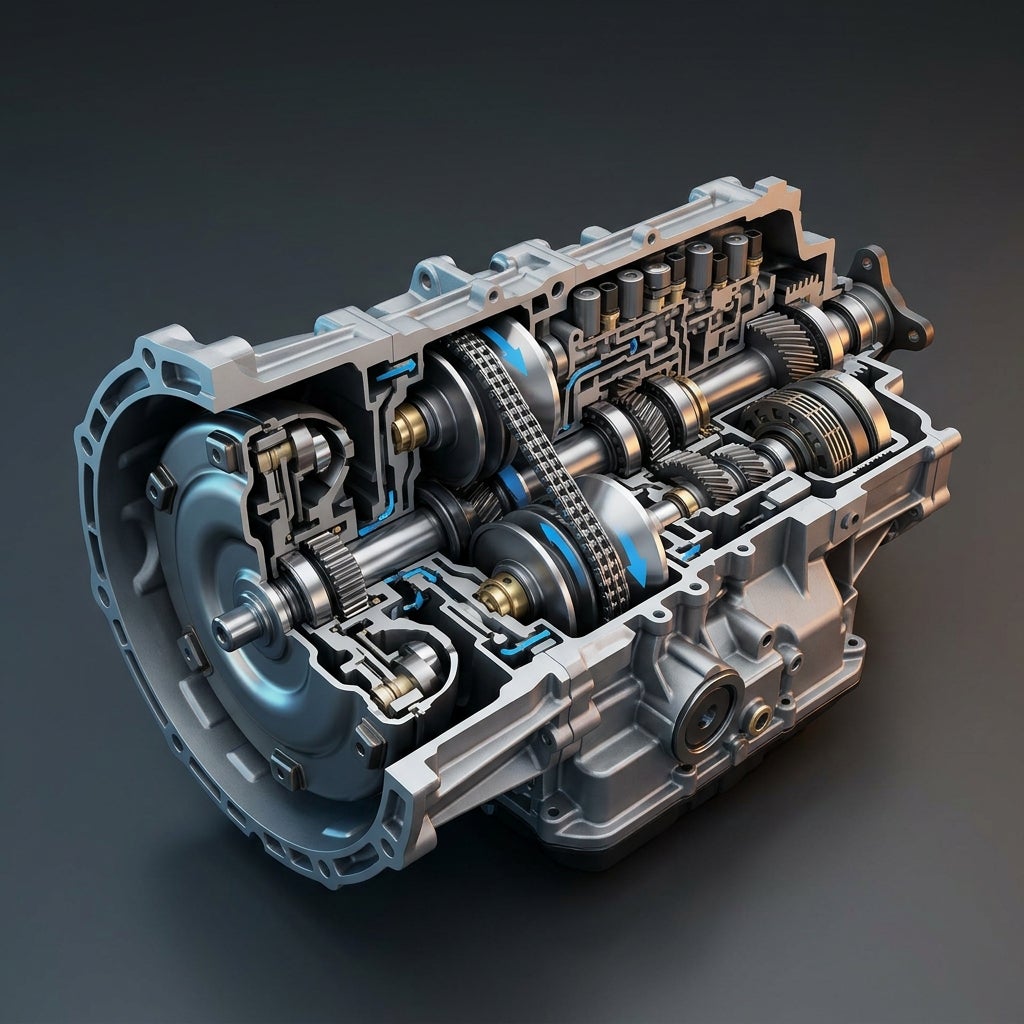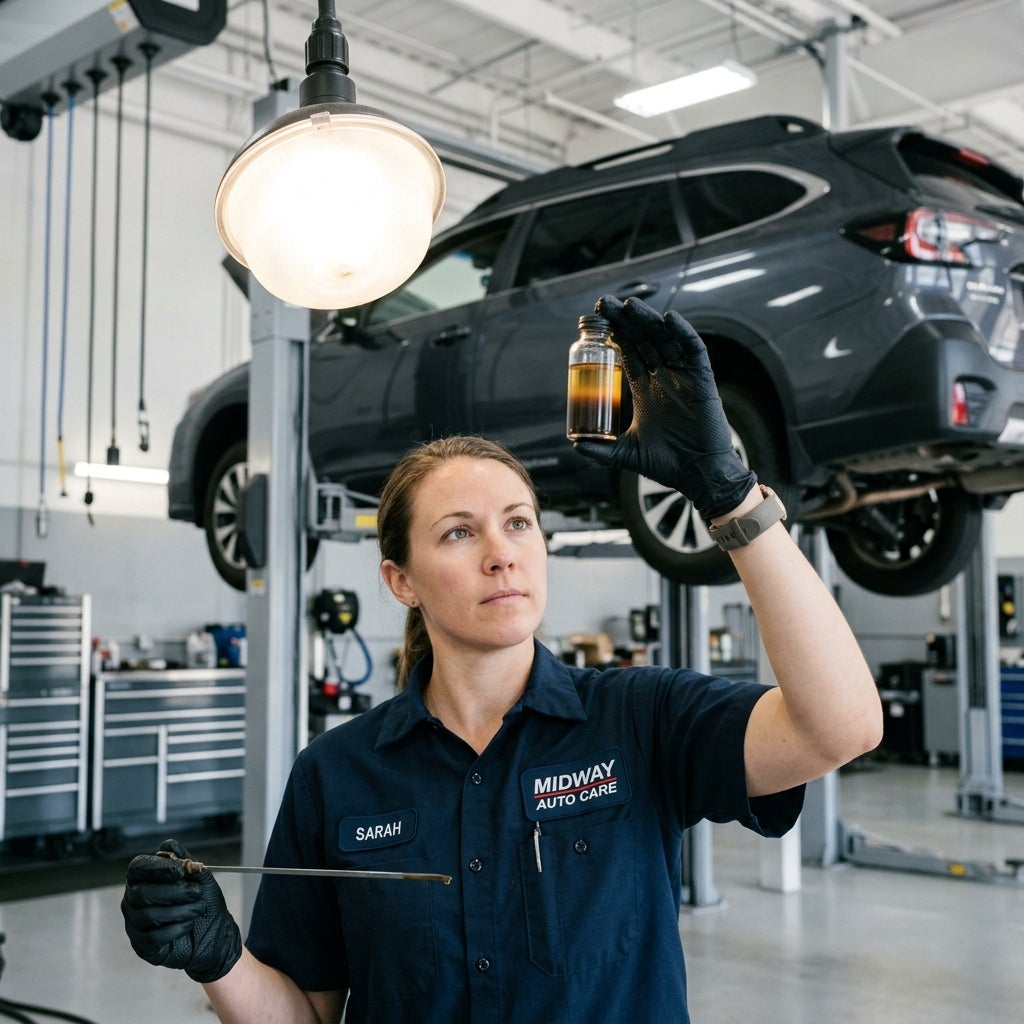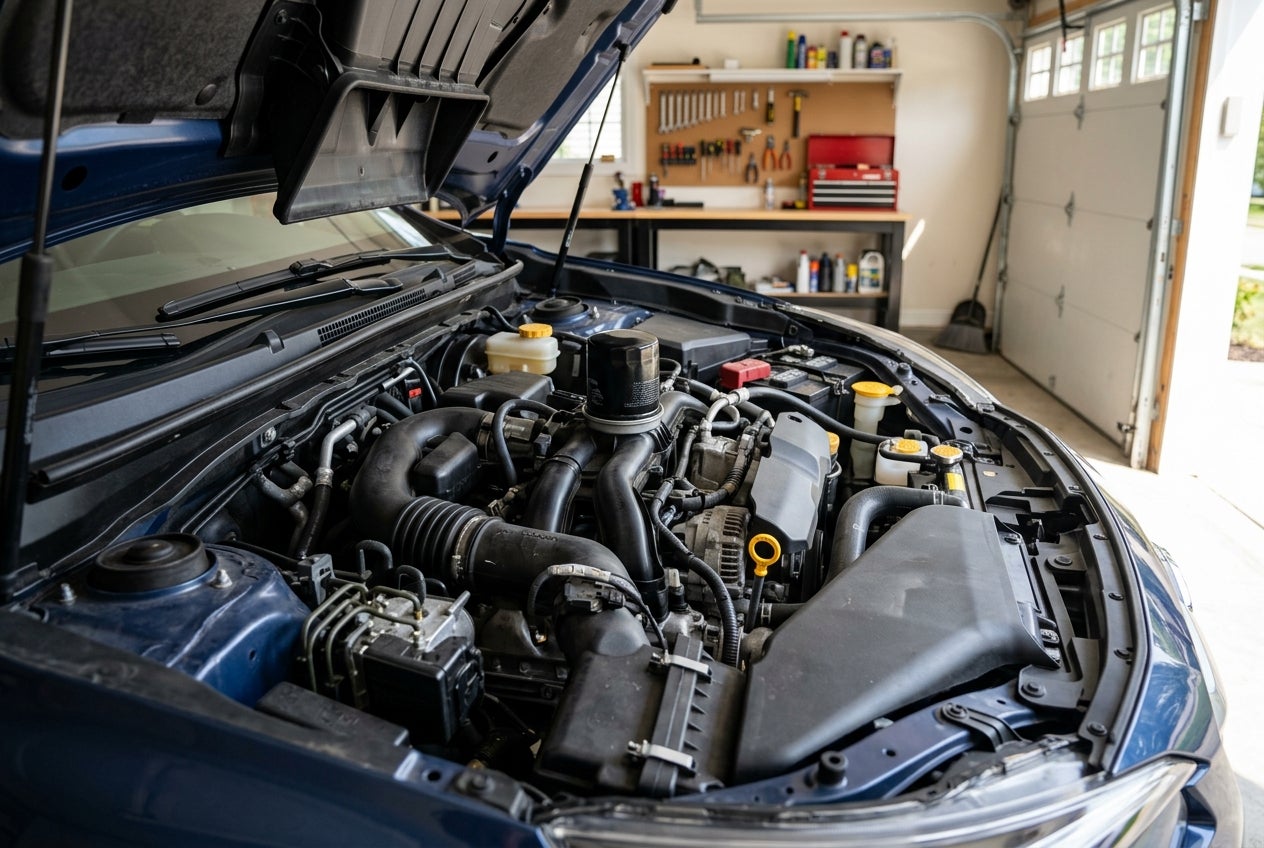

If you have ever carved through the twisting, rolling bends of highway near Sunset Hills or taken a brisk morning drive along the Missouri River bluffs, you have likely felt the unmistakable handling signature of a horizontally opposed engine. Known universally as the boxer engine, this unique powerplant lies at the heart of modern engineering fascination. Enthusiasts revere it for its flat architecture, silky-smooth power delivery, and ultra-low center of gravity. Yet, when you look across the vast automotive landscape, only two major manufacturers—Subaru and Porsche—remain dedicated to mass-producing boxer engines for passenger vehicles. Why haven't automotive giants like Toyota, Ford, General Motors, or Honda adopted flat engine layouts for their high-volume commuter vehicles? The answer comes down to a set of uncompromising engineering and economic trade-offs. While a boxer engine delivers inherent primary rotational balance and unmatched lateral chassis stability, it places strict demands on vehicle design. A boxer engine requires a significantly wider engine bay, which complicates front suspension geometry and wheel-turn clearance. Economically, it demands dual cylinder heads, twin camshaft banks, duplicated exhaust manifolds, and complex timing mechanisms. This effectively doubles specific component tooling costs compared to standard inline-four configurations. Furthermore, tight clearances between horizontal cylinder heads and chassis frame rails make routine maintenance—such as spark plug replacement—more labor-intensive. For mass-market automakers focused on maximum modularity and minimum assembly cost, the traditional inline or V-engine remains the path of least resistance. However, for dedicated engineers at Subaru, those trade-offs are reasonable trade-offs for safety, control, and driving dynamics that no upright engine can mirror. How Does a Boxer Engine Work Mechanically, and Why Is It Called a Boxer Engine? To understand the magic of a boxer engine, you have to look inside the cylinder block. In a traditional upright inline engine, pistons move vertically up and down in a single bank. In a V-engine, pistons move diagonally in two angled banks sharing common crankpins. In a true boxer engine, the cylinders lie horizontally flat, facing one another across a central crankshaft. Opposing pairs of pistons move inward and outward simultaneously along a horizontal plane. This unique motion is precisely why the engine earned its pugilistic nickname. When you view the engine from above with its timing covers off, the opposing pistons punch toward each other and retreat in perfect synchronization—resembling a prizefighter tapping their gloves together before a round in the ring. Beyond its evocative name, this mechanical layout delivers an extraordinary advantage: cancellation of primary vibrational forces. Because opposing pistons reach top dead center (TDC) at the exact same moment on individual crankpins 180 degrees apart, their inertia forces cancel each other out naturally. There is no need for heavy, power-robbing balance shafts required by inline-four or V6 engines. The mechanical patent for this genius configuration dates back to 1896, when legendary automotive pioneer Karl Benz patented the 'Kontra-Motor' (counter-engine). Benz recognized that laying cylinders flat offered superior balance and cooling efficiency for early motorized carriages. Over a century later, that same core mechanical principle powers every modern vehicle in the New Subaru Inventory. Who First Developed the Boxer Engine, and When Did Subaru Adopt It? While Karl Benz created the initial design in 1896, the first mass-market automobile to bring the boxer engine to international prominence was the original Volkswagen Beetle, designed by Ferdinand Porsche in the late 1930s. The air-cooled flat-four became world-famous for its durability, simple construction, and compact height. Post-war sports car development solidified the boxer's reputation, with Porsche adopting flat-four and flat-six engines for its racing programs and iconic 911 series. Subaru's history with the flat engine began in 1966 with the launch of the groundbreaking Subaru 1000. Subcompact vehicles of that era suffered from heavy front-wheel vibration, harsh torque steer, and cramped cabins. Subaru engineers realized that laying a water-cooled four-cylinder engine completely flat created a perfectly symmetrical, compact powertrain layout that solved all three issues simultaneously. The success of the Subaru 1000 laid the foundation for Subaru's defining engineering triumph: pairing the flat boxer engine directly with Symmetrical All-Wheel Drive. Because a boxer engine is short lengthwise and symmetrical along its crankshaft line, drive shafts can extend rearward and laterally with perfect structural balance. By the 1970s and 1980s, Subaru made the boxer engine the core identity of its brand architecture. Today, whether navigating winter slush along Watson Road or taking suburban road trips across Missouri, this historical commitment ensures exceptional vehicle control. Over nearly six decades, Subaru has refined the boxer engine through generations of naturally aspirated, turbocharged, and hybrid configurations. From the rugged New Subaru Outback Inventory to the rally-bred New Subaru WRX Inventory, Subaru remains the only manufacturer in the world to equip its entire core lineup with horizontally opposed engines. What Is the Difference Between a Porsche Boxer Engine and a Subaru Boxer Engine? Porsche Engineering Focus Porsche engineers flat engines tailored for high-rpm track performance and rear/mid-engine vehicle chassis layouts. Porsche utilizes exotic dry-sump oiling systems with external reservoirs to prevent oil starvation under violent lateral g-forces. Displacement ranges from 2.0L turbo flat-fours in the 718 Cayman to high-revving 4.0L atmospheric flat-sixes in the 911 GT3, prioritizing maximum horsepower per liter and premium price points. Subaru Engineering Focus Subaru optimizes its BOXER® engines for daily reliability, high thermal efficiency, and linear low-end torque for suburban commuting. Utilizing user-friendly wet-sump lubrication and longitudinal front mounting, Subaru engines integrate directly with Symmetrical AWD transmissions. Displacements include the 2.0L and 2.5L Subaru BOXER® four-cylinder models and the 2.4L turbocharged direct-injection engine. Everyday Missouri Usability While Porsche delivers track-focused luxury sports cars, Subaru democratizes boxer engineering. Drivers in Ladue, Chesterfield, and Sunset Hills enjoy rally-proven balance, exceptional winter traction, and long-term fuel efficiency in family-friendly crossovers like the New Subaru Forester Inventory and New Subaru Crosstrek Inventory. Explore New Subaru Inventory Why Is a Boxer Engine Wider Than a V-Engine or Inline Engine? The primary physical characteristic that separates a boxer engine from upright designs is its dimensional profile. An inline-four engine stands tall and narrow. A V6 engine splits its cylinders at a 60-degree or 90-degree angle, creating a wedge shape. A boxer engine, by contrast, lays its cylinder banks completely flat at 180 degrees. Because the cylinder heads push directly outward toward the vehicle's structural frame rails, a boxer engine occupies substantial horizontal width inside the engine compartment. For standard front-wheel-drive transverse engine vehicles (where the engine sits sideways between the front wheels), a flat engine is simply too wide to fit without severely restricting front wheel steering lock angles. mainstream automakers designing compact front-wheel-drive sedans cannot accommodate flat engines without widening the vehicle's track width significantly. Packaging modern turbocharger plumbing, catalytic converters, and high-voltage hybrid electronics around wide cylinder heads presents additional structural challenges. Subaru overcomes this challenge by engineering dedicated longitudinal vehicle platforms where the wide boxer engine sits squarely centered between symmetrical front suspension towers. The Financial Barrier: Why Universal Modular Platforms Favor Inline Engines In the modern automotive industry, profitability is driven by platform modularity and manufacturing economies of scale. Major global auto groups build tens of millions of vehicles using shared engine families. The ubiquitous inline-four engine is the absolute champion of manufacturing efficiency. An inline engine requires only one cylinder head casting, one head gasket, one set of camshaft drive belts or chains, and one exhaust manifold assembly. Building a boxer engine, on the other hand, demands duplicate componentry across the board. The table below outlines the core structural and manufacturing cost factors that make inline engines the default choice for mainstream OEMs—and highlights why Subaru's commitment to flat engine architecture represents such a significant engineering investment: Engineering & Manufacturing Feature Standard Inline-4 Engine Standard V6 Engine Subaru BOXER® Flat-4 Engine Cylinder Head Assemblies 1 Single Head 2 Dual Heads (Angled) 2 Dual Heads (Opposed) Camshaft Overhead Banks 1 Bank (SOHC/DOHC) 2 Banks 2 Separate Banks Engine Center of Gravity High Vertical Mass Moderate Vertical Mass Ultra-Low Horizontal Mass Primary Rotational Balance Requires Balance Shafts Requires Balance Shafts Inherent Self-Canceling Balance Exhaust Manifold Routing Single Side Clearance Dual Side Clearance Symmetrical Underside Routing Platform Versatility Transverse / FWD Focus Transverse or Longitudinal Dedicated Longitudinal AWD Platform For high-volume manufacturers focused purely on profit margins, doubling cylinder head tooling and assembly line complexity makes flat engines financially unfeasible. Subaru, however, maintains dedicated assembly plants in Gunma, Japan, designed specifically around boxer engine production. This allows Subaru to produce flat-four engines at scale while passing the important safety and performance benefits directly to owners. How Does a Boxer Engine Lower a Car's Center of Gravity for Drivers? Reduced Body Roll By placing heavy engine components—such as the engine block, pistons, and valve gear—inches lower in the chassis, the car's overall center of mass drops dramatically. When making sharp turns around Maryland Heights or navigating highway off-ramps in St. Louis, lower center of gravity minimizes lateral body lean without requiring overly stiff suspension setups. Cornering Precision A vehicle with a low center of gravity transfers weight across its tires far more evenly during sudden evasive maneuvers or spirited driving. Drivers experience crisp steering response, neutral cornering balance, and predictable chassis feedback on twisting backroads through Chesterfield and Sunset Hills. Enhanced Passive Safety Beyond handling, low engine placement offers critical crash protection. In a severe head-on collision, the low profile of the Subaru BOXER® engine allows it to slide cleanly underneath the passenger cabin floor pan rather than pushing backward into the footwell, keeping driver and passengers protected. How Much Does Spark Plug Replacement Cost on a Boxer Engine and How Is It Serviced? One of the most frequent questions car buyers ask about flat engines involves maintenance accessibility. On a traditional inline-four engine, spark plugs sit right on top of the cylinder head, fully exposed under the engine plastic cover. Replacing them is a quick 20-minute task with standard sockets. On a boxer engine, the cylinder heads point horizontally straight toward the inner wheel wells and frame rails. Space between the spark plug ignition coils and the frame wall is restricted to just a few inches. Changing spark plugs requires removing the air intake ducting, battery, or washer fluid reservoir, and using specialized swivel extension sockets to extract plugs at an angle. Because spark plug replacement on a boxer engine involves additional labor steps, pricing varies by model and engine displacement; please contact our service department for current details. However, modern Subaru vehicles use long-life iridium spark plugs rated for 60,000 miles, meaning plug replacement is an infrequent scheduled maintenance item rather than an annual headache. Having your boxer engine serviced by factory-trained technicians at certified facilities ensures proper torque specs and correct OEM plug gap tolerances. Inspect our Current Service and Parts Information before your next service appointment. Schedule Service and Diagnostics Is a Boxer Engine the Exact Same Thing as a Flat Engine, and How Does It Compare to a V-Engine? True Boxer Engine In a true boxer engine, each opposing piston connects to its own individual crankpin on the crankshaft. Opposing pistons move simultaneously inward toward the crankshaft and outward toward the heads. This opposing push-pull motion creates perfect mechanical balance and gives Subaru engines their famous smoothness. 180° Flat V-Engine While all boxer engines are flat engines, not all flat engines are true boxers! A 180-degree flat V-engine (such as the Ferrari Testarossa flat-12) shares a single crankpin between opposing pistons. As one piston moves left, the opposing piston moves left in the same direction, eliminating the punch-and-counterpunch motion. Standard 60° V-Engine Standard 60-degree V6 or 90-degree V8 engines position cylinders upright in a V shape. While compact lengthwise, V-engines have higher center-of-gravity profiles and produce secondary rocking couples, requiring heavy counterweights and external dampening shafts. Are Boxer Engines Used in Motorcycles and Specialized Aviation? Two-Wheeled Legends: BMW & Honda Automobiles are not the only transport segment that benefits from horizontal engines. BMW Motorrad has built world-famous flat-twin 'Boxer' motorcycles (such as the R1250GS adventure series) since 1923. Cylinder heads extending into the air stream provide exceptional natural air cooling. Honda also uses a silky-smooth flat-six boxer engine in its flagship Gold Wing touring motorcycle, placing engine weight ultra-low for effortless low-speed maneuvering. General Aviation: Lycoming & Continental In general aviation, flat-four and flat-six engines made by manufacturers like Lycoming and Continental power the majority of single-engine propeller aircraft (such as Cessna and Piper planes). The flat profile allows sleek aerodynamic nose cowlings, while air cooling and self-balancing design maximize operational reliability high above the clouds. Which Automakers Currently Manufacture Cars with Boxer Engines Today? Today, the modern boxer automotive landscape features three primary brand connections: 1. Subaru Corporation: The world's primary practitioner of boxer engineering. Subaru equips every gasoline vehicle in its portfolio with horizontally opposed engines—including the New Subaru Outback Inventory, New Subaru Forester Inventory, New Subaru Crosstrek Inventory, New Subaru Ascent Inventory, New Subaru Impreza Inventory, New Subaru WRX Inventory, and rear-wheel-drive New Subaru BRZ Inventory. 2. Porsche: Continues flat-engine manufacturing for sports cars like the 911 (flat-six) and 718 Boxster/Cayman (turbo flat-four). 3. Toyota: Offers boxer power in the GR86 sports car—a vehicle joint-developed with Subaru and powered by Subaru's 2.4-liter BOXER® engine. Interested in upgrading your daily drive around St. Louis? Discover how easily you can transition to a balanced boxer engine. Check your current vehicle value using our online tool to Get your trade-in value, or apply online to Apply for financing before visiting our showroom. Experience the Superior Balance of a Subaru Boxer Engine at Sunset Hills Subaru While other manufacturers shy away from flat engines due to production complexities, Subaru's decades of engineering dedication deliver unmatched tangible benefits for drivers in Sunset Hills, Maryland Heights, Chesterfield, and Ladue. From confidence-inspiring lateral stability in sudden downpours to smooth, vibration-free highway cruising across Missouri, the Subaru BOXER® engine transforms your daily commute. Visit Sunset Hills Subaru located at 10100 Watson Rd, Sunset Hills, MO 63127. Our friendly, knowledgeable team is ready to demonstrate the unique engineering advantages of boxer engine balance in person. Get Directions to Sunset Hills Subaru or Call (314) 476-9638 to speak directly with our team. Get your trade-in value Get Directions to Sunset Hills Subaru Boxer Engine Benefits & Trade-Offs in Sunset Hills, MO | Sunset Hills Subaru