Blog

All Sunset Hills Subaru Dealer Sunset Hills New Subaru New Vehicle Reviews Model Comparisons Maintenance & Service Buying Guides Sunset Hills Subaru Service Technology & Innovation Subaru Repair Safety Subaru Road Safety Sunset Hills Subaru EV Dealership Auto Financing Hybrid 2025 Subaru Crosstrek 2025 Subaru Outback Dealership Financing Community Engagement Fuel Efficiency Performance and Engineering Sunset Hills Used Cars Leasing guides Certified Pre-Owned Subaru Financing Sunset Hills Subaru Loves Pets 2025 Forester Hybrid Fun Things to Do Near Sunset Hills MO Infotainment Ownership Experience Subaru Motorsports Subaru Share The Love 2024 Outback Automotive History & Evolution Automotive News Automotive Repair Tips Automotive Rumors & Insights Buying & Trade-In Process Guidance Charging Solutions & Infrastructure Outdoor Adventure & Camping Reliability and Quality Insights Sales Event Subaru Loyalty Program Things to do in Sunset Hills, MO Tire Care & Replacement Trade Up Advantage Vehicle Design & Innovation
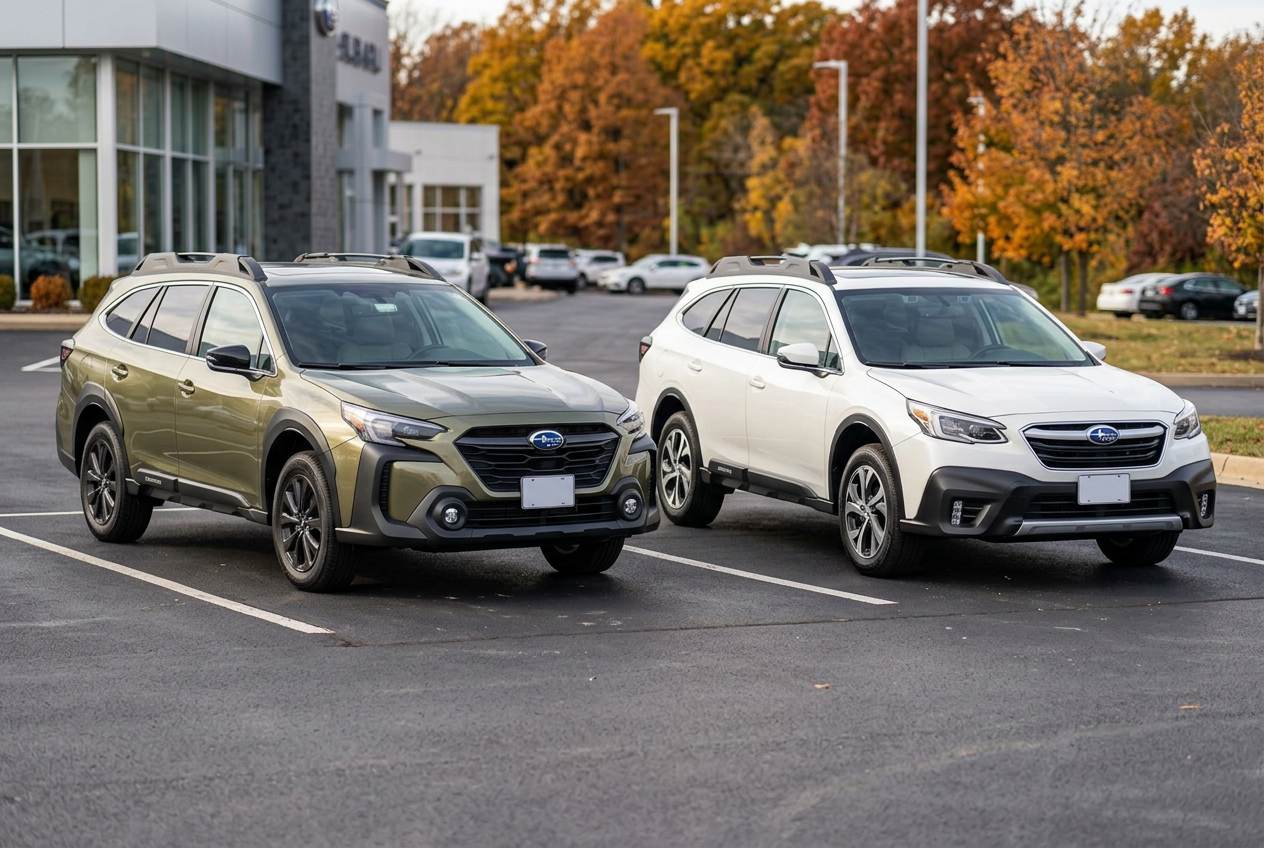
Outback side by side

Does Subaru Retain Resale Value as Well as Toyota? The Bottom-Line Comparison

Does Subaru Retain Resale Value as Well as Toyota? The Bottom-Line Comparison When car buyers evaluate long-term financial performance, Toyota has historically stood as the benchmark for resale value retention in the automotive industry. However, automotive industry data from Kelley Blue Book (KBB) and Automotive Lease Guide (ALG) reveals a striking reality: Subaru has comparable 3-to-5-year resale value retention across nearly every major vehicle segment. Flagship models like the Subaru Crosstrek, Subaru Outback, and Subaru Forester routinely earn top residual value honors, standing shoulder-to-shoulder with market stalwarts like the Toyota RAV4 and Tacoma. Drivers in the St. Louis metropolitan area benefit from Subaru's exceptionally strong equity retention driven by standard Symmetrical All-Wheel Drive, lower initial sticker prices, and relentless regional demand. How Subaru 5-Year Depreciation Rates Compare Directly to Toyota Models Depreciation represents the largest single expense during the first five years of vehicle ownership. While an average sedan or crossover loses 40% to 50% of its initial value over 60 months, both Subaru and Toyota dramatically outperform industry averages. For instance, the Subaru Crosstrek frequently posts 5-year retained values exceeding 60% of original MSRP, often beating direct compact crossover competitors including the Toyota RAV4. The Subaru Outback holds comparable residual values against midsize SUVs while offering lower entry pricing, granting owners higher relative equity when trading in. Vehicle Model Segment Subaru Model Toyota Competitor Avg 5-Year Retained Value (Subaru) Avg 5-Year Retained Value (Toyota) Subcompact Crossover Crosstrek Corolla Cross 60% – 64% 58% – 62% Compact SUV Forester RAV4 56% – 60% 57% – 61% Midsize Crossover / Wagon Outback Venza / Highlander 55% – 59% 54% – 58% 3-Row Family SUV Ascent Grand Highlander 52% – 56% 53% – 57% Key Factors That Drive High Subaru Resale Value in the St. Louis Metro Area Several distinct structural and market forces explain why pre-owned Subaru vehicles remain in such high demand across Sunset Hills and the greater St. Louis region. Standard Symmetrical AWD Unlike Toyota where front-wheel drive is often standard and all-wheel drive carries a price premium, almost every Subaru comes standard with full-time Symmetrical AWD. Used car buyers in Missouri actively seek AWD for winter confidence, elevating market prices for pre-owned Subarus. Competitive Entry MSRP Subaru maintains competitive MSRP positioning across its lineup compared to equivalent AWD Toyota trims. Starting at MSRP while retaining equal percentage values translates directly to lower overall total depreciation in dollar terms. Unmatched Brand Loyalty Subaru consistently ranks at or near the top of J.D. Power Automotive Brand Loyalty studies. A constant stream of return buyers seeking certified pre-owned Crosstrek and Outback models keeps inventory tight and trade-in valuations elevated. Evaluating Your Trade-In Value in Sunset Hills: What Is Your Current Vehicle Worth? Understanding your vehicle's current equity position is the foundation of any smart vehicle purchase. Because Subaru models maintain exceptional value, owners are often surprised to learn how much trade-in equity they have accumulated. Whether you currently drive a Subaru, Toyota, or another brand, our appraisal team evaluates local St. Louis market demand, service history records, and vehicle condition to offer top-dollar trade estimates. You can easily start the evaluation process online and leverage your retained vehicle equity toward a New Subaru Inventory purchase. Get your value trade How Subaru Reliability and Longevity Compare to Toyota and Honda Resale value and mechanical longevity go hand in hand. A vehicle cannot hold high trade-in equity if buyers suspect expensive mechanical breakdowns on the horizon. Experimental and empirical data both confirm that Subaru vehicles share the elite upper tier of automotive longevity alongside Toyota and Honda. According to Experian automotive longevity data, 96% of Subaru vehicles sold in the last 10 years are still on the road today. It is commonplace for properly maintained Outback, Forester, and Impreza models to cross the 200,000-mile mark while maintaining solid structural integrity and smooth powertrain performance. While Toyota has traditionally held a slight edge in raw simplicity on basic naturally aspirated engines, Subaru performs competitively in real-world durability. Modern Subaru vehicles equipped with Lineartronic CVTs and third-generation BOXER engines deliver long-term dependability that reassures second-hand buyers. When shopping for a Used Vehicle Inventory option, buyers routinely seek out pre-owned Subarus knowing that long-term repair risks are minimal compared to European or domestic alternatives. What Is the Average Annual Maintenance Cost for a Subaru vs. Toyota? Ownership costs extend beyond depreciation to include annual maintenance, fluid services, and routine wear components. Routine Service Subaru average annual maintenance ranges between $550 and $650 per year. Routine synthetic oil changes, tire rotations, and cabin filters align closely with standard Japanese brand upkeep schedules. Toyota Comparison Toyota maintenance averages approximately $440 to $520 per year. The modest difference primarily stems from Subaru's standard AWD system requiring differential fluid servicing at major intervals. Industry Averages Both brands perform significantly better than the overall automotive industry average of $790+ per year, ensuring predictable ownership costs without budget-breaking surprises. Service Interval / Item Subaru Estimated Cost Toyota Estimated Cost Industry Average Synthetic Oil & Filter (6,000 miles) $75 – $95 $70 – $90 $85 – $110 30,000-Mile Major Service $350 – $450 $300 – $400 $450 – $600 60,000-Mile Service (AWD Fluids + Spark Plugs) $550 – $750 $480 – $650 $700 – $950 Estimated 5-Year Maintenance Total $2,800 – $3,300 $2,400 – $2,800 $3,900 – $4,800 What Makes the Subaru BOXER Engine Unique and Reliable Today? At the mechanical core of every Subaru is the horizontally opposed BOXER engine. Unlike traditional inline or V-shaped engines used by Toyota, the BOXER lays its pistons horizontally. This configuration offers distinct engineering advantages: a lower center of gravity, reduced body roll, and inherent rotational balance that minimizes engine vibration. Shoppers researching older Subarus often ask about head gasket concerns from the early 2000s. It is important to know that Subaru redesigned its engine block architecture over a decade ago with the introduction of the FB engine series. Modern BOXER engines utilize multi-layer steel (MLS) head gaskets, timing chains instead of belts, and thermal management modules that have effectively eliminated historical head gasket issues. Furthermore, today's Lineartronic CVT transmissions feature reinforced chain-drive designs engineered for smooth power delivery and high efficiency. When serviced at regular factory intervals, modern Subaru powertrains routinely achieve 200,000+ miles of dependable service. For genuine components and replacement items, owners can explore Find Subaru Parts directly through our certified dealership catalog. Schedule Certified Subaru Service to Preserve Your Vehicle's Resale Equity The key to commanding top market value when you trade in or sell your vehicle is documented maintenance history. CARFAX and valuation algorithms reward vehicles with verified factory service records from authorized service centers. Our factory-trained technicians at Sunset Hills Subaru use genuine OEM parts and specialized diagnostic equipment to protect your mechanical health and safeguard your trade-in equity. Schedule Service and Diagnostics Which Auto Brand Offers Higher Safety Ratings Between Subaru and Toyota? Safety ratings exert a powerful, often underrated influence on vehicle resale values. Family vehicle buyers prioritize crash protection and driver assistance technology above almost all other criteria when shopping the used vehicle market. In Insurance Institute for Highway Safety (IIHS) evaluations, Subaru repeatedly earns top honors across its entire lineup. Models like the Outback, Forester, and Crosstrek regularly achieve IIHS TOP SAFETY PICK+ awards, placing Subaru among the safest manufacturers in automotive history. While Toyota's Safety Sense suite offers competitive safety performance, Subaru EyeSight Driver Assist Technology sets standard benchmarks for pre-collision braking, lane-keep assistance, and adaptive cruise control. Families looking at a pre-owned New Subaru Outback Inventory option know they are securing world-class safety features. This reputational strength ensures that safe, crash-tested Subaru models retain maximum buyer appeal when it comes time for trade-in. How Local Chesterfield and Ladue Driving Conditions Impact Vehicle Resale Values Resale values do not exist in a vacuum—they are heavily shaped by local geographic terrain, climate patterns, and community lifestyle needs. Winter Traction Needs St. Louis winters bring unpredictable ice, sleet, and freezing rain. Drivers in Chesterfield, Ladue, and Maryland Heights actively seek AWD capability, driving up demand for pre-owned Subarus every fall and winter. Suburban Versatility From school carpool lanes to weekend trips along the Missouri River, local families demand versatile cargo space and ground clearance. Models like the New Subaru Forester Inventory suit Missouri suburban lifestyles perfectly. Total Cost of Ownership: Comparing Insurance, Maintenance, and Depreciation Comparing purchase price alone provides an incomplete picture of vehicle value. A comprehensive 5-year Total Cost of Ownership calculation factors in purchase price, projected depreciation curves, fuel efficiency, auto insurance premiums, and scheduled maintenance fees. Because Subaru vehicles earn top safety scores, insurance premiums are frequently lower than or equal to competitive Toyota models. When combined with competitive fuel economy from Symmetrical AWD powertrains and lower sticker prices, Subaru matches Toyota on overall ownership costs. For buyers looking to purchase a new or pre-owned vehicle, our dealership offers competitive financing rates. You can get pre-approved quickly by using our online tool to Get approved for financing. When evaluating the financial bottom line, choosing Subaru delivers premium Japanese engineering, standard AWD capability, and exceptional value retention at an accessible price point. Experience Subaru's Exceptional Value at Sunset Hills Subaru Whether you are looking for a fuel-efficient commute in a New Subaru Crosstrek Inventory selection or seeking family adventure in an Outback, Sunset Hills Subaru is here to guide your automotive journey. Our team is dedicated to providing transparent pricing, top trade-in equity, and professional service. Visit us in person at 10100 Watson Rd, Sunset Hills, MO 63127 or Get Directions to Sunset Hills Subaru today. For immediate assistance or to schedule a personal test drive, please Call (314) 476-9638 to speak with our sales and finance experts. New Subaru Inventory Subaru Resale Value Insights in Sunset Hills MO | Sunset Hills Subaru

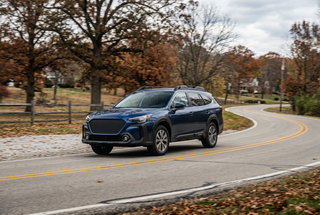
Subaru Outback in St. Louis

Does a Certified Pre-Owned Subaru Outback Offer Better Value Than Buying New?

Does a Certified Pre-Owned Subaru Outback Offer Better Value Than Buying New? A Certified Pre-Owned (CPO) Subaru Outback provides exceptional value over buying brand-new by allowing you to bypass initial two-to-three-year depreciation while securing an extended factory-backed 7-year/100,000-mile powertrain limited warranty with a $0 deductible, standard Symmetrical All-Wheel Drive, and comprehensive EyeSight® Driver Assist Technology at a substantially lower acquisition cost. When local families compare a Certified Pre-Owned Outback to a new crossover on our lot, they often look at how much passenger stretch-out room and standard all-wheel capability they get for their investment. A brand-new crossover demands top-tier retail sticker pricing the moment it leaves the showroom floor, experiencing its steepest drop in equity during the first 36 months. Choosing a 2-to-3-year-old CPO Outback lets the original owner absorb that initial valuation drop, allowing you to drive home a modern, highly equipped vehicle with long-term mechanical protection intact. Every CPO Outback delivers confidence in all-weather conditions for daily commuters traveling along Highway 40 through Chesterfield during unpredictable winter weather. From its spacious cabin with flexible seating to robust roof rails, the Outback is Built for Safety, Designed for Your Busy Life. Our team at Sunset Hills Subaru makes transitioning into a quality crossover straightforward. You can easily value your trade-in online before heading over to speak with our specialists. We welcome you to stop by our Sunset Hills showroom or give our team a quick call at (314) 476-9638 to explore current CPO availability and schedule a test drive. Table of Contents What Warranty and Inspection Protections Come With a CPO Subaru Outback? Is a Certified Pre-Owned Subaru Outback Significantly Cheaper Than Buying New? How Does a CPO Subaru Outback Compare to a New Toyota RAV4 and Honda AWD? Frequently Asked Questions About Certified Pre-Owned Subaru Outbacks Finding Your Certified Pre-Owned Subaru Outback at Sunset Hills Subaru What Warranty and Inspection Protections Come With a CPO Subaru Outback? The factory-backed 7-year/100,000-mile powertrain warranty on Certified Pre-Owned Subaru Outbacks starts from the vehicle's original in-service date and includes 24/7 roadside assistance and a thorough 152-point inspection. While a brand-new Outback includes a 3-year/36,000-mile basic warranty and a 5-year/60,000-mile powertrain warranty, the CPO program extends powertrain protection significantly further into the vehicle's lifecycle. Covered components include internal engine structures, the Lineartronic CVT, torque converter, front and rear differentials, axle shafts, and the transfer case. To qualify for factory certification, a pre-owned Outback must pass a rigorous 152-point inspection conducted by factory-trained technicians. If a candidate vehicle fails even a single item on this checklist, it cannot be certified until the issue is completely resolved using genuine OEM parts. Subaru enforces strict minimum wear thresholds during reconditioning: Brake Pads and Rotors: Brake pads must have at least 50% usable friction material remaining; otherwise, brand-new OEM pads and rotors are installed. Tire Tread and AWD Balance: Tires must exhibit at least 5/32-inch tread depth across all four wheels and match exact factory sizing to prevent mechanical strain on the drive system. Safety Tech Calibration: Dual EyeSight® stereo cameras undergo diagnostic scans and operational checks for adaptive cruise, lane keep assist, and pre-collision braking. Essential Maintenance: Technicians perform fresh engine oil and filter changes, install new engine air and cabin filters, and replace wiper blades. Standard wear-and-tear items such as clutch linings, brake pads, and wiper blades are excluded from the core powertrain warranty. However, buyers seeking complete comprehensive coverage can upgrade to a Subaru Added Security® Gold Plus wrap plan. This optional factory extension broadens coverage to mirror bumper-to-bumper protection, shielding electronic displays, climate control modules, sensors, and power accessories for up to 10 years or 100,000 miles. If you ever experience an unexpected roadside situation, emergency help is available directly through Subaru Roadside Assistance at 1-800-261-2155. Furthermore, if you decide to sell your vehicle in the future, the CPO powertrain coverage is fully transferable to a second private buyer for a nominal administrative fee, enhancing its overall resale value. Engine & Performance Powertrain specs by trim Feature Limited Limited XT Outback Wilderness Premium Touring Touring XT Engine 2.5L 2.4L 2.4L 2.5L 2.5L 2.4L Horsepower 180 hp 260 hp 260 hp 180 hp 180 hp 260 hp Torque 178 lb-ft 277 lb-ft 277 lb-ft 178 lb-ft 178 lb-ft 277 lb-ft Transmission Lineartronic CVT High-torque Lineartronic CVT High-torque Lineartronic CVT Lineartronic CVT Lineartronic CVT High-torque Lineartronic CVT Drivetrain All-wheel drive All-wheel drive All-wheel drive All-wheel drive All-wheel drive All-wheel drive Safety & Driver Assistance Safety and driver-assistance features by trim All six trims—Limited, Limited XT, Outback Wilderness, Premium, Touring, and Touring XT—come standard with a suite of safety features including ABS, Isofix preparation, height-adjustable front and rear head restraints (two in front and three in the rear), and standard driver and passenger seat belt pre-tensioners and height adjustment. Each trim also includes three 3-point seat belts for the rear center seat position, along with standard seat belts for the rear driver and passenger seats. Emergency safety features such as emergency call and an accident data recorder are standard across all trims. The anti-collision system, branded as EyeSight®, is also standard on every trim, featuring activation at a minimum speed of 7 mph and operation both above 30 mph and 78 mph. This system includes automatic emergency braking, brake light activation upon collision detection, a driver monitor, and low-speed braking at both front and rear. In summary, the safety and driver-assistance equipment is consistent and comprehensive throughout the entire lineup, with all trims equipped with the same fundamental set of advanced safety technologies and restraints. There are no differences in safety features among the trims as presented. Is a Certified Pre-Owned Subaru Outback Significantly Cheaper Than Buying New? Buying a Certified Pre-Owned Subaru Outback is significantly cheaper than purchasing new because you acquire a late-model vehicle after it has already passed through its sharpest 30% to 35% initial depreciation phase, while still accessing low competitive financing rates. A brand-new 2026 Outback carries a starting MSRP ranging from $34,995 for the Premium trim up to $47,995 for the range-topping Touring XT, plus a $1,450 destination charge: Premium: $34,995 base MSRP ( $1,450 destination) Limited: $41,715 base MSRP ( $1,450 destination) Limited XT: $44,365 base MSRP ( $1,450 destination) Outback Wilderness: $44,995 base MSRP ( $1,450 destination) Touring: $45,395 base MSRP ( $1,450 destination) Touring XT: $47,995 base MSRP ( $1,450 destination) By choosing a 2-to-4-year-old CPO Outback, you pay a substantially lower purchase price for high-end equipment like leather upholstery, a power moonroof, or the turbocharged engine. Because Subaru Outbacks retain high residual value over time compared to other midsize crossovers, your ongoing depreciation slope is much flatter, protecting your financial investment over a five-year ownership horizon. Financing a CPO Outback is equally advantageous. Through Subaru Motors Finance, qualified buyers can access special promotional interest rates that closely rival new car loan incentives. Lower financed balances combined with competitive APRs result in noticeably lower monthly payments. While some shoppers prefer browsing our new Subaru inventory or checking out our new Subaru BRZ selection for performance driving, buyers focused on practical family utility find CPO Outbacks deliver unmatched value. You can easily apply for financing online to review personalized loan options before visiting our dealership. Pricing Pricing by trim Feature Limited Limited XT Outback Wilderness Premium Touring Touring XT Base MSRP $41,715 $44,365 $44,995 $34,995 $45,395 $47,995 Destination charge $1,450 $1,450 $1,450 $1,450 $1,450 $1,450 How Does a CPO Subaru Outback Compare to a New Toyota RAV4 and Honda AWD? A Certified Pre-Owned Subaru Outback delivers superior standard capability and interior utility compared to a new Toyota RAV4 or Honda CR-V by offering full-time Symmetrical All-Wheel Drive, greater ground clearance, and expanded cargo volume at a competitive price point. When comparing a CPO Outback to a brand-new base Toyota RAV4, drivetrain engineering represents a key distinction: All-Wheel Drive System: The base RAV4 comes standard with front-wheel drive, requiring an upgraded trim or option package to get part-time slip-first AWD. The Outback features standard full-time Symmetrical All-Wheel Drive across every single trim level, continuously distributing power to all four wheels for instant traction. Ground Clearance: Most Outback models provide about 9 inches of ground clearance, with the rugged Outback Wilderness offering nearly 10 inches. Compact rivals like the RAV4 typically offer lower clearance on standard trims. Cabin & Cargo Volume: The midsize Outback provides up to 81 cubic feet of maximum cargo capacity with the rear seats folded, along with greater shoulder and hip room for rear passengers than compact crossovers. Subaru's full-time AWD system also holds a distinct traction advantage over Honda Real Time AWD during Midwest winter conditions. Honda's system operates primarily as a front-wheel-drive platform, engaging rear-wheel torque only after front-wheel slip is detected. Subaru's balanced, symmetrical layout continuously delivers power to both axles, ensuring predictable handling through deep slush and icy parking lots near Creve Coeur Lake in Maryland Heights. Performance across CPO Outback models depends on the factory engine: 2.5L 4-Cylinder Engine: Generates 180 hp and 178 lb-ft of torque, paired with a smooth Lineartronic CVT on Premium, Limited, and Touring trims. 2.4L Turbocharged Engine: Delivers 260 hp and 277 lb-ft of torque, mated to a High-torque Lineartronic CVT on Limited XT, Touring XT, and Outback Wilderness models for effortless highway merging and up to 3,500 pounds of towing capacity. Drivers evaluating crossover options can compare our current new Subaru Outback models and three-row new Subaru Ascent inventory alongside certified pre-owned choices to determine the perfect cabin size for their lifestyle. Frequently Asked Questions About Certified Pre-Owned Subaru Outbacks Q: What happens if a vehicle fails one item during the Subaru CPO 152-point inspection? If a pre-owned Subaru Outback fails even a single checkpoint during the 152-point inspection, it cannot receive factory certification until the issue is fully repaired or replaced using Genuine Subaru OEM Parts. If a mechanical defect, structural frame issue, or title inconsistency cannot be brought up to Subaru's factory standards, the vehicle is permanently disqualified from the CPO program and cannot be sold as certified. Q: Are brake pads and tires replaced during the Subaru CPO reconditioning process? Brake pads and tires are replaced with brand-new original equipment parts whenever they fall below strict Subaru reconditioning thresholds. Brake pads must have at least 50% usable lining remaining, and all four tires must have at least 5/32-inch tread depth with identical rolling circumferences. If any tire or brake component fails to meet these minimum standards, factory technicians replace them prior to certification. Q: Does the Subaru CPO 7-year/100,000-mile powertrain warranty transfer to a second private owner? Yes, the factory-backed 7-year/100,000-mile powertrain limited warranty is fully transferable to a subsequent private buyer if you decide to sell your Outback before the time or mileage limit expires. The transfer process requires submitting a simple form to Subaru of America along with a nominal administrative fee, which helps protect your vehicle's resale value on the private market. Q: What model year Subaru Outback retains the highest percentage of its value? Subaru Outbacks aged two to four years maintain exceptional residual value percentages in the midsize crossover segment due to high regional demand for standard all-wheel drive and advanced safety technology. Purchasing a CPO model in this two-to-four-year sweet spot allows you to acquire a modern crossover after initial depreciation has occurred, while preserving high trade-in value for future years. Q: Can you extend the warranty coverage on a Certified Pre-Owned Subaru Outback? Yes, buyers can upgrade their standard CPO powertrain protection by purchasing an official Subaru Added Security® Gold Plus plan. This factory wrap plan extends comprehensive bumper-to-bumper protection up to 10 years or 100,000 miles, covering high-tech systems like EyeSight® Driver Assist Technology, touchscreen displays, climate controls, power window motors, and advanced sensor networks with options for a $0 deductible. Explore our updated pre-owned vehicle inventory to view currently available certified options and inspect detailed vehicle history reports online. Finding Your Certified Pre-Owned Subaru Outback at Sunset Hills Subaru Sunset Hills Subaru offers a wide selection of Certified Pre-Owned Subaru Outbacks, each thoroughly inspected and backed by an extended warranty to ensure peace of mind and value. At Sunset Hills Subaru, our team is committed to providing a straightforward, transparent buying experience. We invite you to compare new and certified pre-owned Outbacks side-by-side, explore competitive financing programs through Subaru Motors Finance, and evaluate your trade-in with our appraisal specialists. To take the next step toward your next crossover, visit our dealership address at 10100 Watson Rd, Sunset Hills, MO 63127 or give our sales team a call at (314) 476-9638 to schedule your no-pressure test drive today. Keep Your Vehicle Running Strong Keep your vehicle performing at its best with our service team: Find Subaru Parts Schedule Service and Diagnostics © 2026 Sunset Hills Subaru. All rights reserved. Vehicle specification data © JATO Dynamics Limited. Certified Pre-Owned Subaru Outback in Sunset Hills MO | Sunset Hills Subaru

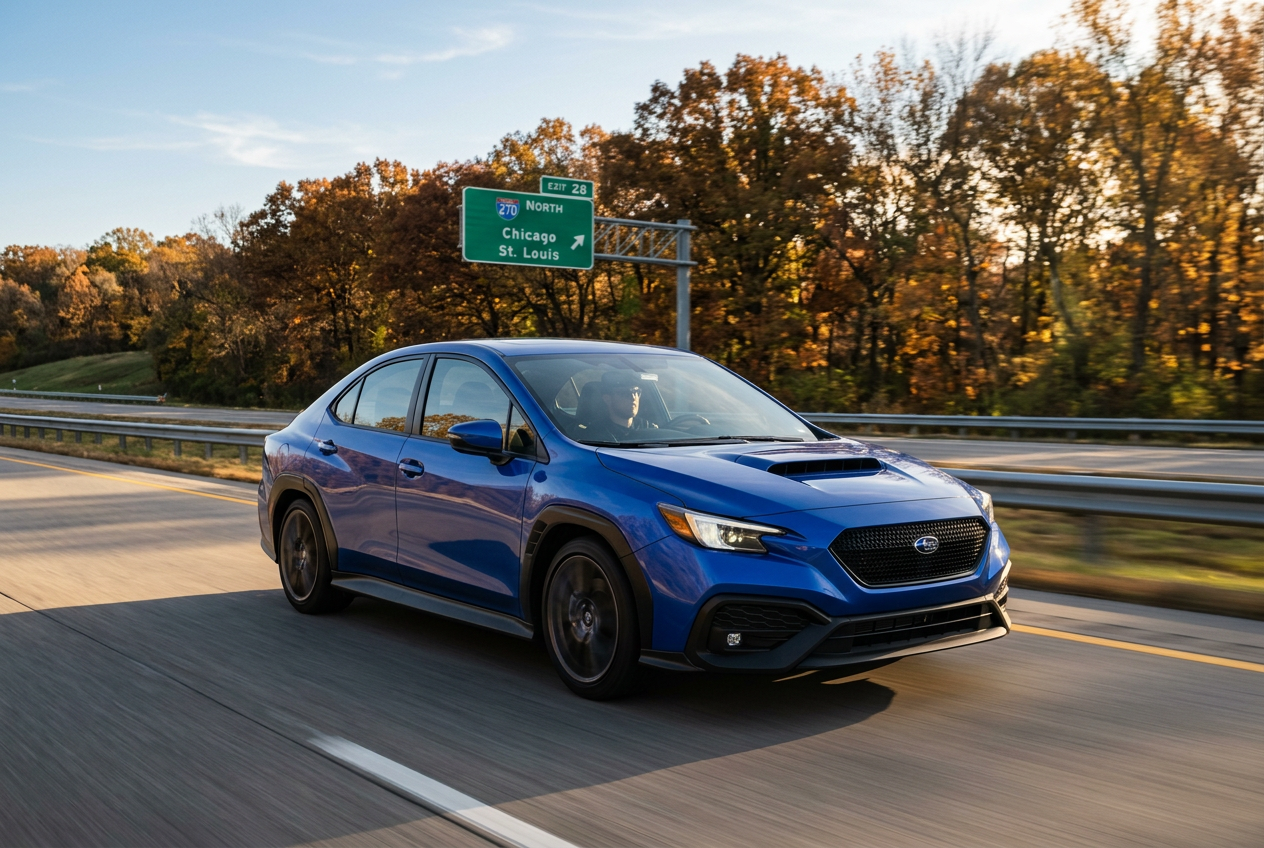
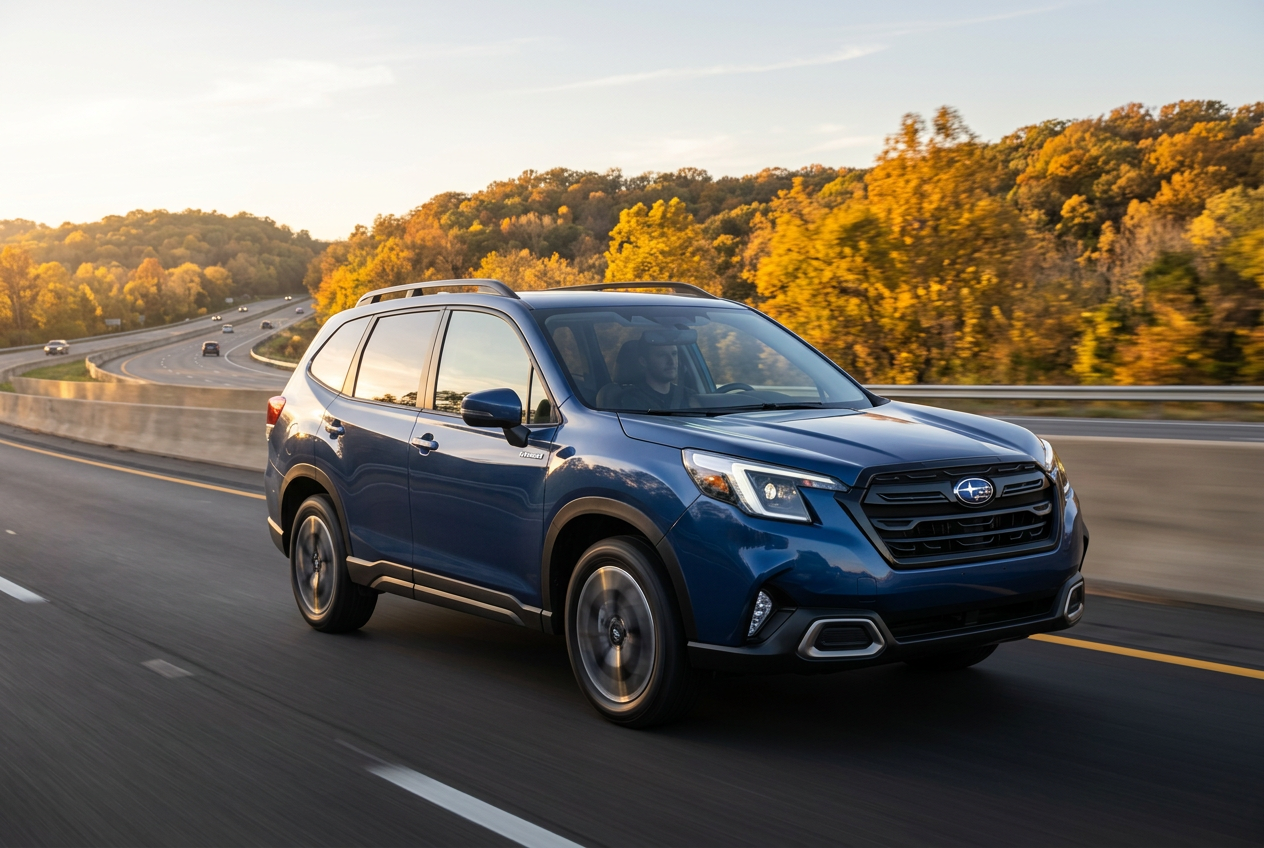
WRX on highway

Estimated 5-Year Fuel Costs for the Subaru WRX: The Bottom Line

Sunset Hills Subaru · St. Louis ownership guide Subaru WRX Fuel Costs & Maintenance: What St. Louis Drivers Should Budget How much does a Subaru WRX cost to drive and maintain? Compare estimated five-year fuel expenses, learn which maintenance items deserve a place in your budget, and find the Subaru service resources that help keep a performance sedan ready for the road. The fuel examples below use published 2026-model assumptions. The URL references 2027; 2027-model specifications and ratings should be verified before applying these figures to a 2027 WRX. For a Subaru WRX owner, fuel is only part of the cost of ownership. Maintenance, tires, brakes, insurance and driving habits also matter. This guide uses a sample 15,000 miles per year (75,000 miles over five years) and an illustrative premium-fuel price of $3.85 per gallon. These are planning assumptions—not a current local fuel-price quote. The MPG examples refer to the 2026 WRX configurations discussed below; check the EPA listing for the exact model year, trim and transmission. For the standard 6-speed manual transmission WRX, which carries an EPA combined rating of 22 MPG (19 City / 26 Highway), total fuel consumption over 75,000 miles comes out to approximately 3,409 gallons. At $3.85 per gallon, standard 6-speed manual WRX owners can expect approximately $13,125 in total fuel expenses over 5 years, averaging roughly $2,625 per year. For models equipped with the quick-shifting Subaru Performance Transmission (SPT) automatic, which is rated at an EPA combined 21 MPG (19 City / 25 Highway), total consumption over 75,000 miles requires approximately 3,571 gallons. At $3.85 per gallon, automatic WRX owners will spend approximately $13,750 over 5 years, averaging $2,750 per year. The 5-year variance between manual and automatic transmissions is a modest $625, making personal driving preference and transmission convenience the primary decision factors. WRX Transmission Option EPA Combined MPG Gallons Used (75k Miles) Annual Fuel Cost (15k Mi) Estimated 5-Year Fuel Cost 6-Speed Manual Transmission 22 MPG 3,409 Gal $2,625 $13,125 Subaru Performance Transmission (SPT) 21 MPG 3,571 Gal $2,750 $13,750 Does the 2026 Subaru WRX Require Premium Unleaded Gasoline? Yes, Subaru recommended requirements specify 91 octane premium unleaded fuel (or higher) to achieve peak performance and efficiency from the 2.4-liter turbocharged Subaru BOXER engine. Turbocharged engines compress fuel and air mixtures at much higher pressures than naturally aspirated engines. Premium gasoline possesses a higher octane rating, meaning it resists premature detonation under intense heat and cylinder pressure. If lower octane regular fuel (87 octane) is used, the engine control module (ECM) detects knock via sensors and automatically retards ignition timing. While this safeguards engine components against severe knock damage, it causes a noticeable loss in peak horsepower, reduces throttle responsiveness, and worsens overall fuel efficiency—meaning you end up burning more gallons per mile. For daily commuters driving between Chesterfield, Ladue, and Sunset Hills, calculating the actual cost difference between premium and regular fuel reveals an important financial insight. Assuming regular gas averages $3.15 per gallon and premium averages $3.85 per gallon, the $0.70 price gap equates to roughly $477 per year across 15,000 miles in a manual WRX ($2,625 vs $2,148). Because running 87 octane reduces fuel economy by roughly 1 to 2 MPG, the actual savings of using regular gas shrinks down to less than $20 a month while sacrificing engine performance. To protect your investment and enjoy the full 271 horsepower of your BOXER engine, refueling with 91+ premium gas is recommended. How Does the Fuel Economy of the Manual WRX Compare to the Automatic WRX? The choice between the traditional 6-speed manual gearbox and the advanced Subaru Performance Transmission (SPT) automatic subtly impacts fuel efficiency due to weight differences and transmission dynamics. Official EPA ratings for both powertrains are structured as follows: • 6-Speed Manual: 19 MPG City / 26 MPG Highway / 22 MPG Combined • Subaru Performance Transmission: 19 MPG City / 25 MPG Highway / 21 MPG Combined In daily stop-and-go suburban driving along Manchester Road or I-270, both transmissions perform identically in urban test cycles at 19 City MPG. However, on open highway stretches like I-64 through St. Louis County, the manual gearbox holds a slight 1 MPG advantage due to direct mechanical engagement with minimal hydraulic friction drag. Over a single year of suburban highway commuting (15,000 miles), the manual WRX burns about 682 gallons versus 714 gallons in the automatic. This equals an annual cost difference of approximately $125. Over a full 5-year ownership period, that totals just $625—an incremental difference for drivers who prefer paddle-shifted automatic convenience in heavy St. Louis traffic. What Engine and Transmission Options Are Featured in the 2026 Subaru WRX? 2.4L Turbocharged BOXER At the heart of every 2026 WRX lies a 2.4-liter direct-injection turbocharged 4-cylinder Subaru BOXER engine. Producing 271 horsepower at 5,600 RPM and 258 lb-ft of torque across a wide torque band from 2,000 to 5,200 RPM, it delivers immediate throttle response. Horizontally opposed pistons sit low in the chassis to lower center of gravity and boost cornering balance. 6-Speed Manual Transmission Standard on Base, Premium, Limited, and TR trims, the 6-speed manual offers precise gear engagement with optimized ratios. Built for driving purists, it incorporates short shift throws, double-cone synchronizers on 1st and 2nd gears, and Incline Start Assist for confidence when starting on steep hills throughout Missouri terrain. Subaru Performance Transmission Standard on GT trims and available on Premium/Limited, the Subaru Performance Transmission (SPT) offers up to 30% faster upshifts and 50% faster downshifts. Featuring steering-wheel paddle shifters, 8-speed manual mode, and SI-DRIVE performance management, it delivers aggressive automatic downshift rev-matching during heavy braking. Browse New Subaru WRX Inventory How Does Subaru Symmetrical All-Wheel Drive Operate on the WRX? Unlike front-wheel-drive competitors that route power to rear wheels only after slipping occurs, Subaru Symmetrical All-Wheel Drive operates full-time. Engine power flows through a central, balanced drivetrain layout. Manual models utilize a Continuous AWD system with a viscous-coupling locking center differential (50/50 power split), while SPT automatic models employ Variable Torque Distribution (VTD) AWD with an electronically controlled hydraulic clutch. Active Torque Vectoring applies subtle braking to the inner front wheel during sharp cornering, directing torque to the outer wheel to reduce understeer. During Missouri winter ice, rain, and snow, full-time AWD provides superior traction and security. While driving four wheels creates minor mechanical drag relative to 2WD cars—slightly reducing fuel economy by about 1-2 MPG—the safety and driving dynamics are well worth the small fuel cost trade-off. What Standard Equipment Is Added When Upgrading to the WRX Premium Trim? Exterior & Wheel Upgrades Upgrading from the Base trim to the WRX Premium adds larger 18-inch dark gray alloy wheels fitted with performance summer tires, LED fog lights, body-color low-profile rear spoiler, heated side mirrors, and a windshield wiper de-icer for icy St. Louis winter mornings. Multimedia & Convenience Inside the cabin, the Premium trim adds an 11.6-inch high-resolution STARLINK multimedia display with wireless Apple CarPlay and Android Auto integration, dual rear USB charge ports, Keyless Access with Push-Button Start, and illuminated visor vanity mirrors. All-Weather Comfort Driver comfort gets a major boost with standard 3-mode heated front sport seats, dual-zone automatic climate control system, aluminum-alloy pedal covers, leather-wrapped steering wheel, and cloth seating featuring red contrast stitching. How Much Does Auto Insurance Cost per Year for a Subaru WRX? Auto insurance is an essential component when projecting total WRX ownership costs over 5 years. Nationally and across the Greater St. Louis region—including Sunset Hills, Ladue, and Maryland Heights—the average cost to insure a Subaru WRX ranges from $1,800 to $2,400 per year ($150 to $200 per month) for clean-record adult drivers. Insurance premiums depend heavily on individual driver age, driving record, zip code, annual mileage, and chosen deductible amounts. Because the WRX is classified as a performance sedan, rates are slightly higher than standard commuter cars like the Impreza, but significantly lower than two-seater sports cars. Subaru EyeSight Driver Assist Technology—now standard across both manual and automatic 2026 WRX models—helps keep insurance premiums lower. Features like Pre-Collision Braking, Adaptive Cruise Control, and Lane Keep Assist earn safety equipment discounts with major insurers, offsetting part of the performance insurance premium. Subaru WRX Maintenance Costs: What Owners Should Expect in 2026 Maintaining a turbocharged performance vehicle like the WRX requires consistent routine care to ensure peak mechanical health and preserve long-term resale value. Over 5 years or 75,000 miles, routine maintenance expenses for a Subaru WRX average between $2,200 and $3,100 total (roughly $440 to $620 annually) when serviced according to factory schedules at an authorized retailer like Sunset Hills Subaru. Many WRX maintenance schedules call for oil and filter service at 6,000-mile/6-month intervals under normal use, but the applicable Subaru maintenance schedule and severe-driving conditions control. Tire inspections, brake checks and fluid inspections are important; individual replacement intervals vary by model year and operating conditions. Service Interval Key Recommended Services Budgeting note 6,000 / 18,000 / 42,000 Miles Synthetic Oil Change, Tire Rotation, Multi-Point Inspection Request a current, itemized service quote 12,000 / 24,000 / 48,000 Miles Minor Service + Cabin & Engine Air Filters, Brake Inspection Request a current, itemized service quote 30,000 / 90,000 Miles Intermediate Service + Front/Rear Differential Fluids, Brake Fluid Flush Request a current, itemized service quote 60,000 Miles Major Service Major Inspection + Spark Plugs, All Fluid Services, Filters Request a current, itemized service quote Schedule Service and Diagnostics What Really Drives Subaru WRX Maintenance Costs? There is no single maintenance bill that fits every WRX. The most useful ownership budget separates factory-scheduled maintenance from wear items and unexpected repairs. Oil, filters & inspections Follow the maintenance schedule for your exact WRX model year. Short trips, heavy use and severe conditions can change the recommended attention your car needs. Performance tires & alignment Performance-oriented tires can be a significant wear expense. Tire type, tread depth, alignment and driving style all affect replacement timing. Brakes & drivetrain Braking habits and performance driving affect pad and rotor life. AWD and transmission maintenance should follow Subaru's vehicle-specific guidance. How to build a realistic five-year WRX budget Start with your expected annual mileage and a fuel-price assumption. Add the factory-required maintenance for that mileage, a separate allowance for tire and brake wear, and insurance quotes based on your own driver profile. Keep repair contingencies separate from scheduled maintenance so the numbers remain transparent. Example fuel math: At 15,000 miles per year, 22 combined MPG and $3.85 per gallon, estimated annual fuel spending is about $2,625. At 21 combined MPG, it is about $2,750. These are illustrations, not guaranteed operating costs. WRX service resources in Sunset Hills Explore the relevant services below, or contact our team for a WRX-specific maintenance estimate. Oil Change & Maintenance Brake Service Tire Service Service Research Hub Schedule Service Service availability, prices, tire fitment and exact maintenance requirements should be confirmed with Sunset Hills Subaru and the applicable owner's manual. Subaru WRX Maintenance Cost FAQs Is a Subaru WRX expensive to maintain? A WRX has performance-oriented components and AWD, so tire, brake and drivetrain-related expenses may differ from those of a conventional commuter sedan. Your actual costs depend on use, maintenance history, model year and local labor and parts prices. How often should a Subaru WRX get an oil change? Consult the maintenance schedule for your WRX's exact model year. A 6,000-mile or six-month interval is a common reference for the model discussed in this article, while severe-use guidance may call for additional attention. Are WRX tires more expensive? Performance tire choices and AWD tire-matching considerations can affect the cost. Compare compatible tire options, sizes and tread condition before replacing one or more tires. How much should I budget for 30,000- and 60,000-mile service? Rather than relying on a universal price, request a written estimate based on your VIN, transmission, model year and maintenance history. That identifies the work actually due and avoids paying for unnecessary services. How Much Might 30,000- and 60,000-Mile WRX Services Cost Locally? The 30,000-mile service milestone (typically occurring around year 2 or 3) is a pivotal preventative service. In addition to standard oil and filter replacements, technicians inspect and replace front and rear differential gear oil, flush and replace hydraulic brake fluid, and perform fuel system cleaning. Locally near Sunset Hills, this service averages between $350 and $550. The 60,000-mile major service milestone is the most comprehensive interval during 5 years of ownership. This major service requires replacing spark plugs (which requires specialized tools due to the horizontal BOXER engine layout), changing differential fluids, replacing transmission fluid, and renewing engine coolant. Local estimates near St. Louis range from $750 to $1,100. Replacing front and rear differential fluids is vital for protecting the Symmetrical AWD system against thermal degradation. Regular service at factory milestones prevents premature gear wear and ensures full power transfer in severe Midwest weather conditions. How Much Does Vehicle Depreciation Impact the WRX Ownership Cost? While fuel costs represent a recurring operational expense, vehicle depreciation is the single largest financial factor over 5 years. Fortunately for WRX buyers, the Subaru WRX historically boasts industry-leading residual values, routinely winning ALG Residual Value and Kelley Blue Book Best Resale Value awards in the sports car category. On average, a WRX retains approximately 52% to 58% of its original MSRP after 5 years and 75,000 miles, compared to standard compact sedans that retain only 40% to 45%. Strong Midwest demand for AWD performance vehicles keeps pre-owned WRX market values high. This exceptional resale retention directly offsets higher premium fuel expenses over 5 years. For example, retaining $3,500 to $5,000 more value at trade-in time relative to rival sports sedans effectively covers 30% to 40% of your total 5-year fuel bill. Check what your current car is worth today with our quick Get your value trade tool. How Do Factory Warranties Compare Between Subaru and Honda? Subaru Factory Warranty Every 2026 Subaru WRX comes protected by a 3-Year / 36,000-Mile New Vehicle Limited Warranty, a 5-Year / 60,000-Mile Powertrain Limited Warranty, and 5-Year / Unlimited Mileage Rust Perforation Protection. Includes 24/7 Roadside Assistance across the USA. Honda Factory Warranty Honda offers matching coverage for the Civic Si and Type R: 3-Year / 36,000-Mile Bumper-to-Bumper and 5-Year / 60,000-Mile Powertrain coverage. However, Honda does not include standard full-time AWD drivetrain protection within its basic layout. Sunset Hills Subaru Edge At Sunset Hills Subaru, factory warranty repairs are completed by factory-certified master technicians using genuine OEM Subaru parts. Explore our latest maintenance offers under Current Service and Parts Specials. Current Service and Parts Specials Real-World St. Louis Commute Analysis: Optimizing WRX MPG in Chesterfield Daily commuting through West County, along I-64/US-40 from Chesterfield through Ladue to Sunset Hills, provides a realistic test environment for WRX fuel efficiency. Owners can easily optimize real-world MPG by adopting simple driving habits: • SI-DRIVE Intelligent Mode: On SPT models, select 'I' mode in heavy traffic to smooth throttle mapping and maximize fuel economy. • Optimal Manual Shift Points: Upshift around 2,000 to 2,500 RPM when cruising flat highway stretches to avoid unnecessary turbo boost enrichment. • Tire Inflation Maintenance: Keep performance tires inflated precisely to 33 PSI front / 32 PSI rear to minimize rolling resistance. • Winter Fuel Blend Adjustment: Missouri winter oxygenated fuel blends can drop MPG by 2–3 MPG; regular tire pressure monitoring helps offset this temporary drop. By utilizing Intelligent SI-DRIVE settings during heavy commute times and reserving Sport Sharp mode for open country roads, drivers routinely exceed the EPA combined 22 MPG estimate, pushing highway figures up to 28 MPG. Test Drive the 2026 Subaru WRX at Sunset Hills Subaru When calculated over 5 years, the Subaru WRX delivers an unmatched balance of exhilarating rally-bred performance, all-weather confidence, strong resale retention, and predictable fuel expenses. Whether you choose the engaging 6-speed manual or the dynamic Subaru Performance Transmission, the WRX is designed to deliver pure driver enjoyment on every commute. Experience the 2026 Subaru WRX firsthand at Sunset Hills Subaru. Located conveniently at 10100 Watson Rd, Sunset Hills, MO 63127, our friendly team is ready to guide you through trim levels, personalized financing plans, and trade-in options. Get Directions to Sunset Hills Subaru or call us today at Call (314) 476-9638. Get Your Value Trade

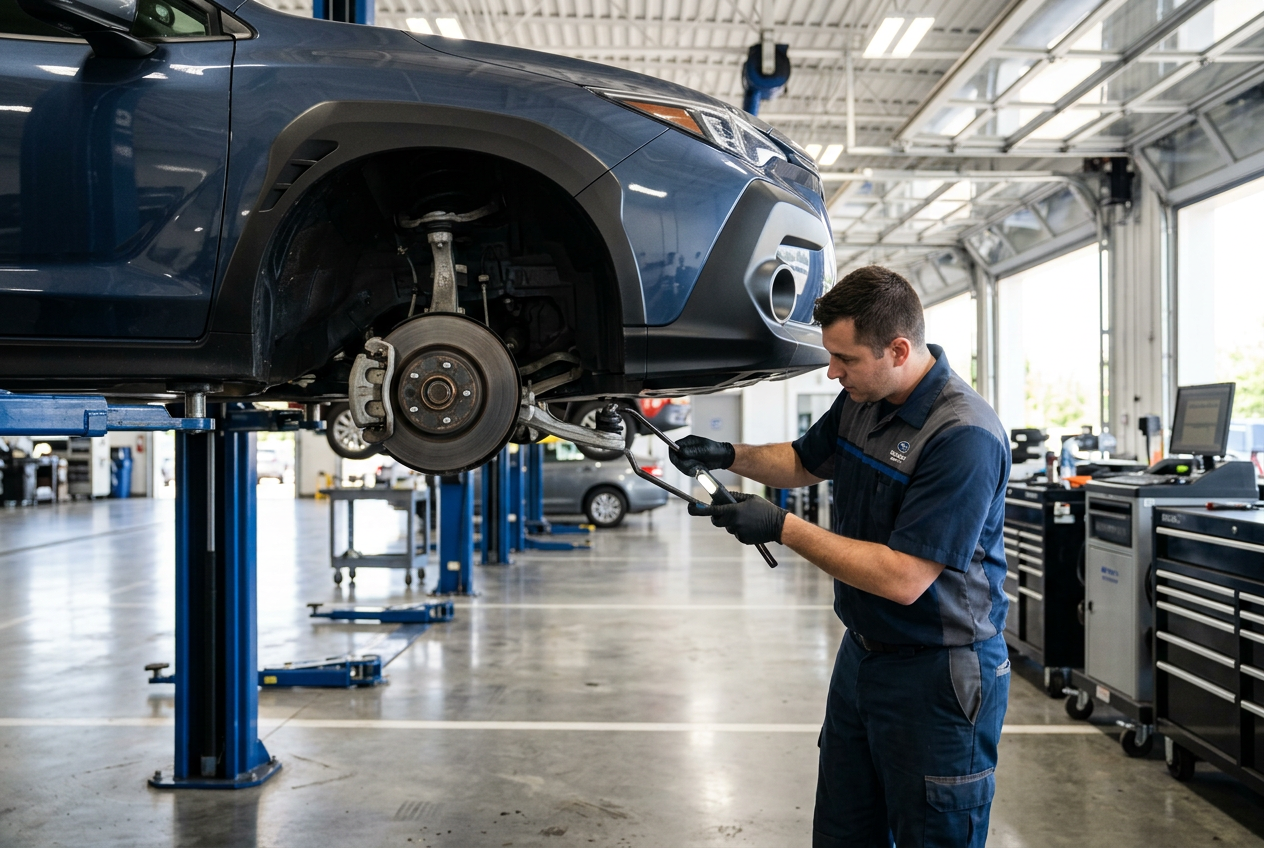
tech working on suspension

2026 Subaru Crosstrek Suspension Recall: Key Takeaways and Free Dealer Service Guide

2026 Subaru Crosstrek Suspension Recall: Key Takeaways and Free Dealer Service Guide If you drive a 2026 Subaru Crosstrek around Greater St. Louis, keeping your vehicle in peak operating condition is a top priority for highway commuting along I-44, navigating winter slush, and enjoying weekend adventures through Castlewood State Park. Recently, Subaru issued a safety recall focused on the front lower ball joint assembly in select 2026 Crosstrek models. The lower ball joint serves as the crucial pivot point linking your vehicle's front suspension control arm to the steering knuckle. When this component operates correctly, it allows smooth steering rotation and vertical suspension articulation simultaneously. However, under specific manufacturing variations or hardware installation tolerances, affected ball joint assemblies may experience premature wear, loosening, or potential dislodgement under stress. The bottom line for St. Louis area drivers is straightforward and reassuring: all official safety recall inspections, updated replacement components, hardware fastenings, and mandatory post-repair wheel alignments are 100% free of charge at authorized dealerships like Sunset Hills Subaru. Under federal regulations enforced by the National Highway Traffic Safety Administration (NHTSA), vehicle owners face zero out-of-pocket costs for recall remedies regardless of whether their Crosstrek is under original limited warranty or high mileage. Taking immediate action ensures your Crosstrek maintains its renowned Symmetrical All-Wheel Drive stability, precise steering geometry, and factory safety system calibration. Recall Topic Key Information & Summary Owner Action Required Component Affected Front Lower Ball Joint Assembly & Retaining Hardware Verify VIN with Sunset Hills Subaru Out-of-Pocket Repair Cost $0.00 (100% Covered under Federal Recall Law) Schedule recall appointment online Repair Time Frame Approximately 1.5 to 3.0 Hours (Includes Alignment) Reserve service slot or loaner vehicle Safety System Calibration Subaru EyeSight Alignment Verification Included Ensure factory technician performs alignment If you suspect your vehicle is affected, or if you have noticed unusual front-end metallic clicking, wandering steering on Highway 141, or uneven front tire edge wear, do not wait. Our factory-certified technicians at Sunset Hills Subaru stand ready to perform immediate VIN verifications, execute precise repair procedures using high-strength genuine OEM service kits, and return your Crosstrek to full safety standards with total peace of mind. Schedule Free Recall Inspection Has There Been a Recall on the Front Lower Ball Joint for the 2026 Subaru Crosstrek? Yes, Subaru of America has identified a technical variance affecting the front lower ball joint retaining structure on targeted production batches of the 2026 Subaru Crosstrek. In modern automotive engineering, the ball joint functions as a ball-and-socket bearing that connects the lower control arm to the steering knuckle. It handles dual physical duties: supporting the vertical load of the vehicle springs and damper while pivoting smoothly left and right when you turn the steering wheel. On affected 2026 Crosstrek models, specific manufacturing tolerances during sub-assembly may allow the ball joint stud to seat with inadequate torque retention or experience abnormal wear at the seat neck. Determining whether your specific vehicle requires service comes down to checking its 17-digit Vehicle Identification Number (VIN). Not every 2026 Crosstrek manufactured is subject to this recall—only those built within specific calendar date ranges at designated assembly plants. St. Louis drivers can locate their VIN on their vehicle registration card, insurance documentation, or at the base of the driver-side windshield where it meets the dashboard. You can cross-reference your VIN directly on the NHTSA official recall portal or enter it on our website to review open campaign details instantly. If you are browsing New Subaru Crosstrek Inventory, rest assured that all inventory on dealer lots must complete recall updates before delivery. Why is the lower ball joint so vital on a Subaru? Subaru's Symmetrical All-Wheel Drive system distributes engine torque continuously to all four wheels. The front lower ball joint maintains the precise kingpin angle and camber angle under aggressive cornering, heavy braking, and off-road articulation. If a ball joint wears severely or separates, the front wheel can tilt outward uncontrollably, leading to immediate loss of directional steering control and potential drive axle binding. What Type of Front Suspension Design Does the 2026 Subaru Crosstrek Use? The 2026 Subaru Crosstrek relies on a highly refined MacPherson strut front suspension architecture paired with lower L-shaped control arms and an integrated stabilizer bar. This engineering choice is central to the Crosstrek's signature balance between nimble hatchback handling and rugged 8.7-inch ground clearance (or 9.3 inches on Wilderness models). In a MacPherson setup, the top of the suspension strut bolts into the vehicle body unibody tower, while the lower control arm manages horizontal cornering forces and fore-aft braking loads. The front lower ball joint acts as the critical lower pivot anchor. It attaches to the outer tip of the lower control arm and presses into the bottom housing of the wheel hub assembly. Because the Crosstrek is built on the high-rigidity Subaru Global Platform, chassis energy is effectively dissipated through suspension bushings and joints rather than transferring into the cabin. Drivers exploring New Subaru Inventory value this platform for its ultra-quiet ride and responsive feedback. However, daily driving conditions throughout St. Louis County—such as potholes along Watson Road, frost heaves during Missouri winters, expansion joints on I-270, and gravel fire roads around West County—place tremendous dynamic stress on front suspension geometry. Every hit from a pothole creates a vertical shock force that travels through the tire, wheel hub, ball joint stud, and lower control arm. When a ball joint assembly experiences manufacturing deviations, these repetitive road impact forces can accelerate wear inside the polished steel ball socket or loosen the pinch bolt locking mechanism. Understanding this mechanical architecture highlights why proper inspection and hardware torquing during recall service are essential for preserving chassis integrity. Recognizing Early Symptoms of Front Lower Ball Joint Wear or Dislodgement 1. Audible Metallic Clunking One of the most noticeable early indicators of lower ball joint wear is a metallic popping, knocking, or clunking noise coming from the front wheel wells. This sound usually manifests when driving at low speeds over speed bumps, entering steep driveways in Kirkwood, or turning into parking spaces. As internal play develops within the ball-and-socket casing, road impacts cause the ball stud to strike against its metal housing. 2. Steering Wander & Vibrations A compromised front ball joint introduces excess mechanical play into your steering linkage. Drivers may experience 'steering wander,' where the vehicle subtly drifts to the left or right on straight stretches of highway like I-64 without steering wheel input. You may also feel slight nibble or high-frequency vibration through the steering wheel rim during normal cruising speed, caused by minute wheel alignment fluctuations. 3. Uneven Front Tire Wear When a lower ball joint loses rigidity, the front wheel alignment angles—specifically camber and toe—shift out of factory specification. Over several hundred miles, this causes abnormal tire tread scrub. Inspect your front tires for accelerated wear on the inner or outer tread shoulder (feathering or cupping). Left unaddressed, ball joint play can destroy expensive all-weather or all-terrain tires prematurely. Explore Service & Repair Services What Is the Safe Repair Procedure for the 2026 Crosstrek Front Lower Ball-Joint Recall? When you bring your 2026 Crosstrek to Sunset Hills Subaru for recall execution, factory-trained master technicians follow a meticulous repair protocol mandated by Subaru engineering standard operating procedures. The process begins with securing the vehicle on a hydraulic lift and removing the front wheel assemblies to gain direct, unimpeded access to the front brake, hub, and suspension mounting hardware. First, technicians inspect the pinch bolt area at the base of the steering knuckle and the mounting seat on the lower control arm for any signs of surface distortion or thread damage. Next, using specialized ball joint pullers and torque tools, the factory technician detaches the existing lower ball joint without damaging surrounding components such as drive axle boots, brake dust shields, or wheel speed sensors. Once removed, an updated, genuine Subaru OEM ball joint assembly featuring enhanced metallurgy and reinforced retaining hardware is installed. Technicians apply exact factory torque specifications using calibrated torque wrenches to ensure the pinch bolt and crown nut lock perfectly into position, eliminating any risk of future backing-off or vibrational movement. Does Replacing the Front Lower Ball Joint Require a Wheel Alignment Afterwards? Absolutely. A full computer-calibrated four-wheel alignment is a mandatory step in completing the 2026 Subaru Crosstrek ball joint recall repair. Disconnecting the lower control arm from the steering knuckle alters the resting geometry of the front wheels. Even fractional millimeter changes in ball joint seating position will shift camber (vertical wheel tilt) and toe (directional alignment of tires relative to vehicle centerline). Driving without a post-repair alignment leads to rapid inner-edge tire wear and degraded handling stability. Furthermore, modern Subaru vehicles rely heavily on advanced driver-assistance technology like Subaru EyeSight®. Systems such as Adaptive Cruise Control, Lane Keep Assist, Pre-Collision Braking, and Lane Centering depend on exact steering wheel angle sensor calibration and predictable chassis tracking. If suspension geometry is off after mechanical repairs, the EyeSight optical cameras and steering feedback sensors may read vehicle direction incorrectly, triggering warning indicators or reducing system effectiveness. Alignment Parameter Function in Suspension System Impact of Ball Joint Service Front Camber Controls tire contact patch during cornering Directly affected by lower ball joint seat depth Front Toe Angle Prevents tire scrub and maintains straight tracking Shifted when lower control arm pivots on lift Caster Angle Provides self-centering steering wheel feel Stabilized by proper ball joint position EyeSight Steering Sensor Syncs optical lane tracking with wheel angle Recalibrated electronically during alignment At Sunset Hills Subaru, our service facility utilizes state-of-the-art high-definition optical wheel alignment equipment specifically programmed with factory 2026 Crosstrek specifications. Best of all, because this alignment is a required step of the official recall protocol, the alignment service is entirely free to you as part of the recall coverage. Are Recall Repairs Free at Subaru Dealerships and Covered Under Warranty? Federal Mandate & Zero Cost Under federal law, all safety recall repairs are 100% free of charge to vehicle owners. Subaru of America covers all parts, technician labor, shop supplies, and computerized wheel alignment. You will never pay a deductible or hidden fees for recall work. Factory Warranty Coverage Beyond recall campaigns, suspension components on new Crosstreks are protected by Subaru's 3-Year / 36,000-Mile New Car Limited Warranty. Any non-recall mechanical defect during this period is repaired free under standard manufacturer warranty policies. Genuine OEM Components All recall repairs at Sunset Hills Subaru utilize exclusively engineered Subaru Genuine Parts. These components are factory-backed and designed specifically for your Crosstrek model year. Need extra maintenance parts? Visit Find Subaru Parts online. Order OEM Subaru Parts & Accessories Are Front Lower Ball Joints on the Crosstrek Serviceable Separately from the Control Arm? A major modular design advantage of the Subaru Crosstrek front suspension is that the lower ball joint is individually serviceable and detachable from the lower control arm. On many competing crossovers, the lower ball joint is permanently pressed or riveted into the control arm assembly during factory stamping. On those vehicles, replacing a worn ball joint requires replacing the entire lower control arm—increasing repair costs significantly. On the 2026 Subaru Crosstrek, the lower ball joint features a bolt-on housing design that secures directly into the arm pocket using high-strength fasteners. This design gives Subaru service technicians optimal flexibility during recall service or future long-term maintenance. During the recall service, if technician inspection reveals that the lower control arm bushing or arm pocket sustained any wear due to a loose ball joint, the affected control arm will also be replaced under recall warranty at zero cost to the customer. This modular engineering philosophy highlights Subaru's commitment to sensible long-term ownership costs, ensuring individual components can be swapped efficiently without unnecessarily discarding healthy structural parts. How Much Does Out-of-Warranty Front Ball Joint Replacement Cost and What Are Annual Expenses? While the 2026 Crosstrek recall service is 100% free under federal mandates, understanding out-of-warranty repair benchmarks and routine maintenance budgets provides helpful perspective for long-term ownership. On non-recalled older vehicles or out-of-warranty models, replacement costs can vary based on labor rates and parts selection. Contact the dealership for current pricing details. Overall, the Subaru Crosstrek remains one of the most affordable compact AWD crossovers to maintain over time. Regular factory-recommended service costs can vary based on vehicle condition and mileage. Contact the service department for current maintenance estimates. Service Item Estimated Retail Cost Recall Cost to Owner Front Ball Joint Assembly (Per Side) $110 - $180 (Parts) $0.00 Labor (Inspection & Installation) $150 - $270 (Labor) $0.00 Four-Wheel Computer Alignment $120 - $160 $0.00 Total Recall Cost $380 - $610 $0.00 Total Do Open Recall Repairs Negatively Affect a Vehicle's Resale Value? Open Recalls Flag Reports An unresolved safety recall leaves a red warning flag on vehicle history platforms like CARFAX® and AutoCheck®. Prospective buyers and trade-in appraisers notice open safety recalls, which can delay transactions, reduce offers, or prevent private sales until cleared. Completed Service Restores Value Once the recall repair is executed at Sunset Hills Subaru, our service department updates Subaru's central factory database. The open campaign is marked as 'Completed,' clearing your CARFAX report and fully preserving your Crosstrek's market-leading resale value. Max Trade-In Protection Subaru vehicles enjoy some of the highest residual values in the industry. Keeping all recall services up-to-date protects your equity when upgrading in the future. Interested in your current equity? Try Get your value trade online today. Check Your Trade-In Value Online How Long Does a Front Lower Ball Joint Replacement Service Take at a Dealership? At Sunset Hills Subaru, we value your time and aim to make recall service as seamless and swift as possible. The physical removal and replacement of the front lower ball joint assembly takes approximately 1.0 to 1.5 hours of dedicated shop time. Adding the mandatory computerized four-wheel alignment and multi-point vehicle health check brings total turnaround time to roughly 1.5 to 3.0 hours. While your Crosstrek is in our service bay, you can relax in our customer lounge featuring high-speed Wi-Fi, complimentary Starbucks® coffee and refreshments, quiet work cubicles, and comfortable seating. Alternatively, for repairs requiring longer scheduling windows, speak with our service team regarding complimentary Subaru loaner vehicles or shuttle service across Sunset Hills, Crestwood, and Fenton. Scheduling your visit online in advance ensures our service department pre-allocates the exact OEM recall parts kit for your VIN, minimizing waiting time and ensuring instant service desk check-in when you arrive at Watson Road. How Can a St. Louis Area Owner Arrange Local Recall Service at Sunset Hills Subaru? Arranging your free 2026 Subaru Crosstrek suspension recall service at Sunset Hills Subaru is simple and hassle-free. As St. Louis's trusted Subaru service destination, we are dedicated to keeping your vehicle safe, reliable, and prepared for every journey ahead. Follow these simple steps to complete your recall service: 1. Locate Your VIN: Find your 17-digit VIN on your insurance card, registration, or lower driver-side windshield. 2. Schedule Online or By Phone: Click below to reserve a service appointment online or Call (314) 476-9638 to speak directly with our service advisors. 3. Visit Our State-of-the-Art Facility: Bring your Crosstrek to 10100 Watson Rd, Sunset Hills, MO 63127. Need navigation directions? Click Get Directions to Sunset Hills Subaru. 4. Drive Away with Complete Confidence: Enjoy complimentary multi-point inspections, factory recall completion documentation, and a freshly washed vehicle upon completion. 2026 Subaru Crosstrek Recall Service in Sunset Hills MO | Sunset Hills Subaru

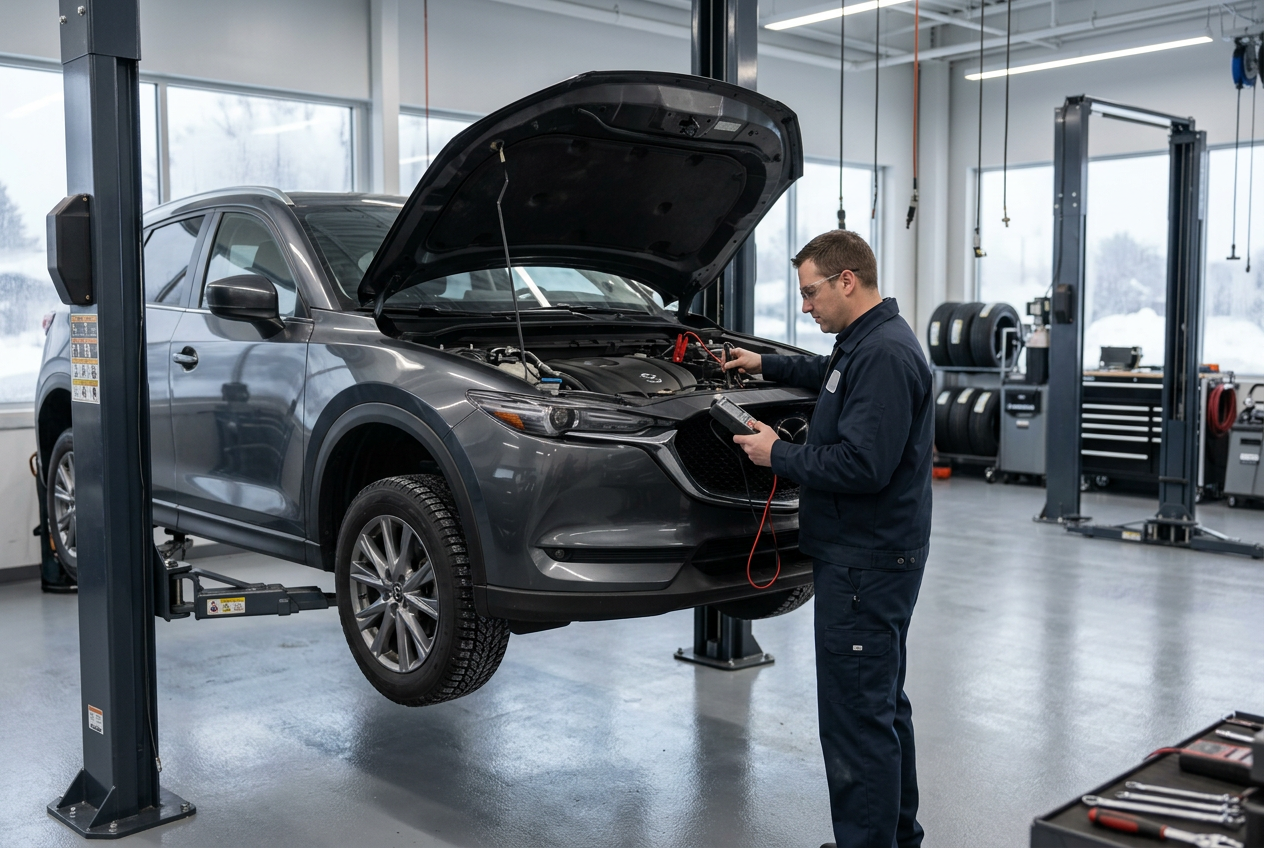
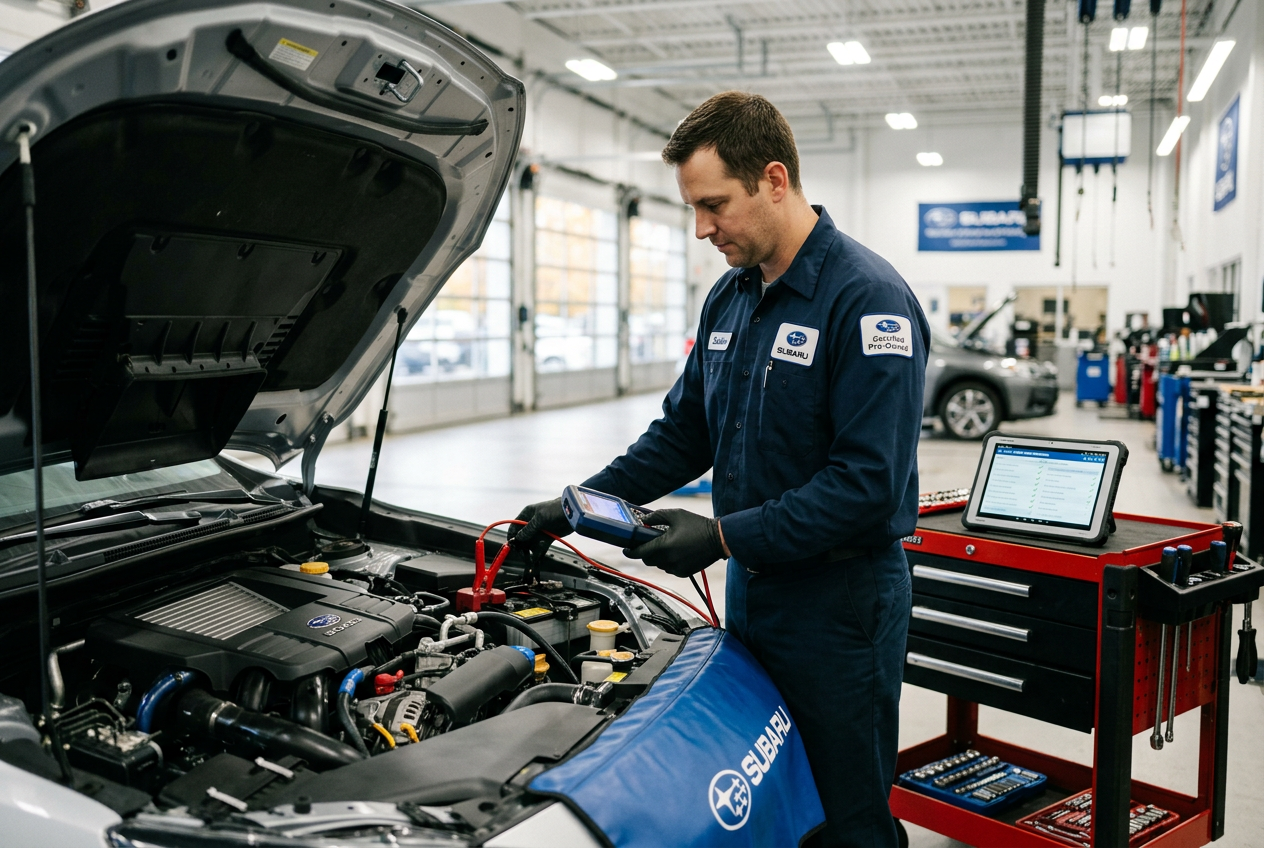
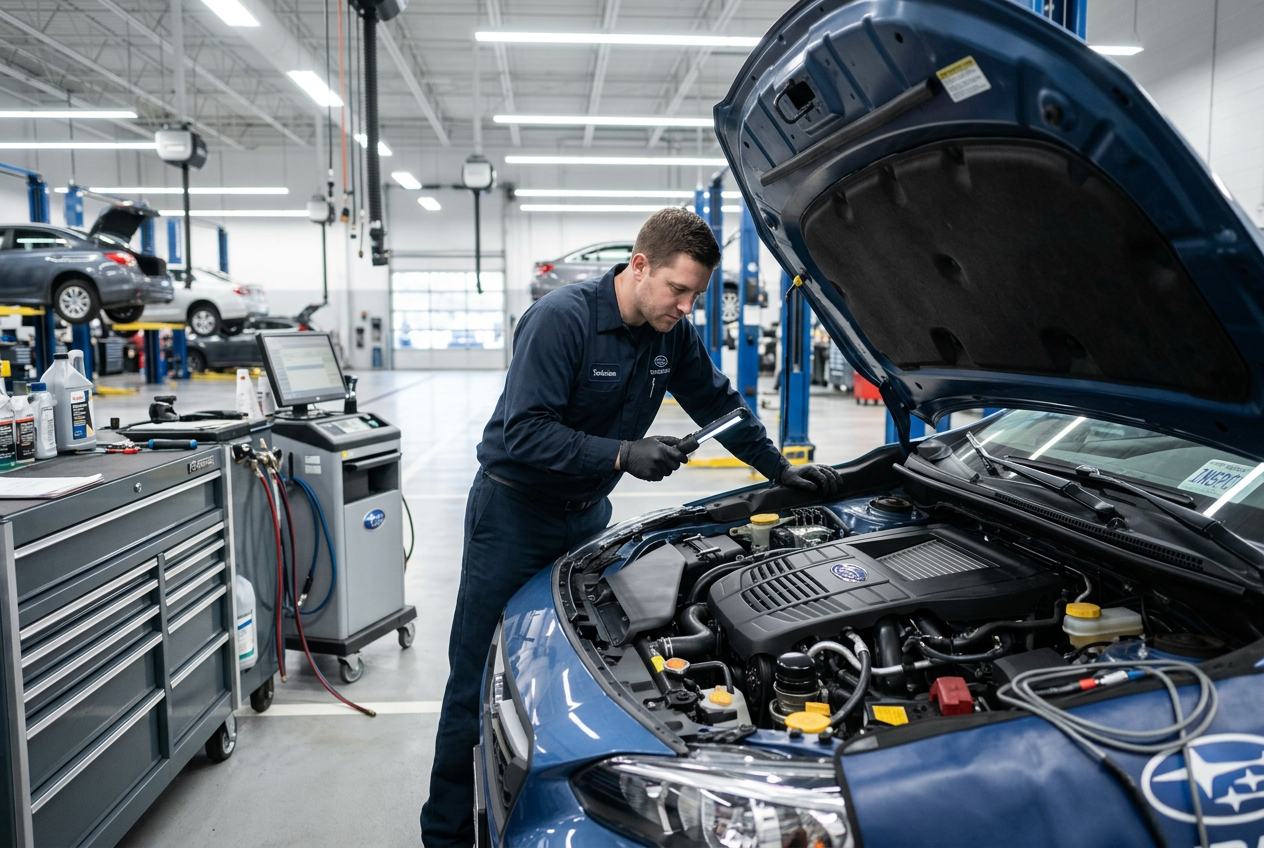
Tech looking at subaru

What Essential Service Items Should Be Included in a Winter Maintenance Package?

When winter descends upon the greater St. Louis region, bringing freezing rain, sudden sub-zero snaps, and treacherous black ice across I-64, I-270, and Highway 141, your vehicle's mechanical integrity is tested to its ultimate limits. A true comprehensive winter maintenance package is far more than a routine oil change and quick car wash. To guarantee total reliability, uncompromising safety, and peace of mind throughout Missouri's unpredictable winter months, a professional winter service package must address every critical mechanical system vulnerable to extreme temperature drops. At Sunset Hills Subaru, our factory-certified master technicians recommend that every winter maintenance inspection include seven foundational service pillars: a digital cold-cranking battery load test, winter tire tread depth and pressure evaluation, freeze-point chemical testing for coolant and washer fluids, heavy-duty wiper blade inspection and replacement, a thorough all-wheel drive (AWD) or 4WD drivetrain fluid and mechanical audit, full brake system pad and rotor measurement, and protective rubber door seal lubrication. Skipping even one of these vital items can leave you stranded in frigid weather along the Missouri River valley. Modern automobiles, particularly advanced AWD vehicles like Subaru Outbacks, Foresters, and Crosstreks, rely on interconnected sensor arrays and precision mechanical components that behave differently when temperatures hover around zero degrees. Cold air contracts tire pressure by roughly 1 PSI for every 10-degree drop, while icy sludge places heavy strain on steering and suspension bushings. A rigorous winter package serves as proactive insurance against winter breakdown emergencies. Why Battery Health and Cold-Cranking Amps (CCA) Matter Most in Freezing Temperatures Freezing temperatures place a double-whammy burden on your vehicle's electrical system. When the thermometer drops to 32°F, a conventional lead-acid vehicle battery loses approximately 20% to 35% of its total cranking capacity. At 0°F, that loss jumps to over 50%. Simultaneously, freezing temperatures cause engine oil to thicken significantly, creating severe viscous drag on internal crankshaft journals, pistons, and camshafts. This means your starter motor requires vastly more electrical current precisely when your battery is at its weakest state. Cold-Cranking Amps (CCA) is the universal industry standard measuring a battery's ability to start an engine at 0°F (-18°C) for 30 seconds while maintaining at least 7.2 volts. For optimal winter performance across St. Louis winters, vehicles typically require a CCA rating between 550 and 800 CCA depending on engine size and cylinder count. Early signs of battery decay include a sluggish engine crank on cold mornings, dimming headlights while idling at stoplights, and electronic dashboard flickering. In the St. Louis metropolitan area, replacement battery costs typically range from $160 to $310 including installation, factory registration, and disposal. At Sunset Hills Subaru, every winter inspection includes a digital conductance load test that analyzes internal plate resistance, cold-cranking reserve, and charging alternator output, giving you clear advance warning before you get stranded in a freezing parking lot. Winter Tires vs. All-Season Tires: Tread Depth, Stopping Distances, and Wheel Packages Rubber Compounds & Grip All-season tire rubber compounds harden like hockey pucks when temperatures drop below 45°F, dramatically decreasing rubber friction on dry or damp asphalt. Dedicated winter tires utilize specialized hydrophilic silica compounds and extreme high-density siping that remain pliable in severe cold, biting into snow and channeling slush away from the contact patch. Stopping Distances & Safety On freezing rain and packed snow, stopping distance tests show dedicated winter tires can stop a passenger vehicle up to 30 feet to 40 feet shorter from 30 MPH compared to standard all-season tires—a distance equivalent to two full vehicle lengths. This critical difference frequently prevents costly rear-end collisions during St. Louis rush-hour snow events. Dedicated Steel Wheel Packages A full set of dedicated winter tires ranges from $600 to $1,100. Mounting winter rubber onto a separate set of heavy-duty steel wheels reduces seasonal mounting/balancing labor fees, preserves pristine factory alloy wheels from harsh road salt pitting, and usually lasts 4 to 5 Midwestern winter seasons. Contact our parts department to explore wheel packages. Inspecting AWD and 4WD Drivetrain Systems for Winter Performance Subaru's legendary Symmetrical All-Wheel Drive system provides unmatched winter traction, but its sophisticated mechanical transfer cases, viscous couplings, and differential units demand meticulous inspection prior to severe weather. During a complete winter drivetrain audit, our technicians inspect front and rear differential fluid clarity, check center transfer case fluid level and viscosity, measure constant-velocity (CV) axle boot integrity, and verify electronic torque-split solenoid operation. Manufacturers generally recommend replacing AWD transfer case and differential fluids every 30,000 to 60,000 miles. However, severe winter usage—such as frequent driving through deep snow drifts or heavy slush—accelerates fluid breakdown through moisture condensation. Early symptoms of a failing or compromised AWD drivetrain in winter include high-pitched gear whine at highway speeds, shuddering during tight low-speed turns on slick pavement, or delayed front-to-rear power transfer when acceleration grip is needed. Schedule Service and Diagnostics Does All-Wheel Drive Help Your Vehicle Stop Faster on Freezing Rain? One of the most dangerous driving misconceptions among Midwestern commuters is the belief that All-Wheel Drive (AWD) or Four-Wheel Drive (4WD) helps a vehicle stop faster or steer better on ice and freezing rain. The fundamental physics of vehicle dynamics dictate that while AWD engine torque distribution excels at getting a vehicle moving forward on slick roads, it plays virtually zero role in decelerating or turning on ice. Vehicle Capability Feature All-Wheel Drive (AWD) Winter Tires (Severe Snow Rated) Anti-Lock Brakes (ABS) Acceleration on Snow/Ice Excellent (Distributes Engine Torque) Superior (Soft Rubber Friction) N/A (Braking System Only) Stopping Distance on Ice No Effect (4 Wheels Brake Regardless) 30%-40% Shorter Stopping Distance Prevents Wheel Lockup & Skidding Lateral Cornering Grip Minimal Direct Effect High Friction Siping Locks onto Ice Maintains Steering Control Under Heavy Braking Every modern automobile—whether Front-Wheel Drive, Rear-Wheel Drive, or All-Wheel Drive—already features four-wheel braking systems monitored by computer-controlled Anti-Lock Braking Systems (ABS). When braking on freezing rain, stopping distance is determined exclusively by tire rubber flexibility, tread micro-siping grip, vehicle momentum, and coefficient of friction. False confidence in AWD capabilities leads many drivers to speed on icy overpasses; pairing AWD with dedicated winter tires and proper maintenance offers the true ultimate cold-weather protection. How Can You Prevent Car Doors and Rubber Seals From Freezing Shut? St. Louis weather is notorious for rapid freeze-thaw cycles. Rain or melting sleet daytime conditions quickly plummet into freezing single digits overnight, causing water trapped inside door frames and window channels to expand and freeze solid. Attempting to force open a frozen vehicle door can instantly tear delicate rubber weather stripping, leading to expensive body seal replacements and persistent wind noise down the road. To prevent doors from freezing shut, apply a light coat of pure 100% silicone spray lubricant or specialized weather-seal rubber conditioner to all perimeter door seals, trunk gaskets, and rubber window channels. Spray the lubricant onto a clean microfiber cloth and rub it thoroughly into the rubber trim. Silicone creates a micro-thin hydrophobic moisture barrier that repels water droplets before ice can bond to the metal door frame. Additionally, applying graphite lubricant into door latch mechanisms prevents internal lock actuators from freezing. Vital Winter Fluids: Antifreeze Concentration, Synthetic Engine Oil, and De-Icing Washer Fluid Coolant / Antifreeze Ratio Engine coolant must maintain a precise 50/50 ratio of ethylene glycol to distilled water for winter driving, providing freeze protection down to -34°F. Diluted coolant can freeze inside the radiator and engine block, expanding and causing cracked engine blocks or blown head gaskets. Low-Viscosity Synthetic Oil Switching to high-performance 0W-20 or 5W-30 full synthetic motor oil ensures rapid oil circulation to top-end valve trains within split seconds of cold startup, drastically minimizing metal-on-metal wear during icy morning ignition. De-Icing Washer Fluid Standard summer washer fluid freezes at 32°F, bursting washer fluid reservoirs and lines. Winter de-icing formulas infused with methanol resist freezing down to -20°F or -30°F, quickly melting salt haze and road grime on windshields. What Emergency Kit Items Should Be Kept in Your Vehicle During Winter in St. Louis? Winter traffic standstills along key St. Louis commuting corridors—such as I-64 through Town and Country or I-270 near Maryland Heights—can leave drivers stranded for hours during severe ice storms. Packing a dedicated, well-stocked winter emergency kit in your cargo compartment is a vital precaution every driver should take. Non-negotiable winter emergency gear includes: heavy-duty 8-gauge booster cables or a lithium jump-start power bank, a collapsible metal snow shovel, non-perishable high-protein energy bars, gallon water jugs, thermal fleece blankets or mylar space blankets, a high-lumen LED flashlight with extra batteries, heavy work gloves, a brass-blade ice scraper, and a bag of kitty litter or traction recovery boards. Explore genuine Subaru roadside safety kits and cargo accessories available through our parts department. Find Subaru Parts Is a Professional Winter Inspection Worth the Cost for Older Vehicles in Chesterfield and Ladue? For owners of high-mileage or aging vehicles in suburban communities like Chesterfield, Ladue, and Kirkwood, drivers often ask whether spending money on a professional winter inspection makes financial sense. The short answer is an overwhelming yes. Older vehicles possess rubber coolant hoses that have degraded through years of heat cycling, aging thermostat housings, weathered serpentine belts, and suspension bushings prone to cracking in sub-zero weather. A modest investment in a comprehensive pre-winter inspection easily pays for itself by preventing a single emergency flatbed tow on a freezing night—which frequently costs upwards of $200 to $350 during winter surge periods. Catching a hairline radiator tank crack or a weak alternator during routine maintenance eliminates dangerous roadside breakdowns and preserves the remaining lifespan of your trusted vehicle. Brake System, Heating, and Defroster Checks for Winter Driving Safety Brake System Health Road salt accelerates corrosion on brake pad slider pins and rotor surfaces. Technicians check brake friction material depth (minimum 4mm recommended for winter), measure rotor thickness, and inspect caliper slide boots for salt intrusion. Cabin Heater Core & HVAC A malfunctioning climate control blend door or clogged heater core leaves passengers freezing. Winter maintenance verifies hot coolant flow through the heater core and tests HVAC blower motor speeds across all fan settings. Defroster & De-Icer Grid Clear visibility is paramount during snowstorms. Technicians test front windshield defroster airflow, electrical rear window defogger grid continuity, and heated side mirror elements (a signature feature on Subaru All-Weather Packages). St. Louis Winter Driving Prep: Navigating Freezing Rain, Battery Checks & AWD Inspection in Maryland Heights Living and driving in the St. Louis metropolitan area presents distinct winter driving challenges. Microclimates surrounding the Missouri and Mississippi Rivers create sudden ice patches on elevated overpasses along Page Avenue, I-270 in Maryland Heights, and Watson Road in Sunset Hills. Rapid 40-degree temperature swings in late fall and winter catch ill-prepared motorists off guard with dead batteries and uncalibrated tire pressures. Sunset Hills Subaru is conveniently located at 10100 Watson Rd, Sunset Hills, MO 63127, serving drivers across Chesterfield, Ladue, Maryland Heights, and South County. You can Get Directions to Sunset Hills Subaru or Call (314) 476-9638 directly to speak with our service advisors about setting up your seasonal winter service package. Get Directions to Sunset Hills Subaru Schedule Your Complete Winter Maintenance Package at Sunset Hills Subaru Today Before the first freezing rain storm or sub-zero morning to discover a weak battery, worn wiper blades, or low coolant protection. Give your vehicle the expert care it deserves with a comprehensive winter maintenance package at Sunset Hills Subaru. Our factory-trained Subaru master technicians utilize specialized diagnostic tools and genuine Subaru OEM parts to keep your vehicle performing reliably through every Missouri winter storm. Check out our latest seasonal information on our Current Service and Parts Information page, or quickly reserve your preferred appointment time online in seconds. Protect your investment, safeguard your family, and drive with total confidence this winter season. Current Service and Parts Information Winter Vehicle Care Tips in Sunset Hills MO | Sunset Hills Subaru

Hybrid diagram

Does the 2026 Forester Hybrid Use a CVT Transmission?

If you are evaluating the new 2026 Subaru Forester Hybrid, one of your first technical questions is likely centered on its powertrain: Does the 2026 Forester Hybrid use a CVT transmission? The short answer is yes, but with a crucial engineering distinction. The 2026 Subaru Forester Hybrid utilizes an advanced electronic Continuously Variable Transmission (e-CVT). Unlike traditional belt-and-pulley CVTs found in many gas-powered vehicles, this e-CVT is a planetary gear dual-motor transaxle integrated directly into Subaru's next-generation hybrid architecture, engineered with a series-parallel hybrid architecture. What makes this system exceptional for drivers in Sunset Hills, Chesterfield, and St. Louis County is how seamlessly it pairs with Subaru's signature 2.5-liter Subaru BOXER® engine and authentic mechanical Symmetrical All-Wheel Drive. Because the e-CVT replaces traditional mechanical belts with two electric motor-generators working inside an elegant planetary gearset, power delivery is instantaneous. You experience smooth acceleration without the rubber-band delay or high-rpm droning historically associated with conventional continuous transmissions. Whether you are merging onto I-270 during evening rush hour or navigating local roads in Maryland Heights, the e-CVT delivers responsive electric torque the moment your foot touches the accelerator. By combining electric torque with Subaru's boxer layout, the 2026 Forester Hybrid offers the perfect blend of efficiency, power, and low center of gravity. Drivers interested in experiencing this technology firsthand can explore our New Subaru Forester Inventory at Sunset Hills Subaru to see available trims and incoming arrivals. Explore New Forester Inventory How the 2026 Forester Hybrid eCVT Transmission Works vs Standard Lineartronic CVT To understand how the hybrid transmission operates, it helps to contrast it with the standard Lineartronic CVT used in traditional gas-powered Subaru models. Standard Lineartronic CVTs use a high-durability steel chain running between two hydraulically controlled variable pulleys. As you accelerate, the pulleys adjust their diameter to continuously change gear ratios without fixed step gears, offering smooth power delivery and excellent highway mpg. In contrast, the planetary gear e-CVT in the 2026 Forester Hybrid does not use drive belts or variable pulleys at all. Instead, it relies on a clever power-split planetary gear unit connecting the internal combustion engine, an electric generator motor (MG1), and a primary electric drive motor (MG2). The system electronically controls the rotation speeds of these electric motors to seamlessly vary the drive ratio between the wheels and the engine. Because the e-CVT uses mechanical gears in constant mesh rather than friction belts, component wear is dramatically reduced. Torque transfer is immediate and silent. There is no torque converter to slip, nor are there hydraulic clutch packs that require periodic replacement under severe duty. For drivers in Ladue and Sunset Hills, this translates to exceptional long-term reliability and minimal mechanical maintenance over the lifespan of your SUV. 2026 Subaru Forester Hybrid vs Gas Forester: Acceleration and Performance Breakdown A common point of inquiry among local drivers comparing the 2026 Subaru Forester Hybrid vs Gas Forester is whether the hybrid model feels faster and more responsive in daily driving. While conventional gas-only Forester models equipped with the 2.5L naturally aspirated BOXER engine produce 180 horsepower and roughly 178 lb-ft of torque, the hybrid powertrain pairs that gas engine with electric motor assistance to yield higher net system output and significantly higher low-end torque. In real-world 0-60 mph testing and seat-of-the-pants driving, the 2026 Forester Hybrid completes sprint times in roughly 7.8 to 8.1 seconds—shaving nearly a full second off the standard gas model's acceleration time. More importantly than raw track times, however, is low-speed throttle response. When pulling out onto busy thoroughfares like Watson Road in Sunset Hills or navigating stop-and-go suburban traffic along highway stretches in Chesterfield and Maryland Heights, the electric motor delivers instant torque off the line before the gas engine even reaches its powerband. This eliminates hesitation when pulling into quick-moving traffic lanes or accelerating out of tight corners. Highway passing power is similarly upgraded. When you depress the accelerator at 50 mph to overtake a slower vehicle, the e-CVT seamlessly blends electric battery power with full engine output. You get immediate acceleration without waiting for a traditional transmission to downshift through multiple gear ratios. Can the 2026 Subaru Forester Hybrid Drive on Electric Power Alone? Low-Speed EV Operation Yes, the 2026 Forester Hybrid can operate on 100% electric power at low speeds and under light acceleration. In parking lots, residential neighborhoods, or heavy traffic crawlers, the internal combustion engine turns off entirely. The vehicle operates silently on electric battery power, eliminating tailpipe emissions during idling and low-speed suburban cruising. Regenerative Braking As a self-charging hybrid (HEV), the Forester Hybrid never needs to be plugged into a wall outlet. Every time you lift off the accelerator or press the brake pedal, the e-CVT's electric motor acts as a generator. It converts kinetic energy that would otherwise be wasted as brake heat into electrical power, storing it safely in the high-voltage traction battery pack. Total Commuting Range By intelligent management of battery power and gasoline, the total driving range of the 2026 Subaru Forester Hybrid may deliver an estimated range of around 550 miles on a single tank of fuel. This makes long-distance road trips across Missouri or weekly commutes around St. Louis completely stress-free with minimal fuel stops. Ready to check incoming arrival schedules for the Forester Hybrid? View our updated New Subaru Inventory online today. Browse New Subaru Inventory Fuel Economy Comparison: Does the Honda CR-V Hybrid Have Better MPG Than the Forester Hybrid? When shopping for a compact hybrid crossover, fuel efficiency is paramount. A common question among buyers is: Does the Honda CR-V Hybrid have better fuel economy than the Forester Hybrid? To answer this, it helps to examine how each manufacturer configures its powertrain and all-wheel drive setup. Competitors like the Honda CR-V Hybrid and Toyota RAV4 Hybrid achieve high headline MPG figures partly by utilizing electric rear-axle motors (e-AWD). In those systems, there is no physical driveshaft connecting the front engine to the rear wheels; instead, a small electric motor powers the rear axle only when slippage occurs. Subaru engineered the 2026 Forester Hybrid differently. It retains Subaru's legendary mechanical Symmetrical All-Wheel Drive system, utilizing a physical driveshaft and center differential. This delivers continuous, heavy-duty AWD capability across all speeds. While front-wheel-drive or light-duty e-AWD rivals like the Honda CR-V Hybrid might post slightly higher laboratory city MPG numbers by 1-2 mpg, the Forester Hybrid targets an impressive estimated 38-40 combined MPG while offering different traction and handling characteristics. Hybrid SUV Model Estimated Combined MPG AWD Drivetrain Type Standard AWD? 2026 Subaru Forester Hybrid 38 - 40 MPG Mechanical Symmetrical AWD YES (Standard) Honda CR-V Hybrid AWD 37 - 40 MPG Electronic AWD / Clutch-Pack NO (Optional) Toyota RAV4 Hybrid AWD 39 - 41 MPG Electronic Rear Motor (e-AWD) YES (Standard) How Long Does It Take for Fuel Savings to Offset the Forester Hybrid's Price Premium? Annual Commute Calculation For a typical driver in Ladue or Chesterfield driving 15,000 miles per year with gas prices around local St. Louis averages, upgrading to the Forester Hybrid can help reduce fuel use and may lower fuel costs over time. 3 to 4 Year Break-Even Depending on driving habits and local fuel prices, some drivers may offset the hybrid premium over time. Beyond year four, every mile driven puts money directly back into your wallet. Strong Resale & Trade Value In addition to fuel savings, hybrid SUVs retain exceptionally high residual value in the St. Louis pre-owned market. You can estimate your current vehicle's trade value online to see how easily you can upgrade by visiting our Get your value trade tool. What Is the Towing Capacity of the 2026 Subaru Forester Hybrid vs Standard Gas Models? Versatility is a primary reason drivers choose a Subaru crossover. Understanding what is the towing capacity of the 2026 Subaru Forester Hybrid vs standard gas models helps ensure your vehicle matches your active lifestyle. Standard gas-powered Forester models (such as Premium and Limited) offer a maximum towing capacity of 1,500 lbs, while the gas Wilderness trim elevates that figure to 3,000 lbs thanks to an auxiliary transmission oil cooler. The 2026 Forester Hybrid is expected to deliver a robust 1,750 lbs to 2,000 lbs towing capacity, outperforming standard non-Wilderness gas models. Thanks to the e-CVT's instantaneous low-end electric torque, pulling a small utility trailer, personal watercraft, or pop-up camper up highway inclines feels effortless. Is a trailer hitch receiver available standard on the Forester Hybrid? While standard on select outdoor package trims, a Genuine Subaru Class II 1.25-inch or 2-inch hitch receiver can be factory-installed or ordered directly through our parts department at Sunset Hills Subaru. Order Subaru Towing Accessories What Is the Roof Load Capacity on the Forester Hybrid? Dynamic Roof Load (Driving) 176 lbs (Dynamic): While the vehicle is moving down the highway, the heavy-duty raised roof rails safely support up to 176 pounds of gear, including cargo boxes, kayaks, mountain bikes, or skis for your trips across Missouri. Static Roof Load (Parked) 700 lbs (Static): When parked at a campsite, the static roof load capacity increases to a impressive 700 pounds. This high weight rating easily supports a two-to-three person rooftop tent plus occupants. St. Louis Adventure Ready Whether heading out for weekend camping near Castlewood State Park or mounting bike racks for trips along the Katy Trail, the Forester Hybrid maintains full roof rail functionality without battery packaging interference. Cargo Space and Design: Do the Rear Seats Fold Flat in the Forester Hybrid? A crucial concern for hybrid SUV buyers is cargo utility. Do the rear seats fold flat in the Forester Hybrid? Yes, the 60/40-split rear seatbacks fold virtually flat into the floor, opening up a spacious, wide-opening rear cargo hold that holds over 68 cubic feet of total gear. Subaru engineers intentionally positioned the high-voltage lithium-ion battery low under the rear cargo floor rather than intrusion into the passenger compartment. This smart layout preserves generous rear passenger legroom and headroom while maintaining a low step-in height. Does the 2026 Forester Hybrid have a spare tire? Yes! Unlike many competing hybrid crossovers that replace the spare tire with a inflator kit, Subaru designed the cargo floor layout to house a temporary compact spare tire underneath the flat rear cargo deck. Is the Subaru Forester Hybrid Bigger Than the Toyota RAV4 Hybrid? When comparing physical dimensions, shoppers frequently ask: Is the Subaru Forester Hybrid bigger than the Toyota RAV4 Hybrid? The 2026 Forester Hybrid measures approximately 183.3 inches in total exterior length, making it roughly 2 inches longer overall than the Toyota RAV4 Hybrid (180.9 inches). More importantly, the Forester features a taller roofline, expansive greenhouse glass, and thinner door pillars, giving it superior interior passenger volume and class-leading outward visibility. In terms of legroom and shoulder space, front and rear passengers enjoy more open, airy seating in the Forester Hybrid. The upright seating position provides clear sightlines in all directions, making tight maneuvering in St. Louis parking structures easier. Compared to both the Toyota RAV4 Hybrid and Honda CR-V Hybrid, the Forester offers larger rear door opening angles, allowing effortless loading of child safety seats or bulky luggage. If you want to compare models in person or evaluate standard features across our lineup, check our current Current New Car Inventory at Sunset Hills Subaru. How Does the Hybrid System Perform in Deep Snow and Ice? Mechanical AWD Grip Winter weather in Chesterfield and Sunset Hills requires reliable traction. Because the Forester Hybrid utilizes mechanical Symmetrical AWD, power is continuously delivered to all four wheels regardless of battery state-of-charge, preventing front-wheel slip on icy hill climbs. Dual-Function X-MODE® Equipped with Subaru's advanced Dual-Function X-MODE®, drivers can select specialized terrain modes for Snow/Dirt and Deep Snow/Mud. The e-CVT optimizes engine braking and electric torque management to prevent wheelspin in unplowed snow. Seasonal Support To prepare your Subaru for freezing winter temperatures, our certified technicians provide complete maintenance support. You can easily Schedule Service and Diagnostics online. Schedule Winter Service Which Hybrid SUV Has the Quietest Cabin for Daily Commuting? Cabin quietness is a major factor for drivers spending long hours commuting across St. Louis County. When asking which hybrid SUV has the quietest cabin, the 2026 Forester Hybrid stands out due to upgraded acoustic dampening. Subaru equipped the latest Forester generation with acoustic laminated windshield glass, thicker side window glass, sound-absorbing headliner materials, and extra floorboard damping insulation. Combined with the smooth operation of the planetary e-CVT, engine noise is exceptionally muted under acceleration. In earlier-generation CVTs or competing hybrid SUVs, full-throttle acceleration could cause engine flare noise. The 2026 Forester Hybrid's e-CVT controls engine speed far more precisely, maintaining low engine revs while using electric motor power to boost speed quietly. At 70 mph highway speeds, wind and tire noise are significantly reduced compared to prior models, creating a serene, luxury-like environment for listening to audiobooks, phone calls, or music. Interested in exploring financing options for a ultra-quiet daily commuter? You can start by filling out our secure online tool to Get approved for financing ahead of time. Will There Be a 2026 Forester Wilderness Hybrid? Outdoor enthusiasts frequently ask: Will there be a Forester Wilderness Hybrid? While Subaru is initially launching the 2026 Forester Hybrid in core trims such as Premium, Sport, Limited, and Touring, there is currently no official announcement of a Forester Wilderness Hybrid trim. A future Wilderness Hybrid would pair the efficient planetary e-CVT and high-torque hybrid powertrain with classic Wilderness off-road hardware: 9.3 inches of ground clearance, all-terrain tires, heavy-duty skid plates, specialized bumper angles, and enhanced roof load capacities. In the meantime, standard Forester Hybrid models offer standard 8.7 inches of ground clearance and X-MODE traction control, making them exceptionally capable for off-pavement excursions. Test Drive and Reserve Your 2026 Subaru Forester Hybrid at Sunset Hills Subaru The 2026 Subaru Forester Hybrid represents a landmark evolution in compact crossover engineering—combining an advanced planetary e-CVT, instant electric motor torque, standard Symmetrical AWD, and superior everyday fuel efficiency. Whether you live right here in Sunset Hills, or in nearby communities like Chesterfield, Maryland Heights, or Ladue, Sunset Hills Subaru is your premier local resource for everything Subaru. Our expert sales and finance teams are ready to help you reserve your 2026 Forester Hybrid, contact us for current lease and APR information, or value your trade-in. Visit our showroom at 10100 Watson Rd, Sunset Hills, MO 63127 or click below to Get Directions to Sunset Hills Subaru. Have immediate questions? Call us at (314) 476-9638 today to speak directly with a Subaru specialist! Reserve Your Forester Hybrid Today 2026 Subaru Forester Hybrid Transmission in Sunset Hills MO | Sunset Hills Subaru

New outback vs CPO

Certified Pre-Owned Subaru Outback Warranty vs. New Factory Warranty Coverage

When shopping for an adventurous, reliable, and capable crossover vehicle in the greater St. Louis region, the Subaru Outback consistently stands out as a premier choice. However, prospective buyers at Sunset Hills Subaru often face a compelling financial and practical dilemma: Should you purchase a brand-new Subaru Outback straight off the showroom floor, or should you opt for a factory-backed Certified Pre-Owned (CPO) Subaru Outback? Both paths deliver exceptional engineering, legendary Symmetrical All-Wheel Drive, and top-tier safety ratings. Yet, their warranty structures, initial acquisition costs, and long-term protection profiles differ significantly. A brand-new Subaru Outback comes standard with a factory-backed 3-year/36,000-mile Bumper-to-Bumper Limited Warranty paired with a 5-year/60,000-mile Powertrain Limited Warranty. In contrast, every official Certified Pre-Owned Subaru Outback includes an extended factory-backed 7-year/100,000-mile Powertrain Limited Warranty calculated from the vehicle's original in-service date. While a new Outback provides complete comprehensive coverage from day one with zero miles, a CPO Outback offers extended powertrain longevity at a substantially lower price point, backed by optional comprehensive wrap plans. Understanding how these warranty guarantees operate in real-world driving conditions across Sunset Hills, Chesterfield, and Ladue is essential for making an informed investment decision. At-a-Glance: Factory New vs. Factory CPO Coverage Specifications Warranty Feature New Subaru Outback Certified Pre-Owned (CPO) Outback Comprehensive Bumper-to-Bumper 3 Years / 36,000 Miles Optional Factory Wrap Upgrades Available Powertrain Limited Warranty 5 Years / 60,000 Miles 7 Years / 100,000 Miles (Original In-Service Date) Covered Component Deductible $0 Deductible $0 Deductible at Authorized Retailers 24/7 Roadside Assistance Included for 3 Years / 36,000 Miles Included for 7 Years / 100,000 Miles Inspection & Certification Factory Quality Assurance Inspection Rigorous 152-Point Mechanical & Safety Inspection Vehicle History Verification Brand New Title (Zero Previous Owners) Complimentary CARFAX Vehicle History Report Subaru Owner Loyalty Perks New Vehicle Special APR Offers $500 Owner Coupon + CPO Promotional Financing How Does the Factory Warranty Breakdown Compare Between New and CPO Outbacks? To fully appreciate the distinction between new and certified coverage, one must analyze what each warranty specifically protects. When you purchase a brand-new Subaru Outback from New Subaru Outback Inventory, the New Vehicle Limited Warranty acts as an all-encompassing shield. For the first 3 years or 36,000 miles (whichever occurs first), virtually every component on your vehicle—from the high-resolution STARLINK touchscreen system and climate control actuators to window motors, wheel bearings, and electronic sensors—is protected against defects in factory materials or workmanship. Furthermore, a new Outback includes a 5-year/60,000-mile Powertrain Limited Warranty protecting internal engine components, the Lineartronic Continuously Variable Transmission (CVT), front and rear differentials, axle shafts, and the Symmetrical All-Wheel Drive transfer case. Rust perforation is also covered for 5 years with unlimited mileage, ensuring protection against harsh winter road salt commonly sprayed across Missouri highways during freeze cycles. When exploring a Certified Pre-Owned Outback from our Used Vehicle Inventory, the headline benefit is the upgraded 7-year/100,000-mile factory powertrain protection. This plan covers major mechanical drive systems with a $0 deductible for covered repairs performed at authorized Subaru retailers nationwide. If a covered component requires repair while you are traveling through Maryland Heights or across the country, you pay nothing out of pocket for repairs completed by factory-trained technicians using genuine OEM parts. While the standard CPO warranty centers on the powertrain, Subaru offers extended CPO Wrap Plans—such as Classic or Gold Plus coverage. These optional factory plans extend comprehensive bumper-to-bumper protection up to 7 years or 100,000 miles, effectively giving a pre-owned vehicle the identical high-tech electronic and electrical system security enjoyed by new vehicle buyers. What Age and Mileage Limits Apply to Subaru CPO Eligibility? Not every pre-owned Subaru Outback sitting on a used car lot can earn the prestigious factory Certified Pre-Owned badge. Subaru enforces strict age and mileage parameters to ensure that only well-maintained, recent-model-year vehicles qualify for factory-backed warranty extensions. To be eligible for Subaru CPO certification, an Outback must be within 5 current model years and have fewer than 80,000 accumulated odometer miles. For example, during the 2026-2027 calendar year model cycle, eligible CPO Outbacks generally span model years 2021 through 2025. Vehicles older than 5 model years or exceeding 80,000 miles cannot receive official Subaru factory certification, regardless of their cosmetic condition or mechanical soundness. This strict filter ensures that CPO buyers at Sunset Hills Subaru receive modern vehicles equipped with advanced driver assistance features like EyeSight Driver Assist Technology. Furthermore, candidate vehicles must possess a clean title history without any record of major structural damage, salvage status, flood damage, or odometer tampering. Independent used car lots frequently advertise non-certified vehicles or offer third-party aftermarket service contracts that lack Subaru factory backing. Official Subaru CPO status is exclusively granted by authorized dealerships following a rigorous inspection and verification process. By adhering to these stringent thresholds, Subaru ensures that CPO owners enjoy modern amenities—such as Apple CarPlay, Android Auto, STARLINK Safety and Security, and refined Subaru BOXER engines—backed by extended peace of mind that rival brand-new car guarantees. What Multi-Point Inspection Process Does a CPO Subaru Outback Undergo? Before any pre-owned Outback is awarded its 7-year/100,000-mile factory warranty, it must successfully pass a comprehensive 152-point mechanical, electrical, and cosmetic inspection conducted by factory-trained technicians at Sunset Hills Subaru. 1. Powertrain & Mechanical Technicians thoroughly evaluate the 2.5-liter or 2.4-liter Turbocharged Subaru BOXER engine, Lineartronic CVT shift points, Symmetrical AWD engagement, driveshafts, CV boots, differential fluid quality, exhaust system integrity, and cooling system pressure. 2. Safety & EyeSight Electronics The vehicle's EyeSight dual-camera systems are calibrated and tested. Pre-Collision Braking, Adaptive Cruise Control, Lane Keep Assist, Blind-Spot Detection, and Reverse Automatic Braking sensors are checked against strict OEM functional guidelines. 3. Chassis, Brakes & Interior Suspension struts, control arm bushings, steering linkages, brake rotor thickness, and brake pad linings are measured. Interior upholstery, climate controls, power seats, moonroof operation, and touchscreen interfaces are restored to factory standards. Schedule Service and Diagnostics What Happens If a Vehicle Fails Part of the Subaru 152-Point Inspection? Passing the 152-point inspection is an all-or-nothing proposition. If a candidate Outback exhibits any mechanical flaw, excessive wear item, or electrical deficiency during testing, it cannot be sold as a Certified Pre-Owned vehicle until the issue is completely rectified using Genuine Subaru OEM Parts. Subaru reconditioning guidelines demand strict adherence to minimum wear thresholds. For example, brake pads must have at least 50% usable lining remaining; otherwise, brand-new OEM pads and rotors are installed. Similarly, tires must have at least 5/32-inch tread depth across all four wheels and match exact factory sizing to prevent stress on the Symmetrical AWD system. During the reconditioning phase, factory-certified technicians replace engine air filters, cabin air filters, windshield wiper blades, and perform necessary engine oil and filter changes using original fluid formulations. If a component cannot be brought up to Subaru's exact factory specifications—such as a frame that shows prior structural repair—the vehicle is rejected for CPO certification entirely. This exhaustive reconditioning investment means that when you drive a CPO Outback home to Chesterfield or Ladue, you are taking ownership of a vehicle that operates and looks as close to brand-new status as engineered, avoiding immediate maintenance expenses. Does a CPO Subaru Outback Include a Free CARFAX Vehicle History Report? Transparency is a cornerstone of the Subaru Certified Pre-Owned program. Every CPO Subaru Outback offered at Sunset Hills Subaru includes a comprehensive, complimentary CARFAX® Vehicle History Report for complete buyer confidence. The CARFAX report delivers a detailed chronological breakdown of the vehicle's past lifecycle. It verifies single-owner status, documents scheduled maintenance history completed at authorized service centers, confirms registration locations, and checks for any history of accidents, structural damage, or airbag deployments. In addition, the report cross-references open manufacturer recall databases to guarantee that all safety recalls and service campaigns have been performed prior to vehicle delivery. Knowing your Outback has a clean record gives St. Louis area drivers absolute peace of mind. What Extra Benefits Come with a Subaru CPO Purchase Besides Warranty Coverage? Beyond extended powertrain warranty backing, buying a Certified Pre-Owned Subaru Outback unlocks an array of high-value ownership perks designed to enhance convenience and long-term satisfaction. 24/7 Roadside Assistance Enjoy 24/7 emergency roadside coverage for the full duration of your 7-year/100,000-mile warranty. Includes battery jump-starts, flat tire changes, emergency fuel delivery, lockout service, and towing to the nearest authorized Subaru retailer. $500 Owner Coupon Receive a complimentary $500 Subaru Owner Coupon redeemable towards future routine maintenance services, genuine Subaru accessories (like all-weather floor liners or roof rack crossbars), or extended service protection plans. SiriusXM & STARLINK Trial Every CPO Outback comes with a 3-month trial subscription to SiriusXM® All Access satellite radio, along with a trial of STARLINK® Safety Plus Package featuring Automatic Collision Notification and SOS Emergency Assistance. Explore Certified Pre-Owned Outback Inventory How Fast Does a New Subaru Outback Depreciate During Its First Three Years? Depreciation is traditionally the single largest hidden expense of vehicle ownership. Like all new motor vehicles, a brand-new Subaru Outback experiences its steepest value drop during the first 24 to 36 months of operation. On average, a brand-new vehicle loses approximately 15% to 20% of its initial retail value during its first year on the road, and up to 30% to 35% by the end of year three. Although the Subaru Outback boasts one of the highest residual values in the midsize crossover segment according to automotive industry analysts, the initial owner absorbs this sharp curve. By selecting a 2-to-3-year-old Certified Pre-Owned Outback, astute buyers let the original owner absorb that initial depreciation hit. You purchase a modern vehicle at a lower purchase price while gaining a factory powertrain warranty that extends up to 7 years or 100,000 total miles—often exceeding the length of original new car powertrain protection. Does Subaru Offer Special Promotional APR Rates on Certified Pre-Owned Vehicles? A common misconception among used car buyers is that competitive interest rates are reserved strictly for brand-new car purchases. Fortunately, through Subaru Motors Finance, qualified buyers can access current financing rates on official Certified Pre-Owned Subaru Outback models. Because CPO vehicles represent a lower risk profile for lenders due to their factory inspection and warranty backing, financial institutions offer low-rate financing incentives that closely align with new car financing rates. This contrasts sharply with standard used car loans at independent dealers, which often carry higher interest premiums. Combining a reduced purchase price with low promotional CPO APR rates yields significantly monthly payments for buyers in Sunset Hills and St. Louis County. This allows shoppers to upgrade to higher Outback trim levels—such as the Limited, Touring, or Onyx Edition XT—while staying comfortably within their monthly household budget. You can get pre-approved for competitive rate programs online before visiting our dealership by navigating to Get approved for financing. Which Option Provides a Lower Total Cost of Ownership Over Five Years? Calculating the total cost of ownership (TCO) over a 5-year period involves evaluating purchase price, interest charges, insurance premiums, routine maintenance, out-of-pocket repairs, and residual value at trade-in. Acquisition & Capital CPO models win on upfront price and financing charges. Purchasing a 2-year-old CPO Outback typically saves thousands compared to new MSRP, resulting in reduced principal balances and lower total interest payments. Maintenance & Repair Shield Both options offer exceptional repair shields. The new Outback covers initial maintenance wear items for 3 years, while the CPO Outback's 7-year/100,000-mile powertrain warranty guards against costly engine or transmission repairs through year five and beyond. Depreciation Sinks Because the CPO vehicle has already passed through its steepest initial value drop, its rate of depreciation slows down during years 3 through 7. This preserves a higher proportion of your investment when trading in. Contact Us for Finance Information Can Non-Subaru Dealerships Sell an Official Factory Certified Pre-Owned Subaru Outback? This is one of the most vital consumer warnings for pre-owned vehicle shoppers. **No non-Subaru dealership or independent used car lot can sell an official factory Certified Pre-Owned Subaru Outback.** Official Subaru CPO certification can only be issued by an authorized Subaru franchise dealer like Sunset Hills Subaru. Independent dealers frequently market used vehicles under generic titles such as 'Dealer Certified,' 'Store Certified,' or 'Quality Inspected.' These non-factory programs are backed merely by third-party aftermarket service contract companies. They often carry restrictive claims caps, high deductibles, limited repair network choices, and complex approval processes. Only an authentic Subaru factory CPO warranty is directly honored at all authorized Subaru retailers across North America, ensuring genuine OEM parts, certified technical repairs, and $0 deductible service. How Local St. Louis Driving Conditions Impact Warranty Value in Chesterfield, Ladue, and Maryland Heights Driving in the greater St. Louis region presents unique environmental challenges to vehicles. From blistering summer humidity to icy winter storms along Interstate 64 and highway routes through Chesterfield, Ladue, and Maryland Heights, your vehicle's mechanical components face rigorous demands year-round. Missouri winter road treatments utilize heavy salt and liquid de-icers that can corroate exposed undercarriage components. Furthermore, constant freeze-thaw cycles create severe potholes that stress suspension struts, control arms, wheel bearings, and steering assemblies during daily suburban commutes. Subaru's Symmetrical All-Wheel Drive system is engineered specifically to conquer these treacherous Midwest conditions with confidence. Having long-term powertrain and mechanical protection—whether via a new Outback warranty or a CPO 7-year/100,000-mile warranty—ensures that mechanical wear induced by local road conditions won't result in unexpected financial strain. Should seasonal wear require inspection or service, local drivers can trust the certified technicians at Sunset Hills Subaru by visiting Schedule Service and Diagnostics. Is It Better to Buy a Certified Pre-Owned Subaru Outback or a New One? Ultimately, deciding between a new Subaru Outback and a Certified Pre-Owned Outback depends on your individual lifestyle priorities, financial goals, and ownership timeline. Use this simple practical decision checklist to determine your ideal match: Choose a NEW Subaru Outback If You: • Demand zero mileage and pristine factory fresh status. • Want the absolute latest body styling, infotainment tech, and EyeSight enhancements. • Wish to custom order exact exterior color and factory options combinations. • Value comprehensive 3-year/36,000-mile bumper-to-bumper protection from day one. Choose a CPO Subaru Outback If You: • Want to maximize financial value by letting the initial owner absorb early depreciation. • Prioritize long-term powertrain coverage extending up to 7 years or 100,000 miles. • Seek lower monthly loan payments while qualifying for low promotional CPO APR rates. • Desire a fully inspected, reconditioned vehicle backed by CARFAX transparency. Get Your Trade-In Value Explore New and Certified Pre-Owned Subaru Outback Inventory at Sunset Hills Subaru Whether you lean toward a brand-new factory model or a high-value Certified Pre-Owned Outback, Sunset Hills Subaru is your trusted St. Louis resource for exceptional vehicles, transparent pricing, and expert guidance. Our knowledgeable team is dedicated to helping you compare both options side-by-side so you can make the perfect choice for your family and budget. We invite you to browse our online inventory, value your current trade-in online, or schedule a personalized test drive. Conveniently located at 10100 Watson Rd, Sunset Hills, MO 63127, we serve drivers from Chesterfield, Ladue, Maryland Heights, and across the entire St. Louis metropolitan area. Get Directions to Sunset Hills Subaru or Call us at (314) 476-9638 to speak with a Subaru specialist today! Browse New Subaru Outback Inventory Browse Certified Pre-Owned Inventory Subaru Outback Warranty Options in Sunset Hills MO | Sunset Hills Subaru

Subaru Forester Hybrid on a St. Louis Highway

Estimated Annual Gas Savings: How Much You Can Save with the 2026 Subaru Forester Hybrid

For drivers navigating the greater St. Louis metropolitan region—from daily commuting along I-64 and I-270 to weekend trips across Missouri—fuel economy is more than just a specification on a window sticker; it is a major factor in your annual household budget. With the arrival of the highly anticipated 2026 Subaru Forester Hybrid, local drivers finally have access to Subaru's iconic all-weather capability combined with advanced electric-assist fuel efficiency. If you travel the national average of approximately 15,000 miles per year, upgrading to the 2026 Forester Hybrid can yield estimated annual fuel savings between $550 and $750 compared to the traditional gas-only model. These impressive savings stem directly from the hybrid powertrain's efficiency gains. While the standard 2.5L gas-powered Forester delivers a solid combined EPA rating around 29 MPG, the dual-motor 2026 Forester Hybrid is estimated to achieve an outstanding combined rating of 38 to 40 MPG. At average local fuel prices in the Sunset Hills and St. Louis county areas, that jump in efficiency drastically reduces the frequency of pump visits without requiring any lifestyle changes or external plug-in charging. Beyond simple pump math, saving hundreds of dollars every year alters the total cost of ownership. Over a typical five-year ownership cycle, driver savings compound to roughly $2,750 to $3,750 in fuel alone. Combined with Subaru's renowned long-term reliability and strong resale values, the Forester Hybrid presents an exceptionally practical financial case for Missouri drivers seeking maximum capability alongside lower operational expenses. 2026 Subaru Forester Hybrid vs Gas Forester Fuel Economy: Comparing MPG and Annual Fuel Costs To fully appreciate where the financial benefits come from, it helps to break down fuel performance across specific driving conditions. Standard gasoline engines consume significant fuel in city traffic, stop-and-go construction zones, and idling situations. The 2026 Subaru Forester Hybrid addresses this directly by integrating high-efficiency electric motors that assist during acceleration and take over low-speed maneuvering entirely. In urban environments like downtown St. Louis or commercial corridors along Watson Road, the gas Forester delivers approximately 26 MPG City. The Forester Hybrid, by contrast, targets an impressive 40 MPG City—a massive 54% efficiency increase where traditional engines struggle most. On open highways, the hybrid maintains roughly 37-38 MPG compared to the standard model's 33 MPG. When calculating annual spending based on 15,000 miles annually and a benchmark gas price of $3.45 per gallon, the gas Forester requires about 517 gallons per year (costing ~$1,783). The Forester Hybrid requires only 384 gallons annually (costing ~$1,324), leaving an extra $459 to $600+ directly in your bank account every single year. Vehicle Variant City MPG Highway MPG Combined MPG Annual Fuel Cost (15k mi @ $3.45/gal) 2026 Forester 2.5L Gas 26 MPG 33 MPG 29 MPG $1,784 2026 Forester Hybrid 40 MPG 37 MPG 39 MPG $1,326 Annual Difference +14 MPG (+54%) +4 MPG (+12%) +10 MPG (+34%) Save ~$458 - $650 / yr Calculating Your Payback Period: Price Difference and Premium Hybrid vs Fuel Savings 1. Upfront Price Premium When evaluating any hybrid vehicle, smart shoppers consider the initial purchase premium. Typically, advanced hybrid powertrains add an estimated $2,000 to $2,800 to the manufacturer's suggested retail price (MSRP) over a comparably equipped standard gas trim like the Forester Premium. This initial difference covers the secondary electric motor, high-voltage battery pack, and advanced power control systems. 2. Break-Even Timeline By dividing the estimated upfront price premium (e.g., $2,400) by your projected annual fuel savings ($600 per year), the payback period clears in just 4.0 years. Drivers who commute longer distances annually (18,000+ miles) or face volatile gas price spikes shorten their payback timeline to under 3 years, making the hybrid upgrade pay for itself quickly. 3. Long-Term Profitability Once the initial price difference is recouped through lower gas bills, every mile driven produces pure savings. Over an 8-to-10-year ownership period, the 2026 Forester Hybrid yields net financial gains of thousands of dollars, coupled with decreased wear on traditional brake components thanks to regenerative braking. How Does the Forester Hybrid Compare to the Toyota RAV4 Hybrid and Honda CR-V Hybrid? The compact SUV hybrid segment is fiercely competitive, with long-standing entries like the Toyota RAV4 Hybrid and Honda CR-V Hybrid. However, the 2026 Subaru Forester Hybrid holds a distinct mechanical advantage that directly impacts real-world performance in Missouri weather. While rivals utilize electronic all-wheel-drive (e-AWD) setups that rely solely on a small rear electric motor without a physical driveshaft, the Forester Hybrid retains Subaru's legendary mechanical Symmetrical All-Wheel Drive system. This ensures continuous, heavy-duty power delivery to all four wheels regardless of battery charge state. In terms of efficiency and value, the Forester Hybrid aligns closely with key competitors, targeting ~39 Combined MPG while offering standard features—such as full Symmetrical AWD and advanced EyeSight® Safety Technology—that often cost extra on competing models. Browse New Subaru Forester Inventory Horsepower and Driving Performance: Comparing the Hybrid Powertrain to the Standard Gas Engine A common misconception among hybrid shoppers is that choosing efficiency requires sacrificing passing power or driving enjoyment. The 2026 Subaru Forester Hybrid proves otherwise by engineering electric power to complement the famous Subaru BOXER® engine. The standard gas Forester features a reliable 2.5-liter 4-cylinder BOXER engine producing 180 horsepower and 178 lb-ft of torque. The Forester Hybrid pairs a refined combustion engine with dual electric motors, pushing total system output higher while delivering instant electric torque from a complete stop. What does this mean for daily driving in St. Louis? When merging onto busy highways like I-270 or accelerating up steep incline ramps near Sunset Hills, the hybrid powertrain delivers smooth, lag-free throttle response. The electric motor assists instantly before the combustion engine builds revs, producing a quieter, more responsive performance feel. Key Performance Differences: • Instant Low-End Torque: Electric motor delivers maximum torque starting at 0 RPM for rapid off-the-line acceleration. • Enhanced Total Output: Hybrid system combines combustion power and electric output for effortless passing on highway corridors. • Quieter Cabin Dynamics: Electric-only propulsion at low speeds and parking lots creates a refined, quiet cabin environment. • Smoother Engine Start-Stop: The high-voltage starter-generator provides virtually seamless engine restarts at stoplights compared to traditional gas start-stop systems. Symmetrical All-Wheel Drive and X-MODE on the Forester Hybrid: Winter Performance in Chesterfield and St. Louis Missouri winters bring unpredictable ice storms, heavy wet snow, and hazardous road conditions across Chesterfield, Ladue, and surrounding communities. Many hybrid crossovers compromise winter safety by replacing heavy mechanical driveshafts with lightweight electric rear axle motors that deactivate when battery power drops or under high loads. Subaru refused to compromise. The 2026 Forester Hybrid maintains Subaru's full-time mechanical Symmetrical All-Wheel Drive system. Power flows continuously from the hybrid transmission through a central driveshaft directly to all four wheels, ensuring permanent, predictable traction whenever ice or slush coats the pavement. Additionally, the Forester Hybrid comes standard with Subaru’s advanced dual-function X-MODE® system. Featuring tailored drive settings for Snow/Dirt and Deep Snow/Mud, X-MODE optimizes engine power delivery, transmission gear ratios, and individual wheel braking. Electric motor torque integration allows X-MODE to apply precise wheel control instantly, pulling you effortlessly out of snowdrifts or steep icy driveways. Ground Clearance and Snow Capability: Does the Hybrid Maintain the Gas Model's 8.7-Inch Stance? A primary reason drivers choose the Forester over traditional hatchbacks or sedans is ride height and off-road capability. Low-hanging battery packs under competitor hybrids frequently decrease ground clearance, leaving sensitive electrical components vulnerable to road debris, snow banks, or unpaved trails. Subaru engineers solved this challenge completely. The 2026 Subaru Forester Hybrid retains the exact same class-leading 8.7 inches of ground clearance as the standard gas model. High-voltage battery components are encased in a protective high-strength housing nestled securely within the vehicle structure. Whether clearing un-plowed neighborhood streets after an overnight winter storm or navigating gravel access roads during autumn outdoor excursions, the Forester Hybrid offers identical obstacle clearance, approach angles, and breakover capability as its gas counterpart. Why 8.7 Inches Matters for Missouri Drivers: • Snow Drift Clearance: High ground clearance prevents body drag and high-centering when pushing through heavy winter snowpack. • Debris Protection: Shielded underbody prevents damage from flying road debris, ice chunks, and loose gravel. • Suburban Practicality: Easily clear high steep curbs, driveway aprons, and seasonal road hazards without scraping bumper fascias. • Uncompromised Off-Roading: Maintains authentic trail readiness for camping, fishing, and weekend adventures. Interior Practicality and Cargo Capacity: How Much Cargo Space Is Lost to the Hybrid Battery Pack? Intelligent Packaging Subaru built the latest Forester platform specifically with hybridization in mind. Rather than sacrificing passenger legroom or cargo floor height, the compact lithium-ion battery pack is integrated beneath the rear cargo floor area without encroaching on passenger cabin space. Generous Utility Volume Cargo capacity behind the second row remains virtually identical to the gas model (retaining over 27.5 cubic feet of space). Folding the 60/40 split rear seats flat opens up nearly 70 cubic feet of maximum cargo capacity for sports gear, luggage, or home improvement supplies. Explore Available New Vehicles Tax Credits, Incentives, and Financing: Does the 2026 Forester Hybrid Qualify for EV Tax Credits? Understanding federal and state incentives is essential when budgeting for a new vehicle. Because the 2026 Subaru Forester Hybrid is a self-charging hybrid (HEV) that recharges its battery via internal engine operation and regenerative braking—rather than a plug-in hybrid (PHEV) or pure electric vehicle (EV)—it does not qualify for federal Section 30D EV tax credits. However, self-charging hybrids offer distinct monetary advantages over plug-in alternatives. You never need to install costly Level 2 home charging equipment ($1,000–$2,000 in installation savings), nor do you face rising residential electric rates or public charging station fees. You simply fill up at any standard gas pump in minutes. To make ownership even more affordable, Sunset Hills Subaru works closely with Subaru Financial Services to provide current financing options, lease information, and available incentives. You can start the process online to Get approved for financing in just a few minutes before visiting our showroom. Long-Term Cost of Ownership and Projected Resale Value of the Forester Hybrid Fuel savings tell only part of the financial story. Total cost of ownership encompasses routine maintenance, wear-and-tear components, warranty coverage, and projected resale value. Subaru vehicles consistently command top awards for long-term residual value retention from ALG and Kelley Blue Book. Because hybrid crossovers are in high demand on the pre-owned market, the Forester Hybrid is projected to maintain higher resale percentages than standard gas models after 3 to 5 years, protecting your capital investment. Furthermore, hybrid brake systems utilize regenerative braking to slow the vehicle while capturing kinetic energy. This process significantly reduces thermal stress and physical wear on brake pads and rotors, often doubling brake service intervals compared to standard gas vehicles. Daily Commuting from Chesterfield, Maryland Heights, and Ladue: Real-World MPG Scenarios Chesterfield Commute A typical 40-mile roundtrip commute along I-64 from Chesterfield benefits from steady hybrid efficiency, averaging roughly 37-38 MPG at highway speeds while effortlessly absorbing rolling elevation changes. Maryland Heights Route Drivers taking I-270 through Maryland Heights during peak rush hours experience heavy stop-and-go congestion. Here, the hybrid shines brightest, using EV mode in stop-and-go creep to achieve up to 41 MPG. Ladue Local Drives Short suburban trips around Ladue for school drop-offs or shopping runs keep the gas engine off frequently. Drivers report substantial savings compared to gas SUVs that waste fuel idling. Trade-In Savings, Dealer Incentives, and Financing at Sunset Hills Subaru At Sunset Hills Subaru, we make transitioning into an efficient 2026 Forester Hybrid seamless and affordable. By combining annual fuel savings with your existing vehicle's equity, upgrading becomes a smart financial move. Use our convenient online valuation tools to Get your value trade before visiting our dealership. Applying pre-owned trade equity toward your new hybrid purchase significantly lowers your loan principal and monthly payments. Be sure to check our updated Current New Car Specials for current APR offers, lease information, and available incentives designed for local St. Louis shoppers. Value Your Trade-In Now Test Drive the 2026 Subaru Forester Hybrid at Sunset Hills Subaru Ready to experience the quiet power, all-weather capability, and remarkable fuel savings of the 2026 Subaru Forester Hybrid firsthand? Our knowledgeable team at Sunset Hills Subaru is ready to assist you in finding the perfect trim level for your budget and lifestyle. Visit our state-of-the-art facility conveniently located at 10100 Watson Rd, Sunset Hills, MO 63127. Get Directions to Sunset Hills Subaru or Call us at (314) 476-9638 to speak with a Subaru specialist and reserve your test drive today! Schedule Your Forester Hybrid Test Drive 2026 Subaru Forester Hybrid Savings in Sunset Hills MO | Sunset Hills Subaru

Forester in Downtown STL

Is the 2026 Subaru Forester Worth Buying Over the Toyota RAV4?

The 2026 Subaru Forester delivers a different value proposition than the 2026 Toyota RAV4 due to its standard full-time Symmetrical All-Wheel Drive, superior 8.7 inches of ground clearance, expansive about 111 cubic feet passenger cabin, and standard EyeSight® Driver Assist Technology across every trim level. While the RAV4 charges extra for all-weather capability on base gas models, the Forester includes continuous mechanical traction and a lower starting price point of $29,995 MSRP. For local buyers evaluating compact crossovers, the distinction comes down to standard equipment and real-world winter readiness. Toyota equips base gas RAV4 trims with front-wheel drive, requiring shoppers to pay a premium to add all-wheel drive. In contrast, every Forester built for the 2026 model year leaves the factory with Subaru's permanent AWD system engaged at all times. This setup routes power continuously to all four wheels, adjusting torque balance instantly before tire slip occurs rather than waiting for front-wheel slippage first. Beyond drivetrain mechanics, the Forester provides standard comfort and visibility advantages that elevate daily commuting. The upright roofline creates exceptional outward sightlines through large glass panels, minimizing blind spots during highway lane changes. Front row occupants benefit from 43.3 inches of legroom, while rear passengers enjoy class-leading head and hip room. When comparing feature-for-feature content at similar price points, the Forester includes standard adaptive cruise control, steering-responsive LED headlights, and automated emergency steering that cost extra on competing compact crossovers. At Sunset Hills Subaru, we invite you to compare the Forester against competitor benchmarks in person. You can prequalify online for financing to review flexible loan structures from home, check our Sunset Hills showroom address for test-drive directions, or give our sales team a call directly at (314) 476-9638 to speak with a specialist today. Table of Contents Which SUV Performs Better During St. Louis Winter Storms: Forester AWD or RAV4? How Does Subaru X-MODE Compare to Toyota Multi-Terrain Select and Ground Clearance? Which Vehicle Has Better Passenger Space, Cargo Room, and Touchscreen Size? How Do Fuel Economy, Fuel Tank Range, and Forester Towing Capacity Compare? What Standard Safety Features and Ratings Give the 2026 Forester an Edge Over the RAV4? How Do Advertised Prices and Financing Options Compare? Key Buying Questions St. Louis Drivers Ask When Comparing Forester and RAV4 Step Into the 2026 Subaru Forester at Sunset Hills Subaru Which SUV Performs Better During St. Louis Winter Storms: Forester AWD or RAV4? St. Louis winters challenge SUVs, and the Forester’s full-time Symmetrical All-Wheel Drive system provides strong traction and control compared to the RAV4’s setup. Coupled with a longitudinally mounted 2.5L Boxer engine that lowers the vehicle's center of gravity, the Forester maintains steady directional control on ice, slush, and unplowed suburban roads. When winter weather strikes the St. Louis region, road conditions transition rapidly from freezing rain to packed snow. The Forester handles these severe shifts using a balanced powertrain layout where the engine, transmission, and center differential sit along the vehicle's centerline. Power distributes evenly to all four wheels, delivering predictable steering control when navigating icy highway ramps or rutted neighborhood streets. In contrast, non-hybrid RAV4 models equipped with optional AWD rely on an on-demand system that operates primarily in front-wheel drive until wheel spin is detected. By the time the secondary axle engages, traction has already been compromised. RAV4 Hybrid models utilize an independent electric motor on the rear axle that lacks a physical driveshaft link, which can result in inconsistent rear-wheel torque delivery on steep, low-friction inclines. 2026 Subaru Forester Drivetrain Specifications Standard Engine 2.5L 4-Cylinder Subaru Boxer Horsepower (Gas / Hybrid) 180 hp / 194 hp Torque (Gas / Hybrid) 178 lb-ft / 199 lb-ft Transmission Lineartronic CVT All-Weather Drivetrain System Standard Symmetrical All-Wheel Drive For drivers navigating hilly terrain around Chesterfield, where winter slush pools along rolling residential routes near the Missouri River basin, this permanent mechanical link translates directly into vehicle stability and traction. To explore our current stock of all-weather crossovers, browse our new Subaru Forester inventory online, or take a look through our pre-owned vehicle selection for additional budget options. Engine & Performance Powertrain specs by trim Feature Base AWD Limited Limited Hybrid Premium Premium Hybrid Sport Engine 2.5L 2.5L 2.5L 2.5L 2.5L 2.5L Horsepower 180 hp 180 hp 194 hp 180 hp 194 hp 180 hp Torque 178 lb-ft 178 lb-ft 199 lb-ft 178 lb-ft 199 lb-ft 178 lb-ft Transmission Lineartronic CVT Lineartronic CVT Lineartronic CVT Lineartronic CVT Lineartronic CVT Lineartronic CVT Drivetrain All-wheel drive All-wheel drive All-wheel drive All-wheel drive All-wheel drive All-wheel drive Engine & Performance (continued) Feature Sport Hybrid Touring Touring Hybrid Wilderness Engine 2.5L 2.5L 2.5L 2.5L Horsepower 194 hp 180 hp 194 hp 180 hp Torque 199 lb-ft 178 lb-ft 199 lb-ft 178 lb-ft Transmission Lineartronic CVT Lineartronic CVT Lineartronic CVT Lineartronic CVT Drivetrain All-wheel drive All-wheel drive All-wheel drive All-wheel drive How Does Subaru X-MODE Compare to Toyota Multi-Terrain Select and Ground Clearance? Subaru X-MODE® offers a different traction-management approach than Toyota Multi-Terrain Select by directly modulating engine throttle, transmission gear ratios, all-wheel drive torque split, and individual wheel braking to eliminate wheel spin before momentum is lost. Paired with standard ground clearance of 8.7 inches —which reaches 9.3 inches on the Wilderness trim—the Forester clears deep snow and obstacles that scrape under the RAV4's 8.1-inch clearance limit. While Toyota's Multi-Terrain Select allows drivers to dial in pre-set traction control thresholds for mud, sand, or rock, it operates within the boundaries of an on-demand drivetrain. When a tire loses traction on a steep, snow-covered hill, the system must apply braking pressure to the spinning wheel after the loss of grip occurs. Subaru's dual-function X-MODE® includes dedicated settings for Snow/Dirt and Deep Snow/Mud. It pre-loads the center differential and increases traction sensitivity before you enter hazardous terrain. Ground Clearance & Off-Road Traction Comparison Capability Feature 2026 Subaru Forester 2026 Toyota RAV4 Standard Ground Clearance 8.7 Inches 8.1 Inches Maximum Ground Clearance (Off-Road) 9.3 Inches (Wilderness) 8.6 Inches (TRD Off) Standard All-Wheel Drive Yes (Every Trim) No (Optional) Advanced Terrain System Dual-Function X-MODE® Multi-Terrain Select Low-Speed Hill Descent Control Standard with X-MODE® Available Ground clearance is equally critical when tackling unplowed winter roads or unpaved trailheads. The Forester's 8.7-inch baseline clearance prevents snowpack from lifting the undercarriage off the road surface, preserving tire contact with the asphalt. The rugged Forester Wilderness elevates ride height to 9.3 inches while adding underbody skid plates, Yokohama GEOLANDAR® all-terrain tires, and a revised final drive ratio. Buyers seeking maximum capability across Subaru's lineup can explore larger family options like our new Subaru Ascent models or view performance options like our new Subaru BRZ selection. To apply your trade-in value on a new crossover, you can estimate your trade-in value online in just a few clicks. New Subaru Forester Inventory Which Vehicle Has Better Passenger Space, Cargo Room, and Touchscreen Size? The 2026 Subaru Forester offers significantly more interior room than the Toyota RAV4, providing about 111 cubic feet of total passenger volume compared to the RAV4's about 99 cubic feet. Centered in the dashboard is an available tablet-style 11.6-inch touchscreen display, which provides a larger visual interface than the RAV4's standard 8-inch or available 10.5-inch screens. Step inside the Forester cabin and the boxy, glass-focused design pays immediate dividends in passenger comfort. The tall roofline grants abundant headroom in both seating rows, making entry and exit effortless through wide-opening rear doors. Rear seat legroom measures a generous 39.4 inches, allowing adult passengers or growing teenagers to stretch out comfortably on long road trips. Interior Dimensions & Infotainment Comparison Interior Specification 2026 Subaru Forester 2026 Toyota RAV4 Total Passenger Volume 110.8 Cubic Feet 98.9 Cubic Feet Front Legroom 43.3 Inches 41.0 Inches Rear Legroom 39.4 Inches 37.8 Inches Max Cargo Volume (Seats Folded) Up to 74.4 Cubic Feet 69.8 Cubic Feet Central Display Screen Size 11.6-Inch Tablet Screen 8.0 to 10.5 Inches Cargo flexibility is another core Forester advantage. The rear hatch opening measures wider than most compact rivals, eliminating awkward angling when loading bulky items. With the 60/40-split rear seatbacks folded flat, the Forester accommodates up to about 74 cubic feet of cargo volume (about 69 cubic feet on models with a power moonroof or hybrid battery). For active households in Maryland Heights packing outdoor gear or water sports equipment for weekend trips around Creve Coeur Lake, this flat load floor handles oversized coolers and bicycle frames with ease. In-cabin technology is structured around Subaru's vertically oriented 11.6-inch multimedia display. Featuring high-contrast icons, physical volume and tuning knobs, and integrated climate controls, the system supports wireless Apple CarPlay® and Android Auto™ integration. The RAV4's horizontally mounted screen offers smaller display real estate and requires wired or upgraded wireless connections depending on trim choice. Check our new Subaru inventory to compare interior upholstery choices and tech packages across our current showroom stock. Dimensions & Capacity Capacity and dimensions by trim Feature Base AWD Limited Limited Hybrid Premium Premium Hybrid Sport Seating 5 5 5 5 5 5 Cargo 29.6 cu ft 27.5 cu ft 27.5 cu ft 27.5 cu ft 27.5 cu ft 27.5 cu ft Curb weight 3,510 lbs 3,613 lbs 3,911 lbs 3,569 lbs 3,873 lbs 3,611 lbs Towing — — 1,500 lbs — 1,500 lbs — Payload 1,026 lbs 928 lbs 928 lbs 952 lbs 952 lbs 942 lbs Dimensions & Capacity (continued) Feature Sport Hybrid Touring Touring Hybrid Wilderness Seating 5 5 5 5 Cargo 27.5 cu ft 27.5 cu ft 27.5 cu ft 27.5 cu ft Curb weight 3,913 lbs 3,664 lbs 3,946 lbs 3,675 lbs Towing 1,500 lbs — 1,500 lbs 3,500 lbs Payload 942 lbs 886 lbs 886 lbs — How Do Fuel Economy, Fuel Tank Range, and Forester Towing Capacity Compare? The 2026 Subaru Forester Hybrid delivers an EPA-rated combined driving range of up to 581 miles on a single tank, matching long-distance road trip capability with high fuel efficiency. Standard gas Forester models achieve up to 33 mpg highway, while the off-road-ready Forester Wilderness delivers a maximum 3,500-pound towing capacity. Efficiency in the standard gas Forester comes from a refined 2.5L four-cylinder Boxer engine paired with a Lineartronic Continuously Variable Transmission (CVT). The EPA estimates fuel economy at 26 mpg city and 33 mpg highway on most trims. Thanks to a generous 16.6-gallon fuel tank capacity, standard gas models offer well over 450 miles of highway range between fill-ups using standard 87-octane gasoline. For buyers prioritizing extreme fuel economy, the 2026 Forester Hybrid combines the 2.5L engine with an electric motor system to generate a total of 194 horsepower and 199 lb-ft of torque. EPA fuel economy ratings land at 35 mpg city and 34 mpg highway. The hybrid powertrain stores electrical energy without compromising interior cargo floor height or passenger room. Fuel Economy, Range, and Utility Capability Performance Metric 2026 Forester (Gas) 2026 Forester Hybrid EPA Highway Fuel Economy Up to 33 MPG 34 MPG EPA City Fuel Economy Up to 26 MPG 35 MPG Maximum Total Cruising Range Over 480 Miles Up to 581 Miles Maximum Towing Capacity 1,500 lbs (3,500 Wilderness) 1,500 lbs Fuel Requirement 87 Octane Regular 87 Octane Regular Towing capability varies based on how you configure your vehicle. Standard gas and hybrid Forester models carry a 1,500-pound towing rating, ideal for light utility trailers, bike racks, or small pop-up campers. Upgrading to the Forester Wilderness increases trailering capacity to 3,500 pounds thanks to an auxiliary transmission oil cooler, reinforced hitch mounting points, and a revised final drive ratio. This allows outdoor enthusiasts to tow compact ski boats, teardrop campers, or utility trailers with total peace of mind. Fuel Economy Fuel economy and range by trim Trim MPG Base AWD 26 city / 33 hwy / 29 combined Limited 26 city / 33 hwy / 29 combined Limited Hybrid 35 city / 34 hwy / 35 combined Premium 26 city / 33 hwy / 29 combined Premium Hybrid 35 city / 34 hwy / 35 combined Sport 25 city / 32 hwy / 28 combined Sport Hybrid 35 city / 34 hwy / 35 combined Touring 25 city / 32 hwy / 28 combined Touring Hybrid 35 city / 34 hwy / 35 combined Wilderness 24 city / 28 hwy / 26 combined What Standard Safety Features and Ratings Give the 2026 Forester an Edge Over the RAV4? The 2026 Subaru Forester earned the Insurance Institute for Highway Safety's highest award—a 2026 IIHS TOP SAFETY PICK+ —achieving "Good" crashworthiness ratings across all evaluated impact tests. Every Forester includes standard EyeSight® Driver Assist Technology, which utilizes wide-field stereo cameras mounted behind the windshield to monitor surrounding road activity. Subaru's commitment to driver security begins with structural crash protection. The Forester is built around a Ring-Shaped Reinforcement Frame structure that absorbs impact energy and routes it around the passenger compartment. In IIHS testing, the Forester achieved top "Good" marks in driver-side small overlap front, passenger-side small overlap front, updated moderate overlap front, and updated side-impact evaluations. IIHS Crash Test Ratings & Driver-Assist Features Safety Evaluation / Feature 2026 Subaru Forester 2026 Toyota RAV4 IIHS Overall Safety Award TOP SAFETY PICK+ TOP SAFETY PICK Small Overlap Front Impact Good (Top Rating) Good Updated Moderate Overlap Front Good (Top Rating) Marginal / Acceptable Standard Pre-Collision Braking Standard (EyeSight®) Standard (TSS) Automatic Emergency Steering Standard on Most Trims Not Available DriverFocus® Distraction Monitor Available Not Available Safety technology in the Forester operates continuously to prevent accidents before they occur. The standard EyeSight® system includes: Advanced Adaptive Cruise Control with Lane Centering: Automatically manages speed and distance while keeping the vehicle centered in its lane during highway travel. Pre-Collision Braking: Applies full braking force in emergency situations when an impending frontal obstruction is detected. Automatic Emergency Steering: Works in tandem with Pre-Collision Braking to provide evasive steering support within the lane at speeds under 50 mph. Pre-Collision Throttle Management: Reduces engine power output if an obstacle is detected directly ahead while accelerating from a stop. Higher trims feature DriverFocus® Distraction Mitigation, which utilizes a facial-recognition camera to detect signs of driver fatigue or eye distraction, issuing visual and audible alerts to keep your attention on the road ahead. Safety & Driver Assistance Safety and driver-assistance features by trim All trims from Base AWD to Wilderness come with standard ABS, Isofix preparation for child seats, height-adjustable front and rear head restraints with two and three head restraints respectively, and safety seat belts at all seating positions featuring pre-tensioners and height adjustment for both driver and passenger front seats. Rear center seat belts with 3-point restraints are also standard across the range. Additionally, every trim includes an accident data recorder as a standard feature. The anti-collision system, branded EyeSight®, is standard equipment on all trims and operates with automatic emergency braking and brake light activation. It functions both below and above 30 mph, with a minimum activation speed of 7 mph. A pedestrian and cyclist avoidance system, along with visual and acoustic warnings, are also standard features in the anti-collision suite on all trims. The anti-collision system's ability to brake at low speed in front varies by trim: it is present on Base AWD, Limited, Premium, Premium Hybrid, and Sport, but not included on Limited Hybrid, Sport Hybrid, Touring, Touring Hybrid, and Wilderness. Autonomous driving at level 2 partial automation is not offered on any trim. How Do Advertised Prices and Financing Options Compare? The 2026 Subaru Forester starts at an MSRP of $29,995 MSRP, delivering full-time all-wheel drive, EyeSight® safety tech, and LED headlights as standard equipment. Comparing sticker prices against equivalent all-wheel drive RAV4 trims reveals that the Forester offers a lower overall cost of entry and better feature packaging across its entire lineup. Toyota advertises low entry prices on base front-wheel-drive RAV4 trims, but adding all-wheel drive raises the purchase price significantly. When cross-shopping AWD models, the Forester Base trim delivers a complete suite of power accessories, automatic climate control, and driver-assist monitors for under thirty thousand dollars. 2026 Subaru Forester Trim Level MSRP Breakdown Trim Level Drivetrain Starting MSRP Forester Base AWD 2.5L Gas / CVT $29,995 Forester Premium AWD 2.5L Gas / CVT $31,995 Forester Premium Hybrid 2.5L Hybrid / eCVT $34,730 Forester Sport AWD 2.5L Gas / CVT $34,795 Forester Limited AWD 2.5L Gas / CVT $35,995 Forester Wilderness AWD 2.5L Gas / CVT $36,995 Forester Sport Hybrid 2.5L Hybrid / eCVT $37,930 Forester Limited Hybrid 2.5L Hybrid / eCVT $38,995 Forester Touring AWD 2.5L Gas / CVT $39,995 Forester Touring Hybrid 2.5L Hybrid / eCVT $41,545 Manufacturer Destination Charge Standard All Trims $1,450 When structuring your auto loan, our finance center provides transparent terms without hidden mandatory dealer fees. Qualified credit applicants can explore flexible payment terms through Subaru Motors Finance, including competitive interest rates and extended term arrangements. Buyers trading in an existing vehicle can apply positive trade equity directly toward their purchase to lower monthly payments. Visit our finance specialists to review current finance options, down payment plans, and trade-in valuations. You can get directions to our dealership at 10100 Watson Rd, Sunset Hills, MO 63127 or give our finance department a call at (314) 476-9638 to discuss custom auto loan structures today. Pricing Pricing by trim Trim Base MSRP Destination charge Base AWD $29,995 $1,450 Limited $35,995 $1,450 Limited Hybrid $38,995 $1,450 Premium $31,995 $1,450 Premium Hybrid $34,730 $1,450 Sport $34,795 $1,450 Sport Hybrid $37,930 $1,450 Touring $39,995 $1,450 Touring Hybrid $41,545 $1,450 Wilderness $36,995 $1,450 Get approved for financing Key Buying Questions St. Louis Drivers Ask When Comparing Forester and RAV4 Q: Is all-wheel drive standard on the 2026 Subaru Forester and Toyota RAV4? Every 2026 Forester trim includes Symmetrical All-Wheel Drive as a standard feature, ensuring consistent performance without extra cost. On the 2026 Toyota RAV4 gas models, front-wheel drive is standard, and all-wheel drive is an optional upgrade that increases the vehicle's retail price. Q: What is the ground clearance difference between the Forester and RAV4? The 2026 Forester features 8.7 inches of standard ground clearance on base, Premium, Sport, Limited, and Touring trims, while the off-road Forester Wilderness offers 9.3 inches. The standard Toyota RAV4 provides 8.1 inches of ground clearance, giving the Forester a clear advantage when driving through deep winter snow or over unpaved trail obstacles. Q: Does the 2026 Forester come in a hybrid model? Subaru offers the 2026 Forester Hybrid in Premium, Sport, Limited, and Touring trim configurations. The hybrid powertrain pairs a 2.5L Boxer engine with electric motors to output 194 total system horsepower, an EPA-estimated 35 mpg city, and an overall driving range of up to 581 miles on a single tank. Q: How much cargo space is available in the 2026 Subaru Forester? The Forester provides about 30 cubic feet of cargo volume behind the second-row seats on base trims and up to about 74 cubic feet with the 60/40-split rear seats folded flat. Models equipped with a power moonroof or hybrid battery maintain up to about 69 cubic feet of maximum rear cargo capacity. Q: What is the maximum towing capacity of the 2026 Forester? Standard gas and hybrid 2026 Forester models carry a maximum towing capacity of 1,500 pounds when properly equipped. The rugged Forester Wilderness trim features an upgraded auxiliary transmission cooler and revised gearing that increases towing capacity to 3,500 pounds. Step Into the 2026 Subaru Forester at Sunset Hills Subaru Choosing the 2026 Subaru Forester gives local drivers an exceptional blend of all-weather confidence, interior comfort, advanced safety engineering, and long-term resale value. Whether you are navigating icy winter commutes or packing up for weekend outdoor trips, the Forester's standard Symmetrical All-Wheel Drive and spacious cabin make it the benchmark choice in the compact crossover class. Our experienced team at Sunset Hills Subaru is here to help you explore trim levels, test-drive your preferred powertrain, and secure transparent financing terms tailored to your budget. Contact us today or visit our showroom to experience the Subaru difference firsthand. New Subaru Forester Inventory Vehicle specification data © JATO Dynamics Limited. 2026 Subaru Forester in Sunset Hills MO | Sunset Hills Subaru

Tech Inspecting a Subaru

Certified Pre-Owned Subaru Inspection in Sunset Hills MO | Sunset Hills Subaru

When you are shopping for a pre-owned vehicle, total clarity is not just a luxury—it is an absolute necessity. At Sunset Hills Subaru, located at 10100 Watson Rd, Sunset Hills, MO 63127, we strongly encourage every car buyer to thoroughly examine the completed, technician-signed 152-point inspection report before signing any paperwork or placing a deposit. You have the right to know the exact mechanical, electrical, and cosmetic condition of any Certified Pre-Owned (CPO) Subaru on our lot. Transparency is the bedrock of our dealership philosophy. When you examine our official 152-point inspection report, you are not just getting a simple checkbox sheet; you are receiving an itemized diagnostic assessment performed by factory-certified Subaru technicians. Coupled with a detailed CARFAX® Vehicle History Report, this documentation reveals tire tread depth, brake pad thickness, fluid conditions, road-test observations, and any OEM parts replaced during our rigorous reconditioning process. Whether you commute daily down I-270 or navigate winter weather across St. Louis County, knowing your Subaru has been thoroughly vetted gives you unmatched peace of mind. If you are ready to explore our current selection of thoroughly inspected vehicles, take a look at our up-to-date Used Vehicle Inventory or reach out directly to our team at Call us at (314) 476-9638. We are always happy to print out or email full inspection reports for any vehicle in stock. Explore Certified Used Vehicles What Is Included in the Official Subaru Certified Pre-Owned 152-Point Inspection? The Subaru Certified Pre-Owned 152-Point Inspection leaves no stone unturned. Every vehicle must satisfy strict factory guidelines covering mechanical performance, active safety technology, structural integrity, and cabin appearance before it can be designated as CPO. 1. Powertrain & Mechanical Operations: Technicians evaluate engine idle quality, valve noise, cooling system pressure, exhaust emissions, and transmission shift smoothness. Special attention is given to Subaru's signature BOXER® engine components, including head gaskets, serpentine belts, and oil seals. 2. Symmetrical All-Wheel Drive (AWD): The transfer case, rear differential, driveshaft universal joints, and CV axle boots undergo thorough physical inspection to guarantee flawless torque distribution across all four wheels. 3. Advanced Safety Equipment (EyeSight® Driver Assist): Camera alignment, Adaptive Cruise Control, Pre-Collision Braking, and Lane Keep Assist functions are operational-tested and calibrated against Subaru factory specifications. 4. Brakes, Tires & Suspension: Brake pads must have at least 50% remaining life (measured in millimeters), brake rotors are checked for runout and thickness, and tires must match factory load ratings with a minimum remaining tread depth of 5/32". Shocks, struts, and sway bar links are checked for fluid leakage or excessive play. 5. Electrical & Interior Comfort: Heating/AC performance, infotainment touchscreens, STARLINK® connectivity, power seats, power windows, and sunroof operation are individually tested. 6. Road Test & Final Assessment: The technician conducts an extensive road test to verify cold-start behavior, high-speed stability, braking feel, wind noise, and steering alignment. Who Performs the Subaru CPO 152-Point Inspection and How Are Standards Enforced? Not all mechanics or inspections are created equal. A generic safety check from an independent used car lot or neighborhood garage often consists of a quick 15-minute visual sweep. In contrast, an official Subaru CPO inspection can take several hours and must adhere to strict manufacturer criteria enforced by Subaru of America. Factory-Trained Technicians Only technicians who have completed specialized Subaru Academy training are authorized to perform CPO inspections. They understand the nuances of BOXER engine configurations, symmetrical AWD differentials, and complex electrical systems inside models like the Outback, Forester, and Crosstrek. Proprietary Diagnostic Tools Our service center utilizes Subaru SSM4 (Select Monitor) diagnostic software to scan all electronic control units (ECUs). This uncovers hidden trouble codes, past software updates, and electronic calibration issues that generic OBD-II scanners simply cannot detect. Audit Compliance & Audits Subaru of America regularly audits dealership CPO records and vehicle files. If a dealership signs off on sub-standard parts or incomplete inspection forms, they risk losing their CPO certification privileges. Every signed form represents a binding standard of quality. What Happens If a Component Fails the Subaru 152-Point Inspection? A vehicle does not earn the Subaru Certified Pre-Owned badge simply by rolling onto our lot—it earns it through reconditioning excellence. When a component fails any part of the 152-point inspection, Sunset Hills Subaru follows a strict standard protocol: Repair, Replace with Genuine OEM Parts, or Disqualify. If brake rotors show excessive wear or pads are below the 50% threshold, they are replaced with new Genuine Subaru brake pads and rotors. If tires are worn down past 5/32", a full new set of factory-approved tires is installed. Non-matching aftermarket components are removed and replaced with authentic Subaru parts. If a vehicle has unrepairable structural frame damage, flooding history, major engine block compromises, or an incomplete service record, it is permanently disqualified from receiving official Subaru CPO status. We maintain these high standards so drivers in St. Louis can buy with total assurance. Need maintenance on your current vehicle? You can trust our certified team for routine care and repair. Schedule Service and Diagnostics online anytime. Schedule Service and Diagnostics Can Independent Used Car Dealers Sell Official Subaru CPO Vehicles? The short answer is NO. Independent used car dealerships, corner car lots, and non-franchised auto retailers CANNOT sell official Subaru Certified Pre-Owned vehicles, nor can they attach factory-backed Subaru CPO warranties to any vehicle. While independent dealers may advertise a pre-owned Outback or Forester as "certified," this refers only to an in-house or third-party warranty program with limited coverage and strict claim exclusions. Only franchised, authorized Subaru dealerships—such as Sunset Hills Subaru —have the direct factory authorization to issue a genuine Subaru CPO 7-year/100,000-mile powertrain warranty, transferrable roadside assistance benefits, and official technician sign-offs. For car buyers in Maryland Heights, Chesterfield, Kirkwood, and Sunset Hills, buying from an authorized Subaru dealer helps ensure your warranty coverage is honored at Subaru dealerships across the United States and Canada, subject to applicable warranty terms. What Age and Mileage Limits Apply to Subaru CPO Qualification? Subaru maintains strict eligibility cutoffs for its Certified Pre-Owned program. To even qualify for the 152-point inspection, a vehicle must meet three rigid entry parameters: Model Age Limit: Must be 5 model years old or newer (for example, in 2026, eligible model years span 2021 through 2026). Mileage Cap: Must have fewer than 80,000 total odometer miles. Clean Vehicle History: Must possess a clean title and CARFAX report free of total-loss accidents, frame damage, or lemon law buybacks. What about older Subaru models? Subarus are legendary for longevity—with over 96% of Subaru vehicles built in the last 10 years still on the road today. Older or higher-mileage Subaru models (such as a 2018 Outback with 95,000 miles) that exceed CPO criteria still undergo comprehensive safety checks at Sunset Hills Subaru. While they are sold as reliable standard pre-owned vehicles rather than official CPO, they represent incredible value for budget-conscious buyers. What Warranty and Inspection Benefits Does a Subaru CPO Add Over a Regular Used Subaru? 7-Yr/100,000-Mi Powertrain Factory-backed powertrain protection covers engine, transmission, and AWD drive systems with a $0 deductible per covered repair visit. Standard used cars are typically sold 'As-Is' or with limited 30-day dealer warranties. 152-Point Complete Report Full access to the signed, technician-certified checklist documenting exact brake thickness, tire depths, fluid health, and reconditioning service details. Non-certified used cars rarely provide itemized inspection metrics. 24/7 Roadside Assistance Includes round-the-clock emergency towing, flat-tire changes, battery jumpstarts, lockout assistance, and trip interruption coverage across North America. Regular used cars may require separate third-party roadside coverage. How Much More Does a Subaru CPO Cost Compared to a Non-Certified Used Subaru? On average, a Certified Pre-Owned Subaru commands a price premium of approximately $1,000 to $2,000 over an equivalent non-certified pre-owned Subaru of similar age and mileage. What accounts for this modest price difference? The CPO price reflects the cost of extensive reconditioning (such as installing new OEM tires, fresh brake pads, and factory fluid flushes) plus the inclusion of the Subaru 7-year/100,000-mile factory warranty. Furthermore, Contact our team for current financing options for Certified Pre-Owned models. Want to offset your purchase price even further? Discover what your current vehicle is worth today with our quick tool: Get your trade value. Get Approved For Financing Does the CPO Price Premium Offset Long-Term Repair Costs Over 5 Years? When evaluating vehicle purchases, focusing solely on the sticker price is a common mistake. Smart car buyers consider the Total Cost of Ownership (TCO) over a 5-year period. In almost every practical financial comparison, paying an extra $1,200 to $1,500 upfront for a Subaru CPO vehicle saves you thousands of dollars in out-of-pocket expenses down the line. Consider standard maintenance costs: replacing four quality tires and upgrading worn brake pads and rotors on an AWD crossover can easily cost $1,200 to $1,800. If an un-certified used car requires those components shortly after purchase, your initial savings vanish immediately. Add potential major repairs—such as an AC compressor or wheel bearing replacement—and non-certified vehicles become significantly more expensive. Ownership Financial Factor Standard Non-Certified Used Subaru Official Subaru Certified Pre-Owned (CPO) Upfront Purchase Price Lower (Saves ~$1,200 - $1,800 initially) Slightly Higher (Reflects inspection & reconditioning) Immediate Wear Item Risk (Brakes/Tires) High (Buyer often pays for tires/brakes within year 1) Zero (Guaranteed 50%+ brake life & 5/32" tire tread) Powertrain Warranty Protection None / Remaining Factory (If applicable) 7-Year / 100,000-Mile Factory Warranty ($0 Deductible) Emergency Roadside Service Out-of-Pocket / AAA Membership Fee Included Free 24/7/365 Nationwide Financing Rates (APR) Standard Used Car Rates Subaru Incentive CPO Rates (Lower monthly payment) 5-Year Total Financial Value Higher Risk of Unexpected Expenses Significantly Lower Total Cost of Ownership Should You Buy a New Subaru or a Certified Pre-Owned Subaru in St. Louis? Buying Brand-New Ideal if you want zero miles, full factory bumper-to-bumper warranty from day one, customized color choices, and the latest generation infotainment and safety tech. Check out New Subaru Inventory to see latest models. Buying Certified Pre-Owned Perfect if you want to bypass initial vehicle depreciation while enjoying factory-backed protection extending up to 100,000 miles. Explore popular options like the New Subaru Outback Inventory or New Subaru Forester Inventory. St. Louis Driving Factors Whether commuting from Chesterfield or taking weekend trips to Ozark state parks, both new and CPO Subarus deliver standard Symmetrical All-Wheel Drive designed to handle slippery winters and severe spring thunderstorms. What Additional Perks Come with a Subaru CPO Purchase? Beyond the 152-point inspection and 7-year/100,000-mile warranty, purchasing a Certified Pre-Owned Subaru includes a suite of valuable owner benefits: 24/7 Roadside Assistance: Fuel delivery, tire change service, lockout assistance, and battery jumpstarts anywhere in North America. Rental Car Allowance & Towing: Coverage for rental vehicle expense and emergency towing if warranty repairs require shop downtime. 3-Month SiriusXM® Trial: Satellite radio access included with factory audio system setup. $500 Subaru Owner Loyalty Coupon: A loyalty offer toward your next new or CPO Subaru purchase or lease within the brand family. CARFAX® Vehicle History Report: Complete transparent documentation on past service history, ownership records, and registration details. Value Your Trade-In How to Request and Analyze a CPO Inspection Checklist Before Buying Reviewing your vehicle's inspection report is straightforward. Here is our recommended step-by-step checklist when visiting Sunset Hills Subaru: Step 1: Ask Your Sales Specialist for the Signed Form Before taking a test drive, request the physical or digital copy of the 152-point inspection report signed by the technician. Step 2: Inspect Specific Measurements Turn to the wearable parts section. Check that brake pad thickness is recorded (e.g., 8mm front / 7mm rear) and tire tread depth is noted (e.g., 7/32"). Ensure both exceed minimum guidelines. Step 3: Cross-Reference Repair Receipts Verify what items were serviced during reconditioning (e.g., new engine air filter, cabin air filter replacement, fresh synthetic oil service). Step 4: Verify Tech Features During Your Test Drive During your test drive, test the EyeSight system controls, STARLINK touch screen, climate control, and listen for any unexpected cabin noise. Compare your road drive observations directly with the technician's notes. Review Your Completed 152-Point Inspection Report at Sunset Hills Subaru At Sunset Hills Subaru, we believe that buying a Certified Pre-Owned Subaru should be an exciting, transparent, and completely worry-free experience. When you visit our dealership located at 10100 Watson Rd, Sunset Hills, MO 63127, we will happily walk you through the completed 152-point inspection report line by line for any model on our lot. Whether you are interested in a versatile Outback, a fuel-efficient New Subaru Crosstrek Inventory model, or a spacious family-sized Forester, our team is ready to serve drivers across Sunset Hills, St. Louis, Kirkwood, and Chesterfield. Get Directions to Sunset Hills Subaru | Call us at (314) 476-9638 Browse Certified Used Vehicles Certified Pre-Owned Subaru Inspection in Sunset Hills MO | Sunset Hills Subaru

tech working an a Subaru engine

What Is Included in Subaru Maintenance Added Security Plans? Your Complete Coverage Overview

What Is Included in Subaru Maintenance Added Security Plans? Your Complete Coverage Overview When you invest in a Subaru, whether it's a versatile Outback, a family-ready Ascent, or a nimble Crosstrek, you are choosing a vehicle engineered for longevity, active safety, and all-weather capability. However, maintaining that legendary reliability requires consistent, factory-scheduled maintenance. That is where Subaru Maintenance Added Security (SAS) plans step in. Simply stated, a Subaru Maintenance Added Security plan is a factory-backed prepaid maintenance program designed to lock in the cost of scheduled maintenance, shield vehicle owners against economic inflation, and guarantee that every service is performed strictly using Genuine Subaru Parts and factory-certified technical expertise. Unlike third-party service contracts that may restrict where you can go or force you to rely on non-OEM aftermarket components, Subaru Maintenance Added Security is backed directly by Subaru of America. Coverage encompasses every core service recommended in your official Warranty and Maintenance Booklet. This includes regular engine oil and filter changes using OEM-certified synthetic fluids, tire rotations to ensure uniform tread wear on Subaru Symmetrical All-Wheel Drive systems, cabin air filter replacements, engine air filter renewals, brake fluid replacement flushes, top-offs of all vital powertrain fluids, and meticulous multi-point visual and diagnostic inspections during every single visit. For vehicle owners living across St. Louis County—from Sunset Hills and Kirkwood to Ladue and Chesterfield—prepaying for maintenance through an Added Security plan provides total financial predictability. There are zero deductibles for scheduled maintenance services under the plan. When your instrument cluster signals that a service interval is approaching, you simply schedule your appointment with Sunset Hills Subaru, drive into our state-of-the-art service drive, hand over the keys, and let our factory-trained technicians handle the rest without pulling out your credit card at the cash counter. In addition to routine mechanical upkeep, Maintenance Added Security plans protect your vehicle's resale and trade-in value. A complete, unbroken record of dealership-performed maintenance verified in Subaru's national registry is one of the most effective ways to command top dollar when trading in your vehicle down the road. Explore our New Subaru Inventory to see the latest models eligible for tailored Maintenance Added Security plans, or speak directly with our service specialists to protect your current vehicle. Schedule Service and Diagnostics Does Subaru Offer Complimentary Factory Maintenance Programs or Extended Plans? A common point of confusion among Subaru owners in St. Louis, Chesterfield, and Ladue is the distinction between factory-sponsored complimentary programs like "Maintain the Love" and standalone Subaru Maintenance Added Security plans. Subaru of America offers the "Maintain the Love" program as a complimentary inclusion on eligible new vehicle purchases strictly in specific geographic regions of the United States—primarily select Sunbelt and West Coast markets. This complimentary program typically provides 2 years or 24,000 miles of scheduled maintenance at no extra charge. However, in regions where complimentary factory programs are not standard inclusions on every model purchase, drivers have access to Subaru Maintenance Added Security prepaid plans. Unlike regional promotions, Maintenance Added Security is a nationwide, customizable program available for purchase on new, leased, and certified pre-owned vehicles. Owners can select terms ranging from 2 years / 24,000 miles up to 5 years / 60,000 miles, customizing their coverage horizon to match their specific driving habits and leasing or financing terms. Whether you are leasing a new Crosstrek for 36 months or purchasing a new Outback for long-term family road trips, adding a Maintenance Added Security plan delivers severe financial advantages. First, it completely locks in future service pricing at today's rates, effectively neutralizing rising labor costs and potential parts price increases. Second, because maintenance costs are fixed, owners can fold the cost of the maintenance plan directly into their auto financing or lease payment, creating a seamless, predictable monthly vehicle budget. For drivers residing in Maryland Heights, Ballwin, or Sunset Hills, enrolling in a Maintenance Added Security plan guarantees that every maintenance event is handled at an authorized Subaru dealership using Genuine Subaru Synthetic Oil, OEM oil filters with anti-drainback valves, and factory-trained technicians. If you are shopping for a new vehicle, check out our Current New Car Specials and ask our finance specialists how easily a Maintenance plan can be integrated into your purchase. What Is the Difference Between Minor, Intermediate, and Major Subaru Service Visits? Subaru engineers vehicle maintenance around systematic service intervals occurring every 6,000 miles or 6 months—whichever comes first. These service visits are categorized into three core technical tiers: Minor, Intermediate, and Major. Understanding what happens during each visit clarifies how Subaru Maintenance Added Security protects your engine, drivetrain, and overall driving safety. Minor Service (6k, 18k, 30k* Intervals) Performed every 6,000 miles or 6 months. Minor service forms the foundational defense of your BOXER engine. It includes a complete drain and refill of factory-recommended synthetic engine oil, replacement of the engine oil filter, four-wheel tire rotation to balance tread depth across the Symmetrical AWD system, visual brake system inspection, fluid top-offs (windshield washer, power steering where applicable, coolant recovery reservoir), and a full multi-point visual inspection. Intermediate Service (12k, 24k, 36k Intervals) Occurring every 12,000 miles or 12 months, Intermediate service builds directly upon the Minor service scope. In addition to synthetic oil changes and tire rotations, technicians replace the cabin air filter (HEPA/AC filter) to ensure optimal HVAC performance and interior air purity. Technicians perform comprehensive brake pad, rotor, and caliper inspections, inspect steering linkages, suspension components, drive shafts, and axle boots, and verify steering box alignment. Major Service (30k, 60k, 90k Intervals) Major milestones occur at 30,000, 60,000, and 90,000 miles. These deep-level service visits include synthetic engine oil filter changes, tire rotations, cabin air filter replacement, engine air filter replacement, a complete hydraulic brake fluid flush, and thorough inspections of cooling systems, fuel lines, CVT differential fluids, and spark plugs (at 60k/90k intervals depending on engine family). Under a Subaru Maintenance Added Security plan, all required tasks across minor, intermediate, and major service tiers are fully covered according to the contract term you select. Whether you drive a sporty New Subaru WRX Inventory model or a comfortable New Subaru Forester Inventory vehicle, adhering to these structured tiers protects your powertrain warranty and preserves smooth driving performance. What Service Items Are Inspected During a 30,000-Mile Subaru Service and What Oil Specifications Are Required? The 30,000-mile service is widely considered the most critical early milestone in a Subaru's lifespan. At 30k miles, your vehicle transitions out of its initial break-in period and requires rigorous technical evaluations to maintain long-term reliability. During a 30,000-mile inspection at Sunset Hills Subaru, our factory-certified technicians perform a complete diagnostic and physical check on key powertrain, chassis, and safety systems. Crucial 30,000-mile service inspection items include: full fuel system inspection (lines, connections, hose clamps), cooling system evaluation (radiator hoses, coolant lines, expansion tank pressure test), complete brake system overhaul inspection (pads, rotors, calipers, parking brake cable adjustment), replacement of heavy-duty engine air intake filter, renewal of interior cabin air filter, and a full hydraulic brake fluid flush. Moisture absorption in brake fluid over time lowers its boiling point; flushing it at 30k miles ensures crisp, responsive pedal feel. Oil specification accuracy is paramount for Subaru's horizontally opposed BOXER engine configuration. Because BOXER engine pistons move horizontally rather than vertically, proper oil viscosity and synthetic chemical stability are critical to prevent thermal breakdown, piston ring carbon buildup, and oil consumption. Naturally aspirated Subaru BOXER engines (such as the 2.5L four-cylinder in the Outback, Forester, and Crosstrek, or the 2.0L/2.5L in the Impreza) require mandatory 0W-20 Full Synthetic Engine Oil. Turbocharged Subaru BOXER engines—such as the 2.4L Turbo found in the Ascent, Outback XT, Legacy XT, and WRX—require high-performance 5W-30 Full Synthetic Engine Oil engineered to handle extreme thermal loads generated by the turbocharger assembly. Subaru Maintenance Added Security plans explicitly cover these precise synthetic formulations and Genuine Subaru Oil Filters featuring engineered relief valves that preserve exact oil pressure during cold starts in St. Louis winters. Schedule 30k Service in Sunset Hills Are Wear-and-Tear Items Covered Under Subaru Added Security Plans, and Can You Replace Just One Damaged Tire? It is essential to distinguish between scheduled maintenance and wear-and-tear replacement items. Standard Subaru Maintenance Added Security plans focus specifically on factory-scheduled preventive maintenance—oil changes, fluid flushes, filter replacements, and structural inspections. However, Subaru also offers Added Security Extended Service Agreements (such as Classic or Gold Plus plans) that can complement your maintenance plan by covering mechanical component failures, electric system repairs, and specific wear items like clutch linings or brake friction materials depending on contract selection. For items like windshield wiper blades and standard brake pad wear caused by everyday driving, periodic replacement is managed outside of standard prepaid routine oil maintenance. However, keeping up with prepaid maintenance ensures that brake pad thickness and wiper condition are constantly measured and reported back to you before safety is ever compromised. Another crucial topic for St. Louis drivers is tire replacement on Subaru Symmetrical All-Wheel Drive vehicles. Can you replace just one damaged tire on a Subaru? The short answer is: only if the new tire's circumference matches the other three tires within strict tolerance standards (typically within 2/32nds of an inch of tread depth across all four wheels). Because Subaru Symmetrical AWD continuously routes power to all four wheels, driving with tires of differing overall diameters causes the center differential to rotate constantly at varying speeds. This generates excess heat and severe mechanical stress on transfer clutches or viscous couplings. Regular tire rotations included in your Maintenance Added Security plan keep tread wear equalized, preventing premature differential wear. If a tire is damaged beyond repair, our service department can measure exact tread depth or source shaved matching tires to protect your AWD system. Can Subaru Added Security Plans Be Honored at Any Dealer Nationwide, and Does Independent Servicing Void Your Warranty? One of the greatest advantages of choosing genuine Subaru Maintenance Added Security over aftermarket service contracts is complete nationwide portability. Your plan is honored at every authorized Subaru retailer across all 50 U.S. states and Canada. Whether you are taking a cross-country road trip, moving from St. Louis to another state, or commuting between Sunset Hills, Ladue, and Chesterfield, any certified Subaru dealership can access your active plan in the master database and complete your service seamlessly without out-of-pocket charges. Many vehicle owners ask: does having a Subaru serviced at an independent repair shop void the factory warranty? Under federal law—specifically the Magnuson-Moss Warranty Act—having routine service performed by an independent mechanic or doing it yourself does not automatically void your Subaru factory warranty. However, there are significant practical caveats to keep in mind. If an independent garage uses incorrect fluid specifications (such as non-compliant CVT fluid or improper engine oil viscosity), installs low-quality non-OEM filters, or performs a procedure incorrectly that leads to component failure, Subaru reserves the right to deny warranty claims directly caused by those aftermarket parts or improper services. Furthermore, if you perform maintenance outside a dealership network, you bear the total burden of retaining every detailed receipt, invoice, and oil specification record to prove proper service history if a warranty dispute arises. By bringing your vehicle to Sunset Hills Subaru under your Maintenance Added Security plan, every single visit, fluid change, and multi-point check is digitally recorded in Subaru's official global system. There is zero risk of non-compliant parts causing damage, zero record-keeping stress, and complete peace of mind knowing factory-trained technicians with specialized Subaru diagnostic tools are servicing your vehicle. Looking for replacement components? You can easily Find Subaru Parts directly through our authorized parts portal. How Much Does Routine Subaru Maintenance Cost on Average Compared to Prepaid Security Plans? Evaluating the financial commitment of vehicle ownership requires looking at retail pay-as-you-go maintenance costs versus prepaid Subaru Maintenance Added Security plans over a typical 3-to-5-year driving period. Below is a breakdown comparing retail pay-as-you-go costs with the structured economic savings delivered by prepaid coverage. Service Interval / Item Average Retail Cost (Pay-As-You-Go) Subaru Maintenance Added Security Minor Service (Oil, Filter, Rotation, Inspection) $95 - $130 per visit Included (100% Covered) Intermediate Service (Oil, Filter, Rotation, Cabin Filter, Brake Check) $180 - $260 per visit Included (100% Covered) 30,000-Mile Major Service (Oil, Filters, Brake Fluid Flush, Systems Inspection) $450 - $650 per visit Included (100% Covered) 60,000-Mile Major Service (Oil, Filters, Spark Plugs, Fluids, Complete Diagnostics) $750 - $1,050 per visit Included (100% Covered) 3-Year / 36,000-Mile Cumulative Cost Approx. $1,400 - $1,800+ Locked Prepaid Rate (Save 20-30%) Inflation Protection Retail automotive parts and labor rates continuously increase over time. By purchasing a Maintenance Added Security plan when buying or leasing your vehicle, you freeze future routine maintenance pricing at current rates, completely insulating yourself from future cost spikes. Discounted Package Pricing Prepaid maintenance plans are discounted directly by Subaru of America as an incentive for vehicle owners to maintain their cars within authorized dealer networks. On average, owners save 20% to 30% compared to paying retail prices for individual services over time. Financing Flexibility Instead of facing unpredictable $400+ maintenance bills during milestone service visits, adding the plan to your vehicle loan or lease payment converts maintenance expenses into a predictable, low monthly figure. View Current Service and Parts Specials How Long Does a Major Subaru 60,000-Mile Service Appointment Take? Planning your day around vehicle service requires transparent, realistic time estimates. A major Subaru 60,000-mile service appointment typically takes between 2.5 to 4 hours to complete thoroughly. Why does this visit require more time than a standard 45-minute oil change? Because 60,000 miles represents a comprehensive mid-life technical overhaul of your vehicle's mechanical assemblies. Key labor intensive tasks during a 60,000-mile visit include spark plug replacement on horizontally opposed BOXER engines. Because the engine cylinders lay flat horizontally against the frame rails, accessing spark plugs requires removing air intake boxes, battery assemblies, or specialized engine clearance tools. Additional time is dedicated to complete brake fluid flushing, CVT fluid inspections, front and rear differential gear oil evaluations, wheel alignment checks, and detailed electronic diagnostic scans. At Sunset Hills Subaru, we respect your busy schedule. We offer convenient service options tailored to your lifestyle. For minor maintenance visits (oil changes, tire rotations, filter swaps), drivers can take advantage of Subaru Express Service—no appointment necessary, with fast turnarounds while you relax in our comfortable customer lounge featuring high-speed Wi-Fi, private workstations, complimentary gourmet coffee, and quiet waiting areas. For extensive major service appointments like 60k or 90k milestone visits, Sunset Hills Subaru offers complimentary loaner vehicles (subject to availability upon reservation) or local shuttle services connecting you to nearby shopping, work, or home in Sunset Hills, Kirkwood, Ladue, or Chesterfield. Simply inform our service advisors when booking your appointment so we can arrange seamless transportation for you. What Is the Recommended Maintenance Schedule for a Subaru Vehicle Driven in St. Louis and Chesterfield? Driving in the greater St. Louis metropolitan region presents unique weather and traffic conditions. Mid-western weather swings from freezing, icy winters to hot, humid summers, combined with heavy stop-and-go commuting along I-270, I-64/US-40, and I-44. Consequently, many vehicles driven in Chesterfield, Ladue, and Sunset Hills fall under Subaru's "Severe Driving Conditions" guidelines, making strict adherence to interval timelines vital. 6,000 to 24,000 Miles • 6,000 Miles / 6 Mos: Synthetic oil & filter change, tire rotation, multi-point check. • 12,000 Miles / 12 Mos: Oil & filter change, tire rotation, A/C cabin air filter replacement, brake pad/rotor inspection. • 18,000 Miles / 18 Mos: Synthetic oil & filter change, tire rotation, suspension inspection. 30,000 to 54,000 Miles • 30,000 Miles / 30 Mos: Major service including oil & filter change, tire rotation, engine air filter, cabin air filter, full brake fluid flush. • 36,000 Miles / 36 Mos: Oil & filter change, tire rotation, cabin filter replacement. • 48,000 Miles / 48 Mos: Complete intermediate service and belt checks. 60,000 to 105,000 Miles • 60,000 Miles / 60 Mos: Major service including spark plug replacement, brake fluid flush, engine air filter, cabin filter, front/rear differential oil check. • 90,000 Miles / 90 Mos: Major service repeat. • 105,000 Miles / 105 Mos: Timing belt inspection/replacement (for applicable models) and engine coolant flush. Subie Talk Podcast Episode 4 |Subaru Service Made Easy Getting your Subaru serviced should be simple, convenient, and stress-free. In Episode 4 of the Subie Talk Podcast, host Awais Irfan sits down with Joanna Riley from the Sunset Hills Subaru Business Development Center to discuss how our team makes Subaru service easier from start to finish. From scheduling service appointments online and understanding recommended maintenance to checking recalls, exploring complimentary shuttle services, and receiving detailed video multi-point inspections, you'll discover the many ways Sunset Hills Subaru puts customers first. Whether you're visiting us for a routine oil change or a more extensive repair, our team is here to answer your questions, save you time, and help keep your Subaru performing at its best. Where Is the Sunset Hills Subaru Service Department, and How Can Owners Contact It? Sunset Hills Subaru is conveniently situated in the heart of St. Louis County, serving drivers from Sunset Hills, Ladue, Chesterfield, Kirkwood, Ballwin, and Maryland Heights. Our state-of-the-art facility features an expansive, climate-controlled service drive, cutting-edge diagnostic bays, and a dedicated team of Master Certified Subaru Technicians. Dealership Location Details: Sunset Hills Subaru 10100 Watson Rd, Sunset Hills, MO 63127 Get Directions to Sunset Hills Subaru Contact Information & Scheduling: • Direct Service Department Phone: Call us at (314) 476-9638 • Online Service Portal: Schedule Service and Diagnostics • Parts Department Orders: Find Subaru Parts Our service department is open Monday through Saturday with early morning drop-off options and convenient Saturday appointment slots. Whether you need to consult on an existing Maintenance Added Security plan, purchase a new agreement, or schedule routine maintenance, our team is ready to deliver exceptional customer service. Schedule Your Next Service Appointment Subaru Service Made Simple: What 2027 Subaru Owners Should Check Before Booking Service in Sunset Hills To make your maintenance visit as quick and effortless as possible, our service team has compiled a practical pre-service checklist for vehicle owners in Sunset Hills, Chesterfield, and Ladue. Reviewing these key items before arriving at our service drive ensures you maximize available savings, save time, and keep your vehicle operating at peak condition. 1. Verify Active Added Security Plan Status: Before booking, check your purchase documentation or log into your MySubaru account to verify active Maintenance Added Security coverage terms and remaining service vouchers. Our service advisors can also look up your active coverage instantly using your Vehicle Identification Number (VIN). 2. Check Local Promotional Service Coupons: If you have services required outside your maintenance plan (such as accessory installations, alignment adjustments, or severe-duty differential fluid refreshes), check our Current Service and Parts Specials page for active seasonal discounts and coupon offers before arriving. 3. Inspect Tire Wear and Physical Condition: Take a quick look at your tire tread depth and check for uneven wear patterns across all four tires. Uneven wear often indicates a need for wheel alignment checking during your regular maintenance visit, protecting your AWD system. 4. Organize Vehicle Records & Note Specific Driving Observations: If you have observed any unusual sounds, subtle vibrations under braking, or dashboard warning prompts, write them down so our technicians can perform targeted diagnostic evaluations alongside your routine scheduled maintenance. Protect Your Vehicle and Budget with Subaru Maintenance Added Security at Sunset Hills Subaru Your Subaru is built for adventure, safety, and long-term durability. Safeguarding its mechanical integrity with factory-scheduled maintenance is the smartest investment you can make as an owner. With Subaru Maintenance Added Security, you lock in future service costs, protect yourself against inflation, and ensure that every oil change, fluid flush, and inspection is performed by factory-certified specialists using Genuine Subaru Parts. Whether you are driving in Sunset Hills, Chesterfield, Ladue, or anywhere in the St. Louis region, the team at Sunset Hills Subaru is committed to making vehicle care simple, affordable, and stress-free. Contact our service department today, explore our online scheduling tools, or visit our showroom to learn more about enrolling in a Maintenance Added Security plan. Schedule Service and Diagnostics Subaru Maintenance Plans in Sunset Hills MO | Sunset Hills Subaru

Sunset Hills Subaru Service Drive

Do You Need Oil Change Service Receipts to Keep Your Subaru Factory Warranty Valid?

Direct Answer-First Takeaway: Under federal law and official Subaru factory warranty policies, you are not legally required to present physical paper receipts to maintain your vehicle's factory powertrain warranty. However, in the event of severe engine damage or a major warranty claim, the burden of proof rests on demonstrating that mandatory engine maintenance was performed according to manufacturer intervals and technical standards. While holding onto every paper invoice in a glove-box folder is one traditional way to protect yourself, modern vehicle owners in Sunset Hills, Chesterfield, and throughout St. Louis County have far more convenient options. When you choose to complete your scheduled maintenance at an authorized dealership like Sunset Hills Subaru, every oil change, filter replacement, fluid top-off, and safety check is immediately and permanently logged into Subaru’s centralized national digital database. This automated record-keeping completely eliminates the anxiety of misplaced paperwork, ensuring your 5-year/60,000-mile Powertrain Limited Warranty remains 100% intact without requiring you to archive physical paper receipts. Schedule Factory Certified Service What Federal Law and Subaru Warranties Say About Oil Change Records Many drivers incorrectly assume that missing a single paper receipt automatically voids their factory coverage. Under the federal Magnuson-Moss Warranty Act of 1975, auto manufacturers cannot arbitrarily void a warranty claim simply because an owner lacks physical receipts. Furthermore, the law explicitly prohibits manufacturers from forcing owners to service their vehicles strictly at dealerships to keep warranty coverage valid. However, there is a crucial nuance: if your Subaru experiences engine failure and the manufacturer suspects oil starvation, thermal breakdown, or sludged oil passages due to neglected maintenance, Subaru has the legal right to request reasonable documentation. If an owner cannot produce any proof—whether digital records, shop invoices, or part purchase receipts—the manufacturer may deny coverage for repairs related to lack of maintenance. To learn more about keeping your vehicle in top condition while adhering to manufacturer standards, explore our comprehensive Schedule Service and Diagnostics options or contact our factory-trained service advisors. Essential Proof: What Details Must Your Maintenance Records Contain? If you utilize independent repair facilities in St. Louis County or perform maintenance yourself in your garage, generic receipts showing an unformatted line item will not satisfy a formal warranty audit. Valid proof must clearly articulate exact technical details. 1. Date & Exact Mileage Every invoice or self-logged entry must record the exact calendar date and exact odometer reading when the oil change service took place. This establishes that service frequency matched Subaru's mandated 6-month/6,000-mile schedule. 2. Oil Type & Viscosity Grade Documentation must specify full synthetic formulation and explicit viscosity grade (e.g., OW-20 for naturally aspirated BOXER engines or 5W-30 for turbocharged engines). Generic 'motor oil' line items invite scrutiny during warranty claims. 3. Filter Specs & Quantities Receipts should list the specific OEM part number or high-performance equivalent filter. Purchasing genuine components at our dealership via Find Subaru Parts guarantees parts compliance. How Servicing at an Authorized Subaru Dealership Eliminates Record-Keeping Stress Maintaining paper folders, scanning store receipts, and updating spreadsheets can feel like a full-time chore. Servicing your vehicle at Sunset Hills Subaru completely removes this administrative burden. our service records are updated and retained according to Subaru dealership recordkeeping practices. Availability of digital service history may vary by vehicle and record type. You may not need to keep paper invoices on hand, but retaining your records is still recommended. Book Service Online at Sunset Hills Subaru Subaru Engine Technical Specs: Oil Capacity, Viscosity, and OEM Filters Subaru Subaru BOXER® engines are engineered with horizontally opposed pistons that create distinct thermal patterns and lubrication requirements compared to traditional inline engines. Meeting these strict specifications is vital for component longevity and factory warranty validity. Subaru Model / Engine Engine Displacement Oil Capacity (w/ filter) Required Viscosity Grade OEM Bypass Valve Spec Outback / Forester / Crosstrek 2.5L FB25 BOXER 4.4 Quarts 0W-20 Full Synthetic 23 PSI High Pressure Outback XT / Ascent 2.4L FA24 Turbo BOXER 4.8 Quarts 0W-20 / 5W-30 Synthetic 23 PSI High Pressure WRX 2.4L FA24 Turbo BOXER 5.1 Quarts 5W-30 Full Synthetic 23 PSI High Pressure Why OEM Filters Matter: Standard aftermarket oil filters typically feature bypass relief valves set between 8 to 15 PSI. Subaru BOXER engines require a high-pressure bypass valve calibrated precisely to 23 PSI. Generic low-pressure filters can open prematurely during cold starts in Missouri winters, allowing unfiltered engine oil to circulate directly through delicate internal bearings. How Often Subaru Recommends Changing Engine Oil Under Normal vs. Severe Conditions Subaru outlines official maintenance schedules to protect engine longevity under different driving environments: • Normal Driving Conditions: Every 6,000 miles or 6 months, whichever occurs first. • Severe Driving Conditions: Every 3,000 to 3,750 miles or 3 to 4 months. Many vehicle owners in Chesterfield, Maryland Heights, and St. Louis County do not realize that their daily commute qualifies as 'severe driving.' Frequent short trips (under 5 miles in cold weather), stop-and-go highway traffic on I-270 and I-44, prolonged winter idling, and dusty summer driving conditions degrade oil viscosity rapidly. Adhering to the severe schedule when applicable ensures complete factory warranty compliance. If you drive a popular family model like the New Subaru Outback Inventory or New Subaru Forester Inventory, maintaining accurate interval discipline keeps your powertrain protected for hundreds of thousands of miles. Upfront Costs and Long-Term Value: Synthetic Oil vs. Conventional Oil Upfront Pricing Reality Full synthetic oil carries a slightly higher upfront cost per service visit than legacy conventional oil. However, modern Subaru engines (2011 and newer) are engineered strictly around zero-weight synthetic formulations. Superior Thermal Resistance Synthetic lubricants resist thermal breakdown far better during hot summer highway driving and eliminate engine sludge accumulation. This protects internal valvetrains and turbochargers from premature wear. Long-Term Cost Savings Synthetic oil improves fuel efficiency while dramatically lowering long-term engine repair risks. View our Current Service and Parts Offers for discount vouchers on certified synthetic services. Dealership vs. Quick Lube Shops: Protecting Your Subaru Warranty and Wallet While quick lube chains promise speed, their technicians often lack specialized Subaru training. Common independent shop mistakes include installing wrong bypass-spec oil filters, over-torquing or stripping aluminum drain pan threads, failing to replace the single-use crush washer, or accidentally draining transmission fluid instead of engine oil. At Sunset Hills Subaru, our factory-certified technicians service hundreds of Subaru vehicles every week. We utilize genuine OEM parts, precise torque wrenches, and approved full synthetic oil to ensure help support your factory warranty requirements. View Oil Change Offers What Is Included in a Multi-Point Inspection During a Standard Subaru Oil Change? At Sunset Hills Subaru, a standard oil change is far more than an oil swap. Through Subaru Express Service, every appointment includes a complimentary comprehensive multi-point inspection at zero additional charge. Brake & Tire Safety Digital measurement of brake pad lining thickness, rotor condition, tire tread depth, and tire pressure adjustments across all four tires plus the spare. Fluids & Under-Hood Comprehensive inspection and top-off of windshield washer fluid, power steering fluid, engine coolant, brake fluid, drive belts, air filters, and cooling hoses. Battery & Drivetrain Electronic battery health check, terminal corrosion inspection, CV boot inspection, exhaust system check, and Symmetrical All-Wheel Drive visual check. Synthetic Oil Change Service Costs and Savings in Sunset Hills, MO In Sunset Hills and neighboring communities like Ladue and Kirkwood, a full synthetic Subaru oil change typically ranges between current pricing available by contacting the dealership depending on engine size and oil volume requirements. Sunset Hills Subaru offers current service pricing alongside maintenance packages that bundle scheduled oil changes, tire rotations, and cabin air filter replacements. Choosing bundled maintenance drastically lowers your total cost of ownership compared to piecemeal quick-lube services. Interested in upgrading your vehicle? Explore our New Subaru Inventory or trade up using our instant tool to Get your value trade. How to Digitalize and Organize Third-Party or DIY Maintenance Records If you prefer perform oil changes in your home garage or visit a local mechanic, building an audit-proof digital trail takes just a few steps: 1. MySubaru App Log into the official MySubaru app or web portal to manually record service dates, mileage, and service notes directly into Subaru's portal. 2. Digital Receipt Storage Snap clear photos of oil and filter purchase receipts. Save high-resolution PDFs or images in a dedicated cloud storage folder labeled with your VIN. 3. Retain Packaging Logs Keep credit card statements or parts store order confirmation emails detailing Genuine Subaru oil filter part numbers and approved synthetic oil purchases. Schedule Your Factory-Compliant Subaru Oil Change at Sunset Hills Subaru Today Don't spend your weekend worrying about missing receipts or warranty compliance. Trust the factory-trained professionals at Sunset Hills Subaru to provide quick, certified oil changes backed by automated national digital history logging. Visit our service department at 10100 Watson Rd, Sunset Hills, MO 63127. Get Directions to Sunset Hills Subaru or Call us at (314) 476-9638 to speak directly with an advisor. Schedule Service and Diagnostics Subaru Oil Change Warranty Tips in Sunset Hills MO | Sunset Hills Subaru
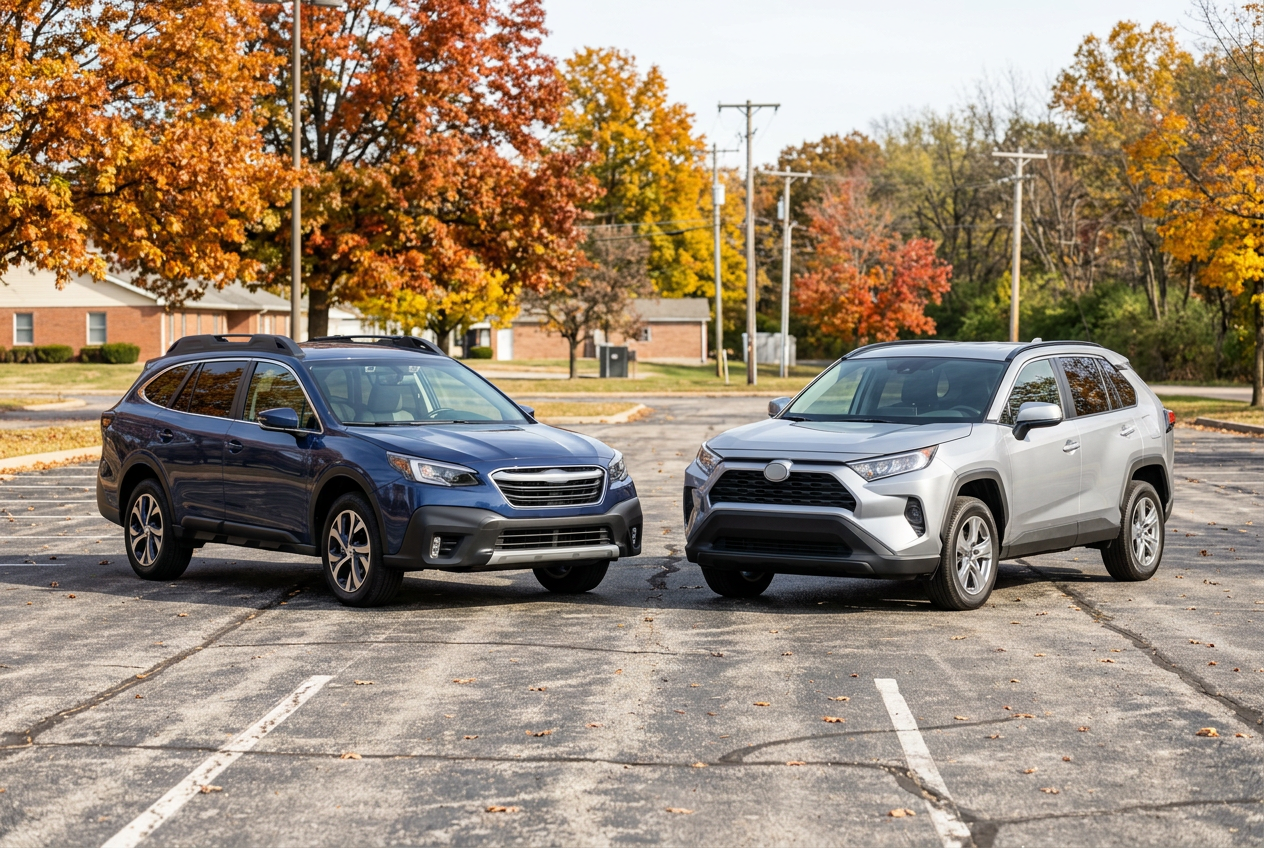
Contact Us

Fill out this form below and we'll contact you shortly
*Required Fields