Blog / Subaru Road Safety

What Does Subaru X-MODE Actually Do on Snow, Ice, and Slippery Roads?

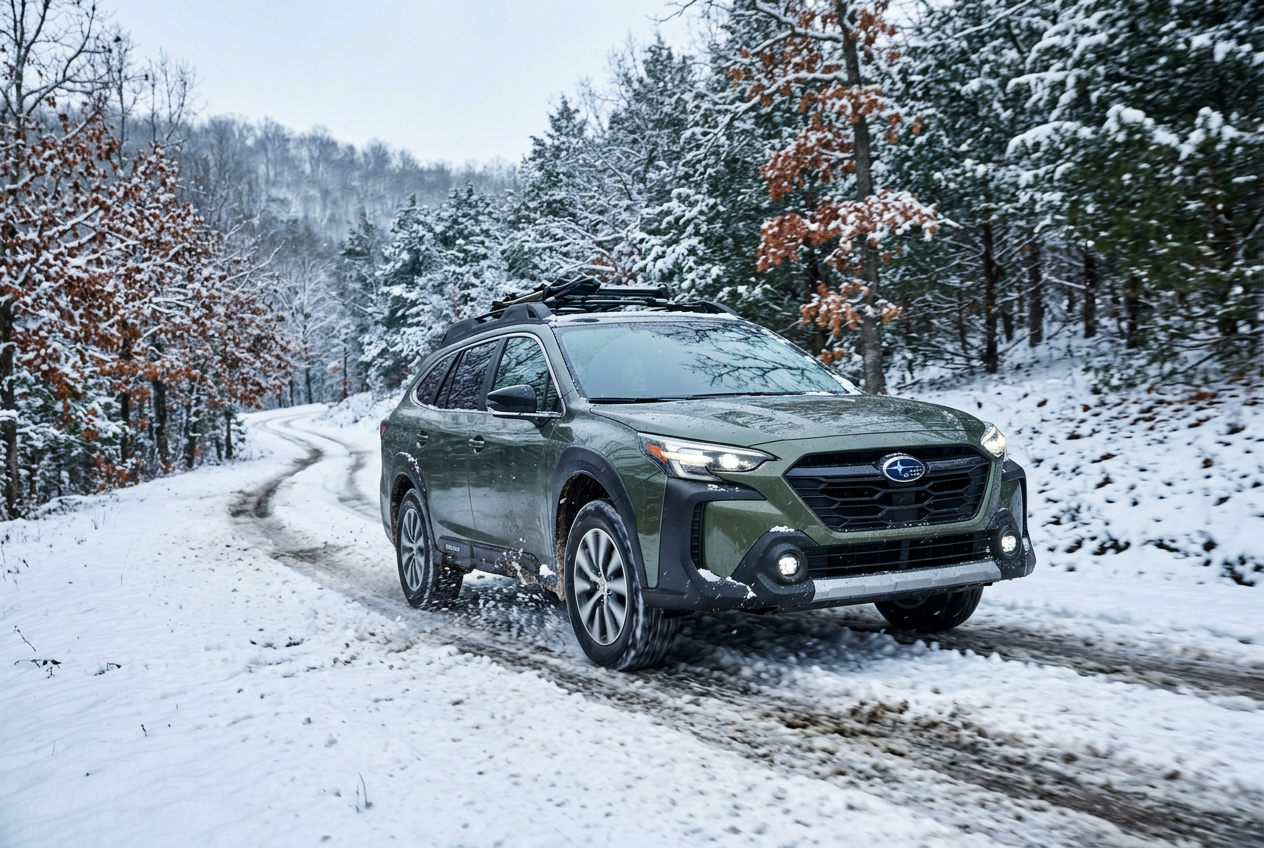
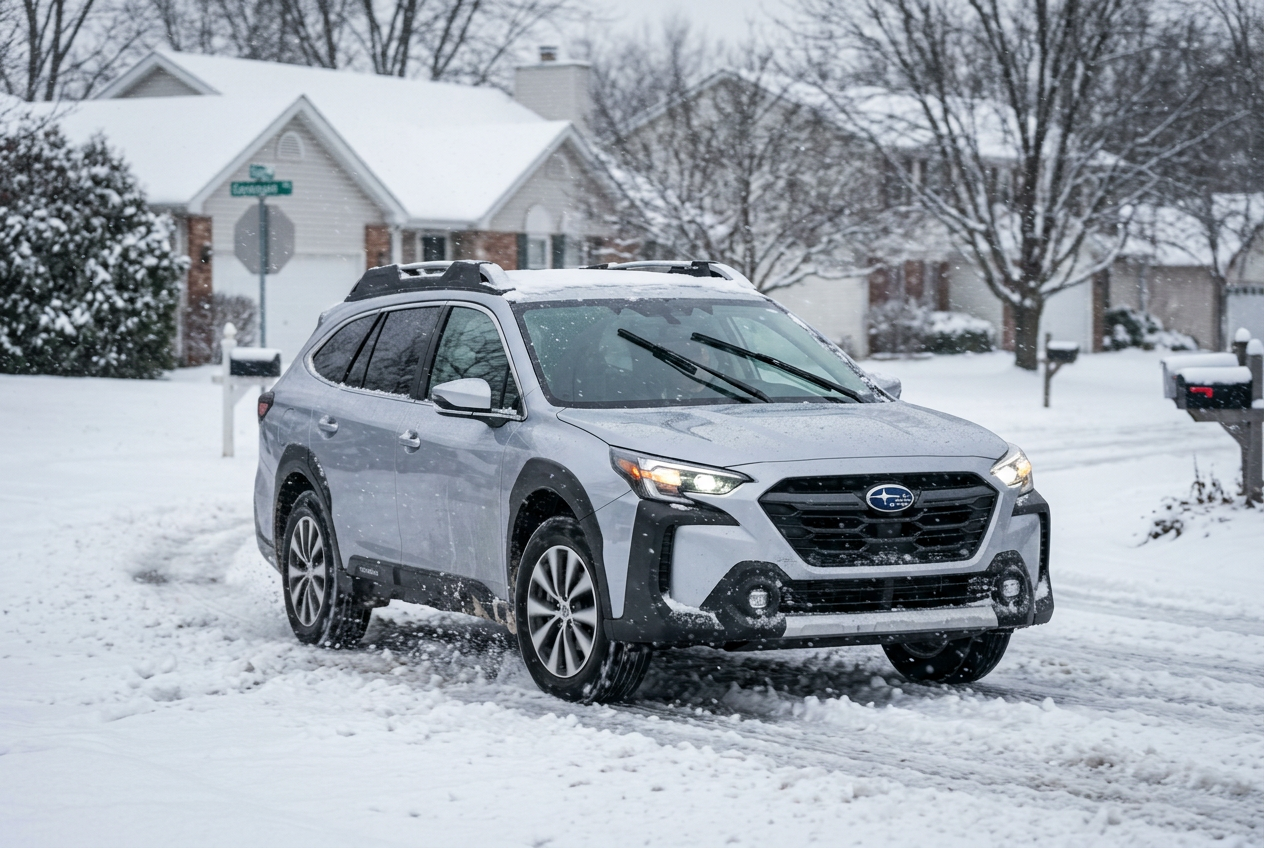
Outback on winter road
When winter storms hit the greater St. Louis metropolitan area and transform local highways into icy sheets, drivers frequently ask: What does Subaru X-MODE actually do on snow, ice, and slippery roads? At its core, Subaru X-MODE is an integrated electronic control system that alters five fundamental mechanical and software subsystems within your vehicle: engine throttle response, transmission ratio logic, front-to-rear center coupling torque force, Vehicle Dynamics Control (VDC) individual wheel braking, and Hill Descent Control. While Subaru’s Symmetrical All-Wheel Drive (AWD) is continuously active under normal driving conditions, X-MODE acts as an expert co-pilot that optimizes traction when vehicle tires encounter near-zero friction environments.
Under standard highway driving conditions, your Subaru balances fuel efficiency with permanent AWD grip. However, when a vehicle encounters thick slush, packed snow, or black ice, standard traction control parameters can sometimes prove overly conservative or react too slowly to sudden individual wheel slippage. When you press the X-MODE button or turn the dual-mode selector dial, the vehicle’s central control unit instantly recalibrates the electronic throttle map so that sudden driver accelerator inputs do not break tire traction. Simultaneously, the Lineartronic Continuously Variable Transmission (CVT) is instructed to stay in a lower gear ratio to deliver maximum low-end engine torque, while the multi-plate transfer clutch locks up tightly to ensure equal power distribution between the front and rear axles.
For drivers seeking to understand how these systems compare during severe winter weather, the table below provides a side-by-side comparison of standard operating parameters versus X-MODE active intervention on low-friction road surfaces.

Subsystem Component

Standard AWD Driving Mode

X-MODE Activated (Snow/Ice)

Throttle Response

Linear input for normal acceleration and fuel economy

Smoothed electronic mapping to prevent sudden wheel spin

CVT Gear Ratio

Continuously adjusts for optimal fuel efficiency

Holds lower ratio to deliver consistent engine torque

AWD Transfer Clutch

Variable 60/40 front-to-rear torque distribution

Locks up up to 50/50 split for maximum combined traction

VDC Braking Intervention

Gradual braking applied after prolonged wheel spin is detected

Rapid, micro-burst braking to immediate spinning wheels

Hill Descent Control

Driver manually manages pedal braking on steep declines

Automatic vehicle speed maintenance under 12 mph without foot braking

How Does Subaru X-MODE Work on Snow, Ice, and Slippery Roads?

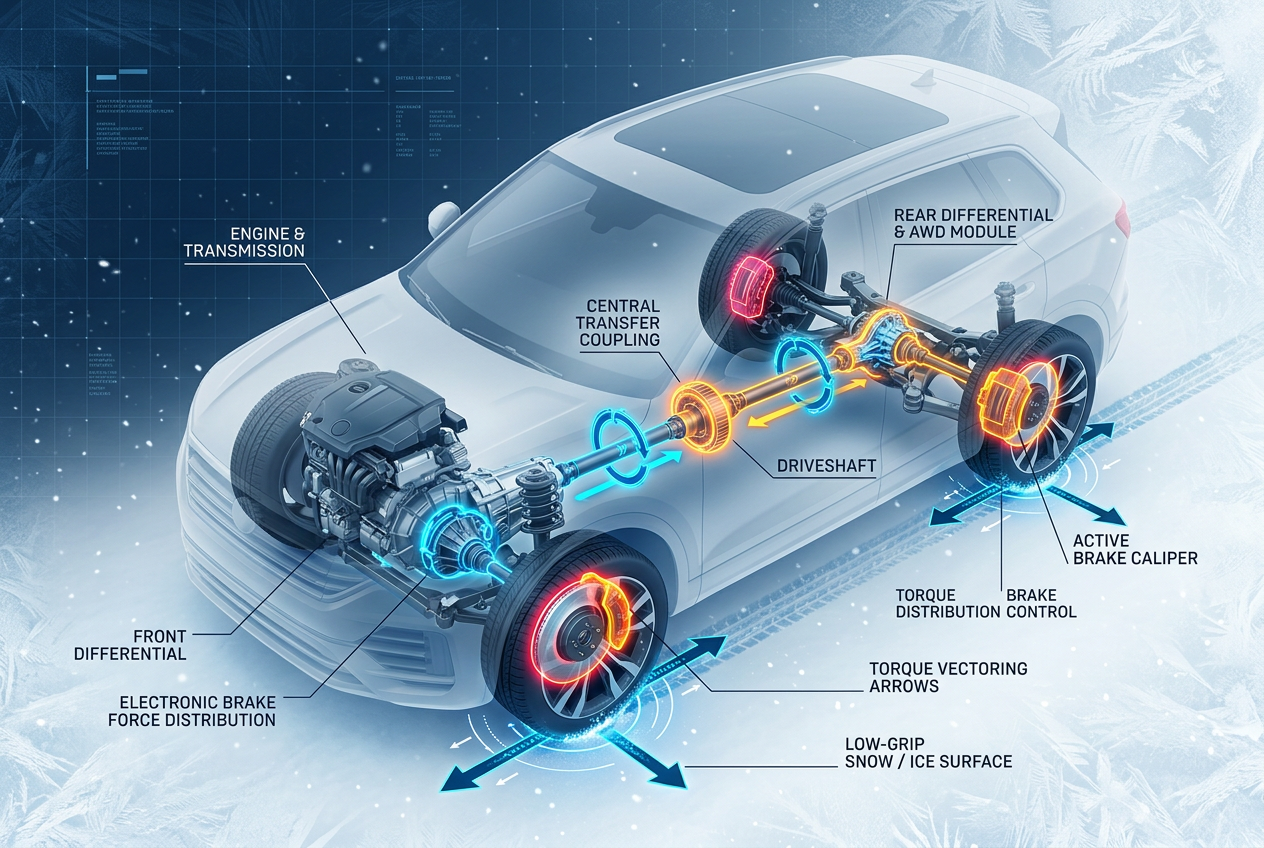
Understanding the mechanical precision behind X-MODE requires looking closely at how its integrated algorithms manage wheel slippage in real time. When standard vehicles encounter a patch of glare ice under one tire, an open differential will naturally direct engine power toward the wheel with the least resistance—causing that tire to spin uncontrollably while the grounded tires remain static. Subaru’s X-MODE solves this fundamental physics challenge by using the Vehicle Dynamics Control (VDC) hydraulic unit to simulate locking differential performance across both front and rear axle assemblies.
When X-MODE is engaged, wheel-speed sensors continuously monitor all four corners of the chassis thousands of times per minute. The instant a single wheel begins spinning even a fraction faster than the others, X-MODE commands the brake caliper on that specific wheel to pinch tightly. By applying targeted hydraulic pressure to the slipping wheel, torque is immediately redirected through the differential across to the opposing tire on the same axle that still has firm contact with frozen asphalt or deep snow.
Another crucial aspect of X-MODE on steep winter inclines is its integrated Hill Descent Control (HDC) feature. Navigating downhill on slick ice or frozen slush is often far more dangerous than climbing uphill, as locked-up brakes eliminate steering control. Hill Descent Control acts as a low-speed off-road cruise control for downhill travel, automatically applying individual hydraulic brake pressures to maintain a constant creep speed without requiring the driver to touch the brake or gas pedals.
Technical diagram of an SUV cutaway showing all-wheel-drive powertrain components and torque vectoring on a snowy surface. (Representative image for illustration purposes only. Actual vehicle may vary based on trim and configuration.)
Furthermore, throttle sensitivity is dramatically softened when X-MODE is operating under 12 mph. In a standard vehicle, tapping the gas pedal on slick snow can send a sharp surge of horsepower to the drive wheels, breaking whatever micro-adhesion exists between rubber and ice. X-MODE creates a dampening effect between your foot and the engine, ensuring smooth, linear torque delivery that gently nudges the vehicle forward without spinning out.

What Is the Difference Between Single-Mode and Dual-Function X-MODE?

Subaru offers two distinct variations of its software architecture across different models and trim packages: standard single-mode X-MODE and advanced Dual-Function X-MODE. Knowing the operational differences between these systems helps drivers select the optimal vehicle configuration for severe winter driving conditions.

Single-Mode X-MODE

Found on core trims such as Premium and Limited models, single-mode X-MODE is activated via a single push button or touchscreen toggle. It provides one all-encompassing calibration optimized for slippery surfaces like hard-packed snow, slick rain-soaked pavement, and moderate gravel. It strictly suppresses wheel spin by clamping down immediately on slipping tires to maintain traction and steering control.

Dual-Function: Snow/Dirt Mode

The first setting of Dual-Function X-MODE (featured on Sport, Onyx Edition, and Wilderness models) operates similarly to single-mode X-MODE. It is engineered specifically for firm, slippery surfaces like hard-packed snow, ice, and wet gravel. Traction control remains fully engaged to prevent tire spinning, while engine throttle response is dampened to maximize contact patch grip on icy roads.

Dual-Function: Deep Snow/Mud Mode

The second setting of Dual-Function X-MODE completely changes the vehicle's computer logic for soft, high-resistance terrain. In unplowed deep snow or thick winter mud, preventing wheel spin can actually cause a car to become stuck. This mode automatically turns off standard VDC traction control restriction, allowing controlled wheel spin so tire tread blocks can clear out packed snow and momentum can be preserved.

At What Speed Does Subaru X-MODE Automatically Turn Off and Can It Be Used at High Speeds?

A frequent question among winter drivers in Missouri is whether X-MODE can be left engaged while traveling at highway speeds down Interstate 40 or I-270 during a snowstorm. The short answer is no: Subaru X-MODE is specifically designed as a low-speed tactical system for negotiating difficult, low-traction situations such as unplowed driveways, steep neighborhood inclines, and stuck situations.
X-MODE can be manually switched on at speeds below 12 mph to 18 mph (depending on vehicle model year). Once engaged, if you accelerate past approximately 18 mph, the system enters a standby status (indicated by a flashing status icon on the cluster). Once vehicle speed exceeds 25 mph, X-MODE automatically disengages entirely, returning the vehicle to standard Symmetrical All-Wheel Drive operation.
This automatic shutoff parameter is built in by Subaru engineers for safety and component longevity. At speeds above 25 mph, the high mechanical grip locking forces and aggressive brake-vectoring algorithms of X-MODE are no longer appropriate for vehicle stability. Rest assured, when X-MODE turns off at higher speeds, Subaru's permanent Symmetrical AWD system remains fully active to keep you balanced on winter highways. Explore our inventory of winter-ready Subaru models equipped with advanced all-wheel-drive technology today.

Is Subaru X-MODE Better Than Toyota's Multi-Terrain Select on Snow and Ice?

When comparing winter capability between midsize crossover SUVs and crossovers, buyers frequently compare Subaru's X-MODE against Toyota's Multi-Terrain Select (MTS) system found on vehicles like the RAV4 or RAV4 Woodland Edition. While both systems utilize electronic braking and engine torque intervention to combat wheel slippage, key architectural differences give Subaru a distinct edge on ice and snow.
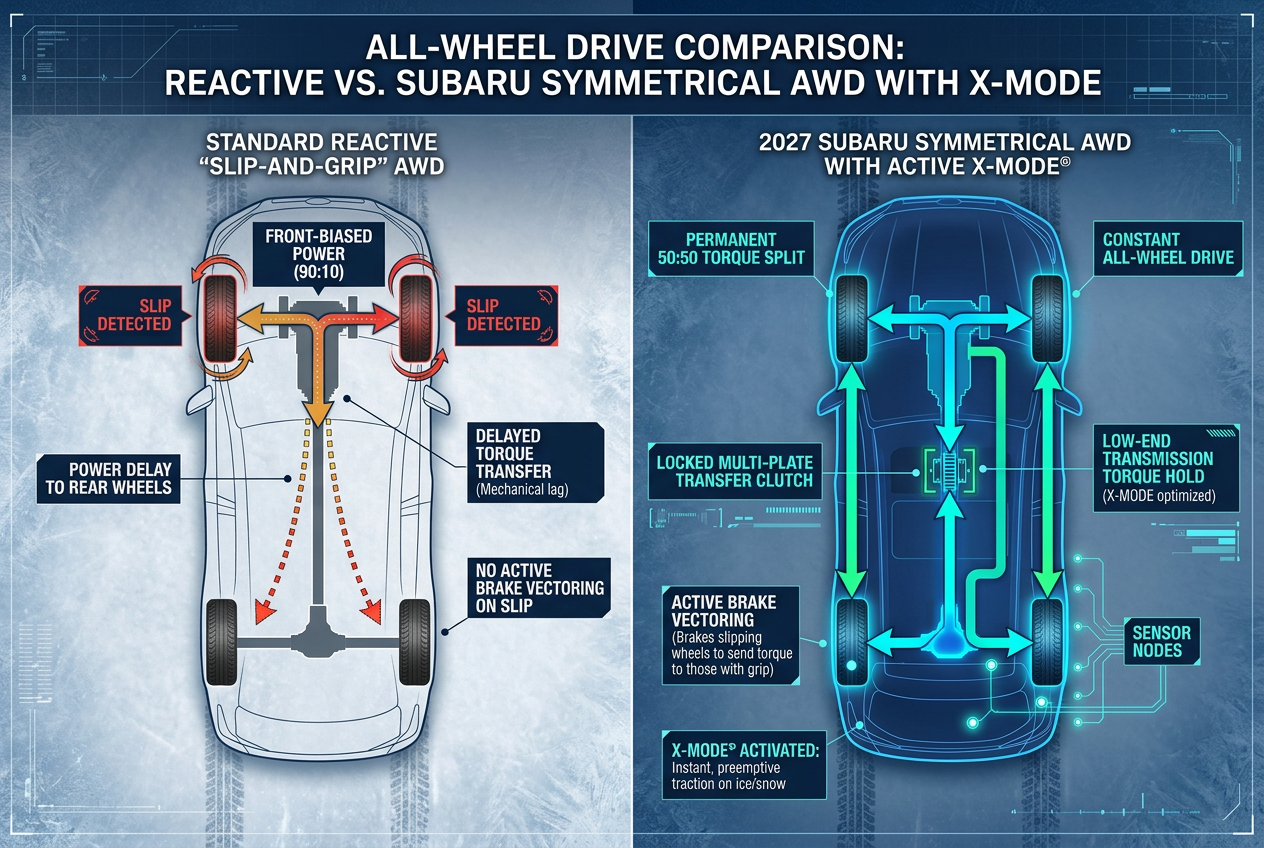
Toyota’s standard AWD system (and electronic e-AWD systems on hybrid variants) typically operates in front-wheel-drive bias under normal conditions, engaging power to the rear axle only after slip is detected at the front wheels. When Toyota's Multi-Terrain Select is activated, it must continuously command the rear electromagnetic coupling to lock up. In contrast, Subaru’s Symmetrical AWD is permanently engaged to all four wheels 100% of the time. When X-MODE is activated, it builds upon a mechanical baseline of equalized longitudinal driveshafts and balanced weight distribution.
On icy inclines, Subaru's instant brake-differential response clamps down faster on slipping wheels because the mechanical power pathways to all four wheels are already pressurized. Toyota's system can experience a slight delay while sending signals to engage rear power couplings before applying individual wheel braking.
Infographic comparing standard reactive slip-and-grip AWD with Subaru symmetrical AWD featuring active X-Mode. (Representative image for illustration purposes only. Actual vehicle may vary based on trim and configuration.)

What Does X-MODE with Grip Control Add to the 2027 Subaru Solterra on Low-Traction Surfaces?

As electric mobility advances, the all-electric Subaru Solterra elevates X-MODE capability to new levels. Because the Solterra utilizes dual independent electric motors—one dedicated to the front axle and one to the rear axle—there is no physical mechanical driveshaft connecting the axles. This architecture allows X-MODE software to modulate torque distribution at millisecond speeds that internal combustion engines and hydraulic clutches simply cannot match.
On the Solterra, Dual-Function X-MODE is paired with an exclusive feature called Grip Control. Operating as a low-speed off-road speed control system, Grip Control allows the driver to select one of five incremental speed settings when navigating extreme snow, deep mud, or steep icy paths. The system automatically regulates motor output and precise regenerative/friction braking at each wheel, allowing the driver to focus entirely on steering through treacherous obstacles without touching pedal controls. Discover the electric capability of the vehicle by browsing our New Subaru Solterra Inventory.

Which Subaru Trim Levels Include Dual-Function X-MODE as Standard Equipment and What Does It Cost?

While single-mode X-MODE is standard equipment across most AWD crossover models in the Subaru lineup, upgrading to Dual-Function X-MODE adds valuable low-traction capability for driver enthusiast demands. Below is a breakdown of trim availability across popular Subaru model lines.

Subaru Outback Trims

Single-mode X-MODE comes standard on Base, Premium, and Limited trims. Dual-Function X-MODE with Deep Snow/Mud mode comes standard on Onyx Edition, Limited XT, Touring XT, and the ultra-rugged Wilderness trim. Check out our New Subaru Outback Inventory to compare trims.

Subaru Forester Trims

Forester Premium features standard single-mode X-MODE. Upgrading to the Forester Sport, Limited, Touring, or Wilderness trim adds Dual-Function X-MODE as standard equipment. View current availability in our New Subaru Forester Inventory.

Subaru Crosstrek & Ascent

Crosstrek Sport, Limited, and Wilderness feature standard Dual-Function X-MODE. For three-row family SUV buyers, Ascent Onyx Edition and Touring trims also include Dual-Function logic. Explore options in our New Subaru Crosstrek Inventory and New Subaru Ascent Inventory.
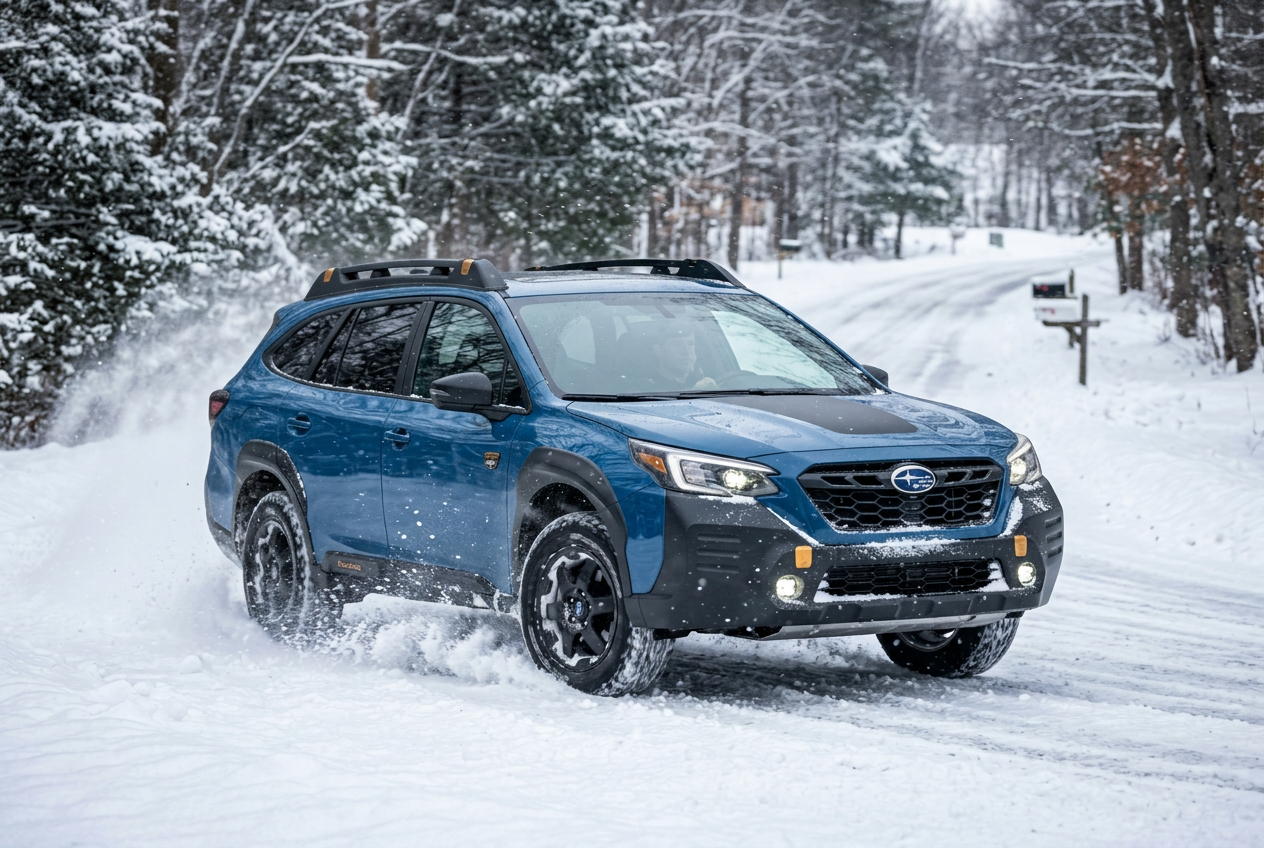
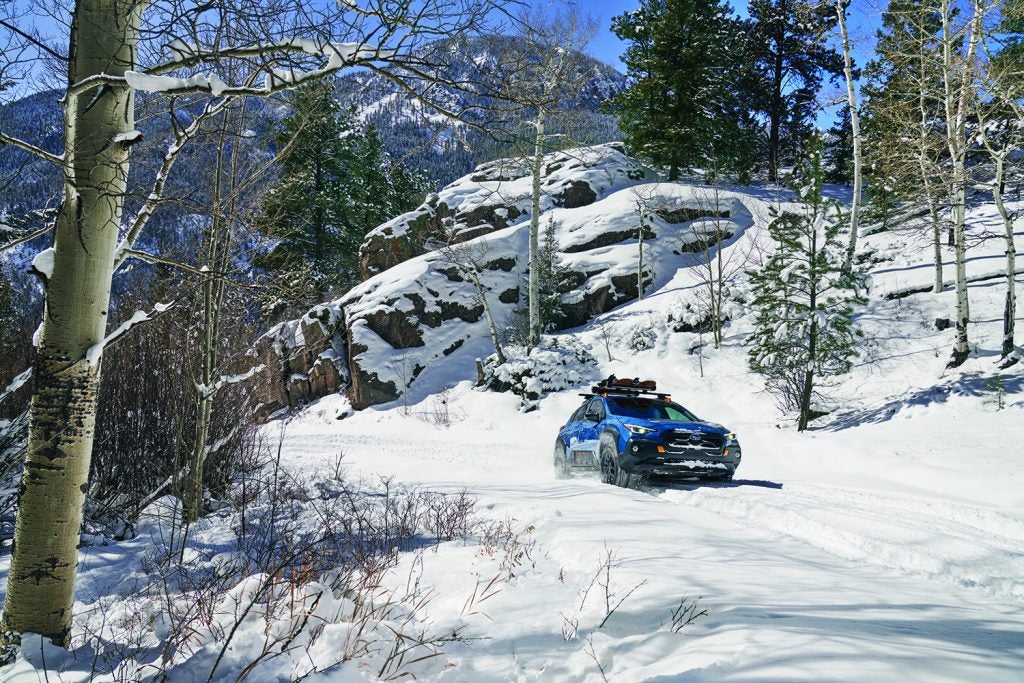
Blue Subaru Outback Wilderness driving dynamically through deep snow on a winter road. (Representative image for illustration purposes only. Actual vehicle may vary based on trim and configuration.)
In terms of overall cost, moving from a base or mid-tier trim (with standard X-MODE) to a Sport or Onyx Edition (with Dual-Function X-MODE) typically represents a nominal step in trim pricing while adding premium interior appointments, larger wheels, and enhanced safety tech. Our team at Sunset Hills Subaru can help you review vehicle financing or leasing packages by submitting a secure application through our Get approved for financing portal.

When Should You Turn On Subaru X-MODE While Driving and How Do You Know It Is Engaged?

Knowing when to activate X-MODE ensures you get maximum traction right when you need it most. You should turn on X-MODE proactively in the following driving scenarios: • Navigating unplowed subdivision streets after a heavy winter snowstorm • Descending or ascending steep, icy neighborhood driveways and side roads • Driving through wet, slush-covered parking lots or rural gravel roads • Pulling a boat trailer up a slick, mossy or frozen boat ramp • Freeing your vehicle when tires become embedded in deep snow banks or slush drifts
To engage X-MODE, simply press the X-MODE push button (on physical console layouts) or turn the rotary dial controller to select 'Snow/Dirt' or 'Deep Snow/Mud'. On newer Subaru touchscreen interfaces, X-MODE is toggled via a dedicated quick-access button at the top of the center display screen. You will know X-MODE is successfully active by visual cluster feedback: an green or amber 'X-MODE' indicator icon illuminates on the driver instrument panel, and the upper Multi-Function Display shows vehicle pitch angle, wheel steering angles, and individual AWD torque transfer activity.

Should You Turn Off Traction Control When Stuck in Deep Snow or Drive on Dry Pavement with X-MODE?

A widespread misconception among drivers is that you must manually push the vehicle's VDC OFF (Traction Control) button whenever you get stuck in deep winter snow drifts. On traditional vehicles without specialized terrain modes, turning off traction control prevents the computer from choking engine power when tires spin. However, on Subaru vehicles equipped with standard X-MODE or Dual-Function X-MODE, manually disabling traction control is usually unnecessary.
If your Subaru has Dual-Function X-MODE, simply selecting Deep Snow/Mud automatically turns off engine-power limiting while retaining active brake-vectoring torque transfer. This allows your tires to spin fast enough to fling packed snow out of the tread grooves while still transferring power to wheels with grip.
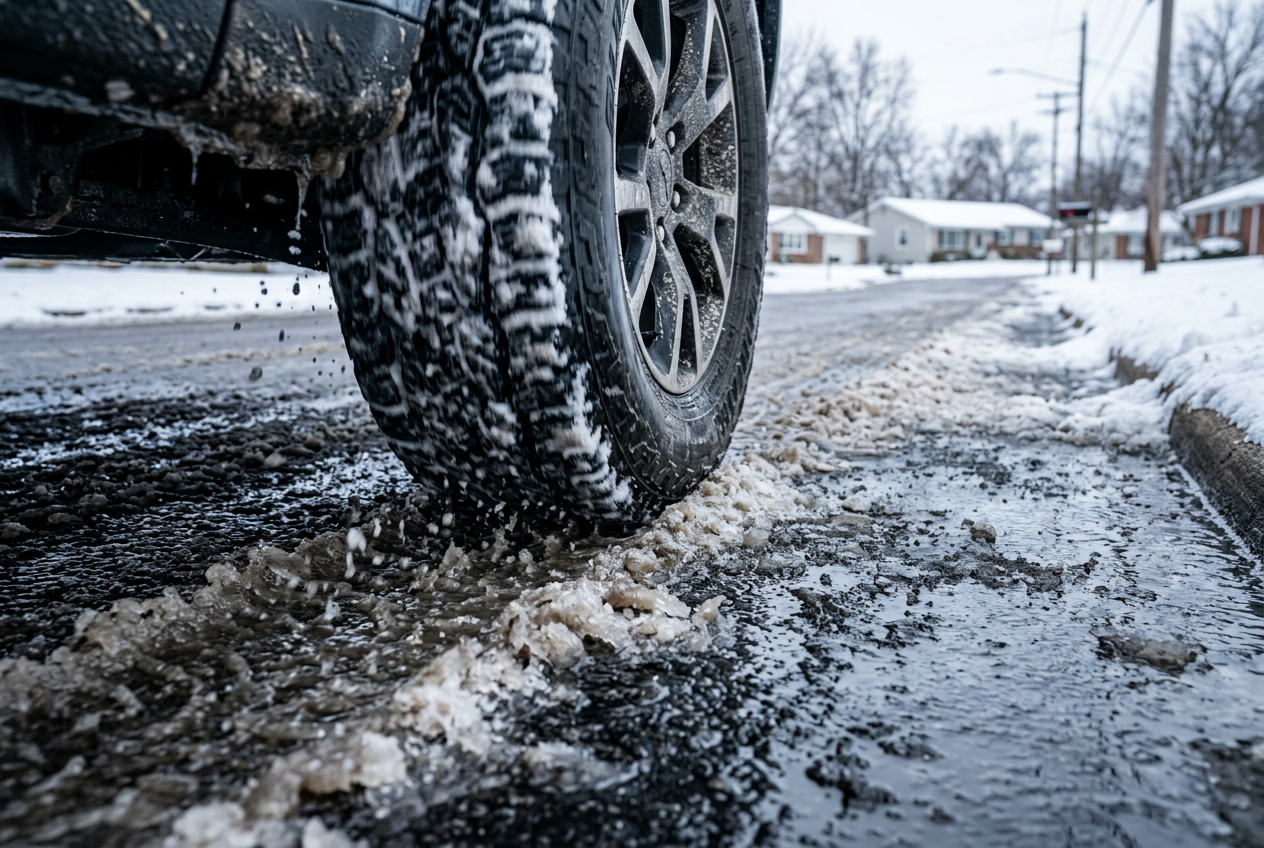
Close-up of a car tire driving through melting snow and slush on a wet suburban street. (Representative image for illustration purposes only. Actual vehicle may vary based on trim and configuration.)
Another common concern is whether accidentally leaving X-MODE turned on while driving onto dry asphalt will damage the transmission or AWD transfer unit (a phenomenon known as 'drivetrain binding' in standard part-time 4WD trucks). With Subaru X-MODE, there is no risk of drivetrain damage. Because the system automatically disengages once speed exceeds 25 mph, your vehicle seamlessly reverts to standard electronic AWD parameters without mechanical stress.

What Should You Do If an X-MODE System Warning Light Appears on the Dashboard?

Under rare circumstances during severe winter driving, an X-MODE warning light or message may appear on your instrument cluster display. Understanding what these warnings signify helps keep your vehicle operating smoothly.
1. System Temperature Timeout: Hill Descent Control uses continuous micro-burst braking to manage vehicle speed on steep declines. If used continuously over long periods, brake fluid temperatures can rise. To protect brake components, the X-MODE light will flash and Hill Descent Control will temporarily disengage. Simply park safely and let the brakes cool down for 10-15 minutes.
2. Wheel Speed Sensor Obstruction: Snow, slush, or road ice packed densely inside the wheel wells can block the ABS wheel-speed sensors. If sensor signals are interrupted, X-MODE will disable itself until ice is cleared. 3. Persistent Flashing Light: If the warning light remains illuminated solid yellow after restarting the vehicle, schedule an inspection with factory-certified technicians using our online Schedule Service and Diagnostics platform.

Navigating Rolling Hills and Winter Conditions in Chesterfield, Maryland Heights, and Ladue

Silver Subaru Outback driving through slushy snow on a suburban neighborhood street during winter. (Representative image for illustration purposes only. Actual vehicle may vary based on trim and configuration.)
Winter weather in the greater St. Louis region presents unique challenges for local commuters. Freezing rain off the Missouri River frequently turns steep subdivision hills into ice rinks, while heavy wet snowfall creates thick slush drifts across suburban arterials.
For residents navigating the steep, rolling residential terrain of Chesterfield, engaging X-MODE provides peace of mind when descending icy neighborhood hills where standard pedal braking might cause skidding. Drivers commuting around Maryland Heights and traversing frozen overpasses on Interstate 270 benefit from X-MODE's rapid torque transfer when pulling out of slushy ramps onto highway traffic lanes. Meanwhile, navigating unplowed estate lanes and shaded tree-lined driveways in Ladue becomes stress-free when utilizing Dual-Function X-MODE in Deep Snow mode to push through heavy snowpack.

Test Drive an X-MODE Equipped Subaru at Sunset Hills Subaru Today

images (7)
Nothing compares to experiencing the winter engineering of Subaru Symmetrical All-Wheel Drive and X-MODE firsthand. At Sunset Hills Subaru, located conveniently at 10100 Watson Rd, Sunset Hills, MO 63127, our product specialists are ready to show you how X-MODE functions in real-world driving situations.
Whether you are looking for a fuel-efficient Crosstrek, a versatile Forester, a rugged Outback Wilderness, or a spacious three-row Ascent, we have the ideal AWD vehicle to keep your family safe all winter long. Evaluate your trade-in vehicle using our Get your value trade tool, or reach out to us by phone at Call (314) 476-9638. Conveniently located off Watson Road, you can easily Get Directions to Sunset Hills Subaru and visit our showroom today!
Subaru X-MODE Snow Performance in Sunset Hills MO | Sunset Hills Subaru
Posted in:

Related Posts

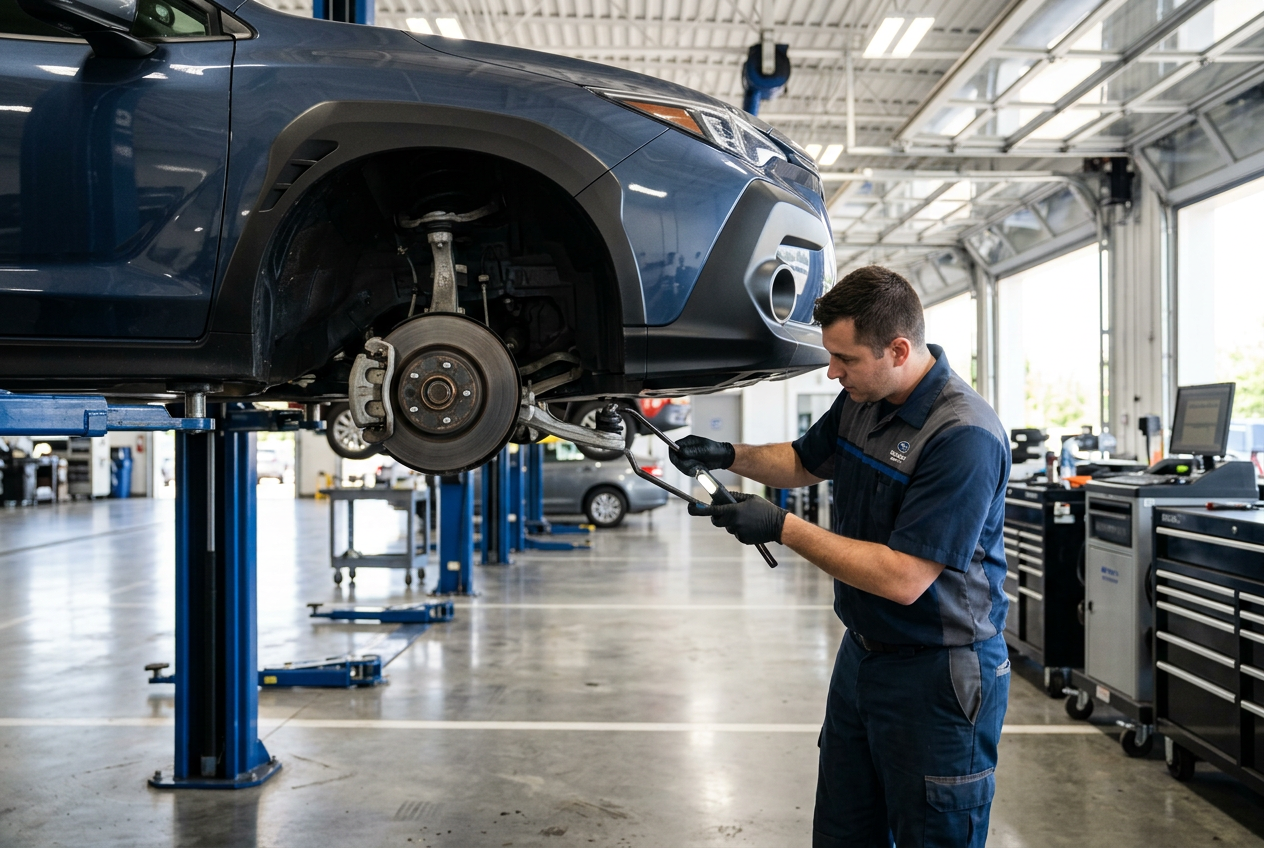
tech working on suspension

2026 Subaru Crosstrek Suspension Recall: Key Takeaways and Free Dealer Service Guide

2026 Subaru Crosstrek Suspension Recall: Key Takeaways and Free Dealer Service Guide If you drive a 2026 Subaru Crosstrek around Greater St. Louis, keeping your vehicle in peak operating condition is a top priority for highway commuting along I-44, navigating winter slush, and enjoying weekend adventures through Castlewood State Park. Recently, Subaru issued a safety recall focused on the front lower ball joint assembly in select 2026 Crosstrek models. The lower ball joint serves as the crucial pivot point linking your vehicle's front suspension control arm to the steering knuckle. When this component operates correctly, it allows smooth steering rotation and vertical suspension articulation simultaneously. However, under specific manufacturing variations or hardware installation tolerances, affected ball joint assemblies may experience premature wear, loosening, or potential dislodgement under stress. The bottom line for St. Louis area drivers is straightforward and reassuring: all official safety recall inspections, updated replacement components, hardware fastenings, and mandatory post-repair wheel alignments are 100% free of charge at authorized dealerships like Sunset Hills Subaru. Under federal regulations enforced by the National Highway Traffic Safety Administration (NHTSA), vehicle owners face zero out-of-pocket costs for recall remedies regardless of whether their Crosstrek is under original limited warranty or high mileage. Taking immediate action ensures your Crosstrek maintains its renowned Symmetrical All-Wheel Drive stability, precise steering geometry, and factory safety system calibration. Recall Topic Key Information & Summary Owner Action Required Component Affected Front Lower Ball Joint Assembly & Retaining Hardware Verify VIN with Sunset Hills Subaru Out-of-Pocket Repair Cost $0.00 (100% Covered under Federal Recall Law) Schedule recall appointment online Repair Time Frame Approximately 1.5 to 3.0 Hours (Includes Alignment) Reserve service slot or loaner vehicle Safety System Calibration Subaru EyeSight Alignment Verification Included Ensure factory technician performs alignment If you suspect your vehicle is affected, or if you have noticed unusual front-end metallic clicking, wandering steering on Highway 141, or uneven front tire edge wear, do not wait. Our factory-certified technicians at Sunset Hills Subaru stand ready to perform immediate VIN verifications, execute precise repair procedures using high-strength genuine OEM service kits, and return your Crosstrek to full safety standards with total peace of mind. Schedule Free Recall Inspection Has There Been a Recall on the Front Lower Ball Joint for the 2026 Subaru Crosstrek? Yes, Subaru of America has identified a technical variance affecting the front lower ball joint retaining structure on targeted production batches of the 2026 Subaru Crosstrek. In modern automotive engineering, the ball joint functions as a ball-and-socket bearing that connects the lower control arm to the steering knuckle. It handles dual physical duties: supporting the vertical load of the vehicle springs and damper while pivoting smoothly left and right when you turn the steering wheel. On affected 2026 Crosstrek models, specific manufacturing tolerances during sub-assembly may allow the ball joint stud to seat with inadequate torque retention or experience abnormal wear at the seat neck. Determining whether your specific vehicle requires service comes down to checking its 17-digit Vehicle Identification Number (VIN). Not every 2026 Crosstrek manufactured is subject to this recall—only those built within specific calendar date ranges at designated assembly plants. St. Louis drivers can locate their VIN on their vehicle registration card, insurance documentation, or at the base of the driver-side windshield where it meets the dashboard. You can cross-reference your VIN directly on the NHTSA official recall portal or enter it on our website to review open campaign details instantly. If you are browsing New Subaru Crosstrek Inventory, rest assured that all inventory on dealer lots must complete recall updates before delivery. Why is the lower ball joint so vital on a Subaru? Subaru's Symmetrical All-Wheel Drive system distributes engine torque continuously to all four wheels. The front lower ball joint maintains the precise kingpin angle and camber angle under aggressive cornering, heavy braking, and off-road articulation. If a ball joint wears severely or separates, the front wheel can tilt outward uncontrollably, leading to immediate loss of directional steering control and potential drive axle binding. What Type of Front Suspension Design Does the 2026 Subaru Crosstrek Use? The 2026 Subaru Crosstrek relies on a highly refined MacPherson strut front suspension architecture paired with lower L-shaped control arms and an integrated stabilizer bar. This engineering choice is central to the Crosstrek's signature balance between nimble hatchback handling and rugged 8.7-inch ground clearance (or 9.3 inches on Wilderness models). In a MacPherson setup, the top of the suspension strut bolts into the vehicle body unibody tower, while the lower control arm manages horizontal cornering forces and fore-aft braking loads. The front lower ball joint acts as the critical lower pivot anchor. It attaches to the outer tip of the lower control arm and presses into the bottom housing of the wheel hub assembly. Because the Crosstrek is built on the high-rigidity Subaru Global Platform, chassis energy is effectively dissipated through suspension bushings and joints rather than transferring into the cabin. Drivers exploring New Subaru Inventory value this platform for its ultra-quiet ride and responsive feedback. However, daily driving conditions throughout St. Louis County—such as potholes along Watson Road, frost heaves during Missouri winters, expansion joints on I-270, and gravel fire roads around West County—place tremendous dynamic stress on front suspension geometry. Every hit from a pothole creates a vertical shock force that travels through the tire, wheel hub, ball joint stud, and lower control arm. When a ball joint assembly experiences manufacturing deviations, these repetitive road impact forces can accelerate wear inside the polished steel ball socket or loosen the pinch bolt locking mechanism. Understanding this mechanical architecture highlights why proper inspection and hardware torquing during recall service are essential for preserving chassis integrity. Recognizing Early Symptoms of Front Lower Ball Joint Wear or Dislodgement 1. Audible Metallic Clunking One of the most noticeable early indicators of lower ball joint wear is a metallic popping, knocking, or clunking noise coming from the front wheel wells. This sound usually manifests when driving at low speeds over speed bumps, entering steep driveways in Kirkwood, or turning into parking spaces. As internal play develops within the ball-and-socket casing, road impacts cause the ball stud to strike against its metal housing. 2. Steering Wander & Vibrations A compromised front ball joint introduces excess mechanical play into your steering linkage. Drivers may experience 'steering wander,' where the vehicle subtly drifts to the left or right on straight stretches of highway like I-64 without steering wheel input. You may also feel slight nibble or high-frequency vibration through the steering wheel rim during normal cruising speed, caused by minute wheel alignment fluctuations. 3. Uneven Front Tire Wear When a lower ball joint loses rigidity, the front wheel alignment angles—specifically camber and toe—shift out of factory specification. Over several hundred miles, this causes abnormal tire tread scrub. Inspect your front tires for accelerated wear on the inner or outer tread shoulder (feathering or cupping). Left unaddressed, ball joint play can destroy expensive all-weather or all-terrain tires prematurely. Explore Service & Repair Services What Is the Safe Repair Procedure for the 2026 Crosstrek Front Lower Ball-Joint Recall? When you bring your 2026 Crosstrek to Sunset Hills Subaru for recall execution, factory-trained master technicians follow a meticulous repair protocol mandated by Subaru engineering standard operating procedures. The process begins with securing the vehicle on a hydraulic lift and removing the front wheel assemblies to gain direct, unimpeded access to the front brake, hub, and suspension mounting hardware. First, technicians inspect the pinch bolt area at the base of the steering knuckle and the mounting seat on the lower control arm for any signs of surface distortion or thread damage. Next, using specialized ball joint pullers and torque tools, the factory technician detaches the existing lower ball joint without damaging surrounding components such as drive axle boots, brake dust shields, or wheel speed sensors. Once removed, an updated, genuine Subaru OEM ball joint assembly featuring enhanced metallurgy and reinforced retaining hardware is installed. Technicians apply exact factory torque specifications using calibrated torque wrenches to ensure the pinch bolt and crown nut lock perfectly into position, eliminating any risk of future backing-off or vibrational movement. Does Replacing the Front Lower Ball Joint Require a Wheel Alignment Afterwards? Absolutely. A full computer-calibrated four-wheel alignment is a mandatory step in completing the 2026 Subaru Crosstrek ball joint recall repair. Disconnecting the lower control arm from the steering knuckle alters the resting geometry of the front wheels. Even fractional millimeter changes in ball joint seating position will shift camber (vertical wheel tilt) and toe (directional alignment of tires relative to vehicle centerline). Driving without a post-repair alignment leads to rapid inner-edge tire wear and degraded handling stability. Furthermore, modern Subaru vehicles rely heavily on advanced driver-assistance technology like Subaru EyeSight®. Systems such as Adaptive Cruise Control, Lane Keep Assist, Pre-Collision Braking, and Lane Centering depend on exact steering wheel angle sensor calibration and predictable chassis tracking. If suspension geometry is off after mechanical repairs, the EyeSight optical cameras and steering feedback sensors may read vehicle direction incorrectly, triggering warning indicators or reducing system effectiveness. Alignment Parameter Function in Suspension System Impact of Ball Joint Service Front Camber Controls tire contact patch during cornering Directly affected by lower ball joint seat depth Front Toe Angle Prevents tire scrub and maintains straight tracking Shifted when lower control arm pivots on lift Caster Angle Provides self-centering steering wheel feel Stabilized by proper ball joint position EyeSight Steering Sensor Syncs optical lane tracking with wheel angle Recalibrated electronically during alignment At Sunset Hills Subaru, our service facility utilizes state-of-the-art high-definition optical wheel alignment equipment specifically programmed with factory 2026 Crosstrek specifications. Best of all, because this alignment is a required step of the official recall protocol, the alignment service is entirely free to you as part of the recall coverage. Are Recall Repairs Free at Subaru Dealerships and Covered Under Warranty? Federal Mandate & Zero Cost Under federal law, all safety recall repairs are 100% free of charge to vehicle owners. Subaru of America covers all parts, technician labor, shop supplies, and computerized wheel alignment. You will never pay a deductible or hidden fees for recall work. Factory Warranty Coverage Beyond recall campaigns, suspension components on new Crosstreks are protected by Subaru's 3-Year / 36,000-Mile New Car Limited Warranty. Any non-recall mechanical defect during this period is repaired free under standard manufacturer warranty policies. Genuine OEM Components All recall repairs at Sunset Hills Subaru utilize exclusively engineered Subaru Genuine Parts. These components are factory-backed and designed specifically for your Crosstrek model year. Need extra maintenance parts? Visit Find Subaru Parts online. Order OEM Subaru Parts & Accessories Are Front Lower Ball Joints on the Crosstrek Serviceable Separately from the Control Arm? A major modular design advantage of the Subaru Crosstrek front suspension is that the lower ball joint is individually serviceable and detachable from the lower control arm. On many competing crossovers, the lower ball joint is permanently pressed or riveted into the control arm assembly during factory stamping. On those vehicles, replacing a worn ball joint requires replacing the entire lower control arm—increasing repair costs significantly. On the 2026 Subaru Crosstrek, the lower ball joint features a bolt-on housing design that secures directly into the arm pocket using high-strength fasteners. This design gives Subaru service technicians optimal flexibility during recall service or future long-term maintenance. During the recall service, if technician inspection reveals that the lower control arm bushing or arm pocket sustained any wear due to a loose ball joint, the affected control arm will also be replaced under recall warranty at zero cost to the customer. This modular engineering philosophy highlights Subaru's commitment to sensible long-term ownership costs, ensuring individual components can be swapped efficiently without unnecessarily discarding healthy structural parts. How Much Does Out-of-Warranty Front Ball Joint Replacement Cost and What Are Annual Expenses? While the 2026 Crosstrek recall service is 100% free under federal mandates, understanding out-of-warranty repair benchmarks and routine maintenance budgets provides helpful perspective for long-term ownership. On non-recalled older vehicles or out-of-warranty models, replacement costs can vary based on labor rates and parts selection. Contact the dealership for current pricing details. Overall, the Subaru Crosstrek remains one of the most affordable compact AWD crossovers to maintain over time. Regular factory-recommended service costs can vary based on vehicle condition and mileage. Contact the service department for current maintenance estimates. Service Item Estimated Retail Cost Recall Cost to Owner Front Ball Joint Assembly (Per Side) $110 - $180 (Parts) $0.00 Labor (Inspection & Installation) $150 - $270 (Labor) $0.00 Four-Wheel Computer Alignment $120 - $160 $0.00 Total Recall Cost $380 - $610 $0.00 Total Do Open Recall Repairs Negatively Affect a Vehicle's Resale Value? Open Recalls Flag Reports An unresolved safety recall leaves a red warning flag on vehicle history platforms like CARFAX® and AutoCheck®. Prospective buyers and trade-in appraisers notice open safety recalls, which can delay transactions, reduce offers, or prevent private sales until cleared. Completed Service Restores Value Once the recall repair is executed at Sunset Hills Subaru, our service department updates Subaru's central factory database. The open campaign is marked as 'Completed,' clearing your CARFAX report and fully preserving your Crosstrek's market-leading resale value. Max Trade-In Protection Subaru vehicles enjoy some of the highest residual values in the industry. Keeping all recall services up-to-date protects your equity when upgrading in the future. Interested in your current equity? Try Get your value trade online today. Check Your Trade-In Value Online How Long Does a Front Lower Ball Joint Replacement Service Take at a Dealership? At Sunset Hills Subaru, we value your time and aim to make recall service as seamless and swift as possible. The physical removal and replacement of the front lower ball joint assembly takes approximately 1.0 to 1.5 hours of dedicated shop time. Adding the mandatory computerized four-wheel alignment and multi-point vehicle health check brings total turnaround time to roughly 1.5 to 3.0 hours. While your Crosstrek is in our service bay, you can relax in our customer lounge featuring high-speed Wi-Fi, complimentary Starbucks® coffee and refreshments, quiet work cubicles, and comfortable seating. Alternatively, for repairs requiring longer scheduling windows, speak with our service team regarding complimentary Subaru loaner vehicles or shuttle service across Sunset Hills, Crestwood, and Fenton. Scheduling your visit online in advance ensures our service department pre-allocates the exact OEM recall parts kit for your VIN, minimizing waiting time and ensuring instant service desk check-in when you arrive at Watson Road. How Can a St. Louis Area Owner Arrange Local Recall Service at Sunset Hills Subaru? Arranging your free 2026 Subaru Crosstrek suspension recall service at Sunset Hills Subaru is simple and hassle-free. As St. Louis's trusted Subaru service destination, we are dedicated to keeping your vehicle safe, reliable, and prepared for every journey ahead. Follow these simple steps to complete your recall service: 1. Locate Your VIN: Find your 17-digit VIN on your insurance card, registration, or lower driver-side windshield. 2. Schedule Online or By Phone: Click below to reserve a service appointment online or Call (314) 476-9638 to speak directly with our service advisors. 3. Visit Our State-of-the-Art Facility: Bring your Crosstrek to 10100 Watson Rd, Sunset Hills, MO 63127. Need navigation directions? Click Get Directions to Sunset Hills Subaru. 4. Drive Away with Complete Confidence: Enjoy complimentary multi-point inspections, factory recall completion documentation, and a freshly washed vehicle upon completion. 2026 Subaru Crosstrek Recall Service in Sunset Hills MO | Sunset Hills Subaru
How Subaru Safety Technology Actually Prevents Accidents: Real-World Scenarios Explained

How Subaru Safety Technology Actually Prevents Accidents: Real-World Scenarios Explained When it comes to protecting your family on the road in Sunset Hills, MO, and the surrounding areas like Maplewood and Chesterfield, safety is paramount. Subaru’s innovative safety technology, especially the renowned EyeSight® driver assist system, is engineered to help prevent accidents before they occur. By combining advanced cameras, sensors, and intelligent software, Subaru vehicles offer drivers confidence and peace of mind in everyday driving and challenging conditions alike. If you're curious about how this technology works, how it compares to others, and what it means for your driving experience, this comprehensive guide will cover everything you need to know. For personalized assistance or questions about Subaru safety features, feel free to call us at or visit us at 10100 Watson Rd, Sunset Hills, MO 63127. Table of Contents Understanding Subaru EyeSight Technology: How It Works to Prevent Accidents Learn about the core components and mechanisms behind EyeSight and how it monitors the road to avoid collisions. Real-World Scenarios Where EyeSight Makes a Difference Explore practical examples demonstrating EyeSight’s effectiveness in everyday driving situations. Subaru EyeSight’s Detection Capabilities: Spotting Potential Hazards Early Dive into the technical details of how EyeSight identifies vehicles, pedestrians, bicyclists, and more in diverse road environments. Cost Considerations: What Does EyeSight Technology Add to Your Vehicle? Understand how the inclusion of EyeSight affects Subaru model pricing and the value it adds. Comparing EyeSight to Other Safety Systems: Why Subaru Stands Out A detailed comparison between EyeSight and competitor systems, highlighting advantages relevant to Missouri drivers. Activating, Customizing, and Maintaining Your Subaru Safety Features Guidance on personalizing EyeSight settings and the importance of professional calibration to ensure optimal performance. Keep Your Subaru’s Safety Features Performing at Their Best Tips for ongoing maintenance, access to genuine Subaru parts, and scheduling expert service in Sunset Hills. Understanding Subaru EyeSight Technology: How It Works to Prevent Accidents Subaru EyeSight is a sophisticated driver assist system that employs twin stereo cameras mounted just behind the windshield to continuously scan the road ahead. These cameras provide a comprehensive, three-dimensional view of traffic, pedestrians, bicyclists, and other obstacles. EyeSight’s core functions include adaptive cruise control, pre-collision braking, lane departure warning, and lane sway alert, all working together to enhance driver awareness and intervene when necessary to avoid accidents. Adaptive Cruise Control (ACC): Unlike traditional cruise control, ACC adjusts your vehicle’s speed based on traffic flow, maintaining a safe following distance. This is invaluable for drivers commuting from areas like Chesterfield to St. Louis, where highway traffic can fluctuate rapidly. Pre-Collision Braking: When EyeSight detects an imminent collision risk, it first alerts the driver with visual and audible warnings. If the driver does not react promptly, the system can automatically apply the brakes to reduce impact severity or prevent the crash entirely. Lane Departure and Sway Warning: EyeSight monitors lane markings and vehicle positioning. If the system senses unintentional drifting without signaling, it gently alerts the driver, helping maintain lane discipline on the winding roads near Maplewood or during early morning commutes in Webster Groves. Wide Field of View and Advanced Sensors: The latest EyeSight generation, available in models like the Subaru Outback and Legacy, includes a third mono camera expanding peripheral vision. This enhancement improves detection of crossing bicyclists and pedestrians, crucial for urban and suburban driving around Sunset Hills. EyeSight’s ability to combine multiple safety features into a seamless system makes it particularly effective at accident prevention. It is designed not only to warn but also to intervene, offering a safety net when driver reaction time might lag. Real-World Scenarios Where EyeSight Makes a Difference To truly appreciate EyeSight’s role in accident prevention, consider some real-life examples relevant to drivers in the St. Louis metropolitan area: Sudden Stops on Missouri Highways: Imagine driving on I-44 near Valley Park during rush hour when traffic suddenly halts. EyeSight’s pre-collision braking system detects the slowing vehicle ahead, alerts you instantly, and applies brakes if necessary, preventing a rear-end collision even if you are momentarily distracted. Bicyclist Detection in Residential Areas: Early versions of EyeSight effectively reduced crashes with parallel-moving bicyclists by nearly 30%. The latest generation now expands detection to crossing bicyclists, a vital enhancement for neighborhoods like Richmond Heights where bike paths intersect with roads. This proactive detection helps avoid crashes during school runs or weekend family biking excursions. Lane Departure on Curvy Roads: In areas like Ladue, where roads are often winding and shaded by mature trees, EyeSight’s lane departure warning is essential. On foggy or rainy days, when lane lines might be less visible, the system’s alerts help prevent drifting into adjacent lanes or off-road excursions, reducing accident risk. Blind Spot and Rear Cross-Traffic Alerts: When backing out of tight parking lots in busy Maplewood shopping districts, Subaru’s integrated blind spot detection and rear cross-traffic alert work with EyeSight to alert drivers of approaching vehicles or pedestrians, preventing collisions in crowded spaces. These scenarios show how EyeSight actively supports drivers, adapting to diverse road conditions and hazards common to communities around Sunset Hills Subaru. Subaru EyeSight’s Detection Capabilities: Spotting Potential Hazards Early EyeSight’s detection technology is built on a dual-camera system that provides a stereoscopic, three-dimensional view comparable to human eyesight but with faster processing and greater consistency. This allows the system to identify: Vehicles Ahead: EyeSight tracks the speed and distance of cars in front, calculating safe following distances and responding to sudden changes such as abrupt stops or cut-ins. Pedestrians and Bicyclists: The system detects pedestrians crossing or walking alongside roads and bicyclists moving parallel or crossing the vehicle’s path. The addition of a third mono camera in newer models further enhances this capability, crucial for safe driving in urban neighborhoods like Crestwood or near community parks. Traffic Signs and Lane Markings: EyeSight reads lane markings to assist lane keeping and alerts, and recognizes stop signs and traffic signals to anticipate driver actions. Low-Light and Challenging Conditions: While early versions had limitations detecting pedestrians at night, ongoing software improvements and hardware upgrades have increased EyeSight’s reliability in low-light or adverse weather, a necessity for Missouri’s seasonal climate changes. EyeSight’s ability to continuously monitor multiple hazard types with rapid processing reduces driver workload and increases reaction time, effectively preventing many common accident types. Cost Considerations: What Does EyeSight Technology Add to Your Vehicle? Understanding the investment in safety technology is important for families and professionals in Sunset Hills and nearby communities. Subaru includes the latest EyeSight system as a standard or available feature across many models, including the Subaru Outback and Legacy. The 2023 Subaru Outback and Legacy come equipped with EyeSight as standard on most trims, incorporating advanced features like adaptive cruise control, pre-collision braking, and lane keep assist. Pricing for these models reflects the inclusion of EyeSight’s comprehensive safety suite, which adds value far beyond the initial cost. For example, the base Outback starts in a competitive price range while offering this advanced technology. Insurance companies often recognize EyeSight’s proven accident reduction benefits with discounts, potentially lowering overall ownership costs. At Sunset Hills Subaru, we invite you to explore current pricing and specials by browsing our Current New Car Specials. For value-minded shoppers, our Used Vehicle Inventory also offers models equipped with EyeSight technology. Comparing EyeSight to Other Safety Systems: Why Subaru Stands Out When evaluating safety technology, many Missouri drivers compare Subaru EyeSight with systems from competitors like Toyota or Honda. Here’s why EyeSight remains a leader: Standard All-Wheel Drive (AWD) Integration: Subaru’s symmetrical AWD complements EyeSight by enhancing vehicle control on slippery or uneven terrain common in Fenton or St. Charles, improving accident avoidance beyond electronic systems alone. Stereo Camera Technology: Unlike some systems relying on radar or single cameras, EyeSight’s dual cameras provide depth perception, enabling more accurate hazard detection and distance calculation. Expanded Field of View: The latest EyeSight generation includes a third mono camera that detects pedestrians and bicyclists sooner, surpassing many competitors who lack this feature. Automatic Emergency Steering: EyeSight integrates emergency steering assistance at speeds under 50 mph to help avoid obstacles—a capability not universally available in comparable systems. Proven Effectiveness: Insurance Institute for Highway Safety (IIHS) data shows EyeSight-equipped vehicles reduce rear-end crashes with injuries by up to 85%, a remarkable figure in automotive safety. For Sunset Hills drivers seeking a reliable, proven, and comprehensive safety system, Subaru EyeSight offers unmatched peace of mind. Activating, Customizing, and Maintaining Your Subaru Safety Features Subaru designs EyeSight to be user-friendly, allowing drivers to adjust settings to their preferences while maintaining safety integrity. Activation and Settings: EyeSight features activate automatically when the vehicle is started, but drivers can customize alerts, sensitivity levels, and adaptive cruise control settings via the touchscreen interface in many Subaru models. Driver Education: We encourage new Subaru owners to familiarize themselves with EyeSight features at our dealership in Sunset Hills, where our staff can provide demonstrations and answer questions. Calibration and Professional Assistance: If your Subaru’s windshield or cameras have been replaced, or after certain repairs, professional calibration is essential to ensure EyeSight functions correctly. This service requires specialized equipment and expertise available at authorized centers like ours. To maintain peak performance of your EyeSight system and other safety features, schedule regular check-ups with our Service Department at Sunset Hills Subaru. You can conveniently Schedule Service and Diagnostics online. Keep Your Subaru’s Safety Features Performing at Their Best Proper maintenance is critical to the longevity and accuracy of your Subaru’s safety systems. Here are expert tips tailored for drivers in the Sunset Hills area: Routine Inspections: Regular service appointments help detect and address issues with cameras, sensors, and vehicle alignment that affect EyeSight’s performance. Genuine Subaru Parts: For repairs or replacements related to your safety system, always use authentic components. Our Find Subaru Parts department stocks genuine parts designed for your vehicle’s specifications. Seasonal Preparation: Missouri’s weather can challenge safety systems with snow, rain, and dirt. Keeping sensor areas clean and ensuring windshield clarity supports EyeSight’s effectiveness. Service Specials: Take advantage of our Current Service and Parts Specials to maintain your Subaru affordably. If you’re considering upgrading or replacing your vehicle, browse our extensive New Subaru Inventory or Used Vehicle Inventory to find models equipped with the latest EyeSight technology. Also, if you’re curious about your current vehicle’s worth, use our handy tool to Get your value trade and discover your options. Empowering Missouri Drivers with Trusted Subaru Safety Technology Subaru EyeSight is more than just a collection of safety features; it’s a trusted companion designed to help families, commuters, and adventurers throughout Sunset Hills and nearby communities like Chesterfield and Maplewood. By blending cutting-edge technology with Subaru’s commitment to reliability and practicality, EyeSight actively prevents accidents and enhances confidence on every journey. Whether navigating busy city streets or exploring Missouri’s scenic byways, Subaru’s innovative safety suite supports drivers with timely alerts and interventions. For a firsthand experience, visit Sunset Hills Subaru at 10100 Watson Rd, Sunset Hills, MO 63127, or call us at to schedule a no-pressure test drive and see how EyeSight can make a difference for your family. Discover our full lineup, including the latest models like the New Subaru Outback Inventory, New Subaru Legacy Inventory, and New Subaru Forester Inventory, each equipped with advanced safety technology to keep you protected. For ongoing care and to keep your Subaru performing at its best, remember to Schedule Service and Diagnostics with our expert technicians. We look forward to helping you enjoy safer, more confident driving in the St. Louis area. © 2026 Sunset Hills Subaru


Your Complete Guide: How to Prepare for a Safe and Confident Winter Road Trip with Sunset Hills Subaru

Your Complete Guide: How to Prepare for a Safe and Confident Winter Road Trip with Sunset Hills Subaru Embarking on a winter road trip through Missouri’s scenic areas—from the neighborhoods of Maplewood to the outskirts of Chesterfield—requires thoughtful preparation to ensure safety and comfort for you and your family. Whether you're planning a weekend getaway or a longer journey, understanding how to equip your Subaru and yourself for winter conditions is essential. At Sunset Hills Subaru, located at 10100 Watson Rd, Sunset Hills, MO 63127, we’re committed to helping our community drive confidently through Missouri’s winter months. Call us at (314) 476-9638 for expert advice or to schedule a service appointment. Understanding Winter Road Trip Essentials Explore the critical items and vehicle checks required for a safe winter journey, including winter emergency kits and vehicle maintenance. Mastering the 5 P's of Winter Weather for Your Trip Learn how to protect your family, pets, plants, pipes, and practice fire safety during winter travels. Applying the 30-60-90 Rule to Your Subaru Before Departure Discover milestone maintenance steps tailored to Subaru vehicles to ensure peak performance throughout your winter trip. Driving Safely in Snow: Speed and Control Tips Understand the best speeds for winter driving and how to handle challenging conditions like black ice and understeer. Techniques for Getting Unstuck: Rocking Your Vehicle Safely Learn the proper method to free your Subaru from snow or mud without damaging your vehicle. Packing Smart With the 54321 Rule for Winter Travel Simplify your packing with an efficient system that balances essentials and space for your cold-weather adventure. AWD vs. 4WD: Which Subaru System is Best for Missouri Winters? Explore the differences between AWD and 4WD, and why Subaru’s standard AWD provides reliable winter traction. Budgeting Your Winter Road Trip: Is $1000 Enough? Gain insights on typical expenses to pl54321 packing methodancially. Winter Driving Emergency Kit: What to Pack in Your Subaru Ensure you have the right supplies, from jumper cables to first aid kits, to stay safe on winter roads. Navigating Flooded Roads and Safe Water Depths Understand the dangers of flood waters and how to avoid hazardous driving situations during winter thaw or rain. Table of Contents Understanding Winter Road Trip Essentials Preparing for a winter road trip goes beyond just packing warm clothes. It demands a combination of vehicle readiness and carrying essential gear that can make the difference between a smooth ride and an emergency. Vehicle Maintenance and Preparation Before setting out from places like Richmond Heights or Glendale, it’s crucial to ensure your Subaru is winter-ready. This includes checking tire tread depth for optimal grip on icy roads, verifying the function of your EyeSight® driver assist system for added safety, and inspecting fluids such as antifreeze and windshield washer fluid rated for freezing temperatures. Scheduling a thorough winter check-up at Sunset Hills Subaru’s service center is easy—just Schedule Service and Diagnostics online or call us for expert care. Essential Emergency Kit Components Every winter road trip should include: Jumper cables: For restarting a battery drained by cold. Flashlight and spare batteries: For visibility during nighttime or roadside emergencies. Warning devices: Flares or reflective emergency markers to alert other drivers. First aid kit: Stocked with essentials including a tourniquet. Warm blankets and extra clothing: To protect against cold weather if stranded. Charged cell phone and portable charger: To maintain communication. Water and non-perishable food: For hydration and sustenance during delays. Shovel and ice scraper: To clear snow and ice from around your wheels and windows. For convenience, you can find parts and accessories tailored to your Subaru at Find Subaru Parts, ensuring your vehicle is equipped with reliable, genuine components. Mastering the 5 P's of Winter Weather for Your Trip Winter safety extends beyond your vehicle; it encompasses protecting all aspects of your environment and family. Protect People: Ensure all passengers have warm clothing and that your Subaru’s heating system is functioning optimally. Use safety features like EyeSight® driver assist to monitor road conditions and provide collision warnings. Protect Pets: If traveling with pets from neighborhoods like Valley Park or Crestwood, bring adequate pet blankets, food, and water. Never leave pets unattended in a cold car. Protect Plants: Cover or bring indoor any delicate plants before the cold snap, especially if parking outdoors in areas such as Ladue or Maplewood. Protect Pipes: Insulate water pipes at home to avoid freezing while you’re away on your trip. Practice Fire Safety: Carry a small fire extinguisher and avoid using open flames inside your vehicle or tenting areas during outdoor stops. Applying these 5 P’s ensures both a safe and responsible winter trip, reducing risks associated with cold weather exposure. Applying the 30-60-90 Rule to Your Subaru Before Departure The 30-60-90 maintenance rule is a trusted guideline for keeping your vehicle in top condition, especially before demanding winter travel. At 30,000 miles: Essential services include oil and filter changes, tire rotation, air and fuel filter replacement, and fluid level checks. These help maintain engine efficiency and tire performance on slick Missouri roads near Sappington or Twin Oaks. At 60,000 miles: Your Subaru should undergo more comprehensive brake inspections, transmission fluid changes, coolant flushes, spark plug replacements, and a detailed check of belts and hoses. These services are vital for enduring colder temperatures and increased engine strain. At 90,000 miles: This milestone often requires timing belt replacements, thorough engine and exhaust system checks, fuel system inspections, power steering fluid service, and battery testing. Staying ahead of these ensures your Subaru’s reliability for long winter journeys. To keep your vehicle aligned with these milestones, visit our service center at 10100 Watson Rd, Sunset Hills, MO 63127 or Schedule Service and Diagnostics conveniently online. Driving Safely in Snow: Speed and Control Tips Winter driving demands deliberate speed management and control techniques to navigate snow-covered roads safely. Ideal Speed for Snowy Conditions Missouri drivers, whether commuting through Maryland Heights or heading to the Ozarks for a weekend trip, should never exceed 45 mph on icy roads. Often, driving slower than this is essential, especially on untreated or shaded roads in Webster Groves or Fenton, where snow and black ice can form. Handling Black Ice Black ice is a transparent ice layer that blends seamlessly with the road surface, especially common on bridges and shaded areas like those found in Crestwood or Ladue. It forms when moisture freezes on roads at or just below freezing temperatures. Be alert in early mornings and shaded areas. Avoid sudden acceleration or braking. If your Subaru encounters black ice, gently steer in the direction of the slide to regain control without abrupt movements. Understanding Understeer and Oversteer Winter conditions can increase the risk of understeer—where the front tires lose grip causing the car to take a wider turn—and oversteer, where the rear tires lose traction. Subaru’s standard AWD system helps mitigate these risks by distributing power to all wheels. If understeer occurs, ease off the accelerator and reduce steering input. For oversteer, keep your steering steady and avoid sudden throttle changes. Mastering these techniques enhances your safety on roads across Richmond Heights and Oakland during winter. Techniques for Getting Unstuck: Rocking Your Vehicle Safely If your Subaru becomes stuck in snow or mud near St Charles or Glendale, rocking the vehicle is a safe and effective method to regain traction. Start by turning the steering wheel left and right to clear snow from around your front tires. Shift gently between reverse and a forward gear, applying light, steady pressure to the accelerator to create a rocking motion. Avoid spinning wheels excessively; this can cause tire and engine overheating. Disable the Electronic Stability Control (ESC) system before attempting this. If unsuccessful after several attempts, it’s safer to seek professional towing. For expert advice or assistance, contact us or visit Sunset Hills Subaru’s service department for help with repairs or upgrades at Find Subaru Parts. Packing Smart With the 54321 Rule for Winter Travel Packing efficiently means bringing what you need without overloading your Subaru. 5 tops: Layered shirts or sweaters suitable for varying temperatures. 4 bottoms: Mix of insulated pants and regular wear. 3 pairs of shoes: Including waterproof boots and comfortable indoor footwear. 2 dresses or handbags: Adaptable accessories for different occasions. 1 set of small accessories: Gloves, hats, scarves. This approach helps maximize space while ensuring you’re prepared for Missouri’s winter variability, whether you’re heading out from Ladue or Valley Park. AWD vs. 4WD: Which Subaru System is Best for Missouri Winters? Subaru’s standard AWD system offers seamless power distribution to all wheels, ideal for everyday driving on snow-covered streets in Sunset Hills, Richmond Heights, or Concord. It automatically adjusts to road conditions, providing confidence without driver intervention. 4WD systems, more common in trucks and SUVs, excel in deep snow and off-road conditions but often require manual activation and are less fuel-efficient. Key Points: AWD is best for most Missouri winter driving, including urban and highway conditions. 4WD is suited for rugged terrain and heavy snow, less common in Subaru models. Regardless of drivetrain, winter tires dramatically enhance safety. Explore Subaru’s lineup with AWD at New Subaru Inventory, including models like the Subaru Outback and Forester, perfect for Missouri winters. Budgeting Your Winter Road Trip: Is $1000 Enough? Planning financially for your winter trip from places like Maplewood or Webster Groves is vital. Drivers expect to spend roughly $2 per mile covering gas, food, lodging, and insurance. The average budget is just above $1,000 for trips averaging 500 miles. Gasoline prices may be favorable, but food and accommodation costs vary. Consider additional costs like emergency supplies or equipment rentals. Use these insights to plan realistically so your trip remains enjoyable and stress-free. Winter Driving Emergency Kit: What to Pack in Your Subaru Ensuring your Subaru is stocked with a comprehensive emergency kit can be lifesaving. Must-haves include: Jumper cables and a portable battery charger Ice scraper, snow shovel, and traction mats First aid supplies with bandages, antiseptics, and pain relievers Flashlight with extra batteries Non-perishable food and bottled water Warm blankets and extra gloves, hats Cell phone charger and backup power banks Keep your emergency kit accessible and check contents seasonally. For additional gear, explore our parts department at Find Subaru Parts. Navigating Flooded Roads and Safe Water Depths Winter thaw and rain can create hazardous flood conditions on Missouri roads. Understanding water depths is critical: 6 inches of moving water can cause loss of vehicle control. 1 foot is sufficient to float many vehicles. 2 feet can sweep away SUVs and trucks. Never attempt to drive through flooded roads—especially in low-lying areas around Fenton or Sappington. Subaru’s manufacturer-backed roadside assistance at Sunset Hills Subaru can provide expert help if you encounter emergencies. For assistance, call Subaru Roadside Assistance: 800-261-2155. Explore Subaru’s Inventory and Services at Sunset Hills Subaru Ready to upgrade your vehicle for winter adventures? Browse our extensive selection of new and used Subarus, including the sporty BRZ, comfortable Legacy, and rugged Crosstrek models, all equipped with Subaru’s signature AWD. Check out the latest offers at Current New Car Specials. Explore high-quality pre-owned options at Used Vehicle Inventory. Keep your Subaru in peak condition with our Current Service and Parts Specials. If you're wondering about your current vehicle’s worth before making a change, use our Get your value trade tool for a quick, transparent appraisal. Confident Winter Travel Starts with Preparation at Sunset Hills Subaru Winter road trips across Missouri should be enjoyed with peace of mind. By preparing your Subaru with proper maintenance, packing smartly, understanding winter driving techniques, and equipping yourself with essential safety gear, your journey will be safer and more enjoyable. For expert guidance or to schedule your vehicle’s winter readiness check, visit us at 10100 Watson Rd, Sunset Hills, MO 63127 or call (314) 476-9638. At Sunset Hills Subaru, we’re here to support your family’s safety and adventure on every mile of Missouri’s winter roads. © 2025 Sunset Hills Subaru