Blog

All Sunset Hills Subaru Dealer Sunset Hills New Subaru New Vehicle Reviews Maintenance & Service Model Comparisons Buying Guides Sunset Hills Subaru Service Technology & Innovation Subaru Road Safety Safety Subaru Repair Sunset Hills Subaru EV Dealership Auto Financing Hybrid 2025 Subaru Crosstrek 2025 Subaru Outback Dealership Financing Community Engagement Fuel Efficiency Performance and Engineering Sunset Hills Used Cars Leasing guides Certified Pre-Owned History Of Subaru Subaru Financing Sunset Hills Subaru Loves Pets 2025 Forester Hybrid Fun Things to Do Near Sunset Hills MO Infotainment Ownership Experience Subaru Motorsports Subaru Share The Love 2024 Outback Automotive History & Evolution Automotive News Automotive Repair Tips Automotive Rumors & Insights Buying & Trade-In Process Guidance Charging Solutions & Infrastructure Outdoor Adventure & Camping Reliability and Quality Insights Sales Event Subaru Loyalty Program Things to do in Sunset Hills, MO Tire Care & Replacement Trade Up Advantage Vehicle Design & Innovation
Subaru Logo
in History Of Subaru

What Is the Meaning Behind the Six Stars in the Subaru Logo?

Which Star Cluster Inspired the Subaru Logo and What Does 'Subaru' Mean in Japanese? The astronomical inspiration behind Subaru's identity is the Pleiades star cluster, cataloged by astronomers as Messier 45 (M45). Located approximately 444 light-years away from Earth in the constellation Taurus, the Pleiades is one of the closest and most brilliant star clusters visible to the naked human eye from North America and Asia alike. In ancient Japan, this prominent cluster was traditionally known as Subaruboshi (meaning 'the gathered stars') or Mutsuraboshi ('six stars grouped together'). Early Classical Japanese literature, including the famous 10th-century anthology The Pillow Book (Makura no Sōshi) by Sei Shōnagon, highlights the cluster as the most captivating feature of the night sky, praising its tightly knit sparkle. Etymologically, the classical verb sumaru (which evolved phonetically into Subaru) was recorded in early Japanese manuscripts like the Kojiki and Man'yōshū. It referred specifically to the stringing together of precious gemstones or beads into a unified necklace. Thus, when applied to automotive engineering, the name captures a profound philosophy: individual engineering components and distinct corporate entities woven together into a harmonized, high-performance whole. This cultural connection to nature and cosmic order mirrors Subaru's modern commitment to outdoor adventure, environmental stewardship, and engineering symmetry—epitomized by Symmetrical All-Wheel Drive and the iconic Subaru BOXER engine layout. Why Does Subaru’s Logo Show Six Stars When the Pleiades Cluster Has Seven or More? Astronomers and stargazers frequently point out a captivating celestial paradox: Western mythology traditionally refers to the Pleiades as the 'Seven Sisters' (representing Maia, Electra, Alcyone, Taygete, Asterope, Celaeno, and Merope, daughters of Atlas and Pleione). Why, then, does the Subaru badge strictly showcase six stars? The answer combines naked-eye observational astronomy with Japanese cultural history and deliberate graphic design. Under standard, non-telescopic night sky viewing conditions across most of Earth, only six stars in the cluster shine brightly enough to be distinctly separated by human vision. The seventh star (Pleione) is a variable star that frequently dims or sits so closely beside Atlas that it appears merged to observers on the ground. Because ancient Japanese skywatchers consistently identified six clear points of light without optical magnification, folk tradition referred to the cluster as Mutsuraboshi ('six stars'). When Kenji Kita and his design team evaluated graphic concepts in 1953, six stars provided the exact numerical match needed to represent the merger of five sub-companies into one major parent company. Furthermore, from an artistic perspective, a six-star layout allowed for a balanced geometric composition. Placing one dominant star to the left and arranging five smaller, stylized stars on the right created an organic sense of movement, symbolizing forward momentum and unity on Japanese roadways. What Was Fuji Heavy Industries' Original Company Name and How Was Subaru Founded? 1917–1945: Aviation Roots Subaru's industrial origin dates back to 1917 when Chikuhei Nakajima established the Aircraft Research Laboratory. Expanding rapidly, it became the world-renowned Nakajima Aircraft Company, Japan's premier aeronautical manufacturer during World War II, famed for engine precision and aerodynamic engineering. 1945–1953: Fuji Sangyo Era Following WWII, the company reorganized as Fuji Sangyo Co., Ltd., shifting aviation expertise toward civilian transportation. Engineers produced the Fuji Rabbit motor scooter using surplus aircraft parts, proving that compact, reliable mobility could revitalize post-war commerce. 1953: Birth of FHI & Subaru In 1953, five spinoff companies merged with Fuji Sangyo to formally institute Fuji Heavy Industries Ltd. (FHI). CEO Kenji Kita championed automotive manufacturing, leading to the creation of the Subaru brand name and six-star emblem for passenger vehicles. Browse New Subaru Inventory What Was the First Automobile Produced by Subaru to Wear the Star Badge? The first production vehicle to display the Subaru six-star badge was the legendary Subaru 360, affectionately nicknamed the 'Ladybug' (Kento-mushi) in Japan due to its rounded monocoque shell and compact profile. Launched on March 3, 1958, this revolutionary microcar was engineered to meet Japan's government standards for 'Kei' light vehicles. Powered by a rear-mounted 356cc air-cooled two-cylinder two-stroke engine producing just 16 horsepower, the Subaru 360 featured a lightweight fiberglass roof panel, suicide-style rear-hinged doors, and independent rear torsion bar suspension. Despite its modest dimensions, it democratized vehicle ownership across Japan, selling over 392,000 units during its twelve-year production run. The initial badge worn by the Subaru 360 differed visually from today's modern emblem. Early 1958 models featured gold-embossed stars set against a vibrant red lacquer background, enclosed in a shield-like metallic crest. Over subsequent decades, the emblem transitioned through various metallic configurations until settling into the sleek blue-oval chrome design recognized worldwide today. How Does Subaru's Brand Name Origin Compare to Toyota, Mazda, and Honda? In the landscape of Japanese automotive history, brand names generally fall into two distinct naming philosophies: individual founder family surnames versus evocative linguistic and astronomical terms. Subaru stands in a rare category among major automakers. Founder Surnames Toyota, Honda, and Suzuki: Toyota derives from founder Kiichiro Toyoda (modified to eight stroke marks in kanji for luck). Honda honours Soichiro Honda. Suzuki bears the name of Michio Suzuki. These follow traditional patronymic corporate naming. Philosophical Roots Mazda: Combines founder Jujiro Matsuda's family name with Ahura Mazda, the ancient Persian Zoroastrian god of harmony, intelligence, and light, reflecting an early international brand vision. Pure Celestial Verb Subaru: Distinctly unique as a native Japanese astronomical term and active verb ('to unite'). Rather than honoring a single individual, it highlights group unity, structural harmony, and nature. Automotive Brand Name Origin Source Literal Meaning Primary Logo Symbol Subaru Native Japanese / Pleiades Cluster 'To gather together' or 'Unite' Six Stars in Oval Frame Toyota Founder Family (Kiichiro Toyoda) 'Bountiful Rice Field' Three Interlocking Ovals Honda Founder Family (Soichiro Honda) 'Original Rice Paddy' Stylized Metallic 'H' Mazda Founder (Matsuda) & Zoroastrian Deity 'God of Light and Wisdom' Winged 'V' in Oval How Does the Subaru Six-Star Logo Differ from the Mercedes-Benz Three-Pointed Star and Other Badges? Several global vehicle brands feature stars within their heraldry, but the underlying philosophy differs dramatically between Western industrial symbolism and Subaru's astronomical heritage: Mercedes-Benz Three-Pointed Star: Designed by Gottlieb Daimler, the three points represent technical dominance across three physical realms: land, sea, and air. It is a statement of industrial capability and global ambition. Chrysler Pentastar: Created in 1962 by the Lippincott & Margulies design agency, the five-pointed geometric star was designed as a modern abstract corporate signature denoting dynamic forward energy and corporate expansion. Subaru Six-Star Emblem: Rather than representing physical conquest over land or mechanical abstract symmetry, Subaru utilizes an actual astronomical star cluster. It emphasizes unity among people, precision engineering aligned with nature, and light guiding drivers safely home in all weather conditions. What Does the Name Solterra Mean on Subaru's Electric SUV and How Does It Honor Brand Tradition? As Subaru stepped into the all-electric future with its flagship EV SUV, designers returned directly to the brand's celestial and nature-inspired roots for naming inspiration. The name Solterra is created by joining two classical Latin words: 'Sol' (the Sun) and 'Terra' (the Earth). This blend pays homage to the sun as the ultimate source of clean energy and light, while Terra reinforces Subaru’s long-standing dedication to earthbound exploration, off-road capability, and environmental preservation. For eco-conscious drivers around Ladue, Maryland Heights, and Sunset Hills, the Solterra offers zero emissions without compromising Symmetrical All-Wheel Drive capability. By carrying the iconic six-star emblem on an all-electric platform, the Solterra demonstrates that technological evolution and brand heritage remain deeply intertwined. Whether navigating winter snow or commuting through St. Louis, Solterra drivers experience the next generation of Subaru engineering. Interested in making the leap to zero-emission driving? Explore our New Subaru Solterra Inventory or talk to our finance specialists about local electric vehicle incentives and EV charging solutions. Explore New Subaru Solterra Models How Much Do Custom Illuminated Subaru Grille Emblem Kits Cost and How Are They Installed? OEM Kit Pricing Genuine OEM Subaru LED illuminated star grille emblem kits are available at current pricing that may vary by model year and trim integration. These genuine accessories feature soft white or deep blue accent illumination calibrated for legal road use. Wiring & Integration Installation involves removing the upper front bumper cover, mounting the waterproof housing to the grille shell, and tapping into the factory headlight/daytime running light harness using plug-and-play connections to prevent battery drain or electrical faults. Professional installation at authorized facilities takes approximately 1 to 1.5 hours. You can Find Subaru Parts and schedule accessory installation directly through our Sunset Hills service department. Accessory Package Parts Cost Range Est. Install Time Key Features OEM LED Front Star Badge Kit $220 - $380 1.0 Hour Factory harness integration, weather sealed, dusk sensor link STI Performance Pink Badge Accent $80 - $150 0.5 Hours Cherry Blossom Pink perimeter trim ring, gloss finish Matte Black / Smoked Overlay Kit $45 - $90 0.5 Hours UV resistant vinyl/polycarbonate shield, anti-glare finish Where to Spot the Pleiades Cluster Around Chesterfield, Ladue, and Maryland Heights in a Subaru For local Subaru owners seeking to view the real Pleiades star cluster in the night sky, Eastern Missouri offers several excellent low-light viewing destinations just a short drive from St. Louis County: 1. Dr. Edmund A. Babler Memorial State Park (Wildwood): Located just west of Chesterfield, Babler State Park offers dark hilltop vistas away from suburban light pollution, making autumn and winter night viewings of Taurus and M45 exceptionally crisp. 2. Faust Park Open Fields (Chesterfield): For residents in Ladue and Maryland Heights wanting a quick stargazing spot, the open meadow areas near Faust Historic Village offer wide sky access on clear autumn evenings. 3. Cuivre River State Park (Troy): A scenic 45-minute night drive north in your Outback or Forester leads to one of Missouri's darkest designated sky parks, where all six principal stars of Subaru shine with brilliant clarity. Equipped with standard Symmetrical All-Wheel Drive, generous ground clearance, and panoramic glass moonroofs, Subaru vehicles like the Outback, Forester, and Ascent are built specifically to take your family on celestial stargazing excursions in complete comfort. When Did Fuji Heavy Industries Officially Change Its Name to Subaru Corporation? For decades, automotive enthusiasts knew that Fuji Heavy Industries Ltd. (FHI) was the corporate entity behind Subaru automobiles. However, on April 1, 2017, coinciding with the 100th anniversary of the founding of Nakajima Aircraft in 1917, the parent corporation officially renamed itself Subaru Corporation. This historic name change unified global automotive branding, aerospace divisions, and industrial manufacturing under a single recognized emblem. It signaled a clear strategic shift: prioritizing consumer automotive safety, electrification, and long-term brand equity. Today, Subaru Corporation stands as a global leader in automotive safety, regularly earning top IIHS TOP SAFETY PICK+ accolades across its entire vehicle lineup. The unity embodied by the six stars continues to drive technological breakthroughs in EyeSight Driver Assist Technology and Global Platform architecture. Thinking about trading in your current vehicle for a late-model Subaru engineered under this unified corporate vision? You can Get your value trade online in just a few clicks. Value Your Trade-In Vehicle 7 Fun Facts About the Subaru Six-Star Emblem, Rally Heritage, and Brand Lore 1. World Rally Blue Code The iconic World Rally Blue (WR Blue Pearl) paint made famous by Colin McRae's WRC Impreza was specially created to match the deep night-sky blue background of the six-star emblem. 2. Cherry Blossom Pink Subaru Tecnica International (STI) uses Cherry Blossom Pink (Sakura-iro) for performance emblems—a traditional Japanese color representing martial courage and spring renewal. 3. 1,000 Yen Currency Link Hideyo Noguchi, the renowned microbiologist featured on Japan's 1,000 yen banknote, shares heritage ties to Fukushima prefecture where early Subaru engineering labs operated. 4. November Sky Alignment The Pleiades star cluster reaches its highest zenith in the Midwestern night sky during mid-November—making late autumn the optimal season for local Missouri stargazing. 5. Symmetrical AWD Legacy Subaru introduced its first All-Wheel Drive passenger car, the Leone Station Wagon 4WD, in 1972—over a decade before competitors recognized AWD safety benefits. 6. Pop Culture Cameos From anime classics like Initial D featuring the legendary Impreza WRX STI to modern Hollywood films, the six-star badge symbolizes high-performance agility. Experience Subaru Heritage and Innovation at Sunset Hills Subaru Near Chesterfield From the historical merger of five pioneering companies into Fuji Heavy Industries to the modern lineup of AWD crossovers and electric vehicles, the six stars of Subaru represent safety, reliability, and continuous innovation. At Sunset Hills Subaru, located at 10100 Watson Rd, Sunset Hills, MO 63127, we are proud to connect drivers across Chesterfield, Ladue, Maryland Heights, and Greater St. Louis with this exceptional heritage. Whether you are shopping for a new Outback or Forester, interested in certified pre-owned vehicles, or needing expert service from factory-trained technicians, our team is committed to providing an outstanding dealership experience. Call us directly at (314) 476-9638 or get step-by-step driving routes with Get Directions to Sunset Hills Subaru. Get Directions to Dealership Subaru Logo Symbolism in Sunset Hills MO | Sunset Hills Subaru

Read More
Subaru VS Toyota AWD

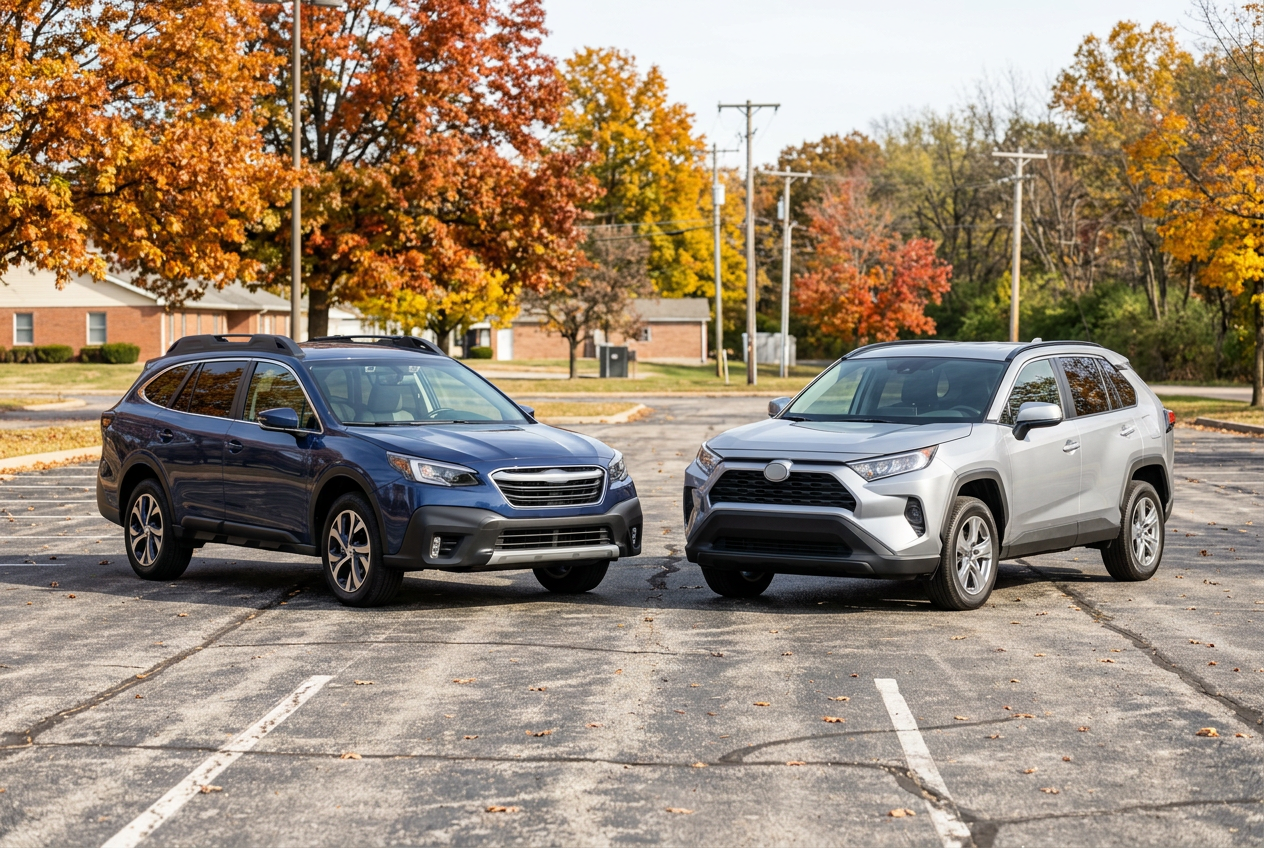
Toyota e-Four vs Subaru Symmetrical AWD: Key Differences Explained

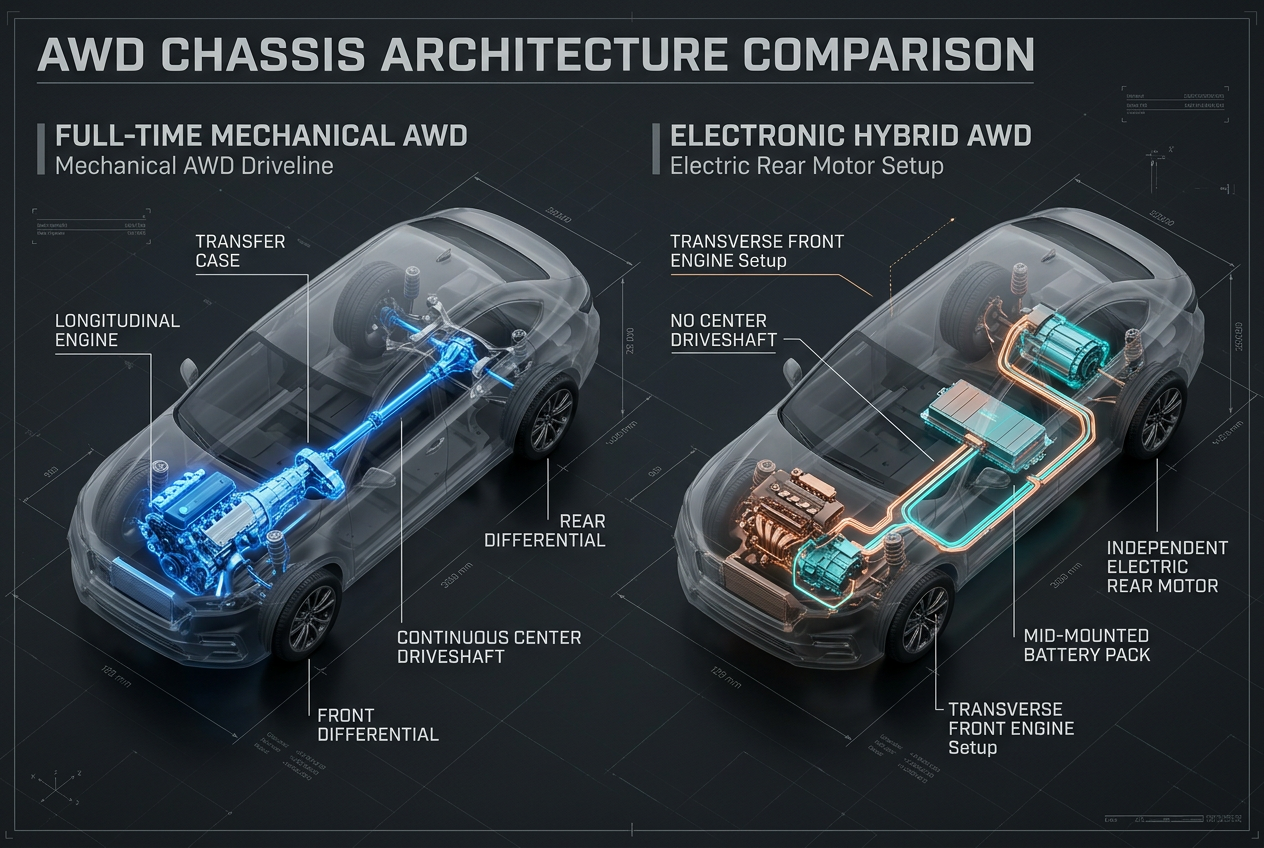
How Toyota e-Four Electric AWD Differs From Subaru Symmetrical AWD Mechanics Toyota e-Four Architecture Toyota's e-Four system represents a clever application of modern hybrid electronics. In models like the RAV4 Hybrid or Highlander Hybrid, the front combustion engine and primary electric motor drive the front wheels through a planetary gear transaxle. The rear wheels are completely decoupled physically from the front end. A small secondary electric motor (generating around 54 horsepower and 89 lb-ft of torque on typical crossover models) sits directly on the rear axle. Because there is no heavy prop shaft running underneath the cabin floorboards, e-Four reduces vehicle curb weight and eliminates mechanical friction losses during dry pavement cruising. This design allows Toyota hybrids to deliver exceptional EPA-estimated fuel economy. However, because the rear motor relies on high-voltage battery reserves and electronic sensors to react to wheel slip, power delivery to the rear wheels is dynamic rather than constant. Under continuous heavy drag—such as wading through deep mud, ascending steep loose gravel trails, or prolonged high-speed snow travel—the rear electric motor may reduce output to protect against thermal buildup. Subaru Symmetrical AWD Layout Subaru takes a fundamentally different mechanical approach rooted in rally racing heritage. The cornerstone of the system is the longitudinal Subaru BOXER engine, which lies flat and low in the engine bay along the vehicle's centerline. The transmission, transfer case, and driveshaft align in a perfectly straight, symmetrical line leading directly to the rear differential. This linear design distributes weight evenly between the left and right sides of the chassis, lowering the vehicle's center of gravity and reducing body roll. Mechanically, power flows non-stop through a continuously engaged active torque split coupling or center differential. If one or both front wheels encounter black ice on a bridge deck along Interstate 270, full engine output can be immediately routed mechanically to the rear wheels without waiting for sensors to wake up a separate electric motor. Driver inputs yield direct, mechanical feedback and predictable control in extreme weather. Comparing Winter Traction and Off-Road Capability Across Chesterfield and Ladue Terrain Living in the greater St. Louis metro region presents drivers with a wide mix of driving conditions throughout the year. Rolling hills in Chesterfield, unpaved back roads near West County parks, slick riverfront parkways, and sudden winter snowstorms require an AWD system that responds predictably under load. Steep Inclines & Ice When climbing steep, snow-dusted driveways in Ladue, Subaru's continuous mechanical torque split ensures all four tires bite into the road simultaneously from a dead stop. In contrast, electronic on-demand systems like e-Four must briefly detect front tire spinning before sending power back, which can cause momentary wheelspin before rear engagement. Deep Snow & Mud Navigating unplowed neighborhood roads or rutted trails near Babler State Park demands sustained power to all four corners. Subaru models equipped with dual-function X-MODE adjust throttle response, gear ratios, and VDC braking to crawl out of deep mud. Toyota e-Four works well in light slush but lacks the mechanical locking capability required for heavy drag. Highway Handling At 65 mph on wet pavement along I-64, Subaru Symmetrical AWD continuously stabilizes the vehicle against crosswinds and hydroplaning risks. Toyota e-Four primarily operates in front-wheel drive mode at higher highway speeds to conserve electric battery range, engaging the rear motor only during detected traction loss. Value Your Current Trade Does Toyota Own Subaru? The Toyota–Subaru Capital Alliance Explained A common question among vehicle shoppers in St. Louis is whether Toyota owns Subaru outright. The short answer is no: Subaru Corporation remains an independent Japanese automaker listed on the Tokyo Stock Exchange, with its own board of directors, corporate identity, engineering teams, and manufacturing facilities in Gunma, Japan and Lafayette, Indiana. However, the two companies share a strategic capital alliance that dates back to 2005. Over time, Toyota Motor Corporation has increased its equity stake in Subaru Corporation to approximately 20%. In turn, Subaru holds a minor equity share in Toyota. This mutual partnership allows both automakers to pool research and development capital for high-cost technologies such as battery electric vehicles, autonomous driving systems, and next-generation hybrid transaxles, while protecting each brand's unique engineering soul. Through this alliance, Subaru retains total control over its signature engineering hallmarks: the horizontally opposed Boxer engine layout, Symmetrical AWD chassis architecture, and EyeSight safety camera systems. Rather than homogenizing their vehicle lineups, Toyota and Subaru leverage shared platforms to offer buyers distinct driving dynamics and vehicle personalities. How Does the Subaru Solterra Compare to the Toyota bZ4X? The most prominent showcase of the Toyota-Subaru capital alliance is the co-developed battery electric crossover platform (e-Subaru Global Platform / e-TNGA). Manufactured at Toyota's Motomachi assembly plant in Japan, the Subaru Solterra and Toyota bZ4X share basic body structures, 72.8 kWh lithium-ion battery packs, and electric powertrain architecture. However, key tuning decisions reflect distinct brand priorities. Standard All-Wheel Drive While the Toyota bZ4X comes standard as a single-motor front-wheel drive electric vehicle with optional dual-motor AWD, every Subaru Solterra comes standard with dual-motor StarDrive AWD. Solterra delivers 215 horsepower and 249 lb-ft of instant electric torque split evenly across both axles. Subaru X-MODE Tuning Subaru engineers exclusively tuned the Solterra's dual-motor power management system with multi-mode X-MODE, featuring Snow/Dirt and Deep Snow/Mud settings. It includes Grip Control low-speed off-road cruise control, allowing the EV to tackle rugged trail obstacles that cause standard crossovers to lose traction. Ground Clearance & Rugged Styling The Subaru Solterra boasts a commanding 8.3 inches of ground clearance—surpassing typical electric crossovers—along with functional roof rails rated for heavy cargo gear, unique front cladding, and recalibrated electric power steering tuned for driver feedback on rough terrain. Do Toyota and Subaru Use the Same Engine in the BRZ and GR86? Yes! The iconic sports car duo—the Subaru BRZ and Toyota GR86—share a co-developed powertrain built in Subaru's Gunma plant in Japan. Both lightweight rear-wheel drive coupes utilize Subaru's 2.4-liter naturally aspirated FA24 horizontally opposed 4-cylinder Boxer engine. To maximize performance, the Boxer engine is paired with Toyota's D-4S dual-injection system, which combines direct cylinder injection and port fuel injection. This integration eliminates torque dips, yielding 228 horsepower and 184 lb-ft of torque. While the mechanical engine core is identical, Subaru and Toyota tuned the chassis and suspension differently. The Subaru BRZ features unique front aluminum knuckles, distinct spring rates, and a solid rear sway bar mounted directly to the body for neutral, precise cornering on twisty backroads. Explore New Subaru BRZ Inventory Does Toyota Supply Hybrid Technology and Components to Subaru Models? As automotive fuel economy standards advance, technology sharing across the capital alliance has deepened. A key benefit for Subaru drivers is access to Toyota's world-leading hybrid transmission technology. The previous-generation Subaru Crosstrek Hybrid plug-in model, for example, integrated Toyota Hybrid System (THS) electronic transaxles and battery management hardware. Crucially, Subaru engineers adapt Toyota's hybrid hardware to work with Subaru's proprietary mechanical AWD layout rather than adopting Toyota's e-Four setup. By mating a Toyota-sourced electronic planetary transaxle directly to a Subaru Boxer engine and a mechanical center transfer case, Subaru hybrids maintain permanent mechanical four-wheel traction while achieving superior fuel efficiency. For upcoming hybrid generations across popular lines like the Forester and Outback, Subaru continues to manufacture its own gasoline engines while incorporating Toyota hybrid transaxles for seamless reliability. Which Brand Offers Better Safety Technology: Subaru EyeSight or Toyota Safety Sense? Both Subaru and Toyota lead the automotive industry in driver-assist safety innovation, consistently earning Insurance Institute for Highway Safety (IIHS) Top Safety Pick+ awards across almost their entire model lines. However, their technological methods differ: Subaru EyeSight® Driver Assist Technology relies primarily on dual stereo color cameras mounted high behind the windshield. By mimicking human binocular vision, EyeSight precisely measures distance, speed, and depth of multiple objects ahead—including pedestrians, cyclists, and stopping traffic. Latest generations add a third wide-angle mono camera for enhanced intersection collision avoidance. Toyota Safety Sense (TSS) utilizes a hybrid combination of a single windshield-mounted camera and millimeter-wave radar mounted in the front grille. Both systems feature pre-collision braking, adaptive cruise control with lane centering, lane departure warning, and automatic high beams. Subaru EyeSight stands out for its smooth, natural throttle interventions and rapid object identification in dense highway stop-and-go traffic. Can You Service a Subaru Solterra or Hybrid at a Toyota Dealership? OEM Parts & Diagnostics While the Solterra and BRZ share components with Toyota models, factory warranty repairs and official Subaru software updates must be performed at an authorized Subaru dealership. Authorized service centers utilize proprietary Subaru Select Monitor diagnostic tools. Certified Technicians Subaru-certified master technicians undergo rigorous, ongoing training specifically covering StarDrive EV high-voltage systems, EyeSight calibration, and Boxer mechanical maintenance, ensuring your vehicle remains in factory-spec operating condition. Local Service Convenience For drivers residing in Maryland Heights, Sunset Hills, Kirkwood, and Fenton, scheduling service at Sunset Hills Subaru provides express maintenance options, factory recall checks, and genuine Subaru OEM parts backstopped by national warranty protection. Schedule Service and Diagnostics Which Vehicles Are Jointly Developed by Toyota and Subaru? To help local vehicle buyers navigate model comparisons, here is a breakdown of shared joint ventures versus pure independent Subaru engineering: • Subaru Solterra & Toyota bZ4X: Jointly engineered electric SUV platform with Subaru tuning for AWD and ground clearance. • Subaru BRZ & Toyota GR86: Co-developed sports coupe featuring a Subaru 2.4L Boxer engine and Toyota D-4S fuel injection. • Subaru Hybrid Lineup: Integrates Toyota Hybrid System (THS) transaxle electronics with Subaru Boxer engines and mechanical AWD. Meanwhile, core Subaru vehicles like the Subaru Outback, Subaru Forester, and Subaru Ascent are engineered 100% on the Subaru Global Platform with exclusive Subaru Boxer engines and full-time mechanical AWD. Test Drive Subaru Symmetrical AWD Models at Sunset Hills Subaru While reading technical comparisons provides valuable clarity, nothing replaces the hands-on experience of testing full-time mechanical Symmetrical AWD on the road. Feel the immediate throttle response, low center-of-gravity cornering stability, and continuous traction during a test drive at Sunset Hills Subaru. Whether you are looking for an all-electric Solterra, an adventure-ready Outback, or a versatile Crosstrek, our friendly team in Sunset Hills is ready to assist. Contact us for current financing information or review current trade options before visiting our showroom. Experience Subaru All-Wheel Drive Performance in Sunset Hills Today Visit Sunset Hills Subaru at 10100 Watson Rd, Sunset Hills, MO 63127 or give our sales team a call at (314) 476-9638. Conveniently located near I-270 and Watson Road, we serve drivers across St. Louis County, Kirkwood, Webster Groves, and Arnold. You can easily get directions to Sunset Hills Subaru to test drive our full inventory of all-wheel drive models today. Browse New Subaru Inventory AWD Systems Comparison in Sunset Hills MO | Sunset Hills Subaru
SIA Plant

Which Subaru Models Are Confirmed as Built at the Lafayette, Indiana Plant?

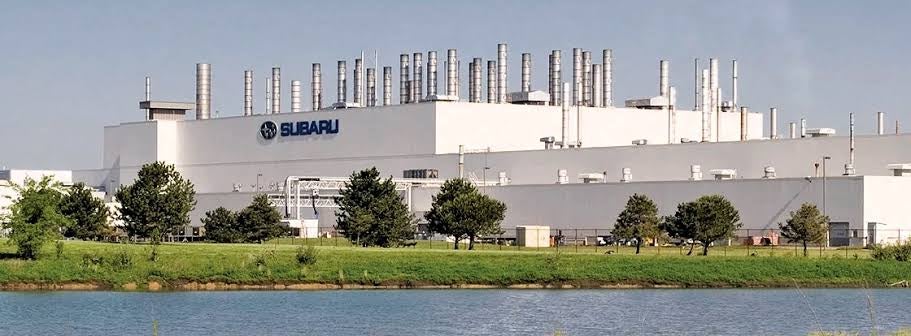
When automotive enthusiasts and prospective vehicle buyers ask which Subaru models are assembled in the United States, the answer leads directly to Tippecanoe County, Indiana. Subaru of Indiana Automotive, Inc. (SIA), located in Lafayette, Indiana, serves as the exclusive North American manufacturing facility for Subaru Corporation. Currently, the Lafayette plant produces the Subaru Outback, the Subaru Ascent, and select trim levels of the Subaru Crosstrek (specifically the 2.5-liter engine configurations including the Sport, Limited, and Wilderness trims). Historically, SIA also produced the Subaru Legacy sedan for North American drivers until production concluded following the 2025 model year. Understanding where your vehicle is manufactured provides valuable insight into quality standards, supply chain dynamics, and regional engineering adaptations. Domestic manufacturing at SIA ensures that high-demand crossovers and SUVs designed for North American lifestyles are built with localized parts, rigorous quality controls, and rapid transit times to Midwestern dealerships like Sunset Hills Subaru. Meanwhile, other popular models—such as the Subaru Forester, WRX, BRZ, Solterra, and 2.0-liter Crosstrek trims—continue to be assembled in Japan at Subaru's historic Gunma and Toyota's Motomachi assembly hubs. Subaru Model Primary Assembly Location Engine / Trim Details Target Market Subaru Outback Lafayette, Indiana (SIA) All Trims (2.5L & 2.4L Turbo / Wilderness) North America Subaru Ascent Lafayette, Indiana (SIA) All Trims (2.4L Turbo 3-Row) North America Subaru Crosstrek Lafayette, Indiana / Gunma, Japan 2.5L (Sport/Limited/Wilderness - IN); 2.0L (Base/Premium - Japan) North America / Global Subaru Forester Gunma, Japan (Yajima Plant) All Trims (2.5L BOXER) Global Subaru Legacy (Historical) Lafayette, Indiana (SIA) All Trims (1989–2025 Model Years) North America Subaru Solterra Aichi, Japan (Toyota Motomachi) All-Electric e-Subaru Global Platform Global When Was Subaru of Indiana Automotive Established and How Has It Grown? Subaru of Indiana Automotive was incorporated in May 1987 as Subaru-Isuzu Automotive Inc., a joint venture between Fuji Heavy Industries (now Subaru Corporation) and Isuzu Motors Ltd. Construction on the sprawling 820-acre facility in Lafayette, Indiana, began shortly thereafter, and the first vehicle rolled off the production line in September 1989. The initial product mix included the Subaru Legacy alongside Isuzu pickup trucks and SUVs. Over the decades, Subaru eventually acquired full ownership of the facility in 2003, renaming it Subaru of Indiana Automotive and dedicating its vast assembly infrastructure strictly to meeting the accelerating demand for Subaru vehicles in Canada, the United States, and Mexico. The growth of SIA mirrors Subaru's remarkable rise in North American popularity. From an initial investment of roughly $500 million, Subaru has continuously expanded the Lafayette campus through multi-hundred-million-dollar modernization projects. Today, the facility spans over 5 million square feet under roof and represents a total capital investment exceeding $2.2 billion. Employing more than 6,500 associate team members, SIA has evolved from a modest joint assembly experiment into a flagship manufacturing powerhouse capable of building hundreds of thousands of award-winning, Symmetrical All-Wheel Drive vehicles each year. Are All Subaru Outback Models Built in Indiana for North American Drivers? Unbroken Indiana Production Heritage Since 1999, every single Subaru Outback sold in North America has been crafted at the Lafayette facility. When the Outback originally debuted in the mid-1990s as a rugged station wagon trim of the Legacy, assembly quickly centralized in Indiana to serve the rapidly expanding North American crossover market. Trim Precision & Quality Standards Whether you select a naturally aspirated 2.5-liter Outback Premium, a turbocharged 2.4-liter Outback XT, or the trail-ready Outback Wilderness, every variant shares identical SIA stamping, welding, paint, and final assembly lines. Local assembly ensures tight adherence to rigorous North American safety standards and regional quality expectations. Drivers in St. Louis County rely on the Indiana-built Outback for proven Midwestern durability, whether navigating winter road salt on I-270 or trekking into the Ozarks. Explore New Subaru Outback Inventory at Sunset Hills Subaru. When Did Subaru Crosstrek Production Start in Indiana and Which Trims Are Made There? For the first two generations of the popular subcompact crossover, all Subaru Crosstrek models destined for U.S. showrooms were built exclusively at the Gunma plant in Japan. However, in May 2023, Subaru announced a major milestone for North American operations: domestic production of the third-generation 2024 Crosstrek officially commenced at Subaru of Indiana Automotive in Lafayette. To optimize global manufacturing efficiency, Subaru strategically split Crosstrek assembly based on powertrain options: • Indiana-Built Crosstrek Trims: Models powered by the upgraded 2.5-liter Subaru BOXER® engine—including the Crosstrek Sport, Crosstrek Limited, and the rugged Crosstrek Wilderness—are manufactured at SIA in Lafayette. • Japan-Built Crosstrek Trims: Models featuring the 2.0-liter engine—such as the Base and Premium trims—continue to be assembled at the Yajima plant in Gunma, Japan. This manufacturing shift significantly reduced delivery shipping times across the central United States for higher-trim Crosstreks. Missouri buyers can immediately verify current trim availability, engine choices, and color options directly through our local dealership inventory. Browse New Crosstrek Inventory Which Subaru Models Are Imported from Japan to the United States? The Gunma Manufacturing Complex Located in Gunma Prefecture, northwest of Tokyo, Subaru operates a consolidated cluster of production hubs including the Main Plant, Yajima Plant, and Ota North Plant. Gunma serves as the primary global engine, transmission, and vehicle assembly network for Subaru Corporation. Japanese Import Models Vehicles shipped from Gunma to North America include the best-selling Subaru Forester, the rally-bred Subaru WRX sports sedan, the lightweight rear-wheel-drive Subaru BRZ coupe, the Subaru Impreza hatchback, and 2.0L Crosstrek models. Precision Japanese Craftsmanship Every imported vehicle embodies Monozukuri—the traditional Japanese philosophy of craftsmanship and continuous quality improvement. Advanced automated assembly seamlessly pairs with hand inspections before vehicles depart Japanese ocean ports for American distribution centers. Which Plant Builds the Jointly Developed Subaru Solterra and Toyota bZ4X? The all-electric Subaru Solterra represents a major strategic collaboration between Subaru Corporation and Toyota Motor Corporation. Co-developed on a shared battery-electric platform (known as the e-Subaru Global Platform / e-TNGA), both the Subaru Solterra and its sister vehicle, the Toyota bZ4X, are assembled on the specialized EV production line at Toyota’s historic Motomachi plant in Aichi Prefecture, Japan. Toyota currently holds approximately a 20% ownership equity stake in Subaru Corporation. This financial and engineering synergy allows both Japanese automakers to pool research resources in battery electric architecture, power electronics, and autonomous safety software while preserving Subaru’s signature StarDrive dual-motor all-wheel-drive tuning. Drivers interested in electric mobility can explore New Subaru Solterra Inventory for zero-emission driving around St. Louis. Did Toyota Vehicles Used to Be Built at the Subaru Lafayette Indiana Plant? Yes. As part of a collaborative contract agreement between Fuji Heavy Industries and Toyota Motor Corporation, Subaru of Indiana Automotive built the Toyota Camry sedan at its Lafayette plant from February 2007 through May 2016. During this nearly decade-long contract, SIA dedicated an entire assembly line to building roughly 100,000 Camry sedans annually alongside core Subaru vehicles like the Legacy and Outback. In 2016, Toyota shifted Camry production to its expansive Georgetown, Kentucky, assembly plant. Ending contract assembly of the Camry allowed Subaru to reclaim valuable floor space and retool the Lafayette facility for rapid domestic expansion. This decision cleared the way for the launch of the three-row Subaru Ascent in 2018 and the domestic addition of the Crosstrek in 2023. If you currently drive an older vehicle and wish to transition into a new Indiana-built crossover, we welcome you to evaluate your options online. Get Your Trade-In Valuation What Position in the VIN Identifies the Subaru Assembly Plant Location? Locating Your Vehicle VIN You can easily find your Subaru's 17-digit Vehicle Identification Number (VIN) stamped on the metal plate visible through the lower driver's side corner of the windshield, printed on the driver's door B-pillar safety badge, or listed on state vehicle registration documents. Decoding the 11th Character The 11th position of any standardized North American VIN explicitly denotes the assembly plant code: • 'E' or 'G': Manufactured at Subaru of Indiana Automotive (SIA) in Lafayette, Indiana. • '1', '2', '8', or '9': Manufactured at the Gunma complex in Japan. In addition, the 1st position character reveals the country of origin: '4' or '7' indicates U.S. assembly (Indiana), while 'J' indicates Japanese production. How Many Vehicles Can the Subaru Lafayette Indiana Plant Produce per Year? Following comprehensive multi-phase plant expansion projects, Subaru of Indiana Automotive maintains an annual production capacity of approximately 415,000 vehicles per year. Operating flexible twin-line assembly operations, SIA can quickly rebalance production ratios between the Outback, Ascent, and Crosstrek based on real-time consumer demand and seasonal purchasing trends across the United States and Canada. SIA holds the historical distinction of becoming the first zero-landfill auto assembly plant in the United States, achieving this environmental benchmark in May 2004. Every scrap of metal, plastic, cardboard, and manufacturing byproduct generated on site is recycled, reused, or converted into energy. Efficient domestic assembly in Indiana stabilizes distribution timelines for Midwest buyers, insulating dealerships from trans-Pacific shipping bottlenecks. How Indiana-Built Subaru Vehicles Fit Active Chesterfield and St. Louis Suburban Lifestyles Subaru vehicles assembled in Indiana are engineered specifically for the varied climate and driving demands of North American drivers. For suburban families in Chesterfield, Kirkwood, and Sunset Hills, models like the three-row Ascent and versatile Outback deliver standard Symmetrical All-Wheel Drive, 8.7+ inches of ground clearance, and versatile cargo room necessary for everything from weekly youth athletic tournaments to weekend road trips along Route 66. To preserve the long-term reliability and safety of your Indiana-built or Japanese-built Subaru, trust factory-certified technicians who utilize Genuine Subaru Parts engineered precisely for your model. Schedule Service and Diagnostics How Does Subaru's Indiana Manufacturing Plant Compare to Toyota's US Footprint? Subaru: Focused Single-Site Center Subaru concentrates its entire U.S. vehicle manufacturing operations within a single, highly integrated 820-acre hub in Lafayette, Indiana. This localized concentration fosters deep engineering synergy, agile quality management, and streamlined supplier networks. Toyota: Distributed Multi-Plant Network In contrast, Toyota operates multiple massive manufacturing facilities spread across North America—including vehicle plants in Kentucky, Indiana (Princeton), Texas, Mississippi, and Missouri (engine manufacturing in Troy, MO). Strategic Control Advantages By maintaining a single centralized production hub at SIA, Subaru executives and quality control teams maintain direct, hands-on oversight over every U.S.-built vehicle, ensuring unified build consistency across the product range. What Is the Standard Destination and Delivery Fee for Subaru Vehicles? Every new Subaru sold in the United States includes a mandatory manufacturer-established Destination and Delivery charge (for current destination and delivery information). Buyers often wonder whether this fee varies depending on whether a vehicle is assembled domestically in Lafayette, Indiana, or imported overseas from Gunma, Japan. Subaru Corporation applies a uniform, equalized destination rate across all dealership locations in the contiguous United States. Destination and delivery charges may vary by model and market; contact the dealership for current information. The fee covers ocean freight, rail freight, regional carrier trucking, pre-delivery port inspection, and final transit logistics. Explore Indiana-Built and Japanese-Crafted Subaru Models at Sunset Hills Subaru Whether you are drawn to the American-assembled versatility of the Indiana-built Outback, Ascent, and Crosstrek or the Japanese craftsmanship of the Forester, WRX, and Solterra, Sunset Hills Subaru is your premier destination in the greater St. Louis region. Located at 10100 Watson Rd, Sunset Hills, MO 63127, our dealership provides a welcoming atmosphere where you can compare manufacturing origins, test-drive your favorite models, and experience Subaru's standard Symmetrical All-Wheel Drive firsthand. Our knowledgeable sales consultants can help you identify vehicle manufacturing origin tags, explain available powertrain options, review flexible auto loan options through our finance department, or guide you through current offers. Get directions to Sunset Hills Subaru or reach our team directly at Call (314) 476-9638 today to schedule your VIP appointment. Explore New Subaru Inventory Subaru Models Assembled in Lafayette, IN | Sunset Hills Subaru

Colin Mcrae 555

The History and Heritage of Subaru’s Iconic Blue Paint and Gold Wheels

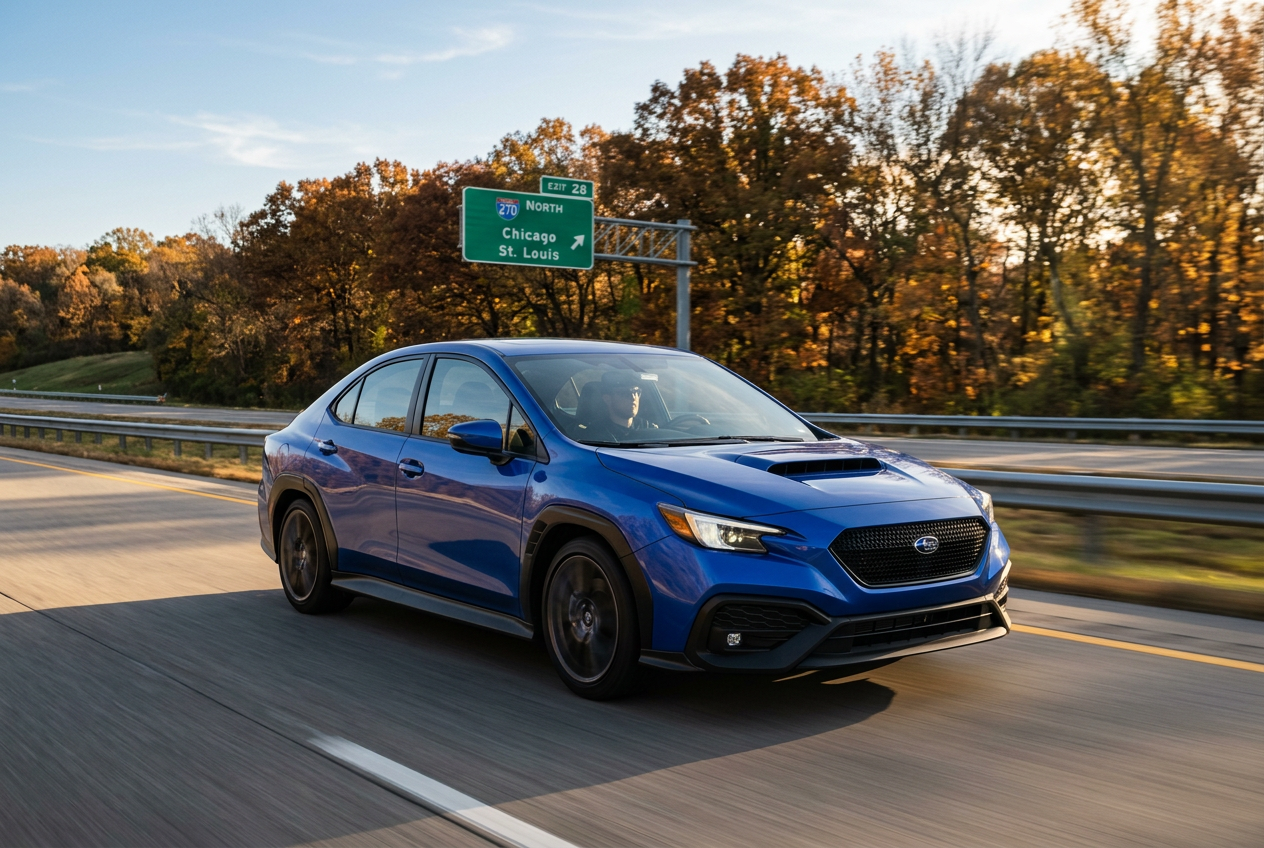
Few color combinations in automotive history evoke the immediate sensory charge of World Rally Blue paint paired with gleaming gold alloy wheels. Across motorsport, certain liveries transcend their era—think of Gulf Oil's powder blue and orange, Lotus's John Player Special black and gold, or Ferrari's Rosso Corsa. Yet, for rally enthusiasts and modern performance car aficionados alike, nothing commands attention quite like the iconic blue and gold contrast perfected by Subaru in the high-stakes crucible of the World Rally Championship (WRC) during the mid-1990s. The birth of this legend traces directly to Subaru World Rally Team’s partnership with State Express 555, a British cigarette brand owned by British American Tobacco. Debuting on the Group A Subaru Legacy RS and solidified when the nimble GC8 Impreza 555 took over the stage in 1993, the bold blue backdrop and vibrant gold graphics captured world attention. When Scottish rally legend Colin McRae secured the 1995 WRC Drivers' Championship in his factory Impreza 555 alongside co-driver Derek Ringer, history was etched in gravel, mud, and tarmac. Overnight, Subaru transformed from an obscure Japanese all-wheel-drive manufacturer into a global motorsport powerhouse. Today, that championship pedigree continues to resonate deeply with automotive historians, collectors, and everyday drivers in the St. Louis metropolitan area. The blue-and-gold aesthetic is far more than an aesthetic choice—it represents a philosophy of engineering excellence, Symmetrical All-Wheel Drive dominance, and an unyielding commitment to performance under extreme conditions. Whether you are inspecting a pristine 1990s GC8 STI or admiring a contemporary WRX or Impreza at Sunset Hills Subaru, the blue and gold hallmark stands as an enduring emblem of rally perfection. Why Did Subaru Pair World Rally Blue Paint with Gold Wheels? To understand the origin of Subaru’s visual signature, one must look back to 1993 and the commercial dynamics of international motorsport. Prodrive, the British motorsport engineering specialists led by David Richards, managed Subaru’s WRC team. When State Express 555 signed on as title sponsor, the racing livery was built around 555’s distinctive rich blue packaging and bold golden yellow insignia. The initial race color, designated internally as 555 Blue (color code 53C), was specifically formulated to pop under intense sunshine as well as overcast Scandinavian snowscapes. To complement the yellow-and-gold 555 badging on the doors and bonnet, Prodrive selected lightweight magnesium Speedline wheels painted in a striking electro-plated gold finish. Beyond sponsorship, the gold wheel choice served a vital practical purpose on the harsh WRC stages. Contrast was critical. Gold wheels offered high visual contrast against swirling dust clouds in Safari, heavy mud in Great Britain, and blinding snowbanks in Sweden. Mechanics servicing the cars in dimly lit remote service parks could instantly identify wheel hub seating and torque specifications. As WRC tobacco sponsorship restrictions tightened in the late 1990s, the three yellow '555' crescents morphed into the iconic stylized crescent graphics, but the factory World Rally Blue (WRB 02C / O2C and later K7X) paint and gold wheels remained permanent fixtures. Engine and Performance Specs of Colin McRae’s 1995 WRC Impreza 555 When Colin McRae secured his legendary 1995 WRC Drivers' World Championship, he was piloting a masterpiece of Group A rally engineering. Based on the lightweight GC8 Impreza chassis, Prodrive built a vehicle capable of enduring high-speed jumps, river crossings, and severe mechanical abuse while generating relentless traction on low-grip surfaces. Below are the definitive technical specifications of McRae's championship-winning machine: Specification 1995 Subaru Impreza 555 (Group A WRC) Technical Details & Highlights Engine Type 2.0L Turbocharged Flat-4 (EJ20) Closed-deck aluminum alloy block, custom Prodrive cylinder heads Power Output 300 hp @ 5,500 RPM (FIA Restricted) Mandatory 34mm FIA air restrictor limiting top-end horsepower Torque Output 347 lb-ft (471 Nm) @ 4,000 RPM Massive low-end torque tuned for aggressive corner exits Transmission Prodrive 6-speed Sequential Dog-engagement gearbox with electro-hydraulic paddle assist Drivetrain Symmetrical All-Wheel Drive Active computer-controlled center & mechanical front/rear differentials Curb Weight 2,711 lbs (1,230 kg) FIA Group A minimum weight limit; lightweight seam-welded chassis Suspension MacPherson Struts with Bilstein/Prodrive Long-travel adjustable dampers tailored per rally surface Brakes AP Racing 4-pot / 6-pot Calipers Water-cooled calipers with 355mm ventilated discs for tarmac The secret to McRae’s blistering speed wasn't just raw horsepower—which was heavily restricted by FIA regulations—but rather the remarkable power-to-weight ratio and the active differential technology that sent power precisely where grip was highest. McRae’s famously aggressive driving philosophy—'If in doubt, flat out'—depended entirely on the EJ20 boxer engine's immediate throttle response and low center of gravity, allowing the Impreza 555 to dance through corners sideways at triple-digit speeds. Subaru Impreza vs. Mitsubishi Lancer Evolution: The Great WRC Rivalry The Subaru Philosophy Anchored by its horizontally opposed Boxer engine and true linear Symmetrical AWD, Subaru prioritized chassis balance, a low center of gravity, and driver feedback. Guided by Colin McRae and Richard Burns, the Impreza thrived on flowing, high-speed gravel stages and unpredictable mountain passes, setting the gold standard for tactile driver engagement. The Mitsubishi Challenge Driven by Finnish star Tommi Mäkinen, the Mitsubishi Lancer Evolution featured the transverse 4G63 inline-4 engine and pioneering Active Yaw Control (AYC). The Evo was surgical, utilizing computer-managed torque vectoring to rotate the vehicle rapidly through tight hairpins, battling Subaru back-to-back across four consecutive driver titles (1996–1999). Homologation Special Era Because FIA Group A regulations required manufacturers to build at least 2,500 road-going production models annually, enthusiasts directly benefited. The rivalry forced both manufacturers to sell near-competition-ready WRX STI and Lancer Evolution models in showrooms, igniting a global enthusiast cult following. Explore New WRX Inventory The 1998 Subaru Impreza 22B STI: Original Price and Legend Status In 1998, Subaru celebrated two historic milestones simultaneously: the company's 40th anniversary and its third consecutive WRC World Manufacturers' Championship. To honor these achievements, Subaru built the holy grail of road-going Subarus—the Impreza 22B STI. Featuring Peter Stevens-designed widebody fender flares mirroring the WRC race car, a unique EJ22 2.2-liter turbocharged engine, twin-plate clutch, Bilstein suspension, and signature gold 17-inch BBS forged wheels, only 400 numbered units were built for the Japanese domestic market (plus 24 for export). When launched in March 1998, the 22B STI carried an original retail price of approximately ¥5,000,000 JPY (roughly $41,600 USD at 1998 exchange rates). All 400 JDM units famously sold out within 48 hours. Fast forward to the present, and the 22B STI has ascended into hyper-car territory among collectors. At premier auction houses like Bring a Trailer, RM Sotheby's, and Gooding & Company, pristine 22B examples routinely fetch between $250,000 and $325,000+ USD, representing a staggering valuation growth of over 600%. It stands as the ultimate manifestation of Subaru's blue and gold heritage. Authentic WRC Rally Cars vs. Replicas: Valuations and Collector Appeal The market for authentic 1990s WRC competition chassis has entered an elite collector stratosphere. An authentic, ex-works Prodrive chassis driven by Colin McRae or Richard Burns in period competition easily commands between $300,000 and $600,000+ depending on provenance and race victories. Chassis 'PRO/STI/97.001' or cars associated with McRae's 1995 season represent irreplaceable blue-chip automotive assets. Conversely, the enthusiast replica community is thriving. Driven by the availability of imported JDM 1992–2000 GC8 chassis under the 25-year import rule, hobbyists are building meticulous WRC tribute cars. A high-quality GC8 replica with authentic widebody paneling, EJ207 engine swap, speedline gold wheels, and 555 decals typically costs between $35,000 and $65,000 to construct. Standard road-going GC8 WRX and STI imports are also rapidly appreciating, serving as accessible entry points for collector passion. How the 2027 Impreza and WRX tS Honor Rally Heritage Today 2027 Subaru Impreza Hatchback The contemporary 2027 Impreza carries forward the core engineering architecture that defined McRae's championship cars: a direct-injection Subaru BOXER engine, standard Symmetrical All-Wheel Drive, and a highly rigid global platform. Available in vivid World Rally Blue Pearl, the 5-door hatchback provides daily versatility with genuine rally DNA. 2027 WRX tS & Heritage Editions Engineered by STI, the WRX tS (Tuned by STI) features electronically controlled dampers, Brembo high-performance brakes with gold calipers, STI tuned steering, and drive mode select. Special anniversary editions directly celebrate the gold wheel tradition, offering factory matte bronze and gold wheel finishes. Local Availability at Sunset Hills Drivers in St. Louis and surrounding communities can experience this heritage firsthand. Sunset Hills Subaru carries the full spectrum of new Impreza and WRX models, allowing you to choose classic World Rally Blue paired with genuine Subaru accessories. View New Impreza Inventory Factory STI Gold Wheels vs. Top Aftermarket Rally Options Achieving the perfect rally look requires choosing between official OEM Subaru STI options and proven aftermarket wheel manufacturers. Subaru offers genuine STI alloy wheel accessory packages engineered specifically for correct offset, hub bore clearance, and load ratings. Key Factory & Aftermarket Options Include: • Official Subaru STI Gold/Bronze Alloys (17", 18", and 19" fitments) • O.Z. Racing Rally Racing & Ultraleggera (Classic multispoke WRC styling) • Sparco Terra (Durable rally-inspired design built for gravel trails) • Method Race Wheels MR501 / MR502 Rally Series (Heavy-duty off-road strength) • Enkei RPF1 & Gold TS-10 (Ultra-lightweight Japanese tuning heritage) Does Adding Aftermarket Gold Wheels Void Your Subaru Factory Warranty? A common concern among Subaru owners in Missouri is whether upgrading to gold wheels will jeopardize their original factory warranty coverage. Under federal law—specifically the Magnuson-Moss Warranty Act of 1975—an auto manufacturer or dealership cannot void your vehicle's overall warranty simply because you installed aftermarket parts. To deny a warranty claim on a specific component, the manufacturer must prove that the aftermarket wheel directly caused the failure. To ensure complete peace of mind, proper fitment parameters are critical. Incorrect wheel offsets (+35mm to +55mm depending on model), improper hub-centric rings, or dramatic tire diameter changes can put undue stress on wheel bearings, suspension bushings, or interfere with Subaru EyeSight Driver Assist calibrated sensors. Sourcing genuine STI gold wheels or factory-approved setups directly through the Sunset Hills Subaru Parts Department helps support proper fitment and may help preserve warranty coverage where applicable. Budgeting Your Rally Build: Wheels, Livery Graphics, and Accessories Gold Wheels & Tires • OEM STI Gold Alloys: $1,200 – $2,200 set • Quality Aftermarket Wheels: $800 – $1,600 set • All-Weather / Performance Tires: $600 – $1,000 • TPMS Sensors & Mounting: $150 – $300 Livery & Protection • Heritage Rally Decal / Accent Kits: $150 – $450 • Rally Armor / Rek Gen Mud Flaps: $120 – $220 • Front Skid Plate / Underbody Guard: $250 – $500 • Ceramic Coating for Blue Paint: $600 – $1,200 Performance Enhancements • STI Performance Exhaust Upgrade: $800 – $1,400 • STI Flexible Tower Brace: $350 – $500 • Performance Lowering Springs / Lift Kits: $300 – $700 • Professional Installation at Dealer: Varies by job Order Genuine Subaru Parts Bringing Rally-Bred Symmetrical AWD to St. Louis Suburban Roads While Colin McRae conquered frozen Swedish forest roads and dust-choked Greek mountain passes, the engineering principles derived from WRC competition directly serve drivers navigating the greater St. Louis region today. Whether you are commuting along I-270, traversing rolling hills in Chesterfield, or tackling icy winter mornings in Ladue and Maryland Heights, Subaru’s rally-proven Symmetrical All-Wheel Drive provides unparalleled stability. Unlike converted front-wheel-drive systems that only engage rear wheels after slippage occurs, Subaru's continuous power distribution ensures immediate traction on rain-slicked pavement or sudden autumn leaf cover. Upgrading your current vehicle is straightforward at Sunset Hills Subaru—you can easily Get your value trade online, explore flexible financing options, or Schedule Service and Diagnostics for existing vehicles. Begin Your Subaru Rally Heritage Journey at Sunset Hills Subaru Whether you are a lifelong rally historian inspired by Colin McRae's championship legacy, or a modern driver seeking the security and style of World Rally Blue with gold wheels, Sunset Hills Subaru is your ultimate community partner. Visit our showroom at 10100 Watson Rd, Sunset Hills, MO 63127, or reach out directly to our team at Call (314) 476-9638. Our passionate brand specialists are ready to help you explore current inventory, order authentic STI gold wheels, or customize your dream Subaru today. Get Directions to Sunset Hills Subaru Subaru Rally Heritage in Sunset Hills MO | Sunset Hills Subaru
Boxer engine Diagram

Why Don't More Automobile Manufacturers Use Boxer Engines? The Bottom-Line Trade-Offs

If you have ever carved through the twisting, rolling bends of highway near Sunset Hills or taken a brisk morning drive along the Missouri River bluffs, you have likely felt the unmistakable handling signature of a horizontally opposed engine. Known universally as the boxer engine, this unique powerplant lies at the heart of modern engineering fascination. Enthusiasts revere it for its flat architecture, silky-smooth power delivery, and ultra-low center of gravity. Yet, when you look across the vast automotive landscape, only two major manufacturers—Subaru and Porsche—remain dedicated to mass-producing boxer engines for passenger vehicles. Why haven't automotive giants like Toyota, Ford, General Motors, or Honda adopted flat engine layouts for their high-volume commuter vehicles? The answer comes down to a set of uncompromising engineering and economic trade-offs. While a boxer engine delivers inherent primary rotational balance and unmatched lateral chassis stability, it places strict demands on vehicle design. A boxer engine requires a significantly wider engine bay, which complicates front suspension geometry and wheel-turn clearance. Economically, it demands dual cylinder heads, twin camshaft banks, duplicated exhaust manifolds, and complex timing mechanisms. This effectively doubles specific component tooling costs compared to standard inline-four configurations. Furthermore, tight clearances between horizontal cylinder heads and chassis frame rails make routine maintenance—such as spark plug replacement—more labor-intensive. For mass-market automakers focused on maximum modularity and minimum assembly cost, the traditional inline or V-engine remains the path of least resistance. However, for dedicated engineers at Subaru, those trade-offs are reasonable trade-offs for safety, control, and driving dynamics that no upright engine can mirror. How Does a Boxer Engine Work Mechanically, and Why Is It Called a Boxer Engine? To understand the magic of a boxer engine, you have to look inside the cylinder block. In a traditional upright inline engine, pistons move vertically up and down in a single bank. In a V-engine, pistons move diagonally in two angled banks sharing common crankpins. In a true boxer engine, the cylinders lie horizontally flat, facing one another across a central crankshaft. Opposing pairs of pistons move inward and outward simultaneously along a horizontal plane. This unique motion is precisely why the engine earned its pugilistic nickname. When you view the engine from above with its timing covers off, the opposing pistons punch toward each other and retreat in perfect synchronization—resembling a prizefighter tapping their gloves together before a round in the ring. Beyond its evocative name, this mechanical layout delivers an extraordinary advantage: cancellation of primary vibrational forces. Because opposing pistons reach top dead center (TDC) at the exact same moment on individual crankpins 180 degrees apart, their inertia forces cancel each other out naturally. There is no need for heavy, power-robbing balance shafts required by inline-four or V6 engines. The mechanical patent for this genius configuration dates back to 1896, when legendary automotive pioneer Karl Benz patented the 'Kontra-Motor' (counter-engine). Benz recognized that laying cylinders flat offered superior balance and cooling efficiency for early motorized carriages. Over a century later, that same core mechanical principle powers every modern vehicle in the New Subaru Inventory. Who First Developed the Boxer Engine, and When Did Subaru Adopt It? While Karl Benz created the initial design in 1896, the first mass-market automobile to bring the boxer engine to international prominence was the original Volkswagen Beetle, designed by Ferdinand Porsche in the late 1930s. The air-cooled flat-four became world-famous for its durability, simple construction, and compact height. Post-war sports car development solidified the boxer's reputation, with Porsche adopting flat-four and flat-six engines for its racing programs and iconic 911 series. Subaru's history with the flat engine began in 1966 with the launch of the groundbreaking Subaru 1000. Subcompact vehicles of that era suffered from heavy front-wheel vibration, harsh torque steer, and cramped cabins. Subaru engineers realized that laying a water-cooled four-cylinder engine completely flat created a perfectly symmetrical, compact powertrain layout that solved all three issues simultaneously. The success of the Subaru 1000 laid the foundation for Subaru's defining engineering triumph: pairing the flat boxer engine directly with Symmetrical All-Wheel Drive. Because a boxer engine is short lengthwise and symmetrical along its crankshaft line, drive shafts can extend rearward and laterally with perfect structural balance. By the 1970s and 1980s, Subaru made the boxer engine the core identity of its brand architecture. Today, whether navigating winter slush along Watson Road or taking suburban road trips across Missouri, this historical commitment ensures exceptional vehicle control. Over nearly six decades, Subaru has refined the boxer engine through generations of naturally aspirated, turbocharged, and hybrid configurations. From the rugged New Subaru Outback Inventory to the rally-bred New Subaru WRX Inventory, Subaru remains the only manufacturer in the world to equip its entire core lineup with horizontally opposed engines. What Is the Difference Between a Porsche Boxer Engine and a Subaru Boxer Engine? Porsche Engineering Focus Porsche engineers flat engines tailored for high-rpm track performance and rear/mid-engine vehicle chassis layouts. Porsche utilizes exotic dry-sump oiling systems with external reservoirs to prevent oil starvation under violent lateral g-forces. Displacement ranges from 2.0L turbo flat-fours in the 718 Cayman to high-revving 4.0L atmospheric flat-sixes in the 911 GT3, prioritizing maximum horsepower per liter and premium price points. Subaru Engineering Focus Subaru optimizes its BOXER® engines for daily reliability, high thermal efficiency, and linear low-end torque for suburban commuting. Utilizing user-friendly wet-sump lubrication and longitudinal front mounting, Subaru engines integrate directly with Symmetrical AWD transmissions. Displacements include the 2.0L and 2.5L Subaru BOXER® four-cylinder models and the 2.4L turbocharged direct-injection engine. Everyday Missouri Usability While Porsche delivers track-focused luxury sports cars, Subaru democratizes boxer engineering. Drivers in Ladue, Chesterfield, and Sunset Hills enjoy rally-proven balance, exceptional winter traction, and long-term fuel efficiency in family-friendly crossovers like the New Subaru Forester Inventory and New Subaru Crosstrek Inventory. Explore New Subaru Inventory Why Is a Boxer Engine Wider Than a V-Engine or Inline Engine? The primary physical characteristic that separates a boxer engine from upright designs is its dimensional profile. An inline-four engine stands tall and narrow. A V6 engine splits its cylinders at a 60-degree or 90-degree angle, creating a wedge shape. A boxer engine, by contrast, lays its cylinder banks completely flat at 180 degrees. Because the cylinder heads push directly outward toward the vehicle's structural frame rails, a boxer engine occupies substantial horizontal width inside the engine compartment. For standard front-wheel-drive transverse engine vehicles (where the engine sits sideways between the front wheels), a flat engine is simply too wide to fit without severely restricting front wheel steering lock angles. mainstream automakers designing compact front-wheel-drive sedans cannot accommodate flat engines without widening the vehicle's track width significantly. Packaging modern turbocharger plumbing, catalytic converters, and high-voltage hybrid electronics around wide cylinder heads presents additional structural challenges. Subaru overcomes this challenge by engineering dedicated longitudinal vehicle platforms where the wide boxer engine sits squarely centered between symmetrical front suspension towers. The Financial Barrier: Why Universal Modular Platforms Favor Inline Engines In the modern automotive industry, profitability is driven by platform modularity and manufacturing economies of scale. Major global auto groups build tens of millions of vehicles using shared engine families. The ubiquitous inline-four engine is the absolute champion of manufacturing efficiency. An inline engine requires only one cylinder head casting, one head gasket, one set of camshaft drive belts or chains, and one exhaust manifold assembly. Building a boxer engine, on the other hand, demands duplicate componentry across the board. The table below outlines the core structural and manufacturing cost factors that make inline engines the default choice for mainstream OEMs—and highlights why Subaru's commitment to flat engine architecture represents such a significant engineering investment: Engineering & Manufacturing Feature Standard Inline-4 Engine Standard V6 Engine Subaru BOXER® Flat-4 Engine Cylinder Head Assemblies 1 Single Head 2 Dual Heads (Angled) 2 Dual Heads (Opposed) Camshaft Overhead Banks 1 Bank (SOHC/DOHC) 2 Banks 2 Separate Banks Engine Center of Gravity High Vertical Mass Moderate Vertical Mass Ultra-Low Horizontal Mass Primary Rotational Balance Requires Balance Shafts Requires Balance Shafts Inherent Self-Canceling Balance Exhaust Manifold Routing Single Side Clearance Dual Side Clearance Symmetrical Underside Routing Platform Versatility Transverse / FWD Focus Transverse or Longitudinal Dedicated Longitudinal AWD Platform For high-volume manufacturers focused purely on profit margins, doubling cylinder head tooling and assembly line complexity makes flat engines financially unfeasible. Subaru, however, maintains dedicated assembly plants in Gunma, Japan, designed specifically around boxer engine production. This allows Subaru to produce flat-four engines at scale while passing the important safety and performance benefits directly to owners. How Does a Boxer Engine Lower a Car's Center of Gravity for Drivers? Reduced Body Roll By placing heavy engine components—such as the engine block, pistons, and valve gear—inches lower in the chassis, the car's overall center of mass drops dramatically. When making sharp turns around Maryland Heights or navigating highway off-ramps in St. Louis, lower center of gravity minimizes lateral body lean without requiring overly stiff suspension setups. Cornering Precision A vehicle with a low center of gravity transfers weight across its tires far more evenly during sudden evasive maneuvers or spirited driving. Drivers experience crisp steering response, neutral cornering balance, and predictable chassis feedback on twisting backroads through Chesterfield and Sunset Hills. Enhanced Passive Safety Beyond handling, low engine placement offers critical crash protection. In a severe head-on collision, the low profile of the Subaru BOXER® engine allows it to slide cleanly underneath the passenger cabin floor pan rather than pushing backward into the footwell, keeping driver and passengers protected. How Much Does Spark Plug Replacement Cost on a Boxer Engine and How Is It Serviced? One of the most frequent questions car buyers ask about flat engines involves maintenance accessibility. On a traditional inline-four engine, spark plugs sit right on top of the cylinder head, fully exposed under the engine plastic cover. Replacing them is a quick 20-minute task with standard sockets. On a boxer engine, the cylinder heads point horizontally straight toward the inner wheel wells and frame rails. Space between the spark plug ignition coils and the frame wall is restricted to just a few inches. Changing spark plugs requires removing the air intake ducting, battery, or washer fluid reservoir, and using specialized swivel extension sockets to extract plugs at an angle. Because spark plug replacement on a boxer engine involves additional labor steps, pricing varies by model and engine displacement; please contact our service department for current details. However, modern Subaru vehicles use long-life iridium spark plugs rated for 60,000 miles, meaning plug replacement is an infrequent scheduled maintenance item rather than an annual headache. Having your boxer engine serviced by factory-trained technicians at certified facilities ensures proper torque specs and correct OEM plug gap tolerances. Inspect our Current Service and Parts Information before your next service appointment. Schedule Service and Diagnostics Is a Boxer Engine the Exact Same Thing as a Flat Engine, and How Does It Compare to a V-Engine? True Boxer Engine In a true boxer engine, each opposing piston connects to its own individual crankpin on the crankshaft. Opposing pistons move simultaneously inward toward the crankshaft and outward toward the heads. This opposing push-pull motion creates perfect mechanical balance and gives Subaru engines their famous smoothness. 180° Flat V-Engine While all boxer engines are flat engines, not all flat engines are true boxers! A 180-degree flat V-engine (such as the Ferrari Testarossa flat-12) shares a single crankpin between opposing pistons. As one piston moves left, the opposing piston moves left in the same direction, eliminating the punch-and-counterpunch motion. Standard 60° V-Engine Standard 60-degree V6 or 90-degree V8 engines position cylinders upright in a V shape. While compact lengthwise, V-engines have higher center-of-gravity profiles and produce secondary rocking couples, requiring heavy counterweights and external dampening shafts. Are Boxer Engines Used in Motorcycles and Specialized Aviation? Two-Wheeled Legends: BMW & Honda Automobiles are not the only transport segment that benefits from horizontal engines. BMW Motorrad has built world-famous flat-twin 'Boxer' motorcycles (such as the R1250GS adventure series) since 1923. Cylinder heads extending into the air stream provide exceptional natural air cooling. Honda also uses a silky-smooth flat-six boxer engine in its flagship Gold Wing touring motorcycle, placing engine weight ultra-low for effortless low-speed maneuvering. General Aviation: Lycoming & Continental In general aviation, flat-four and flat-six engines made by manufacturers like Lycoming and Continental power the majority of single-engine propeller aircraft (such as Cessna and Piper planes). The flat profile allows sleek aerodynamic nose cowlings, while air cooling and self-balancing design maximize operational reliability high above the clouds. Which Automakers Currently Manufacture Cars with Boxer Engines Today? Today, the modern boxer automotive landscape features three primary brand connections: 1. Subaru Corporation: The world's primary practitioner of boxer engineering. Subaru equips every gasoline vehicle in its portfolio with horizontally opposed engines—including the New Subaru Outback Inventory, New Subaru Forester Inventory, New Subaru Crosstrek Inventory, New Subaru Ascent Inventory, New Subaru Impreza Inventory, New Subaru WRX Inventory, and rear-wheel-drive New Subaru BRZ Inventory. 2. Porsche: Continues flat-engine manufacturing for sports cars like the 911 (flat-six) and 718 Boxster/Cayman (turbo flat-four). 3. Toyota: Offers boxer power in the GR86 sports car—a vehicle joint-developed with Subaru and powered by Subaru's 2.4-liter BOXER® engine. Interested in upgrading your daily drive around St. Louis? Discover how easily you can transition to a balanced boxer engine. Check your current vehicle value using our online tool to Get your trade-in value, or apply online to Apply for financing before visiting our showroom. Experience the Superior Balance of a Subaru Boxer Engine at Sunset Hills Subaru While other manufacturers shy away from flat engines due to production complexities, Subaru's decades of engineering dedication deliver unmatched tangible benefits for drivers in Sunset Hills, Maryland Heights, Chesterfield, and Ladue. From confidence-inspiring lateral stability in sudden downpours to smooth, vibration-free highway cruising across Missouri, the Subaru BOXER® engine transforms your daily commute. Visit Sunset Hills Subaru located at 10100 Watson Rd, Sunset Hills, MO 63127. Our friendly, knowledgeable team is ready to demonstrate the unique engineering advantages of boxer engine balance in person. Get Directions to Sunset Hills Subaru or Call (314) 476-9638 to speak directly with our team. Get your trade-in value Get Directions to Sunset Hills Subaru Boxer Engine Benefits & Trade-Offs in Sunset Hills, MO | Sunset Hills Subaru

Outback on winter road

What Does Subaru X-MODE Actually Do on Snow, Ice, and Slippery Roads?

When winter storms hit the greater St. Louis metropolitan area and transform local highways into icy sheets, drivers frequently ask: What does Subaru X-MODE actually do on snow, ice, and slippery roads? At its core, Subaru X-MODE is an integrated electronic control system that alters five fundamental mechanical and software subsystems within your vehicle: engine throttle response, transmission ratio logic, front-to-rear center coupling torque force, Vehicle Dynamics Control (VDC) individual wheel braking, and Hill Descent Control. While Subaru’s Symmetrical All-Wheel Drive (AWD) is continuously active under normal driving conditions, X-MODE acts as an expert co-pilot that optimizes traction when vehicle tires encounter near-zero friction environments. Under standard highway driving conditions, your Subaru balances fuel efficiency with permanent AWD grip. However, when a vehicle encounters thick slush, packed snow, or black ice, standard traction control parameters can sometimes prove overly conservative or react too slowly to sudden individual wheel slippage. When you press the X-MODE button or turn the dual-mode selector dial, the vehicle’s central control unit instantly recalibrates the electronic throttle map so that sudden driver accelerator inputs do not break tire traction. Simultaneously, the Lineartronic Continuously Variable Transmission (CVT) is instructed to stay in a lower gear ratio to deliver maximum low-end engine torque, while the multi-plate transfer clutch locks up tightly to ensure equal power distribution between the front and rear axles. For drivers seeking to understand how these systems compare during severe winter weather, the table below provides a side-by-side comparison of standard operating parameters versus X-MODE active intervention on low-friction road surfaces. Subsystem Component Standard AWD Driving Mode X-MODE Activated (Snow/Ice) Throttle Response Linear input for normal acceleration and fuel economy Smoothed electronic mapping to prevent sudden wheel spin CVT Gear Ratio Continuously adjusts for optimal fuel efficiency Holds lower ratio to deliver consistent engine torque AWD Transfer Clutch Variable 60/40 front-to-rear torque distribution Locks up up to 50/50 split for maximum combined traction VDC Braking Intervention Gradual braking applied after prolonged wheel spin is detected Rapid, micro-burst braking to immediate spinning wheels Hill Descent Control Driver manually manages pedal braking on steep declines Automatic vehicle speed maintenance under 12 mph without foot braking How Does Subaru X-MODE Work on Snow, Ice, and Slippery Roads? Understanding the mechanical precision behind X-MODE requires looking closely at how its integrated algorithms manage wheel slippage in real time. When standard vehicles encounter a patch of glare ice under one tire, an open differential will naturally direct engine power toward the wheel with the least resistance—causing that tire to spin uncontrollably while the grounded tires remain static. Subaru’s X-MODE solves this fundamental physics challenge by using the Vehicle Dynamics Control (VDC) hydraulic unit to simulate locking differential performance across both front and rear axle assemblies. When X-MODE is engaged, wheel-speed sensors continuously monitor all four corners of the chassis thousands of times per minute. The instant a single wheel begins spinning even a fraction faster than the others, X-MODE commands the brake caliper on that specific wheel to pinch tightly. By applying targeted hydraulic pressure to the slipping wheel, torque is immediately redirected through the differential across to the opposing tire on the same axle that still has firm contact with frozen asphalt or deep snow. Another crucial aspect of X-MODE on steep winter inclines is its integrated Hill Descent Control (HDC) feature. Navigating downhill on slick ice or frozen slush is often far more dangerous than climbing uphill, as locked-up brakes eliminate steering control. Hill Descent Control acts as a low-speed off-road cruise control for downhill travel, automatically applying individual hydraulic brake pressures to maintain a constant creep speed without requiring the driver to touch the brake or gas pedals. Furthermore, throttle sensitivity is dramatically softened when X-MODE is operating under 12 mph. In a standard vehicle, tapping the gas pedal on slick snow can send a sharp surge of horsepower to the drive wheels, breaking whatever micro-adhesion exists between rubber and ice. X-MODE creates a dampening effect between your foot and the engine, ensuring smooth, linear torque delivery that gently nudges the vehicle forward without spinning out. What Is the Difference Between Single-Mode and Dual-Function X-MODE? Subaru offers two distinct variations of its software architecture across different models and trim packages: standard single-mode X-MODE and advanced Dual-Function X-MODE. Knowing the operational differences between these systems helps drivers select the optimal vehicle configuration for severe winter driving conditions. Single-Mode X-MODE Found on core trims such as Premium and Limited models, single-mode X-MODE is activated via a single push button or touchscreen toggle. It provides one all-encompassing calibration optimized for slippery surfaces like hard-packed snow, slick rain-soaked pavement, and moderate gravel. It strictly suppresses wheel spin by clamping down immediately on slipping tires to maintain traction and steering control. Dual-Function: Snow/Dirt Mode The first setting of Dual-Function X-MODE (featured on Sport, Onyx Edition, and Wilderness models) operates similarly to single-mode X-MODE. It is engineered specifically for firm, slippery surfaces like hard-packed snow, ice, and wet gravel. Traction control remains fully engaged to prevent tire spinning, while engine throttle response is dampened to maximize contact patch grip on icy roads. Dual-Function: Deep Snow/Mud Mode The second setting of Dual-Function X-MODE completely changes the vehicle's computer logic for soft, high-resistance terrain. In unplowed deep snow or thick winter mud, preventing wheel spin can actually cause a car to become stuck. This mode automatically turns off standard VDC traction control restriction, allowing controlled wheel spin so tire tread blocks can clear out packed snow and momentum can be preserved. At What Speed Does Subaru X-MODE Automatically Turn Off and Can It Be Used at High Speeds? A frequent question among winter drivers in Missouri is whether X-MODE can be left engaged while traveling at highway speeds down Interstate 40 or I-270 during a snowstorm. The short answer is no: Subaru X-MODE is specifically designed as a low-speed tactical system for negotiating difficult, low-traction situations such as unplowed driveways, steep neighborhood inclines, and stuck situations. X-MODE can be manually switched on at speeds below 12 mph to 18 mph (depending on vehicle model year). Once engaged, if you accelerate past approximately 18 mph, the system enters a standby status (indicated by a flashing status icon on the cluster). Once vehicle speed exceeds 25 mph, X-MODE automatically disengages entirely, returning the vehicle to standard Symmetrical All-Wheel Drive operation. This automatic shutoff parameter is built in by Subaru engineers for safety and component longevity. At speeds above 25 mph, the high mechanical grip locking forces and aggressive brake-vectoring algorithms of X-MODE are no longer appropriate for vehicle stability. Rest assured, when X-MODE turns off at higher speeds, Subaru's permanent Symmetrical AWD system remains fully active to keep you balanced on winter highways. Explore our inventory of winter-ready Subaru models equipped with advanced all-wheel-drive technology today. Explore New Subaru AWD Inventory Is Subaru X-MODE Better Than Toyota's Multi-Terrain Select on Snow and Ice? When comparing winter capability between midsize crossover SUVs and crossovers, buyers frequently compare Subaru's X-MODE against Toyota's Multi-Terrain Select (MTS) system found on vehicles like the RAV4 or RAV4 Woodland Edition. While both systems utilize electronic braking and engine torque intervention to combat wheel slippage, key architectural differences give Subaru a distinct edge on ice and snow. Toyota’s standard AWD system (and electronic e-AWD systems on hybrid variants) typically operates in front-wheel-drive bias under normal conditions, engaging power to the rear axle only after slip is detected at the front wheels. When Toyota's Multi-Terrain Select is activated, it must continuously command the rear electromagnetic coupling to lock up. In contrast, Subaru’s Symmetrical AWD is permanently engaged to all four wheels 100% of the time. When X-MODE is activated, it builds upon a mechanical baseline of equalized longitudinal driveshafts and balanced weight distribution. On icy inclines, Subaru's instant brake-differential response clamps down faster on slipping wheels because the mechanical power pathways to all four wheels are already pressurized. Toyota's system can experience a slight delay while sending signals to engage rear power couplings before applying individual wheel braking. What Does X-MODE with Grip Control Add to the 2027 Subaru Solterra on Low-Traction Surfaces? As electric mobility advances, the all-electric Subaru Solterra elevates X-MODE capability to new levels. Because the Solterra utilizes dual independent electric motors—one dedicated to the front axle and one to the rear axle—there is no physical mechanical driveshaft connecting the axles. This architecture allows X-MODE software to modulate torque distribution at millisecond speeds that internal combustion engines and hydraulic clutches simply cannot match. On the Solterra, Dual-Function X-MODE is paired with an exclusive feature called Grip Control. Operating as a low-speed off-road speed control system, Grip Control allows the driver to select one of five incremental speed settings when navigating extreme snow, deep mud, or steep icy paths. The system automatically regulates motor output and precise regenerative/friction braking at each wheel, allowing the driver to focus entirely on steering through treacherous obstacles without touching pedal controls. Discover the electric capability of the vehicle by browsing our New Subaru Solterra Inventory. Which Subaru Trim Levels Include Dual-Function X-MODE as Standard Equipment and What Does It Cost? While single-mode X-MODE is standard equipment across most AWD crossover models in the Subaru lineup, upgrading to Dual-Function X-MODE adds valuable low-traction capability for driver enthusiast demands. Below is a breakdown of trim availability across popular Subaru model lines. Subaru Outback Trims Single-mode X-MODE comes standard on Base, Premium, and Limited trims. Dual-Function X-MODE with Deep Snow/Mud mode comes standard on Onyx Edition, Limited XT, Touring XT, and the ultra-rugged Wilderness trim. Check out our New Subaru Outback Inventory to compare trims. Subaru Forester Trims Forester Premium features standard single-mode X-MODE. Upgrading to the Forester Sport, Limited, Touring, or Wilderness trim adds Dual-Function X-MODE as standard equipment. View current availability in our New Subaru Forester Inventory. Subaru Crosstrek & Ascent Crosstrek Sport, Limited, and Wilderness feature standard Dual-Function X-MODE. For three-row family SUV buyers, Ascent Onyx Edition and Touring trims also include Dual-Function logic. Explore options in our New Subaru Crosstrek Inventory and New Subaru Ascent Inventory. In terms of overall cost, moving from a base or mid-tier trim (with standard X-MODE) to a Sport or Onyx Edition (with Dual-Function X-MODE) typically represents a nominal step in trim pricing while adding premium interior appointments, larger wheels, and enhanced safety tech. Our team at Sunset Hills Subaru can help you review vehicle financing or leasing packages by submitting a secure application through our Get approved for financing portal. When Should You Turn On Subaru X-MODE While Driving and How Do You Know It Is Engaged? Knowing when to activate X-MODE ensures you get maximum traction right when you need it most. You should turn on X-MODE proactively in the following driving scenarios: • Navigating unplowed subdivision streets after a heavy winter snowstorm • Descending or ascending steep, icy neighborhood driveways and side roads • Driving through wet, slush-covered parking lots or rural gravel roads • Pulling a boat trailer up a slick, mossy or frozen boat ramp • Freeing your vehicle when tires become embedded in deep snow banks or slush drifts To engage X-MODE, simply press the X-MODE push button (on physical console layouts) or turn the rotary dial controller to select 'Snow/Dirt' or 'Deep Snow/Mud'. On newer Subaru touchscreen interfaces, X-MODE is toggled via a dedicated quick-access button at the top of the center display screen. You will know X-MODE is successfully active by visual cluster feedback: an green or amber 'X-MODE' indicator icon illuminates on the driver instrument panel, and the upper Multi-Function Display shows vehicle pitch angle, wheel steering angles, and individual AWD torque transfer activity. Schedule Service and Diagnostics Should You Turn Off Traction Control When Stuck in Deep Snow or Drive on Dry Pavement with X-MODE? A widespread misconception among drivers is that you must manually push the vehicle's VDC OFF (Traction Control) button whenever you get stuck in deep winter snow drifts. On traditional vehicles without specialized terrain modes, turning off traction control prevents the computer from choking engine power when tires spin. However, on Subaru vehicles equipped with standard X-MODE or Dual-Function X-MODE, manually disabling traction control is usually unnecessary. If your Subaru has Dual-Function X-MODE, simply selecting Deep Snow/Mud automatically turns off engine-power limiting while retaining active brake-vectoring torque transfer. This allows your tires to spin fast enough to fling packed snow out of the tread grooves while still transferring power to wheels with grip. Another common concern is whether accidentally leaving X-MODE turned on while driving onto dry asphalt will damage the transmission or AWD transfer unit (a phenomenon known as 'drivetrain binding' in standard part-time 4WD trucks). With Subaru X-MODE, there is no risk of drivetrain damage. Because the system automatically disengages once speed exceeds 25 mph, your vehicle seamlessly reverts to standard electronic AWD parameters without mechanical stress. What Should You Do If an X-MODE System Warning Light Appears on the Dashboard? Under rare circumstances during severe winter driving, an X-MODE warning light or message may appear on your instrument cluster display. Understanding what these warnings signify helps keep your vehicle operating smoothly. 1. System Temperature Timeout: Hill Descent Control uses continuous micro-burst braking to manage vehicle speed on steep declines. If used continuously over long periods, brake fluid temperatures can rise. To protect brake components, the X-MODE light will flash and Hill Descent Control will temporarily disengage. Simply park safely and let the brakes cool down for 10-15 minutes. 2. Wheel Speed Sensor Obstruction: Snow, slush, or road ice packed densely inside the wheel wells can block the ABS wheel-speed sensors. If sensor signals are interrupted, X-MODE will disable itself until ice is cleared. 3. Persistent Flashing Light: If the warning light remains illuminated solid yellow after restarting the vehicle, schedule an inspection with factory-certified technicians using our online Schedule Service and Diagnostics platform. Navigating Rolling Hills and Winter Conditions in Chesterfield, Maryland Heights, and Ladue Winter weather in the greater St. Louis region presents unique challenges for local commuters. Freezing rain off the Missouri River frequently turns steep subdivision hills into ice rinks, while heavy wet snowfall creates thick slush drifts across suburban arterials. For residents navigating the steep, rolling residential terrain of Chesterfield, engaging X-MODE provides peace of mind when descending icy neighborhood hills where standard pedal braking might cause skidding. Drivers commuting around Maryland Heights and traversing frozen overpasses on Interstate 270 benefit from X-MODE's rapid torque transfer when pulling out of slushy ramps onto highway traffic lanes. Meanwhile, navigating unplowed estate lanes and shaded tree-lined driveways in Ladue becomes stress-free when utilizing Dual-Function X-MODE in Deep Snow mode to push through heavy snowpack. Test Drive an X-MODE Equipped Subaru at Sunset Hills Subaru Today Nothing compares to experiencing the winter engineering of Subaru Symmetrical All-Wheel Drive and X-MODE firsthand. At Sunset Hills Subaru, located conveniently at 10100 Watson Rd, Sunset Hills, MO 63127, our product specialists are ready to show you how X-MODE functions in real-world driving situations. Whether you are looking for a fuel-efficient Crosstrek, a versatile Forester, a rugged Outback Wilderness, or a spacious three-row Ascent, we have the ideal AWD vehicle to keep your family safe all winter long. Evaluate your trade-in vehicle using our Get your value trade tool, or reach out to us by phone at Call (314) 476-9638. Conveniently located off Watson Road, you can easily Get Directions to Sunset Hills Subaru and visit our showroom today! Get Your Value Trade Subaru X-MODE Snow Performance in Sunset Hills MO | Sunset Hills Subaru
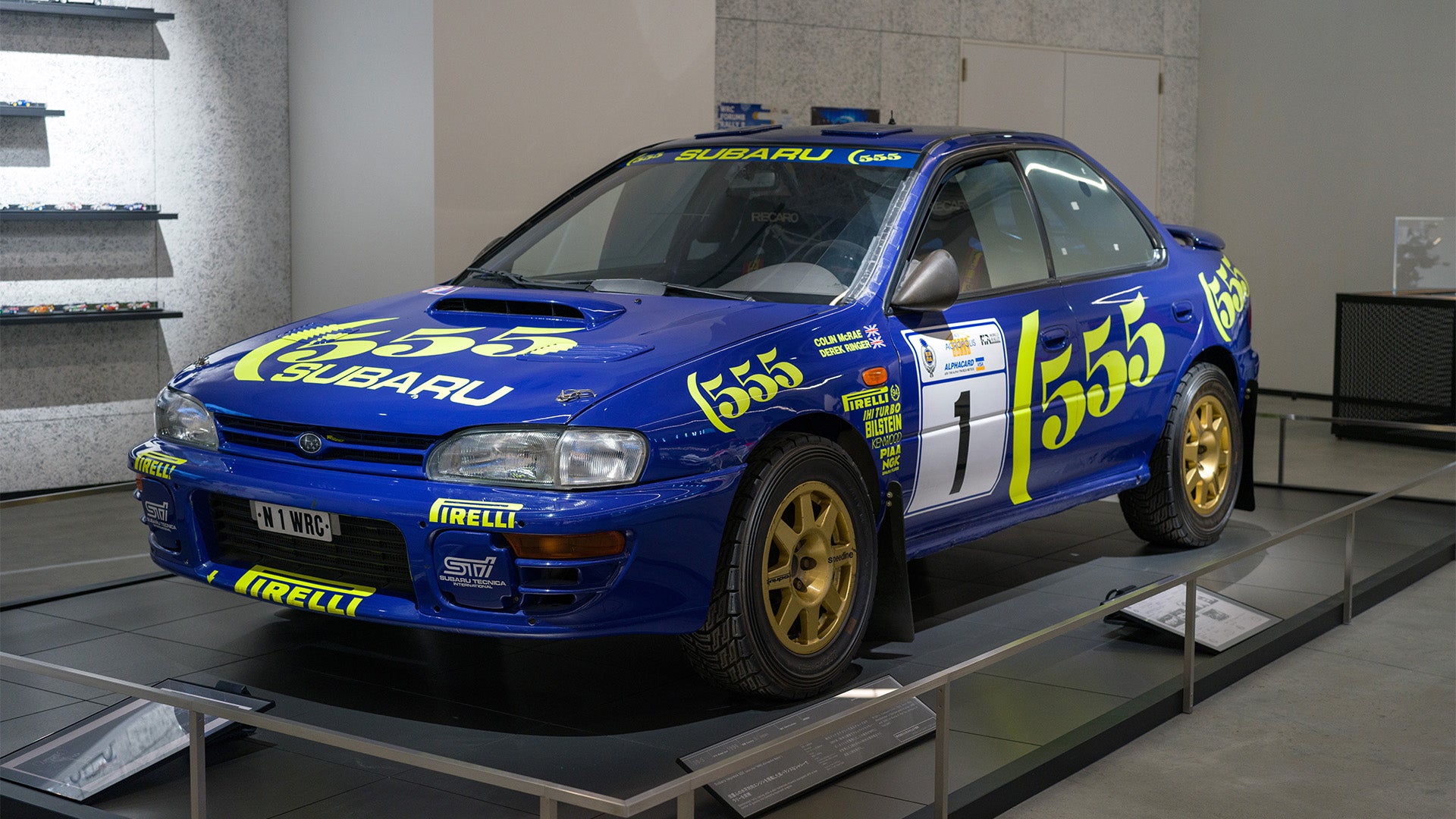
WRX

How Mileage Impacts Subaru WRX Resale Value: The Bottom Line on Depreciation

When sports car enthusiasts evaluate depreciation, the Subaru WRX consistently stands in a class of its own. While most performance compacts suffer heavy value drops during their first five years on the road, the WRX maintains exceptional residual value across the Midwest, boasting an average 5-year depreciation rate of just 35% to 42%. That means a well-maintained WRX retains nearly 60% to 65% of its initial sticker price after half a decade of real-world driving. However, mileage remains the single most influential variable affecting what buyers and dealerships are willing to pay for a used WRX. Every odometer click decreases a vehicle's monetary valuation, but the WRX curve is unique. Significant valuation changes occur at key mileage thresholds: 36,000 miles (end of the initial bumper-to-bumper warranty), 60,000 miles (expiration of factory powertrain coverage and major service milestone), and 100,000 miles (the psychological boundary for high-mileage classification). Despite these natural drops, WRX owners who maintain meticulous, documented routine service, preserve the vehicle in stock factory condition, and protect the Symmetrical All-Wheel Drive system offset high-mileage penalties far more effectively than owners of competing front-wheel-drive hot hatches. For drivers commuting along Highway 270, I-44, or Manchester Road through Chesterfield, Ladue, and St. Louis, understanding these mileage thresholds helps protect your automotive equity. Whether you plan to drive your rally-bred sedan for two years or ten, understanding how mileage interacts with vehicle history, factory warranty terms, and local market demand ensures you maximize your trade-in value when you are ready for your next vehicle at Sunset Hills Subaru. Mileage Tiers and Price Drops: What Every 10,000 Miles Costs a WRX Owner Low Mileage & Warranty Thresholds (0 to 60,000 Miles) Under 30,000 Miles (Prime Value Bracket): WRX models in this bracket command top tier pricing on the pre-owned market. Having full factory 3-year/36,000-mile bumper-to-bumper warranty remaining makes these units highly desirable to buyers seeking new car peace of mind without new car MSRP. Depreciation is minimal, typically dropping only 12% to 18% from original purchase price. 30,000 to 60,000 Miles (Powertrain Warranty Safety Zone): Crossing the 36,000-mile mark triggers a minor market adjustment as basic warranty coverage expires. However, because Subaru protects the engine and Symmetrical AWD under the 5-year/60,000-mile factory powertrain warranty, demand remains strong. Suburb commuters in Chesterfield and St. Louis trading in at this stage retain roughly 68% to 75% of original MSRP. Mid to High Mileage Tiers (60,000 to 100,000+ Miles) 60,000 to 100,000 Miles (Out-of-Warranty Transition): At 60,000 miles, powertrain warranty coverage ends and major routine service items (spark plugs, differential flushes, brake fluid) become due. This threshold typically causes a 10% to 15% valuation adjustment. However, documented factory maintenance at a dealer protects market value far better than average market trends. 100,000+ Miles (Enthusiast & High Mileage Market): Crossing six figures on the odometer reduces valuation, but the WRX maintains a passionate secondary market. Enthusiasts seeking affordable AWD performance actively buy clean, unmodded 100k+ mile WRXs. Well cared for examples still sell for 35% to 45% of original sticker, outperforming segment peers. Mileage Bracket Warranty Status Est. Residual Value % Key Valuation Factors 0 - 30,000 Miles Full Factory Warranty 82% - 88% Pristine condition, minimal wear, near-new trade value 30,000 - 60,000 Miles Powertrain Warranty Active 68% - 75% 36k warranty transition, minor tire/brake wear factor 60,000 - 100,000 Miles Out of Factory Warranty 50% - 62% Service records crucial; spark plug & fluid service history 100,000+ Miles Out of Warranty 35% - 45% Strong enthusiast demand; unmodded status commands premium Does the Subaru WRX Hold Its Value Better Than Competitors Like the Golf GTI? Subaru WRX 5-Yr Retained Value: 58% - 65% Standard Symmetrical All-Wheel Drive gives the WRX an undeniable resale advantage in Midwest markets like St. Louis. Year-round weather capability keeps pre-owned demand exceptionally consistent regardless of gas price fluctuations. VW Golf GTI 5-Yr Retained Value: 48% - 54% While refined, the front-wheel-drive Volkswagen Golf GTI suffers steeper depreciation. Higher ongoing European maintenance costs and lack of standard AWD reduce secondary market appetite in snow belt regions. Civic Si & Elantra N 5-Yr Retained Value: 50% - 57% The Honda Civic Si holds strong resale thanks to Honda brand reliability, but lacks AWD traction. The Hyundai Elantra N offers performance but experiences aggressive early year depreciation. Independent industry residual value studies consistently rank the Subaru WRX among the top sports compact cars for value retention. In the St. Louis metropolitan region, severe winter weather, changing road conditions, and hilly terrain in neighborhoods around Ladue and Sunset Hills fuel strong demand for pre-owned all-wheel-drive performance sedans. When comparing 5-year total ownership costs, higher WRX residual values frequently offset fuel expenses, giving WRX owners a lower overall cost to own than Golf GTI or Hyundai Elantra N drivers. What Is Your WRX Worth Today? Get an Instant Trade-In Valuation Curious how your current mileage, vehicle history, and local market demand affect your WRX's market value? At Sunset Hills Subaru, our appraisal experts analyze real-time St. Louis market transactions to offer top dollar for clean pre-owned WRX models. Whether you have 15,000 miles or 115,000 miles, find out what your vehicle is worth in minutes. Get Your Trade-In Value Online Are Manual Transmission Subaru WRXs Worth More on the Used Market? 6-Speed Manual Transmission Demand In the sports compact segment, manual transmissions have become increasingly rare. Approximately 75% to 80% of new WRX buyers opt for the 6-speed manual transmission. On the secondary market in enthusiast hubs across Maryland Heights and Ladue, 6-speed manual models may command a higher resale value over automatic models with similar mileage. Manual WRXs appeal to driving purists who value engagement, mechanical simplicity, and lower long-term transmission rebuild costs as odometers pass 100,000 miles. Subaru Performance Transmission (SPT) The Subaru Performance Transmission (SPT automatic/CVT) brings distinct advantages that appeal to daily commuters. Featuring paddle shifters, faster upshifts, and full integration with standard Subaru EyeSight Driver Assist Technology, automatic models attract buyers seeking performance paired with stress-free traffic handling along I-64 and Watson Road. While automatic WRX models experience slightly higher initial depreciation, clean lower-mileage units remain highly sought after by urban buyers. Stock vs. Modified: How Aftermarket Tuning Impacts High-Mileage WRX Values The Unmodded Stock Premium Among pre-owned automotive appraisers, an unmodded, factory-original Subaru WRX is referred to as a 'unicorn.' Because many WRX owners add performance parts, clean stock vehicles command top dollar regardless of odometer mileage. Buyers know an unmodified car has likely not been subjected to excessive engine boost pressure, aggressive launch control, or poor custom tuning. Keeping your WRX in 100% stock mechanical condition is the single most effective way to preserve trade-in value as mileage accumulates over 60,000 miles. The Modification Depreciation Penalty While aftermarket upgrades like ECU reflash tunes, downpipes, cold air intakes, and lowered coilover suspensions cost thousands to install, they almost universally reduce trade-in value by 15% to 30%. Dealerships and certified pre-owned buyers view heavy modifications as red flags for accelerated powertrain stress. Additionally, ECU tunes can void remaining factory powertrain warranties. If you do modify your WRX, keep all original factory parts so you can return the car to stock before valuation. What Engine and Drivetrain Specs Keep High-Mileage WRXs Running Strong? 2.4L Turbo Subaru BOXER The 2.4-liter turbocharged Subaru BOXER (FA24) engine features horizontally opposed pistons. This design creates a low center of gravity, reduces vibration, and delivers 271 horsepower and 258 lb-ft of torque. Increased displacement over prior generations reduces engine strain at highway speeds, promoting long-term reliability well past 100,000 miles. Twin-Scroll Turbo Systems Featuring an electronic wastegate and twin-scroll turbocharger layout, the WRX engine delivers near-instantaneous boost response starting low in the RPM band. Robust oil cooling passages and advanced thermal management prevent oil breakdown, ensuring turbo housing and bearing longevity across years of suburban driving. Symmetrical AWD System Unlike reactive slip-and-grip systems found in competitors, Subaru Symmetrical All-Wheel Drive distributes power continuously to all four wheels. Center differentials and active torque vectoring maintain traction while protecting drivetrain components from uneven mechanical wear. Protect Your WRX Resale Value with Certified Subaru Service in Sunset Hills The single best defense against high-mileage depreciation is a documented history of factory-certified service. Routine oil changes, tire rotations, brake fluid flushes, and differential maintenance performed by factory-trained technicians automatically upload to your vehicle history report, proving to future buyers that your WRX was cared for with genuine OEM Subaru parts. Schedule Certified WRX Maintenance Subaru WRX Maintenance Cost, Service Intervals, and 5-Year Ownership Expenses Calculating the total cost of owning a sports sedan involves far more than your monthly car payment. Over a 5-year driving period in St. Louis (assuming 12,000 to 15,000 miles driven annually), routine maintenance, insurance, fuel, and service intervals directly influence your overall financial outcome. When compared against European competitors like the Volkswagen Golf GTI, the WRX delivers impressive long-term value. Ownership Expense Category (5-Year / 60k Miles) Subaru WRX (2.4L Turbo AWD) VW Golf GTI (2.0L Turbo FWD) Estimated 5-Year Maintenance Budget $2,450 - $2,950 $3,400 - $4,100 Synthetic Oil Change Interval Every 6,000 miles / 6 months Every 10,000 miles / 12 months Spark Plug Replacement Milestone 60,000 miles 80,000 miles Differential & AWD Fluid Services Front/Rear diff flushes at 30k & 60k Front differential fluid service Estimated Annual Fuel Cost (15k mi/yr) estimated to vary by driving habits and service history (Req Premium 91+) estimated to vary by driving habits and service history (Req Premium 91+) Est. Annual Insurance Premium (St. Louis) $1,650 - $2,100 / year $1,550 - $1,950 / year WRX Maintenance Advantage Subaru replacement parts, filters, and fluid specifications are widely available and often more affordable than some European import parts. Routine 6,000-mile synthetic oil service keeps the FA24 turbocharger lubricated while keeping annual upkeep budgets reasonable for St. Louis drivers. Golf GTI Maintenance Overhead While the Golf GTI offers slightly higher fuel efficiency, European specialty labor rates and higher component costs (such as dual-clutch transmission fluid flushes and electronic sensor replacements) increase 5-year maintenance budgets more than the WRX. Which Car Offers Better Winter Driving Capability for St. Louis Drivers? WRX Symmetrical AWD Standard continuous all-wheel drive routes engine torque to all four wheels simultaneously. On icy hills in Chesterfield or slush-covered roads in Ladue during Missouri winter storms, the WRX delivers unmatched acceleration traction, vehicle stability, and confidence. Front-Wheel Drive Rivals Front-wheel drive competitors like the Golf GTI and Honda Civic Si rely on front tire traction for both steering and propulsion. In heavy Midwest snowfall, front wheels struggle for grip on inclines, requiring winter tires to match basic AWD capability. Resale Value Impact Because winter driving capability is a top priority for Midwest car buyers, pre-owned AWD vehicles sell faster and retain higher trade-in values. Used car buyers willingly pay a premium for high-mileage WRXs knowing they provide reliable year-round transportation. Starting Price, Factory Warranty Coverage, and Total 5-Year Ownership Costs When evaluating entry pricing, factory warranty protection, and overall cost to own, the Subaru WRX presents a compelling financial argument for performance-minded buyers in St. Louis and Sunset Hills. Subaru WRX Package • Starting MSRP Range: ~$32,700 - $41,500 (Base to GT / TR Trims) • Basic Warranty: 3 Years / 36,000 Miles • Powertrain Warranty: 5 Years / 60,000 Miles • Corrosion Perforation: 5 Years / Unlimited Miles • 24/7 Roadside Assistance: 3 Years / 36,000 Miles • 5-Year Retained Equity: ~58% - 65% of original price VW Golf GTI Package • Starting MSRP Range: ~$31,900 - $40,500 (S to Autobahn Trims) • Basic Warranty: 4 Years / 50,000 Miles • Powertrain Warranty: 4 Years / 50,000 Miles • Corrosion Perforation: 7 Years / 100,000 Miles • 24/7 Roadside Assistance: 3 Years / 36,000 Miles • 5-Year Retained Equity: ~48% - 54% of original price Which Service Intervals Should WRX Owners in Sunset Hills Follow? To preserve maximum trade-in value and ensure long-term mechanical reliability, follow this factory-recommended maintenance plan at Sunset Hills Subaru. Keeping precise electronic records through our certified service department gives future buyers complete confidence. Interval Milestone Core Maintenance Services Resale Impact 6,000 Miles / 6 Months Full synthetic oil & filter change, tire rotation, multi-point inspection Establishes clean vehicle history log 12,000 Miles / 12 Months Oil service, tire rotation, cabin air filter replacement, brake pad inspection Maintains tire wear and air quality records 30,000 Miles / 30 Months Engine air filter, brake fluid replacement, front & rear differential fluid inspection Critical milestone for mid-life warranty valuation 60,000 Miles / 60 Months Spark plug replacement, differential fluid flush, transmission fluid service, coolant inspection Protects powertrain health past factory warranty View Current Service and Parts Specials Explore Pre-Owned WRX Inventory or Value Your Trade at Sunset Hills Subaru Whether you are looking to purchase a new rally-bred WRX, trade in your current high-mileage vehicle, or schedule routine maintenance to protect your car's resale value, Sunset Hills Subaru is your trusted St. Louis area resource. Conveniently located at 10100 Watson Rd, Sunset Hills, MO 63127, our dealership provides expert appraisals, factory-trained technicians, and an extensive lineup of new and certified pre-owned Subaru vehicles. Ready to experience the performance and strong resale value retention of the Subaru WRX for yourself? Contact our team today at (314) 476-9638 or click below to explore our current inventory. Browse New Subaru WRX Inventory Subaru WRX Resale Value Insights in Sunset Hills MO | Sunset Hills Subaru
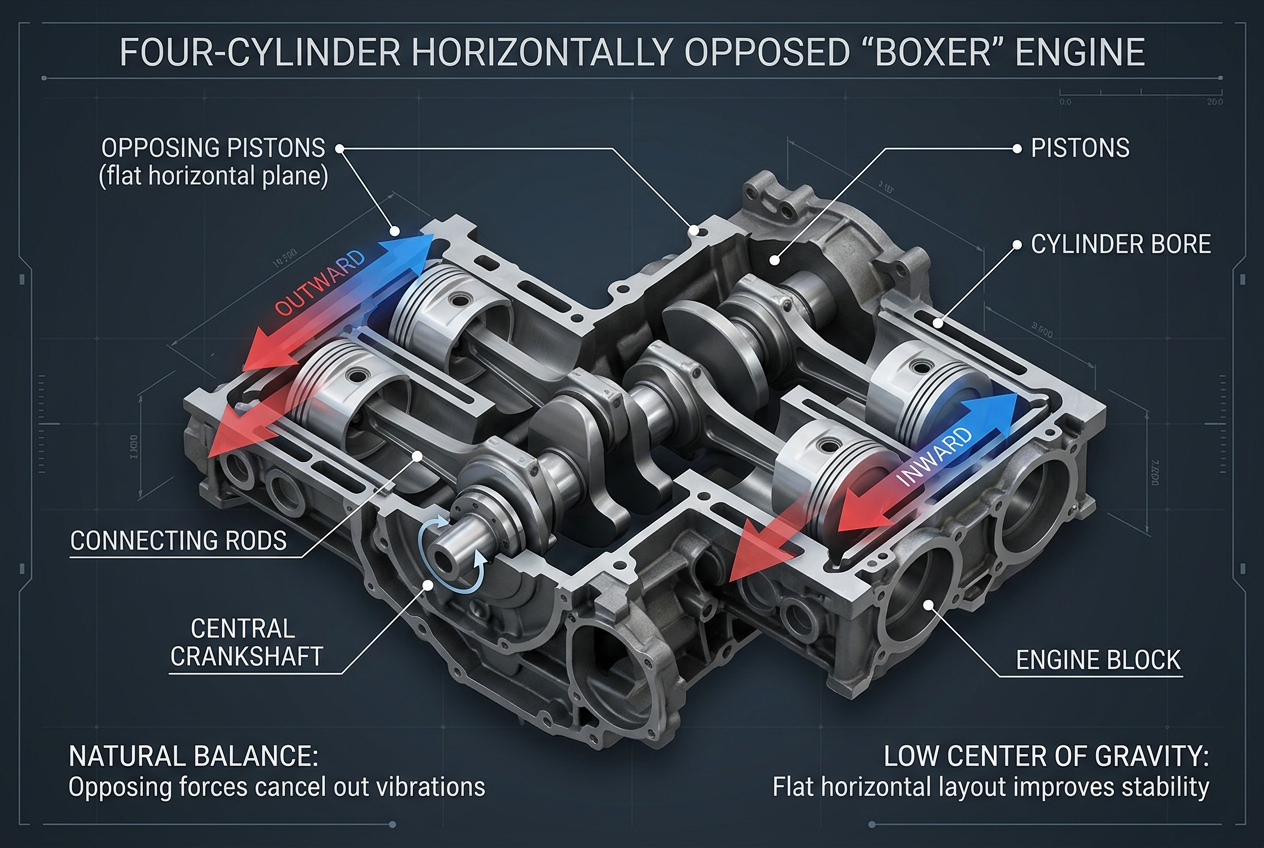
Subaru Forester Line Up

Best and Worst Subaru Forester Model Years: Quick Reliability Verdict

When evaluating compact crossover SUVs on the pre-owned market, few vehicles evoke as much loyalty as the Subaru Forester. Celebrated for its standard Symmetrical All-Wheel Drive, expansive outward visibility, and rugged practical versatility, the Forester has earned a legendary status among drivers across St. Louis County. However, navigating the pre-owned market requires a nuanced understanding of engine developments, transmission generational upgrades, and historical factory updates. Not all model years are created equal, and choosing the right production era makes the difference between hundreds of thousands of trouble-free miles and unexpected workshop visits. To deliver a clear, high-level summary for shoppers at Sunset Hills Subaru in Sunset Hills, MO, automotive mechanical records and long-term consumer testing data place Forester model years into three distinct tiers: 1. Top Priority Tier (2019–2023 Model Years): Built on the high-rigidity Subaru Global Platform (SGP), the fifth-generation Forester represents the gold standard of modern crossover reliability. Featuring a thoroughly re-engineered 2.5-liter FB25 direct-injection BOXER engine, enhanced Lineartronic Continuously Variable Transmission (CVT) thermal control, and standard EyeSight Driver Assist Safety Technology, these models register remarkably low mechanical failure rates and consistently achieve top-tier reliability rankings. 2. Strong Value Tier (2016–2018 Model Years): Representing the refined tail end of the fourth generation, 2016 through 2018 Foresters resolved the early CVT shudder issues and oil consumption anomalies that plagued earlier production runs. Equipped with upgraded interior acoustics, updated Starlink infotainment, and modern multi-layer steel (MLS) head gasket engineering, these vehicles offer an ideal balance of modern safety, strong durability, and attractive pre-owned pricing. 3. Exercise Caution Tier (2011–2015 Model Years): Early fourth-generation models and late third-generation models require detailed mechanical scrutiny. The introduction of the first-generation FB25 engine in 2011 introduced oil control ring tension problems that led to excessive oil consumption. Additionally, 2014 and 2015 models marked the debut of the Lineartronic CVT in the Forester line, which experienced early torque converter clutch shudder and thermal expansion issues that prompted factory extended warranties. Model Year Range Reliability Tier Engine & Transmission Rating Primary Market Recommendation 2019–2023 Highest Recommendation FB25 Direct Injection / SGP Platform - Excellent Prioritize CPO; outstanding longevity & safety 2016–2018 Highly Recommended FB25 Multi-Port / Refined CVT - Solid Best budget-to-value sweet spot under 100k miles 2011–2015 Proceed with Inspection Early FB25 / First-Gen CVT - Moderate Risk Require detailed service records & engine test 2005–2010 Legacy Era EJ25 Phase II / 4-Speed Auto - High Maintenance Verify head gasket replacement status prior to purchase Why Automotive Experts Advise Avoiding 2011 to 2015 Subaru Forester Models Understanding why automotive engineers and consumer protection publications flag the 2011 through 2015 model years requires examining the major powertrain transitions Subaru executed during this era. In 2011, Subaru replaced the long-standing EJ25 single-overhead-cam (SOHC) engine with the all-new FB25 dual-overhead-cam (DOHC) engine. Designed to boost fuel efficiency and decrease internal friction, early iterations of the FB25 engine featured lightened piston rings with reduced tension. In real-world suburban driving—such as stop-and-go commutes along Watson Road or quick highway sprints on I-270—these low-tension oil control rings allowed engine oil to pass into the combustion chamber. Owners frequently reported consuming a quart of engine oil every 1,000 to 1,500 miles. When oil levels dropped undetected between maintenance intervals, starvation led to premature timing chain wear, camshaft scoring, and catastrophic engine failure. Subaru subsequently issued technical service bulletins and extended factory oil consumption warranties to 10 years or 100,000 miles, but many of these vehicles have now aged past that coverage window. The second major hurdle arrived with the 2014 redesign, which marked the transition from a traditional 4-speed automatic transmission to the Lineartronic Continuously Variable Transmission (CVT). First-generation CVT units installed in 2014 and 2015 Foresters experienced torque converter clutch binding, fluid breakdown under high thermal loads, and noticeable shuddering during low-speed acceleration. To address widespread customer complaints, Subaru extended the transmission control module warranty for select 2014-2015 models. Furthermore, 2014 models suffered from thermal expansion issues affecting air conditioning compressors and premature front suspension lower control arm bushing tears. While diligent maintenance can mitigate some of these concerns, buying a 2011–2015 Forester without verified repair records exposes owners to elevated ownership costs. Understanding Head Gasket Issues in Older Foresters and the 2014+ Engine Redesign For decades, the most persistent topic in pre-owned Subaru discussions centered on head gasket integrity. To understand why modern Foresters no longer suffer from this historical vulnerability, it helps to review how Subaru solved a complex mechanical challenge through advanced material science and architectural engineering. From the late 1990s through 2009 (and continuing into select 2010 models), Subaru utilized the EJ25 2.5-liter naturally aspirated engine. This engine design relied on single-layer graphite-coated head gaskets. Because the BOXER layout positions cylinder banks horizontally, coolant and engine oil sit constantly against the lower gasket seams when the vehicle is parked. Over time—typically between 90,000 and 125,000 miles—the protective graphite coating corroded due to electrolysis and thermal cycling, causing external oil or coolant weeping behind the exhaust manifolds. How the 2014+ Redesign Permanently Solved the Head Gasket Dilemma: 1. Multi-Layer Steel (MLS) Construction: In the final years of the EJ25 and across all FB-series engines, Subaru transitioned exclusively to multi-layer steel head gaskets coated in advanced fluoroelastomer materials. The steel layers provide spring-like resilience that maintains structural sealing despite aluminum block expansion. 2. Redesigned Engine Block Cooling Passages: The FB25 engine introduced separate cooling circuits for the cylinder block and cylinder head. This closed-deck cooling jacket layout optimizes heat dissipation, preventing localized hot spots that previously caused head warping. 3. Chain-Driven DOHC System: By eliminating the rubber timing belt in favor of maintenance-free timing chains, engine timing covers and head mating surfaces were structurally reinforced, eliminating flex under load. If you are inspecting a 2013 or earlier Forester, check for damp oil residue along the lower head seams during an underbody lift inspection. However, for 2014 and newer models available at pre-owned centers like Sunset Hills Subaru, head gasket deterioration has been effectively eliminated as a systematic concern. How Consumer Reliability Ratings Rank the 2019 Through 2023 Subaru Forester Models Subaru Global Platform Introduced for the Forester in 2019, the Subaru Global Platform increased chassis rigidity by 40% to 70%. This structural evolution dramatically minimized cabin vibration, improved crash test safety ratings, and reduced body flexing—extending the lifespan of suspension components and door seals. EyeSight & Tech Maturity Fifth-generation Foresters featured stereoscopic EyeSight cameras mounted securely inside the windshield. Integrated driver assistance features like pre-collision braking and adaptive cruise control consistently earned top IIHS Safety Pick+ designations with virtually zero electronic glitch reports. Direct-Injection Refinement With over 90% new parts compared to its predecessor, the direct-injected 2.5L engine achieved an optimal balance of 182 horsepower and exceptional fuel efficiency. Consumer Reports ranked the 2019–2023 Forester among the top three most reliable compact crossovers year after year. Explore Pre-Owned Forester Inventory What Is the Price Range for a Reliable Used Subaru Forester Under 100,000 Miles? Navigating real-world pre-owned pricing requires evaluating mileage thresholds against generation upgrades. For mid-Missouri and St. Louis area buyers seeking a reliable Forester with under 100,000 miles, the market generally divides into two key pricing windows: 1. Refined 4th Generation (2016–2018): Typically priced at market-based amounts depending on trim level (Base, Premium, Limited, or Touring) and odometer reading. Models in this tier with 65,000 to 85,000 miles represent exceptional value for budget-conscious families. They offer standard AWD, strong fuel economy, and proven mechanical components at a comfortable price point. 2. 5th Generation Models (2019–2023): Generally priced between $20,500 and $28,500. Lower-mileage pre-owned units (30,000 to 50,000 miles) and Certified Pre-Owned (CPO) examples command the upper end of this spectrum. Investing in a 5th generation model grants access to updated frame geometry, Apple CarPlay/Android Auto connectivity, and advanced EyeSight capabilities. At Sunset Hills Subaru, every pre-owned vehicle under 100,000 miles undergoes rigorous safety checks, ensuring that your investment delivers total peace of mind regardless of the price tier you select. Generation / Years Typical Mileage Range Estimated Market Price Range Key Recommended Features 4th Gen (2016–2018) 60,000 – 95,000 miles $14,500 – $19,500 X-Mode, Heated Seats, Rear Camera 5th Gen (2019–2021) 30,000 – 65,000 miles $20,500 – $25,000 SGP Platform, Standard EyeSight, Starlink 5th Gen (2022–2023) 15,000 – 35,000 miles $24,500 – $28,500 Enhanced EyeSight, Wilderness Trim option How Does a Used Subaru Forester Compare to Competitors Like the RAV4 and CR-V? When cross-shopping the pre-owned compact crossover segment, the Subaru Forester frequently goes head-to-head with the Toyota RAV4 and Honda CR-V. While all three models enjoy strong reputations for reliability, key mechanical and design differences set the Forester apart for Midwest drivers. Subaru Forester Standard Symmetrical AWD: Permanently engaged mechanical AWD delivers continuous power to all four wheels. Ground Clearance: Class-leading 8.7 inches standard (9.2 inches on Wilderness). Visibility: Ultra-low beltline provides unmatched outward vision. Toyota RAV4 AWD System: Front-wheel-drive slip-and-grip system (AWD is extra cost on lower trims). Ground Clearance: 8.4 inches on standard trims. Cargo & Access: Narrower rear hatch opening compared to Forester's wide square portal. Honda CR-V AWD System: Real-Time AWD system sends torque rearward only when front wheels slip. Ground Clearance: 7.8 to 8.2 inches. Engine Tech: 1.5L Turbocharged engine in 2017+ models experienced early oil dilution concerns in cold weather. Feature Comparison Subaru Forester (2019-2023) Toyota RAV4 (2019-2023) Honda CR-V (2017-2022) Standard Drivetrain Symmetrical All-Wheel Drive Front-Wheel Drive (AWD optional) Front-Wheel Drive (AWD optional) Ground Clearance 8.7 Inches 8.4 Inches 7.8 Inches EPA Highway MPG (AWD) Up to 33 MPG Up to 33 MPG Up to 32 MPG Rear Cargo Opening Width 48.0 Inches 41.5 Inches 43.2 Inches Which Used Subaru Forester Model Years Are Worth Prioritizing and Inspection Checklist When evaluating a pre-owned Forester—whether buying privately or shopping at a dealership—performing a systematic inspection ensures long-term satisfaction. Experienced technicians recommend checking five critical focus areas before finalizing any transaction: 1. CVT Fluid Quality & Pan Inspection: Verify that the transmission fluid has been serviced or inspected every 30,000 to 45,000 miles. During an underbody lift inspection, check the transmission oil pan seam for signs of weeping or fluid discoloration. Smooth, shudder-free engagement from a stop is mandatory. 2. Front Lower Control Arm Bushings: Subaru uses large fluid-filled rearward bushings on the front lower control arms to absorb road vibrations. Inspect these rubber bushings for cracking or fluid leakage. Worn bushings manifest as steering wheel shimmy under light braking at 55–65 mph. 3. Rear Wheel Bearings & Hub Assemblies: Listen for a low-pitched humming or roaring noise between 40 and 60 mph. Rear wheel bearing wear is a common maintenance item across all compact crossovers around 75,000 to 100,000 miles. 4. Oil Consumption & Exhaust Tip Inspection: On 2011–2015 models, pull the dipstick to check current oil level and clarity. Inspect the exhaust inner pipe for excessive dry carbon build-up or oily residue that signals oil blow-by. 5. All-Wheel Drive Torque Bind Test: Perform a low-speed tight figure-eight turn in a parking lot. If the vehicle stutters, hops, or feels heavy during slow tight turns, the center multi-plate transfer clutch (solenoid C) may be binding due to neglected differential fluid services. What Criteria Must a Subaru Pass to Qualify for the CPO Program? For buyers desiring total peace of mind, the Subaru Certified Pre-Owned (CPO) program eliminates the guesswork of pre-owned shopping. Not every used Forester qualifies for certification. To earn the CPO badge at Sunset Hills Subaru, a candidate vehicle must pass strict eligibility thresholds: • Age & Mileage Limits: Must be from the current or past 5 model years and have under 80,000 original miles on the odometer. • Clean Vehicle History: Must possess a clean title and CARFAX report free of structural damage, flood history, or major accident disclosures. • 152-Point Mechanical & Safety Inspection: Conducted by factory-trained technicians, covering engine compression, CVT operation, brake pad thickness (minimum 50% remaining), tire tread depth, and EyeSight calibration. Any component that fails inspection must be reconditioned or replaced with genuine OEM Subaru parts. CPO models typically carry a modest $1,000 to $1,500 premium over non-certified inventory, but the inclusion of factory powertrain protection far outweighs this upfront difference. View Certified Pre-Owned Subaru Forester Inventory What Warranty Coverage Comes with CPO, and Can You Extend Powertrain Options? Every Certified Pre-Owned Subaru Forester comes standard with a factory-backed 7-year / 100,000-mile Powertrain Plan starting from the original in-service date. This coverage features a $0 deductible for covered repairs at any authorized Subaru retail facility across the nation. What Is Covered Under CPO Powertrain? • Engine assembly, internal lubricated parts, timing chains, water pump, and valve covers. • Lineartronic CVT assembly, torque converter, and electronic transmission control modules. • Symmetrical AWD transfer case, front/rear differentials, driveshaft, and axle shafts. Extending Your Coverage Options (Subaru Added Security): For complete comprehensive bumper-to-bumper protection, drivers commuting from Ladue, Chesterfield, or Sunset Hills can upgrade to official Subaru Added Security Wrap plans: 1. Classic Wrap Plan: Adds coverage for air conditioning systems, electrical components, suspension, fuel system, and cooling assemblies. 2. Gold Plus Wrap Plan: Delivers full comprehensive bumper-to-bumper coverage matching factory new-vehicle protection, plus 24/7 Roadside Assistance, towing reimbursement, rental car allowances, and trip interruption protection. How Well Does the Subaru Forester Hold Its Resale Value Over Five to Ten Years? Low Depreciation Curve According to ALG and Kelley Blue Book residual value awards, the Subaru Forester retains a higher percentage of its original value after 36 and 60 months than nearly any competitor in the compact SUV segment, outperforming segment averages by 5% to 8%. High Local St. Louis Demand In the St. Louis regional market, pre-owned AWD crossovers experience steady demand year-round. Autumn and winter months drive particular interest in well-maintained Foresters, maintaining strong trade-in valuations at local dealerships. 96% Still on the Road Experian automotive data confirms that over 96% of Subaru Forester vehicles sold in the last ten years are still on the road today. This mechanical durability reinforces strong resale equity when owners choose to trade up. Typical Financing Rates, Monthly Terms, and Local Buying Options Securing competitive loan terms is a key milestone when purchasing a pre-owned Forester. Through Subaru Motors Finance and local St. Louis lending partners, qualified buyers at Sunset Hills Subaru can take advantage of specialized Certified Pre-Owned interest rates that often undercut standard used car APRs. • CPO Financing Options: Qualified buyers can access reduced rates on select CPO Forester models for terms ranging from 36 to 72 months. • Flexible Term Options: Tailor your loan structure from 48-month plans for lower total interest to 72-month terms for manageable monthly payments. • Trade-In Equity Integration: Applying trade equity from your current vehicle directly lowers your loan principal and state sales tax exposure in Missouri. Our finance department specialists work directly with customers across Kirkwood, Webster Groves, and Chesterfield to craft personalized financing packages aligned with your monthly budget. Get Approved for Used Vehicle Financing Matching Your Forester Model Year to St. Louis Weather and Suburban Commutes Living in the greater St. Louis metro area presents diverse driving demands. From rapid winter snowfalls along Highway 141 to sweltering summer heat on I-44, the Subaru Forester is engineered to handle midwestern weather swings with ease. Why Symmetrical AWD Matters in Sunset Hills: Unlike reactive front-wheel-drive systems that slip before sending power back, Subaru's continuous transfer clutch distributes torque to all four wheels simultaneously. When unexpected sleet coats steep suburban inclines in Maryland Heights or Chesterfield, the Forester maintains steady lateral stability. X-Mode & Hill Descent Control: Available on 2014 and newer models, dual-mode X-Mode optimizes engine output, CVT gear ratios, and VDC braking parameters to traverse deep snow or slick mud seamlessly. For drivers navigating winter weather in fall 2026 and beyond, prioritizing a 2016–2023 Forester equipped with X-Mode ensures supreme winter confidence. Find Your Reliable Used or Certified Pre-Owned Subaru Forester at Sunset Hills Subaru Ready to experience the exceptional visibility, safety, and all-weather capability of a pre-owned Subaru Forester? Whether you are evaluating low-mileage 5th generation models or seeking a value-focused 2016–2018 tier, our team at Sunset Hills Subaru (10100 Watson Rd, Sunset Hills, MO 63127) is dedicated to helping you select the perfect vehicle. Call our friendly sales staff today at (314) 476-9638 or schedule a personal test drive online. Calculate Your Trade-In Value Now Subaru Forester Reliability Guide in Sunset Hills MO | Sunset Hills Subaru
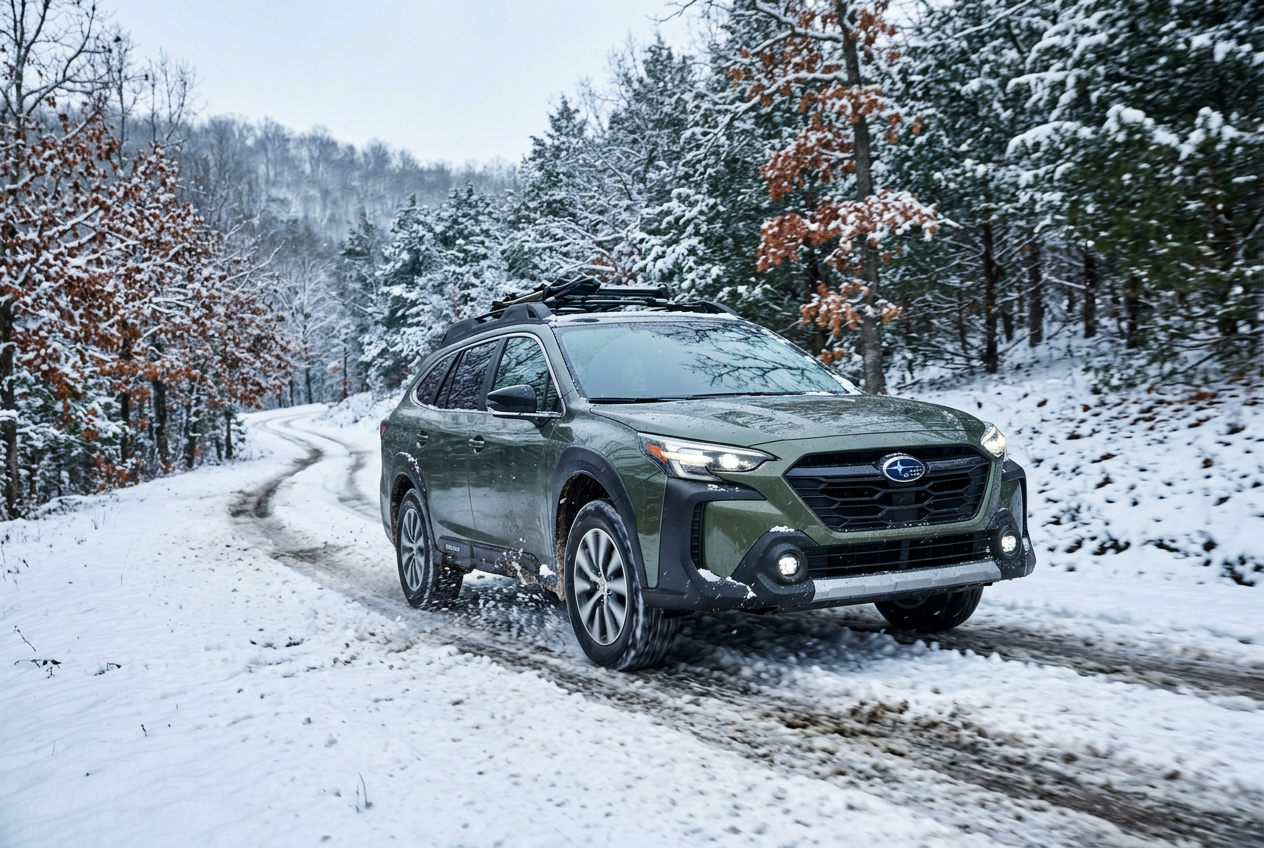
2025 Subaru Legacy

Which Midsize Sedan Retains Higher Resale Value After 5 Years?

Which Midsize Sedan Retains Higher Resale Value After 5 Years? When purchasing a midsize sedan, initial purchase price and fuel efficiency are only part of the financial equation. The true cost of vehicle ownership is heavily dictated by five-year depreciation—the difference between what you pay today and what the car is worth when you trade it in or sell it half a decade down the road. According to long-term automotive residual data from ALG (Automotive Lease Guide) and Kelley Blue Book (KBB), the Subaru Legacy compares favorably with midsize competitors like the Toyota Camry, Honda Accord, and Nissan Altima in retaining its original value over a five-year horizon. While the Camry and Accord have long maintained reputations for reliability, the Subaru Legacy holds a unique financial advantage in suburban markets like St. Louis and Chesterfield. Standard Symmetrical All-Wheel Drive (AWD), exceptional safety scores from the IIHS, and demonstrably lower average repair costs over time elevate secondhand demand. When winter weather hits Eastern Missouri, pre-owned buyers actively seek out all-weather sedans, directly insulating Legacy trade-in equity against steep market drops. Whether you plan to finance a new sedan or lease for three to five years, choosing a vehicle with industry-leading resale retention preserves thousands of dollars in equity. Explore our current New Subaru Legacy Inventory to discover how engineering excellence translates directly into long-term financial smarts. Explore New Subaru Legacy Inventory 5-Year Midsize Sedan Depreciation Comparison: Subaru Legacy vs. Camry, Accord, and Altima To understand why the Subaru Legacy dominates five-year value retention, it helps to examine empirical residual figures across the midsize segment. Depreciation accounts for nearly 40% to 50% of total five-year vehicle ownership expenses. A sedan that retains even 5% to 8% more of its sticker price after 60 months puts thousands of dollars back into your wallet when it is time to upgrade. Midsize Sedan Model Standard Drivetrain Est. 5-Year Retained Value % 5-Year Depreciation Loss (on $30k MSRP) Regional Used Demand (MO) Subaru Legacy Symmetrical AWD 54.5% - 57.2% ~$12,840 Very High (AWD Premium) Toyota Camry Front-Wheel Drive (FWD) 51.0% - 53.8% ~$14,100 High Honda Accord Front-Wheel Drive (FWD) 50.2% - 52.5% ~$14,490 High Nissan Altima Front-Wheel Drive (FWD) 42.0% - 45.1% ~$16,800 Moderate Why Retained Equity Matters in St. Louis Initial purchase price is only the starting point. Midsize sedans equipped with standard Front-Wheel Drive often experience steeper value cliffs once they reach 60,000 to 80,000 miles. In Missouri, where seasonal transitions bring freezing rain, slush, and heavy summer downpours, pre-owned buyers specifically search out All-Wheel Drive models. Because standard AWD is built into every Subaru Legacy (excluding specific niche specs), second-hand buyers are willing to pay a premium. This elevated demand keeps trade-in valuations remarkably high at dealerships across Sunset Hills and Ladue. When balancing your initial price tag against retained trade-in equity, the Legacy regularly proves to be the most financially prudent choice in its class. Furthermore, Subaru's controlled production volumes prevent market saturation. Unlike fleet-heavy sedans like the Nissan Altima, the Legacy maintains tighter pre-owned inventory supplies, ensuring used car managers offer top dollar when you decide to upgrade. How Symmetrical All-Wheel Drive and Safety Ratings Protect Legacy Resale Value Symmetrical AWD Engineering Unlike slip-and-grip AWD systems found in competing vehicles that only engage rear wheels after traction is lost, Subaru Symmetrical All-Wheel Drive actively routes power continuously to all four wheels. Placed along the vehicle's centerline, this balanced powertrain provides exceptional stability, preventing mechanical wear and tear associated with abrupt torque shifts and maintaining long-term hardware durability. Top Safety Pick+ Legacy Safety credentials heavily dictate pre-owned vehicle desirability. The Subaru Legacy consistently earns the Insurance Institute for Highway Safety (IIHS) Top Safety Pick+ rating—the industry standard for crashworthiness. Engineered with Subaru’s Global Platform and Ring-Shaped Reinforcement Frame, the Legacy protects occupants through advanced crumple zones and rigid cabin structural integrity. Pre-Owned Market Impact When family buyers and daily commuters search the used market, safety and all-weather traction are non-negotiable priorities. Secondhand shoppers willingly pay higher market rates for a vehicle with proven structural safety records and year-round confidence. This structural confidence creates a resilient floor for trade-in values at five years. What Driver Assistance and Safety Systems Come Standard on the Subaru Legacy? Every modern Subaru Legacy comes standard with Subaru EyeSight Driver Assist Technology, a suite of advanced active safety systems that act like an extra pair of eyes on the road. Unlike competitor sedans that locked these features behind expensive trim upgrades in earlier model years, Subaru democratized active safety across the entire Legacy lineup. Standard EyeSight capabilities include: • Pre-Collision Braking System: Applies full braking force in emergency situations to prevent or mitigate frontal impacts. • Advanced Adaptive Cruise Control with Lane Centering: Maintains preset distances from traffic while keeping the sedan centered in its lane on highways like I-64 and I-270. • Lane Departure and Sway Warning: Monitors lane markings and alerts drivers if the vehicle drifts unintentionally. • Pre-Collision Throttle Management: Cuts power if an obstacle is detected directly ahead to prevent accidental acceleration. By drastically reducing minor fender benders and severe collisions, standard EyeSight technology helps maintain clean Vehicle History Reports (CARFAX). A used sedan with a clean, collision-free history commands significantly higher trade-in values after 5 years. Pre-owned buyers prioritize modern safety tech. Knowing that a 5-year-old Legacy carries the exact same core active safety hardware as brand-new models makes pre-owned Legacy inventory highly sought after across Missouri. Browse New Subaru Inventory Understanding Total Cost of Ownership: Subaru Legacy Maintenance Costs vs. Resale Gain Evaluating vehicle economics strictly by initial cost misses the bigger picture. True financial intelligence lies in calculating total cost of ownership (TCO)—balancing routine maintenance costs against five-year retained equity. A car with slightly higher routine service requirements can easily yield superior net wealth if its depreciation curve is dramatically flatter. Over a 5-year or 60,000-mile period, average Subaru Legacy maintenance costs range between $1,800 and $2,400 total (roughly $360 to $480 per year for standard scheduled servicing). While all-wheel drive models require differential fluid checks and balanced tire wear, the Legacy’s unexpected repair frequency is statistically lower than the overall industry average. Because major powertrain failures are rare when factory guidelines are met, Legacy owners avoid costly out-of-pocket mechanical repairs. When you combine low unexpected maintenance expenses with a 54%+ 5-year residual value retention, the net cost of owning a Legacy is significantly lower than owning FWD competitors that depreciate by 50% to 58% over the same timeframe. Ownership Expense Category Subaru Legacy (5-Year Est.) Average FWD Midsize Sedan Financial Advantage 5-Year Maintenance & Servicing $2,100 $1,950 -$150 (AWD Fluid/Tires) 5-Year Unexpected Repairs $650 $1,100 +$450 (High Build Reliability) 5-Year Retained Equity ($30k vehicle) $16,800 $14,100 +$2,700 (Flatter Depreciation) Net Financial Impact +$14,050 Retained Value +$11,050 Retained Value +$3,000 Legacy Advantage Recommended Subaru Legacy Maintenance Schedule and DIY Care Tips Factory Intervals Subaru recommends routine maintenance every 6,000 miles or 6 months (whichever comes first). Key milestones include: • 6,000 Miles: Synthetic oil change, tire rotation, safety inspection. • 12,000 Miles: Cabin air filter replacement, brake system check. • 30,000 Miles: Engine air filter, brake fluid flush, inspection of AWD differential fluids. • 60,000 Miles: Spark plug replacement (BOXER engine service) and transmission fluid inspection. 0W-20 Synthetic Oil What motor oil weight is recommended for the Subaru Legacy? Standard naturally aspirated 2.5L BOXER engines require 0W-20 synthetic motor oil. Synthetic oil optimizes cold-weather startup lubrication during Missouri winters and reduces internal friction. DIY vs. Dealer Care Can basic maintenance on a Subaru Legacy be performed at home? Yes! Budget-conscious owners can easily replace cabin air filters, engine air filters, wiper blades, and check fluid levels. However, spark plug swaps on horizontal BOXER engines and EyeSight recalibrations require specialized dealer tools best handled at factory service centers. What Do Routine and Major Subaru Legacy Services Cost Around Sunset Hills, Missouri? Understanding routine service pricing around St. Louis helps owners budget effectively. Around Sunset Hills, MO, typical dealership service costs align with the following ranges: • Standard Minor Service (6k / 18k / 24k miles): $85 - $130 (Includes synthetic oil, OEM filter, tire rotation, and multi-point inspection). • 30,000-Mile Major Service: $350 - $490 (Includes engine/cabin filters, brake fluid exchange, differential inspection, and fuel system service). • 60,000-Mile Major Service: $650 - $890 (Adds spark plug replacement, complete brake fluid flush, and transmission fluid diagnostics). • 90,000-Mile Service: $450 - $650 (Covers comprehensive fluid exchanges, belt inspection, and mechanical diagnostics). Does the Subaru factory warranty cover routine maintenance costs? The standard Subaru 3-year/36,000-mile bumper-to-bumper warranty and 5-year/60,000-mile powertrain warranty cover manufacturing defects and mechanical repairs, but do not cover wear-and-tear routine maintenance like oil changes or brake pads. However, completing scheduled maintenance at authorized facilities ensures full warranty protection without claim disputes. Why Dealer Maintenance Records Boost Resale Equity When trading in your sedan at Sunset Hills Subaru, having a clean, digital maintenance history logged through factory-certified service departments adds tangible value. Pre-owned vehicle buyers pay top dollar for vehicles with documented OEM upkeep. Be sure to review our Current Service and Parts Information before booking your appointment to maximize savings on routine care. Schedule Service and Diagnostics Why All-Wheel Drive and CVT Fluid Service Intervals Impact Long-Term Expenses Why All-Wheel Drive Increases Long-Term Expenses Slightly Operating a continuously engaged Symmetrical AWD system adds minor service requirements compared to simple FWD layouts. Front and rear differentials require gear oil inspections and drain/fills roughly every 30,000 to 60,000 miles. Additionally, because Subaru’s AWD system relies on identical wheel rotation speeds, tire tread depths must match within 2/32nds of an inch across all four tires. Uneven tire wear can strain the central transfer clutch, making routine tire rotations crucial. CVT Fluid Service Requirements How often does a Subaru Legacy Lineartronic Continuously Variable Transmission (CVT) require fluid service? Subaru officially considers CVT fluid a 'lifetime' fill under normal driving conditions, but factory technicians strongly advise inspecting CVT fluid every 30,000 miles and performing a complete fluid drain/fill every 60,000 to 90,000 miles—especially under 'severe' driving conditions such as frequent stop-and-go commuting around St. Louis or towing. Proactive CVT fluid changes preserve transmission shift performance, protect internal steel chains, and prevent catastrophic repair costs down the road. Common Repairs, EyeSight Recalibration, and Legacy XT Fuel Requirements Most Common Repairs What are the most common repair costs for a Subaru Legacy beyond 80,000 miles? Typical maintenance items include wheel bearing replacements ($350-$500 per hub), front lower control arm bushings ($300-$450), and brake rotor replacement ($400-$600 per axle). Engine components like timing chains in modern BOXER engines are designed to last the full vehicle lifespan. EyeSight Recalibration Does Subaru EyeSight recalibration increase windshield replacement costs? Yes. Replacing a windshield on an EyeSight-equipped Legacy requires precision optical recalibration of the dual stereo cameras ($250-$450 fee). However, most auto insurance policies cover this under glass coverage, and factory recalibration ensures active safety features function accurately. Legacy XT Fuel Specs Does the turbocharged Subaru Legacy XT require premium fuel? No! The 2.4L Turbocharged Subaru BOXER engine (260 hp) is engineered to run efficiently on 87-octane regular unleaded gasoline. You enjoy sports-sedan acceleration without being forced to pay premium fuel prices at St. Louis gas pumps. Why Chesterfield and Ladue Commuters Choose the Legacy for Suburban Reliability Daily commuting across the St. Louis metropolitan area presents diverse challenges—from tight merges on Highway 141 to winter snow accumulation along I-64 and I-270. Drivers from Chesterfield, Ladue, Maryland Heights, and Kirkwood choose the Subaru Legacy because it blends midsize sedan luxury with robust foul-weather capability. Inside, the Legacy boasts acoustic windshield glass, whisper-quiet cabin insulation, and standard Apple CarPlay / Android Auto integration. Unlike bulky SUVs that sacrifice highway fuel economy, the Legacy delivers up to 35 MPG highway while maintaining unwavering all-wheel drive traction. When local drivers are ready to transition into a new car after five years, the strong regional reputation of Subaru in St. Louis County means certified dealerships and private buyers alike compete for pre-owned Legacy stock. Protecting your resale equity begins with choosing a car built for Missouri roads. Get Your Trade-In Value Practical Checklist to Maximize Your Sedan's Trade-In Value After 5 Years To guarantee your Subaru Legacy commands top-tier residual pricing when it comes time to sell or trade, follow these five actionable steps throughout your ownership term: 1. Maintain Detailed Maintenance Records: Organize digital or physical receipts for every oil change, brake service, and tire rotation. Comprehensive service logs prove diligent ownership to dealership appraisers. 2. Demand Genuine Subaru OEM Parts: Insist on genuine Subaru filters, fluids, and brake pads during routine maintenance to protect factory mechanical standards. 3. Protect Interior Upholstery: Utilize floor mats, clean leather conditioning products, and fix small spills immediately to prevent permanent stains or sun fading. 4. Address Minor Body Blemishes Promptly: Fix small paint chips or dented door dings early to prevent rust formation in humid Missouri summers. 5. Utilize Online Appraisal Tools Early: Before walking into a showroom, use an instant online appraisal tool to establish a firm baseline valuation for your vehicle. Value Your Trade and Explore Legacy Inventory at Sunset Hills Subaru Ready to experience how the Subaru Legacy combines strong 5-year resale value retention, confident all-weather stability, and premium comfort? The team at Sunset Hills Subaru is here to assist you through every step of your automotive journey. Whether you are looking to appraise your current vehicle using our Get your value trade portal, explore competitive auto financing options with our experts via Get approved for financing, or test drive a new Legacy, we deliver an uncompromised dealership experience. Visit us today at 10100 Watson Rd, Sunset Hills, MO 63127 or reach our friendly sales team directly by phone at Call (314) 476-9638. Conveniently located just off I-270, we are proud to serve drivers from St. Louis, Chesterfield, Ladue, and beyond. Click to Get Directions to Sunset Hills Subaru and discover the Subaru difference! Subaru Legacy Resale Value in Sunset Hills MO | Sunset Hills Subaru
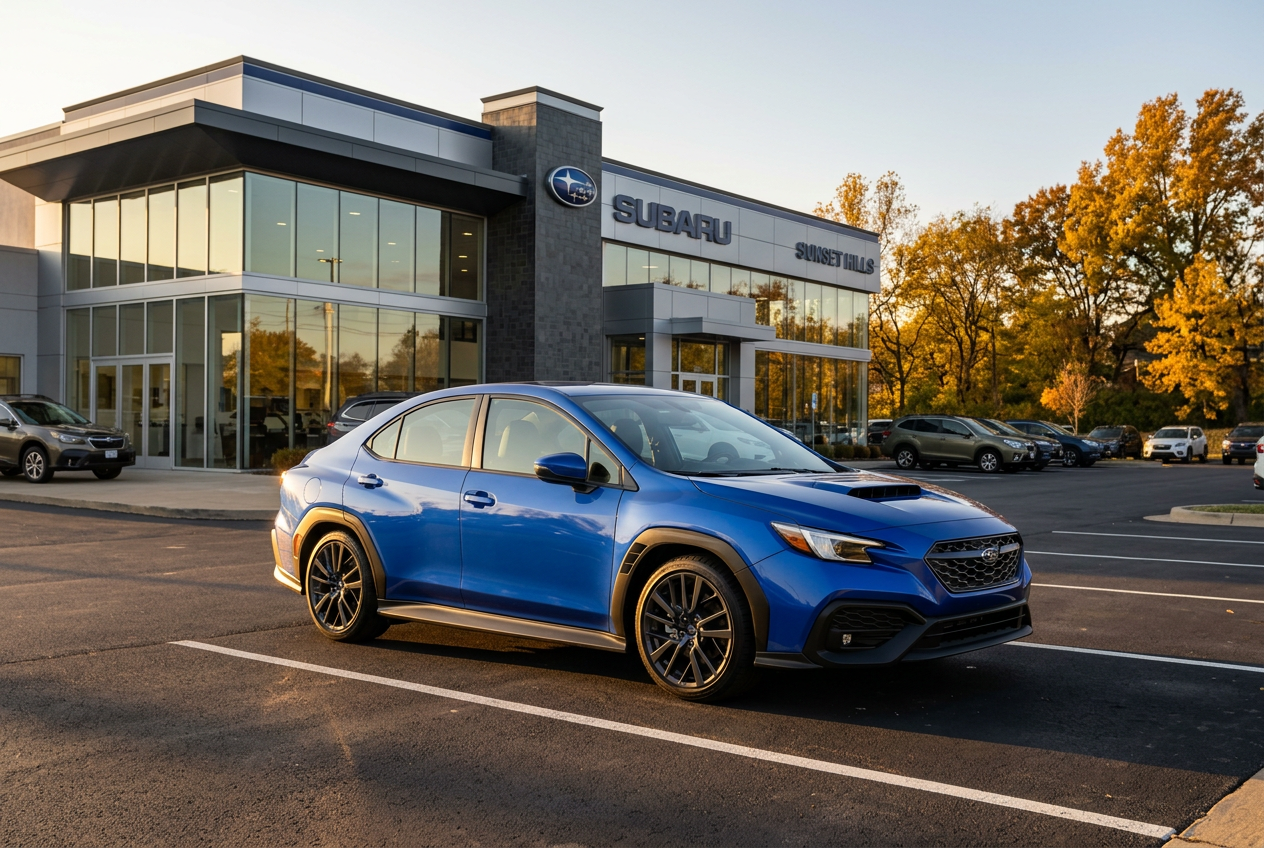
tech looking at Subaru outback

Subaru Outback Oil Change Cost: What to Expect at the Dealership

If you are planning your vehicle's regular maintenance routine, a essential question is: How much does a routine oil change cost for a Subaru Outback? At Sunset Hills Subaru in Sunset Hills, Missouri, a routine synthetic oil change for a Subaru Outback typically ranges between $75 and $150. This comprehensive service includes premium Genuine Subaru 0W-20 synthetic oil specifically formulated for Subaru BOXER® engines, an OEM high-filtration oil filter replacement, a brand-new drain plug crush washer to ensure a leak-free seal, and a complementary multi-point safety inspection performed by factory-certified technicians. Exact costs can vary slightly based on the specific Outback powertrain equipped under your hood. Standard Outback trims powered by the naturally aspirated 2.5-liter Subaru BOXER® 4-cylinder engine generally sit at the lower end of the range ($75 to $95), requiring 4.4 quarts of 0W-20 full synthetic oil. Upper trim levels—such as the Outback XT and Outback Wilderness equipped with the turbocharged 2.4-liter Subaru BOXER® engine—require 4.8 quarts of synthetic oil and dedicated heavy-duty filter elements, placing service near $95 to $120. View Current Service & Parts Specials How Often Should a Subaru Outback Receive an Oil Change? Subaru officially recommends a routine oil change interval of 6,000 miles or 6 months, whichever comes first, under normal driving conditions. Adhering to this timeframe maintains optimal viscosity, prevents harmful sludge accumulation inside internal engine galleries, and protects precision timing chain assemblies. However, drivers commuting throughout Greater St. Louis, Chesterfield, and Maryland Heights frequently experience driving scenarios that fall under Subaru's Severe Driving Schedule. Severe driving conditions include repeated short trips under 5 miles, extended engine idling in traffic, frequent cold-weather starts during Missouri winters, or driving on dusty gravel trails. Under severe conditions, Subaru recommends shortening oil change intervals to 3,000 to 5,000 miles or every 3 to 4 months. Frequent oil refreshes combat moisture accumulation and fuel dilution, safeguarding long-term BOXER engine health. Synthetic vs. Conventional: Why Subaru Outback Oil Changes Cost What They Do Modern Subaru BOXER® engines utilize ultra-low viscosity 0W-20 full synthetic oil engineered for rapid lubrication during cold engine ignition and maximum heat dispersion under heavy loads. Unlike older engines that ran on conventional oil, boxer engines position cylinders horizontally. Full synthetic oil provides continuous oil film strength across horizontal cylinder walls, preventing dry starts and internal friction. While quick-lube drive-thru outlets may advertise introductory pricing, they frequently use non-OEM generic oil filters lacking mandatory internal bypass valve pressure settings. Genuine Subaru top-mounted oil filters incorporate precise spring-loaded bypass valves (rated at 23 PSI) to maintain steady oil flow even under freezing conditions. Why Choose Dealership Service at Sunset Hills Subaru? • Factory-Trained Technicians: Master technicians who specialize exclusively in Subaru Boxer engines, Symmetrical AWD, and Lineartronic CVTs. • Genuine OEM Components: Factory-approved 0W-20 synthetic fluid and high-efficiency filters designed specifically for your vehicle. • Multi-Point Inspection: Complete health check of brake pad wear, tire tread depth, suspension bushings, battery health, and fluid levels. What Are the Local Estimated Subaru Outback Maintenance Costs Through 36,000 Miles Near Sunset Hills, Missouri? For vehicle owners living around Sunset Hills, Ladue, Kirkwood, and South St. Louis County, managing routine automotive upkeep is simple and predictable. During the first 3 years or 36,000 miles of vehicle ownership, standard maintenance expenses for a Subaru Outback typically average between $350 and $550 per year ($1,050 to $1,650 total cumulative). Year 1 (0 – 12,000 Miles) • 6,000-Mile Service: Synthetic Oil & Filter + Tire Rotation (contact us for current pricing) • 12,000-Mile Service: Synthetic Oil Change, Tire Rotation, Cabin Air Filter Replacement ($160 - $210) Estimated Year 1 Total: $270 - $350 Year 2 (12,001 – 24,000 Miles) • 18,000-Mile Service: Synthetic Oil & Filter + Tire Rotation (contact us for current pricing) • 24,000-Mile Service: Synthetic Oil Change, Engine Air Filter, Cabin Filter, Brake System Check ($220 - $280) Estimated Year 2 Total: $330 - $420 Year 3 (24,001 – 36,000 Miles) • 30,000-Mile Major Service: Synthetic Oil, Brake Fluid Flush, Tire Rotation, Air Filters, AWD Inspection ($350 - $480) • 36,000-Mile Service: Synthetic Oil & Filter ($75 - $110) Estimated Year 3 Total: $425 - $590 Schedule Service and Diagnostics How Does the Outback 5-Year Cost to Own Compare to a Toyota RAV4? When evaluated over a standard 5-year ownership period (60,000 miles), total upkeep expenses for the Subaru Outback remain comparable to midsize and compact crossover rivals such as the Toyota RAV4. Ownership Factor (5-Year / 60,000 Miles) Subaru Outback (2.5L AWD) Toyota RAV4 (2.5L AWD) Routine Scheduled Maintenance $2,100 - $2,600 $1,950 - $2,450 Standard All-Wheel Drive Standard Symmetrical AWD Optional AWD Addition Front/Rear Differential Fluid Service Included at 30k / 60k Interval Included at 30k / 60k Interval Estimated 5-Year Repair Reserve $650 - $900 $600 - $850 While routine scheduled oil and fluid services for a Subaru Outback cost roughly $150 to $200 more across 5 years than a front-wheel-drive baseline vehicle, the Outback delivers full-time Symmetrical All-Wheel Drive standard across every single trim level, providing superior traction on wet roads, ice, and midwestern winter snow. Does the Subaru Outback Hold Its Resale Value Well Over Time? Yes! The Subaru Outback consistently earns top industry recognition from automotive research authorities such as Kelley Blue Book (KBB) and ALG for maintaining exceptional residual value retention. Subaru models consistently rank near the top of all midsize crossover segments in 3-year and 5-year trade-in equity. Completing all factory-recommended routine maintenance at an authorized dealer like Sunset Hills Subaru directly protects your trade-in equity. Having continuous CARFAX service entries showing timely synthetic oil changes, genuine filter replacements, and scheduled fluid flushes reassures prospective future buyers and maximizes valuation when you choose to Get your value trade for a new vehicle. What Factory Warranty Protection Comes Standard with a New Subaru Outback? Every brand-new Subaru Outback purchased at Sunset Hills Subaru is backed by robust factory warranty coverage: • 3-Year / 36,000-Mile New Vehicle Limited Warranty: Comprehensive coverage covering bumper-to-bumper electrical, mechanical, and operational assembly components. • 5-Year / 60,000-Mile Powertrain Limited Warranty: Covers internal engine parts, timing chains, oil pumps, Lineartronic CVT transmission, transaxle, and front/rear differential gearboxes. • 5-Year / Unlimited Mileage Rust Perforation Warranty: Protects body sheet metal against corrosion perforation. Maintaining documented records of mandatory oil changes and factory maintenance intervals ensures your powertrain limited warranty coverage remains fully intact throughout its effective lifespan. What Larger Scheduled Service Expenses Should a Subaru Outback Owner Budget For? Beyond routine oil and filter changes every 6,000 miles, long-term ownership involves key periodic maintenance milestones. Budgeting for these milestones ensures smooth operation and avoids unexpected mechanical repairs. 30,000-Mile Service ($350 - $480) Includes synthetic oil change, complete brake fluid flush, replacement of engine air filter and cabin micro-filter, tire rotation, and full differential inspection. 60,000-Mile Service ($450 - $750) Major service interval adding iridium spark plug replacement, front and rear differential gear oil replacement, Lineartronic CVT fluid condition inspection, and brake system flush. 90,000-Mile Service ($500 - $850) Re-evaluates spark plugs, cooling system coolant flush, serpentine drive belt inspection, brake pad and rotor servicing, and full suspension check. Find Genuine OEM Subaru Parts How Much Does a 60,000-Mile Major Service Cost for a Subaru Outback? The 60,000-mile service is one of the most critical milestones in your Outback's lifetime, typically costing between $450 and $750 depending on model year and trim. A primary factor in labor costs for this service is replacing iridium spark plugs inside the Subaru BOXER® engine layout. Because BOXER engine cylinders lie horizontally parallel to the chassis, spark plugs are situated tightly against side frame rails. Factory-trained technicians use specialized universal ratchets and torque gauges to replace spark plugs efficiently without damaging cylinder threads. During the 60,000-mile inspection, technicians also examine EyeSight® Driver Assist sensors, perform diagnostic computer scans, replace synthetic gear oil in front and rear differential housings, and flush brake fluid. What Are the Most Common Long-Term Maintenance Items for a Subaru Outback? Is the Subaru Outback expensive to maintain over 10 years compared to competitors? Independent automotive study data shows that 10-year cumulative maintenance and repair costs for a Subaru Outback average around $5,800 to $6,800. This positions the Outback slightly below average for all-wheel-drive crossovers in the midsize class. Common maintenance items encountered past 100,000 miles include: • Wheel Bearings & Hub Assemblies: ($350 - $500 per wheel after extended highway driving) • CV Axle Boots & Joints: ($250 - $450 per axle due to normal rubber wear over time) • Lineartronic CVT Fluid Exchange: ($280 - $420 specialized fluid replacement) • Suspension Struts & Lower Control Arms: ($600 - $950 per axle) Replacing oil and filters regularly at standard 6,000-mile intervals prevents premature thermal degradation of surrounding engine gaskets and seals, keeping 10-year ownership expenses predictable and low. Does Subaru Offer Prepaid Maintenance Plans to Learn About Service Plans? Yes! Drivers purchasing or leasing a vehicle at Sunset Hills Subaru can take advantage of prepaid maintenance options designed to shield against future inflation and optimize long-term maintenance budgets. Maintain the Love Program Included on eligible new Subaru leases in select regions, covering routine oil changes, tire rotations, and inspections for the first 2 years or 24,000 miles at zero out-of-pocket cost. Subaru Added Security® Maintenance Plans Allows owners to prepay for scheduled routine maintenance (up to 3 years/36,000 miles or 5 years/60,000 miles), locking in current labor rates and synthetic oil prices. Explore New Subaru Outback Inventory What Unique Features and Service Needs Does the Subaru Outback Wilderness Trim Include? The rugged Subaru Outback Wilderness trim is factory-engineered for extreme off-road adventures, featuring raised suspension with 9.5 inches of ground clearance, revised final drive gear ratios, dual-function X-MODE®, and Yokohama GEOLANDAR® all-terrain tires. Wilderness Specific Maintenance Items: • 2.4L Turbocharged Oil Requirements: Requires 4.8 quarts of synthetic oil per change ($95 - $120). • Rear Differential Fluid Inspection: Off-road driving through water or mud requires inspecting rear differential oil and transfer case fluid for moisture ingress. • All-Terrain Tire Rotations: Deep tread patterns require diligent 6,000-mile cross-rotations to ensure even wear. Schedule Your Subaru Outback Service at Sunset Hills Subaru Ready to give your Subaru Outback the expert attention it deserves? Trust the factory-trained technicians at Sunset Hills Subaru in Sunset Hills, MO. Whether you need a simple 6,000-mile routine synthetic oil change or a 60,000-mile major service, our team uses only Genuine Subaru OEM fluids and components to keep your vehicle running like new. Visit us at 10100 Watson Rd, Sunset Hills, MO 63127 or Call (314) 476-9638 to speak directly with a service advisor. Convenient online scheduling is available 24/7! Subaru Outback Synthetic Oil Change in Sunset Hills MO | Sunset Hills Subaru
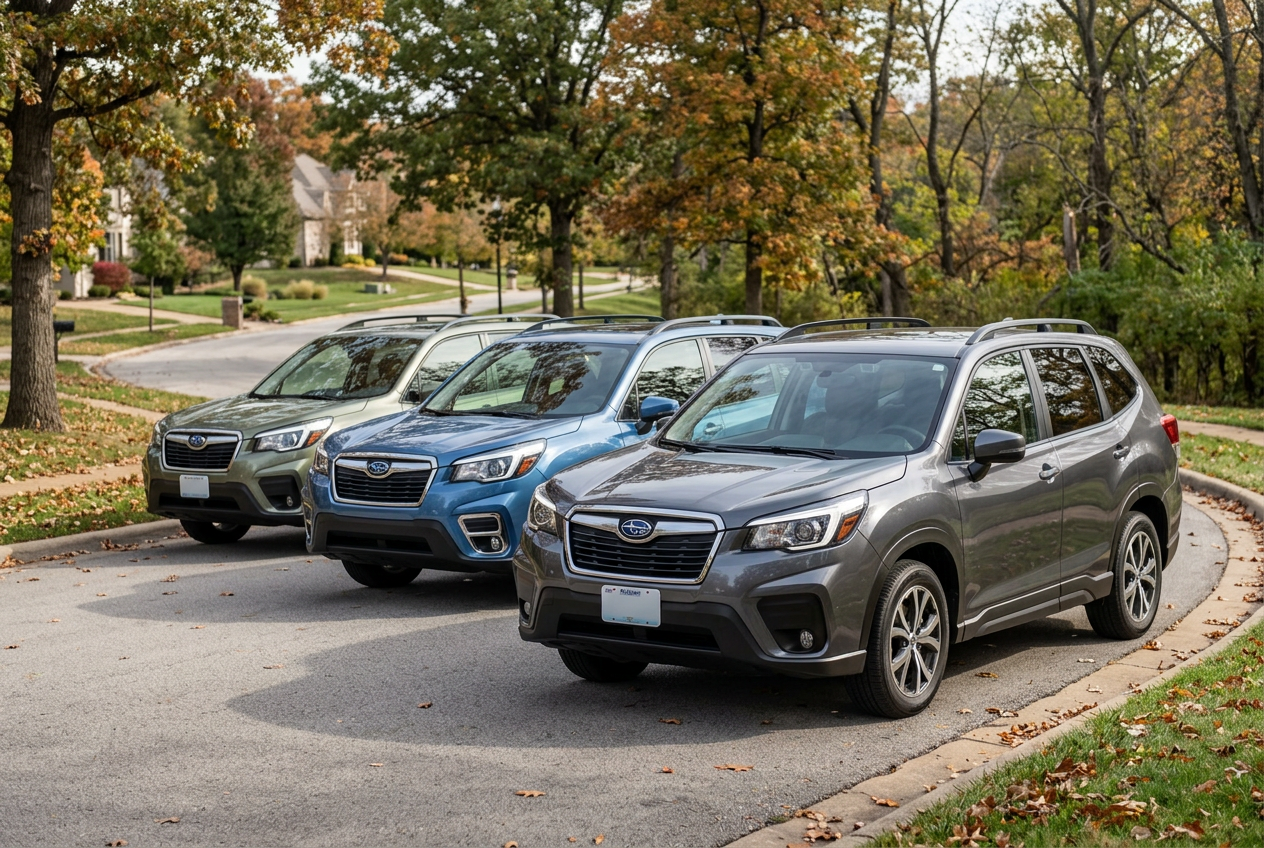
Outback side by side

Does Subaru Retain Resale Value as Well as Toyota? The Bottom-Line Comparison

Does Subaru Retain Resale Value as Well as Toyota? The Bottom-Line Comparison When car buyers evaluate long-term financial performance, Toyota has historically stood as the benchmark for resale value retention in the automotive industry. However, automotive industry data from Kelley Blue Book (KBB) and Automotive Lease Guide (ALG) reveals a striking reality: Subaru has comparable 3-to-5-year resale value retention across nearly every major vehicle segment. Flagship models like the Subaru Crosstrek, Subaru Outback, and Subaru Forester routinely earn top residual value honors, standing shoulder-to-shoulder with market stalwarts like the Toyota RAV4 and Tacoma. Drivers in the St. Louis metropolitan area benefit from Subaru's exceptionally strong equity retention driven by standard Symmetrical All-Wheel Drive, lower initial sticker prices, and relentless regional demand. How Subaru 5-Year Depreciation Rates Compare Directly to Toyota Models Depreciation represents the largest single expense during the first five years of vehicle ownership. While an average sedan or crossover loses 40% to 50% of its initial value over 60 months, both Subaru and Toyota dramatically outperform industry averages. For instance, the Subaru Crosstrek frequently posts 5-year retained values exceeding 60% of original MSRP, often beating direct compact crossover competitors including the Toyota RAV4. The Subaru Outback holds comparable residual values against midsize SUVs while offering lower entry pricing, granting owners higher relative equity when trading in. Vehicle Model Segment Subaru Model Toyota Competitor Avg 5-Year Retained Value (Subaru) Avg 5-Year Retained Value (Toyota) Subcompact Crossover Crosstrek Corolla Cross 60% – 64% 58% – 62% Compact SUV Forester RAV4 56% – 60% 57% – 61% Midsize Crossover / Wagon Outback Venza / Highlander 55% – 59% 54% – 58% 3-Row Family SUV Ascent Grand Highlander 52% – 56% 53% – 57% Key Factors That Drive High Subaru Resale Value in the St. Louis Metro Area Several distinct structural and market forces explain why pre-owned Subaru vehicles remain in such high demand across Sunset Hills and the greater St. Louis region. Standard Symmetrical AWD Unlike Toyota where front-wheel drive is often standard and all-wheel drive carries a price premium, almost every Subaru comes standard with full-time Symmetrical AWD. Used car buyers in Missouri actively seek AWD for winter confidence, elevating market prices for pre-owned Subarus. Competitive Entry MSRP Subaru maintains competitive MSRP positioning across its lineup compared to equivalent AWD Toyota trims. Starting at MSRP while retaining equal percentage values translates directly to lower overall total depreciation in dollar terms. Unmatched Brand Loyalty Subaru consistently ranks at or near the top of J.D. Power Automotive Brand Loyalty studies. A constant stream of return buyers seeking certified pre-owned Crosstrek and Outback models keeps inventory tight and trade-in valuations elevated. Evaluating Your Trade-In Value in Sunset Hills: What Is Your Current Vehicle Worth? Understanding your vehicle's current equity position is the foundation of any smart vehicle purchase. Because Subaru models maintain exceptional value, owners are often surprised to learn how much trade-in equity they have accumulated. Whether you currently drive a Subaru, Toyota, or another brand, our appraisal team evaluates local St. Louis market demand, service history records, and vehicle condition to offer top-dollar trade estimates. You can easily start the evaluation process online and leverage your retained vehicle equity toward a New Subaru Inventory purchase. Get your value trade How Subaru Reliability and Longevity Compare to Toyota and Honda Resale value and mechanical longevity go hand in hand. A vehicle cannot hold high trade-in equity if buyers suspect expensive mechanical breakdowns on the horizon. Experimental and empirical data both confirm that Subaru vehicles share the elite upper tier of automotive longevity alongside Toyota and Honda. According to Experian automotive longevity data, 96% of Subaru vehicles sold in the last 10 years are still on the road today. It is commonplace for properly maintained Outback, Forester, and Impreza models to cross the 200,000-mile mark while maintaining solid structural integrity and smooth powertrain performance. While Toyota has traditionally held a slight edge in raw simplicity on basic naturally aspirated engines, Subaru performs competitively in real-world durability. Modern Subaru vehicles equipped with Lineartronic CVTs and third-generation BOXER engines deliver long-term dependability that reassures second-hand buyers. When shopping for a Used Vehicle Inventory option, buyers routinely seek out pre-owned Subarus knowing that long-term repair risks are minimal compared to European or domestic alternatives. What Is the Average Annual Maintenance Cost for a Subaru vs. Toyota? Ownership costs extend beyond depreciation to include annual maintenance, fluid services, and routine wear components. Routine Service Subaru average annual maintenance ranges between $550 and $650 per year. Routine synthetic oil changes, tire rotations, and cabin filters align closely with standard Japanese brand upkeep schedules. Toyota Comparison Toyota maintenance averages approximately $440 to $520 per year. The modest difference primarily stems from Subaru's standard AWD system requiring differential fluid servicing at major intervals. Industry Averages Both brands perform significantly better than the overall automotive industry average of $790+ per year, ensuring predictable ownership costs without budget-breaking surprises. Service Interval / Item Subaru Estimated Cost Toyota Estimated Cost Industry Average Synthetic Oil & Filter (6,000 miles) $75 – $95 $70 – $90 $85 – $110 30,000-Mile Major Service $350 – $450 $300 – $400 $450 – $600 60,000-Mile Service (AWD Fluids + Spark Plugs) $550 – $750 $480 – $650 $700 – $950 Estimated 5-Year Maintenance Total $2,800 – $3,300 $2,400 – $2,800 $3,900 – $4,800 What Makes the Subaru BOXER Engine Unique and Reliable Today? At the mechanical core of every Subaru is the horizontally opposed BOXER engine. Unlike traditional inline or V-shaped engines used by Toyota, the BOXER lays its pistons horizontally. This configuration offers distinct engineering advantages: a lower center of gravity, reduced body roll, and inherent rotational balance that minimizes engine vibration. Shoppers researching older Subarus often ask about head gasket concerns from the early 2000s. It is important to know that Subaru redesigned its engine block architecture over a decade ago with the introduction of the FB engine series. Modern BOXER engines utilize multi-layer steel (MLS) head gaskets, timing chains instead of belts, and thermal management modules that have effectively eliminated historical head gasket issues. Furthermore, today's Lineartronic CVT transmissions feature reinforced chain-drive designs engineered for smooth power delivery and high efficiency. When serviced at regular factory intervals, modern Subaru powertrains routinely achieve 200,000+ miles of dependable service. For genuine components and replacement items, owners can explore Find Subaru Parts directly through our certified dealership catalog. Schedule Certified Subaru Service to Preserve Your Vehicle's Resale Equity The key to commanding top market value when you trade in or sell your vehicle is documented maintenance history. CARFAX and valuation algorithms reward vehicles with verified factory service records from authorized service centers. Our factory-trained technicians at Sunset Hills Subaru use genuine OEM parts and specialized diagnostic equipment to protect your mechanical health and safeguard your trade-in equity. Schedule Service and Diagnostics Which Auto Brand Offers Higher Safety Ratings Between Subaru and Toyota? Safety ratings exert a powerful, often underrated influence on vehicle resale values. Family vehicle buyers prioritize crash protection and driver assistance technology above almost all other criteria when shopping the used vehicle market. In Insurance Institute for Highway Safety (IIHS) evaluations, Subaru repeatedly earns top honors across its entire lineup. Models like the Outback, Forester, and Crosstrek regularly achieve IIHS TOP SAFETY PICK+ awards, placing Subaru among the safest manufacturers in automotive history. While Toyota's Safety Sense suite offers competitive safety performance, Subaru EyeSight Driver Assist Technology sets standard benchmarks for pre-collision braking, lane-keep assistance, and adaptive cruise control. Families looking at a pre-owned New Subaru Outback Inventory option know they are securing world-class safety features. This reputational strength ensures that safe, crash-tested Subaru models retain maximum buyer appeal when it comes time for trade-in. How Local Chesterfield and Ladue Driving Conditions Impact Vehicle Resale Values Resale values do not exist in a vacuum—they are heavily shaped by local geographic terrain, climate patterns, and community lifestyle needs. Winter Traction Needs St. Louis winters bring unpredictable ice, sleet, and freezing rain. Drivers in Chesterfield, Ladue, and Maryland Heights actively seek AWD capability, driving up demand for pre-owned Subarus every fall and winter. Suburban Versatility From school carpool lanes to weekend trips along the Missouri River, local families demand versatile cargo space and ground clearance. Models like the New Subaru Forester Inventory suit Missouri suburban lifestyles perfectly. Total Cost of Ownership: Comparing Insurance, Maintenance, and Depreciation Comparing purchase price alone provides an incomplete picture of vehicle value. A comprehensive 5-year Total Cost of Ownership calculation factors in purchase price, projected depreciation curves, fuel efficiency, auto insurance premiums, and scheduled maintenance fees. Because Subaru vehicles earn top safety scores, insurance premiums are frequently lower than or equal to competitive Toyota models. When combined with competitive fuel economy from Symmetrical AWD powertrains and lower sticker prices, Subaru matches Toyota on overall ownership costs. For buyers looking to purchase a new or pre-owned vehicle, our dealership offers competitive financing rates. You can get pre-approved quickly by using our online tool to Get approved for financing. When evaluating the financial bottom line, choosing Subaru delivers premium Japanese engineering, standard AWD capability, and exceptional value retention at an accessible price point. Experience Subaru's Exceptional Value at Sunset Hills Subaru Whether you are looking for a fuel-efficient commute in a New Subaru Crosstrek Inventory selection or seeking family adventure in an Outback, Sunset Hills Subaru is here to guide your automotive journey. Our team is dedicated to providing transparent pricing, top trade-in equity, and professional service. Visit us in person at 10100 Watson Rd, Sunset Hills, MO 63127 or Get Directions to Sunset Hills Subaru today. For immediate assistance or to schedule a personal test drive, please Call (314) 476-9638 to speak with our sales and finance experts. New Subaru Inventory Subaru Resale Value Insights in Sunset Hills MO | Sunset Hills Subaru
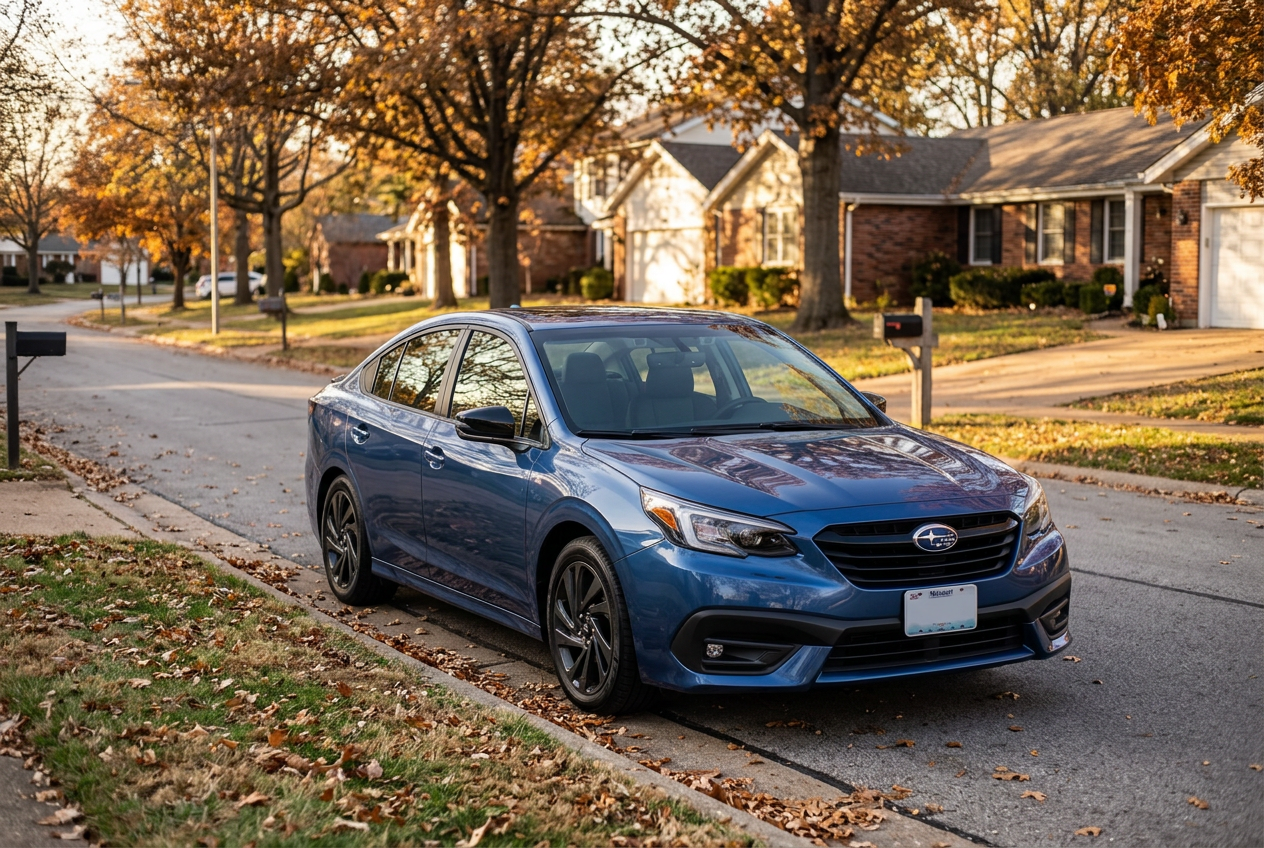
Subaru Outback in St. Louis

Does a Certified Pre-Owned Subaru Outback Offer Better Value Than Buying New?

Does a Certified Pre-Owned Subaru Outback Offer Better Value Than Buying New? A Certified Pre-Owned (CPO) Subaru Outback provides exceptional value over buying brand-new by allowing you to bypass initial two-to-three-year depreciation while securing an extended factory-backed 7-year/100,000-mile powertrain limited warranty with a $0 deductible, standard Symmetrical All-Wheel Drive, and comprehensive EyeSight® Driver Assist Technology at a substantially lower acquisition cost. When local families compare a Certified Pre-Owned Outback to a new crossover on our lot, they often look at how much passenger stretch-out room and standard all-wheel capability they get for their investment. A brand-new crossover demands top-tier retail sticker pricing the moment it leaves the showroom floor, experiencing its steepest drop in equity during the first 36 months. Choosing a 2-to-3-year-old CPO Outback lets the original owner absorb that initial valuation drop, allowing you to drive home a modern, highly equipped vehicle with long-term mechanical protection intact. Every CPO Outback delivers confidence in all-weather conditions for daily commuters traveling along Highway 40 through Chesterfield during unpredictable winter weather. From its spacious cabin with flexible seating to robust roof rails, the Outback is Built for Safety, Designed for Your Busy Life. Our team at Sunset Hills Subaru makes transitioning into a quality crossover straightforward. You can easily value your trade-in online before heading over to speak with our specialists. We welcome you to stop by our Sunset Hills showroom or give our team a quick call at (314) 476-9638 to explore current CPO availability and schedule a test drive. Table of Contents What Warranty and Inspection Protections Come With a CPO Subaru Outback? Is a Certified Pre-Owned Subaru Outback Significantly Cheaper Than Buying New? How Does a CPO Subaru Outback Compare to a New Toyota RAV4 and Honda AWD? Frequently Asked Questions About Certified Pre-Owned Subaru Outbacks Finding Your Certified Pre-Owned Subaru Outback at Sunset Hills Subaru What Warranty and Inspection Protections Come With a CPO Subaru Outback? The factory-backed 7-year/100,000-mile powertrain warranty on Certified Pre-Owned Subaru Outbacks starts from the vehicle's original in-service date and includes 24/7 roadside assistance and a thorough 152-point inspection. While a brand-new Outback includes a 3-year/36,000-mile basic warranty and a 5-year/60,000-mile powertrain warranty, the CPO program extends powertrain protection significantly further into the vehicle's lifecycle. Covered components include internal engine structures, the Lineartronic CVT, torque converter, front and rear differentials, axle shafts, and the transfer case. To qualify for factory certification, a pre-owned Outback must pass a rigorous 152-point inspection conducted by factory-trained technicians. If a candidate vehicle fails even a single item on this checklist, it cannot be certified until the issue is completely resolved using genuine OEM parts. Subaru enforces strict minimum wear thresholds during reconditioning: Brake Pads and Rotors: Brake pads must have at least 50% usable friction material remaining; otherwise, brand-new OEM pads and rotors are installed. Tire Tread and AWD Balance: Tires must exhibit at least 5/32-inch tread depth across all four wheels and match exact factory sizing to prevent mechanical strain on the drive system. Safety Tech Calibration: Dual EyeSight® stereo cameras undergo diagnostic scans and operational checks for adaptive cruise, lane keep assist, and pre-collision braking. Essential Maintenance: Technicians perform fresh engine oil and filter changes, install new engine air and cabin filters, and replace wiper blades. Standard wear-and-tear items such as clutch linings, brake pads, and wiper blades are excluded from the core powertrain warranty. However, buyers seeking complete comprehensive coverage can upgrade to a Subaru Added Security® Gold Plus wrap plan. This optional factory extension broadens coverage to mirror bumper-to-bumper protection, shielding electronic displays, climate control modules, sensors, and power accessories for up to 10 years or 100,000 miles. If you ever experience an unexpected roadside situation, emergency help is available directly through Subaru Roadside Assistance at 1-800-261-2155. Furthermore, if you decide to sell your vehicle in the future, the CPO powertrain coverage is fully transferable to a second private buyer for a nominal administrative fee, enhancing its overall resale value. Engine & Performance Powertrain specs by trim Feature Limited Limited XT Outback Wilderness Premium Touring Touring XT Engine 2.5L 2.4L 2.4L 2.5L 2.5L 2.4L Horsepower 180 hp 260 hp 260 hp 180 hp 180 hp 260 hp Torque 178 lb-ft 277 lb-ft 277 lb-ft 178 lb-ft 178 lb-ft 277 lb-ft Transmission Lineartronic CVT High-torque Lineartronic CVT High-torque Lineartronic CVT Lineartronic CVT Lineartronic CVT High-torque Lineartronic CVT Drivetrain All-wheel drive All-wheel drive All-wheel drive All-wheel drive All-wheel drive All-wheel drive Safety & Driver Assistance Safety and driver-assistance features by trim All six trims—Limited, Limited XT, Outback Wilderness, Premium, Touring, and Touring XT—come standard with a suite of safety features including ABS, Isofix preparation, height-adjustable front and rear head restraints (two in front and three in the rear), and standard driver and passenger seat belt pre-tensioners and height adjustment. Each trim also includes three 3-point seat belts for the rear center seat position, along with standard seat belts for the rear driver and passenger seats. Emergency safety features such as emergency call and an accident data recorder are standard across all trims. The anti-collision system, branded as EyeSight®, is also standard on every trim, featuring activation at a minimum speed of 7 mph and operation both above 30 mph and 78 mph. This system includes automatic emergency braking, brake light activation upon collision detection, a driver monitor, and low-speed braking at both front and rear. In summary, the safety and driver-assistance equipment is consistent and comprehensive throughout the entire lineup, with all trims equipped with the same fundamental set of advanced safety technologies and restraints. There are no differences in safety features among the trims as presented. Is a Certified Pre-Owned Subaru Outback Significantly Cheaper Than Buying New? Buying a Certified Pre-Owned Subaru Outback is significantly cheaper than purchasing new because you acquire a late-model vehicle after it has already passed through its sharpest 30% to 35% initial depreciation phase, while still accessing low competitive financing rates. A brand-new 2026 Outback carries a starting MSRP ranging from $34,995 for the Premium trim up to $47,995 for the range-topping Touring XT, plus a $1,450 destination charge: Premium: $34,995 base MSRP ( $1,450 destination) Limited: $41,715 base MSRP ( $1,450 destination) Limited XT: $44,365 base MSRP ( $1,450 destination) Outback Wilderness: $44,995 base MSRP ( $1,450 destination) Touring: $45,395 base MSRP ( $1,450 destination) Touring XT: $47,995 base MSRP ( $1,450 destination) By choosing a 2-to-4-year-old CPO Outback, you pay a substantially lower purchase price for high-end equipment like leather upholstery, a power moonroof, or the turbocharged engine. Because Subaru Outbacks retain high residual value over time compared to other midsize crossovers, your ongoing depreciation slope is much flatter, protecting your financial investment over a five-year ownership horizon. Financing a CPO Outback is equally advantageous. Through Subaru Motors Finance, qualified buyers can access special promotional interest rates that closely rival new car loan incentives. Lower financed balances combined with competitive APRs result in noticeably lower monthly payments. While some shoppers prefer browsing our new Subaru inventory or checking out our new Subaru BRZ selection for performance driving, buyers focused on practical family utility find CPO Outbacks deliver unmatched value. You can easily apply for financing online to review personalized loan options before visiting our dealership. Pricing Pricing by trim Feature Limited Limited XT Outback Wilderness Premium Touring Touring XT Base MSRP $41,715 $44,365 $44,995 $34,995 $45,395 $47,995 Destination charge $1,450 $1,450 $1,450 $1,450 $1,450 $1,450 How Does a CPO Subaru Outback Compare to a New Toyota RAV4 and Honda AWD? A Certified Pre-Owned Subaru Outback delivers superior standard capability and interior utility compared to a new Toyota RAV4 or Honda CR-V by offering full-time Symmetrical All-Wheel Drive, greater ground clearance, and expanded cargo volume at a competitive price point. When comparing a CPO Outback to a brand-new base Toyota RAV4, drivetrain engineering represents a key distinction: All-Wheel Drive System: The base RAV4 comes standard with front-wheel drive, requiring an upgraded trim or option package to get part-time slip-first AWD. The Outback features standard full-time Symmetrical All-Wheel Drive across every single trim level, continuously distributing power to all four wheels for instant traction. Ground Clearance: Most Outback models provide about 9 inches of ground clearance, with the rugged Outback Wilderness offering nearly 10 inches. Compact rivals like the RAV4 typically offer lower clearance on standard trims. Cabin & Cargo Volume: The midsize Outback provides up to 81 cubic feet of maximum cargo capacity with the rear seats folded, along with greater shoulder and hip room for rear passengers than compact crossovers. Subaru's full-time AWD system also holds a distinct traction advantage over Honda Real Time AWD during Midwest winter conditions. Honda's system operates primarily as a front-wheel-drive platform, engaging rear-wheel torque only after front-wheel slip is detected. Subaru's balanced, symmetrical layout continuously delivers power to both axles, ensuring predictable handling through deep slush and icy parking lots near Creve Coeur Lake in Maryland Heights. Performance across CPO Outback models depends on the factory engine: 2.5L 4-Cylinder Engine: Generates 180 hp and 178 lb-ft of torque, paired with a smooth Lineartronic CVT on Premium, Limited, and Touring trims. 2.4L Turbocharged Engine: Delivers 260 hp and 277 lb-ft of torque, mated to a High-torque Lineartronic CVT on Limited XT, Touring XT, and Outback Wilderness models for effortless highway merging and up to 3,500 pounds of towing capacity. Drivers evaluating crossover options can compare our current new Subaru Outback models and three-row new Subaru Ascent inventory alongside certified pre-owned choices to determine the perfect cabin size for their lifestyle. Frequently Asked Questions About Certified Pre-Owned Subaru Outbacks Q: What happens if a vehicle fails one item during the Subaru CPO 152-point inspection? If a pre-owned Subaru Outback fails even a single checkpoint during the 152-point inspection, it cannot receive factory certification until the issue is fully repaired or replaced using Genuine Subaru OEM Parts. If a mechanical defect, structural frame issue, or title inconsistency cannot be brought up to Subaru's factory standards, the vehicle is permanently disqualified from the CPO program and cannot be sold as certified. Q: Are brake pads and tires replaced during the Subaru CPO reconditioning process? Brake pads and tires are replaced with brand-new original equipment parts whenever they fall below strict Subaru reconditioning thresholds. Brake pads must have at least 50% usable lining remaining, and all four tires must have at least 5/32-inch tread depth with identical rolling circumferences. If any tire or brake component fails to meet these minimum standards, factory technicians replace them prior to certification. Q: Does the Subaru CPO 7-year/100,000-mile powertrain warranty transfer to a second private owner? Yes, the factory-backed 7-year/100,000-mile powertrain limited warranty is fully transferable to a subsequent private buyer if you decide to sell your Outback before the time or mileage limit expires. The transfer process requires submitting a simple form to Subaru of America along with a nominal administrative fee, which helps protect your vehicle's resale value on the private market. Q: What model year Subaru Outback retains the highest percentage of its value? Subaru Outbacks aged two to four years maintain exceptional residual value percentages in the midsize crossover segment due to high regional demand for standard all-wheel drive and advanced safety technology. Purchasing a CPO model in this two-to-four-year sweet spot allows you to acquire a modern crossover after initial depreciation has occurred, while preserving high trade-in value for future years. Q: Can you extend the warranty coverage on a Certified Pre-Owned Subaru Outback? Yes, buyers can upgrade their standard CPO powertrain protection by purchasing an official Subaru Added Security® Gold Plus plan. This factory wrap plan extends comprehensive bumper-to-bumper protection up to 10 years or 100,000 miles, covering high-tech systems like EyeSight® Driver Assist Technology, touchscreen displays, climate controls, power window motors, and advanced sensor networks with options for a $0 deductible. Explore our updated pre-owned vehicle inventory to view currently available certified options and inspect detailed vehicle history reports online. Finding Your Certified Pre-Owned Subaru Outback at Sunset Hills Subaru Sunset Hills Subaru offers a wide selection of Certified Pre-Owned Subaru Outbacks, each thoroughly inspected and backed by an extended warranty to ensure peace of mind and value. At Sunset Hills Subaru, our team is committed to providing a straightforward, transparent buying experience. We invite you to compare new and certified pre-owned Outbacks side-by-side, explore competitive financing programs through Subaru Motors Finance, and evaluate your trade-in with our appraisal specialists. To take the next step toward your next crossover, visit our dealership address at 10100 Watson Rd, Sunset Hills, MO 63127 or give our sales team a call at (314) 476-9638 to schedule your no-pressure test drive today. Keep Your Vehicle Running Strong Keep your vehicle performing at its best with our service team: Find Subaru Parts Schedule Service and Diagnostics © 2026 Sunset Hills Subaru. All rights reserved. Vehicle specification data © JATO Dynamics Limited. Certified Pre-Owned Subaru Outback in Sunset Hills MO | Sunset Hills Subaru
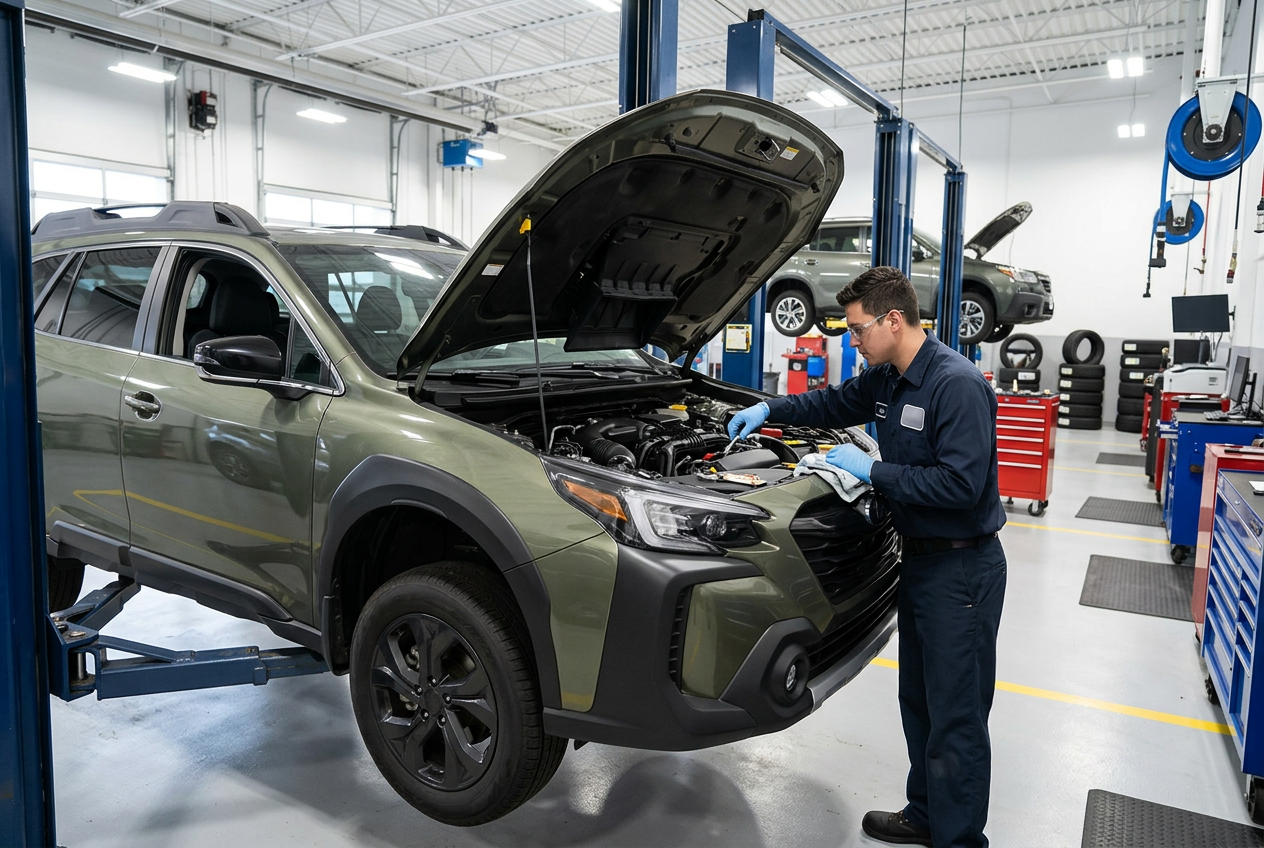
WRX on highway

Estimated 5-Year Fuel Costs for the Subaru WRX: The Bottom Line

Sunset Hills Subaru · St. Louis ownership guide Subaru WRX Fuel Costs & Maintenance: What St. Louis Drivers Should Budget How much does a Subaru WRX cost to drive and maintain? Compare estimated five-year fuel expenses, learn which maintenance items deserve a place in your budget, and find the Subaru service resources that help keep a performance sedan ready for the road. The fuel examples below use published 2026-model assumptions. The URL references 2027; 2027-model specifications and ratings should be verified before applying these figures to a 2027 WRX. For a Subaru WRX owner, fuel is only part of the cost of ownership. Maintenance, tires, brakes, insurance and driving habits also matter. This guide uses a sample 15,000 miles per year (75,000 miles over five years) and an illustrative premium-fuel price of $3.85 per gallon. These are planning assumptions—not a current local fuel-price quote. The MPG examples refer to the 2026 WRX configurations discussed below; check the EPA listing for the exact model year, trim and transmission. For the standard 6-speed manual transmission WRX, which carries an EPA combined rating of 22 MPG (19 City / 26 Highway), total fuel consumption over 75,000 miles comes out to approximately 3,409 gallons. At $3.85 per gallon, standard 6-speed manual WRX owners can expect approximately $13,125 in total fuel expenses over 5 years, averaging roughly $2,625 per year. For models equipped with the quick-shifting Subaru Performance Transmission (SPT) automatic, which is rated at an EPA combined 21 MPG (19 City / 25 Highway), total consumption over 75,000 miles requires approximately 3,571 gallons. At $3.85 per gallon, automatic WRX owners will spend approximately $13,750 over 5 years, averaging $2,750 per year. The 5-year variance between manual and automatic transmissions is a modest $625, making personal driving preference and transmission convenience the primary decision factors. WRX Transmission Option EPA Combined MPG Gallons Used (75k Miles) Annual Fuel Cost (15k Mi) Estimated 5-Year Fuel Cost 6-Speed Manual Transmission 22 MPG 3,409 Gal $2,625 $13,125 Subaru Performance Transmission (SPT) 21 MPG 3,571 Gal $2,750 $13,750 Does the 2026 Subaru WRX Require Premium Unleaded Gasoline? Yes, Subaru recommended requirements specify 91 octane premium unleaded fuel (or higher) to achieve peak performance and efficiency from the 2.4-liter turbocharged Subaru BOXER engine. Turbocharged engines compress fuel and air mixtures at much higher pressures than naturally aspirated engines. Premium gasoline possesses a higher octane rating, meaning it resists premature detonation under intense heat and cylinder pressure. If lower octane regular fuel (87 octane) is used, the engine control module (ECM) detects knock via sensors and automatically retards ignition timing. While this safeguards engine components against severe knock damage, it causes a noticeable loss in peak horsepower, reduces throttle responsiveness, and worsens overall fuel efficiency—meaning you end up burning more gallons per mile. For daily commuters driving between Chesterfield, Ladue, and Sunset Hills, calculating the actual cost difference between premium and regular fuel reveals an important financial insight. Assuming regular gas averages $3.15 per gallon and premium averages $3.85 per gallon, the $0.70 price gap equates to roughly $477 per year across 15,000 miles in a manual WRX ($2,625 vs $2,148). Because running 87 octane reduces fuel economy by roughly 1 to 2 MPG, the actual savings of using regular gas shrinks down to less than $20 a month while sacrificing engine performance. To protect your investment and enjoy the full 271 horsepower of your BOXER engine, refueling with 91+ premium gas is recommended. How Does the Fuel Economy of the Manual WRX Compare to the Automatic WRX? The choice between the traditional 6-speed manual gearbox and the advanced Subaru Performance Transmission (SPT) automatic subtly impacts fuel efficiency due to weight differences and transmission dynamics. Official EPA ratings for both powertrains are structured as follows: • 6-Speed Manual: 19 MPG City / 26 MPG Highway / 22 MPG Combined • Subaru Performance Transmission: 19 MPG City / 25 MPG Highway / 21 MPG Combined In daily stop-and-go suburban driving along Manchester Road or I-270, both transmissions perform identically in urban test cycles at 19 City MPG. However, on open highway stretches like I-64 through St. Louis County, the manual gearbox holds a slight 1 MPG advantage due to direct mechanical engagement with minimal hydraulic friction drag. Over a single year of suburban highway commuting (15,000 miles), the manual WRX burns about 682 gallons versus 714 gallons in the automatic. This equals an annual cost difference of approximately $125. Over a full 5-year ownership period, that totals just $625—an incremental difference for drivers who prefer paddle-shifted automatic convenience in heavy St. Louis traffic. What Engine and Transmission Options Are Featured in the 2026 Subaru WRX? 2.4L Turbocharged BOXER At the heart of every 2026 WRX lies a 2.4-liter direct-injection turbocharged 4-cylinder Subaru BOXER engine. Producing 271 horsepower at 5,600 RPM and 258 lb-ft of torque across a wide torque band from 2,000 to 5,200 RPM, it delivers immediate throttle response. Horizontally opposed pistons sit low in the chassis to lower center of gravity and boost cornering balance. 6-Speed Manual Transmission Standard on Base, Premium, Limited, and TR trims, the 6-speed manual offers precise gear engagement with optimized ratios. Built for driving purists, it incorporates short shift throws, double-cone synchronizers on 1st and 2nd gears, and Incline Start Assist for confidence when starting on steep hills throughout Missouri terrain. Subaru Performance Transmission Standard on GT trims and available on Premium/Limited, the Subaru Performance Transmission (SPT) offers up to 30% faster upshifts and 50% faster downshifts. Featuring steering-wheel paddle shifters, 8-speed manual mode, and SI-DRIVE performance management, it delivers aggressive automatic downshift rev-matching during heavy braking. Browse New Subaru WRX Inventory How Does Subaru Symmetrical All-Wheel Drive Operate on the WRX? Unlike front-wheel-drive competitors that route power to rear wheels only after slipping occurs, Subaru Symmetrical All-Wheel Drive operates full-time. Engine power flows through a central, balanced drivetrain layout. Manual models utilize a Continuous AWD system with a viscous-coupling locking center differential (50/50 power split), while SPT automatic models employ Variable Torque Distribution (VTD) AWD with an electronically controlled hydraulic clutch. Active Torque Vectoring applies subtle braking to the inner front wheel during sharp cornering, directing torque to the outer wheel to reduce understeer. During Missouri winter ice, rain, and snow, full-time AWD provides superior traction and security. While driving four wheels creates minor mechanical drag relative to 2WD cars—slightly reducing fuel economy by about 1-2 MPG—the safety and driving dynamics are well worth the small fuel cost trade-off. What Standard Equipment Is Added When Upgrading to the WRX Premium Trim? Exterior & Wheel Upgrades Upgrading from the Base trim to the WRX Premium adds larger 18-inch dark gray alloy wheels fitted with performance summer tires, LED fog lights, body-color low-profile rear spoiler, heated side mirrors, and a windshield wiper de-icer for icy St. Louis winter mornings. Multimedia & Convenience Inside the cabin, the Premium trim adds an 11.6-inch high-resolution STARLINK multimedia display with wireless Apple CarPlay and Android Auto integration, dual rear USB charge ports, Keyless Access with Push-Button Start, and illuminated visor vanity mirrors. All-Weather Comfort Driver comfort gets a major boost with standard 3-mode heated front sport seats, dual-zone automatic climate control system, aluminum-alloy pedal covers, leather-wrapped steering wheel, and cloth seating featuring red contrast stitching. How Much Does Auto Insurance Cost per Year for a Subaru WRX? Auto insurance is an essential component when projecting total WRX ownership costs over 5 years. Nationally and across the Greater St. Louis region—including Sunset Hills, Ladue, and Maryland Heights—the average cost to insure a Subaru WRX ranges from $1,800 to $2,400 per year ($150 to $200 per month) for clean-record adult drivers. Insurance premiums depend heavily on individual driver age, driving record, zip code, annual mileage, and chosen deductible amounts. Because the WRX is classified as a performance sedan, rates are slightly higher than standard commuter cars like the Impreza, but significantly lower than two-seater sports cars. Subaru EyeSight Driver Assist Technology—now standard across both manual and automatic 2026 WRX models—helps keep insurance premiums lower. Features like Pre-Collision Braking, Adaptive Cruise Control, and Lane Keep Assist earn safety equipment discounts with major insurers, offsetting part of the performance insurance premium. Subaru WRX Maintenance Costs: What Owners Should Expect in 2026 Maintaining a turbocharged performance vehicle like the WRX requires consistent routine care to ensure peak mechanical health and preserve long-term resale value. Over 5 years or 75,000 miles, routine maintenance expenses for a Subaru WRX average between $2,200 and $3,100 total (roughly $440 to $620 annually) when serviced according to factory schedules at an authorized retailer like Sunset Hills Subaru. Many WRX maintenance schedules call for oil and filter service at 6,000-mile/6-month intervals under normal use, but the applicable Subaru maintenance schedule and severe-driving conditions control. Tire inspections, brake checks and fluid inspections are important; individual replacement intervals vary by model year and operating conditions. Service Interval Key Recommended Services Budgeting note 6,000 / 18,000 / 42,000 Miles Synthetic Oil Change, Tire Rotation, Multi-Point Inspection Request a current, itemized service quote 12,000 / 24,000 / 48,000 Miles Minor Service + Cabin & Engine Air Filters, Brake Inspection Request a current, itemized service quote 30,000 / 90,000 Miles Intermediate Service + Front/Rear Differential Fluids, Brake Fluid Flush Request a current, itemized service quote 60,000 Miles Major Service Major Inspection + Spark Plugs, All Fluid Services, Filters Request a current, itemized service quote Schedule Service and Diagnostics What Really Drives Subaru WRX Maintenance Costs? There is no single maintenance bill that fits every WRX. The most useful ownership budget separates factory-scheduled maintenance from wear items and unexpected repairs. Oil, filters & inspections Follow the maintenance schedule for your exact WRX model year. Short trips, heavy use and severe conditions can change the recommended attention your car needs. Performance tires & alignment Performance-oriented tires can be a significant wear expense. Tire type, tread depth, alignment and driving style all affect replacement timing. Brakes & drivetrain Braking habits and performance driving affect pad and rotor life. AWD and transmission maintenance should follow Subaru's vehicle-specific guidance. How to build a realistic five-year WRX budget Start with your expected annual mileage and a fuel-price assumption. Add the factory-required maintenance for that mileage, a separate allowance for tire and brake wear, and insurance quotes based on your own driver profile. Keep repair contingencies separate from scheduled maintenance so the numbers remain transparent. Example fuel math: At 15,000 miles per year, 22 combined MPG and $3.85 per gallon, estimated annual fuel spending is about $2,625. At 21 combined MPG, it is about $2,750. These are illustrations, not guaranteed operating costs. WRX service resources in Sunset Hills Explore the relevant services below, or contact our team for a WRX-specific maintenance estimate. Oil Change & Maintenance Brake Service Tire Service Service Research Hub Schedule Service Service availability, prices, tire fitment and exact maintenance requirements should be confirmed with Sunset Hills Subaru and the applicable owner's manual. Subaru WRX Maintenance Cost FAQs Is a Subaru WRX expensive to maintain? A WRX has performance-oriented components and AWD, so tire, brake and drivetrain-related expenses may differ from those of a conventional commuter sedan. Your actual costs depend on use, maintenance history, model year and local labor and parts prices. How often should a Subaru WRX get an oil change? Consult the maintenance schedule for your WRX's exact model year. A 6,000-mile or six-month interval is a common reference for the model discussed in this article, while severe-use guidance may call for additional attention. Are WRX tires more expensive? Performance tire choices and AWD tire-matching considerations can affect the cost. Compare compatible tire options, sizes and tread condition before replacing one or more tires. How much should I budget for 30,000- and 60,000-mile service? Rather than relying on a universal price, request a written estimate based on your VIN, transmission, model year and maintenance history. That identifies the work actually due and avoids paying for unnecessary services. How Much Might 30,000- and 60,000-Mile WRX Services Cost Locally? The 30,000-mile service milestone (typically occurring around year 2 or 3) is a pivotal preventative service. In addition to standard oil and filter replacements, technicians inspect and replace front and rear differential gear oil, flush and replace hydraulic brake fluid, and perform fuel system cleaning. Locally near Sunset Hills, this service averages between $350 and $550. The 60,000-mile major service milestone is the most comprehensive interval during 5 years of ownership. This major service requires replacing spark plugs (which requires specialized tools due to the horizontal BOXER engine layout), changing differential fluids, replacing transmission fluid, and renewing engine coolant. Local estimates near St. Louis range from $750 to $1,100. Replacing front and rear differential fluids is vital for protecting the Symmetrical AWD system against thermal degradation. Regular service at factory milestones prevents premature gear wear and ensures full power transfer in severe Midwest weather conditions. How Much Does Vehicle Depreciation Impact the WRX Ownership Cost? While fuel costs represent a recurring operational expense, vehicle depreciation is the single largest financial factor over 5 years. Fortunately for WRX buyers, the Subaru WRX historically boasts industry-leading residual values, routinely winning ALG Residual Value and Kelley Blue Book Best Resale Value awards in the sports car category. On average, a WRX retains approximately 52% to 58% of its original MSRP after 5 years and 75,000 miles, compared to standard compact sedans that retain only 40% to 45%. Strong Midwest demand for AWD performance vehicles keeps pre-owned WRX market values high. This exceptional resale retention directly offsets higher premium fuel expenses over 5 years. For example, retaining $3,500 to $5,000 more value at trade-in time relative to rival sports sedans effectively covers 30% to 40% of your total 5-year fuel bill. Check what your current car is worth today with our quick Get your value trade tool. How Do Factory Warranties Compare Between Subaru and Honda? Subaru Factory Warranty Every 2026 Subaru WRX comes protected by a 3-Year / 36,000-Mile New Vehicle Limited Warranty, a 5-Year / 60,000-Mile Powertrain Limited Warranty, and 5-Year / Unlimited Mileage Rust Perforation Protection. Includes 24/7 Roadside Assistance across the USA. Honda Factory Warranty Honda offers matching coverage for the Civic Si and Type R: 3-Year / 36,000-Mile Bumper-to-Bumper and 5-Year / 60,000-Mile Powertrain coverage. However, Honda does not include standard full-time AWD drivetrain protection within its basic layout. Sunset Hills Subaru Edge At Sunset Hills Subaru, factory warranty repairs are completed by factory-certified master technicians using genuine OEM Subaru parts. Explore our latest maintenance offers under Current Service and Parts Specials. Current Service and Parts Specials Real-World St. Louis Commute Analysis: Optimizing WRX MPG in Chesterfield Daily commuting through West County, along I-64/US-40 from Chesterfield through Ladue to Sunset Hills, provides a realistic test environment for WRX fuel efficiency. Owners can easily optimize real-world MPG by adopting simple driving habits: • SI-DRIVE Intelligent Mode: On SPT models, select 'I' mode in heavy traffic to smooth throttle mapping and maximize fuel economy. • Optimal Manual Shift Points: Upshift around 2,000 to 2,500 RPM when cruising flat highway stretches to avoid unnecessary turbo boost enrichment. • Tire Inflation Maintenance: Keep performance tires inflated precisely to 33 PSI front / 32 PSI rear to minimize rolling resistance. • Winter Fuel Blend Adjustment: Missouri winter oxygenated fuel blends can drop MPG by 2–3 MPG; regular tire pressure monitoring helps offset this temporary drop. By utilizing Intelligent SI-DRIVE settings during heavy commute times and reserving Sport Sharp mode for open country roads, drivers routinely exceed the EPA combined 22 MPG estimate, pushing highway figures up to 28 MPG. Test Drive the 2026 Subaru WRX at Sunset Hills Subaru When calculated over 5 years, the Subaru WRX delivers an unmatched balance of exhilarating rally-bred performance, all-weather confidence, strong resale retention, and predictable fuel expenses. Whether you choose the engaging 6-speed manual or the dynamic Subaru Performance Transmission, the WRX is designed to deliver pure driver enjoyment on every commute. Experience the 2026 Subaru WRX firsthand at Sunset Hills Subaru. Located conveniently at 10100 Watson Rd, Sunset Hills, MO 63127, our friendly team is ready to guide you through trim levels, personalized financing plans, and trade-in options. Get Directions to Sunset Hills Subaru or call us today at Call (314) 476-9638. Get Your Value Trade



Contact Us

Fill out this form below and we'll contact you shortly
*Required Fields