Blog / Maintenance & Service

What Is Included in Subaru Maintenance Added Security Plans? Your Complete Coverage Overview

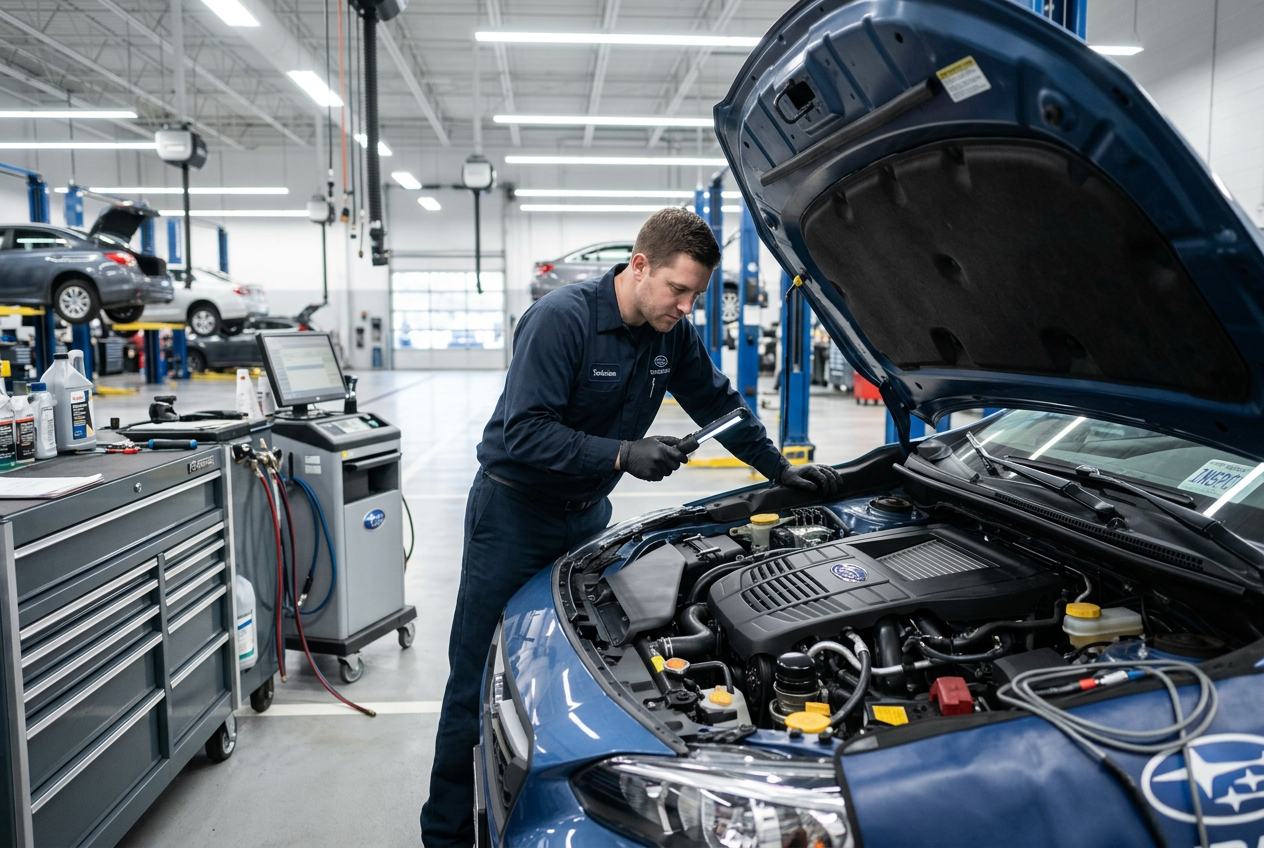
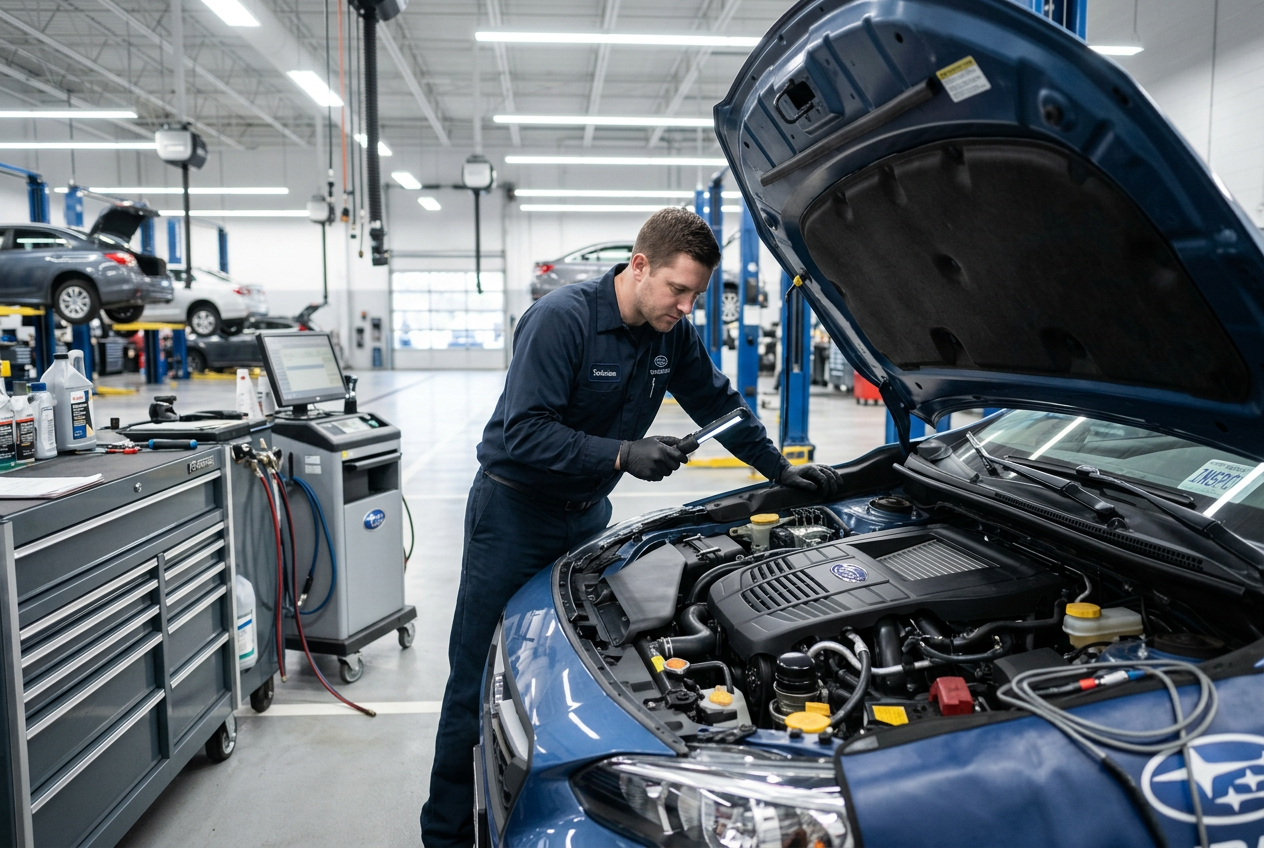
tech working an a Subaru engine

What Is Included in Subaru Maintenance Added Security Plans? Your Complete Coverage Overview

When you invest in a Subaru, whether it's a versatile Outback, a family-ready Ascent, or a nimble Crosstrek, you are choosing a vehicle engineered for longevity, active safety, and all-weather capability. However, maintaining that legendary reliability requires consistent, factory-scheduled maintenance. That is where Subaru Maintenance Added Security (SAS) plans step in. Simply stated, a Subaru Maintenance Added Security plan is a factory-backed prepaid maintenance program designed to lock in the cost of scheduled maintenance, shield vehicle owners against economic inflation, and guarantee that every service is performed strictly using Genuine Subaru Parts and factory-certified technical expertise.
Unlike third-party service contracts that may restrict where you can go or force you to rely on non-OEM aftermarket components, Subaru Maintenance Added Security is backed directly by Subaru of America. Coverage encompasses every core service recommended in your official Warranty and Maintenance Booklet. This includes regular engine oil and filter changes using OEM-certified synthetic fluids, tire rotations to ensure uniform tread wear on Subaru Symmetrical All-Wheel Drive systems, cabin air filter replacements, engine air filter renewals, brake fluid replacement flushes, top-offs of all vital powertrain fluids, and meticulous multi-point visual and diagnostic inspections during every single visit.
For vehicle owners living across St. Louis County—from Sunset Hills and Kirkwood to Ladue and Chesterfield—prepaying for maintenance through an Added Security plan provides total financial predictability. There are zero deductibles for scheduled maintenance services under the plan. When your instrument cluster signals that a service interval is approaching, you simply schedule your appointment with Sunset Hills Subaru, drive into our state-of-the-art service drive, hand over the keys, and let our factory-trained technicians handle the rest without pulling out your credit card at the cash counter.
Automotive technician using a light wand to inspect a car's engine bay in a service garage. (Representative image for illustration purposes only. Actual vehicle may vary based on trim and configuration.)
In addition to routine mechanical upkeep, Maintenance Added Security plans protect your vehicle's resale and trade-in value. A complete, unbroken record of dealership-performed maintenance verified in Subaru's national registry is one of the most effective ways to command top dollar when trading in your vehicle down the road. Explore our New Subaru Inventory to see the latest models eligible for tailored Maintenance Added Security plans, or speak directly with our service specialists to protect your current vehicle.

Does Subaru Offer Complimentary Factory Maintenance Programs or Extended Plans?

A common point of confusion among Subaru owners in St. Louis, Chesterfield, and Ladue is the distinction between factory-sponsored complimentary programs like "Maintain the Love" and standalone Subaru Maintenance Added Security plans. Subaru of America offers the "Maintain the Love" program as a complimentary inclusion on eligible new vehicle purchases strictly in specific geographic regions of the United States—primarily select Sunbelt and West Coast markets. This complimentary program typically provides 2 years or 24,000 miles of scheduled maintenance at no extra charge.
However, in regions where complimentary factory programs are not standard inclusions on every model purchase, drivers have access to Subaru Maintenance Added Security prepaid plans. Unlike regional promotions, Maintenance Added Security is a nationwide, customizable program available for purchase on new, leased, and certified pre-owned vehicles. Owners can select terms ranging from 2 years / 24,000 miles up to 5 years / 60,000 miles, customizing their coverage horizon to match their specific driving habits and leasing or financing terms.
Whether you are leasing a new Crosstrek for 36 months or purchasing a new Outback for long-term family road trips, adding a Maintenance Added Security plan delivers severe financial advantages. First, it completely locks in future service pricing at today's rates, effectively neutralizing rising labor costs and potential parts price increases. Second, because maintenance costs are fixed, owners can fold the cost of the maintenance plan directly into their auto financing or lease payment, creating a seamless, predictable monthly vehicle budget.
For drivers residing in Maryland Heights, Ballwin, or Sunset Hills, enrolling in a Maintenance Added Security plan guarantees that every maintenance event is handled at an authorized Subaru dealership using Genuine Subaru Synthetic Oil, OEM oil filters with anti-drainback valves, and factory-trained technicians. If you are shopping for a new vehicle, check out our Current New Car Specials and ask our finance specialists how easily a Maintenance plan can be integrated into your purchase.

What Is the Difference Between Minor, Intermediate, and Major Subaru Service Visits?

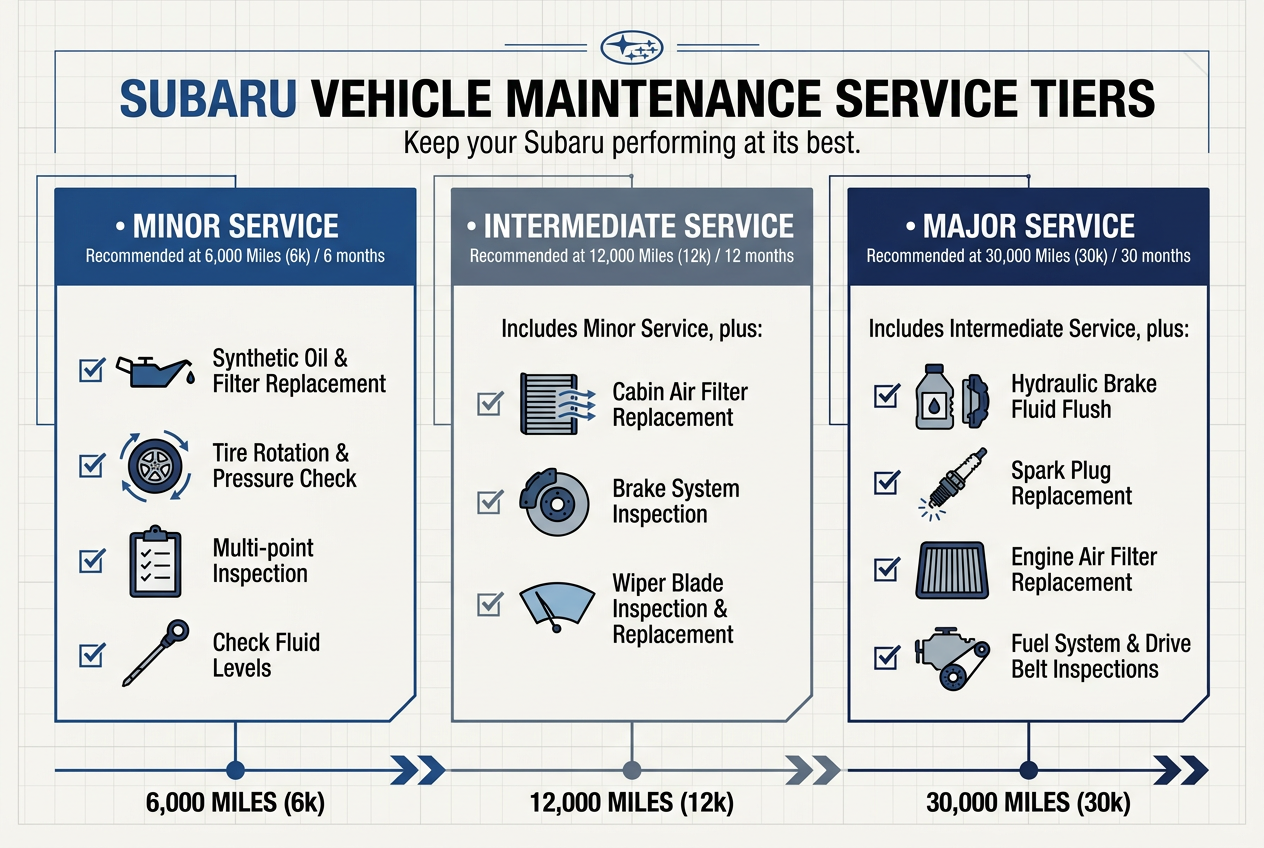
Subaru engineers vehicle maintenance around systematic service intervals occurring every 6,000 miles or 6 months—whichever comes first. These service visits are categorized into three core technical tiers: Minor, Intermediate, and Major. Understanding what happens during each visit clarifies how Subaru Maintenance Added Security protects your engine, drivetrain, and overall driving safety.

Minor Service (6k, 18k, 30k* Intervals)

Performed every 6,000 miles or 6 months. Minor service forms the foundational defense of your BOXER engine. It includes a complete drain and refill of factory-recommended synthetic engine oil, replacement of the engine oil filter, four-wheel tire rotation to balance tread depth across the Symmetrical AWD system, visual brake system inspection, fluid top-offs (windshield washer, power steering where applicable, coolant recovery reservoir), and a full multi-point visual inspection.

Intermediate Service (12k, 24k, 36k Intervals)

Occurring every 12,000 miles or 12 months, Intermediate service builds directly upon the Minor service scope. In addition to synthetic oil changes and tire rotations, technicians replace the cabin air filter (HEPA/AC filter) to ensure optimal HVAC performance and interior air purity. Technicians perform comprehensive brake pad, rotor, and caliper inspections, inspect steering linkages, suspension components, drive shafts, and axle boots, and verify steering box alignment.

Major Service (30k, 60k, 90k Intervals)

Major milestones occur at 30,000, 60,000, and 90,000 miles. These deep-level service visits include synthetic engine oil filter changes, tire rotations, cabin air filter replacement, engine air filter replacement, a complete hydraulic brake fluid flush, and thorough inspections of cooling systems, fuel lines, CVT differential fluids, and spark plugs (at 60k/90k intervals depending on engine family).
Subaru vehicle maintenance service tiers chart detailing minor, intermediate, and major service recommendations. (Representative image for illustration purposes only. Actual vehicle may vary based on trim and configuration.)
Under a Subaru Maintenance Added Security plan, all required tasks across minor, intermediate, and major service tiers are fully covered according to the contract term you select. Whether you drive a sporty New Subaru WRX Inventory model or a comfortable New Subaru Forester Inventory vehicle, adhering to these structured tiers protects your powertrain warranty and preserves smooth driving performance.

What Service Items Are Inspected During a 30,000-Mile Subaru Service and What Oil Specifications Are Required?

The 30,000-mile service is widely considered the most critical early milestone in a Subaru's lifespan. At 30k miles, your vehicle transitions out of its initial break-in period and requires rigorous technical evaluations to maintain long-term reliability. During a 30,000-mile inspection at Sunset Hills Subaru, our factory-certified technicians perform a complete diagnostic and physical check on key powertrain, chassis, and safety systems.
Crucial 30,000-mile service inspection items include: full fuel system inspection (lines, connections, hose clamps), cooling system evaluation (radiator hoses, coolant lines, expansion tank pressure test), complete brake system overhaul inspection (pads, rotors, calipers, parking brake cable adjustment), replacement of heavy-duty engine air intake filter, renewal of interior cabin air filter, and a full hydraulic brake fluid flush. Moisture absorption in brake fluid over time lowers its boiling point; flushing it at 30k miles ensures crisp, responsive pedal feel.
Oil specification accuracy is paramount for Subaru's horizontally opposed BOXER engine configuration. Because BOXER engine pistons move horizontally rather than vertically, proper oil viscosity and synthetic chemical stability are critical to prevent thermal breakdown, piston ring carbon buildup, and oil consumption. Naturally aspirated Subaru BOXER engines (such as the 2.5L four-cylinder in the Outback, Forester, and Crosstrek, or the 2.0L/2.5L in the Impreza) require mandatory 0W-20 Full Synthetic Engine Oil.
Turbocharged Subaru BOXER engines—such as the 2.4L Turbo found in the Ascent, Outback XT, Legacy XT, and WRX—require high-performance 5W-30 Full Synthetic Engine Oil engineered to handle extreme thermal loads generated by the turbocharger assembly. Subaru Maintenance Added Security plans explicitly cover these precise synthetic formulations and Genuine Subaru Oil Filters featuring engineered relief valves that preserve exact oil pressure during cold starts in St. Louis winters.

Are Wear-and-Tear Items Covered Under Subaru Added Security Plans, and Can You Replace Just One Damaged Tire?

It is essential to distinguish between scheduled maintenance and wear-and-tear replacement items. Standard Subaru Maintenance Added Security plans focus specifically on factory-scheduled preventive maintenance—oil changes, fluid flushes, filter replacements, and structural inspections. However, Subaru also offers Added Security Extended Service Agreements (such as Classic or Gold Plus plans) that can complement your maintenance plan by covering mechanical component failures, electric system repairs, and specific wear items like clutch linings or brake friction materials depending on contract selection.
For items like windshield wiper blades and standard brake pad wear caused by everyday driving, periodic replacement is managed outside of standard prepaid routine oil maintenance. However, keeping up with prepaid maintenance ensures that brake pad thickness and wiper condition are constantly measured and reported back to you before safety is ever compromised.
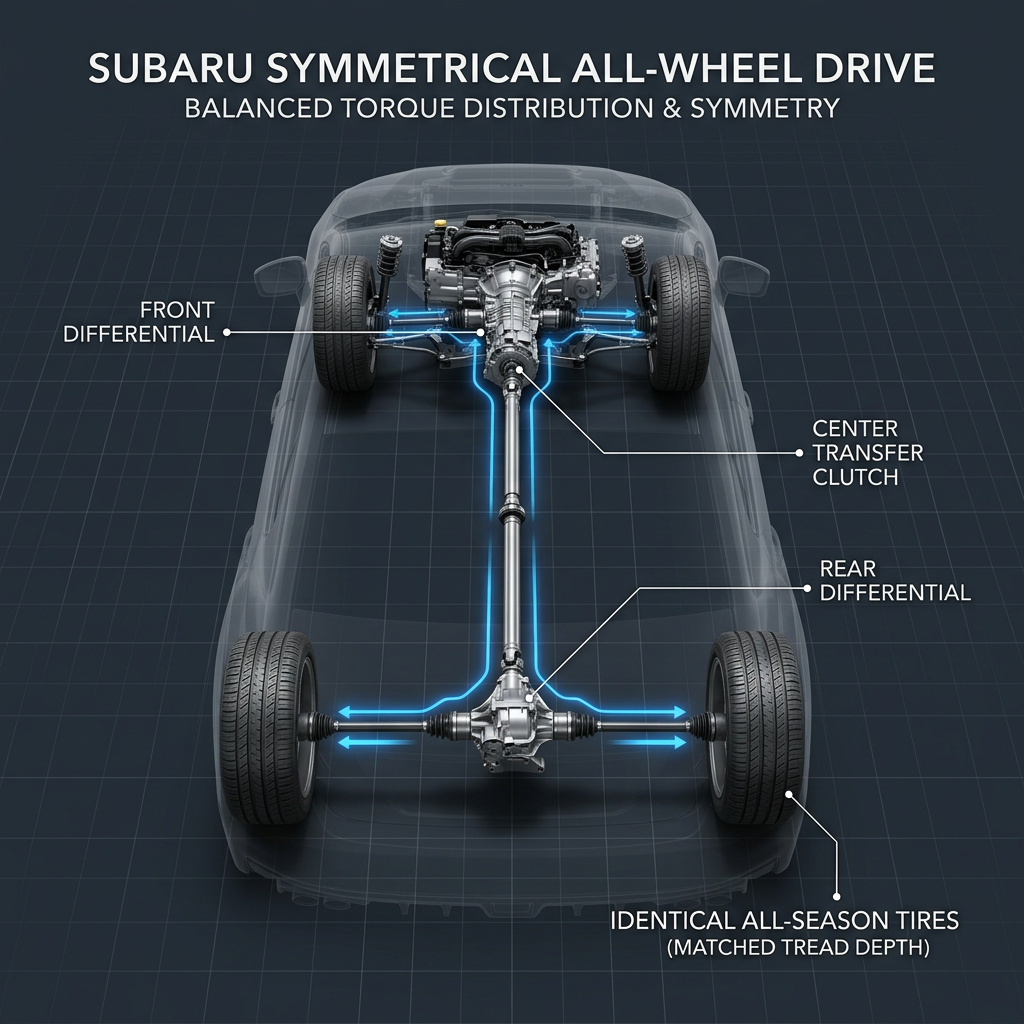
Technical diagram of Subaru Symmetrical All-Wheel Drive drivetrain highlighting front, center, and rear components. (Representative image for illustration purposes only. Actual vehicle may vary based on trim and configuration.)
Another crucial topic for St. Louis drivers is tire replacement on Subaru Symmetrical All-Wheel Drive vehicles. Can you replace just one damaged tire on a Subaru? The short answer is: only if the new tire's circumference matches the other three tires within strict tolerance standards (typically within 2/32nds of an inch of tread depth across all four wheels).
Because Subaru Symmetrical AWD continuously routes power to all four wheels, driving with tires of differing overall diameters causes the center differential to rotate constantly at varying speeds. This generates excess heat and severe mechanical stress on transfer clutches or viscous couplings. Regular tire rotations included in your Maintenance Added Security plan keep tread wear equalized, preventing premature differential wear. If a tire is damaged beyond repair, our service department can measure exact tread depth or source shaved matching tires to protect your AWD system.

Can Subaru Added Security Plans Be Honored at Any Dealer Nationwide, and Does Independent Servicing Void Your Warranty?

One of the greatest advantages of choosing genuine Subaru Maintenance Added Security over aftermarket service contracts is complete nationwide portability. Your plan is honored at every authorized Subaru retailer across all 50 U.S. states and Canada. Whether you are taking a cross-country road trip, moving from St. Louis to another state, or commuting between Sunset Hills, Ladue, and Chesterfield, any certified Subaru dealership can access your active plan in the master database and complete your service seamlessly without out-of-pocket charges.
Many vehicle owners ask: does having a Subaru serviced at an independent repair shop void the factory warranty? Under federal law—specifically the Magnuson-Moss Warranty Act—having routine service performed by an independent mechanic or doing it yourself does not automatically void your Subaru factory warranty. However, there are significant practical caveats to keep in mind.
If an independent garage uses incorrect fluid specifications (such as non-compliant CVT fluid or improper engine oil viscosity), installs low-quality non-OEM filters, or performs a procedure incorrectly that leads to component failure, Subaru reserves the right to deny warranty claims directly caused by those aftermarket parts or improper services. Furthermore, if you perform maintenance outside a dealership network, you bear the total burden of retaining every detailed receipt, invoice, and oil specification record to prove proper service history if a warranty dispute arises.
By bringing your vehicle to Sunset Hills Subaru under your Maintenance Added Security plan, every single visit, fluid change, and multi-point check is digitally recorded in Subaru's official global system. There is zero risk of non-compliant parts causing damage, zero record-keeping stress, and complete peace of mind knowing factory-trained technicians with specialized Subaru diagnostic tools are servicing your vehicle. Looking for replacement components? You can easily Find Subaru Parts directly through our authorized parts portal.

How Much Does Routine Subaru Maintenance Cost on Average Compared to Prepaid Security Plans?

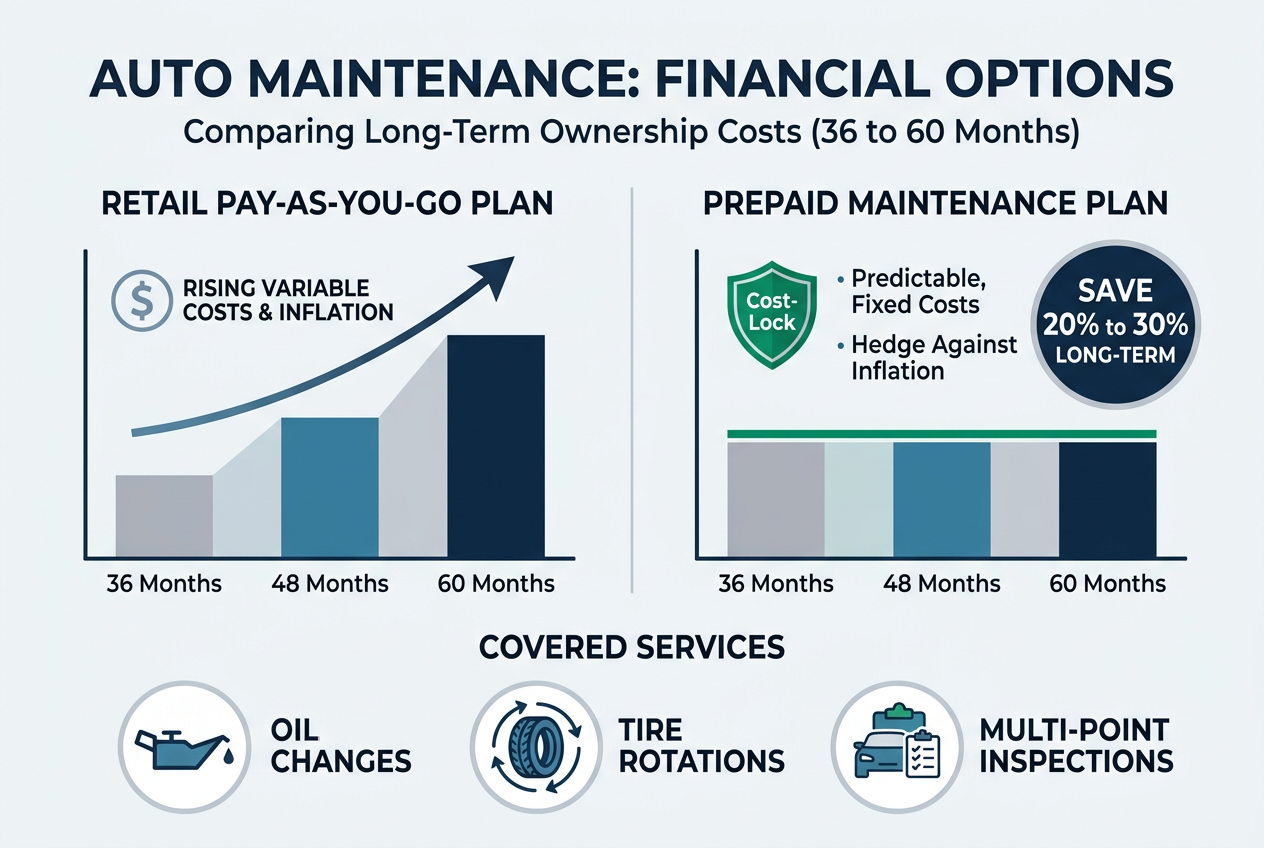
Evaluating the financial commitment of vehicle ownership requires looking at retail pay-as-you-go maintenance costs versus prepaid Subaru Maintenance Added Security plans over a typical 3-to-5-year driving period. Below is a breakdown comparing retail pay-as-you-go costs with the structured economic savings delivered by prepaid coverage.

Service Interval / Item

Average Retail Cost (Pay-As-You-Go)

Subaru Maintenance Added Security

Minor Service (Oil, Filter, Rotation, Inspection)

$95 - $130 per visit

Included (100% Covered)

Intermediate Service (Oil, Filter, Rotation, Cabin Filter, Brake Check)

$180 - $260 per visit

Included (100% Covered)

30,000-Mile Major Service (Oil, Filters, Brake Fluid Flush, Systems Inspection)

$450 - $650 per visit

Included (100% Covered)

60,000-Mile Major Service (Oil, Filters, Spark Plugs, Fluids, Complete Diagnostics)

$750 - $1,050 per visit

Included (100% Covered)

3-Year / 36,000-Mile Cumulative Cost

Approx. $1,400 - $1,800+

Locked Prepaid Rate (Save 20-30%)

Inflation Protection

Retail automotive parts and labor rates continuously increase over time. By purchasing a Maintenance Added Security plan when buying or leasing your vehicle, you freeze future routine maintenance pricing at current rates, completely insulating yourself from future cost spikes.

Discounted Package Pricing

Prepaid maintenance plans are discounted directly by Subaru of America as an incentive for vehicle owners to maintain their cars within authorized dealer networks. On average, owners save 20% to 30% compared to paying retail prices for individual services over time.

Financing Flexibility

Instead of facing unpredictable $400+ maintenance bills during milestone service visits, adding the plan to your vehicle loan or lease payment converts maintenance expenses into a predictable, low monthly figure.
Infographic comparing retail pay-as-you-go auto maintenance with a prepaid plan over 36 to 60 months. (Representative image for illustration purposes only. Actual vehicle may vary based on trim and configuration.)

How Long Does a Major Subaru 60,000-Mile Service Appointment Take?

Planning your day around vehicle service requires transparent, realistic time estimates. A major Subaru 60,000-mile service appointment typically takes between 2.5 to 4 hours to complete thoroughly. Why does this visit require more time than a standard 45-minute oil change? Because 60,000 miles represents a comprehensive mid-life technical overhaul of your vehicle's mechanical assemblies.
Key labor intensive tasks during a 60,000-mile visit include spark plug replacement on horizontally opposed BOXER engines. Because the engine cylinders lay flat horizontally against the frame rails, accessing spark plugs requires removing air intake boxes, battery assemblies, or specialized engine clearance tools. Additional time is dedicated to complete brake fluid flushing, CVT fluid inspections, front and rear differential gear oil evaluations, wheel alignment checks, and detailed electronic diagnostic scans.
At Sunset Hills Subaru, we respect your busy schedule. We offer convenient service options tailored to your lifestyle. For minor maintenance visits (oil changes, tire rotations, filter swaps), drivers can take advantage of Subaru Express Service—no appointment necessary, with fast turnarounds while you relax in our comfortable customer lounge featuring high-speed Wi-Fi, private workstations, complimentary gourmet coffee, and quiet waiting areas.
For extensive major service appointments like 60k or 90k milestone visits, Sunset Hills Subaru offers complimentary loaner vehicles (subject to availability upon reservation) or local shuttle services connecting you to nearby shopping, work, or home in Sunset Hills, Kirkwood, Ladue, or Chesterfield. Simply inform our service advisors when booking your appointment so we can arrange seamless transportation for you.

What Is the Recommended Maintenance Schedule for a Subaru Vehicle Driven in St. Louis and Chesterfield?

Driving in the greater St. Louis metropolitan region presents unique weather and traffic conditions. Mid-western weather swings from freezing, icy winters to hot, humid summers, combined with heavy stop-and-go commuting along I-270, I-64/US-40, and I-44. Consequently, many vehicles driven in Chesterfield, Ladue, and Sunset Hills fall under Subaru's "Severe Driving Conditions" guidelines, making strict adherence to interval timelines vital.

6,000 to 24,000 Miles

• 6,000 Miles / 6 Mos: Synthetic oil & filter change, tire rotation, multi-point check. • 12,000 Miles / 12 Mos: Oil & filter change, tire rotation, A/C cabin air filter replacement, brake pad/rotor inspection. • 18,000 Miles / 18 Mos: Synthetic oil & filter change, tire rotation, suspension inspection.

30,000 to 54,000 Miles

• 30,000 Miles / 30 Mos: Major service including oil & filter change, tire rotation, engine air filter, cabin air filter, full brake fluid flush. • 36,000 Miles / 36 Mos: Oil & filter change, tire rotation, cabin filter replacement. • 48,000 Miles / 48 Mos: Complete intermediate service and belt checks.

60,000 to 105,000 Miles

• 60,000 Miles / 60 Mos: Major service including spark plug replacement, brake fluid flush, engine air filter, cabin filter, front/rear differential oil check. • 90,000 Miles / 90 Mos: Major service repeat. • 105,000 Miles / 105 Mos: Timing belt inspection/replacement (for applicable models) and engine coolant flush.

Subie Talk Podcast Episode 4 |Subaru Service Made Easy

Getting your Subaru serviced should be simple, convenient, and stress-free. In Episode 4 of the Subie Talk Podcast, host Awais Irfan sits down with Joanna Riley from the Sunset Hills Subaru Business Development Center to discuss how our team makes Subaru service easier from start to finish. From scheduling service appointments online and understanding recommended maintenance to checking recalls, exploring complimentary shuttle services, and receiving detailed video multi-point inspections, you'll discover the many ways Sunset Hills Subaru puts customers first. Whether you're visiting us for a routine oil change or a more extensive repair, our team is here to answer your questions, save you time, and help keep your Subaru performing at its best.

Where Is the Sunset Hills Subaru Service Department, and How Can Owners Contact It?

Sunset Hills Subaru is conveniently situated in the heart of St. Louis County, serving drivers from Sunset Hills, Ladue, Chesterfield, Kirkwood, Ballwin, and Maryland Heights. Our state-of-the-art facility features an expansive, climate-controlled service drive, cutting-edge diagnostic bays, and a dedicated team of Master Certified Subaru Technicians.
Dealership Location Details: Sunset Hills Subaru 10100 Watson Rd, Sunset Hills, MO 63127 Get Directions to Sunset Hills Subaru
Contact Information & Scheduling:• Direct Service Department Phone:Call us at (314) 476-9638• Online Service Portal:Schedule Service and Diagnostics• Parts Department Orders:Find Subaru Parts
Our service department is open Monday through Saturday with early morning drop-off options and convenient Saturday appointment slots. Whether you need to consult on an existing Maintenance Added Security plan, purchase a new agreement, or schedule routine maintenance, our team is ready to deliver exceptional customer service.

Subaru Service Made Simple: What 2027 Subaru Owners Should Check Before Booking Service in Sunset Hills

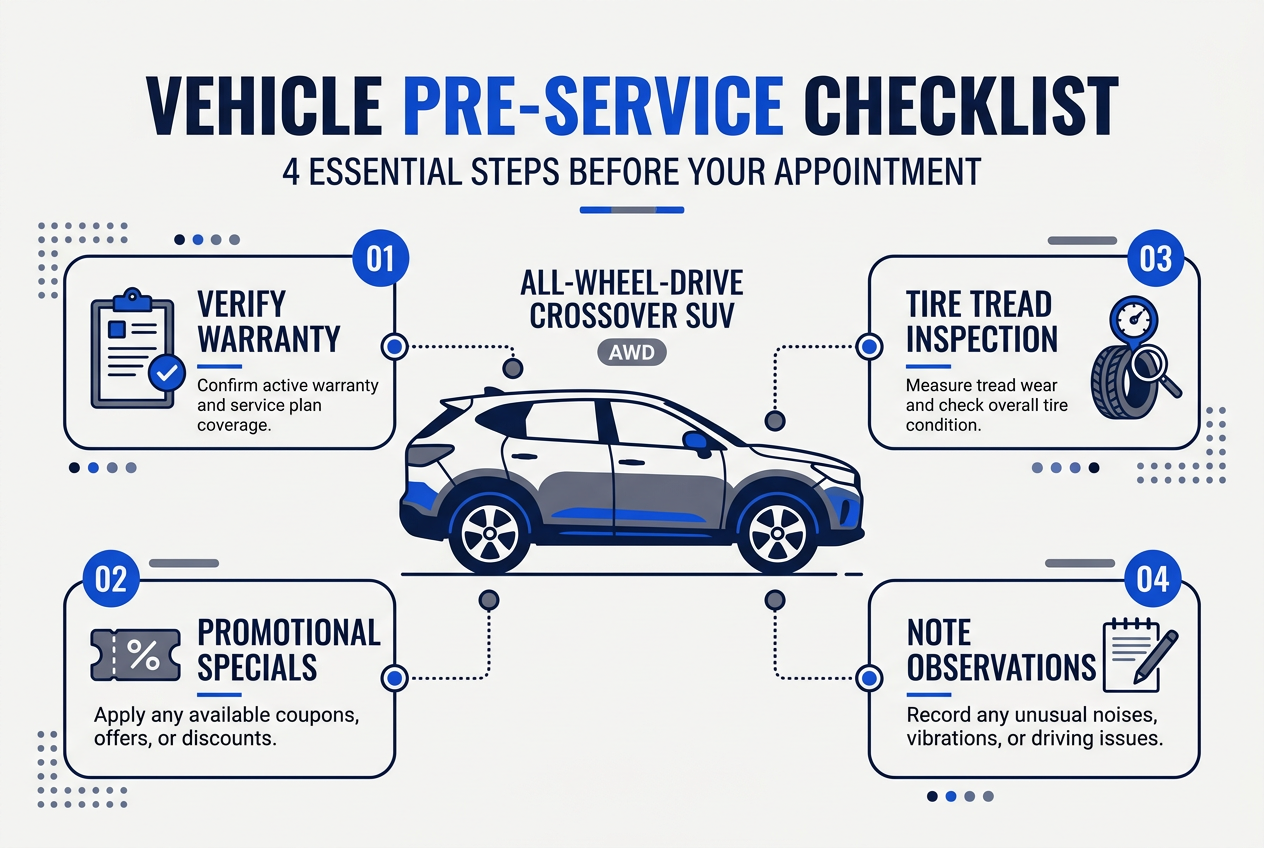
To make your maintenance visit as quick and effortless as possible, our service team has compiled a practical pre-service checklist for vehicle owners in Sunset Hills, Chesterfield, and Ladue. Reviewing these key items before arriving at our service drive ensures you maximize available savings, save time, and keep your vehicle operating at peak condition.
1. Verify Active Added Security Plan Status: Before booking, check your purchase documentation or log into your MySubaru account to verify active Maintenance Added Security coverage terms and remaining service vouchers. Our service advisors can also look up your active coverage instantly using your Vehicle Identification Number (VIN).
2. Check Local Promotional Service Coupons: If you have services required outside your maintenance plan (such as accessory installations, alignment adjustments, or severe-duty differential fluid refreshes), check our Current Service and Parts Specials page for active seasonal discounts and coupon offers before arriving.
3. Inspect Tire Wear and Physical Condition: Take a quick look at your tire tread depth and check for uneven wear patterns across all four tires. Uneven wear often indicates a need for wheel alignment checking during your regular maintenance visit, protecting your AWD system.
4. Organize Vehicle Records & Note Specific Driving Observations: If you have observed any unusual sounds, subtle vibrations under braking, or dashboard warning prompts, write them down so our technicians can perform targeted diagnostic evaluations alongside your routine scheduled maintenance.
Infographic detailing four essential pre-service steps for vehicle maintenance around a central crossover SUV vector. (Representative image for illustration purposes only. Actual vehicle may vary based on trim and configuration.)

Protect Your Vehicle and Budget with Subaru Maintenance Added Security at Sunset Hills Subaru

Your Subaru is built for adventure, safety, and long-term durability. Safeguarding its mechanical integrity with factory-scheduled maintenance is the smartest investment you can make as an owner. With Subaru Maintenance Added Security, you lock in future service costs, protect yourself against inflation, and ensure that every oil change, fluid flush, and inspection is performed by factory-certified specialists using Genuine Subaru Parts.
Whether you are driving in Sunset Hills, Chesterfield, Ladue, or anywhere in the St. Louis region, the team at Sunset Hills Subaru is committed to making vehicle care simple, affordable, and stress-free. Contact our service department today, explore our online scheduling tools, or visit our showroom to learn more about enrolling in a Maintenance Added Security plan.
Subaru Maintenance Plans in Sunset Hills MO | Sunset Hills Subaru
Posted in:

Related Posts

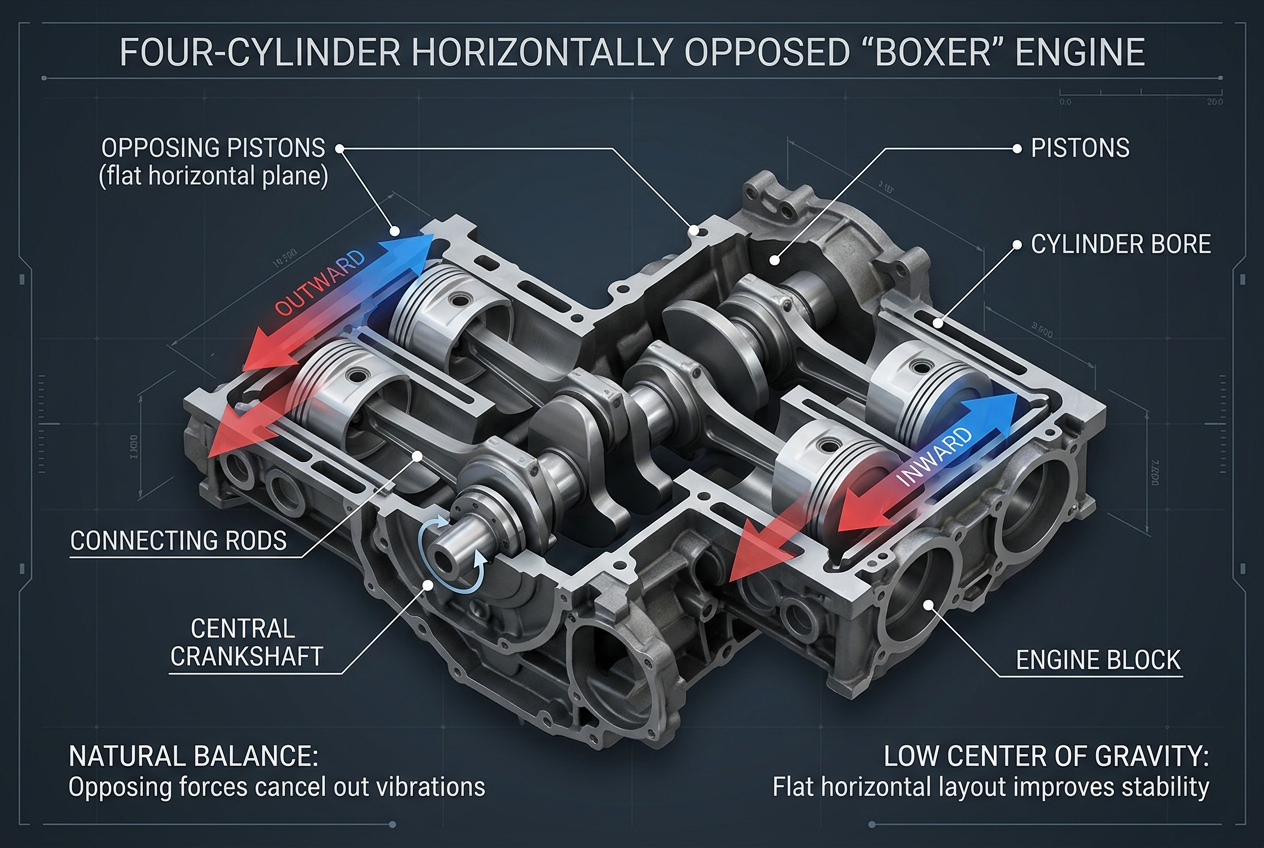
Boxer engine Diagram

Why Don't More Automobile Manufacturers Use Boxer Engines? The Bottom-Line Trade-Offs

If you have ever carved through the twisting, rolling bends of highway near Sunset Hills or taken a brisk morning drive along the Missouri River bluffs, you have likely felt the unmistakable handling signature of a horizontally opposed engine. Known universally as the boxer engine, this unique powerplant lies at the heart of modern engineering fascination. Enthusiasts revere it for its flat architecture, silky-smooth power delivery, and ultra-low center of gravity. Yet, when you look across the vast automotive landscape, only two major manufacturers—Subaru and Porsche—remain dedicated to mass-producing boxer engines for passenger vehicles. Why haven't automotive giants like Toyota, Ford, General Motors, or Honda adopted flat engine layouts for their high-volume commuter vehicles? The answer comes down to a set of uncompromising engineering and economic trade-offs. While a boxer engine delivers inherent primary rotational balance and unmatched lateral chassis stability, it places strict demands on vehicle design. A boxer engine requires a significantly wider engine bay, which complicates front suspension geometry and wheel-turn clearance. Economically, it demands dual cylinder heads, twin camshaft banks, duplicated exhaust manifolds, and complex timing mechanisms. This effectively doubles specific component tooling costs compared to standard inline-four configurations. Furthermore, tight clearances between horizontal cylinder heads and chassis frame rails make routine maintenance—such as spark plug replacement—more labor-intensive. For mass-market automakers focused on maximum modularity and minimum assembly cost, the traditional inline or V-engine remains the path of least resistance. However, for dedicated engineers at Subaru, those trade-offs are reasonable trade-offs for safety, control, and driving dynamics that no upright engine can mirror. How Does a Boxer Engine Work Mechanically, and Why Is It Called a Boxer Engine? To understand the magic of a boxer engine, you have to look inside the cylinder block. In a traditional upright inline engine, pistons move vertically up and down in a single bank. In a V-engine, pistons move diagonally in two angled banks sharing common crankpins. In a true boxer engine, the cylinders lie horizontally flat, facing one another across a central crankshaft. Opposing pairs of pistons move inward and outward simultaneously along a horizontal plane. This unique motion is precisely why the engine earned its pugilistic nickname. When you view the engine from above with its timing covers off, the opposing pistons punch toward each other and retreat in perfect synchronization—resembling a prizefighter tapping their gloves together before a round in the ring. Beyond its evocative name, this mechanical layout delivers an extraordinary advantage: cancellation of primary vibrational forces. Because opposing pistons reach top dead center (TDC) at the exact same moment on individual crankpins 180 degrees apart, their inertia forces cancel each other out naturally. There is no need for heavy, power-robbing balance shafts required by inline-four or V6 engines. The mechanical patent for this genius configuration dates back to 1896, when legendary automotive pioneer Karl Benz patented the 'Kontra-Motor' (counter-engine). Benz recognized that laying cylinders flat offered superior balance and cooling efficiency for early motorized carriages. Over a century later, that same core mechanical principle powers every modern vehicle in the New Subaru Inventory. Who First Developed the Boxer Engine, and When Did Subaru Adopt It? While Karl Benz created the initial design in 1896, the first mass-market automobile to bring the boxer engine to international prominence was the original Volkswagen Beetle, designed by Ferdinand Porsche in the late 1930s. The air-cooled flat-four became world-famous for its durability, simple construction, and compact height. Post-war sports car development solidified the boxer's reputation, with Porsche adopting flat-four and flat-six engines for its racing programs and iconic 911 series. Subaru's history with the flat engine began in 1966 with the launch of the groundbreaking Subaru 1000. Subcompact vehicles of that era suffered from heavy front-wheel vibration, harsh torque steer, and cramped cabins. Subaru engineers realized that laying a water-cooled four-cylinder engine completely flat created a perfectly symmetrical, compact powertrain layout that solved all three issues simultaneously. The success of the Subaru 1000 laid the foundation for Subaru's defining engineering triumph: pairing the flat boxer engine directly with Symmetrical All-Wheel Drive. Because a boxer engine is short lengthwise and symmetrical along its crankshaft line, drive shafts can extend rearward and laterally with perfect structural balance. By the 1970s and 1980s, Subaru made the boxer engine the core identity of its brand architecture. Today, whether navigating winter slush along Watson Road or taking suburban road trips across Missouri, this historical commitment ensures exceptional vehicle control. Over nearly six decades, Subaru has refined the boxer engine through generations of naturally aspirated, turbocharged, and hybrid configurations. From the rugged New Subaru Outback Inventory to the rally-bred New Subaru WRX Inventory, Subaru remains the only manufacturer in the world to equip its entire core lineup with horizontally opposed engines. What Is the Difference Between a Porsche Boxer Engine and a Subaru Boxer Engine? Porsche Engineering Focus Porsche engineers flat engines tailored for high-rpm track performance and rear/mid-engine vehicle chassis layouts. Porsche utilizes exotic dry-sump oiling systems with external reservoirs to prevent oil starvation under violent lateral g-forces. Displacement ranges from 2.0L turbo flat-fours in the 718 Cayman to high-revving 4.0L atmospheric flat-sixes in the 911 GT3, prioritizing maximum horsepower per liter and premium price points. Subaru Engineering Focus Subaru optimizes its BOXER® engines for daily reliability, high thermal efficiency, and linear low-end torque for suburban commuting. Utilizing user-friendly wet-sump lubrication and longitudinal front mounting, Subaru engines integrate directly with Symmetrical AWD transmissions. Displacements include the 2.0L and 2.5L Subaru BOXER® four-cylinder models and the 2.4L turbocharged direct-injection engine. Everyday Missouri Usability While Porsche delivers track-focused luxury sports cars, Subaru democratizes boxer engineering. Drivers in Ladue, Chesterfield, and Sunset Hills enjoy rally-proven balance, exceptional winter traction, and long-term fuel efficiency in family-friendly crossovers like the New Subaru Forester Inventory and New Subaru Crosstrek Inventory. Explore New Subaru Inventory Why Is a Boxer Engine Wider Than a V-Engine or Inline Engine? The primary physical characteristic that separates a boxer engine from upright designs is its dimensional profile. An inline-four engine stands tall and narrow. A V6 engine splits its cylinders at a 60-degree or 90-degree angle, creating a wedge shape. A boxer engine, by contrast, lays its cylinder banks completely flat at 180 degrees. Because the cylinder heads push directly outward toward the vehicle's structural frame rails, a boxer engine occupies substantial horizontal width inside the engine compartment. For standard front-wheel-drive transverse engine vehicles (where the engine sits sideways between the front wheels), a flat engine is simply too wide to fit without severely restricting front wheel steering lock angles. mainstream automakers designing compact front-wheel-drive sedans cannot accommodate flat engines without widening the vehicle's track width significantly. Packaging modern turbocharger plumbing, catalytic converters, and high-voltage hybrid electronics around wide cylinder heads presents additional structural challenges. Subaru overcomes this challenge by engineering dedicated longitudinal vehicle platforms where the wide boxer engine sits squarely centered between symmetrical front suspension towers. The Financial Barrier: Why Universal Modular Platforms Favor Inline Engines In the modern automotive industry, profitability is driven by platform modularity and manufacturing economies of scale. Major global auto groups build tens of millions of vehicles using shared engine families. The ubiquitous inline-four engine is the absolute champion of manufacturing efficiency. An inline engine requires only one cylinder head casting, one head gasket, one set of camshaft drive belts or chains, and one exhaust manifold assembly. Building a boxer engine, on the other hand, demands duplicate componentry across the board. The table below outlines the core structural and manufacturing cost factors that make inline engines the default choice for mainstream OEMs—and highlights why Subaru's commitment to flat engine architecture represents such a significant engineering investment: Engineering & Manufacturing Feature Standard Inline-4 Engine Standard V6 Engine Subaru BOXER® Flat-4 Engine Cylinder Head Assemblies 1 Single Head 2 Dual Heads (Angled) 2 Dual Heads (Opposed) Camshaft Overhead Banks 1 Bank (SOHC/DOHC) 2 Banks 2 Separate Banks Engine Center of Gravity High Vertical Mass Moderate Vertical Mass Ultra-Low Horizontal Mass Primary Rotational Balance Requires Balance Shafts Requires Balance Shafts Inherent Self-Canceling Balance Exhaust Manifold Routing Single Side Clearance Dual Side Clearance Symmetrical Underside Routing Platform Versatility Transverse / FWD Focus Transverse or Longitudinal Dedicated Longitudinal AWD Platform For high-volume manufacturers focused purely on profit margins, doubling cylinder head tooling and assembly line complexity makes flat engines financially unfeasible. Subaru, however, maintains dedicated assembly plants in Gunma, Japan, designed specifically around boxer engine production. This allows Subaru to produce flat-four engines at scale while passing the important safety and performance benefits directly to owners. How Does a Boxer Engine Lower a Car's Center of Gravity for Drivers? Reduced Body Roll By placing heavy engine components—such as the engine block, pistons, and valve gear—inches lower in the chassis, the car's overall center of mass drops dramatically. When making sharp turns around Maryland Heights or navigating highway off-ramps in St. Louis, lower center of gravity minimizes lateral body lean without requiring overly stiff suspension setups. Cornering Precision A vehicle with a low center of gravity transfers weight across its tires far more evenly during sudden evasive maneuvers or spirited driving. Drivers experience crisp steering response, neutral cornering balance, and predictable chassis feedback on twisting backroads through Chesterfield and Sunset Hills. Enhanced Passive Safety Beyond handling, low engine placement offers critical crash protection. In a severe head-on collision, the low profile of the Subaru BOXER® engine allows it to slide cleanly underneath the passenger cabin floor pan rather than pushing backward into the footwell, keeping driver and passengers protected. How Much Does Spark Plug Replacement Cost on a Boxer Engine and How Is It Serviced? One of the most frequent questions car buyers ask about flat engines involves maintenance accessibility. On a traditional inline-four engine, spark plugs sit right on top of the cylinder head, fully exposed under the engine plastic cover. Replacing them is a quick 20-minute task with standard sockets. On a boxer engine, the cylinder heads point horizontally straight toward the inner wheel wells and frame rails. Space between the spark plug ignition coils and the frame wall is restricted to just a few inches. Changing spark plugs requires removing the air intake ducting, battery, or washer fluid reservoir, and using specialized swivel extension sockets to extract plugs at an angle. Because spark plug replacement on a boxer engine involves additional labor steps, pricing varies by model and engine displacement; please contact our service department for current details. However, modern Subaru vehicles use long-life iridium spark plugs rated for 60,000 miles, meaning plug replacement is an infrequent scheduled maintenance item rather than an annual headache. Having your boxer engine serviced by factory-trained technicians at certified facilities ensures proper torque specs and correct OEM plug gap tolerances. Inspect our Current Service and Parts Information before your next service appointment. Schedule Service and Diagnostics Is a Boxer Engine the Exact Same Thing as a Flat Engine, and How Does It Compare to a V-Engine? True Boxer Engine In a true boxer engine, each opposing piston connects to its own individual crankpin on the crankshaft. Opposing pistons move simultaneously inward toward the crankshaft and outward toward the heads. This opposing push-pull motion creates perfect mechanical balance and gives Subaru engines their famous smoothness. 180° Flat V-Engine While all boxer engines are flat engines, not all flat engines are true boxers! A 180-degree flat V-engine (such as the Ferrari Testarossa flat-12) shares a single crankpin between opposing pistons. As one piston moves left, the opposing piston moves left in the same direction, eliminating the punch-and-counterpunch motion. Standard 60° V-Engine Standard 60-degree V6 or 90-degree V8 engines position cylinders upright in a V shape. While compact lengthwise, V-engines have higher center-of-gravity profiles and produce secondary rocking couples, requiring heavy counterweights and external dampening shafts. Are Boxer Engines Used in Motorcycles and Specialized Aviation? Two-Wheeled Legends: BMW & Honda Automobiles are not the only transport segment that benefits from horizontal engines. BMW Motorrad has built world-famous flat-twin 'Boxer' motorcycles (such as the R1250GS adventure series) since 1923. Cylinder heads extending into the air stream provide exceptional natural air cooling. Honda also uses a silky-smooth flat-six boxer engine in its flagship Gold Wing touring motorcycle, placing engine weight ultra-low for effortless low-speed maneuvering. General Aviation: Lycoming & Continental In general aviation, flat-four and flat-six engines made by manufacturers like Lycoming and Continental power the majority of single-engine propeller aircraft (such as Cessna and Piper planes). The flat profile allows sleek aerodynamic nose cowlings, while air cooling and self-balancing design maximize operational reliability high above the clouds. Which Automakers Currently Manufacture Cars with Boxer Engines Today? Today, the modern boxer automotive landscape features three primary brand connections: 1. Subaru Corporation: The world's primary practitioner of boxer engineering. Subaru equips every gasoline vehicle in its portfolio with horizontally opposed engines—including the New Subaru Outback Inventory, New Subaru Forester Inventory, New Subaru Crosstrek Inventory, New Subaru Ascent Inventory, New Subaru Impreza Inventory, New Subaru WRX Inventory, and rear-wheel-drive New Subaru BRZ Inventory. 2. Porsche: Continues flat-engine manufacturing for sports cars like the 911 (flat-six) and 718 Boxster/Cayman (turbo flat-four). 3. Toyota: Offers boxer power in the GR86 sports car—a vehicle joint-developed with Subaru and powered by Subaru's 2.4-liter BOXER® engine. Interested in upgrading your daily drive around St. Louis? Discover how easily you can transition to a balanced boxer engine. Check your current vehicle value using our online tool to Get your trade-in value, or apply online to Apply for financing before visiting our showroom. Experience the Superior Balance of a Subaru Boxer Engine at Sunset Hills Subaru While other manufacturers shy away from flat engines due to production complexities, Subaru's decades of engineering dedication deliver unmatched tangible benefits for drivers in Sunset Hills, Maryland Heights, Chesterfield, and Ladue. From confidence-inspiring lateral stability in sudden downpours to smooth, vibration-free highway cruising across Missouri, the Subaru BOXER® engine transforms your daily commute. Visit Sunset Hills Subaru located at 10100 Watson Rd, Sunset Hills, MO 63127. Our friendly, knowledgeable team is ready to demonstrate the unique engineering advantages of boxer engine balance in person. Get Directions to Sunset Hills Subaru or Call (314) 476-9638 to speak directly with our team. Get your trade-in value Get Directions to Sunset Hills Subaru Boxer Engine Benefits & Trade-Offs in Sunset Hills, MO | Sunset Hills Subaru

WRX

How Mileage Impacts Subaru WRX Resale Value: The Bottom Line on Depreciation

When sports car enthusiasts evaluate depreciation, the Subaru WRX consistently stands in a class of its own. While most performance compacts suffer heavy value drops during their first five years on the road, the WRX maintains exceptional residual value across the Midwest, boasting an average 5-year depreciation rate of just 35% to 42%. That means a well-maintained WRX retains nearly 60% to 65% of its initial sticker price after half a decade of real-world driving. However, mileage remains the single most influential variable affecting what buyers and dealerships are willing to pay for a used WRX. Every odometer click decreases a vehicle's monetary valuation, but the WRX curve is unique. Significant valuation changes occur at key mileage thresholds: 36,000 miles (end of the initial bumper-to-bumper warranty), 60,000 miles (expiration of factory powertrain coverage and major service milestone), and 100,000 miles (the psychological boundary for high-mileage classification). Despite these natural drops, WRX owners who maintain meticulous, documented routine service, preserve the vehicle in stock factory condition, and protect the Symmetrical All-Wheel Drive system offset high-mileage penalties far more effectively than owners of competing front-wheel-drive hot hatches. For drivers commuting along Highway 270, I-44, or Manchester Road through Chesterfield, Ladue, and St. Louis, understanding these mileage thresholds helps protect your automotive equity. Whether you plan to drive your rally-bred sedan for two years or ten, understanding how mileage interacts with vehicle history, factory warranty terms, and local market demand ensures you maximize your trade-in value when you are ready for your next vehicle at Sunset Hills Subaru. Mileage Tiers and Price Drops: What Every 10,000 Miles Costs a WRX Owner Low Mileage & Warranty Thresholds (0 to 60,000 Miles) Under 30,000 Miles (Prime Value Bracket): WRX models in this bracket command top tier pricing on the pre-owned market. Having full factory 3-year/36,000-mile bumper-to-bumper warranty remaining makes these units highly desirable to buyers seeking new car peace of mind without new car MSRP. Depreciation is minimal, typically dropping only 12% to 18% from original purchase price. 30,000 to 60,000 Miles (Powertrain Warranty Safety Zone): Crossing the 36,000-mile mark triggers a minor market adjustment as basic warranty coverage expires. However, because Subaru protects the engine and Symmetrical AWD under the 5-year/60,000-mile factory powertrain warranty, demand remains strong. Suburb commuters in Chesterfield and St. Louis trading in at this stage retain roughly 68% to 75% of original MSRP. Mid to High Mileage Tiers (60,000 to 100,000+ Miles) 60,000 to 100,000 Miles (Out-of-Warranty Transition): At 60,000 miles, powertrain warranty coverage ends and major routine service items (spark plugs, differential flushes, brake fluid) become due. This threshold typically causes a 10% to 15% valuation adjustment. However, documented factory maintenance at a dealer protects market value far better than average market trends. 100,000+ Miles (Enthusiast & High Mileage Market): Crossing six figures on the odometer reduces valuation, but the WRX maintains a passionate secondary market. Enthusiasts seeking affordable AWD performance actively buy clean, unmodded 100k+ mile WRXs. Well cared for examples still sell for 35% to 45% of original sticker, outperforming segment peers. Mileage Bracket Warranty Status Est. Residual Value % Key Valuation Factors 0 - 30,000 Miles Full Factory Warranty 82% - 88% Pristine condition, minimal wear, near-new trade value 30,000 - 60,000 Miles Powertrain Warranty Active 68% - 75% 36k warranty transition, minor tire/brake wear factor 60,000 - 100,000 Miles Out of Factory Warranty 50% - 62% Service records crucial; spark plug & fluid service history 100,000+ Miles Out of Warranty 35% - 45% Strong enthusiast demand; unmodded status commands premium Does the Subaru WRX Hold Its Value Better Than Competitors Like the Golf GTI? Subaru WRX 5-Yr Retained Value: 58% - 65% Standard Symmetrical All-Wheel Drive gives the WRX an undeniable resale advantage in Midwest markets like St. Louis. Year-round weather capability keeps pre-owned demand exceptionally consistent regardless of gas price fluctuations. VW Golf GTI 5-Yr Retained Value: 48% - 54% While refined, the front-wheel-drive Volkswagen Golf GTI suffers steeper depreciation. Higher ongoing European maintenance costs and lack of standard AWD reduce secondary market appetite in snow belt regions. Civic Si & Elantra N 5-Yr Retained Value: 50% - 57% The Honda Civic Si holds strong resale thanks to Honda brand reliability, but lacks AWD traction. The Hyundai Elantra N offers performance but experiences aggressive early year depreciation. Independent industry residual value studies consistently rank the Subaru WRX among the top sports compact cars for value retention. In the St. Louis metropolitan region, severe winter weather, changing road conditions, and hilly terrain in neighborhoods around Ladue and Sunset Hills fuel strong demand for pre-owned all-wheel-drive performance sedans. When comparing 5-year total ownership costs, higher WRX residual values frequently offset fuel expenses, giving WRX owners a lower overall cost to own than Golf GTI or Hyundai Elantra N drivers. What Is Your WRX Worth Today? Get an Instant Trade-In Valuation Curious how your current mileage, vehicle history, and local market demand affect your WRX's market value? At Sunset Hills Subaru, our appraisal experts analyze real-time St. Louis market transactions to offer top dollar for clean pre-owned WRX models. Whether you have 15,000 miles or 115,000 miles, find out what your vehicle is worth in minutes. Get Your Trade-In Value Online Are Manual Transmission Subaru WRXs Worth More on the Used Market? 6-Speed Manual Transmission Demand In the sports compact segment, manual transmissions have become increasingly rare. Approximately 75% to 80% of new WRX buyers opt for the 6-speed manual transmission. On the secondary market in enthusiast hubs across Maryland Heights and Ladue, 6-speed manual models may command a higher resale value over automatic models with similar mileage. Manual WRXs appeal to driving purists who value engagement, mechanical simplicity, and lower long-term transmission rebuild costs as odometers pass 100,000 miles. Subaru Performance Transmission (SPT) The Subaru Performance Transmission (SPT automatic/CVT) brings distinct advantages that appeal to daily commuters. Featuring paddle shifters, faster upshifts, and full integration with standard Subaru EyeSight Driver Assist Technology, automatic models attract buyers seeking performance paired with stress-free traffic handling along I-64 and Watson Road. While automatic WRX models experience slightly higher initial depreciation, clean lower-mileage units remain highly sought after by urban buyers. Stock vs. Modified: How Aftermarket Tuning Impacts High-Mileage WRX Values The Unmodded Stock Premium Among pre-owned automotive appraisers, an unmodded, factory-original Subaru WRX is referred to as a 'unicorn.' Because many WRX owners add performance parts, clean stock vehicles command top dollar regardless of odometer mileage. Buyers know an unmodified car has likely not been subjected to excessive engine boost pressure, aggressive launch control, or poor custom tuning. Keeping your WRX in 100% stock mechanical condition is the single most effective way to preserve trade-in value as mileage accumulates over 60,000 miles. The Modification Depreciation Penalty While aftermarket upgrades like ECU reflash tunes, downpipes, cold air intakes, and lowered coilover suspensions cost thousands to install, they almost universally reduce trade-in value by 15% to 30%. Dealerships and certified pre-owned buyers view heavy modifications as red flags for accelerated powertrain stress. Additionally, ECU tunes can void remaining factory powertrain warranties. If you do modify your WRX, keep all original factory parts so you can return the car to stock before valuation. What Engine and Drivetrain Specs Keep High-Mileage WRXs Running Strong? 2.4L Turbo Subaru BOXER The 2.4-liter turbocharged Subaru BOXER (FA24) engine features horizontally opposed pistons. This design creates a low center of gravity, reduces vibration, and delivers 271 horsepower and 258 lb-ft of torque. Increased displacement over prior generations reduces engine strain at highway speeds, promoting long-term reliability well past 100,000 miles. Twin-Scroll Turbo Systems Featuring an electronic wastegate and twin-scroll turbocharger layout, the WRX engine delivers near-instantaneous boost response starting low in the RPM band. Robust oil cooling passages and advanced thermal management prevent oil breakdown, ensuring turbo housing and bearing longevity across years of suburban driving. Symmetrical AWD System Unlike reactive slip-and-grip systems found in competitors, Subaru Symmetrical All-Wheel Drive distributes power continuously to all four wheels. Center differentials and active torque vectoring maintain traction while protecting drivetrain components from uneven mechanical wear. Protect Your WRX Resale Value with Certified Subaru Service in Sunset Hills The single best defense against high-mileage depreciation is a documented history of factory-certified service. Routine oil changes, tire rotations, brake fluid flushes, and differential maintenance performed by factory-trained technicians automatically upload to your vehicle history report, proving to future buyers that your WRX was cared for with genuine OEM Subaru parts. Schedule Certified WRX Maintenance Subaru WRX Maintenance Cost, Service Intervals, and 5-Year Ownership Expenses Calculating the total cost of owning a sports sedan involves far more than your monthly car payment. Over a 5-year driving period in St. Louis (assuming 12,000 to 15,000 miles driven annually), routine maintenance, insurance, fuel, and service intervals directly influence your overall financial outcome. When compared against European competitors like the Volkswagen Golf GTI, the WRX delivers impressive long-term value. Ownership Expense Category (5-Year / 60k Miles) Subaru WRX (2.4L Turbo AWD) VW Golf GTI (2.0L Turbo FWD) Estimated 5-Year Maintenance Budget $2,450 - $2,950 $3,400 - $4,100 Synthetic Oil Change Interval Every 6,000 miles / 6 months Every 10,000 miles / 12 months Spark Plug Replacement Milestone 60,000 miles 80,000 miles Differential & AWD Fluid Services Front/Rear diff flushes at 30k & 60k Front differential fluid service Estimated Annual Fuel Cost (15k mi/yr) estimated to vary by driving habits and service history (Req Premium 91+) estimated to vary by driving habits and service history (Req Premium 91+) Est. Annual Insurance Premium (St. Louis) $1,650 - $2,100 / year $1,550 - $1,950 / year WRX Maintenance Advantage Subaru replacement parts, filters, and fluid specifications are widely available and often more affordable than some European import parts. Routine 6,000-mile synthetic oil service keeps the FA24 turbocharger lubricated while keeping annual upkeep budgets reasonable for St. Louis drivers. Golf GTI Maintenance Overhead While the Golf GTI offers slightly higher fuel efficiency, European specialty labor rates and higher component costs (such as dual-clutch transmission fluid flushes and electronic sensor replacements) increase 5-year maintenance budgets more than the WRX. Which Car Offers Better Winter Driving Capability for St. Louis Drivers? WRX Symmetrical AWD Standard continuous all-wheel drive routes engine torque to all four wheels simultaneously. On icy hills in Chesterfield or slush-covered roads in Ladue during Missouri winter storms, the WRX delivers unmatched acceleration traction, vehicle stability, and confidence. Front-Wheel Drive Rivals Front-wheel drive competitors like the Golf GTI and Honda Civic Si rely on front tire traction for both steering and propulsion. In heavy Midwest snowfall, front wheels struggle for grip on inclines, requiring winter tires to match basic AWD capability. Resale Value Impact Because winter driving capability is a top priority for Midwest car buyers, pre-owned AWD vehicles sell faster and retain higher trade-in values. Used car buyers willingly pay a premium for high-mileage WRXs knowing they provide reliable year-round transportation. Starting Price, Factory Warranty Coverage, and Total 5-Year Ownership Costs When evaluating entry pricing, factory warranty protection, and overall cost to own, the Subaru WRX presents a compelling financial argument for performance-minded buyers in St. Louis and Sunset Hills. Subaru WRX Package • Starting MSRP Range: ~$32,700 - $41,500 (Base to GT / TR Trims) • Basic Warranty: 3 Years / 36,000 Miles • Powertrain Warranty: 5 Years / 60,000 Miles • Corrosion Perforation: 5 Years / Unlimited Miles • 24/7 Roadside Assistance: 3 Years / 36,000 Miles • 5-Year Retained Equity: ~58% - 65% of original price VW Golf GTI Package • Starting MSRP Range: ~$31,900 - $40,500 (S to Autobahn Trims) • Basic Warranty: 4 Years / 50,000 Miles • Powertrain Warranty: 4 Years / 50,000 Miles • Corrosion Perforation: 7 Years / 100,000 Miles • 24/7 Roadside Assistance: 3 Years / 36,000 Miles • 5-Year Retained Equity: ~48% - 54% of original price Which Service Intervals Should WRX Owners in Sunset Hills Follow? To preserve maximum trade-in value and ensure long-term mechanical reliability, follow this factory-recommended maintenance plan at Sunset Hills Subaru. Keeping precise electronic records through our certified service department gives future buyers complete confidence. Interval Milestone Core Maintenance Services Resale Impact 6,000 Miles / 6 Months Full synthetic oil & filter change, tire rotation, multi-point inspection Establishes clean vehicle history log 12,000 Miles / 12 Months Oil service, tire rotation, cabin air filter replacement, brake pad inspection Maintains tire wear and air quality records 30,000 Miles / 30 Months Engine air filter, brake fluid replacement, front & rear differential fluid inspection Critical milestone for mid-life warranty valuation 60,000 Miles / 60 Months Spark plug replacement, differential fluid flush, transmission fluid service, coolant inspection Protects powertrain health past factory warranty View Current Service and Parts Specials Explore Pre-Owned WRX Inventory or Value Your Trade at Sunset Hills Subaru Whether you are looking to purchase a new rally-bred WRX, trade in your current high-mileage vehicle, or schedule routine maintenance to protect your car's resale value, Sunset Hills Subaru is your trusted St. Louis area resource. Conveniently located at 10100 Watson Rd, Sunset Hills, MO 63127, our dealership provides expert appraisals, factory-trained technicians, and an extensive lineup of new and certified pre-owned Subaru vehicles. Ready to experience the performance and strong resale value retention of the Subaru WRX for yourself? Contact our team today at (314) 476-9638 or click below to explore our current inventory. Browse New Subaru WRX Inventory Subaru WRX Resale Value Insights in Sunset Hills MO | Sunset Hills Subaru

2025 Subaru Legacy

Which Midsize Sedan Retains Higher Resale Value After 5 Years?

Which Midsize Sedan Retains Higher Resale Value After 5 Years? When purchasing a midsize sedan, initial purchase price and fuel efficiency are only part of the financial equation. The true cost of vehicle ownership is heavily dictated by five-year depreciation—the difference between what you pay today and what the car is worth when you trade it in or sell it half a decade down the road. According to long-term automotive residual data from ALG (Automotive Lease Guide) and Kelley Blue Book (KBB), the Subaru Legacy compares favorably with midsize competitors like the Toyota Camry, Honda Accord, and Nissan Altima in retaining its original value over a five-year horizon. While the Camry and Accord have long maintained reputations for reliability, the Subaru Legacy holds a unique financial advantage in suburban markets like St. Louis and Chesterfield. Standard Symmetrical All-Wheel Drive (AWD), exceptional safety scores from the IIHS, and demonstrably lower average repair costs over time elevate secondhand demand. When winter weather hits Eastern Missouri, pre-owned buyers actively seek out all-weather sedans, directly insulating Legacy trade-in equity against steep market drops. Whether you plan to finance a new sedan or lease for three to five years, choosing a vehicle with industry-leading resale retention preserves thousands of dollars in equity. Explore our current New Subaru Legacy Inventory to discover how engineering excellence translates directly into long-term financial smarts. Explore New Subaru Legacy Inventory 5-Year Midsize Sedan Depreciation Comparison: Subaru Legacy vs. Camry, Accord, and Altima To understand why the Subaru Legacy dominates five-year value retention, it helps to examine empirical residual figures across the midsize segment. Depreciation accounts for nearly 40% to 50% of total five-year vehicle ownership expenses. A sedan that retains even 5% to 8% more of its sticker price after 60 months puts thousands of dollars back into your wallet when it is time to upgrade. Midsize Sedan Model Standard Drivetrain Est. 5-Year Retained Value % 5-Year Depreciation Loss (on $30k MSRP) Regional Used Demand (MO) Subaru Legacy Symmetrical AWD 54.5% - 57.2% ~$12,840 Very High (AWD Premium) Toyota Camry Front-Wheel Drive (FWD) 51.0% - 53.8% ~$14,100 High Honda Accord Front-Wheel Drive (FWD) 50.2% - 52.5% ~$14,490 High Nissan Altima Front-Wheel Drive (FWD) 42.0% - 45.1% ~$16,800 Moderate Why Retained Equity Matters in St. Louis Initial purchase price is only the starting point. Midsize sedans equipped with standard Front-Wheel Drive often experience steeper value cliffs once they reach 60,000 to 80,000 miles. In Missouri, where seasonal transitions bring freezing rain, slush, and heavy summer downpours, pre-owned buyers specifically search out All-Wheel Drive models. Because standard AWD is built into every Subaru Legacy (excluding specific niche specs), second-hand buyers are willing to pay a premium. This elevated demand keeps trade-in valuations remarkably high at dealerships across Sunset Hills and Ladue. When balancing your initial price tag against retained trade-in equity, the Legacy regularly proves to be the most financially prudent choice in its class. Furthermore, Subaru's controlled production volumes prevent market saturation. Unlike fleet-heavy sedans like the Nissan Altima, the Legacy maintains tighter pre-owned inventory supplies, ensuring used car managers offer top dollar when you decide to upgrade. How Symmetrical All-Wheel Drive and Safety Ratings Protect Legacy Resale Value Symmetrical AWD Engineering Unlike slip-and-grip AWD systems found in competing vehicles that only engage rear wheels after traction is lost, Subaru Symmetrical All-Wheel Drive actively routes power continuously to all four wheels. Placed along the vehicle's centerline, this balanced powertrain provides exceptional stability, preventing mechanical wear and tear associated with abrupt torque shifts and maintaining long-term hardware durability. Top Safety Pick+ Legacy Safety credentials heavily dictate pre-owned vehicle desirability. The Subaru Legacy consistently earns the Insurance Institute for Highway Safety (IIHS) Top Safety Pick+ rating—the industry standard for crashworthiness. Engineered with Subaru’s Global Platform and Ring-Shaped Reinforcement Frame, the Legacy protects occupants through advanced crumple zones and rigid cabin structural integrity. Pre-Owned Market Impact When family buyers and daily commuters search the used market, safety and all-weather traction are non-negotiable priorities. Secondhand shoppers willingly pay higher market rates for a vehicle with proven structural safety records and year-round confidence. This structural confidence creates a resilient floor for trade-in values at five years. What Driver Assistance and Safety Systems Come Standard on the Subaru Legacy? Every modern Subaru Legacy comes standard with Subaru EyeSight Driver Assist Technology, a suite of advanced active safety systems that act like an extra pair of eyes on the road. Unlike competitor sedans that locked these features behind expensive trim upgrades in earlier model years, Subaru democratized active safety across the entire Legacy lineup. Standard EyeSight capabilities include: • Pre-Collision Braking System: Applies full braking force in emergency situations to prevent or mitigate frontal impacts. • Advanced Adaptive Cruise Control with Lane Centering: Maintains preset distances from traffic while keeping the sedan centered in its lane on highways like I-64 and I-270. • Lane Departure and Sway Warning: Monitors lane markings and alerts drivers if the vehicle drifts unintentionally. • Pre-Collision Throttle Management: Cuts power if an obstacle is detected directly ahead to prevent accidental acceleration. By drastically reducing minor fender benders and severe collisions, standard EyeSight technology helps maintain clean Vehicle History Reports (CARFAX). A used sedan with a clean, collision-free history commands significantly higher trade-in values after 5 years. Pre-owned buyers prioritize modern safety tech. Knowing that a 5-year-old Legacy carries the exact same core active safety hardware as brand-new models makes pre-owned Legacy inventory highly sought after across Missouri. Browse New Subaru Inventory Understanding Total Cost of Ownership: Subaru Legacy Maintenance Costs vs. Resale Gain Evaluating vehicle economics strictly by initial cost misses the bigger picture. True financial intelligence lies in calculating total cost of ownership (TCO)—balancing routine maintenance costs against five-year retained equity. A car with slightly higher routine service requirements can easily yield superior net wealth if its depreciation curve is dramatically flatter. Over a 5-year or 60,000-mile period, average Subaru Legacy maintenance costs range between $1,800 and $2,400 total (roughly $360 to $480 per year for standard scheduled servicing). While all-wheel drive models require differential fluid checks and balanced tire wear, the Legacy’s unexpected repair frequency is statistically lower than the overall industry average. Because major powertrain failures are rare when factory guidelines are met, Legacy owners avoid costly out-of-pocket mechanical repairs. When you combine low unexpected maintenance expenses with a 54%+ 5-year residual value retention, the net cost of owning a Legacy is significantly lower than owning FWD competitors that depreciate by 50% to 58% over the same timeframe. Ownership Expense Category Subaru Legacy (5-Year Est.) Average FWD Midsize Sedan Financial Advantage 5-Year Maintenance & Servicing $2,100 $1,950 -$150 (AWD Fluid/Tires) 5-Year Unexpected Repairs $650 $1,100 +$450 (High Build Reliability) 5-Year Retained Equity ($30k vehicle) $16,800 $14,100 +$2,700 (Flatter Depreciation) Net Financial Impact +$14,050 Retained Value +$11,050 Retained Value +$3,000 Legacy Advantage Recommended Subaru Legacy Maintenance Schedule and DIY Care Tips Factory Intervals Subaru recommends routine maintenance every 6,000 miles or 6 months (whichever comes first). Key milestones include: • 6,000 Miles: Synthetic oil change, tire rotation, safety inspection. • 12,000 Miles: Cabin air filter replacement, brake system check. • 30,000 Miles: Engine air filter, brake fluid flush, inspection of AWD differential fluids. • 60,000 Miles: Spark plug replacement (BOXER engine service) and transmission fluid inspection. 0W-20 Synthetic Oil What motor oil weight is recommended for the Subaru Legacy? Standard naturally aspirated 2.5L BOXER engines require 0W-20 synthetic motor oil. Synthetic oil optimizes cold-weather startup lubrication during Missouri winters and reduces internal friction. DIY vs. Dealer Care Can basic maintenance on a Subaru Legacy be performed at home? Yes! Budget-conscious owners can easily replace cabin air filters, engine air filters, wiper blades, and check fluid levels. However, spark plug swaps on horizontal BOXER engines and EyeSight recalibrations require specialized dealer tools best handled at factory service centers. What Do Routine and Major Subaru Legacy Services Cost Around Sunset Hills, Missouri? Understanding routine service pricing around St. Louis helps owners budget effectively. Around Sunset Hills, MO, typical dealership service costs align with the following ranges: • Standard Minor Service (6k / 18k / 24k miles): $85 - $130 (Includes synthetic oil, OEM filter, tire rotation, and multi-point inspection). • 30,000-Mile Major Service: $350 - $490 (Includes engine/cabin filters, brake fluid exchange, differential inspection, and fuel system service). • 60,000-Mile Major Service: $650 - $890 (Adds spark plug replacement, complete brake fluid flush, and transmission fluid diagnostics). • 90,000-Mile Service: $450 - $650 (Covers comprehensive fluid exchanges, belt inspection, and mechanical diagnostics). Does the Subaru factory warranty cover routine maintenance costs? The standard Subaru 3-year/36,000-mile bumper-to-bumper warranty and 5-year/60,000-mile powertrain warranty cover manufacturing defects and mechanical repairs, but do not cover wear-and-tear routine maintenance like oil changes or brake pads. However, completing scheduled maintenance at authorized facilities ensures full warranty protection without claim disputes. Why Dealer Maintenance Records Boost Resale Equity When trading in your sedan at Sunset Hills Subaru, having a clean, digital maintenance history logged through factory-certified service departments adds tangible value. Pre-owned vehicle buyers pay top dollar for vehicles with documented OEM upkeep. Be sure to review our Current Service and Parts Information before booking your appointment to maximize savings on routine care. Schedule Service and Diagnostics Why All-Wheel Drive and CVT Fluid Service Intervals Impact Long-Term Expenses Why All-Wheel Drive Increases Long-Term Expenses Slightly Operating a continuously engaged Symmetrical AWD system adds minor service requirements compared to simple FWD layouts. Front and rear differentials require gear oil inspections and drain/fills roughly every 30,000 to 60,000 miles. Additionally, because Subaru’s AWD system relies on identical wheel rotation speeds, tire tread depths must match within 2/32nds of an inch across all four tires. Uneven tire wear can strain the central transfer clutch, making routine tire rotations crucial. CVT Fluid Service Requirements How often does a Subaru Legacy Lineartronic Continuously Variable Transmission (CVT) require fluid service? Subaru officially considers CVT fluid a 'lifetime' fill under normal driving conditions, but factory technicians strongly advise inspecting CVT fluid every 30,000 miles and performing a complete fluid drain/fill every 60,000 to 90,000 miles—especially under 'severe' driving conditions such as frequent stop-and-go commuting around St. Louis or towing. Proactive CVT fluid changes preserve transmission shift performance, protect internal steel chains, and prevent catastrophic repair costs down the road. Common Repairs, EyeSight Recalibration, and Legacy XT Fuel Requirements Most Common Repairs What are the most common repair costs for a Subaru Legacy beyond 80,000 miles? Typical maintenance items include wheel bearing replacements ($350-$500 per hub), front lower control arm bushings ($300-$450), and brake rotor replacement ($400-$600 per axle). Engine components like timing chains in modern BOXER engines are designed to last the full vehicle lifespan. EyeSight Recalibration Does Subaru EyeSight recalibration increase windshield replacement costs? Yes. Replacing a windshield on an EyeSight-equipped Legacy requires precision optical recalibration of the dual stereo cameras ($250-$450 fee). However, most auto insurance policies cover this under glass coverage, and factory recalibration ensures active safety features function accurately. Legacy XT Fuel Specs Does the turbocharged Subaru Legacy XT require premium fuel? No! The 2.4L Turbocharged Subaru BOXER engine (260 hp) is engineered to run efficiently on 87-octane regular unleaded gasoline. You enjoy sports-sedan acceleration without being forced to pay premium fuel prices at St. Louis gas pumps. Why Chesterfield and Ladue Commuters Choose the Legacy for Suburban Reliability Daily commuting across the St. Louis metropolitan area presents diverse challenges—from tight merges on Highway 141 to winter snow accumulation along I-64 and I-270. Drivers from Chesterfield, Ladue, Maryland Heights, and Kirkwood choose the Subaru Legacy because it blends midsize sedan luxury with robust foul-weather capability. Inside, the Legacy boasts acoustic windshield glass, whisper-quiet cabin insulation, and standard Apple CarPlay / Android Auto integration. Unlike bulky SUVs that sacrifice highway fuel economy, the Legacy delivers up to 35 MPG highway while maintaining unwavering all-wheel drive traction. When local drivers are ready to transition into a new car after five years, the strong regional reputation of Subaru in St. Louis County means certified dealerships and private buyers alike compete for pre-owned Legacy stock. Protecting your resale equity begins with choosing a car built for Missouri roads. Get Your Trade-In Value Practical Checklist to Maximize Your Sedan's Trade-In Value After 5 Years To guarantee your Subaru Legacy commands top-tier residual pricing when it comes time to sell or trade, follow these five actionable steps throughout your ownership term: 1. Maintain Detailed Maintenance Records: Organize digital or physical receipts for every oil change, brake service, and tire rotation. Comprehensive service logs prove diligent ownership to dealership appraisers. 2. Demand Genuine Subaru OEM Parts: Insist on genuine Subaru filters, fluids, and brake pads during routine maintenance to protect factory mechanical standards. 3. Protect Interior Upholstery: Utilize floor mats, clean leather conditioning products, and fix small spills immediately to prevent permanent stains or sun fading. 4. Address Minor Body Blemishes Promptly: Fix small paint chips or dented door dings early to prevent rust formation in humid Missouri summers. 5. Utilize Online Appraisal Tools Early: Before walking into a showroom, use an instant online appraisal tool to establish a firm baseline valuation for your vehicle. Value Your Trade and Explore Legacy Inventory at Sunset Hills Subaru Ready to experience how the Subaru Legacy combines strong 5-year resale value retention, confident all-weather stability, and premium comfort? The team at Sunset Hills Subaru is here to assist you through every step of your automotive journey. Whether you are looking to appraise your current vehicle using our Get your value trade portal, explore competitive auto financing options with our experts via Get approved for financing, or test drive a new Legacy, we deliver an uncompromised dealership experience. Visit us today at 10100 Watson Rd, Sunset Hills, MO 63127 or reach our friendly sales team directly by phone at Call (314) 476-9638. Conveniently located just off I-270, we are proud to serve drivers from St. Louis, Chesterfield, Ladue, and beyond. Click to Get Directions to Sunset Hills Subaru and discover the Subaru difference! Subaru Legacy Resale Value in Sunset Hills MO | Sunset Hills Subaru