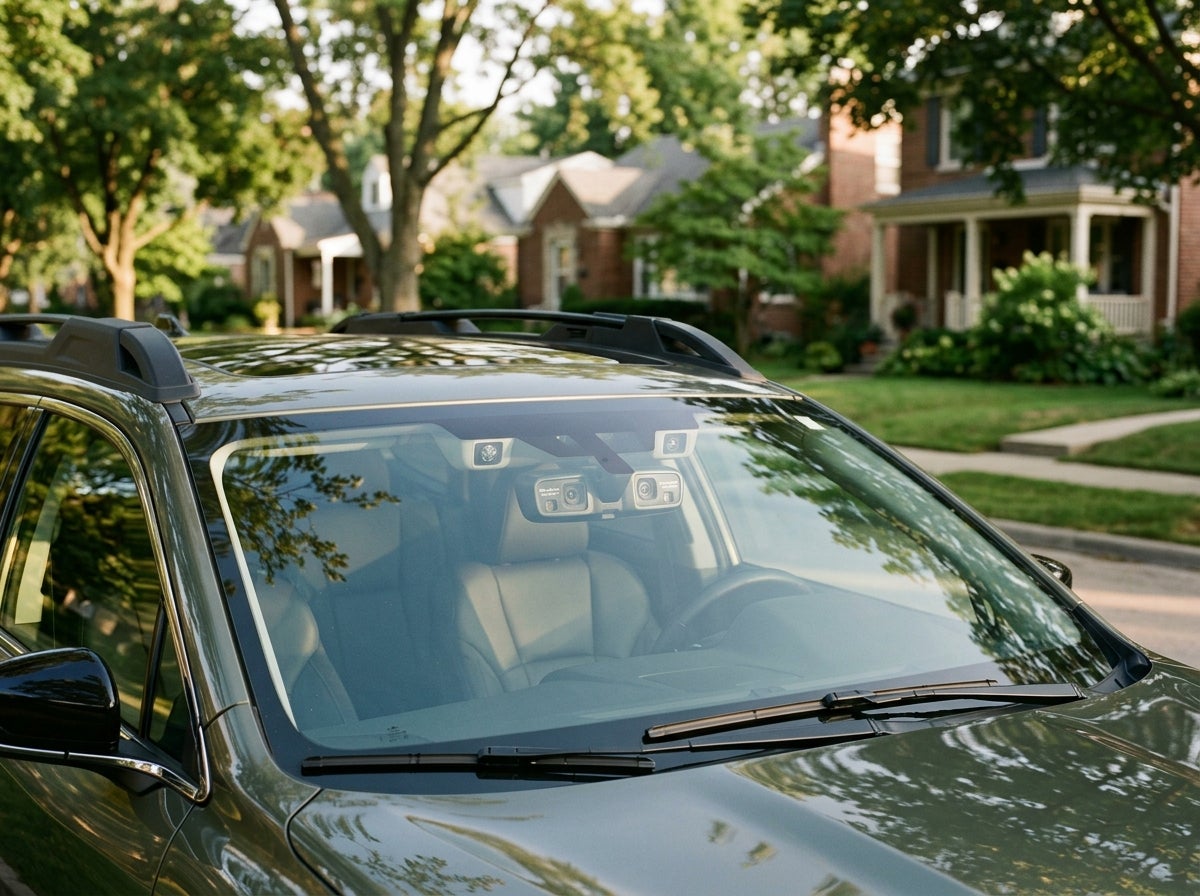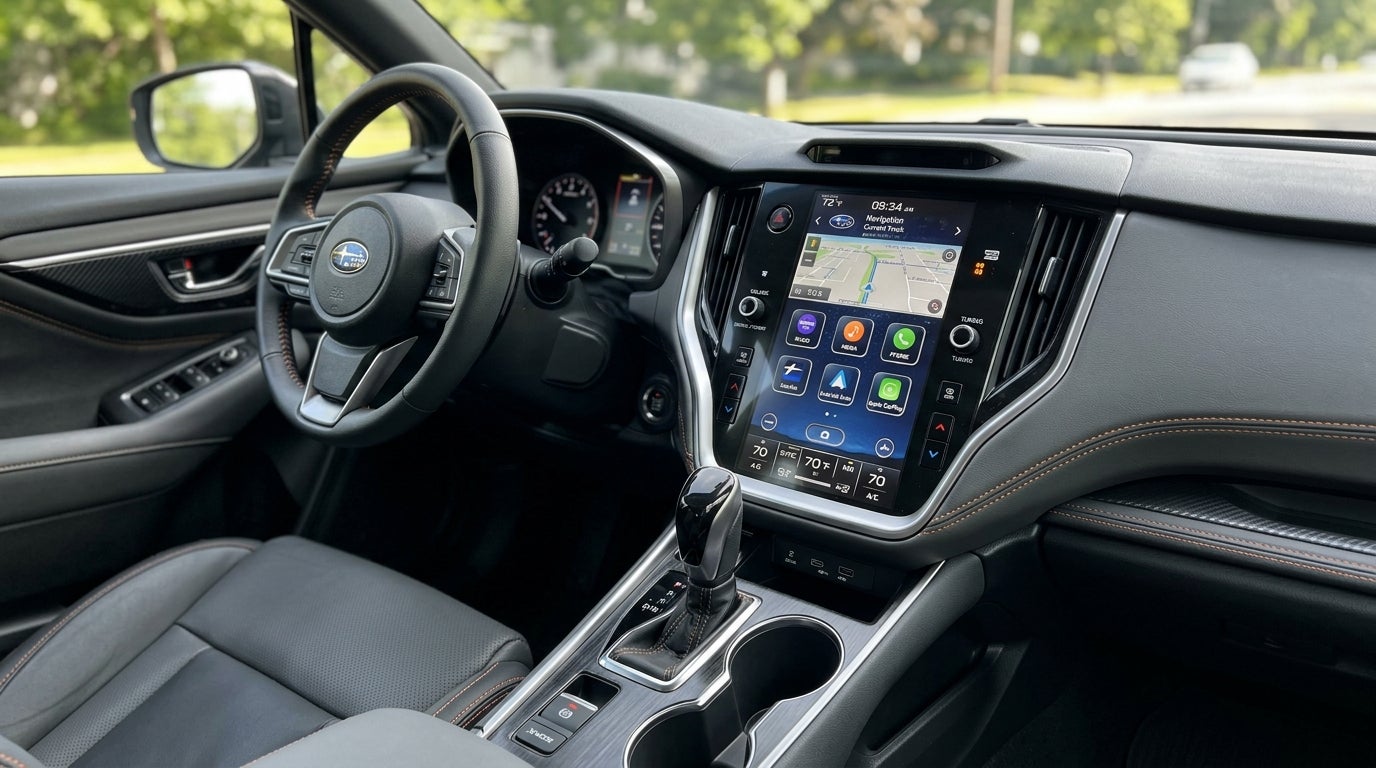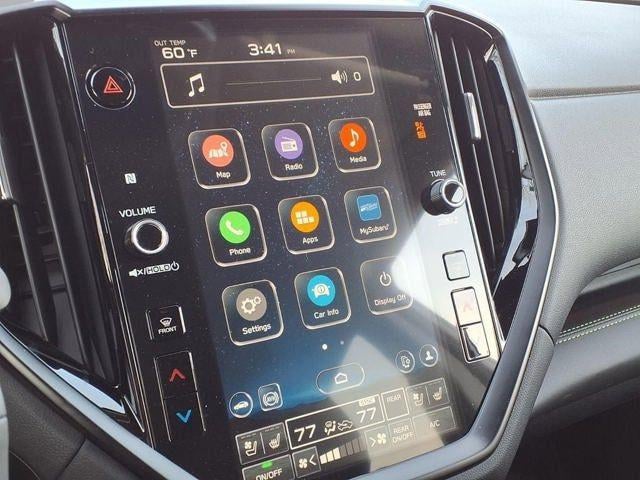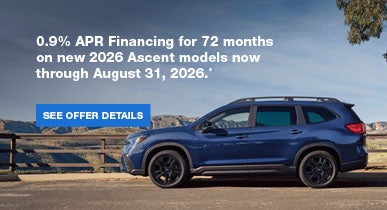

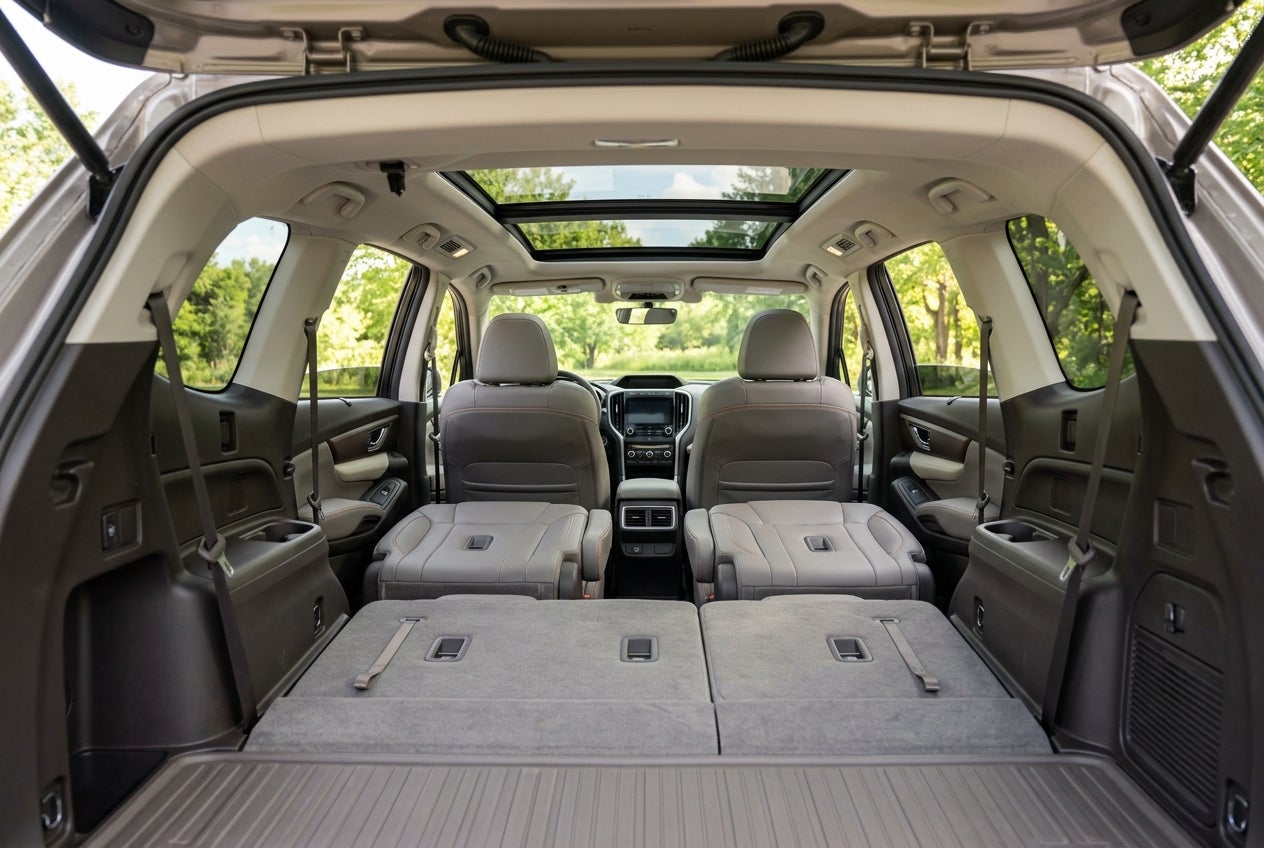
When expanding families and active suburban drivers in the St. Louis metropolitan area search for a versatile three-row SUV, the immediate question that tops their list is: How many passengers can the 2026 Subaru Ascent seat? The definitive answer is that the 2026 Subaru Ascent seats either 7 or 8 passengers, depending entirely on which second-row seating architecture you choose. This level of intentional design versatility ensures that whether you are organizing the neighborhood carpool through Sunset Hills, packing up for a weekend getaway to the Ozarks, or navigating rainy morning commutes down Watson Road, the Ascent delivers tailored comfort without sacrificing standard all-wheel-drive capability. more In its standard 8-passenger layout, the Subaru Ascent features a plush 60/40-split flat-folding second-row bench seat capable of accommodating three adults or child safety seats with ease. For those prioritizing effortless third-row access and executive-style comfort, selecting the 7-passenger layout replaces the bench with dual second-row captain's chairs. Boasting up to 153.5 cubic feet of total passenger volume, wide-opening rear doors that swing open to nearly 75 degrees, and low step-in heights, the 2026 Subaru Ascent sets a gold standard for accessibility and roominess. To explore available models in person, check out our New Subaru Ascent Inventory or Get Directions to Sunset Hills Subaru to tour our showroom. Comparing 7-Passenger vs. 8-Passenger Layouts in the 2026 Subaru Ascent Understanding Second-Row Architecture: Choosing between 7 and 8 passenger capacities comes down to how your family utilizes space on a daily basis. The 8-passenger configuration maximizes raw seating count, making it the ideal pick for large families or frequent team carpooling around Ladue and Sunset Hills. The second-row bench slides forward and backward seamlessly, providing flexible legroom distribution between middle and third-row occupants. Conversely, the 7-passenger configuration replaces the bench with two individual second-row captain's chairs. This leaves an open center-aisle pass-through, allowing children and teenagers to step through directly into the third row without folding down second-row seats. Heated captain's chairs are also available on higher trims, raising passenger comfort for long road trips. Third-Row Dimensions & Everyday Usability: Unlike many midsize three-row competitors where the rear seat feels like an afterthought, the 2026 Ascent offers a generous 31.7 inches of third-row legroom, 57.2 inches of shoulder room, and dedicated air vents. Reclining seatbacks in the third row further enhance comfort during longer journeys across Missouri. Interior Metric First Row Second Row Third Row Headroom (in.) 41.2 40.0 36.2 Legroom (in.) 42.2 38.6 31.7 Shoulder Room (in.) 61.1 60.3 57.2 Hip Room (in.) 57.7 56.7 47.2 How 2026 Subaru Ascent Trim Levels Dictate Passenger Seating and Cabin Comfort Base & Premium Trims Base Trim: Exclusively available in an 8-passenger layout with comfortable high-grade cloth upholstery, tri-zone automatic climate control, and 19 cupholders throughout the cabin. Premium Trim: Offers a choice between standard 8-passenger seating or optional 7-passenger captain's chairs. Features stain-resistant cloth, heated front seats, 8-way power driver seat, and second-row climate controls. Onyx Edition & Limited Onyx Edition: Built standard for 7 passengers with second-row captain's chairs and water-repellent StarTex® synthetic leather upholstery with green accent stitching—perfect for outdoorsy families. Limited Trim: Available in both 7 and 8-passenger layouts. Upscales comfort with leather-trimmed seating, 10-way power driver seat, heated second-row seats, and integrated rear door sunshades. Touring Trim Touring Trim: A premium Subaru trim level. Features exclusive 7-passenger seating with Nappa leather upholstery, ventilated front seats, panoramic power moonroof, Smart Rearview Mirror, and a 14-speaker Harman Kardon® premium audio system. Explore all trims in our New Subaru Inventory today. View Available 2026 Ascent Inventory Cargo Space and Versatility Behind Every Row of the 2026 Subaru Ascent A true family vehicle must balance passenger comfort with raw gear-hauling utility. The 2026 Subaru Ascent excels with adaptive cargo arrangements: • Behind Third Row: 18 cubic feet of storage—enough space for grocery runs, sports duffels, or stroller equipment. • Behind Second Row (Third Row Folded): Up to 43.5 cubic feet, perfect for luggage on extended family vacations. • Maximum Cargo Capacity (Both Rows Folded): Up to 76 cubic feet of flat load space. Practical amenities include a hidden under-floor storage tray to keep valuables out of sight, an available power rear gate with height memory, and standard roof rails capable of supporting kayaks, bikes, or cargo boxes. 2026 Subaru Ascent vs. Toyota Highlander: Interior Passenger Space and Maintenance Costs When comparing three-row family SUVs, buyers frequently cross-shop the 2026 Subaru Ascent against the Toyota Highlander. While both vehicles offer solid reputations, the Subaru Ascent holds distinct advantages in third-row passenger roominess, standard drivetrain value, and predictable ownership costs over a 5-year period. Comparison Metric 2026 Subaru Ascent 2026 Toyota Highlander Standard Drivetrain Symmetrical All-Wheel Drive Front-Wheel Drive (AWD extra) Total Passenger Volume Up to 153.5 cu. ft. Up to 141.8 cu. ft. Third-Row Legroom 31.7 in. 28.0 in. Standard Ground Clearance 8.7 in. 8.0 in. 5-Year Scheduled Maintenance Competitive / Predictable BOXER® service Standard Toyota maintenance schedule The Subaru Ascent provides nearly 3.7 extra inches of third-row legroom compared to the Highlander, transforming the back row from an emergency-only child space into usable seating for adults and growing teens. Furthermore, standard Symmetrical AWD on every Ascent trim eliminates the added option price tag that Toyota charges for AWD capability. Looking to trade in your current vehicle? You can Get your value trade online in minutes. Standard Subaru EyeSight Safety Features and How They Protect Your Passengers Safety is paramount when transporting up to eight passengers. Every 2026 Subaru Ascent comes equipped with the standard **EyeSight® Driver Assist Technology**, enhanced by a wide-angle mono camera that expands the system's field of view to spot pedestrians and cyclists at intersections earlier. Key EyeSight protection systems include: • Pre-Collision Braking: Applies full braking force in emergency situations to prevent or mitigate frontal impacts. • Adaptive Cruise Control with Lane Centering: Maintains safe follow distances during highway traffic on I-44 or I-270. • Blind-Spot Detection & Rear Cross-Traffic Alert: Provides visual warnings on side mirrors when vehicles enter blind zones. • Automatic Emergency Steering: Assists with evasive steering maneuvers when a collision threat is detected at speeds under 50 mph. Apply for Financing on Safety-Equipped Ascents Can You Upgrade Safety Features Yourself or Is Professional Installation Required? Factory Integration vs. DIY Upgrades: Modern automotive safety systems are deeply embedded into the vehicle's electronic control units (ECU). Primary active driver assists—such as EyeSight dual stereo cameras, radar sensors, and pre-collision braking modules—are factory-installed integrated technologies. They **cannot** be added as aftermarket DIY kits or retrofitted independently after purchase. Attempting self-installation of unapproved electrical modifications can void factory warranties and disrupt crucial sensor calibration. Professional Installation & Calibration: For optional dealer-installed safety accessories—such as auto-dimming exterior mirrors with approach lights, rear bumper covers, or dash cameras—certified technicians must perform installation. Following windshield replacement or front-end service, precise optical calibration at an authorized service center like Sunset Hills Subaru is mandatory to ensure EyeSight cameras function accurately. You can readily Schedule Service and Diagnostics with our factory-trained technicians. What Is the Price Range and Package Cost for the 2026 Subaru Ascent near Sunset Hills? Base & Premium Pricing The 2026 Subaru Ascent starts in the mid-$35,000 price range for the standard Base model. Stepping up to the popular Premium trim (starting around $38,000–$40,000) unlocks options like 7-passenger captain's chairs, keyless access, and power liftgate packages. Onyx & Limited Pricing The stylish Onyx Edition ranges near $41,000–$43,000 with blacked-out trim and StarTex seating. The Limited trim ranges around $42,000–$45,000, offering optional tech packages featuring Harman Kardon sound and panoramic glass. Touring & Incentives The top-tier Touring trim arrives fully equipped near $49,000–$50,000. Sunset Hills Subaru regularly updates seasonal offers and low-APR financing; review our Current New Car Specials to learn more about current availability. Interior Technology and Infotainment Features Compared to Rival SUVs 11.6-Inch STARLINK® Display & Connectivity: At the center of the 2026 Ascent's interior layout sits the high-resolution 11.6-inch Subaru STARLINK multimedia touchscreen. Standard wireless Apple CarPlay® and Android Auto™ allow driver and passengers to seamlessly link smartphones without cluttered cords. Cabin Connect Intercom System: Addressing the common challenge of communicating with rear passengers, the available Cabin Connect intercom amplifies the driver's voice through the rear speakers so you never have to shout to be heard in the third row. Multi-Row Device Charging & Cupholders: Keeping modern families connected, the Ascent features up to six USB-A and USB-C charging ports strategically placed across all three rows. Additionally, with 19 illuminated cupholders throughout the cabin, every passenger's drink or water bottle stays secure during travel. Compare model specs across our full fleet including the New Subaru Outback Inventory or New Subaru Forester Inventory. Explore Pre-Owned Subaru Inventory What Maintenance Is Required to Maintain Fuel Economy and AWD Performance? Maintaining peak EPA-estimated fuel economy (up to 26 MPG highway) and optimizing Symmetrical All-Wheel Drive power delivery requires adherence to simple scheduled service intervals: • Synthetic Oil Changes (Every 6,000 Miles): Keeps the 2.4-liter turbocharged Subaru BOXER® engine running clean and cool. • Tire Rotations & Tread Inspection: Essential for all-wheel-drive vehicles to maintain uniform tire circumference and prevent drivetrain binding. • Engine & Cabin Air Filter Replacements: Preserves engine intake efficiency and passenger air purity. • Differential & CVT Fluid Checks: Ensures smooth shifting performance under heavy loads or towing. Check out our Current Service and Parts Specials and source OEM parts via Find Subaru Parts. Key Questions to Ask Dealerships Before Purchasing or Customizing Your 2026 Subaru Ascent 1. Seating & Utility • Does this specific trim come in a 7-passenger or 8-passenger layout? • Can I test seat folding mechanisms with my family's car seats installed? 2. Trade & Financing • What trade-in value incentives are available today? • What special APR rates apply to the 2026 Ascent? • Can accessories be rolled into monthly financing? 3. Factory Accessories • Which factory accessories (e.g., trailer hitch, crossbars, all-weather mats) are pre-installed? • What warranty coverage protects dealer-installed options? Test Drive the 2026 Subaru Ascent Today at Sunset Hills Subaru There is no better way to determine whether the 7-passenger captain's chair setup or 8-passenger bench layout suits your lifestyle than experiencing the 2026 Subaru Ascent in person. Visit Sunset Hills Subaru at 10100 Watson Rd, Sunset Hills, MO 63127. Our friendly team is ready to walk you through trim features, help you explore financing options, and take your family on a comprehensive test drive. Have questions right now? Call us at (314) 476-9638 to speak directly with our Subaru specialists. Schedule Your Ascent Test Drive Title Tags 2026 Subaru Ascent Seating Options in Sunset Hills MO | Sunset Hills Subaru Meta Description Keywords Open Graph Twitter Card Canonical Article Metadata Geographic Targeting

Labor Day Sale at Sunset Hills Subaru: Exclusive Holiday Savings & Low APR Financing
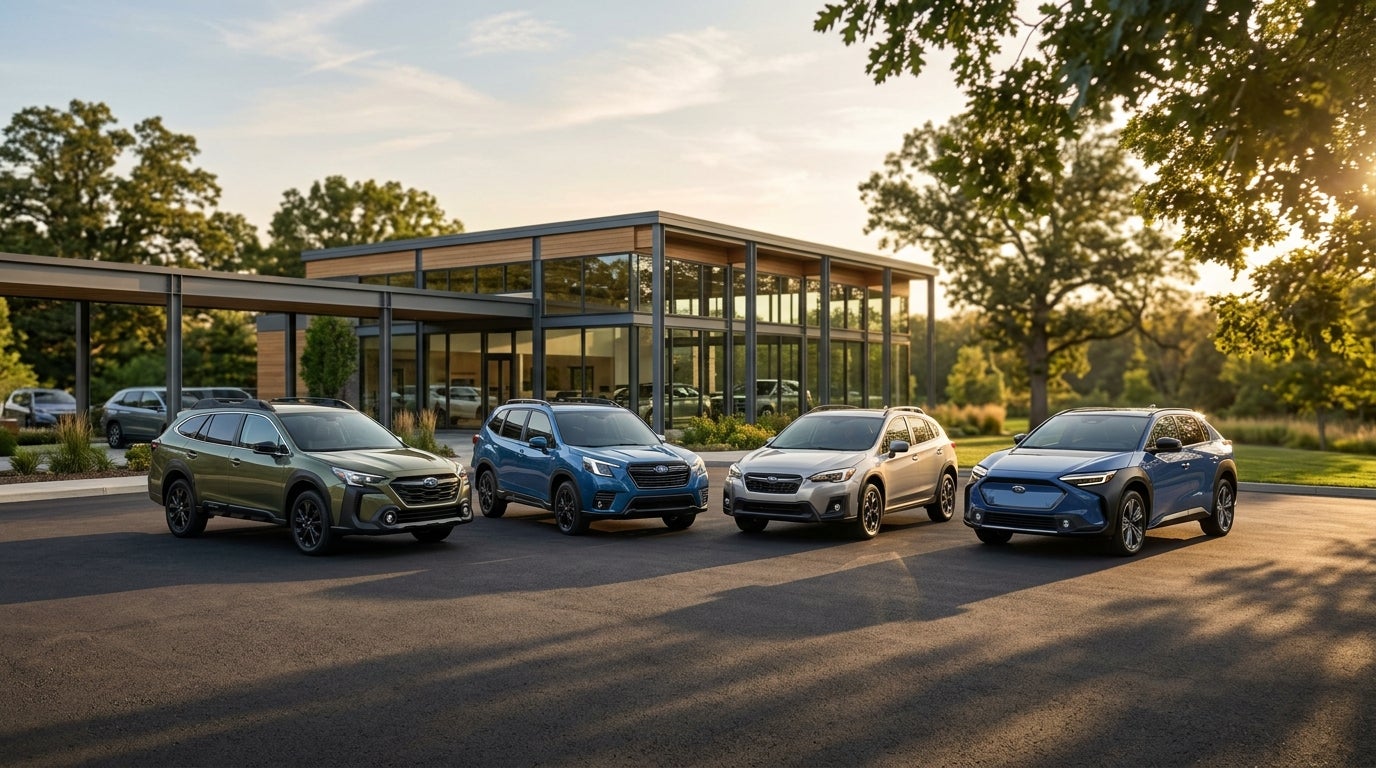
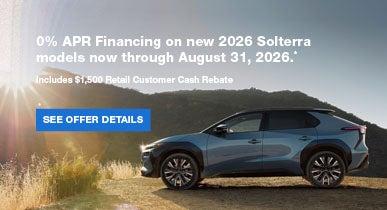
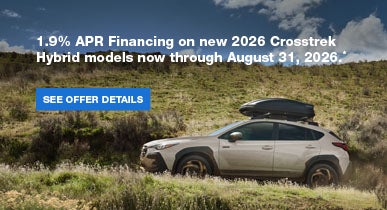
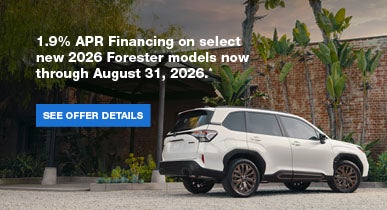
The annual Labor Day Sales Event at Sunset Hills Subaru has officially arrived, bringing St. Louis and Ladue car buyers unmatched holiday opportunities to drive away in a brand-new Subaru. During this holiday event, our showroom is featuring exceptional limited-time manufacturer low APR financing, lease offers, and trade-in information designed to deliver maximum value on every new crossover and SUV in stock. Whether you have been holding out for extraordinary rates on the rugged Outback, the versatile Forester, the nimble Crosstrek, or the spacious 3-row Ascent, there has never been a more financially advantageous moment to upgrade your daily commute. more Every single model available during this sale comes equipped with Subaru's legendary Symmetrical All-Wheel Drive standard, providing superior traction, stability, and peace of mind on Midwest roads in every season. Beyond our factory holiday programs, Sunset Hills Subaru is contributing current vehicle offers across our complete inventory. Check out our Current New Car Specials for more information, including finance and lease information on select 2026 models. Contact us for current pricing and financing details. Explore New Car Specials Labor Day Event Schedule, Showroom Hours, and Directions in Sunset Hills Holiday Weekend Showroom Hours & Location To accommodate busy schedules during the long weekend, our sales center is extending operating hours across the entire Labor Day holiday weekend. Conveniently located right off Watson Road, we welcome guests from Ladue, Kirkwood, Webster Groves, and greater St. Louis. Click here to Get Directions to Sunset Hills Subaru at 10100 Watson Rd, Sunset Hills, MO 63127. Holiday Weekend Sales Hours: • Friday: 9:00 AM – 8:00 PM • Saturday: 9:00 AM – 6:00 PM • Labor Day Monday: 9:00 AM – 6:00 PM Need assistance prior to arriving? Call us at (314) 476-9638 to speak directly with an event specialist. Express Buying Checklist & VIP Test Drives We respect your holiday time and aim to make your showroom transaction swift and hassle-free. To ensure a seamless purchase or lease experience, please bring the following documents with you: 1. Valid Driver's License for all listed owners 2. Current Proof of Auto Insurance 3. Most recent pay stub or income documentation 4. Title and registration for your trade-in vehicle (if applicable) 5. All original key fobs for your trade-in To help streamline your visit by scheduling an expedited VIP test drive in advance. Our team will have your selected vehicle prepped, cleaned, and waiting at the front entrance when you arrive. Featured SUV Offers: Labor Day Savings on Outback, Forester, and Crosstrek Subaru Outback The iconic utility vehicle designed for adventure. Contact us for current financing and lease information. Explore our full New Subaru Outback Inventory today to claim your trim and color preference. Subaru Forester Combining panoramic visibility, exceptional passenger room, and standard EyeSight safety technology. Contact us for current lease information. Browse our New Subaru Forester Inventory today. Subaru Crosstrek Compact agility paired with true all-terrain capability. Contact us for current financing and trade-in information. View available stock in our New Subaru Crosstrek Inventory. Browse All New SUV Inventory Upgrade Family Road Trips Around Ladue with Labor Day Specials on the 3-Row Ascent Family travels require space, uncompromised safety, and premium cabin comfort. The 3-row Subaru Ascent provides flexible 7- or 8-passenger seating configurations, up to 19 cupholders, standard tri-zone automatic climate control, and award-winning EyeSight® Driver Assist Technology. Whether you are driving children to school in Ladue or embarking on a holiday road trip across Missouri, the Ascent delivers quiet confidence behind the wheel. During our Labor Day Event, Sunset Hills Subaru is offering current finance and lease information on all Ascent trim levels including Premium, Onyx Edition, and Touring. Check our current New Subaru Ascent Inventory to compare models, color options, and feature packages tailored for your family's daily lifestyle. Maximize Your Vehicle Trade-In Value During Peak Holiday Demand Peak Demand Means Maximum Vehicle Allowance Pre-owned vehicle demand in the St. Louis area remains exceptionally strong, allowing us to offer top-dollar trade-in allowances during our Labor Day Sales Event. To replenish our used inventory, Sunset Hills Subaru is offering trade-in information when you upgrade to any new or certified pre-owned vehicle during the event. Instant Online Valuation Tool Finding out what your current car, truck, or SUV is worth takes less than two minutes. Use our simple tool to Get your value trade calculated online before visiting our dealership. Bring your online appraisal with you during the event to apply your trade-in appraisal toward your purchase. Flexible Financing, Special Holiday Rates, and Fast Online Pre-Approval At Sunset Hills Subaru, our dedicated finance center maintains relationships with major national lenders as well as local St. Louis credit unions to secure highly competitive financing terms tailored to your budget. During our Labor Day Event, qualified buyers can access current finance and lease information designed to fit your unique driving habits. Streamline your holiday car-buying experience by completing our secure digital finance application from the comfort of your home. Taking a few moments to Get approved for financing in advance allows our team to pre-arrange your options so you spend less time paperwork and more time testing out your new Subaru on the road. Apply for Pre-Approval Now Certified Pre-Owned Subaru Savings & Holiday Used Vehicle Deals Factory-Backed Warranty Every Certified Pre-Owned Subaru undergoes a rigorous 152-point inspection and includes a factory-backed 7-year/100,000-mile powertrain coverage with 24/7 roadside assistance. Reduced Holiday Pricing During the Labor Day Sale, take advantage of discounted pricing on popular pre-owned sedans and crossovers. View our full Used Vehicle Inventory for real-time availability. Performance & Sedan Deals Looking for refined sedan luxury or rally-inspired fun? Check out our New Subaru Legacy Inventory, New Subaru BRZ Inventory, or New Subaru WRX Inventory for current pricing. All-Electric & Efficient Commuting: Solterra EV and Impreza Holiday Incentives Solterra All-Electric SUV Transition seamlessly to zero-emissions driving without giving up standard all-wheel drive capability. The all-electric Subaru Solterra features generous ground clearance, fast charging capabilities, and advanced safety tech. Contact us for current lease and incentive information. Explore our New Subaru Solterra Inventory now. Impreza Hatchback Efficiency For St. Louis commuters desiring high fuel efficiency and hatchback utility, the Subaru Impreza delivers outstanding fuel economy alongside standard AWD confidence. Contact us for current lease information on this versatile compact car. View available models in our New Subaru Impreza Inventory. Reserve Your In-Stock Vehicle Online Before Holiday Inventory Sells Out Labor Day weekend is historically one of our highest-volume sales periods of the year. Due to elevated regional demand and limited factory allocations on high-demand trims like Wilderness and Touring models, high-demand vehicles sell quickly. To help you secure your preferred color, trim, and package combination, Sunset Hills Subaru offers an easy online reservation portal. Browse our online showroom, select your vehicle from our comprehensive New Subaru Inventory, and click to place a temporary deposit that reserves the vehicle for your arrival. Prefer a custom factory build? Our team can help you place a factory order. Reserve Your Subaru Online Labor Day Service Specials & Genuine Subaru Accessory Packages Seasonal Maintenance Offers Prepare your Subaru for autumn driving with service offers on synthetic oil changes, brake service, and multi-point inspections. Visit our Current Service and Parts Specials for details. Genuine Accessories & Parts Upgrade your ride with roof crossbars, kayak carriers, trailer hitches, and all-weather floor liners. Contact our department directly to Find Subaru Parts made specifically for your vehicle. Easy Service Scheduling Keep your Subaru operating at peak factory efficiency. It only takes a minute to Schedule Service and Diagnostics with our factory-certified master technicians. Why Ladue and Sunset Hills Drivers Choose Sunset Hills Subaru Sunset Hills Subaru takes immense pride in being the preferred automotive destination for drivers across Sunset Hills, Ladue, Kirkwood, and greater St. Louis. Our commitment extends far beyond offering current offers. We build long-term relationships through absolute pricing transparency, exceptional customer service, and active support for local community causes through the Subaru Love Promise. When you visit our state-of-the-art facility, you will experience a zero-pressure, welcoming environment focused entirely on helping you find the vehicle that fits your budget and lifestyle. Discover the Sunset Hills Subaru difference for yourself during our Labor Day Sales Event. Claim Your Labor Day Savings at Sunset Hills Subaru Today Contact us for current event offers, financing information, and trade-in details. Visit our showroom at 10100 Watson Rd, Sunset Hills, MO 63127 or start your purchase online right now. Lock In Your Holiday Savings Title Tags Subaru Labor Day Deals in Sunset Hills MO | Sunset Hills Subaru Meta Description Keywords Open Graph Twitter Card Canonical Article Metadata Geographic Targeting