Blog / Model Comparisons

2026 Subaru Crosstrek Wilderness vs 2026 Honda CR-V TrailSport Comparison

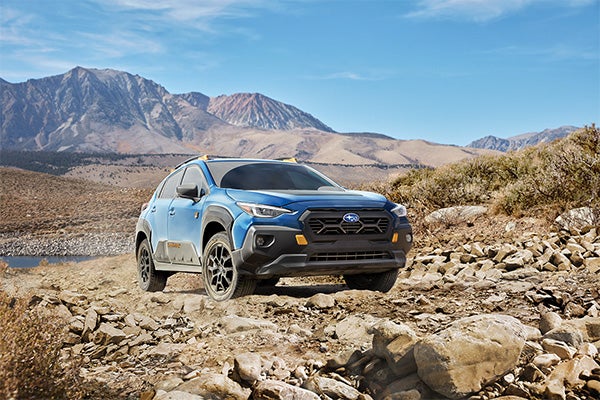
Blue Subaru Crosstrek Wilderness driving along a rocky trail with mountains in the background under a clear sky.

2026 Subaru Crosstrek Wilderness vs 2026 Honda CR-V TrailSport Comparison

The 2026 Subaru Crosstrek Wilderness CVT is the recommended choice for active buyers who demand genuine off-road capability, robust towing performance, and exceptional value. Priced at $33,795 MSRP, the Crosstrek Wilderness CVT delivers a massive 3,500-lb towing capacity, 9.3 inches of unladen ground clearance, and standard Symmetrical All-Wheel Drive. By comparison, the $38,800 MSRP 2026 Honda CR-V TrailSport AWD costs $5,005 more while offering only 1,000 lbs of towing capacity and 8.2 inches of ground clearance.

Which 2026 Subaru Crosstrek Wilderness CVT or 2026 Honda CR-V TrailSport AWD Is the Best Fit for Ladue and Sunset Hills Families?

The 2026 Subaru Crosstrek Wilderness CVT is the superior crossover for local families who prioritize authentic off-pavement capability, heavy-duty towing, and incredible overall value over sheer exterior footprint. Engineered specifically for outdoor adventures, the Crosstrek Wilderness CVT combines hatchback-like maneuverability with rugged utility. Standard Symmetrical All-Wheel Drive and an elevated suspension give drivers complete confidence during severe winter weather or weekend excursions. Furthermore, a starting MSRP of $33,795 makes the Crosstrek Wilderness CVT a highly attractive investment compared to the $38,800 starting MSRP of the 2026 Honda CR-V TrailSport AWD.
While the Honda CR-V TrailSport AWD offers a larger exterior build and hybrid fuel efficiency, its higher purchase price and limited 1,000-lb towing capacity restrict its versatility for active utility. Families in Sunset Hills who frequently haul light boats, recreational equipment, or utility trailers to the Meramec River will quickly find the CR-V's towing limits restrictive. The Crosstrek Wilderness CVT boasts a 3,500-lb towing capacity, allowing you to pull camper trailers or leisure gear with ease.
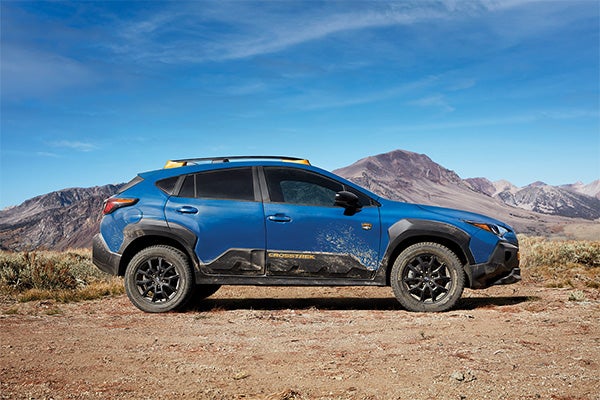
Blue Subaru Crosstrek Wilderness parked on a dirt trail with mountains in the background.
Shoppers researching their options across our showroom lineup can evaluate our new Subaru Crosstrek selection alongside stablemates like new Subaru Outback models and the new Subaru Forester lineup. For larger households needing three-row seating, our new Subaru Ascent inventory provides expanded passenger volume. Practical commuters can explore new Subaru Impreza models or new Subaru Legacy inventory, while enthusiasts might look to new Subaru WRX inventory or new Subaru BRZ models. Those seeking zero-emissions driving can inspect our new Subaru Solterra EV models. Across the entire lineup, Subaru prioritizes practical utility, safety, and long-term durability.

Pricing

Manufacturer-listed pricing per trim, across compared vehicles.
2026 Subaru Crosstrek Wilderness CVT TrimMSRP2026 Honda CR-V TrailSport AWD TrimMSRP
Wilderness CVT$33,795TrailSport AWD$38,800

Engine & Performance

Powertrain specs by trim
Specification2026 Subaru Crosstrek Wilderness CVT2026 Honda CR-V TrailSport AWD
Engine2.5L2L
Horsepower180 hp204 hp
Torque178 lb-ft247 lb-ft
TransmissionLineartronic CVTCVT
DrivetrainAll-wheel driveAll-wheel drive

How Pricing and Trim Features Compare for the 2026 Subaru Crosstrek Wilderness CVT and Honda CR-V TrailSport AWD

The 2026 Subaru Crosstrek Wilderness CVT delivers a far better value proposition, offering a lower starting MSRP than the 2026 Honda CR-V TrailSport AWD while supplying standard features geared for rugged utility. The Crosstrek Wilderness CVT starts at an MSRP of $33,795 with a $1,420 destination charge. In contrast, the Honda CR-V TrailSport AWD carries an MSRP of $38,800 plus a $1,395 destination charge.
That price distinction becomes even clearer when examining standard off-road and utility hardware. The Crosstrek Wilderness CVT includes a factory-lifted suspension providing 9.3 inches of unladen ground clearance, water-repellent StarTex® synthetic leather upholstery, front underbody engine protection, and 17-inch alloy wheels wrapped in all-terrain tires. To equip similar protective items on the CR-V TrailSport AWD—which comes standard with cloth upholstery with orange stitching and 18-inch alloy wheels with 8.2 inches of ground clearance—buyers must purchase add-on dealer packages.
Subaru also offers targeted optional equipment upgrades to tailor the vehicle to your exact needs. The available Option Package 23 adds a 10-speaker Harman Kardon® premium audio system with a subwoofer, a power glass moonroof, and a 10-way power-adjustable driver seat with 2-way electric lumbar support. For maintenance and personalization, genuine accessories are readily available through our Subaru parts center.
In terms of physical capacity, the Crosstrek Wilderness CVT has a published curb weight of 3,369 lbs and supports a maximum braked towing weight of 3,500 lbs. The heavier CR-V TrailSport AWD registers a curb weight of 3,900 lbs but is rated to tow just 1,000 lbs.

Dimensions & Capacity

Capacity and dimensions by trim
Specification2026 Subaru Crosstrek Wilderness CVT2026 Honda CR-V TrailSport AWD
Seating55
Cargo20.0 cu ft36.3 cu ft
Curb weight3,369 lbs3,900 lbs
Towing3,500 lbs1,000 lbs

Cargo and Passenger Space for Golf, School Gear, and Weekend Adventures in the 2026 Subaru Crosstrek Wilderness CVT vs Honda CR-V TrailSport AWD
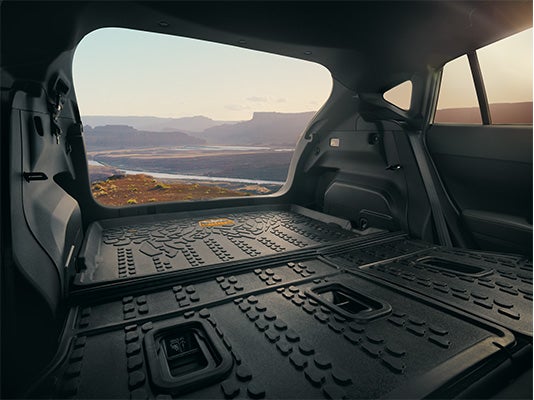
Looking out from the open rear cargo area of an SUV with folded seats toward a scenic canyon landscape at sunset.
The 2026 Honda CR-V TrailSport AWD provides greater raw cargo volume, but the 2026 Subaru Crosstrek Wilderness CVT offers a more versatile, easy-to-clean cabin layout with superior front passenger legroom and flexible storage solutions. The CR-V TrailSport AWD features about 36 cu ft of cargo space behind the second row and about 76.5 cu ft with the rear seats folded down. The Crosstrek Wilderness CVT provides about 20 cu ft of cargo capacity behind the 60/40-split rear seatbacks and about 55 cu ft when folded flat.
For daily family duties like loading golf bags, backpacks, or camping gear, the Crosstrek Wilderness CVT maximizes usable room with a low loading floor height of 31.3 inches and a rear cargo area height of 29.4 inches. Standard load restraint hooks and an available flexible cargo area cover keep gear secure. Additionally, standard StarTex® water-repellent seat upholstery and available rear seatback protectors allow you to load muddy boots, wet sports equipment, or pets without worrying about staining the interior.
Passenger comfort remains balanced between both crossovers. Front occupants in the Crosstrek Wilderness CVT enjoy a class-leading 42.9 inches of legroom and 39.8 inches of headroom, outpacing the CR-V TrailSport AWD's 41.3 inches of front legroom and 38.2 inches of front headroom. In the second row, the CR-V offers 41.0 inches of legroom compared to the Crosstrek's 36.5 inches, though both accommodate three rear passengers comfortably with standard 3-point center seat belts and height-adjustable head restraints. Shoppers interested in current inventory or pricing information can explore our current inventory.

Fuel Economy

Fuel economy and range by trim
Specification2026 Subaru Crosstrek Wilderness CVT2026 Honda CR-V TrailSport AWD
MPG24 city / 29 hwy / 26 combined38 city / 33 hwy / 35 combined

Performance and Driving Experience Tailored to Rolling Terrain: 2026 Subaru Crosstrek Wilderness CVT vs Honda CR-V TrailSport AWD

The 2026 Subaru Crosstrek Wilderness CVT delivers a superior, confidence-inspiring driving dynamic on rough trails and slick roads thanks to its revised axle gearing and 9.3 inches of unladen ground clearance. Powered by a 2.5L 4-cylinder Subaru Boxer engine, the Crosstrek Wilderness CVT produces 180 hp at 5,800 rpm and 178 lb-ft of torque at 3,700 rpm. Power is managed through a Lineartronic CVT featuring a manual mode with steering wheel gearchange paddles and a descent control system for steep declines.
The Honda CR-V TrailSport AWD utilizes a 2.0L 4-cylinder hybrid powertrain (Earth Dreams Technologyâ„¢) combined with an electric motor to generate a combined 204 hp and 247 lb-ft of torque, managed by an electronic CVT. While the CR-V provides punchy acceleration around town, its Real Time AWD with Intelligent Control Systemâ„¢ is primarily tuned for paved roads. Its 8.2 inches of ground clearance, 16.1-degree approach angle, and 21.3-degree departure angle lag behind the Crosstrek's trail geometry.
Off-pavement, the Crosstrek Wilderness CVT excels with a 20-degree approach angle and a steep 33-degree departure angle, allowing it to clear rutted paths and obstacles without scraping bumper covers. Standard Symmetrical All-Wheel Drive operates continuously to distribute power to all four wheels, ensuring surefooted traction on mud, gravel, or winter slush. Furthermore, the Crosstrek's revised CVT gear ratio and added engine oil cooler enable its robust 3,500-lb towing capability, far surpassing the CR-V TrailSport AWD's 1,000-lb limit.
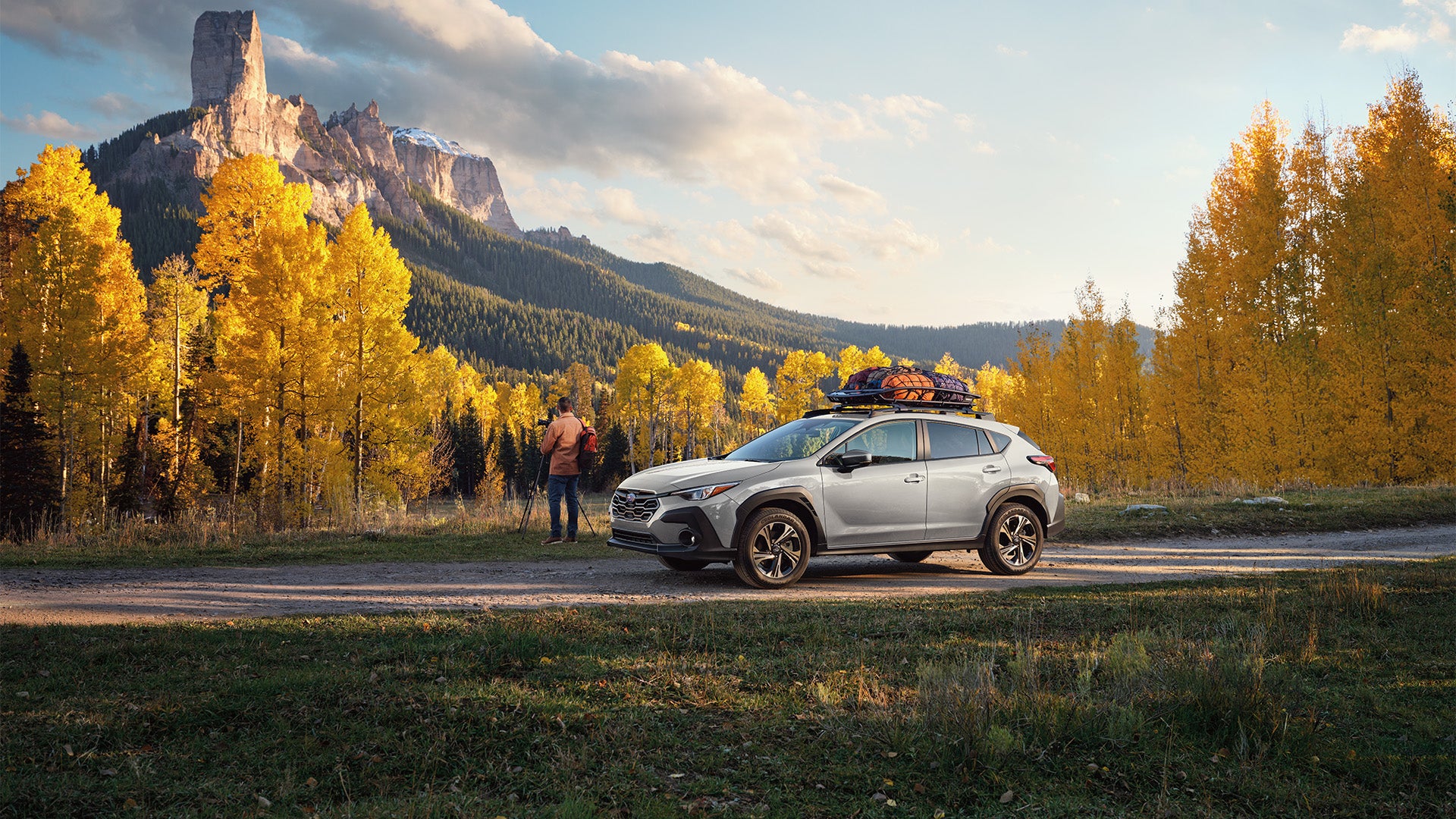
Silver Subaru SUV parked on a dirt road surrounded by bright yellow fall trees and mountains.

Fuel Efficiency and Range for Commuting and Recreation in the 2026 Subaru Crosstrek Wilderness CVT and Honda CR-V TrailSport AWD

The 2026 Honda CR-V TrailSport AWD achieves higher EPA fuel economy numbers due to its hybrid powertrain, but the 2026 Subaru Crosstrek Wilderness CVT counters with a larger fuel tank that delivers substantial total driving range for daily commuting and weekend travel. The CR-V TrailSport AWD earns EPA estimates of 38 city / 33 hwy / 35 combined MPG. Equipped with a 14.0-gallon fuel tank, it provides a calculated total vehicle range of 490 miles.
The Crosstrek Wilderness CVT achieves EPA ratings of 24 city / 29 hwy / 26 combined MPG on regular 87 octane unleaded gasoline. To offset its rugged lower final-drive gearing and all-terrain tires, Subaru equips the Crosstrek with a generous 16.6-gallon fuel tank. This gives the Crosstrek Wilderness CVT a calculated EPA total driving range of 432 miles—allowing drivers to travel long distances between fill-ups.
For professionals commuting along I-64 from Ladue into downtown offices, both vehicles run on regular unleaded fuel to keep operating costs predictable. While the hybrid CR-V consumes less fuel in stop-and-go city traffic, the Crosstrek Wilderness CVT balances respectable highway efficiency with standard mechanical capability that no conventional hybrid crossover in its price class can match.

Technology Features That Enhance Remote Work and Family Connectivity in the 2026 Subaru Crosstrek Wilderness CVT and Honda CR-V TrailSport AWD

The 2026 Subaru Crosstrek Wilderness CVT leads in touchscreen real estate and integrated connectivity, featuring a standard 11.6-inch high-resolution center dashboard display compared to the 9.0-inch touchscreen in the 2026 Honda CR-V TrailSport AWD. Subaru's multimedia interface features intuitive touch controls for audio, climate, and vehicle settings, complemented by physical volume and tuning knobs for easy operation while driving.
Both vehicles feature wireless Apple CarPlay and Android Auto integration, Bluetooth® hands-free phone pairing, and voice-activating controls. Device charging is well-supported in both cabins; the Crosstrek Wilderness CVT provides one USB front charging port, two rear USB charging ports, and a front 12v power outlet, with a wireless charging pad available. The CR-V TrailSport AWD includes two front USB ports, two rear USB ports, a front 12v outlet, and a cargo area 12v power outlet.
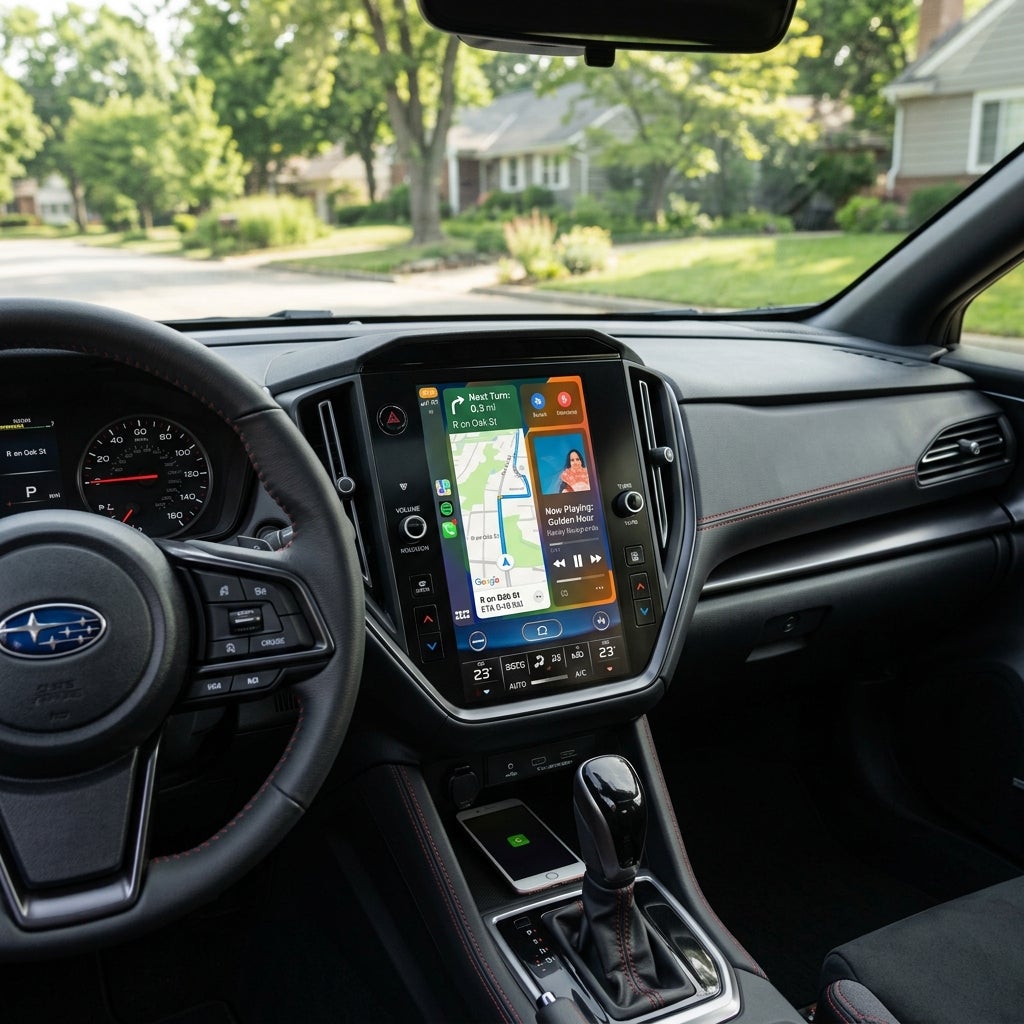
Interior view of a Subaru vehicle featuring a large central touchscreen displaying GPS navigation and music playback. (Representative image for illustration purposes only. Actual vehicle may vary based on trim and configuration.)
Telematics and remote services are another area where Subaru offers added long-term value. The Crosstrek Wilderness CVT comes standard with Subaru STARLINK™ telematics, including a 36-month complimentary subscription for safety and security features, as well as a 6-month trial of remote services such as remote door lock/unlock, vehicle start, and remote HVAC control with heating and cooling settings. The Honda CR-V TrailSport AWD features HondaLink™ Assist telematics and a 3-month trial of remote services. For audiophiles, the Crosstrek's optional Option Package 23 upgrades the standard 6-speaker sound system to a 10-speaker Harman Kardon® system with surround sound and a subwoofer.

Safety and Driver Assistance Systems Designed for Family Neighborhoods in the 2026 Subaru Crosstrek Wilderness CVT and Honda CR-V TrailSport AWD

Safety engineering is a foundational priority for both brands, with the 2026 Subaru Crosstrek Wilderness CVT and 2026 Honda CR-V TrailSport AWD both earning 5-Star Overall Crash Test Ratings from the National Highway Traffic Safety Administration (NHTSA). Both crossovers feature 10 standard airbags, including dual front airbags, front and rear side airbags, side curtain airbags, and driver knee airbags (the CR-V also includes a passenger knee airbag). Standard ISOFIX / LATCH child seat anchors are featured in both row two seatings.
Active safety technology is standard across both models. The Crosstrek Wilderness CVT equips Subaru's EyeSight® Driver Assist technology, utilizing high-resolution stereo cameras to monitor road conditions. EyeSight® includes Advanced Adaptive Cruise Control with stop-and-go capability, Automatic Pre-Collision Braking, Pre-Collision Throttle Management, and Emergency Lane Keep Assist. Blind Spot Detection (BSD) and Rear Cross-Traffic Alert are also standard equipment.
Honda equips the CR-V TrailSport AWD with its Collision Mitigation Braking System (CMBS), Lane Keeping Assist System (LKAS), Adaptive Cruise Control, and Blind Spot Information (BSI) system with Cross Traffic Monitor. In IIHS crash testing, both models earned "Good" scores in small overlap front driver-side and roof strength tests. Subaru's EyeSight® system operates at speeds as low as 7 mph to prevent low-speed parking lot collisions and protect pedestrians or cyclists.

Warranty, Maintenance, and Local Service Options for the 2026 Subaru Crosstrek Wilderness CVT and Honda CR-V TrailSport AWD

Both manufacturers back their vehicles with competitive factory warranty packages. The 2026 Subaru Crosstrek Wilderness CVT and 2026 Honda CR-V TrailSport AWD both feature a 3-year / 36,000-mile limited whole-vehicle warranty and a 5-year / 60,000-mile powertrain warranty. Both brands also provide 5 years of corrosion perforation coverage and 3 years / 36,000 miles of roadside assistance coverage. Honda includes a 12-month / 12,000-mile complimentary maintenance plan, while the CR-V's hybrid battery is covered for 8 years / 100,000 miles.
Subaru owners benefit from manufacturer-backed emergency protection that provides brand-specific expertise and genuine OEM parts. Should an emergency arise on the road, drivers can call Subaru Roadside Assistance at 1-800-261-2155 for 24/7 towing to the nearest authorized service facility, flat tire changes, jump-starts, or lockout services.
To keep your crossover running at peak performance, you can schedule a service appointment online with our factory-trained technicians. Our department uses specialized diagnostic equipment designed specifically for Symmetrical All-Wheel Drive and Boxer engines. Be sure to browse our current maintenance and parts offers before your next routine oil change or tire rotation.

Which Vehicle Should Buyers Choose? Frequently Asked Questions About the 2026 Subaru Crosstrek Wilderness CVT and Honda CR-V TrailSport AWD

Q: Is the Honda CR-V TrailSport AWD worth the price premium over the Subaru Crosstrek Wilderness CVT?

A: For most buyers prioritizing all-terrain capability and value, the CR-V TrailSport AWD is not worth the $5,005 higher MSRP. The Crosstrek Wilderness CVT starts at $33,795 MSRP, offering 3,500 lbs of towing capacity, 9.3 inches of ground clearance, StarTex® water-repellent seats, and an 11.6-inch touchscreen. The $38,800 CR-V TrailSport AWD offers better city fuel economy, but limits towing to 1,000 lbs and ground clearance to 8.2 inches.

Q: Which crossover offers better real-world capability off pavement?

A: The Subaru Crosstrek Wilderness CVT is significantly more capable off-pavement. It provides 9.3 inches of unladen ground clearance, a 20-degree approach angle, a 33-degree departure angle, front engine skid protection, and full-time Symmetrical All-Wheel Drive. The Honda CR-V TrailSport AWD features 8.2 inches of ground clearance, a 16.1-degree approach angle, and a 21.3-degree departure angle, making it better suited for light dirt roads rather than rugged trails.

Q: How do the towing capabilities compare between these two models?

A: The Crosstrek Wilderness CVT wins decisively with a 3,500-lb towing capacity, thanks to its revised transmission gear ratios and added drivetrain cooling. The CR-V TrailSport AWD is rated to tow only 1,000 lbs. If you plan to tow a small boat, pop-up camper, or utility trailer, the Crosstrek Wilderness is the clear choice.

Q: How do I schedule a test drive or start the buying process at Sunset Hills Subaru?

A: You can visit our showroom address at 10100 Watson Rd or give our sales team a quick call at (314) 476-9638. You can also browse our new Subaru inventory online, use our digital tools to value your trade-in, and get pre-approved for financing online from the comfort of home.

Final Verdict: Why the 2026 Subaru Crosstrek Wilderness CVT Is the Recommended Choice

The 2026 Subaru Crosstrek Wilderness CVT emerges as the clear winner in this head-to-head comparison, offering an unbeatable combination of off-road hardware, heavy-duty utility, modern cabin technology, and exceptional price value. While the 2026 Honda CR-V TrailSport AWD provides an appealing hybrid powertrain and a larger rear cargo hold, its $38,800 starting MSRP puts it in a significantly higher price bracket. Despite that cost premium, the CR-V falls short in essential adventure metrics, offering 2,500 lbs less towing capacity and over an inch less ground clearance than the Subaru.
For an MSRP of $33,795, the Crosstrek Wilderness CVT provides standard features designed for active lifestyles:
  • 3,500-lb Towing Capacity vs. 1,000-lb capacity in the CR-V TrailSport AWD.
  • 9.3 Inches of Ground Clearance with a 20-degree approach and 33-degree departure angle.
  • Standard Symmetrical All-Wheel Drive for confidence in all-weather conditions.
  • Durable StarTex® Water-Repellent Seats built for gear, mud, and active families.
  • Large 11.6-Inch Touchscreen with standard STARLINKâ„¢ telematics and wireless smartphone integration.
  • A lower starting MSRP compared to the CR-V TrailSport AWD.
Whether you are navigating weekly carpools or heading out for a weekend camping trip, the Crosstrek Wilderness CVT delivers turn-key adventure capability without compromising daily comfort.
Our team at Sunset Hills Subaru is ready to assist you through every step of your vehicle search. Explore our online inventory, evaluate your current vehicle's trade value, or stop by our showroom for a no-pressure test drive. Schedule your test drive today and experience the Subaru difference firsthand.

© 2026 Sunset Hills Subaru. All rights reserved.
Vehicle specification data © JATO Dynamics Limited.

2026 Subaru Crosstrek Wilderness in Sunset Hills MO | Sunset Hills Subaru
Posted in:

Related Posts

Subaru VS Toyota AWD

Toyota e-Four vs Subaru Symmetrical AWD: Key Differences Explained

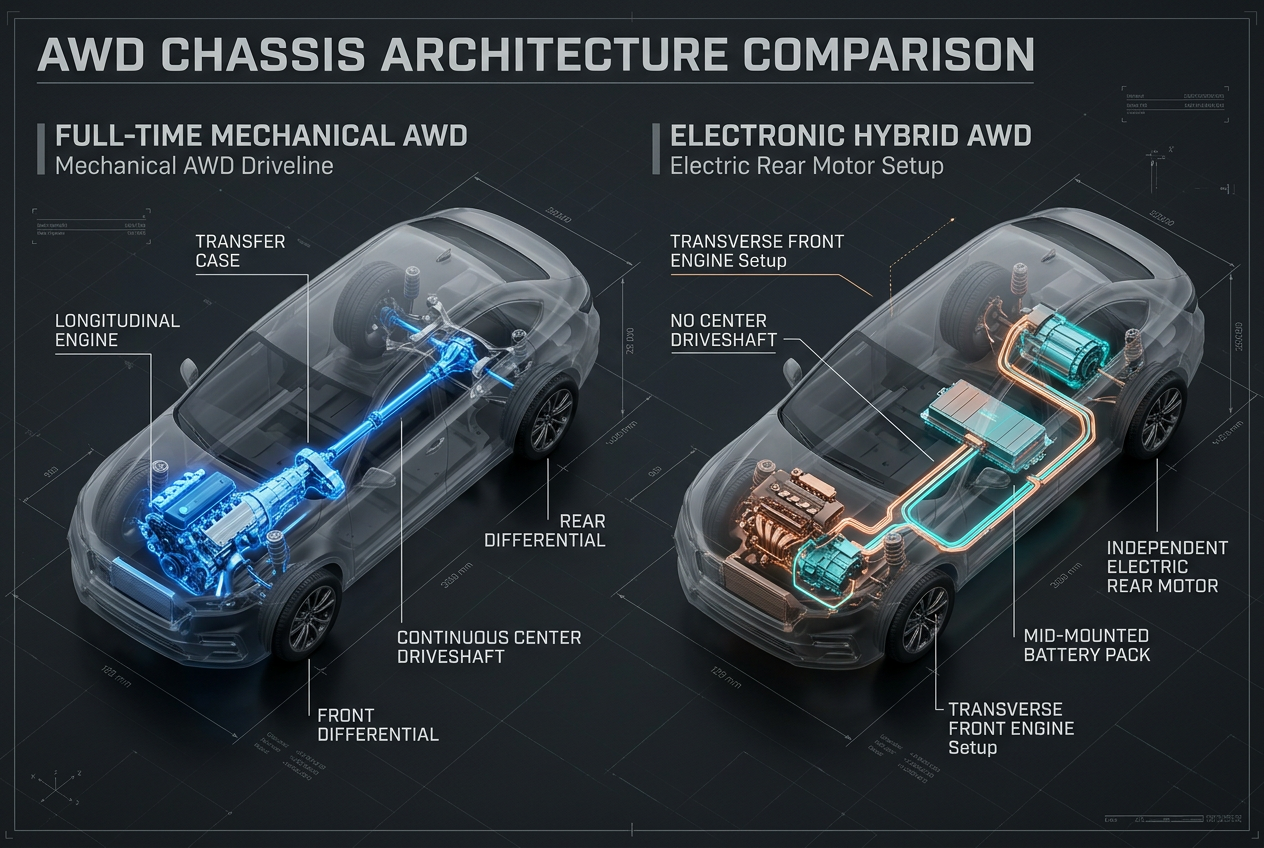
How Toyota e-Four Electric AWD Differs From Subaru Symmetrical AWD Mechanics Toyota e-Four Architecture Toyota's e-Four system represents a clever application of modern hybrid electronics. In models like the RAV4 Hybrid or Highlander Hybrid, the front combustion engine and primary electric motor drive the front wheels through a planetary gear transaxle. The rear wheels are completely decoupled physically from the front end. A small secondary electric motor (generating around 54 horsepower and 89 lb-ft of torque on typical crossover models) sits directly on the rear axle. Because there is no heavy prop shaft running underneath the cabin floorboards, e-Four reduces vehicle curb weight and eliminates mechanical friction losses during dry pavement cruising. This design allows Toyota hybrids to deliver exceptional EPA-estimated fuel economy. However, because the rear motor relies on high-voltage battery reserves and electronic sensors to react to wheel slip, power delivery to the rear wheels is dynamic rather than constant. Under continuous heavy drag—such as wading through deep mud, ascending steep loose gravel trails, or prolonged high-speed snow travel—the rear electric motor may reduce output to protect against thermal buildup. Subaru Symmetrical AWD Layout Subaru takes a fundamentally different mechanical approach rooted in rally racing heritage. The cornerstone of the system is the longitudinal Subaru BOXER engine, which lies flat and low in the engine bay along the vehicle's centerline. The transmission, transfer case, and driveshaft align in a perfectly straight, symmetrical line leading directly to the rear differential. This linear design distributes weight evenly between the left and right sides of the chassis, lowering the vehicle's center of gravity and reducing body roll. Mechanically, power flows non-stop through a continuously engaged active torque split coupling or center differential. If one or both front wheels encounter black ice on a bridge deck along Interstate 270, full engine output can be immediately routed mechanically to the rear wheels without waiting for sensors to wake up a separate electric motor. Driver inputs yield direct, mechanical feedback and predictable control in extreme weather. Comparing Winter Traction and Off-Road Capability Across Chesterfield and Ladue Terrain Living in the greater St. Louis metro region presents drivers with a wide mix of driving conditions throughout the year. Rolling hills in Chesterfield, unpaved back roads near West County parks, slick riverfront parkways, and sudden winter snowstorms require an AWD system that responds predictably under load. Steep Inclines & Ice When climbing steep, snow-dusted driveways in Ladue, Subaru's continuous mechanical torque split ensures all four tires bite into the road simultaneously from a dead stop. In contrast, electronic on-demand systems like e-Four must briefly detect front tire spinning before sending power back, which can cause momentary wheelspin before rear engagement. Deep Snow & Mud Navigating unplowed neighborhood roads or rutted trails near Babler State Park demands sustained power to all four corners. Subaru models equipped with dual-function X-MODE adjust throttle response, gear ratios, and VDC braking to crawl out of deep mud. Toyota e-Four works well in light slush but lacks the mechanical locking capability required for heavy drag. Highway Handling At 65 mph on wet pavement along I-64, Subaru Symmetrical AWD continuously stabilizes the vehicle against crosswinds and hydroplaning risks. Toyota e-Four primarily operates in front-wheel drive mode at higher highway speeds to conserve electric battery range, engaging the rear motor only during detected traction loss. Value Your Current Trade Does Toyota Own Subaru? The Toyota–Subaru Capital Alliance Explained A common question among vehicle shoppers in St. Louis is whether Toyota owns Subaru outright. The short answer is no: Subaru Corporation remains an independent Japanese automaker listed on the Tokyo Stock Exchange, with its own board of directors, corporate identity, engineering teams, and manufacturing facilities in Gunma, Japan and Lafayette, Indiana. However, the two companies share a strategic capital alliance that dates back to 2005. Over time, Toyota Motor Corporation has increased its equity stake in Subaru Corporation to approximately 20%. In turn, Subaru holds a minor equity share in Toyota. This mutual partnership allows both automakers to pool research and development capital for high-cost technologies such as battery electric vehicles, autonomous driving systems, and next-generation hybrid transaxles, while protecting each brand's unique engineering soul. Through this alliance, Subaru retains total control over its signature engineering hallmarks: the horizontally opposed Boxer engine layout, Symmetrical AWD chassis architecture, and EyeSight safety camera systems. Rather than homogenizing their vehicle lineups, Toyota and Subaru leverage shared platforms to offer buyers distinct driving dynamics and vehicle personalities. How Does the Subaru Solterra Compare to the Toyota bZ4X? The most prominent showcase of the Toyota-Subaru capital alliance is the co-developed battery electric crossover platform (e-Subaru Global Platform / e-TNGA). Manufactured at Toyota's Motomachi assembly plant in Japan, the Subaru Solterra and Toyota bZ4X share basic body structures, 72.8 kWh lithium-ion battery packs, and electric powertrain architecture. However, key tuning decisions reflect distinct brand priorities. Standard All-Wheel Drive While the Toyota bZ4X comes standard as a single-motor front-wheel drive electric vehicle with optional dual-motor AWD, every Subaru Solterra comes standard with dual-motor StarDrive AWD. Solterra delivers 215 horsepower and 249 lb-ft of instant electric torque split evenly across both axles. Subaru X-MODE Tuning Subaru engineers exclusively tuned the Solterra's dual-motor power management system with multi-mode X-MODE, featuring Snow/Dirt and Deep Snow/Mud settings. It includes Grip Control low-speed off-road cruise control, allowing the EV to tackle rugged trail obstacles that cause standard crossovers to lose traction. Ground Clearance & Rugged Styling The Subaru Solterra boasts a commanding 8.3 inches of ground clearance—surpassing typical electric crossovers—along with functional roof rails rated for heavy cargo gear, unique front cladding, and recalibrated electric power steering tuned for driver feedback on rough terrain. Do Toyota and Subaru Use the Same Engine in the BRZ and GR86? Yes! The iconic sports car duo—the Subaru BRZ and Toyota GR86—share a co-developed powertrain built in Subaru's Gunma plant in Japan. Both lightweight rear-wheel drive coupes utilize Subaru's 2.4-liter naturally aspirated FA24 horizontally opposed 4-cylinder Boxer engine. To maximize performance, the Boxer engine is paired with Toyota's D-4S dual-injection system, which combines direct cylinder injection and port fuel injection. This integration eliminates torque dips, yielding 228 horsepower and 184 lb-ft of torque. While the mechanical engine core is identical, Subaru and Toyota tuned the chassis and suspension differently. The Subaru BRZ features unique front aluminum knuckles, distinct spring rates, and a solid rear sway bar mounted directly to the body for neutral, precise cornering on twisty backroads. Explore New Subaru BRZ Inventory Does Toyota Supply Hybrid Technology and Components to Subaru Models? As automotive fuel economy standards advance, technology sharing across the capital alliance has deepened. A key benefit for Subaru drivers is access to Toyota's world-leading hybrid transmission technology. The previous-generation Subaru Crosstrek Hybrid plug-in model, for example, integrated Toyota Hybrid System (THS) electronic transaxles and battery management hardware. Crucially, Subaru engineers adapt Toyota's hybrid hardware to work with Subaru's proprietary mechanical AWD layout rather than adopting Toyota's e-Four setup. By mating a Toyota-sourced electronic planetary transaxle directly to a Subaru Boxer engine and a mechanical center transfer case, Subaru hybrids maintain permanent mechanical four-wheel traction while achieving superior fuel efficiency. For upcoming hybrid generations across popular lines like the Forester and Outback, Subaru continues to manufacture its own gasoline engines while incorporating Toyota hybrid transaxles for seamless reliability. Which Brand Offers Better Safety Technology: Subaru EyeSight or Toyota Safety Sense? Both Subaru and Toyota lead the automotive industry in driver-assist safety innovation, consistently earning Insurance Institute for Highway Safety (IIHS) Top Safety Pick+ awards across almost their entire model lines. However, their technological methods differ: Subaru EyeSight® Driver Assist Technology relies primarily on dual stereo color cameras mounted high behind the windshield. By mimicking human binocular vision, EyeSight precisely measures distance, speed, and depth of multiple objects ahead—including pedestrians, cyclists, and stopping traffic. Latest generations add a third wide-angle mono camera for enhanced intersection collision avoidance. Toyota Safety Sense (TSS) utilizes a hybrid combination of a single windshield-mounted camera and millimeter-wave radar mounted in the front grille. Both systems feature pre-collision braking, adaptive cruise control with lane centering, lane departure warning, and automatic high beams. Subaru EyeSight stands out for its smooth, natural throttle interventions and rapid object identification in dense highway stop-and-go traffic. Can You Service a Subaru Solterra or Hybrid at a Toyota Dealership? OEM Parts & Diagnostics While the Solterra and BRZ share components with Toyota models, factory warranty repairs and official Subaru software updates must be performed at an authorized Subaru dealership. Authorized service centers utilize proprietary Subaru Select Monitor diagnostic tools. Certified Technicians Subaru-certified master technicians undergo rigorous, ongoing training specifically covering StarDrive EV high-voltage systems, EyeSight calibration, and Boxer mechanical maintenance, ensuring your vehicle remains in factory-spec operating condition. Local Service Convenience For drivers residing in Maryland Heights, Sunset Hills, Kirkwood, and Fenton, scheduling service at Sunset Hills Subaru provides express maintenance options, factory recall checks, and genuine Subaru OEM parts backstopped by national warranty protection. Schedule Service and Diagnostics Which Vehicles Are Jointly Developed by Toyota and Subaru? To help local vehicle buyers navigate model comparisons, here is a breakdown of shared joint ventures versus pure independent Subaru engineering: • Subaru Solterra & Toyota bZ4X: Jointly engineered electric SUV platform with Subaru tuning for AWD and ground clearance. • Subaru BRZ & Toyota GR86: Co-developed sports coupe featuring a Subaru 2.4L Boxer engine and Toyota D-4S fuel injection. • Subaru Hybrid Lineup: Integrates Toyota Hybrid System (THS) transaxle electronics with Subaru Boxer engines and mechanical AWD. Meanwhile, core Subaru vehicles like the Subaru Outback, Subaru Forester, and Subaru Ascent are engineered 100% on the Subaru Global Platform with exclusive Subaru Boxer engines and full-time mechanical AWD. Test Drive Subaru Symmetrical AWD Models at Sunset Hills Subaru While reading technical comparisons provides valuable clarity, nothing replaces the hands-on experience of testing full-time mechanical Symmetrical AWD on the road. Feel the immediate throttle response, low center-of-gravity cornering stability, and continuous traction during a test drive at Sunset Hills Subaru. Whether you are looking for an all-electric Solterra, an adventure-ready Outback, or a versatile Crosstrek, our friendly team in Sunset Hills is ready to assist. Contact us for current financing information or review current trade options before visiting our showroom. Experience Subaru All-Wheel Drive Performance in Sunset Hills Today Visit Sunset Hills Subaru at 10100 Watson Rd, Sunset Hills, MO 63127 or give our sales team a call at (314) 476-9638. Conveniently located near I-270 and Watson Road, we serve drivers across St. Louis County, Kirkwood, Webster Groves, and Arnold. You can easily get directions to Sunset Hills Subaru to test drive our full inventory of all-wheel drive models today. Browse New Subaru Inventory AWD Systems Comparison in Sunset Hills MO | Sunset Hills Subaru

Outback side by side

Does Subaru Retain Resale Value as Well as Toyota? The Bottom-Line Comparison

Does Subaru Retain Resale Value as Well as Toyota? The Bottom-Line Comparison When car buyers evaluate long-term financial performance, Toyota has historically stood as the benchmark for resale value retention in the automotive industry. However, automotive industry data from Kelley Blue Book (KBB) and Automotive Lease Guide (ALG) reveals a striking reality: Subaru has comparable 3-to-5-year resale value retention across nearly every major vehicle segment. Flagship models like the Subaru Crosstrek, Subaru Outback, and Subaru Forester routinely earn top residual value honors, standing shoulder-to-shoulder with market stalwarts like the Toyota RAV4 and Tacoma. Drivers in the St. Louis metropolitan area benefit from Subaru's exceptionally strong equity retention driven by standard Symmetrical All-Wheel Drive, lower initial sticker prices, and relentless regional demand. How Subaru 5-Year Depreciation Rates Compare Directly to Toyota Models Depreciation represents the largest single expense during the first five years of vehicle ownership. While an average sedan or crossover loses 40% to 50% of its initial value over 60 months, both Subaru and Toyota dramatically outperform industry averages. For instance, the Subaru Crosstrek frequently posts 5-year retained values exceeding 60% of original MSRP, often beating direct compact crossover competitors including the Toyota RAV4. The Subaru Outback holds comparable residual values against midsize SUVs while offering lower entry pricing, granting owners higher relative equity when trading in. Vehicle Model Segment Subaru Model Toyota Competitor Avg 5-Year Retained Value (Subaru) Avg 5-Year Retained Value (Toyota) Subcompact Crossover Crosstrek Corolla Cross 60% – 64% 58% – 62% Compact SUV Forester RAV4 56% – 60% 57% – 61% Midsize Crossover / Wagon Outback Venza / Highlander 55% – 59% 54% – 58% 3-Row Family SUV Ascent Grand Highlander 52% – 56% 53% – 57% Key Factors That Drive High Subaru Resale Value in the St. Louis Metro Area Several distinct structural and market forces explain why pre-owned Subaru vehicles remain in such high demand across Sunset Hills and the greater St. Louis region. Standard Symmetrical AWD Unlike Toyota where front-wheel drive is often standard and all-wheel drive carries a price premium, almost every Subaru comes standard with full-time Symmetrical AWD. Used car buyers in Missouri actively seek AWD for winter confidence, elevating market prices for pre-owned Subarus. Competitive Entry MSRP Subaru maintains competitive MSRP positioning across its lineup compared to equivalent AWD Toyota trims. Starting at MSRP while retaining equal percentage values translates directly to lower overall total depreciation in dollar terms. Unmatched Brand Loyalty Subaru consistently ranks at or near the top of J.D. Power Automotive Brand Loyalty studies. A constant stream of return buyers seeking certified pre-owned Crosstrek and Outback models keeps inventory tight and trade-in valuations elevated. Evaluating Your Trade-In Value in Sunset Hills: What Is Your Current Vehicle Worth? Understanding your vehicle's current equity position is the foundation of any smart vehicle purchase. Because Subaru models maintain exceptional value, owners are often surprised to learn how much trade-in equity they have accumulated. Whether you currently drive a Subaru, Toyota, or another brand, our appraisal team evaluates local St. Louis market demand, service history records, and vehicle condition to offer top-dollar trade estimates. You can easily start the evaluation process online and leverage your retained vehicle equity toward a New Subaru Inventory purchase. Get your value trade How Subaru Reliability and Longevity Compare to Toyota and Honda Resale value and mechanical longevity go hand in hand. A vehicle cannot hold high trade-in equity if buyers suspect expensive mechanical breakdowns on the horizon. Experimental and empirical data both confirm that Subaru vehicles share the elite upper tier of automotive longevity alongside Toyota and Honda. According to Experian automotive longevity data, 96% of Subaru vehicles sold in the last 10 years are still on the road today. It is commonplace for properly maintained Outback, Forester, and Impreza models to cross the 200,000-mile mark while maintaining solid structural integrity and smooth powertrain performance. While Toyota has traditionally held a slight edge in raw simplicity on basic naturally aspirated engines, Subaru performs competitively in real-world durability. Modern Subaru vehicles equipped with Lineartronic CVTs and third-generation BOXER engines deliver long-term dependability that reassures second-hand buyers. When shopping for a Used Vehicle Inventory option, buyers routinely seek out pre-owned Subarus knowing that long-term repair risks are minimal compared to European or domestic alternatives. What Is the Average Annual Maintenance Cost for a Subaru vs. Toyota? Ownership costs extend beyond depreciation to include annual maintenance, fluid services, and routine wear components. Routine Service Subaru average annual maintenance ranges between $550 and $650 per year. Routine synthetic oil changes, tire rotations, and cabin filters align closely with standard Japanese brand upkeep schedules. Toyota Comparison Toyota maintenance averages approximately $440 to $520 per year. The modest difference primarily stems from Subaru's standard AWD system requiring differential fluid servicing at major intervals. Industry Averages Both brands perform significantly better than the overall automotive industry average of $790+ per year, ensuring predictable ownership costs without budget-breaking surprises. Service Interval / Item Subaru Estimated Cost Toyota Estimated Cost Industry Average Synthetic Oil & Filter (6,000 miles) $75 – $95 $70 – $90 $85 – $110 30,000-Mile Major Service $350 – $450 $300 – $400 $450 – $600 60,000-Mile Service (AWD Fluids + Spark Plugs) $550 – $750 $480 – $650 $700 – $950 Estimated 5-Year Maintenance Total $2,800 – $3,300 $2,400 – $2,800 $3,900 – $4,800 What Makes the Subaru BOXER Engine Unique and Reliable Today? At the mechanical core of every Subaru is the horizontally opposed BOXER engine. Unlike traditional inline or V-shaped engines used by Toyota, the BOXER lays its pistons horizontally. This configuration offers distinct engineering advantages: a lower center of gravity, reduced body roll, and inherent rotational balance that minimizes engine vibration. Shoppers researching older Subarus often ask about head gasket concerns from the early 2000s. It is important to know that Subaru redesigned its engine block architecture over a decade ago with the introduction of the FB engine series. Modern BOXER engines utilize multi-layer steel (MLS) head gaskets, timing chains instead of belts, and thermal management modules that have effectively eliminated historical head gasket issues. Furthermore, today's Lineartronic CVT transmissions feature reinforced chain-drive designs engineered for smooth power delivery and high efficiency. When serviced at regular factory intervals, modern Subaru powertrains routinely achieve 200,000+ miles of dependable service. For genuine components and replacement items, owners can explore Find Subaru Parts directly through our certified dealership catalog. Schedule Certified Subaru Service to Preserve Your Vehicle's Resale Equity The key to commanding top market value when you trade in or sell your vehicle is documented maintenance history. CARFAX and valuation algorithms reward vehicles with verified factory service records from authorized service centers. Our factory-trained technicians at Sunset Hills Subaru use genuine OEM parts and specialized diagnostic equipment to protect your mechanical health and safeguard your trade-in equity. Schedule Service and Diagnostics Which Auto Brand Offers Higher Safety Ratings Between Subaru and Toyota? Safety ratings exert a powerful, often underrated influence on vehicle resale values. Family vehicle buyers prioritize crash protection and driver assistance technology above almost all other criteria when shopping the used vehicle market. In Insurance Institute for Highway Safety (IIHS) evaluations, Subaru repeatedly earns top honors across its entire lineup. Models like the Outback, Forester, and Crosstrek regularly achieve IIHS TOP SAFETY PICK+ awards, placing Subaru among the safest manufacturers in automotive history. While Toyota's Safety Sense suite offers competitive safety performance, Subaru EyeSight Driver Assist Technology sets standard benchmarks for pre-collision braking, lane-keep assistance, and adaptive cruise control. Families looking at a pre-owned New Subaru Outback Inventory option know they are securing world-class safety features. This reputational strength ensures that safe, crash-tested Subaru models retain maximum buyer appeal when it comes time for trade-in. How Local Chesterfield and Ladue Driving Conditions Impact Vehicle Resale Values Resale values do not exist in a vacuum—they are heavily shaped by local geographic terrain, climate patterns, and community lifestyle needs. Winter Traction Needs St. Louis winters bring unpredictable ice, sleet, and freezing rain. Drivers in Chesterfield, Ladue, and Maryland Heights actively seek AWD capability, driving up demand for pre-owned Subarus every fall and winter. Suburban Versatility From school carpool lanes to weekend trips along the Missouri River, local families demand versatile cargo space and ground clearance. Models like the New Subaru Forester Inventory suit Missouri suburban lifestyles perfectly. Total Cost of Ownership: Comparing Insurance, Maintenance, and Depreciation Comparing purchase price alone provides an incomplete picture of vehicle value. A comprehensive 5-year Total Cost of Ownership calculation factors in purchase price, projected depreciation curves, fuel efficiency, auto insurance premiums, and scheduled maintenance fees. Because Subaru vehicles earn top safety scores, insurance premiums are frequently lower than or equal to competitive Toyota models. When combined with competitive fuel economy from Symmetrical AWD powertrains and lower sticker prices, Subaru matches Toyota on overall ownership costs. For buyers looking to purchase a new or pre-owned vehicle, our dealership offers competitive financing rates. You can get pre-approved quickly by using our online tool to Get approved for financing. When evaluating the financial bottom line, choosing Subaru delivers premium Japanese engineering, standard AWD capability, and exceptional value retention at an accessible price point. Experience Subaru's Exceptional Value at Sunset Hills Subaru Whether you are looking for a fuel-efficient commute in a New Subaru Crosstrek Inventory selection or seeking family adventure in an Outback, Sunset Hills Subaru is here to guide your automotive journey. Our team is dedicated to providing transparent pricing, top trade-in equity, and professional service. Visit us in person at 10100 Watson Rd, Sunset Hills, MO 63127 or Get Directions to Sunset Hills Subaru today. For immediate assistance or to schedule a personal test drive, please Call (314) 476-9638 to speak with our sales and finance experts. New Subaru Inventory Subaru Resale Value Insights in Sunset Hills MO | Sunset Hills Subaru

Forester in Downtown STL

Is the 2026 Subaru Forester Worth Buying Over the Toyota RAV4?

The 2026 Subaru Forester delivers a different value proposition than the 2026 Toyota RAV4 due to its standard full-time Symmetrical All-Wheel Drive, superior 8.7 inches of ground clearance, expansive about 111 cubic feet passenger cabin, and standard EyeSight® Driver Assist Technology across every trim level. While the RAV4 charges extra for all-weather capability on base gas models, the Forester includes continuous mechanical traction and a lower starting price point of $29,995 MSRP. For local buyers evaluating compact crossovers, the distinction comes down to standard equipment and real-world winter readiness. Toyota equips base gas RAV4 trims with front-wheel drive, requiring shoppers to pay a premium to add all-wheel drive. In contrast, every Forester built for the 2026 model year leaves the factory with Subaru's permanent AWD system engaged at all times. This setup routes power continuously to all four wheels, adjusting torque balance instantly before tire slip occurs rather than waiting for front-wheel slippage first. Beyond drivetrain mechanics, the Forester provides standard comfort and visibility advantages that elevate daily commuting. The upright roofline creates exceptional outward sightlines through large glass panels, minimizing blind spots during highway lane changes. Front row occupants benefit from 43.3 inches of legroom, while rear passengers enjoy class-leading head and hip room. When comparing feature-for-feature content at similar price points, the Forester includes standard adaptive cruise control, steering-responsive LED headlights, and automated emergency steering that cost extra on competing compact crossovers. At Sunset Hills Subaru, we invite you to compare the Forester against competitor benchmarks in person. You can prequalify online for financing to review flexible loan structures from home, check our Sunset Hills showroom address for test-drive directions, or give our sales team a call directly at (314) 476-9638 to speak with a specialist today. Table of Contents Which SUV Performs Better During St. Louis Winter Storms: Forester AWD or RAV4? How Does Subaru X-MODE Compare to Toyota Multi-Terrain Select and Ground Clearance? Which Vehicle Has Better Passenger Space, Cargo Room, and Touchscreen Size? How Do Fuel Economy, Fuel Tank Range, and Forester Towing Capacity Compare? What Standard Safety Features and Ratings Give the 2026 Forester an Edge Over the RAV4? How Do Advertised Prices and Financing Options Compare? Key Buying Questions St. Louis Drivers Ask When Comparing Forester and RAV4 Step Into the 2026 Subaru Forester at Sunset Hills Subaru Which SUV Performs Better During St. Louis Winter Storms: Forester AWD or RAV4? St. Louis winters challenge SUVs, and the Forester’s full-time Symmetrical All-Wheel Drive system provides strong traction and control compared to the RAV4’s setup. Coupled with a longitudinally mounted 2.5L Boxer engine that lowers the vehicle's center of gravity, the Forester maintains steady directional control on ice, slush, and unplowed suburban roads. When winter weather strikes the St. Louis region, road conditions transition rapidly from freezing rain to packed snow. The Forester handles these severe shifts using a balanced powertrain layout where the engine, transmission, and center differential sit along the vehicle's centerline. Power distributes evenly to all four wheels, delivering predictable steering control when navigating icy highway ramps or rutted neighborhood streets. In contrast, non-hybrid RAV4 models equipped with optional AWD rely on an on-demand system that operates primarily in front-wheel drive until wheel spin is detected. By the time the secondary axle engages, traction has already been compromised. RAV4 Hybrid models utilize an independent electric motor on the rear axle that lacks a physical driveshaft link, which can result in inconsistent rear-wheel torque delivery on steep, low-friction inclines. 2026 Subaru Forester Drivetrain Specifications Standard Engine 2.5L 4-Cylinder Subaru Boxer Horsepower (Gas / Hybrid) 180 hp / 194 hp Torque (Gas / Hybrid) 178 lb-ft / 199 lb-ft Transmission Lineartronic CVT All-Weather Drivetrain System Standard Symmetrical All-Wheel Drive For drivers navigating hilly terrain around Chesterfield, where winter slush pools along rolling residential routes near the Missouri River basin, this permanent mechanical link translates directly into vehicle stability and traction. To explore our current stock of all-weather crossovers, browse our new Subaru Forester inventory online, or take a look through our pre-owned vehicle selection for additional budget options. Engine & Performance Powertrain specs by trim Feature Base AWD Limited Limited Hybrid Premium Premium Hybrid Sport Engine 2.5L 2.5L 2.5L 2.5L 2.5L 2.5L Horsepower 180 hp 180 hp 194 hp 180 hp 194 hp 180 hp Torque 178 lb-ft 178 lb-ft 199 lb-ft 178 lb-ft 199 lb-ft 178 lb-ft Transmission Lineartronic CVT Lineartronic CVT Lineartronic CVT Lineartronic CVT Lineartronic CVT Lineartronic CVT Drivetrain All-wheel drive All-wheel drive All-wheel drive All-wheel drive All-wheel drive All-wheel drive Engine & Performance (continued) Feature Sport Hybrid Touring Touring Hybrid Wilderness Engine 2.5L 2.5L 2.5L 2.5L Horsepower 194 hp 180 hp 194 hp 180 hp Torque 199 lb-ft 178 lb-ft 199 lb-ft 178 lb-ft Transmission Lineartronic CVT Lineartronic CVT Lineartronic CVT Lineartronic CVT Drivetrain All-wheel drive All-wheel drive All-wheel drive All-wheel drive How Does Subaru X-MODE Compare to Toyota Multi-Terrain Select and Ground Clearance? Subaru X-MODE® offers a different traction-management approach than Toyota Multi-Terrain Select by directly modulating engine throttle, transmission gear ratios, all-wheel drive torque split, and individual wheel braking to eliminate wheel spin before momentum is lost. Paired with standard ground clearance of 8.7 inches —which reaches 9.3 inches on the Wilderness trim—the Forester clears deep snow and obstacles that scrape under the RAV4's 8.1-inch clearance limit. While Toyota's Multi-Terrain Select allows drivers to dial in pre-set traction control thresholds for mud, sand, or rock, it operates within the boundaries of an on-demand drivetrain. When a tire loses traction on a steep, snow-covered hill, the system must apply braking pressure to the spinning wheel after the loss of grip occurs. Subaru's dual-function X-MODE® includes dedicated settings for Snow/Dirt and Deep Snow/Mud. It pre-loads the center differential and increases traction sensitivity before you enter hazardous terrain. Ground Clearance & Off-Road Traction Comparison Capability Feature 2026 Subaru Forester 2026 Toyota RAV4 Standard Ground Clearance 8.7 Inches 8.1 Inches Maximum Ground Clearance (Off-Road) 9.3 Inches (Wilderness) 8.6 Inches (TRD Off) Standard All-Wheel Drive Yes (Every Trim) No (Optional) Advanced Terrain System Dual-Function X-MODE® Multi-Terrain Select Low-Speed Hill Descent Control Standard with X-MODE® Available Ground clearance is equally critical when tackling unplowed winter roads or unpaved trailheads. The Forester's 8.7-inch baseline clearance prevents snowpack from lifting the undercarriage off the road surface, preserving tire contact with the asphalt. The rugged Forester Wilderness elevates ride height to 9.3 inches while adding underbody skid plates, Yokohama GEOLANDAR® all-terrain tires, and a revised final drive ratio. Buyers seeking maximum capability across Subaru's lineup can explore larger family options like our new Subaru Ascent models or view performance options like our new Subaru BRZ selection. To apply your trade-in value on a new crossover, you can estimate your trade-in value online in just a few clicks. New Subaru Forester Inventory Which Vehicle Has Better Passenger Space, Cargo Room, and Touchscreen Size? The 2026 Subaru Forester offers significantly more interior room than the Toyota RAV4, providing about 111 cubic feet of total passenger volume compared to the RAV4's about 99 cubic feet. Centered in the dashboard is an available tablet-style 11.6-inch touchscreen display, which provides a larger visual interface than the RAV4's standard 8-inch or available 10.5-inch screens. Step inside the Forester cabin and the boxy, glass-focused design pays immediate dividends in passenger comfort. The tall roofline grants abundant headroom in both seating rows, making entry and exit effortless through wide-opening rear doors. Rear seat legroom measures a generous 39.4 inches, allowing adult passengers or growing teenagers to stretch out comfortably on long road trips. Interior Dimensions & Infotainment Comparison Interior Specification 2026 Subaru Forester 2026 Toyota RAV4 Total Passenger Volume 110.8 Cubic Feet 98.9 Cubic Feet Front Legroom 43.3 Inches 41.0 Inches Rear Legroom 39.4 Inches 37.8 Inches Max Cargo Volume (Seats Folded) Up to 74.4 Cubic Feet 69.8 Cubic Feet Central Display Screen Size 11.6-Inch Tablet Screen 8.0 to 10.5 Inches Cargo flexibility is another core Forester advantage. The rear hatch opening measures wider than most compact rivals, eliminating awkward angling when loading bulky items. With the 60/40-split rear seatbacks folded flat, the Forester accommodates up to about 74 cubic feet of cargo volume (about 69 cubic feet on models with a power moonroof or hybrid battery). For active households in Maryland Heights packing outdoor gear or water sports equipment for weekend trips around Creve Coeur Lake, this flat load floor handles oversized coolers and bicycle frames with ease. In-cabin technology is structured around Subaru's vertically oriented 11.6-inch multimedia display. Featuring high-contrast icons, physical volume and tuning knobs, and integrated climate controls, the system supports wireless Apple CarPlay® and Android Auto™ integration. The RAV4's horizontally mounted screen offers smaller display real estate and requires wired or upgraded wireless connections depending on trim choice. Check our new Subaru inventory to compare interior upholstery choices and tech packages across our current showroom stock. Dimensions & Capacity Capacity and dimensions by trim Feature Base AWD Limited Limited Hybrid Premium Premium Hybrid Sport Seating 5 5 5 5 5 5 Cargo 29.6 cu ft 27.5 cu ft 27.5 cu ft 27.5 cu ft 27.5 cu ft 27.5 cu ft Curb weight 3,510 lbs 3,613 lbs 3,911 lbs 3,569 lbs 3,873 lbs 3,611 lbs Towing — — 1,500 lbs — 1,500 lbs — Payload 1,026 lbs 928 lbs 928 lbs 952 lbs 952 lbs 942 lbs Dimensions & Capacity (continued) Feature Sport Hybrid Touring Touring Hybrid Wilderness Seating 5 5 5 5 Cargo 27.5 cu ft 27.5 cu ft 27.5 cu ft 27.5 cu ft Curb weight 3,913 lbs 3,664 lbs 3,946 lbs 3,675 lbs Towing 1,500 lbs — 1,500 lbs 3,500 lbs Payload 942 lbs 886 lbs 886 lbs — How Do Fuel Economy, Fuel Tank Range, and Forester Towing Capacity Compare? The 2026 Subaru Forester Hybrid delivers an EPA-rated combined driving range of up to 581 miles on a single tank, matching long-distance road trip capability with high fuel efficiency. Standard gas Forester models achieve up to 33 mpg highway, while the off-road-ready Forester Wilderness delivers a maximum 3,500-pound towing capacity. Efficiency in the standard gas Forester comes from a refined 2.5L four-cylinder Boxer engine paired with a Lineartronic Continuously Variable Transmission (CVT). The EPA estimates fuel economy at 26 mpg city and 33 mpg highway on most trims. Thanks to a generous 16.6-gallon fuel tank capacity, standard gas models offer well over 450 miles of highway range between fill-ups using standard 87-octane gasoline. For buyers prioritizing extreme fuel economy, the 2026 Forester Hybrid combines the 2.5L engine with an electric motor system to generate a total of 194 horsepower and 199 lb-ft of torque. EPA fuel economy ratings land at 35 mpg city and 34 mpg highway. The hybrid powertrain stores electrical energy without compromising interior cargo floor height or passenger room. Fuel Economy, Range, and Utility Capability Performance Metric 2026 Forester (Gas) 2026 Forester Hybrid EPA Highway Fuel Economy Up to 33 MPG 34 MPG EPA City Fuel Economy Up to 26 MPG 35 MPG Maximum Total Cruising Range Over 480 Miles Up to 581 Miles Maximum Towing Capacity 1,500 lbs (3,500 Wilderness) 1,500 lbs Fuel Requirement 87 Octane Regular 87 Octane Regular Towing capability varies based on how you configure your vehicle. Standard gas and hybrid Forester models carry a 1,500-pound towing rating, ideal for light utility trailers, bike racks, or small pop-up campers. Upgrading to the Forester Wilderness increases trailering capacity to 3,500 pounds thanks to an auxiliary transmission oil cooler, reinforced hitch mounting points, and a revised final drive ratio. This allows outdoor enthusiasts to tow compact ski boats, teardrop campers, or utility trailers with total peace of mind. Fuel Economy Fuel economy and range by trim Trim MPG Base AWD 26 city / 33 hwy / 29 combined Limited 26 city / 33 hwy / 29 combined Limited Hybrid 35 city / 34 hwy / 35 combined Premium 26 city / 33 hwy / 29 combined Premium Hybrid 35 city / 34 hwy / 35 combined Sport 25 city / 32 hwy / 28 combined Sport Hybrid 35 city / 34 hwy / 35 combined Touring 25 city / 32 hwy / 28 combined Touring Hybrid 35 city / 34 hwy / 35 combined Wilderness 24 city / 28 hwy / 26 combined What Standard Safety Features and Ratings Give the 2026 Forester an Edge Over the RAV4? The 2026 Subaru Forester earned the Insurance Institute for Highway Safety's highest award—a 2026 IIHS TOP SAFETY PICK+ —achieving "Good" crashworthiness ratings across all evaluated impact tests. Every Forester includes standard EyeSight® Driver Assist Technology, which utilizes wide-field stereo cameras mounted behind the windshield to monitor surrounding road activity. Subaru's commitment to driver security begins with structural crash protection. The Forester is built around a Ring-Shaped Reinforcement Frame structure that absorbs impact energy and routes it around the passenger compartment. In IIHS testing, the Forester achieved top "Good" marks in driver-side small overlap front, passenger-side small overlap front, updated moderate overlap front, and updated side-impact evaluations. IIHS Crash Test Ratings & Driver-Assist Features Safety Evaluation / Feature 2026 Subaru Forester 2026 Toyota RAV4 IIHS Overall Safety Award TOP SAFETY PICK+ TOP SAFETY PICK Small Overlap Front Impact Good (Top Rating) Good Updated Moderate Overlap Front Good (Top Rating) Marginal / Acceptable Standard Pre-Collision Braking Standard (EyeSight®) Standard (TSS) Automatic Emergency Steering Standard on Most Trims Not Available DriverFocus® Distraction Monitor Available Not Available Safety technology in the Forester operates continuously to prevent accidents before they occur. The standard EyeSight® system includes: Advanced Adaptive Cruise Control with Lane Centering: Automatically manages speed and distance while keeping the vehicle centered in its lane during highway travel. Pre-Collision Braking: Applies full braking force in emergency situations when an impending frontal obstruction is detected. Automatic Emergency Steering: Works in tandem with Pre-Collision Braking to provide evasive steering support within the lane at speeds under 50 mph. Pre-Collision Throttle Management: Reduces engine power output if an obstacle is detected directly ahead while accelerating from a stop. Higher trims feature DriverFocus® Distraction Mitigation, which utilizes a facial-recognition camera to detect signs of driver fatigue or eye distraction, issuing visual and audible alerts to keep your attention on the road ahead. Safety & Driver Assistance Safety and driver-assistance features by trim All trims from Base AWD to Wilderness come with standard ABS, Isofix preparation for child seats, height-adjustable front and rear head restraints with two and three head restraints respectively, and safety seat belts at all seating positions featuring pre-tensioners and height adjustment for both driver and passenger front seats. Rear center seat belts with 3-point restraints are also standard across the range. Additionally, every trim includes an accident data recorder as a standard feature. The anti-collision system, branded EyeSight®, is standard equipment on all trims and operates with automatic emergency braking and brake light activation. It functions both below and above 30 mph, with a minimum activation speed of 7 mph. A pedestrian and cyclist avoidance system, along with visual and acoustic warnings, are also standard features in the anti-collision suite on all trims. The anti-collision system's ability to brake at low speed in front varies by trim: it is present on Base AWD, Limited, Premium, Premium Hybrid, and Sport, but not included on Limited Hybrid, Sport Hybrid, Touring, Touring Hybrid, and Wilderness. Autonomous driving at level 2 partial automation is not offered on any trim. How Do Advertised Prices and Financing Options Compare? The 2026 Subaru Forester starts at an MSRP of $29,995 MSRP, delivering full-time all-wheel drive, EyeSight® safety tech, and LED headlights as standard equipment. Comparing sticker prices against equivalent all-wheel drive RAV4 trims reveals that the Forester offers a lower overall cost of entry and better feature packaging across its entire lineup. Toyota advertises low entry prices on base front-wheel-drive RAV4 trims, but adding all-wheel drive raises the purchase price significantly. When cross-shopping AWD models, the Forester Base trim delivers a complete suite of power accessories, automatic climate control, and driver-assist monitors for under thirty thousand dollars. 2026 Subaru Forester Trim Level MSRP Breakdown Trim Level Drivetrain Starting MSRP Forester Base AWD 2.5L Gas / CVT $29,995 Forester Premium AWD 2.5L Gas / CVT $31,995 Forester Premium Hybrid 2.5L Hybrid / eCVT $34,730 Forester Sport AWD 2.5L Gas / CVT $34,795 Forester Limited AWD 2.5L Gas / CVT $35,995 Forester Wilderness AWD 2.5L Gas / CVT $36,995 Forester Sport Hybrid 2.5L Hybrid / eCVT $37,930 Forester Limited Hybrid 2.5L Hybrid / eCVT $38,995 Forester Touring AWD 2.5L Gas / CVT $39,995 Forester Touring Hybrid 2.5L Hybrid / eCVT $41,545 Manufacturer Destination Charge Standard All Trims $1,450 When structuring your auto loan, our finance center provides transparent terms without hidden mandatory dealer fees. Qualified credit applicants can explore flexible payment terms through Subaru Motors Finance, including competitive interest rates and extended term arrangements. Buyers trading in an existing vehicle can apply positive trade equity directly toward their purchase to lower monthly payments. Visit our finance specialists to review current finance options, down payment plans, and trade-in valuations. You can get directions to our dealership at 10100 Watson Rd, Sunset Hills, MO 63127 or give our finance department a call at (314) 476-9638 to discuss custom auto loan structures today. Pricing Pricing by trim Trim Base MSRP Destination charge Base AWD $29,995 $1,450 Limited $35,995 $1,450 Limited Hybrid $38,995 $1,450 Premium $31,995 $1,450 Premium Hybrid $34,730 $1,450 Sport $34,795 $1,450 Sport Hybrid $37,930 $1,450 Touring $39,995 $1,450 Touring Hybrid $41,545 $1,450 Wilderness $36,995 $1,450 Get approved for financing Key Buying Questions St. Louis Drivers Ask When Comparing Forester and RAV4 Q: Is all-wheel drive standard on the 2026 Subaru Forester and Toyota RAV4? Every 2026 Forester trim includes Symmetrical All-Wheel Drive as a standard feature, ensuring consistent performance without extra cost. On the 2026 Toyota RAV4 gas models, front-wheel drive is standard, and all-wheel drive is an optional upgrade that increases the vehicle's retail price. Q: What is the ground clearance difference between the Forester and RAV4? The 2026 Forester features 8.7 inches of standard ground clearance on base, Premium, Sport, Limited, and Touring trims, while the off-road Forester Wilderness offers 9.3 inches. The standard Toyota RAV4 provides 8.1 inches of ground clearance, giving the Forester a clear advantage when driving through deep winter snow or over unpaved trail obstacles. Q: Does the 2026 Forester come in a hybrid model? Subaru offers the 2026 Forester Hybrid in Premium, Sport, Limited, and Touring trim configurations. The hybrid powertrain pairs a 2.5L Boxer engine with electric motors to output 194 total system horsepower, an EPA-estimated 35 mpg city, and an overall driving range of up to 581 miles on a single tank. Q: How much cargo space is available in the 2026 Subaru Forester? The Forester provides about 30 cubic feet of cargo volume behind the second-row seats on base trims and up to about 74 cubic feet with the 60/40-split rear seats folded flat. Models equipped with a power moonroof or hybrid battery maintain up to about 69 cubic feet of maximum rear cargo capacity. Q: What is the maximum towing capacity of the 2026 Forester? Standard gas and hybrid 2026 Forester models carry a maximum towing capacity of 1,500 pounds when properly equipped. The rugged Forester Wilderness trim features an upgraded auxiliary transmission cooler and revised gearing that increases towing capacity to 3,500 pounds. Step Into the 2026 Subaru Forester at Sunset Hills Subaru Choosing the 2026 Subaru Forester gives local drivers an exceptional blend of all-weather confidence, interior comfort, advanced safety engineering, and long-term resale value. Whether you are navigating icy winter commutes or packing up for weekend outdoor trips, the Forester's standard Symmetrical All-Wheel Drive and spacious cabin make it the benchmark choice in the compact crossover class. Our experienced team at Sunset Hills Subaru is here to help you explore trim levels, test-drive your preferred powertrain, and secure transparent financing terms tailored to your budget. Contact us today or visit our showroom to experience the Subaru difference firsthand. New Subaru Forester Inventory Vehicle specification data © JATO Dynamics Limited. 2026 Subaru Forester in Sunset Hills MO | Sunset Hills Subaru