Blog / 2025 Forester Hybrid

Blog

All 2025 Forester Hybrid Sunset Hills Subaru Dealer Sunset Hills New Subaru New Vehicle Reviews Sunset Hills Subaru Service Buying Guides Maintenance & Service Technology & Innovation Model Comparisons Subaru Repair Safety Subaru Road Safety Sunset Hills Subaru EV Dealership 2025 Subaru Crosstrek Auto Financing 2025 Subaru Outback Community Engagement Dealership Financing Performance and Engineering Leasing guides Sunset Hills Used Cars Fuel Efficiency Sunset Hills Subaru Loves Pets Infotainment Subaru Financing Subaru Motorsports Subaru Share The Love 2024 Outback Automotive History & Evolution Automotive News Automotive Repair Tips Automotive Rumors & Insights Buying & Trade-In Process Guidance Charging Solutions & Infrastructure Fun Things to Do Near Sunset Hills MO Outdoor Adventure & Camping Ownership Experience Reliability and Quality Insights Subaru Loyalty Program Things to do in Sunset Hills, MO Tire Care & Replacement Trade Up Advantage Vehicle Design & Innovation
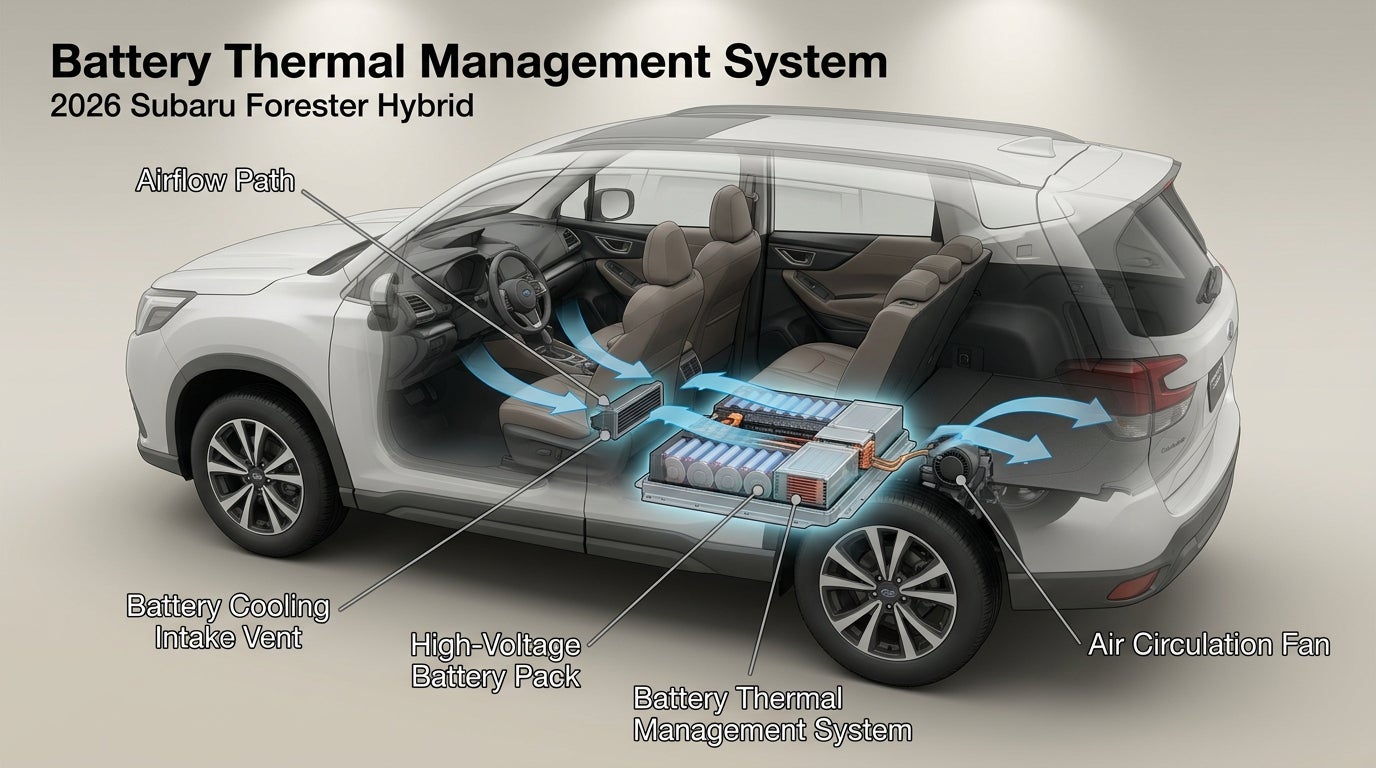
Cutaway diagram of a 2026 Subaru Forester Hybrid showing the battery thermal management system and airflow path. (Representative image for illustration purposes only. Actual vehicle may vary based on trim and configuration.)

Does the 2026 Subaru Forester Hybrid Require Special Battery Cooling Maintenance?

The bottom line for current and prospective owners is clear and reassuring: the 2026 Subaru Forester Hybrid does not require burdensome, frequent, or costly battery cooling fluid flushes under standard driving conditions. Unlike some early-generation hybrid vehicles or complex liquid-cooled high-voltage setups that demand frequent fluid replacement, Subaru’s hybrid battery thermal management system is designed for maximum long-term reliability and minimal driver friction. more However, 'low maintenance' does not mean 'zero maintenance.' The health and longevity of your hybrid battery pack rely heavily on maintaining uninterrupted airflow across the high-voltage battery cooling intake vents and ensuring that routine multi-point inspections are conducted by certified technicians. Dust, pet hair, autumn leaves, and suburban St. Louis road grime can accumulate around the intake ducts located in the rear cabin, restricting airflow and forcing the battery cooling fan to work significantly harder. Over time, heat accumulation is the single greatest enemy of hybrid battery efficiency and cell lifespan. By simply keeping the cabin intake clear of obstructions and having the thermal management system evaluated during scheduled oil changes and tire rotations at Sunset Hills Subaru, you safeguard your battery's thermal state, preserve optimal fuel economy, and protect your vehicle's long-term resale value across every local commute. Expert Perspective: Service Director Ivan Krnjic Meet Ivan Krnjic — Service Director at Sunset Hills Subaru With over 4 years of hands-on experience leading technical operations and master diagnostics at Sunset Hills Subaru, Ivan Krnjic has diagnosed and serviced virtually every iteration of Subaru Symmetrical All-Wheel Drive and advanced hybrid powertrains. His team works daily on the front lines, helping St. Louis area drivers navigate seasonal weather demands, suburban wear-and-tear, and preventative maintenance strategies. 'When customers ask me if hybrid battery systems require special, expensive maintenance every few months, I give them a straightforward answer: No, but they do require smart care. In our Missouri climate, extreme summer heat combined with cabin debris like dog hair or dirt can act like a thermal blanket on your hybrid battery. Simple intake checks during standard service prevent high-voltage overheating before it ever starts.' — Ivan Krnjic Inside the 2026 Forester Hybrid Battery Thermal Management System To understand why maintenance for the 2026 Subaru Forester Hybrid is streamlined yet critical, it helps to examine how the battery thermal management system is engineered. The high-voltage lithium-ion pack operates within a strict temperature window to deliver optimal power assist to the BOXER engine while maximizing energy recovery during regenerative braking. Subaru utilizes a smart forced-air thermal management architecture. High-efficiency brushless cooling fans draw climate-controlled air from the passenger cabin, channel it across internal battery module heat sinks, and vent thermal energy out through dedicated exhaust paths. Because cabin air is conditioned by your HVAC system (warmed in winter, cooled in summer), the battery naturally benefits from comfortable ambient temperatures whenever you drive. Sensor-Driven Protection & Integrated Filters The system features continuous multi-point thermistor sensor monitoring. If thermal sensors detect elevated cell temperatures during steep climbs or heavy stop-and-go traffic in St. Louis summers, the electronic control module adjusts fan speeds dynamically. An integrated intake mesh filter catches coarse lint and particulate matter before air touches internal electrical components. Periodic filter inspection ensures maximum airflow without restriction. Subaru Forester Hybrid vs. Solterra: Battery Cooling Maintenance Compared Body text 2026 Forester Hybrid • System: Forced Cabin Air Cooling • Liquid Flush Needed: None for battery pack • Primary Care: Air intake vent filter checks & cabin air filter replacement • Inspection Interval: Every 6,000 to 12,000 miles • Engine Coolant: Standard Subaru Super Coolant for gas engine Subaru Solterra (Full EV) • System: High-Capacity Liquid Thermal Loop • Liquid Flush Needed: Specialized low-conductivity EV coolant at long intervals • Primary Care: Coolant level checks, radiator debris clearing • Inspection Interval: Every 7,500 miles • Engine Oil: None required Maintenance Takeaway Do electric Subaru vehicles require fewer fluid changes than combustion models? Yes, EVs like the Solterra eliminate engine oil flushes entirely. However, the Forester Hybrid combines the best of both worlds with simple air-cooled battery maintenance while retaining traditional BOXER engine fluid intervals. Schedule Hybrid & EV Maintenance Ivan Krnjic’s Take: Why Battery Air Vent Hygiene Matters in Missouri Living in the greater St. Louis metro area presents specific environmental conditions that directly impact vehicle maintenance. Between heavy spring pollen, humid summer dust, autumn leaves, and winter road salt, air filters across your vehicle work under heavy load. When it comes to the 2026 Forester Hybrid, Service Director Ivan Krnjic points out real-world shop findings that every owner should know. 'In our service bay at Sunset Hills Subaru, the single most common issue we see on air-cooled hybrid batteries isn't mechanical failure — it's airflow restriction,' explains Ivan. 'Owners who travel with pets, transport camping gear, or regularly carry rear passengers often block the battery intake vent without knowing it. Jackets thrown on the rear seats or pet hair pulled into the intake screen reduce airflow. When summer heat hits 95 degrees with 80% humidity in St. Louis, a restricted vent forces the battery pack to heat up quickly, causing the vehicle's computer to reduce hybrid electric assist to protect the system. Keeping that vent clean ensures you get 100% of your hybrid performance and fuel efficiency every time you drive.' 2026 Subaru Forester Hybrid & Outback Scheduled Maintenance Checklist Body text Service Interval 2026 Forester Hybrid Items Subaru Outback (Gas) Items Service Focus 30,000 Miles Synthetic Oil, Filter, Brake Fluid, Battery Vent Screen Clean, Cabin Filter Synthetic Oil, Filter, Brake Fluid, Engine Air Filter, Cabin Filter Comprehensive inspection & fluid updates 60,000 Miles Oil/Filter, Spark Plugs, CVT Fluid Check, High-Voltage Thermal System Diagnostic Oil/Filter, Spark Plugs, CVT Fluid Check, Front/Rear Differential Fluids Major ignition & drivetrain check 90,000 Miles Oil/Filter, Brake Fluid Flush, Hybrid Cooling Fan Inspection, Belt Check Oil/Filter, Brake Fluid Flush, Engine Air Filter, Belt Inspection Long-term wear & thermal protection Which Subaru Maintenance Tasks are Realistic for DIY Owners to Handle? Safe DIY Tasks for Home Mechanics • Cabin Air Filter Replacement: Quick 10-minute swap behind the glovebox to maintain clean airflow inside the vehicle. • Exterior Battery Vent Vacuuming: Gently cleaning dust or pet hair off the outer intake mesh using a soft brush vacuum attachment. • Windshield Wiper Blades & Washer Fluid: Easy seasonal maintenance for clear visibility. • Tire Pressure Monitoring: Checking cold tire pressures monthly to ensure even tire wear across all four wheels. Tasks Requiring Certified Subaru Technicians • High-Voltage Fan Diagnostics: Testing electric fan relay actuation and motor voltage using SSM4 factory diagnostic software. • Hybrid Battery Filter Internal Replacement: Disassembling high-voltage safety covers requires certified safety gear and training. • CVT Fluid Service & Differential Flushes: Sealed electronic transmission units require specific temperature monitoring during refilling. • Brake System Flush on Hybrid Models: Electronic brake pressure blending systems require diagnostic tool cycling. Subaru Cost of Maintenance Compared: Forester Hybrid vs. Toyota and Audi Body text Brand / Model Category Average Annual Maintenance Estimated 5-Year Total 10-Year Ownership Cost Outlook 2026 Subaru Forester Hybrid $450 - $620 $2,450 - $3,100 Highly predictable, low hybrid system wear Toyota RAV4 Hybrid $430 - $590 $2,300 - $2,950 Extremely competitive mainstream benchmark Audi Q5 Quattro (Luxury AWD) $1,150 - $1,650 $6,200 - $8,500 High labor rates, expensive proprietary parts Why does Audi cost significantly more to maintain than Subaru despite similar all-wheel drive capabilities? Luxury European crossovers utilize specialized complex turbocharger plumbing, adaptive suspension components, and higher dealership labor rates. Subaru delivers Symmetrical AWD performance engineered for practical maintenance using accessible components. View Current Service & Parts Information Brake Pad Replacement Intervals on Hybrid vs. Gasoline Subaru Crossovers Regenerative Braking Advantage When you press the brake pedal in the 2026 Forester Hybrid, the electric motor acts as a generator to slow the vehicle down first, capturing kinetic energy. Mechanical brake pads only engage during hard stops or coming to a complete final halt. Extended Replacement Lifespan Gasoline Crossovers (Forester/Outback): Brake pads typically require replacement every 30,000 to 50,000 miles. Forester Hybrid: Regenerative braking extends pad lifespan up to 70,000 to 90,000 miles under normal driving conditions. Lower Long-Term Cost Fewer pad and rotor replacements directly reduce long-term maintenance costs. Combined with reduced starter motor wear, the hybrid powertrain pays dividend savings beyond gasoline fuel economy alone. Estimating Long-Term Maintenance Costs for Ladue and Sunset Hills Drivers Driving habits across suburban St. Louis — from stop-and-go commuting along I-270 to navigating rolling terrain around Ladue and Sunset Hills — play a meaningful role in vehicle maintenance planning. To calculate a realistic 10-year ownership budget, drivers should account for basic annual maintenance ($450–$650/year for years 1–5; $700–$900/year for years 6–10) alongside strong residual trade-in values. Subaru vehicles consistently hold top industry resale awards, offsetting long-term maintenance costs when you trade in or upgrade. You can check your current vehicle value anytime with our online tool to Get your value trade. Preventative Care Checklist for Suburban St. Louis Driving Conditions Spring & Summer Prep • Inspect battery intake vents after pollen season. • Test cabin A/C efficiency before summer heat waves hit 90°F+. • Check coolant levels and engine air filter for dust buildup. Autumn & Winter Readiness • Verify 12V auxiliary battery state of charge. • Check wiper blades and washer fluid freeze protection. • Ensure tire tread depth is ready for winter ice and snow. Year-Round Best Practices • Keep rear floor and intake vent clear of gear or blankets. • Schedule routine oil changes every 6,000 miles. • Use original OEM filters to protect internal airflow. Professional Service and Maintenance Resources at Sunset Hills Subaru At Sunset Hills Subaru, we are committed to providing an exceptional service experience for every driver. Located convenient to St. Louis, Kirkwood, and Webster Groves, our state-of-the-art facility features factory-certified technicians equipped with specialized diagnostic tools for all Subaru gas, hybrid, and electric models. Whether you need to Find Subaru Parts like genuine air filters, explore New Subaru Forester Inventory, or Get approved for financing for a new vehicle, our dedicated team is here to support you. You can also explore our full lineup including New Subaru Inventory, Used Vehicle Inventory, or specialty models like New Subaru Outback Inventory and New Subaru Solterra Inventory. Schedule Service and Diagnostics Schedule Your Forester Hybrid Service Inspection at Sunset Hills Subaru Today Keep your 2026 Subaru Forester Hybrid performing at its peak efficiency. Contact Service Director Ivan Krnjic and our certified technical team at Sunset Hills Subaru for expert battery cooling inspections, routine scheduled care, or genuine OEM accessories. Call us at (314) 476-9638 today or visit us at 10100 Watson Rd, Sunset Hills, MO 63127. Schedule Service Online Title Tags 2026 Subaru Forester Hybrid Maintenance in Sunset Hills, MO | Sunset Hills Subaru Meta Description Keywords Open Graph Twitter Card Canonical Article Metadata Geographic Targeting
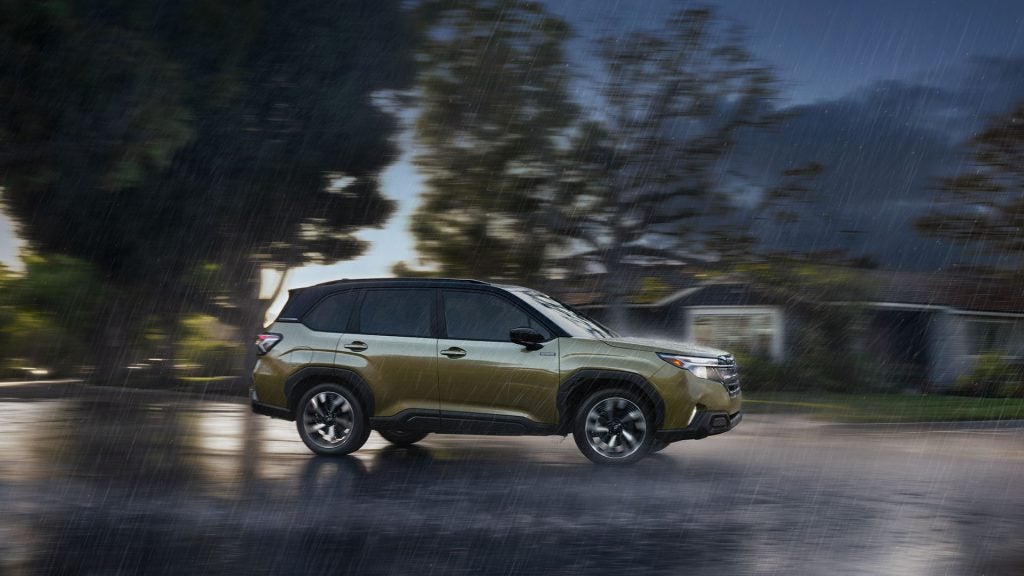
Essential Advice for Driving Safely in Bad Weather: Expert Guidance from Sunset Hills Subaru

Mastering Safe Driving in Bad Weather: Expert Strategies for Sunset Hills, MO Drivers Driving in adverse weather conditions is a common challenge for motorists in Sunset Hills, MO, and surrounding areas like Fenton, Crestwood, and Maplewood. Weather elements such as heavy rain, fog, strong winds, and snow can significantly impact road safety, demanding extra caution, preparation, and driving skills. At Sunset Hills Subaru, located at 10100 Watson Rd, Sunset Hills, MO 63127, we are committed to supporting drivers with expert advice, quality vehicles, and maintenance services to keep you safe no matter the weather. Call us today at (314) 476-9638 to learn more or schedule a service appointment. more Table of Contents The Most Crucial Strategy for Driving During Inclement Weather – Why slowing down and increasing distance is essential for safety in all weather conditions. How to Drive Safely During Heavy Rain – Detailed techniques for maintaining control, visibility, and avoiding hydroplaning in heavy rain. Preparing Your Subaru for Bad Weather – Key maintenance tips and equipment checks to ensure your vehicle is ready for wet, icy, or stormy conditions. Tips for Driving in Strong Winds – How to maintain control and stay safe when gusts impact your vehicle’s stability. What to Do If You’re Caught in Severe Storm Conditions – Immediate safety measures and communication tips to protect yourself during a storm. Preparing for Night Driving in Bad Weather – Advice on visibility and vehicle readiness for safer nighttime journeys in adverse weather. Understanding Weather Conditions That Make Driving Difficult – Identifying the most hazardous weather types and how to adapt your driving accordingly. Key Takeaways for Safe Driving in Sunset Hills and Beyond – A practical summary to keep you confident and prepared on the road. The Most Crucial Strategy for Driving During Inclement Weather When faced with poor weather, the single most important adjustment any driver can make is to reduce speed. Whether you are navigating the rain-soaked streets of Richmond Heights or the foggy roads near Creve Coeur, slowing down provides you with vital additional time to react to unexpected hazards. Reduced speed directly enhances your vehicle control, preventing skids and loss of traction on slippery surfaces. In addition to slowing down, increasing the following distance is essential. The typical 3-second rule you follow under normal conditions should be doubled or even tripled in inclement weather. For example, in heavy rain near Webster Groves, a six-second gap between your Subaru and the vehicle ahead can drastically reduce the chance of rear-end collisions due to extended stopping distances caused by slick pavement. Another key component of safe driving in bad weather is avoiding sudden maneuvers. Gentle acceleration and braking prevent wheel lock-up and skidding. In particular, avoid using cruise control during rain or snow. Cruise control can delay your response time and maintain speed when road conditions require adjustments. By maintaining manual control, your Subaru’s advanced traction and stability features, such as Symmetrical All-Wheel Drive and Vehicle Dynamics Control, function optimally to keep you safe. At Sunset Hills Subaru, we recommend all drivers familiarize themselves with their vehicle’s safety systems and practice smooth driving habits in varying weather conditions. For hands-on support, feel free to Schedule Service and Diagnostics to ensure your brakes, tires, and traction systems are operating flawlessly. How to Drive Safely During Heavy Rain Heavy rain is a frequent challenge for drivers in areas like Chesterfield, Valley Park, and St Charles, requiring specific techniques to navigate safely. First, reduce your speed significantly. Rain affects tire grip, increasing the risk of hydroplaning, where water lifts the tires off the road surface and causes loss of steering control. Experts advise reducing speed to match road conditions and avoiding standing water or large puddles, which can unexpectedly deepen and cause your Subaru to hydroplane. Visibility is another critical factor. Always use your headlights during rain, even in daylight, to enhance your visibility to other drivers. Ensure your windshield wipers are in excellent condition—worn wipers can leave streaks that impair vision. Using the defroster helps prevent fog buildup on the inside of your windows, maintaining a clear view. Maintain an extended following distance—at least six seconds—to compensate for longer stopping distances on wet roads. Avoid harsh braking or sharp turns to prevent skidding. In the event your vehicle begins to hydroplane, gently ease off the accelerator without braking and steer in the direction you want the car to go until traction returns. For Subaru owners in the Sunset Hills area, models like the Subaru Outback and Forester come equipped with EyeSight Driver Assist Technology, which can help maintain safe distances and alert you to potential hazards even in poor weather. Explore our New Subaru Outback Inventory and Forester Inventory for vehicles designed with weather resilience in mind. Preparing Your Subaru for Bad Weather Preparation is as important as cautious driving. Residents of Glendale, Ladue, and Twin Oaks should regularly check critical vehicle components to ensure safety when weather turns severe. Tires: Check tread depth and tire pressure regularly. A minimum tread depth of at least 4/32 inch is recommended for wet conditions to prevent hydroplaning. Proper inflation ensures optimal grip and braking performance. Wiper Blades and Fluid: Replace worn blades to maintain clear visibility during rainstorms. Use washer fluid formulated for rain and bug residue removal to keep the windshield clean. Lighting Systems: Verify all lights—headlights, brake lights, turn signals—are functioning. Proper lighting improves your visibility and alerts other drivers to your actions in poor visibility conditions. Brake Inspection: Have your brakes checked by certified technicians to ensure responsive stopping power. Wet roads increase stopping distances, so well-maintained brakes are crucial. Fluids and Battery: Keep engine oil, brake fluid, coolant, and transmission fluid at recommended levels. A strong battery is essential to handle the extra load from lighting and heating systems during storms. Emergency Kit: Equip your Subaru with essentials like a flashlight, blankets, jumper cables, water, and non-perishable snacks to be prepared for unexpected delays. To keep your vehicle ready all year, visit Schedule Service and Diagnostics at Sunset Hills Subaru. For parts and accessories like wiper blades or tires, browse our Find Subaru Parts department. Tips for Driving in Strong Winds Strong wind gusts are a seasonal hazard in areas such as Maryland Heights, Sappington, and St Louis city limits. High winds can push your vehicle unexpectedly, especially on open stretches or near bridges. Keep both hands firmly on the steering wheel to maintain control and reduce your speed to counteract gusts. Maintaining a safe distance from other vehicles is critical, as crosswinds can cause others to drift into your lane without warning. Turn on headlights if dust, rain, or debris reduce visibility. Avoid driving next to large trucks or towing trailers, which are more susceptible to wind impact. Always watch for debris on the road that may have blown into your path and be prepared to brake gently to avoid hazards. When winds become too severe, the safest option is to pull over in a clear area away from trees or power lines. Sunset Hills Subaru encourages drivers to rely on Subaru Roadside Assistance for emergency support in such conditions. Contact them directly at Subaru Roadside Assistance: 1-888-870-4582. What to Do If You’re Caught in Severe Storm Conditions If caught in a severe storm while driving near Crestwood or Concord, safety protocols are paramount. First, do not leave your vehicle unless absolutely necessary. Your Subaru offers shelter from harsh weather and protects you from exposure. Make yourself visible by turning on hazard lights and tying bright cloth to your antenna if safe to do so. Conserve fuel by running the engine only intermittently to warm the cabin. Keep communication lines open but conserve phone battery by limiting calls to emergency contacts. Always call 911 immediately if you require urgent assistance. Prepare your vehicle before storms by assembling an emergency kit with items like a snow shovel, jumper cables, and extra blankets. Being proactive can make the difference between a minor inconvenience and a life-threatening situation. If your vehicle requires service or parts repair after storm damage, visit Current Service and Parts Specials at Sunset Hills Subaru to ensure your Subaru is restored with genuine parts promptly. Preparing for Night Driving in Bad Weather Nighttime driving in adverse weather, common in locations like Lakeshire and Twin Oaks, requires heightened attention and vehicle readiness. Keep your windshield, windows, and mirrors spotless to reduce glare and maximize visibility. Use low-beam headlights in fog or heavy rain to prevent light reflection that impairs your vision. Inspect and replace windshield wipers regularly to maintain a clear field of view. Confirm your tires' pressure and tread depth are optimal for traction, and ensure coolant levels are sufficient to prevent fogging and windshield icing. Keeping your vehicle in peak condition helps mitigate the risks posed by darkness and poor weather. Consider upgrading to Subaru’s premium LED lighting systems available on models such as the Subaru Legacy or WRX, which improve illumination for safer night driving. Browse our Legacy Inventory and WRX Inventory for vehicles equipped with advanced lighting technologies. Understanding Weather Conditions That Make Driving Difficult Several weather phenomena create particularly hazardous driving environments in the greater St Charles and Webster Groves areas: Fog: Severely restricts visibility, requiring reduced speeds, use of low beams or fog lamps, and increased following distances. Avoid high beams as they reflect off fog and worsen vision. Snow and Ice: Create slippery surfaces that reduce traction dramatically. Even a thin layer of ice can increase stopping distances by up to tenfold, demanding cautious acceleration, braking, and steering. Heavy Rain: Causes slick roads and potential hydroplaning. Visibility is reduced, requiring headlights and slower driving. Strong Winds: Can shift vehicles unexpectedly, especially high-profile ones. Drivers need to stay alert and maintain firm control. Understanding these conditions and how to respond effectively is vital for all drivers in the Sunset Hills region. Subaru vehicles with features like the Symmetrical All-Wheel Drive and EyeSight Driver Assist offer superior capabilities for handling such conditions safely. Key Takeaways for Safe Driving in Sunset Hills and Beyond Driving safely in bad weather requires a combination of prudent driving techniques, vehicle preparedness, and situational awareness. The cornerstone of safe inclement weather driving is to slow down and increase your following distance, giving yourself extra time to react to hazards. Maintaining clear visibility through properly functioning lights and wipers is indispensable. Preparing your Subaru with regular maintenance checks on tires, brakes, and fluids ensures the vehicle can perform reliably in challenging weather. If you encounter severe storms or strong winds, prioritize safety by pulling over if conditions become unsafe and contacting Subaru Roadside Assistance: 1-888-870-4582 for manufacturer-backed help. For quality Subaru vehicles built for all weather conditions, explore our New Subaru Inventory or find a great fit in our Used Vehicle Inventory. Interested in trading in your current vehicle? Use our tool to Get your value trade and upgrade with confidence. Finally, always keep your vehicle well-maintained by taking advantage of our expert technicians at Schedule Service and Diagnostics at Sunset Hills Subaru. Our team is dedicated to your safety and peace of mind on every journey. © 2025 Sunset Hills Subaru

Contact Us

Fill out this form below and we'll contact you shortly
*Required Fields