
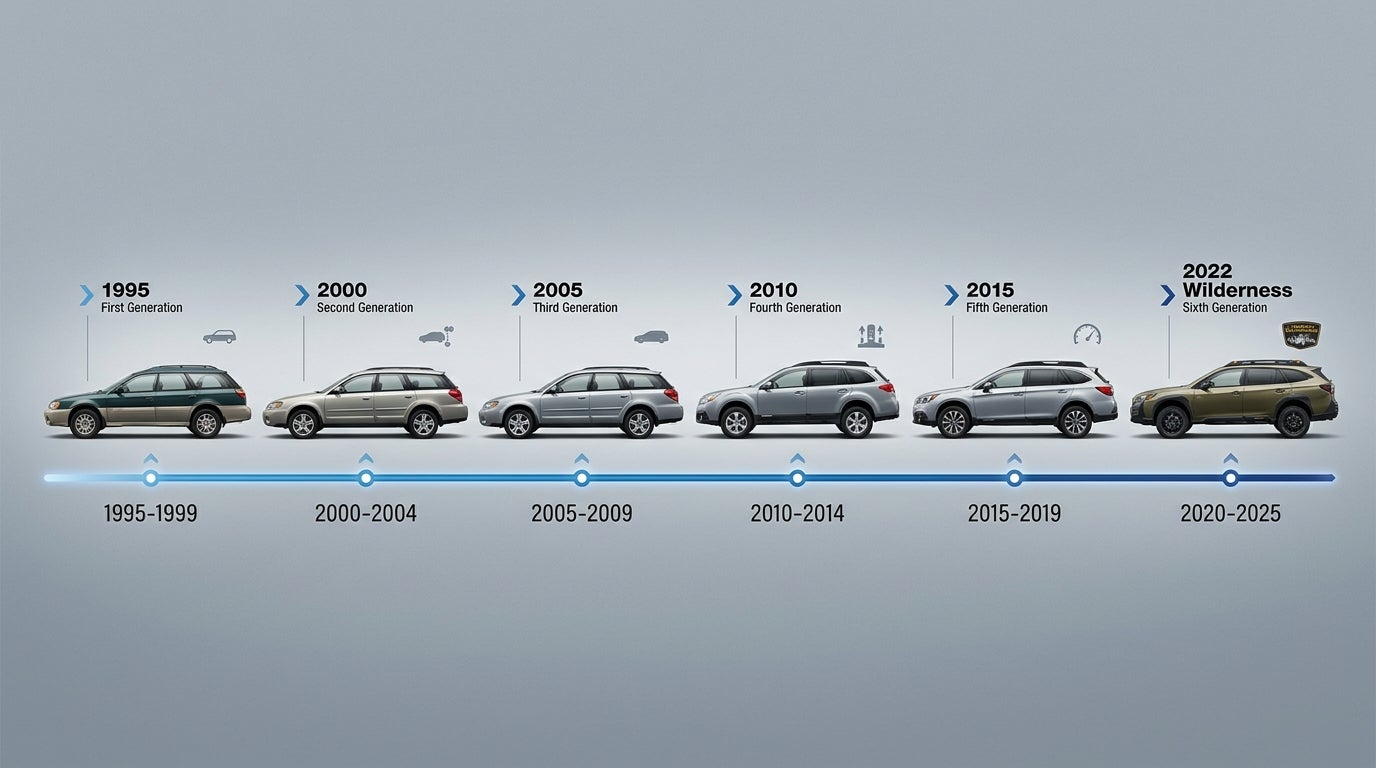
Thirty years ago, the automotive landscape was strictly divided into two distinct camps: low-slung, car-based station wagons designed for suburban pavement, and heavy, body-on-frame truck SUVs that offered off-road utility at the expense of ride quality, fuel economy, and daily maneuverability. In 1994, Subaru engineered a transformative solution by elevating its established Legacy station wagon platform, increasing ground clearance to 7.5 inches, adding rugged body cladding, and equipping it with standard Symmetrical All-Wheel Drive. What began as a clever trim variation evolved over six distinct generations into a standalone crossover legend built on the ultra-rigid Subaru Global Platform, offering up to 9.5 inches of ground clearance, standard EyeSight Driver Assist technology, and advanced Lineartronic CVT efficiency. Explore our full New Subaru Outback Inventory to see how three decades of engineering have redefined midsize utility.
1st Generation (1995–1999): The Elevated Utility Wagon Concept
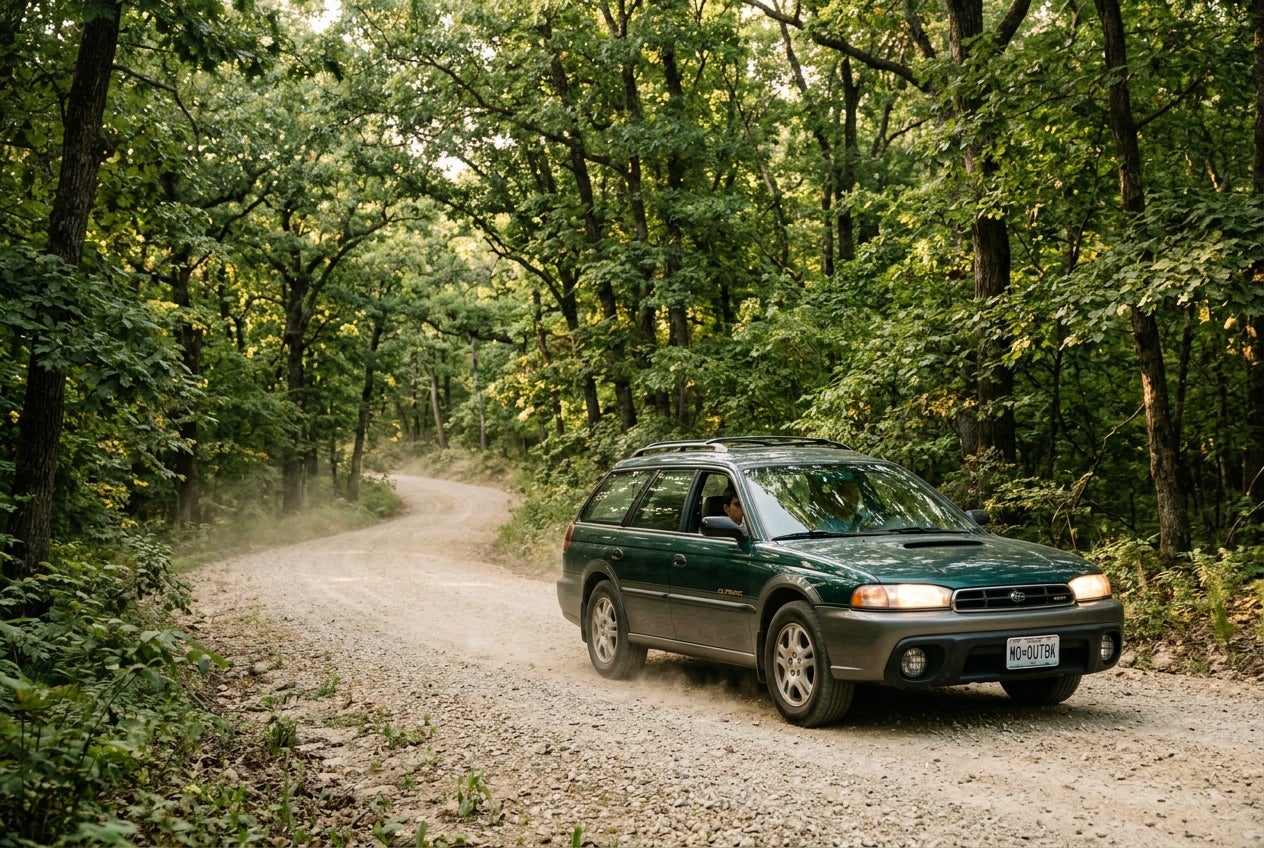
The original Subaru Outback arrived for the 1995 model year as a targeted package on the Legacy wagon platform. Featuring raised suspension, heavy-duty protective lower body cladding, high-profile mud and snow tires, and integrated fog lamps, it challenged the premise that adventure vehicles required truck chassis construction. Engine offerings included the reliable 2.2-liter EJ22 BOXER engine producing 135 horsepower, later expanded to the 2.5-liter EJ251 DOHC BOXER pushing output to 165 horsepower. Supported by iconic marketing featuring actor Paul Hogan, the 'World's First Sport-Utility Wagon' captured consumer imagination by blending car-like fuel efficiency with trail confidence. Check out our latest New Car Inventory to learn how modern Outback capability carries this original spirit forward.
2nd & 3rd Generations (2000–2009): Standalone Status & Performance Refinement
2nd Gen (2000–2004)
For 2000, Subaru officially established the Outback as its own standalone model line. The chassis gained an advanced multi-link rear suspension that eliminated strut towers, drastically opening up flat trunk cargo area. Power was bolstered by the debut of the EZ30 3.0-liter 6-cylinder engine producing 212 horsepower, accompanied by Vehicle Dynamics Control (VDC) to optimize wheel traction.
3rd Gen (2005–2009)
The 3rd Generation ushered in sleek, sculpted exterior lines, wider track width, and elevated safety crash-test ratings. Enthusiasts celebrated the 2.5 XT trim, which borrowed the rally-bred 2.5-liter turbocharged BOXER engine from the WRX STI to generate 250 horsepower. High-strength steel structural reinforcements improved torsional rigidity while maintaining agile pavement handling.
Early Milestones
Key specs across early generations:
• Standard Symmetrical AWD
• Introduction of H6 3.0L engine
• Turbocharged 2.5 XT performance
• Multi-link rear suspension
• VDC electronic stability control
Looking for affordable pre-owned reliability? Browse our Used Vehicle Inventory today.
4th Generation (2010–2014): Lineartronic CVT & EyeSight Safety Debut
The 4th Generation represented a fundamental architectural redesign focused on maximizing interior cabin space and efficiency. Subaru expanded the roofline and wheelbase, yielding significant increases in rear legroom and total cargo volume. Crucially, 2010 marked the transition to the Lineartronic Continuously Variable Transmission (CVT), matching the 2.5-liter engine to optimal gear ratios for smooth acceleration and superior fuel efficiency. In 2013, Subaru made automotive history by introducing its proprietary EyeSight Driver Assist Technology on select Outback trims. Utilizing dual stereo cameras mounted beside the rearview mirror, EyeSight provided adaptive cruise control, pre-collision braking, and lane departure warning—setting a new benchmark for crossover safety.
4th Gen Engineering Highlights:
• Standard retracting roof rack crossbars
• 8.7 inches of ground clearance
• Introduction of 3.6L H6 BOXER engine
• Debut of EyeSight Stereo Camera Safety System
• Lineartronic CVT efficiency replacement for 4-speed autos
If you are considering trading in your current model, Get your value trade online in seconds.
5th Generation (2015–2019): Structural Rigidity & Acoustic Comfort
The 5th Generation elevated the Outback from a utilitarian family wagon into a refined, near-luxury crossover experience. Engineers significantly increased high-strength steel usage throughout the ring-shaped reinforcement frame, boosting torsional stiffness by 67%. This increased frame rigidity dramatically reduced body roll during cornering and minimized road noise transmission into the passenger cabin.
Standardization of Subaru X-Mode with Hill Descent Control gave driver-selectable traction optimization for steep grades and slippery terrain. Inside, acoustic windshield glass, soft-touch dashboard surfaces, and touchscreen STARLINK multimedia with Apple CarPlay and Android Auto created a quiet, connected environment suitable for daily St. Louis highway commutes. You can easily Schedule Service and Diagnostics for late-model Outback maintenance at our Sunset Hills service facility.
6th Generation (2020–2025): Subaru Global Platform & Wilderness Off-Road Capability
Built on the groundbreaking Subaru Global Platform (SGP), the 6th Generation Outback delivers 70% higher torsional rigidity and 100% higher rear subframe rigidity compared to previous architectures. Impact energy absorption increased by 40%, elevating crash safety standards across the industry. Mechanically, the 6th Generation introduced the optional 2.4-liter Turbocharged FA24 BOXER engine (260 hp / 277 lb-ft torque) alongside an updated 2.5-liter direct-injection engine. Technological highlights include the tablet-style 11.6-inch STARLINK touchscreen and full-suite EyeSight with Advanced Adaptive Cruise Control and Lane Centering.
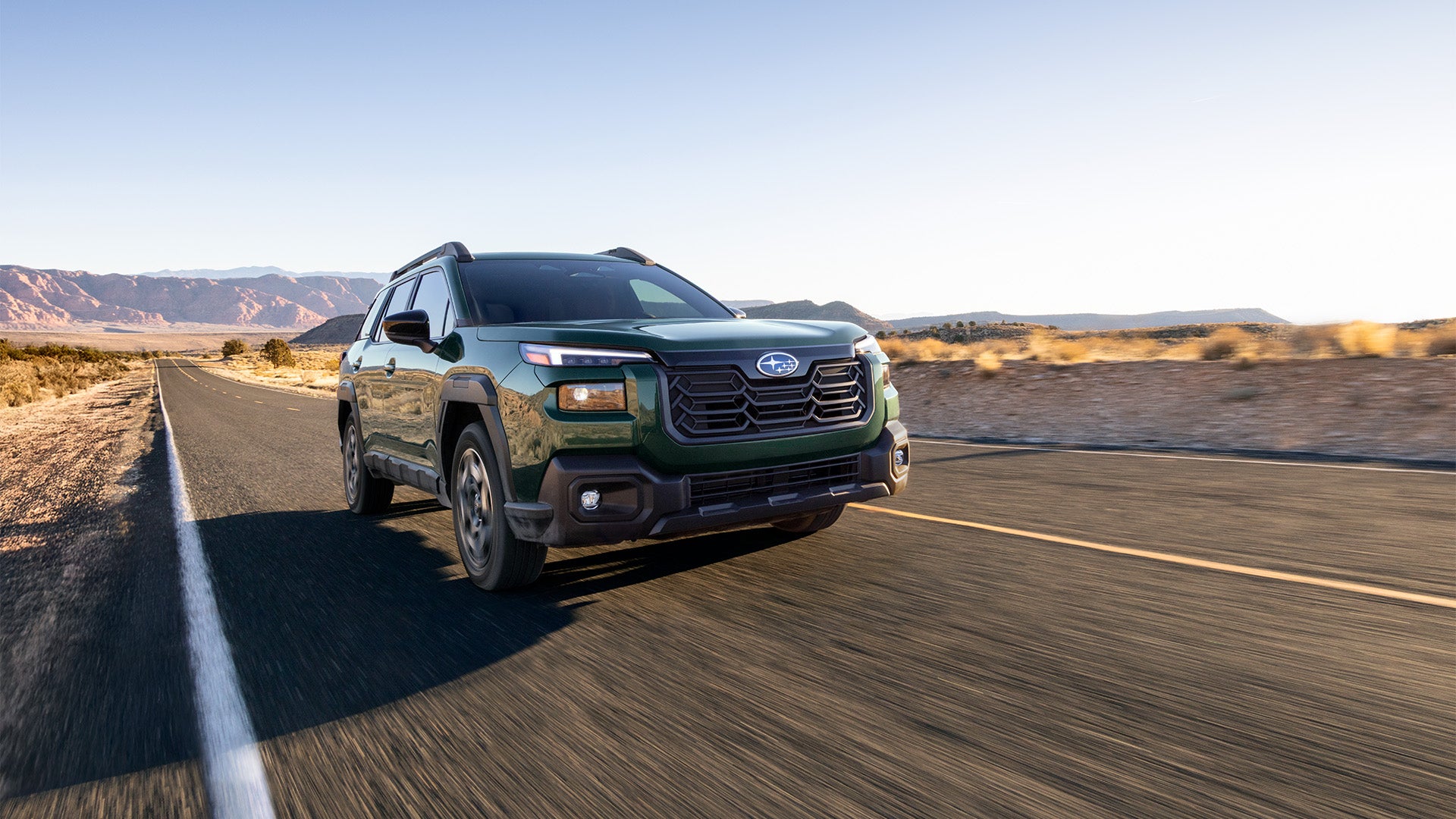
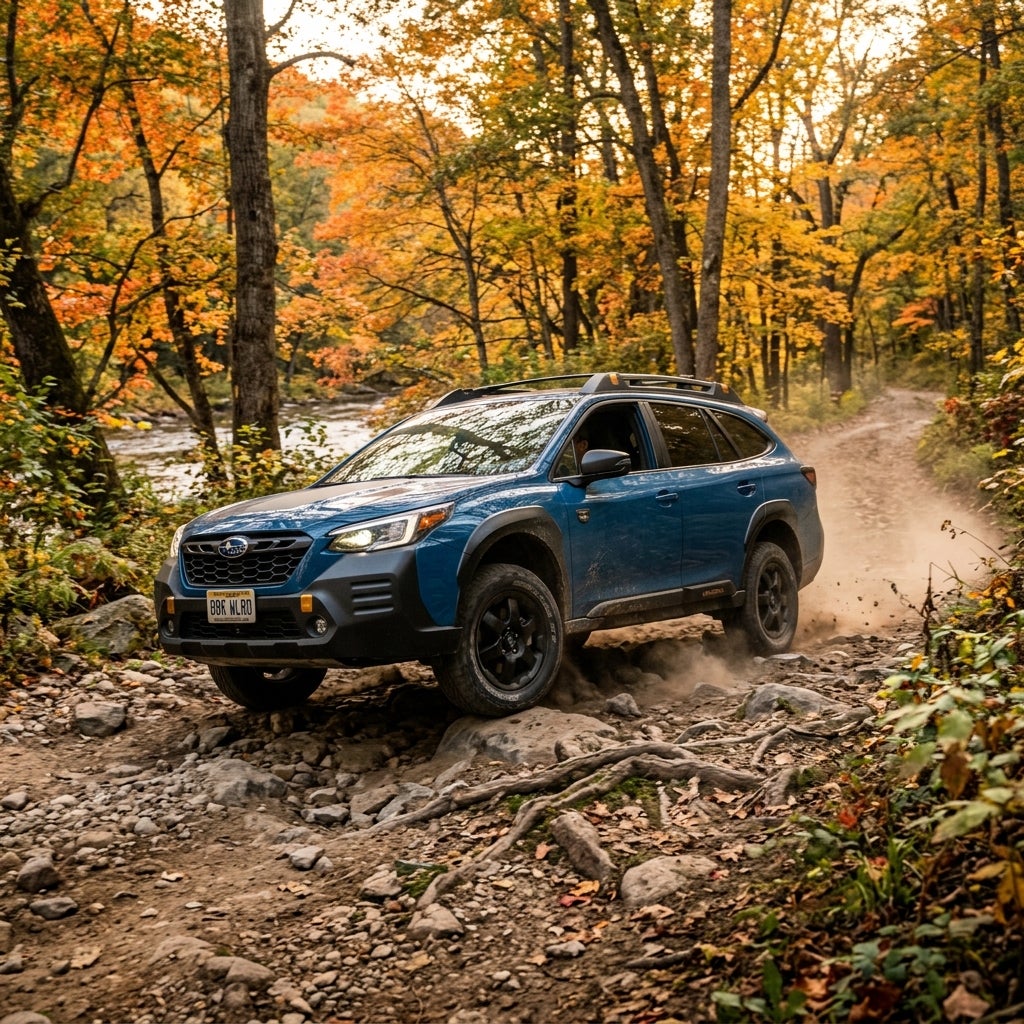
In 2022, Subaru pushed boundaries further by launching the trail-hardened Outback Wilderness. Featuring 9.5 inches of ground clearance, revised front and rear bumpers for improved approach and departure angles, matte-black anti-glare hood decal, Yokohama Geolandar all-terrain tires, and Dual-Function X-Mode (Snow/Dirt and Deep Snow/Mud modes), the Wilderness redefined off-road capabilities in a midsize wagon platform. Explore similar capability across our New Subaru Forester Inventory and New Subaru Crosstrek Inventory lineups.
Generational Breakdown: Dimensions, Clearance, & Performance Matrix
Compare key structural dimensions and powertrain specifications across all six Outback generations below to see how overall passenger space expanded without sacrificing garage friendly proportions.
| Generation | Years | Overall Length | Ground Clearance | Base Engine | Max Cargo Capacity |
|---|---|---|---|---|---|
| 1st Generation | 1995–1999 | 184.0 in | 7.5 in | 2.2L 4-Cyl (135 hp) | 72.5 cu ft |
| 2nd Generation | 2000–2004 | 187.4 in | 7.3 in | 2.5L 4-Cyl (165 hp) | 68.6 cu ft |
| 3rd Generation | 2005–2009 | 188.7 in | 8.4 in | 2.5L 4-Cyl (168 hp) | 65.4 cu ft |
| 4th Generation | 2010–2014 | 188.2 in | 8.7 in | 2.5L 4-Cyl (170 hp) | 71.3 cu ft |
| 5th Generation | 2015–2019 | 189.6 in | 8.7 in | 2.5L 4-Cyl (175 hp) | 73.3 cu ft |
| 6th Generation | 2020–2025 | 191.1 in | 8.7–9.5 in | 2.5L Direct Inject (182 hp) | 75.6 cu ft |
What Does Next-Gen Chassis Engineering Reveal About the Future Outback?
As Subaru develops future iterations of the Outback, chassis evolution centers on modular platform adaptability. The modular SGP architecture allows seamless integration of next-generation hybrid electric powertrains (e-BOXER technology) designed to boost low-end torque while drastically cutting emissions in stop-and-go St. Louis traffic.
Future Outback engineering focuses on next-generation EyeSight system integration with wider-angle monocular cameras, enhanced thermal battery management, and lighter high-strength composite materials. Subaru continues to prioritize its iconic long-wheelbase wagon proportion, ensuring high stability without adopting cumbersome, boxy SUV profiles. For eco-conscious commuters, explore our New Subaru Solterra Inventory for zero-emission driving.
Outback Elevated Wagon Design vs. Traditional Midsize SUVs for Suburban Families
For families navigating daily trips around Ladue, Town & Country, and Sunset Hills, the Outback offers several practical advantages over traditional tall SUVs:
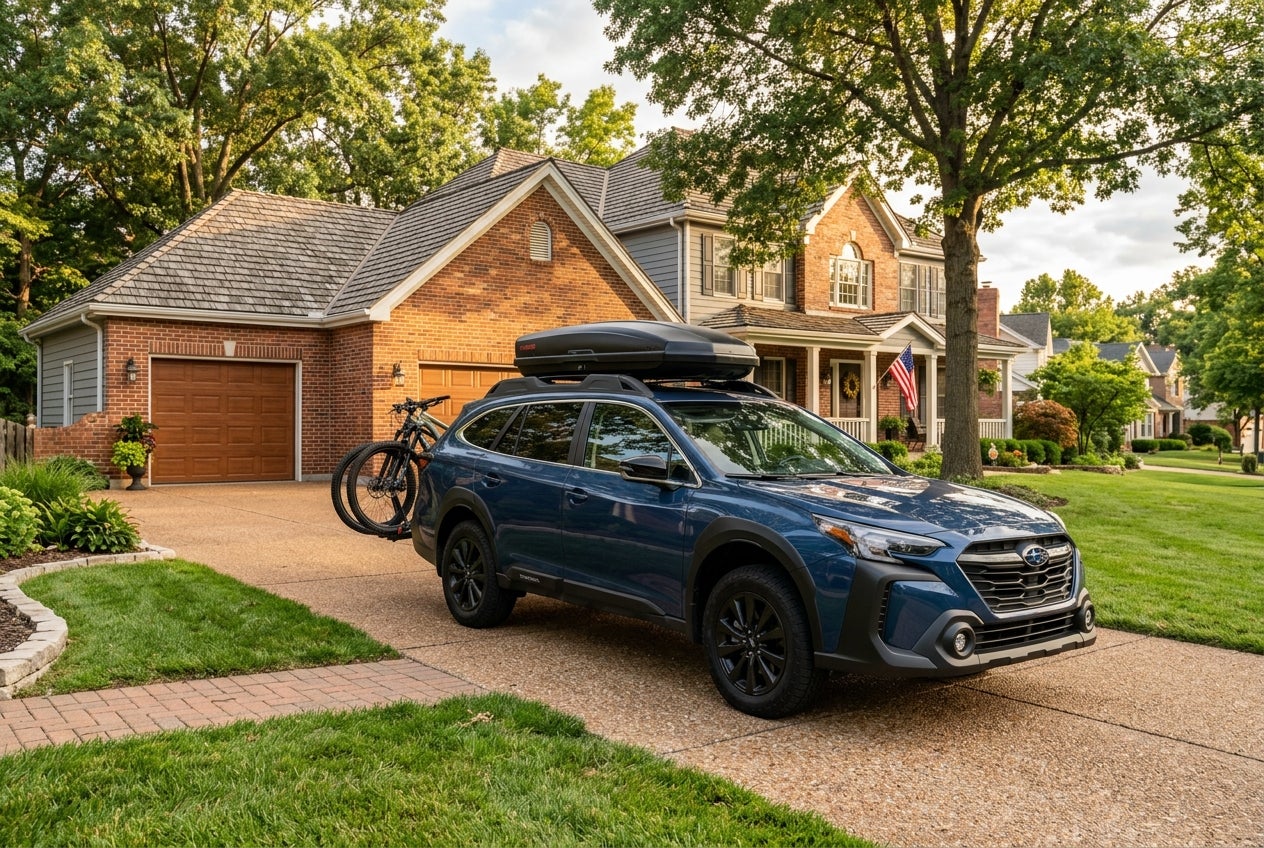
1. Lower Center of Gravity: The horizontally opposed BOXER engine sits low in the chassis, delivering nimble car-like handling and cornering stability rather than top-heavy body roll. 2. Easier Roof Cargo Loading: With a roofline lower than conventional boxy SUVs, securing kayaks, bicycles, or ski racks onto standard crossbars is effortlessly accessible. 3. Garageability & Visibility: The Outback fits easily inside standard residential garages while granting 8.7 to 9.5 inches of ground clearance to conquer unpaved access roads and deep snow drifts. Need 3-row passenger capacity? Compare the Outback against our New Subaru Ascent Inventory.
What Type of Driver Chooses a Subaru Outback Over Competitors?
Safety & Longevity Driven
Drivers prioritizing top-tier IIHS Safety Pick+ awards, standard EyeSight driver assists, and proven mechanical durability (97% of Subarus built in the last 10 years are still on the road).
Outdoor Enthusiasts
Active families who weekend in the Ozarks, haul camping gear, launch canoes, or travel gravel state park trails with true all-weather Symmetrical AWD traction confidence.
Smart Resale Buyers
Value-conscious owners seeking industry-leading resale retention, strong fuel efficiency, and sensible maintenance costs. Contact us about financing today to start your upgrade.
Which Outback Trim Level Fits Your St. Louis Driving Needs?
• Outback Premium / Limited: Ideal for daily suburban commuters seeking leather-trimmed upholstery, 11.6-inch touchscreen navigation, Harman Kardon premium audio, and optimal MPG. • Outback Touring: Offers Nappa leather upholstery, ventilated front seats, 180-degree front view monitor, and ultimate long-distance highway comfort. • Outback Wilderness: Engineered for off-road trails with 9.5-inch clearance, dual X-Mode, and 3,500-lb towing capacity.
Looking for sport sedan or compact vehicle instead? Explore our New Subaru Impreza Inventory or high-performance New Subaru WRX Inventory options. Maintaining an existing Outback? Easily Find Subaru Parts and check our Current Service and Parts Offers.
Subie Talk Podcast: The Subaru Outback Through the Generations
To take the story of the Subaru Outback even further, tune in to the Subie Talk Podcast as we explore the Outback’s evolution across the generations. We’ll look at how Subaru transformed the Outback from its rugged wagon roots into the versatile, adventure-ready SUV drivers know today, highlighting the major design changes, technology, performance, and innovations that helped shape each generation along the way.