Blog

The Best Subaru for Road Trips: Expert Guide to Finding Your Perfect Adventure Vehicle

The Best Subaru for Road Trips: Expert Guide to Finding Your Perfect Adventure Vehicle

Embarking on a road trip requires a vehicle that can deliver comfort, reliability, and versatility, especially when exploring regions like Sunset Hills, MO, and nearby areas such as Crestwood, Ladue, and Valley Park. Subaru vehicles are renowned for their ruggedness, advanced all-wheel-drive systems, and spacious interiors, making them an excellent choice for long-distance journeys. Whether you're planning a solo adventure, a family vacation, or a group excursion, understanding which Subaru model best suits your road trip needs is essential for a memorable and hassle-free experience.

For personalized assistance or to explore our diverse inventory, contact us anytime at (314) 476-9638 or visit us at 10100 Watson Rd, Sunset Hills, MO 63127.

Table of Contents


Choosing the Best Subaru for Road Trips

When selecting a vehicle for road trips, a few critical factors come into play: reliability, adaptability to varying road and weather conditions, passenger and cargo space, fuel efficiency, and comfort. Subaru’s lineup is engineered with these essentials in mind, especially for drivers in Missouri locales such as Richmond Heights, Glendale, and Webster Groves, where unpredictable weather and diverse terrain demand a dependable and versatile vehicle.

One of Subaru’s standout features is its Symmetrical All-Wheel Drive (AWD) system, which offers continuous power distribution to all four wheels, ensuring superior traction and control on highways, rural roads, and rugged trails alike. This system is especially beneficial in regions like Twin Oaks and Chesterfield, where road conditions can vary dramatically between seasons. Beyond AWD, Subaru vehicles are equipped with Boxer engines, which have a horizontally opposed design that lowers the center of gravity, providing enhanced stability and smoother rides—critical for long hours on the road.

Another consideration is interior space and comfort. A road trip can last several hours or even days, so having ample legroom, ergonomic seating, and modern amenities like Apple CarPlay, Android Auto, and advanced driver-assist technologies such as EyeSight® can significantly elevate the travel experience. For example, heated seats and steering wheels are appreciated during cold Missouri mornings, especially in places like Maplewood or Ladue.

Safety also remains paramount. Subaru models consistently earn top marks from the IIHS, with many designated as Top Safety Picks. Features like adaptive cruise control, lane keep assist, and pre-collision braking contribute to peace of mind on long-distance drives.

To browse our full range of new vehicles tailored for your next adventure, check out our New Subaru Inventory. For those considering pre-owned options, our Used Vehicle Inventory offers quality-tested models that meet our high standards.


Top Subaru Models for Road Trips

Each Subaru model has unique strengths that cater to different road trip styles. Below, we delve into the most popular options for drivers from St. Charles to Maryland Heights, highlighting why these vehicles shine on the open road.


Subaru Outback: The Versatile Road Trip Companion

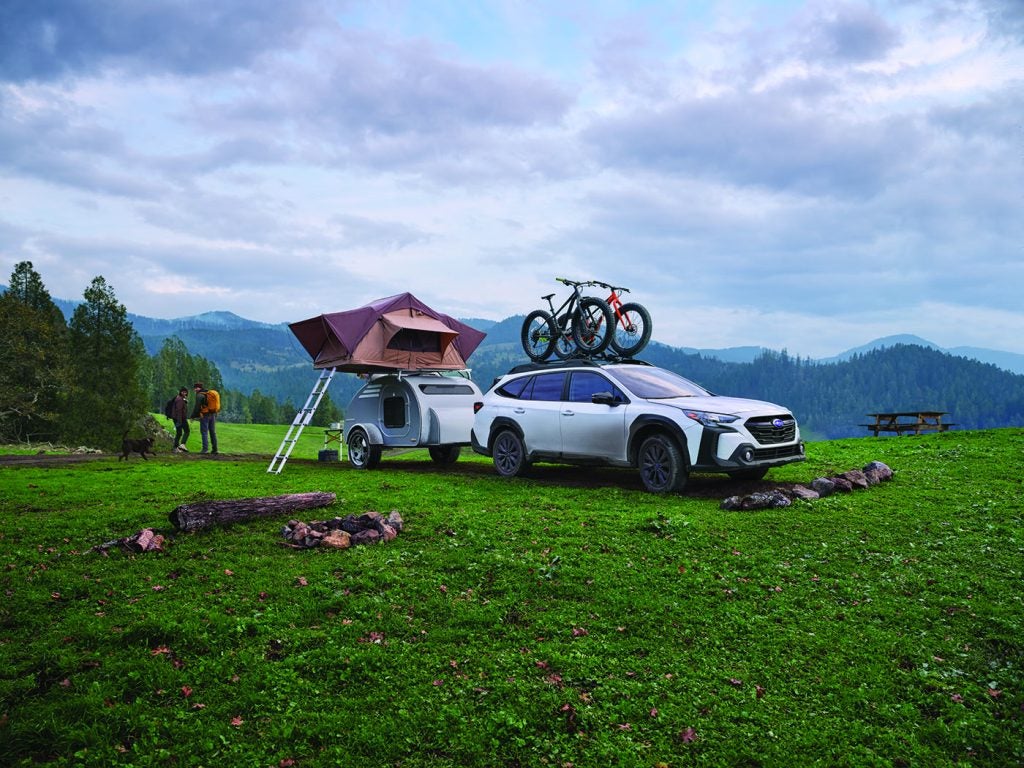
The Subaru Outback stands out as the quintessential road trip vehicle, blending the capacity of an SUV with the driving dynamics of a car. With a ground clearance of 8.7 inches on base trims and up to 9.5 inches on the Wilderness version, the Outback confidently handles unpaved roads and snowy conditions alike. This is a significant advantage for travelers exploring the rolling hills around Valley Park or venturing into the rugged landscapes near Fenton.

Key features include:

  • Spacious Cabin and Cargo Space: With up to 75.6 cubic feet of cargo room when rear seats are folded, the Outback can accommodate everything from camping gear to sports equipment.
  • Comfort and Convenience: Higher trims offer Napa leather seats with extended thigh support, heated front and rear seats, and dual-zone climate control, ensuring comfort for all passengers.
  • Powertrain Options: The standard 2.5-liter Boxer engine provides a solid 182 horsepower, while the turbocharged 2.4-liter variant boosts output to 260 horsepower for more spirited driving or towing needs up to 3,500 pounds.
  • Advanced Safety: Standard EyeSight® Driver Assist Technology helps maintain safe distances and lane positioning, essential for fatigue-free, long-distance driving.

For detailed Outback selections, visit our dedicated New Subaru Outback Inventory and discover current offers at Current New Car Specials.


Subaru Ascent: Family-Friendly Features and Space

For larger groups or families embarking on extended trips from neighborhoods like Crestwood or Sappington, the Subaru Ascent is the ideal choice. This three-row SUV seats up to eight and focuses on passenger comfort and connectivity.

Highlights include:

  • Spacious Interior: With ample legroom and headspace across three rows, plus numerous USB ports and charging stations, the Ascent keeps everyone connected and comfortable.
  • Safety Excellence: The Ascent is an IIHS Top Safety Pick+, featuring advanced safety suites including Blind-Spot Detection and Rear Cross-Traffic Alert.
  • Robust Performance: Powered by a 2.4-liter turbocharged Boxer engine delivering 260 horsepower, it balances power and efficiency for varied road conditions.
  • Comfort Features: Tri-zone climate control, available second-row captain’s chairs, and stain-resistant StarTex upholstery make it family-friendly and practical.

Explore the Ascent lineup at New Subaru Ascent Inventory.


Subaru Crosstrek: Compact Yet Capable for Explorers

For those who prefer agility and fuel efficiency, the Subaru Crosstrek delivers. Perfect for urban adventurers in Richmond Heights, Glendale, or Maplewood, it also boasts ruggedness to tackle light off-road trails.

Key attributes:

  • Fuel Efficiency: EPA-rated at 27 mpg city and 34 mpg highway, with a plug-in hybrid variant offering up to 90 MPGe.
  • Ground Clearance: 8.7 inches (standard) and 9.3 inches for the Wilderness trim, ideal for navigating less-traveled paths.
  • Technology: Standard Apple CarPlay and Android Auto, along with Subaru Starlink® Multimedia, keep trips connected and entertaining.
  • Winter Readiness: Symmetrical AWD paired with X-MODE ensures confident traction on snowy or slick roads common in Missouri winters.

Check out the latest Crosstrek models at New Subaru Crosstrek Inventory.


Maintaining Your Subaru for Long Hauls

Ensuring your Subaru remains in peak condition during extended road trips involves routine maintenance and timely repairs. At Sunset Hills Subaru, our skilled technicians are ready to assist with everything from oil changes to brake inspections to keep your vehicle running smoothly.

Key maintenance tips include:

  • Regular Oil and Filter Changes: Essential for engine longevity, recommended every 3,000 to 5,000 miles.
  • Tire Care: Proper inflation and rotation extend tire life and improve fuel efficiency.
  • Brake Inspections: Critical for safety, especially before long trips.
  • Use Genuine Subaru Parts: Authentic components from our Parts Department ensure optimal fit and performance.

We invite you to Schedule Service and Diagnostics online or by phone to prepare your Subaru for your next adventure.


Trade-In and Upgrade Options

Ready to upgrade your current vehicle? Use our hassle-free tool to understand your trade-in value and find the perfect Subaru for your road trip lifestyle.

Our sales team at Sunset Hills Subaru is dedicated to helping you find the best fit for your road trip needs.


Experience Sunset Hills Subaru

Located conveniently at 10100 Watson Rd, Sunset Hills, MO 63127, Sunset Hills Subaru is your trusted partner for all things Subaru in the St. Louis region. Whether you’re from Ladue, Sappington, or St. Louis proper, our knowledgeable staff and comprehensive services are here to support your journey.

Why choose us?

  • Expert guidance on choosing the right Subaru for your lifestyle.
  • Factory-trained technicians using genuine Subaru parts.
  • Flexible service hours and online scheduling for your convenience.
  • Ongoing service and parts specials available at Current Service and Parts Specials.

Connect with us today by calling (314) 476-9638 or visiting our website to explore inventory, schedule service, or learn about Subaru’s unmatched safety and performance.


Planning Your Ultimate Road Trip with Subaru

Choosing the perfect Subaru for your adventures ensures more than just a mode of transportation—it guarantees a reliable partner for your journeys across Missouri’s diverse landscapes, from the urban streets of Webster Groves to the scenic trails near Richmond Heights. Whether you prioritize cargo space, fuel efficiency, safety, or off-road capability, Subaru’s lineup offers a match for every traveler.

Experience the blend of comfort, technology, and rugged durability at Sunset Hills Subaru, where your road trip begins with the right vehicle and continues with trusted service and support. Start your journey today by exploring our inventory or scheduling a service appointment to keep your Subaru in peak condition.

Discover your next adventure vehicle now at Sunset Hills Subaru.
Recommended Posts

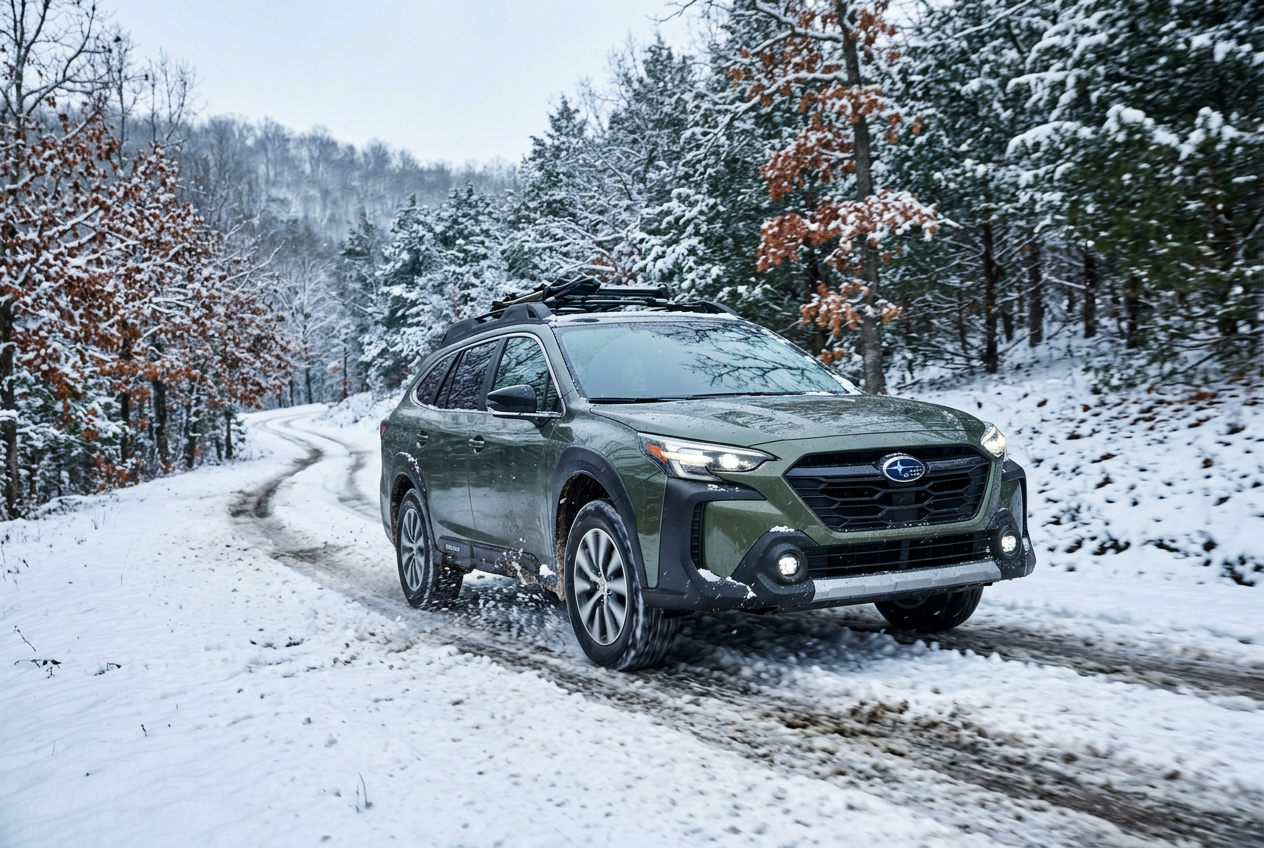
Outback on winter road

What Does Subaru X-MODE Actually Do on Snow, Ice, and Slippery Roads?

When winter storms hit the greater St. Louis metropolitan area and transform local highways into icy sheets, drivers frequently ask: What does Subaru X-MODE actually do on snow, ice, and slippery roads? At its core, Subaru X-MODE is an integrated electronic control system that alters five fundamental mechanical and software subsystems within your vehicle: engine throttle response, transmission ratio logic, front-to-rear center coupling torque force, Vehicle Dynamics Control (VDC) individual wheel braking, and Hill Descent Control. While Subaru’s Symmetrical All-Wheel Drive (AWD) is continuously active under normal driving conditions, X-MODE acts as an expert co-pilot that optimizes traction when vehicle tires encounter near-zero friction environments. Under standard highway driving conditions, your Subaru balances fuel efficiency with permanent AWD grip. However, when a vehicle encounters thick slush, packed snow, or black ice, standard traction control parameters can sometimes prove overly conservative or react too slowly to sudden individual wheel slippage. When you press the X-MODE button or turn the dual-mode selector dial, the vehicle’s central control unit instantly recalibrates the electronic throttle map so that sudden driver accelerator inputs do not break tire traction. Simultaneously, the Lineartronic Continuously Variable Transmission (CVT) is instructed to stay in a lower gear ratio to deliver maximum low-end engine torque, while the multi-plate transfer clutch locks up tightly to ensure equal power distribution between the front and rear axles. For drivers seeking to understand how these systems compare during severe winter weather, the table below provides a side-by-side comparison of standard operating parameters versus X-MODE active intervention on low-friction road surfaces. Subsystem Component Standard AWD Driving Mode X-MODE Activated (Snow/Ice) Throttle Response Linear input for normal acceleration and fuel economy Smoothed electronic mapping to prevent sudden wheel spin CVT Gear Ratio Continuously adjusts for optimal fuel efficiency Holds lower ratio to deliver consistent engine torque AWD Transfer Clutch Variable 60/40 front-to-rear torque distribution Locks up up to 50/50 split for maximum combined traction VDC Braking Intervention Gradual braking applied after prolonged wheel spin is detected Rapid, micro-burst braking to immediate spinning wheels Hill Descent Control Driver manually manages pedal braking on steep declines Automatic vehicle speed maintenance under 12 mph without foot braking How Does Subaru X-MODE Work on Snow, Ice, and Slippery Roads? Understanding the mechanical precision behind X-MODE requires looking closely at how its integrated algorithms manage wheel slippage in real time. When standard vehicles encounter a patch of glare ice under one tire, an open differential will naturally direct engine power toward the wheel with the least resistance—causing that tire to spin uncontrollably while the grounded tires remain static. Subaru’s X-MODE solves this fundamental physics challenge by using the Vehicle Dynamics Control (VDC) hydraulic unit to simulate locking differential performance across both front and rear axle assemblies. When X-MODE is engaged, wheel-speed sensors continuously monitor all four corners of the chassis thousands of times per minute. The instant a single wheel begins spinning even a fraction faster than the others, X-MODE commands the brake caliper on that specific wheel to pinch tightly. By applying targeted hydraulic pressure to the slipping wheel, torque is immediately redirected through the differential across to the opposing tire on the same axle that still has firm contact with frozen asphalt or deep snow. Another crucial aspect of X-MODE on steep winter inclines is its integrated Hill Descent Control (HDC) feature. Navigating downhill on slick ice or frozen slush is often far more dangerous than climbing uphill, as locked-up brakes eliminate steering control. Hill Descent Control acts as a low-speed off-road cruise control for downhill travel, automatically applying individual hydraulic brake pressures to maintain a constant creep speed without requiring the driver to touch the brake or gas pedals. Furthermore, throttle sensitivity is dramatically softened when X-MODE is operating under 12 mph. In a standard vehicle, tapping the gas pedal on slick snow can send a sharp surge of horsepower to the drive wheels, breaking whatever micro-adhesion exists between rubber and ice. X-MODE creates a dampening effect between your foot and the engine, ensuring smooth, linear torque delivery that gently nudges the vehicle forward without spinning out. What Is the Difference Between Single-Mode and Dual-Function X-MODE? Subaru offers two distinct variations of its software architecture across different models and trim packages: standard single-mode X-MODE and advanced Dual-Function X-MODE. Knowing the operational differences between these systems helps drivers select the optimal vehicle configuration for severe winter driving conditions. Single-Mode X-MODE Found on core trims such as Premium and Limited models, single-mode X-MODE is activated via a single push button or touchscreen toggle. It provides one all-encompassing calibration optimized for slippery surfaces like hard-packed snow, slick rain-soaked pavement, and moderate gravel. It strictly suppresses wheel spin by clamping down immediately on slipping tires to maintain traction and steering control. Dual-Function: Snow/Dirt Mode The first setting of Dual-Function X-MODE (featured on Sport, Onyx Edition, and Wilderness models) operates similarly to single-mode X-MODE. It is engineered specifically for firm, slippery surfaces like hard-packed snow, ice, and wet gravel. Traction control remains fully engaged to prevent tire spinning, while engine throttle response is dampened to maximize contact patch grip on icy roads. Dual-Function: Deep Snow/Mud Mode The second setting of Dual-Function X-MODE completely changes the vehicle's computer logic for soft, high-resistance terrain. In unplowed deep snow or thick winter mud, preventing wheel spin can actually cause a car to become stuck. This mode automatically turns off standard VDC traction control restriction, allowing controlled wheel spin so tire tread blocks can clear out packed snow and momentum can be preserved. At What Speed Does Subaru X-MODE Automatically Turn Off and Can It Be Used at High Speeds? A frequent question among winter drivers in Missouri is whether X-MODE can be left engaged while traveling at highway speeds down Interstate 40 or I-270 during a snowstorm. The short answer is no: Subaru X-MODE is specifically designed as a low-speed tactical system for negotiating difficult, low-traction situations such as unplowed driveways, steep neighborhood inclines, and stuck situations. X-MODE can be manually switched on at speeds below 12 mph to 18 mph (depending on vehicle model year). Once engaged, if you accelerate past approximately 18 mph, the system enters a standby status (indicated by a flashing status icon on the cluster). Once vehicle speed exceeds 25 mph, X-MODE automatically disengages entirely, returning the vehicle to standard Symmetrical All-Wheel Drive operation. This automatic shutoff parameter is built in by Subaru engineers for safety and component longevity. At speeds above 25 mph, the high mechanical grip locking forces and aggressive brake-vectoring algorithms of X-MODE are no longer appropriate for vehicle stability. Rest assured, when X-MODE turns off at higher speeds, Subaru's permanent Symmetrical AWD system remains fully active to keep you balanced on winter highways. Explore our inventory of winter-ready Subaru models equipped with advanced all-wheel-drive technology today. Explore New Subaru AWD Inventory Is Subaru X-MODE Better Than Toyota's Multi-Terrain Select on Snow and Ice? When comparing winter capability between midsize crossover SUVs and crossovers, buyers frequently compare Subaru's X-MODE against Toyota's Multi-Terrain Select (MTS) system found on vehicles like the RAV4 or RAV4 Woodland Edition. While both systems utilize electronic braking and engine torque intervention to combat wheel slippage, key architectural differences give Subaru a distinct edge on ice and snow. Toyota’s standard AWD system (and electronic e-AWD systems on hybrid variants) typically operates in front-wheel-drive bias under normal conditions, engaging power to the rear axle only after slip is detected at the front wheels. When Toyota's Multi-Terrain Select is activated, it must continuously command the rear electromagnetic coupling to lock up. In contrast, Subaru’s Symmetrical AWD is permanently engaged to all four wheels 100% of the time. When X-MODE is activated, it builds upon a mechanical baseline of equalized longitudinal driveshafts and balanced weight distribution. On icy inclines, Subaru's instant brake-differential response clamps down faster on slipping wheels because the mechanical power pathways to all four wheels are already pressurized. Toyota's system can experience a slight delay while sending signals to engage rear power couplings before applying individual wheel braking. What Does X-MODE with Grip Control Add to the 2027 Subaru Solterra on Low-Traction Surfaces? As electric mobility advances, the all-electric Subaru Solterra elevates X-MODE capability to new levels. Because the Solterra utilizes dual independent electric motors—one dedicated to the front axle and one to the rear axle—there is no physical mechanical driveshaft connecting the axles. This architecture allows X-MODE software to modulate torque distribution at millisecond speeds that internal combustion engines and hydraulic clutches simply cannot match. On the Solterra, Dual-Function X-MODE is paired with an exclusive feature called Grip Control. Operating as a low-speed off-road speed control system, Grip Control allows the driver to select one of five incremental speed settings when navigating extreme snow, deep mud, or steep icy paths. The system automatically regulates motor output and precise regenerative/friction braking at each wheel, allowing the driver to focus entirely on steering through treacherous obstacles without touching pedal controls. Discover the electric capability of the vehicle by browsing our New Subaru Solterra Inventory. Which Subaru Trim Levels Include Dual-Function X-MODE as Standard Equipment and What Does It Cost? While single-mode X-MODE is standard equipment across most AWD crossover models in the Subaru lineup, upgrading to Dual-Function X-MODE adds valuable low-traction capability for driver enthusiast demands. Below is a breakdown of trim availability across popular Subaru model lines. Subaru Outback Trims Single-mode X-MODE comes standard on Base, Premium, and Limited trims. Dual-Function X-MODE with Deep Snow/Mud mode comes standard on Onyx Edition, Limited XT, Touring XT, and the ultra-rugged Wilderness trim. Check out our New Subaru Outback Inventory to compare trims. Subaru Forester Trims Forester Premium features standard single-mode X-MODE. Upgrading to the Forester Sport, Limited, Touring, or Wilderness trim adds Dual-Function X-MODE as standard equipment. View current availability in our New Subaru Forester Inventory. Subaru Crosstrek & Ascent Crosstrek Sport, Limited, and Wilderness feature standard Dual-Function X-MODE. For three-row family SUV buyers, Ascent Onyx Edition and Touring trims also include Dual-Function logic. Explore options in our New Subaru Crosstrek Inventory and New Subaru Ascent Inventory. In terms of overall cost, moving from a base or mid-tier trim (with standard X-MODE) to a Sport or Onyx Edition (with Dual-Function X-MODE) typically represents a nominal step in trim pricing while adding premium interior appointments, larger wheels, and enhanced safety tech. Our team at Sunset Hills Subaru can help you review vehicle financing or leasing packages by submitting a secure application through our Get approved for financing portal. When Should You Turn On Subaru X-MODE While Driving and How Do You Know It Is Engaged? Knowing when to activate X-MODE ensures you get maximum traction right when you need it most. You should turn on X-MODE proactively in the following driving scenarios: • Navigating unplowed subdivision streets after a heavy winter snowstorm • Descending or ascending steep, icy neighborhood driveways and side roads • Driving through wet, slush-covered parking lots or rural gravel roads • Pulling a boat trailer up a slick, mossy or frozen boat ramp • Freeing your vehicle when tires become embedded in deep snow banks or slush drifts To engage X-MODE, simply press the X-MODE push button (on physical console layouts) or turn the rotary dial controller to select 'Snow/Dirt' or 'Deep Snow/Mud'. On newer Subaru touchscreen interfaces, X-MODE is toggled via a dedicated quick-access button at the top of the center display screen. You will know X-MODE is successfully active by visual cluster feedback: an green or amber 'X-MODE' indicator icon illuminates on the driver instrument panel, and the upper Multi-Function Display shows vehicle pitch angle, wheel steering angles, and individual AWD torque transfer activity. Schedule Service and Diagnostics Should You Turn Off Traction Control When Stuck in Deep Snow or Drive on Dry Pavement with X-MODE? A widespread misconception among drivers is that you must manually push the vehicle's VDC OFF (Traction Control) button whenever you get stuck in deep winter snow drifts. On traditional vehicles without specialized terrain modes, turning off traction control prevents the computer from choking engine power when tires spin. However, on Subaru vehicles equipped with standard X-MODE or Dual-Function X-MODE, manually disabling traction control is usually unnecessary. If your Subaru has Dual-Function X-MODE, simply selecting Deep Snow/Mud automatically turns off engine-power limiting while retaining active brake-vectoring torque transfer. This allows your tires to spin fast enough to fling packed snow out of the tread grooves while still transferring power to wheels with grip. Another common concern is whether accidentally leaving X-MODE turned on while driving onto dry asphalt will damage the transmission or AWD transfer unit (a phenomenon known as 'drivetrain binding' in standard part-time 4WD trucks). With Subaru X-MODE, there is no risk of drivetrain damage. Because the system automatically disengages once speed exceeds 25 mph, your vehicle seamlessly reverts to standard electronic AWD parameters without mechanical stress. What Should You Do If an X-MODE System Warning Light Appears on the Dashboard? Under rare circumstances during severe winter driving, an X-MODE warning light or message may appear on your instrument cluster display. Understanding what these warnings signify helps keep your vehicle operating smoothly. 1. System Temperature Timeout: Hill Descent Control uses continuous micro-burst braking to manage vehicle speed on steep declines. If used continuously over long periods, brake fluid temperatures can rise. To protect brake components, the X-MODE light will flash and Hill Descent Control will temporarily disengage. Simply park safely and let the brakes cool down for 10-15 minutes. 2. Wheel Speed Sensor Obstruction: Snow, slush, or road ice packed densely inside the wheel wells can block the ABS wheel-speed sensors. If sensor signals are interrupted, X-MODE will disable itself until ice is cleared. 3. Persistent Flashing Light: If the warning light remains illuminated solid yellow after restarting the vehicle, schedule an inspection with factory-certified technicians using our online Schedule Service and Diagnostics platform. Navigating Rolling Hills and Winter Conditions in Chesterfield, Maryland Heights, and Ladue Winter weather in the greater St. Louis region presents unique challenges for local commuters. Freezing rain off the Missouri River frequently turns steep subdivision hills into ice rinks, while heavy wet snowfall creates thick slush drifts across suburban arterials. For residents navigating the steep, rolling residential terrain of Chesterfield, engaging X-MODE provides peace of mind when descending icy neighborhood hills where standard pedal braking might cause skidding. Drivers commuting around Maryland Heights and traversing frozen overpasses on Interstate 270 benefit from X-MODE's rapid torque transfer when pulling out of slushy ramps onto highway traffic lanes. Meanwhile, navigating unplowed estate lanes and shaded tree-lined driveways in Ladue becomes stress-free when utilizing Dual-Function X-MODE in Deep Snow mode to push through heavy snowpack. Test Drive an X-MODE Equipped Subaru at Sunset Hills Subaru Today Nothing compares to experiencing the winter engineering of Subaru Symmetrical All-Wheel Drive and X-MODE firsthand. At Sunset Hills Subaru, located conveniently at 10100 Watson Rd, Sunset Hills, MO 63127, our product specialists are ready to show you how X-MODE functions in real-world driving situations. Whether you are looking for a fuel-efficient Crosstrek, a versatile Forester, a rugged Outback Wilderness, or a spacious three-row Ascent, we have the ideal AWD vehicle to keep your family safe all winter long. Evaluate your trade-in vehicle using our Get your value trade tool, or reach out to us by phone at Call (314) 476-9638. Conveniently located off Watson Road, you can easily Get Directions to Sunset Hills Subaru and visit our showroom today! Get Your Value Trade Subaru X-MODE Snow Performance in Sunset Hills MO | Sunset Hills Subaru

WRX

How Mileage Impacts Subaru WRX Resale Value: The Bottom Line on Depreciation

When sports car enthusiasts evaluate depreciation, the Subaru WRX consistently stands in a class of its own. While most performance compacts suffer heavy value drops during their first five years on the road, the WRX maintains exceptional residual value across the Midwest, boasting an average 5-year depreciation rate of just 35% to 42%. That means a well-maintained WRX retains nearly 60% to 65% of its initial sticker price after half a decade of real-world driving. However, mileage remains the single most influential variable affecting what buyers and dealerships are willing to pay for a used WRX. Every odometer click decreases a vehicle's monetary valuation, but the WRX curve is unique. Significant valuation changes occur at key mileage thresholds: 36,000 miles (end of the initial bumper-to-bumper warranty), 60,000 miles (expiration of factory powertrain coverage and major service milestone), and 100,000 miles (the psychological boundary for high-mileage classification). Despite these natural drops, WRX owners who maintain meticulous, documented routine service, preserve the vehicle in stock factory condition, and protect the Symmetrical All-Wheel Drive system offset high-mileage penalties far more effectively than owners of competing front-wheel-drive hot hatches. For drivers commuting along Highway 270, I-44, or Manchester Road through Chesterfield, Ladue, and St. Louis, understanding these mileage thresholds helps protect your automotive equity. Whether you plan to drive your rally-bred sedan for two years or ten, understanding how mileage interacts with vehicle history, factory warranty terms, and local market demand ensures you maximize your trade-in value when you are ready for your next vehicle at Sunset Hills Subaru. Mileage Tiers and Price Drops: What Every 10,000 Miles Costs a WRX Owner Low Mileage & Warranty Thresholds (0 to 60,000 Miles) Under 30,000 Miles (Prime Value Bracket): WRX models in this bracket command top tier pricing on the pre-owned market. Having full factory 3-year/36,000-mile bumper-to-bumper warranty remaining makes these units highly desirable to buyers seeking new car peace of mind without new car MSRP. Depreciation is minimal, typically dropping only 12% to 18% from original purchase price. 30,000 to 60,000 Miles (Powertrain Warranty Safety Zone): Crossing the 36,000-mile mark triggers a minor market adjustment as basic warranty coverage expires. However, because Subaru protects the engine and Symmetrical AWD under the 5-year/60,000-mile factory powertrain warranty, demand remains strong. Suburb commuters in Chesterfield and St. Louis trading in at this stage retain roughly 68% to 75% of original MSRP. Mid to High Mileage Tiers (60,000 to 100,000+ Miles) 60,000 to 100,000 Miles (Out-of-Warranty Transition): At 60,000 miles, powertrain warranty coverage ends and major routine service items (spark plugs, differential flushes, brake fluid) become due. This threshold typically causes a 10% to 15% valuation adjustment. However, documented factory maintenance at a dealer protects market value far better than average market trends. 100,000+ Miles (Enthusiast & High Mileage Market): Crossing six figures on the odometer reduces valuation, but the WRX maintains a passionate secondary market. Enthusiasts seeking affordable AWD performance actively buy clean, unmodded 100k+ mile WRXs. Well cared for examples still sell for 35% to 45% of original sticker, outperforming segment peers. Mileage Bracket Warranty Status Est. Residual Value % Key Valuation Factors 0 - 30,000 Miles Full Factory Warranty 82% - 88% Pristine condition, minimal wear, near-new trade value 30,000 - 60,000 Miles Powertrain Warranty Active 68% - 75% 36k warranty transition, minor tire/brake wear factor 60,000 - 100,000 Miles Out of Factory Warranty 50% - 62% Service records crucial; spark plug & fluid service history 100,000+ Miles Out of Warranty 35% - 45% Strong enthusiast demand; unmodded status commands premium Does the Subaru WRX Hold Its Value Better Than Competitors Like the Golf GTI? Subaru WRX 5-Yr Retained Value: 58% - 65% Standard Symmetrical All-Wheel Drive gives the WRX an undeniable resale advantage in Midwest markets like St. Louis. Year-round weather capability keeps pre-owned demand exceptionally consistent regardless of gas price fluctuations. VW Golf GTI 5-Yr Retained Value: 48% - 54% While refined, the front-wheel-drive Volkswagen Golf GTI suffers steeper depreciation. Higher ongoing European maintenance costs and lack of standard AWD reduce secondary market appetite in snow belt regions. Civic Si & Elantra N 5-Yr Retained Value: 50% - 57% The Honda Civic Si holds strong resale thanks to Honda brand reliability, but lacks AWD traction. The Hyundai Elantra N offers performance but experiences aggressive early year depreciation. Independent industry residual value studies consistently rank the Subaru WRX among the top sports compact cars for value retention. In the St. Louis metropolitan region, severe winter weather, changing road conditions, and hilly terrain in neighborhoods around Ladue and Sunset Hills fuel strong demand for pre-owned all-wheel-drive performance sedans. When comparing 5-year total ownership costs, higher WRX residual values frequently offset fuel expenses, giving WRX owners a lower overall cost to own than Golf GTI or Hyundai Elantra N drivers. What Is Your WRX Worth Today? Get an Instant Trade-In Valuation Curious how your current mileage, vehicle history, and local market demand affect your WRX's market value? At Sunset Hills Subaru, our appraisal experts analyze real-time St. Louis market transactions to offer top dollar for clean pre-owned WRX models. Whether you have 15,000 miles or 115,000 miles, find out what your vehicle is worth in minutes. Get Your Trade-In Value Online Are Manual Transmission Subaru WRXs Worth More on the Used Market? 6-Speed Manual Transmission Demand In the sports compact segment, manual transmissions have become increasingly rare. Approximately 75% to 80% of new WRX buyers opt for the 6-speed manual transmission. On the secondary market in enthusiast hubs across Maryland Heights and Ladue, 6-speed manual models may command a higher resale value over automatic models with similar mileage. Manual WRXs appeal to driving purists who value engagement, mechanical simplicity, and lower long-term transmission rebuild costs as odometers pass 100,000 miles. Subaru Performance Transmission (SPT) The Subaru Performance Transmission (SPT automatic/CVT) brings distinct advantages that appeal to daily commuters. Featuring paddle shifters, faster upshifts, and full integration with standard Subaru EyeSight Driver Assist Technology, automatic models attract buyers seeking performance paired with stress-free traffic handling along I-64 and Watson Road. While automatic WRX models experience slightly higher initial depreciation, clean lower-mileage units remain highly sought after by urban buyers. Stock vs. Modified: How Aftermarket Tuning Impacts High-Mileage WRX Values The Unmodded Stock Premium Among pre-owned automotive appraisers, an unmodded, factory-original Subaru WRX is referred to as a 'unicorn.' Because many WRX owners add performance parts, clean stock vehicles command top dollar regardless of odometer mileage. Buyers know an unmodified car has likely not been subjected to excessive engine boost pressure, aggressive launch control, or poor custom tuning. Keeping your WRX in 100% stock mechanical condition is the single most effective way to preserve trade-in value as mileage accumulates over 60,000 miles. The Modification Depreciation Penalty While aftermarket upgrades like ECU reflash tunes, downpipes, cold air intakes, and lowered coilover suspensions cost thousands to install, they almost universally reduce trade-in value by 15% to 30%. Dealerships and certified pre-owned buyers view heavy modifications as red flags for accelerated powertrain stress. Additionally, ECU tunes can void remaining factory powertrain warranties. If you do modify your WRX, keep all original factory parts so you can return the car to stock before valuation. What Engine and Drivetrain Specs Keep High-Mileage WRXs Running Strong? 2.4L Turbo Subaru BOXER The 2.4-liter turbocharged Subaru BOXER (FA24) engine features horizontally opposed pistons. This design creates a low center of gravity, reduces vibration, and delivers 271 horsepower and 258 lb-ft of torque. Increased displacement over prior generations reduces engine strain at highway speeds, promoting long-term reliability well past 100,000 miles. Twin-Scroll Turbo Systems Featuring an electronic wastegate and twin-scroll turbocharger layout, the WRX engine delivers near-instantaneous boost response starting low in the RPM band. Robust oil cooling passages and advanced thermal management prevent oil breakdown, ensuring turbo housing and bearing longevity across years of suburban driving. Symmetrical AWD System Unlike reactive slip-and-grip systems found in competitors, Subaru Symmetrical All-Wheel Drive distributes power continuously to all four wheels. Center differentials and active torque vectoring maintain traction while protecting drivetrain components from uneven mechanical wear. Protect Your WRX Resale Value with Certified Subaru Service in Sunset Hills The single best defense against high-mileage depreciation is a documented history of factory-certified service. Routine oil changes, tire rotations, brake fluid flushes, and differential maintenance performed by factory-trained technicians automatically upload to your vehicle history report, proving to future buyers that your WRX was cared for with genuine OEM Subaru parts. Schedule Certified WRX Maintenance Subaru WRX Maintenance Cost, Service Intervals, and 5-Year Ownership Expenses Calculating the total cost of owning a sports sedan involves far more than your monthly car payment. Over a 5-year driving period in St. Louis (assuming 12,000 to 15,000 miles driven annually), routine maintenance, insurance, fuel, and service intervals directly influence your overall financial outcome. When compared against European competitors like the Volkswagen Golf GTI, the WRX delivers impressive long-term value. Ownership Expense Category (5-Year / 60k Miles) Subaru WRX (2.4L Turbo AWD) VW Golf GTI (2.0L Turbo FWD) Estimated 5-Year Maintenance Budget $2,450 - $2,950 $3,400 - $4,100 Synthetic Oil Change Interval Every 6,000 miles / 6 months Every 10,000 miles / 12 months Spark Plug Replacement Milestone 60,000 miles 80,000 miles Differential & AWD Fluid Services Front/Rear diff flushes at 30k & 60k Front differential fluid service Estimated Annual Fuel Cost (15k mi/yr) estimated to vary by driving habits and service history (Req Premium 91+) estimated to vary by driving habits and service history (Req Premium 91+) Est. Annual Insurance Premium (St. Louis) $1,650 - $2,100 / year $1,550 - $1,950 / year WRX Maintenance Advantage Subaru replacement parts, filters, and fluid specifications are widely available and often more affordable than some European import parts. Routine 6,000-mile synthetic oil service keeps the FA24 turbocharger lubricated while keeping annual upkeep budgets reasonable for St. Louis drivers. Golf GTI Maintenance Overhead While the Golf GTI offers slightly higher fuel efficiency, European specialty labor rates and higher component costs (such as dual-clutch transmission fluid flushes and electronic sensor replacements) increase 5-year maintenance budgets more than the WRX. Which Car Offers Better Winter Driving Capability for St. Louis Drivers? WRX Symmetrical AWD Standard continuous all-wheel drive routes engine torque to all four wheels simultaneously. On icy hills in Chesterfield or slush-covered roads in Ladue during Missouri winter storms, the WRX delivers unmatched acceleration traction, vehicle stability, and confidence. Front-Wheel Drive Rivals Front-wheel drive competitors like the Golf GTI and Honda Civic Si rely on front tire traction for both steering and propulsion. In heavy Midwest snowfall, front wheels struggle for grip on inclines, requiring winter tires to match basic AWD capability. Resale Value Impact Because winter driving capability is a top priority for Midwest car buyers, pre-owned AWD vehicles sell faster and retain higher trade-in values. Used car buyers willingly pay a premium for high-mileage WRXs knowing they provide reliable year-round transportation. Starting Price, Factory Warranty Coverage, and Total 5-Year Ownership Costs When evaluating entry pricing, factory warranty protection, and overall cost to own, the Subaru WRX presents a compelling financial argument for performance-minded buyers in St. Louis and Sunset Hills. Subaru WRX Package • Starting MSRP Range: ~$32,700 - $41,500 (Base to GT / TR Trims) • Basic Warranty: 3 Years / 36,000 Miles • Powertrain Warranty: 5 Years / 60,000 Miles • Corrosion Perforation: 5 Years / Unlimited Miles • 24/7 Roadside Assistance: 3 Years / 36,000 Miles • 5-Year Retained Equity: ~58% - 65% of original price VW Golf GTI Package • Starting MSRP Range: ~$31,900 - $40,500 (S to Autobahn Trims) • Basic Warranty: 4 Years / 50,000 Miles • Powertrain Warranty: 4 Years / 50,000 Miles • Corrosion Perforation: 7 Years / 100,000 Miles • 24/7 Roadside Assistance: 3 Years / 36,000 Miles • 5-Year Retained Equity: ~48% - 54% of original price Which Service Intervals Should WRX Owners in Sunset Hills Follow? To preserve maximum trade-in value and ensure long-term mechanical reliability, follow this factory-recommended maintenance plan at Sunset Hills Subaru. Keeping precise electronic records through our certified service department gives future buyers complete confidence. Interval Milestone Core Maintenance Services Resale Impact 6,000 Miles / 6 Months Full synthetic oil & filter change, tire rotation, multi-point inspection Establishes clean vehicle history log 12,000 Miles / 12 Months Oil service, tire rotation, cabin air filter replacement, brake pad inspection Maintains tire wear and air quality records 30,000 Miles / 30 Months Engine air filter, brake fluid replacement, front & rear differential fluid inspection Critical milestone for mid-life warranty valuation 60,000 Miles / 60 Months Spark plug replacement, differential fluid flush, transmission fluid service, coolant inspection Protects powertrain health past factory warranty View Current Service and Parts Specials Explore Pre-Owned WRX Inventory or Value Your Trade at Sunset Hills Subaru Whether you are looking to purchase a new rally-bred WRX, trade in your current high-mileage vehicle, or schedule routine maintenance to protect your car's resale value, Sunset Hills Subaru is your trusted St. Louis area resource. Conveniently located at 10100 Watson Rd, Sunset Hills, MO 63127, our dealership provides expert appraisals, factory-trained technicians, and an extensive lineup of new and certified pre-owned Subaru vehicles. Ready to experience the performance and strong resale value retention of the Subaru WRX for yourself? Contact our team today at (314) 476-9638 or click below to explore our current inventory. Browse New Subaru WRX Inventory Subaru WRX Resale Value Insights in Sunset Hills MO | Sunset Hills Subaru

Subaru Forester Line Up

Best and Worst Subaru Forester Model Years: Quick Reliability Verdict

When evaluating compact crossover SUVs on the pre-owned market, few vehicles evoke as much loyalty as the Subaru Forester. Celebrated for its standard Symmetrical All-Wheel Drive, expansive outward visibility, and rugged practical versatility, the Forester has earned a legendary status among drivers across St. Louis County. However, navigating the pre-owned market requires a nuanced understanding of engine developments, transmission generational upgrades, and historical factory updates. Not all model years are created equal, and choosing the right production era makes the difference between hundreds of thousands of trouble-free miles and unexpected workshop visits. To deliver a clear, high-level summary for shoppers at Sunset Hills Subaru in Sunset Hills, MO, automotive mechanical records and long-term consumer testing data place Forester model years into three distinct tiers: 1. Top Priority Tier (2019–2023 Model Years): Built on the high-rigidity Subaru Global Platform (SGP), the fifth-generation Forester represents the gold standard of modern crossover reliability. Featuring a thoroughly re-engineered 2.5-liter FB25 direct-injection BOXER engine, enhanced Lineartronic Continuously Variable Transmission (CVT) thermal control, and standard EyeSight Driver Assist Safety Technology, these models register remarkably low mechanical failure rates and consistently achieve top-tier reliability rankings. 2. Strong Value Tier (2016–2018 Model Years): Representing the refined tail end of the fourth generation, 2016 through 2018 Foresters resolved the early CVT shudder issues and oil consumption anomalies that plagued earlier production runs. Equipped with upgraded interior acoustics, updated Starlink infotainment, and modern multi-layer steel (MLS) head gasket engineering, these vehicles offer an ideal balance of modern safety, strong durability, and attractive pre-owned pricing. 3. Exercise Caution Tier (2011–2015 Model Years): Early fourth-generation models and late third-generation models require detailed mechanical scrutiny. The introduction of the first-generation FB25 engine in 2011 introduced oil control ring tension problems that led to excessive oil consumption. Additionally, 2014 and 2015 models marked the debut of the Lineartronic CVT in the Forester line, which experienced early torque converter clutch shudder and thermal expansion issues that prompted factory extended warranties. Model Year Range Reliability Tier Engine & Transmission Rating Primary Market Recommendation 2019–2023 Highest Recommendation FB25 Direct Injection / SGP Platform - Excellent Prioritize CPO; outstanding longevity & safety 2016–2018 Highly Recommended FB25 Multi-Port / Refined CVT - Solid Best budget-to-value sweet spot under 100k miles 2011–2015 Proceed with Inspection Early FB25 / First-Gen CVT - Moderate Risk Require detailed service records & engine test 2005–2010 Legacy Era EJ25 Phase II / 4-Speed Auto - High Maintenance Verify head gasket replacement status prior to purchase Why Automotive Experts Advise Avoiding 2011 to 2015 Subaru Forester Models Understanding why automotive engineers and consumer protection publications flag the 2011 through 2015 model years requires examining the major powertrain transitions Subaru executed during this era. In 2011, Subaru replaced the long-standing EJ25 single-overhead-cam (SOHC) engine with the all-new FB25 dual-overhead-cam (DOHC) engine. Designed to boost fuel efficiency and decrease internal friction, early iterations of the FB25 engine featured lightened piston rings with reduced tension. In real-world suburban driving—such as stop-and-go commutes along Watson Road or quick highway sprints on I-270—these low-tension oil control rings allowed engine oil to pass into the combustion chamber. Owners frequently reported consuming a quart of engine oil every 1,000 to 1,500 miles. When oil levels dropped undetected between maintenance intervals, starvation led to premature timing chain wear, camshaft scoring, and catastrophic engine failure. Subaru subsequently issued technical service bulletins and extended factory oil consumption warranties to 10 years or 100,000 miles, but many of these vehicles have now aged past that coverage window. The second major hurdle arrived with the 2014 redesign, which marked the transition from a traditional 4-speed automatic transmission to the Lineartronic Continuously Variable Transmission (CVT). First-generation CVT units installed in 2014 and 2015 Foresters experienced torque converter clutch binding, fluid breakdown under high thermal loads, and noticeable shuddering during low-speed acceleration. To address widespread customer complaints, Subaru extended the transmission control module warranty for select 2014-2015 models. Furthermore, 2014 models suffered from thermal expansion issues affecting air conditioning compressors and premature front suspension lower control arm bushing tears. While diligent maintenance can mitigate some of these concerns, buying a 2011–2015 Forester without verified repair records exposes owners to elevated ownership costs. Understanding Head Gasket Issues in Older Foresters and the 2014+ Engine Redesign For decades, the most persistent topic in pre-owned Subaru discussions centered on head gasket integrity. To understand why modern Foresters no longer suffer from this historical vulnerability, it helps to review how Subaru solved a complex mechanical challenge through advanced material science and architectural engineering. From the late 1990s through 2009 (and continuing into select 2010 models), Subaru utilized the EJ25 2.5-liter naturally aspirated engine. This engine design relied on single-layer graphite-coated head gaskets. Because the BOXER layout positions cylinder banks horizontally, coolant and engine oil sit constantly against the lower gasket seams when the vehicle is parked. Over time—typically between 90,000 and 125,000 miles—the protective graphite coating corroded due to electrolysis and thermal cycling, causing external oil or coolant weeping behind the exhaust manifolds. How the 2014+ Redesign Permanently Solved the Head Gasket Dilemma: 1. Multi-Layer Steel (MLS) Construction: In the final years of the EJ25 and across all FB-series engines, Subaru transitioned exclusively to multi-layer steel head gaskets coated in advanced fluoroelastomer materials. The steel layers provide spring-like resilience that maintains structural sealing despite aluminum block expansion. 2. Redesigned Engine Block Cooling Passages: The FB25 engine introduced separate cooling circuits for the cylinder block and cylinder head. This closed-deck cooling jacket layout optimizes heat dissipation, preventing localized hot spots that previously caused head warping. 3. Chain-Driven DOHC System: By eliminating the rubber timing belt in favor of maintenance-free timing chains, engine timing covers and head mating surfaces were structurally reinforced, eliminating flex under load. If you are inspecting a 2013 or earlier Forester, check for damp oil residue along the lower head seams during an underbody lift inspection. However, for 2014 and newer models available at pre-owned centers like Sunset Hills Subaru, head gasket deterioration has been effectively eliminated as a systematic concern. How Consumer Reliability Ratings Rank the 2019 Through 2023 Subaru Forester Models Subaru Global Platform Introduced for the Forester in 2019, the Subaru Global Platform increased chassis rigidity by 40% to 70%. This structural evolution dramatically minimized cabin vibration, improved crash test safety ratings, and reduced body flexing—extending the lifespan of suspension components and door seals. EyeSight & Tech Maturity Fifth-generation Foresters featured stereoscopic EyeSight cameras mounted securely inside the windshield. Integrated driver assistance features like pre-collision braking and adaptive cruise control consistently earned top IIHS Safety Pick+ designations with virtually zero electronic glitch reports. Direct-Injection Refinement With over 90% new parts compared to its predecessor, the direct-injected 2.5L engine achieved an optimal balance of 182 horsepower and exceptional fuel efficiency. Consumer Reports ranked the 2019–2023 Forester among the top three most reliable compact crossovers year after year. Explore Pre-Owned Forester Inventory What Is the Price Range for a Reliable Used Subaru Forester Under 100,000 Miles? Navigating real-world pre-owned pricing requires evaluating mileage thresholds against generation upgrades. For mid-Missouri and St. Louis area buyers seeking a reliable Forester with under 100,000 miles, the market generally divides into two key pricing windows: 1. Refined 4th Generation (2016–2018): Typically priced at market-based amounts depending on trim level (Base, Premium, Limited, or Touring) and odometer reading. Models in this tier with 65,000 to 85,000 miles represent exceptional value for budget-conscious families. They offer standard AWD, strong fuel economy, and proven mechanical components at a comfortable price point. 2. 5th Generation Models (2019–2023): Generally priced between $20,500 and $28,500. Lower-mileage pre-owned units (30,000 to 50,000 miles) and Certified Pre-Owned (CPO) examples command the upper end of this spectrum. Investing in a 5th generation model grants access to updated frame geometry, Apple CarPlay/Android Auto connectivity, and advanced EyeSight capabilities. At Sunset Hills Subaru, every pre-owned vehicle under 100,000 miles undergoes rigorous safety checks, ensuring that your investment delivers total peace of mind regardless of the price tier you select. Generation / Years Typical Mileage Range Estimated Market Price Range Key Recommended Features 4th Gen (2016–2018) 60,000 – 95,000 miles $14,500 – $19,500 X-Mode, Heated Seats, Rear Camera 5th Gen (2019–2021) 30,000 – 65,000 miles $20,500 – $25,000 SGP Platform, Standard EyeSight, Starlink 5th Gen (2022–2023) 15,000 – 35,000 miles $24,500 – $28,500 Enhanced EyeSight, Wilderness Trim option How Does a Used Subaru Forester Compare to Competitors Like the RAV4 and CR-V? When cross-shopping the pre-owned compact crossover segment, the Subaru Forester frequently goes head-to-head with the Toyota RAV4 and Honda CR-V. While all three models enjoy strong reputations for reliability, key mechanical and design differences set the Forester apart for Midwest drivers. Subaru Forester Standard Symmetrical AWD: Permanently engaged mechanical AWD delivers continuous power to all four wheels. Ground Clearance: Class-leading 8.7 inches standard (9.2 inches on Wilderness). Visibility: Ultra-low beltline provides unmatched outward vision. Toyota RAV4 AWD System: Front-wheel-drive slip-and-grip system (AWD is extra cost on lower trims). Ground Clearance: 8.4 inches on standard trims. Cargo & Access: Narrower rear hatch opening compared to Forester's wide square portal. Honda CR-V AWD System: Real-Time AWD system sends torque rearward only when front wheels slip. Ground Clearance: 7.8 to 8.2 inches. Engine Tech: 1.5L Turbocharged engine in 2017+ models experienced early oil dilution concerns in cold weather. Feature Comparison Subaru Forester (2019-2023) Toyota RAV4 (2019-2023) Honda CR-V (2017-2022) Standard Drivetrain Symmetrical All-Wheel Drive Front-Wheel Drive (AWD optional) Front-Wheel Drive (AWD optional) Ground Clearance 8.7 Inches 8.4 Inches 7.8 Inches EPA Highway MPG (AWD) Up to 33 MPG Up to 33 MPG Up to 32 MPG Rear Cargo Opening Width 48.0 Inches 41.5 Inches 43.2 Inches Which Used Subaru Forester Model Years Are Worth Prioritizing and Inspection Checklist When evaluating a pre-owned Forester—whether buying privately or shopping at a dealership—performing a systematic inspection ensures long-term satisfaction. Experienced technicians recommend checking five critical focus areas before finalizing any transaction: 1. CVT Fluid Quality & Pan Inspection: Verify that the transmission fluid has been serviced or inspected every 30,000 to 45,000 miles. During an underbody lift inspection, check the transmission oil pan seam for signs of weeping or fluid discoloration. Smooth, shudder-free engagement from a stop is mandatory. 2. Front Lower Control Arm Bushings: Subaru uses large fluid-filled rearward bushings on the front lower control arms to absorb road vibrations. Inspect these rubber bushings for cracking or fluid leakage. Worn bushings manifest as steering wheel shimmy under light braking at 55–65 mph. 3. Rear Wheel Bearings & Hub Assemblies: Listen for a low-pitched humming or roaring noise between 40 and 60 mph. Rear wheel bearing wear is a common maintenance item across all compact crossovers around 75,000 to 100,000 miles. 4. Oil Consumption & Exhaust Tip Inspection: On 2011–2015 models, pull the dipstick to check current oil level and clarity. Inspect the exhaust inner pipe for excessive dry carbon build-up or oily residue that signals oil blow-by. 5. All-Wheel Drive Torque Bind Test: Perform a low-speed tight figure-eight turn in a parking lot. If the vehicle stutters, hops, or feels heavy during slow tight turns, the center multi-plate transfer clutch (solenoid C) may be binding due to neglected differential fluid services. What Criteria Must a Subaru Pass to Qualify for the CPO Program? For buyers desiring total peace of mind, the Subaru Certified Pre-Owned (CPO) program eliminates the guesswork of pre-owned shopping. Not every used Forester qualifies for certification. To earn the CPO badge at Sunset Hills Subaru, a candidate vehicle must pass strict eligibility thresholds: • Age & Mileage Limits: Must be from the current or past 5 model years and have under 80,000 original miles on the odometer. • Clean Vehicle History: Must possess a clean title and CARFAX report free of structural damage, flood history, or major accident disclosures. • 152-Point Mechanical & Safety Inspection: Conducted by factory-trained technicians, covering engine compression, CVT operation, brake pad thickness (minimum 50% remaining), tire tread depth, and EyeSight calibration. Any component that fails inspection must be reconditioned or replaced with genuine OEM Subaru parts. CPO models typically carry a modest $1,000 to $1,500 premium over non-certified inventory, but the inclusion of factory powertrain protection far outweighs this upfront difference. View Certified Pre-Owned Subaru Forester Inventory What Warranty Coverage Comes with CPO, and Can You Extend Powertrain Options? Every Certified Pre-Owned Subaru Forester comes standard with a factory-backed 7-year / 100,000-mile Powertrain Plan starting from the original in-service date. This coverage features a $0 deductible for covered repairs at any authorized Subaru retail facility across the nation. What Is Covered Under CPO Powertrain? • Engine assembly, internal lubricated parts, timing chains, water pump, and valve covers. • Lineartronic CVT assembly, torque converter, and electronic transmission control modules. • Symmetrical AWD transfer case, front/rear differentials, driveshaft, and axle shafts. Extending Your Coverage Options (Subaru Added Security): For complete comprehensive bumper-to-bumper protection, drivers commuting from Ladue, Chesterfield, or Sunset Hills can upgrade to official Subaru Added Security Wrap plans: 1. Classic Wrap Plan: Adds coverage for air conditioning systems, electrical components, suspension, fuel system, and cooling assemblies. 2. Gold Plus Wrap Plan: Delivers full comprehensive bumper-to-bumper coverage matching factory new-vehicle protection, plus 24/7 Roadside Assistance, towing reimbursement, rental car allowances, and trip interruption protection. How Well Does the Subaru Forester Hold Its Resale Value Over Five to Ten Years? Low Depreciation Curve According to ALG and Kelley Blue Book residual value awards, the Subaru Forester retains a higher percentage of its original value after 36 and 60 months than nearly any competitor in the compact SUV segment, outperforming segment averages by 5% to 8%. High Local St. Louis Demand In the St. Louis regional market, pre-owned AWD crossovers experience steady demand year-round. Autumn and winter months drive particular interest in well-maintained Foresters, maintaining strong trade-in valuations at local dealerships. 96% Still on the Road Experian automotive data confirms that over 96% of Subaru Forester vehicles sold in the last ten years are still on the road today. This mechanical durability reinforces strong resale equity when owners choose to trade up. Typical Financing Rates, Monthly Terms, and Local Buying Options Securing competitive loan terms is a key milestone when purchasing a pre-owned Forester. Through Subaru Motors Finance and local St. Louis lending partners, qualified buyers at Sunset Hills Subaru can take advantage of specialized Certified Pre-Owned interest rates that often undercut standard used car APRs. • CPO Financing Options: Qualified buyers can access reduced rates on select CPO Forester models for terms ranging from 36 to 72 months. • Flexible Term Options: Tailor your loan structure from 48-month plans for lower total interest to 72-month terms for manageable monthly payments. • Trade-In Equity Integration: Applying trade equity from your current vehicle directly lowers your loan principal and state sales tax exposure in Missouri. Our finance department specialists work directly with customers across Kirkwood, Webster Groves, and Chesterfield to craft personalized financing packages aligned with your monthly budget. Get Approved for Used Vehicle Financing Matching Your Forester Model Year to St. Louis Weather and Suburban Commutes Living in the greater St. Louis metro area presents diverse driving demands. From rapid winter snowfalls along Highway 141 to sweltering summer heat on I-44, the Subaru Forester is engineered to handle midwestern weather swings with ease. Why Symmetrical AWD Matters in Sunset Hills: Unlike reactive front-wheel-drive systems that slip before sending power back, Subaru's continuous transfer clutch distributes torque to all four wheels simultaneously. When unexpected sleet coats steep suburban inclines in Maryland Heights or Chesterfield, the Forester maintains steady lateral stability. X-Mode & Hill Descent Control: Available on 2014 and newer models, dual-mode X-Mode optimizes engine output, CVT gear ratios, and VDC braking parameters to traverse deep snow or slick mud seamlessly. For drivers navigating winter weather in fall 2026 and beyond, prioritizing a 2016–2023 Forester equipped with X-Mode ensures supreme winter confidence. Find Your Reliable Used or Certified Pre-Owned Subaru Forester at Sunset Hills Subaru Ready to experience the exceptional visibility, safety, and all-weather capability of a pre-owned Subaru Forester? Whether you are evaluating low-mileage 5th generation models or seeking a value-focused 2016–2018 tier, our team at Sunset Hills Subaru (10100 Watson Rd, Sunset Hills, MO 63127) is dedicated to helping you select the perfect vehicle. Call our friendly sales staff today at (314) 476-9638 or schedule a personal test drive online. Calculate Your Trade-In Value Now Subaru Forester Reliability Guide in Sunset Hills MO | Sunset Hills Subaru