Blog / Model Comparisons

Compare Your Most-Shopped Models Head to Head: Finding the Perfect Fit for St. Louis Roads

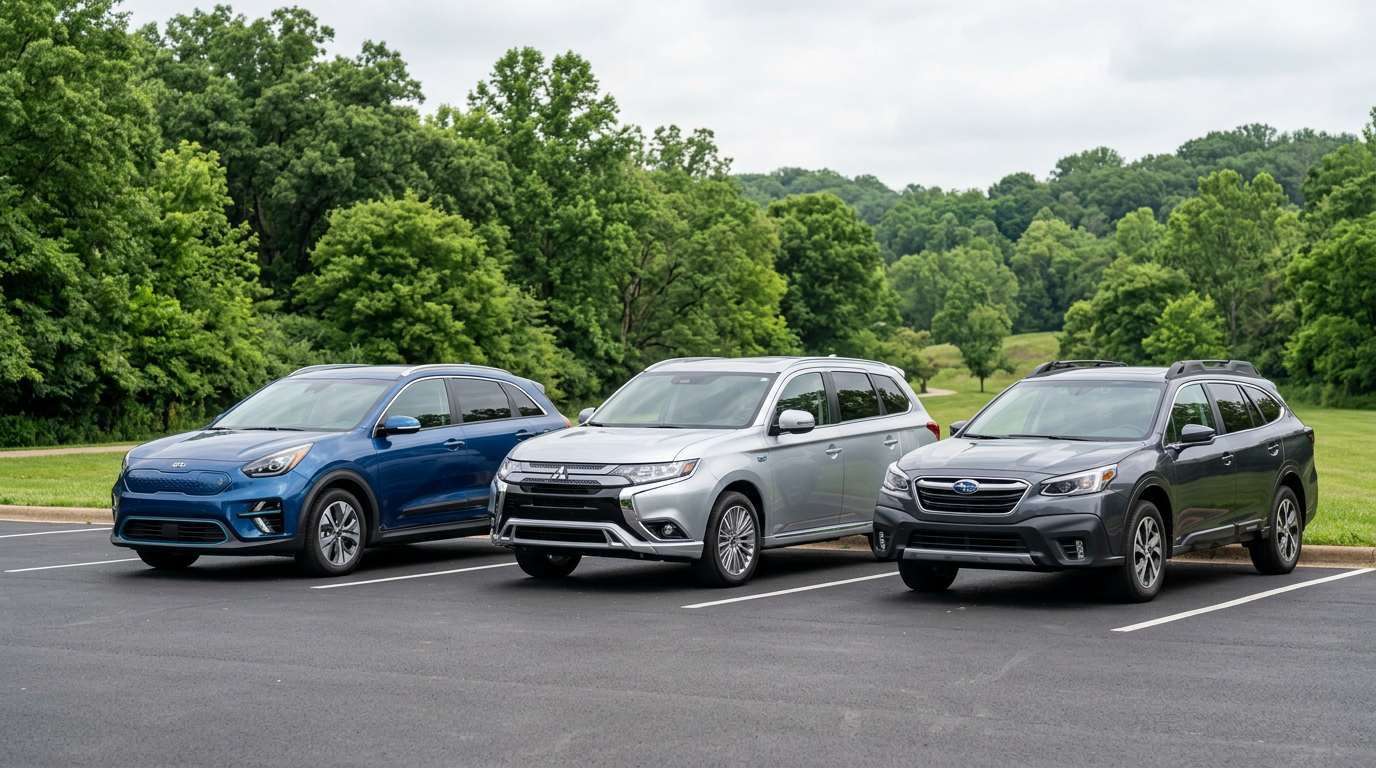
Three crossover vehicles parked in a row on an asphalt lot with a lush green forest background. (Representative image for illustration purposes only. Actual vehicle may vary based on trim and configuration.)

Compare Your Most-Shopped Models Head to Head: Finding the Perfect Fit for St. Louis Roads

Welcome to your comprehensive, real-world companion guide to choosing your next vehicle. When you are shopping for a new set of wheels in the St. Louis metropolitan area, the sheer volume of information can feel overwhelming. From battery capacities and hybrid regeneration to standard safety packages and cargo dimensions, making an educated decision requires filtering out the marketing noise and focusing on practical day-to-day utility. Whether you are navigating the morning rush hour on Interstate 270, taking the kids to practices in Creve Coeur, or planning a weekend getaway to the Meramec River, you deserve a vehicle that aligns perfectly with your lifestyle, budget, and driving habits.
At Sunset Hills Subaru, we believe that a truly satisfied customer is an informed customer. That is why we have compiled this detailed, head-to-head comparison guide covering the most-shopped segments on the market today. We will walk you through the nuances of modern electric crossovers, explore the highly efficient realm of plug-in hybrid electric vehicles (PHEVs), and look closely at how classic outdoor-focused SUVs stack up against their main competitors. Our goals are simple: to demystify complex automotive terms, share honest insights about real-world performance, and highlight how our physical dealership serving Oakland, Sappington, and the wider Sunset Hills community can support you throughout your research and purchasing journey.
To get started on your hands-on research today, you can explore our comprehensive New Subaru Inventory or reach out to our team of dedicated experts who are always ready to help you coordinate a personal vehicle demonstration. Let's dive deep into the specific questions, data points, and real-world scenarios that will help you find the absolute best fit for your garage.

How Do the Leading Electric Crossovers Compare in Driving Range and Charging Speed?

When evaluating an electric vehicle (EV), two metrics dominate the conversation: how far you can drive on a single full charge, and how quickly you can replenish the battery when you're on the go. Today's leading electric crossovers, such as the Subaru Solterra, Hyundai Ioniq 5, and Ford Mustang Mach-E, utilize distinct battery architectures that yield different real-world experiences. For example, while some models focus on maximizing raw highway driving range, others prioritize high-voltage charging systems that minimize the time you spend plugged into a public fast-charging station.
The Subaru Solterra is engineered to deliver highly capable, adventure-ready daily driving with standard Symmetrical All-Wheel Drive. It features a robust 72.8 kWh lithium-ion battery pack that delivers an EPA-estimated range of up to 227 miles. This easily covers several days of typical suburban St. Louis commuting without requiring a charging stop. Meanwhile, competitors like the Hyundai Ioniq 5 feature an 800-volt battery architecture that allows for incredibly fast DC fast-charging under ideal laboratory conditions, though real-world charging speeds always depend heavily on station output, ambient temperatures, and current battery levels.
DC fast-charging speed is a crucial metric for drivers who frequently embark on road trips beyond Sappington and Oakland. The Solterra can charge from 10% to 80% capacity in approximately 35 minutes using a 100 kW DC fast charger. This matches up beautifully with a quick lunch break or a stretch-and-rest stop along the highway. When choosing between these models, it is essential to look past maximum theoretical charging claims and analyze how the vehicle handles real-world charging infrastructure. Many public stations across Missouri are rated at 150 kW or lower, meaning ultra-high-speed vehicles often charge at similar rates to the Solterra in everyday practice.
Ultimately, the right choice depends on your daily driving patterns. If your routine consists of a 30-mile round-trip commute, any of these leading electric crossovers will effortlessly meet your requirements, allowing you to wake up to a 'full tank' every single morning. If you want to explore the specific capabilities of our fully electric crossover lineup, we welcome you to view our New Subaru Solterra Inventory to see our current selection of models equipped with standard all-wheel-drive capability.
Electric Crossover ModelBattery CapacityEPA-Estimated Range10-80% DC Fast-Charge
Subaru Solterra AWD72.8 kWhUp to 227 Miles~35 mins (100 kW)
Hyundai Ioniq 5 AWD84.0 kWhUp to 260 Miles~18 mins (350 kW)
Ford Mustang Mach-E AWD72.0 kWhUp to 230 Miles~32 mins (150 kW)

What Is the Real-World Winter Range Loss for These Electric Crossovers?

Missouri winters are notoriously unpredictable, bringing freezing temperatures, biting winds, and heavy snow slush to the roads of Creve Coeur and Sappington. For electric vehicle shoppers, cold weather represents a significant variable. Liquid-electrolyte lithium-ion batteries naturally become less efficient in freezing conditions because internal chemical reactions slow down. Furthermore, running the cabin heater to keep passengers comfortable draws significant energy directly from the high-voltage battery, unlike a traditional gasoline engine which utilizes wasted motor heat to warm the interior.
On average, electric crossovers experience a temporary range reduction of approximately 20% to 35% when temperatures drop below freezing. For a vehicle with an EPA-estimated range of 220 miles, this means you can realistically expect around 140 to 175 miles of range on a bitterly cold January morning. While this may sound like a steep drop, understanding this behavior allows you to plan effectively. It is also important to note that modern electric crossovers like the Subaru Solterra come equipped with advanced thermal management systems and cabin heat pumps, which are far more efficient than resistive heating elements and help minimize this seasonal loss.
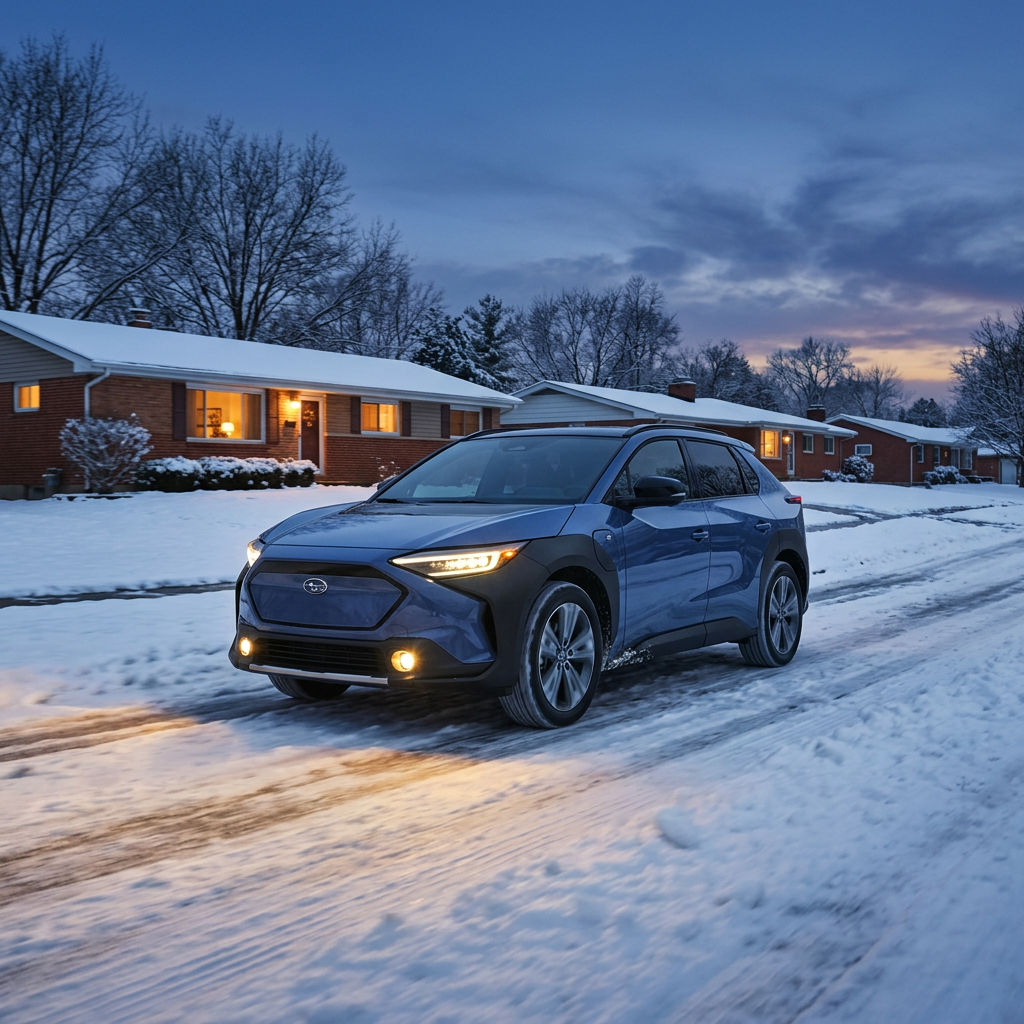
Blue Subaru Solterra electric SUV driving on a snowy suburban street at dusk. (Representative image for illustration purposes only. Actual vehicle may vary based on trim and configuration.)
To preserve your range in the winter, we highly recommend utilizing the vehicle's preconditioning feature. While the car is still plugged in at home, you can use a smartphone application to pre-heat the cabin and warm the battery pack using power from the electrical grid, rather than wasting precious battery energy once you begin driving. Additionally, using localized heat sources like heated seats and a heated steering wheel consumes significantly less energy than blasting the climate control fan, allowing you to maximize your mileage during St. Louis cold snaps.

How Much Does It Cost to Install a Level 2 Home Charger for These EVs?

Equipment Costs To charge your electric vehicle quickly overnight, you will want to purchase a Level 2 home charging station, often referred to as Electric Vehicle Service Equipment (EVSE). These wall-mounted units typically cost between $350 and $750, depending on the maximum amperage output (usually 32 to 48 amps), smart Wi-Fi connectivity features, and cable length. High-quality, safety-certified chargers are readily available from major manufacturers and provide reliable charging for all modern electric vehicles.
Professional Installation Installing a Level 2 charger requires a dedicated 240-volt circuit, similar to the outlet used for a heavy-duty clothes dryer. Hiring a licensed professional electrician in the Sunset Hills area typically runs between $500 and $1,500. The total installation price depends heavily on the distance between your home's main electrical panel and the desired charger location in your garage or driveway, as well as whether your panel has the capacity to support the additional electrical load.
The Lifestyle Fit Once installed, a Level 2 charger completely transforms your daily routine. Instead of worrying about stopping at gas stations or public charging hubs, you simply plug your vehicle in when you arrive home in the evening. Within 6 to 10 hours, your vehicle is fully replenished while you sleep. Overnight charging allows you to take advantage of off-peak residential utility rates, making home charging the most cost-effective and convenient way to fuel your daily travels.

Do Any of These Electric Vehicles Still Qualify for the Federal Tax Credit?

The landscape surrounding the Clean Vehicle federal tax credit remains complex and highly dynamic. Under current regulations, new electric vehicles may qualify for a tax credit of up to $7,500, but eligibility depends on strict criteria, including where the vehicle's components are manufactured, where the final vehicle assembly occurs, and where the critical battery minerals are sourced. Additionally, there are specific household income limits and vehicle Manufacturer's Suggested Retail Price (MSRP) caps that buyers must meet to qualify for the personal purchase credit.
Fortunately, there is an incredibly advantageous alternative known as the 'leasing loophole.' Under current federal guidelines, electric vehicles leased through a commercial finance company are classified as commercial vehicles. This classification exempts leased EVs from the strict domestic manufacturing, battery assembly, and mineral sourcing requirements. This means that when you choose to lease a new electric vehicle like the Subaru Solterra through Subaru Motors Finance, the entire $7,500 federal clean vehicle credit can be passed directly to you as a capital cost reduction, significantly lowering your monthly lease payments regardless of the vehicle's assembly origin.

A couple sits at a desk in a car dealership showroom talking with a salesperson. (Representative image for illustration purposes only. Actual vehicle may vary based on trim and configuration.)
Additionally, many dealerships, including Sunset Hills Subaru, can now apply these federal tax credits directly at the time of purchase or lease signing. This means you do not have to wait until you file your income taxes the following spring to realize your savings; instead, the credit acts as an immediate down payment on your new vehicle. If you are interested in exploring how these federal programs can make your transition to electric driving more affordable, check out our current incentives by reviewing our Current New Car Specials.

Which of These EVs Offers the Fastest Acceleration and Best Handling?

One of the most thrilling characteristics of modern electric drivetrains is instantaneous torque delivery. Unlike gasoline engines, which must build up revolutions per minute (RPM) to reach their peak power bands, electric motors deliver 100% of their available torque the microsecond you press the accelerator pedal. This results in incredibly smooth, responsive acceleration that makes merging onto fast-moving highway traffic on Interstate 44 or passing slower vehicles an effortless and confident experience.
In terms of raw, straight-line performance, sporty configurations of vehicles like the Ford Mustang Mach-E or the Hyundai Ioniq 5 can achieve 0-60 mph sprint times in under 5 seconds. However, straight-line speed is only one piece of the performance puzzle. Real-world handling, especially on the winding, rolling hills and curvy roads around Creve Coeur Lake, requires a sophisticated chassis, a well-tuned suspension, and a capable all-wheel-drive system.
This is where the Subaru Solterra excels. Engineered with Subaru's decades of rally-bred expertise, the Solterra features a low center of gravity thanks to its flat, under-floor battery placement. This heavy, low-slung battery pack minimizes body roll through tight turns, keeping the crossover planted and balanced. Combined with standard Symmetrical All-Wheel Drive and the advanced dual-function X-MODE® system, the Solterra manages power delivery to each wheel with microscopic precision, providing unmatched cornering stability, traction, and driver confidence on wet, dry, or snow-covered roads.
If you value a vehicle that blends thrilling electrical responsiveness with the secure, go-anywhere handling that has defined the Subaru brand for generations, we invite you to experience it firsthand. You can explore our New Subaru Solterra Inventory to find the specific trim levels and performance configurations currently available on our showroom floor.

Which Plug-In Hybrid SUV Is Better: Toyota RAV4 Prime or Hyundai Tucson PHEV?

For buyers who want the efficiency of electric driving but require the long-distance flexibility of a gasoline engine, plug-in hybrid electric vehicles (PHEVs) offer a perfect middle ground. Two of the most highly shopped models in this competitive segment are the Toyota RAV4 Prime (now marketed as the RAV4 Plug-In Hybrid) and the Hyundai Tucson PHEV. Both vehicles combine a traditional gasoline engine with an electric motor and a rechargeable battery pack, but they go about executing this formula in slightly different ways.
The Toyota RAV4 Prime is widely recognized for its impressive all-electric driving range, offering up to 42 miles of pure electric travel on a full charge. This allows most drivers to complete their entire daily commute and run errands without ever burning a single drop of gasoline. Additionally, when the battery is depleted, the RAV4 Prime transitions into a highly efficient standard hybrid, returning excellent fuel economy. On the other hand, the Hyundai Tucson PHEV offers a slightly lower all-electric range of 33 miles, but counters with a highly modern interior design and a slightly lower starting price point.
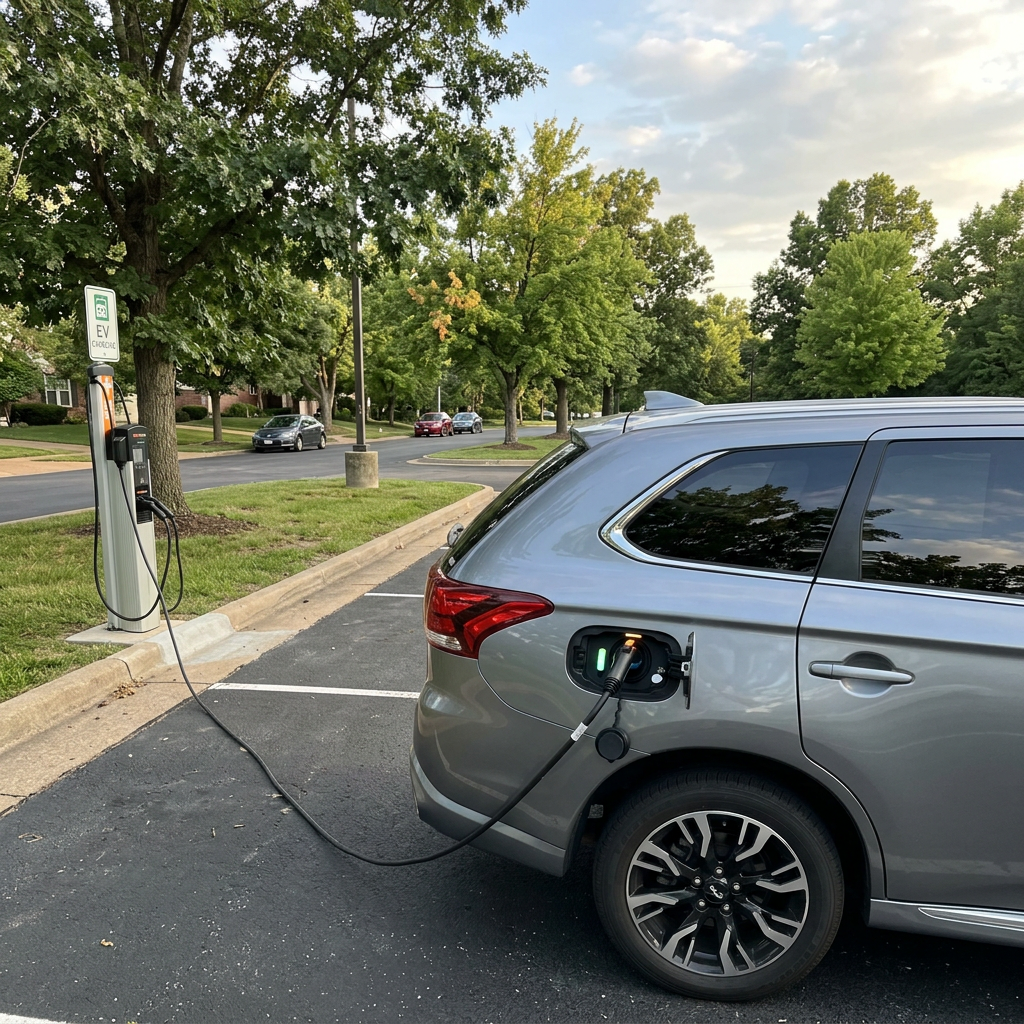
A silver SUV plugged into a public electric vehicle charging station in a parking lot. (Representative image for illustration purposes only. Actual vehicle may vary based on trim and configuration.)
When evaluating cargo space and overall family utility, both vehicles offer highly versatile cabins with fold-flat rear seats. However, the RAV4 Prime's long-term reputation for reliability and strong resale value makes it an incredibly compelling long-term investment. If you are comparing these models and also want to see how they stack up against versatile, legendary gas-powered alternatives, you can browse our New Subaru Inventory to compare interior dimensions, safety systems, and standard all-wheel-drive capabilities side by side.

How Long Does It Take to Charge a Plug-In Hybrid SUV at Home?

Standard 120V Level 1 Charging Because plug-in hybrid SUVs feature much smaller battery packs than fully electric vehicles (typically between 13 kWh and 18 kWh), they are incredibly easy to charge using a standard household electrical outlet. If you plug your PHEV into a standard 120-volt Level 1 outlet in your garage, it will take approximately 10 to 12 hours to charge from empty to full. This makes Level 1 charging a perfectly viable option for drivers who can leave their vehicle plugged in overnight.
Upgraded 240V Level 2 Charging If you want to speed up the process, upgrading to a 240-volt Level 2 charging system drops the total charge time significantly. With a Level 2 home charger, a plug-in hybrid's battery can be fully replenished in just 2.5 to 4.5 hours. This rapid turnaround time means you can easily plug the vehicle in after a morning run to the grocery store in Oakland, and have a fully charged battery ready to go for afternoon school pickups in Sappington.
Unmatched Convenience The key takeaway for PHEV drivers is flexibility. Unlike full EVs, which almost necessitate a Level 2 charger for practical daily use, a PHEV can easily get by on standard household electricity. If you forget to plug in, or if you don't have access to a charger while traveling, your vehicle continues to operate seamlessly as a traditional hybrid. This makes plug-in hybrids an incredibly low-stress entry point into the world of electrified driving.

Do PHEV SUVs Qualify for State Tax Credits or Utility Rebates in Missouri?

While the State of Missouri does not currently offer a direct, state-funded income tax credit for purchasing a new plug-in hybrid or electric vehicle, there are several highly valuable financial incentives available through local utility companies and municipal programs. These localized rebates are designed to help offset the costs of transitioning to an electrified vehicle, particularly when it comes to preparing your home's electrical infrastructure for charging.
For residents in the St. Louis metropolitan area, Ameren Missouri frequently offers dedicated incentives and rebate programs for residential customers who install smart, Level 2 home charging stations. These rebates can cover a significant portion of the cost of purchasing an eligible smart charger, making the upgrade incredibly affordable. Additionally, Ameren Missouri occasionally offers time-of-use (TOU) rate programs, which allow you to pay significantly lower electricity rates during off-peak hours (such as overnight between 10 PM and 6 AM) when you charge your vehicle.
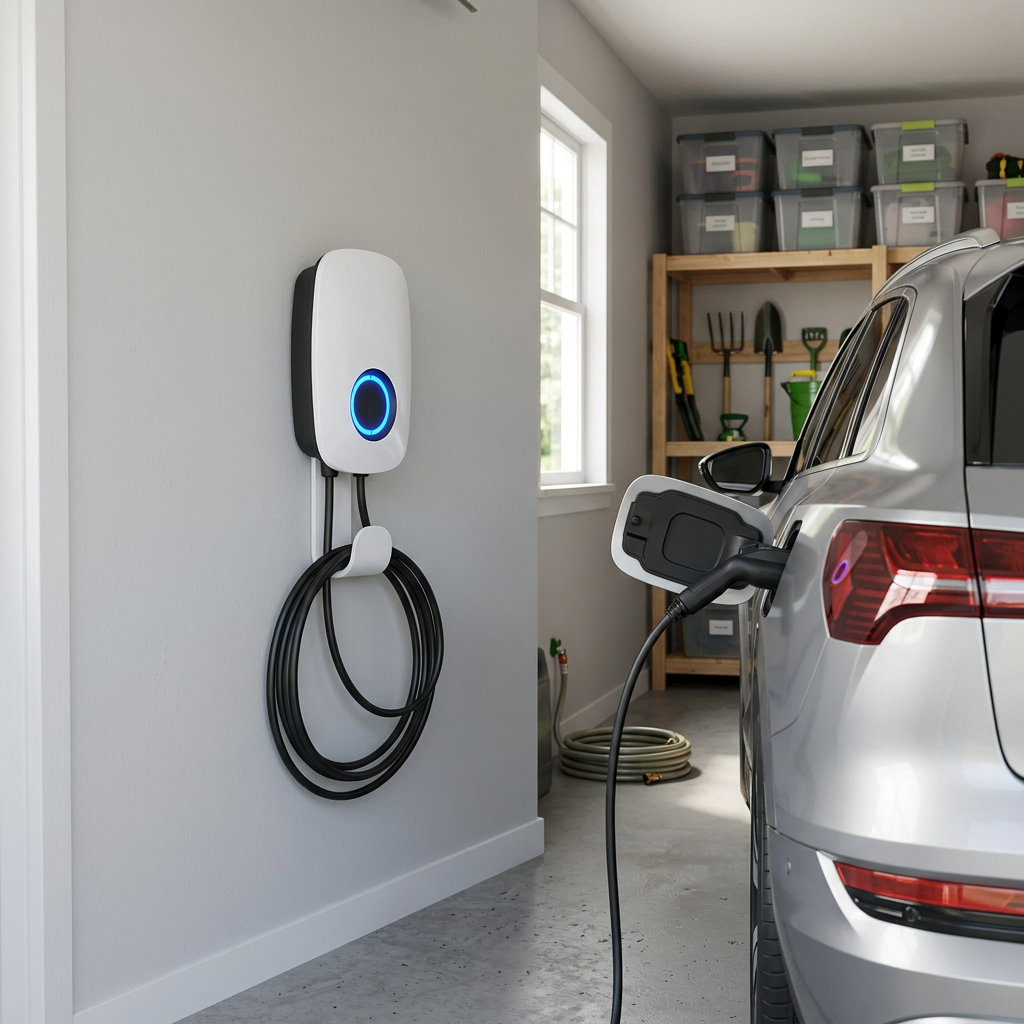
An electric car charging in a garage using a wall-mounted home charging station. (Representative image for illustration purposes only. Actual vehicle may vary based on trim and configuration.)
To take full advantage of these local programs, we recommend checking the current offerings on Ameren Missouri's official portal or consulting with our finance department at Sunset Hills Subaru. We stay up to date on all local, state, and federal incentive opportunities to ensure our customers maximize their savings. You can also view our Current Service and Parts Specials to see if we have any active dealer specials on charging accessories or professional installation services.

What Happens If You Run Out of Battery in a PHEV SUV?

One of the most persistent myths surrounding plug-in hybrid electric vehicles is the fear of being stranded when the electric battery reaches 0% capacity. Let's put this misconception to rest: nothing bad happens when your PHEV's battery runs out of charge. In fact, the entire vehicle is specifically designed to handle this transition seamlessly, without requiring any driver intervention whatsoever.
A plug-in hybrid features a dual-powertrain system. When the high-voltage electric battery is depleted, the vehicle's onboard computer automatically fires up the gasoline engine. The transition from pure electric power to hybrid gasoline power is incredibly smooth—often the only way you will notice is by looking at the power flow graphic on your dashboard display or hearing a faint hum from the engine bay. Once the gasoline engine takes over, the vehicle operates exactly like a traditional, highly efficient hybrid. It will continue to use regenerative braking to capture kinetic energy as you slow down, storing that electricity to assist the engine and power the onboard electronics.
This dual-source capability completely eliminates the 'range anxiety' associated with fully electric vehicles. You can drive your PHEV across the country using the standard gasoline network, stopping to fill up at any traditional gas station in minutes. When you return home, you can plug the vehicle back in to resume your emissions-free, pure electric daily commuting. This flexibility makes plug-in hybrids an ideal transitional vehicle for families who want to reduce their carbon footprint without changing their long-distance travel habits.

How Do the Subaru Outback and Toyota RAV4 Compare for Outdoor Recreation?

For active families and outdoor enthusiasts in the St. Louis area, choosing a vehicle that can handle gear, rough terrain, and unpredictable weather is paramount. Two of the most iconic names in the outdoor recreation space are the Subaru Outback and the Toyota RAV4. While both are highly capable, they utilize fundamentally different designs. The Toyota RAV4 is a traditional compact crossover with an upright, boxy stance. The Subaru Outback is a unique utility vehicle that blends the car-like ride and cargo length of a sport wagon with the rugged capability and elevated ride height of an SUV.
When it comes to off-pavement capability, ground clearance is key. The Subaru Outback comes standard with an impressive 8.7 inches of ground clearance (which increases to a massive 9.5 inches on the Wilderness edition), easily outclearing most standard RAV4 trims. Furthermore, every Outback features Subaru's legendary Symmetrical All-Wheel Drive system, which sends power to all four wheels continuously for maximum traction. Most RAV4 models utilize an on-demand all-wheel-drive system that only engages the rear wheels after slip is detected, which can lead to momentary traction loss on slippery boat ramps or muddy trails.
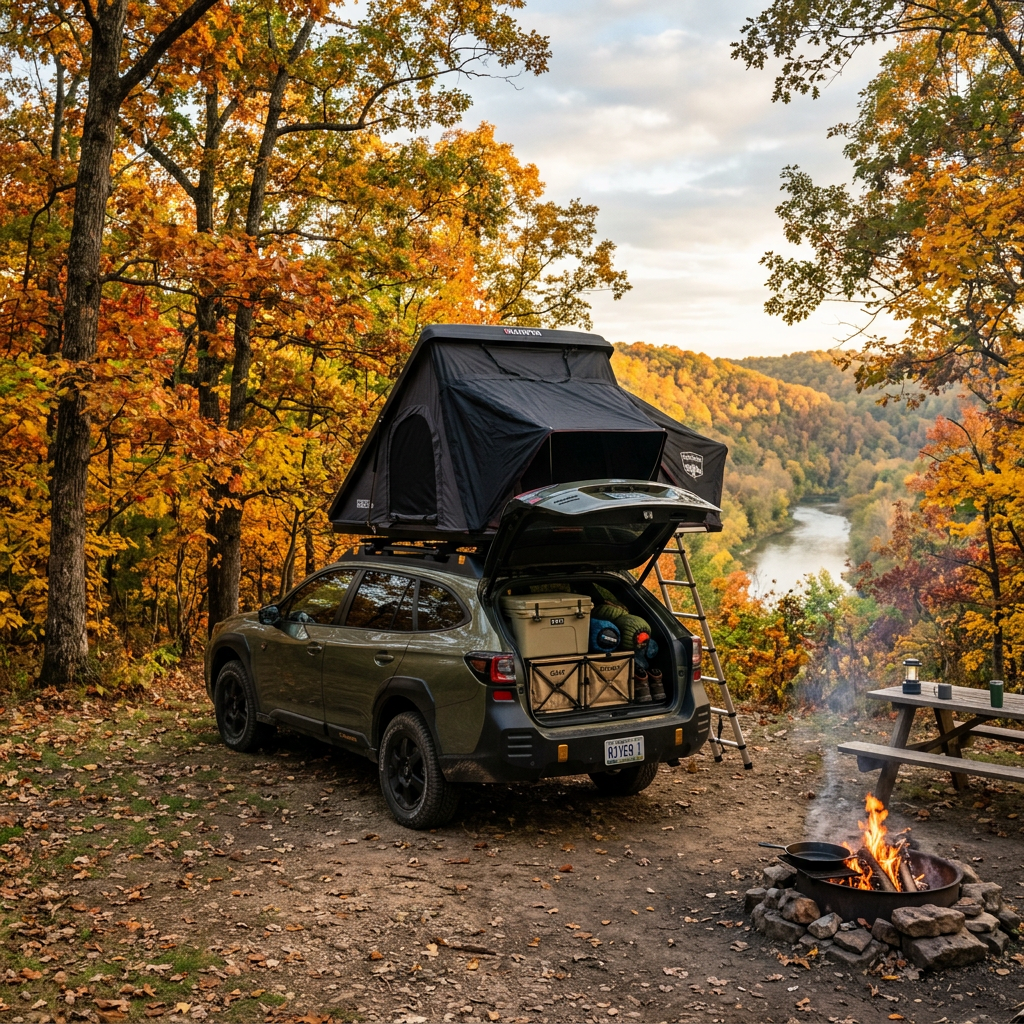
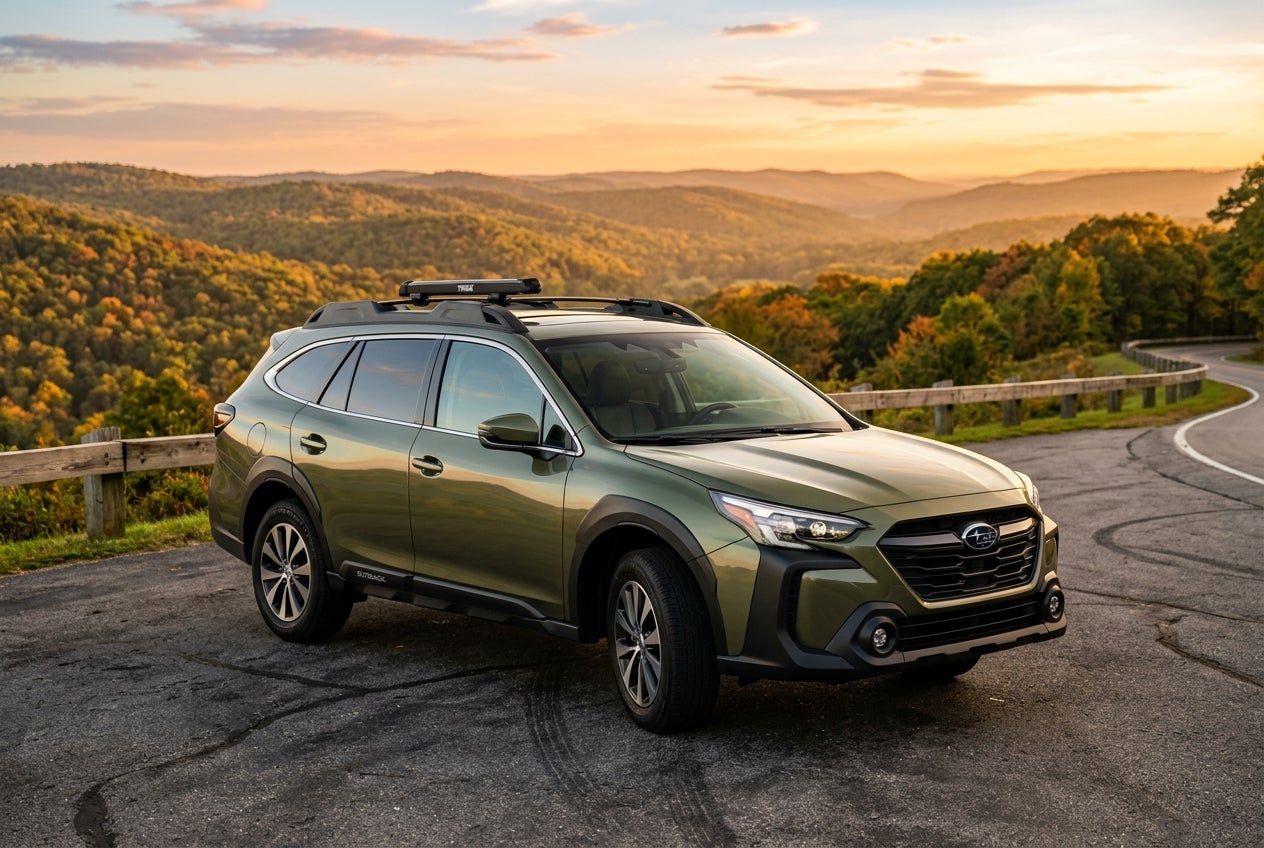
An olive green SUV parked at a campsite overlooking a river valley in autumn, featuring a rooftop tent and a campfire. (Representative image for illustration purposes only. Actual vehicle may vary based on trim and configuration.)
Cargo utility is another major differentiator. The Outback features a longer, wider cargo floor that makes loading bulky items like kayaks, camping stoves, and dog crates incredibly easy. It also features standard integrated roof crossbars that swing out of the way when not in use to reduce wind noise and improve aerodynamics. If you want to experience the legendary utility of this outdoor companion, we invite you to browse our New Subaru Outback Inventory to find the perfect adventure partner for your next trip.

Can I Qualify for a Federal Tax Credit When Buying a Used EV Under $20,000?

The Used EV Credit Basics Yes, you can absolutely qualify for a federal tax credit when purchasing a pre-owned electric vehicle or plug-in hybrid! Under the current IRS guidelines, the Used Clean Vehicle Credit allows eligible buyers to receive a tax credit equal to 30% of the vehicle's sale price, up to a maximum credit of $4,000. This incentive makes purchasing a high-quality pre-owned electric vehicle an incredibly cost-effective option for budget-conscious car shoppers.
Vehicle Eligibility Rules To qualify for the used EV credit, the vehicle must meet several specific federal requirements. First, the sale price must be $25,000 or less. Second, the vehicle model year must be at least two years older than the current calendar year. Third, the vehicle must be purchased from a licensed dealership that is registered with the IRS energy credit portal. Finally, the vehicle can only qualify for the credit once in its lifetime history.
Buyer Income Limits Similar to the new EV credit, there are household income limits for buyers seeking the used EV credit. To qualify, your modified adjusted gross income (MAGI) must not exceed $150,000 for married couples filing jointly, $112,500 for heads of households, or $75,000 for single filers. If you meet these criteria, you can choose to apply the credit directly at our dealership to lower your purchase price at the point of sale.

How Do the Starting Prices of the Most Popular Midsize Sedans Compare?

While crossovers and SUVs continue to dominate the market, the traditional midsize sedan remains a fantastic, highly efficient option for daily commuters and small families. Sedans offer superior fuel economy, more agile handling, and lower starting price points than their high-riding utility vehicle counterparts. When comparing the most popular models in this segment—the Subaru Legacy, Toyota Camry, and Honda Accord—understanding standard equipment versus starting MSRP is crucial to finding the best value.
The Subaru Legacy stands out as an incredible value proposition in this class. It comes standard with Subaru's legendary Symmetrical All-Wheel Drive, providing year-round confidence on slick St. Louis roads. Competitors like the Honda Accord are strictly front-wheel drive, while the Toyota Camry offers all-wheel drive only as an expensive upgrade option. This means that when you compare starting prices, the Legacy delivers standard winter-ready traction at a price point that undercuts or matches the front-wheel-drive configurations of its main competitors.
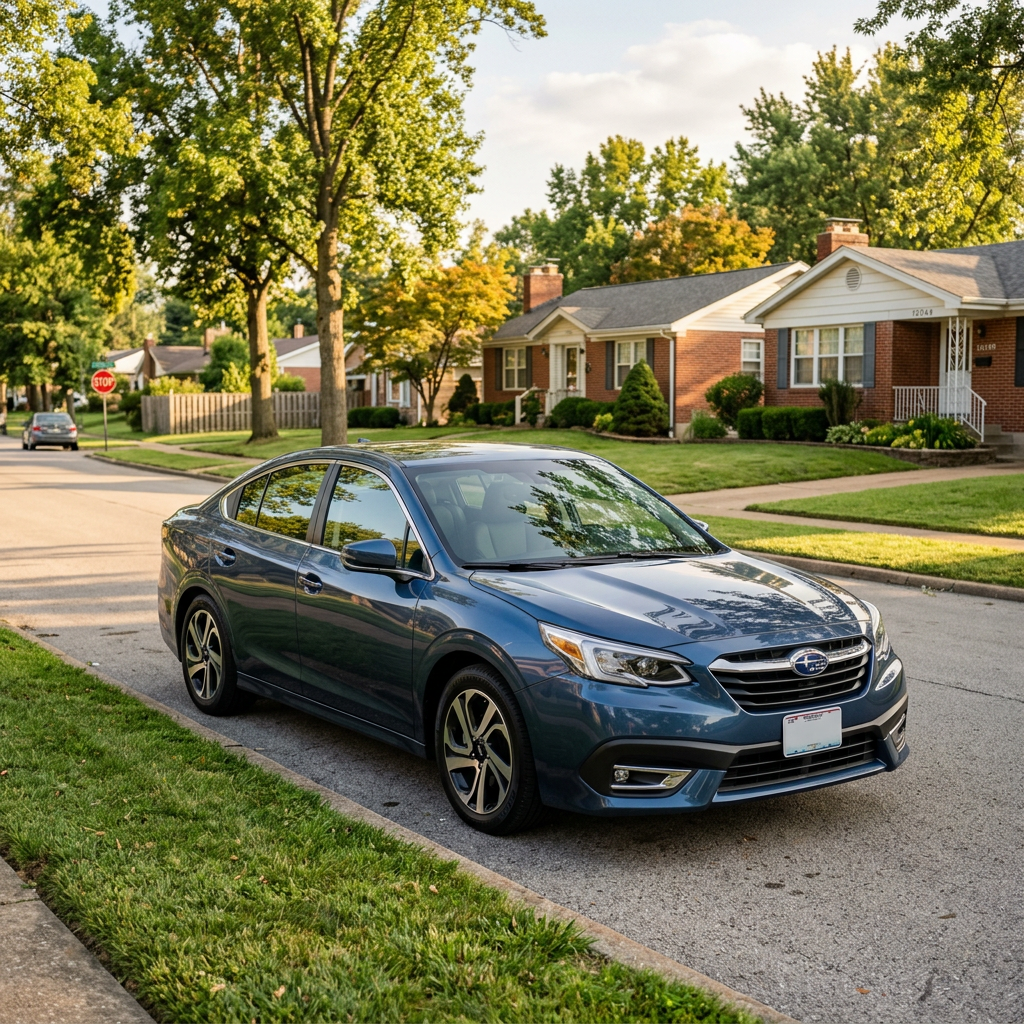
A blue Subaru Legacy sedan parked on the side of a suburban street. (Representative image for illustration purposes only. Actual vehicle may vary based on trim and configuration.)
Additionally, the Legacy comes standard with Subaru's EyeSight® Driver Assist Technology, delivering advanced safety features like pre-collision braking and lane keep assist without forcing you into a higher trim level. If you are looking for a highly refined, safe, and comfortable commuter vehicle that represents an exceptional return on investment, we invite you to view our New Subaru Legacy Inventory to find the perfect trim for your daily drive.

Test Drive and Compare Your Favorite Models at Sunset Hills Subaru

There is only so much research you can do online. To truly understand which vehicle fits your lifestyle, you need to sit in the driver's seat, adjust the mirrors, feel the acceleration, and experience how the safety systems interact with real-world traffic. At Sunset Hills Subaru, we make the comparison process simple and stress-free. Our knowledgeable sales consultants are here to act as your trusted advisors, guiding you through a side-by-side comparison of our most popular models in a relaxed, no-pressure environment.
Whether you are comparing the fully electric Solterra to our fuel-efficient crossover lineup, evaluating the rugged capability of the Outback against competitive SUVs, or looking to trade in your current vehicle for a brand-new ride, we are here to help. You can easily Get your value trade online to see what your current car is worth, browse our extensive Used Vehicle Inventory for incredible pre-owned savings, or Get Directions to Sunset Hills Subaru to visit our showroom in person today. For any immediate questions or to schedule a personal consultation, please Call us at (314) 476-9638. We look forward to welcoming you into the Sunset Hills Subaru family!
Posted in:

Related Posts

Blue Subaru Crosstrek Wilderness driving along a rocky trail with mountains in the background under a clear sky.

2026 Subaru Crosstrek Wilderness vs 2026 Honda CR-V TrailSport Comparison

2026 Subaru Crosstrek Wilderness vs 2026 Honda CR-V TrailSport Comparison The 2026 Subaru Crosstrek Wilderness CVT is the recommended choice for active buyers who demand genuine off-road capability, robust towing performance, and exceptional value. Priced at $33,795 MSRP, the Crosstrek Wilderness CVT delivers a massive 3,500-lb towing capacity, 9.3 inches of unladen ground clearance, and standard Symmetrical All-Wheel Drive. By comparison, the $38,800 MSRP 2026 Honda CR-V TrailSport AWD costs $5,005 more while offering only 1,000 lbs of towing capacity and 8.2 inches of ground clearance. more Which 2026 Subaru Crosstrek Wilderness CVT or 2026 Honda CR-V TrailSport AWD Is the Best Fit for Ladue and Sunset Hills Families? The 2026 Subaru Crosstrek Wilderness CVT is the superior crossover for local families who prioritize authentic off-pavement capability, heavy-duty towing, and incredible overall value over sheer exterior footprint. Engineered specifically for outdoor adventures, the Crosstrek Wilderness CVT combines hatchback-like maneuverability with rugged utility. Standard Symmetrical All-Wheel Drive and an elevated suspension give drivers complete confidence during severe winter weather or weekend excursions. Furthermore, a starting MSRP of $33,795 makes the Crosstrek Wilderness CVT a highly attractive investment compared to the $38,800 starting MSRP of the 2026 Honda CR-V TrailSport AWD. While the Honda CR-V TrailSport AWD offers a larger exterior build and hybrid fuel efficiency, its higher purchase price and limited 1,000-lb towing capacity restrict its versatility for active utility. Families in Sunset Hills who frequently haul light boats, recreational equipment, or utility trailers to the Meramec River will quickly find the CR-V's towing limits restrictive. The Crosstrek Wilderness CVT boasts a 3,500-lb towing capacity, allowing you to pull camper trailers or leisure gear with ease. Shoppers researching their options across our showroom lineup can evaluate our new Subaru Crosstrek selection alongside stablemates like new Subaru Outback models and the new Subaru Forester lineup. For larger households needing three-row seating, our new Subaru Ascent inventory provides expanded passenger volume. Practical commuters can explore new Subaru Impreza models or new Subaru Legacy inventory, while enthusiasts might look to new Subaru WRX inventory or new Subaru BRZ models. Those seeking zero-emissions driving can inspect our new Subaru Solterra EV models. Across the entire lineup, Subaru prioritizes practical utility, safety, and long-term durability. Pricing Manufacturer-listed pricing per trim, across compared vehicles. 2026 Subaru Crosstrek Wilderness CVT Trim MSRP 2026 Honda CR-V TrailSport AWD Trim MSRP Wilderness CVT $33,795 TrailSport AWD $38,800 Engine & Performance Powertrain specs by trim Specification 2026 Subaru Crosstrek Wilderness CVT 2026 Honda CR-V TrailSport AWD Engine 2.5L 2L Horsepower 180 hp 204 hp Torque 178 lb-ft 247 lb-ft Transmission Lineartronic CVT CVT Drivetrain All-wheel drive All-wheel drive Explore New Subaru Crosstrek Inventory How Pricing and Trim Features Compare for the 2026 Subaru Crosstrek Wilderness CVT and Honda CR-V TrailSport AWD The 2026 Subaru Crosstrek Wilderness CVT delivers a far better value proposition, offering a lower starting MSRP than the 2026 Honda CR-V TrailSport AWD while supplying standard features geared for rugged utility. The Crosstrek Wilderness CVT starts at an MSRP of $33,795 with a $1,420 destination charge. In contrast, the Honda CR-V TrailSport AWD carries an MSRP of $38,800 plus a $1,395 destination charge. That price distinction becomes even clearer when examining standard off-road and utility hardware. The Crosstrek Wilderness CVT includes a factory-lifted suspension providing 9.3 inches of unladen ground clearance, water-repellent StarTex® synthetic leather upholstery, front underbody engine protection, and 17-inch alloy wheels wrapped in all-terrain tires. To equip similar protective items on the CR-V TrailSport AWD—which comes standard with cloth upholstery with orange stitching and 18-inch alloy wheels with 8.2 inches of ground clearance—buyers must purchase add-on dealer packages. Subaru also offers targeted optional equipment upgrades to tailor the vehicle to your exact needs. The available Option Package 23 adds a 10-speaker Harman Kardon® premium audio system with a subwoofer, a power glass moonroof, and a 10-way power-adjustable driver seat with 2-way electric lumbar support. For maintenance and personalization, genuine accessories are readily available through our Subaru parts center. In terms of physical capacity, the Crosstrek Wilderness CVT has a published curb weight of 3,369 lbs and supports a maximum braked towing weight of 3,500 lbs. The heavier CR-V TrailSport AWD registers a curb weight of 3,900 lbs but is rated to tow just 1,000 lbs. Dimensions & Capacity Capacity and dimensions by trim Specification 2026 Subaru Crosstrek Wilderness CVT 2026 Honda CR-V TrailSport AWD Seating 5 5 Cargo 20.0 cu ft 36.3 cu ft Curb weight 3,369 lbs 3,900 lbs Towing 3,500 lbs 1,000 lbs Cargo and Passenger Space for Golf, School Gear, and Weekend Adventures in the 2026 Subaru Crosstrek Wilderness CVT vs Honda CR-V TrailSport AWD The 2026 Honda CR-V TrailSport AWD provides greater raw cargo volume, but the 2026 Subaru Crosstrek Wilderness CVT offers a more versatile, easy-to-clean cabin layout with superior front passenger legroom and flexible storage solutions. The CR-V TrailSport AWD features about 36 cu ft of cargo space behind the second row and about 76.5 cu ft with the rear seats folded down. The Crosstrek Wilderness CVT provides about 20 cu ft of cargo capacity behind the 60/40-split rear seatbacks and about 55 cu ft when folded flat. For daily family duties like loading golf bags, backpacks, or camping gear, the Crosstrek Wilderness CVT maximizes usable room with a low loading floor height of 31.3 inches and a rear cargo area height of 29.4 inches. Standard load restraint hooks and an available flexible cargo area cover keep gear secure. Additionally, standard StarTex® water-repellent seat upholstery and available rear seatback protectors allow you to load muddy boots, wet sports equipment, or pets without worrying about staining the interior. Passenger comfort remains balanced between both crossovers. Front occupants in the Crosstrek Wilderness CVT enjoy a class-leading 42.9 inches of legroom and 39.8 inches of headroom, outpacing the CR-V TrailSport AWD's 41.3 inches of front legroom and 38.2 inches of front headroom. In the second row, the CR-V offers 41.0 inches of legroom compared to the Crosstrek's 36.5 inches, though both accommodate three rear passengers comfortably with standard 3-point center seat belts and height-adjustable head restraints. Shoppers interested in current inventory or pricing information can explore our current inventory. Fuel Economy Fuel economy and range by trim Specification 2026 Subaru Crosstrek Wilderness CVT 2026 Honda CR-V TrailSport AWD MPG 24 city / 29 hwy / 26 combined 38 city / 33 hwy / 35 combined View Current New Car Specials Performance and Driving Experience Tailored to Rolling Terrain: 2026 Subaru Crosstrek Wilderness CVT vs Honda CR-V TrailSport AWD The 2026 Subaru Crosstrek Wilderness CVT delivers a superior, confidence-inspiring driving dynamic on rough trails and slick roads thanks to its revised axle gearing and 9.3 inches of unladen ground clearance. Powered by a 2.5L 4-cylinder Subaru Boxer engine, the Crosstrek Wilderness CVT produces 180 hp at 5,800 rpm and 178 lb-ft of torque at 3,700 rpm. Power is managed through a Lineartronic CVT featuring a manual mode with steering wheel gearchange paddles and a descent control system for steep declines. The Honda CR-V TrailSport AWD utilizes a 2.0L 4-cylinder hybrid powertrain (Earth Dreams Technology™) combined with an electric motor to generate a combined 204 hp and 247 lb-ft of torque, managed by an electronic CVT. While the CR-V provides punchy acceleration around town, its Real Time AWD with Intelligent Control System™ is primarily tuned for paved roads. Its 8.2 inches of ground clearance, 16.1-degree approach angle, and 21.3-degree departure angle lag behind the Crosstrek's trail geometry. Off-pavement, the Crosstrek Wilderness CVT excels with a 20-degree approach angle and a steep 33-degree departure angle, allowing it to clear rutted paths and obstacles without scraping bumper covers. Standard Symmetrical All-Wheel Drive operates continuously to distribute power to all four wheels, ensuring surefooted traction on mud, gravel, or winter slush. Furthermore, the Crosstrek's revised CVT gear ratio and added engine oil cooler enable its robust 3,500-lb towing capability, far surpassing the CR-V TrailSport AWD's 1,000-lb limit. Fuel Efficiency and Range for Commuting and Recreation in the 2026 Subaru Crosstrek Wilderness CVT and Honda CR-V TrailSport AWD The 2026 Honda CR-V TrailSport AWD achieves higher EPA fuel economy numbers due to its hybrid powertrain, but the 2026 Subaru Crosstrek Wilderness CVT counters with a larger fuel tank that delivers substantial total driving range for daily commuting and weekend travel. The CR-V TrailSport AWD earns EPA estimates of 38 city / 33 hwy / 35 combined MPG. Equipped with a 14.0-gallon fuel tank, it provides a calculated total vehicle range of 490 miles. The Crosstrek Wilderness CVT achieves EPA ratings of 24 city / 29 hwy / 26 combined MPG on regular 87 octane unleaded gasoline. To offset its rugged lower final-drive gearing and all-terrain tires, Subaru equips the Crosstrek with a generous 16.6-gallon fuel tank. This gives the Crosstrek Wilderness CVT a calculated EPA total driving range of 432 miles—allowing drivers to travel long distances between fill-ups. For professionals commuting along I-64 from Ladue into downtown offices, both vehicles run on regular unleaded fuel to keep operating costs predictable. While the hybrid CR-V consumes less fuel in stop-and-go city traffic, the Crosstrek Wilderness CVT balances respectable highway efficiency with standard mechanical capability that no conventional hybrid crossover in its price class can match. Technology Features That Enhance Remote Work and Family Connectivity in the 2026 Subaru Crosstrek Wilderness CVT and Honda CR-V TrailSport AWD The 2026 Subaru Crosstrek Wilderness CVT leads in touchscreen real estate and integrated connectivity, featuring a standard 11.6-inch high-resolution center dashboard display compared to the 9.0-inch touchscreen in the 2026 Honda CR-V TrailSport AWD. Subaru's multimedia interface features intuitive touch controls for audio, climate, and vehicle settings, complemented by physical volume and tuning knobs for easy operation while driving. Both vehicles feature wireless Apple CarPlay and Android Auto integration, Bluetooth® hands-free phone pairing, and voice-activating controls. Device charging is well-supported in both cabins; the Crosstrek Wilderness CVT provides one USB front charging port, two rear USB charging ports, and a front 12v power outlet, with a wireless charging pad available. The CR-V TrailSport AWD includes two front USB ports, two rear USB ports, a front 12v outlet, and a cargo area 12v power outlet. Telematics and remote services are another area where Subaru offers added long-term value. The Crosstrek Wilderness CVT comes standard with Subaru STARLINK™ telematics, including a 36-month complimentary subscription for safety and security features, as well as a 6-month trial of remote services such as remote door lock/unlock, vehicle start, and remote HVAC control with heating and cooling settings. The Honda CR-V TrailSport AWD features HondaLink™ Assist telematics and a 3-month trial of remote services. For audiophiles, the Crosstrek's optional Option Package 23 upgrades the standard 6-speaker sound system to a 10-speaker Harman Kardon® system with surround sound and a subwoofer. Get Approved for Financing Online Safety and Driver Assistance Systems Designed for Family Neighborhoods in the 2026 Subaru Crosstrek Wilderness CVT and Honda CR-V TrailSport AWD Safety engineering is a foundational priority for both brands, with the 2026 Subaru Crosstrek Wilderness CVT and 2026 Honda CR-V TrailSport AWD both earning 5-Star Overall Crash Test Ratings from the National Highway Traffic Safety Administration (NHTSA). Both crossovers feature 10 standard airbags, including dual front airbags, front and rear side airbags, side curtain airbags, and driver knee airbags (the CR-V also includes a passenger knee airbag). Standard ISOFIX / LATCH child seat anchors are featured in both row two seatings. Active safety technology is standard across both models. The Crosstrek Wilderness CVT equips Subaru's EyeSight® Driver Assist technology, utilizing high-resolution stereo cameras to monitor road conditions. EyeSight® includes Advanced Adaptive Cruise Control with stop-and-go capability, Automatic Pre-Collision Braking, Pre-Collision Throttle Management, and Emergency Lane Keep Assist. Blind Spot Detection (BSD) and Rear Cross-Traffic Alert are also standard equipment. Honda equips the CR-V TrailSport AWD with its Collision Mitigation Braking System (CMBS), Lane Keeping Assist System (LKAS), Adaptive Cruise Control, and Blind Spot Information (BSI) system with Cross Traffic Monitor. In IIHS crash testing, both models earned "Good" scores in small overlap front driver-side and roof strength tests. Subaru's EyeSight® system operates at speeds as low as 7 mph to prevent low-speed parking lot collisions and protect pedestrians or cyclists. Warranty, Maintenance, and Local Service Options for the 2026 Subaru Crosstrek Wilderness CVT and Honda CR-V TrailSport AWD Both manufacturers back their vehicles with competitive factory warranty packages. The 2026 Subaru Crosstrek Wilderness CVT and 2026 Honda CR-V TrailSport AWD both feature a 3-year / 36,000-mile limited whole-vehicle warranty and a 5-year / 60,000-mile powertrain warranty. Both brands also provide 5 years of corrosion perforation coverage and 3 years / 36,000 miles of roadside assistance coverage. Honda includes a 12-month / 12,000-mile complimentary maintenance plan, while the CR-V's hybrid battery is covered for 8 years / 100,000 miles. Subaru owners benefit from manufacturer-backed emergency protection that provides brand-specific expertise and genuine OEM parts. Should an emergency arise on the road, drivers can call Subaru Roadside Assistance at 1-800-261-2155 for 24/7 towing to the nearest authorized service facility, flat tire changes, jump-starts, or lockout services. To keep your crossover running at peak performance, you can schedule a service appointment online with our factory-trained technicians. Our department uses specialized diagnostic equipment designed specifically for Symmetrical All-Wheel Drive and Boxer engines. Be sure to browse our current maintenance and parts offers before your next routine oil change or tire rotation. Schedule Service and Diagnostics Which Vehicle Should Buyers Choose? Frequently Asked Questions About the 2026 Subaru Crosstrek Wilderness CVT and Honda CR-V TrailSport AWD Q: Is the Honda CR-V TrailSport AWD worth the price premium over the Subaru Crosstrek Wilderness CVT? A: For most buyers prioritizing all-terrain capability and value, the CR-V TrailSport AWD is not worth the $5,005 higher MSRP. The Crosstrek Wilderness CVT starts at $33,795 MSRP, offering 3,500 lbs of towing capacity, 9.3 inches of ground clearance, StarTex® water-repellent seats, and an 11.6-inch touchscreen. The $38,800 CR-V TrailSport AWD offers better city fuel economy, but limits towing to 1,000 lbs and ground clearance to 8.2 inches. Q: Which crossover offers better real-world capability off pavement? A: The Subaru Crosstrek Wilderness CVT is significantly more capable off-pavement. It provides 9.3 inches of unladen ground clearance, a 20-degree approach angle, a 33-degree departure angle, front engine skid protection, and full-time Symmetrical All-Wheel Drive. The Honda CR-V TrailSport AWD features 8.2 inches of ground clearance, a 16.1-degree approach angle, and a 21.3-degree departure angle, making it better suited for light dirt roads rather than rugged trails. Q: How do the towing capabilities compare between these two models? A: The Crosstrek Wilderness CVT wins decisively with a 3,500-lb towing capacity, thanks to its revised transmission gear ratios and added drivetrain cooling. The CR-V TrailSport AWD is rated to tow only 1,000 lbs. If you plan to tow a small boat, pop-up camper, or utility trailer, the Crosstrek Wilderness is the clear choice. Q: How do I schedule a test drive or start the buying process at Sunset Hills Subaru? A: You can visit our showroom address at 10100 Watson Rd or give our sales team a quick call at (314) 476-9638. You can also browse our new Subaru inventory online, use our digital tools to value your trade-in, and get pre-approved for financing online from the comfort of home. Final Verdict: Why the 2026 Subaru Crosstrek Wilderness CVT Is the Recommended Choice The 2026 Subaru Crosstrek Wilderness CVT emerges as the clear winner in this head-to-head comparison, offering an unbeatable combination of off-road hardware, heavy-duty utility, modern cabin technology, and exceptional price value. While the 2026 Honda CR-V TrailSport AWD provides an appealing hybrid powertrain and a larger rear cargo hold, its $38,800 starting MSRP puts it in a significantly higher price bracket. Despite that cost premium, the CR-V falls short in essential adventure metrics, offering 2,500 lbs less towing capacity and over an inch less ground clearance than the Subaru. For an MSRP of $33,795, the Crosstrek Wilderness CVT provides standard features designed for active lifestyles: 3,500-lb Towing Capacity vs. 1,000-lb capacity in the CR-V TrailSport AWD. 9.3 Inches of Ground Clearance with a 20-degree approach and 33-degree departure angle. Standard Symmetrical All-Wheel Drive for confidence in all-weather conditions. Durable StarTex® Water-Repellent Seats built for gear, mud, and active families. Large 11.6-Inch Touchscreen with standard STARLINK™ telematics and wireless smartphone integration. A lower starting MSRP compared to the CR-V TrailSport AWD. Whether you are navigating weekly carpools or heading out for a weekend camping trip, the Crosstrek Wilderness CVT delivers turn-key adventure capability without compromising daily comfort. Our team at Sunset Hills Subaru is ready to assist you through every step of your vehicle search. Explore our online inventory, evaluate your current vehicle's trade value, or stop by our showroom for a no-pressure test drive. Schedule your test drive today and experience the Subaru difference firsthand. New Subaru Crosstrek Inventory Get Your Trade Value View New Subaru Inventory © 2026 Sunset Hills Subaru. All rights reserved. Vehicle specification data © JATO Dynamics Limited. Title Tags 2026 Subaru Crosstrek Wilderness in Sunset Hills MO | Sunset Hills Subaru Meta Description Keywords Open Graph Twitter Card Canonical Article Metadata Geographic Targeting

Dark grey Subaru Impreza RS hatchback parked on a quiet residential street at golden hour. (Representative image for illustration purposes only. Actual vehicle may vary based on trim and configuration.)

2026 Subaru Impreza 2.5 RS vs Honda Civic Type-R

2026 Subaru Impreza 2.5 RS vs Honda Civic Type-R The 2026 Subaru Impreza 2.5 RS CVT is the recommended choice for daily versatility, delivering standard Symmetrical All-Wheel Drive, 5-passenger seating capacity, and efficient 29 MPG combined fuel economy at a starting MSRP of $29,495. While the 2026 Honda Civic Hatchback Type-R provides 315 hp for track driving, its $46,895 starting MSRP, 4-passenger limit, front-wheel-drive layout, and stiffer suspension make it less focused on everyday commuting. New Subaru Impreza Inventory more Which Is the Better Overall Choice for Ladue and Sunset Hills Drivers: 2026 Subaru Impreza 2.5 RS CVT or 2026 Honda Civic Hatchback Type-R? The 2026 Subaru Impreza 2.5 RS CVT is the practical choice for daily commuting and suburban usability, delivering standard Symmetrical All-Wheel Drive and 5-passenger seating at a starting MSRP of $29,495 compared to the front-wheel-drive 2026 Honda Civic Hatchback Type-R at $46,895. When evaluating these two compact five-door hatchbacks for everyday living, their core purposes quickly diverge. The Impreza 2.5 RS is engineered specifically for practical, all-weather versatility. Powered by a 2.5L 4-cylinder engine producing 180 hp and 178 lb-ft of torque through a Lineartronic CVT, the Impreza provides smooth, confident acceleration across rolling terrain and slick winter pavement. Its 5-passenger seating capacity ensures your entire household rides comfortably, while a manageable 3,275 lbs curb weight maintains composed agility. Conversely, the Civic Hatchback Type-R is built as a track-focused hot hatch. Its turbocharged 2L 4-cylinder engine generates 315 hp and 310 lb-ft of torque mated exclusively to a manual 6-speed transmission. While those output figures shine on open raceways, the Type-R sacrifices daily practicality. It limits interior capacity to just 4 passengers, lacks all-wheel traction, and features an aggressive track-tuned suspension that transmits every road imperfection directly into the cabin. For drivers navigating the tree-lined streets of Ladue during unexpected rain or snowfall, Subaru's full-time all-wheel traction provides peace of mind that a front-wheel-drive sports car simply cannot match. Shoppers exploring our broader lineup can also check out our new Subaru Impreza inventory, compare options within our new Subaru Legacy inventory, or review dynamic alternatives in our new Subaru WRX inventory and new Subaru BRZ selection. Families needing expanded cabin dimensions can also explore our new Subaru Crosstrek options, new Subaru Forester SUV models, new Subaru Outback crossovers, new Subaru Ascent models, or the zero-emissions new Subaru Solterra EV. Pricing Manufacturer-listed pricing per trim, across compared vehicles. 2026 Subaru Impreza 2.5 RS CVT Trim MSRP 2026 Honda Civic Hatchback Type-R Trim MSRP 2.5 RS CVT $29,495 Type-R $46,895 How Do the 2026 Subaru Impreza 2.5 RS CVT and Honda Civic Hatchback Type-R Compare in Price and Value? The 2026 Subaru Impreza 2.5 RS CVT delivers strong ownership value with a starting MSRP of $29,495, saving buyers $17,400 upfront over the 2026 Honda Civic Hatchback Type-R's starting MSRP of $46,895. Analyzing financial positioning reveals two fundamentally different value propositions. The Impreza 2.5 RS includes an impressive roster of standard equipment—such as 18-inch alloy wheels, dual-zone automatic climate control, wireless device integration, and full driver-assist technology—without requiring expensive add-on packages. Both vehicles carry a matching $1,195 destination charge, but the Impreza's accessible entry price allows buyers to enjoy sport-inspired styling and top-tier safety features without stretching their household budget. The Honda Civic Type-R's high price tag reflects its specialized racing hardware, including Brembo front brakes, forged aluminum components, and high-strung turbocharging. However, for drivers who do not intend to spend weekends on a closed circuit, that $17,400 price premium yields very little practical benefit during routine grocery runs or daily work trips. Furthermore, the Impreza runs on affordable 87-octane regular unleaded fuel, whereas the Type-R demands high-octane 91 premium unleaded gas, adding ongoing fuel expenses over every mile driven. To make upgrading even more accessible, our team can help you easily value your trade-in online before visiting our showroom. Long-term maintenance costs remain lower on the Impreza as well, supported by readily available genuine Subaru parts designed for lasting durability. Dimensions & Capacity Capacity and dimensions by trim Specification 2026 Subaru Impreza 2.5 RS CVT 2026 Honda Civic Hatchback Type-R Seating 5 4 Cargo 20.4 cu ft 24.5 cu ft Curb weight 3,275 lbs 3,118 lbs Value your trade-in Which Hatchback Offers More Cabin Comfort and Cargo Space for Family Outings? The 2026 Subaru Impreza 2.5 RS CVT offers superior passenger space and flexibility for family outings, providing full 5-passenger seating and up to about 56 cu ft of maximum cargo volume with the rear seats folded. Interior layout is one of the most critical differentiators between these two hatchbacks. The Impreza 2.5 RS prioritizes functional passenger comfort with a spacious 2+3 seating configuration. Front occupants enjoy 39.8 in of headroom and 42.9 in of legroom, while rear passengers benefit from 38.0 in of headroom and 36.5 in of legroom. With all seats in place, the rear cargo area holds about 20 cu ft of gear, expanding to a expansive about 56 cu ft when folding the 60/40 split rear seatbacks flat. The Civic Hatchback Type-R is restricted by its aggressive rear seat design, which eliminates the center position entirely to leave seating for only 4 occupants. While the Type-R provides about 24.5 cu ft of cargo room behind its rear seats, its lower rear headroom measurement of 37.1 in and fixed rear seat bolsters make loading bulky items or taking full family trips far more restrictive. The Impreza's extra seat and adaptable floor layout mean you never have to leave a family member or friend behind. Whether packing golf bags, picnic coolers, or sports equipment for a Saturday afternoon at Sunset Hills Park, the Impreza's wider rear gate opening and supportive cloth seats ensure effortless loading and comfortable travel. Shoppers looking for current offers on our complete lineup can view our current new car specials online. Fuel Economy Fuel economy and range by trim Specification 2026 Subaru Impreza 2.5 RS CVT 2026 Honda Civic Hatchback Type-R MPG 26 city / 33 hwy / 29 combined 22 city / 28 hwy / 24 combined How Do the 2026 Subaru Impreza 2.5 RS CVT and Honda Civic Hatchback Type-R Perform on Rolling Terrain and All-Season Roads? The 2026 Subaru Impreza 2.5 RS CVT provides superior all-weather capability and everyday fuel efficiency, achieving an EPA-estimated 26 city / 33 hwy / 29 combined MPG alongside standard full-time all-wheel drive. Under the hood, the Impreza 2.5 RS features a naturally aspirated 2.5L Subaru BOXER® engine producing 180 hp at 5,800 rpm and 178 lb-ft of torque at 3,700 rpm. Combined with the Lineartronic CVT featuring 8-speed manual shift modes and steering wheel paddle shifters, power delivery is smooth, predictable, and linear. The defining performance advantage is Subaru's standard Symmetrical All-Wheel Drive with active torque vectoring, which continuously routes power to the wheels with the most grip to maintain sure-footed handling through rain, mud, or winter slush. The Civic Type-R focuses purely on dry-pavement speed with its 2L turbocharged engine making 315 hp at 6,500 rpm and 310 lb-ft of torque at 2,600 rpm. While its mechanical limited-slip differential helps manage front-wheel traction, sending 315 horsepower exclusively through the front wheels can lead to torque steer and wheel spin on wet or gravel-covered suburban inclines. Furthermore, the Type-R's ultra-low-profile 30-series summer performance tires are ill-suited for cold weather or rough roads. Fuel efficiency also heavily favors the Impreza. Its 29 MPG combined rating and 16.6-gallon fuel tank deliver an estimated cruising range of 481 miles on a single tank. In comparison, the Civic Type-R manages just 22 city / 28 hwy / 24 combined MPG and holds only about 12 gallons of fuel, capping its estimated driving range at just 298 miles. Engine & Performance Powertrain specs by trim Specification 2026 Subaru Impreza 2.5 RS CVT 2026 Honda Civic Hatchback Type-R Engine 2.5L 2L Horsepower 180 hp 315 hp Torque 178 lb-ft 310 lb-ft Transmission Lineartronic CVT manual 6-speed Drivetrain All-wheel drive Front-wheel drive What Technology Features Keep You Connected and Safe During Commutes? The 2026 Subaru Impreza 2.5 RS CVT delivers a superior digital cabin experience centered around a massive 11.6-inch Subaru STARLINK® touchscreen display, significantly out-sizing the 9-inch screen found in the Civic Type-R. Subaru designed the Impreza's cockpit to combine intuitive high-tech features with easy-to-reach controls. The high-resolution 11.6-inch vertical touchscreen serves as the central hub for audio, vehicle settings, and climate controls, featuring standard wireless Apple CarPlay® and Android Auto™ integration. Driver information is clearly displayed on a 4.2-inch color LCD screen within the instrument cluster. Front passengers have access to two USB charging ports and a 12V power outlet, while rear passengers enjoy two dedicated USB charging ports to keep devices powered during longer drives. Audio is delivered crisp and clear through a standard 6-speaker system, with an available 10-speaker Harman Kardon® premium system offered for audiophiles. The Honda Civic Hatchback Type-R utilizes a smaller 9-inch horizontal center display. While it includes a 10.2-inch digital gauge cluster and a 12-speaker audio system, its interface offers less screen real estate for split-screen navigation and media management. The Type-R also lacks dedicated rear USB ports, forcing rear passengers to rely on front cabin connections. In addition, the Impreza includes 60 months of standard MySubaru companion telematics service, enabling convenient remote functions such as vehicle status checks, remote door locking, and automated maintenance notifications directly from your smartphone. How Do Safety Systems in the 2026 Subaru Impreza 2.5 RS CVT and Honda Civic Hatchback Type-R Support School Runs and Suburban Streets? The 2026 Subaru Impreza 2.5 RS CVT leads in active driver assistance usability with its standard EyeSight® Driver Assist technology, which operates at low speeds down to 7 mph for enhanced suburban collision protection. Safety is engineered into every structural layer of the Impreza. Built on the Subaru Global Platform, the chassis incorporates 8 standard airbags—including front, side curtain, driver's knee, and front seat cushion airbags—to protect all occupants. The award-winning EyeSight® system utilizes dual color cameras mounted near the rearview mirror to monitor surrounding traffic. Standard driver-assist features include Advanced Adaptive Cruise Control with lane centering, Pre-Collision Braking, Lane Keep Assist, and Blind Spot Detection with Rear Cross-Traffic Alert. The system continuously evaluates pedestrian and cyclist proximity, automatically applying full braking force if an impending hazard is detected. The Civic Hatchback Type-R includes Honda's Collision Mitigation Brake System (CMBS) and 10 airbags. However, its manual transmission limits the full functionality of certain driver-assist features; for instance, its adaptive cruise control cannot bring the vehicle to a complete stop and hold it automatically in stop-and-go traffic without driver intervention on the clutch. The Impreza's impressive safety credentials are reinforced by top crash-test marks, including an IIHS Top Safety Pick rating and a 5-Star Overall Vehicle Score from the NHTSA, confirming its role as a dependable protector for busy family schedules. What Warranty and Maintenance Options Should Owners Expect for These 2026 Hatchbacks? Both the 2026 Subaru Impreza 2.5 RS CVT and 2026 Honda Civic Hatchback Type-R include standard 3-year/36,000-mile basic warranty coverage and 5-year/60,000-mile powertrain warranty protection. Subaru backs every new Impreza with a comprehensive factory warranty package designed to ensure long-term peace of mind. Coverage includes a 36-month/36,000-mile new vehicle limited warranty, a 60-month/60,000-mile powertrain limited warranty, a 60-month/unlimited-mile rust perforation warranty, and 36 months or 36,000 miles of 24/7 Subaru Roadside Assistance. In the event of a flat tire, emergency breakdown, or unexpected battery failure, official Subaru Roadside Assistance connects you with factory-trained professionals using genuine OEM parts. Warranty / Maintenance Specification 2026 Subaru Impreza 2.5 RS CVT 2026 Honda Civic Hatchback Type-R Basic Warranty Coverage 36 months / 36,000 miles 36 months / 36,000 miles Powertrain Warranty Coverage 60 months / 60,000 miles 60 months / 60,000 miles Corrosion / Rust Perforation 60 months / Unlimited miles 60 months / Unlimited miles Roadside Assistance Package 36 months / 36,000 miles 36 months / 36,000 miles Primary Recommended Fuel 87 Octane Regular Unleaded 91 Octane Premium Unleaded Maintaining your Impreza is convenient and straightforward. When routine oil changes, tire rotations, or brake inspections are due, owners can easily schedule a service appointment online with our certified technicians who specialize in Symmetrical All-Wheel Drive and BOXER® engine mechanics. Schedule Service and Diagnostics Buyer FAQs: Which Hatchback Fits Your Active Suburban Lifestyle Best? Q: Is the 2026 Subaru Impreza 2.5 RS CVT worth choosing over the Honda Civic Type-R for daily commuting? Yes. The Impreza 2.5 RS CVT is vastly better suited for daily driving because it costs $17,400 less, achieves an efficient 29 MPG combined on regular gas, seats 5 passengers, and features standard Symmetrical All-Wheel Drive. The Civic Type-R is an expensive, 4-passenger track car with a stiff ride and manual transmission that can feel tedious during routine traffic stops. Q: Which hatchback offers better fuel economy and total driving range? The 2026 Subaru Impreza 2.5 RS CVT wins significantly on efficiency and range. It delivers an EPA-estimated 26 city / 33 hwy / 29 combined MPG and a 481-mile total cruising range on regular 87-octane fuel. The Civic Type-R manages only 22 city / 28 hwy / 24 combined MPG on expensive 91-octane premium fuel, limiting its range to 298 miles. Q: How does all-wheel drive benefit drivers during Missouri winters? Subaru's Symmetrical All-Wheel Drive continuously delivers power to all four wheels simultaneously, actively transferring torque to the tires with the best grip. This provides superior acceleration, cornering stability, and braking control on rain-slicked, icy, or snow-covered suburban roads where front-wheel-drive vehicles like the Civic Type-R struggle for traction. Q: Which vehicle provides more practical space for family cargo and passenger needs? The Impreza 2.5 RS CVT offers better overall passenger utility with 5 comfortable seats and about 56 cu ft of maximum cargo space with the rear seats folded. The Civic Type-R restricts rear seating to just 2 passengers (4 total in the vehicle) and features fixed performance head restraints that reduce rear visibility and cargo loading flexibility. Q: Where can I test drive the 2026 Subaru Impreza 2.5 RS CVT? You can explore and test drive the 2026 Impreza 2.5 RS CVT at Sunset Hills Subaru. Visit our Sunset Hills showroom located at 10100 Watson Rd, Sunset Hills, MO 63127. You can browse our new Subaru inventory online, easily contact us about financing from home, or give our sales team (314) 476-9638 a quick call today to schedule your test drive test drive. Ready to Experience the 2026 Subaru Impreza 2.5 RS? New Subaru Inventory Get approved for financing New Subaru Inventory © 2026 Sunset Hills Subaru. All rights reserved. Vehicle specification data © JATO Dynamics Limited.

2026 Subaru Crosstrek CVT vs Limited CVT Comparison

The 2026 Subaru Crosstrek Limited CVT is a strong choice for crossover buyers seeking refined daily comfort, featuring standard leather upholstery, an 11.6-inch touchscreen, and Blind Spot Detection for a base MSRP of $32,995. While the entry-level 2026 Subaru Crosstrek CVT offers exceptional all-wheel-drive value at $26,995, the Limited trim justifies its price premium by adding heated front seats, 18-inch alloy wheels, and Rear Cross-Traffic Alert that elevate everyday versatility. more New Subaru Crosstrek Inventory Which 2026 Subaru Crosstrek Trim Offers the Best Value for Ladue and Sunset Hills Families? The 2026 Subaru Crosstrek Limited CVT offers strong long-term value for active suburban drivers by bundling premium interior appointments and advanced active safety features at a base MSRP of $32,995, whereas the entry-level 2026 Subaru Crosstrek CVT serves as a streamlined option starting at $26,995. Both models share core mechanical foundations—including a 2.5L Subaru BOXER® engine and standard Symmetrical All-Wheel Drive—yet they cater to distinctly different daily driving priorities. For families navigating school runs past Ladue Horton Watkins High School or commuting along local highways, the Limited trim's elevated feature set transforms the cabin into a serene haven. Upgrading to the Limited provides leather-trimmed seating with orange accent stitching, a 10-way power-adjustable driver's seat with lumbar support, heated front seats, and a windshield wiper de-icer that proves invaluable during icy Midwestern mornings. The base Crosstrek CVT, equipped with gray cloth upholstery and manual seat adjustments, appeals directly to value-focused commuters who prioritize mechanical capability and durability over luxury amenities. Shoppers evaluating their purchase options at Sunset Hills Subaru can easily explore our new Subaru Crosstrek inventory to compare both configurations in person. If you are considering upgrading from your current vehicle, our team can help you value your trade-in online in just a few clicks. For drivers whose seating or cargo requirements extend beyond the subcompact segment, browsing our new Subaru Outback inventory, evaluating our new Subaru Forester inventory, or checking our new Subaru Ascent inventory provides broader perspective on Subaru's adventure-ready lineup. Additionally, active lifestyle drivers can review our new Subaru Impreza inventory, examine our new Subaru Solterra inventory, check our new Subaru Legacy inventory, inspect our new Subaru WRX inventory, or explore our new Subaru BRZ inventory to see how Subaru engineering spans every driving preference. Pricing Manufacturer-listed pricing per trim, across compared vehicles. 2026 Subaru Crosstrek Limited CVT Trim MSRP 2026 Subaru Crosstrek CVT Trim MSRP Limited CVT $32,995 CVT $26,995 Contact us for financing information Pricing and Features: Comparing the 2026 Subaru Crosstrek CVT and Limited CVT A price difference of $6,000 separates the base 2026 Subaru Crosstrek CVT at $26,995 from the flagship 2026 Subaru Crosstrek Limited CVT at $32,995, with both trims requiring a $1,420 destination charge. This financial step represents a significant jump in standard equipment, transforming the Crosstrek from a rugged, functional daily driver into a near-luxury crossover. Under the hood, both trims share identical propulsion hardware: a 2.5L 4-cylinder engine producing 180 hp at 5,800 rpm and 178 lb-ft of torque at 3,700 rpm paired with a Lineartronic CVT. However, the extra $6,000 invested in the Limited trim yields immediate tangible upgrades across aesthetics, interior materials, and daily convenience: Wheels & Exterior Styling: The base Crosstrek CVT rides on 17-inch alloy wheels with 225/60R17 all-season tires, whereas the Limited trim steps up to 18-inch two-tone alloy wheels wrapped in 225/55R18 all-season tires. The Limited also adds LED front fog lights, body-color exterior door mirrors with integrated LED turn signals, and black roof rails. Seating & Interior Trim: While the base CVT features gray cloth upholstery and manual 6-way driver seat adjustments, the Limited trim comes dressed in black or gray leather upholstery with distinctive orange contrast stitching, a leather-wrapped steering wheel, a leather-wrapped shift knob, and high-gloss instrument panel accents. Driver Comfort & Climate Controls: The Limited includes heated front seats, a 10-way power driver's seat with power lumbar support, an auto-dimming rearview mirror with HomeLink®, illuminated driver and passenger vanity mirrors, and a windscreen wiper de-icer. Infotainment Hardware: The base CVT relies on dual 7-inch center display screens, while the Limited upgrades to a massive 11.6-inch STARLINK® multimedia display screen. For long-term owner maintenance or customizing exterior protection with genuine bumper covers, splash guards, or roof rail crossbars, visiting our genuine Subaru parts department ensures every accessory fits factory specifications flawlessly. Engine & Performance Powertrain specs by trim Specification 2026 Subaru Crosstrek Limited CVT 2026 Subaru Crosstrek CVT Engine 2.5L 2.5L Horsepower 180 hp 180 hp Torque 178 lb-ft 178 lb-ft Transmission Lineartronic CVT Lineartronic CVT Drivetrain All-wheel drive All-wheel drive Find Subaru Parts Space and Comfort for Active Families: Cargo and Passenger Room in the 2026 Subaru Crosstrek Trims Stepping inside reveals that both the 2026 Subaru Crosstrek CVT and 2026 Subaru Crosstrek Limited CVT share an identical, highly efficient body architecture yielding about 20 cu ft of cargo space behind the second row and about 55 cu ft with the rear seats folded down. Total interior volume measures 2,845.8 liters (approximately 100.5 cu ft), giving both trims class-leading roominess for human passengers and outdoor gear alike. Front occupants enjoy 42.9 in of legroom, 39.8 in of headroom, and 56.8 in of shoulder room, providing ample stretch-out space for long drives. Rear passengers benefit from 36.5 in of legroom, 38.0 in of headroom, and 55.3 in of shoulder room, allowing two adults or three children to sit comfortably across the rear 60/40-split folding bench. Where the two trims diverge dramatically is in passenger tactile comfort. The Limited trim enhances rear-seat convenience by adding a fold-down rear-seat center armrest with dual cup holders, dual rear USB charging ports (one USB-A and one USB-C), and leather seating surfaces that resist spills and clean up effortlessly after weekend outings to Sunset Hills Park. The base CVT utilizes high-durability cloth seating and relies on front-seat storage consoles without rear USB ports or a rear center armrest. Before visiting our showroom, checking our current offers allows buyers to view available promotional offers across our entire crossover lineup. Dimensions & Capacity Capacity and dimensions by trim Specification 2026 Subaru Crosstrek Limited CVT 2026 Subaru Crosstrek CVT Seating 5 5 Cargo 19.9 cu ft 19.9 cu ft Curb weight 3,349 lbs 3,296 lbs Towing 1,500 lbs 1,500 lbs Performance and Fuel Efficiency on Missouri's Rolling Terrain: 2026 Subaru Crosstrek CVT vs Limited CVT When driving across rolling suburban hills or handling wet asphalt, both 2026 Subaru Crosstrek trims deliver identical EPA fuel economy ratings of 26 city / 33 hwy / 29 combined MPG using regular 87-octane unleaded fuel. Equipped with a 16.6 gal fuel tank, both models provide an estimated calculated cruising range of 481 mi on a single fill-up, making long-distance road trips exceptionally efficient. Performance is identical thanks to the standard 2.5L Subaru BOXER® engine generating 180 hp and 178 lb-ft of torque. Power is routed through a Lineartronic CVT featuring steering-wheel-mounted paddle shifters with a selectable manual shift mode. Subaru’s full-time Symmetrical All-Wheel Drive system comes standard on both trims, continuously balancing power distribution between the front and rear axles to maintain surefooted traction on gravel access roads or slick winter pavement. Both trims feature an impressive unladen ground clearance of 8.7 in, an 18.0 deg approach angle, and a 30.1 deg departure angle, enabling drivers to clear high snow curbs and rutted trails without scraping the underbody. Curb weight differs slightly due to the Limited trim's added luxury features—weighing 3,349 lbs compared to the base trim's 3,296 lbs —though both maintain a maximum braked towing capacity of 1,500 lbs for hauling light utility trailers or small recreational equipment. Fuel Economy Fuel economy and range by trim Specification 2026 Subaru Crosstrek Limited CVT 2026 Subaru Crosstrek CVT MPG 26 city / 33 hwy / 29 combined 26 city / 33 hwy / 29 combined Get your value trade Tech That Enhances Your Commute: Infotainment and Connectivity in the 2026 Subaru Crosstrek Trims Technological interface is one of the most prominent differentiators between these two trim levels. The 2026 Subaru Crosstrek Limited CVT takes a decisive victory in user convenience with its standard 11.6-inch STARLINK® multimedia touchscreen display, whereas the entry-level 2026 Subaru Crosstrek CVT uses a dual 7-inch screen arrangement. The Limited trim's 11.6-inch vertical display integrates wireless Apple CarPlay® and Android Auto™ smartphone connectivity, allowing drivers to project navigation, playlists, and hands-free messaging without plugging in a cable. Furthermore, the Limited trim comes standard with a Qi-compatible wireless phone charging pad, a 6-speaker audio system, embedded SIM card Wi-Fi hotspot capability ( 1 GB / 1-month trial included), and 36 months of included STARLINK® Safety and Security telematics. In contrast, the base Crosstrek CVT's dual 7-inch screens divide functionality, with the top screen handling audio and mobile integration while the lower screen controls climate and vehicle settings. Smartphone integration requires a physical USB cable connection, and audio output is delivered via a 4-speaker system. Both trims include steering-wheel-mounted remote audio controls, Bluetooth® hands-free phone integration, and a 4.2-inch TFT color display set within the analog instrument cluster. Safety Features Tailored for Missouri Roads: Comparing Driver Assistance in the 2026 Subaru Crosstrek CVT and Limited CVT Subaru's commitment to vehicle safety is evident in both configurations, as both the Crosstrek CVT and Limited CVT earn a 5-Star Overall Vehicle Score from the National Highway Traffic Safety Administration (NHTSA) and feature 10 standard airbags, including dual front, front-seat side, rear-seat side, side-curtain, and driver's knee airbags. Furthermore, J.D. Power recognized the Crosstrek as the Most Dependable Small SUV in America for 2026. Both models come equipped with Subaru's EyeSight® Driver Assist technology, operating at speeds above 7 mph to provide Advanced Adaptive Cruise Control with stop-and-go capability, Pre-Collision Braking, Pre-Collision Throttle Management, and Lane Keep Assist with Lane Departure Warning. However, the 2026 Subaru Crosstrek Limited CVT adds critical active radar-based safety technologies as standard equipment: Blind Spot Detection (BSD): Radar sensors monitor rear blind zones and illuminate warning indicators in the side mirrors when vehicles approach. Rear Cross-Traffic Alert (RCTA): Warns the driver with visual and audible alerts when vehicles approach from either side while reversing out of driveways or parking spaces. Reverse Automatic Braking (RAB): Detects stationary objects behind the vehicle while backing up and can automatically apply the brakes at low speeds to prevent a collision. Keyless Access with Push-Button Start: Allows drivers to unlock and start the crossover without removing the key fob from a pocket or bag. New Subaru Inventory Warranty, Maintenance, and Local Service Options for 2026 Subaru Crosstrek Owners Every 2026 Subaru Crosstrek sold at Sunset Hills Subaru includes a comprehensive factory warranty package designed to protect your investment over years of daily driving: New Vehicle Limited Warranty: 3 years or 36,000 miles (whichever comes first), covering all major vehicle components against defects in materials or workmanship. Powertrain Limited Warranty: 5 years or 60,000 miles, protecting the 2.5L BOXER® engine, Lineartronic CVT, and Symmetrical All-Wheel Drive system. Anti-Corrosion Perforation Limited Warranty: 5 years / unlimited miles rust-through protection. Subaru Roadside Assistance: 3 years or 36,000 miles of 24/7 emergency roadside support across the United States. In the event of a flat tire, dead battery, or emergency breakdown, drivers can contact Subaru Roadside Assistance: 1-800-261-2155 for immediate, factory-backed towing to an authorized Subaru retailer. To keep your crossover running at peak efficiency, owners can easily schedule a service appointment through our online portal. Our factory-trained technicians use specialized diagnostic tools and genuine OEM parts designed specifically for your vehicle's Boxer engine and AWD drivetrain. Be sure to browse our service and parts specials prior to your visit for seasonal maintenance offers on oil changes, tire rotations, and brake inspections. Schedule Service and Diagnostics Which 2026 Subaru Crosstrek Trim Should Buyers Choose? Frequently Asked Questions Q: Is the 2026 Subaru Crosstrek Limited CVT worth the price premium over the base Crosstrek CVT? A: Yes, for drivers seeking daily comfort, elevated tech, and maximum safety, the $6,000 price difference is fully justified. Upgrading from the base $26,995 MSRP to the $32,995 Limited trim adds leather upholstery, an 11.6-inch touchscreen, wireless Apple CarPlay®/Android Auto™, a 10-way power driver's seat, heated front seats, 18-inch wheels, Blind Spot Detection, Rear Cross-Traffic Alert, and Reverse Automatic Braking. Q: Do both Crosstrek trims have the same engine performance and fuel economy? A: Yes, both trims are powered by the exact same 2.5L 4-cylinder Subaru BOXER® engine generating 180 hp and 178 lb-ft of torque, paired with a Lineartronic CVT and standard Symmetrical All-Wheel Drive. Both achieve identical EPA fuel economy ratings of 26 city / 33 hwy / 29 combined MPG on regular 87-octane unleaded fuel. Q: How does cargo space compare between the Crosstrek CVT and Limited CVT? A: Cargo capacity is identical across both trims. Both models provide about 20 cu ft of cargo storage behind the second row of seats and about 55 cu ft when the 60/40-split rear seatbacks are folded flat. Both trims also offer a maximum towing capacity of 1,500 lbs. Q: Which Crosstrek trim has better safety equipment for family driving? A: While both models include EyeSight® Driver Assist and 10 standard airbags, the 2026 Subaru Crosstrek Limited CVT offers significantly superior safety protection. The Limited adds standard Blind Spot Detection, Rear Cross-Traffic Alert, Emergency Lane Keep Assist, and Reverse Automatic Braking, which are not available on the base CVT. When you are ready to experience the comfort and surefooted handling of the 2026 Subaru Crosstrek lineup, visit our Sunset Hills showroom located at 10100 Watson Rd, Sunset Hills, MO 63127. Give our friendly sales team (314) 476-9638 a call to set up a no-pressure test drive. You can also explore our new Subaru inventory online or start the purchasing process from home by completing our secure online credit application today. New Subaru Crosstrek Inventory Get approved for financing © 2026 Sunset Hills Subaru. All rights reserved. Vehicle specification data © JATO Dynamics Limited.