Mastering the Oval & Infield: WRX Performance at Gateway Motorsports Park
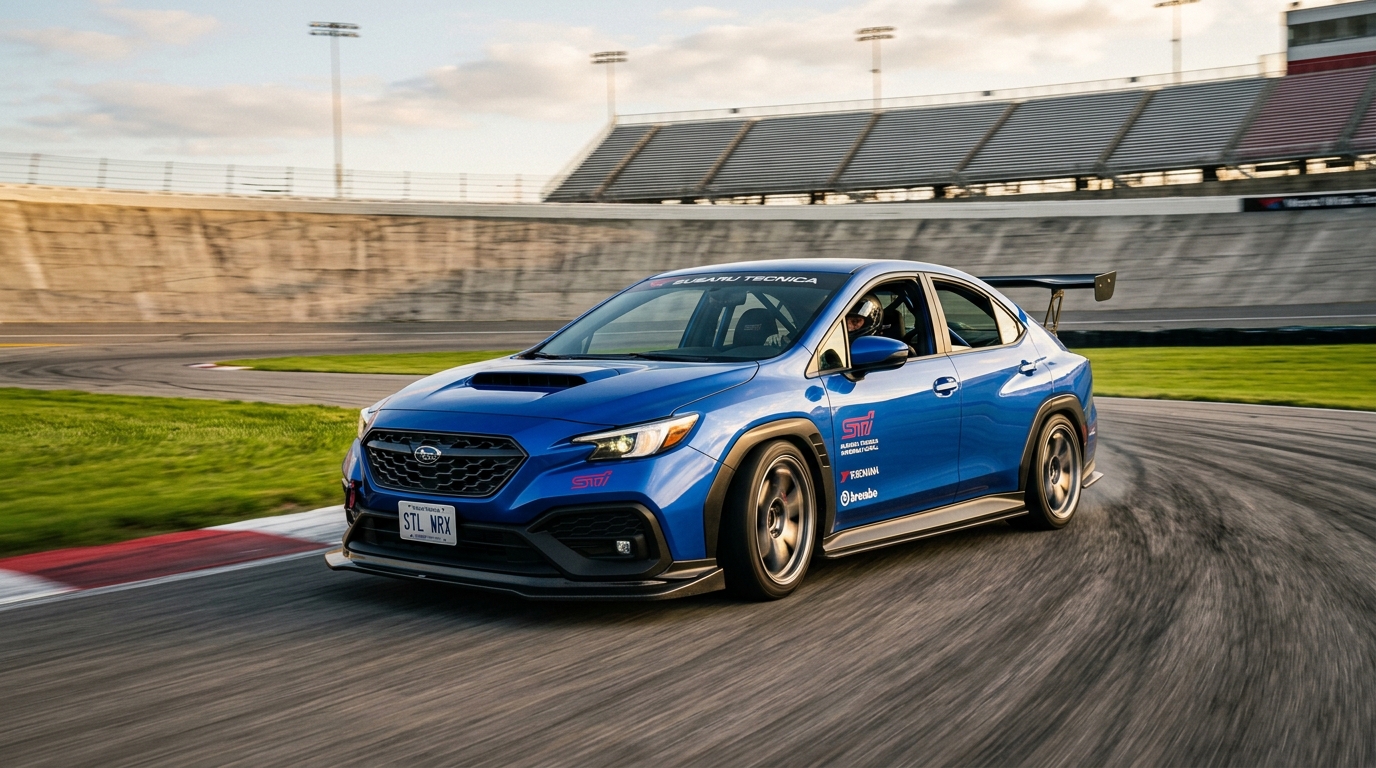
World Wide Technology Raceway—or Gateway, as most of us in the St. Louis car scene still call it—is a unique beast. It’s not your typical winding road course; it’s a hybrid of a high-speed NASCAR oval and a tight, technical infield. For a Subaru WRX owner, this presents a fascinating challenge. You have the Symmetrical All-Wheel Drive to claw out of the slow-speed corners in the infield, but you also have the high-speed sustained loads on the banking that can test the limits of your cooling and aerodynamics.
Driving at Gateway isn't just about raw speed; it's about adaptability. One minute you're pinned at the top of fourth gear on the back straight, and the next you're standing on the brakes for a 90-degree left-hander. This environment is the ultimate proving ground for the WRX platform. Whether you are driving a classic VA or the new VB chassis, the upgrades you choose must balance these two worlds. In this guide, we’re going to dive deep into exactly what your Subaru needs to not just survive a weekend at Gateway, but to dominate it. If you're looking for the right starting point, you can always check out our New Subaru WRX Inventory to see the latest engineering from STI's heritage.
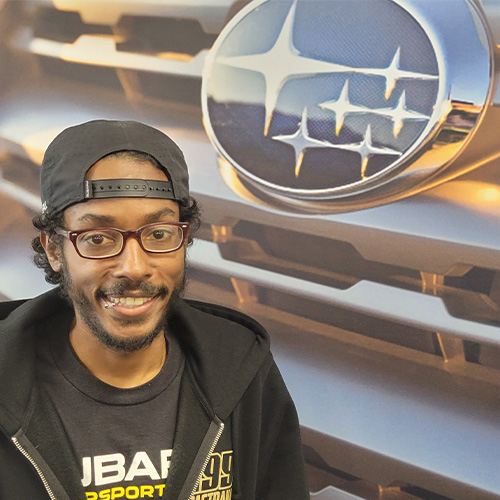
Meet Your Specialist: Darian Broadus & Sunset Hills Subaru
I’m Darian Broadus, and for the last two years, I’ve had the privilege of serving as a Parts Specialist here at Sunset Hills Subaru. But my relationship with the WRX goes much deeper than just looking up part numbers in a catalog. I’m a local enthusiast who spends my weekends at the same tracks you do. I’ve spent countless hours under the hood and behind the wheel, figuring out exactly what works and, more importantly, what fails when the heat of a Missouri summer hits the pavement at Gateway.
At Sunset Hills Subaru, we aren't just a dealership; we are a hub for the local performance community. My mission is to bridge the gap between OEM reliability and aftermarket performance. I’ve seen everything from mild 'Stage 1' daily drivers to full-blown track builds, and I’ve helped dozens of local owners optimize their setups for the specific demands of World Wide Technology Raceway. If you have questions about fitment or durability, I’m your guy. Get Directions to Sunset Hills Subaru and come chat with me in person.
The Thermal Challenge: Managing Heat Soak in the St. Louis Summer
St. Louis is famous for its humidity, and on a 95-degree July day, that humidity is the enemy of your turbocharger. Gateway’s layout includes long periods of wide-open throttle followed by slow technical sections where airflow is significantly reduced. This is the perfect recipe for heat soak. When your intake air temperatures (IATs) climb, the ECU will pull timing to protect the engine, resulting in a noticeable loss of power—exactly what you don't want when trying to pass a competitor on the straight.
The first upgrade I recommend for anyone serious about track time is an upgraded cooling system. A high-efficiency Top Mount Intercooler (TMIC) from brands like Grimmspeed or Cobb provides significantly more surface area and thermal mass than the stock unit. For those pushing higher boost levels, a Front Mount Intercooler (FMIC) is the gold standard, though it requires more modification. Don't overlook the engine oil either; a dedicated oil cooler is mandatory to keep your 0W-20 or 5W-30 from thinning out and losing its lubricating properties under sustained load.
Beyond the intercooler, your radiator needs to be up to the task. The stock plastic-end-tank radiators are prone to failure under the high pressures of track driving. We recommend upgrading to a full aluminum multi-core radiator. This not only increases coolant capacity but also improves heat dissipation efficiency. When you're ready to start your cooling overhaul, you can Find Subaru Parts through our dedicated portal. We stock many of the essential seals, gaskets, and high-performance fluids needed for these installations. Remember, a cool engine is a happy engine, and a happy engine finishes the session without a tow truck.
Braking for Turn 1: High-Temp Pads and Fluid Essentials
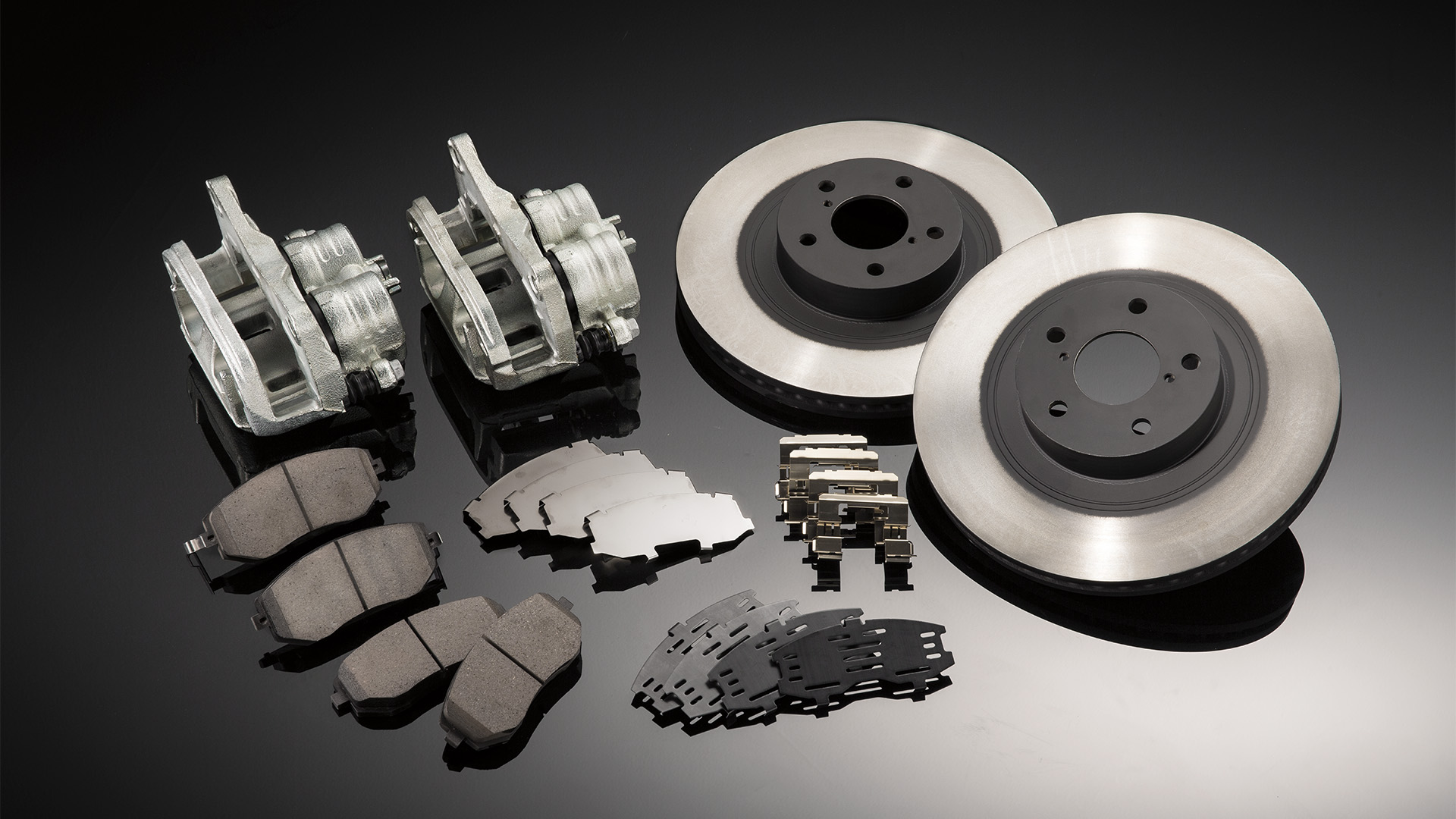
Track-Focused Pads
Stock pads will literally melt after three laps at Gateway. You need a high-metallic or ceramic compound like Hawk DTC-60 or EBC Bluestuff that can handle 1000°F+ temperatures without fading.
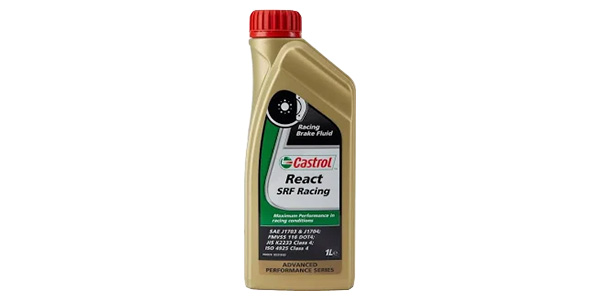
High-Temp Fluid
Standard DOT 3 fluid will boil, leading to a terrifying soft pedal. We recommend a full flush with a high-quality DOT 4 fluid like Motul 660 or Castrol SRF before every track event.
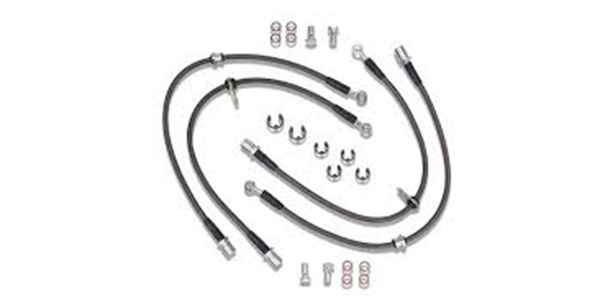
Stainless Steel Lines
Rubber lines expand under pressure. Swapping to stainless steel braided lines provides a much more consistent and communicative pedal feel, which is vital for trail-braking into the infield.
Suspension Geometry: Dialing in Camber for the Infield
The WRX is notorious for understeer—it’s the nature of a front-heavy, AWD car. At Gateway, the tight corners like Turn 3 and the 'bus stop' chicane will punish a car that can't rotate. To fix this, we need to look at your suspension geometry. From the factory, the WRX has very little negative camber, which causes the tire to roll onto the sidewall during hard cornering. I recommend a set of adjustable coilovers with front camber plates. Dialing in roughly -2.5 to -3.0 degrees of front camber will drastically improve your front-end grip. On the rear, the VA and VB chassis benefit greatly from adjustable lower control arms. This allows you to fine-tune the rear camber to ensure the car stays stable on the high-speed banking while still being able to pivot in the technical sections.
Don't forget the sway bars. An upgraded rear sway bar can help settle the car and reduce body roll without making the ride overly harsh for the drive home to Sunset Hills. If you're unsure about your current alignment or if you need a professional to look at your bushings, you should Schedule Service and Diagnostics with our expert technicians. We have the tools to ensure your car is perfectly square and ready for the track.
If you're considering a new platform to build on, our Used Vehicle Inventory often features pre-owned WRXs that are the perfect blank canvas for a dedicated track project.
Power vs. Reliability: The Strategic Tune
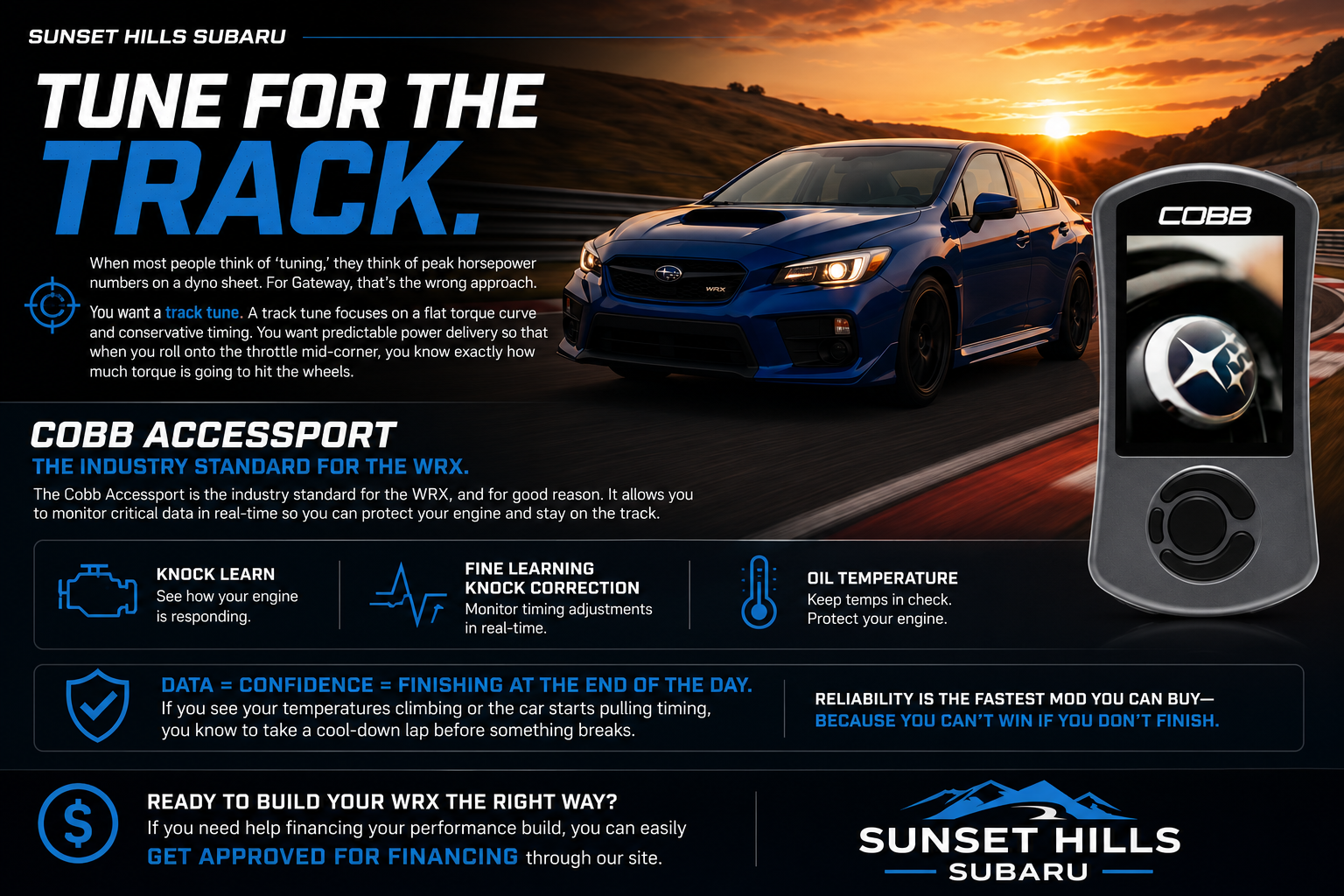
When most people think of 'tuning,' they think of peak horsepower numbers on a dyno sheet. For Gateway, that’s the wrong approach. You want a 'track tune.' A track tune focuses on a flat torque curve and conservative timing. You want predictable power delivery so that when you roll onto the throttle mid-corner, you know exactly how much torque is going to hit the wheels. The Cobb Accessport is the industry standard for the WRX, and for good reason. It allows you to monitor critical data like Knock Learn, Fine Learning Knock Correction, and Oil Temperature in real-time. If you see your temperatures climbing or the car starts pulling timing, you know to take a cool-down lap before something breaks. Reliability is the fastest mod you can buy—because you can't win if you don't finish. If you need help financing your performance build, you can easily contact us for financing information through our site.
Tire Selection: Balancing Streetability with Track Grip
The 200-Treadwear Class
For most WRX owners, a 'Super UHP' tire like the Bridgestone Potenza RE-71RS or Falken Azenis RT660 is the sweet spot. They offer incredible grip that rivals slicks but can still be driven to and from the track safely.
Heat Management
Gateway’s pavement is abrasive. Tires will heat up quickly. It’s crucial to bring a high-quality tire pressure gauge and bleed off air as the tires get hot to maintain the optimal contact patch throughout your session.
Rotating for Wear
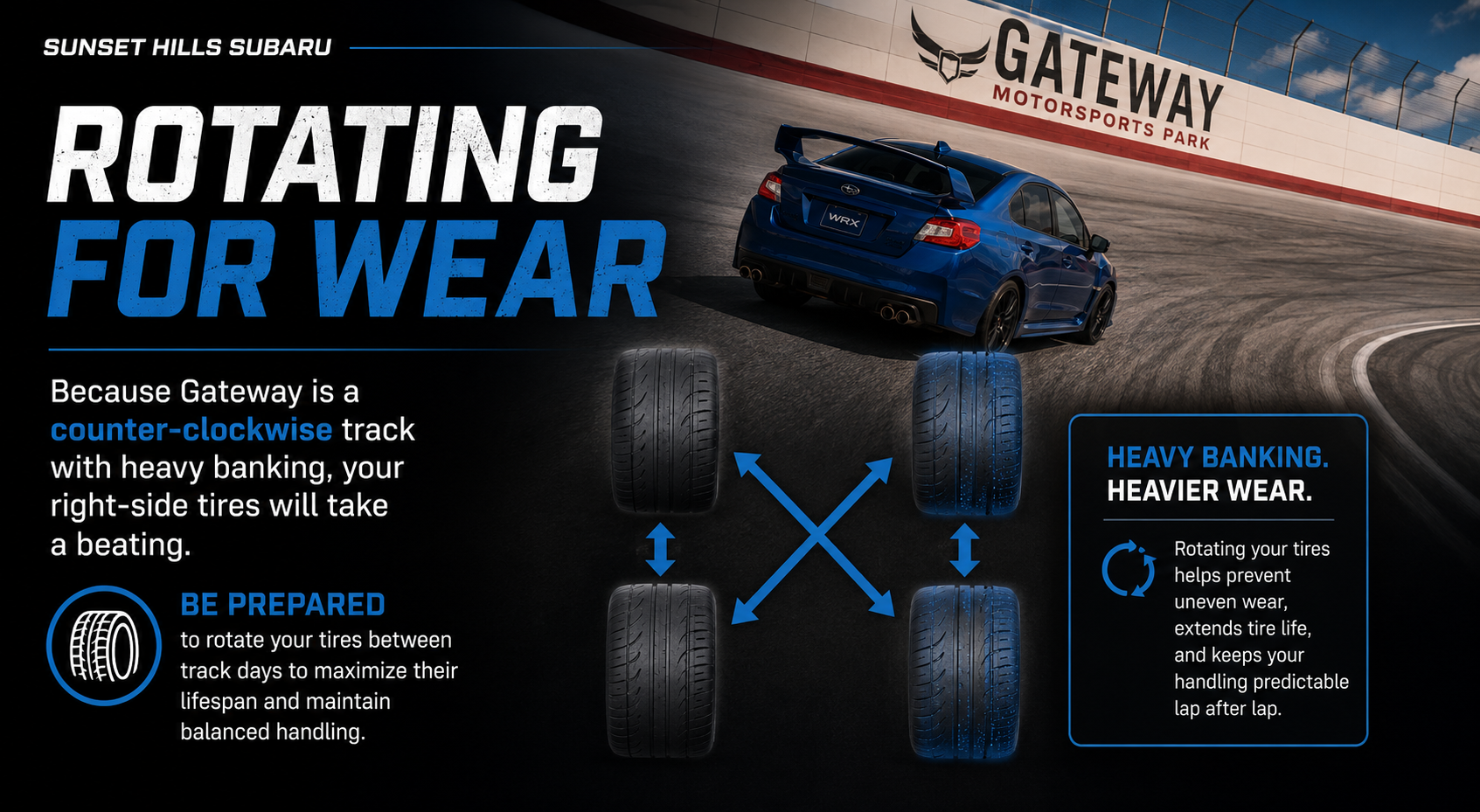
Because Gateway is a counter-clockwise track with heavy banking, your right-side tires will take a beating. Be prepared to rotate your tires between track days to maximize their lifespan and maintain balanced handling.
The Gateway Checklist: Pre-Track Inspection at Sunset Hills Subaru
Before you even think about hitting the track, your vehicle needs to be in top mechanical condition. A minor leak on the street can become a catastrophic fire on the track. We recommend a comprehensive multi-point inspection at least two weeks before your event. This gives you time to address any issues we might find.
Key items to check include:
• Brake pad thickness (at least 50% remaining)
• Brake fluid clarity and age
• Hub bearing play (Subarus are known to eat wheel bearings on track)
• Suspension bushing integrity
• Engine oil level and condition
• Tightness of all wheel lugs
You can Schedule Service and Diagnostics with our team today to get your pre-track tech inspection completed by technicians who know the WRX inside and out. If you're thinking of trading in your current ride for something more track-ready, be sure to Get your value trade online to see where you stand.
Component | Track Interval |
|---|
Engine Oil | Every 2-3 track days |
Brake Fluid | Every 6 months / 5 events |
Tire Rotation | Every event |
Differential Fluid | Once per season |
Aerodynamics and Downforce: Staying Planted on the Straightaway
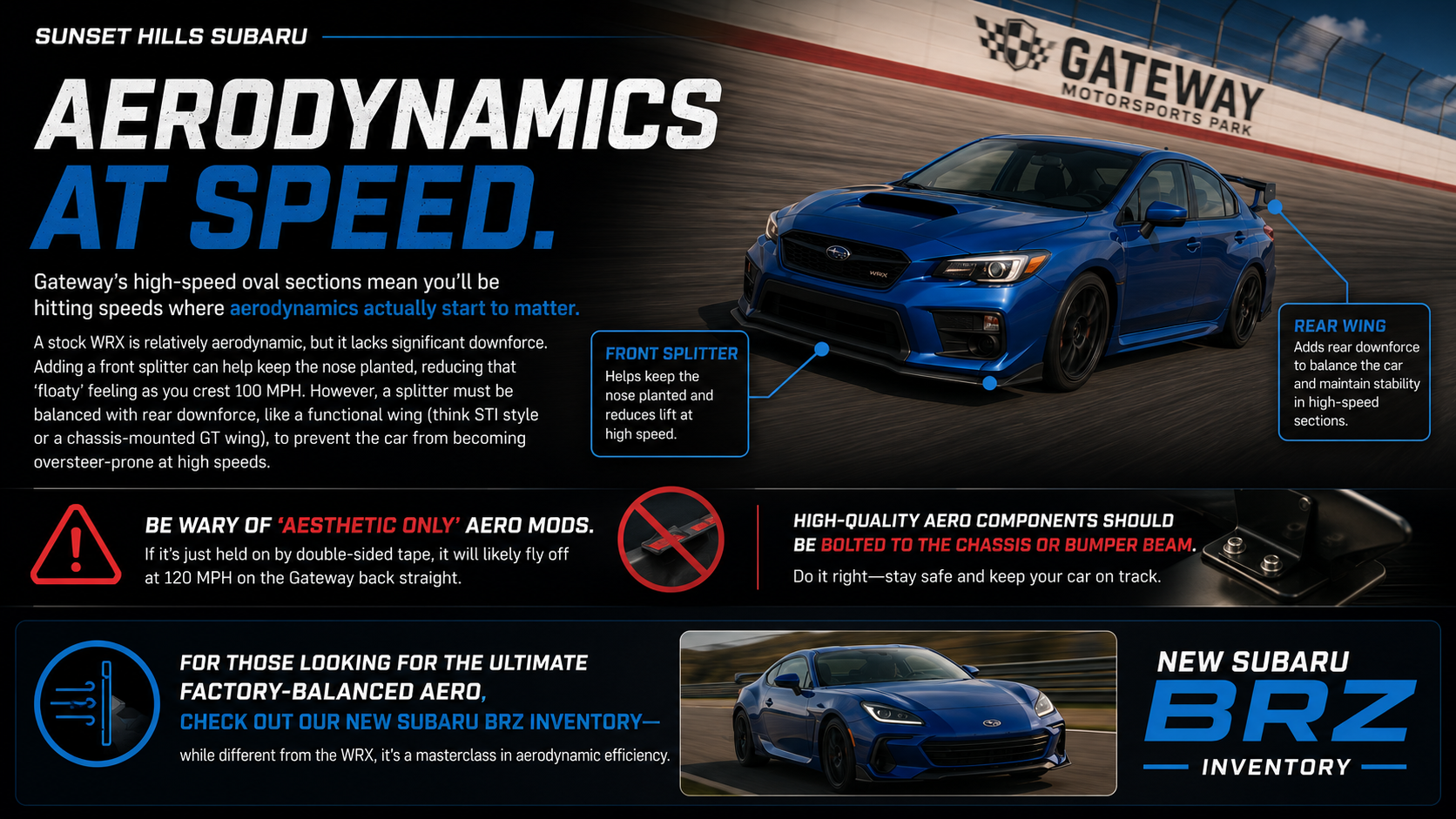
Gateway’s high-speed oval sections mean you’ll be hitting speeds where aerodynamics actually start to matter. A stock WRX is relatively aerodynamic, but it lacks significant downforce. Adding a front splitter can help keep the nose planted, reducing that 'floaty' feeling as you crest 100 MPH. However, a splitter must be balanced with rear downforce, like a functional wing (think STI style or a chassis-mounted GT wing), to prevent the car from becoming oversteer-prone at high speeds.
Be wary of 'aesthetic only' aero mods. If it’s just held on by double-sided tape, it will likely fly off at 120 MPH on the Gateway back straight. High-quality aero components should be bolted to the chassis or bumper beam. For those looking for the ultimate factory-balanced aero, check out our New Subaru BRZ Inventory—while different from the WRX, it's a masterclass in aerodynamic efficiency.
Darian’s Personal Build: My Top 3 Non-Negotiable Upgrades
If I were starting a build today for a Gateway-focused WRX, I would ignore the exhaust and the flashy wheels for the first month. I’ve seen too many guys spend $2,000 on a cat-back exhaust only to have their brakes fail on the second session. Here are my three 'must-haves' for any Subaru hitting the track:
1. Brake Fluid & Pads: This is a safety issue, not just a performance one. You cannot track a WRX on stock pads.
2. Oil Cooler: The FA20 and FA24 engines run hot. An oil cooler is insurance for your engine's life.
3. Quality Alignment: A 'track' alignment is the cheapest way to make your car feel 500 pounds lighter and twice as nimble.
Ready to get started? Check out our Current Service and Parts Specials to save on your initial build items.
Essential Local Resources for St. Louis Drivers
Track Organizations
Look into groups like SCCA St. Louis Region or NASA Central for high-performance driver education (HPDE) events at Gateway. These groups provide instructors who can help you learn the line.
Community Meetups
Join local Subaru clubs in the St. Louis area. We often host events right here at Sunset Hills Subaru where you can talk shop with other WRX owners and see their setups in person.
Expert Support
Don't forget that we're only a short drive away. Call us at (314) 476-9638 for advice on your build or to check the status of your parts order.
Post-Track Maintenance: Protecting Your Investment
The work doesn’t end when the checkered flag drops. Track driving puts extreme stress on every component of your vehicle. After a weekend at Gateway, I always recommend a 'post-track' check. Change your oil immediately—track heat breaks down the molecular structure of engine oil much faster than street driving. Inspect your brake pads for uneven wear or crumbling, and check your rotors for 'heat checking' or small cracks.
Our service department at Sunset Hills Subaru is equipped to handle these high-performance needs. We use genuine Subaru fluids and filters to ensure your warranty remains intact while your car stays in peak condition. Whether you're driving a WRX or a rugged New Subaru Outback Inventory for your daily commute, our standards remain the same. Take care of your Subaru, and it will take care of you on the track.
Start Your Build Today at Sunset Hills Subaru
The track is calling, and World Wide Technology Raceway is waiting for your next personal best. Don't hit the pavement unprepared. Whether you need expert advice from Darian Broadus, high-performance parts, or a professional pre-track inspection, Sunset Hills Subaru is your partner in performance. Visit us at 10100 Watson Rd, Sunset Hills, MO 63127 or browse our resources online to take the first step toward your ultimate WRX build.