

What Is a Good APR for a Car Loan in 2026?
Understanding auto loan interest rates, comparing 48-, 60-, and 72-month financing, and finding the right payment for your budget.
Whether you're shopping for a new Subaru or a pre-owned vehicle in the St. Louis area, knowing how APR works can help you make a more informed financing decision.
Quick Answer: What Is a Good APR for a Car Loan?
A good APR is one that is competitive for your credit profile, loan term, vehicle, and current market conditions. There is no single interest rate that is considered good for every borrower.
Buyers with stronger credit histories generally qualify for lower rates, while new vehicles may qualify for manufacturer promotional financing. Used vehicle loans often carry higher rates.
Before accepting a loan, compare offers with the same term and amount financed. Look at both the monthly payment and the total interest you'll pay over the life of the loan.
What Is APR on a Car Loan?
APR stands for Annual Percentage Rate. It represents the yearly cost of borrowing money, expressed as a percentage.
Unlike the interest rate alone, APR may also reflect certain lender fees included in the cost of credit. This makes APR especially useful when comparing financing offers.
Interest Rate
The rate used to calculate interest charged on your outstanding loan balance.
APR
A broader measure of borrowing cost, including interest and certain applicable finance charges.
Loan Term
The length of time scheduled to repay your loan, commonly 48, 60, or 72 months.
Two loans can have similar monthly payments but very different total borrowing costs. That's why APR and loan length should always be considered together.
What Is Considered a Good APR in 2026?
Auto financing rates change with market conditions, lender policies, borrower credit, vehicle age, and available incentives.
Rather than relying on an outdated national average, compare the offers available to you at the time of purchase.
How to Recognize a Competitive APR
A competitive loan offer generally has an APR that compares favorably with other offers available to someone with your credit profile and financing requirements.
For example, if two lenders offer the same amount financed and repayment term, the lower APR will generally mean a lower overall borrowing cost, assuming comparable loan conditions.
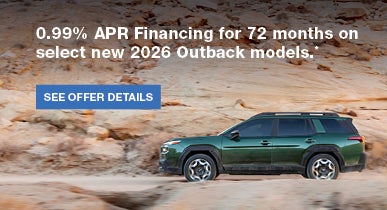
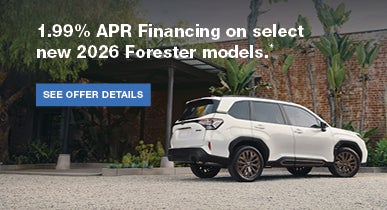
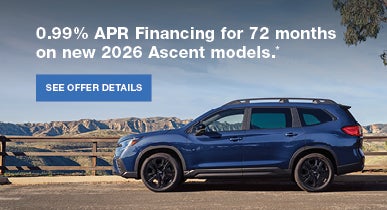
Manufacturer-supported financing may sometimes provide promotional APRs for eligible buyers and qualifying vehicles. These offers may be restricted by model, term, credit approval, or promotional dates.
Explore current options through the Sunset Hills Subaru financing application.
Is a 72-Month Car Loan a Good Idea?
A 72-month auto loan spreads repayment across six years. This can reduce the required monthly payment compared with a shorter loan using the same amount financed and interest rate.
However, longer terms generally increase the total interest paid and may increase the time spent owing more than the vehicle is worth.
48-Month Loan
Higher monthly payments, but faster principal repayment and generally less total interest.
60-Month Loan
A middle-ground option that balances monthly affordability with total borrowing cost.
72-Month Loan
Lower required monthly payments, but a longer repayment commitment and generally more total interest.
A 72-month loan isn't automatically a bad choice. What matters is whether the payment fits your budget and whether you're comfortable with the total cost.
48 vs. 60 vs. 72-Month Car Loan Payments
Consider a hypothetical $30,000 auto loan with a fixed 6.0% annual interest rate. For this illustration, APR is also assumed to be 6.0%, with no additional financed fees.
| Loan Term | Monthly Payment | Total Interest | Total Payments |
|---|---|---|---|
| 48 Months | $704.55 | $3,818.40 | $33,818.40 |
| 60 Months | $579.98 | $4,798.80 | $34,798.80 |
| 72 Months | $497.19 | $5,797.68 | $35,797.68 |
Illustrative fixed-rate amortization only. Figures are rounded and assume scheduled monthly payments. Actual finance charges may vary due to payment timing, loan terms, fees, and lender calculation methods. These are not advertised financing offers.
What Does This Comparison Tell Us?
Extending this example loan from 48 to 72 months lowers the required monthly payment by approximately $207.
However, it also adds approximately $1,979 in total interest over the repayment period.
The lowest monthly payment is not necessarily the lowest-cost financing option.
How Does Your Credit Score Affect Your Car Loan APR?
Your credit history is one of several factors lenders consider when evaluating an auto financing application.
Generally, borrowers with established histories of on-time payments and lower credit risk may qualify for more favorable financing terms.
| Factor | Why It Matters |
|---|---|
| Credit History | Shows how you've managed past obligations. |
| Payment History | Helps lenders evaluate repayment reliability. |
| Debt-to-Income Ratio | Measures existing debt relative to income. |
| Down Payment | Can reduce the amount being financed. |
| Loan Term | Changes repayment duration and lender risk. |
| Vehicle Details | Age, value, and mileage may affect eligibility. |
There is no universal credit score that guarantees a specific APR. Different lenders use different underwriting criteria and credit scoring models.
Are APRs Higher on Used Cars?
Used vehicle financing often carries higher APRs than financing for comparable new vehicles. Lenders may consider vehicle age, mileage, collateral value, and other risk factors.
New vehicles may also qualify for manufacturer promotional financing programs that are unavailable on most used vehicles.
However, a lower purchase price on a pre-owned vehicle can still make it the more affordable overall choice.
Compare the total purchase price, taxes and fees, amount financed, interest charges, and expected ownership costs before deciding.
Browse our new Subaru inventory or explore pre-owned vehicles at Sunset Hills Subaru.
How Can You Qualify for a Better Auto Loan APR?
- Review your credit reports. Check for inaccurate information and address any errors before applying.
- Compare multiple financing offers. Review APR, term length, fees, and total finance charges rather than focusing only on monthly payment.
- Consider a larger down payment. Borrowing less can reduce interest expenses and may improve loan eligibility.
- Explore shorter loan terms. If your budget allows, a shorter term can reduce total interest expenses.
- Check manufacturer incentives. Promotional APR programs may be available for eligible buyers.
- Consider your trade-in equity. Positive equity can help reduce the amount you need to finance.
When shopping for auto loans, credit scoring models may group qualifying inquiries made within a designated rate-shopping window. The applicable window varies by scoring model.
Why You Shouldn't Shop by Monthly Payment Alone
A low monthly payment can be attractive, but it doesn't always mean you're getting the best overall deal.
Extending a loan can lower the monthly payment without reducing the vehicle's price or total financing cost.
Before Signing, Ask These Questions
- What is the vehicle's total out-the-door price?
- What is my APR and interest rate?
- How much am I financing?
- How many monthly payments will I make?
- What is the total finance charge?
- Are there any prepayment penalties?
- Are optional products included in the payment?
Review the Truth in Lending disclosures provided with your financing agreement. These disclosures help explain the annual percentage rate, finance charge, amount financed, and total payments.
What Is Negative Equity on a 72-Month Loan?
Negative equity occurs when you owe more on your vehicle than it is currently worth.
Longer financing terms may increase this risk because loan principal is generally repaid more slowly.
For example, if you owe $25,000 on a vehicle worth $21,000, you have approximately $4,000 in negative equity.
A down payment, shorter loan term, and careful consideration of the purchase price may help reduce this risk.
Should You Consider GAP Coverage?
Guaranteed Asset Protection, commonly called GAP, may help address certain differences between an outstanding loan balance and an insurance settlement after a covered total loss.
Coverage terms, exclusions, limits, and availability vary. GAP is not automatically necessary for every buyer, and it should be evaluated based on your circumstances.
Explore Subaru Financing at Sunset Hills Subaru
At Sunset Hills Subaru, we understand that financing a vehicle is about more than choosing a monthly payment. It's about finding terms that make sense for your needs and budget.
Whether you're comparing a 48-month loan with a 72-month loan, evaluating new versus used financing, or exploring available Subaru offers, our finance team can help you review your options.
You can begin online with our secure financing application, explore our leasing versus buying guide, or browse our current vehicle inventory.
Ready to Explore Your Financing Options?
Find a Subaru that fits your lifestyle and review financing options that fit your budget.
Car Loan APR Frequently Asked Questions
What is a good APR for a 72-month car loan?
A good 72-month APR is competitive for your credit profile, vehicle, and current market conditions. Compare offers with the same loan length and amount financed.
Is 6% APR good for a car loan?
A 6% APR may be competitive in some circumstances, but whether it's a good offer depends on current rates, credit qualifications, vehicle type, and loan term.
Is a 72-month car loan too long?
Not necessarily. A 72-month term can lower monthly payments, but it generally increases total interest costs compared with shorter terms at the same rate.
Can I pay off a 72-month loan early?
Many auto loans allow early repayment, but review your specific contract for any prepayment terms or penalties.
Do used cars have higher APRs?
Used vehicle loans often have higher APRs than comparable new vehicle loans, although actual rates depend on the lender, borrower, and vehicle.
Does a bigger down payment lower APR?
A larger down payment reduces the amount financed and may improve financing eligibility. However, it does not guarantee a lower APR.
What is the difference between APR and interest rate?
The interest rate measures the cost of borrowing principal, while APR may also account for certain additional finance charges.
Make Your Next Vehicle Purchase an Informed One
The best auto loan is not necessarily the one with the lowest monthly payment. It's the one that offers a manageable payment, reasonable borrowing costs, and terms that align with your financial goals.
Sunset Hills Subaru proudly serves drivers throughout Sunset Hills, Kirkwood, Crestwood, Fenton, Webster Groves, and the greater St. Louis area.
Visit us at 10100 Watson Road, Sunset Hills, MO 63127, or call our sales team at 314-476-9712.