Blog

The Evolution and Impact of Subaru: A Comprehensive History

The Evolution and Impact of Subaru: A Comprehensive History

Subaru's journey from its aviation roots to becoming a renowned automotive brand is a story of innovation, resilience, and dedication to quality. Known for its unique engineering and strong safety reputation, Subaru has carved a niche in the automotive industry. This article delves into the rich history of Subaru, its technological advancements, and its impact on the market, while highlighting its presence in various locations including St Charles, MO, Chesterfield, MO, and Maryland Heights, MO. Whether you're a car enthusiast or a potential buyer, this comprehensive guide will provide valuable insights into what makes Subaru a standout choice.

Subaru's Aviation Beginnings: From Aircraft to Automobiles

Subaru's story begins in 1915 with the establishment of the Aircraft Research Laboratory in Japan. This company, which later became the Nakajima Aircraft Company, played a crucial role during WWII as a major aircraft manufacturer. Post-war, Japan's industrial landscape shifted, and Nakajima was reorganized into several smaller companies. This transition laid the groundwork for what would become Fuji Heavy Industries, the precursor to Subaru Corporation.

In 1953, five companies merged to form Fuji Heavy Industries, marking the beginning of Subaru's journey into the automotive industry. This merger was a strategic move to diversify and explore new markets, leading to the development of the Subaru brand. The first vehicle, the Subaru 1500, debuted in 1954, showcasing the company's commitment to innovation and quality.

Today, Subaru's aviation roots are reflected in its commitment to precision engineering and safety, qualities that resonate with customers from St Charles, MO to Chesterfield, MO. The brand's evolution from aircraft to automobiles is a testament to its adaptability and forward-thinking approach.

The Birth of Fuji Heavy Industries and the Subaru Brand

The formation of Fuji Heavy Industries in 1953 was a pivotal moment in Subaru's history. This conglomerate, formed by the merger of five companies, was instrumental in establishing Subaru as a significant player in the automotive industry. The name "Subaru," which means "unite" in Japanese, was chosen to symbolize this merger and the new direction the company was taking.

Fuji Heavy Industries quickly made its mark with the introduction of the Subaru 360 in 1958, a kei car that became a symbol of post-war economic recovery in Japan. Known for its affordability and efficiency, the Subaru 360 was a commercial success and laid the foundation for future innovations.

Subaru's early models, including the Subaru 1000, introduced groundbreaking technologies like the horizontally-opposed boxer engine and front-wheel drive system. These innovations set Subaru apart from competitors and established its reputation for engineering excellence. For those in Maryland Heights, MO, and beyond, Subaru represented a blend of reliability and innovation that was hard to match.

Innovations that Define Subaru: Boxer Engines and AWD

Subaru's commitment to innovation is exemplified by its development of the boxer engine and symmetrical all-wheel drive (AWD) system. These technologies have become synonymous with the Subaru brand and are key selling points for customers seeking performance and safety.

The boxer engine, characterized by its horizontally-opposed pistons, offers a lower center of gravity, enhancing vehicle stability and control. This design also contributes to a smoother ride and improved safety, as the engine is designed to slide under the passenger compartment in the event of a frontal collision.

Subaru's symmetrical AWD system provides unparalleled traction and balance, distributing power evenly to all four wheels. This system is particularly beneficial in regions with challenging weather conditions, such as the snowy winters of St Louis, MO. Subaru's AWD capability ensures drivers can navigate with confidence, whether they're commuting in Creve Coeur, MO or exploring off-road trails in Fenton, MO.

Subaru's Iconic Models and Their Impact

Subaru's lineup of iconic models has played a significant role in shaping its identity and reputation. The Subaru Outback, introduced in 1996, revolutionized the concept of the sport utility wagon, combining the practicality of an SUV with the comfort of a passenger car. This model quickly became a favorite among adventure seekers and families alike in places like Glendale, MO and Webster Groves, MO.

Another standout model is the Subaru Forester, known for its spacious interior and off-road capabilities. It's a popular choice for those who value safety and versatility, making it a top pick for residents of Concord, MO and Twin Oaks, MO. The Forester's success is a testament to Subaru's ability to meet the diverse needs of its customers.

The Subaru WRX, with its rally racing heritage, appeals to performance enthusiasts. Its turbocharged engine and sport-tuned suspension offer an exhilarating driving experience, making it a coveted model among car aficionados in Valley Park, MO and beyond. Each of these models reflects Subaru's commitment to innovation and customer satisfaction.

Subaru's Commitment to Safety and Reliability

Subaru's dedication to safety and reliability is evident in its consistent high rankings in industry reviews and customer satisfaction surveys. The brand's vehicles are equipped with advanced safety features, such as EyeSight Driver Assist Technology, which includes adaptive cruise control and pre-collision braking. These technologies enhance driver awareness and reduce the likelihood of accidents, making Subaru a trusted choice for families in Lakeshire, MO and Richmond Heights, MO.

According to Consumer Reports, Subaru is ranked as the most reliable car brand of 2025, with models like the Outback, Forester, and Crosstrek receiving high praise. Subaru's focus on building durable vehicles that can withstand the test of time is reflected in the fact that 96% of Subarus built in the last 12 years are still on the road today.

For those considering a vehicle upgrade, it's worth exploring the New Subaru Inventory at Sunset Hills Subaru to experience the brand's renowned safety and reliability firsthand. Additionally, the Used Vehicle Inventory at Sunset Hills Subaru offers a range of options for those seeking quality pre-owned vehicles.

Understanding the Subaru Logo and Its Significance

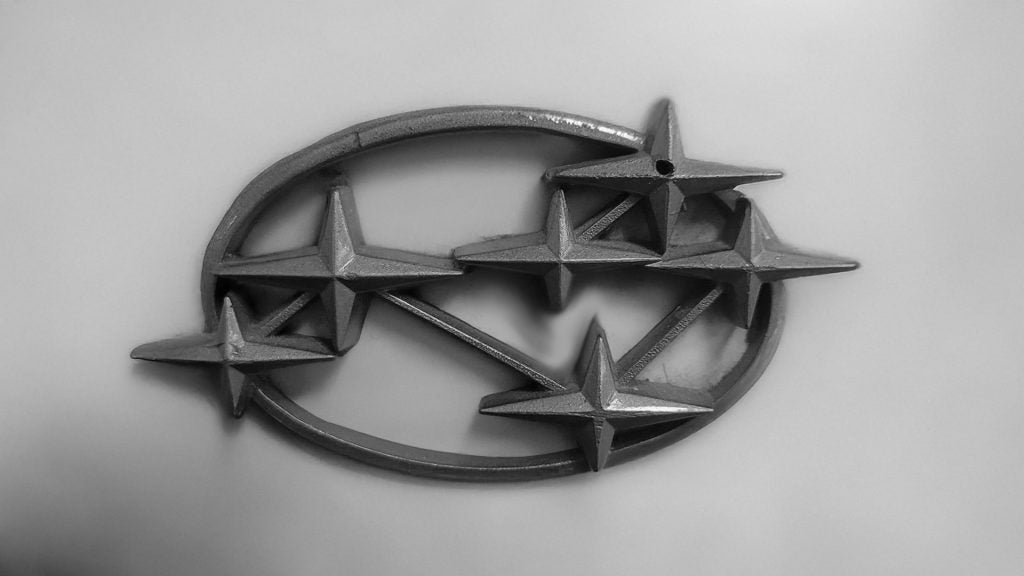
The Subaru logo, featuring six stars, is a distinctive emblem that holds deep meaning. It represents the Pleiades star cluster, known as Subaru in Japan, and symbolizes the merger of the five companies that formed Fuji Heavy Industries. The central star in the logo represents Subaru itself, while the surrounding stars denote the supporting companies.

This celestial symbolism is not only a nod to Subaru's Japanese heritage but also reflects the company's values of unity and innovation. The logo's design, with its clean lines and blue and silver colors, conveys trust, dependability, and technological advancement.

For customers in Oakland, MO and Sappington, MO, the Subaru logo is more than just a brand mark; it's a symbol of the company's commitment to providing reliable and innovative vehicles. The logo's significance is further explored in the Subaru Logo Article.

Subaru's Ownership and Corporate Structure

Subaru Corporation, formerly known as Fuji Heavy Industries, is the parent company of Subaru. While Subaru operates independently, Toyota holds a significant minority stake of approximately 20%, allowing for collaborative projects and shared resources. This partnership has led to the development of models like the Toyota 86/Subaru BRZ sports car, showcasing the synergy between the two companies.

Subaru's corporate structure emphasizes innovation and quality, with a focus on automotive and aerospace industries. This commitment to excellence is evident in every vehicle produced, from the Subaru Impreza to the Subaru Ascent. For those interested in learning more about Subaru's corporate evolution, the Corporate History provides an in-depth look at the company's journey.

Why Subaru Stands Out in the Automotive Market

Subaru's unique offerings, such as the symmetrical AWD system and boxer engine, set it apart from competitors. These features provide superior handling and stability, making Subaru vehicles ideal for diverse driving conditions. Subaru's commitment to safety, as demonstrated by its high safety ratings and advanced driver-assist technologies, further enhances its appeal.

In comparison to other brands, Subaru's focus on reliability and innovation has earned it a loyal customer base. The brand's vehicles are known for their longevity and performance, making them a preferred choice for drivers in Crestwood, MO and Sunset Hills, MO.

For those considering a Subaru, the Current New Car Specials at Sunset Hills Subaru offer attractive deals on the latest models. Additionally, the Current Service and Parts Specials at Sunset Hills Subaru provide value for maintenance and repairs.

Subaru's Local Impact: A Community Favorite

Subaru's presence in the community is marked by its dedication to customer satisfaction and quality service. With a strong network of dealerships, including Sunset Hills Subaru, Subaru is committed to serving the needs of customers from St Charles, MO to Chesterfield, MO.

For those interested in trading in their current vehicle, the Get your value trade tool at Sunset Hills Subaru offers a convenient way to assess the value of their car. Additionally, the Schedule Service and Diagnostics option at Sunset Hills Subaru ensures that vehicles receive the care and attention they need to perform at their best.

Subaru's impact extends beyond its vehicles, as it actively engages with the community through various initiatives and events. This commitment to making a difference is what makes Subaru a beloved brand in areas like Maplewood, MO and Richmond Heights, MO.

For more information or to explore Subaru's offerings, contact Sunset Hills Subaru at 10100 Watson Rd, Sunset Hills, MO 63127.

© 2025 Sunset Hills Subaru. All rights reserved.
Recommended Posts

tech looking at Subaru outback

Subaru Outback Oil Change Cost: What to Expect at the Dealership

If you are planning your vehicle's regular maintenance routine, a essential question is: How much does a routine oil change cost for a Subaru Outback? At Sunset Hills Subaru in Sunset Hills, Missouri, a routine synthetic oil change for a Subaru Outback typically ranges between $75 and $150. This comprehensive service includes premium Genuine Subaru 0W-20 synthetic oil specifically formulated for Subaru BOXER® engines, an OEM high-filtration oil filter replacement, a brand-new drain plug crush washer to ensure a leak-free seal, and a complementary multi-point safety inspection performed by factory-certified technicians. Exact costs can vary slightly based on the specific Outback powertrain equipped under your hood. Standard Outback trims powered by the naturally aspirated 2.5-liter Subaru BOXER® 4-cylinder engine generally sit at the lower end of the range ($75 to $95), requiring 4.4 quarts of 0W-20 full synthetic oil. Upper trim levels—such as the Outback XT and Outback Wilderness equipped with the turbocharged 2.4-liter Subaru BOXER® engine—require 4.8 quarts of synthetic oil and dedicated heavy-duty filter elements, placing service near $95 to $120. View Current Service & Parts Specials How Often Should a Subaru Outback Receive an Oil Change? Subaru officially recommends a routine oil change interval of 6,000 miles or 6 months, whichever comes first, under normal driving conditions. Adhering to this timeframe maintains optimal viscosity, prevents harmful sludge accumulation inside internal engine galleries, and protects precision timing chain assemblies. However, drivers commuting throughout Greater St. Louis, Chesterfield, and Maryland Heights frequently experience driving scenarios that fall under Subaru's Severe Driving Schedule. Severe driving conditions include repeated short trips under 5 miles, extended engine idling in traffic, frequent cold-weather starts during Missouri winters, or driving on dusty gravel trails. Under severe conditions, Subaru recommends shortening oil change intervals to 3,000 to 5,000 miles or every 3 to 4 months. Frequent oil refreshes combat moisture accumulation and fuel dilution, safeguarding long-term BOXER engine health. Synthetic vs. Conventional: Why Subaru Outback Oil Changes Cost What They Do Modern Subaru BOXER® engines utilize ultra-low viscosity 0W-20 full synthetic oil engineered for rapid lubrication during cold engine ignition and maximum heat dispersion under heavy loads. Unlike older engines that ran on conventional oil, boxer engines position cylinders horizontally. Full synthetic oil provides continuous oil film strength across horizontal cylinder walls, preventing dry starts and internal friction. While quick-lube drive-thru outlets may advertise introductory pricing, they frequently use non-OEM generic oil filters lacking mandatory internal bypass valve pressure settings. Genuine Subaru top-mounted oil filters incorporate precise spring-loaded bypass valves (rated at 23 PSI) to maintain steady oil flow even under freezing conditions. Why Choose Dealership Service at Sunset Hills Subaru? • Factory-Trained Technicians: Master technicians who specialize exclusively in Subaru Boxer engines, Symmetrical AWD, and Lineartronic CVTs. • Genuine OEM Components: Factory-approved 0W-20 synthetic fluid and high-efficiency filters designed specifically for your vehicle. • Multi-Point Inspection: Complete health check of brake pad wear, tire tread depth, suspension bushings, battery health, and fluid levels. What Are the Local Estimated Subaru Outback Maintenance Costs Through 36,000 Miles Near Sunset Hills, Missouri? For vehicle owners living around Sunset Hills, Ladue, Kirkwood, and South St. Louis County, managing routine automotive upkeep is simple and predictable. During the first 3 years or 36,000 miles of vehicle ownership, standard maintenance expenses for a Subaru Outback typically average between $350 and $550 per year ($1,050 to $1,650 total cumulative). Year 1 (0 – 12,000 Miles) • 6,000-Mile Service: Synthetic Oil & Filter + Tire Rotation (contact us for current pricing) • 12,000-Mile Service: Synthetic Oil Change, Tire Rotation, Cabin Air Filter Replacement ($160 - $210) Estimated Year 1 Total: $270 - $350 Year 2 (12,001 – 24,000 Miles) • 18,000-Mile Service: Synthetic Oil & Filter + Tire Rotation (contact us for current pricing) • 24,000-Mile Service: Synthetic Oil Change, Engine Air Filter, Cabin Filter, Brake System Check ($220 - $280) Estimated Year 2 Total: $330 - $420 Year 3 (24,001 – 36,000 Miles) • 30,000-Mile Major Service: Synthetic Oil, Brake Fluid Flush, Tire Rotation, Air Filters, AWD Inspection ($350 - $480) • 36,000-Mile Service: Synthetic Oil & Filter ($75 - $110) Estimated Year 3 Total: $425 - $590 Schedule Service and Diagnostics How Does the Outback 5-Year Cost to Own Compare to a Toyota RAV4? When evaluated over a standard 5-year ownership period (60,000 miles), total upkeep expenses for the Subaru Outback remain comparable to midsize and compact crossover rivals such as the Toyota RAV4. Ownership Factor (5-Year / 60,000 Miles) Subaru Outback (2.5L AWD) Toyota RAV4 (2.5L AWD) Routine Scheduled Maintenance $2,100 - $2,600 $1,950 - $2,450 Standard All-Wheel Drive Standard Symmetrical AWD Optional AWD Addition Front/Rear Differential Fluid Service Included at 30k / 60k Interval Included at 30k / 60k Interval Estimated 5-Year Repair Reserve $650 - $900 $600 - $850 While routine scheduled oil and fluid services for a Subaru Outback cost roughly $150 to $200 more across 5 years than a front-wheel-drive baseline vehicle, the Outback delivers full-time Symmetrical All-Wheel Drive standard across every single trim level, providing superior traction on wet roads, ice, and midwestern winter snow. Does the Subaru Outback Hold Its Resale Value Well Over Time? Yes! The Subaru Outback consistently earns top industry recognition from automotive research authorities such as Kelley Blue Book (KBB) and ALG for maintaining exceptional residual value retention. Subaru models consistently rank near the top of all midsize crossover segments in 3-year and 5-year trade-in equity. Completing all factory-recommended routine maintenance at an authorized dealer like Sunset Hills Subaru directly protects your trade-in equity. Having continuous CARFAX service entries showing timely synthetic oil changes, genuine filter replacements, and scheduled fluid flushes reassures prospective future buyers and maximizes valuation when you choose to Get your value trade for a new vehicle. What Factory Warranty Protection Comes Standard with a New Subaru Outback? Every brand-new Subaru Outback purchased at Sunset Hills Subaru is backed by robust factory warranty coverage: • 3-Year / 36,000-Mile New Vehicle Limited Warranty: Comprehensive coverage covering bumper-to-bumper electrical, mechanical, and operational assembly components. • 5-Year / 60,000-Mile Powertrain Limited Warranty: Covers internal engine parts, timing chains, oil pumps, Lineartronic CVT transmission, transaxle, and front/rear differential gearboxes. • 5-Year / Unlimited Mileage Rust Perforation Warranty: Protects body sheet metal against corrosion perforation. Maintaining documented records of mandatory oil changes and factory maintenance intervals ensures your powertrain limited warranty coverage remains fully intact throughout its effective lifespan. What Larger Scheduled Service Expenses Should a Subaru Outback Owner Budget For? Beyond routine oil and filter changes every 6,000 miles, long-term ownership involves key periodic maintenance milestones. Budgeting for these milestones ensures smooth operation and avoids unexpected mechanical repairs. 30,000-Mile Service ($350 - $480) Includes synthetic oil change, complete brake fluid flush, replacement of engine air filter and cabin micro-filter, tire rotation, and full differential inspection. 60,000-Mile Service ($450 - $750) Major service interval adding iridium spark plug replacement, front and rear differential gear oil replacement, Lineartronic CVT fluid condition inspection, and brake system flush. 90,000-Mile Service ($500 - $850) Re-evaluates spark plugs, cooling system coolant flush, serpentine drive belt inspection, brake pad and rotor servicing, and full suspension check. Find Genuine OEM Subaru Parts How Much Does a 60,000-Mile Major Service Cost for a Subaru Outback? The 60,000-mile service is one of the most critical milestones in your Outback's lifetime, typically costing between $450 and $750 depending on model year and trim. A primary factor in labor costs for this service is replacing iridium spark plugs inside the Subaru BOXER® engine layout. Because BOXER engine cylinders lie horizontally parallel to the chassis, spark plugs are situated tightly against side frame rails. Factory-trained technicians use specialized universal ratchets and torque gauges to replace spark plugs efficiently without damaging cylinder threads. During the 60,000-mile inspection, technicians also examine EyeSight® Driver Assist sensors, perform diagnostic computer scans, replace synthetic gear oil in front and rear differential housings, and flush brake fluid. What Are the Most Common Long-Term Maintenance Items for a Subaru Outback? Is the Subaru Outback expensive to maintain over 10 years compared to competitors? Independent automotive study data shows that 10-year cumulative maintenance and repair costs for a Subaru Outback average around $5,800 to $6,800. This positions the Outback slightly below average for all-wheel-drive crossovers in the midsize class. Common maintenance items encountered past 100,000 miles include: • Wheel Bearings & Hub Assemblies: ($350 - $500 per wheel after extended highway driving) • CV Axle Boots & Joints: ($250 - $450 per axle due to normal rubber wear over time) • Lineartronic CVT Fluid Exchange: ($280 - $420 specialized fluid replacement) • Suspension Struts & Lower Control Arms: ($600 - $950 per axle) Replacing oil and filters regularly at standard 6,000-mile intervals prevents premature thermal degradation of surrounding engine gaskets and seals, keeping 10-year ownership expenses predictable and low. Does Subaru Offer Prepaid Maintenance Plans to Learn About Service Plans? Yes! Drivers purchasing or leasing a vehicle at Sunset Hills Subaru can take advantage of prepaid maintenance options designed to shield against future inflation and optimize long-term maintenance budgets. Maintain the Love Program Included on eligible new Subaru leases in select regions, covering routine oil changes, tire rotations, and inspections for the first 2 years or 24,000 miles at zero out-of-pocket cost. Subaru Added Security® Maintenance Plans Allows owners to prepay for scheduled routine maintenance (up to 3 years/36,000 miles or 5 years/60,000 miles), locking in current labor rates and synthetic oil prices. Explore New Subaru Outback Inventory What Unique Features and Service Needs Does the Subaru Outback Wilderness Trim Include? The rugged Subaru Outback Wilderness trim is factory-engineered for extreme off-road adventures, featuring raised suspension with 9.5 inches of ground clearance, revised final drive gear ratios, dual-function X-MODE®, and Yokohama GEOLANDAR® all-terrain tires. Wilderness Specific Maintenance Items: • 2.4L Turbocharged Oil Requirements: Requires 4.8 quarts of synthetic oil per change ($95 - $120). • Rear Differential Fluid Inspection: Off-road driving through water or mud requires inspecting rear differential oil and transfer case fluid for moisture ingress. • All-Terrain Tire Rotations: Deep tread patterns require diligent 6,000-mile cross-rotations to ensure even wear. Schedule Your Subaru Outback Service at Sunset Hills Subaru Ready to give your Subaru Outback the expert attention it deserves? Trust the factory-trained technicians at Sunset Hills Subaru in Sunset Hills, MO. Whether you need a simple 6,000-mile routine synthetic oil change or a 60,000-mile major service, our team uses only Genuine Subaru OEM fluids and components to keep your vehicle running like new. Visit us at 10100 Watson Rd, Sunset Hills, MO 63127 or Call (314) 476-9638 to speak directly with a service advisor. Convenient online scheduling is available 24/7! Subaru Outback Synthetic Oil Change in Sunset Hills MO | Sunset Hills Subaru

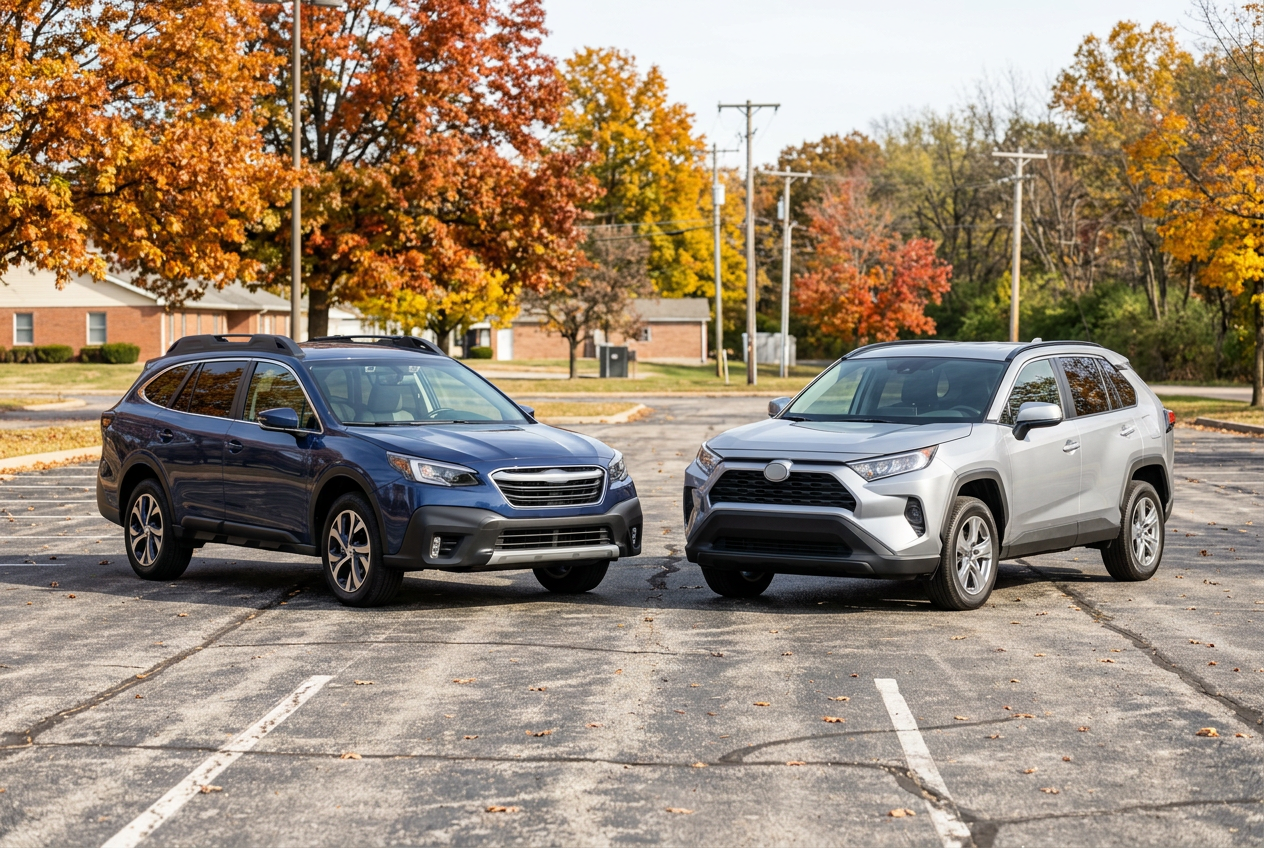
Outback side by side

Does Subaru Retain Resale Value as Well as Toyota? The Bottom-Line Comparison

Does Subaru Retain Resale Value as Well as Toyota? The Bottom-Line Comparison When car buyers evaluate long-term financial performance, Toyota has historically stood as the benchmark for resale value retention in the automotive industry. However, automotive industry data from Kelley Blue Book (KBB) and Automotive Lease Guide (ALG) reveals a striking reality: Subaru has comparable 3-to-5-year resale value retention across nearly every major vehicle segment. Flagship models like the Subaru Crosstrek, Subaru Outback, and Subaru Forester routinely earn top residual value honors, standing shoulder-to-shoulder with market stalwarts like the Toyota RAV4 and Tacoma. Drivers in the St. Louis metropolitan area benefit from Subaru's exceptionally strong equity retention driven by standard Symmetrical All-Wheel Drive, lower initial sticker prices, and relentless regional demand. How Subaru 5-Year Depreciation Rates Compare Directly to Toyota Models Depreciation represents the largest single expense during the first five years of vehicle ownership. While an average sedan or crossover loses 40% to 50% of its initial value over 60 months, both Subaru and Toyota dramatically outperform industry averages. For instance, the Subaru Crosstrek frequently posts 5-year retained values exceeding 60% of original MSRP, often beating direct compact crossover competitors including the Toyota RAV4. The Subaru Outback holds comparable residual values against midsize SUVs while offering lower entry pricing, granting owners higher relative equity when trading in. Vehicle Model Segment Subaru Model Toyota Competitor Avg 5-Year Retained Value (Subaru) Avg 5-Year Retained Value (Toyota) Subcompact Crossover Crosstrek Corolla Cross 60% – 64% 58% – 62% Compact SUV Forester RAV4 56% – 60% 57% – 61% Midsize Crossover / Wagon Outback Venza / Highlander 55% – 59% 54% – 58% 3-Row Family SUV Ascent Grand Highlander 52% – 56% 53% – 57% Key Factors That Drive High Subaru Resale Value in the St. Louis Metro Area Several distinct structural and market forces explain why pre-owned Subaru vehicles remain in such high demand across Sunset Hills and the greater St. Louis region. Standard Symmetrical AWD Unlike Toyota where front-wheel drive is often standard and all-wheel drive carries a price premium, almost every Subaru comes standard with full-time Symmetrical AWD. Used car buyers in Missouri actively seek AWD for winter confidence, elevating market prices for pre-owned Subarus. Competitive Entry MSRP Subaru maintains competitive MSRP positioning across its lineup compared to equivalent AWD Toyota trims. Starting at MSRP while retaining equal percentage values translates directly to lower overall total depreciation in dollar terms. Unmatched Brand Loyalty Subaru consistently ranks at or near the top of J.D. Power Automotive Brand Loyalty studies. A constant stream of return buyers seeking certified pre-owned Crosstrek and Outback models keeps inventory tight and trade-in valuations elevated. Evaluating Your Trade-In Value in Sunset Hills: What Is Your Current Vehicle Worth? Understanding your vehicle's current equity position is the foundation of any smart vehicle purchase. Because Subaru models maintain exceptional value, owners are often surprised to learn how much trade-in equity they have accumulated. Whether you currently drive a Subaru, Toyota, or another brand, our appraisal team evaluates local St. Louis market demand, service history records, and vehicle condition to offer top-dollar trade estimates. You can easily start the evaluation process online and leverage your retained vehicle equity toward a New Subaru Inventory purchase. Get your value trade How Subaru Reliability and Longevity Compare to Toyota and Honda Resale value and mechanical longevity go hand in hand. A vehicle cannot hold high trade-in equity if buyers suspect expensive mechanical breakdowns on the horizon. Experimental and empirical data both confirm that Subaru vehicles share the elite upper tier of automotive longevity alongside Toyota and Honda. According to Experian automotive longevity data, 96% of Subaru vehicles sold in the last 10 years are still on the road today. It is commonplace for properly maintained Outback, Forester, and Impreza models to cross the 200,000-mile mark while maintaining solid structural integrity and smooth powertrain performance. While Toyota has traditionally held a slight edge in raw simplicity on basic naturally aspirated engines, Subaru performs competitively in real-world durability. Modern Subaru vehicles equipped with Lineartronic CVTs and third-generation BOXER engines deliver long-term dependability that reassures second-hand buyers. When shopping for a Used Vehicle Inventory option, buyers routinely seek out pre-owned Subarus knowing that long-term repair risks are minimal compared to European or domestic alternatives. What Is the Average Annual Maintenance Cost for a Subaru vs. Toyota? Ownership costs extend beyond depreciation to include annual maintenance, fluid services, and routine wear components. Routine Service Subaru average annual maintenance ranges between $550 and $650 per year. Routine synthetic oil changes, tire rotations, and cabin filters align closely with standard Japanese brand upkeep schedules. Toyota Comparison Toyota maintenance averages approximately $440 to $520 per year. The modest difference primarily stems from Subaru's standard AWD system requiring differential fluid servicing at major intervals. Industry Averages Both brands perform significantly better than the overall automotive industry average of $790+ per year, ensuring predictable ownership costs without budget-breaking surprises. Service Interval / Item Subaru Estimated Cost Toyota Estimated Cost Industry Average Synthetic Oil & Filter (6,000 miles) $75 – $95 $70 – $90 $85 – $110 30,000-Mile Major Service $350 – $450 $300 – $400 $450 – $600 60,000-Mile Service (AWD Fluids + Spark Plugs) $550 – $750 $480 – $650 $700 – $950 Estimated 5-Year Maintenance Total $2,800 – $3,300 $2,400 – $2,800 $3,900 – $4,800 What Makes the Subaru BOXER Engine Unique and Reliable Today? At the mechanical core of every Subaru is the horizontally opposed BOXER engine. Unlike traditional inline or V-shaped engines used by Toyota, the BOXER lays its pistons horizontally. This configuration offers distinct engineering advantages: a lower center of gravity, reduced body roll, and inherent rotational balance that minimizes engine vibration. Shoppers researching older Subarus often ask about head gasket concerns from the early 2000s. It is important to know that Subaru redesigned its engine block architecture over a decade ago with the introduction of the FB engine series. Modern BOXER engines utilize multi-layer steel (MLS) head gaskets, timing chains instead of belts, and thermal management modules that have effectively eliminated historical head gasket issues. Furthermore, today's Lineartronic CVT transmissions feature reinforced chain-drive designs engineered for smooth power delivery and high efficiency. When serviced at regular factory intervals, modern Subaru powertrains routinely achieve 200,000+ miles of dependable service. For genuine components and replacement items, owners can explore Find Subaru Parts directly through our certified dealership catalog. Schedule Certified Subaru Service to Preserve Your Vehicle's Resale Equity The key to commanding top market value when you trade in or sell your vehicle is documented maintenance history. CARFAX and valuation algorithms reward vehicles with verified factory service records from authorized service centers. Our factory-trained technicians at Sunset Hills Subaru use genuine OEM parts and specialized diagnostic equipment to protect your mechanical health and safeguard your trade-in equity. Schedule Service and Diagnostics Which Auto Brand Offers Higher Safety Ratings Between Subaru and Toyota? Safety ratings exert a powerful, often underrated influence on vehicle resale values. Family vehicle buyers prioritize crash protection and driver assistance technology above almost all other criteria when shopping the used vehicle market. In Insurance Institute for Highway Safety (IIHS) evaluations, Subaru repeatedly earns top honors across its entire lineup. Models like the Outback, Forester, and Crosstrek regularly achieve IIHS TOP SAFETY PICK+ awards, placing Subaru among the safest manufacturers in automotive history. While Toyota's Safety Sense suite offers competitive safety performance, Subaru EyeSight Driver Assist Technology sets standard benchmarks for pre-collision braking, lane-keep assistance, and adaptive cruise control. Families looking at a pre-owned New Subaru Outback Inventory option know they are securing world-class safety features. This reputational strength ensures that safe, crash-tested Subaru models retain maximum buyer appeal when it comes time for trade-in. How Local Chesterfield and Ladue Driving Conditions Impact Vehicle Resale Values Resale values do not exist in a vacuum—they are heavily shaped by local geographic terrain, climate patterns, and community lifestyle needs. Winter Traction Needs St. Louis winters bring unpredictable ice, sleet, and freezing rain. Drivers in Chesterfield, Ladue, and Maryland Heights actively seek AWD capability, driving up demand for pre-owned Subarus every fall and winter. Suburban Versatility From school carpool lanes to weekend trips along the Missouri River, local families demand versatile cargo space and ground clearance. Models like the New Subaru Forester Inventory suit Missouri suburban lifestyles perfectly. Total Cost of Ownership: Comparing Insurance, Maintenance, and Depreciation Comparing purchase price alone provides an incomplete picture of vehicle value. A comprehensive 5-year Total Cost of Ownership calculation factors in purchase price, projected depreciation curves, fuel efficiency, auto insurance premiums, and scheduled maintenance fees. Because Subaru vehicles earn top safety scores, insurance premiums are frequently lower than or equal to competitive Toyota models. When combined with competitive fuel economy from Symmetrical AWD powertrains and lower sticker prices, Subaru matches Toyota on overall ownership costs. For buyers looking to purchase a new or pre-owned vehicle, our dealership offers competitive financing rates. You can get pre-approved quickly by using our online tool to Get approved for financing. When evaluating the financial bottom line, choosing Subaru delivers premium Japanese engineering, standard AWD capability, and exceptional value retention at an accessible price point. Experience Subaru's Exceptional Value at Sunset Hills Subaru Whether you are looking for a fuel-efficient commute in a New Subaru Crosstrek Inventory selection or seeking family adventure in an Outback, Sunset Hills Subaru is here to guide your automotive journey. Our team is dedicated to providing transparent pricing, top trade-in equity, and professional service. Visit us in person at 10100 Watson Rd, Sunset Hills, MO 63127 or Get Directions to Sunset Hills Subaru today. For immediate assistance or to schedule a personal test drive, please Call (314) 476-9638 to speak with our sales and finance experts. New Subaru Inventory Subaru Resale Value Insights in Sunset Hills MO | Sunset Hills Subaru

Subaru Outback in St. Louis

Does a Certified Pre-Owned Subaru Outback Offer Better Value Than Buying New?

Does a Certified Pre-Owned Subaru Outback Offer Better Value Than Buying New? A Certified Pre-Owned (CPO) Subaru Outback provides exceptional value over buying brand-new by allowing you to bypass initial two-to-three-year depreciation while securing an extended factory-backed 7-year/100,000-mile powertrain limited warranty with a $0 deductible, standard Symmetrical All-Wheel Drive, and comprehensive EyeSight® Driver Assist Technology at a substantially lower acquisition cost. When local families compare a Certified Pre-Owned Outback to a new crossover on our lot, they often look at how much passenger stretch-out room and standard all-wheel capability they get for their investment. A brand-new crossover demands top-tier retail sticker pricing the moment it leaves the showroom floor, experiencing its steepest drop in equity during the first 36 months. Choosing a 2-to-3-year-old CPO Outback lets the original owner absorb that initial valuation drop, allowing you to drive home a modern, highly equipped vehicle with long-term mechanical protection intact. Every CPO Outback delivers confidence in all-weather conditions for daily commuters traveling along Highway 40 through Chesterfield during unpredictable winter weather. From its spacious cabin with flexible seating to robust roof rails, the Outback is Built for Safety, Designed for Your Busy Life. Our team at Sunset Hills Subaru makes transitioning into a quality crossover straightforward. You can easily value your trade-in online before heading over to speak with our specialists. We welcome you to stop by our Sunset Hills showroom or give our team a quick call at (314) 476-9638 to explore current CPO availability and schedule a test drive. Table of Contents What Warranty and Inspection Protections Come With a CPO Subaru Outback? Is a Certified Pre-Owned Subaru Outback Significantly Cheaper Than Buying New? How Does a CPO Subaru Outback Compare to a New Toyota RAV4 and Honda AWD? Frequently Asked Questions About Certified Pre-Owned Subaru Outbacks Finding Your Certified Pre-Owned Subaru Outback at Sunset Hills Subaru What Warranty and Inspection Protections Come With a CPO Subaru Outback? The factory-backed 7-year/100,000-mile powertrain warranty on Certified Pre-Owned Subaru Outbacks starts from the vehicle's original in-service date and includes 24/7 roadside assistance and a thorough 152-point inspection. While a brand-new Outback includes a 3-year/36,000-mile basic warranty and a 5-year/60,000-mile powertrain warranty, the CPO program extends powertrain protection significantly further into the vehicle's lifecycle. Covered components include internal engine structures, the Lineartronic CVT, torque converter, front and rear differentials, axle shafts, and the transfer case. To qualify for factory certification, a pre-owned Outback must pass a rigorous 152-point inspection conducted by factory-trained technicians. If a candidate vehicle fails even a single item on this checklist, it cannot be certified until the issue is completely resolved using genuine OEM parts. Subaru enforces strict minimum wear thresholds during reconditioning: Brake Pads and Rotors: Brake pads must have at least 50% usable friction material remaining; otherwise, brand-new OEM pads and rotors are installed. Tire Tread and AWD Balance: Tires must exhibit at least 5/32-inch tread depth across all four wheels and match exact factory sizing to prevent mechanical strain on the drive system. Safety Tech Calibration: Dual EyeSight® stereo cameras undergo diagnostic scans and operational checks for adaptive cruise, lane keep assist, and pre-collision braking. Essential Maintenance: Technicians perform fresh engine oil and filter changes, install new engine air and cabin filters, and replace wiper blades. Standard wear-and-tear items such as clutch linings, brake pads, and wiper blades are excluded from the core powertrain warranty. However, buyers seeking complete comprehensive coverage can upgrade to a Subaru Added Security® Gold Plus wrap plan. This optional factory extension broadens coverage to mirror bumper-to-bumper protection, shielding electronic displays, climate control modules, sensors, and power accessories for up to 10 years or 100,000 miles. If you ever experience an unexpected roadside situation, emergency help is available directly through Subaru Roadside Assistance at 1-800-261-2155. Furthermore, if you decide to sell your vehicle in the future, the CPO powertrain coverage is fully transferable to a second private buyer for a nominal administrative fee, enhancing its overall resale value. Engine & Performance Powertrain specs by trim Feature Limited Limited XT Outback Wilderness Premium Touring Touring XT Engine 2.5L 2.4L 2.4L 2.5L 2.5L 2.4L Horsepower 180 hp 260 hp 260 hp 180 hp 180 hp 260 hp Torque 178 lb-ft 277 lb-ft 277 lb-ft 178 lb-ft 178 lb-ft 277 lb-ft Transmission Lineartronic CVT High-torque Lineartronic CVT High-torque Lineartronic CVT Lineartronic CVT Lineartronic CVT High-torque Lineartronic CVT Drivetrain All-wheel drive All-wheel drive All-wheel drive All-wheel drive All-wheel drive All-wheel drive Safety & Driver Assistance Safety and driver-assistance features by trim All six trims—Limited, Limited XT, Outback Wilderness, Premium, Touring, and Touring XT—come standard with a suite of safety features including ABS, Isofix preparation, height-adjustable front and rear head restraints (two in front and three in the rear), and standard driver and passenger seat belt pre-tensioners and height adjustment. Each trim also includes three 3-point seat belts for the rear center seat position, along with standard seat belts for the rear driver and passenger seats. Emergency safety features such as emergency call and an accident data recorder are standard across all trims. The anti-collision system, branded as EyeSight®, is also standard on every trim, featuring activation at a minimum speed of 7 mph and operation both above 30 mph and 78 mph. This system includes automatic emergency braking, brake light activation upon collision detection, a driver monitor, and low-speed braking at both front and rear. In summary, the safety and driver-assistance equipment is consistent and comprehensive throughout the entire lineup, with all trims equipped with the same fundamental set of advanced safety technologies and restraints. There are no differences in safety features among the trims as presented. Is a Certified Pre-Owned Subaru Outback Significantly Cheaper Than Buying New? Buying a Certified Pre-Owned Subaru Outback is significantly cheaper than purchasing new because you acquire a late-model vehicle after it has already passed through its sharpest 30% to 35% initial depreciation phase, while still accessing low competitive financing rates. A brand-new 2026 Outback carries a starting MSRP ranging from $34,995 for the Premium trim up to $47,995 for the range-topping Touring XT, plus a $1,450 destination charge: Premium: $34,995 base MSRP ( $1,450 destination) Limited: $41,715 base MSRP ( $1,450 destination) Limited XT: $44,365 base MSRP ( $1,450 destination) Outback Wilderness: $44,995 base MSRP ( $1,450 destination) Touring: $45,395 base MSRP ( $1,450 destination) Touring XT: $47,995 base MSRP ( $1,450 destination) By choosing a 2-to-4-year-old CPO Outback, you pay a substantially lower purchase price for high-end equipment like leather upholstery, a power moonroof, or the turbocharged engine. Because Subaru Outbacks retain high residual value over time compared to other midsize crossovers, your ongoing depreciation slope is much flatter, protecting your financial investment over a five-year ownership horizon. Financing a CPO Outback is equally advantageous. Through Subaru Motors Finance, qualified buyers can access special promotional interest rates that closely rival new car loan incentives. Lower financed balances combined with competitive APRs result in noticeably lower monthly payments. While some shoppers prefer browsing our new Subaru inventory or checking out our new Subaru BRZ selection for performance driving, buyers focused on practical family utility find CPO Outbacks deliver unmatched value. You can easily apply for financing online to review personalized loan options before visiting our dealership. Pricing Pricing by trim Feature Limited Limited XT Outback Wilderness Premium Touring Touring XT Base MSRP $41,715 $44,365 $44,995 $34,995 $45,395 $47,995 Destination charge $1,450 $1,450 $1,450 $1,450 $1,450 $1,450 How Does a CPO Subaru Outback Compare to a New Toyota RAV4 and Honda AWD? A Certified Pre-Owned Subaru Outback delivers superior standard capability and interior utility compared to a new Toyota RAV4 or Honda CR-V by offering full-time Symmetrical All-Wheel Drive, greater ground clearance, and expanded cargo volume at a competitive price point. When comparing a CPO Outback to a brand-new base Toyota RAV4, drivetrain engineering represents a key distinction: All-Wheel Drive System: The base RAV4 comes standard with front-wheel drive, requiring an upgraded trim or option package to get part-time slip-first AWD. The Outback features standard full-time Symmetrical All-Wheel Drive across every single trim level, continuously distributing power to all four wheels for instant traction. Ground Clearance: Most Outback models provide about 9 inches of ground clearance, with the rugged Outback Wilderness offering nearly 10 inches. Compact rivals like the RAV4 typically offer lower clearance on standard trims. Cabin & Cargo Volume: The midsize Outback provides up to 81 cubic feet of maximum cargo capacity with the rear seats folded, along with greater shoulder and hip room for rear passengers than compact crossovers. Subaru's full-time AWD system also holds a distinct traction advantage over Honda Real Time AWD during Midwest winter conditions. Honda's system operates primarily as a front-wheel-drive platform, engaging rear-wheel torque only after front-wheel slip is detected. Subaru's balanced, symmetrical layout continuously delivers power to both axles, ensuring predictable handling through deep slush and icy parking lots near Creve Coeur Lake in Maryland Heights. Performance across CPO Outback models depends on the factory engine: 2.5L 4-Cylinder Engine: Generates 180 hp and 178 lb-ft of torque, paired with a smooth Lineartronic CVT on Premium, Limited, and Touring trims. 2.4L Turbocharged Engine: Delivers 260 hp and 277 lb-ft of torque, mated to a High-torque Lineartronic CVT on Limited XT, Touring XT, and Outback Wilderness models for effortless highway merging and up to 3,500 pounds of towing capacity. Drivers evaluating crossover options can compare our current new Subaru Outback models and three-row new Subaru Ascent inventory alongside certified pre-owned choices to determine the perfect cabin size for their lifestyle. Frequently Asked Questions About Certified Pre-Owned Subaru Outbacks Q: What happens if a vehicle fails one item during the Subaru CPO 152-point inspection? If a pre-owned Subaru Outback fails even a single checkpoint during the 152-point inspection, it cannot receive factory certification until the issue is fully repaired or replaced using Genuine Subaru OEM Parts. If a mechanical defect, structural frame issue, or title inconsistency cannot be brought up to Subaru's factory standards, the vehicle is permanently disqualified from the CPO program and cannot be sold as certified. Q: Are brake pads and tires replaced during the Subaru CPO reconditioning process? Brake pads and tires are replaced with brand-new original equipment parts whenever they fall below strict Subaru reconditioning thresholds. Brake pads must have at least 50% usable lining remaining, and all four tires must have at least 5/32-inch tread depth with identical rolling circumferences. If any tire or brake component fails to meet these minimum standards, factory technicians replace them prior to certification. Q: Does the Subaru CPO 7-year/100,000-mile powertrain warranty transfer to a second private owner? Yes, the factory-backed 7-year/100,000-mile powertrain limited warranty is fully transferable to a subsequent private buyer if you decide to sell your Outback before the time or mileage limit expires. The transfer process requires submitting a simple form to Subaru of America along with a nominal administrative fee, which helps protect your vehicle's resale value on the private market. Q: What model year Subaru Outback retains the highest percentage of its value? Subaru Outbacks aged two to four years maintain exceptional residual value percentages in the midsize crossover segment due to high regional demand for standard all-wheel drive and advanced safety technology. Purchasing a CPO model in this two-to-four-year sweet spot allows you to acquire a modern crossover after initial depreciation has occurred, while preserving high trade-in value for future years. Q: Can you extend the warranty coverage on a Certified Pre-Owned Subaru Outback? Yes, buyers can upgrade their standard CPO powertrain protection by purchasing an official Subaru Added Security® Gold Plus plan. This factory wrap plan extends comprehensive bumper-to-bumper protection up to 10 years or 100,000 miles, covering high-tech systems like EyeSight® Driver Assist Technology, touchscreen displays, climate controls, power window motors, and advanced sensor networks with options for a $0 deductible. Explore our updated pre-owned vehicle inventory to view currently available certified options and inspect detailed vehicle history reports online. Finding Your Certified Pre-Owned Subaru Outback at Sunset Hills Subaru Sunset Hills Subaru offers a wide selection of Certified Pre-Owned Subaru Outbacks, each thoroughly inspected and backed by an extended warranty to ensure peace of mind and value. At Sunset Hills Subaru, our team is committed to providing a straightforward, transparent buying experience. We invite you to compare new and certified pre-owned Outbacks side-by-side, explore competitive financing programs through Subaru Motors Finance, and evaluate your trade-in with our appraisal specialists. To take the next step toward your next crossover, visit our dealership address at 10100 Watson Rd, Sunset Hills, MO 63127 or give our sales team a call at (314) 476-9638 to schedule your no-pressure test drive today. Keep Your Vehicle Running Strong Keep your vehicle performing at its best with our service team: Find Subaru Parts Schedule Service and Diagnostics © 2026 Sunset Hills Subaru. All rights reserved. Vehicle specification data © JATO Dynamics Limited. Certified Pre-Owned Subaru Outback in Sunset Hills MO | Sunset Hills Subaru