Subaru Timing Belt vs. Timing Chain: The Direct Answer & Replacement Intervals
If you drive a Subaru around Sunset Hills or Ladue, knowing whether your engine uses a timing belt or a timing chain is one of the single most critical factors in maintaining long-term engine reliability. Here is the straightforward answer straight from our factory workshop: Subaru rubber timing belts require scheduled replacement every 105,000 miles or 7 years (whichever occurs first). On the other hand, Subaru metal timing chains are engineered to last the full lifecycle of the vehicle engine without scheduled replacement, provided regular engine oil changes are performed.
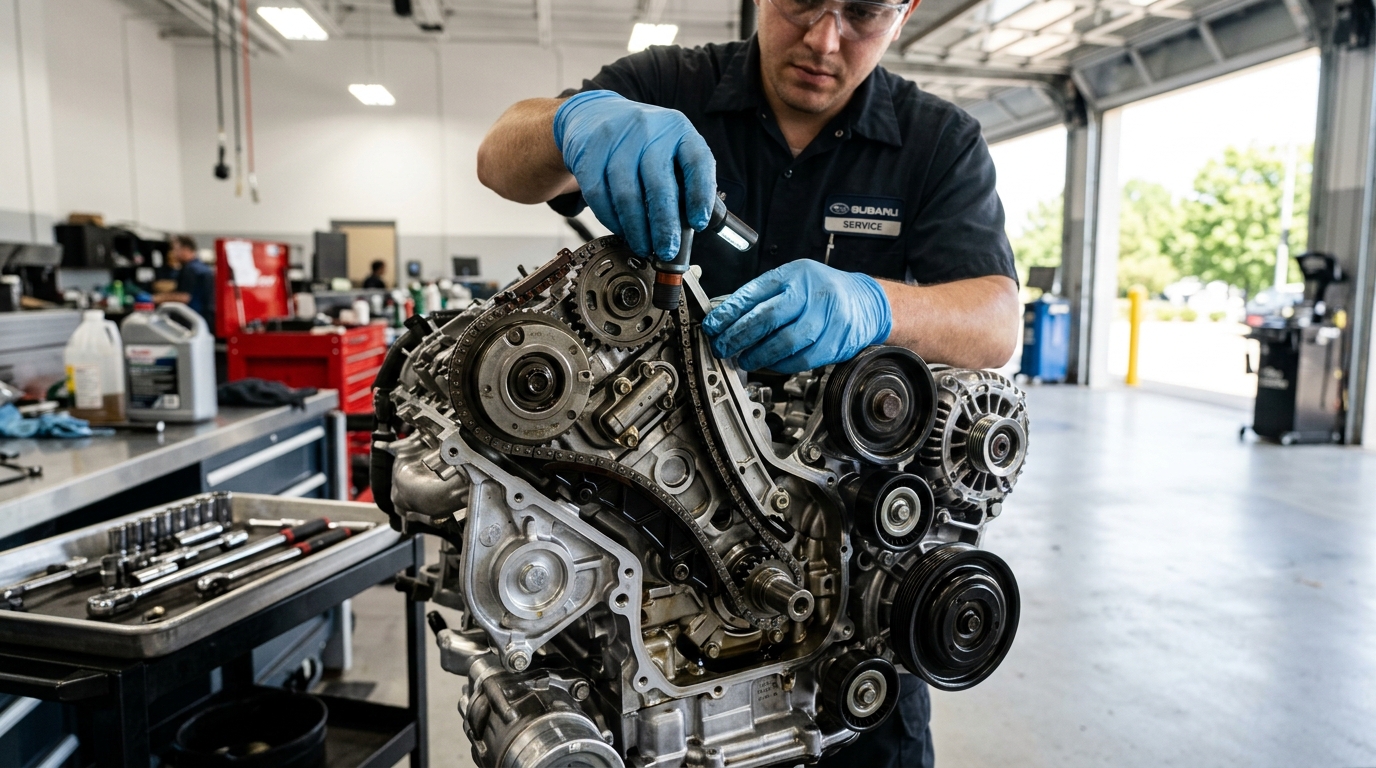
To break down precisely what this means for your vehicle, we sat down for an in-depth interview with Kyle Marcum, Master Technician at Sunset Hills Subaru. With over 7 years of hands-on experience diagnosing, servicing, and rebuilding horizontal Boxer engines—from classic EJ series powerplants to modern FB, FA, and EZ configurations—Kyle shares his expert technical insights on timing maintenance, warning signs, and prevention strategies for Suburban St. Louis drivers.
Meet Master Tech Kyle Marcum: Expert Subaru Engine Care in Sunset Hills
Interviewer: Kyle, thank you for joining us today. You’ve been working on Subaru Boxer engines here in Sunset Hills for 7 years. To kick things off, why is the timing system such a passionate topic among Subaru owners?
Kyle Marcum: Thanks for having me. The Subaru Boxer engine is unique because the cylinders lay horizontally opposed. That means the camshafts on each cylinder head are separated by a significant distance across the engine bay. Whether your Boxer relies on a long, reinforced rubber timing belt or a dual roller timing chain, that component is responsible for perfectly synchronizing the crankshaft with the overhead camshafts. If that synchronization slips even by a few teeth, the engine stops running properly—or worse, sustains severe internal damage. Understanding whether you have a belt or chain dictates your entire maintenance budget over 100,000 miles.
Drivers commuting around Sunset Hills, Kirkwood, and Ladue often ask us if their vehicle needs immediate timing belt service. When customers bring their vehicles to our dealership, whether they are checking out our New Subaru Inventory or coming in for routine maintenance, clarifying their engine family gives them total clarity and complete confidence.
Q: Which Subaru Models Have a Timing Belt Versus a Timing Chain?
Interviewer: Kyle, Subaru transitioned many of its engines from timing belts to timing chains over the past decade and a half. Can you break down which models and model years feature belts versus chains?
Belt-Driven Subaru Models (EJ Engine Family)
Kyle Marcum: The legacy EJ engine architecture relies on a rubber composite timing belt with heavy internal tensile cords. Models requiring belt replacement at 105k miles include:
• Outback & Legacy: 2.5L 4-cylinder models up through 2012.
• Forester: 2.5L 4-cylinder models up through 2010.
• Impreza: 2.5L non-turbo models up through 2011.
• WRX & WRX STI: All EJ25-powered performance models up through 2021 STI.
Chain-Driven Subaru Models (FB / FA / EZ Families)
Beginning around 2011, Subaru introduced modern FB and FA series engines equipped with maintenance-free metal timing chains:
• Forester: 2011+ (FB25 / 1.8T / 2.5L DI)
• Impreza: 2012+ (FB20)
• Outback & Legacy: 2013+ (FB25) & 3.6R 6-cyl (EZ36)
• Crosstrek: All years (2013+) (FB20 / FB25)
• Ascent, WRX (2015+), BRZ: All modern FA20/FA24/FA24T engines.
Key Differences & Model Quick-Reference
If you drive a newer model like those found in our New Subaru Forester Inventory or New Subaru Outback Inventory, your vehicle uses a timing chain designed for the life of the motor. However, if you are shopping pre-owned or maintaining a late 2000s model, keeping track of that 105,000-mile belt deadline is vital to avoid mechanical failure.
Q: What Happens When a Timing Belt Snaps on an Interference Subaru Engine?
Interviewer: Kyle, we often hear the term ‘interference engine’ when discussing timing belts. What does that mean in simple terms, and what actually happens inside a Subaru engine if a timing belt breaks while driving down Interstate 44?
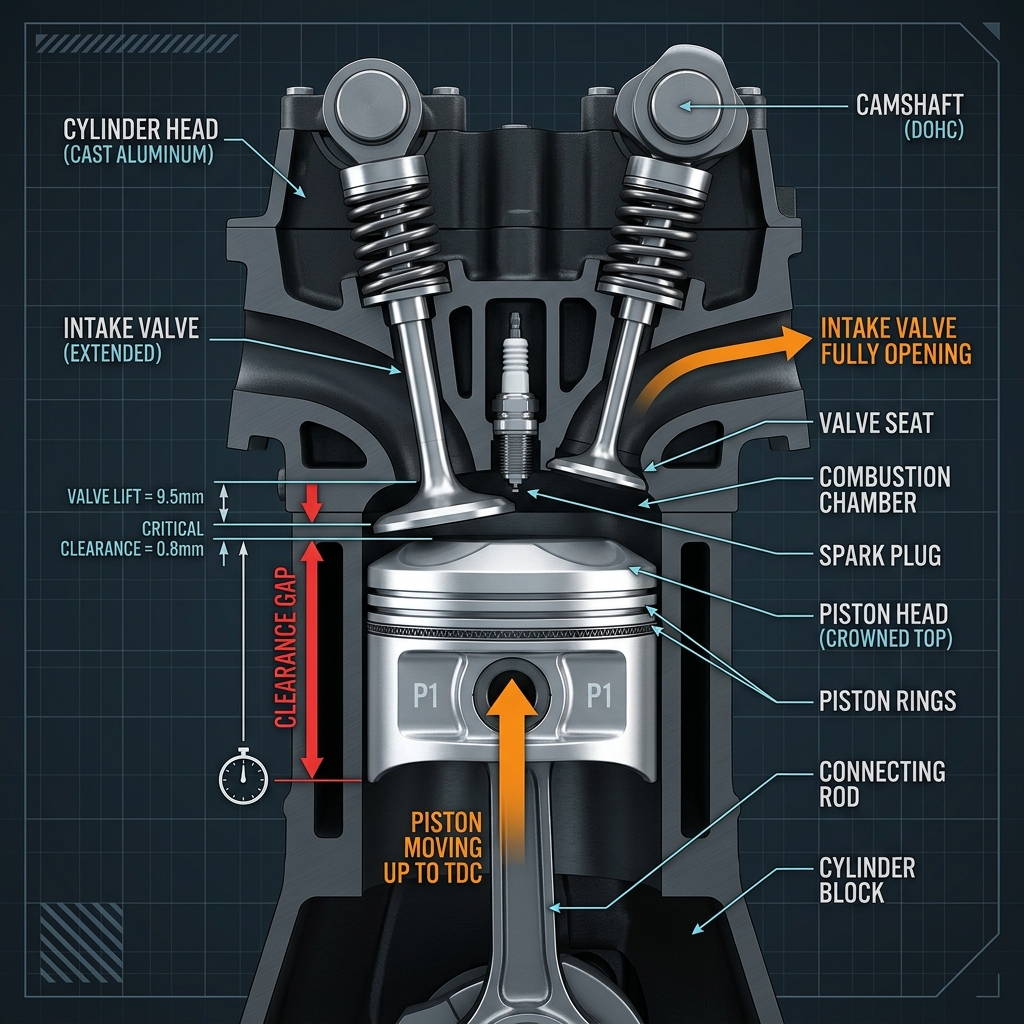
Kyle Marcum: Virtually all modern Subaru engines—both belt and chain driven—are interference design engines. In an interference engine, the physical space where the intake and exhaust valves open overlaps with the space the piston occupies at top-dead-center. The timing belt acts like a precision conductor, ensuring the valves move out of the way before the piston travels upward.
If a timing belt snaps or strips its teeth while the engine is running at 3,000 RPM, the camshafts instantly freeze while the crankshaft keeps spinning. The pistons smash into the open valves at high velocity. The result is bent intake and exhaust valves, damaged piston crowns, cracked valve guides, and often complete cylinder head destruction. Instead of a routine belt service, you are looking at thousands of dollars in engine rebuilding or full engine replacement.
Q: What Does a Bad Timing Belt Sound Like, and Are Timing Chains Louder?
Interviewer: Drivers often ask if they can hear a failing timing belt or chain before catastrophic failure happens. What acoustic warning signs should owners listen for?
Timing Belt Acoustic Symptoms
Kyle Marcum: Timing belts themselves are quiet because they are rubber. However, a failing hydraulic belt tensioner or worn idler pulley produces distinct sounds:
• Ticking or Rapping: A failed tensioner piston tapping against the engine block behind the timing cover.
• High-Pitched Squeak or Grinding: Seizing bearing in the cogged or smooth idler pulleys.
• Slapping Sound: Belt slack hitting the plastic timing cover at cold startup.
Timing Chain Acoustic Symptoms
Timing chains emit a subtle mechanical hum under normal operation. However, excessive noise indicates maintenance issues:
• Metallic Rattling on Cold Start: Oil starvation or low engine oil pressure delaying hydraulic chain tensioner activation.
• Continuous Marbles-in-a-Can Noise: Stretched chain links or worn composite chain guides due to neglected oil change intervals.
Kyle's Expert Advice
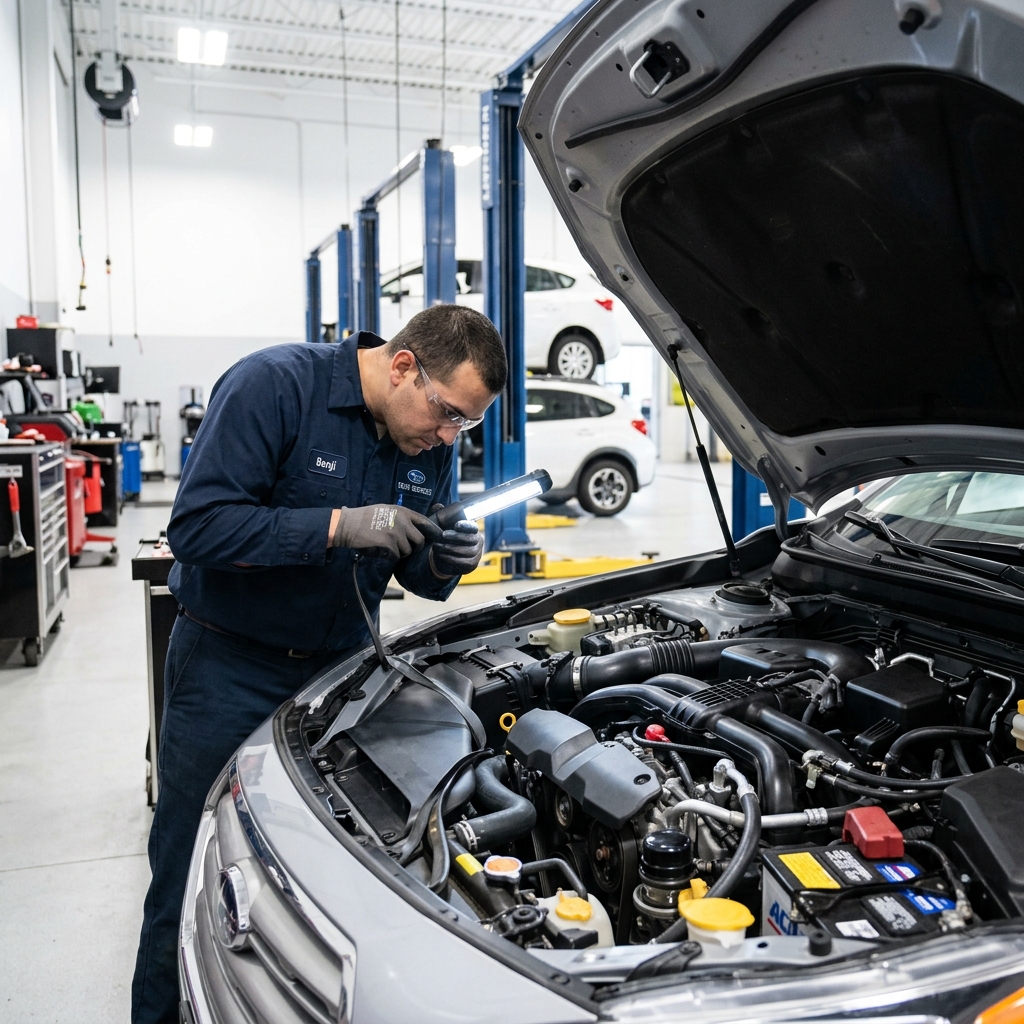
Never ignore unusual noises coming from the front lower section of your engine. For chain engines, keeping fresh oil at proper levels is the single most crucial factor. If you notice strange noises on your vehicle, visit our certified technicians or Call us at (314) 476-9638 to schedule an immediate inspection.
Q: What Should You Check Before Buying a Used Subaru with a Timing Belt?
Interviewer: Many pre-owned vehicle shoppers in St. Louis and Sunset Hills look at older Subaru models known for their longevity. What pre-purchase steps should they take regarding the timing system?
Kyle Marcum: If you are browsing our Used Vehicle Inventory or shopping private sales, check these critical items:
1. Service Records: Verify documented proof that the timing belt, water pump, hydraulic tensioner, and idler pulleys were replaced at or before 105,000 miles (or 7 years).
2. Timing Cover Sticker: Reputable shops place a date and mileage sticker on top of the plastic timing belt cover upon replacement.
3. Visual Inspection: Look for front camshaft or crankshaft oil leaks that could saturate and degrade a rubber belt prematurely.
4. Trade Value Evaluation: If buying a replacement vehicle, consider trading in your vehicle with our tool to Get your value trade toward a certified model.
Q: What Is the Most Difficult Step in DIY Timing Belt Replacement, and What Special Tools Are Needed?
Interviewer: Modern automotive enthusiasts sometimes tackle maintenance at home. Is replacing a Subaru timing belt a viable DIY project, and what makes it challenging?
Kyle Marcum: Replacing a Subaru timing belt is technically demanding due to the horizontal Boxer layout. Here are the toughest steps and special tool requirements:
• Crank Pulley Bolt Torque: Breaking free the factory crank pulley bolt requires over 130+ ft-lbs of breakaway torque. You need a dedicated Subaru Crank Pulley Holder Tool to prevent the engine from rotating while breaking the bolt loose.
• Camshaft Alignment (DOHC Models): Dual Overhead Cam (DOHC) engines like the EJ255/EJ257 have four separate camshaft pulleys. Under valve spring tension, the left-hand camshafts will snap violently out of position if not locked in place with a specialized Cam Lock Tool.
• Precision Tooth Alignment: Lining up the hash marks on the timing belt with the notch marks on the crank sprocket and four cam gears leaves zero room for error. A single tooth misalignment causes misfires or engine damage.
• Genuine OEM Components: Some aftermarket timing kits often suffer early hydraulic tensioner failures. We always recommend genuine factory parts from our parts center to Find Subaru Parts designed for exact OEM tolerances.
Q: How Long Does It Take an Experienced Mechanic to Replace a Subaru Timing Belt?
Interviewer: When a customer schedules a timing belt service at Sunset Hills Subaru, how long is their vehicle typically in the service bay, and what extra parts are serviced simultaneously?
Kyle Marcum: In a professional dealership environment, a full timing belt replacement typically takes 3 to 5 hours of labor depending on whether it is a Single Overhead Cam (SOHC) or Dual Overhead Cam (DOHC) turbo configuration.
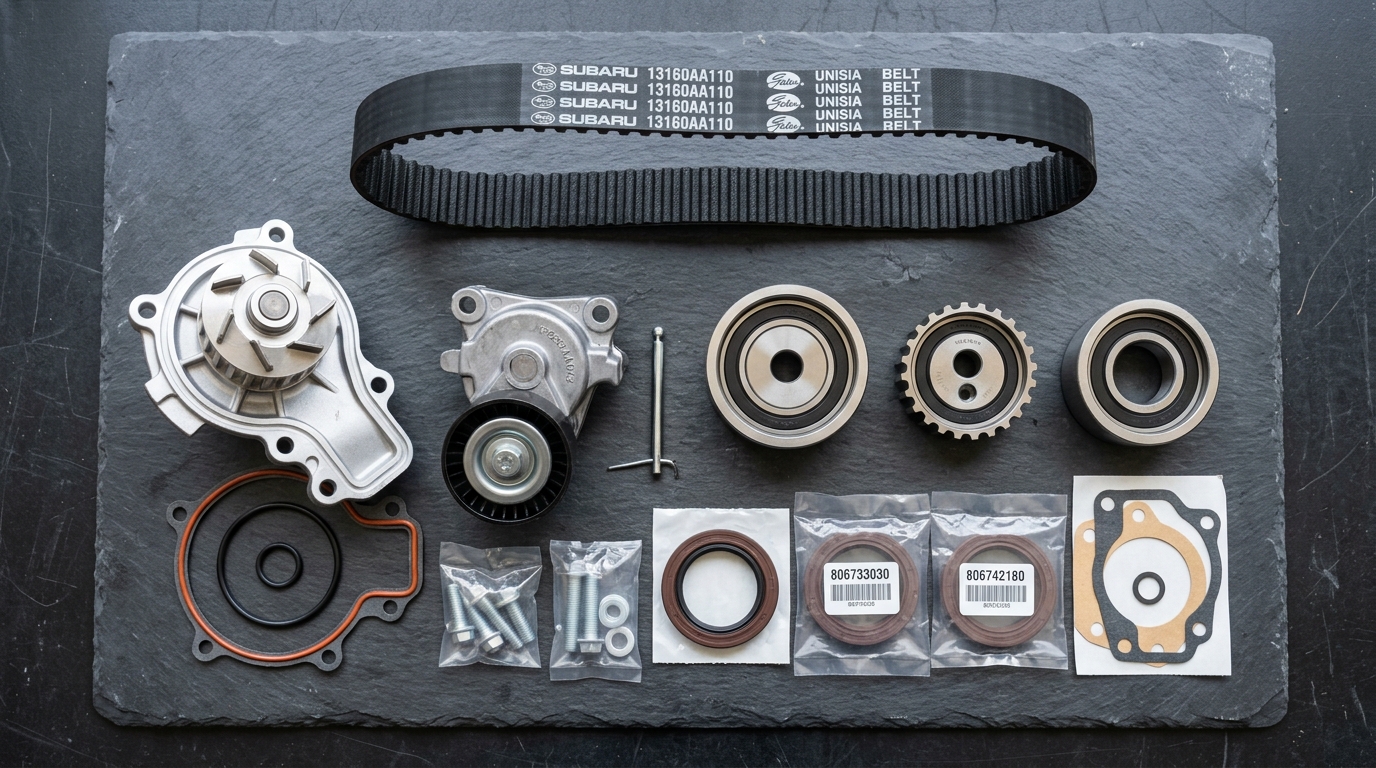
Crucially, replacing only the rubber belt is a mistake. To do the job right and prevent duplicate labor charges later, certified technicians install a complete timing service kit including:
• New Water Pump & Gasket (driven directly by the timing belt)
• New Hydraulic Belt Tensioner Assembly
• New Cogged & Smooth Idler Pulleys
• Fresh Engine Coolant & Thermostat
• Inspection of Front Camshaft & Crankshaft Oil Seals.
Q: How Do I Find a Qualified Mechanic in Sunset Hills, MO, and Does Warranty Cover Timing Service?
Interviewer: What should local St. Louis drivers know about technician qualifications and warranty coverage when scheduling service?
Factory-Trained Certification
Kyle Marcum: Always choose technicians who complete specialized Subaru Academy training. Horizontal Boxer engines require precise torque sequences and tool knowledge that general repair shops may not possess.
Routine Maintenance vs. Warranty
Routine 105,000-mile timing belt replacement is considered wear-and-tear maintenance and is not covered by factory warranties. However, if a timing chain component fails under factory or Certified Pre-Owned (CPO) Powertrain warranty, it is typically covered—provided service records confirm scheduled oil changes.
Local Dealership Advantage
Maintaining clear service records at an authorized center protects your vehicle’s warranty status and resale value. Check our Current Service and Parts Information for current seasonal service offers.
Q: What Questions Should You Ask a Mechanic Before Approving a Subaru Timing Replacement?
Interviewer: Before a vehicle owner signs a repair order, what key questions should they ask their service advisor?
Kyle Marcum: I recommend asking these four essential questions:
1. Are genuine OEM Subaru parts being installed?
2. Does the estimate include replacing the water pump, tensioner, and all idler pulleys?
3. Will camshaft and crankshaft oil seals be inspected and replaced if leaking?
4. What warranty backs the parts and labor for this repair?
At Sunset Hills Subaru, we provide transparent line-item estimates including genuine OEM components, factory coolant replacement, and full parts and labor warranty protection.
Key Takeaways: Maintaining Your Subaru Timing System in Suburban St. Louis
Timing Belt Rule
Replace rubber timing belts every 105,000 miles or 7 years. Replace the water pump, tensioner, and idlers at the same time to protect your interference engine.
Timing Chain Care
Timing chains are built for engine life but require clean engine oil. Maintain regular oil change intervals to keep hydraulic chain tensioners functioning properly.
Expert Support
Trust factory-certified Master Techs like Kyle Marcum at Sunset Hills Subaru for expert diagnostic care, genuine OEM parts, and complete confidence on the road.
Schedule Your Subaru Timing Belt or Chain Inspection at Sunset Hills Subaru
Don’t leave your engine’s reliability to chance. Whether your Subaru is due for its 105,000-mile timing belt replacement or you want our factory-trained Master Technicians to inspect your timing chain system, Sunset Hills Subaru is here to serve drivers across Sunset Hills, Ladue, Kirkwood, and the entire St. Louis area.