Blog / Automotive News

How Subaru Ranks in the Latest Consumer Reports Reliability Scores

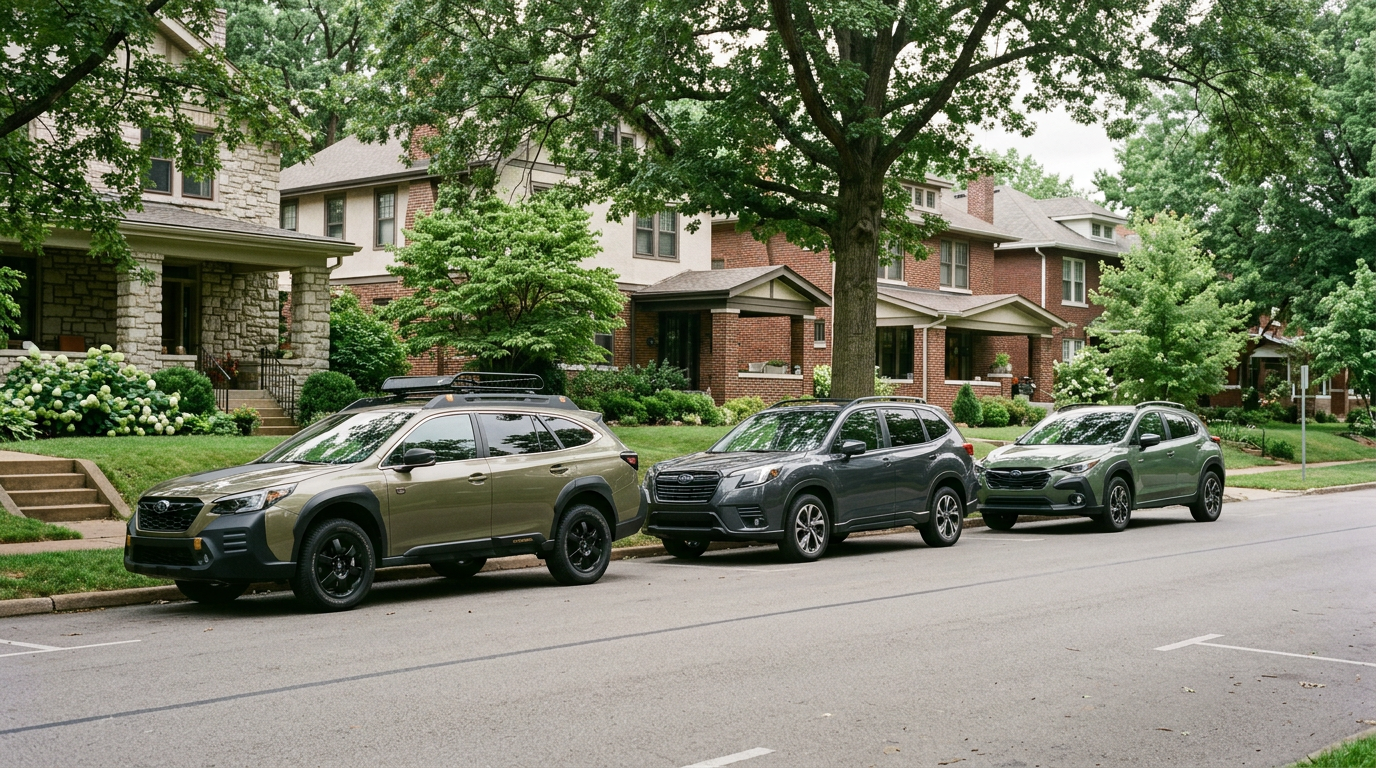
Three Subaru SUVs parked in a row on a quiet, tree-lined suburban street in front of brick houses. (Representative image for illustration purposes only. Actual vehicle may vary based on trim and configuration.)

How Subaru Ranks in the Latest Consumer Reports Reliability Scores

For generations of drivers navigating the changing seasons of the St. Louis metropolitan area, choosing a vehicle is about far more than just finding a comfortable ride. It is about identifying a dependable partner that can tackle icy winter mornings, unpredictable spring downpours, and hot summer road trips without skipping a beat. When savvy car buyers in Sunset Hills and Ladue begin their research, one of the first resources they consult is the annual Consumer Reports automotive brand rankings. Year after year, Subaru emerges as a dominant force in these rigorous evaluations, consistently positioning itself near the very top of both mainstream and luxury automotive manufacturer standings. This sustained excellence is not an accident; it is the direct result of deliberate, focused engineering that prioritizes Symmetrical All-Wheel Drive, robust safety systems, and durable flat-four Boxer engines designed to withstand the test of time.
Consumer Reports evaluates brands by combining predicted reliability ratings, extensive real-world road-test data, owner satisfaction surveys, and crash-test performance from national highway safety organizations. Subaru's holistic approach to manufacturing means that their vehicles do not just excel in a single category; they deliver a balanced, confidence-inspiring experience across the board. St. Louis commutes on Interstate 270 or Watson Road demand a vehicle that remains composed under pressure, behaves predictably in sudden traffic shifts, and holds its value over years of ownership. By examining the empirical data gathered from hundreds of thousands of surveyed motorists, we can see exactly why so many local families trust their daily commutes to a Subaru. If you are ready to experience this legendary engineering firsthand, you can explore our New Subaru Inventory to find the perfect match for your lifestyle.
Furthermore, Subaru's commitment to continuous improvement means that common automotive pain points are addressed swiftly from one model year to the next. Whether you are dropping the kids off at school in Ladue or heading out for a weekend camping trip in the Ozarks, the peace of mind offered by a top-tier Consumer Reports ranking is invaluable. In this comprehensive guide, we will break down the exact scoring metrics that elevate Subaru above its competitors, analyze how individual models perform, and provide you with actionable ownership and maintenance tips to keep your vehicle running like new for decades to come. To speak with our expert local team today, please Call us at (314) 476-9638.

What Is Subaru's Overall Reliability Rating in Consumer Reports?

To understand why Subaru consistently secures its place in the upper echelon of automotive manufacturers, it is essential to look at how Consumer Reports constructs its overall brand score. The final score is a comprehensive roll-up of four key metrics: road-test performance, predicted reliability, owner satisfaction, and safety. In the mainstream automotive class, Subaru consistently battles for the top spot because it rarely displays a weak link in any of these critical pillars. While some competitors might boast high reliability but suffer from clunky, unrefined ride quality, or vice versa, Subaru achieves a masterful synergy that keeps owners exceptionally happy. Our service team at Sunset Hills Subaru hears from local owners every day who marvel at how tight and responsive their vehicles feel even after five or ten years of daily driving. This longevity is reflected in the predicted reliability metrics, which compile real-world feedback from actual vehicle owners who report on everything from minor squeaks and infotainment glitches to major engine and transmission overhauls. Because Subaru utilizes a highly standardized global platform and refined powertrain architectures across its entire lineup, they can implement incremental improvements that elevate the dependability of every single model they build.
Another major factor contributing to Subaru's high Consumer Reports standings is the brand's legendary owner satisfaction score. When surveyed, an overwhelming percentage of Subaru owners state that they would absolutely purchase the exact same vehicle again if given the choice. This brand loyalty is deeply rooted in the utility, visibility, and confidence that Subaru vehicles deliver in adverse weather conditions. The standard Symmetrical All-Wheel Drive system is mechanically integrated directly into the vehicle's architecture, providing balanced power distribution that feels natural and secure. In addition, the high-riding design of models like the Forester and Outback provides an commanding view of the road, reducing driving fatigue during hectic rush hour traffic. When you combine these daily design advantages with low projected long-term maintenance costs and stellar safety ratings, it becomes clear why Subaru's overall brand rating remains incredibly resilient. If you are curious about transitioning into a highly rated vehicle, you can Contact us about financing online in just a few simple steps to streamline your purchasing process.

Which Subaru Model Is Rated as the Most Reliable?
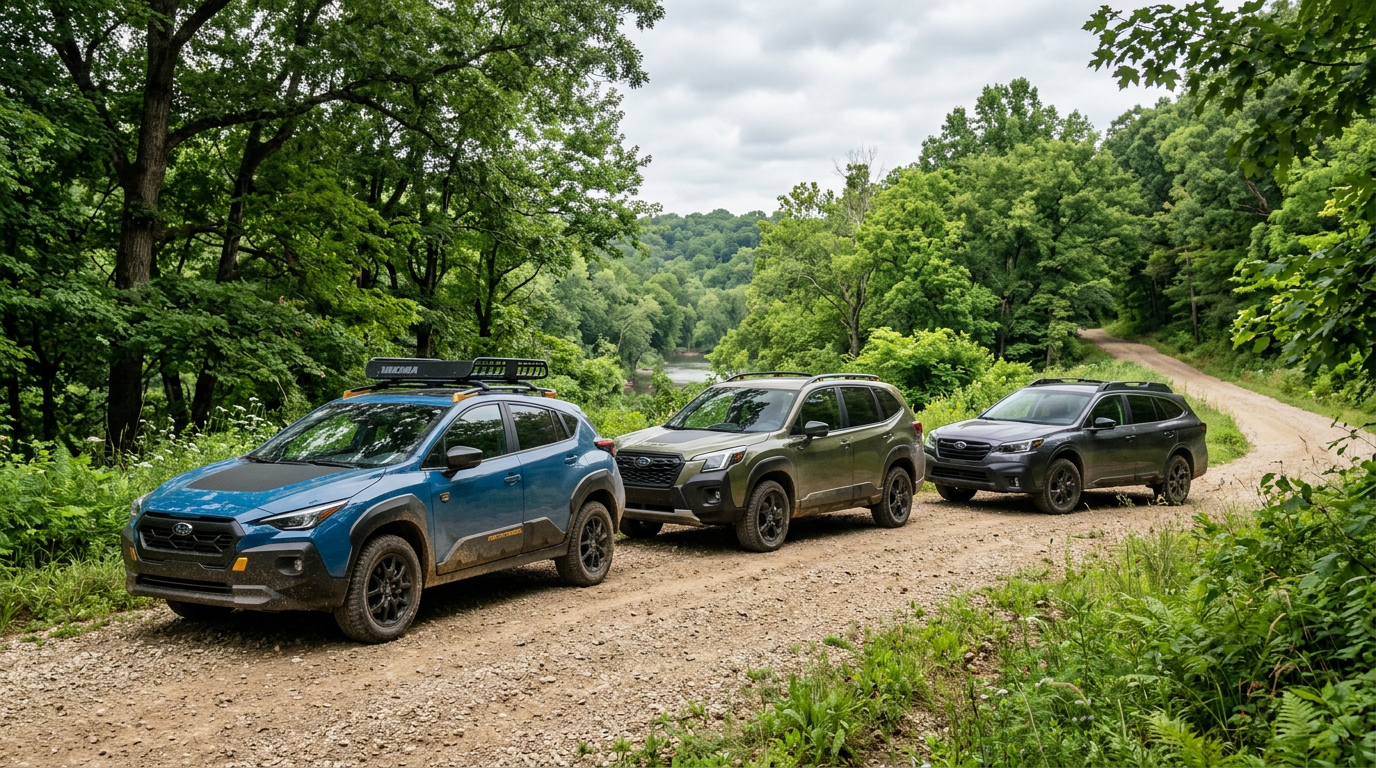
Three Subaru Wilderness SUVs parked on a dirt path surrounded by lush green forest. (Representative image for illustration purposes only. Actual vehicle may vary based on trim and configuration.)

Subaru Crosstrek

The Subaru Crosstrek consistently stands out as one of the most reliable vehicles in the entire automotive market, earning near-perfect predicted reliability scores year after year. Its compact footprint, combined with a robust, trail-tested suspension, makes it incredibly durable. Drivers looking for a smart financial choice are highly encouraged to view our New Subaru Crosstrek Inventory. When evaluating the 2026 Subaru Crosstrek cost and overall value proposition, buyers find that its standard AWD, stellar fuel economy, and slow depreciation make it an exceptionally smart long-term investment.

Subaru Forester

As a classic favorite for St. Louis families, the Forester is celebrated for its outstanding outward visibility, spacious cabin, and reliable daily performance. It features a highly mature drivetrain setup that has been refined over several product generations to eliminate common mechanical bugs. Check out the New Subaru Forester Inventory to find a model that balances utility with a proven history of longevity and low ownership costs, perfect for handling daily commutes and weekend road trips alike.

Subaru Outback

Blending the comfort of a refined station wagon with the rugged capability of a midsize SUV, the Outback is a legendary explorer. Its reliability scores are backed by decades of engineering refinements, making it a staple on Missouri highways. For those who need maximum cargo space and robust towing capabilities, we invite you to browse our New Subaru Outback Inventory to find the ultimate companion for your family's next great outdoor adventure.

How Does Subaru's Reliability Compare to Toyota?

When it comes to long-term dependability, Toyota is often viewed as the gold standard in the automotive industry. However, a head-to-head comparison reveals that Subaru compares favorably with Toyota in several areas that are important to modern drivers. While Toyota builds incredibly durable front-wheel-drive platforms, their all-wheel-drive systems are often secondary add-ons. In contrast, Subaru's Symmetrical All-Wheel Drive is engineered directly into the chassis from day one, resulting in superior weight distribution, better driving dynamics, and more predictable traction in rain, snow, and mud. From a pure reliability rating perspective, both brands consistently rank in the top five of Consumer Reports' annual brand list, often separated by just a few minor points. What makes Subaru particularly attractive is its ability to offer standard all-wheel-drive capability across almost its entire lineup without forcing buyers to pay for expensive premium trim packages. This makes the entry cost for an all-weather vehicle significantly more accessible for buyers in Sunset Hills and the surrounding St. Louis areas.
When comparing long-term ownership costs, both brands excel due to their slow rates of depreciation and highly durable mechanical components. Subaru's flat-four Boxer engine layout naturally cancels out primary vibrations, which reduces wear and tear on engine mounts and surrounding accessories over time. Toyota's conventional inline engines are also highly reliable, but they lack the low center of gravity that gives Subaru vehicles their agile, car-like handling characteristics. Ultimately, choosing between the two often comes down to your driving lifestyle. If you value standard all-weather capability, superior ground clearance, and an active, outdoors-oriented design, Subaru offers a compelling package that Toyota's mainstream front-wheel-drive models simply cannot replicate at the same price point. For drivers who want a sporty, high-performance option, our New Subaru WRX Inventory provides a level of engagement and legendary rally-bred reliability that is hard to find anywhere else in the market.
Feature ComparisonSubaru VehiclesToyota Mainstream Competitors
Standard AWDYes (Symmetrical AWD on almost all models)No (Typically an expensive optional upgrade)
Engine DesignHorizontal Boxer (Low center of gravity)Traditional Inline-4 / V6 (Higher center of gravity)
Safety SuiteStandard EyeSight Driver Assist TechnologyToyota Safety Sense (Varies by model year)
Consumer Reports RankConsistently in the Top 5 overallConsistently in the Top 5 overall

What Are the Most Common Reliability Issues Reported for Subarus?
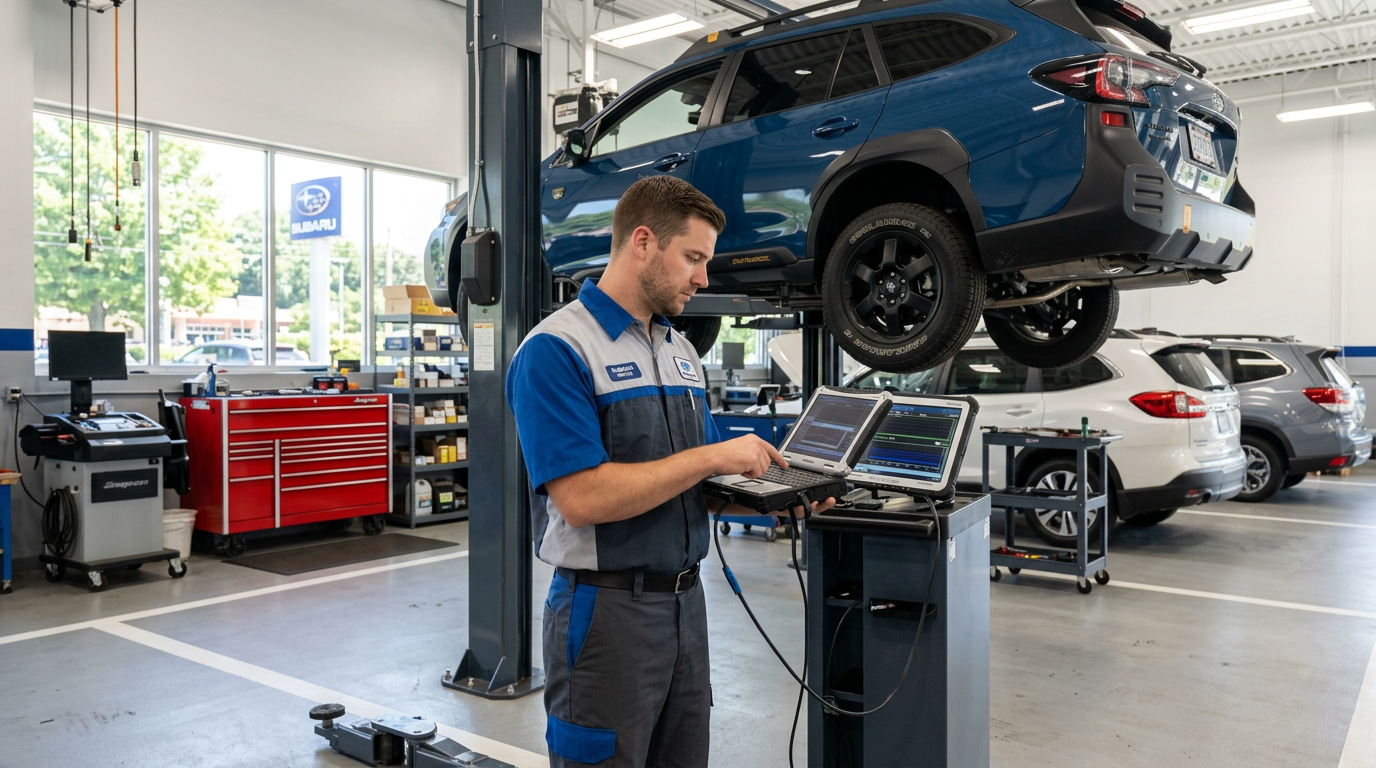
A mechanic uses a diagnostic laptop in a clean Subaru service bay with a blue vehicle on a lift. (Representative image for illustration purposes only. Actual vehicle may vary based on trim and configuration.)
To build true authority as a trusted community partner, we believe in absolute transparency. No car brand is entirely perfect, and over the years, Subaru has had specific areas that required engineering updates. Historically, older Subaru models from the early 2000s were known for head gasket wear, a concern that arose due to the unique design of early single-overhead-cam Boxer engines. However, modern Subaru engineering completely resolved this issue over a decade ago. Today's models utilize highly advanced multi-layer steel head gaskets and completely redesigned cooling paths, making head gasket failures exceedingly rare on any modern Subaru built within the last ten to fifteen years.
In more recent Consumer Reports data, minor concerns have occasionally been raised regarding windshield durability under extreme temperature changes, as well as early versions of the Subaru Lineartronic Continuously Variable Transmission (CVT) experiencing minor operational hesitations. Subaru addressed these concerns head-on by updating windshield glass compositions and extending CVT warranty coverages on older models to give buyers absolute peace of mind. Additionally, our highly trained technicians are experts at performing preventative care to ensure these components remain in peak condition. If you ever want to check the health of your vehicle, you can easily Schedule Service and Diagnostics with our specialized team to keep your ride running smoothly.

Are Older Used Subaru Models Still Considered Reliable?

For value-minded buyers in Sunset Hills and Ladue, the pre-owned market offers an incredible opportunity to own an all-wheel-drive vehicle at a highly accessible price point. A common question we receive is whether an older, high-mileage Subaru is still a safe investment. The short answer is yes—provided the vehicle has a documented history of proper care and maintenance. Subaru Boxer engines are uniquely over-engineered, meaning their block designs and internal components are built to handle stress far exceeding typical daily driving conditions. It is incredibly common to see well-maintained Subaru models comfortably crossing the 150,000-mile and even 200,000-mile thresholds while still operating on their original engine and transmission components. This remarkable longevity is why Subaru vehicles maintain some of the highest residual values in the industry. When shopping for a pre-owned vehicle, the key is verifying that previous owners adhered to recommended fluid changes and mileage-based inspections.
At Sunset Hills Subaru, we take the guesswork out of buying a pre-owned vehicle. Every single used car on our lot undergoes a rigorous multi-point safety and mechanical inspection by our factory-certified technicians. We check fluid conditions, brake wear, suspension bushings, and engine diagnostics to guarantee that every vehicle meets our strict standards for quality and safety. We also provide comprehensive history reports so you can buy with total confidence. Whether you are searching for a reliable commuter car for a high school student or a rugged weekend explorer, our pre-owned inventory has something to fit your needs. To view our hand-picked selection of high-quality pre-owned models, feel free to browse our Used Vehicle Inventory today. If you have a vehicle you are looking to replace, you can also Get your value trade online to see how much equity you can apply toward your next purchase.

The Maintenance Milestones That Keep Your Boxer Engine Running Forever
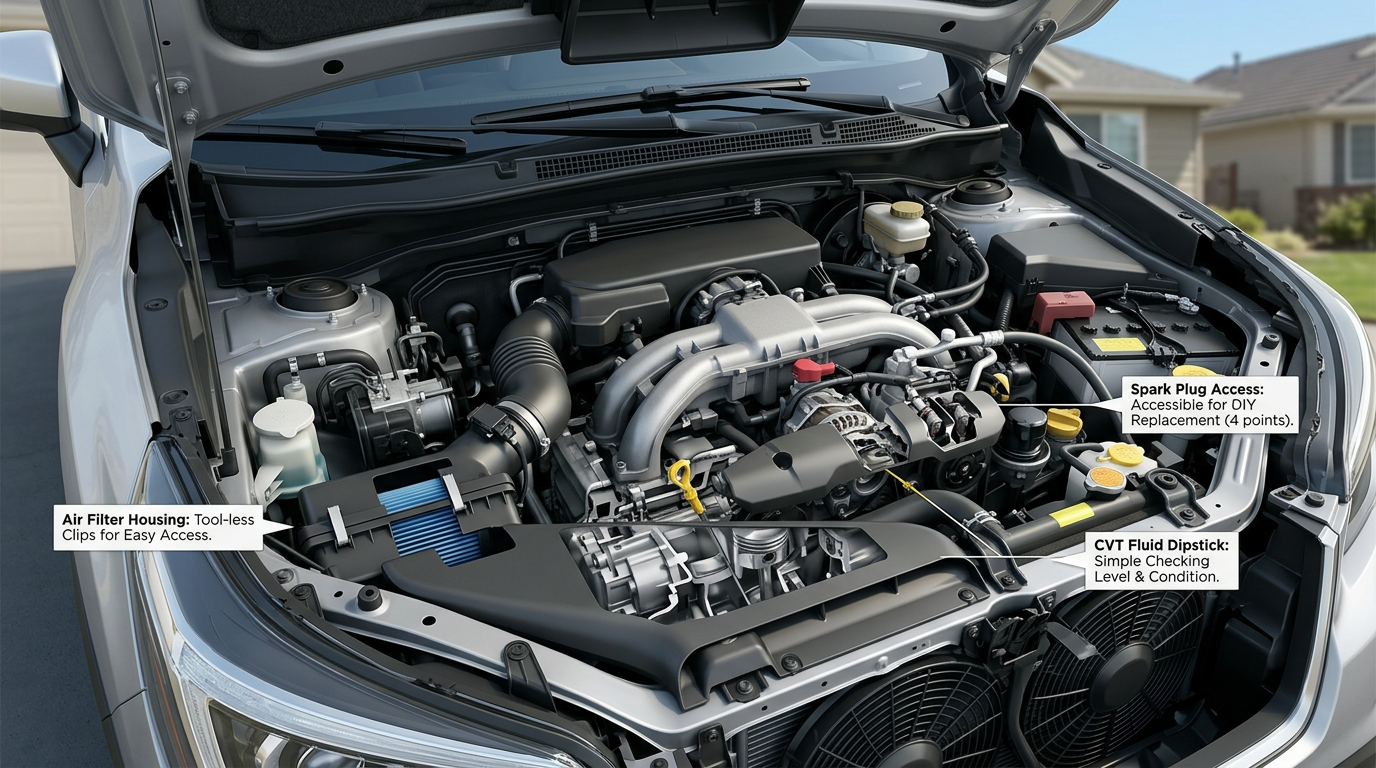
Labeled diagram of a car engine bay highlighting diy maintenance points. (Representative image for illustration purposes only. Actual vehicle may vary based on trim and configuration.)

Boxer Spark Plugs

Because the Boxer engine has a unique horizontal layout, replacing spark plugs requires specialized expertise. Subaru recommends replacing spark plugs every 60,000 miles to maintain optimal fuel efficiency and prevent ignition misfires. If you need OEM parts or specialized tools, you can easily Find Subaru Parts through our dedicated online ordering system.

CVT Fluid Care

While some manufacturers claim their transmission fluid is 'lifetime,' our experts recommend inspecting the fluid every 30,000 miles. If you frequently tow trailers or navigate hilly terrain, replacing the CVT fluid between 60,000 and 100,000 miles is highly beneficial to ensure smooth, efficient belt operation and prevent premature wear on critical internal components.

Air Filter Intervals

To ensure your cabin remains free of pollen and your engine breathes cleanly, replace both cabin and engine air filters every 12,000 to 15,000 miles. Keeping these components fresh is a cost-effective way to preserve cabin comfort and fuel economy. Check our Current Service and Parts Information for service offers on filter replacements.

Safety First: Which Vehicle Has a Higher Safety Rating?

For safety-conscious buyers, Subaru's performance in national crash tests and active safety evaluations is a primary reason to choose the brand. Subaru's standard EyeSight Driver Assist Technology acts like an extra set of eyes on the road, utilizing dual color cameras mounted near the rearview mirror to monitor traffic, optimize cruise control, and warn you if you sway outside your lane. This advanced system can even apply full braking force in emergency situations, significantly reducing the severity of front-end collisions. This devotion to safety is reflected in the Insurance Institute for Highway Safety (IIHS) ratings, where almost every Subaru model consistently earns the coveted Top Safety Pick+ award. When compared to major competitors, Subaru's safety ratings frequently sit at the very top of the industry. The structural design of the Subaru Global Platform uses high-tensile steel to absorb and redirect impact energy away from the passenger cabin in the event of an unavoidable collision.
For larger families considering a three-row SUV, capability and stability are paramount. A common question among buyers researching the spacious Subaru Ascent is: "Is trailer stability assist standard on the Ascent?" The answer is a resounding yes. Every Ascent model comes equipped with Trailer Stability Assist as a standard feature, which works in harmony with the Vehicle Dynamics Control system to detect trailer sway and apply braking force to individual wheels to stabilize the vehicle. This level of standard safety engineering ensures that whether you are towing a camper through the rolling hills of Missouri or simply navigating a sudden storm on the highway, your vehicle remains completely under your control. To see our family-sized SUV options, feel free to explore our New Subaru Ascent Inventory and find a model that delivers the ultimate blend of safety, space, and dependable performance.

Is the Subaru Crosstrek Wilderness Worth the Extra Cost?
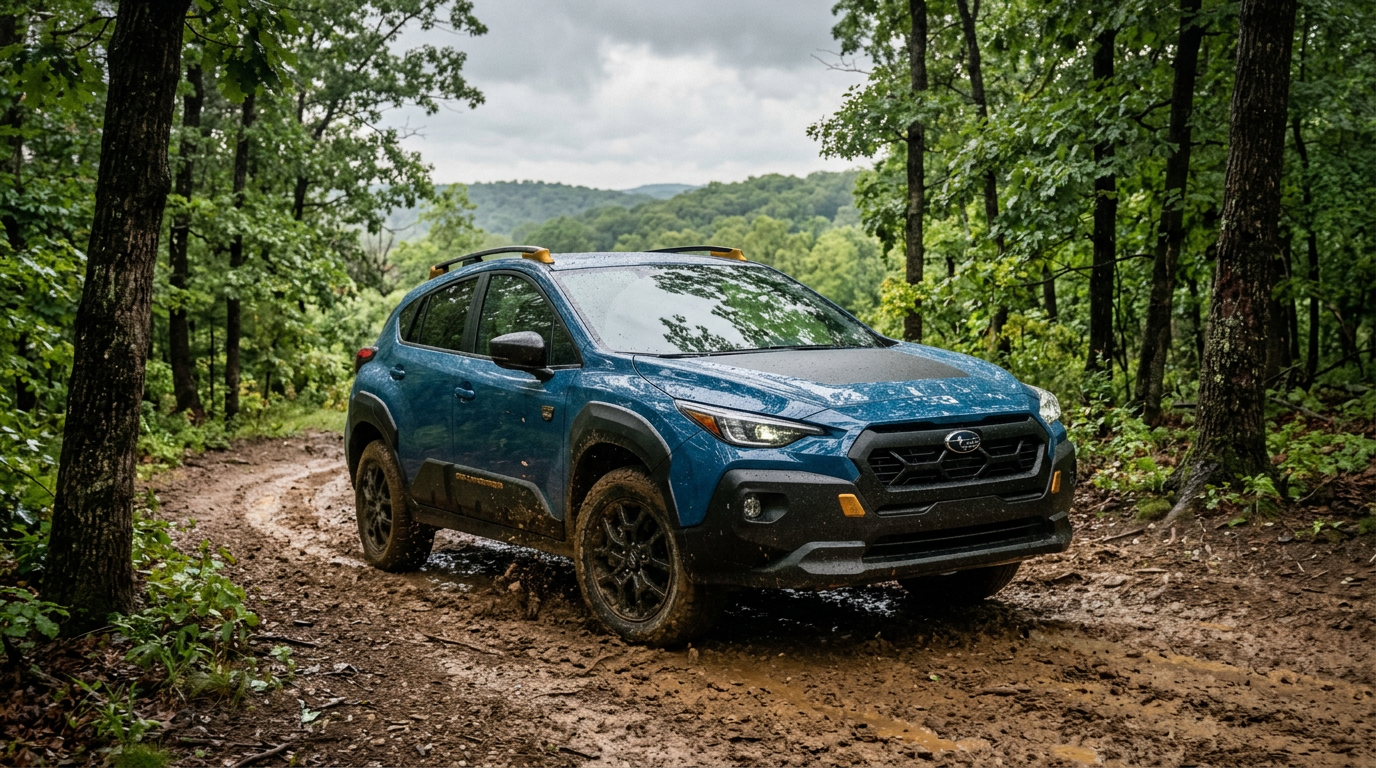
A blue Subaru Crosstrek Wilderness driving through a muddy forest trail. (Representative image for illustration purposes only. Actual vehicle may vary based on trim and configuration.)

Crosstrek Premium

Serving as a highly popular and well-equipped trim level, the Crosstrek Premium offers standard Symmetrical AWD, a comfortable interior, and advanced driver assistance features at an well-priced entry price. It is the perfect choice for daily commuters looking to minimize fuel costs while retaining all-weather capability.

Crosstrek Sport

Stepping up to the Crosstrek Sport introduces a more powerful 2.5-liter Boxer engine, unique exterior styling cues, and specialized dual-function X-MODE for enhanced traction in deep snow and mud. When examining the price difference between the Crosstrek Premium and Sport trims, the extra performance is well worth the investment.

Crosstrek Wilderness

For ultimate outdoor enthusiasts, the Wilderness trim elevates ground clearance to 9.3 inches, adds heavy-duty all-terrain tires, provides a stronger roof rack, and features a retuned transmission for low-speed climbing. If your lifestyle involves camping, kayaking, or light off-roading, the Wilderness is absolutely worth the higher price.

Is There a Hybrid Option Available for the Subaru Forester?

As environmental awareness grows and fuel efficiency becomes an increasingly important consideration for daily drivers, many shoppers inquire about electrified options within the Subaru lineup. Specifically, buyers often ask: "Is there a hybrid option available for the Subaru Forester?" The answer is an exciting look into the brand's immediate future. Subaru is actively expanding its eco-friendly offerings, and a highly anticipated Forester Hybrid is slated to join the lineup, combining the spaciousness and all-weather capability of the legendary Forester with next-generation fuel-efficient technology. This upcoming hybrid powertrain is engineered to integrate seamlessly with Subaru's standard Symmetrical All-Wheel Drive, ensuring that you do not have to sacrifice off-road capability or winter traction in order to achieve excellent fuel economy. For families in Sunset Hills who face daily commutes on busy corridors like Watson Road, the hybrid option will deliver significant fuel savings during stop-and-go traffic while maintaining the high-riding comfort and safety that the Forester is known for.
For drivers who want to go fully electric today, Subaru offers the stunning, all-electric Solterra. Developed with Subaru's legendary rugged DNA, the Solterra delivers standard all-wheel drive, generous ground clearance, and an advanced suite of active safety technologies, all without burning a single drop of fuel. You can explore this groundbreaking model in detail by browsing our New Subaru Solterra Inventory. Whether you decide to wait for the upcoming Forester Hybrid, choose a highly efficient traditional gas-powered Forester, or transition to a fully electric lifestyle with the Solterra, our team is here to guide you through the process. We can help you compare fuel savings, analyze charging infrastructure options, and find the vehicle that perfectly aligns with your lifestyle and environmental goals. Feel free to contact our showroom today to learn more about upcoming model release dates.

Subaru Owner Perks: Is Roadside Assistance Included with a New Subaru?

A family of three stands next to their blue SUV on the shoulder of a scenic highway. (Representative image for illustration purposes only. Actual vehicle may vary based on trim and configuration.)
Purchasing a new vehicle is a major decision, and Subaru ensures that your investment is protected from the moment you drive off our lot. A common question from new buyers is: "Is roadside assistance included with a new Subaru?" Yes, it absolutely is. Every new Subaru comes with standard 24/7 Roadside Assistance for 3 years or 36,000 miles, whichever comes first. This means that whether you encounter a flat tire, a dead battery, or need emergency towing, professional help is just a quick phone call away, providing you and your family with complete peace of mind during any journey.
This roadside coverage works in perfect harmony with Subaru's standard New Vehicle Limited Warranty, which covers major components for 3 years or 36,000 miles, and the Powertrain Limited Warranty, which protects your engine and drivetrain components for 5 years or 60,000 miles. When you combine these manufacturer protections with the high reliability rankings awarded by Consumer Reports, it is easy to see why Subaru is considered one of the safest and most secure brands on the road today. At Sunset Hills Subaru, we are dedicated to supporting you throughout your entire ownership journey.

Experience Award-Winning Reliability at Sunset Hills Subaru

From the daily commute through Sunset Hills and Ladue to rugged weekend adventures across Missouri, Subaru vehicles are engineered to deliver unmatched reliability, safety, and capability. The outstanding ratings awarded by Consumer Reports are a reflection of Subaru's commitment to building vehicles that truly stand the test of time. At Sunset Hills Subaru, we are incredibly proud to serve as your local automotive resource, offering an exceptional selection of new and pre-owned models designed to elevate your driving experience.
We invite you to visit our beautiful showroom today to experience this legendary dependability firsthand. Browse our extensive lineup, take your favorite model for a test drive, and speak with our friendly, knowledgeable team. You can easily find us at 10100 Watson Rd, Sunset Hills, MO 63127. For step-by-step navigation instructions, feel free to Get Directions to Sunset Hills Subaru or Call us at (314) 476-9638 to speak with a specialist today. Let us help you find the perfect, reliable companion for all your journeys ahead.
Posted in:

Recommended Posts

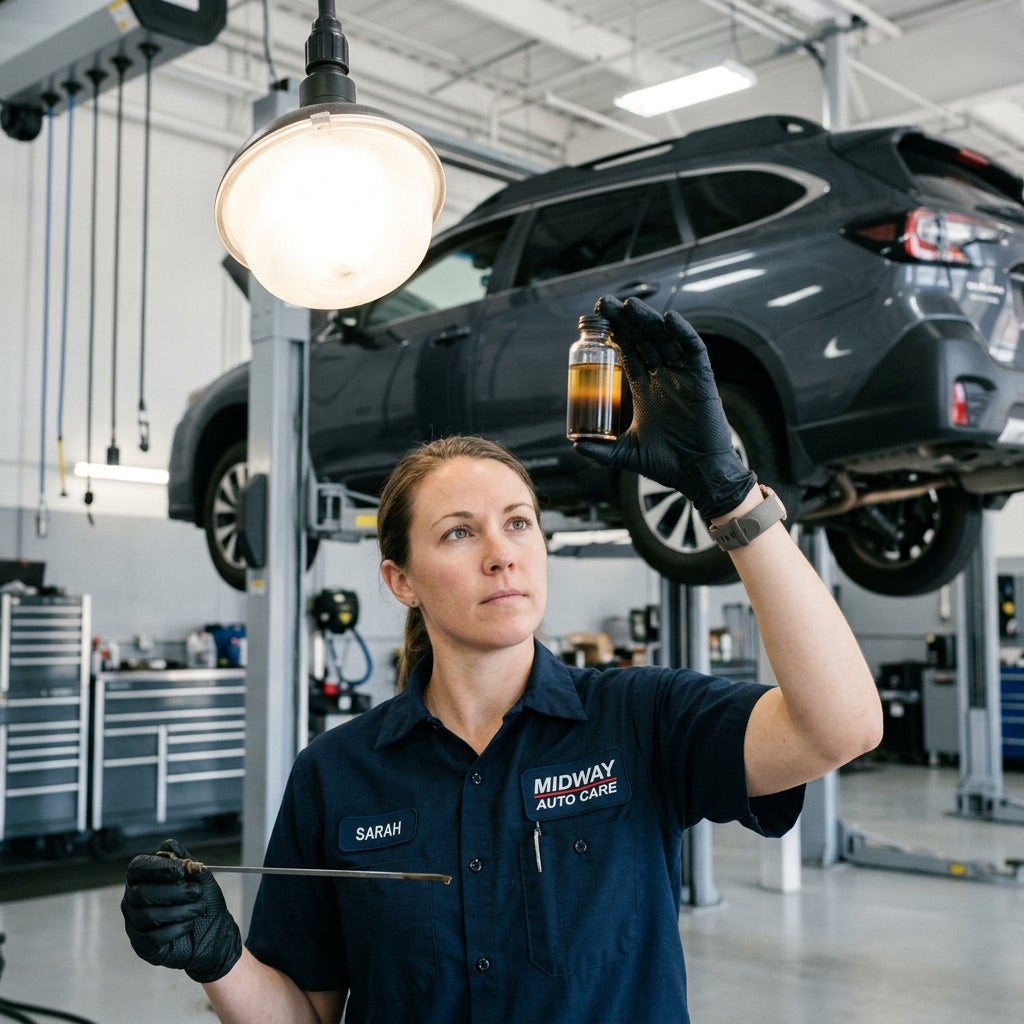
Female mechanic in a workshop inspects a glass sample jar showing fluid separation while holding a dipstick. (Representative image for illustration purposes only. Actual vehicle may vary based on trim and configuration.)

When Should You Replace Subaru CVT Fluid? Service Advisor Bottom-Line Answer

.hrizn-visual-root a { color: #566BA1; } .hrizn-visual-root [data-hrizn-block="ButtonBlock"] a { color: inherit; } .hrizn-visual-root [data-hrizn-block="TextBlock"] p { margin: 0 0 1em; } .hrizn-visual-root [data-hrizn-block="TextBlock"] p:last-child { margin-bottom: 0; } @media (max-width: 640px) { .hrizn-visual-root [data-hrizn-block="ButtonBlock"] { text-align: center !important; } .hrizn-visual-root [data-hrizn-block="ButtonBlock"] a { display: block; width: 100%; max-width: 320px; margin-left: auto; margin-right: auto; box-sizing: border-box; } .hrizn-visual-root [data-hrizn-block="ButtonBlock"] + [data-hrizn-block="ButtonBlock"] a { margin-top: 8px; } } @media (max-width: 640px) { #hrizn-cols-1 { flex-direction: column !important; align-items: stretch !important; } #hrizn-cols-1 > .hrizn-col { flex: 1 1 100% !important; width: 100% !important; } } @media (max-width: 640px) { #hrizn-cols-2 { flex-direction: column !important; align-items: stretch !important; } #hrizn-cols-2 > .hrizn-col { flex: 1 1 100% !important; width: 100% !important; } } @media (max-width: 640px) { #hrizn-3cols-1 { flex-direction: column !important; align-items: stretch !important; } #hrizn-3cols-1 > .hrizn-col { flex: 1 1 100% !important; width: 100% !important; } } @media (max-width: 640px) { #hrizn-cols-3 { flex-direction: column !important; align-items: stretch !important; } #hrizn-cols-3 > .hrizn-col { flex: 1 1 100% !important; width: 100% !important; } } @media (max-width: 640px) { #hrizn-3cols-2 { flex-direction: column !important; align-items: stretch !important; } #hrizn-3cols-2 > .hrizn-col { flex: 1 1 100% !important; width: 100% !important; } } #hrizn-table-tbl-7 table{width:100%;table-layout:auto;border-collapse:collapse;font-family:'Open Sans',sans-serif;font-size:0.9rem} #hrizn-table-tbl-7 th,#hrizn-table-tbl-7 td{border:1px solid #e0e4ed;padding:8px;color:#595959;word-break:break-word;overflow-wrap:break-word} #hrizn-table-tbl-7 th{background:#fafafa;color:#1a1a22;font-weight:700;font-size:14px;text-align:left;vertical-align:middle;padding:10px} #hrizn-table-tbl-7 tr:nth-child(even) td{background:rgba(86,107,161,0.04)} #hrizn-table-tbl-7 .tableWrapper{overflow-x:hidden} @media (max-width: 640px) { #hrizn-cols-4 { flex-direction: column !important; align-items: stretch !important; } #hrizn-cols-4 > .hrizn-col { flex: 1 1 100% !important; width: 100% !important; } } @media (max-width: 640px) { #hrizn-cols-5 { flex-direction: column !important; align-items: stretch !important; } #hrizn-cols-5 > .hrizn-col { flex: 1 1 100% !important; width: 100% !important; } } @media (max-width: 640px) { #hrizn-3cols-3 { flex-direction: column !important; align-items: stretch !important; } #hrizn-3cols-3 > .hrizn-col { flex: 1 1 100% !important; width: 100% !important; } } @media (max-width: 640px) { #hrizn-cols-6 { flex-direction: column !important; align-items: stretch !important; } #hrizn-cols-6 > .hrizn-col { flex: 1 1 100% !important; width: 100% !important; } } If you open your Subaru owner's manual warranty and maintenance booklet, you will likely see a curious entry under transmission maintenance: inspect fluid every 30,000 miles, replace under severe driving conditions, otherwise listed as lifetime fluid. As a professional service advisor working directly on the service drive in Sunset Hills, MO, my practical advice for Subaru owners in the St. Louis metropolitan area is straightforward: consider verifying the 'lifetime fluid' guidance in your owner's manual if you plan on keeping your Outback, Forester, Crosstrek, or Ascent beyond its warranty period. In our regional driving environment—where winter sub-zero snaps transition rapidly into 95-degree summer days with thick humidity—the real-world strain on a Continuously Variable Transmission (CVT) is substantial. Heavy stop-and-go driving along Watson Road or I-270, towing recreational gear, climbing Ozark hills, or tackling snow-slicked commutes all qualify under Subaru's official 'severe driving' definition. Under these conditions, Subaru explicitly recommends changing the Lineartronic CVTF fluid every 30,000 to 60,000 miles. For suburban commuters who experience light highway cruising with minimal heavy loads, stretching fluid service to 60,000 to 100,000 miles is technically feasible, but waiting longer than 100,000 miles significantly elevates the risk of mechanical slippage, valve body solenoid failure, pulley scoring, and total transmission breakdown. Fresh fluid acts as both a lubricant and a hydraulic power transfer medium; neglecting it is the primary root cause of major transmission claims seen in independent and dealer bays across Missouri. Meet Lucas Scroggs: 3 Years of St. Louis Area Service Experience Hello, I am Lucas Scroggs, Service Advisor at Sunset Hills Subaru. Over my three years serving drivers throughout Chesterfield, Ladue, Maryland Heights, and South County, I have personally checked in thousands of Subaru vehicles for routine oil changes, major interval services, and mechanical repair diagnostics. My daily work revolves around analyzing repair orders, consulting with our master-certified Subaru technicians, and speaking candidly with vehicle owners about maintenance vs. repair expenses. I live and work right here in St. Louis, so I see firsthand how our road conditions, quick temperature swings, and highway congestion impact vehicle longevity. My primary goal on the service drive is transparency. When a client brings in a 2018 Outback with 65,000 miles, they often ask why we recommend a CVT drain and fill when their original owner's manual wasn't aggressive about it. I explain the difference between paper maintenance schedules written by corporate marketing teams and real-world mechanical wear seen on local service lifts. Proactive maintenance preserves driving feel, protects factory warranties, and can help reduce long-term repair costs down the line. Why Subaru's 'Lifetime Fluid' Claim Requires Real-World Context To understand why transmission fluid degrades, you must look at how Subaru Lineartronic CVTs operate. Unlike a traditional automatic transmission with fixed planetary gears, a CVT utilizes a heavy-duty steel chain belt stretched across two hydraulically adjusted conical pulleys. By continuously varying the width of these pulleys, the transmission delivers infinite gear ratios for maximum engine efficiency. Because this metal-on-metal interface relies heavily on friction and hydraulic clamping force, Subaru CVTF fluid contains specialized friction modifiers, anti-foaming agents, and thermal stabilizers. As temperature spikes during heavy summer traffic or extended highway towing, these chemical additives break down through thermal oxidation. Shear forces between the steel belt and pulley faces gradually chop down fluid viscosity. Why does Subaru label it 'lifetime' in standard documentation? In manufacturer terms, 'lifetime' generally refers to the initial vehicle warranty period (often 5 years or 60,000 miles to 100,000 miles under extended factory coverage). However, if your personal definition of 'lifetime' means driving your Forester or Outback to 150,000 or 200,000 miles, leaving the original fluid inside is a high-risk gamble. Furthermore, standard driving conditions rarely exist around St. Louis. Short trips under 5 miles, cold winter starts, summer idling with full air conditioning, and driving on salted roads all trigger Subaru's official 'Severe Driving Condition' criteria. In these instances, fluid replacement is explicit, not optional. Lucas's Service Bay Perspective: a Transmission Replacement vs. a Fluid Drain and Fill "I see it every month in our service lanes: a customer comes in with a shuddering transmission at 110,000 miles having never serviced their CVT fluid. By that time, hydraulic control valves are clogged with microscopic wear debris and internal pulleys are scored. At that point, a simple fluid change won't reverse structural wear—the only option is a complete replacement assembly, which can cost anywhere from $7,000 to $8,500 with labor. Contrast that with a preventive CVT fluid drain and fill, which costs around $300 to $400 depending on the exact model and fluid spec. Performing two or three drain-and-fill services over 120,000 miles costs under $1,000 combined—a massive difference compared to an out-of-warranty transmission replacement. Preventive care isn't an upsell; it's basic financial protection for your investment." — Lucas Scroggs, Service Advisor Schedule CVT Fluid Inspection or Service What Key Maintenance Items Are Required at the 60,000-Mile Service for a Subaru? Fluid Inspections & Services At 60,000 miles, Subaru schedules its major service benchmark. Key items include: • CVT Fluid Service: Inspection for thermal discoloration, varnish smell, or metal particle contamination; recommended drain-and-fill for regional drivers. • Front & Rear Differential Fluids: Replacing gear oil (75W-90) to remove metallic filings generated by AWD clutch packs and differential ring gears. • Brake Fluid Flush: Replacing moisture-absorbed brake fluid to protect internal ABS solenoids. Our technicians utilize specialized Subaru Select Monitor diagnostic tools during the 60k service to verify transmission fluid temperature readouts and engine timing control before releasing the vehicle back to the customer. Engine & Mechanical Tune-Up Essential tune-up elements include: • Spark Plugs: Replacement of long-life Iridium spark plugs (crucial on Boxer engines to maintain optimal air-fuel efficiency). • Engine Air & Cabin Filters: Eliminates intake airflow restrictions and keeps passenger air fresh. • Full Vehicle Inspection: Steering rack boots, suspension bushings, wheel bearings, and drive belt condition check. How Subaru Symmetrical AWD Impacts Tire Wear and Differential Fluid Service Subaru's full-time Symmetrical All-Wheel Drive (AWD) is world-renowned for winter traction and driving stability, but it places unique mechanical demands on your drivetrain. Unlike slip-and-grip reactive AWD systems that only send power rearward when front wheels slip, Subaru systems send power to all four wheels continuously. Because all four wheels are linked through front, center (multi-plate transfer clutch inside the CVT), and rear differentials, tire circumference variance is critical. If tire tread depth varies by more than 2/32 of an inch between tires, the rotational speed difference forces the center clutch pack inside the CVT to slip continuously. This generates excess friction heat, rapidly degrading the CVT fluid and causing premature wear on the transfer clutch plates. To prevent AWD strain and fluid thermal breakdown: 1. Rotate Tires Every 6,000 Miles: Keeping tread wear completely even across all four positions minimizes center differential friction. 2. Service Front & Rear Differential Gear Oil: Over time, gear shearing in differential assemblies breaks down high-viscosity oil. Changing differential fluid every 30,000 to 60,000 miles keeps hypoid gear sets cool and functioning smoothly. 3. Replace Tires as Matched Sets: Never mix tire brands, tread designs, or significantly different tread depths on a Subaru AWD vehicle. What Specific Maintenance Items Make Up Subaru Ownership Costs Over 5 and 10 Years? 5-Year / 60,000-Mile Cost Profile During the first 5 years, Subaru ownership maintenance costs are predictable and modest. Expected maintenance includes 10 synthetic oil & filter changes, 10 tire rotations, cabin and engine air filters, 1 to 2 brake fluid flushes, and 1 major 60,000-mile interval service. Drivers who complete scheduled preventive items early spend significantly less per mile over time. 10-Year / 120,000-Mile Cost Profile Between years 5 and 10, maintenance includes a second 60k major service, brake pad/rotor replacements, cooling system flushes, suspension struts or sway bar links, and 2 CVT fluid drain-and-fill services. While total maintenance is slightly higher than non-AWD competitors like front-wheel-drive sedans, Subaru vehicles retain exceptionally strong resale value, offsetting long-term maintenance costs. Maintenance Milestone Subaru Estimated Cost Toyota AWD Competitor Cost Primary Service Components Included 30,000 Miles (Minor) contact for current pricing $250 - $380 Oil change, tire rotation, air filters, brake inspection, AWD differential check 60,000 Miles (Major) $750 - $1,100 $700 - $980 Boxer spark plugs, brake fluid flush, air filters, CVT fluid drain & fill, diff fluid change 100,000 Miles (Cumulative Total) $3,200 - $4,500 $3,000 - $4,200 All scheduled maintenance, brakes, tires, spark plugs, fluid refreshes over 8-10 years Planning on trading in or upgrading your Subaru? Evaluate your trade-in market value with our quick online tools: Get your value trade or check out our New Subaru Inventory. Value Your Trade Online How Often Does a 2026 Subaru Outback Need an Oil Change and What Viscosity Is Required? For 2026 Subaru Outback models (as well as 2026 Forester and Crosstrek variants), factory-recommended oil change intervals remain strictly 6,000 miles or 6 months, whichever comes first. Following this mileage threshold is critical for preventing internal carbon buildup around the piston rings and protecting variable valve timing (VVT) solenoids. Required viscosity formulas vary depending on engine powertrain trim: • 2.5L 4-Cylinder Naturally Aspirated Boxer: Requires full synthetic 0W-16 or 0W-20 oil meeting API SP / ILSAC GF-6A specifications. • 2.4L Turbocharged Boxer (XT & Wilderness trims): Requires full synthetic 0W-20 high-thermal-stability engine oil. Why is oil viscosity so precise in modern Subaru Boxer engines? Low-viscosity ultra-synthetic oils allow swift oil pressure build-up upon cold startup, reducing engine wear during Missouri winter mornings. Additionally, oil galleries feeding hydraulic timing tensioners rely on clean, un-degraded fluid. Stretching oil changes beyond 6,000 miles can cause oil burn-off, piston ring sticking, and engine sludge, leading to higher maintenance costs later in the vehicle's lifespan. Explore current model information at our New Subaru Outback Inventory page. How Often Do Subaru EyeSight Camera Systems Require Calibration? Subaru EyeSight Driver Assist Technology uses dual stereoscopic camera lenses mounted behind the windshield to manage adaptive cruise control, lane-keep assist, pre-collision braking, and throttle management. Unlike routine maintenance items like filters or oil changes, EyeSight calibration is not scheduled by mileage, but triggered by specific mechanical or body events. EyeSight camera calibration is mandatory whenever: • The front windshield is replaced or removed. • Suspension components are altered (e.g., install of lift kits, replacement of struts/springs that alter ride height). • Wheel alignment is adjusted following major steering repair or severe pothole impact. • Body repair occurs on the front structural frame or bumper assembly. • An EyeSight warning light appears on the instrument cluster. Calibration at Sunset Hills Subaru utilizes specialized target boards positioned at exact millimeter distances in a level bay environment, followed by dynamic road calibration testing using Subaru SSM4 diagnostic interface software. Practical Service Advice: OEM Subaru CVTF Fluid vs Aftermarket Alternatives Exact OEM Fluid Specs Subaru Lineartronic CVTs require precise fluid formulations (CVTF-II, CVTF-III, or High Torque CVTF for 2.4L Turbo models). These fluids are engineered with unique torque-transfer friction coefficients and specific expansion profiles under heat. Mixing incorrect fluids causes chain belt slippage. Technician Check Process Checking fluid levels is not done with a simple dipstick. Technicians must monitor fluid temperature using a diagnostic tool, cycling through gears until fluid temperature reaches exactly 95°F–113°F before inspecting fill plugs on a level lift. Correct temperature monitoring is mandatory. Universal Fluid Risks Generic 'multi-vehicle' aftermarket fluids claim compatibility but frequently fail to maintain required viscosity under sustained loads, leading to shuddering and solenoid seal degradation. Genuine factory parts preserve smooth operation. Find Subaru Parts at our dealership. Order Genuine Subaru Parts & Fluid Do Subaru Boxer Engines Require Special Spark Plug Replacement Procedures? Yes, spark plug service on a Subaru horizontally opposed Boxer engine is distinctly different from traditional inline or V6 engines. Because the engine cylinders lie flat horizontally, the cylinder heads directly face the vehicle frame rails with only a few inches of clearance on either side. Changing Boxer spark plugs requires removing the air intake box, battery, and engine bay accessories to gain access. Technicians use specialized flexible swivel extensions, thin-wall spark plug sockets, and exact torque specifications to avoid cross-threading aluminum cylinder heads or damaging coil packs. Because this labor is more involved, Subaru utilizes long-life Iridium spark plugs rated for 60,000 miles. Replacing plugs on schedule ensures complete fuel combustion, prevents ignition misfires under heavy load, and protects fragile catalytic converters. Schedule Your Subaru CVT and Preventative Maintenance at Sunset Hills Subaru Whether your Forester is approaching 30,000 miles or your Outback is due for its major 60,000-mile service, our factory-trained team at Sunset Hills Subaru is ready to assist you. Consult directly with Lucas Scroggs and our certified advisors for tailored maintenance advice built around your local driving habits. Visit our facility at 10100 Watson Rd, Sunset Hills, MO 63127. Get Directions to Sunset Hills Subaru or Call us at (314) 476-9638 to speak with our service team directly. Review our Current Service and Parts Information before booking your appointment online! Schedule Service and Diagnostics Title Tags Subaru CVT Fluid Service in Sunset Hills MO | Sunset Hills Subaru Meta Description Keywords Open Graph Twitter Card Canonical Article Metadata Geographic Targeting { "@context": "https://schema.org", "@graph": [ { "@type": "NewsArticle", "@id": "#article", "headline": "When Should You Replace Subaru CVT Fluid? Service Advisor Bottom-Line Answer", "datePublished": "2026-09-01T20:30:00.254Z", "dateModified": "2026-09-01T20:46:12.436Z", "author": { "@id": "#author" }, "publisher": { "@id": "#dealer" }, "wordCount": 2162, "description": "Learn when to replace Subaru CVT fluid. Severe driving conditions require changes every 30,000 to 60,000 miles to prevent major transmission damage." }, { "@type": "Person", "@id": "#author", "name": "Lucas Scroggs", "worksFor": { "@id": "#dealer" }, "jobTitle": "Service Advisor" }, { "@type": "AutoDealer", "@id": "#dealer", "name": "Sunset Hills Subaru", "description": "Sunset Hills Subaru is a full-service Subaru dealership serving the St. Louis area, offering new and pre-owned vehicles, financing, and expert maintenance, all with a strong focus on customer service and community involvement.", "url": "https://www.sunsethillssubaru.com", "telephone": "+13144769638", "image": { "@type": "ImageObject", "url": "https://assets.app.hrizn.io/public/uploads/ac3d25d8-7397-441f-bed1-a086c6d82f2a/c4fe791c-e1bc-4f3e-ad74-bcea1dcd3c3f/1776711411817_images__7_.jpg" }, "logo": { "@type": "ImageObject", "url": "https://assets.app.hrizn.io/public/uploads/ac3d25d8-7397-441f-bed1-a086c6d82f2a/c4fe791c-e1bc-4f3e-ad74-bcea1dcd3c3f/1776711386560_DealerLogo.png" }, "sameAs": [ "https://www.facebook.com/sunsethillssubaru", "https://www.instagram.com/sunsethillssubaru", "https://youtube.com/@sunsethillssubaru", "https://www.tiktok.com/@sunsethillssubaru", "https://www.dealerrater.com/dealer/Sunset-Hills-Subaru", "https://www.cars.com/dealers/152141/sunset-hills-subaru", "https://www.autotrader.com/car-dealers/sunset-hills-mo/71819691/sunset-hills-subaru", "https://www.cargurus.com/Cars/m-Sunset-Hills-Subaru-sp300949", "https://www.carfax.com/Reviews-Sunset-Hills-Subaru", "https://maps.google.com/?cid=6793552624642991938" ], "address": { "@type": "PostalAddress", "streetAddress": "10100 Watson Rd", "addressLocality": "Sunset Hills", "addressRegion": "MO", "postalCode": "63127", "addressCountry": "US" }, "areaServed": { "@type": "GeoCircle", "geoMidpoint": { "@type": "GeoCoordinates", "latitude": "38.555542", "longitude": "-90.3981166" }, "geoRadius": "48280" }, "geo": { "@type": "GeoCoordinates", "latitude": "38.555542", "longitude": "-90.3981166" }, "openingHours": [ "Mo 09:00-20:00", "Tu 09:00-20:00", "We 09:00-20:00", "Th 09:00-20:00", "Fr 09:00-20:00", "Sa 09:00-18:00" ] }, { "@type": "FAQPage", "@id": "#faq", "mainEntity": [ { "@type": "Question", "name": "What Key Maintenance Items Are Required at the 60,000-Mile Service for a Subaru?", "acceptedAnswer": { "@type": "Answer", "text": "Fluid Inspections & Services At 60,000 miles, Subaru schedules its major service benchmark. Key items include: • CVT Fluid Service: Inspection for thermal discoloration, varnish smell, or metal particle contamination; recommended drain-and-fill for regional drivers. • Front & Rear Differential Fluids: Replacing gear oil (75W-90) to remove metallic filings generated by AWD clutch packs and differential ring gears. • Brake Fluid Flush: Replacing moisture-absorbed brake fluid to protect internal ABS solenoids. Our technicians utilize specialized Subaru Select Monitor diagnostic tools during the 60k service to verify transmission fluid temperature readouts and engine timing control before releasing the vehicle back to the customer. Engine & Mechanical Tune-Up Essential tune-up elements include: • Spark Plugs: Replacement of long-life Iridium spark plugs (crucial on Boxer engines to maintain optimal air-fuel efficiency). • Engine Air & Cabin Filters: Eliminates intake airflow restrictions and keeps passenger air fresh. • Full Vehicle Inspection: Steering rack boots, suspension bushings, wheel bearings, and drive belt condition check." } }, { "@type": "Question", "name": "What Specific Maintenance Items Make Up Subaru Ownership Costs Over 5 and 10 Years?", "acceptedAnswer": { "@type": "Answer", "text": "5-Year / 60,000-Mile Cost Profile During the first 5 years, Subaru ownership maintenance costs are predictable and modest. Expected maintenance includes 10 synthetic oil & filter changes, 10 tire rotations, cabin and engine air filters, 1 to 2 brake fluid flushes, and 1 major 60,000-mile interval service. Drivers who complete scheduled preventive items early spend significantly less per mile over time. 10-Year / 120,000-Mile Cost Profile Between years 5 and 10, maintenance includes a second 60k major service, brake pad/rotor replacements, cooling system flushes, suspension struts or sway bar links, and 2 CVT fluid drain-and-fill services. While total maintenance is slightly higher than non-AWD competitors like front-wheel-drive sedans, Subaru vehicles retain exceptionally strong resale value, offsetting long-term maintenance costs." } }, { "@type": "Question", "name": "How Often Does a 2026 Subaru Outback Need an Oil Change and What Viscosity Is Required?", "acceptedAnswer": { "@type": "Answer", "text": "For 2026 Subaru Outback models (as well as 2026 Forester and Crosstrek variants), factory-recommended oil change intervals remain strictly 6,000 miles or 6 months , whichever comes first. Following this mileage threshold is critical for preventing internal carbon buildup around the piston rings and protecting variable valve timing (VVT) solenoids. Required viscosity formulas vary depending on engine powertrain trim: • 2.5L 4-Cylinder Naturally Aspirated Boxer: Requires full synthetic 0W-16 or 0W-20 oil meeting API SP / ILSAC GF-6A specifications. • 2.4L Turbocharged Boxer (XT & Wilderness trims): Requires full synthetic 0W-20 high-thermal-stability engine oil. Why is oil viscosity so precise in modern Subaru Boxer engines? Low-viscosity ultra-synthetic oils allow swift oil pressure build-up upon cold startup, reducing engine wear during Missouri winter mornings. Additionally, oil galleries feeding hydraulic timing tensioners rely on clean, un-degraded fluid. Stretching oil changes beyond 6,000 miles can cause oil burn-off, piston ring sticking, and engine sludge, leading to higher maintenance costs later in the vehicle's lifespan." } }, { "@type": "Question", "name": "How Often Do Subaru EyeSight Camera Systems Require Calibration?", "acceptedAnswer": { "@type": "Answer", "text": "Subaru EyeSight Driver Assist Technology uses dual stereoscopic camera lenses mounted behind the windshield to manage adaptive cruise control, lane-keep assist, pre-collision braking, and throttle management. Unlike routine maintenance items like filters or oil changes, EyeSight calibration is not scheduled by mileage, but triggered by specific mechanical or body events. EyeSight camera calibration is mandatory whenever: • The front windshield is replaced or removed. • Suspension components are altered (e.g., install of lift kits, replacement of struts/springs that alter ride height). • Wheel alignment is adjusted following major steering repair or severe pothole impact. • Body repair occurs on the front structural frame or bumper assembly. • An EyeSight warning light appears on the instrument cluster. Calibration at Sunset Hills Subaru utilizes specialized target boards positioned at exact millimeter distances in a level bay environment, followed by dynamic road calibration testing using Subaru SSM4 diagnostic interface software." } }, { "@type": "Question", "name": "Do Subaru Boxer Engines Require Special Spark Plug Replacement Procedures?", "acceptedAnswer": { "@type": "Answer", "text": "Yes, spark plug service on a Subaru horizontally opposed Boxer engine is distinctly different from traditional inline or V6 engines. Because the engine cylinders lie flat horizontally, the cylinder heads directly face the vehicle frame rails with only a few inches of clearance on either side. Changing Boxer spark plugs requires removing the air intake box, battery, and engine bay accessories to gain access. Technicians use specialized flexible swivel extensions, thin-wall spark plug sockets, and exact torque specifications to avoid cross-threading aluminum cylinder heads or damaging coil packs. Because this labor is more involved, Subaru utilizes long-life Iridium spark plugs rated for 60,000 miles. Replacing plugs on schedule ensures complete fuel combustion, prevents ignition misfires under heavy load, and protects fragile catalytic converters." } } ] } ] }

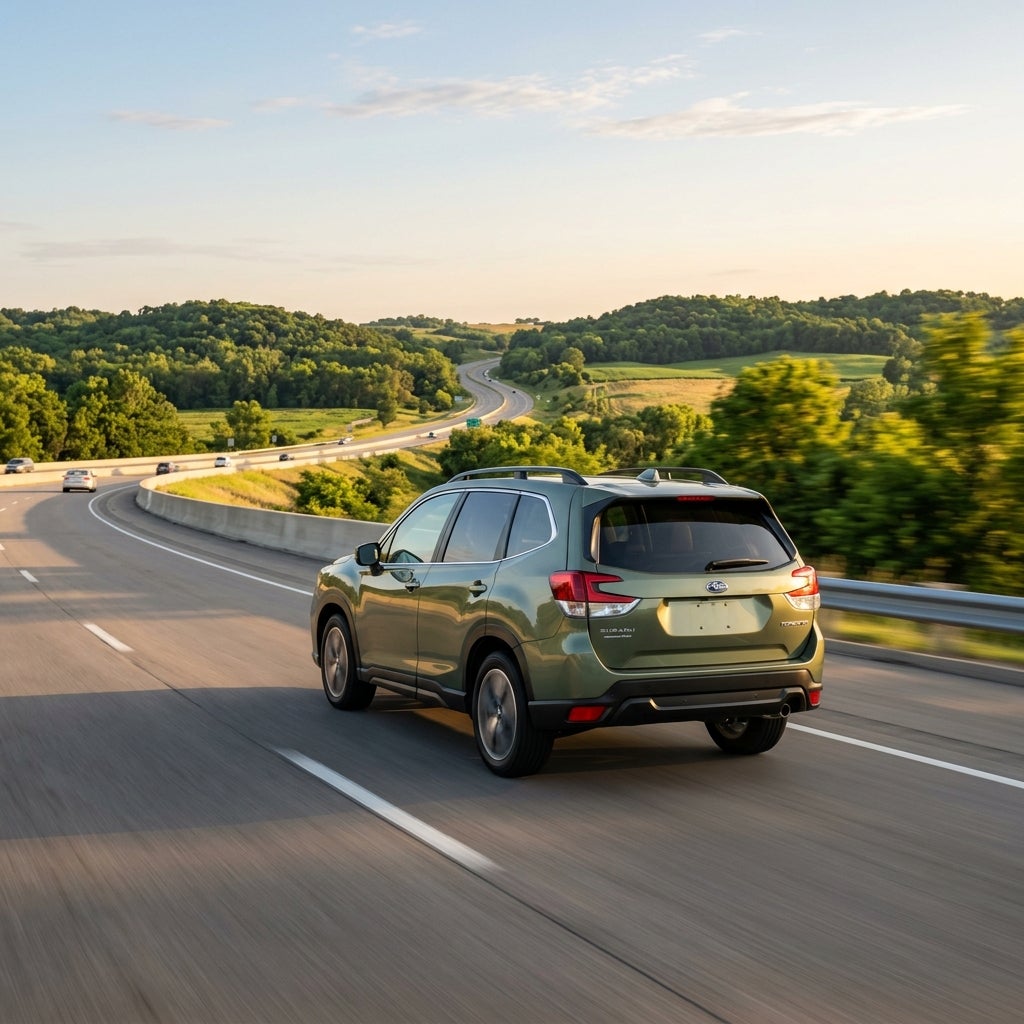
Green Subaru SUV driving along a winding highway through scenic green hills during golden hour. (Representative image for illustration purposes only. Actual vehicle may vary based on trim and configuration.)

Does Subaru Symmetrical AWD Hurt Fuel Economy? The Real MPG Comparison for Forester and Rivals

For decades, automotive folklore suggested that choosing an all-wheel-drive vehicle meant accepting a severe penalty at the fuel pump. Drivers believed that sending power to all four wheels required dragging around hundreds of pounds of extra mechanical hardware, causing fuel efficiency to plummet by 4 to 6 miles per gallon. However, modern automotive engineering—specifically Subaru Symmetrical All-Wheel Drive combined with the advanced Lineartronic Continuously Variable Transmission (CVT)—has completely rewritten that narrative. In popular compact crossovers like the Subaru Forester, Symmetrical AWD achieves up to an EPA-estimated 26 city / 33 highway MPG, virtually matching front-wheel-drive-based competitors and outperforming many rival AWD systems. When evaluating models like the Subaru Forester against primary market rivals such as the Honda CR-V, Toyota RAV4, and Nissan Rogue, the actual fuel economy variance between Subaru full-time AWD and rival part-time AWD options shrinks to a negligible 1 to 2 MPG under routine driving conditions. More importantly, while competitor entry-level models force buyers to choose between standard two-wheel drive or paying a heavy cost upgrade for a reactive AWD system, every gasoline-powered Forester comes standard with Subaru signature full-time Symmetrical AWD. Explore our New Subaru Forester Inventory to see how efficiency and standard capability come together in person. What Makes Subaru's Symmetrical All-Wheel Drive Mechanically Different From Competitor Systems? The fundamental efficiency and performance advantage of Subaru Symmetrical AWD lies in the core architecture of the vehicle. Unlike rival compact crossovers that are engineered primarily as front-wheel-drive platforms with secondary AWD components bolted on as an afterthought, every Subaru vehicle is designed from the ground up around a longitudinally mounted Subaru BOXER engine and a straight-line drivetrain. The horizontal layout of the Boxer engine sits inline with the transmission, creating a perfectly balanced, symmetrical power flow along the vehicle centerline. In typical front-wheel-drive-based competitors, the engine is mounted transversely (sideways). To send power to the rear wheels, power must change direction multiple times through complex power transfer units (PTUs), 90-degree bevel gears, and asymmetrical axle shafts. Each mechanical direction change introduces parasitic energy loss, mechanical friction, and heat generation—the exact culprits that steal fuel efficiency. Subaru linear layout eliminates transverse power redirects, delivering engine power directly to the front and rear axles with maximum efficiency. Furthermore, Subaru equal-length front and rear half-shafts mean rotational inertia is distributed evenly across all four wheels. This structural balance minimizes chassis roll, prevents torque steer, and allows the tire contact patches to work in complete harmony, ensuring zero wasted fuel when accelerating out of corners or navigating wet roadway transitions around Sunset Hills. What Is the Difference Between Full-Time AWD and Slip-and-Grip AWD? To understand fuel economy ratings, consumers must understand the mechanical distinction between continuous full-time AWD and reactive 'slip-and-grip' part-time systems. Most competing compact SUVs operate as 100% front-wheel-drive vehicles during normal conditions. When internal wheel-speed sensors detect tire slippage on wet pavement or ice, an electromagnetic clutch pack engages to send power backward to the rear wheels. While this design is intended to preserve fuel when cruising, it introduces a noticeable lag before traction is restored, creating unpredictable handling during sudden maneuvers. Subaru Symmetrical AWD operates continuously. In vehicles equipped with the Lineartronic CVT, Subaru uses an Active Torque Split AWD system that continuously distributes power—typically maintaining a 60:40 front-to-rear torque split under normal driving. Electronic sensors track accelerator position, wheel speed, steering angle, and yaw rate to instantly adjust torque distribution before tire slip occurs. Many drivers assume continuous power delivery would consume drastically more fuel than a part-time system. However, modern Subaru Lineartronic CVTs utilize high-efficiency hydraulic pumps, ultra-low viscosity fluid, and adaptive lock-up torque converters that reduce internal friction loss to near zero. Because the system is constantly engaged, there is no sudden mechanical shock or heavy hydraulic pump spool-up required to engage secondary axles. The result is seamless, continuous 4-wheel stability with fuel economy ratings that rival part-time systems. You enjoy true full-time winter confidence on icy St. Louis highways without paying a heavy penalty at the gas pump every week. Subaru Forester vs. RAV4, CR-V, and Rogue: A Head-to-Head MPG and Pricing Comparison Vehicle & Drivetrain Standard AWD? EPA Fuel Economy (City/Hwy/Comb) Starting MSRP (Est. Base) AWD Option Upcharge Subaru Forester 2.5L AWD Standard 26 / 33 / 29 MPG $29,995 $0 (Included) Toyota RAV4 2.5L FWD No (Optional) 27 / 35 / 30 MPG $28,675 N/A Toyota RAV4 2.5L AWD Optional 25 / 33 / 28 MPG $30,075 +$1,400 Honda CR-V 1.5T FWD No (Optional) 28 / 34 / 30 MPG $29,500 N/A Honda CR-V 1.5T AWD Optional 27 / 32 / 29 MPG $31,000 +$1,500 Nissan Rogue 1.5T AWD Optional 28 / 34 / 30 MPG $30,800 +$1,500 Upfront Value vs. Option Fees: When comparing vehicle prices online, rival entry prices can appear lower because they list front-wheel-drive base models. Adding AWD to a Honda CR-V or Toyota RAV4 increases the purchase price by $1,400 to $1,500. Subaru includes Symmetrical AWD as standard equipment across every single Forester trim level without charging extra. Real-World Fuel Cost Variance: Driving 15,000 miles per year with gas at $3.50 per gallon, a 1 MPG difference equals roughly $45–$60 in annual fuel expenditure. Paying an extra $1,500 upfront for an optional part-time AWD system on a competing vehicle takes over 25 years to recoup through a minor 1 MPG savings. Check out our Current New Car Specials to maximize your savings. Uncompromised Standard Safety: By choosing Subaru Forester, buyers get full-time all-weather security standard, superior ground clearance, higher resale value, and robust standard active safety features without compromise or hidden packaging upgrades. Explore New Forester Models What Is X-Mode in Subaru's Symmetrical AWD System and How Does It Affect Efficiency? Subaru X-Mode is an advanced software and electro-mechanical control software integrated into Symmetrical AWD models like the Forester, Outback, and Crosstrek. Activated via a console dial or touchscreen button, X-Mode optimizes engine throttle mapping, transmission gear ratios, front/rear coupling force, and Vehicle Dynamics Control (VDC) to master slippery surfaces, steep inclines, deep snow, and thick mud. A common concern among buyers is whether engaging X-Mode constantly drains fuel economy. The short answer is no. X-Mode is designed specifically as a low-speed tactical off-road tool. It functions at speeds up to approximately 18 to 25 mph. Once your vehicle accelerates past that threshold, X-Mode automatically disengages and returns the system to standard Active Torque Split AWD efficiency. When X-Mode is active during low-speed rock crawling or snow navigation, it prevents unnecessary wheelspin. Spinning wheels waste significant amounts of engine energy and fuel without generating forward motion. By pinning wheelspin instantly and applying individual wheel braking, X-Mode transforms engine torque into direct momentum, preserving fuel during extreme driving scenarios. How Does Standard AWD on the Solterra Compare to the AWD Availability on Its Toyota EV Rival? As electric vehicles gain market share across Missouri, shoppers evaluating the all-electric Subaru Solterra frequently compare it against its joint-venture sibling, the Toyota bZ4X. While both vehicles share an EV platform architecture, their all-wheel-drive configurations and standard equipment strategies differ significantly. Every Subaru Solterra sold in the United States comes standard with StarDrive dual-motor e-Symmetrical AWD. Electric motors are positioned at both the front and rear axles, producing a combined 215 horsepower and 249 lb-ft of instant torque. In contrast, the base Toyota bZ4X is sold as a single-motor front-wheel-drive vehicle (producing only 201 hp), requiring buyers to pay a price premium to unlock dual-motor AWD capability. Browse our New Subaru Solterra Inventory to see current trim availability. From an efficiency standpoint, the Solterra delivers an EPA-estimated range of up to 227 miles per charge. Dual e-motors eliminate mechanical driveshafts and differential power drag entirely. Power management between front and rear axles occurs at microsecond speeds via software, adjusting energy draw to maximize kWh-per-mile efficiency during highway cruising while delivering instantaneous multi-wheel traction on wet or frozen surfaces. When evaluating EV pricing, shoppers must factor in standard features. While historical federal EV tax credit structures have evolved, manufacturer lease credits and local incentives make the standard-AWD Solterra an exceptionally attractive EV value compared to single-motor rival crossovers. What Maintenance and Ownership Considerations Come With Subaru's Symmetrical AWD? Differential & CVT Fluid Intervals: Subaru Symmetrical AWD relies on front and rear gear differentials and Lineartronic CVT fluid. Replacing differential gear oil every 30,000 to 60,000 miles keeps friction drag low, protecting component longevity and maintaining optimal highway fuel efficiency over 100,000+ miles. Tire Rotation & Tread Matching: Because power is continuously routed to all four wheels, Subaru specifies that all four tires must share identical circumference (within 2/32" of tread depth). Regular tire rotations every 6,000 miles ensure even wear, preventing drivetrain strain, maintaining mechanical efficiency, and avoiding premature differential repairs. Average Repair Costs: Modern Subaru AWD units are engineered for the lifespan of the vehicle. Average transfer case or center coupling repairs are rare with proper maintenance. Routine fluid inspections are affordable and straightforward when performed by certified experts. Easily Schedule Service and Diagnostics online today. Navigating Chesterfield Commutes and Winter Driving: Crucial Factors Beyond AWD Driving across St. Louis County—from the rolling hills of Chesterfield to the low-lying stretches along the Missouri River floodplain in Maryland Heights—presents varied terrain and sudden seasonal weather challenges. Winter temperatures bring black ice across bridges on I-64, while summer downpours create hydroplaning hazards on Watson Road. While Symmetrical AWD provides foundation stability, complete winter driving confidence requires a holistic vehicle design. Subaru Forester models feature an impressive 8.7 inches of ground clearance standard (9.2 inches on Wilderness models). High ground clearance allows the Forester to sail over deep un-plowed snow and slush without snow-packing under the belly pan—a major cause of loss of traction and damaged underbody shielding in lower-slung competitor crossovers. Furthermore, driver assistance systems play a pivotal role in cold-weather safety. Subaru standard EyeSight Driver Assist technology integrates Pre-Collision Braking, Adaptive Cruise Control, and Lane Keep Assist, working alongside Symmetrical AWD to maintain safe vehicle positioning even when traction conditions deteriorate suddenly. Remember: AWD helps you accelerate and stay control, but tires stop the vehicle. Pairing Symmetrical AWD with quality winter or all-weather tires creates an unshakeable winter driving setup. Have questions about winter tire fitments? Call us at (314) 476-9638 to speak with our service team. Explore Current Service and Parts Specials What Other Factors Should Sunset Hills and Ladue Shoppers Consider Alongside AWD? For discerning vehicle shoppers in Sunset Hills, Ladue, and Kirkwood, evaluating a new crossover goes far beyond looking solely at EPA fuel economy sticker numbers. Calculating total cost of ownership over a 5-year to 8-year period reveals that Subaru vehicles consistently outperform rivals in overall value retention. Subaru vehicles consistently earn top ALG Residual Value Awards. Because standard Symmetrical AWD makes used Forester and Solterra models highly desirable in northern and Midwest markets, trade-in valuations remain exceptionally high. Strong resale value frequently offsets thousands of dollars in ownership costs—far outweighing tiny differences in weekly fuel consumption. Get your value trade estimate in minutes using our online valuation tool. Additionally, top-tier safety scores from IIHS (Insurance Institute for Highway Safety) often translate to favorable auto insurance premiums for Subaru owners. High structural crash protection combined with active AWD collision avoidance makes Subaru a smart financial choice for suburban families. AWD Buyer's Checklist: Questions to Ask Your Local Subaru Dealer Before Buying 1. Towing & Capacity Capabilities: Ask about towing limits (e.g., Forester standard 1,500 lbs vs Wilderness 3,000 lbs) and how Symmetrical AWD controls trailer sway during highway towing. 2. All-Weather Protection & Accessories: Inquire about factory accessories like heavy-duty rubber floor liners, rear seatback protectors, and splash guards. Explore options to Find Subaru Parts online. 3. Maintenance & Warranty Plans: Ask about extended powertrain protection plans that cover AWD transfer cases, CV joints, and differentials beyond the standard 5-year/60,000-mile powertrain warranty. Why St. Louis Area Drivers Trust Sunset Hills Subaru for Vehicle Selection and AWD Service For drivers throughout the greater St. Louis metropolitan region, Sunset Hills Subaru is the premier destination for new and pre-owned Subaru vehicles, authentic OEM parts, and specialized maintenance. Located conveniently at 10100 Watson Rd, Sunset Hills, MO 63127, our state-of-the-art facility is equipped with Subaru factory-trained technicians who specialize in Symmetrical AWD calibration, BOXER engine care, and electrical system diagnostics. We believe buying and maintaining a vehicle should be straightforward, transparent, and stress-free. Whether you are seeking competitive trade-in valuations, tailored auto financing terms, or certified seasonal maintenance, our friendly team is dedicated to supporting your journey. You can Get Directions to Sunset Hills Subaru or start your journey online today to Get approved for financing before your visit. Browse New Subaru Inventory Test Drive a Symmetrical AWD Subaru Forester or Solterra at Sunset Hills Subaru Reading about Subaru Symmetrical AWD engineering and EPA fuel economy numbers is one thing—feeling the smooth power delivery, immediate steering control, and confidence behind the wheel is another experience entirely. Visit Sunset Hills Subaru today to test drive the refined Forester or the futuristic, all-electric Solterra. Experience how engineered balance delivers maximum efficiency and unmatched traction across St. Louis roads. Schedule Your Test Drive Today Title Tags Subaru Fuel Efficiency in Sunset Hills MO | Sunset Hills Subaru Meta Description Keywords Open Graph Twitter Card Canonical Article Metadata Geographic Targeting { "@context": "https://schema.org", "@graph": [ { "@type": "NewsArticle", "@id": "#article", "headline": "Does Subaru Symmetrical AWD Hurt Fuel Economy? The Real MPG Comparison for Forester and Rivals", "datePublished": "2026-08-31T17:51:09.459Z", "dateModified": "2026-08-31T18:02:27.424Z", "author": { "@id": "#author" }, "publisher": { "@id": "#dealer" }, "wordCount": 2196, "description": "An MPG comparison of the Subaru Forester and rival crossovers shows how modern Symmetrical AWD delivers competitive fuel economy without a major MPG penalty." }, { "@type": "Person", "@id": "#author", "name": "Robert Smith", "worksFor": { "@id": "#dealer" } }, { "@type": "AutoDealer", "@id": "#dealer", "name": "Sunset Hills Subaru", "description": "Sunset Hills Subaru is a full-service Subaru dealership serving the St. Louis area, offering new and pre-owned vehicles, financing, and expert maintenance, all with a strong focus on customer service and community involvement.", "url": "https://www.sunsethillssubaru.com", "telephone": "+13144769638", "image": { "@type": "ImageObject", "url": "https://assets.app.hrizn.io/public/uploads/ac3d25d8-7397-441f-bed1-a086c6d82f2a/c4fe791c-e1bc-4f3e-ad74-bcea1dcd3c3f/1776711411817_images__7_.jpg" }, "logo": { "@type": "ImageObject", "url": "https://assets.app.hrizn.io/public/uploads/ac3d25d8-7397-441f-bed1-a086c6d82f2a/c4fe791c-e1bc-4f3e-ad74-bcea1dcd3c3f/1776711386560_DealerLogo.png" }, "sameAs": [ "https://www.facebook.com/sunsethillssubaru", "https://www.instagram.com/sunsethillssubaru", "https://youtube.com/@sunsethillssubaru", "https://www.tiktok.com/@sunsethillssubaru", "https://www.dealerrater.com/dealer/Sunset-Hills-Subaru", "https://www.cars.com/dealers/152141/sunset-hills-subaru", "https://www.autotrader.com/car-dealers/sunset-hills-mo/71819691/sunset-hills-subaru", "https://www.cargurus.com/Cars/m-Sunset-Hills-Subaru-sp300949", "https://www.carfax.com/Reviews-Sunset-Hills-Subaru", "https://maps.google.com/?cid=6793552624642991938" ], "address": { "@type": "PostalAddress", "streetAddress": "10100 Watson Rd", "addressLocality": "Sunset Hills", "addressRegion": "MO", "postalCode": "63127", "addressCountry": "US" }, "areaServed": { "@type": "GeoCircle", "geoMidpoint": { "@type": "GeoCoordinates", "latitude": "38.555542", "longitude": "-90.3981166" }, "geoRadius": "48280" }, "geo": { "@type": "GeoCoordinates", "latitude": "38.555542", "longitude": "-90.3981166" }, "openingHours": [ "Mo 09:00-20:00", "Tu 09:00-20:00", "We 09:00-20:00", "Th 09:00-20:00", "Fr 09:00-20:00", "Sa 09:00-18:00" ] }, { "@type": "FAQPage", "@id": "#faq", "mainEntity": [ { "@type": "Question", "name": "What Makes Subaru's Symmetrical All-Wheel Drive Mechanically Different From Competitor Systems?", "acceptedAnswer": { "@type": "Answer", "text": "The fundamental efficiency and performance advantage of Subaru Symmetrical AWD lies in the core architecture of the vehicle. Unlike rival compact crossovers that are engineered primarily as front-wheel-drive platforms with secondary AWD components bolted on as an afterthought, every Subaru vehicle is designed from the ground up around a longitudinally mounted Subaru BOXER engine and a straight-line drivetrain. The horizontal layout of the Boxer engine sits inline with the transmission, creating a perfectly balanced, symmetrical power flow along the vehicle centerline. In typical front-wheel-drive-based competitors, the engine is mounted transversely (sideways). To send power to the rear wheels, power must change direction multiple times through complex power transfer units (PTUs), 90-degree bevel gears, and asymmetrical axle shafts. Each mechanical direction change introduces parasitic energy loss, mechanical friction, and heat generation—the exact culprits that steal fuel efficiency. Subaru linear layout eliminates transverse power redirects, delivering engine power directly to the front and rear axles with maximum efficiency. Furthermore, Subaru equal-length front and rear half-shafts mean rotational inertia is distributed evenly across all four wheels. This structural balance minimizes chassis roll, prevents torque steer, and allows the tire contact patches to work in complete harmony, ensuring zero wasted fuel when accelerating out of corners or navigating wet roadway transitions around Sunset Hills." } }, { "@type": "Question", "name": "What Is the Difference Between Full-Time AWD and Slip-and-Grip AWD?", "acceptedAnswer": { "@type": "Answer", "text": "To understand fuel economy ratings, consumers must understand the mechanical distinction between continuous full-time AWD and reactive 'slip-and-grip' part-time systems. Most competing compact SUVs operate as 100% front-wheel-drive vehicles during normal conditions. When internal wheel-speed sensors detect tire slippage on wet pavement or ice, an electromagnetic clutch pack engages to send power backward to the rear wheels. While this design is intended to preserve fuel when cruising, it introduces a noticeable lag before traction is restored, creating unpredictable handling during sudden maneuvers. Subaru Symmetrical AWD operates continuously. In vehicles equipped with the Lineartronic CVT, Subaru uses an Active Torque Split AWD system that continuously distributes power—typically maintaining a 60:40 front-to-rear torque split under normal driving. Electronic sensors track accelerator position, wheel speed, steering angle, and yaw rate to instantly adjust torque distribution before tire slip occurs. Many drivers assume continuous power delivery would consume drastically more fuel than a part-time system. However, modern Subaru Lineartronic CVTs utilize high-efficiency hydraulic pumps, ultra-low viscosity fluid, and adaptive lock-up torque converters that reduce internal friction loss to near zero. Because the system is constantly engaged, there is no sudden mechanical shock or heavy hydraulic pump spool-up required to engage secondary axles. The result is seamless, continuous 4-wheel stability with fuel economy ratings that rival part-time systems. You enjoy true full-time winter confidence on icy St. Louis highways without paying a heavy penalty at the gas pump every week." } }, { "@type": "Question", "name": "What Is X-Mode in Subaru's Symmetrical AWD System and How Does It Affect Efficiency?", "acceptedAnswer": { "@type": "Answer", "text": "Subaru X-Mode is an advanced software and electro-mechanical control software integrated into Symmetrical AWD models like the Forester, Outback, and Crosstrek. Activated via a console dial or touchscreen button, X-Mode optimizes engine throttle mapping, transmission gear ratios, front/rear coupling force, and Vehicle Dynamics Control (VDC) to master slippery surfaces, steep inclines, deep snow, and thick mud. A common concern among buyers is whether engaging X-Mode constantly drains fuel economy. The short answer is no. X-Mode is designed specifically as a low-speed tactical off-road tool. It functions at speeds up to approximately 18 to 25 mph. Once your vehicle accelerates past that threshold, X-Mode automatically disengages and returns the system to standard Active Torque Split AWD efficiency. When X-Mode is active during low-speed rock crawling or snow navigation, it prevents unnecessary wheelspin. Spinning wheels waste significant amounts of engine energy and fuel without generating forward motion. By pinning wheelspin instantly and applying individual wheel braking, X-Mode transforms engine torque into direct momentum, preserving fuel during extreme driving scenarios." } }, { "@type": "Question", "name": "How Does Standard AWD on the Solterra Compare to the AWD Availability on Its Toyota EV Rival?", "acceptedAnswer": { "@type": "Answer", "text": "As electric vehicles gain market share across Missouri, shoppers evaluating the all-electric Subaru Solterra frequently compare it against its joint-venture sibling, the Toyota bZ4X. While both vehicles share an EV platform architecture, their all-wheel-drive configurations and standard equipment strategies differ significantly. Every Subaru Solterra sold in the United States comes standard with StarDrive dual-motor e-Symmetrical AWD. Electric motors are positioned at both the front and rear axles, producing a combined 215 horsepower and 249 lb-ft of instant torque. In contrast, the base Toyota bZ4X is sold as a single-motor front-wheel-drive vehicle (producing only 201 hp), requiring buyers to pay a price premium to unlock dual-motor AWD capability. Browse our New Subaru Solterra Inventory to see current trim availability. From an efficiency standpoint, the Solterra delivers an EPA-estimated range of up to 227 miles per charge. Dual e-motors eliminate mechanical driveshafts and differential power drag entirely. Power management between front and rear axles occurs at microsecond speeds via software, adjusting energy draw to maximize kWh-per-mile efficiency during highway cruising while delivering instantaneous multi-wheel traction on wet or frozen surfaces. When evaluating EV pricing, shoppers must factor in standard features. While historical federal EV tax credit structures have evolved, manufacturer lease credits and local incentives make the standard-AWD Solterra an exceptionally attractive EV value compared to single-motor rival crossovers." } }, { "@type": "Question", "name": "What Maintenance and Ownership Considerations Come With Subaru's Symmetrical AWD?", "acceptedAnswer": { "@type": "Answer", "text": "Differential & CVT Fluid Intervals: Subaru Symmetrical AWD relies on front and rear gear differentials and Lineartronic CVT fluid. Replacing differential gear oil every 30,000 to 60,000 miles keeps friction drag low, protecting component longevity and maintaining optimal highway fuel efficiency over 100,000+ miles. Tire Rotation & Tread Matching: Because power is continuously routed to all four wheels, Subaru specifies that all four tires must share identical circumference (within 2/32\" of tread depth). Regular tire rotations every 6,000 miles ensure even wear, preventing drivetrain strain, maintaining mechanical efficiency, and avoiding premature differential repairs. Average Repair Costs: Modern Subaru AWD units are engineered for the lifespan of the vehicle. Average transfer case or center coupling repairs are rare with proper maintenance. Routine fluid inspections are affordable and straightforward when performed by certified experts. Easily Schedule Service and Diagnostics online today." } }, { "@type": "Question", "name": "What Other Factors Should Sunset Hills and Ladue Shoppers Consider Alongside AWD?", "acceptedAnswer": { "@type": "Answer", "text": "For discerning vehicle shoppers in Sunset Hills, Ladue, and Kirkwood, evaluating a new crossover goes far beyond looking solely at EPA fuel economy sticker numbers. Calculating total cost of ownership over a 5-year to 8-year period reveals that Subaru vehicles consistently outperform rivals in overall value retention. Subaru vehicles consistently earn top ALG Residual Value Awards. Because standard Symmetrical AWD makes used Forester and Solterra models highly desirable in northern and Midwest markets, trade-in valuations remain exceptionally high. Strong resale value frequently offsets thousands of dollars in ownership costs—far outweighing tiny differences in weekly fuel consumption. Get your value trade estimate in minutes using our online valuation tool. Additionally, top-tier safety scores from IIHS (Insurance Institute for Highway Safety) often translate to favorable auto insurance premiums for Subaru owners. High structural crash protection combined with active AWD collision avoidance makes Subaru a smart financial choice for suburban families." } } ] } ] }

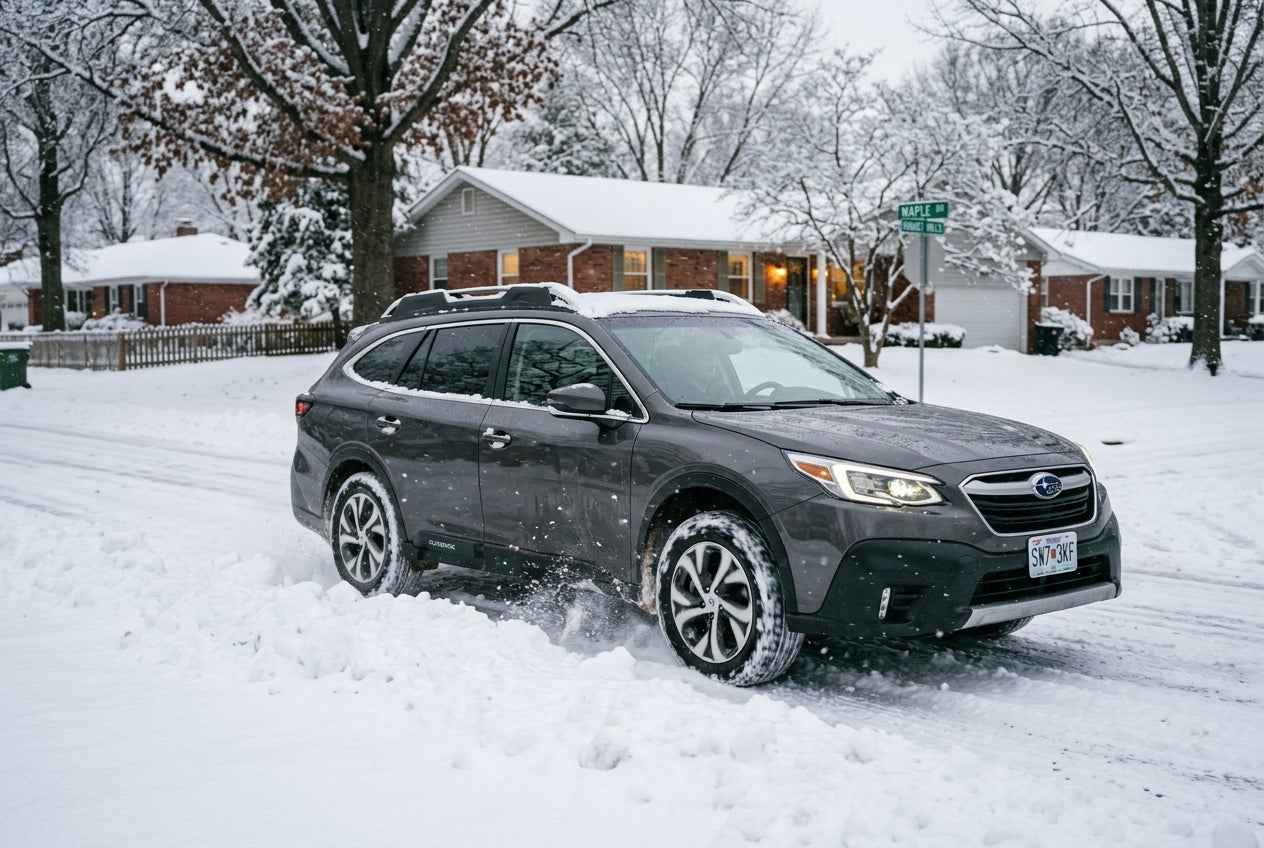
A dark grey Subaru Outback driving through deep snow on a residential street. (Representative image for illustration purposes only. Actual vehicle may vary based on trim and configuration.)

What Is the Biggest Real-World Benefit of the Subaru Outback in Snow?

What Is the Biggest Real-World Benefit of the Subaru Outback in Snow? When Midwestern winter weather transforms the roads around Sunset Hills, Kirkwood, and Ladue into an unpredictable mixture of slush, packed ice, and heavy snow drifts, drivers quickly learn that not all all-wheel drive systems are built equal. If you ask seasoned Missouri drivers what sets the Subaru Outback apart from every other crossover on the road, the key advantage often comes down to one mechanical feature: continuous, full-time Symmetrical All-Wheel Drive coupled with 8.7 inches of standard ground clearance (and up to 9.5 inches on the Wilderness edition). more Unlike conventional 'part-time' or 'on-demand' AWD systems found in many competing crossovers, the Subaru Outback never waits for wheel spin before sending power to all four wheels. In slip-and-grip systems, your vehicle operates primarily in two-wheel drive until sensors detect a loss of traction. By the time those systems react on an icy patch along Watson Road or an unplowed stretch near I-44, momentum has already been lost, sending the vehicle into an unsettling slide or getting stranded altogether. In contrast, the Outback's full-time active torque split continuously feeds engine power to every wheel. Combined with generous ground clearance that glides directly over dense snow ridges left behind by highway snowplows, the Outback prevents drivers from getting high-centered—where snow packs beneath the undercarriage and lifts the tires off the pavement. Whether you are navigating early morning commutes before the snow plows arrive or pulling out of a steep, ice-covered residential driveway, this constant mechanical engagement provides instant, unwavering confidence when you need it most. You can explore our full selection of winter-ready models in our New Subaru Outback Inventory. How Subaru Symmetrical All-Wheel Drive Works in Snow and Ice The mechanical secret behind Subaru's winter supremacy lies in its engineering architecture. Every Subaru Outback features a longitudinally mounted Subaru BOXER® engine positioned in direct linear alignment with the Lineartronic® CVT transmission and symmetrical drivetrain. Because the horizontally-opposed BOXER engine sits low in the chassis, the Outback maintains a remarkably low center of gravity. This balance prevents body roll and weight-transfer instability when cornering on slick surfaces. The linear layout creates equal-length front axle shafts, ensuring equal power transfer to left and right wheels without torque steer. During winter conditions in St. Louis, the active torque split electronically monitors steering angle, acceleration, and yaw rates. It dynamically adjusts power distribution—biasing power seamlessly between front and rear axles before loss of control occurs. When one wheel encounters black ice on a bridge deck along I-270, the system instantly directs drive torque to the wheels with grip, keeping the vehicle tracking straight and predictable without disturbing vehicle balance. Subaru Outback vs. Competitor AWD Systems: Navigating Missouri Winters & Rain Missouri weather is notorious for rapid temperature swings. A morning thunderstorm can easily turn into freeze-thaw slush by evening rush hour. Understanding how the Outback's Symmetrical AWD compares to popular competitors like the Toyota RAV4 and Honda CR-V highlights why Subaru remains the premier choice for regional drivers. Most popular compact SUVs utilize an 'on-demand' system that operates as front-wheel drive under normal dry pavement conditions. When front tires begin to spin on ice or hydroplane in heavy rain, an electromagnetic clutch engages the rear axle. While efficient for mild climates, this split-second delay can mean the difference between maintaining stability and losing traction during abrupt maneuvers. Subaru's Symmetrical AWD is continuously active on all four wheels at all times. Whether accelerating away from a stoplight on wet pavement or powering through slushy highway lanes, power is instantly available at every tire contact patch. If you are comparing pre-owned options, feel free to inspect our Used Vehicle Inventory for AWD crossover models. Feature / Capability Subaru Outback (Symmetrical AWD) Toyota RAV4 (On-Demand AWD) Honda CR-V (Real Time AWD) AWD Engagement Full-Time Continuous Active Torque Split Reactive Slip-and-Grip (Front-Wheel Bias) Reactive Electronic Engagement Standard Ground Clearance 8.7 Inches (9.5 In Wilderness) 8.1 - 8.6 Inches 7.8 - 8.2 Inches Drivetrain Symmetry & Balance Symmetrical Linear Lineartronic CVT Transverse Engine / Transaxle Offset Transverse Engine / Transaxle Offset Snow Off-Road Drive Modes Standard Dual-Function X-MODE® Multi-Terrain Select (Select Trims) Snow Mode Only Why Ground Clearance and X-Mode Matter for Sunset Hills and Ladue Commuters 8.7 Inches Clearance Standard 8.7-inch ground clearance easily clears deep snow berms piled up by municipal plows at residential street corners, preventing underbody scraping or costly oil pan damage on rough roads. Dual-Function X-MODE® Available Dual-Function X-MODE includes specialized settings for 'Snow/Dirt' and 'Deep Snow/Mud'. It optimizes throttle mapping, transmission ratios, and AWD clutch engagement to maximize wheel bite. Hill Descent Control Integrated Hill Descent Control automatically manages braking on steep, unplowed driveways in rolling terrain around Sunset Hills, enabling you to focus entirely on steering safely down icy slopes. Value Your Current Trade-In Is the Outback Good for Commuting on I-44 and I-270 During St. Louis Winters? St. Louis highway commuters know how chaotic interstates like I-44 and I-270 can become during winter storms. Between sudden slush ridges between lanes and heavy crosswinds along elevated overpasses, highway winter driving requires exceptional vehicle stability and active driver support. The Subaru Outback excels in interstate conditions due to its extended wheelbase and wagon-like body profile. Unlike tall, boxy SUVs that catch heavy winter gusts, the Outback pierces through crosswinds cleanly while maintaining steady tracking across icy bridge decks and frozen slush lanes. Safety is further enhanced by standard EyeSight® Driver Assist Technology. Featuring dual optical stereo cameras, EyeSight monitors ahead to assist with Adaptive Cruise Control, Pre-Collision Braking, and Lane Keep Assist. When visibility drops during heavy winter snowfall, EyeSight can serve as an added layer of driver assistance. Are Stock Factory Tires Good Enough for Missouri Winters, or Do You Need Upgrades? Every 2025 Subaru Outback comes equipped with high-quality factory all-season tires designed to balance fuel efficiency, tread longevity, and wet traction. For the majority of standard St. Louis winter days—involving light snow, wet streets, and occasional frost—the combination of factory tires and Symmetrical AWD performs exceptionally well. However, for drivers who frequently commute before plows hit the roads or take regular trips into rural or mountainous regions, upgrading to 3-Peak Mountain Snowflake (3PMSF) rated tires provides an extra tier of braking performance on hard-packed snow and severe ice. The Outback Wilderness trim comes factory-standard with Yokohama GEOLANDAR® all-terrain tires featuring the 3PMSF rating. You can order replacement seasonal wheel setups or winter tires directly through our certified Parts Department. Winter Packages and Essential Cold-Weather Accessories at Sunset Hills Area Dealers All-Weather Comfort Standard All-Weather Package features include 3-stage heated front seats, available heated rear outboard seats, and a 360-degree heated steering wheel to warm up your drive quickly. Wiper De-Icers Windshield wiper de-icers melt frozen ice along the windshield base, preventing wiper blade freezing and keeping your glass clear during active freezing rain or winter storms. High-Wall Floor Liners Genuine Subaru high-wall floor liners and heavy-duty cargo tray liners trap melting slush, mud, and road salt, preserving your interior carpet in pristine condition. View Current Service and Parts Offers Which Outback Trim Is Best for Snow, Slush, and Rough Roads? Premium & Limited Standard 8.7-inch ground clearance, heated front seats, dual-zone climate control, and single-mode X-MODE®. Ideal for suburban daily commutes and winter highway travel. Onyx Edition Adds water-repellent StarTex® synthetic upholstery that wipes clean easily from wet snow, along with Dual-Function X-MODE® for tackling deep snow drifts. Outback Wilderness A capable severe-weather model: elevated 9.5-inch ground clearance, Yokohama GEOLANDAR® 3PMSF all-terrain tires, enhanced front bumper angles, and heavy-duty roof rails. Local Test Drive Routes Near Sunset Hills to Evaluate Subaru AWD and Suspension When evaluating a vehicle's bad-weather performance, a standard flat test drive won't reveal the whole picture. Near our dealership at 10100 Watson Rd, Sunset Hills, MO 63127, several local road stretches provide real-world insights into Outback capability. Testing along Watson Road elevation changes allows you to experience Lineartronic CVT engine braking and chassis isolation over uneven pavement joints. A quick loop down Lindbergh Boulevard lets you observe how smoothly the AWD system transfers power without sudden wheel slippage during turns. If you are comparing different Subaru SUV options during your test drive visit, we also encourage you to explore our New Subaru Forester Inventory and New Subaru Crosstrek Inventory to experience how Symmetrical AWD feels across different vehicle sizes. What to Ask Your Subaru Dealer Before Buying an Outback for Winter Driving To ensure you select the ideal setup for your winter driving habits, here is a practical buyer's checklist to ask our specialist team before finalizing your vehicle purchase: 1. Which Outback trim matches my daily commute? (Premium vs. Onyx vs. Wilderness ground clearance requirements) 2. Can factory winter accessories be pre-installed before delivery? (All-weather floor liners, splash guards, rear bumper cover) 3. How does trade-in valuation work for my current vehicle? You can easily start by getting an estimate to Get your value trade online. 4. What pre-approval options exist for new car financing? Get started in advance when you Get approved for financing through our finance center. 5. What factory warranty coverage applies to AWD and drivetrain components? Explore Current New Car Offers How St. Louis and Sunset Hills Buyers Can Order or Locate a Custom 2025 Outback Trim Finding the exact combination of exterior paint, interior upholstery, and cold-weather accessory packages is straightforward at Sunset Hills Subaru. Shoppers can easily review incoming regional shipments or search current New Subaru Inventory directly on our website. If your preferred trim level or color combination is not currently on our lot, our team can reserve an incoming transit model or guide you through a custom factory order direct from Subaru. If you are considering family-sized 3-row alternatives, you may also inspect our New Subaru Ascent Inventory. Test Drive the Subaru Outback at Sunset Hills Subaru now Experience the unmatched confidence of Subaru Symmetrical All-Wheel Drive and 8.7 inches of ground clearance for yourself. Visit Sunset Hills Subaru at 10100 Watson Rd, Sunset Hills, MO 63127, or speak with our sales specialists directly. You can Get Directions to Sunset Hills Subaru or Call us at (314) 476-9638 to schedule your personal winter capability test drive. Browse New Subaru Outback Models Title Tags Subaru Outback AWD Benefits in Sunset Hills MO | Sunset Hills Subaru Meta Description Keywords Open Graph Twitter Card Canonical Article Metadata Geographic Targeting