

Aug 15, 2026
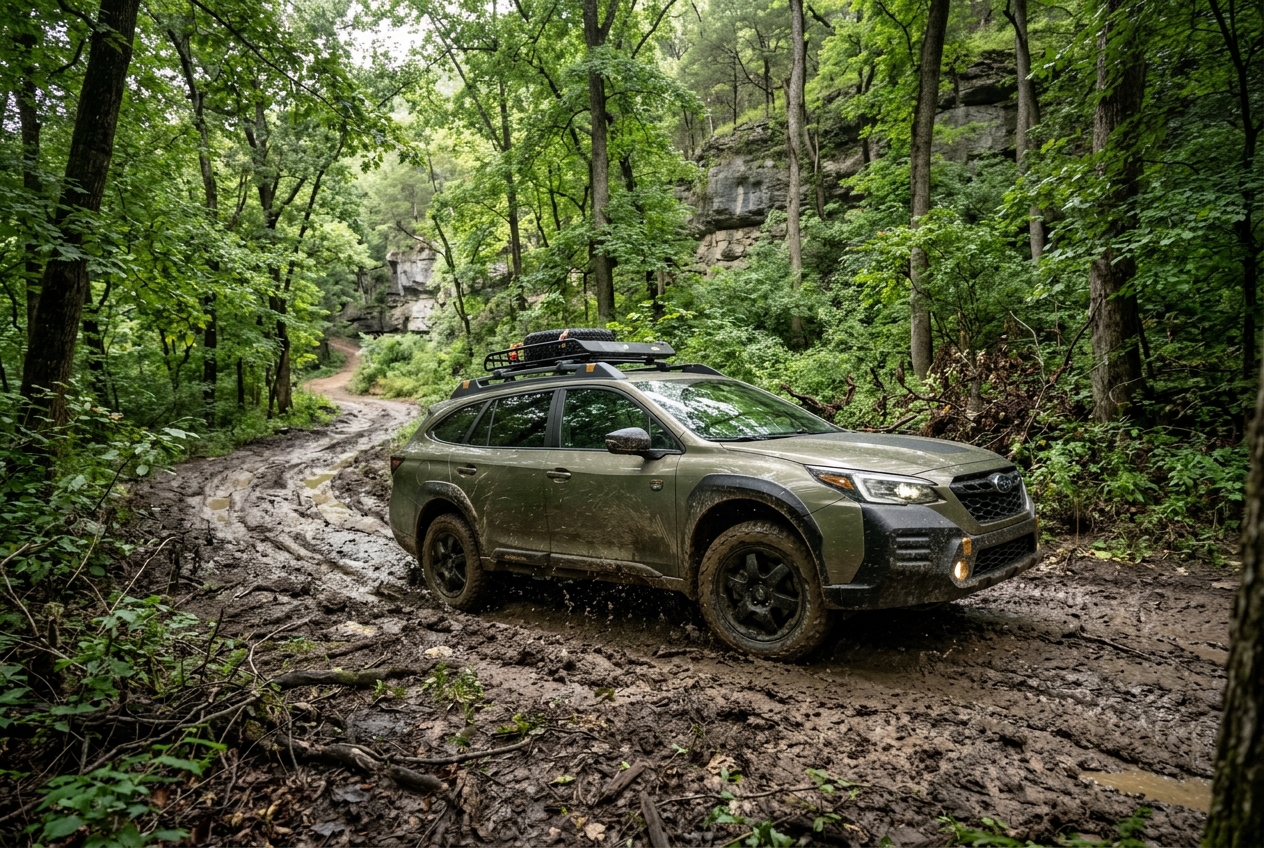
Navigating Missouri’s unpaved backcountry—from the limestone bluffs of Castlewood State Park to the muddy floodplain trails along the Meramec River—demands far more from an all-wheel-drive system than standard wet-asphalt commuting. Subaru’s Dual-Function X-MODE is an advanced, software-integrated traction management system engineered specifically to overcome the physical limits of traditional all-wheel drive when pavement turns into loose rock, rutted dirt, and deep river mud.
At the core of Dual-Function X-MODE is a total remapping of four key vehicle systems: engine throttle responsiveness, the Symmetrical All-Wheel Drive electronically controlled transfer clutch, transmission gear reduction logic within the Lineartronic CVT, and Vehicle Dynamics Control (VDC) wheel-slip management. In standard driving, Subaru AWD continuously balances torque split for fuel efficiency and smooth cornering. However, when a tire loses grip on a slippery rock ledge or sinks into river silt, standard traction control typically cuts engine power to prevent wheel spin—a response that can completely stall forward momentum precisely when you need momentum most.
When engaged via the center console control knob or touchscreen interface, Dual-Function X-MODE alters these parameters instantly. Engine throttle sensitivity is calibrated to deliver ultra-precise low-rpm torque output, preventing accidental power spikes that cause tires to dig deeper into soft ground. Simultaneously, the hydraulic multi-plate transfer clutch increases locking pressure by up to 25%, locking the front and rear axles into a firm 50/50 torque split. By combining this proactive axle locking with targeted individual wheel braking via the VDC system, Dual-Function X-MODE acts as an electronic differential lock, redirecting engine power away from airborne or slipping wheels directly to the tires with firm traction.
Understanding 'Snow/Dirt' vs. 'Deep Snow/Mud' Modes on Unpaved Terrain
Navigating Castlewood State Park and Meramec River Trails in Variable Weather
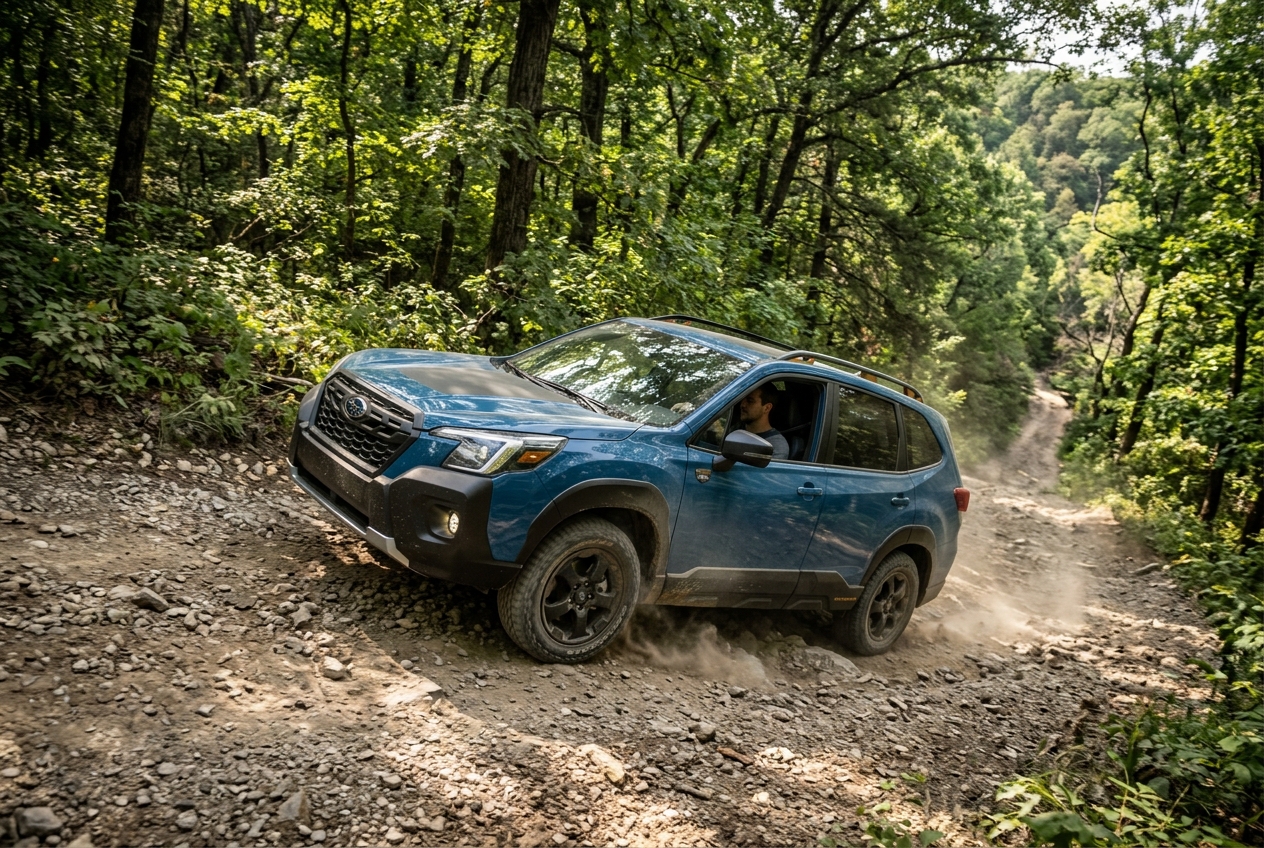
Local outdoor enthusiasts in St. Louis County know that weather conditions near the Meramec River basin can transform a dry dirt trail into a treacherous mud passage in under twenty minutes. When descending steep 15-degree grades near the bluffs, human brake modulation often causes wheel lockup, turning tires into sled runners across slick wet clay. Hill Descent Control reads wheel speed sensors continuously, applying hydraulic brake pressure to individual wheels at speeds under 12 mph. This allows you to steer around obstacle hazards and exposed tree roots with total confidence.
What the Wilderness Package on the 2024 Subaru Forester Adds for Rugged Trailheads
2024 Subaru Outback Exterior Dimensions for Tight Trailhead Parking Areas
Trailhead staging areas near popular St. Louis County parks—such as Castlewood’s lower river parking lots or Chubb Trail access points—are notoriously cramped, featuring narrow entry turnarounds, tight tree lines, and low-hanging branches. Knowing your vehicle’s physical footprint ensures stress-free parking and maneuvering in tight quarters.
| Dimension Specification | 2024 Subaru Outback Standard/Onyx | 2024 Subaru Outback Wilderness |
|---|---|---|
| Overall Length | 191.1 inches | 191.1 inches |
| Overall Width (with mirrors) | 74.2 inches (82.0 with mirrors) | 74.2 inches (82.0 with mirrors) |
| Overall Height (with roof rails) | 66.1 inches | 66.9 inches |
| Wheelbase | 108.1 inches | 108.1 inches |
| Turning Circle Diameter | 38.0 feet (19.0 ft radius) | 38.0 feet (19.0 ft radius) |
| Ground Clearance | 8.7 inches | 9.5 inches |
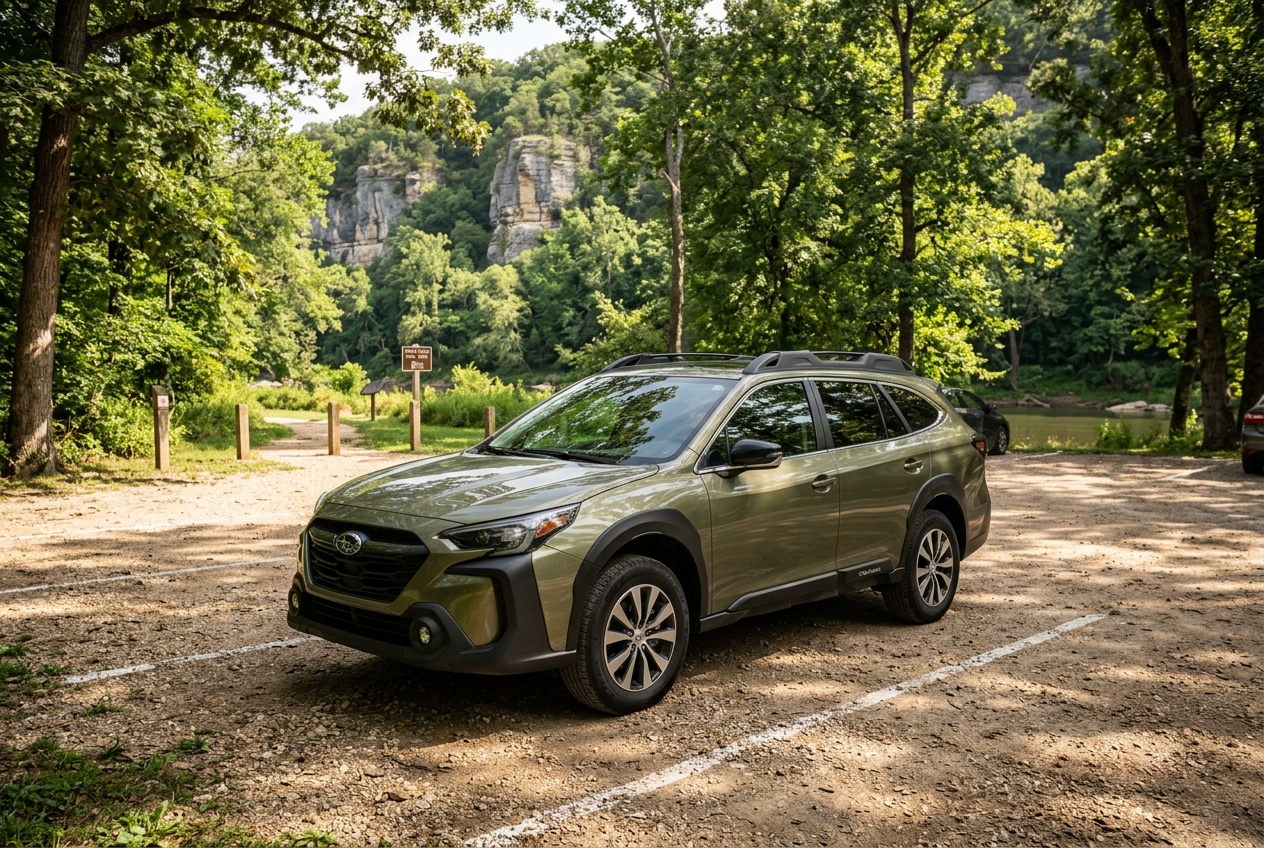
Despite its expansive interior cargo volume of up to 76 cubic feet, the Outback maintains a tight 38-foot turning circle. This agility allows drivers to perform swift u-turns on narrow dead-end park roads without running off into hidden shoulder ditches. Furthermore, the integrated swing-out crossbars on standard Outback roof rails stow flat when not carrying kayaks or cargo boxes, keeping overhead roof clearance low under low tree canopy.
Preparing Your Subaru Brakes and Engine Coolant for Late Summer St. Louis Heat
Managing Summer Tire Pressure and Wheel Alignments Before Highway and Trail Driving
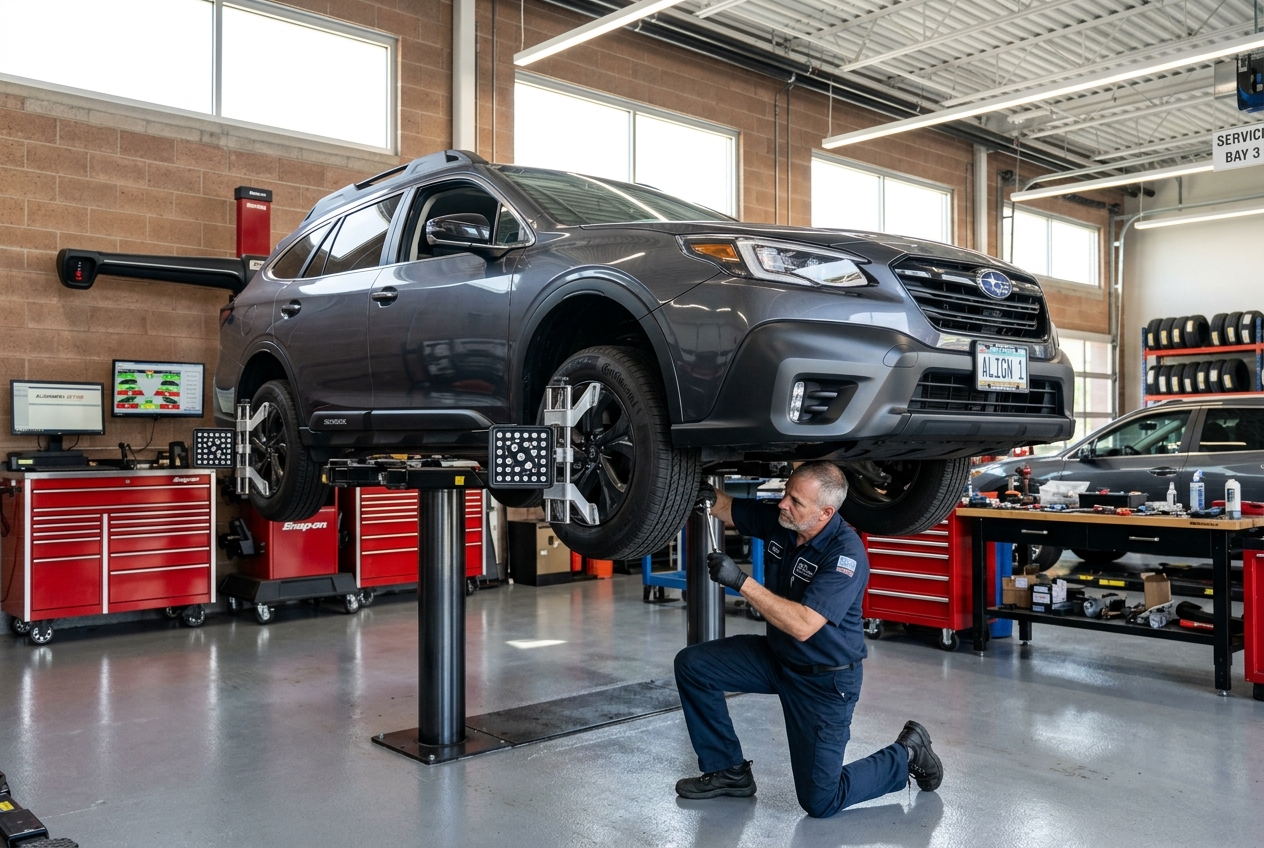
Complete Pre-Trip Subaru Maintenance Checklist: Air Filters, Fluids, and Inspections
Essential Recovery Gear and Safety Items to Pack in Your Subaru Trunk
Even with Subaru’s formidable Symmetrical AWD and Dual-Function X-MODE, unexpected trail hazards like fallen tree limbs, sudden washouts, or flash mud pools can turn an enjoyable afternoon into a recovery scenario. Responsible off-pavement driving requires carrying dedicated recovery gear suited for Missouri’s terrain.
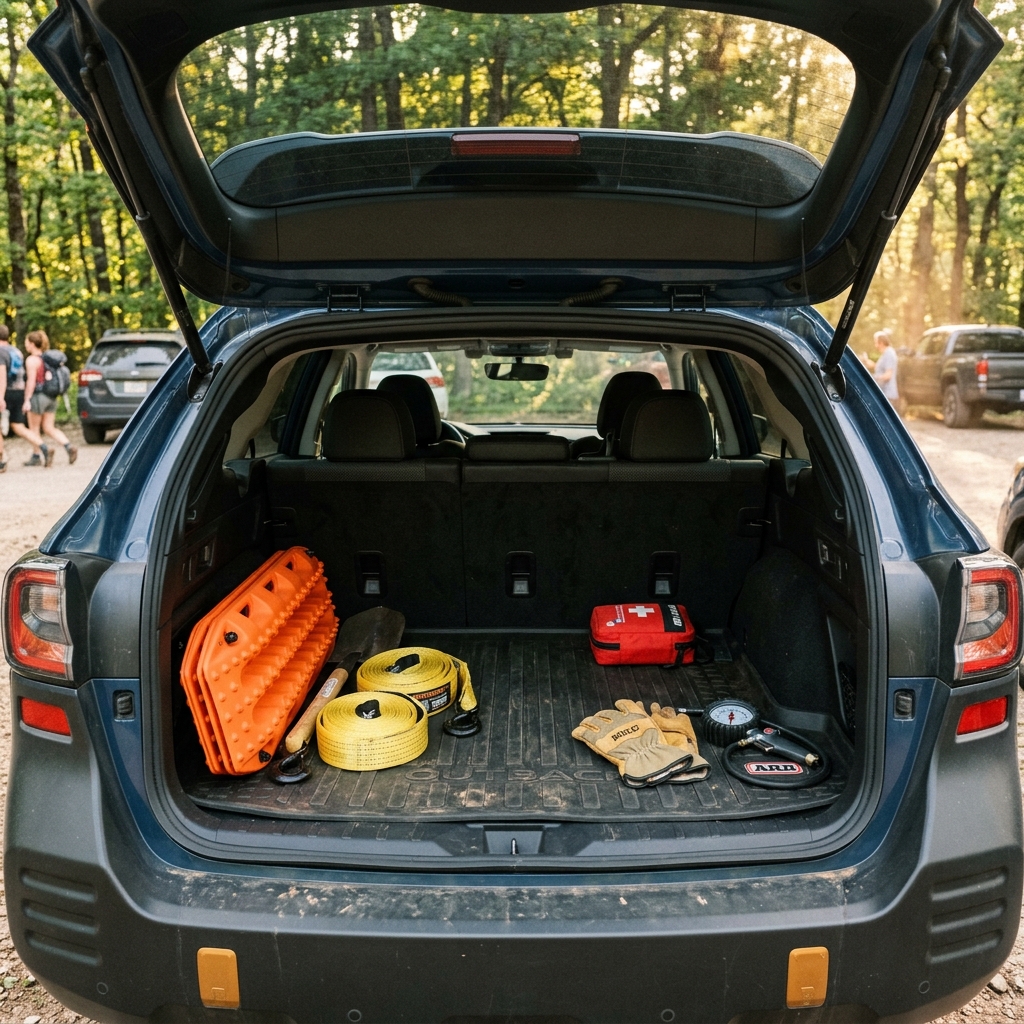
Recommended Backcountry Safety Equipment:• Heavy-Duty Tow Strap & Soft Shackles: Rated for at least 15,000 lbs minimum breaking strength (never use metal hooks on kinetic recovery ropes). • High-Traction Recovery Boards: Essential for bridging deep mud ruts along Meramec riverbanks or providing grip under high-centered tires. • Portable 12V Air Compressor & Tire Deflator: Allows you to lower tire pressure for soft sand/mud traction and re-inflate back to street pressure before highway driving. • Tire Plug Kit & Folding Shovel: Quickly repair tread punctures from sharp limestone rocks and clear mud from around tire contact points. • Rechargeable LED Headlamps & First Aid Kit: Essential for unforeseen trail delays past sunset near Ladue and Sunset Hills parks.
Planning for Regional Outdoor Trips: Ownership Costs and Factory Warranty Coverage
How Sunset Hills Buyers Can Reserve Trims and Schedule Same-Day Pre-Trip Service
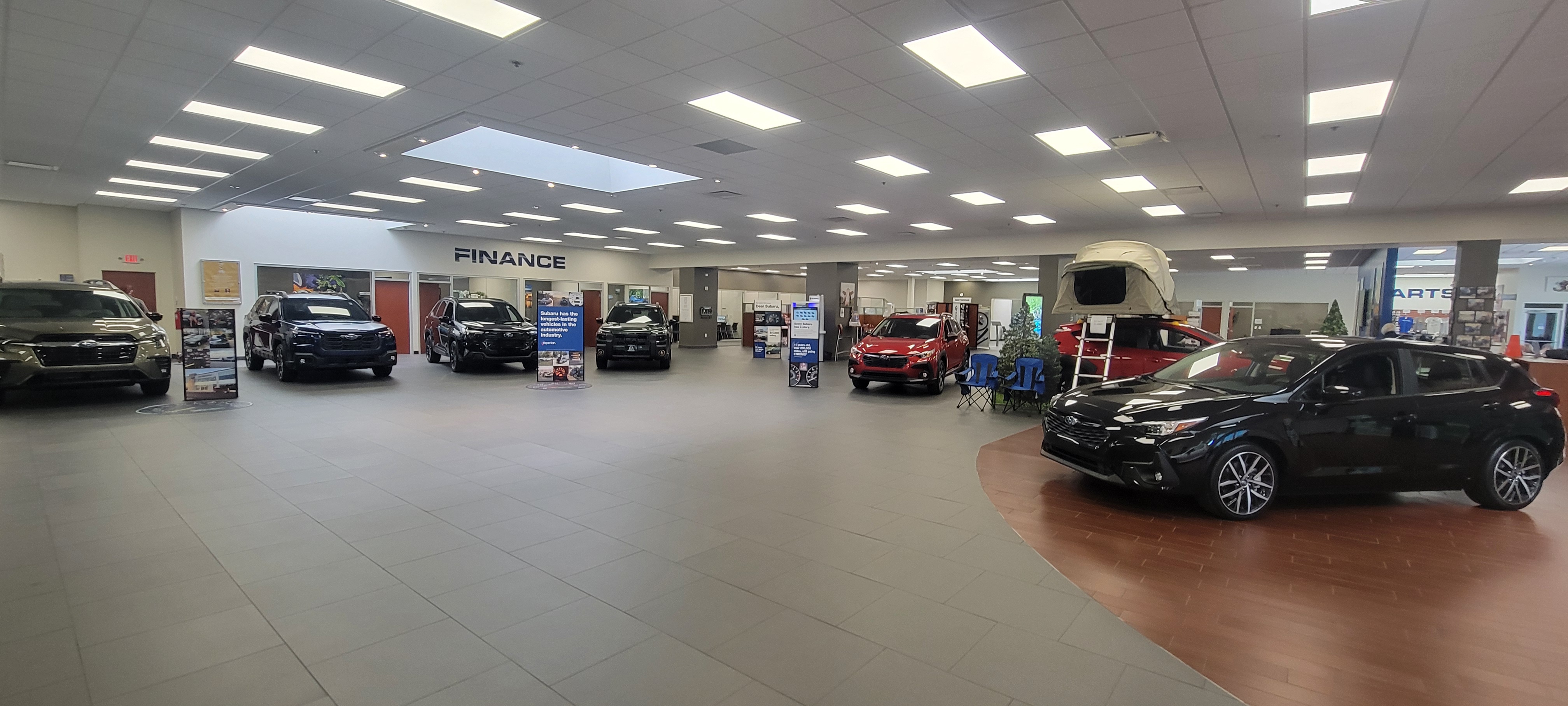
Residents across Sunset Hills, Ladue, and surrounding St. Louis communities can check real-time availability for New Subaru Inventory or inspect top-tier pre-owned options in our Used Vehicle Inventory directly from our website.
Schedule Your Pre-Trip Inspection or Test Drive at Sunset Hills Subaru Today
Whether you are preparing your trusty Outback for a weekend excursion along the Meramec River, or looking to experience Dual-Function X-MODE firsthand on a new Forester Wilderness, the dedicated team at Sunset Hills Subaru is ready to assist. Conveniently located on Watson Road, our factory-trained technicians and sales specialists are proud to serve outdoor enthusiasts throughout St. Louis County.
Visit us at 10100 Watson Rd, Sunset Hills, MO 63127 or call us directly. Get Directions to Sunset Hills Subaru or Call us at (314) 476-9638 to schedule your service or test drive appointment today.
Connect with us


- August 2026
- July 2026
- June 2026
- May 2026
- April 2026
- March 2026
- February 2026
- January 2026
- December 2025
- November 2025
- October 2025
- September 2025
- August 2025
- July 2025
- June 2025
- May 2025
- April 2025
- March 2025
- February 2025
- January 2025
- December 2024
- November 2024
- October 2024
- September 2024
- August 2024
- July 2024
- June 2024
- May 2024
- April 2024
- March 2024
- February 2024
- January 2024
- December 2023
- November 2023
- October 2023
- September 2023
- July 2023
- June 2023
- May 2023
- April 2023
- March 2023
- February 2023
- January 2023
- December 2022
- November 2022
Archives
- 2024 Outback
- 2025 Forester Hybrid
- 2025 Subaru Crosstrek
- 2025 Subaru Outback
- Auto Financing
- Automotive News
- Automotive Repair Tips
- Automotive Rumors & Insights
- Buying & Trade-In Process Guidance
- Buying Guides
- Charging Solutions & Infrastructure
- Community Engagement
- Dealership Financing
- Fuel Efficiency
- Fun Things to Do Near Sunset Hills MO
- Infotainment
- Leasing guides
- Maintenance & Service
- Model Comparisons
- New Vehicle Reviews
- Outdoor Adventure & Camping
- Ownership Experience
- Performance and Engineering
- Reliability and Quality Insights
- Safety
- Subaru Financing
- Subaru Loyalty Program
- Subaru Motorsports
- Subaru Repair
- Subaru Road Safety
- Subaru Share The Love
- Sunset Hills New Subaru
- Sunset Hills Subaru Dealer
- Sunset Hills Subaru EV Dealership
- Sunset Hills Subaru Loves Pets
- Sunset Hills Subaru Service
- Sunset Hills Used Cars
- Technology & Innovation
- Technology & Innovation
- Things to do in Sunset Hills, MO
- Tire Care & Replacement
- Trade Up Advantage
- Uncategorized
- Vehicle Design & Innovation
Categories