

Aug 19, 2026
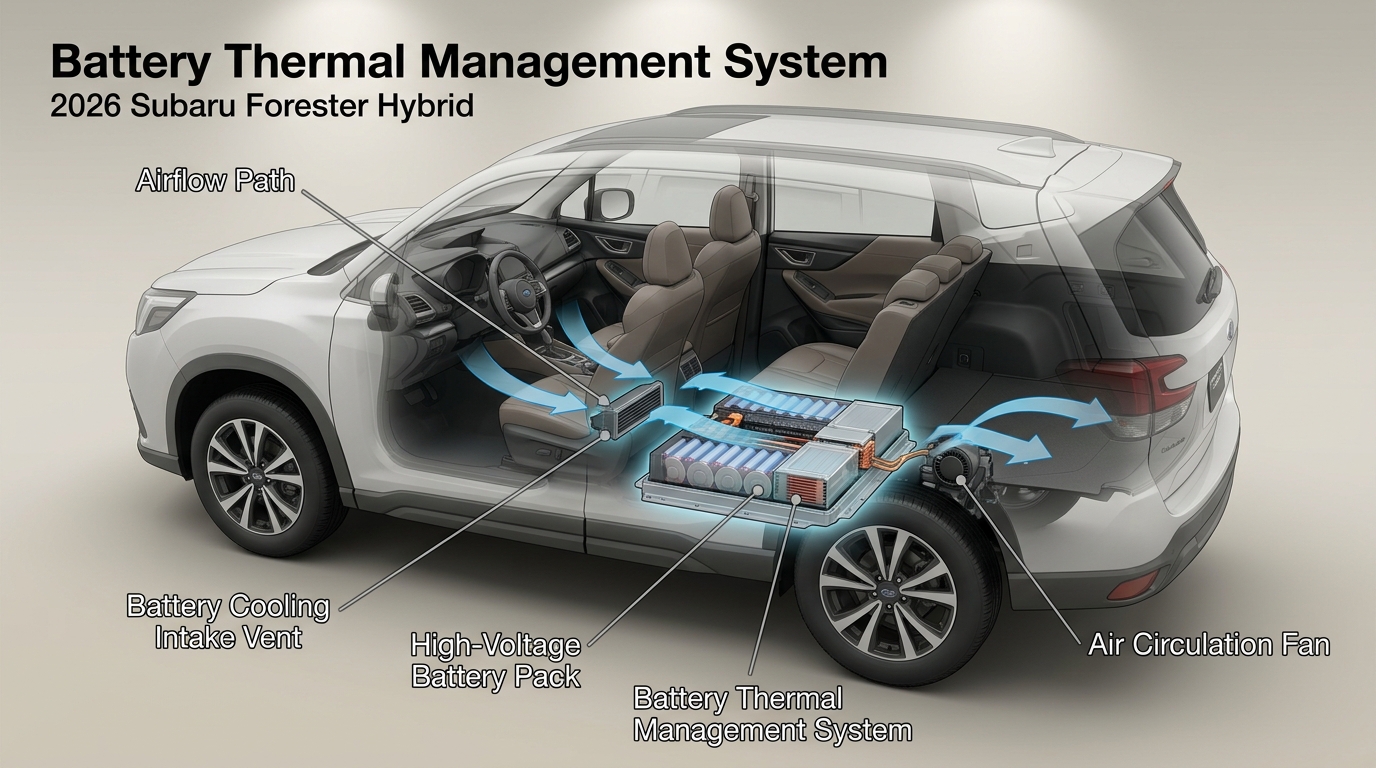
The bottom line for current and prospective owners is clear and reassuring: the 2026 Subaru Forester Hybrid does not require burdensome, frequent, or costly battery cooling fluid flushes under standard driving conditions. Unlike some early-generation hybrid vehicles or complex liquid-cooled high-voltage setups that demand frequent fluid replacement, Subaru’s hybrid battery thermal management system is designed for maximum long-term reliability and minimal driver friction.
However, ‘low maintenance’ does not mean ‘zero maintenance.’ The health and longevity of your hybrid battery pack rely heavily on maintaining uninterrupted airflow across the high-voltage battery cooling intake vents and ensuring that routine multi-point inspections are conducted by certified technicians. Dust, pet hair, autumn leaves, and suburban St. Louis road grime can accumulate around the intake ducts located in the rear cabin, restricting airflow and forcing the battery cooling fan to work significantly harder. Over time, heat accumulation is the single greatest enemy of hybrid battery efficiency and cell lifespan.
By simply keeping the cabin intake clear of obstructions and having the thermal management system evaluated during scheduled oil changes and tire rotations at Sunset Hills Subaru, you safeguard your battery’s thermal state, preserve optimal fuel economy, and protect your vehicle’s long-term resale value across every local commute.
Expert Perspective: Service Director Ivan Krnjic

Inside the 2026 Forester Hybrid Battery Thermal Management System
Subaru Forester Hybrid vs. Solterra: Battery Cooling Maintenance Compared
Body text
Ivan Krnjic’s Take: Why Battery Air Vent Hygiene Matters in Missouri
Living in the greater St. Louis metro area presents specific environmental conditions that directly impact vehicle maintenance. Between heavy spring pollen, humid summer dust, autumn leaves, and winter road salt, air filters across your vehicle work under heavy load. When it comes to the 2026 Forester Hybrid, Service Director Ivan Krnjic points out real-world shop findings that every owner should know.
‘In our service bay at Sunset Hills Subaru, the single most common issue we see on air-cooled hybrid batteries isn’t mechanical failure — it’s airflow restriction,’ explains Ivan. ‘Owners who travel with pets, transport camping gear, or regularly carry rear passengers often block the battery intake vent without knowing it. Jackets thrown on the rear seats or pet hair pulled into the intake screen reduce airflow. When summer heat hits 95 degrees with 80% humidity in St. Louis, a restricted vent forces the battery pack to heat up quickly, causing the vehicle’s computer to reduce hybrid electric assist to protect the system. Keeping that vent clean ensures you get 100% of your hybrid performance and fuel efficiency every time you drive.’
2026 Subaru Forester Hybrid & Outback Scheduled Maintenance Checklist
Body text
| Service Interval | 2026 Forester Hybrid Items | Subaru Outback (Gas) Items | Service Focus |
|---|---|---|---|
| 30,000 Miles | Synthetic Oil, Filter, Brake Fluid, Battery Vent Screen Clean, Cabin Filter | Synthetic Oil, Filter, Brake Fluid, Engine Air Filter, Cabin Filter | Comprehensive inspection & fluid updates |
| 60,000 Miles | Oil/Filter, Spark Plugs, CVT Fluid Check, High-Voltage Thermal System Diagnostic | Oil/Filter, Spark Plugs, CVT Fluid Check, Front/Rear Differential Fluids | Major ignition & drivetrain check |
| 90,000 Miles | Oil/Filter, Brake Fluid Flush, Hybrid Cooling Fan Inspection, Belt Check | Oil/Filter, Brake Fluid Flush, Engine Air Filter, Belt Inspection | Long-term wear & thermal protection |
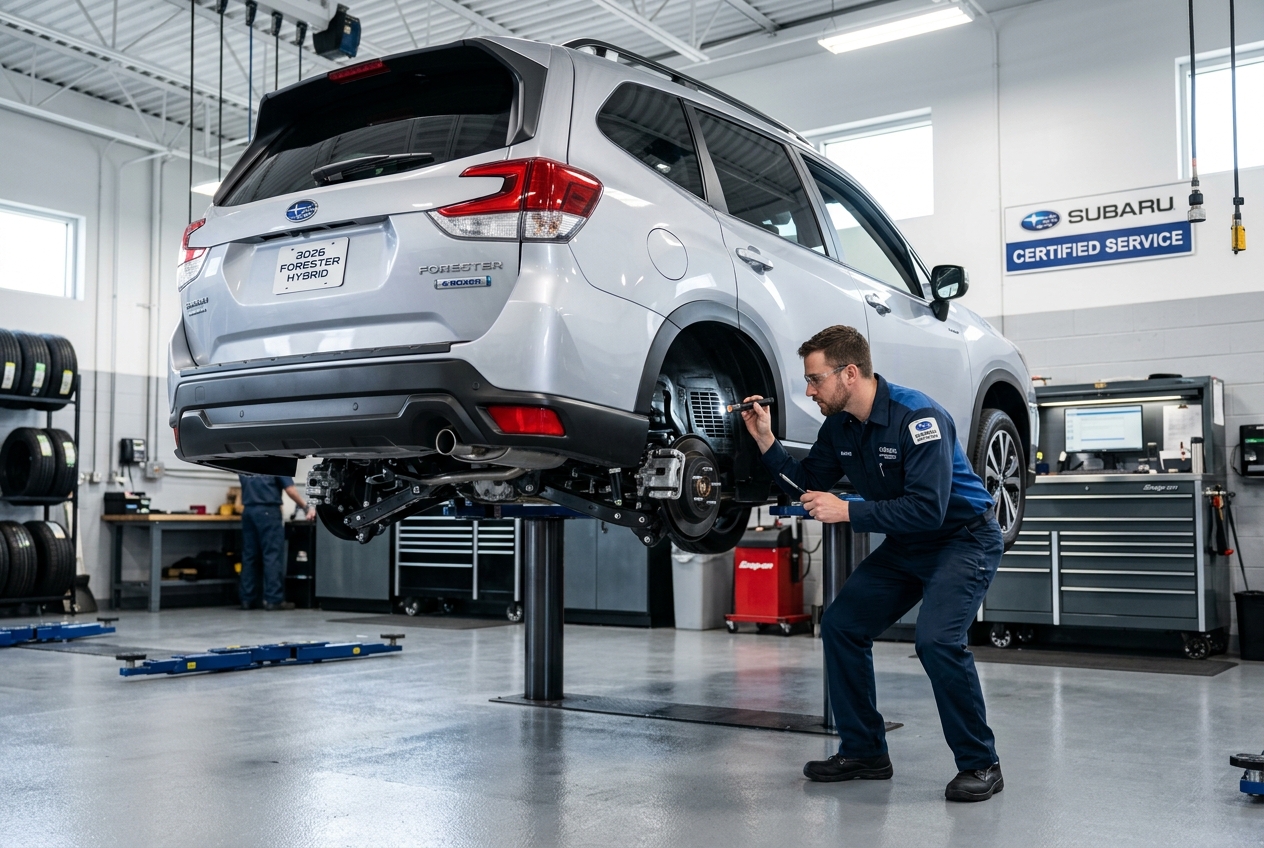
Which Subaru Maintenance Tasks are Realistic for DIY Owners to Handle?
Subaru Cost of Maintenance Compared: Forester Hybrid vs. Toyota and Audi
Body text
| Brand / Model Category | Average Annual Maintenance | Estimated 5-Year Total | 10-Year Ownership Cost Outlook |
|---|---|---|---|
| 2026 Subaru Forester Hybrid | $450 – $620 | $2,450 – $3,100 | Highly predictable, low hybrid system wear |
| Toyota RAV4 Hybrid | $430 – $590 | $2,300 – $2,950 | Extremely competitive mainstream benchmark |
| Audi Q5 Quattro (Luxury AWD) | $1,150 – $1,650 | $6,200 – $8,500 | High labor rates, expensive proprietary parts |
Why does Audi cost significantly more to maintain than Subaru despite similar all-wheel drive capabilities? Luxury European crossovers utilize specialized complex turbocharger plumbing, adaptive suspension components, and higher dealership labor rates. Subaru delivers Symmetrical AWD performance engineered for practical maintenance using accessible components.
Brake Pad Replacement Intervals on Hybrid vs. Gasoline Subaru Crossovers
Estimating Long-Term Maintenance Costs for Ladue and Sunset Hills Drivers
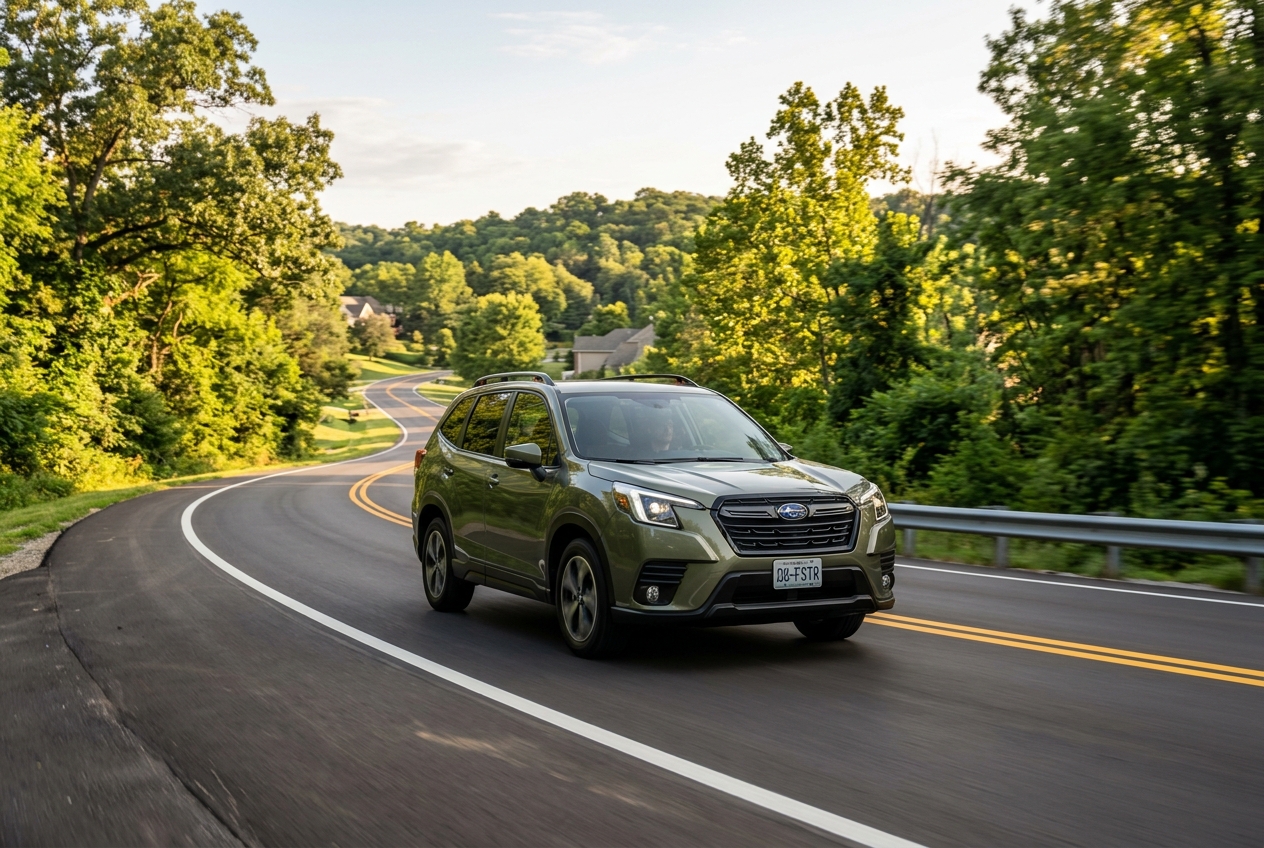
Preventative Care Checklist for Suburban St. Louis Driving Conditions
Professional Service and Maintenance Resources at Sunset Hills Subaru
Schedule Your Forester Hybrid Service Inspection at Sunset Hills Subaru Today
Keep your 2026 Subaru Forester Hybrid performing at its peak efficiency. Contact Service Director Ivan Krnjic and our certified technical team at Sunset Hills Subaru for expert battery cooling inspections, routine scheduled care, or genuine OEM accessories. Call us at (314) 476-9638 today or visit us at 10100 Watson Rd, Sunset Hills, MO 63127.
Connect with us


- August 2026
- July 2026
- June 2026
- May 2026
- April 2026
- March 2026
- February 2026
- January 2026
- December 2025
- November 2025
- October 2025
- September 2025
- August 2025
- July 2025
- June 2025
- May 2025
- April 2025
- March 2025
- February 2025
- January 2025
- December 2024
- November 2024
- October 2024
- September 2024
- August 2024
- July 2024
- June 2024
- May 2024
- April 2024
- March 2024
- February 2024
- January 2024
- December 2023
- November 2023
- October 2023
- September 2023
- July 2023
- June 2023
- May 2023
- April 2023
- March 2023
- February 2023
- January 2023
- December 2022
- November 2022
Archives
- 2024 Outback
- 2025 Forester Hybrid
- 2025 Subaru Crosstrek
- 2025 Subaru Outback
- Auto Financing
- Automotive News
- Automotive Repair Tips
- Automotive Rumors & Insights
- Buying & Trade-In Process Guidance
- Buying Guides
- Charging Solutions & Infrastructure
- Community Engagement
- Dealership Financing
- Fuel Efficiency
- Fun Things to Do Near Sunset Hills MO
- Infotainment
- Leasing guides
- Maintenance & Service
- Model Comparisons
- New Vehicle Reviews
- Outdoor Adventure & Camping
- Ownership Experience
- Performance and Engineering
- Reliability and Quality Insights
- Safety
- Subaru Financing
- Subaru Loyalty Program
- Subaru Motorsports
- Subaru Repair
- Subaru Road Safety
- Subaru Share The Love
- Sunset Hills New Subaru
- Sunset Hills Subaru Dealer
- Sunset Hills Subaru EV Dealership
- Sunset Hills Subaru Loves Pets
- Sunset Hills Subaru Service
- Sunset Hills Used Cars
- Technology & Innovation
- Technology & Innovation
- Things to do in Sunset Hills, MO
- Tire Care & Replacement
- Trade Up Advantage
- Uncategorized
- Vehicle Design & Innovation
Categories