
Establishing Confidence in Your Vehicle Trade-In Process
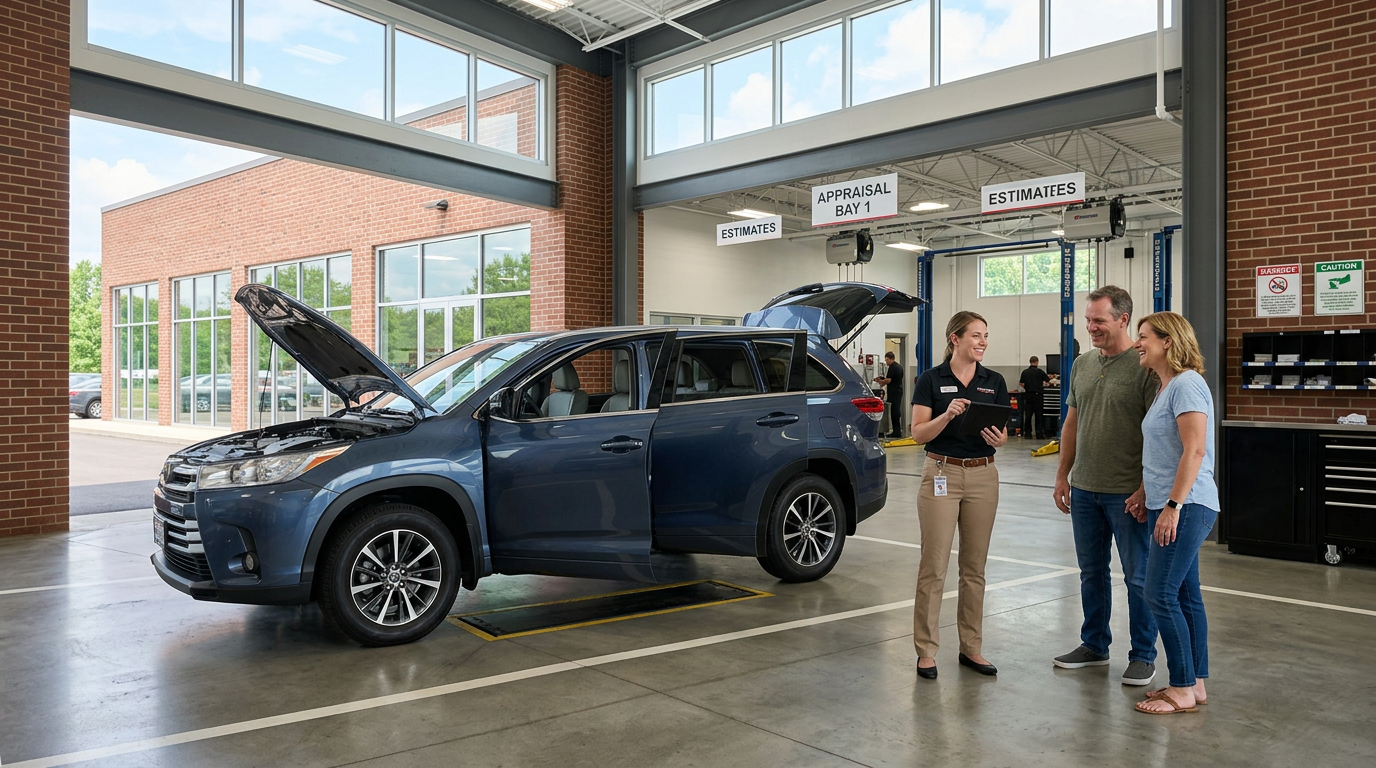
Deciding to part with your current vehicle can feel like a major hurdle, but understanding how the transaction works is the first step toward a seamless transition. Many drivers find themselves balancing the excitement of selecting a new vehicle with the practical logistics of offloading their old one. When you know what to expect during the appraisal, you can approach the showroom floor with complete peace of mind. Our team is committed to providing a transparent, straightforward environment where you can make informed decisions at your own pace.
If you are beginning your research from home, you can easily value your trade-in using our secure online tool. This resource provides a reliable baseline estimate of your vehicle’s current market worth, helping you establish a realistic budget before you even set foot on our lot. Once you have an idea of your vehicle’s value, you can explore our new-vehicle inventory to find the perfect upgrade for your daily drive.
When you are ready for a professional, in-person evaluation, you can visit our physical location. For those traveling from nearby areas, getting to our showroom is simple, and you can easily look up our Sunset Hills location to plan your route. If you prefer to discuss the process with an acquisition specialist beforehand, feel free to give us a quick call to get immediate answers to your questions.
Table of Contents
- Understanding Dealership Valuation vs Private Party Sales
- How Mileage and Wear Shape the Value of Your Current Car
- Navigating Outstanding Loans and Rolling Negative Equity Forward
- Maximizing Your Missouri Sales Tax Credit on a Dealership Trade
- When to Disclose Your Trade-In and How to Prepare Your Paperwork
- Quick Answers Before You Visit
- Take Your Next Step Toward a New Subaru Purchase
Understanding Dealership Valuation vs Private Party Sales
Why do retail trade-in offers differ from the prices you see in local classified advertisements? This is one of the most common questions buyers ask when preparing to transition to a new vehicle. The variance comes down to the substantial business investments required to prepare a used vehicle for its next owner. When a dealership acquires a vehicle, it assumes all the financial risk, administrative burdens, and reconditioning costs that a private seller typically avoids.
A private sale might technically yield a slightly higher raw dollar figure on paper, but it demands a significant investment of your personal time and energy. You must clean the vehicle, take professional-grade photos, list it on multiple public platforms, field inquiries from strangers, and coordinate potentially unsafe test drives. Furthermore, you are responsible for handling the complex title transfer paperwork and verifying that the buyer’s funds are legitimate.
In contrast, trading your vehicle to a dealership is an immediate, single-day transaction. We handle the entire reconditioning process, which includes a comprehensive safety inspection, professional detailing, and any necessary mechanical repairs. This ensures the vehicle meets our high standards before joining our used-vehicle inventory. When you trade in, you walk away from the old vehicle’s liabilities instantly, saving weeks of hassle and negotiation.
Pricing
Pricing by trim
| Feature | Limited | Limited XT | Premium | Touring | Touring XT | Wilderness |
|---|---|---|---|---|---|---|
| Base MSRP | $41,715 | $44,365 | $34,995 | $45,395 | $47,995 | $44,995 |
| Destination charge | $1,450 | $1,450 | $1,450 | $1,450 | $1,450 | $1,450 |
How Mileage and Wear Shape the Value of Your Current Car
Odometer readings and physical condition are two of the most significant variables in any professional vehicle appraisal. Because mileage directly correlates with mechanical wear, vehicles with lower-than-average accumulation naturally command stronger values. Generally, the industry benchmark for normal use is around 12,000 miles per year. If your vehicle sits well below this average, its market desirability increases, particularly for popular crossover models that are highly sought after by local commuters.
While you cannot change the numbers on your odometer, understanding how wear is assessed can help you make smart decisions before trading. Dealership appraisers look closely at both cosmetic and mechanical elements, including:
- Tire tread depth and evenness of wear
- Windshield integrity, noting any chips or spiderweb cracks
- Exterior paint condition, checking for deep scratches or door dings
- Interior cabin condition, including upholstery stains, tears, or odors
A common dilemma is whether to purchase expensive replacements, such as brand-new tires, right before trading your car. In almost all cases, the answer is no. Dealerships have access to tires, parts, and glass replacement at wholesale commercial rates, meaning we can perform these updates far more affordably than a retail consumer can. You will rarely recoup the full retail cost of those brand-new tires in your final trade-in offer. Instead of spending out-of-pocket, you can explore our parts specials to see how we maintain quality, or look at our current offers to see how your trade-in value fits into a new purchase.
To put this into perspective, consider the 2026 Subaru Outback Limited XT, which starts at an MSRP of $41,715 (with a destination charge of $1,450). If you are trading in an older crossover toward a highly equipped trim like the Limited XT, minor cosmetic dings will be factored into the wholesale reconditioning estimate, but they will not prevent you from securing a highly competitive trade value that lowers your overall purchase price.
Fuel Economy
Fuel economy and range by trim
| Feature | Limited | Limited XT | Premium | Touring | Touring XT | Wilderness |
|---|---|---|---|---|---|---|
| MPG | 25 city / 31 hwy / 27 combined | 21 city / 29 hwy / 24 combined | 25 city / 31 hwy / 27 combined | 25 city / 31 hwy / 27 combined | 21 city / 29 hwy / 24 combined | 21 city / 27 hwy / 23 combined |
Navigating Outstanding Loans and Rolling Negative Equity Forward
Can you still trade in your vehicle if you still owe money to a bank or credit union? Absolutely. Having an active auto loan is an incredibly common scenario, and the trade-in process is designed to handle outstanding balances seamlessly. The first step is contacting your current lender to obtain a formal payoff letter, which states the exact dollar amount required to clear the lien on your title.
Once we appraise your vehicle, one of two financial scenarios will occur:
- Positive Equity: Your vehicle’s trade-in value is higher than your loan payoff amount. For example, if your car is valued at $18,000 and your payoff is $13,000, you have $5,000 in positive equity to use as a down payment on your next vehicle.
- Negative Equity: Your vehicle is worth less than the remaining balance on your loan. If your car is valued at $15,000 but your payoff is $18,000, you have $3,000 in negative equity (often called being “underwater”).
If you have negative equity, you do not necessarily have to pay that difference out of pocket. Subject to lender approval, we can often roll that negative balance directly into your new auto loan. While this does increase your new loan principal and financing costs, it allows you to transition out of your old vehicle immediately without a large upfront cash requirement. To see what financing structures are available for your situation, you can easily apply for financing online to secure a pre-approval from the comfort of your home.
Maximizing Your Missouri Sales Tax Credit on a Dealership Trade
Beyond the convenience of a fast transaction, trading your vehicle to a licensed dealership in Missouri offers a powerful financial advantage that private sales cannot match. The state of Missouri provides a dedicated sales tax credit for vehicle trade-ins, which can save you hundreds or even thousands of dollars on your overall purchase. This credit directly reduces the taxable purchase price of your new vehicle.
When you trade in a vehicle, you only pay state and local sales tax on the net purchase price—the cost of the new vehicle minus the agreed-upon value of your trade-in. This tax incentive is highly valuable for residents of Ladue, where local tax rates mean that maximizing your deductions can yield substantial real-world savings on a premium vehicle purchase.
To calculate your exact tax savings, you simply multiply your agreed-upon trade-in value by your local sales tax rate. For example, if you trade in an older SUV for a trade-in allowance of $20,000, and your local combined sales tax rate is 8%, you instantly save $1,600 in sales tax. In a private sale, you would have to pay sales tax on the full purchase price of the new car, completely missing out on this automatic state-level tax benefit.
When to Disclose Your Trade-In and How to Prepare Your Paperwork
A piece of advice often found on consumer forums is to hide your trade-in until the very end of a negotiation. While some buyers believe this strategy protects them, it actually slows down the transaction and can lead to unnecessary frustration. Modern dealerships utilize advanced, real-time market data to value vehicles, meaning our trade-in offers are calculated independently of the new vehicle’s purchase price. Disclosing your trade-in early allows our team to work on both sides of the transaction simultaneously, saving you valuable time in the showroom.
To ensure your trade-in goes as smoothly as possible, arriving at the dealership with the correct documentation is essential. Having your paperwork organized prevents delays and ensures we can complete the transaction on the same day.
Please gather the following items before your visit:
- The physical vehicle title (if you own the car outright) or your current loan payoff information
- A valid, current vehicle registration card
- All sets of keys, including spare remotes and valet keys
- A government-issued photo ID for all owners listed on the title
- Any historical maintenance and service records to demonstrate how well you cared for the vehicle
By presenting these documents upfront, you show that you are a prepared buyer, which builds mutual trust and allows us to finalize your trade-in valuation quickly.
Quick Answers Before You Visit
Q: Do I need to fix minor scratches or a small windshield chip before trading in my car?
A: Generally, no. Because we have on-site reconditioning facilities and access to wholesale pricing, we can repair minor cosmetic flaws and glass chips far more cost-effectively than you can as a retail customer. Spending your own money on these minor fixes rarely increases your trade-in offer enough to cover your out-of-pocket costs.
Q: Can I trade in a vehicle that has a salvaged or rebuilt title?
A: Yes, we accept vehicles with branded, salvaged, or rebuilt titles. However, please be aware that these designations significantly impact a vehicle’s wholesale market value. We will perform a detailed physical appraisal to determine a fair offer based on the vehicle’s current safety and structural integrity.
Q: How long is a professional trade-in appraisal offer valid?
A: Because the used vehicle market fluctuates constantly, our written appraisal offers are typically guaranteed for a specific window, usually seven days or a set number of additional miles. This gives you time to consider your options without worrying about immediate price changes.
Q: Is it better to trade in my vehicle at the very end of the month?
A: Yes, the end of the month can be an excellent time to trade. Dealership sales teams often have monthly volume goals to meet, which can make them more motivated to offer competitive trade-in valuations to help close a new vehicle transaction.
Q: What happens to my trade-in if I still have an active lease?
A: You can absolutely trade in a leased vehicle. We will contact the leasing company to obtain the current buyout quote. If the vehicle’s market value is higher than the buyout price, you can apply that positive equity directly toward your next purchase.
Take Your Next Step Toward a New Subaru Purchase
Trading in your current vehicle is a highly practical way to lower your financing costs and step into a modern, safe, and capable vehicle. Whether you are seeking the athletic handling of a sports model or the spacious utility of a family crossover, our lineup has an option tailored to your lifestyle.
For example, the 2026 Subaru Outback Premium features standard All-wheel drive, a 2.5L engine producing 180 hp and 178 lb-ft of torque, paired with a smooth Lineartronic CVT. If you need maximum capability for weekend adventures, the 2026 Subaru Outback Touring XT upgrades you to a powerful 2.4L turbocharged engine delivering 260 hp and 277 lb-ft of torque, perfect for handling the elevated, rolling terrain around Sunset Hills with confidence.
We invite you to find the perfect match for your needs by exploring our diverse selection of models, including:
- Versatile crossovers like the new Subaru Outback
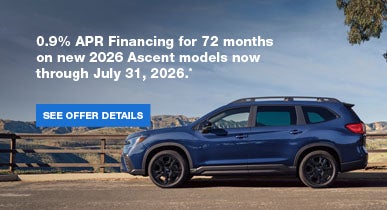
- Family-ready three-row options like the new Subaru Ascent
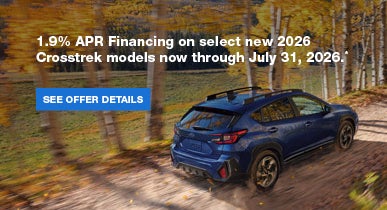
- Compact and efficient models like the new Subaru Crosstrek
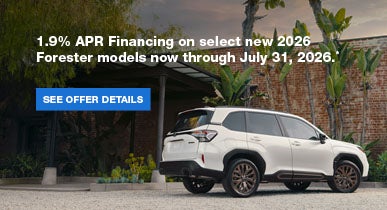
- Redesigned favorites like the new Subaru Forester
- Sporty and engaging drives like the new Subaru WRX or the new Subaru BRZ
- All-weather commuter options like the new Subaru Impreza or the refined new Subaru Legacy
- Fully electric capability with the new Subaru Solterra
Ready to experience the Subaru difference for yourself? Stop by our showroom for a no-pressure consultation. You can easily find our Sunset Hills dealership on your map, or give our friendly team a call today to schedule your personalized test drive.
Engine & Performance
Powertrain specs by trim
| Feature | Limited | Limited XT | Premium | Touring | Touring XT | Wilderness |
|---|---|---|---|---|---|---|
| Engine | 2.5L | 2.4L | 2.5L | 2.5L | 2.4L | 2.4L |
| Horsepower | 180 hp | 260 hp | 180 hp | 180 hp | 260 hp | 260 hp |
| Torque | 178 lb-ft | 277 lb-ft | 178 lb-ft | 178 lb-ft | 277 lb-ft | 277 lb-ft |
| Transmission | Lineartronic CVT | Lineartronic CVT | Lineartronic CVT | Lineartronic CVT | High-torque Lineartronic CVT | Lineartronic CVT |
| Drivetrain | All-wheel drive | All-wheel drive | All-wheel drive | All-wheel drive | All-wheel drive | All-wheel drive |
Keep Your Vehicle Running Strong
Keep your vehicle performing at its best with our service team:
© 2026 Sunset Hills Subaru. All rights reserved.
Connect with us


- July 2026
- June 2026
- May 2026
- April 2026
- March 2026
- February 2026
- January 2026
- December 2025
- November 2025
- October 2025
- September 2025
- August 2025
- July 2025
- June 2025
- May 2025
- April 2025
- March 2025
- February 2025
- January 2025
- December 2024
- November 2024
- October 2024
- September 2024
- August 2024
- July 2024
- June 2024
- May 2024
- April 2024
- March 2024
- February 2024
- January 2024
- December 2023
- November 2023
- October 2023
- September 2023
- July 2023
- June 2023
- May 2023
- April 2023
- March 2023
- February 2023
- January 2023
- December 2022
- November 2022
Archives
- 2024 Outback
- 2025 Forester Hybrid
- 2025 Subaru Crosstrek
- 2025 Subaru Outback
- Auto Financing
- Automotive Repair Tips
- Automotive Rumors & Insights
- Buying & Trade-In Process Guidance
- Buying Guides
- Charging Solutions & Infrastructure
- Community Engagement
- Dealership Financing
- Fuel Efficiency
- Fun Things to Do Near Sunset Hills MO
- Infotainment
- Leasing guides
- Maintenance & Service
- Model Comparisons
- New Vehicle Reviews
- Outdoor Adventure & Camping
- Ownership Experience
- Performance and Engineering
- Reliability and Quality Insights
- Safety
- Subaru Financing
- Subaru Loyalty Program
- Subaru Motorsports
- Subaru Repair
- Subaru Road Safety
- Subaru Share The Love
- Sunset Hills New Subaru
- Sunset Hills Subaru Dealer
- Sunset Hills Subaru EV Dealership
- Sunset Hills Subaru Loves Pets
- Sunset Hills Subaru Service
- Sunset Hills Used Cars
- Technology & Innovation
- Things to do in Sunset Hills, MO
- Tire Care & Replacement
- Trade Up Advantage
- Uncategorized
- Vehicle Design & Innovation
Categories