Blog

Unveiling the Excellence of Subaru's Symmetrical All-Wheel Drive (AWD)

Unveiling the Excellence of Subaru's Symmetrical All-Wheel Drive

Unveiling the Excellence of Subaru's Symmetrical All-Wheel Drive (AWD)

Subaru's Symmetrical All-Wheel Drive (AWD) system is renowned for its performance and reliability, making it a standout feature in the automotive world. This article delves into what makes Subaru's AWD so special, exploring its benefits, technical specifications, and real-world applications. Whether you're navigating through the snowy streets of St Charles, MO, or the rainy roads of Chesterfield, MO, Subaru's AWD offers unparalleled traction and stability. Let's explore how this system sets Subaru apart from the competition.

Understanding Subaru's Symmetrical AWD

Subaru's Symmetrical All-Wheel Drive is a full-time AWD system that provides power to all four wheels simultaneously, ensuring maximum traction and control. Unlike part-time AWD systems that engage only when slippage is detected, Subaru's system is always active, offering a proactive approach to handling diverse driving conditions. This system is particularly beneficial in areas like Maryland Heights, MO, where weather conditions can change rapidly.

The symmetrical layout of the drivetrain, combined with the low center of gravity provided by Subaru's Boxer engine, enhances stability and balance. This unique configuration allows for even weight distribution, reducing the risk of oversteer or understeer and improving handling in challenging conditions. The Symmetrical AWD system is a testament to Subaru's commitment to safety and performance, providing drivers with confidence on the road.

Advantages of Subaru's Symmetrical AWD Over 2WD

The primary advantage of Subaru's Symmetrical AWD over traditional two-wheel drive (2WD) systems is its ability to deliver power to all four wheels, enhancing traction and stability. In regions like Ladue, MO, where roads can be slick and unpredictable, this feature is invaluable. Here are some key benefits:

  • Enhanced Traction and Grip: Power is distributed evenly to all four wheels, reducing the likelihood of wheel slip and providing better control on slippery surfaces.
  • Improved Handling and Stability: The balanced weight distribution of the symmetrical AWD system ensures more predictable handling, especially during turns and in adverse conditions.
  • Increased Safety: Continuous power delivery to all wheels enhances safety in various driving conditions, including inclement weather and off-road situations.
  • Predictable Driving Experience: The symmetrical layout and equal-length driveshafts contribute to a more balanced and predictable driving experience, making it easier to maintain control.

These features make Subaru's Symmetrical AWD a superior choice for drivers seeking reliability and performance in their vehicles.

AWD Performance in Snowy Conditions

For residents in areas like Creve Coeur, MO, where snow is a common occurrence, Subaru's AWD system is a game-changer. AWD provides enhanced traction and stability, making it easier to navigate snowy roads. Here's why AWD is beneficial in snow:

  • Enhanced Traction: AWD systems provide better traction than FWD or RWD, especially when accelerating from a stop on snowy or icy roads.
  • Improved Stability: AWD helps maintain stability and control on slippery surfaces, making it easier to navigate curves and avoid skids.
  • Reduced Risk of Getting Stuck: AWD's ability to distribute power to all four wheels reduces the likelihood of getting stuck in snow-covered areas or on unplowed roads.

While AWD offers significant advantages in snow, it's important to pair it with appropriate winter tires for optimal performance. For those in Glendale, MO, considering a switch to winter tires, you can Schedule Service and Diagnostics here to ensure your vehicle is winter-ready.

AWD in Rain: Enhanced Safety and Control

In regions like Webster Groves, MO, where rain is frequent, Subaru's AWD system provides enhanced safety and control. AWD systems distribute power to all four wheels, allowing for better grip and traction on wet roads. This helps prevent wheelspin, which can be a common issue in FWD or RWD vehicles in wet conditions.

  • Improved Stability: AWD provides better stability on wet roads, making it easier to maintain control of the vehicle, especially when accelerating or turning.
  • More Consistent Performance: AWD systems can help maintain consistent performance on wet roads, even if one wheel loses traction.
  • Reduced Risk of Loss of Control: The improved traction and stability offered by AWD can reduce the risk of losing control, especially in situations like heavy rain or when encountering sudden changes in road conditions.

While AWD offers significant benefits in wet conditions, it's important to remember that it's not a substitute for safe driving practices. For those interested in exploring Subaru's AWD models, check out our New Subaru Inventory here.

The Reliability of Subaru's AWD System

Subaru's AWD system is renowned for its reliability, making it a popular choice among drivers in Concord, MO. Subaru vehicles frequently rank near the top of Consumer Reports' Owner Satisfaction and reliability ratings, thanks to their robust AWD systems and the use of the Boxer engine. This combination ensures long-lasting performance and peace of mind for drivers.

Subaru's commitment to quality and durability is evident in its engineering and design. The Symmetrical AWD system is built to withstand various driving conditions, providing consistent performance and reliability. For those looking to trade in their current vehicle for a Subaru, you can Get your value trade here.

Subaru's Boxer Engine: A Perfect Pairing with AWD

The Boxer engine is a hallmark of Subaru vehicles, providing a low center of gravity and enhancing the performance of the Symmetrical AWD system. This engine layout, with its horizontally opposed pistons, contributes to better handling and stability, making Subaru vehicles a joy to drive in areas like Twin Oaks, MO.

  • Unique Design: The horizontally opposed design is a key feature of Subaru vehicles and is not widely used by other manufacturers.
  • Benefits: This design contributes to a lower center of gravity, which can lead to better handling and stability, as well as a smoother ride.
  • Historical Significance: Subaru has used the Boxer engine since the 1960s, making it a core part of their brand identity.

For those interested in learning more about Subaru's Boxer engine, visit our dealership at 10100 Watson Rd, Sunset Hills, MO 63127, USA here or call us at (314) 476-9638.

Why Subaru Stands Out in the AWD Market

Subaru's Symmetrical AWD system is a standout in the AWD market, offering a combination of performance, reliability, and innovation. While other manufacturers like Audi and BMW offer impressive AWD systems, Subaru's unique approach to AWD, combined with the Boxer engine, sets it apart.

Subaru's focus on safety, durability, and performance has earned it a loyal following among drivers in Valley Park, MO, and beyond. The brand's commitment to innovation and quality is evident in its engineering and design, making Subaru a top choice for those seeking a reliable and capable AWD vehicle.

For those interested in exploring Subaru's current offerings, check out our Current New Car Specials here.

Exploring Subaru's AWD Models

Subaru offers a diverse lineup of AWD models, each designed to meet the needs of different drivers. From the rugged Subaru Forester to the sporty Subaru WRX, there's a Subaru model for everyone. Here's a look at some popular Subaru AWD models:

  • Subaru Outback: Known for its versatility and capability, the Outback is perfect for those who love adventure. Explore our New Subaru Outback Inventory here.
  • Subaru Forester: With its spacious interior and advanced safety features, the Forester is ideal for families. Check out our New Subaru Forester Inventory here.
  • Subaru Crosstrek: Combining the practicality of an SUV with the agility of a compact car, the Crosstrek is a popular choice among drivers. Browse our New Subaru Crosstrek Inventory here.

For those interested in exploring Subaru's complete lineup, visit our Used Vehicle Inventory here or our New Subaru Inventory here.

In summary, Subaru's Symmetrical AWD system is a testament to the brand's commitment to safety, performance, and innovation. Whether you're navigating the streets of Fenton, MO, or exploring the trails of Lakeshire, MO, Subaru's AWD system provides the confidence and capability you need. For more information or to schedule a test drive, contact us at (314) 476-9638 or visit us at 10100 Watson Rd, Sunset Hills, MO 63127, USA here.

© 2025 Sunset Hills Subaru

Recommended Posts

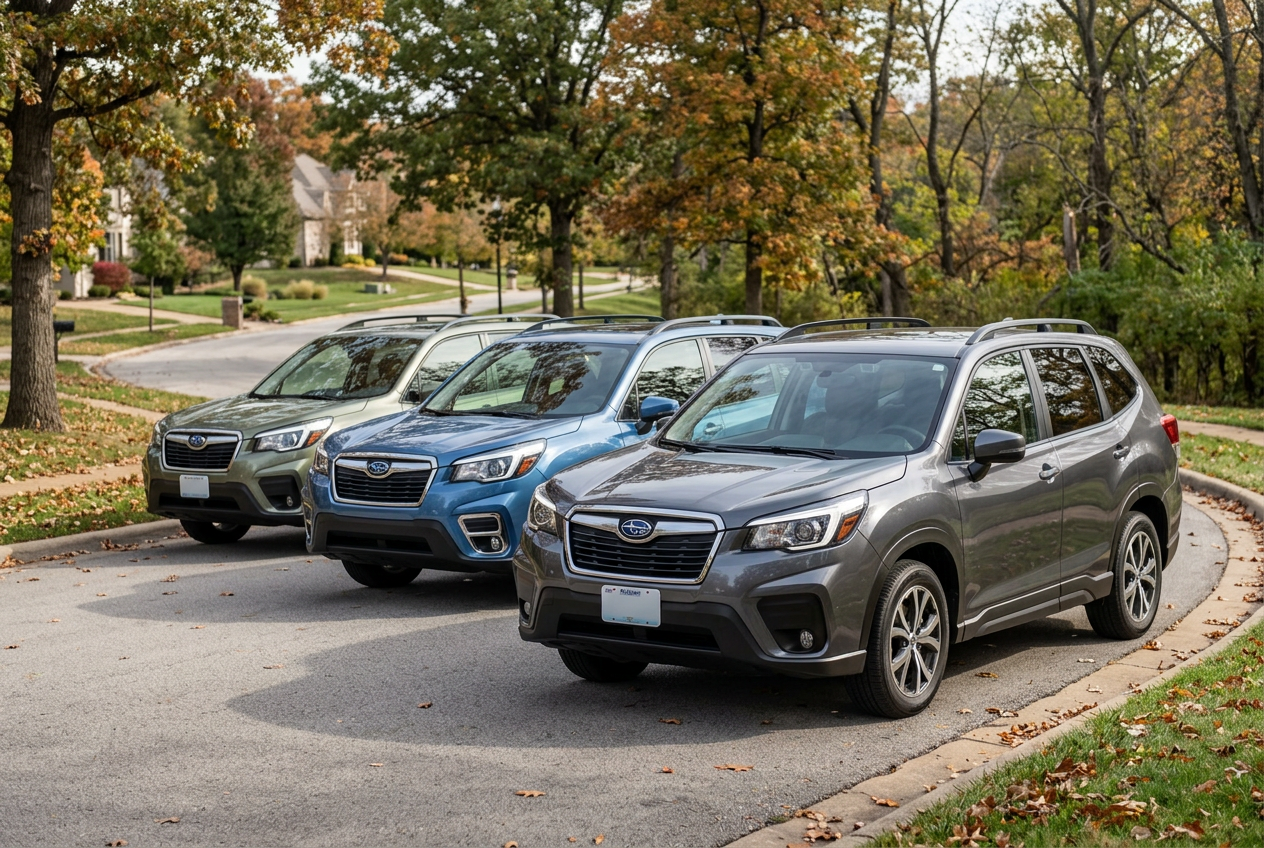
Subaru Forester Line Up

Best and Worst Subaru Forester Model Years: Quick Reliability Verdict

When evaluating compact crossover SUVs on the pre-owned market, few vehicles evoke as much loyalty as the Subaru Forester. Celebrated for its standard Symmetrical All-Wheel Drive, expansive outward visibility, and rugged practical versatility, the Forester has earned a legendary status among drivers across St. Louis County. However, navigating the pre-owned market requires a nuanced understanding of engine developments, transmission generational upgrades, and historical factory updates. Not all model years are created equal, and choosing the right production era makes the difference between hundreds of thousands of trouble-free miles and unexpected workshop visits. To deliver a clear, high-level summary for shoppers at Sunset Hills Subaru in Sunset Hills, MO, automotive mechanical records and long-term consumer testing data place Forester model years into three distinct tiers: 1. Top Priority Tier (2019–2023 Model Years): Built on the high-rigidity Subaru Global Platform (SGP), the fifth-generation Forester represents the gold standard of modern crossover reliability. Featuring a thoroughly re-engineered 2.5-liter FB25 direct-injection BOXER engine, enhanced Lineartronic Continuously Variable Transmission (CVT) thermal control, and standard EyeSight Driver Assist Safety Technology, these models register remarkably low mechanical failure rates and consistently achieve top-tier reliability rankings. 2. Strong Value Tier (2016–2018 Model Years): Representing the refined tail end of the fourth generation, 2016 through 2018 Foresters resolved the early CVT shudder issues and oil consumption anomalies that plagued earlier production runs. Equipped with upgraded interior acoustics, updated Starlink infotainment, and modern multi-layer steel (MLS) head gasket engineering, these vehicles offer an ideal balance of modern safety, strong durability, and attractive pre-owned pricing. 3. Exercise Caution Tier (2011–2015 Model Years): Early fourth-generation models and late third-generation models require detailed mechanical scrutiny. The introduction of the first-generation FB25 engine in 2011 introduced oil control ring tension problems that led to excessive oil consumption. Additionally, 2014 and 2015 models marked the debut of the Lineartronic CVT in the Forester line, which experienced early torque converter clutch shudder and thermal expansion issues that prompted factory extended warranties. Model Year Range Reliability Tier Engine & Transmission Rating Primary Market Recommendation 2019–2023 Highest Recommendation FB25 Direct Injection / SGP Platform - Excellent Prioritize CPO; outstanding longevity & safety 2016–2018 Highly Recommended FB25 Multi-Port / Refined CVT - Solid Best budget-to-value sweet spot under 100k miles 2011–2015 Proceed with Inspection Early FB25 / First-Gen CVT - Moderate Risk Require detailed service records & engine test 2005–2010 Legacy Era EJ25 Phase II / 4-Speed Auto - High Maintenance Verify head gasket replacement status prior to purchase Why Automotive Experts Advise Avoiding 2011 to 2015 Subaru Forester Models Understanding why automotive engineers and consumer protection publications flag the 2011 through 2015 model years requires examining the major powertrain transitions Subaru executed during this era. In 2011, Subaru replaced the long-standing EJ25 single-overhead-cam (SOHC) engine with the all-new FB25 dual-overhead-cam (DOHC) engine. Designed to boost fuel efficiency and decrease internal friction, early iterations of the FB25 engine featured lightened piston rings with reduced tension. In real-world suburban driving—such as stop-and-go commutes along Watson Road or quick highway sprints on I-270—these low-tension oil control rings allowed engine oil to pass into the combustion chamber. Owners frequently reported consuming a quart of engine oil every 1,000 to 1,500 miles. When oil levels dropped undetected between maintenance intervals, starvation led to premature timing chain wear, camshaft scoring, and catastrophic engine failure. Subaru subsequently issued technical service bulletins and extended factory oil consumption warranties to 10 years or 100,000 miles, but many of these vehicles have now aged past that coverage window. The second major hurdle arrived with the 2014 redesign, which marked the transition from a traditional 4-speed automatic transmission to the Lineartronic Continuously Variable Transmission (CVT). First-generation CVT units installed in 2014 and 2015 Foresters experienced torque converter clutch binding, fluid breakdown under high thermal loads, and noticeable shuddering during low-speed acceleration. To address widespread customer complaints, Subaru extended the transmission control module warranty for select 2014-2015 models. Furthermore, 2014 models suffered from thermal expansion issues affecting air conditioning compressors and premature front suspension lower control arm bushing tears. While diligent maintenance can mitigate some of these concerns, buying a 2011–2015 Forester without verified repair records exposes owners to elevated ownership costs. Understanding Head Gasket Issues in Older Foresters and the 2014+ Engine Redesign For decades, the most persistent topic in pre-owned Subaru discussions centered on head gasket integrity. To understand why modern Foresters no longer suffer from this historical vulnerability, it helps to review how Subaru solved a complex mechanical challenge through advanced material science and architectural engineering. From the late 1990s through 2009 (and continuing into select 2010 models), Subaru utilized the EJ25 2.5-liter naturally aspirated engine. This engine design relied on single-layer graphite-coated head gaskets. Because the BOXER layout positions cylinder banks horizontally, coolant and engine oil sit constantly against the lower gasket seams when the vehicle is parked. Over time—typically between 90,000 and 125,000 miles—the protective graphite coating corroded due to electrolysis and thermal cycling, causing external oil or coolant weeping behind the exhaust manifolds. How the 2014+ Redesign Permanently Solved the Head Gasket Dilemma: 1. Multi-Layer Steel (MLS) Construction: In the final years of the EJ25 and across all FB-series engines, Subaru transitioned exclusively to multi-layer steel head gaskets coated in advanced fluoroelastomer materials. The steel layers provide spring-like resilience that maintains structural sealing despite aluminum block expansion. 2. Redesigned Engine Block Cooling Passages: The FB25 engine introduced separate cooling circuits for the cylinder block and cylinder head. This closed-deck cooling jacket layout optimizes heat dissipation, preventing localized hot spots that previously caused head warping. 3. Chain-Driven DOHC System: By eliminating the rubber timing belt in favor of maintenance-free timing chains, engine timing covers and head mating surfaces were structurally reinforced, eliminating flex under load. If you are inspecting a 2013 or earlier Forester, check for damp oil residue along the lower head seams during an underbody lift inspection. However, for 2014 and newer models available at pre-owned centers like Sunset Hills Subaru, head gasket deterioration has been effectively eliminated as a systematic concern. How Consumer Reliability Ratings Rank the 2019 Through 2023 Subaru Forester Models Subaru Global Platform Introduced for the Forester in 2019, the Subaru Global Platform increased chassis rigidity by 40% to 70%. This structural evolution dramatically minimized cabin vibration, improved crash test safety ratings, and reduced body flexing—extending the lifespan of suspension components and door seals. EyeSight & Tech Maturity Fifth-generation Foresters featured stereoscopic EyeSight cameras mounted securely inside the windshield. Integrated driver assistance features like pre-collision braking and adaptive cruise control consistently earned top IIHS Safety Pick+ designations with virtually zero electronic glitch reports. Direct-Injection Refinement With over 90% new parts compared to its predecessor, the direct-injected 2.5L engine achieved an optimal balance of 182 horsepower and exceptional fuel efficiency. Consumer Reports ranked the 2019–2023 Forester among the top three most reliable compact crossovers year after year. Explore Pre-Owned Forester Inventory What Is the Price Range for a Reliable Used Subaru Forester Under 100,000 Miles? Navigating real-world pre-owned pricing requires evaluating mileage thresholds against generation upgrades. For mid-Missouri and St. Louis area buyers seeking a reliable Forester with under 100,000 miles, the market generally divides into two key pricing windows: 1. Refined 4th Generation (2016–2018): Typically priced at market-based amounts depending on trim level (Base, Premium, Limited, or Touring) and odometer reading. Models in this tier with 65,000 to 85,000 miles represent exceptional value for budget-conscious families. They offer standard AWD, strong fuel economy, and proven mechanical components at a comfortable price point. 2. 5th Generation Models (2019–2023): Generally priced between $20,500 and $28,500. Lower-mileage pre-owned units (30,000 to 50,000 miles) and Certified Pre-Owned (CPO) examples command the upper end of this spectrum. Investing in a 5th generation model grants access to updated frame geometry, Apple CarPlay/Android Auto connectivity, and advanced EyeSight capabilities. At Sunset Hills Subaru, every pre-owned vehicle under 100,000 miles undergoes rigorous safety checks, ensuring that your investment delivers total peace of mind regardless of the price tier you select. Generation / Years Typical Mileage Range Estimated Market Price Range Key Recommended Features 4th Gen (2016–2018) 60,000 – 95,000 miles $14,500 – $19,500 X-Mode, Heated Seats, Rear Camera 5th Gen (2019–2021) 30,000 – 65,000 miles $20,500 – $25,000 SGP Platform, Standard EyeSight, Starlink 5th Gen (2022–2023) 15,000 – 35,000 miles $24,500 – $28,500 Enhanced EyeSight, Wilderness Trim option How Does a Used Subaru Forester Compare to Competitors Like the RAV4 and CR-V? When cross-shopping the pre-owned compact crossover segment, the Subaru Forester frequently goes head-to-head with the Toyota RAV4 and Honda CR-V. While all three models enjoy strong reputations for reliability, key mechanical and design differences set the Forester apart for Midwest drivers. Subaru Forester Standard Symmetrical AWD: Permanently engaged mechanical AWD delivers continuous power to all four wheels. Ground Clearance: Class-leading 8.7 inches standard (9.2 inches on Wilderness). Visibility: Ultra-low beltline provides unmatched outward vision. Toyota RAV4 AWD System: Front-wheel-drive slip-and-grip system (AWD is extra cost on lower trims). Ground Clearance: 8.4 inches on standard trims. Cargo & Access: Narrower rear hatch opening compared to Forester's wide square portal. Honda CR-V AWD System: Real-Time AWD system sends torque rearward only when front wheels slip. Ground Clearance: 7.8 to 8.2 inches. Engine Tech: 1.5L Turbocharged engine in 2017+ models experienced early oil dilution concerns in cold weather. Feature Comparison Subaru Forester (2019-2023) Toyota RAV4 (2019-2023) Honda CR-V (2017-2022) Standard Drivetrain Symmetrical All-Wheel Drive Front-Wheel Drive (AWD optional) Front-Wheel Drive (AWD optional) Ground Clearance 8.7 Inches 8.4 Inches 7.8 Inches EPA Highway MPG (AWD) Up to 33 MPG Up to 33 MPG Up to 32 MPG Rear Cargo Opening Width 48.0 Inches 41.5 Inches 43.2 Inches Which Used Subaru Forester Model Years Are Worth Prioritizing and Inspection Checklist When evaluating a pre-owned Forester—whether buying privately or shopping at a dealership—performing a systematic inspection ensures long-term satisfaction. Experienced technicians recommend checking five critical focus areas before finalizing any transaction: 1. CVT Fluid Quality & Pan Inspection: Verify that the transmission fluid has been serviced or inspected every 30,000 to 45,000 miles. During an underbody lift inspection, check the transmission oil pan seam for signs of weeping or fluid discoloration. Smooth, shudder-free engagement from a stop is mandatory. 2. Front Lower Control Arm Bushings: Subaru uses large fluid-filled rearward bushings on the front lower control arms to absorb road vibrations. Inspect these rubber bushings for cracking or fluid leakage. Worn bushings manifest as steering wheel shimmy under light braking at 55–65 mph. 3. Rear Wheel Bearings & Hub Assemblies: Listen for a low-pitched humming or roaring noise between 40 and 60 mph. Rear wheel bearing wear is a common maintenance item across all compact crossovers around 75,000 to 100,000 miles. 4. Oil Consumption & Exhaust Tip Inspection: On 2011–2015 models, pull the dipstick to check current oil level and clarity. Inspect the exhaust inner pipe for excessive dry carbon build-up or oily residue that signals oil blow-by. 5. All-Wheel Drive Torque Bind Test: Perform a low-speed tight figure-eight turn in a parking lot. If the vehicle stutters, hops, or feels heavy during slow tight turns, the center multi-plate transfer clutch (solenoid C) may be binding due to neglected differential fluid services. What Criteria Must a Subaru Pass to Qualify for the CPO Program? For buyers desiring total peace of mind, the Subaru Certified Pre-Owned (CPO) program eliminates the guesswork of pre-owned shopping. Not every used Forester qualifies for certification. To earn the CPO badge at Sunset Hills Subaru, a candidate vehicle must pass strict eligibility thresholds: • Age & Mileage Limits: Must be from the current or past 5 model years and have under 80,000 original miles on the odometer. • Clean Vehicle History: Must possess a clean title and CARFAX report free of structural damage, flood history, or major accident disclosures. • 152-Point Mechanical & Safety Inspection: Conducted by factory-trained technicians, covering engine compression, CVT operation, brake pad thickness (minimum 50% remaining), tire tread depth, and EyeSight calibration. Any component that fails inspection must be reconditioned or replaced with genuine OEM Subaru parts. CPO models typically carry a modest $1,000 to $1,500 premium over non-certified inventory, but the inclusion of factory powertrain protection far outweighs this upfront difference. View Certified Pre-Owned Subaru Forester Inventory What Warranty Coverage Comes with CPO, and Can You Extend Powertrain Options? Every Certified Pre-Owned Subaru Forester comes standard with a factory-backed 7-year / 100,000-mile Powertrain Plan starting from the original in-service date. This coverage features a $0 deductible for covered repairs at any authorized Subaru retail facility across the nation. What Is Covered Under CPO Powertrain? • Engine assembly, internal lubricated parts, timing chains, water pump, and valve covers. • Lineartronic CVT assembly, torque converter, and electronic transmission control modules. • Symmetrical AWD transfer case, front/rear differentials, driveshaft, and axle shafts. Extending Your Coverage Options (Subaru Added Security): For complete comprehensive bumper-to-bumper protection, drivers commuting from Ladue, Chesterfield, or Sunset Hills can upgrade to official Subaru Added Security Wrap plans: 1. Classic Wrap Plan: Adds coverage for air conditioning systems, electrical components, suspension, fuel system, and cooling assemblies. 2. Gold Plus Wrap Plan: Delivers full comprehensive bumper-to-bumper coverage matching factory new-vehicle protection, plus 24/7 Roadside Assistance, towing reimbursement, rental car allowances, and trip interruption protection. How Well Does the Subaru Forester Hold Its Resale Value Over Five to Ten Years? Low Depreciation Curve According to ALG and Kelley Blue Book residual value awards, the Subaru Forester retains a higher percentage of its original value after 36 and 60 months than nearly any competitor in the compact SUV segment, outperforming segment averages by 5% to 8%. High Local St. Louis Demand In the St. Louis regional market, pre-owned AWD crossovers experience steady demand year-round. Autumn and winter months drive particular interest in well-maintained Foresters, maintaining strong trade-in valuations at local dealerships. 96% Still on the Road Experian automotive data confirms that over 96% of Subaru Forester vehicles sold in the last ten years are still on the road today. This mechanical durability reinforces strong resale equity when owners choose to trade up. Typical Financing Rates, Monthly Terms, and Local Buying Options Securing competitive loan terms is a key milestone when purchasing a pre-owned Forester. Through Subaru Motors Finance and local St. Louis lending partners, qualified buyers at Sunset Hills Subaru can take advantage of specialized Certified Pre-Owned interest rates that often undercut standard used car APRs. • CPO Financing Options: Qualified buyers can access reduced rates on select CPO Forester models for terms ranging from 36 to 72 months. • Flexible Term Options: Tailor your loan structure from 48-month plans for lower total interest to 72-month terms for manageable monthly payments. • Trade-In Equity Integration: Applying trade equity from your current vehicle directly lowers your loan principal and state sales tax exposure in Missouri. Our finance department specialists work directly with customers across Kirkwood, Webster Groves, and Chesterfield to craft personalized financing packages aligned with your monthly budget. Get Approved for Used Vehicle Financing Matching Your Forester Model Year to St. Louis Weather and Suburban Commutes Living in the greater St. Louis metro area presents diverse driving demands. From rapid winter snowfalls along Highway 141 to sweltering summer heat on I-44, the Subaru Forester is engineered to handle midwestern weather swings with ease. Why Symmetrical AWD Matters in Sunset Hills: Unlike reactive front-wheel-drive systems that slip before sending power back, Subaru's continuous transfer clutch distributes torque to all four wheels simultaneously. When unexpected sleet coats steep suburban inclines in Maryland Heights or Chesterfield, the Forester maintains steady lateral stability. X-Mode & Hill Descent Control: Available on 2014 and newer models, dual-mode X-Mode optimizes engine output, CVT gear ratios, and VDC braking parameters to traverse deep snow or slick mud seamlessly. For drivers navigating winter weather in fall 2026 and beyond, prioritizing a 2016–2023 Forester equipped with X-Mode ensures supreme winter confidence. Find Your Reliable Used or Certified Pre-Owned Subaru Forester at Sunset Hills Subaru Ready to experience the exceptional visibility, safety, and all-weather capability of a pre-owned Subaru Forester? Whether you are evaluating low-mileage 5th generation models or seeking a value-focused 2016–2018 tier, our team at Sunset Hills Subaru (10100 Watson Rd, Sunset Hills, MO 63127) is dedicated to helping you select the perfect vehicle. Call our friendly sales staff today at (314) 476-9638 or schedule a personal test drive online. Calculate Your Trade-In Value Now Subaru Forester Reliability Guide in Sunset Hills MO | Sunset Hills Subaru
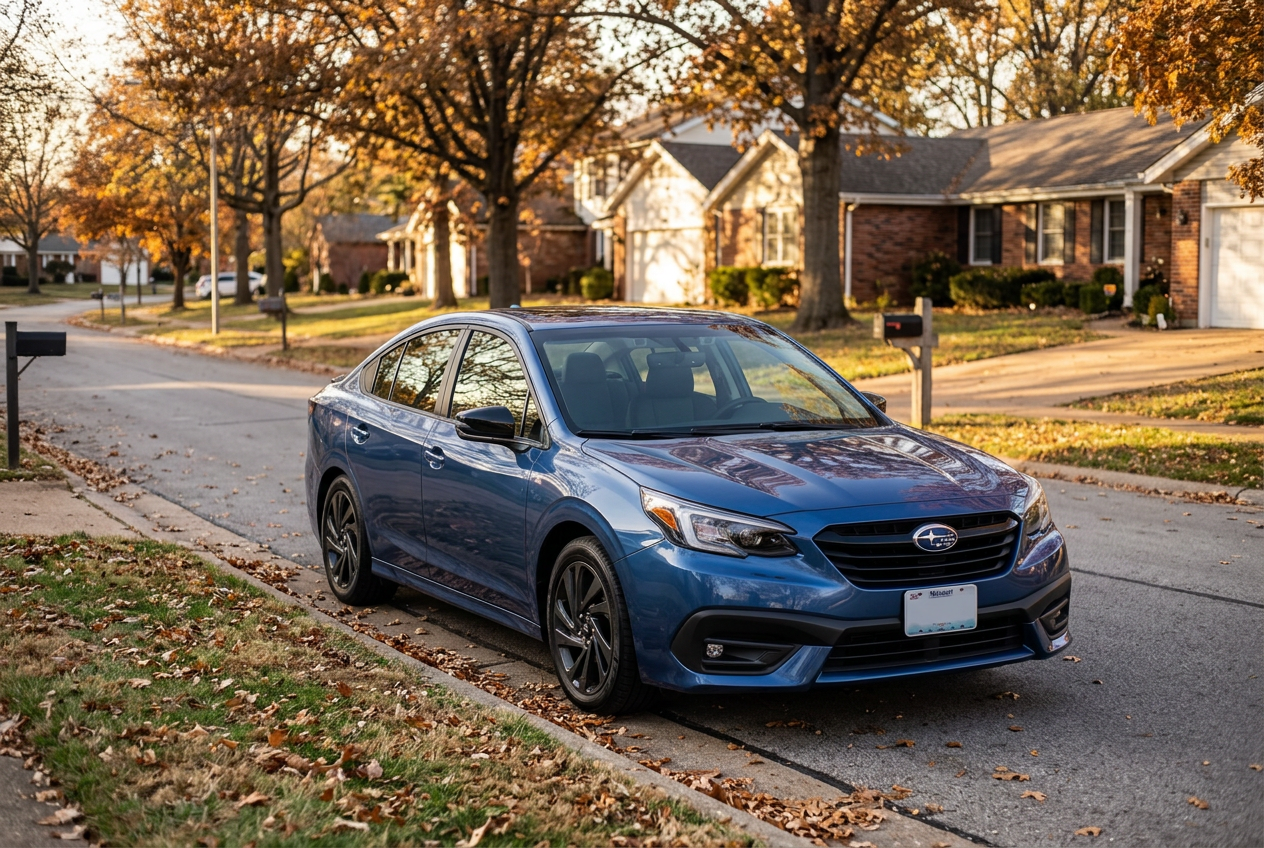
2025 Subaru Legacy

Which Midsize Sedan Retains Higher Resale Value After 5 Years?

Which Midsize Sedan Retains Higher Resale Value After 5 Years? When purchasing a midsize sedan, initial purchase price and fuel efficiency are only part of the financial equation. The true cost of vehicle ownership is heavily dictated by five-year depreciation—the difference between what you pay today and what the car is worth when you trade it in or sell it half a decade down the road. According to long-term automotive residual data from ALG (Automotive Lease Guide) and Kelley Blue Book (KBB), the Subaru Legacy compares favorably with midsize competitors like the Toyota Camry, Honda Accord, and Nissan Altima in retaining its original value over a five-year horizon. While the Camry and Accord have long maintained reputations for reliability, the Subaru Legacy holds a unique financial advantage in suburban markets like St. Louis and Chesterfield. Standard Symmetrical All-Wheel Drive (AWD), exceptional safety scores from the IIHS, and demonstrably lower average repair costs over time elevate secondhand demand. When winter weather hits Eastern Missouri, pre-owned buyers actively seek out all-weather sedans, directly insulating Legacy trade-in equity against steep market drops. Whether you plan to finance a new sedan or lease for three to five years, choosing a vehicle with industry-leading resale retention preserves thousands of dollars in equity. Explore our current New Subaru Legacy Inventory to discover how engineering excellence translates directly into long-term financial smarts. Explore New Subaru Legacy Inventory 5-Year Midsize Sedan Depreciation Comparison: Subaru Legacy vs. Camry, Accord, and Altima To understand why the Subaru Legacy dominates five-year value retention, it helps to examine empirical residual figures across the midsize segment. Depreciation accounts for nearly 40% to 50% of total five-year vehicle ownership expenses. A sedan that retains even 5% to 8% more of its sticker price after 60 months puts thousands of dollars back into your wallet when it is time to upgrade. Midsize Sedan Model Standard Drivetrain Est. 5-Year Retained Value % 5-Year Depreciation Loss (on $30k MSRP) Regional Used Demand (MO) Subaru Legacy Symmetrical AWD 54.5% - 57.2% ~$12,840 Very High (AWD Premium) Toyota Camry Front-Wheel Drive (FWD) 51.0% - 53.8% ~$14,100 High Honda Accord Front-Wheel Drive (FWD) 50.2% - 52.5% ~$14,490 High Nissan Altima Front-Wheel Drive (FWD) 42.0% - 45.1% ~$16,800 Moderate Why Retained Equity Matters in St. Louis Initial purchase price is only the starting point. Midsize sedans equipped with standard Front-Wheel Drive often experience steeper value cliffs once they reach 60,000 to 80,000 miles. In Missouri, where seasonal transitions bring freezing rain, slush, and heavy summer downpours, pre-owned buyers specifically search out All-Wheel Drive models. Because standard AWD is built into every Subaru Legacy (excluding specific niche specs), second-hand buyers are willing to pay a premium. This elevated demand keeps trade-in valuations remarkably high at dealerships across Sunset Hills and Ladue. When balancing your initial price tag against retained trade-in equity, the Legacy regularly proves to be the most financially prudent choice in its class. Furthermore, Subaru's controlled production volumes prevent market saturation. Unlike fleet-heavy sedans like the Nissan Altima, the Legacy maintains tighter pre-owned inventory supplies, ensuring used car managers offer top dollar when you decide to upgrade. How Symmetrical All-Wheel Drive and Safety Ratings Protect Legacy Resale Value Symmetrical AWD Engineering Unlike slip-and-grip AWD systems found in competing vehicles that only engage rear wheels after traction is lost, Subaru Symmetrical All-Wheel Drive actively routes power continuously to all four wheels. Placed along the vehicle's centerline, this balanced powertrain provides exceptional stability, preventing mechanical wear and tear associated with abrupt torque shifts and maintaining long-term hardware durability. Top Safety Pick+ Legacy Safety credentials heavily dictate pre-owned vehicle desirability. The Subaru Legacy consistently earns the Insurance Institute for Highway Safety (IIHS) Top Safety Pick+ rating—the industry standard for crashworthiness. Engineered with Subaru’s Global Platform and Ring-Shaped Reinforcement Frame, the Legacy protects occupants through advanced crumple zones and rigid cabin structural integrity. Pre-Owned Market Impact When family buyers and daily commuters search the used market, safety and all-weather traction are non-negotiable priorities. Secondhand shoppers willingly pay higher market rates for a vehicle with proven structural safety records and year-round confidence. This structural confidence creates a resilient floor for trade-in values at five years. What Driver Assistance and Safety Systems Come Standard on the Subaru Legacy? Every modern Subaru Legacy comes standard with Subaru EyeSight Driver Assist Technology, a suite of advanced active safety systems that act like an extra pair of eyes on the road. Unlike competitor sedans that locked these features behind expensive trim upgrades in earlier model years, Subaru democratized active safety across the entire Legacy lineup. Standard EyeSight capabilities include: • Pre-Collision Braking System: Applies full braking force in emergency situations to prevent or mitigate frontal impacts. • Advanced Adaptive Cruise Control with Lane Centering: Maintains preset distances from traffic while keeping the sedan centered in its lane on highways like I-64 and I-270. • Lane Departure and Sway Warning: Monitors lane markings and alerts drivers if the vehicle drifts unintentionally. • Pre-Collision Throttle Management: Cuts power if an obstacle is detected directly ahead to prevent accidental acceleration. By drastically reducing minor fender benders and severe collisions, standard EyeSight technology helps maintain clean Vehicle History Reports (CARFAX). A used sedan with a clean, collision-free history commands significantly higher trade-in values after 5 years. Pre-owned buyers prioritize modern safety tech. Knowing that a 5-year-old Legacy carries the exact same core active safety hardware as brand-new models makes pre-owned Legacy inventory highly sought after across Missouri. Browse New Subaru Inventory Understanding Total Cost of Ownership: Subaru Legacy Maintenance Costs vs. Resale Gain Evaluating vehicle economics strictly by initial cost misses the bigger picture. True financial intelligence lies in calculating total cost of ownership (TCO)—balancing routine maintenance costs against five-year retained equity. A car with slightly higher routine service requirements can easily yield superior net wealth if its depreciation curve is dramatically flatter. Over a 5-year or 60,000-mile period, average Subaru Legacy maintenance costs range between $1,800 and $2,400 total (roughly $360 to $480 per year for standard scheduled servicing). While all-wheel drive models require differential fluid checks and balanced tire wear, the Legacy’s unexpected repair frequency is statistically lower than the overall industry average. Because major powertrain failures are rare when factory guidelines are met, Legacy owners avoid costly out-of-pocket mechanical repairs. When you combine low unexpected maintenance expenses with a 54%+ 5-year residual value retention, the net cost of owning a Legacy is significantly lower than owning FWD competitors that depreciate by 50% to 58% over the same timeframe. Ownership Expense Category Subaru Legacy (5-Year Est.) Average FWD Midsize Sedan Financial Advantage 5-Year Maintenance & Servicing $2,100 $1,950 -$150 (AWD Fluid/Tires) 5-Year Unexpected Repairs $650 $1,100 +$450 (High Build Reliability) 5-Year Retained Equity ($30k vehicle) $16,800 $14,100 +$2,700 (Flatter Depreciation) Net Financial Impact +$14,050 Retained Value +$11,050 Retained Value +$3,000 Legacy Advantage Recommended Subaru Legacy Maintenance Schedule and DIY Care Tips Factory Intervals Subaru recommends routine maintenance every 6,000 miles or 6 months (whichever comes first). Key milestones include: • 6,000 Miles: Synthetic oil change, tire rotation, safety inspection. • 12,000 Miles: Cabin air filter replacement, brake system check. • 30,000 Miles: Engine air filter, brake fluid flush, inspection of AWD differential fluids. • 60,000 Miles: Spark plug replacement (BOXER engine service) and transmission fluid inspection. 0W-20 Synthetic Oil What motor oil weight is recommended for the Subaru Legacy? Standard naturally aspirated 2.5L BOXER engines require 0W-20 synthetic motor oil. Synthetic oil optimizes cold-weather startup lubrication during Missouri winters and reduces internal friction. DIY vs. Dealer Care Can basic maintenance on a Subaru Legacy be performed at home? Yes! Budget-conscious owners can easily replace cabin air filters, engine air filters, wiper blades, and check fluid levels. However, spark plug swaps on horizontal BOXER engines and EyeSight recalibrations require specialized dealer tools best handled at factory service centers. What Do Routine and Major Subaru Legacy Services Cost Around Sunset Hills, Missouri? Understanding routine service pricing around St. Louis helps owners budget effectively. Around Sunset Hills, MO, typical dealership service costs align with the following ranges: • Standard Minor Service (6k / 18k / 24k miles): $85 - $130 (Includes synthetic oil, OEM filter, tire rotation, and multi-point inspection). • 30,000-Mile Major Service: $350 - $490 (Includes engine/cabin filters, brake fluid exchange, differential inspection, and fuel system service). • 60,000-Mile Major Service: $650 - $890 (Adds spark plug replacement, complete brake fluid flush, and transmission fluid diagnostics). • 90,000-Mile Service: $450 - $650 (Covers comprehensive fluid exchanges, belt inspection, and mechanical diagnostics). Does the Subaru factory warranty cover routine maintenance costs? The standard Subaru 3-year/36,000-mile bumper-to-bumper warranty and 5-year/60,000-mile powertrain warranty cover manufacturing defects and mechanical repairs, but do not cover wear-and-tear routine maintenance like oil changes or brake pads. However, completing scheduled maintenance at authorized facilities ensures full warranty protection without claim disputes. Why Dealer Maintenance Records Boost Resale Equity When trading in your sedan at Sunset Hills Subaru, having a clean, digital maintenance history logged through factory-certified service departments adds tangible value. Pre-owned vehicle buyers pay top dollar for vehicles with documented OEM upkeep. Be sure to review our Current Service and Parts Information before booking your appointment to maximize savings on routine care. Schedule Service and Diagnostics Why All-Wheel Drive and CVT Fluid Service Intervals Impact Long-Term Expenses Why All-Wheel Drive Increases Long-Term Expenses Slightly Operating a continuously engaged Symmetrical AWD system adds minor service requirements compared to simple FWD layouts. Front and rear differentials require gear oil inspections and drain/fills roughly every 30,000 to 60,000 miles. Additionally, because Subaru’s AWD system relies on identical wheel rotation speeds, tire tread depths must match within 2/32nds of an inch across all four tires. Uneven tire wear can strain the central transfer clutch, making routine tire rotations crucial. CVT Fluid Service Requirements How often does a Subaru Legacy Lineartronic Continuously Variable Transmission (CVT) require fluid service? Subaru officially considers CVT fluid a 'lifetime' fill under normal driving conditions, but factory technicians strongly advise inspecting CVT fluid every 30,000 miles and performing a complete fluid drain/fill every 60,000 to 90,000 miles—especially under 'severe' driving conditions such as frequent stop-and-go commuting around St. Louis or towing. Proactive CVT fluid changes preserve transmission shift performance, protect internal steel chains, and prevent catastrophic repair costs down the road. Common Repairs, EyeSight Recalibration, and Legacy XT Fuel Requirements Most Common Repairs What are the most common repair costs for a Subaru Legacy beyond 80,000 miles? Typical maintenance items include wheel bearing replacements ($350-$500 per hub), front lower control arm bushings ($300-$450), and brake rotor replacement ($400-$600 per axle). Engine components like timing chains in modern BOXER engines are designed to last the full vehicle lifespan. EyeSight Recalibration Does Subaru EyeSight recalibration increase windshield replacement costs? Yes. Replacing a windshield on an EyeSight-equipped Legacy requires precision optical recalibration of the dual stereo cameras ($250-$450 fee). However, most auto insurance policies cover this under glass coverage, and factory recalibration ensures active safety features function accurately. Legacy XT Fuel Specs Does the turbocharged Subaru Legacy XT require premium fuel? No! The 2.4L Turbocharged Subaru BOXER engine (260 hp) is engineered to run efficiently on 87-octane regular unleaded gasoline. You enjoy sports-sedan acceleration without being forced to pay premium fuel prices at St. Louis gas pumps. Why Chesterfield and Ladue Commuters Choose the Legacy for Suburban Reliability Daily commuting across the St. Louis metropolitan area presents diverse challenges—from tight merges on Highway 141 to winter snow accumulation along I-64 and I-270. Drivers from Chesterfield, Ladue, Maryland Heights, and Kirkwood choose the Subaru Legacy because it blends midsize sedan luxury with robust foul-weather capability. Inside, the Legacy boasts acoustic windshield glass, whisper-quiet cabin insulation, and standard Apple CarPlay / Android Auto integration. Unlike bulky SUVs that sacrifice highway fuel economy, the Legacy delivers up to 35 MPG highway while maintaining unwavering all-wheel drive traction. When local drivers are ready to transition into a new car after five years, the strong regional reputation of Subaru in St. Louis County means certified dealerships and private buyers alike compete for pre-owned Legacy stock. Protecting your resale equity begins with choosing a car built for Missouri roads. Get Your Trade-In Value Practical Checklist to Maximize Your Sedan's Trade-In Value After 5 Years To guarantee your Subaru Legacy commands top-tier residual pricing when it comes time to sell or trade, follow these five actionable steps throughout your ownership term: 1. Maintain Detailed Maintenance Records: Organize digital or physical receipts for every oil change, brake service, and tire rotation. Comprehensive service logs prove diligent ownership to dealership appraisers. 2. Demand Genuine Subaru OEM Parts: Insist on genuine Subaru filters, fluids, and brake pads during routine maintenance to protect factory mechanical standards. 3. Protect Interior Upholstery: Utilize floor mats, clean leather conditioning products, and fix small spills immediately to prevent permanent stains or sun fading. 4. Address Minor Body Blemishes Promptly: Fix small paint chips or dented door dings early to prevent rust formation in humid Missouri summers. 5. Utilize Online Appraisal Tools Early: Before walking into a showroom, use an instant online appraisal tool to establish a firm baseline valuation for your vehicle. Value Your Trade and Explore Legacy Inventory at Sunset Hills Subaru Ready to experience how the Subaru Legacy combines strong 5-year resale value retention, confident all-weather stability, and premium comfort? The team at Sunset Hills Subaru is here to assist you through every step of your automotive journey. Whether you are looking to appraise your current vehicle using our Get your value trade portal, explore competitive auto financing options with our experts via Get approved for financing, or test drive a new Legacy, we deliver an uncompromised dealership experience. Visit us today at 10100 Watson Rd, Sunset Hills, MO 63127 or reach our friendly sales team directly by phone at Call (314) 476-9638. Conveniently located just off I-270, we are proud to serve drivers from St. Louis, Chesterfield, Ladue, and beyond. Click to Get Directions to Sunset Hills Subaru and discover the Subaru difference! Subaru Legacy Resale Value in Sunset Hills MO | Sunset Hills Subaru
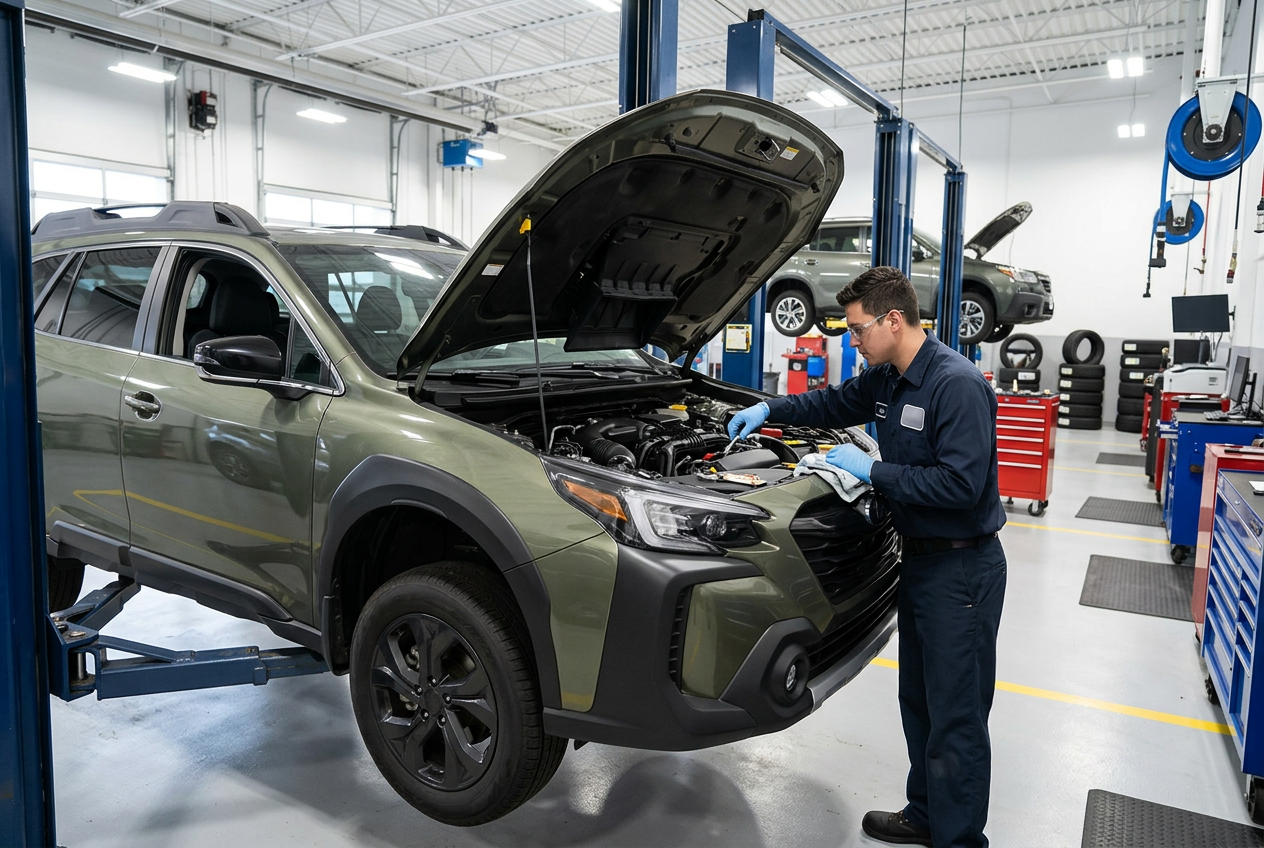
tech looking at Subaru outback

Subaru Outback Oil Change Cost: What to Expect at the Dealership

If you are planning your vehicle's regular maintenance routine, a essential question is: How much does a routine oil change cost for a Subaru Outback? At Sunset Hills Subaru in Sunset Hills, Missouri, a routine synthetic oil change for a Subaru Outback typically ranges between $75 and $150. This comprehensive service includes premium Genuine Subaru 0W-20 synthetic oil specifically formulated for Subaru BOXER® engines, an OEM high-filtration oil filter replacement, a brand-new drain plug crush washer to ensure a leak-free seal, and a complementary multi-point safety inspection performed by factory-certified technicians. Exact costs can vary slightly based on the specific Outback powertrain equipped under your hood. Standard Outback trims powered by the naturally aspirated 2.5-liter Subaru BOXER® 4-cylinder engine generally sit at the lower end of the range ($75 to $95), requiring 4.4 quarts of 0W-20 full synthetic oil. Upper trim levels—such as the Outback XT and Outback Wilderness equipped with the turbocharged 2.4-liter Subaru BOXER® engine—require 4.8 quarts of synthetic oil and dedicated heavy-duty filter elements, placing service near $95 to $120. View Current Service & Parts Specials How Often Should a Subaru Outback Receive an Oil Change? Subaru officially recommends a routine oil change interval of 6,000 miles or 6 months, whichever comes first, under normal driving conditions. Adhering to this timeframe maintains optimal viscosity, prevents harmful sludge accumulation inside internal engine galleries, and protects precision timing chain assemblies. However, drivers commuting throughout Greater St. Louis, Chesterfield, and Maryland Heights frequently experience driving scenarios that fall under Subaru's Severe Driving Schedule. Severe driving conditions include repeated short trips under 5 miles, extended engine idling in traffic, frequent cold-weather starts during Missouri winters, or driving on dusty gravel trails. Under severe conditions, Subaru recommends shortening oil change intervals to 3,000 to 5,000 miles or every 3 to 4 months. Frequent oil refreshes combat moisture accumulation and fuel dilution, safeguarding long-term BOXER engine health. Synthetic vs. Conventional: Why Subaru Outback Oil Changes Cost What They Do Modern Subaru BOXER® engines utilize ultra-low viscosity 0W-20 full synthetic oil engineered for rapid lubrication during cold engine ignition and maximum heat dispersion under heavy loads. Unlike older engines that ran on conventional oil, boxer engines position cylinders horizontally. Full synthetic oil provides continuous oil film strength across horizontal cylinder walls, preventing dry starts and internal friction. While quick-lube drive-thru outlets may advertise introductory pricing, they frequently use non-OEM generic oil filters lacking mandatory internal bypass valve pressure settings. Genuine Subaru top-mounted oil filters incorporate precise spring-loaded bypass valves (rated at 23 PSI) to maintain steady oil flow even under freezing conditions. Why Choose Dealership Service at Sunset Hills Subaru? • Factory-Trained Technicians: Master technicians who specialize exclusively in Subaru Boxer engines, Symmetrical AWD, and Lineartronic CVTs. • Genuine OEM Components: Factory-approved 0W-20 synthetic fluid and high-efficiency filters designed specifically for your vehicle. • Multi-Point Inspection: Complete health check of brake pad wear, tire tread depth, suspension bushings, battery health, and fluid levels. What Are the Local Estimated Subaru Outback Maintenance Costs Through 36,000 Miles Near Sunset Hills, Missouri? For vehicle owners living around Sunset Hills, Ladue, Kirkwood, and South St. Louis County, managing routine automotive upkeep is simple and predictable. During the first 3 years or 36,000 miles of vehicle ownership, standard maintenance expenses for a Subaru Outback typically average between $350 and $550 per year ($1,050 to $1,650 total cumulative). Year 1 (0 – 12,000 Miles) • 6,000-Mile Service: Synthetic Oil & Filter + Tire Rotation (contact us for current pricing) • 12,000-Mile Service: Synthetic Oil Change, Tire Rotation, Cabin Air Filter Replacement ($160 - $210) Estimated Year 1 Total: $270 - $350 Year 2 (12,001 – 24,000 Miles) • 18,000-Mile Service: Synthetic Oil & Filter + Tire Rotation (contact us for current pricing) • 24,000-Mile Service: Synthetic Oil Change, Engine Air Filter, Cabin Filter, Brake System Check ($220 - $280) Estimated Year 2 Total: $330 - $420 Year 3 (24,001 – 36,000 Miles) • 30,000-Mile Major Service: Synthetic Oil, Brake Fluid Flush, Tire Rotation, Air Filters, AWD Inspection ($350 - $480) • 36,000-Mile Service: Synthetic Oil & Filter ($75 - $110) Estimated Year 3 Total: $425 - $590 Schedule Service and Diagnostics How Does the Outback 5-Year Cost to Own Compare to a Toyota RAV4? When evaluated over a standard 5-year ownership period (60,000 miles), total upkeep expenses for the Subaru Outback remain comparable to midsize and compact crossover rivals such as the Toyota RAV4. Ownership Factor (5-Year / 60,000 Miles) Subaru Outback (2.5L AWD) Toyota RAV4 (2.5L AWD) Routine Scheduled Maintenance $2,100 - $2,600 $1,950 - $2,450 Standard All-Wheel Drive Standard Symmetrical AWD Optional AWD Addition Front/Rear Differential Fluid Service Included at 30k / 60k Interval Included at 30k / 60k Interval Estimated 5-Year Repair Reserve $650 - $900 $600 - $850 While routine scheduled oil and fluid services for a Subaru Outback cost roughly $150 to $200 more across 5 years than a front-wheel-drive baseline vehicle, the Outback delivers full-time Symmetrical All-Wheel Drive standard across every single trim level, providing superior traction on wet roads, ice, and midwestern winter snow. Does the Subaru Outback Hold Its Resale Value Well Over Time? Yes! The Subaru Outback consistently earns top industry recognition from automotive research authorities such as Kelley Blue Book (KBB) and ALG for maintaining exceptional residual value retention. Subaru models consistently rank near the top of all midsize crossover segments in 3-year and 5-year trade-in equity. Completing all factory-recommended routine maintenance at an authorized dealer like Sunset Hills Subaru directly protects your trade-in equity. Having continuous CARFAX service entries showing timely synthetic oil changes, genuine filter replacements, and scheduled fluid flushes reassures prospective future buyers and maximizes valuation when you choose to Get your value trade for a new vehicle. What Factory Warranty Protection Comes Standard with a New Subaru Outback? Every brand-new Subaru Outback purchased at Sunset Hills Subaru is backed by robust factory warranty coverage: • 3-Year / 36,000-Mile New Vehicle Limited Warranty: Comprehensive coverage covering bumper-to-bumper electrical, mechanical, and operational assembly components. • 5-Year / 60,000-Mile Powertrain Limited Warranty: Covers internal engine parts, timing chains, oil pumps, Lineartronic CVT transmission, transaxle, and front/rear differential gearboxes. • 5-Year / Unlimited Mileage Rust Perforation Warranty: Protects body sheet metal against corrosion perforation. Maintaining documented records of mandatory oil changes and factory maintenance intervals ensures your powertrain limited warranty coverage remains fully intact throughout its effective lifespan. What Larger Scheduled Service Expenses Should a Subaru Outback Owner Budget For? Beyond routine oil and filter changes every 6,000 miles, long-term ownership involves key periodic maintenance milestones. Budgeting for these milestones ensures smooth operation and avoids unexpected mechanical repairs. 30,000-Mile Service ($350 - $480) Includes synthetic oil change, complete brake fluid flush, replacement of engine air filter and cabin micro-filter, tire rotation, and full differential inspection. 60,000-Mile Service ($450 - $750) Major service interval adding iridium spark plug replacement, front and rear differential gear oil replacement, Lineartronic CVT fluid condition inspection, and brake system flush. 90,000-Mile Service ($500 - $850) Re-evaluates spark plugs, cooling system coolant flush, serpentine drive belt inspection, brake pad and rotor servicing, and full suspension check. Find Genuine OEM Subaru Parts How Much Does a 60,000-Mile Major Service Cost for a Subaru Outback? The 60,000-mile service is one of the most critical milestones in your Outback's lifetime, typically costing between $450 and $750 depending on model year and trim. A primary factor in labor costs for this service is replacing iridium spark plugs inside the Subaru BOXER® engine layout. Because BOXER engine cylinders lie horizontally parallel to the chassis, spark plugs are situated tightly against side frame rails. Factory-trained technicians use specialized universal ratchets and torque gauges to replace spark plugs efficiently without damaging cylinder threads. During the 60,000-mile inspection, technicians also examine EyeSight® Driver Assist sensors, perform diagnostic computer scans, replace synthetic gear oil in front and rear differential housings, and flush brake fluid. What Are the Most Common Long-Term Maintenance Items for a Subaru Outback? Is the Subaru Outback expensive to maintain over 10 years compared to competitors? Independent automotive study data shows that 10-year cumulative maintenance and repair costs for a Subaru Outback average around $5,800 to $6,800. This positions the Outback slightly below average for all-wheel-drive crossovers in the midsize class. Common maintenance items encountered past 100,000 miles include: • Wheel Bearings & Hub Assemblies: ($350 - $500 per wheel after extended highway driving) • CV Axle Boots & Joints: ($250 - $450 per axle due to normal rubber wear over time) • Lineartronic CVT Fluid Exchange: ($280 - $420 specialized fluid replacement) • Suspension Struts & Lower Control Arms: ($600 - $950 per axle) Replacing oil and filters regularly at standard 6,000-mile intervals prevents premature thermal degradation of surrounding engine gaskets and seals, keeping 10-year ownership expenses predictable and low. Does Subaru Offer Prepaid Maintenance Plans to Learn About Service Plans? Yes! Drivers purchasing or leasing a vehicle at Sunset Hills Subaru can take advantage of prepaid maintenance options designed to shield against future inflation and optimize long-term maintenance budgets. Maintain the Love Program Included on eligible new Subaru leases in select regions, covering routine oil changes, tire rotations, and inspections for the first 2 years or 24,000 miles at zero out-of-pocket cost. Subaru Added Security® Maintenance Plans Allows owners to prepay for scheduled routine maintenance (up to 3 years/36,000 miles or 5 years/60,000 miles), locking in current labor rates and synthetic oil prices. Explore New Subaru Outback Inventory What Unique Features and Service Needs Does the Subaru Outback Wilderness Trim Include? The rugged Subaru Outback Wilderness trim is factory-engineered for extreme off-road adventures, featuring raised suspension with 9.5 inches of ground clearance, revised final drive gear ratios, dual-function X-MODE®, and Yokohama GEOLANDAR® all-terrain tires. Wilderness Specific Maintenance Items: • 2.4L Turbocharged Oil Requirements: Requires 4.8 quarts of synthetic oil per change ($95 - $120). • Rear Differential Fluid Inspection: Off-road driving through water or mud requires inspecting rear differential oil and transfer case fluid for moisture ingress. • All-Terrain Tire Rotations: Deep tread patterns require diligent 6,000-mile cross-rotations to ensure even wear. Schedule Your Subaru Outback Service at Sunset Hills Subaru Ready to give your Subaru Outback the expert attention it deserves? Trust the factory-trained technicians at Sunset Hills Subaru in Sunset Hills, MO. Whether you need a simple 6,000-mile routine synthetic oil change or a 60,000-mile major service, our team uses only Genuine Subaru OEM fluids and components to keep your vehicle running like new. Visit us at 10100 Watson Rd, Sunset Hills, MO 63127 or Call (314) 476-9638 to speak directly with a service advisor. Convenient online scheduling is available 24/7! Subaru Outback Synthetic Oil Change in Sunset Hills MO | Sunset Hills Subaru