
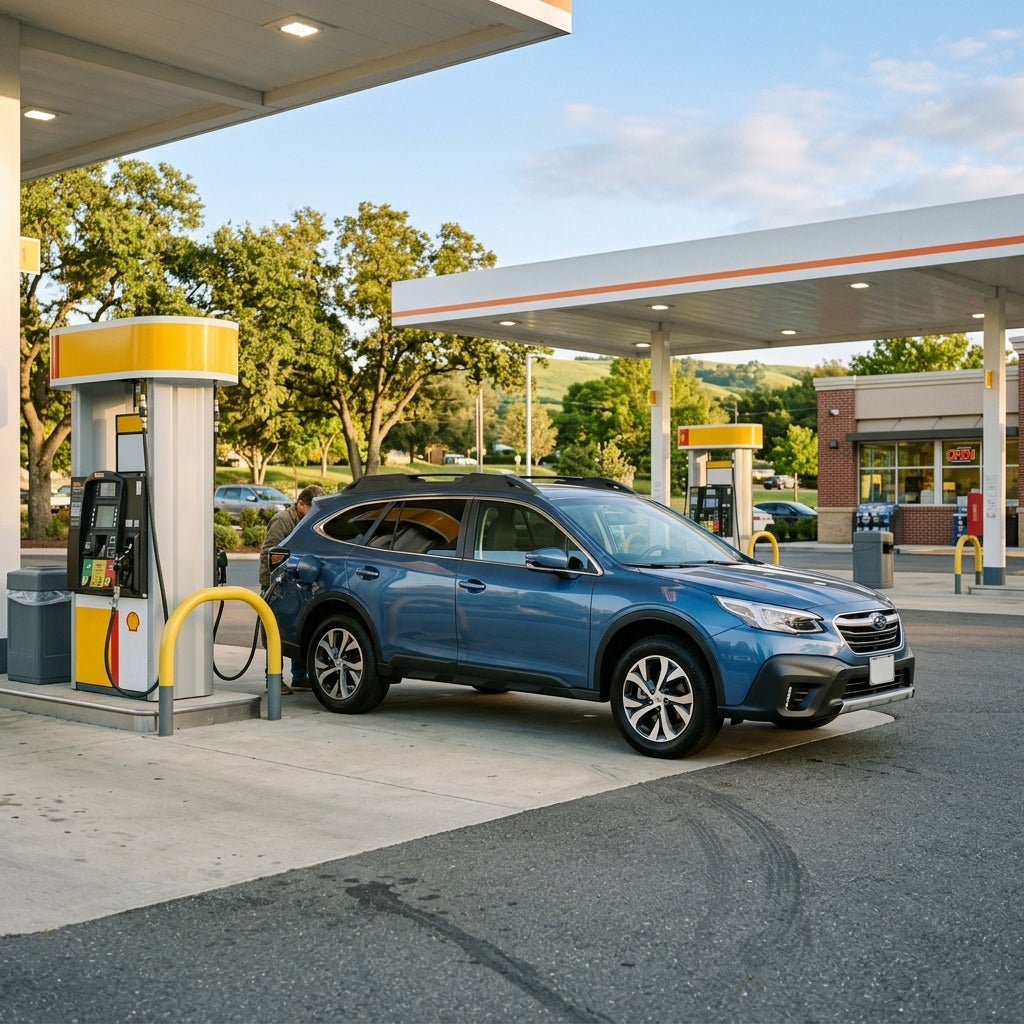
Does Your Subaru Need Premium Gas? Fuel Requirements by Model
Regular or premium? Find out which gasoline your Subaru needs, why octane matters, and how fuel choice fits into the cost of owning a Subaru in St. Louis.
Quick Answer: Do Subarus Require Premium Gas?
Most gasoline-powered Subaru models are designed to use regular 87-octane unleaded gasoline. This includes many Outback, Forester, Crosstrek, Impreza and Ascent configurations, as well as certain turbocharged Subaru SUVs.
The WRX and BRZ are important exceptions: premium gasoline is recommended for their performance-oriented engines, and the precise minimum or recommended octane can vary by model and year. Always follow the fuel specification printed in your specific vehicle's owner's manual and fuel-filler labeling.
Which Subaru Models Use Regular or Premium Gas?
The following is a general guide to recent U.S.-market gasoline models. It is not a substitute for your exact model-year owner's manual; engine and fuel specifications can change between generations.
| Subaru Model | Typical Fuel Guidance | What to Know |
|---|---|---|
| Outback | Regular unleaded, 87 octane | Includes many naturally aspirated and XT turbo configurations; verify your year. |
| Forester | Regular unleaded, 87 octane | Includes recent gasoline and hybrid configurations; verify your year. |
| Crosstrek | Regular unleaded, 87 octane | Applies to many recent gasoline and hybrid configurations. |
| Ascent | Regular unleaded, 87 octane | Its turbocharged engine is engineered for regular fuel in recent model years. |
| Impreza | Regular unleaded, 87 octane | Check the owner's manual for your model year. |
| Legacy | Regular unleaded, 87 octane | Applies to many recent versions, including certain turbo trims. |
| WRX | Premium recommended | Check the manual for the recommended grade and any permitted lower-octane use. |
| BRZ | Premium recommended | High-performance engine; follow the model-year-specific octane instructions. |
This table describes typical recent U.S. gasoline-model requirements, not every Subaru ever built. All-electric models do not use gasoline. If the manual and a general online guide disagree, follow the manual.
Compare the latest vehicles and engine options in our new Subaru inventory, or browse our pre-owned inventory.
What Is the Difference Between 87, 91 and 93 Octane Gas?
Octane measures a fuel's resistance to engine knock, not how much energy it contains. A higher number does not automatically mean a cleaner, more powerful or more efficient fuel for every engine.
87 Octane
Regular unleaded. Appropriate for many Subaru engines specifically designed to use it.
91 Octane
Premium fuel commonly recommended for certain performance engines. Availability varies by region.
93 Octane
A higher premium grade offered at some stations. It is not automatically beneficial when your manual specifies regular fuel.
Subaru engines are calibrated for particular fuel grades. If your manual specifies 87 octane, you generally do not need to pay more for premium. If it recommends premium, using the recommended grade helps the engine deliver its intended performance.
Do Turbocharged Subarus Need Premium Gas?
Not always. Turbocharging alone does not determine fuel requirements. Engine compression, boost, ignition timing and manufacturer calibration all matter.
For example, many recent Outback XT and Ascent models use regular 87-octane gasoline even though they have turbocharged BOXER engines. By contrast, the WRX is a performance-oriented turbo model for which premium fuel is recommended.
What if you accidentally use the wrong grade?
Check your owner's manual first. Some vehicles can temporarily accommodate a lower octane with reduced performance, while others have more restrictive requirements. If you hear persistent knocking, notice unusual operation, or are unsure what to do, contact a qualified Subaru service professional rather than assuming all engines respond the same way.
Learn more about the engineering behind Subaru vehicles in our Symmetrical All-Wheel Drive guide.
How Much Will Gas Cost for Your Subaru Each Year?
Fuel costs depend on your annual mileage, your vehicle's real-world fuel economy and the price of gasoline where you fill up. Instead of relying on a gas-price estimate that may become outdated, use this simple formula:
Annual Fuel Cost Formula
(Miles driven per year ÷ miles per gallon) × price per gallon = estimated annual fuel cost
For example, a driver traveling 15,000 miles per year in a vehicle averaging 30 MPG would use approximately 500 gallons annually. Multiply that by the current price of the fuel grade specified for the vehicle to estimate yearly spending.
EPA ratings vary by model, drivetrain, wheel size and model year. Compare the official fuel-economy label for the exact vehicle you are considering rather than assuming every Forester, Crosstrek or Outback achieves the same MPG.
For a comparison of new and used options, browse our new Subaru inventory or Subaru Ascent inventory. You can also estimate your trade-in value when planning your next purchase.
Are Subarus Expensive to Maintain Compared With Toyota and Honda?
Fuel is only one part of ownership cost. Insurance, tires, routine maintenance, unexpected repairs and depreciation can have a larger impact over time.
Subaru, Toyota and Honda all offer mainstream vehicles, but there is no universal maintenance bill for any brand. Actual costs depend on the specific model, age, mileage, driving conditions, service prices and maintenance history. Comparing a new Forester with an older high-mileage vehicle can be more meaningful than comparing brand-wide averages.
Subaru's all-wheel-drive system also makes tire condition important. Proper tire rotation and compatible tire sizes and tread conditions help protect drivetrain components. The owner's manual provides the applicable tire and service guidance.
What should you budget for?
Start with the factory maintenance schedule for your exact Subaru, then account for local labor rates, tire replacement, brake service and any additional maintenance recommended for your driving conditions. Ask for an itemized estimate rather than relying on generic online prices.
Our Subaru Service Research Hub explains common services, warning signs and what to expect during a dealership visit.
Subaru Maintenance Schedules, Oil Changes and Service Milestones
Many recent Subaru models use a 6,000-mile or six-month engine-oil service interval under normal conditions, but intervals and required services can differ by engine, model year and operating conditions. Always follow your vehicle's maintenance booklet.
Routine Visits
Oil and filter service, tire rotation, fluid checks and inspections as specified for your vehicle.
Milestone Inspections
Brake fluid, filters, spark plugs, differential fluids and other items may be due at different intervals depending on the model.
Severe Driving Conditions
Frequent short trips, towing, dusty roads or other demanding use may require additional or more frequent service.
Does Every Subaru Use the Same Synthetic Oil?
No. Oil viscosity and specifications can vary by model year and engine, including among turbocharged vehicles. Do not assume every non-turbo Subaru uses 0W-20 or every turbo Subaru uses 5W-30. Check the oil grade listed in your owner's manual or consult the service department.
Find maintenance information through our Subaru Oil Change and Routine Maintenance guide, review service and parts specials, order genuine Subaru parts, or schedule service.
Regular Gas, AWD Confidence and Practical Everyday Ownership
Whether you commute along I-270, drive through Crestwood and Kirkwood, or head toward Chesterfield for the weekend, choosing the correct fuel is one easy way to care for your Subaru without unnecessary spending.
Subaru's Symmetrical All-Wheel Drive and BOXER engine design are important parts of its identity, but neither feature automatically means you need premium gasoline. Your owner's manual—not a blanket rule about AWD or turbocharging—is the right place to start.
If you're considering a new Subaru, our team can help you compare fuel requirements, efficiency ratings and ownership needs across models. You can also explore Subaru BRZ inventory if you're specifically interested in a performance-oriented model, or review financing options.
Subaru Gasoline and Maintenance FAQs
Can I put regular gas in a Subaru Outback?
Many recent Outback models, including certain turbocharged XT versions, are designed for 87-octane regular unleaded. Verify the requirement for your specific model year and engine.
Does the Subaru Forester require premium gasoline?
Recent Forester gasoline and hybrid configurations generally use regular 87-octane unleaded. Confirm the requirement in your owner's manual.
What gas does a Subaru Crosstrek take?
Many recent Crosstrek models use regular 87-octane unleaded gasoline. Check the manual for your specific vehicle.
Does the Subaru Ascent need premium gas because it has a turbo?
No. Recent Ascent models are designed to use regular 87-octane unleaded, despite having a turbocharged engine.
Does the Subaru WRX require premium gas?
Premium fuel is recommended for the WRX. Refer to your model-year owner's manual for the specified octane and instructions about lower-octane fuel.
Does the Subaru BRZ need premium gas?
Premium gasoline is recommended for the BRZ's performance engine. Follow the fuel requirements for your exact model year.
Will 93 octane make my regular-gas Subaru faster?
Generally not. A higher octane rating alone does not create additional horsepower in an engine calibrated for 87 octane.
How often does a Subaru need an oil change?
Many recent models specify oil service at 6,000 miles or six months under normal conditions, but always check the maintenance schedule and any severe-use requirements for your vehicle.
Are Subarus more expensive to maintain because they have AWD?
AWD adds components that require appropriate inspections and tire care, but actual ownership costs vary widely by model, mileage and condition. Compare vehicle-specific maintenance schedules and estimates.
Have Questions About Your Subaru?
Visit Sunset Hills Subaru at 10100 Watson Road in Sunset Hills, Missouri. We'll help you understand your vehicle's fuel requirements, maintenance schedule and available Subaru options.
Questions? Call (314) 476-9638.