Blog / 2024 Outback

The Next Big Thing in Automotive: Exploring the Future of Cars and Mechanics at Sunset Hills Subaru

The Next Big Thing in Automotive: Exploring the Future of Cars and Mechanics at Sunset Hills Subaru

As the automotive world accelerates into a future shaped by innovation, the question on many drivers' minds in Sunset Hills, MO, and surrounding areas like Fenton, Webster Groves, and Richmond Heights is: What is the next big thing in automotive? From fully autonomous vehicles to the evolution of electric cars and the ongoing role of skilled mechanics, the landscape is transforming rapidly. At 10100 Watson Rd, Sunset Hills, MO 63127, Sunset Hills Subaru is at the forefront of these exciting changes, providing insights, vehicles, and expert service that keep you ready for tomorrow’s roads.

Table of Contents

For personalized assistance or to explore our offerings, call us at (314) 476-9638. Whether you're curious about new Subaru models like the Solterra or need expert maintenance, we're your local guide to the future of automotive.


Future Autonomous Vehicles: The Final Level of Driving Automation
Explores full self-driving technology and how it will reshape vehicle design, eliminating traditional controls.


Will There Still Be Mechanics in the Future?
Discusses the evolving role of automotive technicians amid the rise of electric and autonomous vehicles.


Electric Vehicles and What Will Replace Traditional Cars
Details the rapid growth of EVs and projections for their dominance in new car sales.


What the Automotive Industry Will Look Like in 2030
Examines trends like connected cars, shared mobility, and advances in battery technology.


The Next Car Technologies: AI, Connectivity, and Sustainability
Highlights innovations such as AI-driven features, smart connectivity, and eco-friendly materials.


Understanding the Big 3 Automotive Manufacturers
A glance at the leading U.S. automakers and their adaptation to the future automotive landscape.


Explore New and Used Subaru Vehicles at Sunset Hills Subaru
Showcases our inventory and how to find your perfect Subaru for the future.


Future Autonomous Vehicles: The Final Level of Driving Automation

The next big leap in automotive technology is full autonomous driving, or Level 5 automation, where vehicles operate independently across all road types without human intervention. This shift will redefine driving by removing steering wheels and pedals altogether, presenting a new era of driverless cars that can navigate urban streets, highways, and even off-road terrains.

Autonomous vehicles promise enhanced safety by eliminating human error, which accounts for the majority of accidents. Manufacturers like BMW, Mercedes-Benz, and Nissan are already releasing Level 3 and Level 4 capable vehicles, with Level 5 fully autonomous models expected to follow soon. For instance, Mercedes-Benz's Level 3 Drive Pilot system offers conditional automation, a significant step toward total autonomy.

This technology relies on a sophisticated array of sensors, artificial intelligence, and 5G connectivity to process real-time data, manage vehicle control, and communicate with infrastructure and other vehicles. In the St. Louis and Chesterfield areas, expanding 5G networks will support the widespread adoption of connected autonomous cars, improving traffic flow and urban mobility.

While full autonomy is still emerging, it represents the pinnacle of automotive innovation, promising to transform vehicle design, urban planning, and transportation services radically.


Will There Still Be Mechanics in the Future?

With the surge of electric vehicles (EVs) and the advent of autonomous cars, a common concern is the fate of automotive mechanics. Despite fewer moving parts in EVs compared to internal combustion engine (ICE) vehicles, the demand for skilled technicians is projected to grow by 2% from 2022 to 2032, aligning with average job growth rates across occupations.

Electric vehicles eliminate the need for oil changes, traditional engine repairs, and many fluid replacements, but they still require maintenance for brakes, tires, suspensions, and electrical systems. Furthermore, autonomous vehicles will need specialized technicians to service advanced sensors, software updates, and complex electronics.

Collision repair remains critical, as accidents involving EVs and autonomous vehicles require expertise in handling high-voltage components and sophisticated structural repairs. The growing complexity demands continuous training, certifications, and familiarity with cutting-edge technologies.

At Sunset Hills Subaru, our Service Department is staffed with ASE-certified technicians trained in both traditional and modern vehicle maintenance. We encourage our customers in neighborhoods like Maplewood and Crestwood to Schedule Service and Diagnostics to keep their Subaru vehicles in peak condition, whether gasoline-powered or electric.

Additionally, for those maintaining or repairing their vehicles, our Find Subaru Parts service offers genuine replacement and repair parts designed for your Subaru’s longevity.


Electric Vehicles and What Will Replace Traditional Cars

Electric vehicles are rapidly gaining market share, driven by technological advances, government policies, and growing environmental awareness. Projections indicate electric cars could comprise up to 20% of new car sales by 2025, 40% by 2030, and nearly all new car sales by 2040.

Barriers like limited charging infrastructure and upfront costs are gradually diminishing. The Bipartisan Infrastructure Law aims to install 500,000 new public chargers by 2030, enhancing accessibility for drivers in suburban areas like Valley Park and Glendale, MO. Improvements in battery technology also continue to extend EV range and reduce charging times, helping alleviate range anxiety.

EVs contribute to lower carbon emissions and more efficient energy use, aligning with global net-zero emissions goals. Subaru’s own electric model, the Solterra, exemplifies the shift toward sustainable driving with its advanced electric powertrain.

For those interested in transitioning to an EV or other Subaru models, explore our New Subaru Inventory or find a great deal on pre-owned vehicles in our Used Vehicle Inventory. Don’t forget to check our Current New Car Specials to find the best offers.


What the Automotive Industry Will Look Like in 2030

By 2030, the automotive landscape will be dominated by autonomous, connected, electric, and shared mobility vehicles. Industry forecasts expect global vehicle production to rise to 104 million units by 2030, with electric vehicles making up a substantial share.

Key trends shaping 2030 include:

  • Autonomous vehicles delivering safer, more convenient travel, with Level 4 autonomy enabling driverless rides in many urban and suburban settings.
  • 5G connectivity enhancing vehicle-to-vehicle and vehicle-to-infrastructure communication, crucial in metropolitan regions such as St. Charles and Maryland Heights.
  • Shared mobility models reducing private car ownership in favor of car-sharing and ride-hailing, a shift increasingly evident in dense urban centers like Crestwood.
  • Smart manufacturing using automation and gigacasting to reduce costs and increase efficiency, allowing OEMs like Subaru to produce vehicles with greater precision and sustainability.

Subaru continues to innovate with advanced safety features and connectivity options in models like the Legacy and Forester, blending reliability with tomorrow's technologies.


The Next Car Technologies: AI, Connectivity, and Sustainability

The future of car technology intertwines artificial intelligence, connectivity, and eco-conscious design:

  • Artificial Intelligence (AI) enhances autonomous driving, predictive maintenance, and personalized vehicle settings. Vehicles equipped with AI-driven voice assistants and driver-assist systems improve safety and comfort.
  • Connectivity transforms cars into smart devices integrated with the Internet of Things (IoT). Features like real-time navigation, over-the-air updates, and vehicle-to-cloud communication are becoming standard, particularly in advanced markets near Sunset Hills and Ladue.
  • Sustainability drives material innovations using recycled plastics, bioplastics, and lightweight composites to reduce vehicle weight and environmental impact. Subaru's commitment to sustainable manufacturing is evident in its use of eco-friendly materials and focus on battery recycling.

These technologies are not only enhancing the driving experience but also aligning with stricter regulatory standards and customer expectations for greener vehicles.


Understanding the Big 3 Automotive Manufacturers

In the United States, the "Big Three" automakers traditionally refer to General Motors, Ford, and Chrysler (now part of Stellantis). These manufacturers have shaped the industry’s past and are actively adapting to future demands through electrification and digital innovation.

However, the competitive landscape is evolving. Toyota, including its luxury brand Lexus, has surpassed Chrysler in U.S. sales, and Tesla’s rapid growth has introduced a “Big Four” dynamic.

At Sunset Hills Subaru, we recognize the importance of this evolving ecosystem and proudly represent Subaru—a brand known for innovation, reliability, and all-wheel-drive capability—offering vehicles that meet modern demands.


Explore New and Used Subaru Vehicles at Sunset Hills Subaru

Ready to experience the next generation of automotive technology? Sunset Hills Subaru offers a comprehensive selection of new and used Subaru vehicles equipped with the latest advancements in safety, performance, and eco-friendliness.

Browse our wide range of models including:

Explore our New Subaru Inventory and Used Vehicle Inventory for a variety of options. Don’t forget to use our Get your value trade tool to understand your current vehicle’s worth and leverage it toward your next Subaru.


Embracing Tomorrow’s Automotive World with Sunset Hills Subaru

The future of the automotive industry is a dynamic fusion of technology, sustainability, and innovation. From the rise of fully autonomous vehicles to the steady growth of electric cars and the sustained importance of skilled mechanics, the road ahead is exciting and full of opportunity.

Sunset Hills Subaru stands ready to support drivers in Sunset Hills, St. Louis, and neighboring communities with expert service, a diverse inventory, and deep knowledge of future automotive trends. Visit us at 10100 Watson Rd, Sunset Hills, MO 63127 or call (314) 476-9638 to explore how you can drive into the future today.

For maintenance, repairs, or upgrades, be sure to Schedule Service and Diagnostics and keep your vehicle running smoothly. If you need parts for repairs, visit our Subaru Parts Department for genuine components.

Step into the future with confidence and Subaru at your side.


© 2025 Sunset Hills Subaru
Posted in:

Related Posts

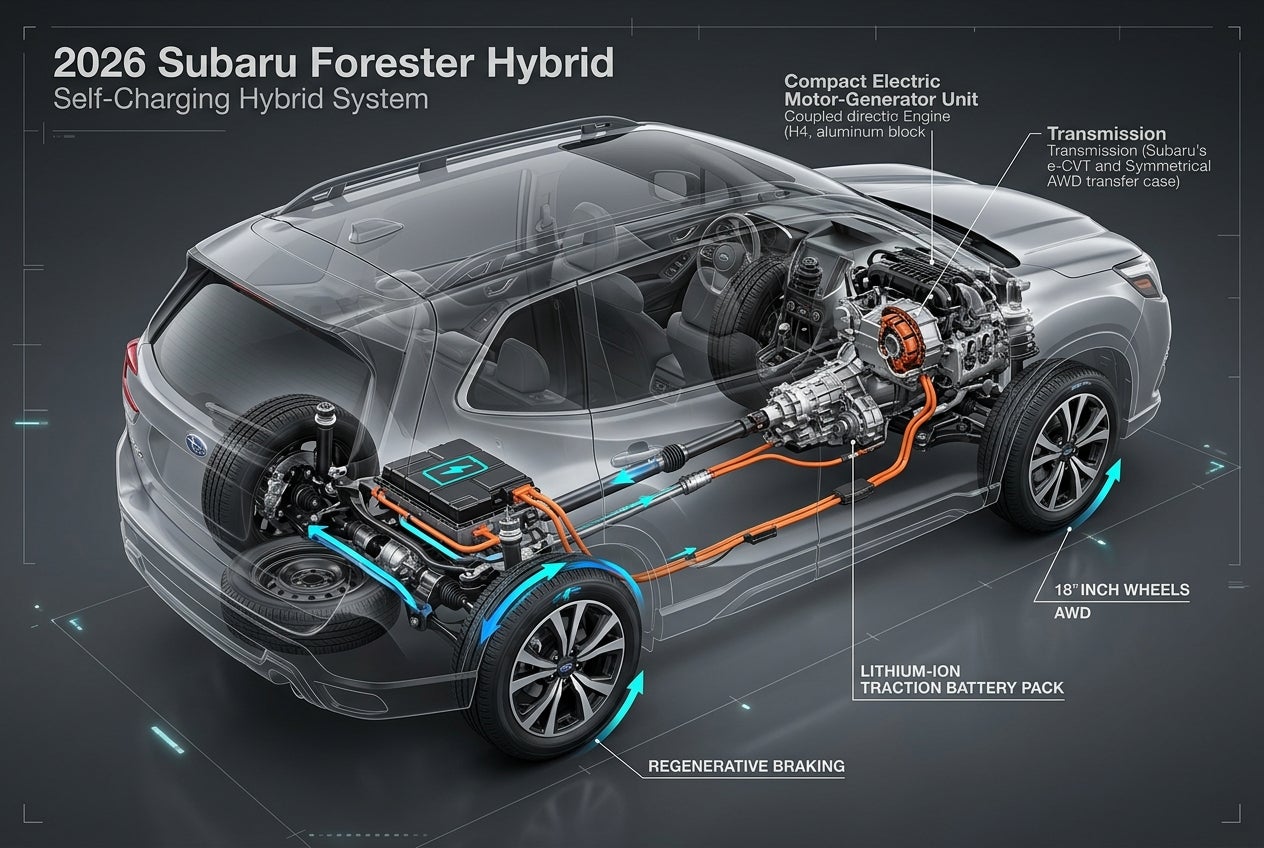
Cutaway diagram of the 2026 Subaru Forester Hybrid detailing its motor, battery pack, and drivetrain components. (Representative image for illustration purposes only. Actual vehicle may vary based on trim and configuration.)

Does the 2026 Subaru Forester Hybrid Qualify for Federal Tax Credits?

The Direct Answer Up Front: Because the 2026 Subaru Forester Hybrid utilizes a traditional full-hybrid (HEV) powertrain rather than a plug-in hybrid (PHEV) or battery electric vehicle (BEV) setup, it does not directly qualify for the federal Inflation Reduction Act (Section 30D) clean vehicle tax credit. Under current Internal Revenue Code provisions, federal tax credits of up to $7,500 are reserved exclusively for plug-in vehicles equipped with external charging capability and minimum battery capacity thresholds. However, that simple answer is far from the whole financial story for drivers in the Greater St. Louis area. While the IRS doesn't send a federal tax credit check for traditional hybrid crossover purchases, buying a 2026 Subaru Forester Hybrid at Sunset Hills Subaru opens up major opportunities for net financial savings. Between significant Missouri sales tax offset credits on trade-ins, competitive competitive vehicle manufacturer incentives, superior long-term residual value retention, and substantial cumulative savings at the fuel pump along I-270 and Highway 40, overall cost-of-ownership for the Forester Hybrid remains exceptionally low. In this comprehensive financial and technical guide prepared by the automotive specialists at Sunset Hills Subaru, we break down everything you need to know about 2026 Forester Hybrid pricing, state tax advantages in Missouri, real-world fuel economy expectations, mechanical AWD engineering, warranty coverage, and how to structure your purchase to achieve maximum return on investment. Why the 2026 Forester Hybrid Doesn't Get the Federal Plug-In Tax Credit To understand why the 2026 Subaru Forester Hybrid is excluded from IRC Section 30D tax credits, it helps to look at the legislative intent behind the Inflation Reduction Act. The federal government's $7,500 Clean Vehicle Credit explicitly targets zero-emission and plug-in hybrid electric vehicles (PHEVs) that require grid power to charge high-capacity traction batteries (typically 7 kWh or larger). These regulations enforce strict North American assembly criteria, critical mineral sourcing thresholds, and battery component manufacturing mandates. The 2026 Subaru Forester Hybrid uses a self-charging series-parallel hybrid system. Because it recharges its compact high-voltage battery solely through regenerative braking and engine-driven generator operation—never plugging into an electrical outlet—it falls outside Section 30D guidelines. Drivers don't have to install a 240V Level 2 charger in their garage or worry about EV charging stations around Kirkwood or Oakville, but in exchange, there is no federal IRS rebate check upon purchase. Missouri State & Local Tax Offsets: While federal credits aren't applicable, Missouri vehicle buyers enjoy a major state tax privilege. When you trade in your current vehicle at Sunset Hills Subaru, Missouri tax law allows you to pay state and local sales tax ONLY on the net price difference between your trade-in allowance and the new vehicle purchase price. On a $35,000 Forester Hybrid with a $20,000 trade-in allowance, this tax credit saves St. Louis County buyers over $1,200 to $1,600 in immediate sales tax outlays. Key Takeaway: Non-plug-in full hybrids deliver total freedom from charging cords and public station lines. You fill up with standard gasoline at any station in St. Louis or St. Charles, while enjoying upper 30s MPG in daily city commuting. What Is the Estimated Price for Each 2026 Subaru Forester Hybrid Trim Level? Subaru has engineered the 2026 Forester Hybrid lineup to give buyers flexible budget options across familiar, well-appointed trim tiers. By offering hybrid power across mainstream and luxury grade models, drivers can select the exact equipment profile they desire without compromising on all-weather capabilities. Trim Level Est. Starting MSRP Key Standard Features Target Buyer Profile Forester Hybrid Base $34,500 - $35,200 Symmetrical AWD, EyeSight®, 11.6-in STARLINK®, Dual-zone Climate Value-conscious commuters seeking maximum MPG Forester Hybrid Premium $36,800 - $37,500 10-way Power Driver Seat, All-Weather Pkg, Panoramic Moonroof, Roof Rails Most popular balance of comfort, versatility, and tech Forester Hybrid Sport $38,900 - $39,600 19-in Bronze Wheels, StarTex® Water-repellent Upholstery, Dual X-MODE® Active outdoor enthusiasts in Chesterfield & Eureka Forester Hybrid Limited $40,500 - $41,200 Leather-trimmed Seating, Hands-Free Power Liftgate, Blind-Spot Detection Premium comfort with luxury appointments Forester Hybrid Touring $43,000 - $43,800 Harman Kardon® Audio, Ventilated Front Seats, 360-degree Surround View Flagship executive crossover with full luxury suite The Premium Sweet Spot The Forester Premium Hybrid expected near $37,000 represents the highest volume trim tier. Adding heated front seats, power moonroof, raised roof rails, and keyless entry, it delivers phenomenal everyday utility for Midwest winter driving without pushing into luxury price brackets. Sport & Rugged Styling For active St. Louis drivers visiting Castlewood State Park or taking weekend trips to the Ozarks, the Sport trim brings water-resistant StarTex interior seating, retuned suspension damping, and advanced dual-function X-MODE for muddy trails and deep snow. Limited & Touring Flagships The Limited and Touring trims rival luxury brand crossovers in refinement. Featuring perforated leather, Harman Kardon surround sound, heated rear outboard seats, and low-speed reverse automatic braking, these models offer serene, quiet Highway 40 cruising. What Is the Price Difference Between the Gas and Hybrid 2026 Forester? When comparing MSRPs on dealership lots, the 2026 Subaru Forester Hybrid carries an estimated premium of approximately $1,800 to $2,500 over a comparably equipped conventional 2.5L gas Forester. For example, a standard gas Forester Premium starts around $31,995, whereas the Forester Premium Hybrid is projected around $34,200 to $34,800 depending on final option packages. Calculating Your Payback Period in St. Louis: To evaluate if the hybrid premium makes financial sense, let's analyze typical St. Louis driving conditions. Assuming an average driver covers 15,000 miles per year with gas priced at $3.45 per gallon in Sunset Hills and Kirkwood: • Standard Gas Forester (29 MPG combined): Consumes ~517 gallons/year = $1,783 annual fuel cost. • Forester Hybrid (~38 MPG combined): Consumes ~394 gallons/year = $1,359 annual fuel cost. • Annual Fuel Savings: ~$424 per year. • Payback Break-Even Horizon: Approximately 4.2 to 5 years of daily driving. Importantly, this math considers fuel savings alone. It does not factor in the higher resale value that hybrid SUVs routinely command after 5 years, nor the smoother, quieter city acceleration delivered by the electric motor assist. Want to see our current pricing and inventory availability? Explore our special offers today. View Current New Vehicle Inventory What Are the Performance Specs of the 2026 Forester Hybrid Powertrain? Under the hood of the 2026 Subaru Forester Hybrid sits an engineered collaboration: Subaru's revised 2.5-liter horizontally opposed Subaru BOXER® 4-cylinder engine seamlessly combined with Toyota's proven series-parallel hybrid technology architecture. This pairing unites Subaru's low center of gravity with industry-leading hybrid motor electronics. Engine & Motor Output Specs: • Engine Type: 2.5L DOHC 16-valve 4-Cylinder Subaru BOXER® • Electric Drive Motor: High-torque permanent-magnet AC synchronous motor • Combined Net System Horsepower: ~200 - 215 hp (a substantial boost over the 180 hp gas model) • Low-End Torque Assist: Instant electric motor torque off the line eliminates standard CVT lag during stop-and-go acceleration on Manchester Road. Acceleration & Towing Dynamic Improvements: In real-world driving, electric motor torque fills in the lower RPM curve before the gasoline engine hits its power band. Zero-to-60 mph acceleration improves by roughly 1.0 to 1.2 seconds compared to the standard gas Forester, yielding noticeably brisker highway merging onto I-64 or I-270. Furthermore, towing capacity remains robust at an estimated 1,500 to 3,000 lbs (depending on equipment setup), allowing local owners to easily pull utility trailers, small boats, or pop-up campers for weekend getaways. Is the 2026 Forester Hybrid AWD System Mechanical or Electric? This is one of the most critical mechanical distinctions for Midwest drivers. Most competitive hybrid compact SUVs (such as the Toyota RAV4 Hybrid) utilize an electric rear motor setup ('e-AWD'), where there is no physical driveshaft connecting the front and rear axles. In those systems, the rear wheels are powered exclusively by a small rear electric motor. When battery reserves run low or temperatures drop sharply in a St. Louis winter, rear traction output can be throttled. Subaru's Uncompromised Mechanical Symmetrical AWD: Subaru engineered the 2026 Forester Hybrid to retain a direct physical mechanical driveshaft connection between the front engine/transaxle and the rear axle differential. Power from both the BOXER® engine and the electric hybrid motor flows through Subaru's physical Symmetrical AWD system. Whether you are navigating freezing rain in Ladue, slick snow patches in Wildwood, or muddy gravel paths in Franklin County, 100% of available torque can be mechanically routed to whichever wheel has grip—regardless of battery state of charge. This mechanical foundation ensures genuine off-road capability, superior high-speed stability, and winter confidence that electronic motor rear axles simply cannot match. What Fuel Economy Ratings Can You Expect in St. Louis Commuting? Fuel efficiency is where the 2026 Subaru Forester Hybrid delivers day-in, day-out economic returns. Official EPA estimates for the 2026 model are targeted at approximately 38 MPG City / 35 MPG Highway / 37-38 MPG Combined. 38 MPG City Efficiency Stop-and-go city driving on Watson Road or downtown St. Louis is where hybrid tech shines brightest. Low-speed crawling relies heavily on electric drive mode, nearly doubling standard city gas mileage. 35 MPG Highway Range Cruising along I-270, I-64, or I-44 towards Maryland Heights benefits from optimized engine valve timing and aerodynamically active grille shutters, maximizing fuel efficiency at high speeds. 550+ Miles Cruising Range With its ~14.5 gallon fuel tank capacity, the 2026 Forester Hybrid offers an extraordinary range of over 550 highway miles per tank, dramatically reducing gas station stops on long Midwest road trips. What Standard Technology and Safety Features Are Included in the 2026 Forester Hybrid? The 2026 Subaru Forester Hybrid arrives fully loaded with Subaru's newest safety and connectivity hardware. Anchoring the cabin center console is the standard high-resolution 11.6-inch Subaru STARLINK® Multimedia Plus system featuring full-screen wireless Apple CarPlay® and wireless Android Auto™ integration. Next-Generation EyeSight® Driver Assist Suite: • Wide-Angle Mono Camera: Expanded field of view recognizes pedestrians and cyclists earlier at intersections. • Automatic Emergency Steering: Helps avoid low-speed obstacles within your lane. • Emergency Stop Assist: Slows vehicle to a complete stop with hazard lights if driver becomes unresponsive while Lane Keep Assist is active. • Blind-Spot Detection & Rear Cross-Traffic Alert: Provides total situational awareness when reversing out of crowded parking spots in Sunset Hills. Explore our active incoming inventory and reserve your model today. Explore New Subaru Forester Inventory How Will Forester Hybrid Resale Value Compare to the Gas Model? Subaru vehicles historically rank at the top of industry residual value charts from ALG and Kelley Blue Book. According to industry depreciation data, standard Subaru Foresters retain up to 60-65% of their original value after 36 months—significantly outperforming average compact SUVs. For the Forester Hybrid, resale projections are even stronger. High consumer demand in the Midwest secondary market for reliable, fuel-efficient all-wheel-drive crossovers means hybrid models generally depreciate 3% to 5% slower than their pure-gas counterparts. When you trade in your Forester Hybrid 4 to 6 years down the road at Sunset Hills Subaru, expect to recover a substantial portion of the original hybrid purchase premium. Battery Longevity Confidence: A primary driver of resale strength is consumer confidence in battery longevity. Subaru's advanced nickel-manganese-cobalt / lithium-ion battery thermal management systems prevent rapid degradation. Used car buyers in St. Louis recognize that a 5-year-old Subaru hybrid with documented dealer maintenance remains a dependable, low-risk vehicle for many years to come. What Is the Subaru Factory Warranty Coverage for the Hybrid Battery? Buying a hybrid crossover is a long-term investment. Subaru backs the 2026 Forester Hybrid with extensive factory warranty protections so St. Louis owners enjoy complete peace of mind. Basic Bumper-to-Bumper 3 Years / 36,000 Miles: Covers all non-wear components, electrical systems, multimedia infotainment, trim, and standard factory mechanical components. Powertrain Warranty 5 Years / 60,000 Miles: Covers the 2.5L BOXER® engine block, mechanical AWD transfer case, front/rear differentials, driveshaft, and transaxle. Hybrid Component & Battery 8 Years / 100,000 Miles (Up to 10 Yrs / 150k in CARB states): Mandated federal warranty fully covering the high-voltage hybrid traction battery, electric motor/generator, power control unit, and hybrid ECU. Destination Charges, Ownership Costs, and How the Forester Hybrid Pricing Compares to Competitors When calculating true total cost of ownership, mandatory manufacturer destination and delivery charges must be factored in. For the 2026 Subaru Forester lineup, standard factory destination fees are expected in the $1,345 to $1,450 range across all trim levels. Model Tier 2026 Subaru Forester Hybrid Toyota RAV4 Hybrid Honda CR-V Hybrid Hyundai Tucson Hybrid Starting MSRP (Est.) $34,500 $32,300 $34,650 $33,100 Standard AWD Type Mechanical Symmetrical AWD Electric Rear Motor (e-AWD) Real Time AWD (Mechanical) HTRAC AWD (Mechanical) Est. Combined MPG 38 MPG 39 MPG 37 MPG 38 MPG Standard Ground Clearance 8.7 Inches 8.1 Inches 8.2 Inches 8.3 Inches Standard Safety Tech EyeSight® Wide-Angle Camera Toyota Safety Sense 3.0 Honda Sensing® SmartSense While competitor models like the RAV4 Hybrid start slightly lower in base price, the Forester Hybrid comes standard with Subaru Symmetrical Mechanical AWD, class-leading 8.7 inches of ground clearance, standard roof rails, and superior standard active safety tech—making it a far better overall value for Midwest climate demands. How to Get the Best Price and Maximize Savings at Sunset Hills Subaru Even though the 2026 Forester Hybrid doesn't receive IRS tax credits, Sunset Hills Subaru offers four direct financial tools to ensure you secure the most competitive net bottom-line price in Missouri: 1. Top Dollar Trade-In Appraisal: Due to heavy demand for used inventory across St. Louis, Chesterfield, and Maryland Heights, we pay top market value for trade-ins. 2. Missouri Trade-In Sales Tax Offsets: Save hundreds to thousands in state sales tax when trading your old car at purchase. 3. Subaru Motors Finance options: Access competitive low APR financing programs for qualified buyers. 4. Transparent Pricing Guarantee: No hidden dealer markups or mandatory accessories. Get Your Trade-In Value Now Get pre-approved in minutes before visiting our showroom. Get Approved for Financing Explore the 2026 Subaru Forester Hybrid at Sunset Hills Subaru While the 2026 Subaru Forester Hybrid doesn't qualify for federal plug-in tax credits, its combination of true mechanical Symmetrical All-Wheel Drive, high-efficiency fuel savings, standard 11.6-inch STARLINK display, and unmatched resale value makes it the premier compact crossover choice for St. Louis drivers. Ready to reserve your incoming Forester Hybrid or schedule a test drive in a new Subaru? Visit our showroom at 10100 Watson Rd, Sunset Hills, MO 63127. Get Directions to Sunset Hills Subaru or Call us at (314) 476-9638 to speak with a Subaru specialist. Browse New Subaru Inventory 2026 Subaru Forester Hybrid Savings in Sunset Hills MO | Sunset Hills Subaru

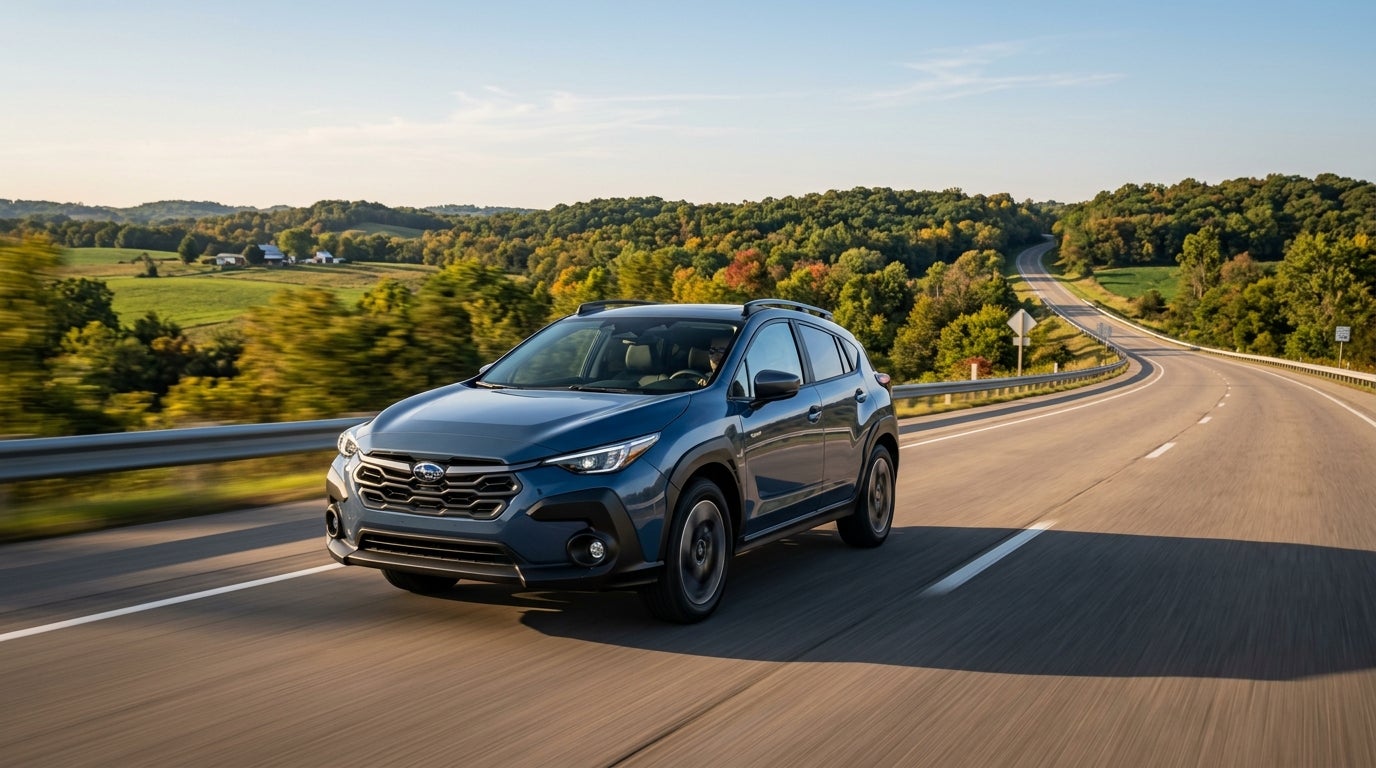
A blue Subaru Crosstrek driving down a scenic rural highway surrounded by rolling green hills. (Representative image for illustration purposes only. Actual vehicle may vary based on trim and configuration.)

Subaru Crosstrek Fuel Capacity and Total Driving Range at a Glance

When planning daily commutes through the St. Louis metropolitan area or embarking on weekend road trips across the Midwest, understanding your vehicle's total range and fuel efficiency is essential. The Subaru Crosstrek stands as one of the most versatile subcompact crossovers on the market today, engineering a balance between rugged capability and everyday efficiency. Standard gasoline-powered Crosstrek models feature a generous 16.6-gallon fuel tank capacity, while Crosstrek Hybrid models utilize a 13.2-gallon fuel tank coupled with dual electric motors. With a full tank of gas, non-hybrid gasoline trims achieve an impressive highway driving range of up to 564 miles under EPA ratings. Meanwhile, the plug-in hybrid configuration delivers an all-electric driving range of up to 17 miles for short errands around Sunset Hills and Ladue, expanding to a total combined gas-electric cruising range exceeding 480 miles. Whether navigating I-270 during peak rush hour or cruising out to the Ozarks, the Crosstrek provides impressive endurance between fuel stops. Trim Level / Powertrain Fuel Tank Capacity EPA Estimated MPG (City/Hwy) Maximum Highway Range 2.0L Subaru BOXER (Base, Premium) 16.6 Gallons 27 / 34 MPG Up to 564 Miles 2.5L Subaru BOXER (Sport, Limited) 16.6 Gallons 26 / 33 MPG Up to 547 Miles 2.5L Crosstrek Wilderness 16.6 Gallons 25 / 27 MPG Up to 448 Miles 2.0L Plug-In Hybrid Powertrain 13.2 Gallons 90 MPGe / 35 MPG Combined Over 480 Miles Combined Gas Engine Range Breakdown: 2.0L vs. 2.5L BOXER Engine Fuel Tank Specs and MPG Subaru equips gas-powered Crosstrek models with two distinct naturally aspirated direct-injection engine options, both feeding from the same high-capacity 16.6-gallon fuel reservoir. The entry 2.0-liter 4-cylinder Subaru BOXER engine produces 152 horsepower and is tuned for optimum fuel efficiency. Paired with the standard Lineartronic Continuously Variable Transmission (CVT), the 2.0L powertrain yields an EPA-estimated rating of 27 mpg in the city and 34 mpg on the highway. Multiplying the 34 mpg highway rating by the 16.6-gallon tank yields a theoretical maximum range of 564.4 miles. For drivers seeking elevated passing power and quicker merging onto fast-moving stretches like I-64 or Highway 141, the available 2.5-liter Subaru BOXER engine delivers 182 horsepower. Despite offering a noticeable 30-horsepower boost, the 2.5L engine maintains virtually identical highway efficiency, achieving an EPA-estimated 33 mpg highway. With the 16.6-gallon fuel tank, 2.5L models achieve up to 547.8 highway miles per tankful, providing robust performance without taxing your fuel budget. Both engine architectures feature Subaru's horizontally opposed cylinder arrangement, lowering the center of gravity while optimizing engine balance. The direct injection system precise fuel metering enhances combustion efficiency, allowing drivers to explore New Subaru Inventory models with confidence regarding long-distance endurance. How Crosstrek Wilderness Fuel Economy Compares to Standard Trims Revised Axle Ratio & Gearing The Crosstrek Wilderness is engineered for intense off-road capability. To achieve superior low-speed crawling and climbing power, engineers adjusted the final drive ratio from 3.70:1 up to 4.11:1. While this gearing enhances low-end responsiveness, it increases engine RPM at highway cruising speeds, adjusting the EPA rating to 25 city / 27 highway MPG. All-Terrain Tires & Lifted Body Featuring a raised ground clearance of 9.3 inches (compared to 8.7 inches on standard trims) and Yokohama GEOLANDAR® all-terrain tires, the Wilderness creates greater rolling resistance and aerodynamic drag at higher speeds. However, the retainment of the 16.6-gallon fuel tank still permits up to ~448 miles of uninterrupted highway driving. Protective Cladding & Utility Extended wheel arch cladding, redesigned bumpers, and standard heavy-duty roof rails add rugged utility and increased payload capacity. For off-road enthusiasts near Sunset Hills who prioritize obstacle clearance and trail performance, the slight range tradeoff is a highly worthwhile exchange for true trail capability. What is the Real-World Fuel Economy of the Subaru Crosstrek in Mixed Driving? While EPA estimates provide a standardized benchmark, real-world driving across Greater St. Louis involves varied topography, shifting weather conditions, and diverse traffic patterns. In mixed driving conditions—combining suburban suburban arterial routes around Manchester Road and open highway cruising on I-270—drivers typically experience real-world fuel economy between 28 and 30 MPG in standard 2.0L and 2.5L gas models. Real-world range in mixed daily use averages roughly 460 to 500 miles per tankful before the low-fuel warning light illuminates. Seasonal variations also play a role: winter oxygenated fuel blends and ambient cold temperatures can temporarily reduce real-world mpg by 5% to 10%, whereas optimal autumn driving conditions yield peak distance efficiency. To explore efficient models and evaluate specs in person, you can browse our current line up online or visit Sunset Hills Subaru. Our vehicle specialists can help match your daily commute distances with the ideal trim line and engine combination. Explore New Subaru Crosstrek Inventory How Stop-and-Go Highway Traffic Affects Crosstrek MPG During Commutes Commuting along heavily congested corridors such as I-270, I-64, or Highway 141 through Chesterfield and Maryland Heights presents specific fuel economy challenges. Frequent accelerating from a complete stop consumes significantly more kinetic energy than steady highway cruising. However, the Subaru Lineartronic CVT is continuously recalibrating gear ratios to keep the engine operating inside its most efficient power band. Furthermore, standard Auto Start-Stop technology automatically shuts off the BOXER engine when stationary at lengthy traffic signals or gridlocked highway bottlenecks, preventing idle fuel consumption. This system re-engages the engine instantly when your foot releases the brake pedal, preserving fuel tank capacity for actual mileage gains. How Does the Subaru Crosstrek Hybrid Powertrain Work and What Is Its EV Range? StarDrive® Technology The Crosstrek Hybrid employs Subaru StarDrive® Technology, pairing two electric motor-generators with a 2.0-liter Subaru BOXER engine. One motor functions as an engine starter and battery generator, while the second delivers drive power for all-electric and hybrid driving modes. 17-Mile All-Electric EV Range The high-capacity lithium-ion battery pack delivers up to 17 miles of zero-emission pure electric driving at speeds up to 65 mph. This EV range easily handles typical daily errands around Sunset Hills, Kirkwood, or Ladue without using a drop of gasoline. 480+ Total Combined Range When electric supply drops, the gas engine seamless kicks in. Combining the 13.2-gallon fuel tank and battery power yields an EPA rating of 90 MPGe and 35 MPG combined, providing over 480 total miles of continuous range for worry-free travel. Does the Crosstrek Hybrid Retain All-Wheel Drive When Operating in Electric Mode? Yes, absolutely. Unlike many competing hybrid crossovers that rely strictly on a secondary electric motor powering only the rear axle without a mechanical connection, the Crosstrek Hybrid retains standard Subaru Symmetrical All-Wheel Drive across all driving modes. Mechanical power transfer is linked through a heavy-duty driveshaft, ensuring full-time traction control on all four wheels. Even when running exclusively in pure electric EV mode, torque from the main electric drive motor routes through the mechanical AWD hardware. This guarantees maximum grip on slick St. Louis winter roads or rainy pavement. Furthermore, what happens when the Crosstrek Hybrid battery runs out of electric charge? The system transitions imperceptibly into standard hybrid mode, generating battery power via engine operation and regenerative braking while maintaining constant AWD traction. Does the Hybrid Battery Placement Affect Rear Passenger Legroom or Cargo Capacity? A common concern among crossover buyers is whether integrating a high-voltage hybrid traction battery compromises cabin space. In the Crosstrek Hybrid, the lithium-ion battery pack is positioned beneath the rear cargo floor area. Consequently, rear passenger legroom (36.5 inches) remains completely identical to standard gasoline Crosstrek trims, preserving passenger comfort for adults and family members. The cargo deck height is slightly elevated to accommodate the battery, resulting in 16 cubic feet of rear cargo space behind the 60/40-split rear seats (expanding to 43 cubic feet with seats folded flat), compared to 21 cubic feet in standard gas models. For owners considering upgrading to a newer or pre-owned Crosstrek model, Sunset Hills Subaru makes evaluating your options simple. Thinking about upgrading your current vehicle? You can easily calculate your trade value online and apply it toward a new or pre-owned Crosstrek at Sunset Hills Subaru. Get Your Trade Value How Much Does Roof Rack Cargo Reduce the Crosstrek Driving Range? Rooftop Cargo Boxes Aerodynamic roof cargo carriers create increased frontal drag at highway speeds (65-70 mph). Drivers can expect a fuel economy penalty of approximately 5% to 12%, reducing maximum tank range by 25 to 60 miles during long highway trips. Kayaks, Tents & Bikes Unshielded rooftop loads such as kayaks, mountain bikes, or hard-shell rooftop tents induce severe wind drag, dropping fuel economy by 15% to 25%. Removing crossbars and racks when not in use restores full factory fuel endurance. What Is the Towing Capacity of the Subaru Crosstrek Across Different Trims? Towing capacity plays a significant role in overall driving range due to the additional engine load required to pull trailing weight. Standard 2.0L and 2.5L Crosstrek models feature a towing capacity of 1,500 pounds, perfect for light utility trailers, small teardrop campers, or personal watercraft. For heavy-duty trailering needs, the Crosstrek Wilderness boasts a towing capacity of up to 3,500 pounds, thanks to an auxiliary transmission oil cooler and reinforced chassis frame components. When towing near maximum capacity, fuel economy typically decreases by 25% to 35%, adjusting driving range per tankful accordingly. Crosstrek Model Trim Max Towing Capacity Est. Trailering Range Impact Base & Premium (2.0L) 1,500 lbs -20% to -25% Range Sport & Limited (2.5L) 1,500 lbs -20% to -25% Range Wilderness (2.5L) 3,500 lbs -25% to -35% Range Plug-In Hybrid (2.0L) 1,000 lbs -15% to -20% Range What Driving Habits Best Improve Fuel Efficiency in a Subaru Crosstrek? Smooth Acceleration & EyeSight® Utilizing gentle throttle input allows the CVT transmission to maintain lower RPM ratios. Utilizing standard EyeSight® Adaptive Cruise Control on flat highway stretches optimizes acceleration profiles, saving fuel over manual foot pedal adjustments. Tire Pressure & Maintenance Maintaining recommended cold tire pressures (typically 32-33 PSI) prevents excess rolling resistance. Timely oil changes using 0W-20 synthetic oil keep internal engine friction minimal. You can easily Schedule Service and Diagnostics with our factory-trained team. Schedule Service and Diagnostics How Much Real-World Fuel-Efficiency Advantage Does the Crosstrek Hybrid Offer for Ladue and Sunset Hills Drivers? For drivers whose daily routines consist primarily of short trips around Ladue, Sunset Hills, Kirkwood, and Webster Groves, the Crosstrek Hybrid provides dramatic fuel savings. Since the 17-mile pure EV range covers most average round-trip suburban errands, owners who charge nightly on a standard 120V household outlet (or 240V Level 2 charger) can complete daily commutes entirely without burning gasoline. Owner reports for recent hybrid models show actual suburban economy frequently surpassing EPA combined ratings when vehicles are charged regularly. On standard 120V household power, full charging takes approximately 5 hours, while a Level 2 240V charger completes a full battery replenish in just about 2 hours. Over a typical 12,000-mile annual driving distance, local commuters utilizing electric mode for short trips can cut annual fuel consumption by 40% to 60% compared to conventional gas crossovers. Interested in financing options for efficient vehicles? You can Contact us for financing options directly through Sunset Hills Subaru. You can also check our Current New Car Offers or explore Service and Parts Information to keep your vehicle running at peak efficiency. Experience the Subaru Crosstrek Driving Range at Sunset Hills Subaru With fuel tank capacities ranging from 13.2 to 17 gallons and cruising ranges spanning from 448 up to 564 highway miles, the Subaru Crosstrek is built to take you further with fewer fuel stops. Whether you favor the fuel-efficient 2.0L BOXER engine, the powerful 2.5L engine, the rugged Crosstrek Wilderness, or the plug-in Crosstrek Hybrid, Sunset Hills Subaru is your destination for complete expert guidance. Visit our local showroom located at 10100 Watson Rd, Sunset Hills, MO 63127 to test drive a Crosstrek today. Get Directions to Sunset Hills Subaru or Call us at (314) 476-9638 to speak directly with our team. Browse New Subaru Crosstrek Models Subaru Crosstrek Fuel Range in Sunset Hills, MO | Sunset Hills Subaru

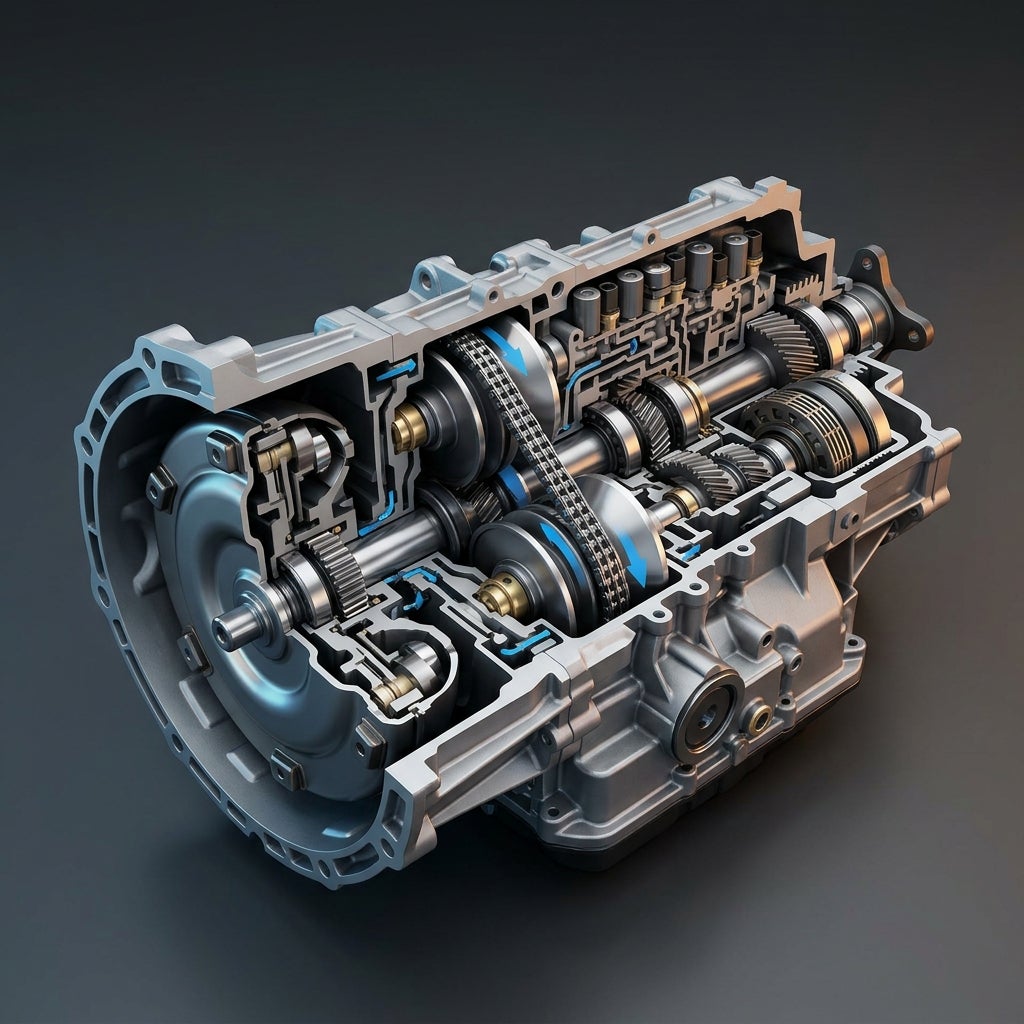
A detailed 3D cutaway visualization of a car transmission showing internal gears, chain belt, and fluid pathways. (Representative image for illustration purposes only. Actual vehicle may vary based on trim and configuration.)

How Long Does a Subaru CVT Transmission Last? Direct Lifespan Answer & Key Takeaway

When properly maintained, a Subaru Lineartronic Continuously Variable Transmission (CVT) typically lasts between 100,000 and 150,000 miles under standard driving conditions, with many well-cared-for vehicles reaching well beyond 200,000 miles on their original transmission assembly. Unlike conventional automatic transmissions that rely on fixed planetary gear sets, Subaru's unique chain-driven CVT dynamically adjusts gear ratios for optimal torque efficiency and seamless acceleration across Greater St. Louis roadways. The actual longevity of your Subaru CVT hinges on three primary factors: routine fluid maintenance, driving habits, and climate exposure. Drivers navigating daily stop-and-go commuting along Watson Road or suburban commutes through Sunset Hills experience distinct thermal stresses on transmission fluid. While early CVT iterations encountered minor growing pains, modern Subaru Lineartronic units are engineered for high durability. Exploring our New Subaru Inventory or taking proactive care of your current vehicle ensures maximum return on your automotive investment. Understanding Lineartronic CVT Technology and Symmetrical All-Wheel Drive Integration Subaru’s proprietary Lineartronic CVT stands apart from traditional CVTs used by other manufacturers. Most competitive CVTs utilize a push-belt design that relies on heavy side pressure and friction. Subaru, by contrast, engineered a high-strength steel chain-driven pulley system. This chain design allows smaller pulley diameters, expanding the overall ratio coverage while reducing internal mechanical friction. Because the Lineartronic CVT is mounted longitudinally directly behind Subaru's iconic horizontally opposed BOXER engine, it integrates seamlessly with Symmetrical All-Wheel Drive (AWD). Power flows directly in a straight line from the crankshaft through the transmission into the active torque split center differential, delivering immediate power distribution to all four wheels without energy-robbing right-angle turns in the drivetrain. This continuous torque delivery keeps engine RPMs in their optimal powerband during highway merges on Interstate 270 or winter driving conditions in St. Louis. Drivers looking for premium performance and efficiency can check out our New Subaru Outback Inventory to experience Lineartronic technology firsthand. What Are the Common Problems with Subaru CVT Transmissions? While Subaru CVTs are widely recognized for their reliability, high-mileage units or vehicles with neglected maintenance schedules can experience specific technical issues. Understanding early warning signs helps owners address minor component wear before it leads to major repairs. 1. Valve Body & Torque Converter Solenoid Failure: The most frequent mechanical failure point is the torque converter lock-up duty solenoid housed inside the transmission valve body. When this solenoid fails, drivers may experience engine stalling when coming to a stop or a flashing AT OIL TEMP light on the instrument cluster. 2. Acceleration Shudder or Hesitation: Over time, fluid degradation can reduce hydraulic clamping force on the pulleys, leading to minor slippage or shuddering under heavy throttle application. 3. Factory Extended Warranty Support: To reassure owners, Subaru extended the factory transmission warranty to 10 years or 100,000 miles for several earlier model years (including select 2010–2018 vehicles). This extension covers full diagnostic inspections and valve body or transmission replacements completed by certified technicians. If you notice erratic shifting or warning lights on your dash, browse our Current Service and Parts Specials and schedule a comprehensive diagnostic check with our factory-trained service team. Subaru Service Schedules: How Often Does a Subaru CVT Need Transmission Maintenance? Inspection Intervals (30,000–60,000 Miles) Subaru recommends inspecting the CVT fluid visual quality, temperature sensors, and line pressure every 30,000 miles. For standard commuter driving around St. Louis, a full fluid exchange is typically performed between 45,000 and 60,000 miles to preserve smooth chain engagement. Debunking 'Lifetime Fluid' Owner manuals occasionally refer to CVT fluid as 'filled for life' under light duty. However, master technicians agree that heat cycles, heavy traffic, and summer temperatures break down fluid viscosity. Replacing fluid is essential for high-mileage longevity. Severe Driving Conditions If you regularly tow trailers, carry heavy cargo, or drive in hilly terrain around Chesterfield, fluid replacement every 30,000 miles is strongly advised. Schedule Service and Diagnostics Are Subarus Reliable Vehicles? Modern Engine Durability and Head Gasket Fixes Subaru has consistently ranked near the top of industry reliability ratings from Consumer Reports and J.D. Power. A common question prospective buyers ask is: 'Did Subaru fix the head gasket issues in newer models?' The answer is an emphatic yes. Older single-overhead-cam EJ-series engines (produced prior to 2011) used single-layer graphite head gaskets that were prone to weeping over time. Starting with the introduction of the modern FB-series engines (FB20 2.0L, FB25 2.5L, and FA24 2.4L Turbo), Subaru completely re-engineered the engine block with multi-layer steel (MLS) head gaskets and independent cooling jackets. Modern Subaru engines also feature timing chains (replacing old rubber timing belts) designed to last the life of the vehicle without periodic replacement intervals. Combined with advanced EyeSight Driver Assist Safety systems, modern Subarus offer outstanding durability. Looking to upgrade your daily commuter? Explore our versatile New Subaru Forester Inventory or check out our premium New Subaru Crosstrek Inventory for long-term dependability. Engine Series Production Era Gasket Architecture Timing Mechanism Legacy EJ-Series (EJ25) 1998 – 2011 Single-Layer Coating Rubber Timing Belt (105k replace) Modern FB/FA-Series 2012 – Present Multi-Layer Steel (MLS) Maintenance-Free Chain Is Subaru Symmetrical All-Wheel Drive Reliable Across St. Louis and Chesterfield Terrain? St. Louis weather presents rapid seasonal shifts—from humid summer asphalt heat to icy winter commutes across Chesterfield and Maryland Heights. Subaru's Symmetrical All-Wheel Drive system is renowned for its exceptional physical balance and durability over 100,000+ miles. Unlike slip-and-grip systems found in traditional front-wheel-drive crossovers that only engage rear wheels after wheelspin occurs, Subaru Symmetrical AWD actively powers all four wheels continuously. Electronic sensors continuously measure steering wheel angle, yaw rate, and wheel speed to adjust power distribution via the electronically controlled hydraulic transfer clutch inside the CVT. Because mechanical loads are evenly spread across front and rear differentials, drivetrain components experience balanced wear over time. If you require maximum family capability with 3-row seating and AWD confidence, explore our New Subaru Ascent Inventory or test drive the iconic New Subaru Legacy Inventory today. Is Subaru Expensive to Maintain Compared to Other Brands? 5-Year Cost of Ownership Data from independent automotive analysis firms shows Subaru average annual maintenance costs range between $450 and $600 during the first five years, putting it on par with Honda and Toyota. 10-Year Long-Term Estimates Over a 10-year ownership period, routine maintenance costs average approximately $6,000 to $7,200. Standard maintenance tasks (oil changes, tire rotations, cabin filters) are competitively priced. Competitive Advantage When accounting for all-wheel-drive capability, Subaru maintenance costs are significantly lower than European luxury crossovers, which require specialized synthetic fluids and higher labor rates. Vehicle Brand Avg. Annual Maintenance (Yrs 1-5) Est. 10-Year Maintenance Total Standard Drivetrain Subaru $480 - $550 $6,200 Symmetrical AWD Standard Toyota $440 - $510 $5,900 FWD Standard / AWD Optional Honda $460 - $530 $6,100 FWD Standard / AWD Optional Are Subaru Repair Parts Expensive and Why Does Genuine OEM CVT Fluid Matter? Subaru repair parts are competitively priced against domestic and Asian import competitors. However, when servicing the Lineartronic CVT, fluid selection is non-negotiable: you should use Genuine Subaru Genuine OEM CVT Fluid (CVTF-II or CVTF-III). Generic or universal multi-vehicle fluids lack the specific static friction modifiers required for Subaru's high-torque steel chain pulley design. Using non-OEM transmission fluid can cause chain slippage, excessive thermal expansion, seal degradation, and premature pump failure, which voids warranty coverage. Need authentic factory parts or specialized lubricants for your DIY garage project or routine upkeep? Order directly through our online store to Find Subaru Parts designed specifically for your model. Find Subaru Parts Which Subaru Model Holds Its Value Best for Resale and Trade-In? Subaru Crosstrek The Crosstrek routinely wins ALG Residual Value Awards, retaining up to 60–65% of its original value after 36 months thanks to intense pre-owned market demand. Subaru Outback & Forester Both models maintain exceptionally low depreciation curves. Documented service records showing regular CVT fluid exchanges boost trade-in appraisals by up to 15%. Subaru WRX & BRZ Performance enthusiasts look for clean maintenance histories. Check out our New Subaru WRX Inventory or New Subaru BRZ Inventory for high residual value choices. Ready to trade up to a brand-new vehicle? You can easily Get your value trade online in just a few clicks or explore our broad selection of certified Used Vehicle Inventory at Sunset Hills Subaru. How Much Does a New Subaru Cost in 2027 and Does Subaru Offer Free Maintenance? New Subaru vehicle pricing remains among the most accessible in the all-wheel-drive crossover market. Starting MSRP ranges span from mid-$20,000s for compact models up to mid-$40,000s for fully equipped 3-row family SUVs: • Impreza & Crosstrek: Starting ~$25,000 – $32,000 • Forester & Outback: Starting ~$29,000 – $41,000 • Ascent 3-Row SUV: Starting ~$35,000 – $49,000 • Solterra EV: Explore New Subaru Solterra Inventory for zero-emissions electric driving. Factory Warranty & Maintenance Coverage Every new Subaru includes a standard 3-Year / 36,000-Mile Bumper-to-Bumper Limited Warranty alongside a 5-Year / 60,000-Mile Powertrain Warranty. While complimentary routine maintenance varies by regional incentive programs, Sunset Hills Subaru frequently features service offers covering initial oil changes and tire rotations. Check out our latest Current New Car Offers or Get approved for financing to contact the dealership for current financing and purchase information. Daily Driving Tips to Extend CVT Lifespan for Ladue and Chesterfield Drivers Adopting smooth driving habits greatly reduces internal friction and heat stress within your CVT transmission. Here are key practical recommendations from certified Subaru service technicians: • Allow Proper Engine & Fluid Warm-Up: In cold winter months around Ladue and Sunset Hills, allow your vehicle to idle for 30–60 seconds before shifting into Drive. Cold CVT fluid is thicker and requires brief circulation to maintain proper line pressure. • Avoid Complete Stops Before Shifting: Always come to a complete, full stop before shifting between Reverse and Drive. Shifting while rolling forces internal clutches to absorb kinetic momentum, creating premature fluid shear. • Smooth Acceleration Modulation: Moderate throttle inputs allow the hydraulic pulleys to adjust smoothly, maintaining maximum torque efficiency on Highway 40 / I-64. • Respect Rated Towing Limits: Do not exceed manufacturer towing guidelines (typically 1,500 lbs to 5,000 lbs depending on model). Excess trailer loads raise transmission fluid temperatures rapidly. Get Your Trade Valuation Protect Your Subaru CVT Drivetrain at Sunset Hills Subaru Whether you need routine CVT fluid maintenance, expert mechanical diagnostics, or are exploring the latest Subaru models equipped with Symmetrical All-Wheel Drive, the dedicated team at Sunset Hills Subaru is ready to assist you. Also explore our New Subaru Impreza Inventory for efficient daily driving. Visit us at 10100 Watson Rd, Sunset Hills, MO 63127. Get Directions to Sunset Hills Subaru or Call us at (314) 476-9638 to schedule your service appointment or vehicle test drive today. Schedule Service and Diagnostics Subaru CVT Transmission Longevity in Sunset Hills MO | Sunset Hills Subaru