Blog

How to Get Better Gas Mileage on Your Subaru: Expert Tips from Sunset Hills Subaru

How to Get Better Gas Mileage on Your Subaru: Expert Tips from Sunset Hills Subaru

Improving your Subaru’s gas mileage is not only great for your wallet but also beneficial for the environment. Whether you’re commuting through the bustling streets of Richmond Heights, cruising the scenic roads near Webster Groves, or heading out for a weekend adventure around Chesterfield, optimizing your vehicle’s fuel efficiency can make a significant difference. At 10100 Watson Rd, Sunset Hills, MO 63127, we understand the importance of fuel economy and are here to provide you with actionable advice to get the most miles per gallon (MPG) from your Subaru.

If you have questions or need expert maintenance to keep your Subaru running efficiently, call us at (314) 476-9638 or Schedule Service and Diagnostics to optimize your vehicle’s performance.

Table of Contents


Efficient Driving Techniques: The Foundation for Better Gas Mileage

Driving habits profoundly affect fuel economy, often more than mechanical modifications. For Subaru drivers navigating busy routes in Glendale, Ladue, or Richmond Heights, adopting smart driving techniques can reduce fuel consumption by up to 25%.

First, accelerate gently. Rapid acceleration demands more fuel because the engine works harder to increase speed. Instead of flooring the gas pedal, think about gradually increasing your speed over roughly 5 seconds to reach 20 km/h. Picture carrying a cup of coffee on your dashboard — you want to avoid spilling it. This method is especially effective in stop-and-go traffic common in urban Maryland Heights.

Maintaining a steady speed also supports fuel efficiency. Frequent speed fluctuations cause the engine to burn more fuel, which can increase consumption by as much as 20%. Using cruise control on highways around Creve Coeur and Valley Park can help keep your speed consistent. However, it's beneficial to let your vehicle slow slightly when climbing hills and regain momentum when descending, leveraging gravity to reduce engine strain.

Another critical tip is to anticipate traffic conditions. Keeping a safe following distance and reading the traffic ahead allows you to maintain smooth speed transitions. This reduces the need for sudden braking and acceleration, which are fuel-intensive. These techniques also enhance safety on busy Twin Oaks roads.

Avoiding high speeds is crucial as well. Subaru vehicles achieve optimal fuel efficiency typically between 50 and 80 km/h. Driving faster than this, such as speeds over 100 km/h on some St Louis expressways, causes fuel consumption to spike sharply—up to 20% more fuel at 120 km/h compared to 100 km/h. The time saved on such trips is minimal but comes at a significant fuel cost.

Finally, practice coasting to decelerate. Instead of braking hard, easing off the accelerator and letting your Subaru coast to slow down preserves momentum and saves fuel. This approach is especially useful for drivers in Webster Groves and Concord who frequently encounter stoplights.

By integrating these driving habits, Subaru owners in the St Louis metro area can experience noticeable improvements in fuel economy and reduce emissions simultaneously.


Subaru’s Seven Innovations Improving Fuel Economy

Subaru is committed to advancing fuel efficiency through cutting-edge technology, benefiting drivers throughout Chesterfield, Fenton, and Maplewood. Here are seven key ways Subaru enhances fuel economy:


  • Hybrid Electric Drive: The Subaru XV Crosstrek hybrid combines a gasoline engine with electric motors to optimize fuel use, especially in city driving conditions typical of Richmond Heights.


  • Partial Zero Emissions Vehicle (PZEV) Technology: This system reduces harmful emissions while improving combustion efficiency, meeting stringent environmental standards that matter to eco-conscious drivers in St Charles.


  • Lineartronic Continuously Variable Transmission (CVT): Subaru’s CVT adjusts gear ratios smoothly to maintain the engine at optimal RPMs, enhancing fuel economy during highway drives common in Ladue and Creve Coeur.


  • Subaru BOXER Engine: This unique horizontally opposed engine design lowers the center of gravity and improves balance, contributing to efficient power delivery and fuel savings for drivers in Valley Park.


  • Aerodynamic Enhancements: Subaru models feature body designs that minimize wind resistance, which can improve highway fuel economy by reducing drag—an advantage appreciated by commuters in Twin Oaks.


  • Efficient Symmetrical All-Wheel Drive: Subaru’s AWD system is engineered to optimize power distribution while minimizing energy loss, delivering fuel savings without sacrificing traction on Missouri’s varied terrain.


  • Eco Mode Driving: Certain Subaru models include an Eco Mode that adjusts throttle response and climate control settings to maximize fuel efficiency in everyday driving.


These features combine to create a driving experience that balances performance with fuel economy, ideal for those living in or near Sunset Hills. For those interested in learning more about Subaru’s latest models, check out our extensive New Subaru Inventory.


Practical Ways to Reduce Your Subaru’s Fuel Consumption

Beyond driving style and technology, routine maintenance and smart habits play a pivotal role in lowering fuel consumption. Subaru owners in Webster Groves and Richmond Heights can take advantage of the following best practices.

Maintaining proper tire pressure is essential. Tires underinflated by as little as 8 psi can increase fuel consumption by up to 4%. Checking your tire pressure monthly ensures optimal rolling resistance and extends tire life. Subaru owners in Glendale and Ladue should refer to the tire information placard on the driver’s door jamb for recommended pressures.

Avoiding unnecessary idling also conserves fuel. A vehicle with a 3-liter engine can waste over 300 milliliters of fuel for every 10 minutes of idling. If you expect to be stopped for more than a minute, it’s best to turn off your engine to save fuel and reduce emissions, a smart strategy for drivers in Chesterfield during peak traffic hours.

Carrying excess weight increases the load on your Subaru’s engine, decreasing fuel efficiency. Removing unnecessary items, such as heavy sports gear or construction materials, can improve your gas mileage by roughly 1% for every 25 kilograms removed.

Using air conditioning sparingly is another effective way to improve MPG. On city drives through Maryland Heights or Sappington, rolling down windows can reduce fuel use compared to running the AC. On highways, using the re-circulate setting minimizes energy consumption.

For manual transmission Subaru owners, shifting gears smoothly and avoiding high RPMs helps optimize fuel use. Paying attention to the tachometer ensures you shift at the right moment to prevent wasting fuel.

Regular servicing according to Subaru’s recommended schedule is crucial for sustained fuel efficiency. Our expert technicians at Sunset Hills Subaru are ready to assist—schedule your next maintenance visit by clicking Schedule Service and Diagnostics. For genuine Subaru parts to keep your vehicle in top condition, visit our Parts Department.


Why Might Your Subaru Be Using More Gas Than Expected?

If you notice your Subaru’s fuel efficiency declining, several mechanical and operational factors could be responsible, especially in areas like Fenton, St Charles, and Oaklands.

A common culprit is the fuel system. Components such as fuel injectors can become clogged, and fuel filters may get dirty, reducing fuel delivery efficiency. This causes the engine to burn more fuel to maintain power. Having your fuel system inspected regularly at Sunset Hills Subaru helps prevent these issues.

Improper tire inflation, as mentioned earlier, also leads to increased fuel consumption. In addition, a dirty air filter restricts airflow to the engine, forcing it to work harder and consume more fuel. Replacing your air filter regularly is a simple yet effective way to maintain MPG.

Extra weight in the vehicle and poor driving habits like aggressive acceleration or excessive idling also contribute to lower fuel economy. Residents in Webster Groves and Concord may find that adjusting these habits restores their Subaru's fuel efficiency.

If you’re unsure about the cause of poor gas mileage, our service experts can perform a diagnostic check to identify and resolve issues. Contact us at (314) 476-9638 or use our online service scheduler.


Top Subaru Models for Fuel Economy

For drivers in Chesterfield, Fenton, and Maplewood looking to maximize fuel savings, choosing the right Subaru model makes a big difference.

The 2022 Subaru Impreza leads the lineup in fuel efficiency with up to 36 mpg on highways and 28 mpg in the city. Its compact size and efficient powertrain make it ideal for daily commuting in urban settings like Ladue or Richmond Heights.

SUV enthusiasts will appreciate the 2021 Subaru Crosstrek, which delivers up to 34 highway mpg. This model balances rugged capability with impressive fuel economy, perfect for drivers near Maryland Heights who want versatility without sacrificing efficiency.

The Subaru Outback and Forester also provide competitive fuel economy figures while offering spacious interiors and AWD capability—great for families in Webster Groves and Oakland.

Explore our full selection with the New Subaru Inventory or browse pre-owned options at our Used Vehicle Inventory for even more fuel-efficient choices.


Modifying Your Subaru to Enhance Gas Mileage

Subaru owners eager to boost fuel efficiency beyond standard maintenance and driving habits can consider several aftermarket modifications, suitable for those in Creve Coeur and Webster Groves.

One effective upgrade is installing an aftermarket air intake system. These systems enhance airflow to the engine, improving combustion efficiency and potentially increasing gas mileage by up to 5%. Installation is relatively straightforward and affordable, making it a popular choice.

Upgrading to a performance exhaust system reduces backpressure, allowing the engine to expel exhaust gases more efficiently. This can lead to modest fuel economy gains and a boost in horsepower, though installation costs and potential noise restrictions should be considered.

Replacing stock fuel injectors with high-performance models can enhance fuel delivery precision, improving combustion and efficiency. However, this may require professional tuning and comes with higher upfront costs.

Performance chips that optimize engine control unit settings can sometimes increase gas mileage by up to 20%. These chips adjust air/fuel ratios and ignition timing but may void warranties or require expert installation.

Aerodynamic enhancements such as spoilers and side skirts reduce drag, which can improve highway MPG. For Subaru drivers in Valley Park and Twin Oaks, these modifications can be especially beneficial during long highway commutes.

Low rolling resistance tires minimize friction between tire and road, improving fuel economy by up to 3%. Selecting tires designed for fuel efficiency is a practical modification available through our dealership.

For those interested in exploring these options, Sunset Hills Subaru offers expert advice and genuine Subaru accessories to help you upgrade safely and effectively.


Using Subaru’s Eco Mode to Maximize Fuel Savings

Many Subaru models available near Sappington and Lakeshire come equipped with an Eco Mode feature designed to help drivers reduce fuel consumption effortlessly.

Eco Mode adjusts throttle sensitivity to encourage smoother, less aggressive acceleration. It also modifies climate control settings to reduce engine load from air conditioning and heating systems. This mode is ideal for city driving or relaxed highway cruising, where maximizing MPG is a priority.

Switching to Eco Mode is simple via the driving mode selector on your dashboard. For more active driving scenarios, Sport or Normal modes may be preferable, but Eco Mode offers a balanced approach to fuel savings without compromising comfort.

Incorporating Eco Mode into your daily routine, combined with the efficient driving techniques outlined earlier, can yield measurable improvements in fuel economy, especially in stop-and-go traffic common around Crestwood and Glendale.


Empower Your Subaru Experience in Sunset Hills and Beyond

Maximizing your Subaru’s fuel efficiency involves a combination of smart driving habits, regular maintenance, understanding your vehicle’s advanced technologies, and considering modifications tailored to your needs. Whether you’re exploring our New Subaru Inventory, browsing certified pre-owned options in our Used Vehicle Inventory, or scheduling routine maintenance at our convenient location in Sunset Hills, MO, we’re here to help you get the most out of every mile.

To keep your Subaru performing at its best, don’t hesitate to Schedule Service and Diagnostics. If you’re considering trading in your current vehicle to upgrade to a more fuel-efficient model, use our Get your value trade tool to find out its worth.

For genuine Subaru parts and accessories to maintain or upgrade your vehicle, visit our Find Subaru Parts page. Check out our latest offers on vehicles and services through our Current New Car Specials and Current Service and Parts Specials.

For specific model inventories, explore our selections of the BRZ, Legacy, WRX, Solterra, Impreza, Outback, Forester, Crosstrek, and Ascent.

Contact Sunset Hills Subaru today at (314) 476-9638 to start your journey toward better fuel efficiency and a more enjoyable driving experience in the St Louis metro area.


© 2025 Sunset Hills Subaru
Recommended Posts

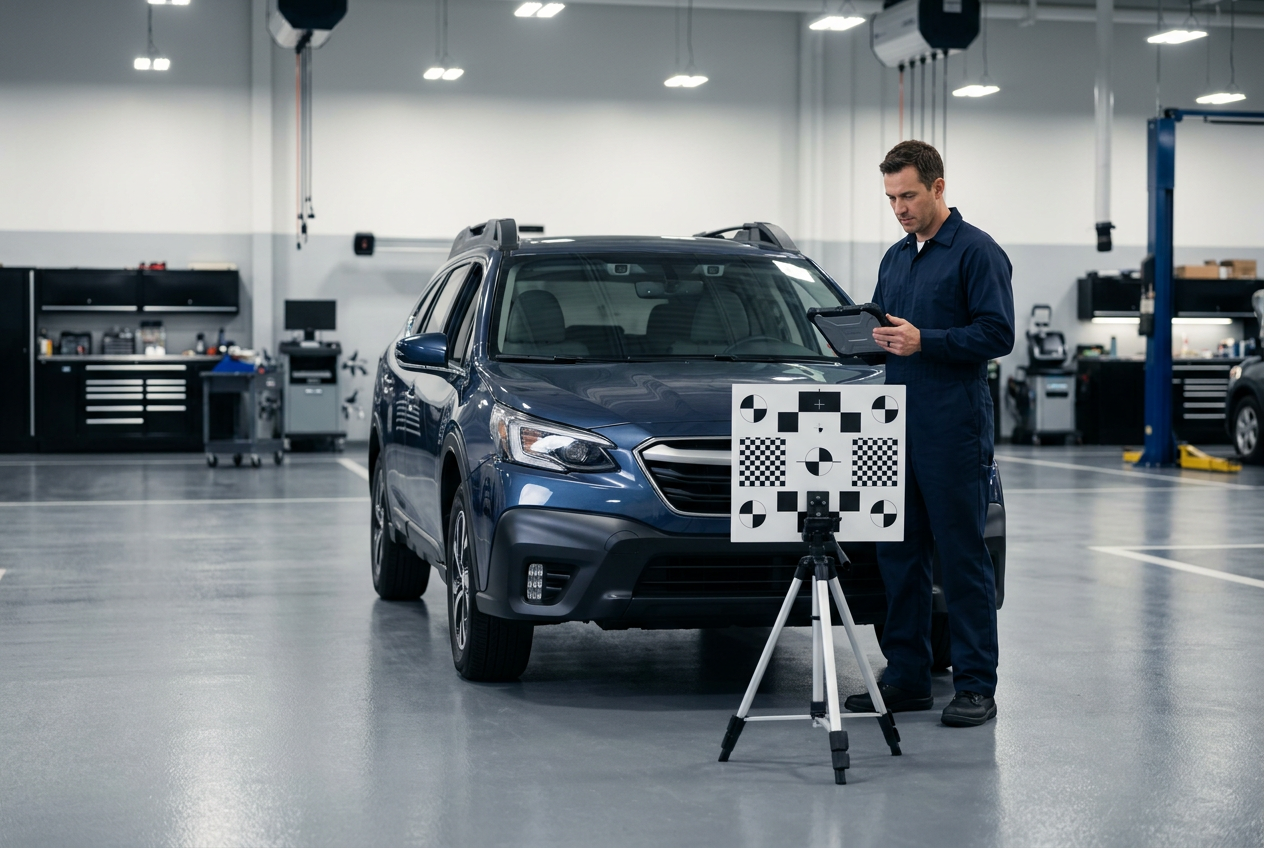
Eyesight calibration

Are Subaru Safety Sensors and EyeSight Cameras Reliable as Cars Age?

The direct answer is yes. Subaru EyeSight stereo cameras and rear radar modules are solid-state electronic systems engineered to endure well beyond 10 to 15 years and over 200,000 miles without fundamental mechanical degradation. Unlike moving mechanical parts subject to physical friction, solid-state sensors do not simply wear out from accumulated mileage. Drivers across Greater St. Louis routinely pilot decade-old Foresters and Outbacks with fully functioning driver-assist systems intact. However, long-term reliability is not entirely maintenance-free. While the optical processing units and internal microchips remain durable, the system relies on external variables: optical clarity through the windshield, precise physical calibration, electrical voltage stability, and vulnerability to severe weather. As your vehicle passes the 100,000-mile mark, issues rarely stem from internal electronics; instead, they result from road debris pitting the glass, uncalibrated windshield replacements, or failing 12-volt battery power. When maintained properly, Subaru EyeSight remains one of the most durable and cost-effective advanced driver-assistance systems (ADAS) in the automotive industry. How Subaru EyeSight Hardware Operates Over 100,000 Miles and Beyond Unlike the majority of automotive manufacturers who place radar modules and ultrasonic sensors exposed inside front grilles or lower bumpers, Subaru engineered EyeSight around high-mounted stereo optical cameras. Positioned safely inside the vehicle's upper windshield frame, these dual lenses mimic human binocular vision to calculate distance, relative velocity, and object shapes. This deliberate placement delivers a major long-term reliability benefit: the primary electronic hardware remains shielded inside a climate-controlled passenger cabin. It avoids gravel strikes, road salt, corrosive brine, minor parking lot collisions, and moisture intrusion that routinely ruin bumper-mounted radar arrays on competing crossovers. Because optical glass and camera sensors experience zero mechanical movement, system fidelity remains sharp well past six-digit odometer readings as long as the windshield glass remains clean and chip-free. Why Older Subaru EyeSight Cameras Temporarily Disable When an EyeSight warning indicator illuminates alongside an amber dashboard prompt, many owners assume the hardware has permanently failed. In reality, Subaru utilizes a fail-safe operating design: rather than making inaccurate calculations under compromised visual conditions, the system safely disables itself until sightlines return to baseline. Atmospheric Moisture & Frost During humid Missouri autumn mornings and freezing winter conditions, condensation, frost, or interior windshield fog directly over the stereo lenses blocks visibility. Running the front windshield defroster cleared the line of sight within minutes, restoring full functionality. Direct Solar Glare Driving directly into dawn or dusk sun angles can temporarily blind optical lenses much like human eyes. Once the road changes heading or the sun passes overhead, the cameras recalibrate their exposure levels and re-engage automatic cruise and pre-collision systems. Interior Glass Haze Over years of ownership, dashboard plastic outgassing and cabin dust create an invisible oily sheen across the interior glass. Routine gentle cleaning of the windshield glass around the camera aperture ensures pristine optical clarity for reliable processing. Windshield Replacements and Sensor Recalibration: Critical Care for Aging Subarus The most frequent trigger for safety sensor trouble on older Subarus is improper windshield replacement. Genuine Subaru OEM glass is engineered with specific optical distortion tolerances, acoustic sound dampening, and heated camera defrosting grids built directly into the upper viewing aperture. When third-party glass shops install non-OEM windshields with minor microscopic ripples, stereo cameras experience refraction errors, causing adaptive cruise dropouts or false lane-departure warnings. Furthermore, every windshield replacement demands professional dynamic and static recalibration. Using factory diagnostic targets, technicians align camera focal points precisely to the chassis ride height. Skipping this step risks compromised emergency braking performance. Schedule Service and Diagnostics Warning Signs of Aging EyeSight and Blind-Spot Sensor Malfunctions Understanding the difference between normal visual cutouts and genuine electronic faults keeps your vehicle operating safely without unnecessary repair expenditures. Persistent Amber Warnings If the EyeSight OFF amber warning remains lit on clear days during normal driving, the electronic control module has registered an active Diagnostic Trouble Code (DTC). This indicates an electrical fault, connection loss, or camera hardware problem rather than environmental blindness. Rear Radar BSD/RCTA Alerts Blind Spot Detection (BSD) and Rear Cross-Traffic Alert (RCTA) use radar modules tucked behind the rear bumper cover. On higher-mileage vehicles, road salt accumulation or minor bumper impacts can bend the mounting brackets, causing false alerts or system shutdown. Adaptive Cruise Dropouts Sudden disengagement of adaptive cruise control on smooth highway stretches without adverse weather points toward subtle camera angle drift or an aging 12-volt battery unable to maintain stable reference voltage under electrical accessory load. EyeSight Durability vs. Boxer Engine and Symmetrical AWD Longevity When assessing whether Subaru safety sensors hold up over time, comparing electronic longevity to the mechanical powertrain provides valuable perspective. Does Subaru Symmetrical AWD outlast electronic on-demand AWD systems? In practice, Subaru's continuous mechanical AWD layout uses full-time torque distribution through robust planetary gearsets or electronic multi-plate transfer clutches. Unlike front-wheel-drive systems that rely on delayed electronic clutch packs when front slippage occurs, Subaru Symmetrical AWD distributes power continuously, reducing sudden torque spikes and wear. Meanwhile, modern Subaru Boxer engines have addressed historical head-gasket vulnerabilities with multi-layer steel gaskets, though common maintenance focal points around 120,000 to 150,000 miles include monitoring minor oil seepage around cam carriers, PCV valve cleanliness, and CVT valve body solenoid function. Remarkably, the EyeSight optical cameras and safety sensors routinely exhibit fewer failure rates and lower maintenance costs over 150,000 miles than either engine accessory gaskets or suspension bushings. The 200,000-Mile Club: What Percentage of Subarus Make It Past 10 Years? According to industry registration data from Experian and automotive lifespan studies, an impressive many Subarus sold over the past 10 years are still on the road today. The average lifespan of a Subaru spans 12 to 15 years, with typical mileage potential reaching 200,000 to 250,000 miles when following factory service schedules. Subaru Outback The Outback consistently ranks among the top five passenger vehicles in America most likely to surpass 200,000 miles, driven by rugged chassis design and durable Lineartronic CVT cooling systems. Subaru Forester With its upright greenhouse glass structure and accessible mechanical layout, the Forester remains an enduring favorite for high-mileage commuters seeking long-term ownership with low depreciation. Subaru Crosstrek Built upon the rigid Subaru Global Platform, the Crosstrek delivers exceptional chassis stiffness and proven suspension components that easily weather harsh Midwest roadway freeze-thaw cycles. Get your value trade Subaru Maintenance Schedules and Warning Signs of a Failing CVT What maintenance is required to keep a Subaru running past 200,000 miles? Factory guidance calls for regular servicing every 6,000 miles or six months, whichever arrives first, encompassing synthetic engine oil, OEM oil filters, and tire rotations. Key milestones occur at 30,000 miles (brake fluid and cabin/engine filters), 60,000 miles (spark plugs and differential fluids), and 90,000 miles. How often should you replace the CVT fluid in a Subaru? While factory literature lists CVT fluid as inspected periodically under normal driving, severe driving conditions—including stop-and-go commuting, freezing winter conditions, and hilly terrain—warrant fluid exchange every 30,000 to 60,000 miles. Warning signs of a failing Subaru CVT include noticeable shuddering or bucking under steady acceleration, delayed engagement between Park, Reverse, and Drive (longer than 1.5 seconds), high-pitched whining or grinding noises from worn pulley bearings, or sudden dashboard illumination of the AT Oil Temp warning lamp. Service Interval Recommended Maintenance Item System Impact Every 6,000 Miles Full Synthetic Oil, OEM Filter, Tire Rotation Engine longevity, AWD torque balance 30,000 Miles Brake Fluid Flush, Air & Cabin Filter, Severe CVT Inspection Braking response, EyeSight camera clarity 60,000 Miles Front/Rear Differential Fluid, Spark Plugs, CVT Fluid Flush Drivetrain durability, transmission efficiency 90,000–105,000 Miles Coolant Flush, Accessory Belts, Suspension Bushing Check Thermal regulation, ride height & ADAS aim How Subaru Safety Reliability Compares to Honda CR-V and Toyota RAV4 Evaluating how Subaru reliability compares to the Honda CR-V and Toyota RAV4 requires looking at ADAS architecture, repair expenses, and manufacturer warranties across multi-year ownership. Subaru EyeSight Subaru mounts optical cameras inside the cabin, avoiding bumper radar road damage. The 2027 Forester includes a 3-year/36,000-mile basic warranty and 5-year/60,000-mile powertrain warranty, while the 2027 Crosstrek Limited Hybrid includes an 8-year/100,000-mile hybrid warranty. High long-term owner satisfaction stems from lower grille repair costs. Honda Sensing Honda CR-V pairs a windshield camera with a millimeter-wave radar in the lower grille. While highly accurate in heavy downpours, low bumper radar units are vulnerable to rock damage, parking dings, and bracket misalignments that require costly front-end teardown recalibrations after five to eight years. Toyota Safety Sense Toyota RAV4 uses emblem-integrated millimeter-wave radar coupled with monocular cameras. While exceptionally dependable overall, emblem replacements after minor front collisions carry high parts replacement expenses, though long-term software support remains dependable past 10 years. Is It Worth Buying a Used Subaru with Over 150,000 Miles? Is it worth buying a used Subaru with over 150,000 miles? Yes, provided you complete a focused pre-purchase inspection. A high-mileage Subaru that received verified 6,000-mile oil changes and regular transmission fluid servicing represents strong value for shoppers. Pre-Purchase Inspection Checklist: • EyeSight Camera Scan: Verify diagnostic trouble codes with a scan tool to confirm zero stored optical sensor faults. • Windshield Clarity: Check that the windshield is either OEM Subaru glass or high-grade glass with zero stone chips in the camera path. • Rear Radar Brackets: Inspect under the rear bumper cover for excessive rust or bent radar brackets. • CVT Drive Test: Confirm smooth low-speed throttle transitions without hesitation or shuddering. • Suspension & Alignment: Worn control arm bushings or sagging springs alter suspension geometry, which directly affects lane-keep assist precision. Used Vehicle Inventory Navigating Chesterfield, Maryland Heights, and Ladue Commutes with Older EyeSight Systems Chesterfield Valley River Fog & Highway 40 St. Louis drivers regularly encounter dense microclimate river fog along I-64/Highway 40 through Chesterfield Valley. Because EyeSight relies on optical contrast, heavy fog may prompt a brief system standby alert. Maintain generous following distances and let your vehicle's symmetrical AWD keep traction secure until valley fog burns off. Rolling Ladue Hills & Maryland Heights Grime Negotiating winding tree-canopied lanes through Ladue creates sudden transitions from deep tree shade to intense morning glare. Meanwhile, commuter traffic near Maryland Heights lakes often splatters road film across windshields during autumn storms. Fresh wiper blades and quality washer fluid preserve instant optical camera clarity. Maintain Your Subaru EyeSight and Safety Systems at Sunset Hills Subaru Whether you are driving a 2015 Outback with over 150,000 miles or looking ahead to the latest 2027 Forester with 3-year/36,000-mile basic and 5-year/60,000-mile powertrain coverage, proper maintenance ensures your safety sensors remain factory-precise. At Sunset Hills Subaru, our factory-certified technicians utilize specialized optical calibration boards, genuine OEM glass, and Subaru diagnostic tools to keep your driver-assist systems in peak condition. Visit us at 10100 Watson Rd in Sunset Hills, MO 63127, or speak directly with our service specialists by calling Call (314) 476-9638. Need directions from Chesterfield, Maryland Heights, or Ladue? Simply Get Directions to Sunset Hills Subaru and experience dedicated support from St. Louis area Subaru experts. Get Directions to Sunset Hills Subaru Subaru EyeSight in Sunset Hills, MO | Sunset Hills Subaru

Subaru Outback on Country Highway

The Direct Answer: Why the Subaru Outback Is the Best Choice for a 500-Mile Road Trip

When you are staring down 500 miles of unbroken interstate pavement, secondary highway detours, and unpredictable Midwestern weather, the Subaru Outback is a strong choice in the lineup. A 500-mile journey is the ultimate litmus test for any crossover: it is long enough to reveal every ergonomic flaw, penalize inefficient fuel consumption, and test your endurance against wind noise and chassis vibration. Setting out from the St. Louis corridor down Interstate 44 toward the Ozarks or north along I-55 toward Chicago, the Outback strikes a masterclass balance that no traditional high-riding SUV can completely replicate. What cements the Outback as the quintessential long-hauler is its remarkable 590-plus mile highway cruising range when equipped with the naturally aspirated 2.5-liter Boxer engine and its generous 18.5-gallon fuel reservoir. Pairing that extended bladder-busting range with a full 8.7 inches of ground clearance gives you the dual advantage of high-riding clearance for gravel trails alongside the planted, low-center-of-gravity stability inherent to an extended station wagon platform. While the three-row New Subaru Ascent Inventory is the clear imperative for groups carrying six or seven passengers, and the Forester provides an unmatched upright greenhouse for vertical packing, the Outback is a compelling option for open-road composure, cargo versatility, and driver comfort. Highway Fuel Range Compared: How Far Can Each Subaru Travel on a Single Tank of Gas? On an 8-hour interstate trek, your time is determined as much by fuel stop frequency as your speedometer reading. Planning a departure from Sunset Hills or Maryland Heights toward destinations like Nashville (310 miles), Chicago (300 miles), or Kansas City (250 miles) reveals distinct personality traits across each nameplate's fuel capacity and aerodynamic profile. The Subaru Outback boasts an expansive 18.5-gallon fuel tank. When cruising at 70 mph, its slippery wagon silhouette enables realistic highway returns of 32 mpg, delivering an operational range well in excess of 550 to 590 miles. This means reaching your destination or conducting a full out-and-back day trip with fewer fuel stops along the way. By contrast, the compact Forester utilizes a 16.6-gallon tank and carries a taller, boxier frontal area that incurs slightly higher wind resistance, generating around 500 to 540 miles of theoretical range under optimal conditions. Subaru Model & Engine Fuel Tank Capacity EPA Highway Rating Estimated Highway Range 500-Mile Non-Stop Potential Outback 2.5L NA 18.5 gal 32 mpg 592 miles Exceptional (Single Tank) Outback XT 2.4L Turbo 18.5 gal 29 mpg 536 miles Strong (Single Tank) Forester 2.5L NA 16.6 gal 33 mpg 547 miles Moderate-High (Single Tank) Crosstrek 2.5L NA 16.6 gal 33 mpg 547 miles High (Single Tank) Ascent 2.4L Turbo 19.3 gal 26 mpg 501 miles Requires Mid-Trip Reserve Fill Ergonomics and Cabin Quietness: What Makes the Subaru Outback the Ultimate Multi-Hour Cruiser? Driver fatigue is rarely caused by the clock alone; it is caused by micro-adjustments in spinal posture, poor pelvic support, and continuous low-frequency tire hum resonating through the unibody. In the Outback, Subaru directly targeted these issues through the Subaru Global Platform (SGP), utilizing structural adhesive bonding that stiffens torsional rigidity while absorbing road imperfections before they transmit to the seat rails. Higher trim levels of the Outback feature a power thigh-support cushion extension on the 10-way adjustable driver's seat. For taller drivers traveling long highway stretches, this feature prevents the hamstring cramping and sciatic pressure points typical of standard compact seats. The multi-way lumbar contouring stabilizes the lower back, ensuring your posture remains aligned without requiring aftermarket support cushions. Acoustic engineering plays an equally pivotal role in sustained highway driving. The Outback integrates acoustic-laminated front side glass and a sound-dampening windshield to deflect high-speed turbulent wind sheer from the side mirrors and A-pillars. The result is a library-quiet cabin environment that dramatically reduces cognitive stress over 8 continuous hours of travel. Combined with a long 108.1-inch wheelbase, the Outback glides over pavement expansion joints and bridge transitions with a progressive dampening stroke. You do not suffer the sharp vertical pitch common in shorter-wheelbase utility vehicles, keeping you and your passengers refreshed well past mile 400. Naturally Aspirated 2.5L vs. 2.4L Turbocharged XT: How Engine Choice Impacts Road Trip Fuel Economy Selecting the right powertrain for cross-country touring requires balancing fuel budget against passing confidence. Subaru offers two primary configurations on its midsize platforms: the naturally aspirated 2.5-liter Boxer (182 hp, 176 lb-ft torque) and the 2.4-liter turbocharged XT (260 hp, 277 lb-ft torque). Here is how they stack up when you are covering hundreds of miles with gear on board. Naturally Aspirated 2.5L The standard 2.5-liter Boxer engine is tuned specifically for maximum thermal efficiency and low operational overhead. Cruising at constant throttle between 65 and 72 mph, it delivers up to 32 to 33 mpg highway. Over a 500-mile stint, this engine consumes roughly 16 gallons of regular 87-octane fuel, easily enabling single-tank crossings and reducing fuel costs. Turbocharged 2.4L XT The 2.4-liter Turbocharged Boxer changes the vehicle's personality. With peak torque available from just 2,000 RPM, merging into heavy interstate traffic, passing long semi-truck lines on two-lane mountain passes, and carrying 900 pounds of family gear feels completely effortless. Highway economy settles closer to 28-29 mpg, burning about 17.5 gallons per 500 miles. Payload & Topography If your itinerary includes tackling elevation changes in the Great Smoky Mountains or Colorado Rockies with a rooftop carrier, the XT powertrain maintains sea-level pulling power where naturally aspirated engines lose atmospheric density. For flatter Midwest corridors, however, the 2.5L engine remains a strong choice for fuel conservation. Explore New Subaru Outback Inventory Traveling with Passenger Crews: Does the Subaru Ascent Offer Second-Row Captain's Chairs for Long-Trip Comfort? For growing families and travel parties setting off from Chesterfield, Ladue, or Kirkwood, vehicle dimensions shift from a matter of preference to a matter of necessity. When your road trip party exceeds four passengers, the three-row Subaru Ascent transforms the group travel dynamic. Available second-row captain's chairs provide individual armrests, independent sliding rails, deep seat recline angles, and a convenient walk-through center aisle to the third row. This separation can help reduce shoulder contact between siblings on long interstate drives. Beyond passenger seating, the Ascent features up to 19 dedicated cup and bottle holders, ensuring insulated thermoses, sports bottles, and coffee mugs all have secure resting spots. Tri-zone automatic climate control allows rear passengers to maintain their preferred temperature zone without negotiating with the driver, while illuminated USB ports spanning all three rows keep personal tablets, smartphones, and gaming devices charged from origin to destination. Subaru Forester Road Trip Capability: How Hybrid Battery Placement and Cargo Dimensions Stack Up The Subaru Forester holds a unique place for touring enthusiasts who prioritize upright visibility and tall cargo packaging. Thanks to its generous glass greenhouse and elevated hip-point seating, the Forester offers good outward sightlines that reduce motion sickness for passengers and provide the driver with an commanding view of changing traffic patterns. In standard internal combustion configurations, the Forester offers up to 30 cubic feet of cargo volume behind the second row, expanding to 74 cubic feet when the rear 60/40 seats are folded flat. Its extra-wide rear gate opening (measuring over 49 inches across) easily accommodates bulky hard-shell suitcases, upright dog crates, and coolers without awkward angling. As hybrid powertrain configurations enter the modern Subaru landscape, cargo volume packaging requires precise engineering. By situating the compact high-voltage traction battery pack underneath the rear subfloor rather than encroaching directly upward into the main load floor, engineers have preserved critical interior hauling height. While underfloor hidden tray storage is slightly reduced in hybrid variants to house power electronics and battery cooling channels, the primary horizontal cargo floor remains exceptionally flat. This allows drivers to slide large duffel bags, camping gear, and emergency road equipment across the threshold with minimal compromise to long-distance utility. How Subaru EyeSight Driver Assist Enhances Highway Endurance, Heavy Rain, and Night Driving A 500-mile road trip rarely features pristine sunshine throughout its duration. Driving through the Midwest regularly brings torrential downpours along I-44, heavy crosswinds near I-64, and the visual fatigue of nighttime interstate driving. Subaru's dual-camera (and wide-angle mono camera equipped) EyeSight Driver Assist system provides vital active monitoring. Adaptive Cruise & Lane Centering Advanced Adaptive Cruise Control with Lane Centering operates seamlessly between 0 and 90 mph. By reading lane markings and gently applying micro-steering corrections, it keeps the vehicle centered within the lane. This drastically reduces the physical shoulder and neck strain drivers experience during endless multi-hour highway driving. Performance in Rain & Storms Because EyeSight's optical sensors are mounted internally behind the swept path of the windshield wipers, they resist the road grime, salt spray, and mud accumulation that quickly blinds exterior bumper radar sensors. In heavy rain, clear wiper sweeps allow EyeSight to maintain precise tracking of lead vehicles. Night Sight & Glare Control High-beam assist automatically switches between low and high beams on dark rural two-lane highways. Coupled with steering-responsive LED headlights that curve around dark corners, EyeSight offers helpful driver assistance for identifying unlit deer, road debris, and stalled vehicles. Browse New Subaru Inventory Sleeping Inside Your Vehicle: Can the Subaru Outback Accommodate Full In-Cabin Sleeping Setups? For outdoor adventurers and long-distance road trippers, having the ability to sleep comfortably inside your vehicle transforms road trip logistics. You eliminate expensive motel detours, avoid pitching wet tents in late-night rain, and gain the flexibility to rest whenever fatigue sets in. The Subaru Outback is widely celebrated as the premier car-camping platform because of its nearly flat interior load floor. When the second-row seats are folded down, the Outback provides over 75 inches (6 feet 3 inches) of continuous flat length from the rear liftgate to the back of the slid-forward front seats. This accommodates dual sleeping pads or a custom-fitted twin air mattress with ease. Leveling is critical for restorative rest. In the Outback, the transition from the rear cargo deck to the folded seatback has only a negligible 2-degree incline, which is easily leveled using a lightweight sleeping mat or foam pad. Overhead headroom remains ample, allowing adults to sit up comfortably without brushing against the headliner. Add in the Outback's interior rear gate release, rear 12-volt power port for inflating air mattresses, and deeply tinted privacy glass, and you have a practical vehicle-based sleeping setup for occasional overnight stays. Rooftop Cargo Boxes and Aerodynamics: Measuring the True Highway Fuel Economy Penalty When cabin space is occupied by kids, pets, or bulky gear, turning to roof rails is the standard solution. However, adding aerodynamic drag to the roof line directly affects high-speed fuel economy over a 500-mile journey. Here is a realistic look at what to expect when mounting roof accessories. The MPG Penalty Installing a low-profile rooftop box (such as a Thule Motion or Yakima SkyBox) imposes a measurable 10% to 15% reduction in highway fuel economy at 70 mph. On an Outback averaging 32 mpg, expect real-world consumption to dip to roughly 27 to 28 mpg, reducing single-tank range by about 75 miles. Integrated Retractable Rails One major structural advantage of the Outback is its integrated roof rail system with swing-in crossbars. When not hauling gear, the crossbars fold seamlessly into the side rails, helping reduce crossbar wind whistle and drag. When needed, they swing into place without tools in seconds. Optimal Packing Strategy Place dense, heavy items (cast iron stoves, water jugs, canned goods) low in the vehicle between the axles to maintain your low center of gravity. Reserve the rooftop cargo capsule for high-volume, lightweight gear such as sleeping bags, camp pillows, ground tarps, and folded winter jackets. Looking Ahead to Next-Generation Cruisers: Which 2027 Subaru Hybrid Offers the Longest Range? Powertrain technology is taking major strides forward as next-generation hybrid architectures arrive across the Subaru lineup. Touring drivers are watching upcoming releases like the projected 2027 Forester Wilderness Hybrid, which merges rugged all-terrain capability with high-efficiency hybrid propulsion. By uniting an electric transaxle motor with a proven Boxer combustion engine, the next-generation hybrid system could potentially offer highway range beyond 620 miles on a single fill-up. For drivers crossing long rural gaps across the Great Plains or western deserts where fuel stops are sparse, this added margin provides exceptional peace of mind. Beyond extended range, travelers frequently ask about financial incentives: do these hybrid setups qualify for federal clean vehicle tax credits? Traditional strong hybrid electric vehicles (HEVs) that charge exclusively via regenerative braking and engine power generally do not qualify for federal Section 30D plug-in tax credits, which require an external charging port and high-capacity battery. However, the long-term return on investment comes straight from fuel cost reduction and lower operational wear on brake pads via regenerative deceleration. Explore the New Subaru Forester Inventory to see current generation options and keep updated on arrival dates for next-generation hybrid inventory. Browse New Subaru Forester Inventory Essential Pre-Road Trip Service Checklist for Drivers Departing Chesterfield and Maryland Heights Before embarking on a 500-mile highway journey from Chesterfield, Maryland Heights, or South County, completing a thorough multi-point vehicle inspection prevents unexpected travel delays. Symmetrical All-Wheel Drive vehicles have specific mechanical requirements that demand proactive maintenance. Ensure your pre-trip service covers these four non-negotiable checks: • Tire Tread Depth & Pressure Calibration: Cold tire pressures should match the door jamb sticker exactly. AWD center differentials require all four tires to have closely matched rolling circumferences (within 2/32nds of an inch of tread depth). • AWD Differential & Transmission Fluid: Verify that front and rear differential oils are clear and filled to spec, especially when pulling trailers or heavily loaded cargo boxes. • Battery Cold Cranking Amps (CCA): High heat and cold snaps test older batteries. A quick digital load test ensures your alternator and battery cells handle sustained accessory loads. • Cabin Air Filter & Wiper Blades: Heavy cross-state highway driving pulls in highway particulate matter, exhaust soot, and dust. A fresh cabin air filter keeps HVAC airflow clean. Get Road-Trip Ready at Sunset Hills Subaru: Test Drives, Genuine Accessories, and Expert Service Whether you are outfitting your trusted cruiser for an upcoming cross-country odyssey or stepping into a new Outback, Ascent, or Forester, our team at Sunset Hills Subaru is here to help you hit the highway with complete confidence. Conveniently located at 10100 Watson Rd in Sunset Hills, MO, we provide everything needed for unforgettable journeys. Explore our wide selection of vehicles, equip your model with genuine Subaru crossbars and all-weather floor liners, or Get your value trade on your current vehicle toward your next adventure machine. Need pre-departure maintenance? Let our factory-trained technicians run complete diagnostics, test tire treads, and verify fluid integrity. Ready to get started? Get Directions to Sunset Hills Subaru to visit our showroom, or call our team directly at Call (314) 476-9638 to speak with a specialist today. Schedule Service and Diagnostics Subaru Outback in Sunset Hills, MO | Sunset Hills Subaru

Subaru Ascent on St. Louis Highway

How Drivers Can Maintain Safe Road Positioning to Avoid Tailgaters

Navigating the dense highway corridors around St. Louis—from the fast-moving lanes of I-64 through Chesterfield to the congested stretches of I-270 and Watson Road in Sunset Hills—requires more than just reactive steering. Tailgating is one of the leading triggers for high-speed rear-end collisions across Missouri. When a vehicle aggressively rides your rear bumper, your immediate reaction might be frustration or defensive braking. However, true defensive driving relies on proactive space management: controlling the open space around your vehicle long before an aggressive driver behind you creates a dangerous scenario. To eliminate tailgating hazards, safety experts emphasize expanding your forward following distance to 3 to 4 seconds under fair weather conditions, and even further when visibility drops. By giving yourself extra room in front of your vehicle, you create a buffer zone that prevents sudden, harsh braking. When you tap your brakes abruptly, a tailgater behind you lacks the reaction time necessary to avoid a impact. Maintaining a generous forward buffer gives you the flexibility to slow down gradually, giving the driver behind ample time to notice your deceleration. Another essential component of defensive positioning is preserving an active 'escape lane.' Avoid cruising directly adjacent to semi-trucks or parallel traffic in neighboring lanes whenever possible. Position your vehicle so that at least one lateral side—left or right—remains open. If a tailgating driver behind you fails to slow down during sudden traffic stops, having an open shoulder or adjacent lane gives you a quick exit route. Furthermore, early turn signaling (flashing your turn signal 3 to 5 seconds prior to changing lanes or turning off major arterials like Watson Road) gives trailing vehicles unambiguous notice of your intentions, neutralizing high-stress tailgating conflicts before they start. What Is the Difference Between the 3-Second Rule and the 4-Second Rule? The 3-second rule represents the absolute baseline following distance recommended for clear, dry pavement operating at normal daytime speeds. To measure this interval while commuting down I-64 in Chesterfield, select a fixed overhead marker, such as a highway sign, bridge overpass, or light pole. When the rear bumper of the lead car passes that marker, count: 'One-thousand-one, one-thousand-two, one-thousand-three.' If your front bumper reaches that stationary landmark before you finish counting, you are following too closely and should ease back. While 3 seconds is adequate under ideal conditions, the 4-second rule (and beyond) becomes imperative during inclement weather, low-visibility conditions, nighttime driving, or heavy suburban traffic. Missouri rainstorms, autumnal leaf fall, or winter slush dramatically reduce tire traction, stretching your physical braking distance far beyond standard reaction times. When driving behind heavy vehicles like commercial tractor-trailers or tow trucks on rolling Missouri terrain, expanding your cushion to 4 or 5 seconds is vital. Large vehicles obscure your view of forward traffic flow, preventing you from anticipating hazards upstream. Expanding your gap grants you a clear line of sight around the lead vehicle, giving you time to respond calmly rather than reacting to sudden brake lights. How Defensive Driving Differs from Offensive Driving Techniques Defensive Mindset Defensive driving is rooted in foresight, patience, and active risk mitigation. Defensive drivers scan 12 to 15 seconds down the road, looking beyond the car immediately ahead. They adjust speed early, yield right-of-way willingly to keep traffic fluid, and prioritize leaving space cushions around all sides of their vehicle. On suburban corridors like Ladue Road, defensive drivers focus on predictable movements and de-escalating tense traffic conditions. Offensive Driving Hazards In contrast, offensive driving tactics prioritize asserting dominance in traffic flow through aggressive acceleration, tailgating slow drivers, weaving across lanes without signaling, and blocking others from merging. Offensive driving relies on the dangerous assumption that other road users will react perfectly to avoid collisions. This posture significantly escalates stress, diminishes reaction margins, and drastically increases accident frequency. Space-Cushion Results By adopting a dedicated defensive space-cushion strategy, you isolate your car from aggressive commuters. Defensive drivers do not view yielding as 'losing' position; instead, they treat it as an essential maneuver to clear danger from their rear bumper. Yielding to aggressive drivers preserves peace of mind, minimizes wear on your braking system, and ensures a safe commute through high-density St. Louis corridors. What Is the Total Stopping Distance Required at 60 MPH Under Normal Conditions? Understanding the physics of total stopping distance reveals why maintaining safe space cushions is critical. Total stopping distance consists of three separate components: Perception Distance, Reaction Distance, and Mechanical Braking Distance. At 60 MPH (88 feet per second), a driver with average alertness takes roughly 1.5 seconds just to perceive a hazard and decide to brake. During perception time alone, your vehicle travels approximately 132 feet before your foot even touches the brake pedal. Once your brain signals your foot to act, reaction time adds another split second. Finally, the physical braking system engages, taking roughly 120 to 140 feet of mechanical stopping distance on clean, dry pavement. Adding these phases together brings the total stopping distance at 60 MPH to approximately 240 to 300 feet —nearly the length of an entire football field! If a tailgater is following 15 feet behind your bumper, any emergency braking will result in an immediate rear-end crash because the trailing driver simply cannot defy physical laws. Modern safety technologies like Subaru EyeSight® Driver Assist provide an invaluable extra layer of defense by constantly scanning the road ahead with dual color cameras. EyeSight can apply Automatic Pre-Collision Braking if a sudden slowdown occurs ahead. However, advanced technology works best when paired with healthy mechanical brakes. To ensure your vehicle performs at peak braking efficiency during unexpected highway slowdowns, schedule regular inspections with certified experts. Schedule Service and Diagnostics Practical Steps to De-Escalate Tailgating on St. Louis Arterials and Freeways Step 1 & 2: Maintain Speed & Build Space Ahead When you notice a vehicle tailgating you on high-density arterials near Maryland Heights or Sunset Hills, never tap your brakes abruptly ('brake checking'). Tap-braking out of frustration is extremely dangerous and can provoke road rage or cause a high-speed collision. Instead, remain calm and maintain a steady, predictable speed. Gradually ease your foot off the accelerator to slightly increase the forward space cushion between your vehicle and the car ahead of you. This extra forward space allows you to brake very gently if traffic halts, giving the tailgater behind you plenty of time to stop safely. Step 3 & 4: Signal Early & Change Lanes Safely If you are traveling in the left or middle lane of a multi-lane highway, turn on your right indicator early to communicate your intention to yield. Wait for a clear gap in the right-hand lane and merge smoothly. If you are on a single-lane road, stay predictable, keep your eyes on the road, and pull into a designated turn lane or safe pull-off area when practical. Allowing an aggressive driver to pass removes the hazard from your rear mirror and restores control of your driving environment. What Are the Primary Types of Driving Distractions Identified by Safety Experts? 1. Visual Distractions Visual distractions occur whenever a driver takes their eyes off the roadway. Common visual distractions include looking at GPS navigation maps on a phone screen, reading text notifications, looking at passengers, or rubbernecking at roadside incidents. Taking your eyes off the road for just 5 seconds at 55 MPH means traveling the entire length of a football field blindfolded. 2. Manual Distractions Manual distractions involve taking one or both hands off the steering wheel. Examples include reaching for food or beverages, adjusting climate control knobs, handling a mobile phone, or reaching into the backseat. When your hands leave the wheel, your response time during sudden swerves or emergency braking maneuvers increases dramatically. 3. Cognitive Distractions Cognitive distractions involve taking your mental focus away from driving. Engaging in intense phone conversations, worrying about work, or daydreaming fall into this category. Texting is recognized by safety experts as the most dangerous distraction because it simultaneously combines visual, manual, and cognitive distractions in a single act. Are Hands-Free Mobile Phone Calls Safer Than Handheld Calls While Driving? Many drivers assume that using hands-free Bluetooth technology or steering-wheel controls makes phone calls completely safe while operating a vehicle. However, extensive cognitive traffic safety studies show that hands-free phone calls carry a cognitive distraction load similar to handheld calls. While hands-free devices keep your physical hands on the wheel, your brain is still mentally engaged in a conversation rather than processing dynamic road hazards. Modern vehicles equipped with Apple CarPlay® and Android Auto™ integrate smartphone navigation and voice commands into high-resolution touchscreen displays. To maximize safety, complete your pre-drive setup routine before shifting out of park: set your GPS destination, select your playlist, and activate 'Driving Focus' or 'Do Not Disturb While Driving' mode on your phone to silence non-essential calls and notifications during your journey. By establishing strict mobile phone protocols before starting your engine, you preserve your cognitive bandwidth. This heightened awareness enables you to recognize tailgaters early, maintain steady spacing, and keep your family safe on busy St. Louis roadways. How to Prevent Drowsy Driving on Everyday Trips and Long Journeys Driver fatigue is a silent hazard that drastically impairs reaction times, spatial awareness, and lane maintenance. Whether you are embarking on a cross-state road trip across Missouri or commuting home after a long workday, driving while drowsy poses risks similar to driving under the influence of alcohol. Key warning signs of driver fatigue include frequent blinking, heavy eyelids, drifting out of your lane, missing exit ramps, or having no memory of the last few miles driven. To prevent drowsy driving, adopt actionable habits: schedule regular 15-to-20-minute rest breaks every two hours, keep fresh air circulating in the cabin, stay hydrated with water rather than sugary energy drinks, and avoid driving during your body's natural sleep windows (such as late night or mid-afternoon). Advanced Subaru models feature the innovative DriverFocus® Distraction Mitigation System, which utilizes a facial-recognition camera to detect signs of driver fatigue or distraction, delivering visual and audible alerts to prompt you to take a rest. New Subaru Inventory How Much Can a Defensive Driving Course Lower Car Insurance Premiums? Potential Insurance Savings Completing a state-approved defensive driving course often earns drivers a mandatory or voluntary auto insurance discount ranging from varies by provider and policy. For many Missouri households, these savings accumulate to hundreds of dollars over a typical three-year policy discount window. Affordable Course Fees Most approved online defensive driving refresher courses cost between a reasonable range that varies by provider and take approximately 4 to 6 hours to complete at your own pace. The initial course fee usually pays for itself within the first few months of reduced insurance premiums. Core Skill Refreshers Courses cover modern hazard perception, space-cushion maintenance, adverse weather driving strategies, traffic law updates, and anti-tailgating protocols. Beyond financial savings, the skills reinforced help prevent costly traffic citations and vehicle repairs. Which Risky Driving Behaviors Should an Everyday Safe-Driving Quiz Cover? Self-assessment is a powerful tool for maintaining sharp driving habits across Chesterfield, Maryland Heights, and Ladue. An everyday safe-driving quiz evaluates your routine behind the wheel to identify subtle, high-risk behaviors before they turn into accidents. Key areas to audit in your daily routine include: • Following Distance Discipline: Do you consistently maintain a 3-to-4-second cushion, or do you creep closer during rush hour traffic? • Device Placement & Phone Routine: Is your smartphone docked securely and set to Focus Mode before starting your vehicle? • Lane Discipline & Signaling: Do you signal 3 to 5 seconds before changing lanes on busy highways? • Weather Adaptation: Do you slow down and increase your cushion to 4+ seconds during rainy or icy Missouri weather? Habit Evaluated High Risk Safe Defensive Practice Following Distance Under 2 seconds 3 to 4+ seconds gap Mobile Phone Use Handheld texting/calling Pre-drive CarPlay setup Handling Tailgaters Brake checking Ease off gas & yield lane Maintaining Vehicle Assist Systems and Brakes for Maximum Safety Brake System Health Worn brake pads or warped rotors significantly increase your vehicle's physical stopping distance. Regular inspections ensure your brake pads have adequate friction material and hydraulic lines maintain full pressure for crisp, linear stopping power when emergencies strike. Tire Tread & Alignment Tires are your vehicle's sole contact point with the pavement. Proper tire tread depth, correct air pressure, and precise wheel alignment prevent hydroplaning and ensure your Subaru Symmetrical All-Wheel Drive system grips the road securely in wet or icy conditions. EyeSight® Camera Calibration Advanced driver assist systems rely on clear camera views and precise sensor alignment. After windshield replacements or suspension service, having factory-trained technicians recalibrate your Subaru EyeSight® cameras keeps adaptive cruise control and pre-collision braking operating flawlessly. Protect Your Driving Space Cushion with Sunset Hills Subaru Maintaining safe positioning and building space cushions around your vehicle are the most effective daily habits for avoiding tailgaters and preventing highway collisions. Paired with Subaru's standard Symmetrical All-Wheel Drive and award-winning EyeSight® Driver Assist Technology, you can navigate St. Louis roads with unmatched confidence and peace of mind. At Sunset Hills Subaru, located at 10100 Watson Rd in Sunset Hills, MO 63127, our team is dedicated to keeping your family safe on every journey. Whether you want to explore the latest safety-focused Subaru inventory, get an accurate trade-in valuation on your current vehicle, or schedule a comprehensive brake and tire inspection, we are here to support you. Get Directions to Sunset Hills Subaru or Call (314) 476-9638 to speak with our friendly team today! Get your value trade Safe Driving Tips to Prevent Tailgating in Sunset Hills, MO | Sunset Hills Subaru