

How to Break In a New Subaru: Your First 1,000 Miles Explained
Wondering how to properly break in a new Subaru? For many new Subaru models, the recommended engine break-in period is the first 1,000 miles. During this time, Subaru generally recommends avoiding high engine speeds, typically above 4,000 RPM, varying your driving speed, and avoiding rapid acceleration and hard braking whenever possible. Always consult your specific model's owner's manual for the applicable instructions.
Whether you've just purchased a Subaru Outback, Forester, Crosstrek, Ascent, or WRX, understanding the break-in process can help you establish good driving habits from the beginning. In this guide, we'll explain what to do during your Subaru's first 1,000 miles, what driving habits to avoid, and how to approach your first maintenance appointment.
At Sunset Hills Subaru, located at 10100 Watson Road in Sunset Hills, Missouri, we're here to help new Subaru owners throughout the St. Louis area. If you have questions about your vehicle's break-in period or maintenance requirements, call us at (314) 476-9638 or visit our Subaru Service Center.
Table of Contents
- Understanding the Break-In Period: Key Concepts and Importance
- Do Subarus Need a Break-In Period?
- What Happens If You Don’t Break in a New Car?
- What to Avoid When Breaking in a New Car
- How Long Should I Break In My New Subaru?
- Maintenance Tips for New Subaru Owners
- Are Subarus Difficult to Repair?
Understanding the Subaru Break-In Period: Why the First 1,000 Miles Matter
When you purchase a new Subaru, the first 1,000 miles are an important part of getting familiar with your vehicle and following the manufacturer's recommended break-in procedures. This initial period gives newly manufactured engine components, including piston rings, cylinder walls, and other moving parts, an opportunity to begin operating together under controlled driving conditions.
Subaru's BOXER engine features horizontally opposed pistons, a design that helps maintain a low center of gravity. Like other new internal combustion engines, it benefits from following the break-in instructions outlined in the vehicle's owner's manual. These recommendations are intended to help protect engine components during their initial operation.
What Should You Do During Your Subaru's First 1,000 Miles?
For many gasoline-powered Subaru models, the manufacturer's break-in recommendations include the following driving practices:
- Keep engine speeds below 4,000 RPM: Avoid unnecessarily high engine speeds during the initial break-in period, unless your specific owner's manual provides different instructions.
- Vary your driving speed: Avoid maintaining the same engine speed for extended periods. A combination of city and highway driving can help you naturally vary engine load and RPM.
- Avoid rapid acceleration: Use smooth, gradual throttle inputs rather than full-throttle acceleration whenever possible.
- Avoid unnecessary hard braking: Allow the braking components to wear in gradually by using smooth, controlled braking under normal driving conditions.
- Avoid unnecessary heavy engine loads: Follow your model's towing and break-in instructions, particularly when driving on steep grades or carrying heavy loads.
These recommendations apply to normal driving conditions. Always prioritize safety: accelerate or brake firmly whenever necessary to avoid a collision or respond to road conditions.
Does the Subaru Break-In Period Apply to Every Model?
Break-in instructions can vary depending on the Subaru model, model year, engine, and powertrain. Drivers of the Subaru Crosstrek, Forester, Outback, Ascent, and WRX should consult the break-in section of their specific owner's manual rather than assuming every Subaru follows identical requirements.
Hybrid and electric Subaru models may have additional or different recommendations because their powertrains operate differently from conventional gasoline-powered vehicles.
For model-specific guidance, visit Subaru's official owner resources or contact the Subaru Service Center at Sunset Hills Subaru.
Do New Subaru Vehicles Need a Break-In Period?
Yes. Many new gasoline-powered Subaru vehicles have a manufacturer-recommended break-in period of approximately 1,000 miles. This includes models such as the Subaru Crosstrek, Forester, Outback, Ascent, and WRX, although specific recommendations may vary by model year and powertrain.
Even with modern manufacturing techniques and advanced engine technology, following Subaru's break-in recommendations remains an important part of responsible new-vehicle ownership. The purpose is to avoid unnecessary engine stress during the initial miles while allowing components to begin operating under normal driving conditions.
Why Is the Break-In Period Important for Subaru BOXER Engines?
Subaru's BOXER engine uses horizontally opposed pistons rather than the inline or V-shaped configurations found in many other vehicles. This design contributes to a low center of gravity and is a defining characteristic of Subaru's gasoline-powered lineup.
However, the need for an initial break-in period is not exclusive to BOXER engines. Subaru's recommendations are intended to support proper engine operation during the first miles of ownership, regardless of the engine's distinctive layout.
Can You Drive Your New Subaru on the Highway During Break-In?
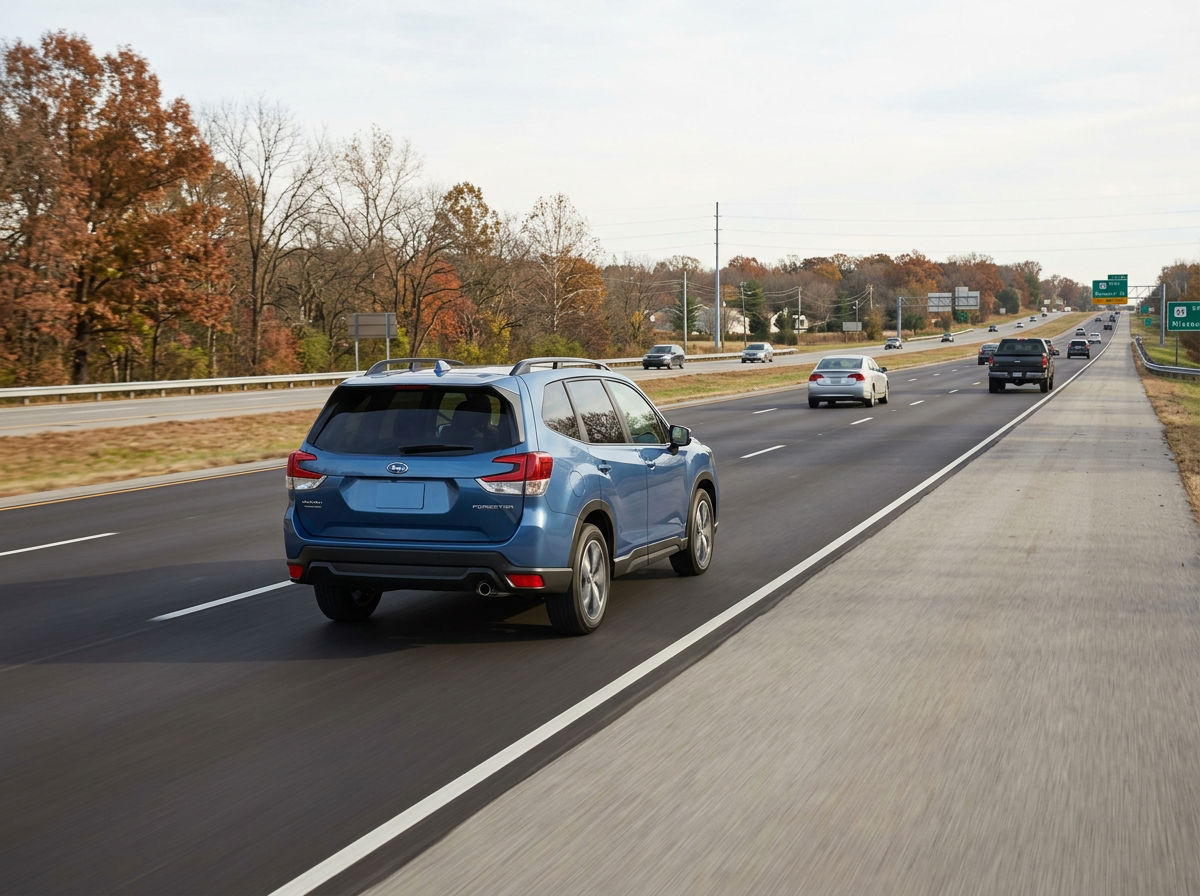
Yes, highway driving is generally acceptable during the break-in period. The important consideration is avoiding prolonged operation at a constant engine speed. When road and traffic conditions permit, vary your speed naturally instead of relying on cruise control for extended periods.
For drivers traveling between Sunset Hills, Chesterfield, St. Charles, and other St. Louis communities, normal commuting can provide opportunities to vary driving conditions. You do not need to avoid highways entirely during your Subaru's first 1,000 miles.
Always follow the instructions in your specific Subaru owner's manual, particularly if your vehicle has a hybrid or fully electric powertrain. For additional assistance, contact the Subaru-trained service team at Sunset Hills Subaru.
What Happens If You Don't Properly Break In a New Subaru?
Skipping the recommended break-in procedures for your new Subaru does not automatically mean your engine will fail or experience immediate damage. However, repeatedly driving aggressively during the first 1,000 miles may place unnecessary stress on newly manufactured engine components.
Subaru recommends following specific driving practices during the initial break-in period to support long-term engine performance and reliability. These recommendations generally include avoiding excessive engine speeds, rapid acceleration, prolonged constant-speed driving, and unnecessary hard braking.
Can Improper Break-In Cause Engine Problems?
Ignoring manufacturer-recommended break-in procedures may increase the risk of unnecessary wear, particularly when an engine is repeatedly subjected to high RPMs or heavy loads during its initial operation.
However, exceeding the recommended engine speed briefly does not necessarily mean damage has occurred. Actual engine wear and mechanical problems depend on numerous factors, including driving conditions, maintenance, operating temperature, and vehicle design.
Will Improper Break-In Void Your Subaru Warranty?
Not automatically. Failing to follow a break-in recommendation does not, by itself, mean your entire Subaru factory warranty is void.
Warranty coverage depends on the terms of the applicable warranty and the circumstances surrounding a particular repair. Damage resulting from misuse or improper vehicle operation may be excluded from coverage, but an unrelated warranty claim should not automatically be denied simply because a driver exceeded a recommended break-in limit.
For more information, review your Subaru warranty documentation and the Federal Trade Commission's consumer guidance on automobile warranties.
What If You Accidentally Exceed 4,000 RPM During Break-In?
If you briefly exceed 4,000 RPM during your Subaru's initial break-in period, there is generally no reason to assume that you've damaged the engine. Simply return to normal driving and continue following the recommendations in your owner's manual.
If your vehicle develops unusual noises, warning lights, excessive vibration, or other concerning symptoms, contact a qualified Subaru service professional for an inspection.
Drivers throughout Sunset Hills and the greater St. Louis area can contact the Sunset Hills Subaru Service Center for assistance with maintenance questions, diagnostics, and recommended vehicle care.
What Should You Avoid During Your Subaru's First 1,000 Miles?
During the first 1,000 miles of driving a new Subaru, it's important to develop smooth driving habits and avoid placing unnecessary stress on the engine. Whether you've purchased a Subaru WRX, Crosstrek, Forester, Outback, or Ascent, following the break-in recommendations in your owner's manual can help support proper vehicle operation during this initial period.
1. Avoid Excessive Engine RPM
For many gasoline-powered Subaru models, the manufacturer recommends keeping engine speeds below 4,000 RPM during the initial break-in period. Avoid unnecessary high-revving, aggressive acceleration, and sustained operation at elevated engine speeds.
For Subaru WRX owners, this means resisting the temptation to explore the full performance capabilities of the turbocharged BOXER engine immediately. Follow the break-in instructions for your specific WRX model year before gradually introducing more demanding driving conditions.
2. Avoid Full-Throttle Acceleration
Use smooth, progressive throttle inputs rather than repeatedly accelerating at full throttle. Sudden, aggressive acceleration can place additional demands on the engine and drivetrain during the initial break-in period.
Normal acceleration for merging into traffic or safely navigating intersections is acceptable. Always prioritize safe driving over break-in recommendations when responding to traffic conditions.
3. Avoid Driving at a Constant Engine Speed for Extended Periods
Long highway drives at a single, unchanging engine speed are generally discouraged during the initial break-in period. Instead, vary your speed naturally when traffic conditions and posted speed limits allow.
If you're driving your new Subaru along Interstate 44, Interstate 270, or other St. Louis-area highways, you don't need to avoid highway travel entirely. Simply avoid maintaining the same engine speed for prolonged periods when practical.
4. Avoid Unnecessary Hard Braking
New braking components also benefit from a period of normal, controlled operation. Avoid repeated hard stops whenever possible and allow sufficient following distance for smooth braking.
Important: Never hesitate to brake firmly when necessary to prevent a collision. Safety always takes priority over break-in recommendations.
5. Avoid Excessive Engine Loads and Improper Towing
Heavy loads, steep grades, and towing can increase demands on your Subaru's engine and drivetrain. Some Subaru models have additional towing-related break-in restrictions, so consult your specific owner's manual before towing a trailer with a new vehicle.
Not every Subaru model is rated for towing, and towing capacity varies by model, trim, and configuration. Never exceed your vehicle's published towing or payload limits.
6. Avoid Aggressive Driving Before the Engine Reaches Operating Temperature
During the break-in period and throughout the life of your Subaru, avoid demanding high engine performance immediately after a cold start. Drive gently while the engine approaches its normal operating temperature.
You generally do not need to let your Subaru idle for an extended period before driving. Follow the cold-start and warm-up instructions in your owner's manual.
Does the Break-In Process Differ Between Subaru Models?
While many gasoline-powered Subaru vehicles share similar break-in recommendations, the exact instructions can differ by model year and powertrain. The Subaru WRX, Outback, Forester, Crosstrek, and Ascent may have additional considerations related to their engines, transmissions, or towing capabilities.
Hybrid and fully electric Subaru models may have different break-in requirements. Always consult the owner's manual for your specific vehicle rather than applying gasoline-engine recommendations universally.
For additional guidance, visit Subaru's official owner resources or contact the Sunset Hills Subaru Service Center for assistance with your vehicle's recommended maintenance and care.
How Long Is the Break-In Period for a New Subaru?
For many new gasoline-powered Subaru vehicles, the recommended engine break-in period is the first 1,000 miles (approximately 1,600 kilometers). During this time, Subaru generally recommends avoiding excessive engine speeds, rapid acceleration, unnecessary hard braking, and prolonged driving at a constant engine speed.
These recommendations are intended to support proper engine operation during the initial miles of ownership. However, exact requirements can vary depending on your Subaru's model year, engine, and powertrain. Always follow the instructions in your vehicle's owner's manual.
Subaru Break-In Period by Model
Many Subaru owners want to know whether their specific model has different break-in requirements. The following overview explains the general recommendations for popular Subaru vehicles.
| Subaru Model | Typical Engine Break-In Period | Important Considerations |
|---|---|---|
| Subaru WRX | First 1,000 miles | Avoid aggressive acceleration and excessive engine RPM. Follow the specific instructions for your turbocharged engine. |
| Subaru Outback | First 1,000 miles | Vary driving speeds and follow applicable engine and towing break-in instructions. |
| Subaru Forester | First 1,000 miles for many gasoline models | Follow your owner's manual, particularly for hybrid configurations. |
| Subaru Crosstrek | First 1,000 miles for many gasoline models | Avoid unnecessary high RPM and prolonged constant-speed driving. Hybrid requirements may differ. |
| Subaru Ascent | First 1,000 miles | Follow engine break-in instructions and check for additional towing restrictions. |
Note: This table summarizes common gasoline-engine recommendations, not verified instructions for every model year or trim. Refer to your vehicle's owner's manual for the applicable requirements.
What Happens After Your Subaru Reaches 1,000 Miles?
Once your Subaru completes its manufacturer-recommended break-in period, you can generally begin transitioning toward normal driving conditions while continuing to follow the vehicle's operating instructions.
This may include gradually using a wider range of engine speeds and acceleration levels when appropriate. However, completing the first 1,000 miles does not eliminate the importance of regular maintenance, proper engine warm-up, or responsible driving habits.
Does a New Subaru Need an Oil Change at 1,000 Miles?
A 1,000-mile engine break-in period does not automatically mean your Subaru requires an oil change at 1,000 miles. Engine break-in recommendations and scheduled maintenance intervals are separate considerations.
Follow the oil change schedule in your specific Subaru Warranty and Maintenance Booklet. Your recommended service intervals may vary depending on model year, engine, driving conditions, and applicable maintenance requirements.
Sunset Hills Subaru also offers a complimentary 1,000-mile Pit Stop visit for eligible new Subaru owners. This introductory service visit provides an opportunity to review your vehicle's condition and ask questions about maintenance. It should not be confused with a manufacturer-required 1,000-mile oil change.
Where Can You Find Your Subaru's Official Break-In Instructions?
The most reliable source for model-specific break-in requirements is your vehicle's owner's manual. You can access Subaru owner information through Subaru's official owner resources.
If you're approaching your first 1,000 miles and have questions about your vehicle's maintenance needs, the Sunset Hills Subaru Service Center can help you understand the recommended next steps.
Subaru Maintenance Tips After the First 1,000 Miles
Completing your new Subaru's initial 1,000-mile break-in period is an important milestone, but it's only the beginning of proper vehicle care. Following your Subaru's recommended maintenance schedule can help protect engine performance, maintain reliability, and keep your vehicle operating as intended for years to come.
Whether you drive a Subaru Outback, Forester, Crosstrek, Ascent, or WRX, establishing good maintenance habits early can make ownership easier and help you identify potential concerns before they become more serious.
1. Follow Your Subaru's Recommended Oil Change Schedule
Regular engine oil and filter changes are essential for gasoline-powered Subaru engines. Fresh engine oil helps lubricate moving components, manage heat, and protect against unnecessary wear.
Does your Subaru need an oil change at 1,000 miles? Not necessarily. The end of the engine break-in period does not automatically require an oil change. Follow the maintenance schedule in your specific Subaru Warranty and Maintenance Booklet, including any applicable severe-driving recommendations.
Learn more about recommended maintenance and oil change services at our Sunset Hills Subaru Service Center.
2. Check Your Engine Oil and Fluid Levels
Checking your Subaru's engine oil level regularly is a useful habit, particularly during the early months of ownership. Follow the owner's manual instructions for checking oil accurately, including the recommended vehicle position and engine conditions.
It's also important to pay attention to other vehicle fluids, including coolant, brake fluid, and windshield washer fluid. Some systems should only be inspected or serviced by qualified technicians.
If you notice warning lights, unusual fluid consumption, or visible leaks, have your vehicle inspected rather than waiting for the next scheduled maintenance appointment.
3. Monitor Tire Pressure and Tire Condition
Proper tire inflation supports vehicle handling, braking, ride comfort, and tire longevity. Check tire pressures when the tires are cold and use the specifications listed on your vehicle's tire information placard.
For Subaru vehicles equipped with Symmetrical All-Wheel Drive, maintaining appropriate tire condition and following the recommended tire rotation schedule is particularly important.
Significant differences in tire circumference can create concerns for certain all-wheel-drive systems. Always follow Subaru's specifications when replacing tires.
Learn more about the system in our Subaru Symmetrical All-Wheel Drive Guide.
4. Pay Attention to Your Subaru's Braking System
New brake components undergo an initial bedding-in process during normal driving. Avoid unnecessary repeated hard braking during the early miles, while always braking firmly when safety requires it.
As your Subaru accumulates mileage, pay attention to unusual brake noises, vibration, changes in pedal feel, or reduced braking performance. These symptoms may indicate that an inspection is needed.
5. Understand Your Subaru's Maintenance Schedule
Your Subaru's maintenance schedule may include engine oil and filter changes, tire rotations, brake inspections, fluid checks, filter replacements, and other services at specified mileage or time intervals.
Maintenance requirements vary by model, model year, powertrain, and operating conditions. Hybrid and electric Subaru vehicles may have different service requirements than conventional gasoline-powered models.
For detailed information about routine maintenance, visit our Subaru Service Department or consult Subaru's official owner resources.
6. Take Advantage of Your Complimentary 1,000-Mile Pit Stop
At Sunset Hills Subaru, eligible new Subaru owners can take advantage of our complimentary 1,000-mile Pit Stop. This introductory visit is an opportunity to have your vehicle checked and ask questions as you begin your Subaru ownership experience.
Our Pit Stop service includes an oil and fluid level check, tire pressure inspection, and other introductory vehicle checks. A complimentary car wash may also be available, weather permitting. Contact our service department to confirm current program details and eligibility.
Important: The 1,000-mile Pit Stop is separate from Subaru's factory-required maintenance schedule and should not be confused with a mandatory 1,000-mile oil change.
Schedule Subaru Maintenance in Sunset Hills, Missouri
Whether you're approaching your first 1,000 miles or preparing for your next scheduled service, the Subaru-trained technicians at Sunset Hills Subaru are here to help.
We proudly serve Subaru drivers throughout Sunset Hills, Crestwood, Webster Groves, Kirkwood, Fenton, Chesterfield, and the greater St. Louis area.
Visit our Subaru Service Center to learn more about available services, or explore our current service and parts specials.
Are Subarus Difficult to Repair?
Subarus are known for their reliability, but their unique **BOXER® engine** and **all-wheel-drive system** can make repairs more complex. The design can lead to higher labor costs due to the difficulty in accessing certain components. Additionally, the need for simultaneous tire replacements in AWD vehicles can increase maintenance expenses.
However, the availability of OEM parts and a strong community of Subaru enthusiasts means that finding parts and advice is relatively straightforward. For those in areas like Valley Park, MO, or Fenton, MO, accessing quality Subaru parts is easy through our dealership, ensuring that your Subaru remains in peak condition.
For any further questions or to explore our New Subaru Inventory, Used Vehicle Inventory, or to schedule a service, don't hesitate to reach out to us at Sunset Hills Subaru or call us at clickable phone number. We're here to assist you with all your Subaru needs.
© 2025 Sunset Hills Subaru