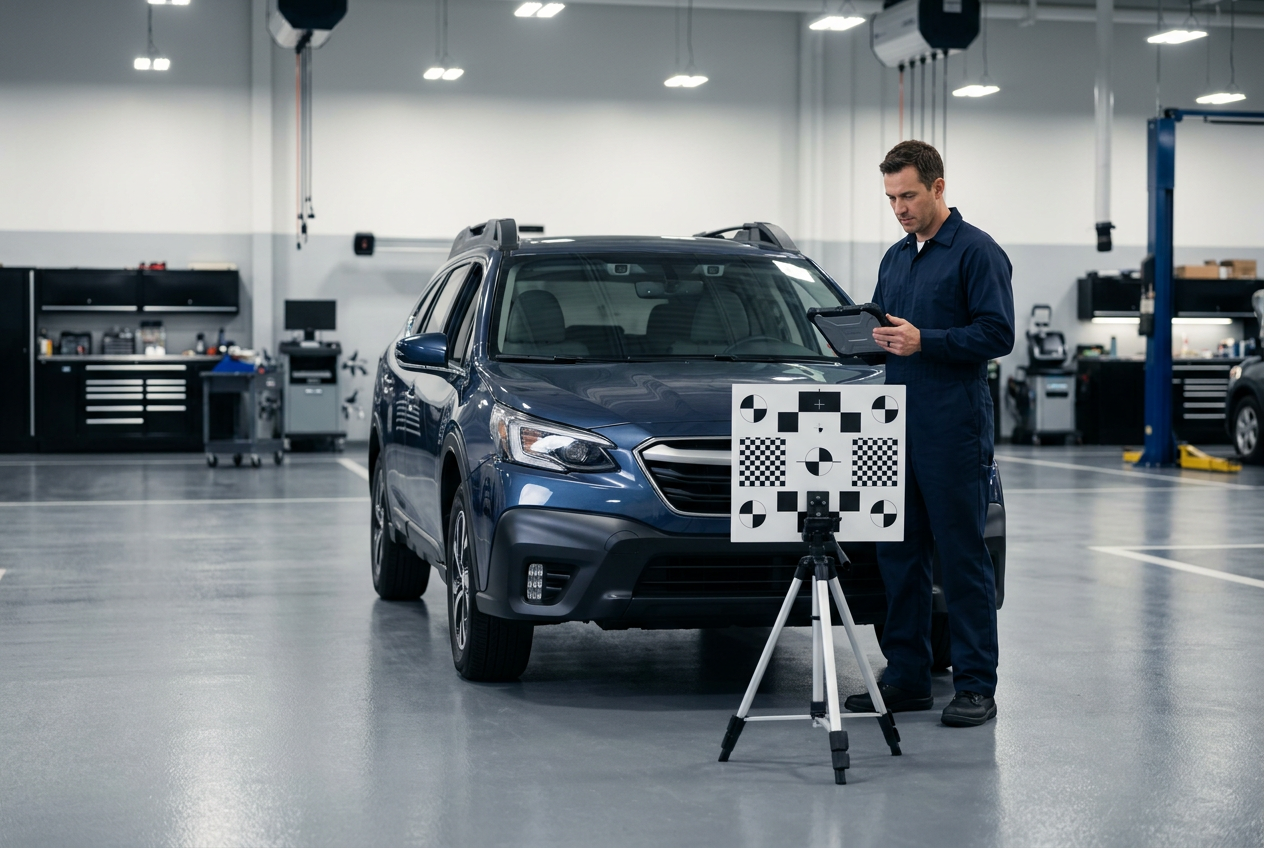
The direct answer is yes. Subaru EyeSight stereo cameras and rear radar modules are solid-state electronic systems engineered to endure well beyond 10 to 15 years and over 200,000 miles without fundamental mechanical degradation. Unlike moving mechanical parts subject to physical friction, solid-state sensors do not simply wear out from accumulated mileage. Drivers across Greater St. Louis routinely pilot decade-old Foresters and Outbacks with fully functioning driver-assist systems intact. However, long-term reliability is not entirely maintenance-free. While the optical processing units and internal microchips remain durable, the system relies on external variables: optical clarity through the windshield, precise physical calibration, electrical voltage stability, and vulnerability to severe weather. As your vehicle passes the 100,000-mile mark, issues rarely stem from internal electronics; instead, they result from road debris pitting the glass, uncalibrated windshield replacements, or failing 12-volt battery power. When maintained properly, Subaru EyeSight remains one of the most durable and cost-effective advanced driver-assistance systems (ADAS) in the automotive industry. How Subaru EyeSight Hardware Operates Over 100,000 Miles and Beyond Unlike the majority of automotive manufacturers who place radar modules and ultrasonic sensors exposed inside front grilles or lower bumpers, Subaru engineered EyeSight around high-mounted stereo optical cameras. Positioned safely inside the vehicle's upper windshield frame, these dual lenses mimic human binocular vision to calculate distance, relative velocity, and object shapes. This deliberate placement delivers a major long-term reliability benefit: the primary electronic hardware remains shielded inside a climate-controlled passenger cabin. It avoids gravel strikes, road salt, corrosive brine, minor parking lot collisions, and moisture intrusion that routinely ruin bumper-mounted radar arrays on competing crossovers. Because optical glass and camera sensors experience zero mechanical movement, system fidelity remains sharp well past six-digit odometer readings as long as the windshield glass remains clean and chip-free. Why Older Subaru EyeSight Cameras Temporarily Disable When an EyeSight warning indicator illuminates alongside an amber dashboard prompt, many owners assume the hardware has permanently failed. In reality, Subaru utilizes a fail-safe operating design: rather than making inaccurate calculations under compromised visual conditions, the system safely disables itself until sightlines return to baseline. Atmospheric Moisture & Frost During humid Missouri autumn mornings and freezing winter conditions, condensation, frost, or interior windshield fog directly over the stereo lenses blocks visibility. Running the front windshield defroster cleared the line of sight within minutes, restoring full functionality. Direct Solar Glare Driving directly into dawn or dusk sun angles can temporarily blind optical lenses much like human eyes. Once the road changes heading or the sun passes overhead, the cameras recalibrate their exposure levels and re-engage automatic cruise and pre-collision systems. Interior Glass Haze Over years of ownership, dashboard plastic outgassing and cabin dust create an invisible oily sheen across the interior glass. Routine gentle cleaning of the windshield glass around the camera aperture ensures pristine optical clarity for reliable processing. Windshield Replacements and Sensor Recalibration: Critical Care for Aging Subarus The most frequent trigger for safety sensor trouble on older Subarus is improper windshield replacement. Genuine Subaru OEM glass is engineered with specific optical distortion tolerances, acoustic sound dampening, and heated camera defrosting grids built directly into the upper viewing aperture. When third-party glass shops install non-OEM windshields with minor microscopic ripples, stereo cameras experience refraction errors, causing adaptive cruise dropouts or false lane-departure warnings. Furthermore, every windshield replacement demands professional dynamic and static recalibration. Using factory diagnostic targets, technicians align camera focal points precisely to the chassis ride height. Skipping this step risks compromised emergency braking performance. Schedule Service and Diagnostics Warning Signs of Aging EyeSight and Blind-Spot Sensor Malfunctions Understanding the difference between normal visual cutouts and genuine electronic faults keeps your vehicle operating safely without unnecessary repair expenditures. Persistent Amber Warnings If the EyeSight OFF amber warning remains lit on clear days during normal driving, the electronic control module has registered an active Diagnostic Trouble Code (DTC). This indicates an electrical fault, connection loss, or camera hardware problem rather than environmental blindness. Rear Radar BSD/RCTA Alerts Blind Spot Detection (BSD) and Rear Cross-Traffic Alert (RCTA) use radar modules tucked behind the rear bumper cover. On higher-mileage vehicles, road salt accumulation or minor bumper impacts can bend the mounting brackets, causing false alerts or system shutdown. Adaptive Cruise Dropouts Sudden disengagement of adaptive cruise control on smooth highway stretches without adverse weather points toward subtle camera angle drift or an aging 12-volt battery unable to maintain stable reference voltage under electrical accessory load. EyeSight Durability vs. Boxer Engine and Symmetrical AWD Longevity When assessing whether Subaru safety sensors hold up over time, comparing electronic longevity to the mechanical powertrain provides valuable perspective. Does Subaru Symmetrical AWD outlast electronic on-demand AWD systems? In practice, Subaru's continuous mechanical AWD layout uses full-time torque distribution through robust planetary gearsets or electronic multi-plate transfer clutches. Unlike front-wheel-drive systems that rely on delayed electronic clutch packs when front slippage occurs, Subaru Symmetrical AWD distributes power continuously, reducing sudden torque spikes and wear. Meanwhile, modern Subaru Boxer engines have addressed historical head-gasket vulnerabilities with multi-layer steel gaskets, though common maintenance focal points around 120,000 to 150,000 miles include monitoring minor oil seepage around cam carriers, PCV valve cleanliness, and CVT valve body solenoid function. Remarkably, the EyeSight optical cameras and safety sensors routinely exhibit fewer failure rates and lower maintenance costs over 150,000 miles than either engine accessory gaskets or suspension bushings. The 200,000-Mile Club: What Percentage of Subarus Make It Past 10 Years? According to industry registration data from Experian and automotive lifespan studies, an impressive many Subarus sold over the past 10 years are still on the road today. The average lifespan of a Subaru spans 12 to 15 years, with typical mileage potential reaching 200,000 to 250,000 miles when following factory service schedules. Subaru Outback The Outback consistently ranks among the top five passenger vehicles in America most likely to surpass 200,000 miles, driven by rugged chassis design and durable Lineartronic CVT cooling systems. Subaru Forester With its upright greenhouse glass structure and accessible mechanical layout, the Forester remains an enduring favorite for high-mileage commuters seeking long-term ownership with low depreciation. Subaru Crosstrek Built upon the rigid Subaru Global Platform, the Crosstrek delivers exceptional chassis stiffness and proven suspension components that easily weather harsh Midwest roadway freeze-thaw cycles. Get your value trade Subaru Maintenance Schedules and Warning Signs of a Failing CVT What maintenance is required to keep a Subaru running past 200,000 miles? Factory guidance calls for regular servicing every 6,000 miles or six months, whichever arrives first, encompassing synthetic engine oil, OEM oil filters, and tire rotations. Key milestones occur at 30,000 miles (brake fluid and cabin/engine filters), 60,000 miles (spark plugs and differential fluids), and 90,000 miles.
How often should you replace the CVT fluid in a Subaru? While factory literature lists CVT fluid as inspected periodically under normal driving, severe driving conditions—including stop-and-go commuting, freezing winter conditions, and hilly terrain—warrant fluid exchange every 30,000 to 60,000 miles. Warning signs of a failing Subaru CVT include noticeable shuddering or bucking under steady acceleration, delayed engagement between Park, Reverse, and Drive (longer than 1.5 seconds), high-pitched whining or grinding noises from worn pulley bearings, or sudden dashboard illumination of the AT Oil Temp warning lamp. Service Interval Recommended Maintenance Item System Impact Every 6,000 Miles Full Synthetic Oil, OEM Filter, Tire Rotation Engine longevity, AWD torque balance 30,000 Miles Brake Fluid Flush, Air & Cabin Filter, Severe CVT Inspection Braking response, EyeSight camera clarity 60,000 Miles Front/Rear Differential Fluid, Spark Plugs, CVT Fluid Flush Drivetrain durability, transmission efficiency 90,000–105,000 Miles Coolant Flush, Accessory Belts, Suspension Bushing Check Thermal regulation, ride height & ADAS aim How Subaru Safety Reliability Compares to Honda CR-V and Toyota RAV4 Evaluating how Subaru reliability compares to the Honda CR-V and Toyota RAV4 requires looking at ADAS architecture, repair expenses, and manufacturer warranties across multi-year ownership. Subaru EyeSight Subaru mounts optical cameras inside the cabin, avoiding bumper radar road damage. The 2027 Forester includes a 3-year/36,000-mile basic warranty and 5-year/60,000-mile powertrain warranty, while the 2027 Crosstrek Limited Hybrid includes an 8-year/100,000-mile hybrid warranty. High long-term owner satisfaction stems from lower grille repair costs. Honda Sensing Honda CR-V pairs a windshield camera with a millimeter-wave radar in the lower grille. While highly accurate in heavy downpours, low bumper radar units are vulnerable to rock damage, parking dings, and bracket misalignments that require costly front-end teardown recalibrations after five to eight years. Toyota Safety Sense Toyota RAV4 uses emblem-integrated millimeter-wave radar coupled with monocular cameras. While exceptionally dependable overall, emblem replacements after minor front collisions carry high parts replacement expenses, though long-term software support remains dependable past 10 years. Is It Worth Buying a Used Subaru with Over 150,000 Miles? Is it worth buying a used Subaru with over 150,000 miles? Yes, provided you complete a focused pre-purchase inspection. A high-mileage Subaru that received verified 6,000-mile oil changes and regular transmission fluid servicing represents strong value for shoppers. Pre-Purchase Inspection Checklist: • EyeSight Camera Scan: Verify diagnostic trouble codes with a scan tool to confirm zero stored optical sensor faults. • Windshield Clarity: Check that the windshield is either OEM Subaru glass or high-grade glass with zero stone chips in the camera path. • Rear Radar Brackets: Inspect under the rear bumper cover for excessive rust or bent radar brackets. • CVT Drive Test: Confirm smooth low-speed throttle transitions without hesitation or shuddering. • Suspension & Alignment: Worn control arm bushings or sagging springs alter suspension geometry, which directly affects lane-keep assist precision. Used Vehicle Inventory Navigating Chesterfield, Maryland Heights, and Ladue Commutes with Older EyeSight Systems Chesterfield Valley River Fog & Highway 40 St. Louis drivers regularly encounter dense microclimate river fog along I-64/Highway 40 through Chesterfield Valley. Because EyeSight relies on optical contrast, heavy fog may prompt a brief system standby alert. Maintain generous following distances and let your vehicle's symmetrical AWD keep traction secure until valley fog burns off. Rolling Ladue Hills & Maryland Heights Grime Negotiating winding tree-canopied lanes through Ladue creates sudden transitions from deep tree shade to intense morning glare. Meanwhile, commuter traffic near Maryland Heights lakes often splatters road film across windshields during autumn storms. Fresh wiper blades and quality washer fluid preserve instant optical camera clarity. Maintain Your Subaru EyeSight and Safety Systems at Sunset Hills Subaru Whether you are driving a 2015 Outback with over 150,000 miles or looking ahead to the latest 2027 Forester with 3-year/36,000-mile basic and 5-year/60,000-mile powertrain coverage, proper maintenance ensures your safety sensors remain factory-precise. At Sunset Hills Subaru, our factory-certified technicians utilize specialized optical calibration boards, genuine OEM glass, and Subaru diagnostic tools to keep your driver-assist systems in peak condition.
Visit us at 10100 Watson Rd in Sunset Hills, MO 63127, or speak directly with our service specialists by calling Call (314) 476-9638. Need directions from Chesterfield, Maryland Heights, or Ladue? Simply Get Directions to Sunset Hills Subaru and experience dedicated support from St. Louis area Subaru experts. Get Directions to Sunset Hills Subaru Subaru EyeSight in Sunset Hills, MO | Sunset Hills Subaru