Blog

Do Active Federal Tax Credits Apply to Toyota RAV4 Hybrids in 2026? Key Answer & Financial Reality

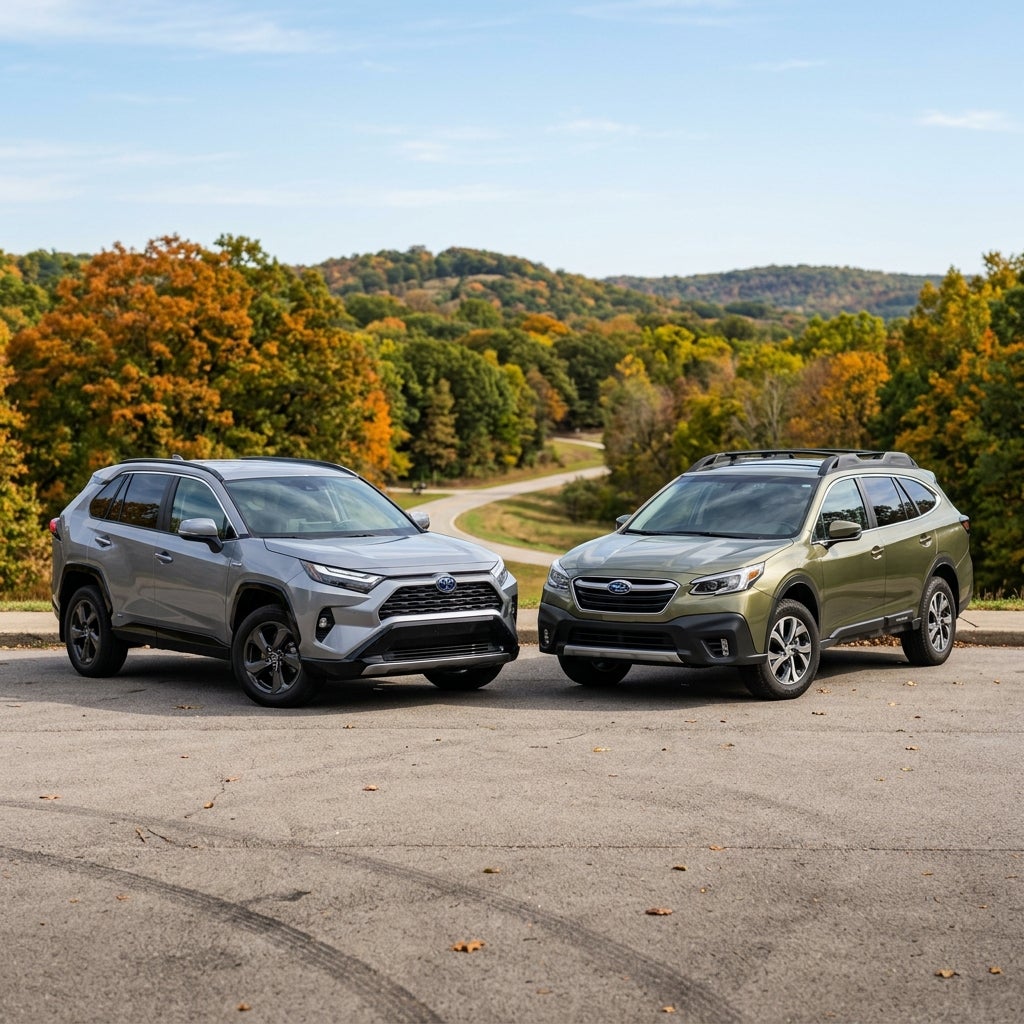
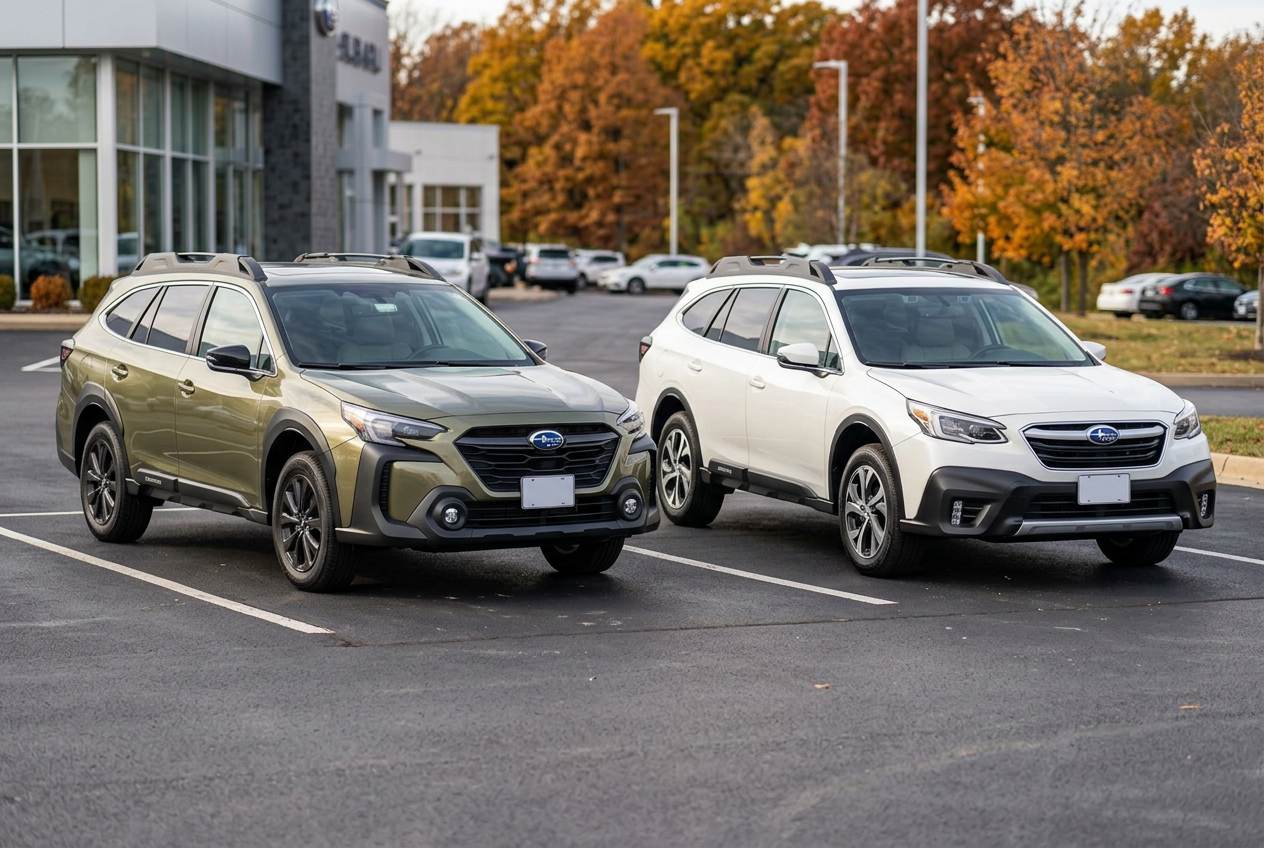
Silver Toyota RAV4 Hybrid and olive green Subaru Outback parked side by side outdoors during autumn. (Representative image for illustration purposes only. Actual vehicle may vary based on trim and configuration.)
If you are shopping for a fuel-efficient SUV in Missouri and hoping to snag a $7,500 federal clean vehicle tax credit on a Toyota RAV4 Hybrid, the short answer is no, standard Toyota RAV4 Hybrids do not qualify for federal tax credits in 2026. Furthermore, even the plug-in hybrid RAV4 Prime (now branded as the RAV4 PHEV) lost eligibility under current Internal Revenue Code Section 30D rules established by the Inflation Reduction Act (IRA).
Federal clean vehicle credits require rigorous battery component sourcing, critical mineral extraction thresholds, and mandatory final assembly within North America. Traditional hybrid electric vehicles (HEVs)—which rely on self-charging gas-electric systems without a plug—were explicitly excluded from the $7,500 federal tax credit framework from day one. Many vehicle shoppers near St. Louis remain surprised to learn that paying a premium MSRP for a hybrid badge does not translate into federal tax relief at tax time.
Without a $7,500 tax incentive offsetting the purchase price, car buyers evaluating the RAV4 Hybrid must look at baseline sticker prices, long-term depreciation, standard equipment, and true total cost of ownership. This financial reality shifts the focus directly toward competitive, feature-rich alternatives like the 2026 Subaru Outback, which delivers standard Symmetrical All-Wheel Drive, superior passenger room, and outstanding long-term equity without requiring you to pay a high hybrid price mark-up. Explore our New Subaru Inventory today or Call us at (314) 476-9638 to discuss current St. Louis purchase offers.

Why the Toyota RAV4 Hybrid Misses Federal Tax Credits Under IRA Guidelines

To understand why federal incentives fail to apply to the RAV4 Hybrid lineup, one must examine the strict structure of Section 30D IRA clean vehicle guidance. First and foremost, federal EV tax credits are restricted to plug-in electric vehicles with a minimum battery capacity of 7 kWh. Standard self-charging hybrids like the RAV4 Hybrid utilize a small 1.6 kWh battery pack that cannot be plugged in, removing them entirely from federal credit consideration.
Second, for plug-in hybrids like the RAV4 Prime to qualify for federal assistance, strict rules require North American final assembly, strict manufacturer suggested retail price (MSRP) caps ($80,000 for SUVs), and stringent supply chain constraints regarding battery materials sourced from foreign entities of concern (FEOC).
Key IRA Rules Excluding RAV4 Hybrids:• No Plug-In Requirement: Standard RAV4 Hybrid models rely exclusively on internal combustion power and regenerative braking, lacking plug-in capability. • Battery Capacity Mandate: Requires >= 7 kWh energy storage; standard hybrid batteries sit under 2 kWh. • Sourcing Restrictions: Critical battery minerals and components sourced outside approved trade countries disqualify eligible plug-in variants. • MSRP & Income Rules: Strict limits eliminate buyer tax credits at specific household income brackets.
Because tax credit savings are unavailable for the RAV4, paying dealer market adjustments or elevated hybrid MSRPs can take years to offset through fuel savings alone. Smart buyers across St. Louis County are comparing these figures against the versatile 2026 Subaru Outback.

2026 Subaru Outback vs. Toyota RAV4: Which Vehicle Offers Better Total Value?

When federal government rebates are taken out of the equation, comparing the 2026 Subaru Outback directly against the Toyota RAV4 comes down to genuine sticker value, standard driving tech, and mechanical capability. While the RAV4 charges premium pricing for optional features and non-mechanical electronic all-wheel drive, the Subaru Outback includes standard mechanical Symmetrical All-Wheel Drive across every trim level.
Subaru's Symmetrical AWD delivers continuous power distribution to all four wheels, ensuring steady traction during unpredictable Missouri winter slush, rainstorms, and gravel roads. In contrast, standard non-hybrid RAV4s use a front-biased AWD setup that engages rear wheels only after front traction loss is detected.
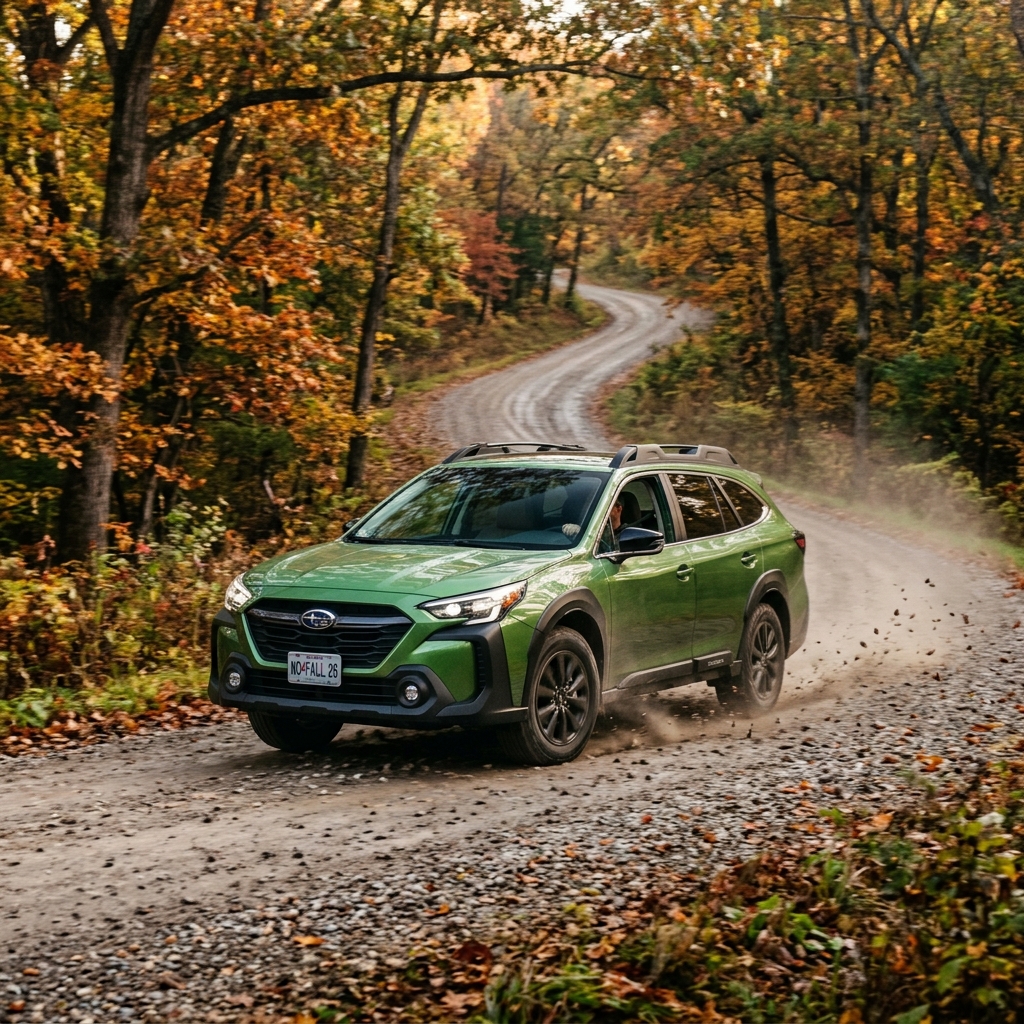
Green Subaru Outback driving on a winding gravel road through a colorful autumn forest. (Representative image for illustration purposes only. Actual vehicle may vary based on trim and configuration.)
Furthermore, Sunset Hills Subaru offers attractive dealer incentives, clear upfront pricing, and competitive APR financing rates that maximize your monthly payment budget far more effectively than relying on unapproved federal credit schemes.
Check out our latest New Subaru Outback Inventory to explore trims ranging from the comfortable Premium to the rugged Wilderness and luxurious Touring.

How Starting Prices and Trim Levels Compare Between the Subaru Outback and Toyota RAV4

For budget-conscious buyers in Sunset Hills and the greater St. Louis metro area, the starting sticker price and included standard features are crucial factors. Let's compare how starting MSRPs and trim hierarchies stack up between these two popular Japanese utility vehicles.

Subaru Outback Trims

• Base: Starting around $29,000 with Standard AWD, EyeSight Driver Assist, LED headlights, Apple CarPlay. • Premium:~ $31,500 adding 11.6-inch touchscreen, 10-way power driver seat, heated front seats. • Limited:~ $35,800 with leather-trimmed upholstery, Harman Kardon audio, hands-free power gate. • Onyx Edition / XT: Blacked-out trim, StarTex upholstery, available 260-hp Turbo engine.

Toyota RAV4 Trims

• LE Gas: Starting around $28,800 with standard Front-Wheel Drive (AWD adds ~$1,400). • XLE / XLE Premium:~ $30,500 - $34,000 for middle-tier comfort features. • RAV4 Hybrid LE/XLE: Starting around $31,800 to $36,000 before dealer markups. • TRD Off-Road / Limited: Reaches $38,000 - $40,000+ for higher trim capability.

Value Breakdown

Why Outback Wins on Value: When comparing base FWD RAV4 models to base Subaru models, adding AWD to Toyota narrows or eliminates any initial cost difference. The Subaru Outback gives you a larger midsize vehicle footprint, roof rails with integrated crossbars, active safety tech, and full-time AWD as standard equipment without hidden upgrade add-ons.

Which Holds Its Resale Value Better: Toyota RAV4 or Subaru Outback?

Both Subaru and Toyota rank near the top of industry residual value studies conducted by Automotive Lease Guide (ALG) and Kelley Blue Book. However, actual resale percentage retention varies significantly across specific trim levels and geographic regions.
In four-season Midwest climates like Missouri, Subaru models maintain exceptionally high trade-in equity due to standard AWD demand on the pre-owned market. Trims like the Subaru Outback Wilderness retain up to 62% of their original sticker price after 36 months and over 50% after 60 months, outperforming many competing compact crossovers.
While the RAV4 TRD Off-Road and RAV4 Hybrid also retain solid value, higher upfront dealer markups on RAV4 Hybrids erode net resale ROI when trade-in time comes around. Want to know what your current vehicle is worth? Use our online tool to Get your value trade in minutes.
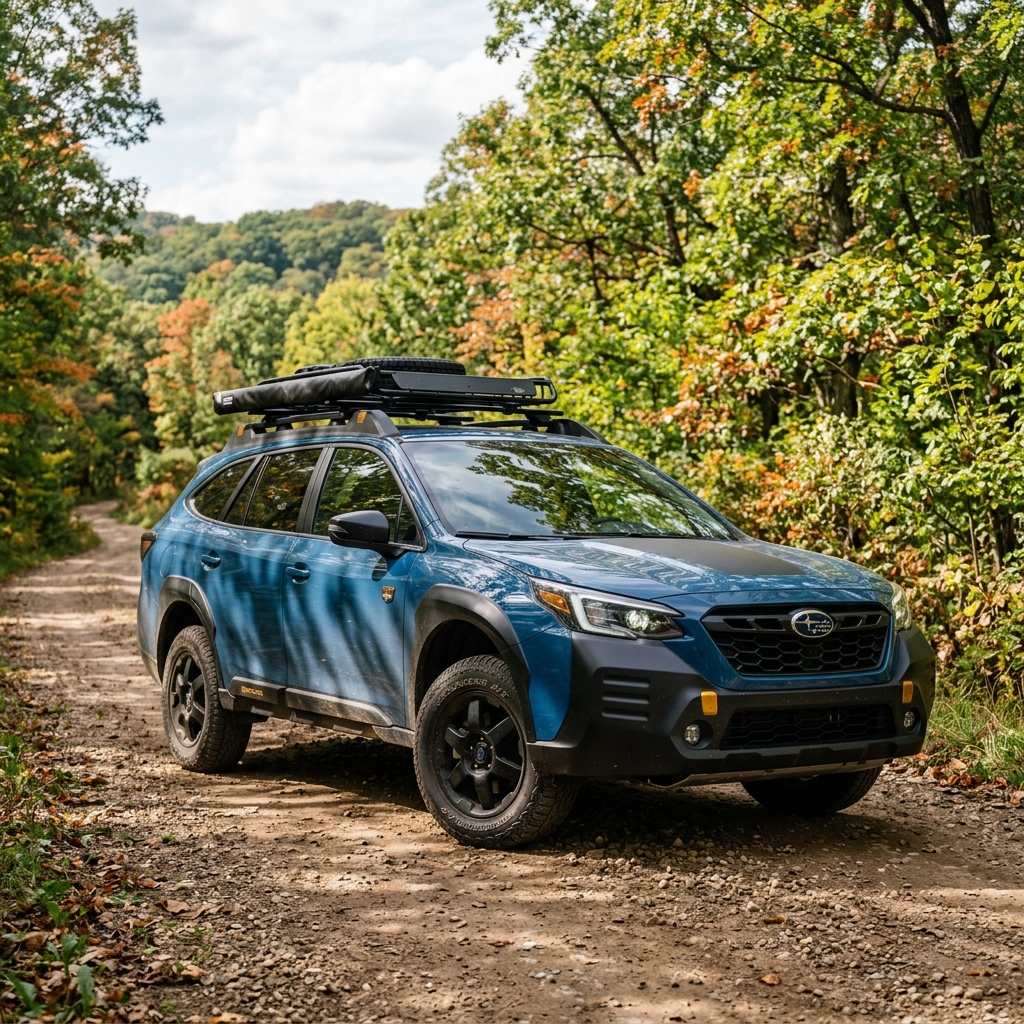
Blue Subaru Outback Wilderness with roof rack driving on a dirt trail through an autumn forest. (Representative image for illustration purposes only. Actual vehicle may vary based on trim and configuration.)

Powertrain Performance and Fuel Economy for Chesterfield Commuters

For suburban drivers traveling between Chesterfield, Ladue, and downtown St. Louis along I-64 or I-270, daily driving comfort, highway passing power, and fuel consumption are primary daily considerations.

Subaru Outback Powertrains

• 2.5L Subaru BOXER: 182 hp, 176 lb-ft torque. EPA est. 26 city / 32 highway MPG. • 2.4L Turbocharged BOXER: 260 hp, 277 lb-ft torque. EPA est. 22 city / 29 highway MPG. • Lineartronic CVT: Smooth 8-speed manual shift mode with paddle shifters.

Toyota RAV4 Powertrains

• 2.5L 4-Cylinder Gas: 203 hp, 184 lb-ft torque. EPA est. 27 city / 35 highway MPG (FWD). • 2.5L Hybrid System: 219 combined hp. EPA est. 41 city / 38 highway MPG. • eCVT / 8-Speed Auto: Responsive low-speed assist, higher high-speed engine noise.

Real-World Performance

While the RAV4 Hybrid advertises higher city MPG, the Subaru Outback Turbo (XT models) provides far superior effortless acceleration (260 hp vs 219 hp) when merging onto busy St. Louis highways or ascending rolling West County hills. The Outback's horizontal BOXER engine placement also lowers the center of gravity for smoother cornering.

How Ground Clearance and Off-Road Capability Compare Between the Outback and RAV4

For outdoor enthusiasts visiting Castlewood State Park, Babler State Park, or heading down to the Ozarks for weekend camping, ground clearance and terrain management technology make a huge difference.
Subaru Outback Off-Road Dominance:• Standard Ground Clearance: 8.7 inches across standard models; an extraordinary 9.5 inches on the Outback Wilderness. • Dual-Function X-MODE: Features tailored terrain modes for Snow/Dirt and Deep Snow/Mud with Hill Descent Control. • Roof Rack Utility: Standard roof rails with fold-out crossbars carry up to 150 lbs dynamic load (700 lbs static load for rooftop tents).
In comparison, the Toyota RAV4 provides 8.1 to 8.6 inches of ground clearance depending on trim, and its electronic AWD system relies on braking individual slipping wheels rather than continuous mechanical torque transfer.
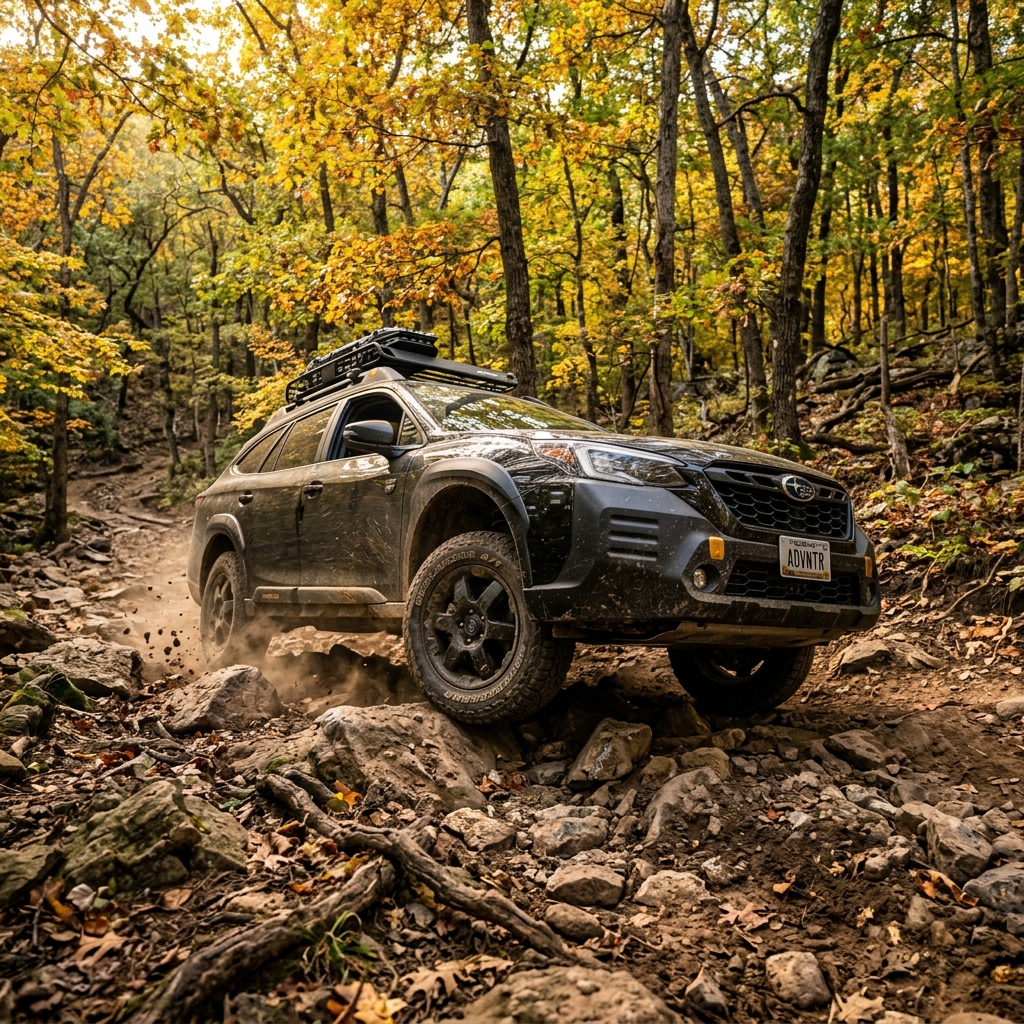
Dark Subaru SUV navigating a steep, rocky trail surrounded by golden autumn trees in a dense forest. (Representative image for illustration purposes only. Actual vehicle may vary based on trim and configuration.)

Standard Safety Features and Crash Ratings: IIHS and NHTSA Evaluations

Safety remains paramount when protecting your family. Both the Subaru Outback and Toyota RAV4 earn high safety ratings, but Subaru's EyeSight Driver Assist Technology sets the industry benchmark for standard protective equipment.

Safety Evaluation Category

2026 Subaru Outback

2026 Toyota RAV4

IIHS Top Safety Pick Status

IIHS TOP SAFETY PICK+ Winner

IIHS TOP SAFETY PICK Winner

NHTSA Overall Safety Rating

5 Stars Overall

5 Stars Overall

Driver Assist Suite

Standard EyeSight Driver Assist

Standard Toyota Safety Sense 2.5

Reverse Automatic Braking

Available Reverse Automatic Braking (RAB)

Available Parking Brake Assist (Higher Trims Only)

Blind Spot Detection & Rear Cross Traffic

Standard on Premium & Above

Standard on XLE & Above

Subaru's EyeSight suite utilizes dual optical stereo cameras mounted high behind the windshield, monitoring traffic movement, optimizing cruise control, and warning you when swaying outside your lane. Available Reverse Automatic Braking (RAB) can actively apply brakes if an obstruction is detected behind you while backing out of driveway or parking space.

Midsize Wagon Versatility vs. Compact Crossover: Interior Space for Families in Ladue and Maryland Heights

A crucial distinction often overlooked by shoppers is vehicle classification. While the Toyota RAV4 is classified as a compact crossover, the Subaru Outback is classified as a midsize wagon/SUV. This structural difference yields significantly more usable passenger room and cargo length for growing families in Ladue, Maryland Heights, and Kirkwood.
Interior Room Comparison:• Rear Legroom: Outback offers 39.5 inches vs. RAV4's 37.8 inches—making a noticeable comfort difference for tall passengers or rear-facing child car seats. • Maximum Cargo Volume: Outback delivers up to 76 cubic feet with rear seats folded, with a longer cargo floor suitable for sports gear, luggage, or DIY hardware supplies. • Cabin Width & Shoulder Room: Outback midsize platform provides extra breathing room across all five seating positions.
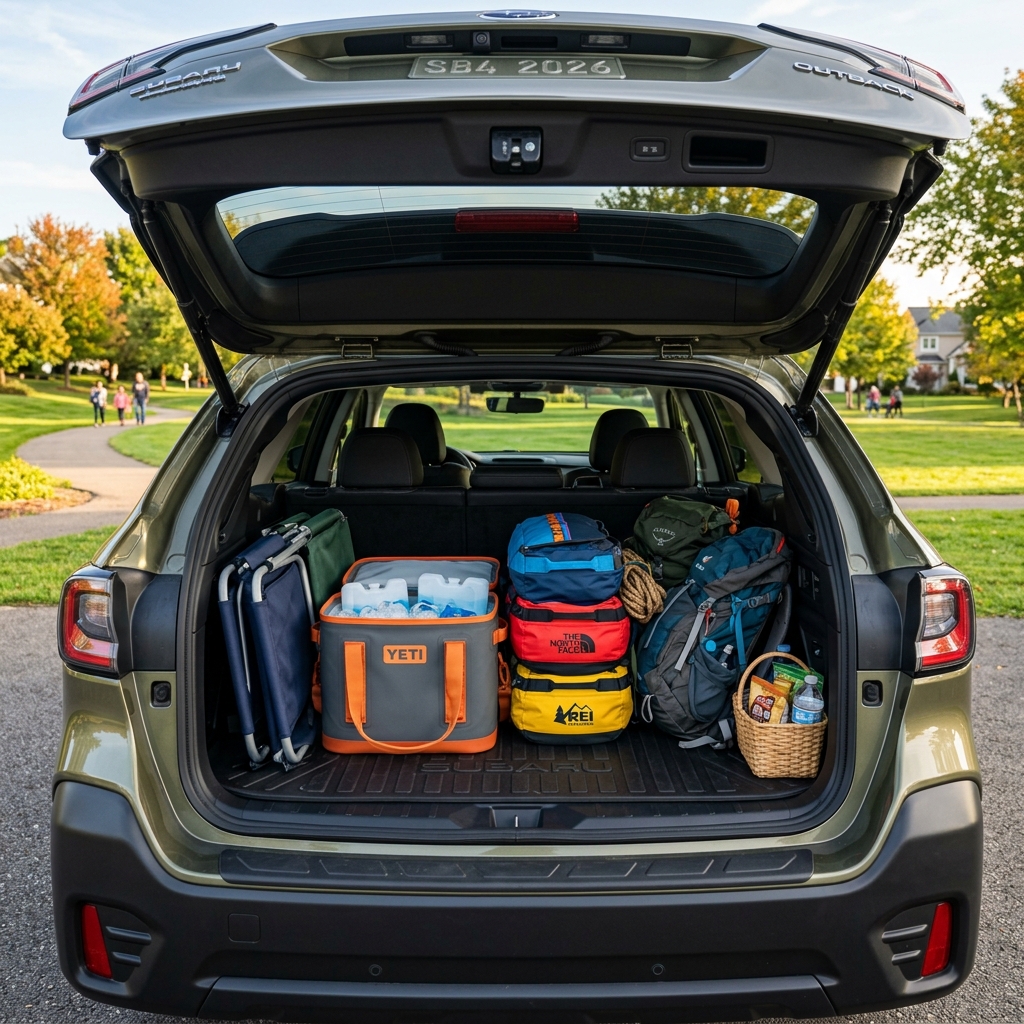
Open trunk of a green Subaru Outback packed with a YETI cooler, folding camp chairs, duffle bags, and backpacks. (Representative image for illustration purposes only. Actual vehicle may vary based on trim and configuration.)

What Is the Estimated 5-Year Total Cost to Own for Both Vehicles?

Without a federal $7,500 clean vehicle credit available for the RAV4 Hybrid, calculating the comprehensive 5-year cost to own gives a realistic view of long-term financial expenditure.

Purchase & Financing

Lower initial purchase prices on the Subaru Outback Premium and Limited trims keep monthly loan payments and interest charges significantly lower over 60 months, helping offset gas cost differences.

Maintenance & Repair

Subaru's predictable service schedules keep operational costs reasonable. You can view Current Service and Parts Specials at Sunset Hills Subaru to lower long-term maintenance bills.

Insurance & Resale

The Subaru Outback frequently receives lower auto insurance rates in Missouri thanks to top IIHS safety scores and lower replacement component costs compared to complex dual-powertrain hybrid systems.

How Local Dealer Financing and Trade-In Offers in Sunset Hills, MO Impact Overall Savings

Instead of waiting for federal EV tax policy updates that may never materialize for standard hybrids, local St. Louis car buyers can unlock immediate financial savings directly at Sunset Hills Subaru.
Our dealership offers competitive local financing terms through Subaru Motors Finance, including promotional low-APR financing rates on select 2026 Outback models. You can quickly Get approved for financing online before visiting our showroom.
Additionally, our team offers top-dollar market trade-in allowances for pre-owned vehicles. Explore our Current New Car Specials to see how much you can save today.
images (7)

Test Drive the 2026 Subaru Outback at Sunset Hills Subaru Today

While the Toyota RAV4 Hybrid falls short of qualifying for federal EV tax credits, the 2026 Subaru Outback delivers unmatched standard AWD capability, superior interior space, and remarkable long-term value right out of the box.
Ready to experience the Outback difference for yourself? Visit Sunset Hills Subaru at 10100 Watson Rd, Sunset Hills, MO 63127 or Get Directions to Sunset Hills Subaru. Have immediate questions? Call us at (314) 476-9638 to speak directly with our friendly Subaru sales specialists.
2026 Toyota RAV4 Hybrid Tax Credit Details in Sunset Hills MO | Sunset Hills Subaru

Recommended Posts

Hybrid diagram

Does the 2026 Forester Hybrid Use a CVT Transmission?

If you are evaluating the new 2026 Subaru Forester Hybrid, one of your first technical questions is likely centered on its powertrain: Does the 2026 Forester Hybrid use a CVT transmission? The short answer is yes, but with a crucial engineering distinction. The 2026 Subaru Forester Hybrid utilizes an advanced electronic Continuously Variable Transmission (e-CVT). Unlike traditional belt-and-pulley CVTs found in many gas-powered vehicles, this e-CVT is a planetary gear dual-motor transaxle integrated directly into Subaru's next-generation hybrid architecture, engineered with a series-parallel hybrid architecture. What makes this system exceptional for drivers in Sunset Hills, Chesterfield, and St. Louis County is how seamlessly it pairs with Subaru's signature 2.5-liter Subaru BOXER® engine and authentic mechanical Symmetrical All-Wheel Drive. Because the e-CVT replaces traditional mechanical belts with two electric motor-generators working inside an elegant planetary gearset, power delivery is instantaneous. You experience smooth acceleration without the rubber-band delay or high-rpm droning historically associated with conventional continuous transmissions. Whether you are merging onto I-270 during evening rush hour or navigating local roads in Maryland Heights, the e-CVT delivers responsive electric torque the moment your foot touches the accelerator. By combining electric torque with Subaru's boxer layout, the 2026 Forester Hybrid offers the perfect blend of efficiency, power, and low center of gravity. Drivers interested in experiencing this technology firsthand can explore our New Subaru Forester Inventory at Sunset Hills Subaru to see available trims and incoming arrivals. Explore New Forester Inventory How the 2026 Forester Hybrid eCVT Transmission Works vs Standard Lineartronic CVT To understand how the hybrid transmission operates, it helps to contrast it with the standard Lineartronic CVT used in traditional gas-powered Subaru models. Standard Lineartronic CVTs use a high-durability steel chain running between two hydraulically controlled variable pulleys. As you accelerate, the pulleys adjust their diameter to continuously change gear ratios without fixed step gears, offering smooth power delivery and excellent highway mpg. In contrast, the planetary gear e-CVT in the 2026 Forester Hybrid does not use drive belts or variable pulleys at all. Instead, it relies on a clever power-split planetary gear unit connecting the internal combustion engine, an electric generator motor (MG1), and a primary electric drive motor (MG2). The system electronically controls the rotation speeds of these electric motors to seamlessly vary the drive ratio between the wheels and the engine. Because the e-CVT uses mechanical gears in constant mesh rather than friction belts, component wear is dramatically reduced. Torque transfer is immediate and silent. There is no torque converter to slip, nor are there hydraulic clutch packs that require periodic replacement under severe duty. For drivers in Ladue and Sunset Hills, this translates to exceptional long-term reliability and minimal mechanical maintenance over the lifespan of your SUV. 2026 Subaru Forester Hybrid vs Gas Forester: Acceleration and Performance Breakdown A common point of inquiry among local drivers comparing the 2026 Subaru Forester Hybrid vs Gas Forester is whether the hybrid model feels faster and more responsive in daily driving. While conventional gas-only Forester models equipped with the 2.5L naturally aspirated BOXER engine produce 180 horsepower and roughly 178 lb-ft of torque, the hybrid powertrain pairs that gas engine with electric motor assistance to yield higher net system output and significantly higher low-end torque. In real-world 0-60 mph testing and seat-of-the-pants driving, the 2026 Forester Hybrid completes sprint times in roughly 7.8 to 8.1 seconds—shaving nearly a full second off the standard gas model's acceleration time. More importantly than raw track times, however, is low-speed throttle response. When pulling out onto busy thoroughfares like Watson Road in Sunset Hills or navigating stop-and-go suburban traffic along highway stretches in Chesterfield and Maryland Heights, the electric motor delivers instant torque off the line before the gas engine even reaches its powerband. This eliminates hesitation when pulling into quick-moving traffic lanes or accelerating out of tight corners. Highway passing power is similarly upgraded. When you depress the accelerator at 50 mph to overtake a slower vehicle, the e-CVT seamlessly blends electric battery power with full engine output. You get immediate acceleration without waiting for a traditional transmission to downshift through multiple gear ratios. Can the 2026 Subaru Forester Hybrid Drive on Electric Power Alone? Low-Speed EV Operation Yes, the 2026 Forester Hybrid can operate on 100% electric power at low speeds and under light acceleration. In parking lots, residential neighborhoods, or heavy traffic crawlers, the internal combustion engine turns off entirely. The vehicle operates silently on electric battery power, eliminating tailpipe emissions during idling and low-speed suburban cruising. Regenerative Braking As a self-charging hybrid (HEV), the Forester Hybrid never needs to be plugged into a wall outlet. Every time you lift off the accelerator or press the brake pedal, the e-CVT's electric motor acts as a generator. It converts kinetic energy that would otherwise be wasted as brake heat into electrical power, storing it safely in the high-voltage traction battery pack. Total Commuting Range By intelligent management of battery power and gasoline, the total driving range of the 2026 Subaru Forester Hybrid may deliver an estimated range of around 550 miles on a single tank of fuel. This makes long-distance road trips across Missouri or weekly commutes around St. Louis completely stress-free with minimal fuel stops. Ready to check incoming arrival schedules for the Forester Hybrid? View our updated New Subaru Inventory online today. Browse New Subaru Inventory Fuel Economy Comparison: Does the Honda CR-V Hybrid Have Better MPG Than the Forester Hybrid? When shopping for a compact hybrid crossover, fuel efficiency is paramount. A common question among buyers is: Does the Honda CR-V Hybrid have better fuel economy than the Forester Hybrid? To answer this, it helps to examine how each manufacturer configures its powertrain and all-wheel drive setup. Competitors like the Honda CR-V Hybrid and Toyota RAV4 Hybrid achieve high headline MPG figures partly by utilizing electric rear-axle motors (e-AWD). In those systems, there is no physical driveshaft connecting the front engine to the rear wheels; instead, a small electric motor powers the rear axle only when slippage occurs. Subaru engineered the 2026 Forester Hybrid differently. It retains Subaru's legendary mechanical Symmetrical All-Wheel Drive system, utilizing a physical driveshaft and center differential. This delivers continuous, heavy-duty AWD capability across all speeds. While front-wheel-drive or light-duty e-AWD rivals like the Honda CR-V Hybrid might post slightly higher laboratory city MPG numbers by 1-2 mpg, the Forester Hybrid targets an impressive estimated 38-40 combined MPG while offering different traction and handling characteristics. Hybrid SUV Model Estimated Combined MPG AWD Drivetrain Type Standard AWD? 2026 Subaru Forester Hybrid 38 - 40 MPG Mechanical Symmetrical AWD YES (Standard) Honda CR-V Hybrid AWD 37 - 40 MPG Electronic AWD / Clutch-Pack NO (Optional) Toyota RAV4 Hybrid AWD 39 - 41 MPG Electronic Rear Motor (e-AWD) YES (Standard) How Long Does It Take for Fuel Savings to Offset the Forester Hybrid's Price Premium? Annual Commute Calculation For a typical driver in Ladue or Chesterfield driving 15,000 miles per year with gas prices around local St. Louis averages, upgrading to the Forester Hybrid can help reduce fuel use and may lower fuel costs over time. 3 to 4 Year Break-Even Depending on driving habits and local fuel prices, some drivers may offset the hybrid premium over time. Beyond year four, every mile driven puts money directly back into your wallet. Strong Resale & Trade Value In addition to fuel savings, hybrid SUVs retain exceptionally high residual value in the St. Louis pre-owned market. You can estimate your current vehicle's trade value online to see how easily you can upgrade by visiting our Get your value trade tool. What Is the Towing Capacity of the 2026 Subaru Forester Hybrid vs Standard Gas Models? Versatility is a primary reason drivers choose a Subaru crossover. Understanding what is the towing capacity of the 2026 Subaru Forester Hybrid vs standard gas models helps ensure your vehicle matches your active lifestyle. Standard gas-powered Forester models (such as Premium and Limited) offer a maximum towing capacity of 1,500 lbs, while the gas Wilderness trim elevates that figure to 3,000 lbs thanks to an auxiliary transmission oil cooler. The 2026 Forester Hybrid is expected to deliver a robust 1,750 lbs to 2,000 lbs towing capacity, outperforming standard non-Wilderness gas models. Thanks to the e-CVT's instantaneous low-end electric torque, pulling a small utility trailer, personal watercraft, or pop-up camper up highway inclines feels effortless. Is a trailer hitch receiver available standard on the Forester Hybrid? While standard on select outdoor package trims, a Genuine Subaru Class II 1.25-inch or 2-inch hitch receiver can be factory-installed or ordered directly through our parts department at Sunset Hills Subaru. Order Subaru Towing Accessories What Is the Roof Load Capacity on the Forester Hybrid? Dynamic Roof Load (Driving) 176 lbs (Dynamic): While the vehicle is moving down the highway, the heavy-duty raised roof rails safely support up to 176 pounds of gear, including cargo boxes, kayaks, mountain bikes, or skis for your trips across Missouri. Static Roof Load (Parked) 700 lbs (Static): When parked at a campsite, the static roof load capacity increases to a impressive 700 pounds. This high weight rating easily supports a two-to-three person rooftop tent plus occupants. St. Louis Adventure Ready Whether heading out for weekend camping near Castlewood State Park or mounting bike racks for trips along the Katy Trail, the Forester Hybrid maintains full roof rail functionality without battery packaging interference. Cargo Space and Design: Do the Rear Seats Fold Flat in the Forester Hybrid? A crucial concern for hybrid SUV buyers is cargo utility. Do the rear seats fold flat in the Forester Hybrid? Yes, the 60/40-split rear seatbacks fold virtually flat into the floor, opening up a spacious, wide-opening rear cargo hold that holds over 68 cubic feet of total gear. Subaru engineers intentionally positioned the high-voltage lithium-ion battery low under the rear cargo floor rather than intrusion into the passenger compartment. This smart layout preserves generous rear passenger legroom and headroom while maintaining a low step-in height. Does the 2026 Forester Hybrid have a spare tire? Yes! Unlike many competing hybrid crossovers that replace the spare tire with a inflator kit, Subaru designed the cargo floor layout to house a temporary compact spare tire underneath the flat rear cargo deck. Is the Subaru Forester Hybrid Bigger Than the Toyota RAV4 Hybrid? When comparing physical dimensions, shoppers frequently ask: Is the Subaru Forester Hybrid bigger than the Toyota RAV4 Hybrid? The 2026 Forester Hybrid measures approximately 183.3 inches in total exterior length, making it roughly 2 inches longer overall than the Toyota RAV4 Hybrid (180.9 inches). More importantly, the Forester features a taller roofline, expansive greenhouse glass, and thinner door pillars, giving it superior interior passenger volume and class-leading outward visibility. In terms of legroom and shoulder space, front and rear passengers enjoy more open, airy seating in the Forester Hybrid. The upright seating position provides clear sightlines in all directions, making tight maneuvering in St. Louis parking structures easier. Compared to both the Toyota RAV4 Hybrid and Honda CR-V Hybrid, the Forester offers larger rear door opening angles, allowing effortless loading of child safety seats or bulky luggage. If you want to compare models in person or evaluate standard features across our lineup, check our current Current New Car Inventory at Sunset Hills Subaru. How Does the Hybrid System Perform in Deep Snow and Ice? Mechanical AWD Grip Winter weather in Chesterfield and Sunset Hills requires reliable traction. Because the Forester Hybrid utilizes mechanical Symmetrical AWD, power is continuously delivered to all four wheels regardless of battery state-of-charge, preventing front-wheel slip on icy hill climbs. Dual-Function X-MODE® Equipped with Subaru's advanced Dual-Function X-MODE®, drivers can select specialized terrain modes for Snow/Dirt and Deep Snow/Mud. The e-CVT optimizes engine braking and electric torque management to prevent wheelspin in unplowed snow. Seasonal Support To prepare your Subaru for freezing winter temperatures, our certified technicians provide complete maintenance support. You can easily Schedule Service and Diagnostics online. Schedule Winter Service Which Hybrid SUV Has the Quietest Cabin for Daily Commuting? Cabin quietness is a major factor for drivers spending long hours commuting across St. Louis County. When asking which hybrid SUV has the quietest cabin, the 2026 Forester Hybrid stands out due to upgraded acoustic dampening. Subaru equipped the latest Forester generation with acoustic laminated windshield glass, thicker side window glass, sound-absorbing headliner materials, and extra floorboard damping insulation. Combined with the smooth operation of the planetary e-CVT, engine noise is exceptionally muted under acceleration. In earlier-generation CVTs or competing hybrid SUVs, full-throttle acceleration could cause engine flare noise. The 2026 Forester Hybrid's e-CVT controls engine speed far more precisely, maintaining low engine revs while using electric motor power to boost speed quietly. At 70 mph highway speeds, wind and tire noise are significantly reduced compared to prior models, creating a serene, luxury-like environment for listening to audiobooks, phone calls, or music. Interested in exploring financing options for a ultra-quiet daily commuter? You can start by filling out our secure online tool to Get approved for financing ahead of time. Will There Be a 2026 Forester Wilderness Hybrid? Outdoor enthusiasts frequently ask: Will there be a Forester Wilderness Hybrid? While Subaru is initially launching the 2026 Forester Hybrid in core trims such as Premium, Sport, Limited, and Touring, there is currently no official announcement of a Forester Wilderness Hybrid trim. A future Wilderness Hybrid would pair the efficient planetary e-CVT and high-torque hybrid powertrain with classic Wilderness off-road hardware: 9.3 inches of ground clearance, all-terrain tires, heavy-duty skid plates, specialized bumper angles, and enhanced roof load capacities. In the meantime, standard Forester Hybrid models offer standard 8.7 inches of ground clearance and X-MODE traction control, making them exceptionally capable for off-pavement excursions. Test Drive and Reserve Your 2026 Subaru Forester Hybrid at Sunset Hills Subaru The 2026 Subaru Forester Hybrid represents a landmark evolution in compact crossover engineering—combining an advanced planetary e-CVT, instant electric motor torque, standard Symmetrical AWD, and superior everyday fuel efficiency. Whether you live right here in Sunset Hills, or in nearby communities like Chesterfield, Maryland Heights, or Ladue, Sunset Hills Subaru is your premier local resource for everything Subaru. Our expert sales and finance teams are ready to help you reserve your 2026 Forester Hybrid, contact us for current lease and APR information, or value your trade-in. Visit our showroom at 10100 Watson Rd, Sunset Hills, MO 63127 or click below to Get Directions to Sunset Hills Subaru. Have immediate questions? Call us at (314) 476-9638 today to speak directly with a Subaru specialist! Reserve Your Forester Hybrid Today 2026 Subaru Forester Hybrid Transmission in Sunset Hills MO | Sunset Hills Subaru

New outback vs CPO

Certified Pre-Owned Subaru Outback Warranty vs. New Factory Warranty Coverage

When shopping for an adventurous, reliable, and capable crossover vehicle in the greater St. Louis region, the Subaru Outback consistently stands out as a premier choice. However, prospective buyers at Sunset Hills Subaru often face a compelling financial and practical dilemma: Should you purchase a brand-new Subaru Outback straight off the showroom floor, or should you opt for a factory-backed Certified Pre-Owned (CPO) Subaru Outback? Both paths deliver exceptional engineering, legendary Symmetrical All-Wheel Drive, and top-tier safety ratings. Yet, their warranty structures, initial acquisition costs, and long-term protection profiles differ significantly. A brand-new Subaru Outback comes standard with a factory-backed 3-year/36,000-mile Bumper-to-Bumper Limited Warranty paired with a 5-year/60,000-mile Powertrain Limited Warranty. In contrast, every official Certified Pre-Owned Subaru Outback includes an extended factory-backed 7-year/100,000-mile Powertrain Limited Warranty calculated from the vehicle's original in-service date. While a new Outback provides complete comprehensive coverage from day one with zero miles, a CPO Outback offers extended powertrain longevity at a substantially lower price point, backed by optional comprehensive wrap plans. Understanding how these warranty guarantees operate in real-world driving conditions across Sunset Hills, Chesterfield, and Ladue is essential for making an informed investment decision. At-a-Glance: Factory New vs. Factory CPO Coverage Specifications Warranty Feature New Subaru Outback Certified Pre-Owned (CPO) Outback Comprehensive Bumper-to-Bumper 3 Years / 36,000 Miles Optional Factory Wrap Upgrades Available Powertrain Limited Warranty 5 Years / 60,000 Miles 7 Years / 100,000 Miles (Original In-Service Date) Covered Component Deductible $0 Deductible $0 Deductible at Authorized Retailers 24/7 Roadside Assistance Included for 3 Years / 36,000 Miles Included for 7 Years / 100,000 Miles Inspection & Certification Factory Quality Assurance Inspection Rigorous 152-Point Mechanical & Safety Inspection Vehicle History Verification Brand New Title (Zero Previous Owners) Complimentary CARFAX Vehicle History Report Subaru Owner Loyalty Perks New Vehicle Special APR Offers $500 Owner Coupon + CPO Promotional Financing How Does the Factory Warranty Breakdown Compare Between New and CPO Outbacks? To fully appreciate the distinction between new and certified coverage, one must analyze what each warranty specifically protects. When you purchase a brand-new Subaru Outback from New Subaru Outback Inventory, the New Vehicle Limited Warranty acts as an all-encompassing shield. For the first 3 years or 36,000 miles (whichever occurs first), virtually every component on your vehicle—from the high-resolution STARLINK touchscreen system and climate control actuators to window motors, wheel bearings, and electronic sensors—is protected against defects in factory materials or workmanship. Furthermore, a new Outback includes a 5-year/60,000-mile Powertrain Limited Warranty protecting internal engine components, the Lineartronic Continuously Variable Transmission (CVT), front and rear differentials, axle shafts, and the Symmetrical All-Wheel Drive transfer case. Rust perforation is also covered for 5 years with unlimited mileage, ensuring protection against harsh winter road salt commonly sprayed across Missouri highways during freeze cycles. When exploring a Certified Pre-Owned Outback from our Used Vehicle Inventory, the headline benefit is the upgraded 7-year/100,000-mile factory powertrain protection. This plan covers major mechanical drive systems with a $0 deductible for covered repairs performed at authorized Subaru retailers nationwide. If a covered component requires repair while you are traveling through Maryland Heights or across the country, you pay nothing out of pocket for repairs completed by factory-trained technicians using genuine OEM parts. While the standard CPO warranty centers on the powertrain, Subaru offers extended CPO Wrap Plans—such as Classic or Gold Plus coverage. These optional factory plans extend comprehensive bumper-to-bumper protection up to 7 years or 100,000 miles, effectively giving a pre-owned vehicle the identical high-tech electronic and electrical system security enjoyed by new vehicle buyers. What Age and Mileage Limits Apply to Subaru CPO Eligibility? Not every pre-owned Subaru Outback sitting on a used car lot can earn the prestigious factory Certified Pre-Owned badge. Subaru enforces strict age and mileage parameters to ensure that only well-maintained, recent-model-year vehicles qualify for factory-backed warranty extensions. To be eligible for Subaru CPO certification, an Outback must be within 5 current model years and have fewer than 80,000 accumulated odometer miles. For example, during the 2026-2027 calendar year model cycle, eligible CPO Outbacks generally span model years 2021 through 2025. Vehicles older than 5 model years or exceeding 80,000 miles cannot receive official Subaru factory certification, regardless of their cosmetic condition or mechanical soundness. This strict filter ensures that CPO buyers at Sunset Hills Subaru receive modern vehicles equipped with advanced driver assistance features like EyeSight Driver Assist Technology. Furthermore, candidate vehicles must possess a clean title history without any record of major structural damage, salvage status, flood damage, or odometer tampering. Independent used car lots frequently advertise non-certified vehicles or offer third-party aftermarket service contracts that lack Subaru factory backing. Official Subaru CPO status is exclusively granted by authorized dealerships following a rigorous inspection and verification process. By adhering to these stringent thresholds, Subaru ensures that CPO owners enjoy modern amenities—such as Apple CarPlay, Android Auto, STARLINK Safety and Security, and refined Subaru BOXER engines—backed by extended peace of mind that rival brand-new car guarantees. What Multi-Point Inspection Process Does a CPO Subaru Outback Undergo? Before any pre-owned Outback is awarded its 7-year/100,000-mile factory warranty, it must successfully pass a comprehensive 152-point mechanical, electrical, and cosmetic inspection conducted by factory-trained technicians at Sunset Hills Subaru. 1. Powertrain & Mechanical Technicians thoroughly evaluate the 2.5-liter or 2.4-liter Turbocharged Subaru BOXER engine, Lineartronic CVT shift points, Symmetrical AWD engagement, driveshafts, CV boots, differential fluid quality, exhaust system integrity, and cooling system pressure. 2. Safety & EyeSight Electronics The vehicle's EyeSight dual-camera systems are calibrated and tested. Pre-Collision Braking, Adaptive Cruise Control, Lane Keep Assist, Blind-Spot Detection, and Reverse Automatic Braking sensors are checked against strict OEM functional guidelines. 3. Chassis, Brakes & Interior Suspension struts, control arm bushings, steering linkages, brake rotor thickness, and brake pad linings are measured. Interior upholstery, climate controls, power seats, moonroof operation, and touchscreen interfaces are restored to factory standards. Schedule Service and Diagnostics What Happens If a Vehicle Fails Part of the Subaru 152-Point Inspection? Passing the 152-point inspection is an all-or-nothing proposition. If a candidate Outback exhibits any mechanical flaw, excessive wear item, or electrical deficiency during testing, it cannot be sold as a Certified Pre-Owned vehicle until the issue is completely rectified using Genuine Subaru OEM Parts. Subaru reconditioning guidelines demand strict adherence to minimum wear thresholds. For example, brake pads must have at least 50% usable lining remaining; otherwise, brand-new OEM pads and rotors are installed. Similarly, tires must have at least 5/32-inch tread depth across all four wheels and match exact factory sizing to prevent stress on the Symmetrical AWD system. During the reconditioning phase, factory-certified technicians replace engine air filters, cabin air filters, windshield wiper blades, and perform necessary engine oil and filter changes using original fluid formulations. If a component cannot be brought up to Subaru's exact factory specifications—such as a frame that shows prior structural repair—the vehicle is rejected for CPO certification entirely. This exhaustive reconditioning investment means that when you drive a CPO Outback home to Chesterfield or Ladue, you are taking ownership of a vehicle that operates and looks as close to brand-new status as engineered, avoiding immediate maintenance expenses. Does a CPO Subaru Outback Include a Free CARFAX Vehicle History Report? Transparency is a cornerstone of the Subaru Certified Pre-Owned program. Every CPO Subaru Outback offered at Sunset Hills Subaru includes a comprehensive, complimentary CARFAX® Vehicle History Report for complete buyer confidence. The CARFAX report delivers a detailed chronological breakdown of the vehicle's past lifecycle. It verifies single-owner status, documents scheduled maintenance history completed at authorized service centers, confirms registration locations, and checks for any history of accidents, structural damage, or airbag deployments. In addition, the report cross-references open manufacturer recall databases to guarantee that all safety recalls and service campaigns have been performed prior to vehicle delivery. Knowing your Outback has a clean record gives St. Louis area drivers absolute peace of mind. What Extra Benefits Come with a Subaru CPO Purchase Besides Warranty Coverage? Beyond extended powertrain warranty backing, buying a Certified Pre-Owned Subaru Outback unlocks an array of high-value ownership perks designed to enhance convenience and long-term satisfaction. 24/7 Roadside Assistance Enjoy 24/7 emergency roadside coverage for the full duration of your 7-year/100,000-mile warranty. Includes battery jump-starts, flat tire changes, emergency fuel delivery, lockout service, and towing to the nearest authorized Subaru retailer. $500 Owner Coupon Receive a complimentary $500 Subaru Owner Coupon redeemable towards future routine maintenance services, genuine Subaru accessories (like all-weather floor liners or roof rack crossbars), or extended service protection plans. SiriusXM & STARLINK Trial Every CPO Outback comes with a 3-month trial subscription to SiriusXM® All Access satellite radio, along with a trial of STARLINK® Safety Plus Package featuring Automatic Collision Notification and SOS Emergency Assistance. Explore Certified Pre-Owned Outback Inventory How Fast Does a New Subaru Outback Depreciate During Its First Three Years? Depreciation is traditionally the single largest hidden expense of vehicle ownership. Like all new motor vehicles, a brand-new Subaru Outback experiences its steepest value drop during the first 24 to 36 months of operation. On average, a brand-new vehicle loses approximately 15% to 20% of its initial retail value during its first year on the road, and up to 30% to 35% by the end of year three. Although the Subaru Outback boasts one of the highest residual values in the midsize crossover segment according to automotive industry analysts, the initial owner absorbs this sharp curve. By selecting a 2-to-3-year-old Certified Pre-Owned Outback, astute buyers let the original owner absorb that initial depreciation hit. You purchase a modern vehicle at a lower purchase price while gaining a factory powertrain warranty that extends up to 7 years or 100,000 total miles—often exceeding the length of original new car powertrain protection. Does Subaru Offer Special Promotional APR Rates on Certified Pre-Owned Vehicles? A common misconception among used car buyers is that competitive interest rates are reserved strictly for brand-new car purchases. Fortunately, through Subaru Motors Finance, qualified buyers can access current financing rates on official Certified Pre-Owned Subaru Outback models. Because CPO vehicles represent a lower risk profile for lenders due to their factory inspection and warranty backing, financial institutions offer low-rate financing incentives that closely align with new car financing rates. This contrasts sharply with standard used car loans at independent dealers, which often carry higher interest premiums. Combining a reduced purchase price with low promotional CPO APR rates yields significantly monthly payments for buyers in Sunset Hills and St. Louis County. This allows shoppers to upgrade to higher Outback trim levels—such as the Limited, Touring, or Onyx Edition XT—while staying comfortably within their monthly household budget. You can get pre-approved for competitive rate programs online before visiting our dealership by navigating to Get approved for financing. Which Option Provides a Lower Total Cost of Ownership Over Five Years? Calculating the total cost of ownership (TCO) over a 5-year period involves evaluating purchase price, interest charges, insurance premiums, routine maintenance, out-of-pocket repairs, and residual value at trade-in. Acquisition & Capital CPO models win on upfront price and financing charges. Purchasing a 2-year-old CPO Outback typically saves thousands compared to new MSRP, resulting in reduced principal balances and lower total interest payments. Maintenance & Repair Shield Both options offer exceptional repair shields. The new Outback covers initial maintenance wear items for 3 years, while the CPO Outback's 7-year/100,000-mile powertrain warranty guards against costly engine or transmission repairs through year five and beyond. Depreciation Sinks Because the CPO vehicle has already passed through its steepest initial value drop, its rate of depreciation slows down during years 3 through 7. This preserves a higher proportion of your investment when trading in. Contact Us for Finance Information Can Non-Subaru Dealerships Sell an Official Factory Certified Pre-Owned Subaru Outback? This is one of the most vital consumer warnings for pre-owned vehicle shoppers. **No non-Subaru dealership or independent used car lot can sell an official factory Certified Pre-Owned Subaru Outback.** Official Subaru CPO certification can only be issued by an authorized Subaru franchise dealer like Sunset Hills Subaru. Independent dealers frequently market used vehicles under generic titles such as 'Dealer Certified,' 'Store Certified,' or 'Quality Inspected.' These non-factory programs are backed merely by third-party aftermarket service contract companies. They often carry restrictive claims caps, high deductibles, limited repair network choices, and complex approval processes. Only an authentic Subaru factory CPO warranty is directly honored at all authorized Subaru retailers across North America, ensuring genuine OEM parts, certified technical repairs, and $0 deductible service. How Local St. Louis Driving Conditions Impact Warranty Value in Chesterfield, Ladue, and Maryland Heights Driving in the greater St. Louis region presents unique environmental challenges to vehicles. From blistering summer humidity to icy winter storms along Interstate 64 and highway routes through Chesterfield, Ladue, and Maryland Heights, your vehicle's mechanical components face rigorous demands year-round. Missouri winter road treatments utilize heavy salt and liquid de-icers that can corroate exposed undercarriage components. Furthermore, constant freeze-thaw cycles create severe potholes that stress suspension struts, control arms, wheel bearings, and steering assemblies during daily suburban commutes. Subaru's Symmetrical All-Wheel Drive system is engineered specifically to conquer these treacherous Midwest conditions with confidence. Having long-term powertrain and mechanical protection—whether via a new Outback warranty or a CPO 7-year/100,000-mile warranty—ensures that mechanical wear induced by local road conditions won't result in unexpected financial strain. Should seasonal wear require inspection or service, local drivers can trust the certified technicians at Sunset Hills Subaru by visiting Schedule Service and Diagnostics. Is It Better to Buy a Certified Pre-Owned Subaru Outback or a New One? Ultimately, deciding between a new Subaru Outback and a Certified Pre-Owned Outback depends on your individual lifestyle priorities, financial goals, and ownership timeline. Use this simple practical decision checklist to determine your ideal match: Choose a NEW Subaru Outback If You: • Demand zero mileage and pristine factory fresh status. • Want the absolute latest body styling, infotainment tech, and EyeSight enhancements. • Wish to custom order exact exterior color and factory options combinations. • Value comprehensive 3-year/36,000-mile bumper-to-bumper protection from day one. Choose a CPO Subaru Outback If You: • Want to maximize financial value by letting the initial owner absorb early depreciation. • Prioritize long-term powertrain coverage extending up to 7 years or 100,000 miles. • Seek lower monthly loan payments while qualifying for low promotional CPO APR rates. • Desire a fully inspected, reconditioned vehicle backed by CARFAX transparency. Get Your Trade-In Value Explore New and Certified Pre-Owned Subaru Outback Inventory at Sunset Hills Subaru Whether you lean toward a brand-new factory model or a high-value Certified Pre-Owned Outback, Sunset Hills Subaru is your trusted St. Louis resource for exceptional vehicles, transparent pricing, and expert guidance. Our knowledgeable team is dedicated to helping you compare both options side-by-side so you can make the perfect choice for your family and budget. We invite you to browse our online inventory, value your current trade-in online, or schedule a personalized test drive. Conveniently located at 10100 Watson Rd, Sunset Hills, MO 63127, we serve drivers from Chesterfield, Ladue, Maryland Heights, and across the entire St. Louis metropolitan area. Get Directions to Sunset Hills Subaru or Call us at (314) 476-9638 to speak with a Subaru specialist today! Browse New Subaru Outback Inventory Browse Certified Pre-Owned Inventory Subaru Outback Warranty Options in Sunset Hills MO | Sunset Hills Subaru

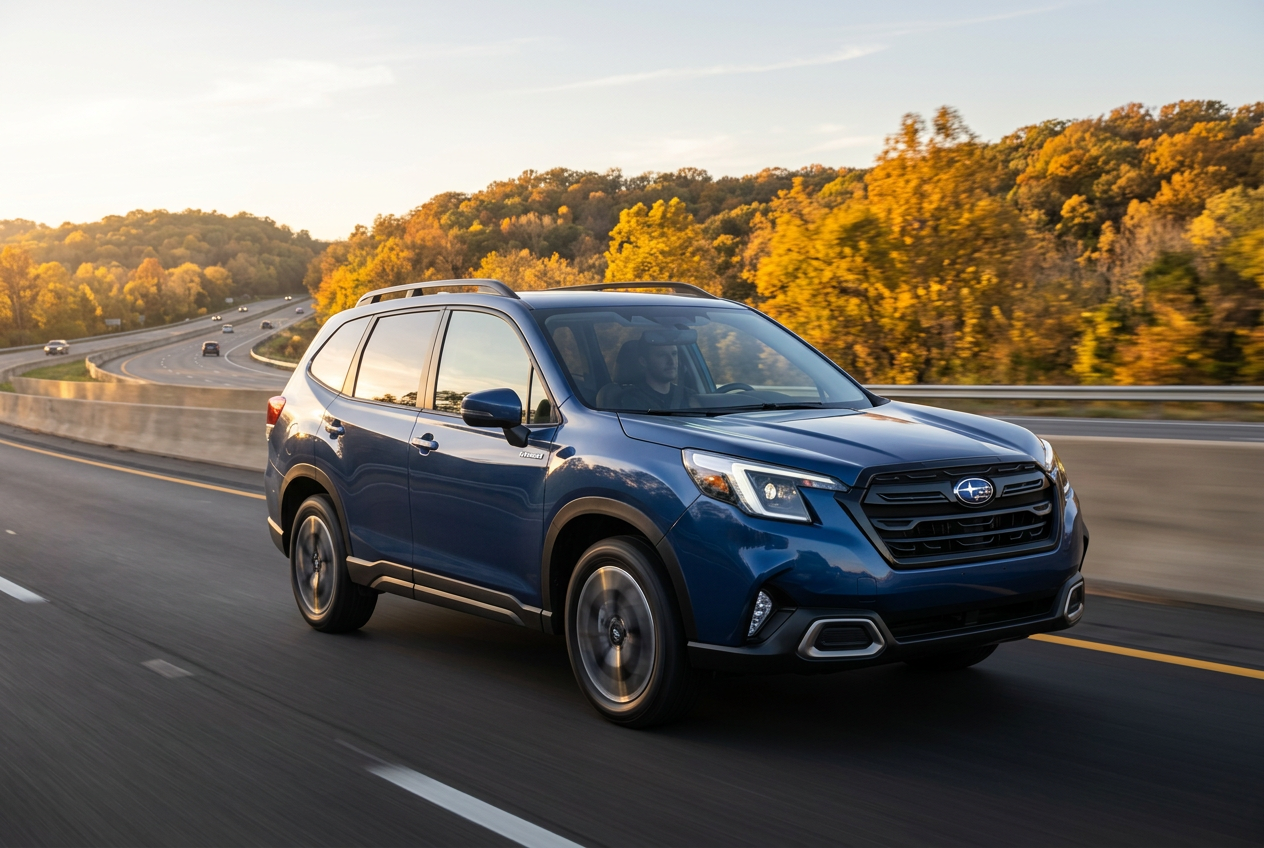
Subaru Forester Hybrid on a St. Louis Highway

Estimated Annual Gas Savings: How Much You Can Save with the 2026 Subaru Forester Hybrid

For drivers navigating the greater St. Louis metropolitan region—from daily commuting along I-64 and I-270 to weekend trips across Missouri—fuel economy is more than just a specification on a window sticker; it is a major factor in your annual household budget. With the arrival of the highly anticipated 2026 Subaru Forester Hybrid, local drivers finally have access to Subaru's iconic all-weather capability combined with advanced electric-assist fuel efficiency. If you travel the national average of approximately 15,000 miles per year, upgrading to the 2026 Forester Hybrid can yield estimated annual fuel savings between $550 and $750 compared to the traditional gas-only model. These impressive savings stem directly from the hybrid powertrain's efficiency gains. While the standard 2.5L gas-powered Forester delivers a solid combined EPA rating around 29 MPG, the dual-motor 2026 Forester Hybrid is estimated to achieve an outstanding combined rating of 38 to 40 MPG. At average local fuel prices in the Sunset Hills and St. Louis county areas, that jump in efficiency drastically reduces the frequency of pump visits without requiring any lifestyle changes or external plug-in charging. Beyond simple pump math, saving hundreds of dollars every year alters the total cost of ownership. Over a typical five-year ownership cycle, driver savings compound to roughly $2,750 to $3,750 in fuel alone. Combined with Subaru's renowned long-term reliability and strong resale values, the Forester Hybrid presents an exceptionally practical financial case for Missouri drivers seeking maximum capability alongside lower operational expenses. 2026 Subaru Forester Hybrid vs Gas Forester Fuel Economy: Comparing MPG and Annual Fuel Costs To fully appreciate where the financial benefits come from, it helps to break down fuel performance across specific driving conditions. Standard gasoline engines consume significant fuel in city traffic, stop-and-go construction zones, and idling situations. The 2026 Subaru Forester Hybrid addresses this directly by integrating high-efficiency electric motors that assist during acceleration and take over low-speed maneuvering entirely. In urban environments like downtown St. Louis or commercial corridors along Watson Road, the gas Forester delivers approximately 26 MPG City. The Forester Hybrid, by contrast, targets an impressive 40 MPG City—a massive 54% efficiency increase where traditional engines struggle most. On open highways, the hybrid maintains roughly 37-38 MPG compared to the standard model's 33 MPG. When calculating annual spending based on 15,000 miles annually and a benchmark gas price of $3.45 per gallon, the gas Forester requires about 517 gallons per year (costing ~$1,783). The Forester Hybrid requires only 384 gallons annually (costing ~$1,324), leaving an extra $459 to $600+ directly in your bank account every single year. Vehicle Variant City MPG Highway MPG Combined MPG Annual Fuel Cost (15k mi @ $3.45/gal) 2026 Forester 2.5L Gas 26 MPG 33 MPG 29 MPG $1,784 2026 Forester Hybrid 40 MPG 37 MPG 39 MPG $1,326 Annual Difference +14 MPG (+54%) +4 MPG (+12%) +10 MPG (+34%) Save ~$458 - $650 / yr Calculating Your Payback Period: Price Difference and Premium Hybrid vs Fuel Savings 1. Upfront Price Premium When evaluating any hybrid vehicle, smart shoppers consider the initial purchase premium. Typically, advanced hybrid powertrains add an estimated $2,000 to $2,800 to the manufacturer's suggested retail price (MSRP) over a comparably equipped standard gas trim like the Forester Premium. This initial difference covers the secondary electric motor, high-voltage battery pack, and advanced power control systems. 2. Break-Even Timeline By dividing the estimated upfront price premium (e.g., $2,400) by your projected annual fuel savings ($600 per year), the payback period clears in just 4.0 years. Drivers who commute longer distances annually (18,000+ miles) or face volatile gas price spikes shorten their payback timeline to under 3 years, making the hybrid upgrade pay for itself quickly. 3. Long-Term Profitability Once the initial price difference is recouped through lower gas bills, every mile driven produces pure savings. Over an 8-to-10-year ownership period, the 2026 Forester Hybrid yields net financial gains of thousands of dollars, coupled with decreased wear on traditional brake components thanks to regenerative braking. How Does the Forester Hybrid Compare to the Toyota RAV4 Hybrid and Honda CR-V Hybrid? The compact SUV hybrid segment is fiercely competitive, with long-standing entries like the Toyota RAV4 Hybrid and Honda CR-V Hybrid. However, the 2026 Subaru Forester Hybrid holds a distinct mechanical advantage that directly impacts real-world performance in Missouri weather. While rivals utilize electronic all-wheel-drive (e-AWD) setups that rely solely on a small rear electric motor without a physical driveshaft, the Forester Hybrid retains Subaru's legendary mechanical Symmetrical All-Wheel Drive system. This ensures continuous, heavy-duty power delivery to all four wheels regardless of battery charge state. In terms of efficiency and value, the Forester Hybrid aligns closely with key competitors, targeting ~39 Combined MPG while offering standard features—such as full Symmetrical AWD and advanced EyeSight® Safety Technology—that often cost extra on competing models. Browse New Subaru Forester Inventory Horsepower and Driving Performance: Comparing the Hybrid Powertrain to the Standard Gas Engine A common misconception among hybrid shoppers is that choosing efficiency requires sacrificing passing power or driving enjoyment. The 2026 Subaru Forester Hybrid proves otherwise by engineering electric power to complement the famous Subaru BOXER® engine. The standard gas Forester features a reliable 2.5-liter 4-cylinder BOXER engine producing 180 horsepower and 178 lb-ft of torque. The Forester Hybrid pairs a refined combustion engine with dual electric motors, pushing total system output higher while delivering instant electric torque from a complete stop. What does this mean for daily driving in St. Louis? When merging onto busy highways like I-270 or accelerating up steep incline ramps near Sunset Hills, the hybrid powertrain delivers smooth, lag-free throttle response. The electric motor assists instantly before the combustion engine builds revs, producing a quieter, more responsive performance feel. Key Performance Differences: • Instant Low-End Torque: Electric motor delivers maximum torque starting at 0 RPM for rapid off-the-line acceleration. • Enhanced Total Output: Hybrid system combines combustion power and electric output for effortless passing on highway corridors. • Quieter Cabin Dynamics: Electric-only propulsion at low speeds and parking lots creates a refined, quiet cabin environment. • Smoother Engine Start-Stop: The high-voltage starter-generator provides virtually seamless engine restarts at stoplights compared to traditional gas start-stop systems. Symmetrical All-Wheel Drive and X-MODE on the Forester Hybrid: Winter Performance in Chesterfield and St. Louis Missouri winters bring unpredictable ice storms, heavy wet snow, and hazardous road conditions across Chesterfield, Ladue, and surrounding communities. Many hybrid crossovers compromise winter safety by replacing heavy mechanical driveshafts with lightweight electric rear axle motors that deactivate when battery power drops or under high loads. Subaru refused to compromise. The 2026 Forester Hybrid maintains Subaru's full-time mechanical Symmetrical All-Wheel Drive system. Power flows continuously from the hybrid transmission through a central driveshaft directly to all four wheels, ensuring permanent, predictable traction whenever ice or slush coats the pavement. Additionally, the Forester Hybrid comes standard with Subaru’s advanced dual-function X-MODE® system. Featuring tailored drive settings for Snow/Dirt and Deep Snow/Mud, X-MODE optimizes engine power delivery, transmission gear ratios, and individual wheel braking. Electric motor torque integration allows X-MODE to apply precise wheel control instantly, pulling you effortlessly out of snowdrifts or steep icy driveways. Ground Clearance and Snow Capability: Does the Hybrid Maintain the Gas Model's 8.7-Inch Stance? A primary reason drivers choose the Forester over traditional hatchbacks or sedans is ride height and off-road capability. Low-hanging battery packs under competitor hybrids frequently decrease ground clearance, leaving sensitive electrical components vulnerable to road debris, snow banks, or unpaved trails. Subaru engineers solved this challenge completely. The 2026 Subaru Forester Hybrid retains the exact same class-leading 8.7 inches of ground clearance as the standard gas model. High-voltage battery components are encased in a protective high-strength housing nestled securely within the vehicle structure. Whether clearing un-plowed neighborhood streets after an overnight winter storm or navigating gravel access roads during autumn outdoor excursions, the Forester Hybrid offers identical obstacle clearance, approach angles, and breakover capability as its gas counterpart. Why 8.7 Inches Matters for Missouri Drivers: • Snow Drift Clearance: High ground clearance prevents body drag and high-centering when pushing through heavy winter snowpack. • Debris Protection: Shielded underbody prevents damage from flying road debris, ice chunks, and loose gravel. • Suburban Practicality: Easily clear high steep curbs, driveway aprons, and seasonal road hazards without scraping bumper fascias. • Uncompromised Off-Roading: Maintains authentic trail readiness for camping, fishing, and weekend adventures. Interior Practicality and Cargo Capacity: How Much Cargo Space Is Lost to the Hybrid Battery Pack? Intelligent Packaging Subaru built the latest Forester platform specifically with hybridization in mind. Rather than sacrificing passenger legroom or cargo floor height, the compact lithium-ion battery pack is integrated beneath the rear cargo floor area without encroaching on passenger cabin space. Generous Utility Volume Cargo capacity behind the second row remains virtually identical to the gas model (retaining over 27.5 cubic feet of space). Folding the 60/40 split rear seats flat opens up nearly 70 cubic feet of maximum cargo capacity for sports gear, luggage, or home improvement supplies. Explore Available New Vehicles Tax Credits, Incentives, and Financing: Does the 2026 Forester Hybrid Qualify for EV Tax Credits? Understanding federal and state incentives is essential when budgeting for a new vehicle. Because the 2026 Subaru Forester Hybrid is a self-charging hybrid (HEV) that recharges its battery via internal engine operation and regenerative braking—rather than a plug-in hybrid (PHEV) or pure electric vehicle (EV)—it does not qualify for federal Section 30D EV tax credits. However, self-charging hybrids offer distinct monetary advantages over plug-in alternatives. You never need to install costly Level 2 home charging equipment ($1,000–$2,000 in installation savings), nor do you face rising residential electric rates or public charging station fees. You simply fill up at any standard gas pump in minutes. To make ownership even more affordable, Sunset Hills Subaru works closely with Subaru Financial Services to provide current financing options, lease information, and available incentives. You can start the process online to Get approved for financing in just a few minutes before visiting our showroom. Long-Term Cost of Ownership and Projected Resale Value of the Forester Hybrid Fuel savings tell only part of the financial story. Total cost of ownership encompasses routine maintenance, wear-and-tear components, warranty coverage, and projected resale value. Subaru vehicles consistently command top awards for long-term residual value retention from ALG and Kelley Blue Book. Because hybrid crossovers are in high demand on the pre-owned market, the Forester Hybrid is projected to maintain higher resale percentages than standard gas models after 3 to 5 years, protecting your capital investment. Furthermore, hybrid brake systems utilize regenerative braking to slow the vehicle while capturing kinetic energy. This process significantly reduces thermal stress and physical wear on brake pads and rotors, often doubling brake service intervals compared to standard gas vehicles. Daily Commuting from Chesterfield, Maryland Heights, and Ladue: Real-World MPG Scenarios Chesterfield Commute A typical 40-mile roundtrip commute along I-64 from Chesterfield benefits from steady hybrid efficiency, averaging roughly 37-38 MPG at highway speeds while effortlessly absorbing rolling elevation changes. Maryland Heights Route Drivers taking I-270 through Maryland Heights during peak rush hours experience heavy stop-and-go congestion. Here, the hybrid shines brightest, using EV mode in stop-and-go creep to achieve up to 41 MPG. Ladue Local Drives Short suburban trips around Ladue for school drop-offs or shopping runs keep the gas engine off frequently. Drivers report substantial savings compared to gas SUVs that waste fuel idling. Trade-In Savings, Dealer Incentives, and Financing at Sunset Hills Subaru At Sunset Hills Subaru, we make transitioning into an efficient 2026 Forester Hybrid seamless and affordable. By combining annual fuel savings with your existing vehicle's equity, upgrading becomes a smart financial move. Use our convenient online valuation tools to Get your value trade before visiting our dealership. Applying pre-owned trade equity toward your new hybrid purchase significantly lowers your loan principal and monthly payments. Be sure to check our updated Current New Car Specials for current APR offers, lease information, and available incentives designed for local St. Louis shoppers. Value Your Trade-In Now Test Drive the 2026 Subaru Forester Hybrid at Sunset Hills Subaru Ready to experience the quiet power, all-weather capability, and remarkable fuel savings of the 2026 Subaru Forester Hybrid firsthand? Our knowledgeable team at Sunset Hills Subaru is ready to assist you in finding the perfect trim level for your budget and lifestyle. Visit our state-of-the-art facility conveniently located at 10100 Watson Rd, Sunset Hills, MO 63127. Get Directions to Sunset Hills Subaru or Call us at (314) 476-9638 to speak with a Subaru specialist and reserve your test drive today! Schedule Your Forester Hybrid Test Drive 2026 Subaru Forester Hybrid Savings in Sunset Hills MO | Sunset Hills Subaru